A short history of Cushing
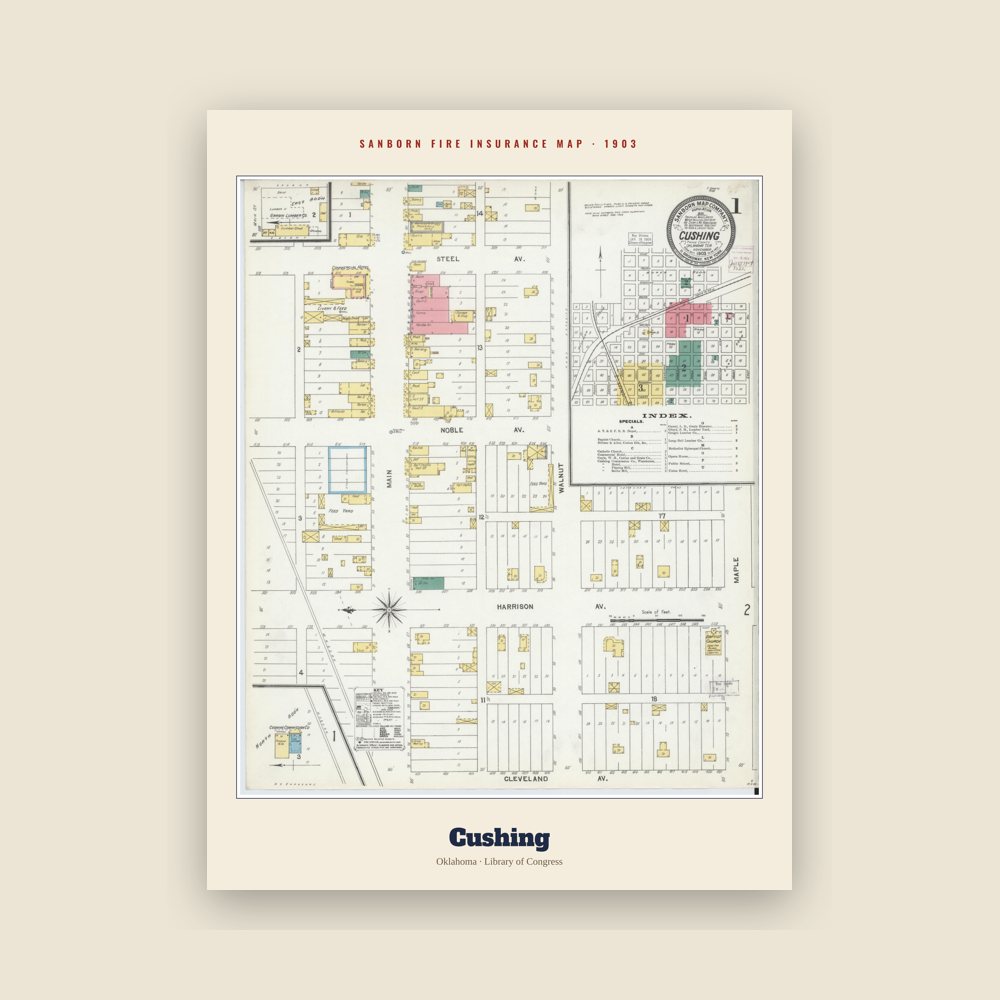
The area that became Cushing was part of the Sac and Fox Nation. With the Land Run of 1891, a former government trader for the tribe, William Rea "Billy" Little, built a house, established his claim, and laid out town lots. The town got a post office on November 10, 1891, and was named for Marshall Cushing, private secretary to U.S. Postmaster General John Wanamaker.
In 1902, the Eastern Oklahoma Railway line to Cushing was built. The Missouri, Kansas and Texas Railway added service on its own line built in 1903.
Wildcatter Thomas B. Slick started an oil boom on March 17, 1912, when he brought in a gusher east of Cushing. Other wells were soon drilled nearby, and the oil field became known as the Cushing-Drumright Oil Field. The city became a center for exploration of and production from nearby oil fields and also a refining center, when Consumers Oil Company opened a refinery in 1913. Production centered on the new town of Drumright, and Cushing became a refining center. Eventually, 23 oil companies and five oil-field supply houses located in the town, and more than 50 refineries once operated in the Cushing area. Pipelines and storage facilities have since made it "the pipeline crossroads of the world".
During the 1970s and 1980s refining operations continued in Cushing until the last two refineries, Kerr-McGee and Hudson, closed. Rail service ended in 1982.
The town retained a great asset in the Shell pipeline terminal, with 39 storage tanks and pipelines that could move as much as 1.5 million barrels a day. This enhanced Cushing's status as "Pipeline Crossroads of the World."
The maze of pipelines and tanks that had been built led to the NYMEX choosing Cushing as the official delivery point for its light sweet crude futures contract in 1983.
In May 2023, Cushing was selected as the site for a $5.56 billion crude oil refinery for processing 250,000 barrels per day of light and sweet crudes into low-carbon transportation fuels. The next-generation refinery, built with a goal of zero-carbon footprint operation, should be operational in 2027.
Adapted (trimmed) from the Wikipedia article Cushing, Oklahoma, revision 1380223672 by its contributors, licensed CC BY-SA 4.0.
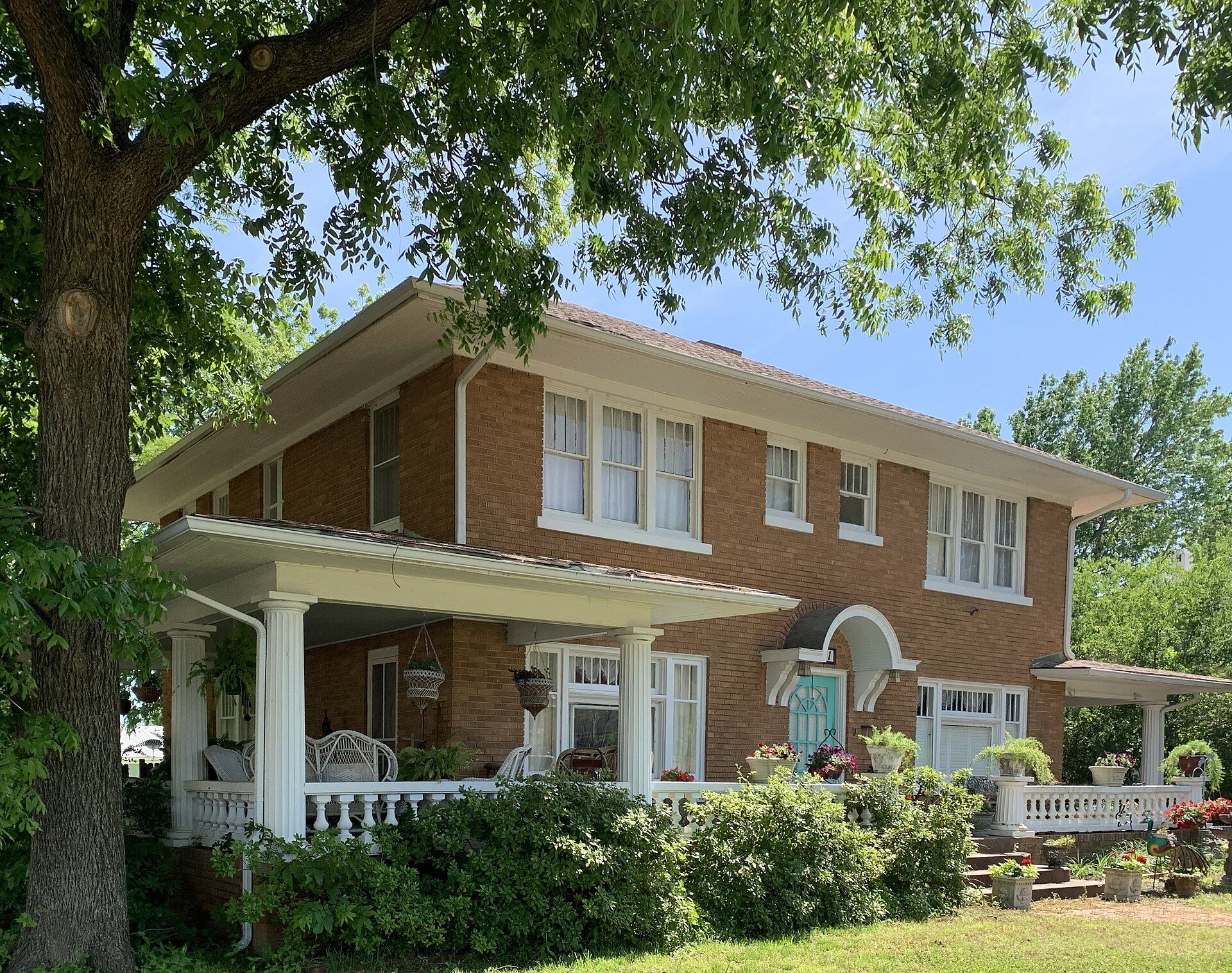
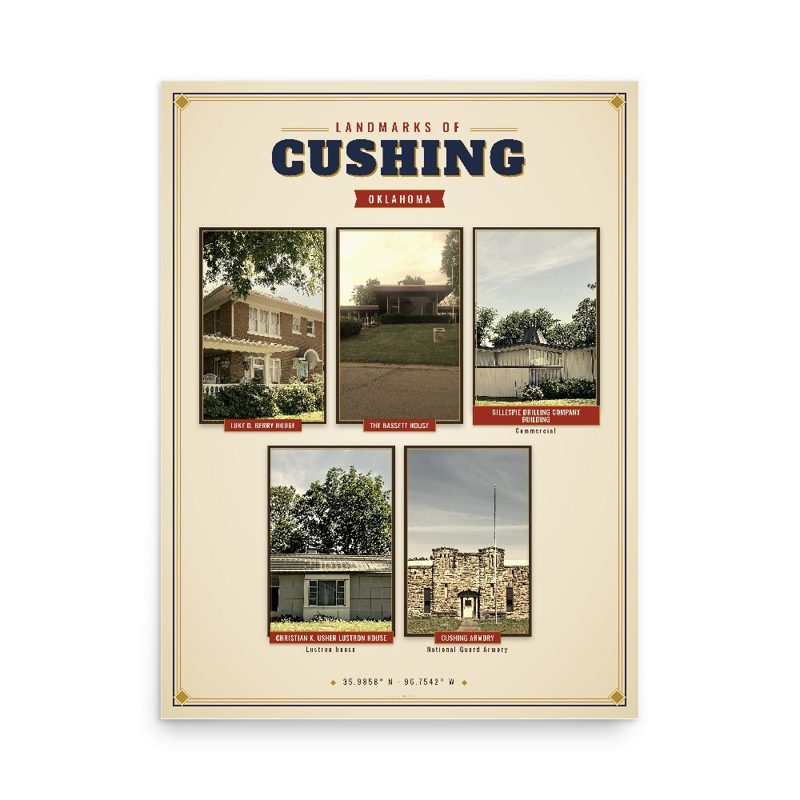
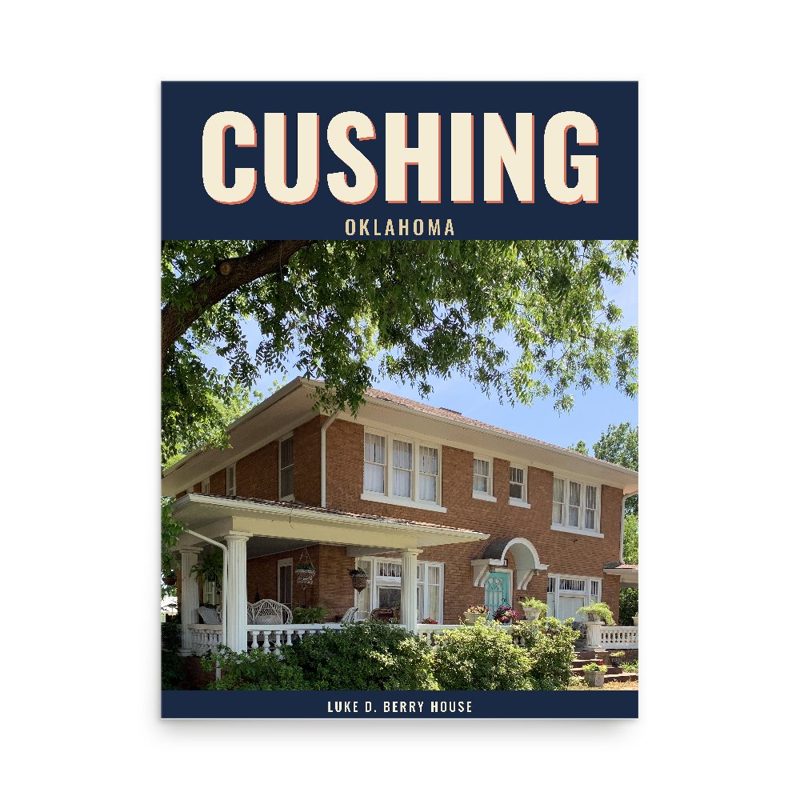
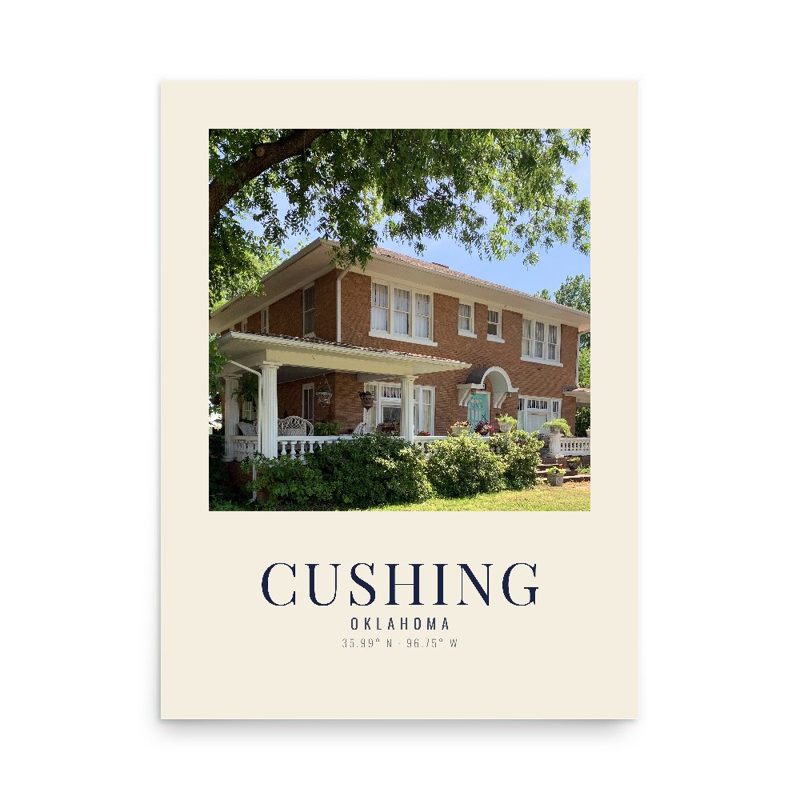
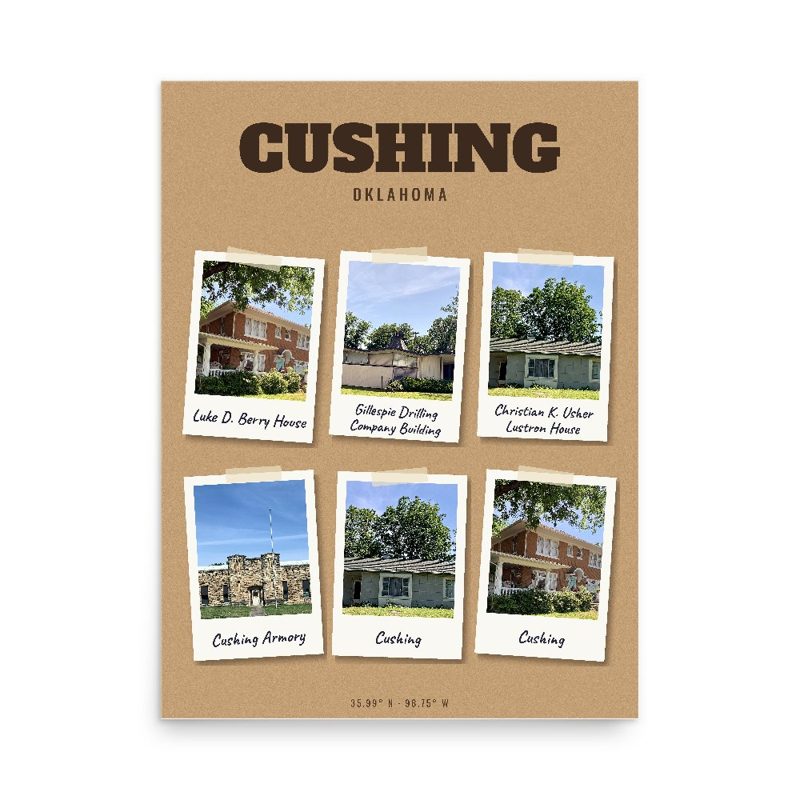
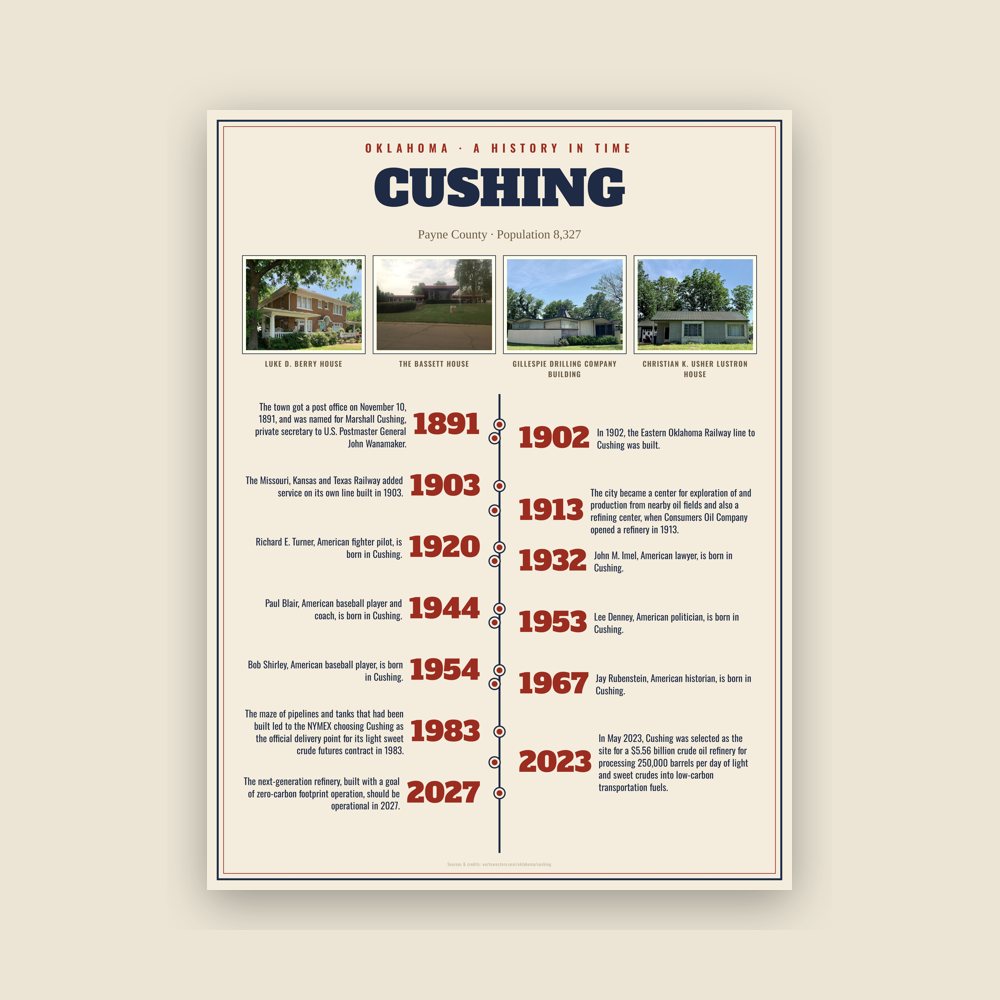
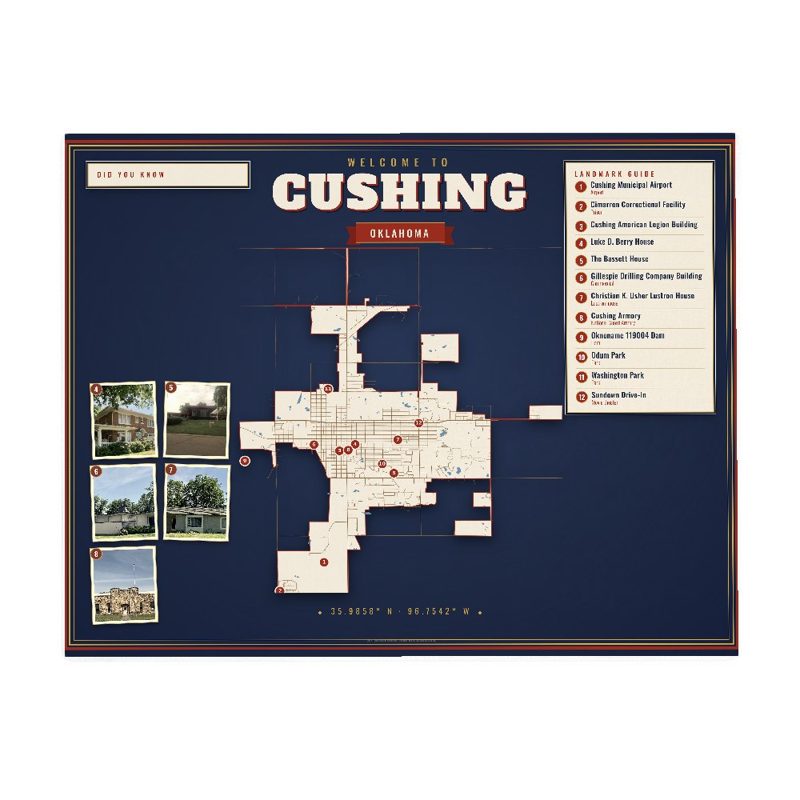

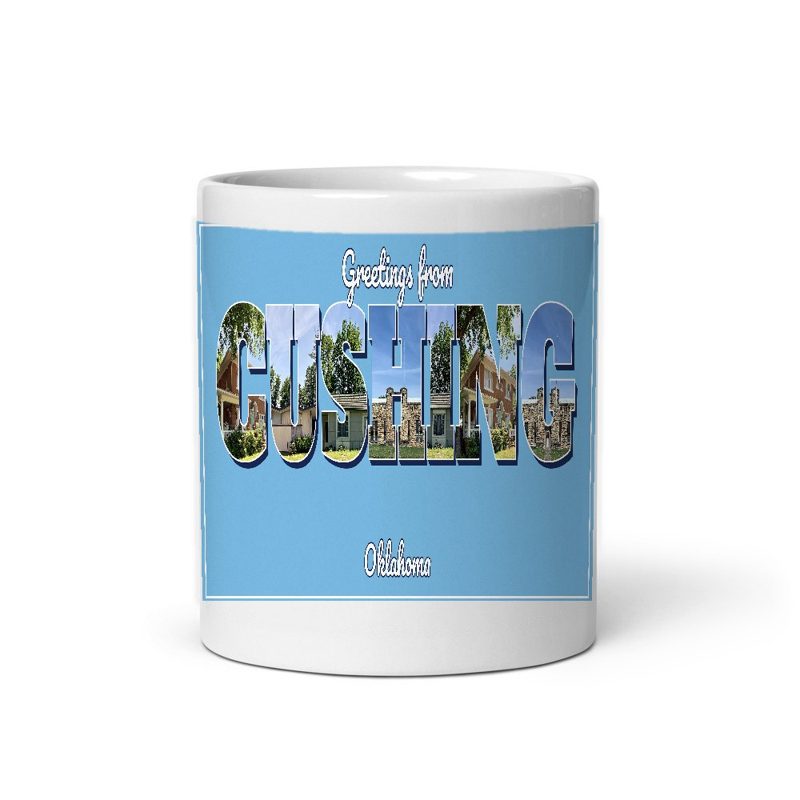

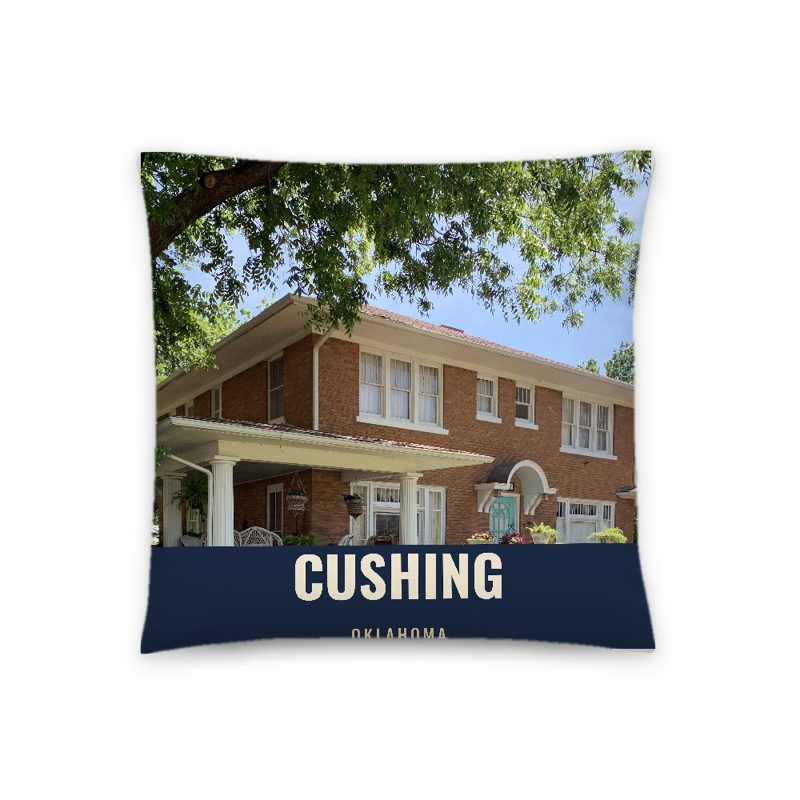


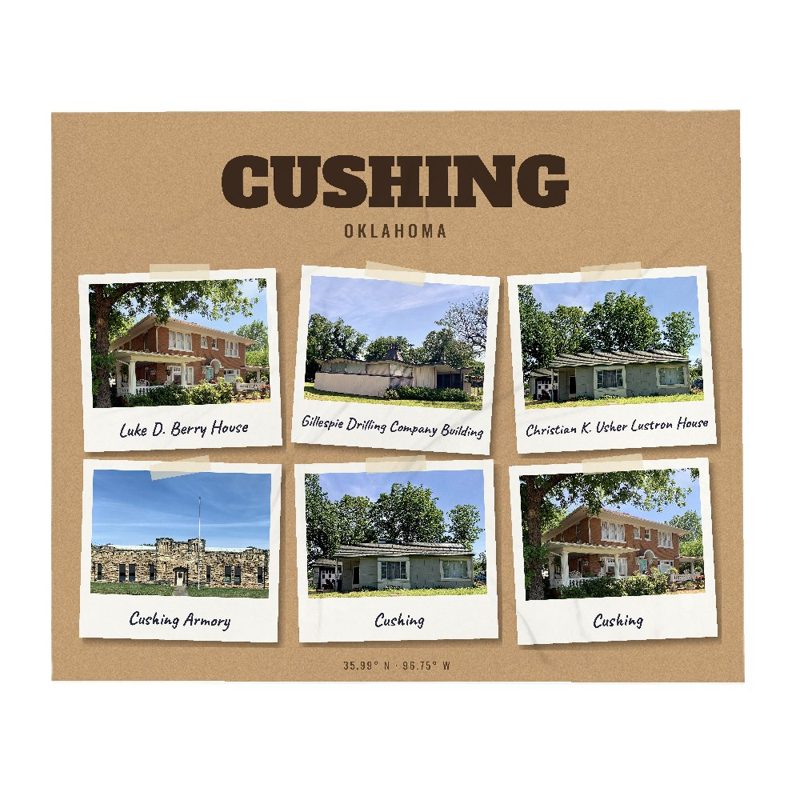
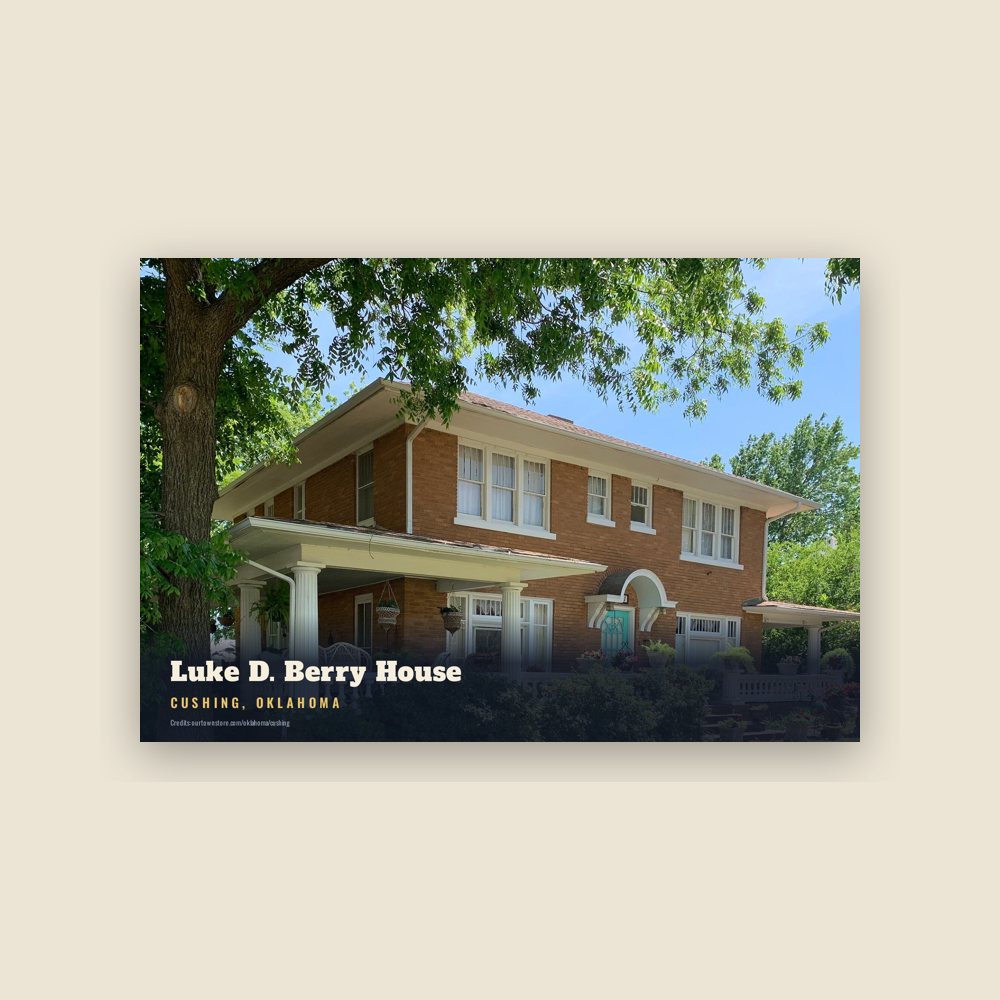
 Luke D. Berry House
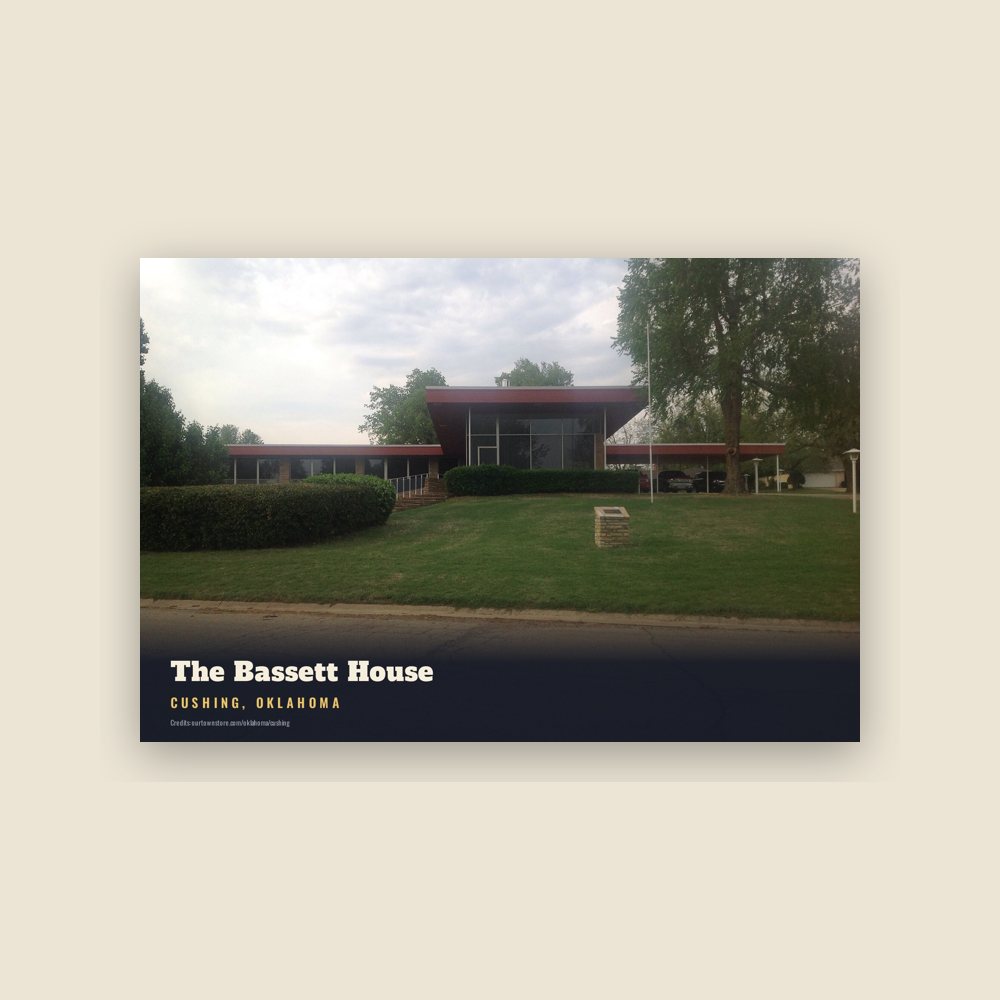
 The Bassett House
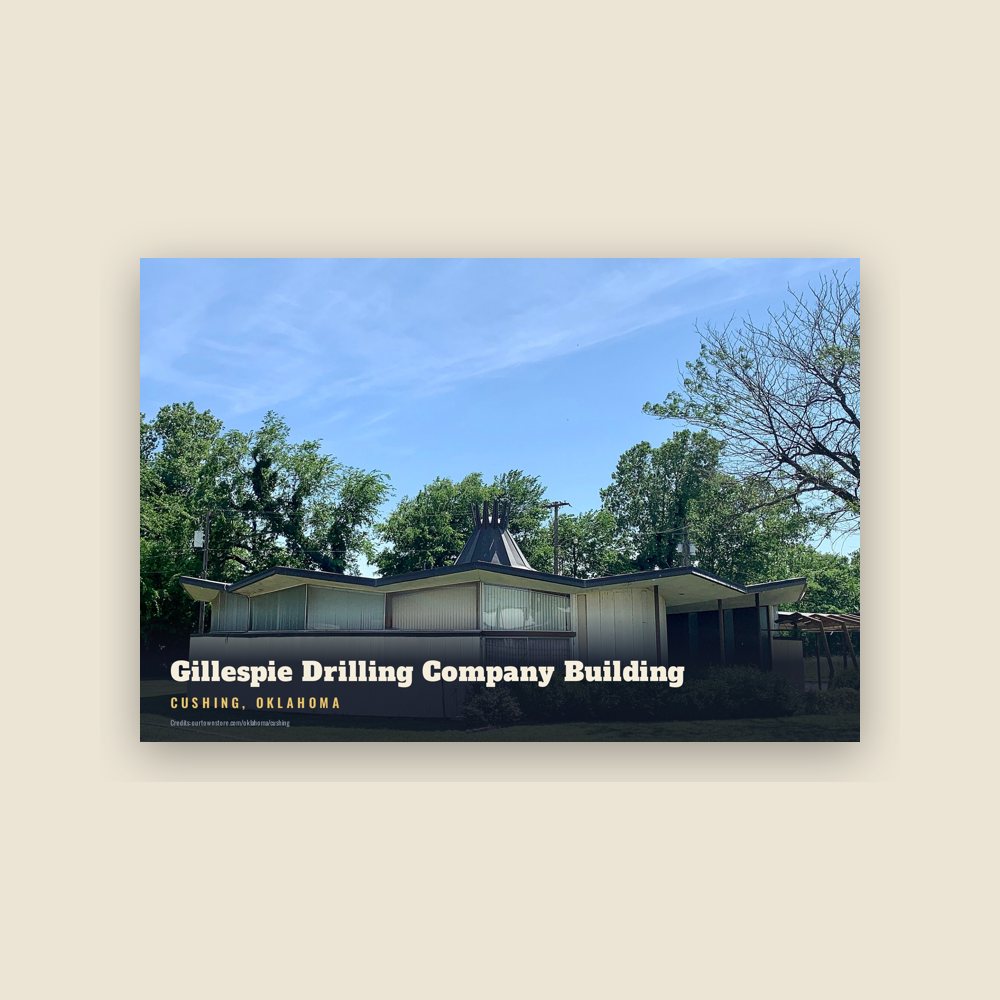
 Gillespie Drilling Company Building
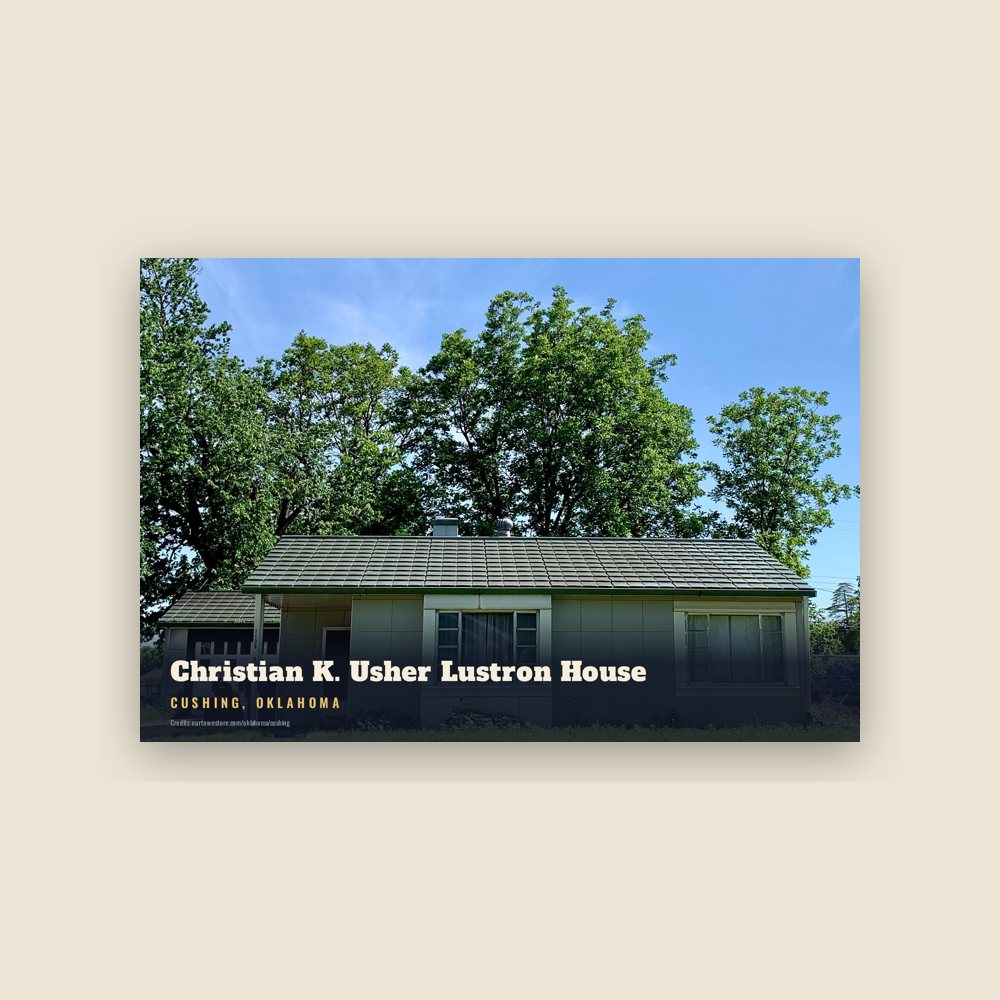
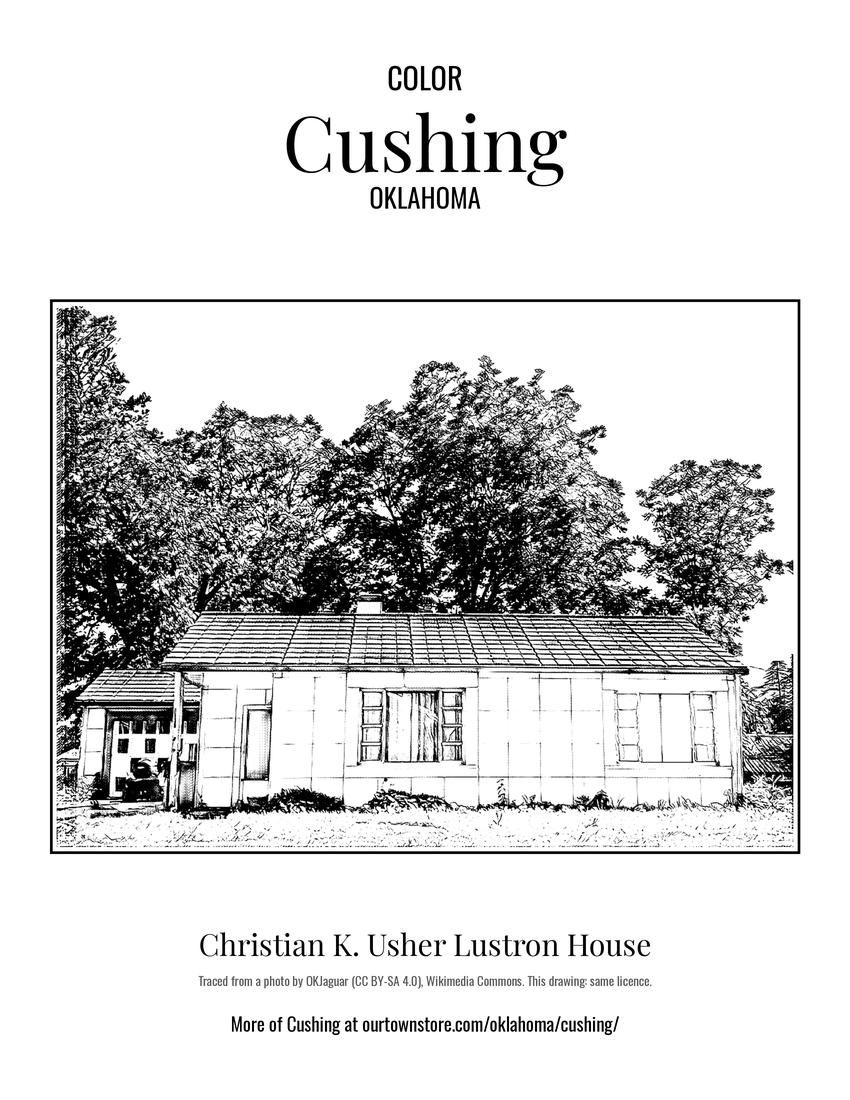 Christian K. Usher Lustron House