A short history of Steubenville
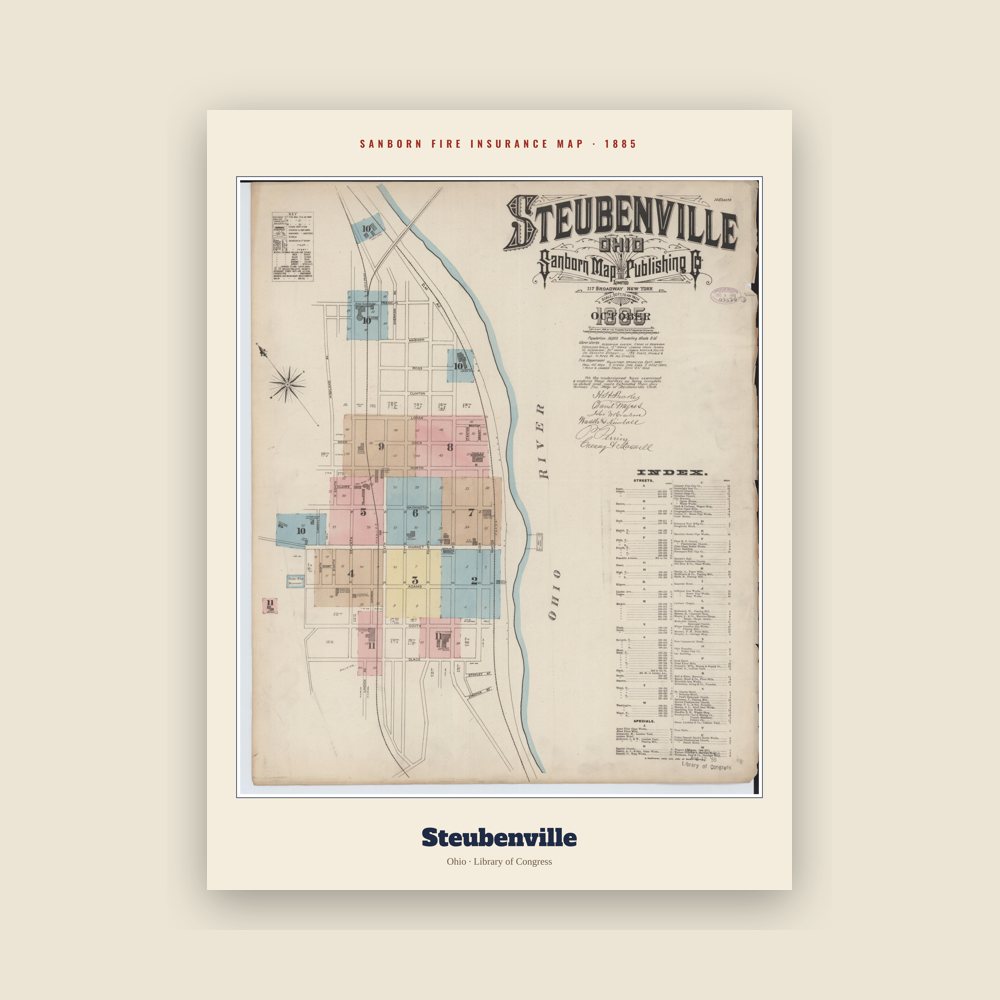
In 1786–87, soldiers of the First American Regiment under Major Jean François Hamtramck built Fort Steuben to protect the government surveyors mapping the land west of the Ohio River. The fort was named in honor of Baron Friedrich Wilhelm von Steuben, a Prussian army officer who reformed the Continental Army during the American Revolution. When the surveyors completed their task a few years later, the fort was abandoned. In the meantime, settlers had built homes around the fort; they named their settlement Steubenville. The town was sometimes referred to as La Belle City, a franglais interpretation of "The Beautiful City".
On July 29, 1797, Jefferson County was organized by a proclamation of Governor Arthur St. Clair, and Steubenville was selected as the county seat. It was platted in the same year by Bezaliel Wells and James Ross, the city's co-founders. Wells, a government surveyor born in Baltimore, received about 1,000 acres (4 km2) of land west of the Ohio River; Ross, a lawyer from Pittsburgh, owned the land north of Wells.
On March 1, 1803, Ohio was admitted to the Union as the 17th state. During the first half of the nineteenth century, Steubenville was primarily a port town, and the rest of the county was small villages and farms. Steubenville received a city charter in 1851. In 1856, Frazier, Kilgore and Company erected a rolling mill (the forerunner of steel mills) and the Steubenville Coal and Mining Company sank a coal shaft. The city was a stop along the Pittsburgh, Cincinnati, Chicago and St. Louis Railroad, which connected Pittsburgh to Chicago and St. Louis.
The Steubenville Female Seminary, also known as Beatty's Seminary for Young Ladies or Steubenville Seminary, was an early private educational institution for women founded by Presbyterian minister Charles Clinton Beatty in 1829. It was closed in 1898 and the buildings were eventually razed for part of what is now Ohio State Route 7.
In 1946, the College of Steubenville was founded by the Friars of the Third Order of St. Francis. In 1980, its name was changed to University of Steubenville, and finally in 1985 to Franciscan University of Steubenville. In 1966, the Jefferson County Technical Institute was founded. In 1977, its name was changed to Jefferson Technical College. In 1995, it became a community college and was renamed Jefferson Community College. In 2009, the college expanded its service district by three Ohio counties, and was renamed again: Eastern Gateway Community College.
In 1997, the United States Department of Justice accused the city and its police force of subjecting individuals to excessive force, false arrests, and improper stops, searches, and seizures, as well as retaliating against those who witnessed police misconduct or criticized the force. The department's report also noted that officers falsified reports and tampered with police recorders to hide misconduct. This led the city to become the second in the U.S. to sign a consent decree with the federal government, agreeing to improve police training, establish new guidelines, and create an internal affairs unit. The decree ended on March 4, 2005, after reforms were implemented, and in 2020, the city council reviewed and confirmed ongoing improvements in use of force policies, training, and data.
The city's speed camera program, which began in 2005, generated $600,000 in revenue from nearly 7,000 tickets issued. However, in March 2006, the Jefferson County Court of Common Pleas ruled the program's supporting ordinance unconstitutional. Despite this, the city refused to remove the cameras, citing a contract with Traffipax, Inc. and defied the judge's order by reinstating an identical ordinance. Councilman Michael Hernon was the only one to dissent. In mid-2006, an attorney filed a class-action lawsuit, and in December 2007, the city was forced to refund $258,000 for illegally collected fines. Additionally, a referendum in November 2006 led to a 76.2% majority vote to end the program.
The city gained international attention in late 2012 from the events surrounding the Steubenville High School rape case, which occurred in August 2012. The case was first covered by The New York Times that December, followed by the computer hacker group Anonymous later that month, and the subsequent coverage of the trials in late 2013. The case was significant in the extensive use of social media as evidence and in opening a national discussion on the concept of rape culture.
Adapted (trimmed) from the Wikipedia article Steubenville, Ohio, revision 1382888263 by its contributors, licensed CC BY-SA 4.0.









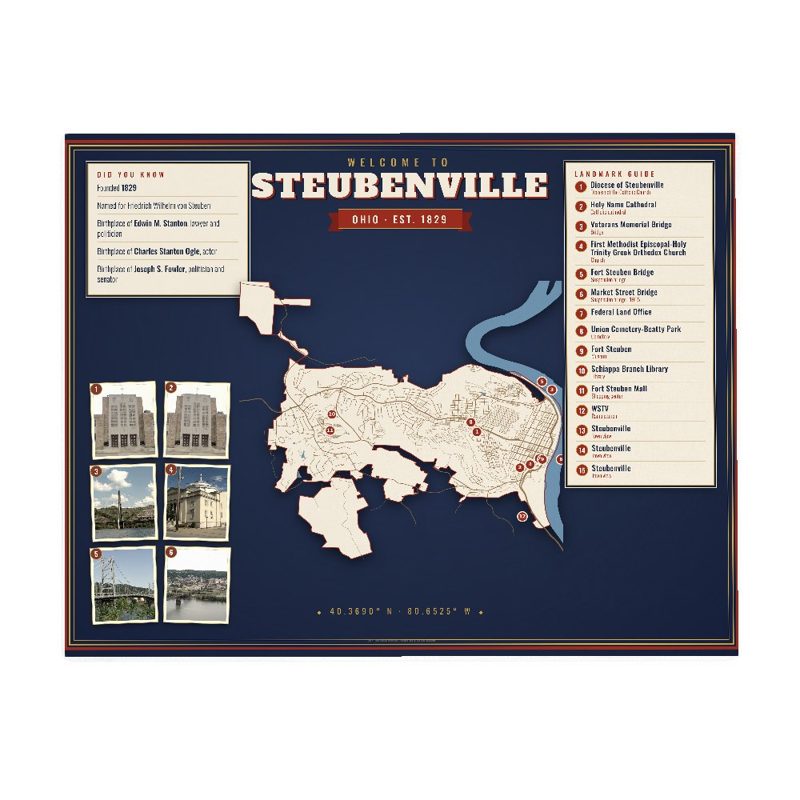




















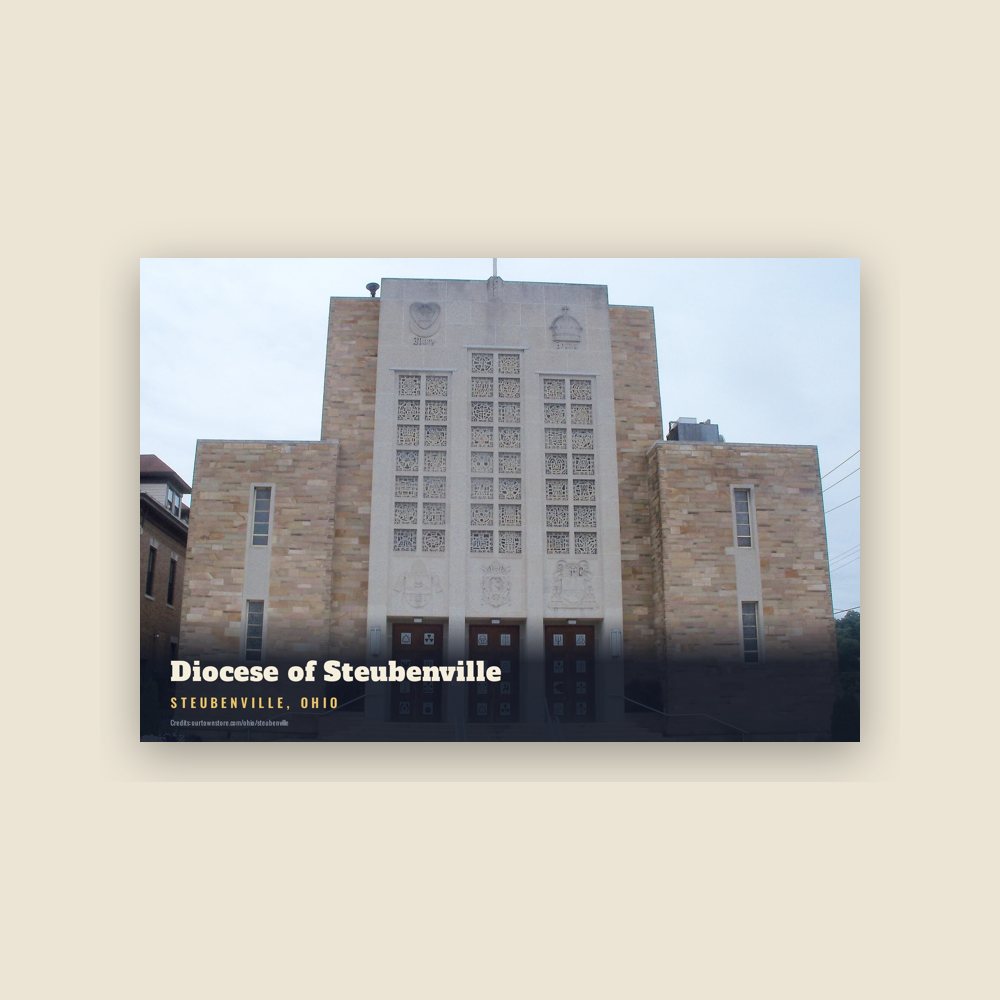



 Diocese of Steubenville
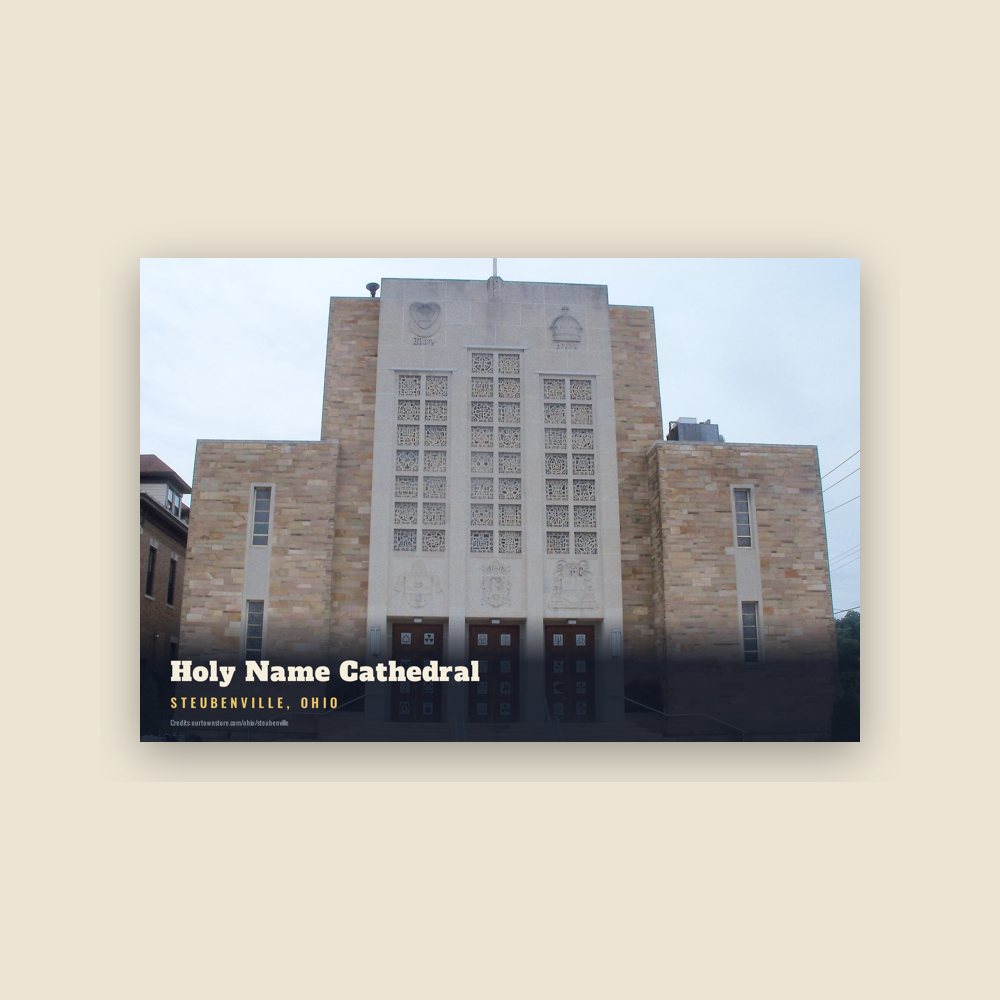
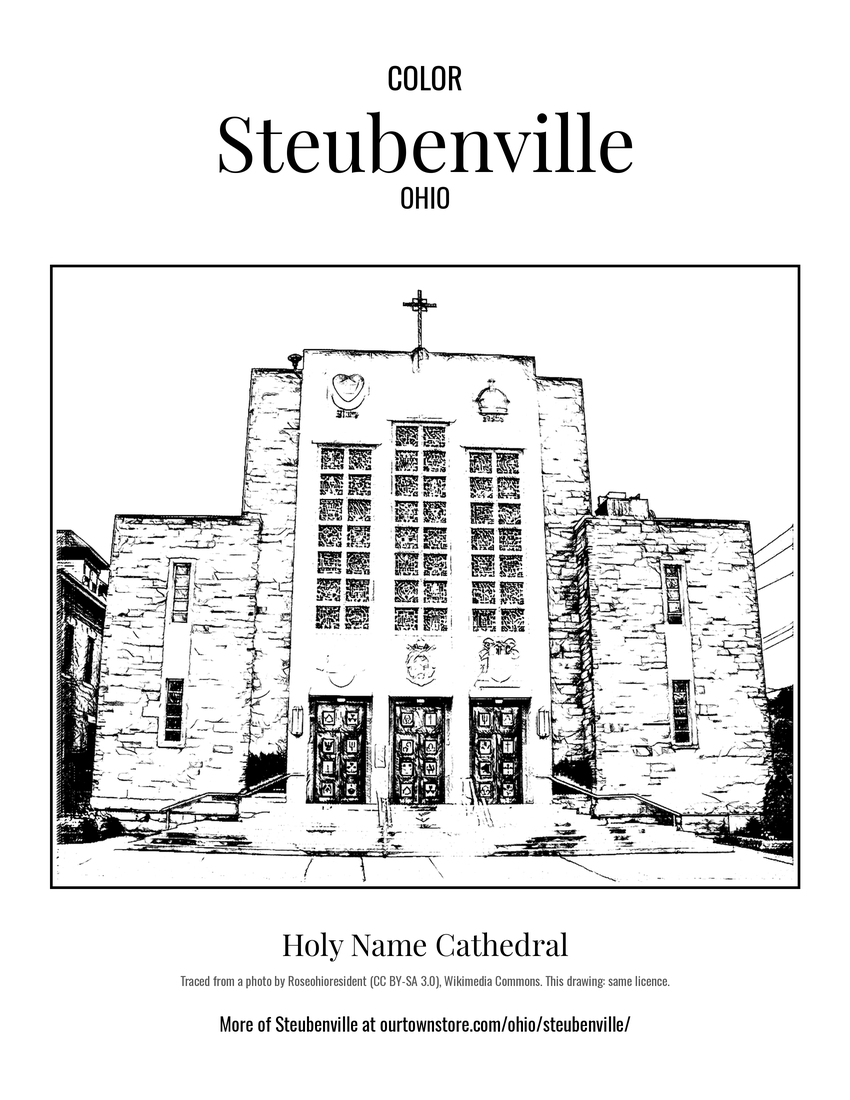 Holy Name Cathedral
 Veterans Memorial Bridge
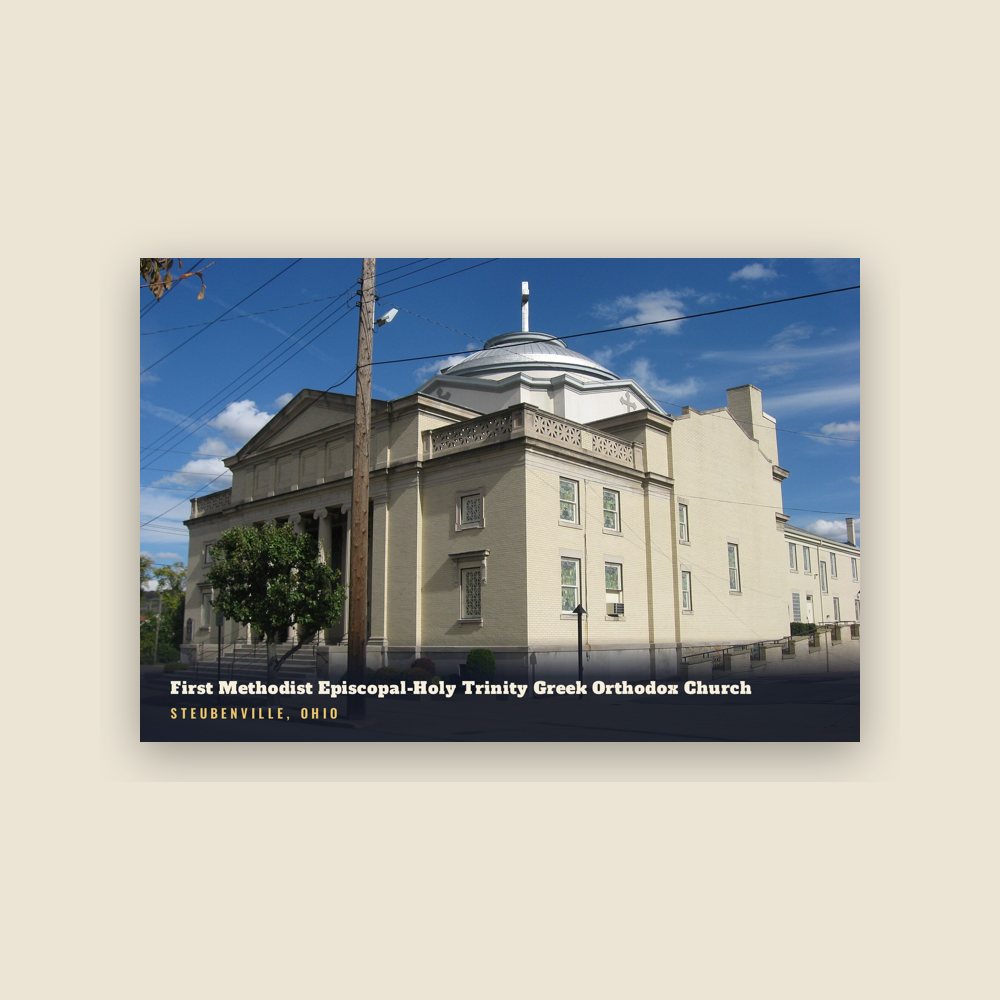
 First Methodist Episcopal-Holy Trinity Greek Orthodox Church