In the years after the American Revolution, the Shawnee were the most prominent residents of west central Ohio, growing in numbers and permanency after the 1794 Treaty of Greenville. By 1817, the United States had created the Hog Creek Reservation for the local Shawnee, covering portions of what would become Allen and Auglaize counties, and including part of present-day Lima.
The creation of the Shawnee reservation freed other lands in the area for settlement, and in February 1820, the Ohio legislature formally established Allen County. In 1831, the Shawnee were forced to surrender all their land in the area to the United States and relocated to Kansas, opening all of Allen County to settlement. The Ohio legislature mandated that a county seat be established and "Lima" was the result.
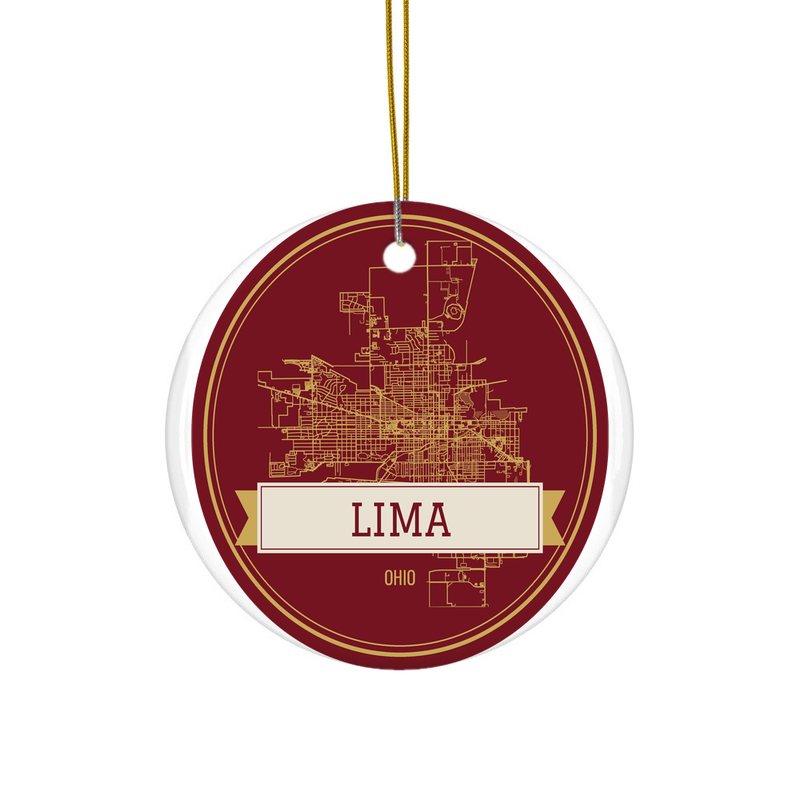
Lima was named after Lima, Peru's capital city. The name was reputedly chosen in a nod to the Peruvian capital which, during the 1800s, was a major source of quinine, an anti-malaria drug for which there had been a demand in the region, an area known as the Great Black Swamp.
Read the full history
19th century
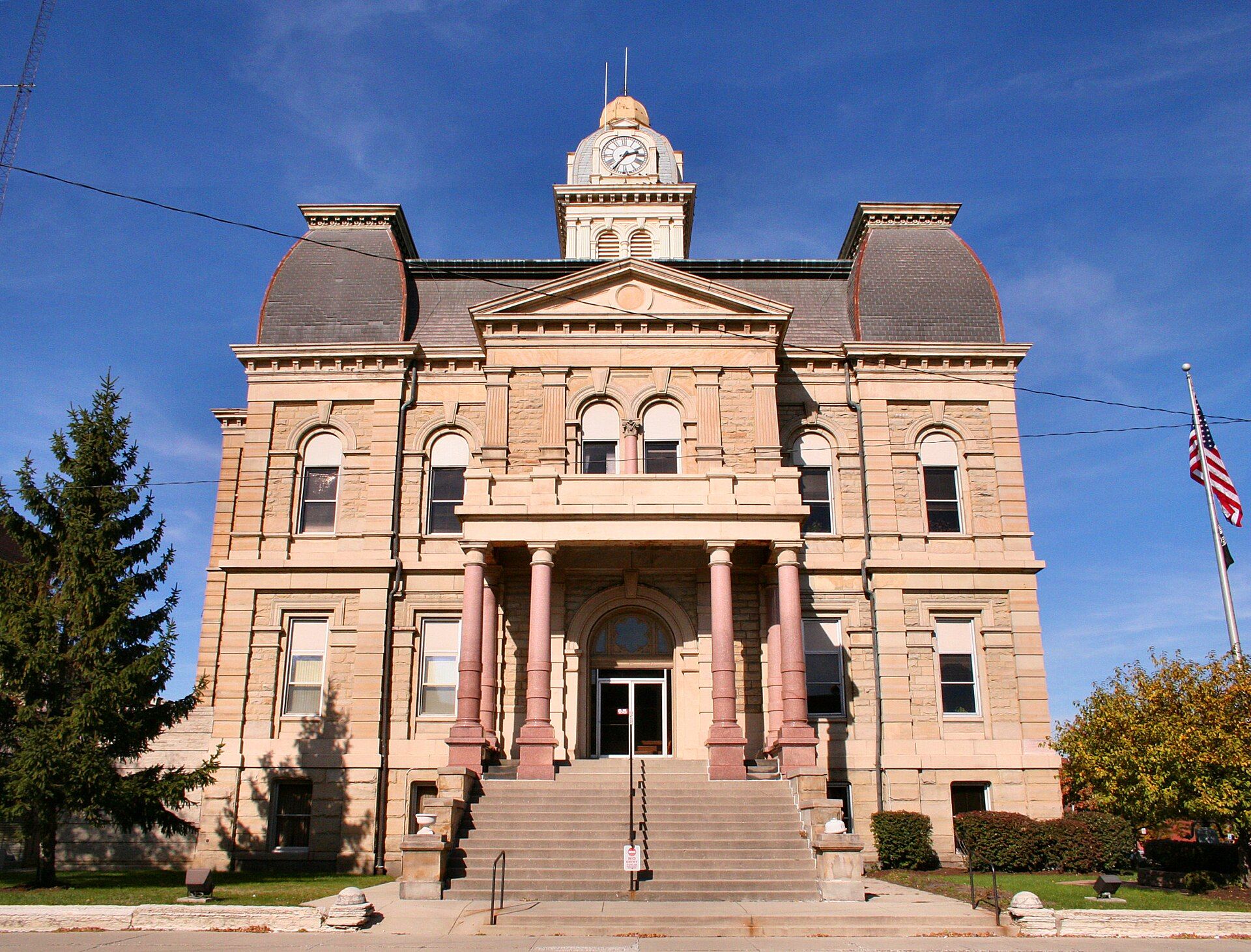
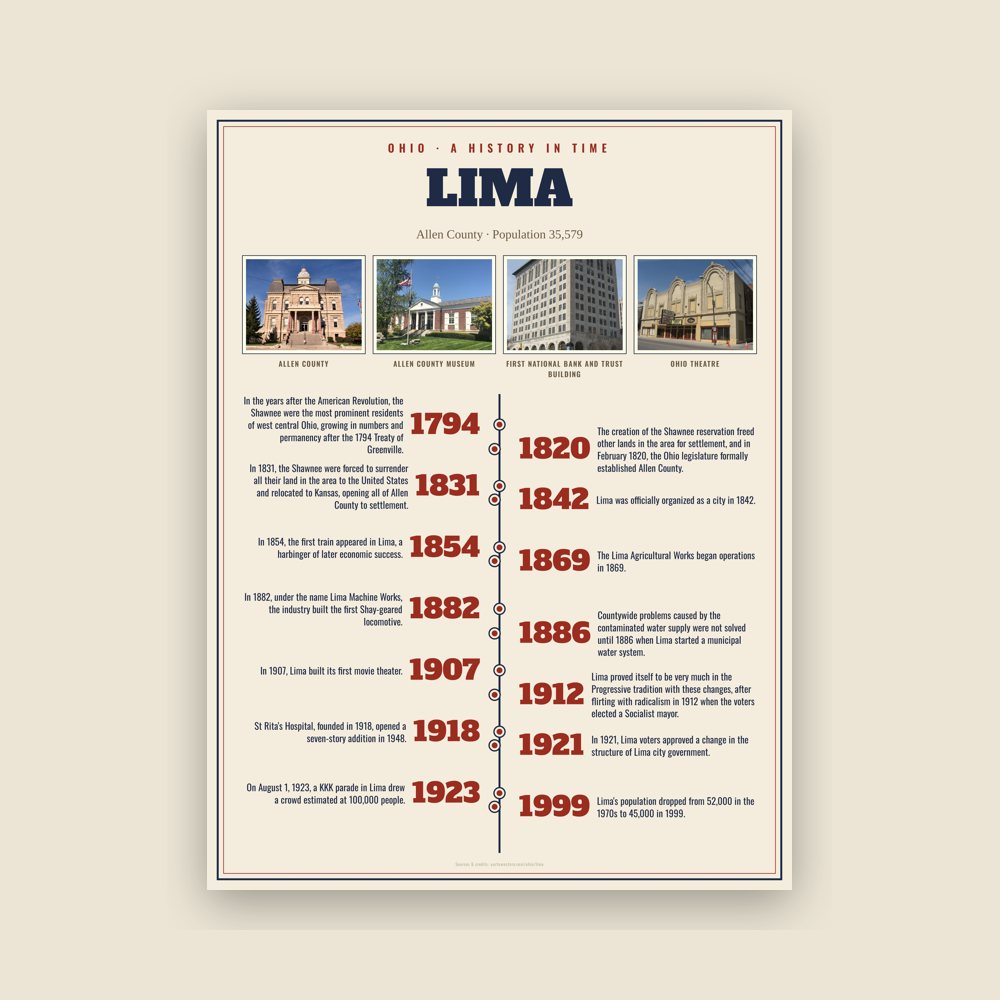
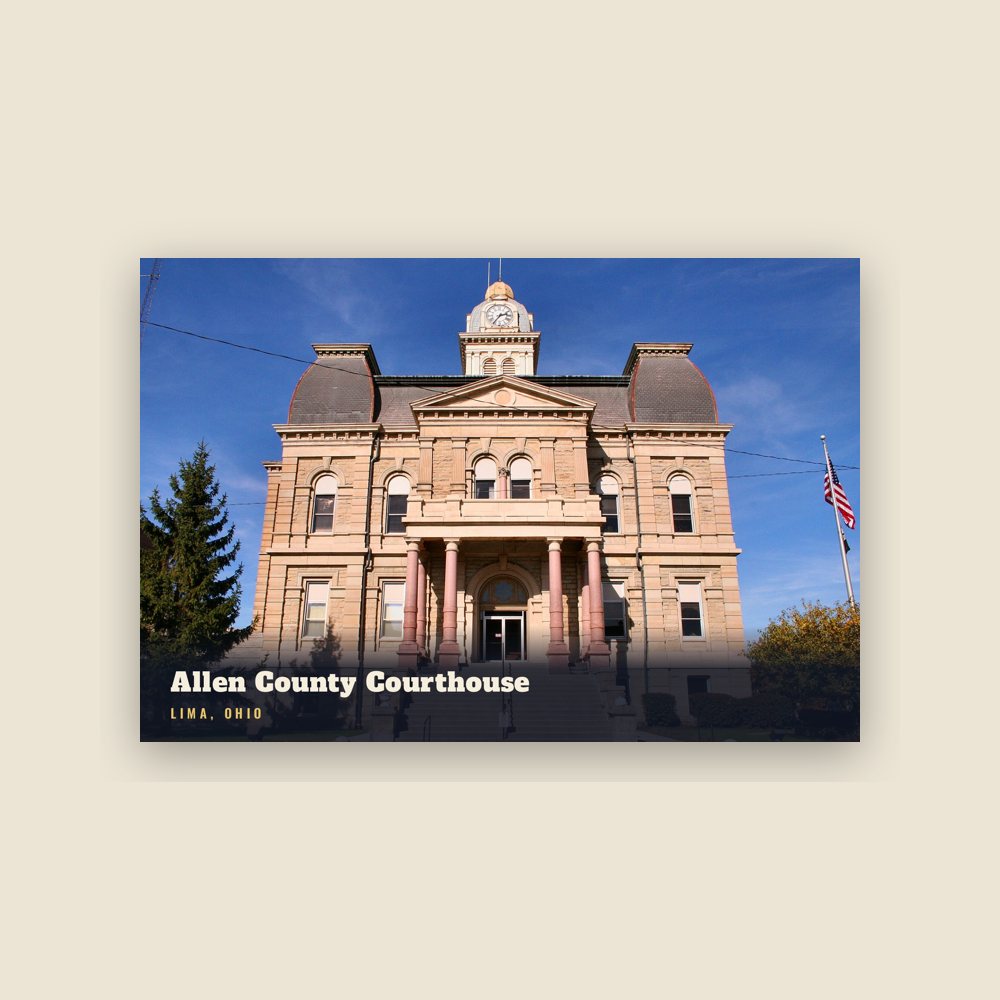
Since 1831, Lima has been the center of government for Allen County, the first of its three courthouses erected in the city's first year. The foundations of city life followed in quick order. The first school appeared in 1832. Lima's first physician, Dr. William Cunningham, arrived in 1831. 1836 brought the first newspaper to Lima. Lima was officially organized as a city in 1842. Henry DeVilliers Williams was its first mayor. The first public school opened in 1850. In 1854, the first train appeared in Lima, a harbinger of later economic success.
Also in 1854, a cholera outbreak in Delphos (a town in Allen County northwest of Lima) spread throughout west central Ohio. Countywide problems caused by the contaminated water supply were not solved until 1886 when Lima started a municipal water system. Lima's role as a regional center for industry began early. The Lima Agricultural Works began operations in 1869. The company changed names and types of manufacturing through the years. In 1882, under the name Lima Machine Works, the industry built the first Shay-geared locomotive.
Stimulated by the economic boom in nearby Findlay, in 1885 Lima businessman Benjamin C. Faurot drilled for natural gas at his paper mill. On May 19, oil was discovered instead of gas. The oil well never realized enormous profits, but it triggered Lima's oil industry, bringing John D. Rockefeller's Standard Oil to the city. Lima's oil field was, for about a decade, the largest in the US.
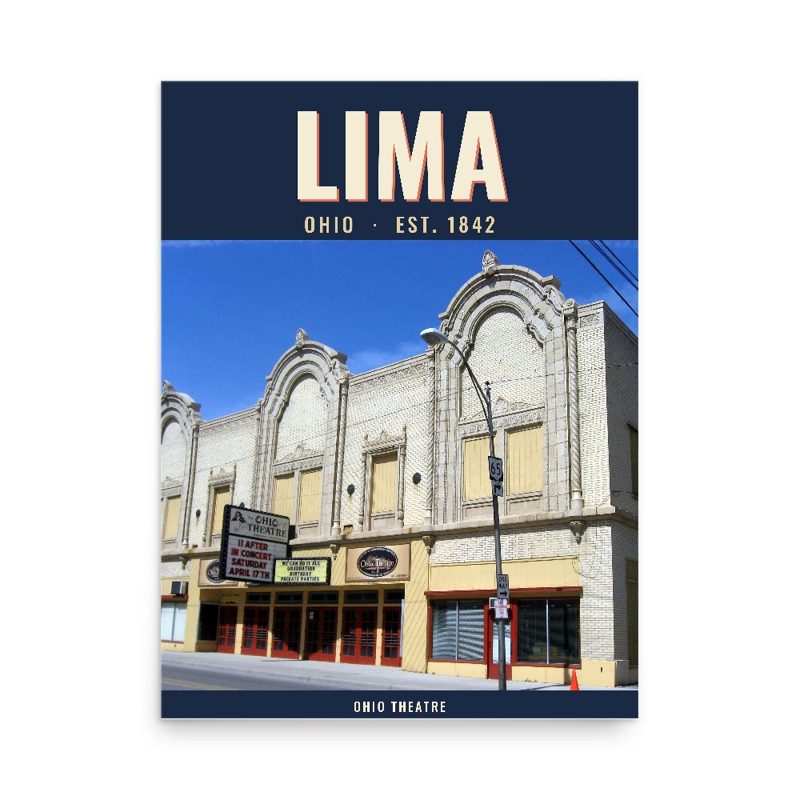
Economic development brought money for arts and entertainment. Benjamin Faurot's Opera House opened in 1882, a nationally renowned structure so impressive that New Yorkers used it as a model for their theaters. In 1907, Lima built its first movie theater.
Early 20th century
In the early 20th century, Benjamin A. Gramm and his close friend Max Bernstein formed the Gramm-Bernstein Company, which became a pioneer in the motor truck industry. During World War I, Gramm created the "Liberty truck", which was welcomed upon its arrival in Washington, D.C., by President Woodrow Wilson. Thousands were sent to Europe to help the Allied war effort.
After World War I, Allen County's population growth lagged the state and the nation. In 1921, Lima voters approved a change in the structure of Lima city government. Voters now elected five commissioners, with the commission chair serving as mayor. The charter sought to establish professional management, requiring the commissioners to hire a city manager, who reported to the mayor. Lima proved itself to be very much in the Progressive tradition with these changes, after flirting with radicalism in 1912 when the voters elected a Socialist mayor.
The darker side of the progressive era revealed itself in the prominence of the Ku Klux Klan in the city. It was a center for the Black Legion, a notoriously violent subset of the Klan. On August 1, 1923, a KKK parade in Lima drew a crowd estimated at 100,000 people.
Economically, the 1920s were a time of industrial expansion in Lima. In 1925, Lima Locomotive Works, Inc. built the "Lima A-1", a 2-8-4 model that became the prototype for the modern steam locomotive. The Locomotive Works also created a new division, the Ohio Power Shovel Company. In 1927, local industrialist John E. Galvin helped found Superior Coach Company. It became the world's largest producer of school buses and funeral coaches within two decades. In 1930, eight railroad companies served Lima.
Allen County's population grew significantly faster than the state during the Great Depression. In 1933, Lima again reorganized its government. The citizens adopted a "strong mayor" model to replace the city manager of the 1920s. Despite the hardships of the decade, Lima residents supported the construction of a hospital to serve the area. Lima Memorial Hospital, named in honor of World War I veterans, opened on Memorial Day, 1933.
The Lima area was not safe from the increased crime rate of the 1930s. In 1933, gangster John Dillinger was in the Allen County Jail, arrested for robbing the Citizens National Bank in nearby Bluffton. Dillinger's cohorts broke him out of jail, killing Allen County Sheriff Jess Sarber in the process. The murder and jailbreak put Dillinger at the top of the FBI's ten most wanted list. His was not the only crime outfit to plague Lima during the decade. In 1936, the notorious Brady Gang robbed a local jewelry store twice.
The Great Depression slowed the pace of industrial expansion. In 1930, a Lima directory listed 93 industrial employers with some 8,000 employees. By 1934, industrial employment was reduced by half. In 1935, Westinghouse located a Small Motor Division in Lima to build fractional horsepower electric motors. The Ohio Steel Foundry turned the corner and grew, eventually expanding its successes in its industry. The 1930s was a decade for organizing labor in Lima. By 1940, there were at least fifty labor unions representing local workers.
Lima benefited from increased production during World War II and a growing population but suffered a significant economic decline at the end of the decade when industry retooled for peacetime production. In May 1941, based in the steel foundry, construction began on the Lima Army Tank Plant to manufacture centrifugally cast gun tubes. In November 1942, United Motors Services took over the operation of the plant to process vehicles under government contract. The plant prepared many vehicles for Europe, including the M5 light tank and the T-26 Pershing tank. At its peak during the war, the Lima Tank Depot (now the Joint Systems Manufacturing Center, operated by General Dynamics), employed over 5,000 people.
Late 20th century to present
The area's expanding population in the 1940s and 1950s brought hospital and school expansion. St Rita's Hospital, founded in 1918, opened a seven-story addition in 1948. With voter support, school leadership built six new elementary schools and the new centralized Lima Senior High School during the 1950s. Lima's industrial production grew in the decade. During the Korean War, the Lima Tank Depot resumed manufacturing, at a level expanded from World War II standards.
During the 1960s, Lima experienced both growth and community unrest. In 1962, a new Allen County Airport was built in Perry Township. With the passage of the city income tax in 1966, Lima constructed a new facility for the Lima Police Department. Also during the 1960s, The Ohio State University established a regional campus in Lima. Civil rights issues had rocked Lima in the 1950s, perhaps most prominently in the efforts to desegregate the city's only public swimming pool in Schoonover Park. Civil unrest continued in the 1960s and into the 1970s.
In January 1969, a crude oil line in south Lima ruptured, causing 77,000 US gallons (290,000 L) of oil to escape into the city's sewer system. Explosions and fire erupted from sewers as 7,000 residents were evacuated. Governor Jim Rhodes ordered the Ohio National Guard into the area to maintain order. In August 1970, further conflict erupted when a black woman was killed by police as she tried to prevent the arrest of a juvenile. Several officers were wounded in the violence that followed. Mayor Christian P. Morris declared a state of emergency and the National Guard was again called in to aid local police.
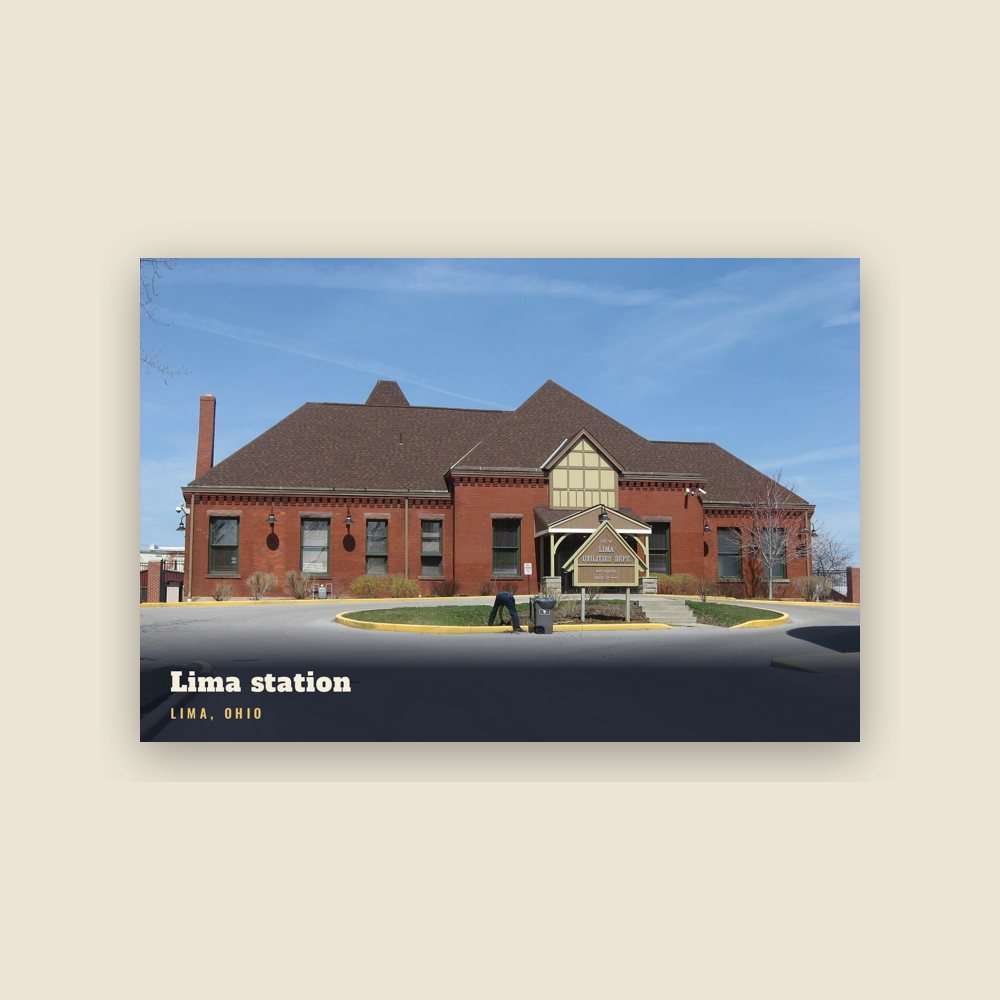
During the 1970s and 1980s, several industries left Lima, part of the "Rust Belt" decline affecting all of Ohio. In April 1971, the last "Cincinnatian," of the Baltimore and Ohio Railroad stopped in Lima. The Cincinnatian was an iconic lightweight streamliner serving the B&O's Detroit line from Cincinnati. Lima had also been served by the Pennsylvania Railroad's "Broadway Limited," a high-speed New York to Chicago service, the "Capital Limited" Chicago to Washington D.C. service, via Pittsburgh, the Nickel Plate Road's "Blue Arrow," and "Blue Dart," which provided high-speed service to Buffalo, Cleveland and St. Louis, and the Erie Lackawanna's "Lake Cities," which provided service to New York, Cleveland, and Chicago with direct service both ways. Many of these services were maintained by Amtrak until 1991, when the former Erie Lackawanna and Pennsylvania Railroad mainlines between New York and Chicago were downgraded.
In 1973, Lima's District Tuberculosis Center, which served five counties, closed its doors. Superior Coach Company, once the nation's largest producer of buses, closed in 1981, as did Clark Equipment. Airfoil Textron closed in 1985, and Sundstrand (formerly Westinghouse) followed ten years later. By the mid-1990s, Lima had lost more than 8,000 jobs. Lima's population dropped from 52,000 in the 1970s to 45,000 in 1999. Lima's plight and its subsequent efforts to redefine itself were captured in the PBS documentary Lost in Middle America.
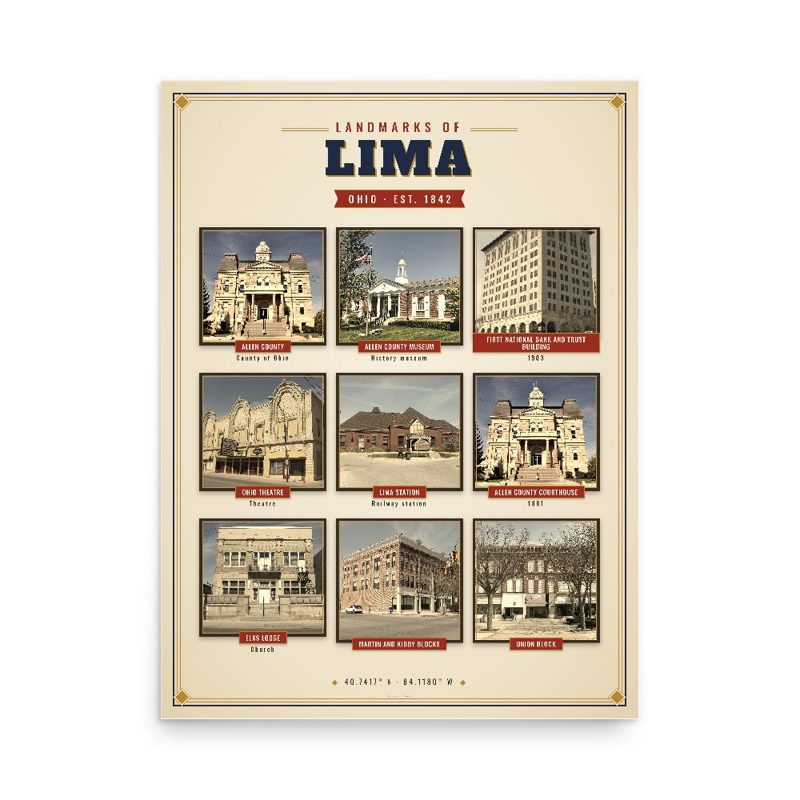
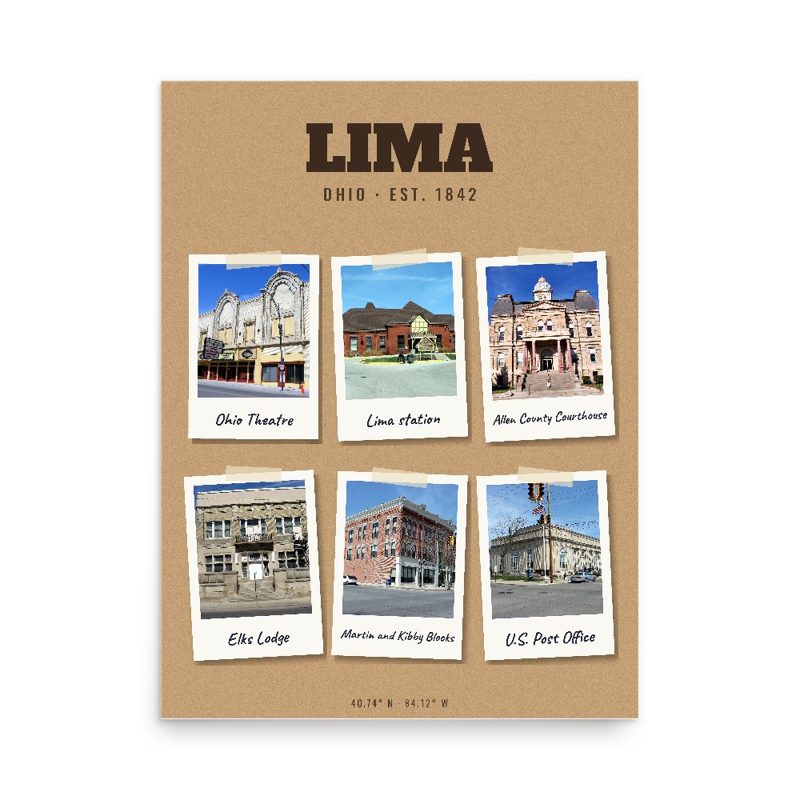




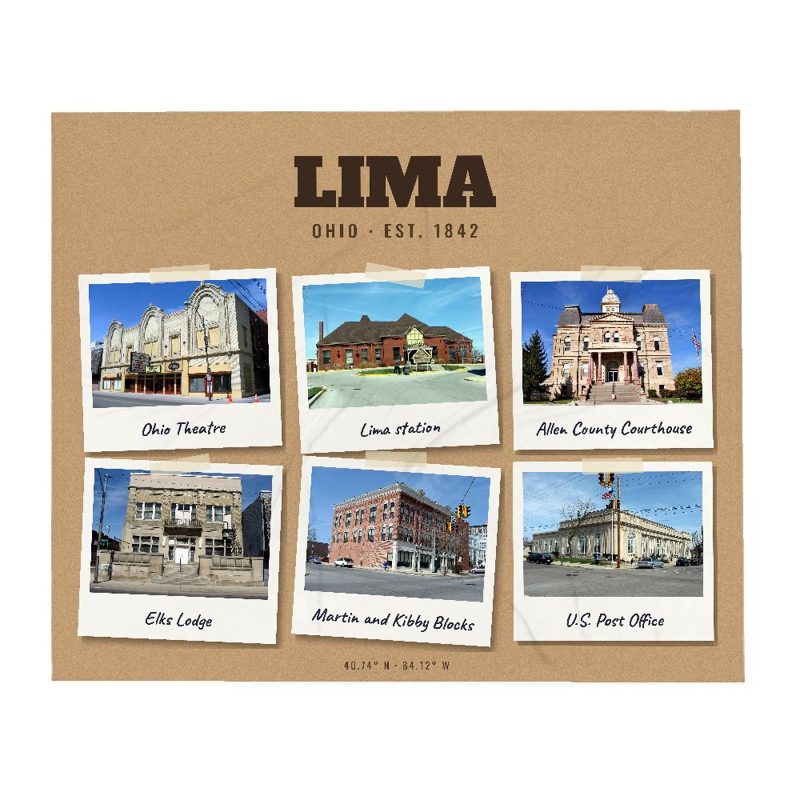
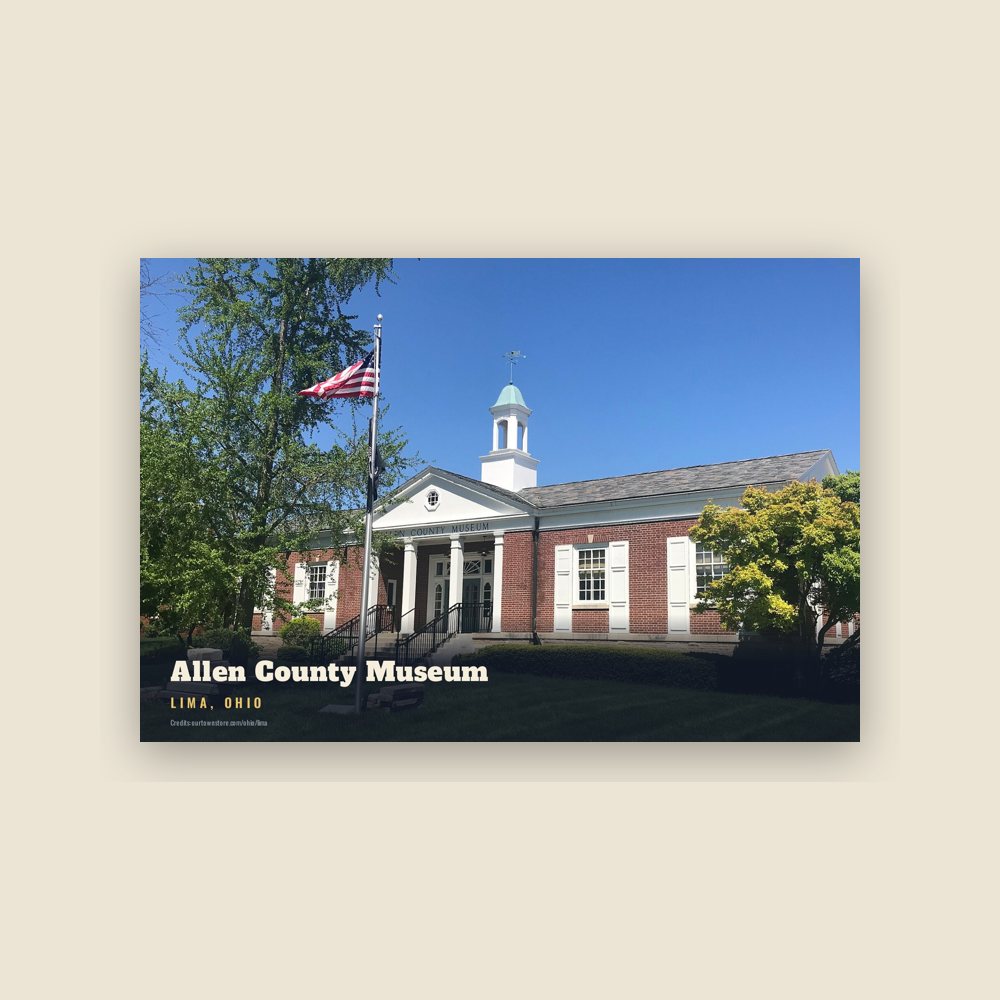
 Allen County Museum
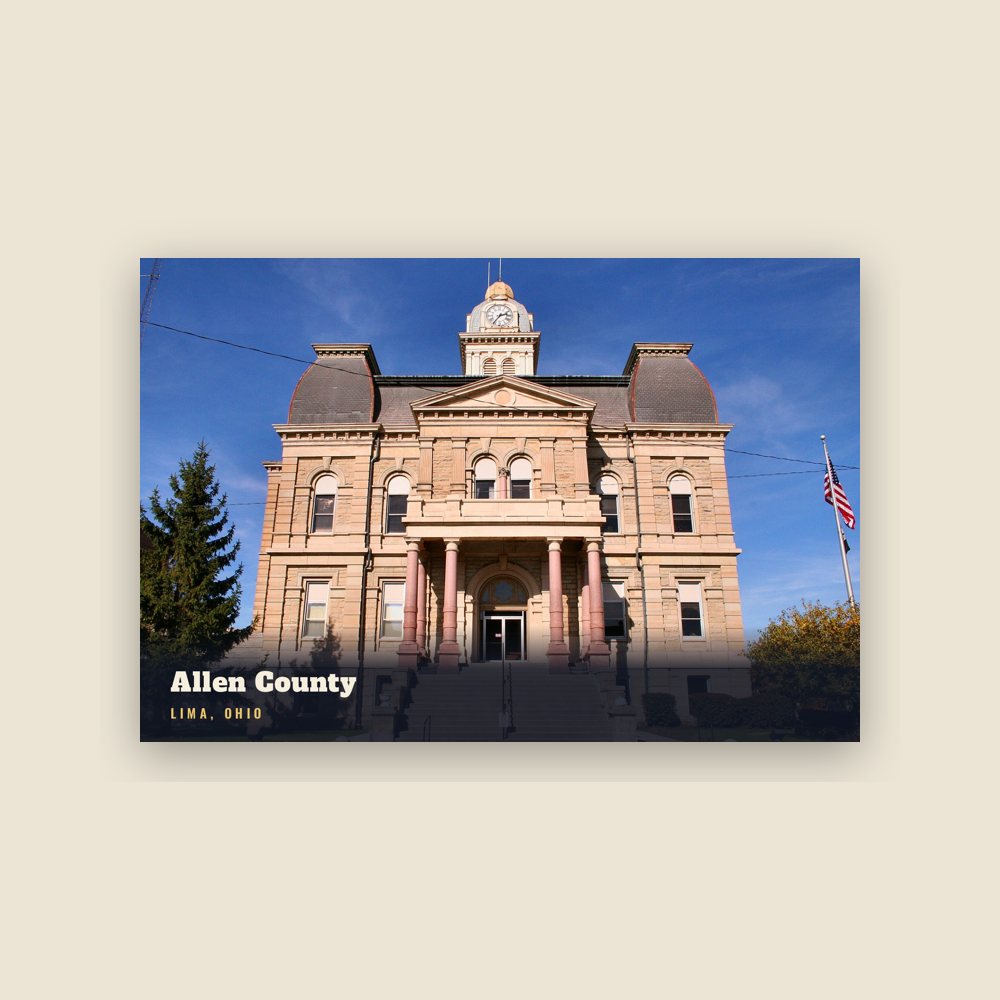
 Allen County
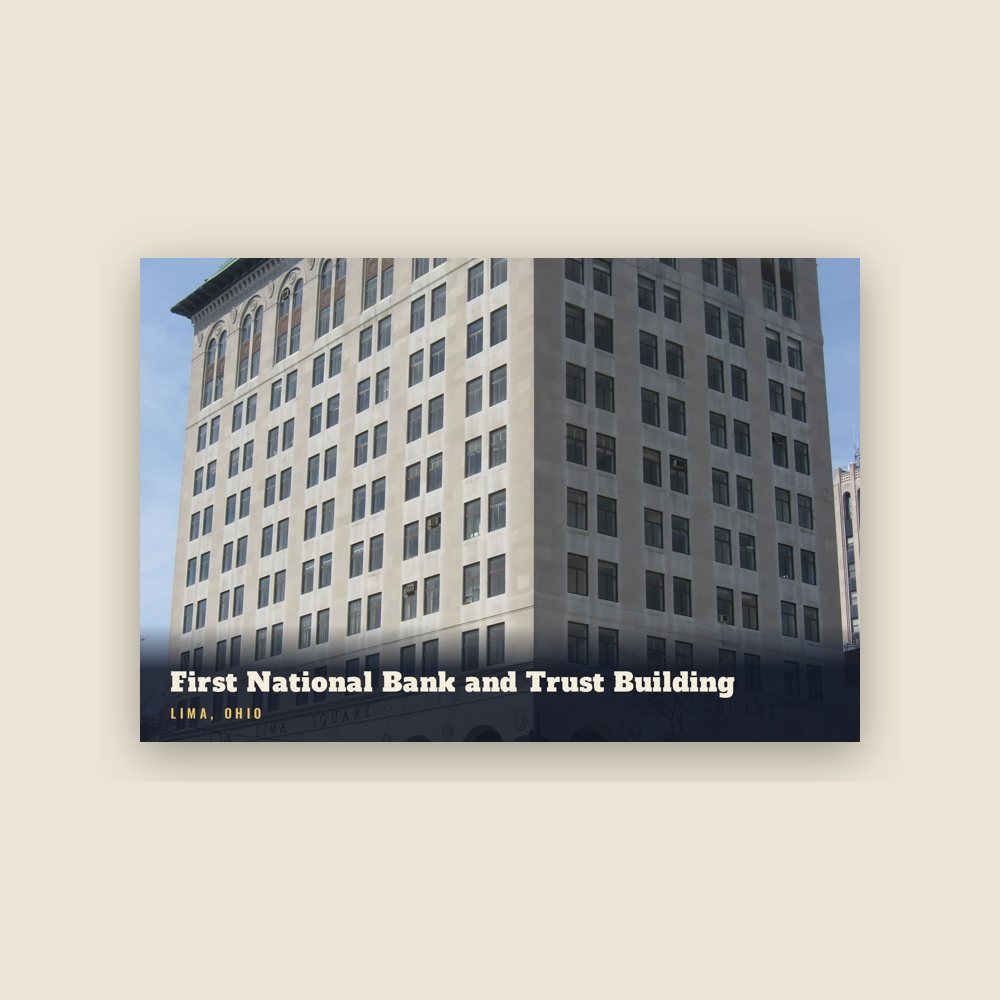
 First National Bank and Trust Building
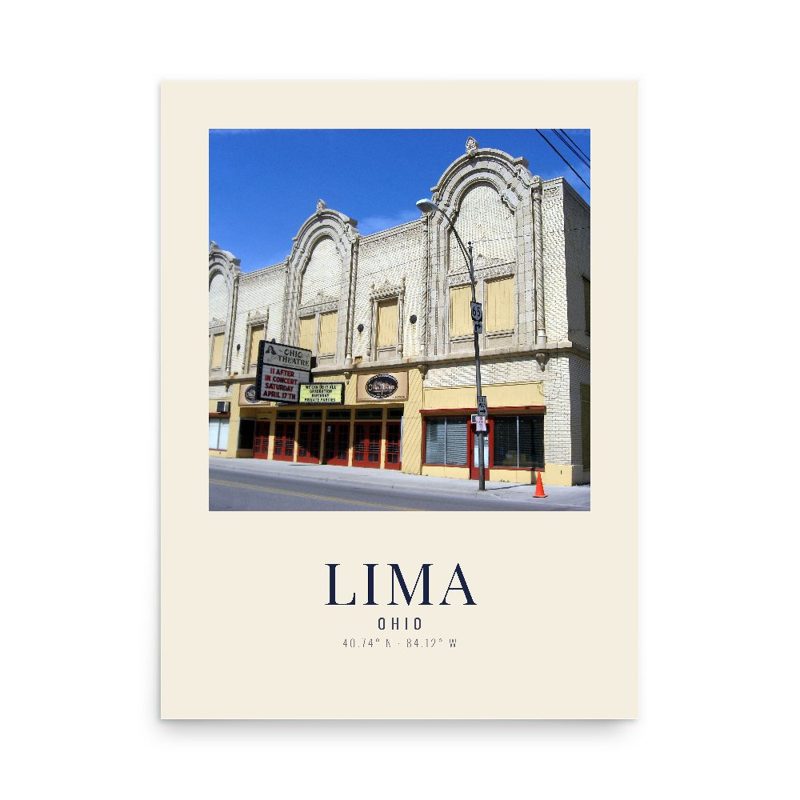
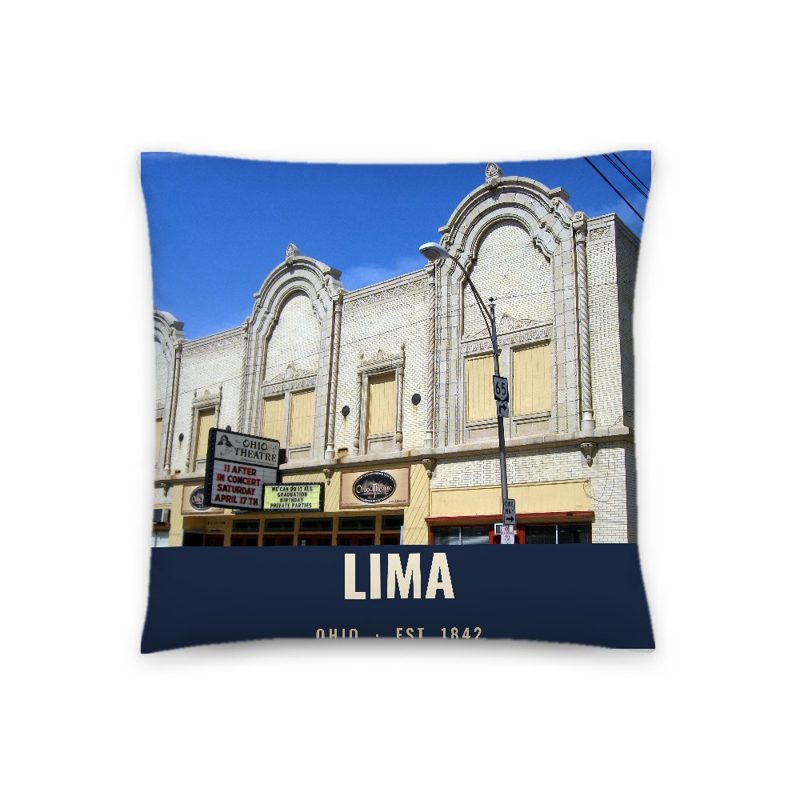
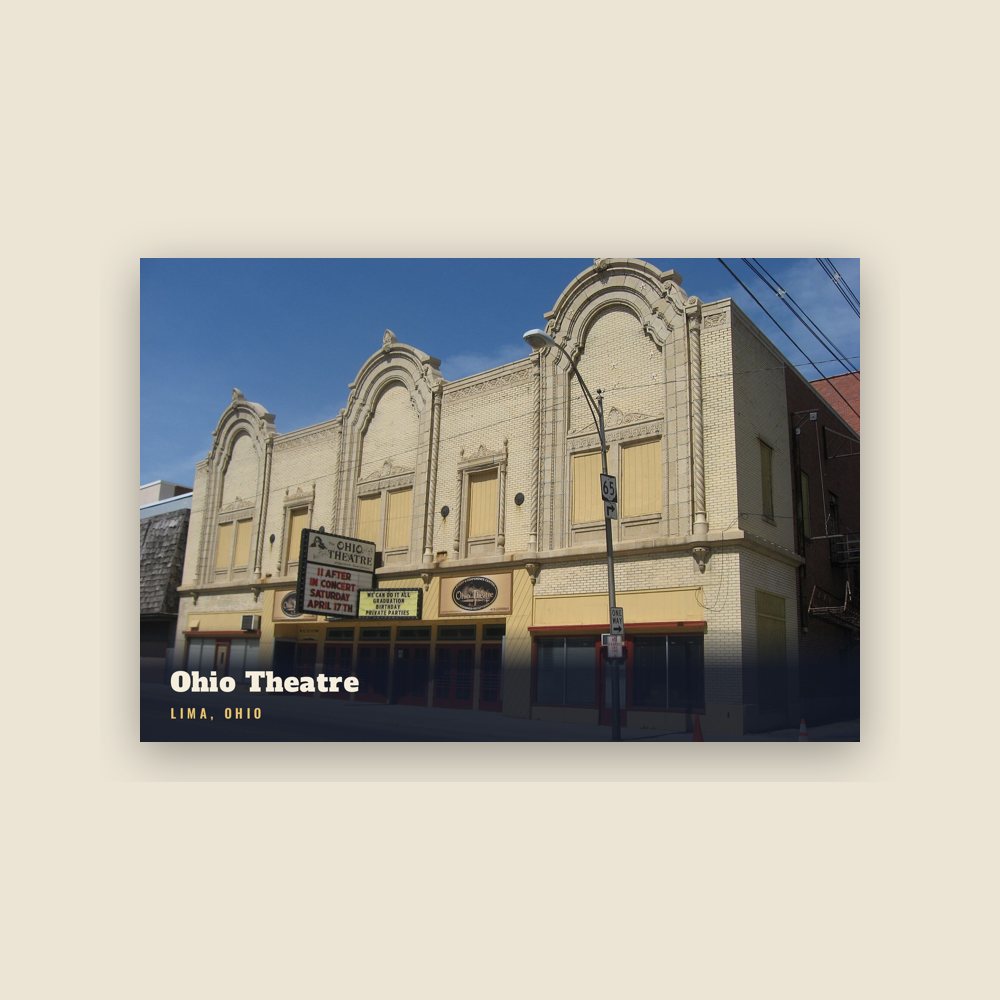
 Ohio Theatre