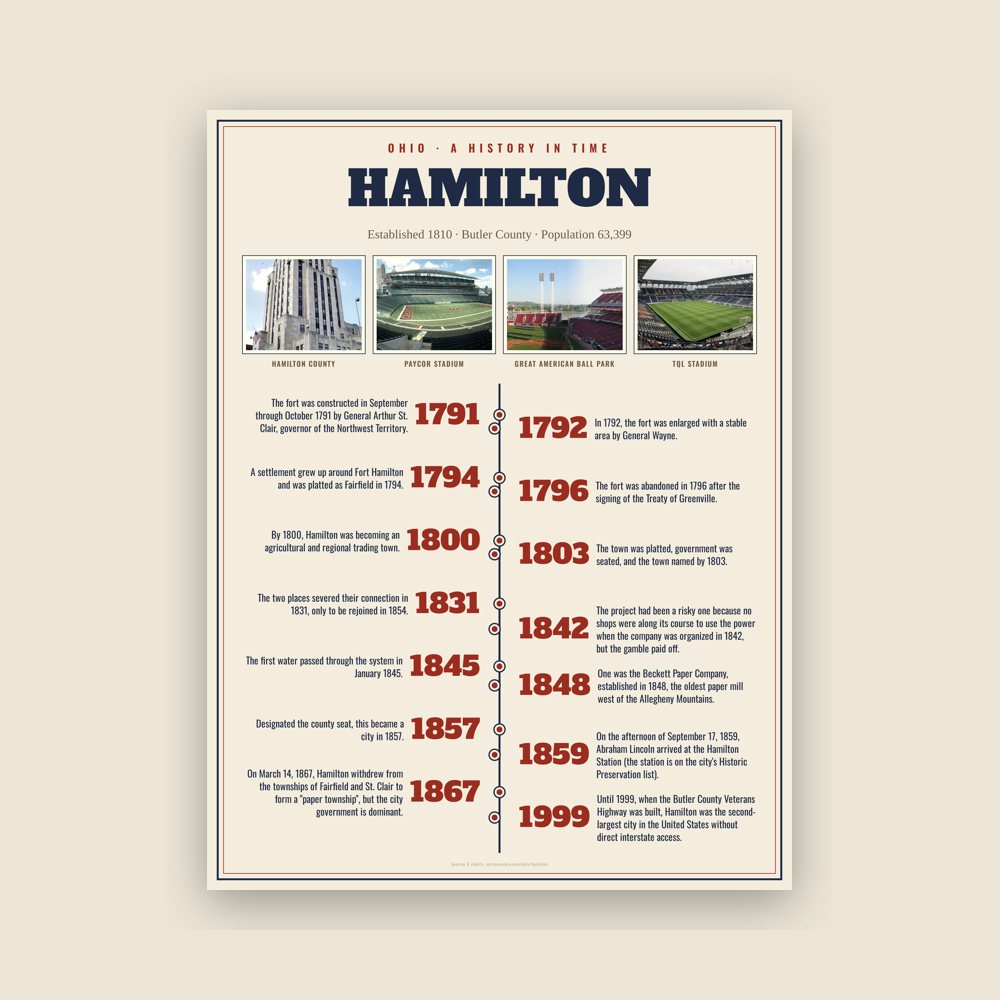
Hamilton originated as Fort Hamilton, named to honor Alexander Hamilton, first Secretary of the Treasury. The fort was constructed in September through October 1791 by General Arthur St. Clair, governor of the Northwest Territory. It was the first of several built north from Fort Washington into Indian territory. The fort was built to serve as a supply station for the troops of St. Clair during his campaign in the Northwest Indian War. Later, it was used by General "Mad" Anthony Wayne. It was located 28 miles (45 km) upstream from the mouth of the Great Miami River, where the river is shallow during normal flow and easily forded on its gravelly bottom by men, animals, and wagons. In 1792, the fort was enlarged with a stable area by General Wayne. The fort was abandoned in 1796 after the signing of the Treaty of Greenville.
Read the full history
Settlement and growth
A settlement grew up around Fort Hamilton and was platted as Fairfield in 1794. By 1800, Hamilton was becoming an agricultural and regional trading town. The town was platted, government was seated, and the town named by 1803.
Hamilton was first incorporated by an act of the Ohio General Assembly in 1810, but lost its status in 1815 for failure to hold elections. It was reincorporated in 1827 with Rossville, the community across the Great Miami River in St. Clair Township. The two places severed their connection in 1831, only to be rejoined in 1854. Designated the county seat, this became a city in 1857. On March 14, 1867, Hamilton withdrew from the townships of Fairfield and St. Clair to form a "paper township", but the city government is dominant.
On the afternoon of September 17, 1859, Abraham Lincoln arrived at the Hamilton Station (the station is on the city's Historic Preservation list). He gave a campaign speech in support of his fellow Republican, William Dennison, who was running for Ohio governor. Lincoln's speech concentrated on popular sovereignty. He began: "This beautiful and far-famed Miami Valley is the garden spot of the world". During this campaign, the relatively unknown Lincoln was first mentioned as a possible presidential contender.
Hamilton Hydraulic
The Hamilton Hydraulic, also called the Hamilton and Rossville Hydraulic, was a system devised to supply water power to shops and mills; it spurred one of Hamilton's greatest periods of industrial and population growth from 1840 to 1860. Specially built canals and natural reservoirs brought water from the Great Miami River north of Hamilton into the town as a source of power for future industries.
The hydraulic began about four miles (6.4 km) north of Hamilton on the river, where a dam was built to divert water into the system. Nearby, two reservoirs stored water for the hydraulic, whose main canal continued south along North Fifth Street to present Market Street. There, it took a sharp west turn to the river at the present intersection of Market Street and North Monument Avenue, between the former Hamilton Municipal Building and the present Courtyard by Marriott. The first water passed through the system in January 1845. As the water flowed through the canal, it turned millstones in the hydraulic. The project had been a risky one because no shops were along its course to use the power when the company was organized in 1842, but the gamble paid off. Several small industries were built on the hydraulic in the 1840s. One was the Beckett Paper Company, established in 1848, the oldest paper mill west of the Allegheny Mountains.
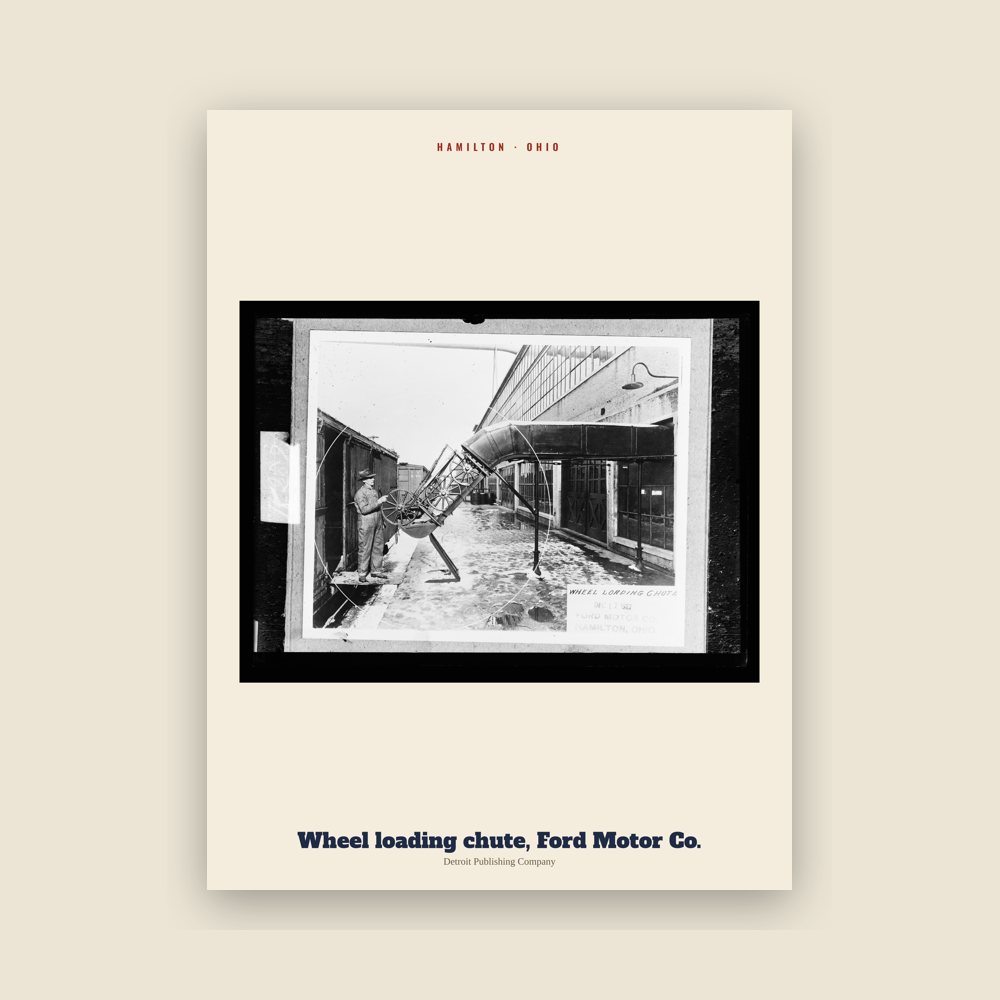
The hydraulic remained a principal source of power for Hamilton industries through the 1870s, when stationary steam engines became practical and affordable. Later, most of the hydraulic canal was covered and/or filled. The hydraulic attracted auto manufacturer Henry Ford to Hamilton after World War I, when he sought a site for a tractor factory. Ford built a plant, which soon converted to producing auto parts, at the north end of North Fifth Street, so it could take advantage of power provided by a branch of the hydraulic.
Industrialization
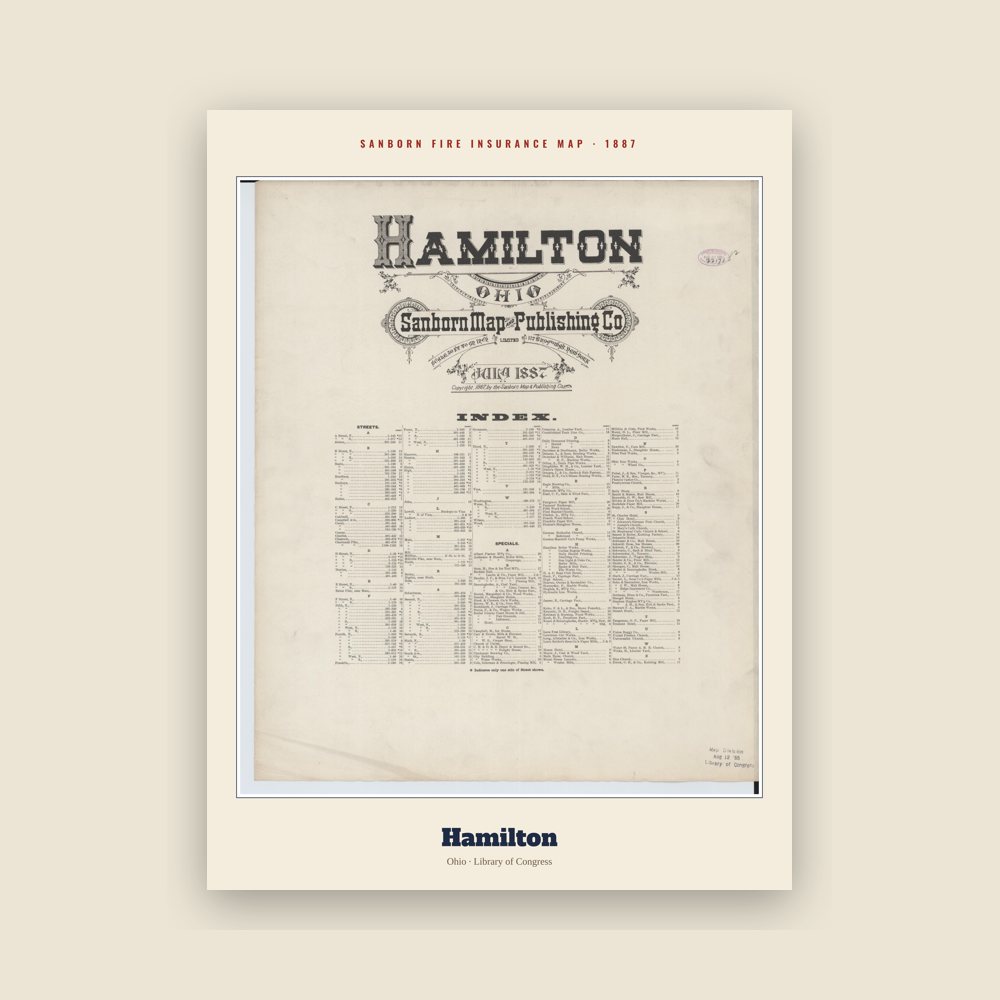
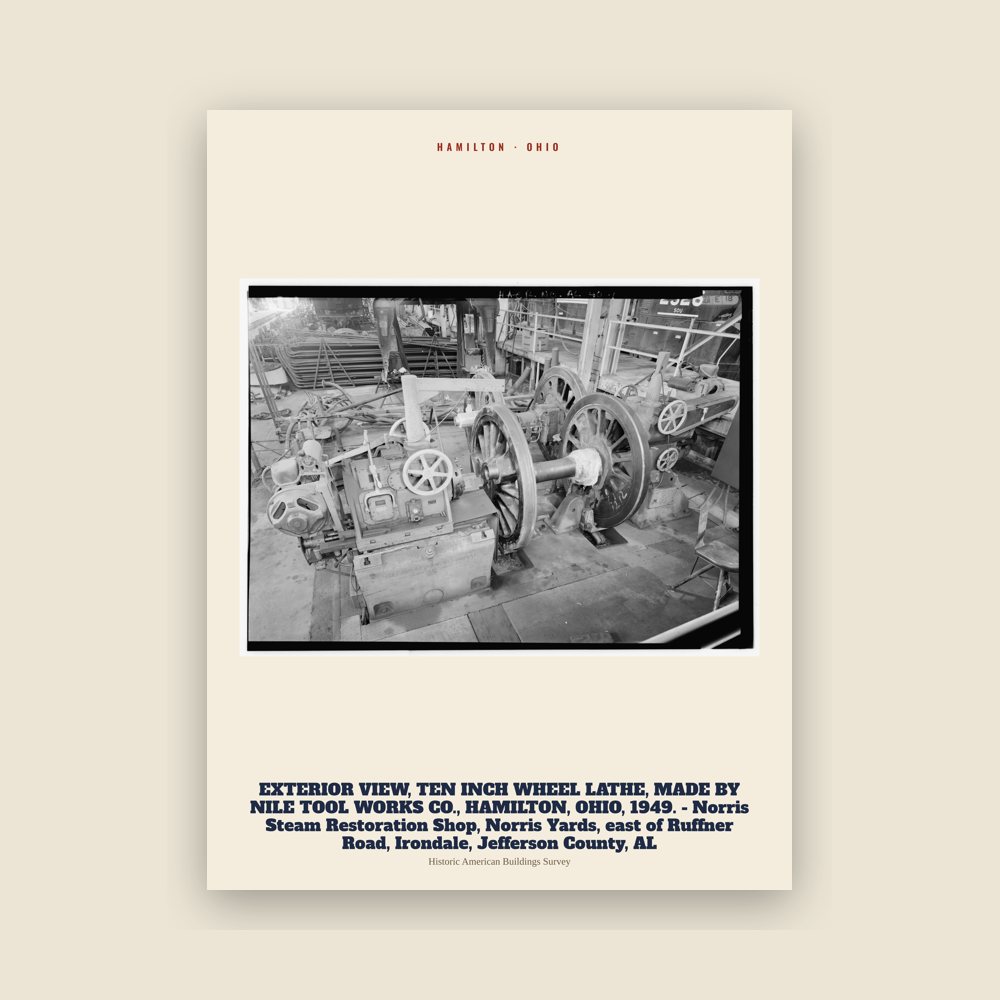
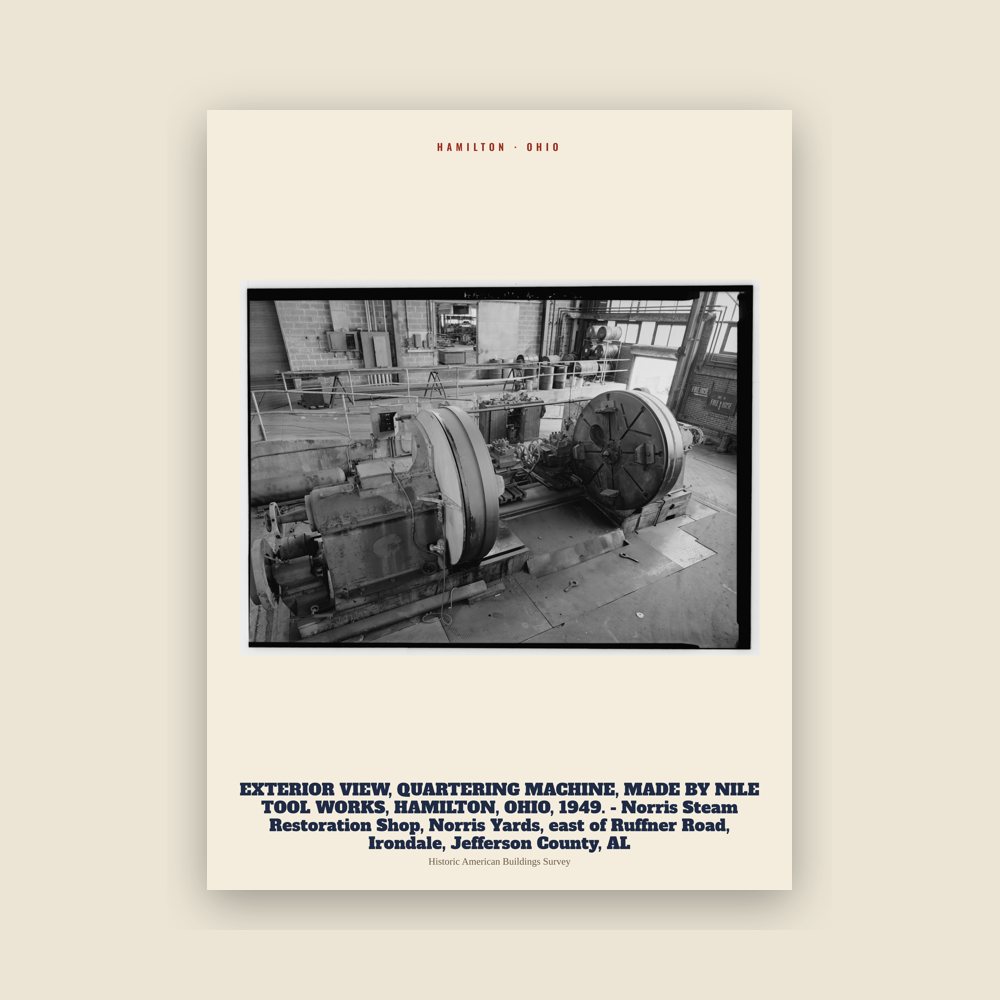
By the mid-19th century, Hamilton had developed as a significant manufacturing city. Its early products were often machines and equipment used to process the region's farm produce, such as steam engines, hay cutters, reapers, and threshers. Other production included machine tools, house hardware, saws for mills, paper, paper-making machinery, carriages, guns, whiskey, beer, woolen goods, and myriad and diverse output made from metal, grain, and cloth.
By the early 20th century, the town was a heavy-manufacturing center for vaults and safes, machine tools, cans for vegetables, paper, paper-making machinery, locomotives, frogs and switches for railroads, steam engines, diesel engines, foundry products, printing presses, and automobile parts. During the two world wars, its factories manufactured war materiel, Liberty ship engines, and gun lathes. Manufacturers used coke to feed furnaces. Its byproduct, gas, fueled streetlights. The Great Miami River Valley, in which Hamilton was located, had become an industrial giant.
The Butler County Courthouse, constructed between 1885 and 1889, was listed on the National Register of Historic Places because of its monumental architecture. The city has three historic districts: Dayton Lane, German Village, and Rossville. Like Cincinnati, Hamilton attracted many German and Italian immigrants from the mid-19th century on, whose influence was expressed in culture, food, and architecture. Hamilton also had a Jewish community; with increased immigration by Eastern European Jews, they founded Beth Israel Synagogue in 1901 as an Orthodox alternative to Hamilton's Reform synagogue, which had been founded by German Jews in the 1880s, when nearby Cincinnati was a center of Reform Judaism in the United States. At the time, around 250 Jewish families lived in Hamilton.
20th century to present
In the 1920s, many Chicago gangsters established second homes in Hamilton. This gave Hamilton the nickname "Little Chicago". Some of these men appeared to have invested in what became an active district of gambling and prostitution. During World War II, the military declared the entire city off-limits to its enlisted personnel because of its numerous gambling and prostitution establishments. Madame Freeze's and the long row of prostitution houses along Wood Street (now called Pershing Avenue) were notorious among soldiers. Factories in Hamilton converted their operations to support the war effort, manufacturing military supplies, such as tank turrets, Liberty ship and submarine engines, and machined and stamped metal parts.
With the 1950s came the construction of the new interstate highway, I-75, part of the nationwide system. It bypassed Hamilton following a decision made to reduce traffic through the city. As a result, businesses were drawn to areas outside Hamilton with easier access to I-75. Until 1999, when the Butler County Veterans Highway was built, Hamilton was the second-largest city in the United States without direct interstate access.
In the late 20th century, industrial restructuring in heavy manufacturing resulted in widespread loss of jobs in older industrial cities, as operations were merged, relocated, and finally moved offshore. Like other Rust Belt cities in the northern tier, Hamilton has struggled to develop a new economy after such wide-scale changes, but it has retained more of its population than many such cities. In addition, since the late 20th century, it has attracted new immigrants, primarily from Mexico and Central America.
On March 30, 1975, Easter Sunday, James Ruppert murdered 11 family members in his mother's house at 635 Minor Avenue in Hamilton, in what is referred to as the "Easter Sunday Massacre". The murders shocked the town of Hamilton and the entire country. This was the deadliest shooting inside a private residence in American history.
On May 28, 1986, as part of a plan to increase publicity about Hamilton and boost its revitalization, the City Council voted 5 to 1 in favor of adding an exclamation point to the city's name, similar to the popular musical Oklahoma!. Thus, Hamilton officially became Hamilton!. While at the time used extensively in the city's documents, letterheads, business cards, and on local signage, the United States Board on Geographic Names did not include the exclamation point, nor did Rand McNally maps. The exclamation point is generally no longer used. It is not in use on the Hamilton municipal website.
In 2009 and 2015, the city won the Berkeley Springs International Water Tasting Awards for best-tasting municipal water for the United States; and in 2010, the gold medal for the best tasting water in the world. They also placed third (second-best in America) in 2014, 2017, and 2018; and fifth in 2022.
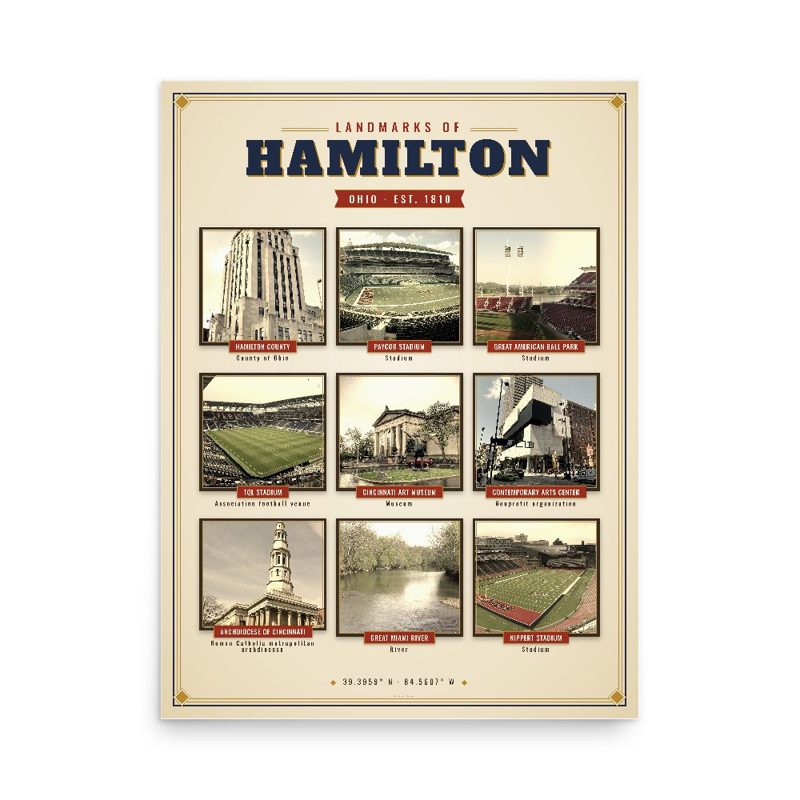
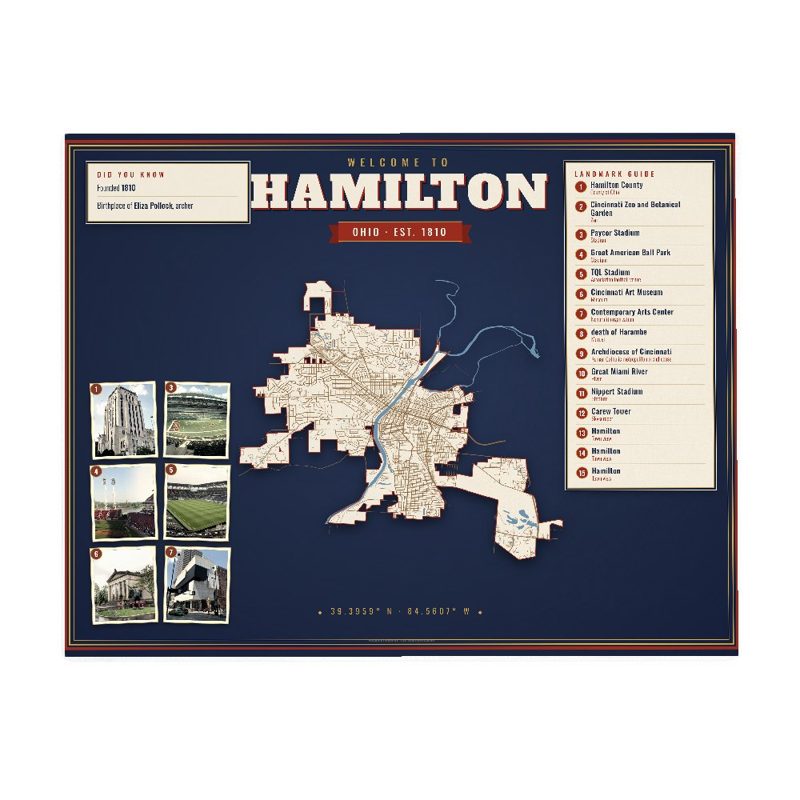
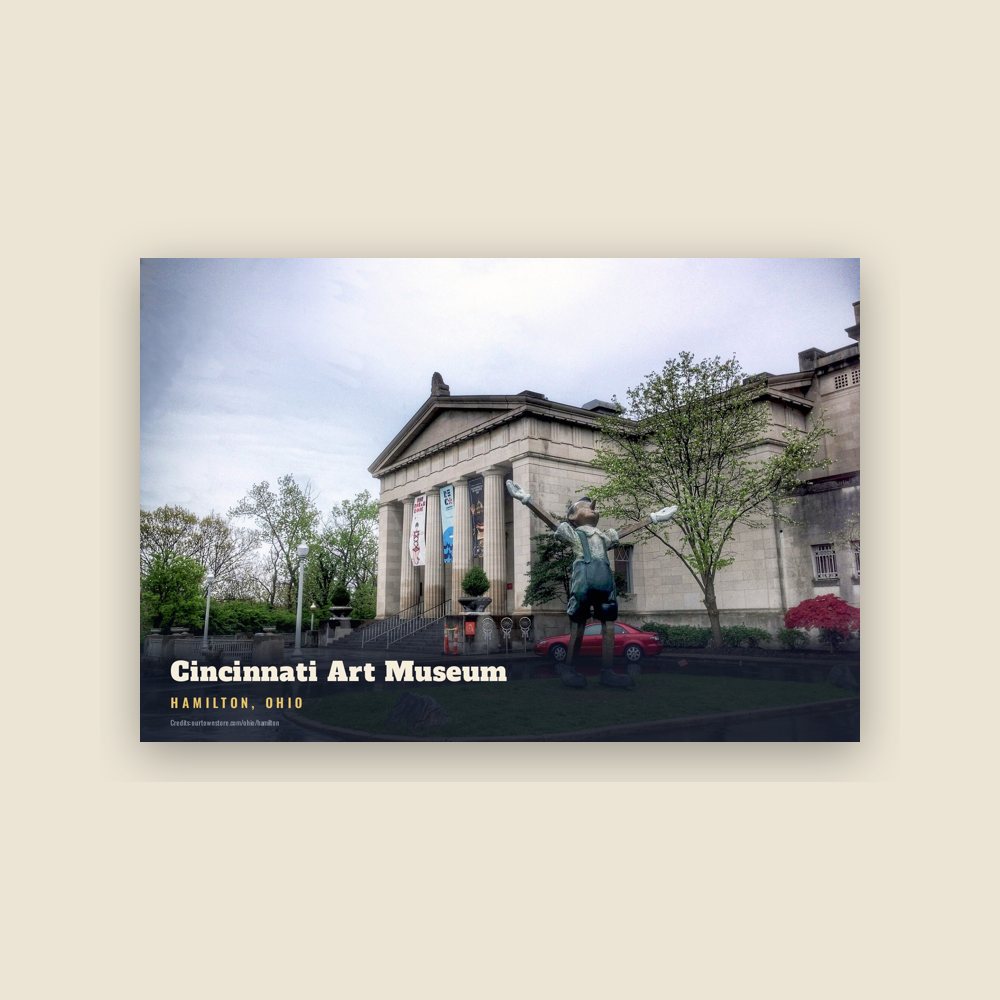
 Cincinnati Art Museum
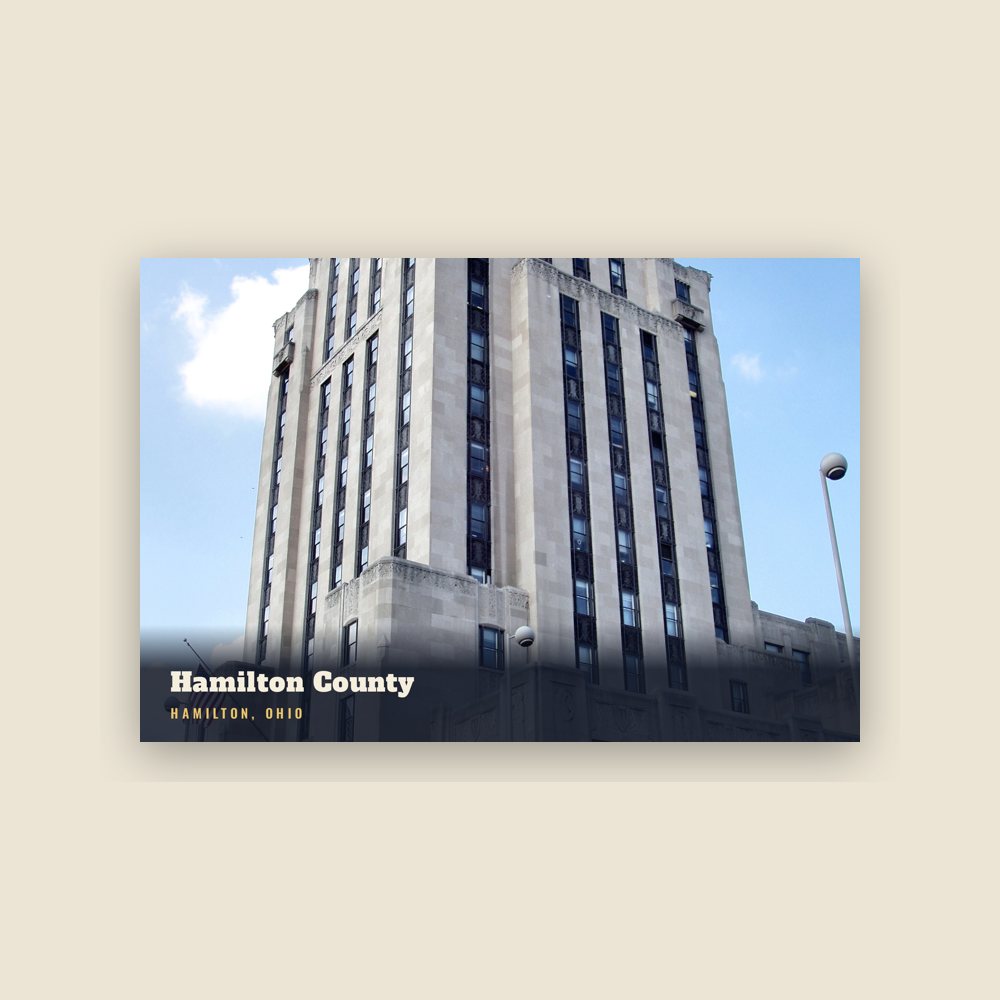
 Hamilton County
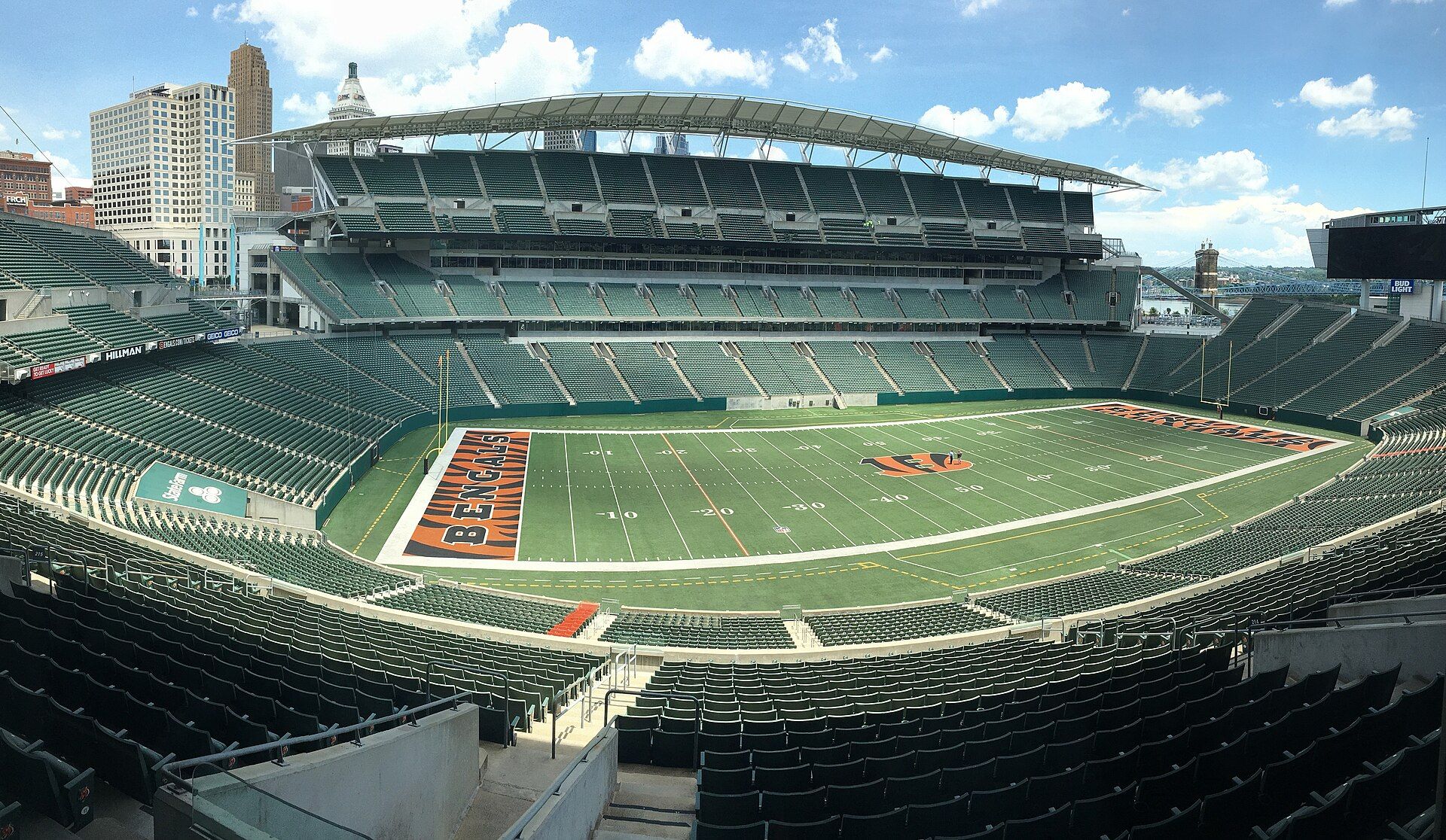
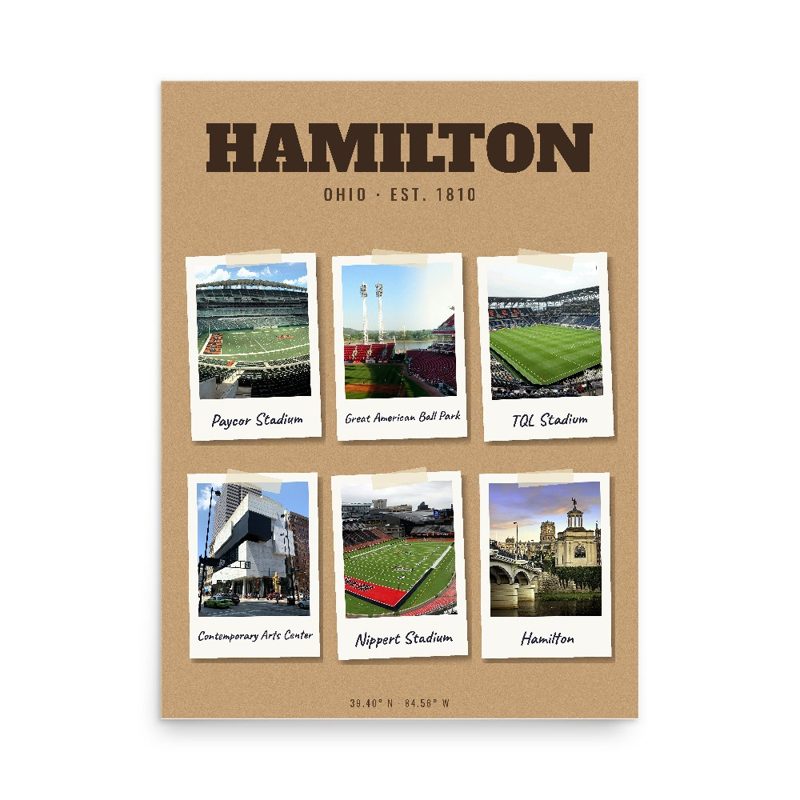
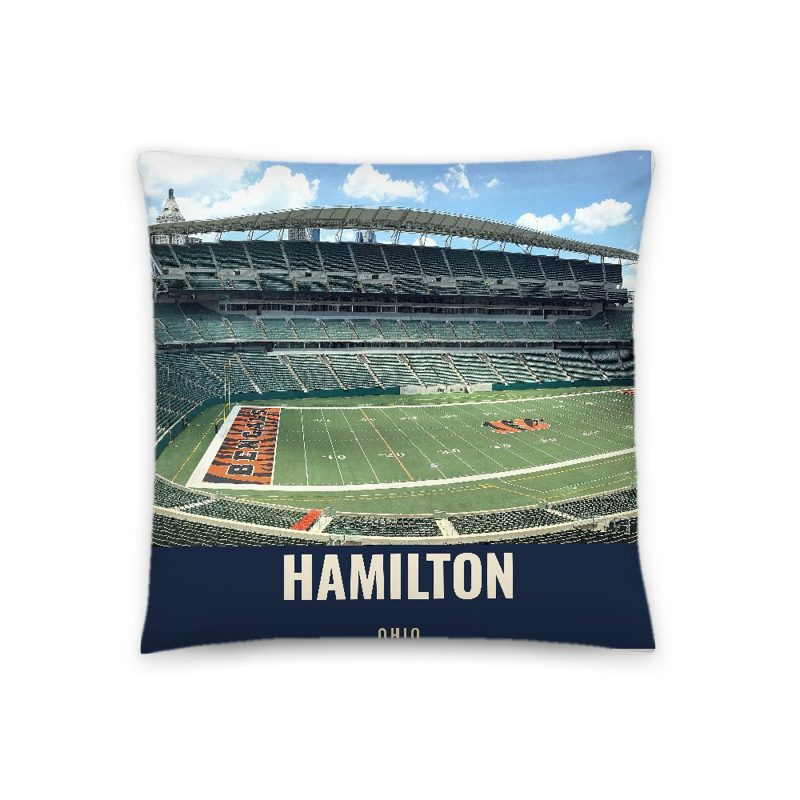
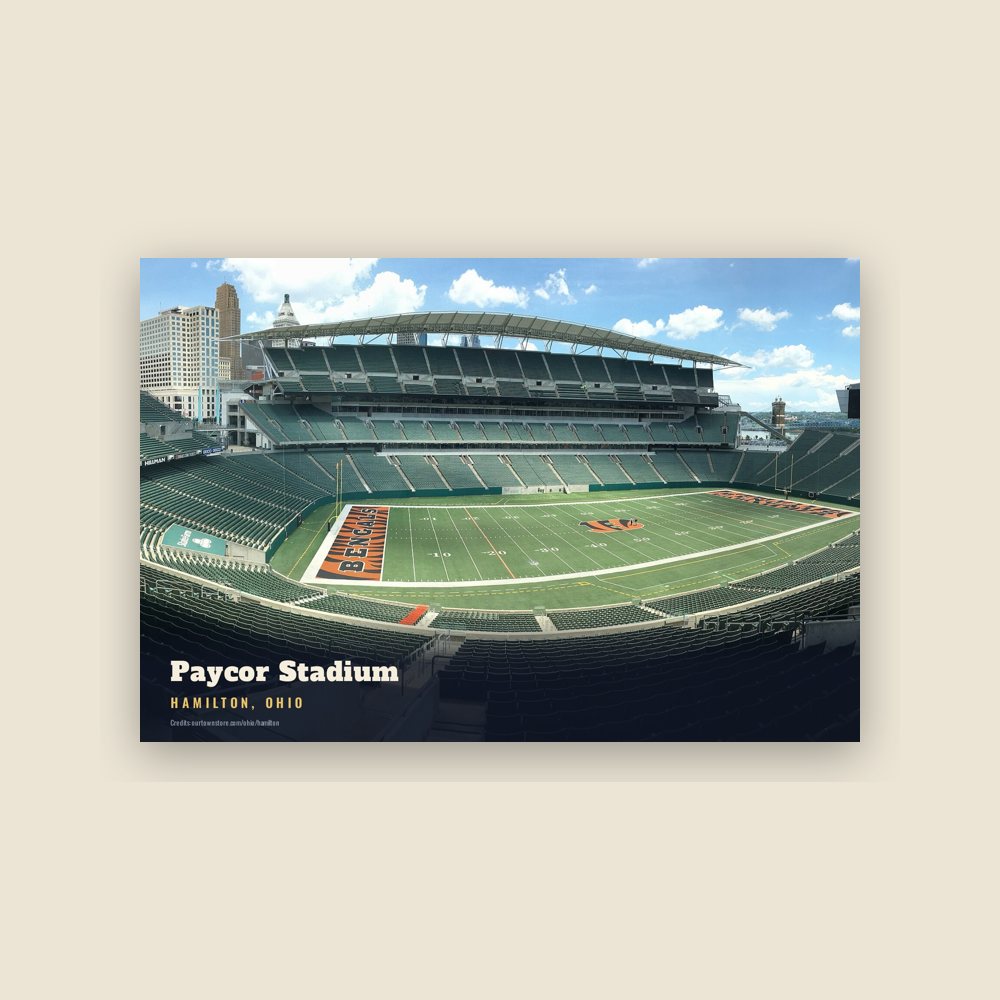
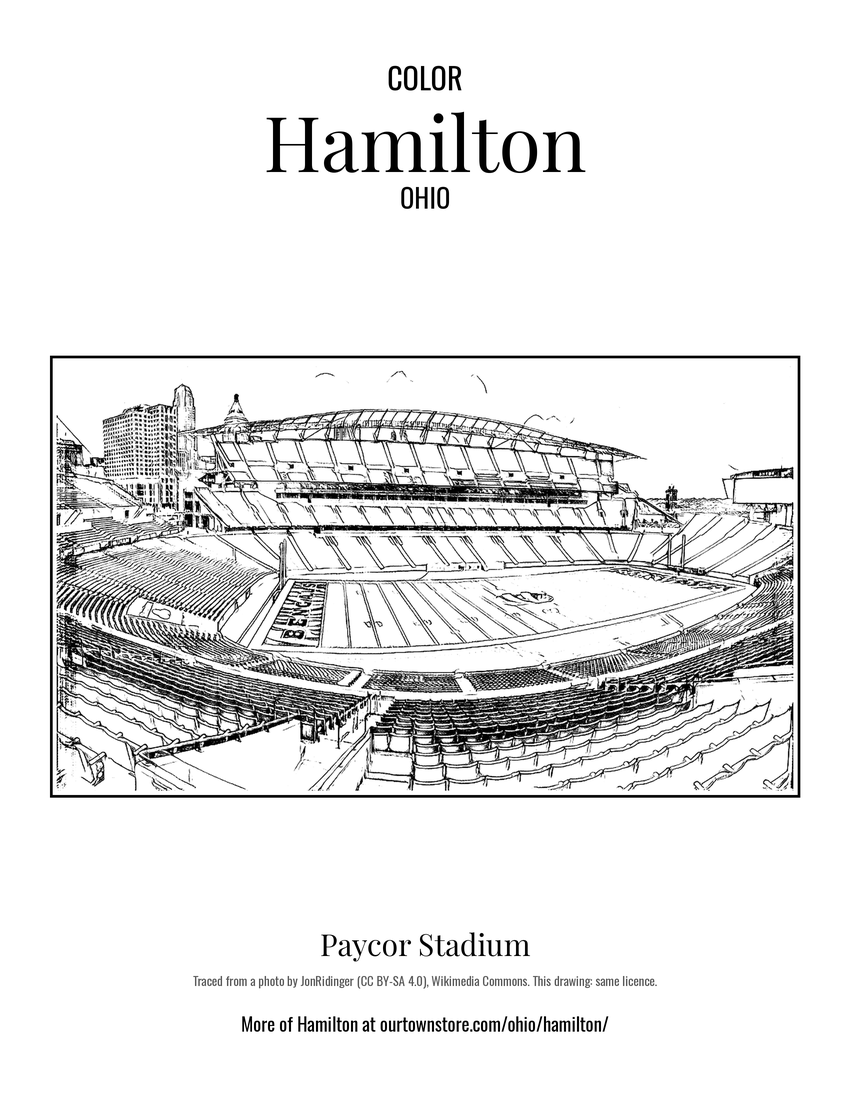 Paycor Stadium
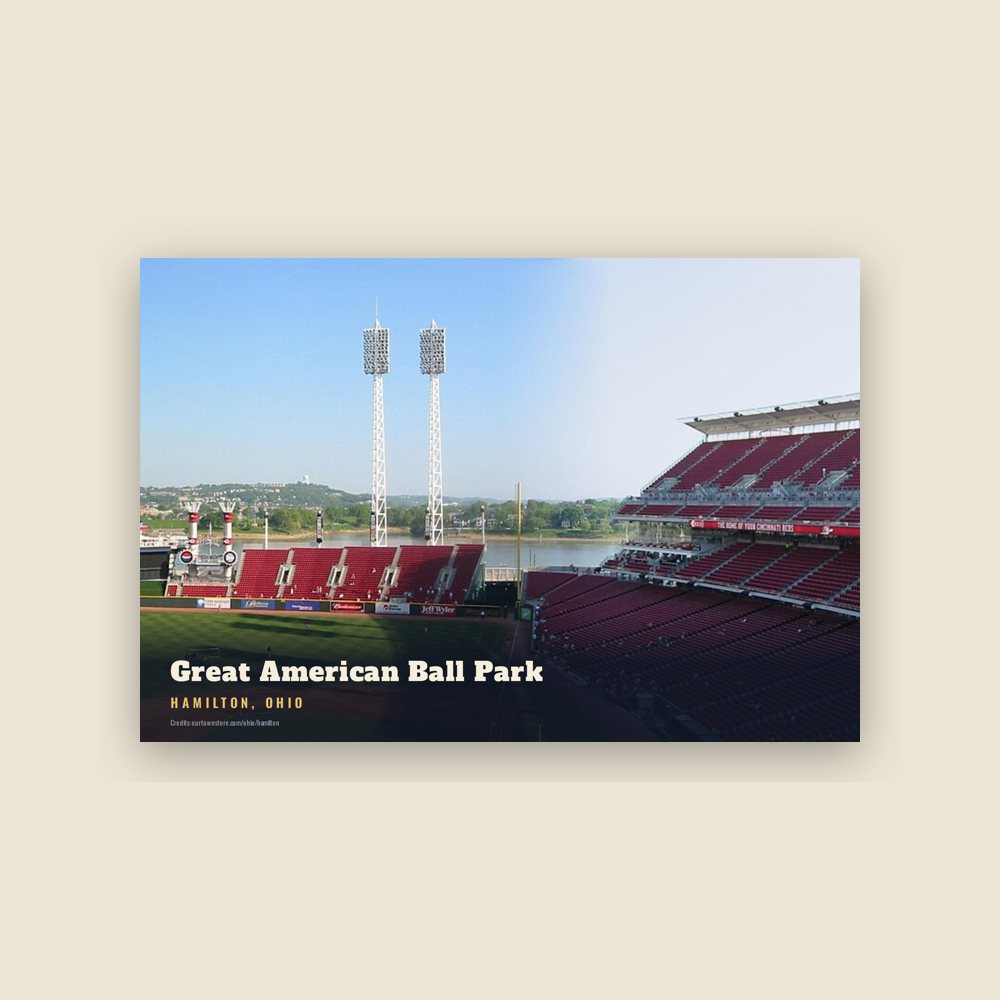
 Great American Ball Park