A short history of East Liverpool
Native American petroglyphs exist in the area surrounding East Liverpool, including on Babbs Island and near the Little Beaver Creek. Before the arrival of European Americans, Mingo, Lenape, and Wyandot peoples lived in the area until the Battle of Fallen Timbers led to the Ohio Country's colonization by European-Americans.
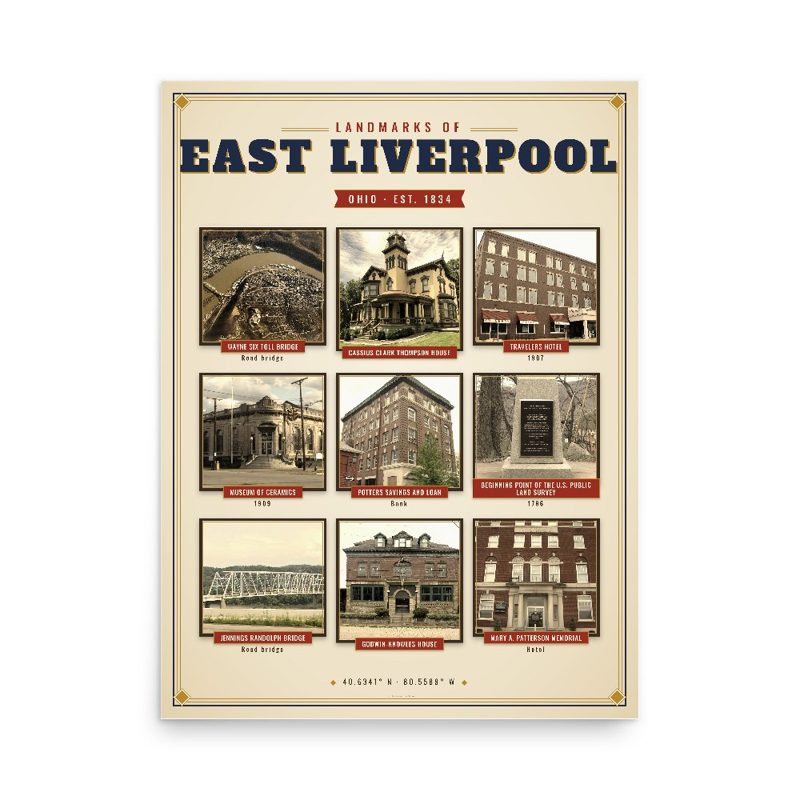
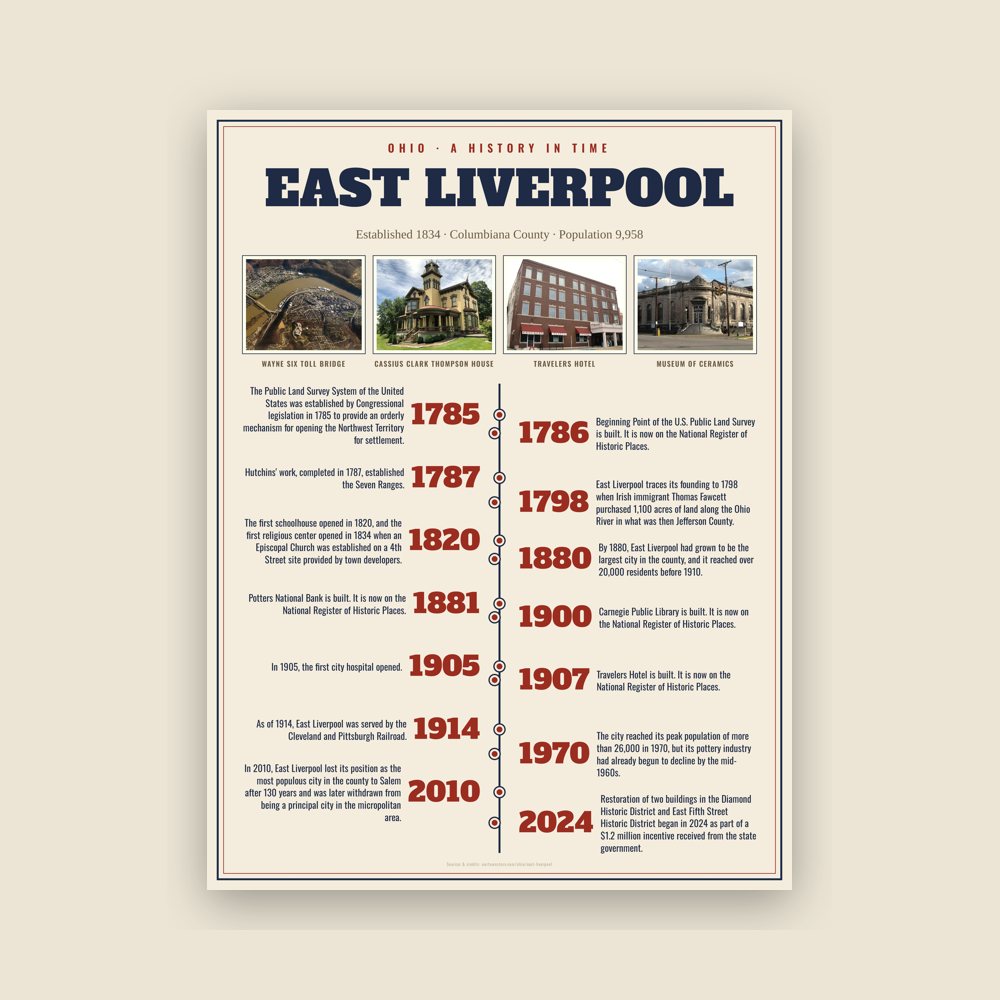
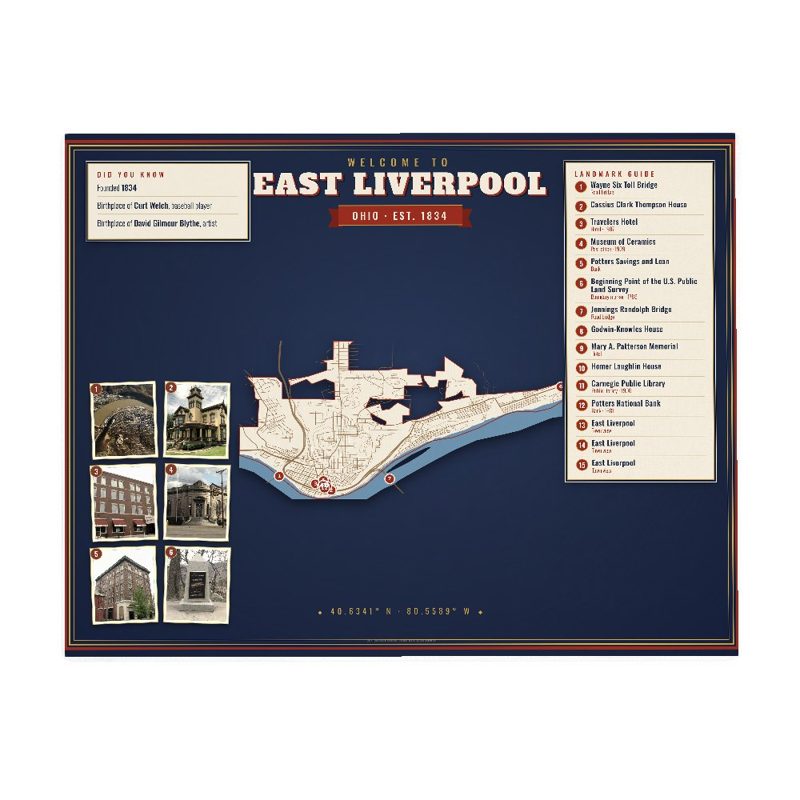
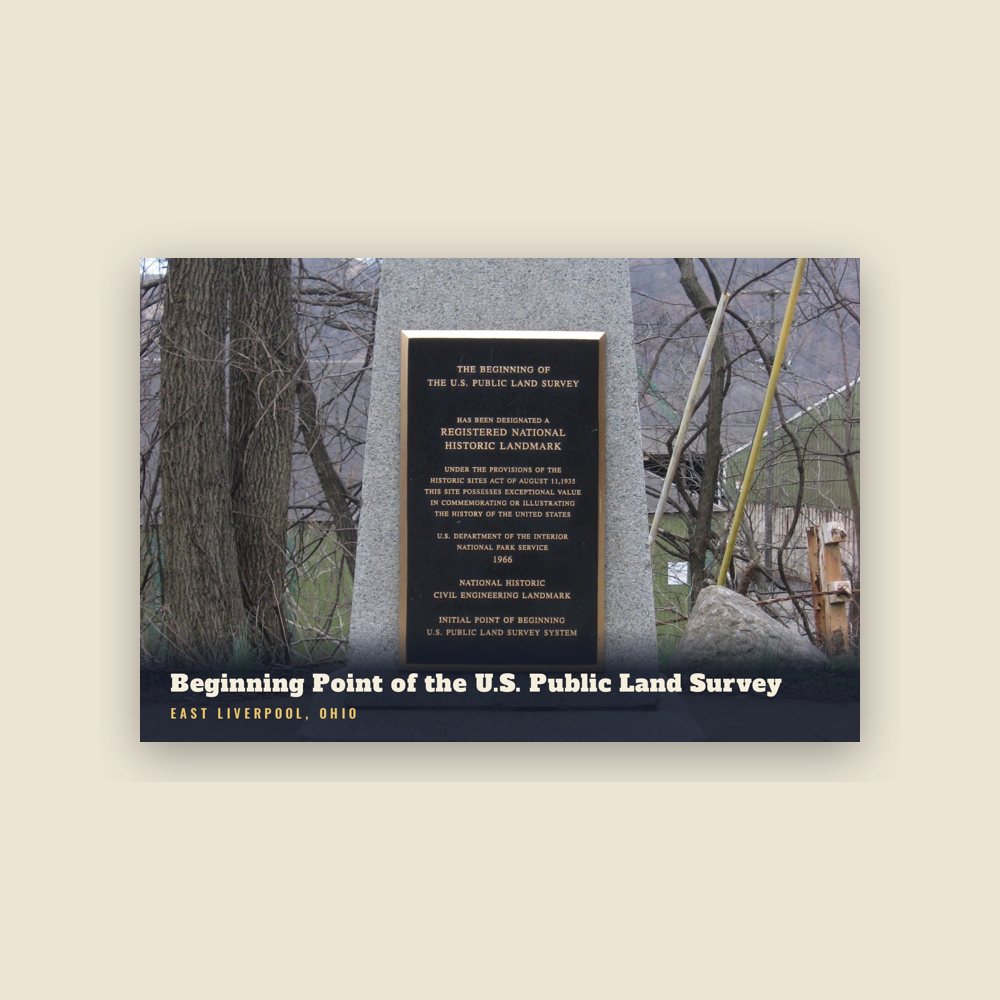
The Public Land Survey System of the United States was established by Congressional legislation in 1785 to provide an orderly mechanism for opening the Northwest Territory for settlement. The ordinance directed the Geographer of the United States, Thomas Hutchins, to survey an initial east–west baseline. Hutchins began in 1786, using as his starting point a stake on the north bank of the Ohio River placed by a 1785 survey team from Virginia and Pennsylvania to fix their common north–south boundary. Hutchins' work, completed in 1787, established the Seven Ranges. This survey is believed to be "the first mathematically designed system and nationally conducted cadastral survey in any modern country" and is memorialized by the Beginning Point of the U.S. Public Land Survey monument.
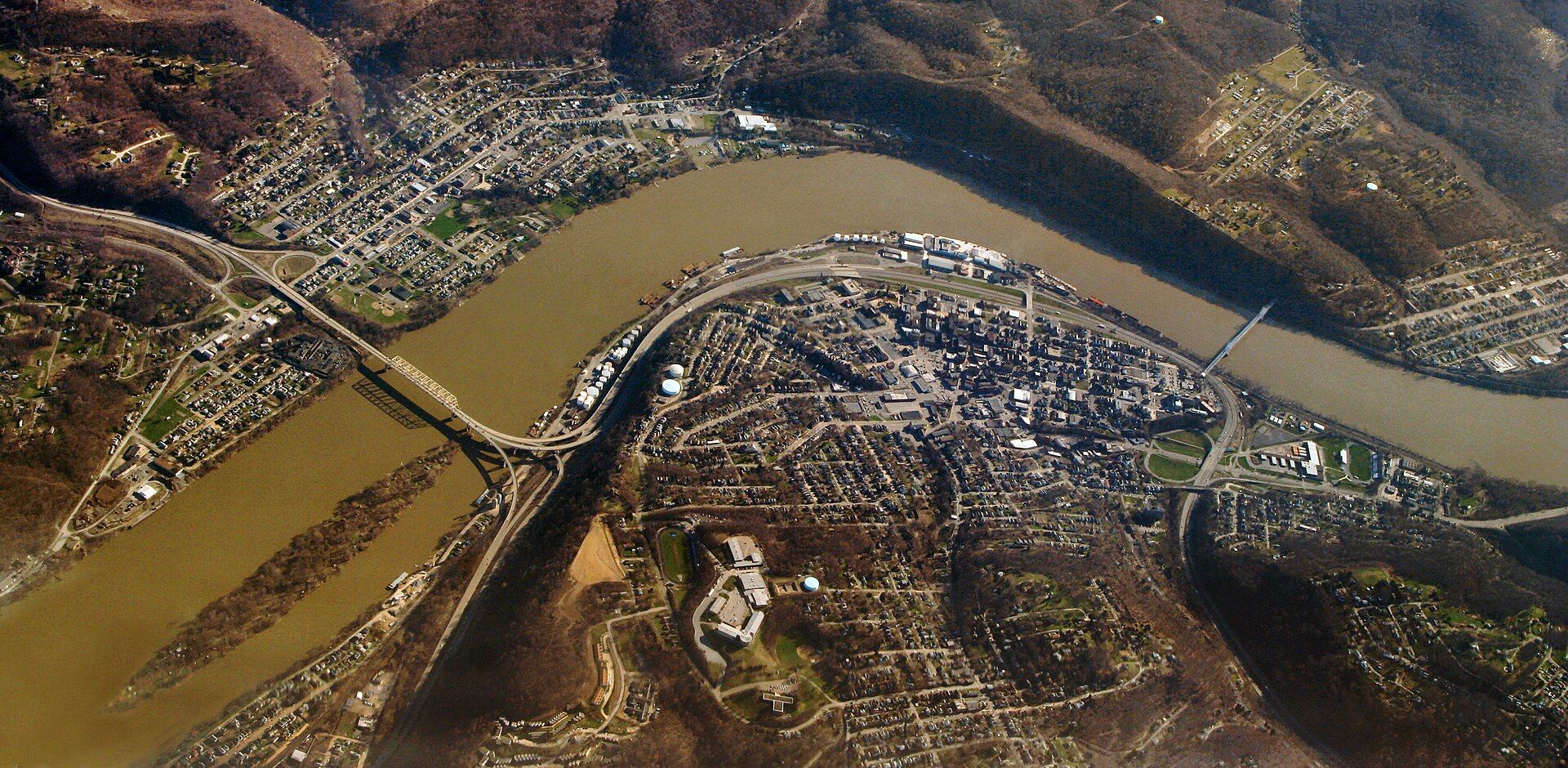
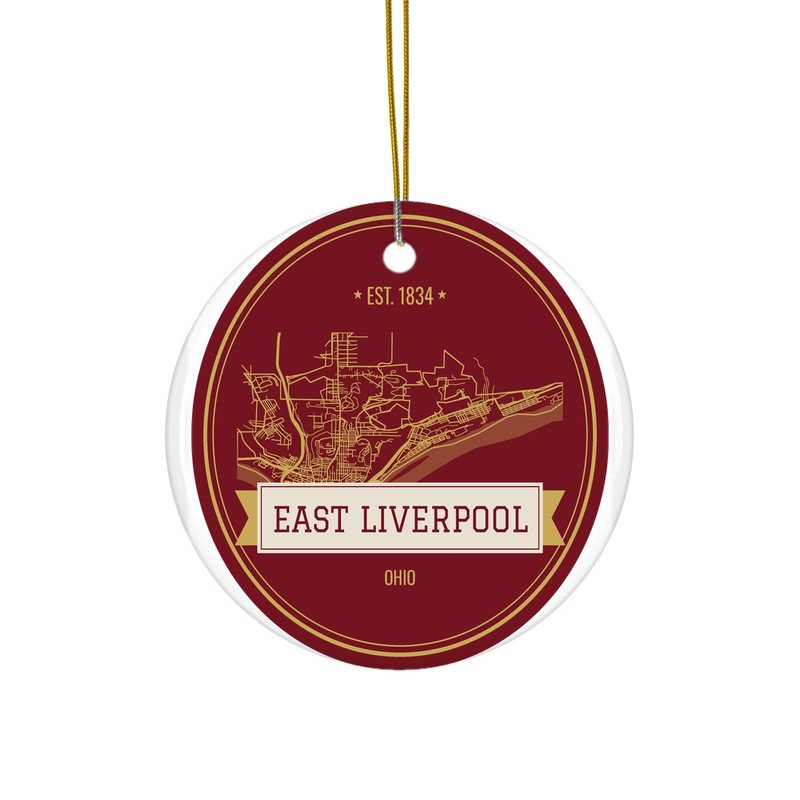
East Liverpool traces its founding to 1798 when Irish immigrant Thomas Fawcett purchased 1,100 acres of land along the Ohio River in what was then Jefferson County. In 1802, he platted the town of St. Clair, named for territorial governor Arthur St. Clair. It was called Fawcettstown for a time before being renamed Liverpool in 1816, after the port city of Liverpool, England. Over its first few decades, a grist mill, multiple stores, and wharves opened in the town. The first schoolhouse opened in 1820, and the first religious center opened in 1834 when an Episcopal Church was established on a 4th Street site provided by town developers. Liverpool was incorporated as East Liverpool in 1834 to avoid confusion with Liverpool Township, Medina County, Ohio.
Although Pittsburgh-based entrepreneurs invested in the town, it was smaller during this period than the nearby towns of New Lisbon and Wellsville. The arrival of English potter James Bennett in 1839 brought the establishment of the first bottle kiln site in East Liverpool, launching the town's largest industry and bringing in multiple waves of Western European immigration throughout the late 19th century. Another large employer outside of the pottery industry was the Crucible Steel Company in nearby Midland, Pennsylvania. By 1880, East Liverpool had grown to be the largest city in the county, and it reached over 20,000 residents before 1910.
In 1905, the first city hospital opened. As of 1914, East Liverpool was served by the Cleveland and Pittsburgh Railroad. On October 22, 1934, local police and FBI agents led by Melvin Purvis shot and killed notorious bank robber Pretty Boy Floyd in a cornfield north of town after Floyd fled East Liverpool, and his body was returned to the town for embalming.
The western downtown area was cleared in the 1960s to make way for the 4-lane expansion of Ohio State Route 11. The city reached its peak population of more than 26,000 in 1970, but its pottery industry had already begun to decline by the mid-1960s. As with other industries, production moved to developing countries where labor costs were cheaper. This cost many jobs and, ultimately, population in the Upper Ohio Valley area, as people moved away in search of work. Many of the city's downtown businesses withdrew to strip malls in nearby Calcutta or left the area outright.
In the mid-1990s, the city renovated its downtown district. To improve its urban design, it installed Depression-era lightposts, developed a new center called Devon's Diamond, and reconstructed the old high school's clock tower. In 2010, East Liverpool lost its position as the most populous city in the county to Salem after 130 years and was later withdrawn from being a principal city in the micropolitan area. Restoration of two buildings in the Diamond Historic District and East Fifth Street Historic District began in 2024 as part of a $1.2 million incentive received from the state government.
Adapted (trimmed) from the Wikipedia article East Liverpool, Ohio, revision 1376415750 by its contributors, licensed CC BY-SA 4.0.