A short history of Centerville
Following the signing of the Treaty of Greenville, which opened the Northwest Territory to settlement, Centerville was first surveyed in February 1796 by Aaron Nutt, Benjamin Archer, and Benjamin Robbins, three brothers-in-law who traveled from New Jersey through Pennsylvania and Kentucky. Their survey of land owned by John Cleves Symmes occurred two months prior to the establishment of Dayton. They each claimed land near the intersection of Main and Franklin Streets. Robbins and two of his brothers chose land in Centerville, with Robbins selecting 160 acres northwest of the town center due to the abundance of springs. Benjamin Robbins named the settlement after his hometown of Centreville, New Jersey, citing its location between two rivers and its proximity to several other communities.
In 1796, Dr. John Hole, a veteran of the American Revolutionary War who served under General Richard Montgomery, arrived in the region. He was the first physician in the area and is credited with naming Montgomery County in honor of the general. Dr. Hole settled northwest of present-day Centerville, in the area that would become Washington Township, where he built a cabin for his family near Holes Creek.
On April 6, 1797, Benjamin Robbins and his family arrived in Centerville from Dry Ridge, Kentucky, after constructing a wagon road over ten days. Robbins built a log cabin for his family, which was later damaged by a storm. His son, Sam Robbins, would later become the first mayor of Centerville.
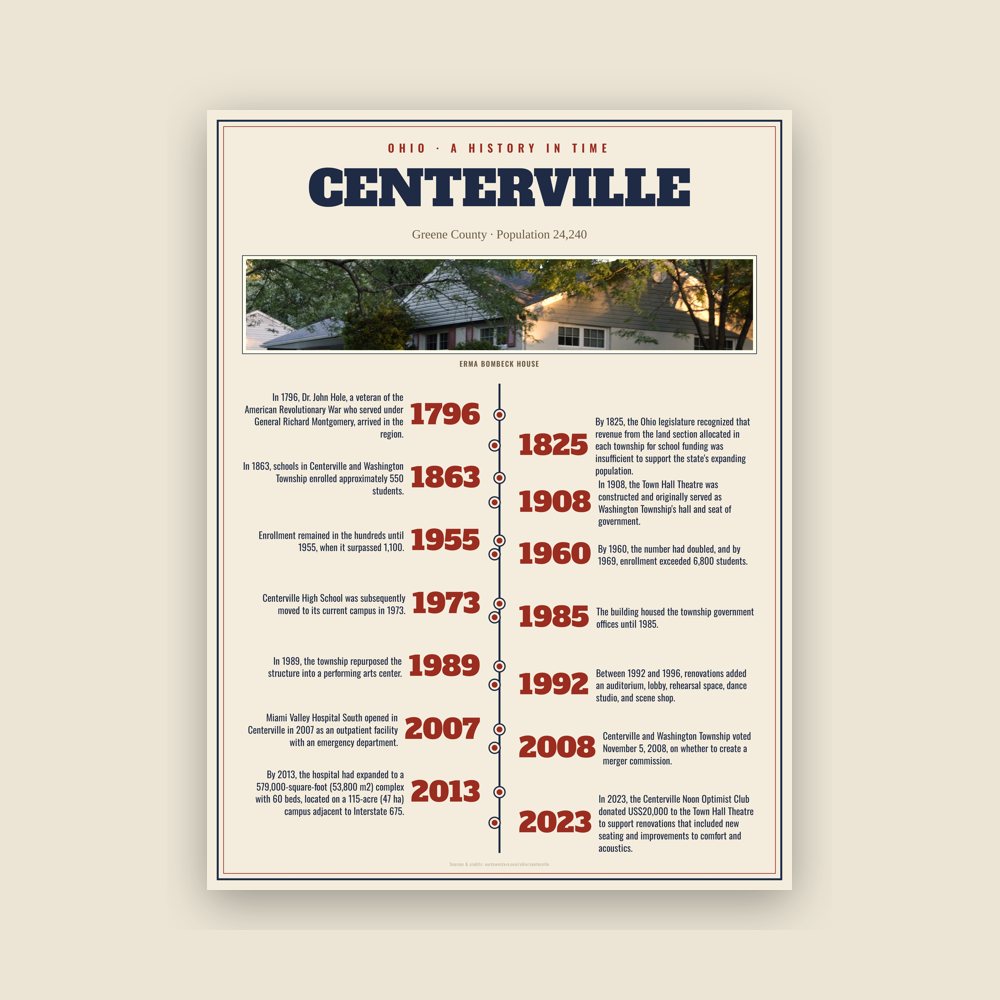
In 1799, Edmund Munger arrived with his family and advocated for formal education. His seven children attended a neighborhood school constructed from logs sourced from nearby hardwood forests. Attendance at such schools was often irregular, particularly for boys who were needed at home to assist with farm work. By 1825, the Ohio legislature recognized that revenue from the land section allocated in each township for school funding was insufficient to support the state's expanding population. In response, lawmakers authorized a statewide school tax to provide more consistent financial support for education. The implementation of the statewide school tax led to the construction of more durable school buildings. Brick structures replaced earlier log cabin schools, and the number of schools in Washington Township grew to nine, commonly referred to as district schools.
As more families settled in the area, they cleared land to build homes and establish farms. Early settlers initially constructed log houses, which were later replaced by stone homes made from the region's abundant limestone. At one point in the 19th century, nearly 100 stone buildings lined local streets and homesteads, many of which still exist today.
Because slavery was outlawed in the Northwest Territory, slave owners generally did not settle in Centerville. However, southwest Ohio had several escape routes for enslaved individuals fleeing north after crossing the Ohio River. One route from Cincinnati passed through Lebanon, Springboro and Centerville. Another began in Ripley and traveled through Wilmington and Centerville.
Abolitionist activity was present in Centerville and Washington Township, where historical evidence suggests that four safe houses associated with the Underground Railroad existed. In one instance from the late 1820s, a runaway slave was found and sheltered by the Sunderland family on their farm. The slave worked for the Sunderlands until the Kentucky owner was informed of his location by the suitor of one of the Sunderland daughters. When slave hunters arrived at the farm, the runaway managed to escape.
In 1863, schools in Centerville and Washington Township enrolled approximately 550 students. Enrollment remained in the hundreds until 1955, when it surpassed 1,100. By 1960, the number had doubled, and by 1969, enrollment exceeded 6,800 students. That same year, the district was renamed Centerville City Schools. Centerville High School was subsequently moved to its current campus in 1973.
In 1908, the Town Hall Theatre was constructed and originally served as Washington Township's hall and seat of government. It was used for meetings of township trustees and as a venue for various community activities. The building housed the township government offices until 1985. In 1989, the township repurposed the structure into a performing arts center. Between 1992 and 1996, renovations added an auditorium, lobby, rehearsal space, dance studio, and scene shop. In 2019, a dispute emerged between Centerville and Washington Township over the adjacent open space, with the township advocating to maintain it as green space. Both parties submitted bids for the property, and it was acquired by Centerville. In 2023, the Centerville Noon Optimist Club donated US$20,000 to the Town Hall Theatre to support renovations that included new seating and improvements to comfort and acoustics.
Miami Valley Hospital South opened in Centerville in 2007 as an outpatient facility with an emergency department. Due to the city's population growth, the facility was expanded into a full-service hospital by 2013, which included a five-story patient wing and multiple specialty care services including oncology, cardiology, sports medicine, and maternity care. The original facility, completed in October 2007, covered 268,000 square feet (24,900 m2) and cost approximately US$79.5 million to build. It included a general surgery emergency department with 10 operating rooms and employed around 200 staff, many trained at Miami Valley Hospital. By 2013, the hospital had expanded to a 579,000-square-foot (53,800 m2) complex with 60 beds, located on a 115-acre (47 ha) campus adjacent to Interstate 675.
Centerville and Washington Township voted November 5, 2008, on whether to create a merger commission. The proposed merger commission succeeded in the city but failed in the township.
Adapted (trimmed) from the Wikipedia article Centerville, Ohio, revision 1376409203 by its contributors, licensed CC BY-SA 4.0.
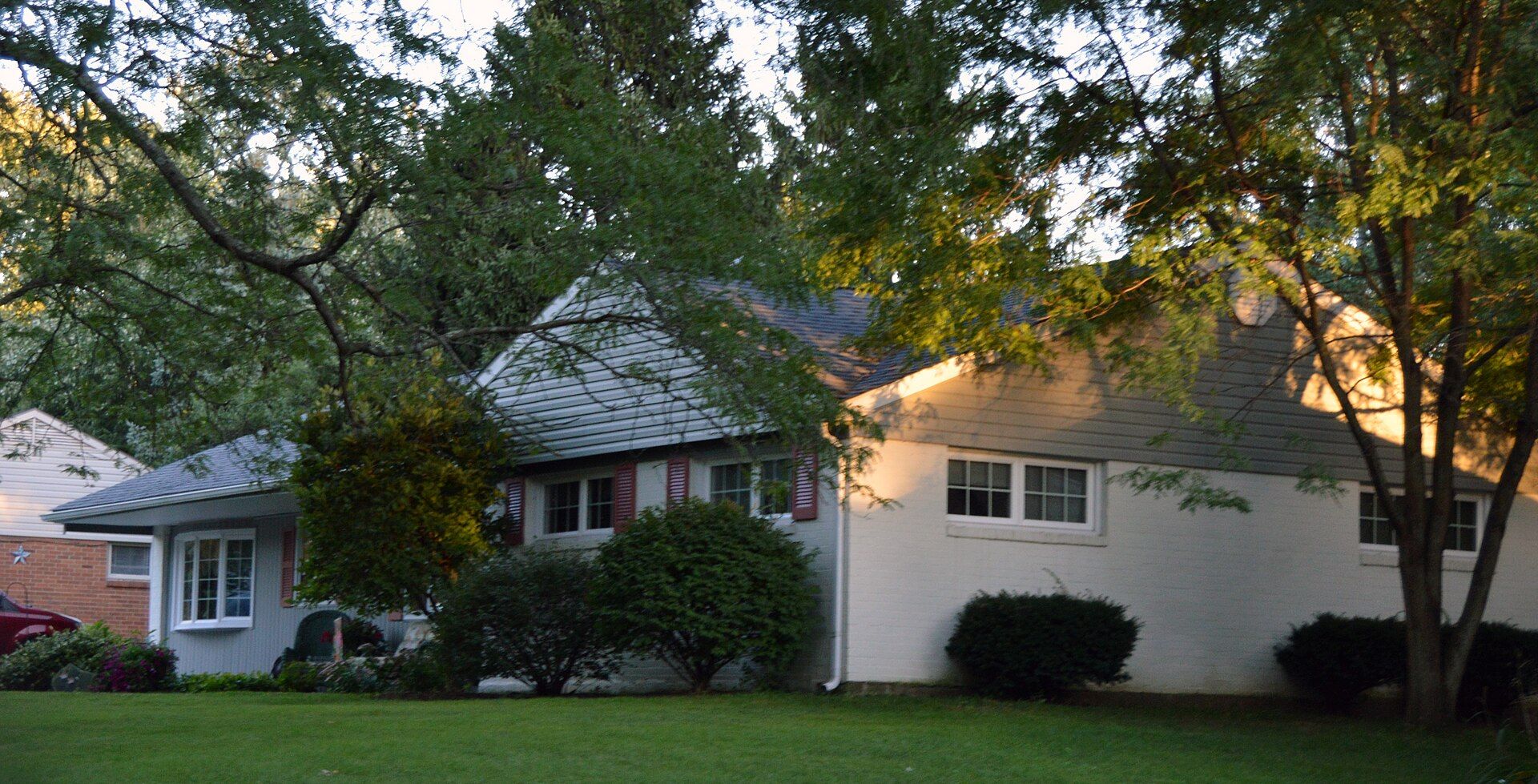
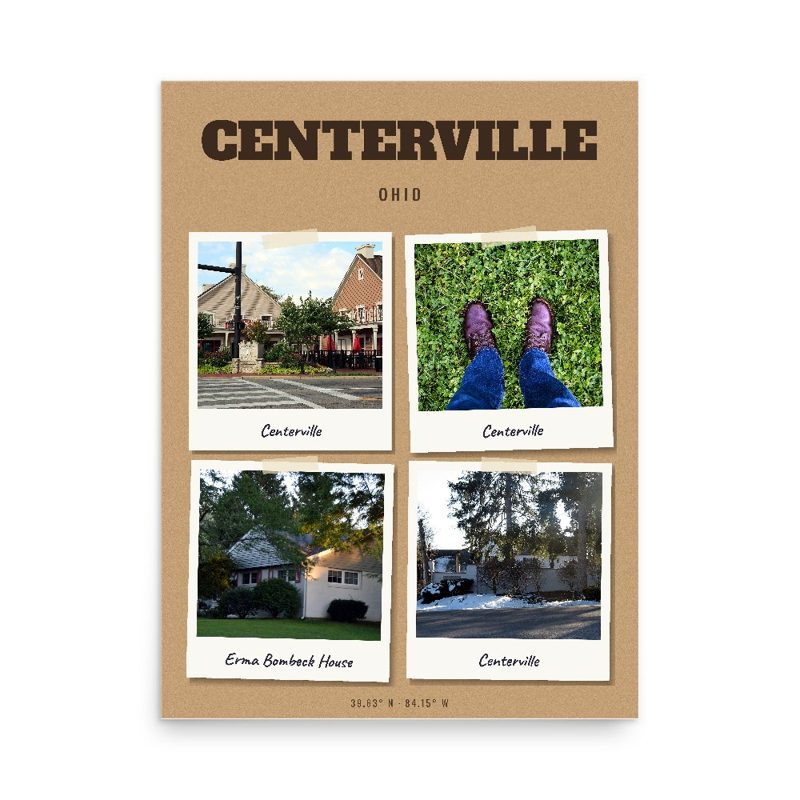
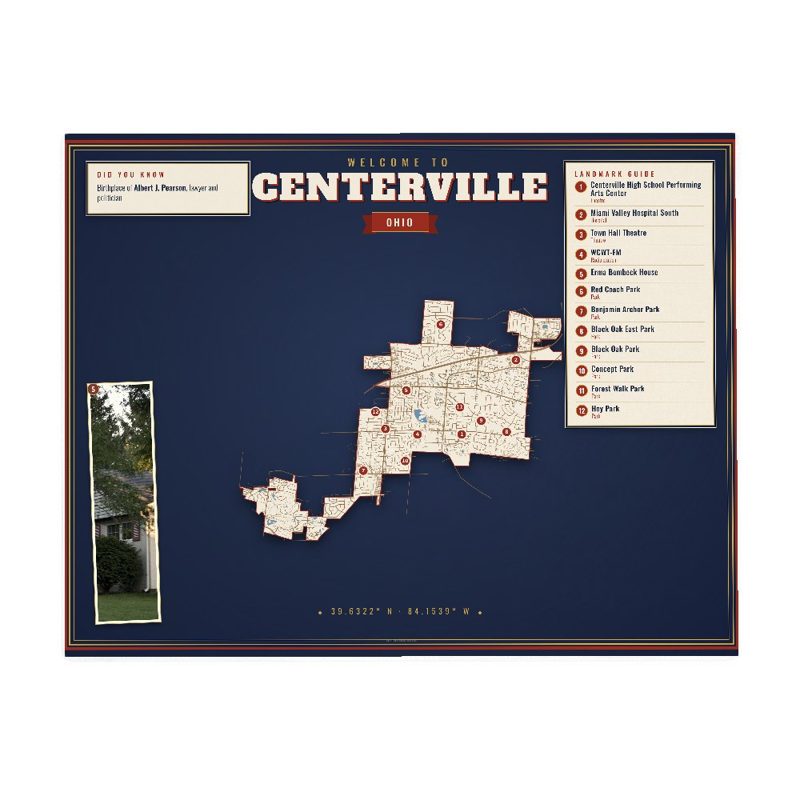



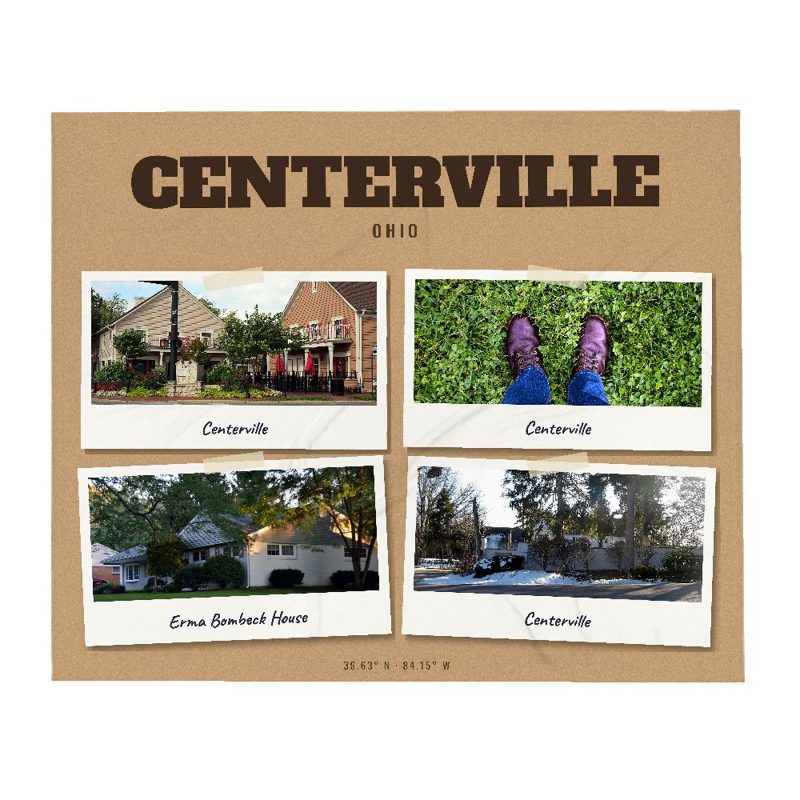
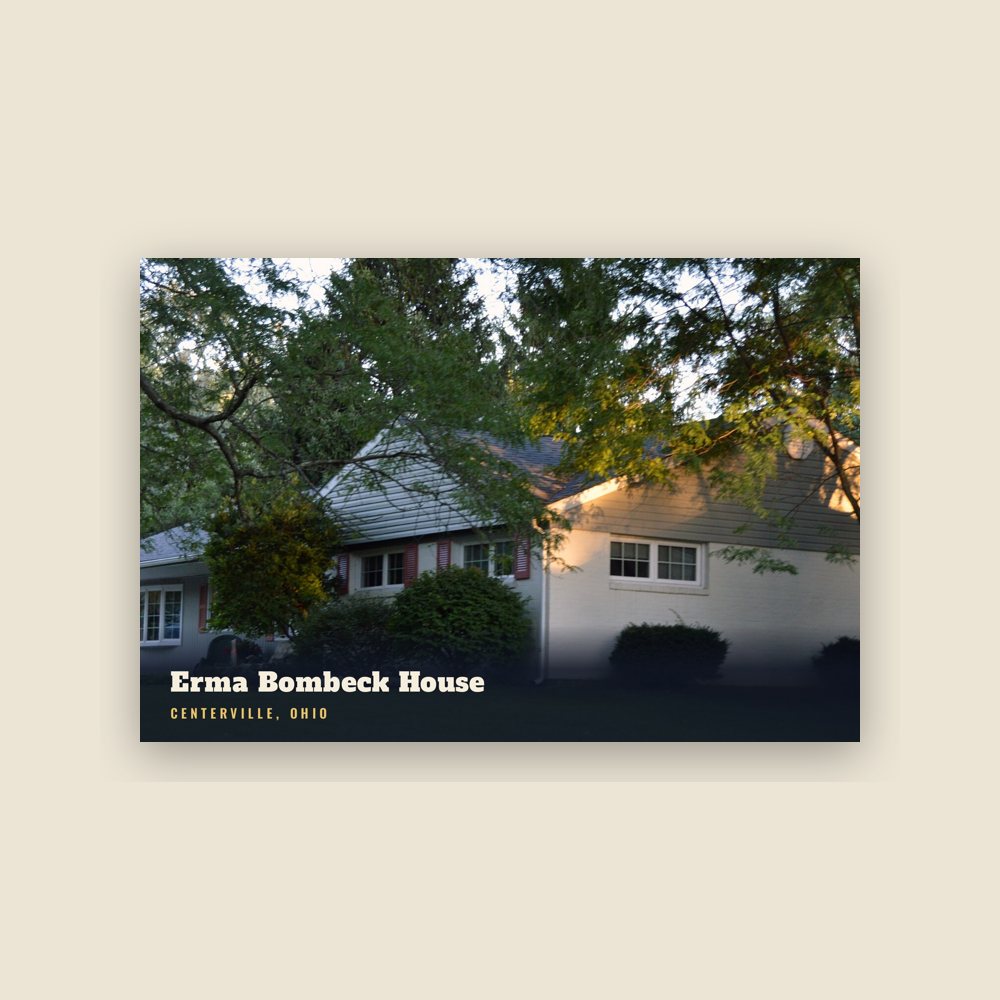
 Erma Bombeck House
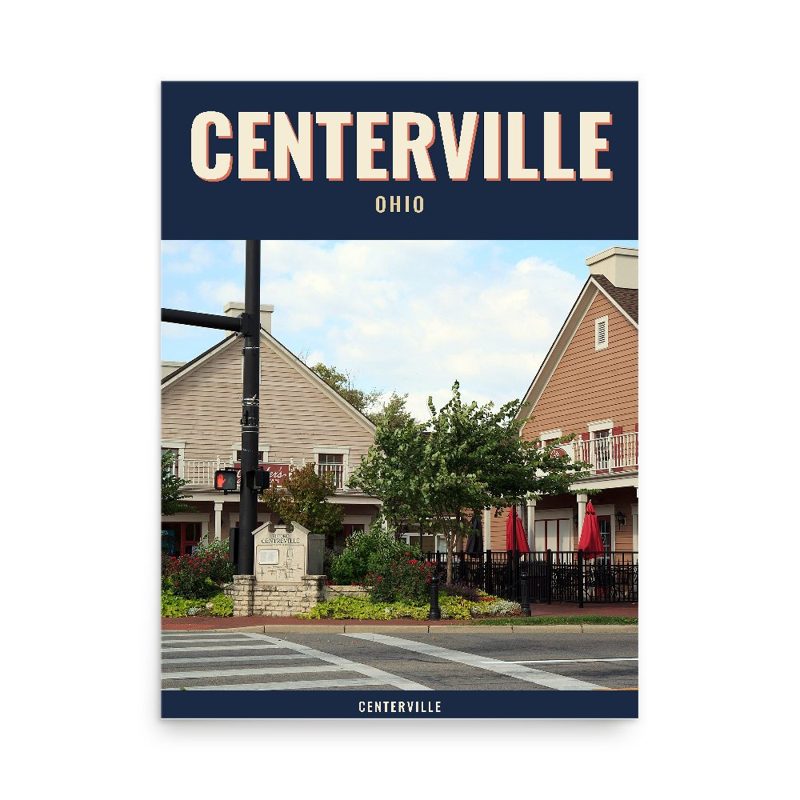
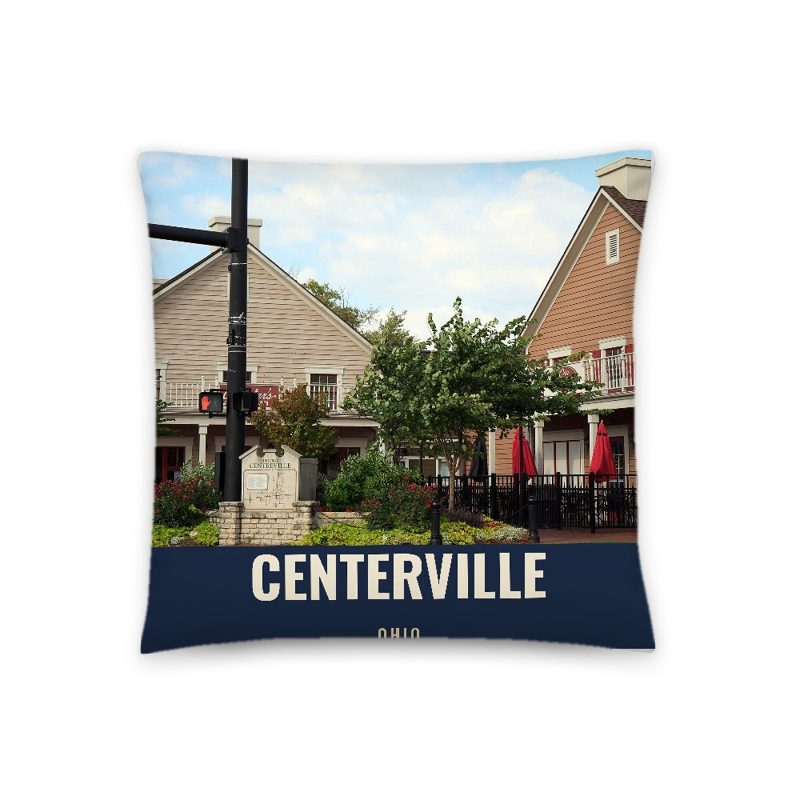
 A view of Centerville
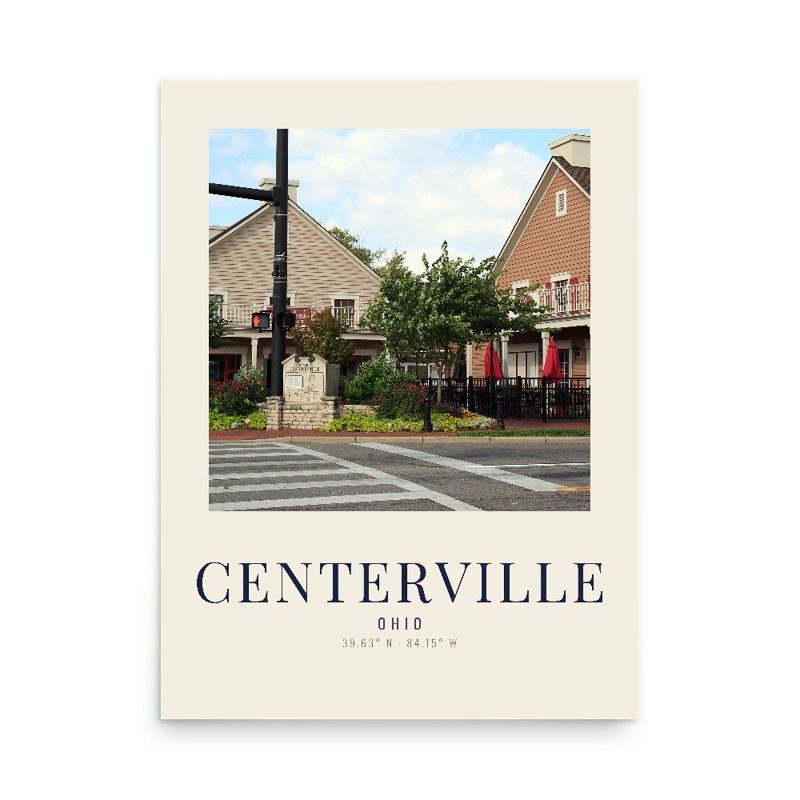
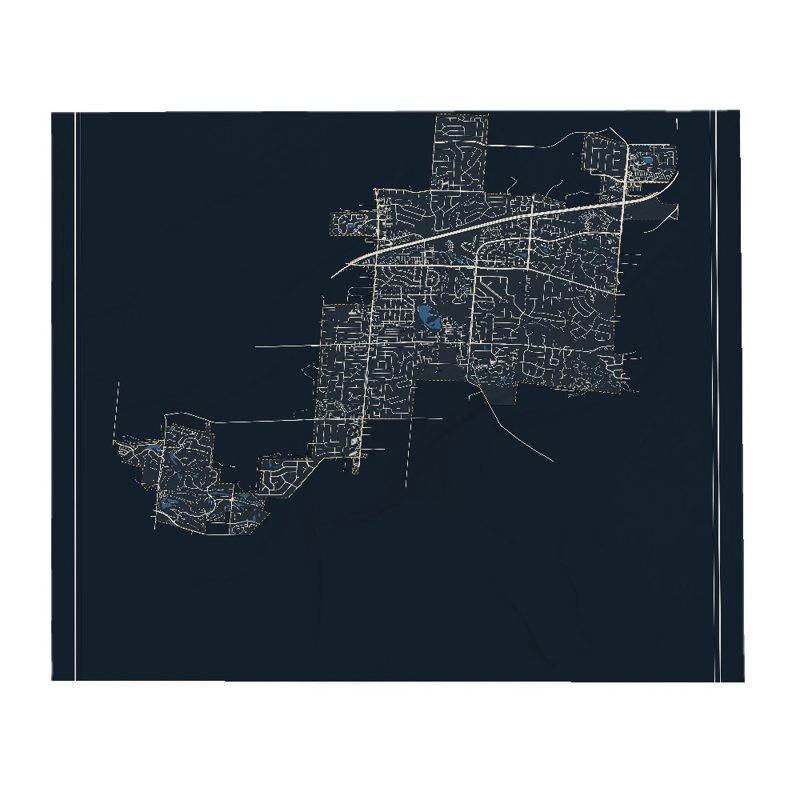
 A view of Centerville
 A view of Centerville