Sheyenne was founded in 1883. Sheyenne is the birthplace of R. B. Frost, sports coach and administrator.
- CountyEddy County
- Population186 (2020 U.S. Census)
Sheyenne, North Dakota gifts and souvenirs: 21 designs made from Sheyenne's own map, landmarks and history, from $16 to $95. Printed to order and shipped free in the USA.
| Popular | Price |
|---|---|
| Sheyenne Hometown Ornament | $23 |
| Sheyenne Vintage Travel Poster | from $40 |
| Sheyenne Varsity Crewneck | from $57 |
| Sheyenne Est. Tee | from $33 |
| Sheyenne Town Line Mug | from $26 |
| Sheyenne Market Tote | $37 |
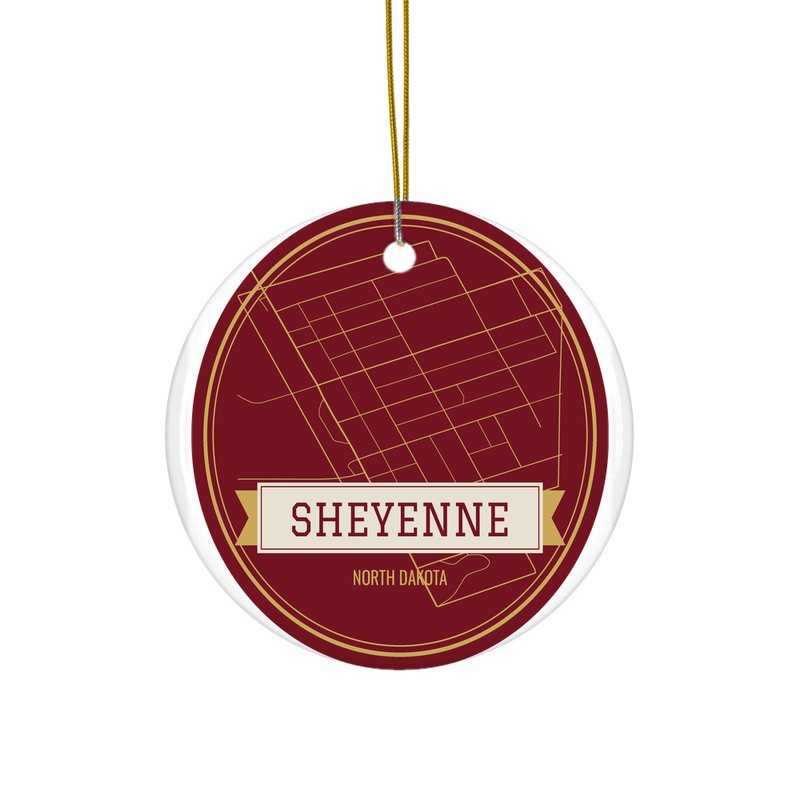
Ceramic keepsake, gold ribbon
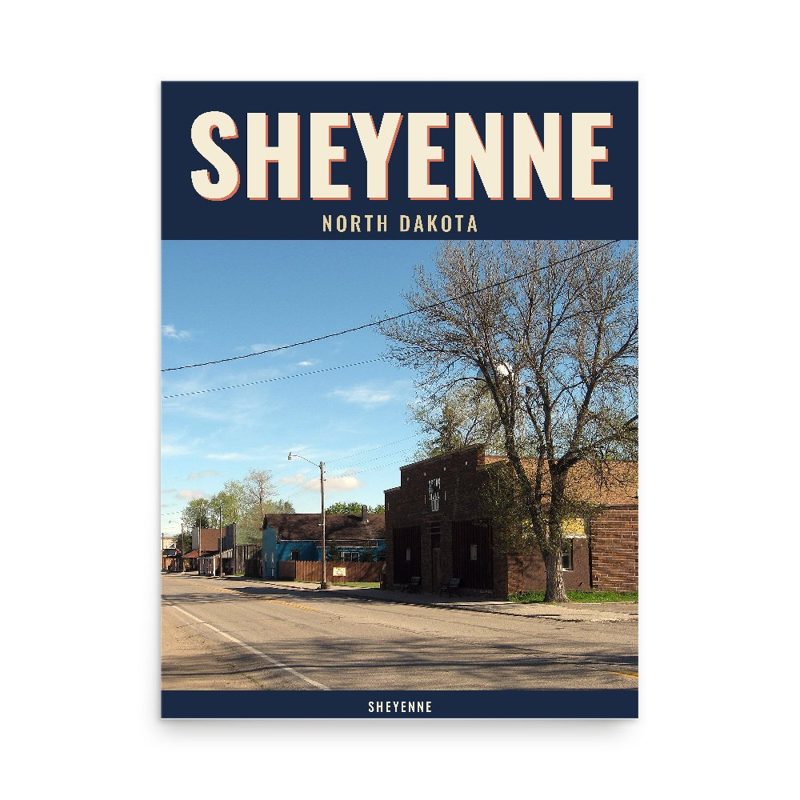
Its landmark photo in a classic travel-poster layout
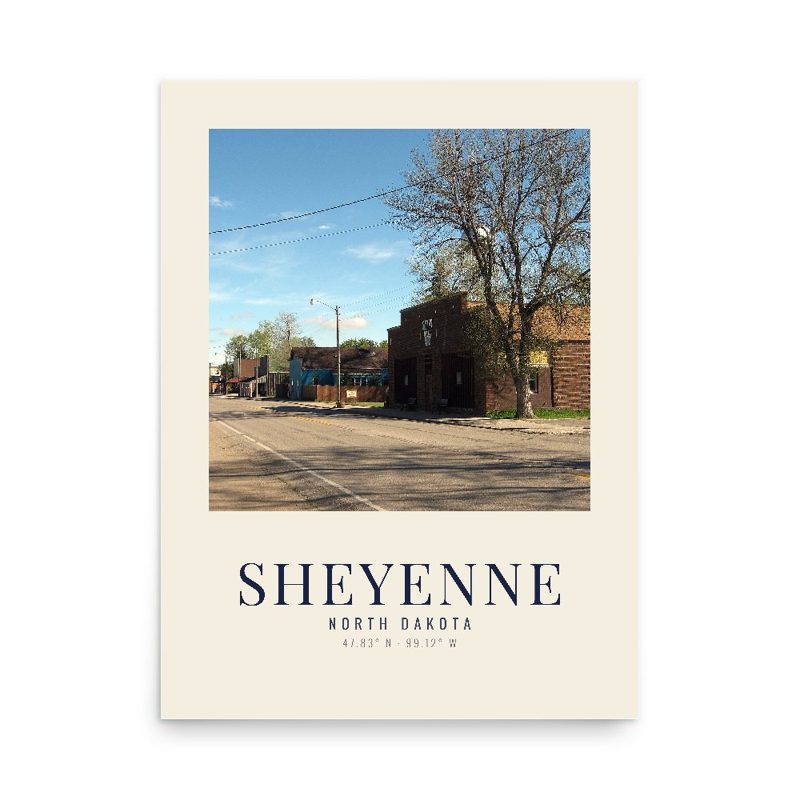
A local landmark photo as a gallery print
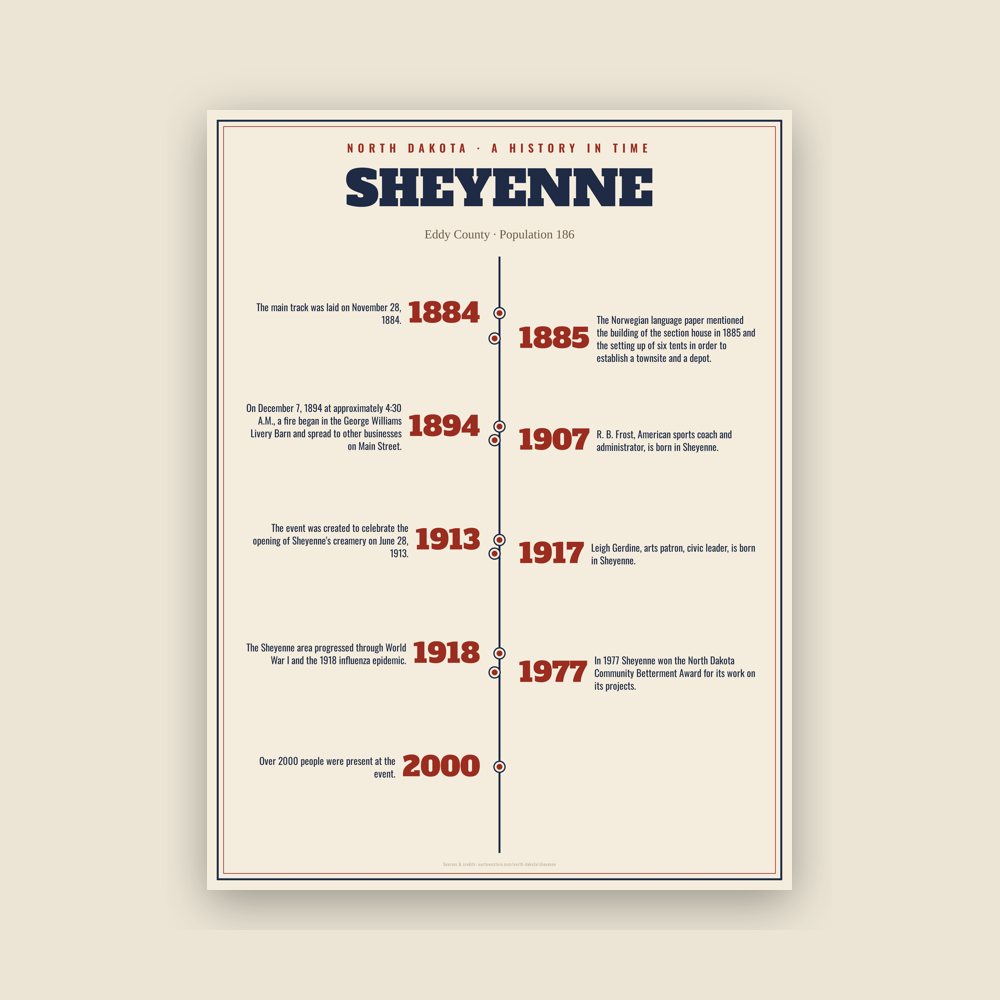
The town's story in dates, from its own records, for home or classroom
Heavy-blend fleece, street map printed on the back
Soft Bella+Canvas jersey
Kids' Bella+Canvas jersey, youth sizes
Bella+Canvas toddler jersey
Bella+Canvas baby bodysuit
Glossy ceramic, dishwasher safe
Weatherproof, for the front walk
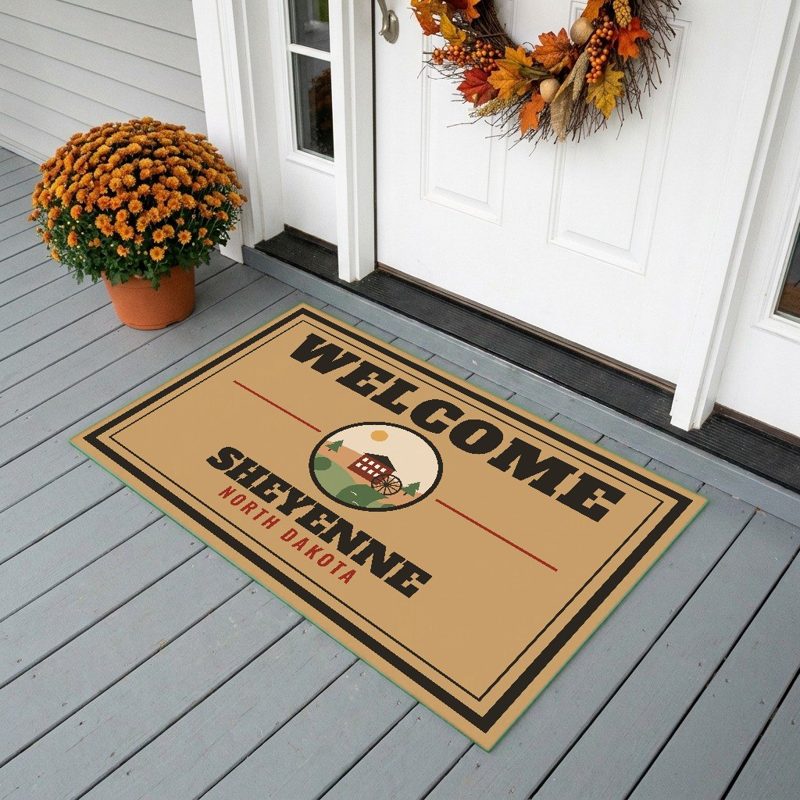
24″×16″, printed coir-look fibers, rubber back
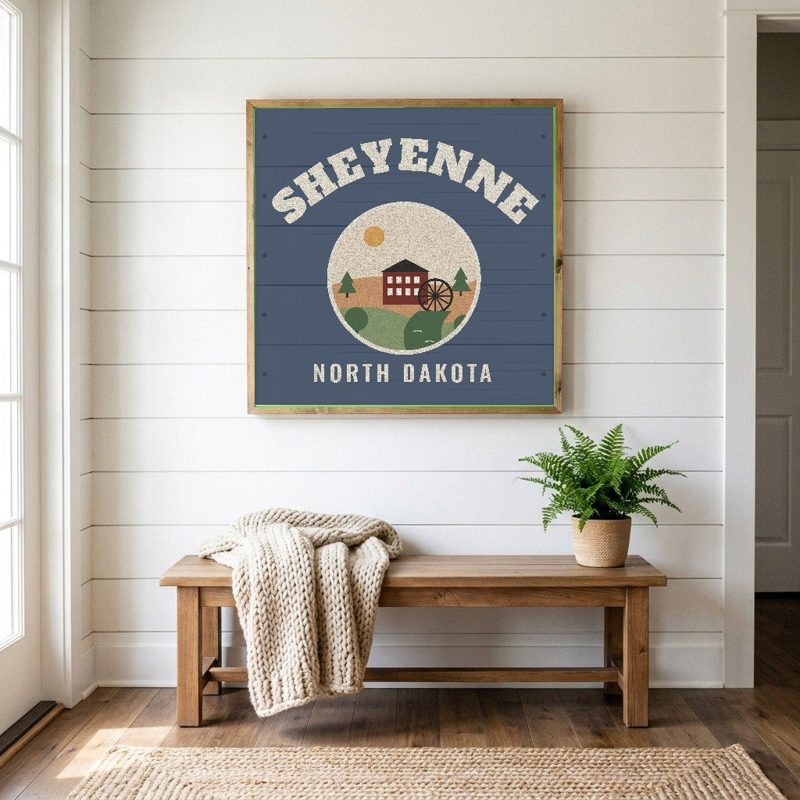
12″×12″ printed wood, ready to hang
Soft-touch, zip cover
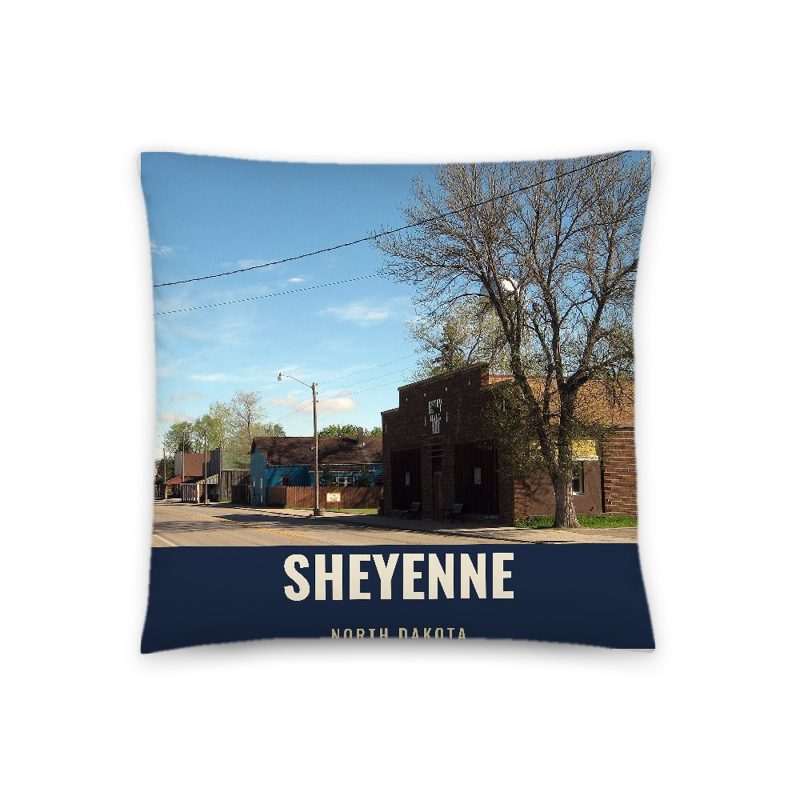
A local landmark photo with the town name, 18″×18″
Sturdy all-over-print tote
Glossy top, cork back
Soft fleece, 50″×60″
20 oz, double-wall stainless
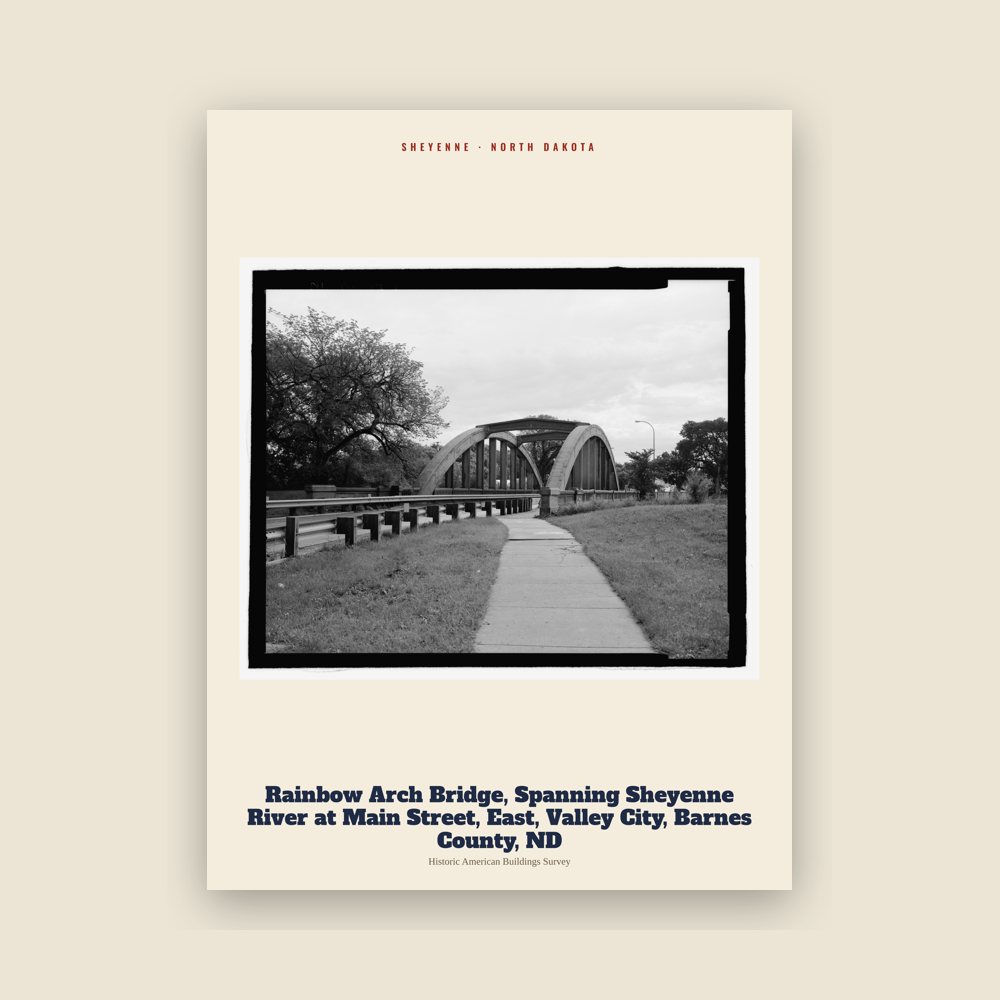
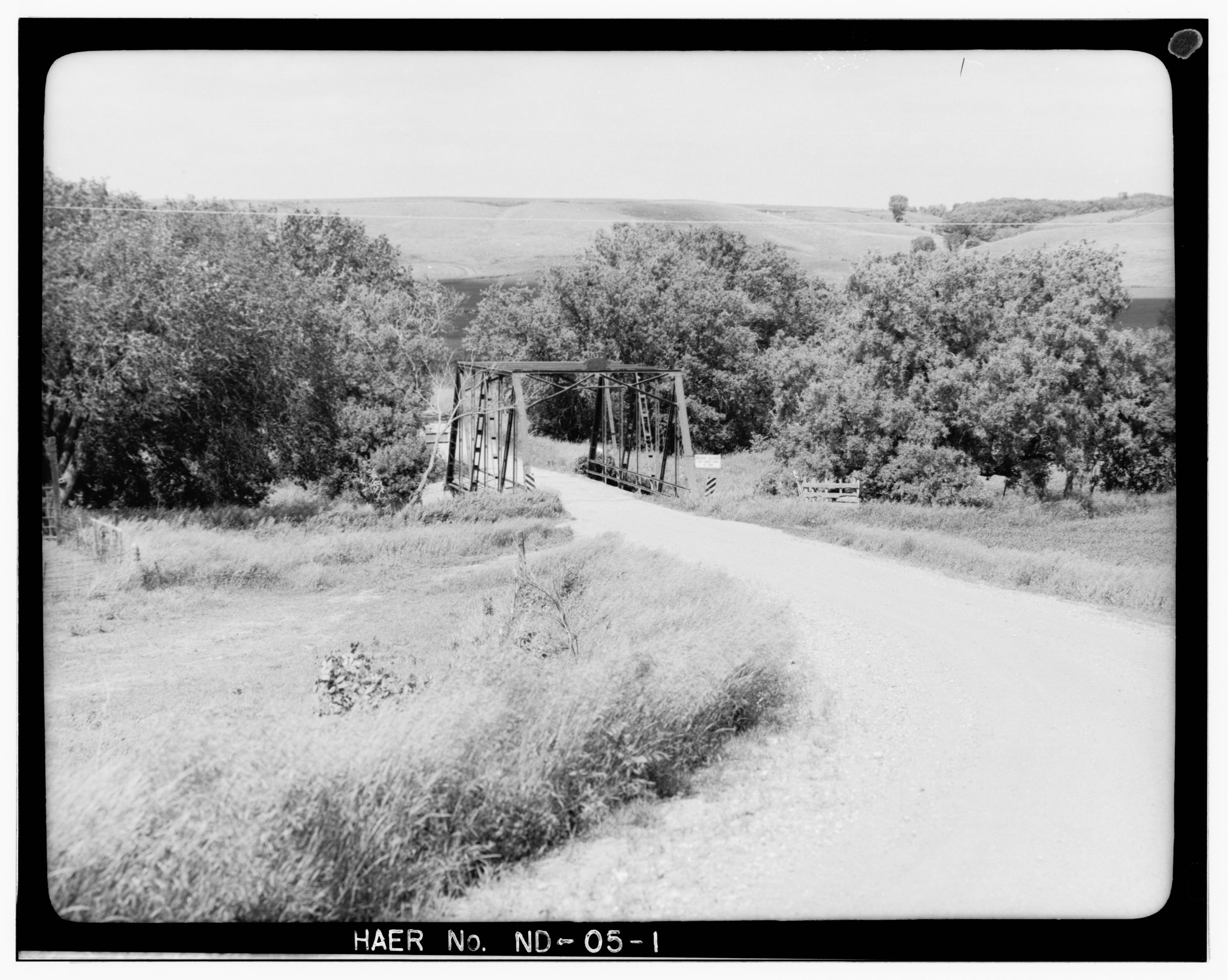
From the Library of Congress collections: a historic survey drawing or photograph of the town
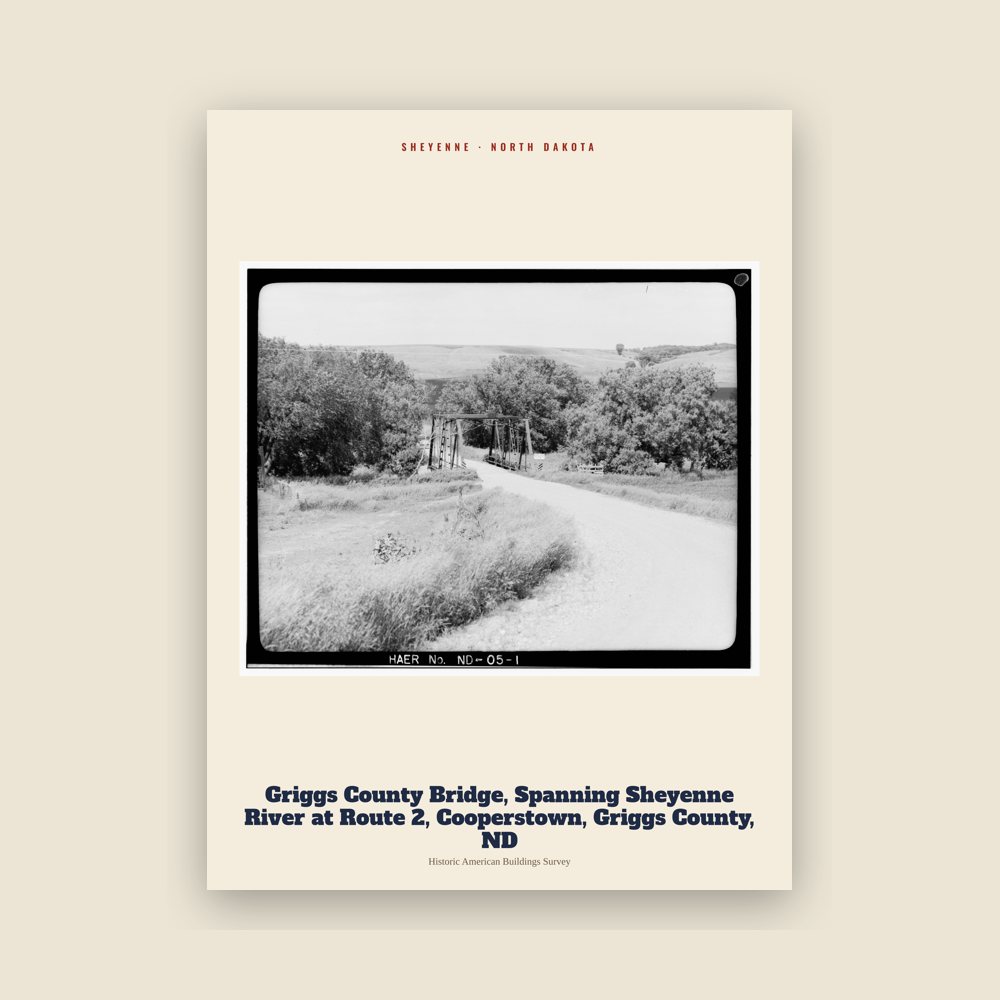
From the Library of Congress collections: a historic survey drawing or photograph of the town
Sheyenne was founded in 1883. Sheyenne is the birthplace of R. B. Frost, sports coach and administrator.
The name "Sheyenne" is derived from the nearby Sheyenne River which was named after the Cheyenne Indians. The first explorers in the area misspelled the name, thus changing the "C" to an "S".
Herds of bison once roamed the prairies near the town of Sheyenne. The Sioux tribe were the final Native American tribe to move towards the area. The first white settlers came via the Northern Pacific Railroad Company. The earliest mention of the settlement came through the Grand Forks, North Dakota-based paper, Normadden. The Norwegian language paper mentioned the building of the section house in 1885 and the setting up of six tents in order to establish a townsite and a depot. The main track was laid on November 28, 1884. The railroad began operation to Sheyenne on August 6, 1885.
The main townsite of Sheyenne was obtained by Clarence E. Bennett in 1885, but later came under the jurisdiction of J. W. Richter, who dedicated the townsite in 1892. The first crops grown in the area were common vegetables and as much wheat that the land could take. The main source of meat was hunting on the abundant plains, and the other source was in the Sheyenne River. People streamed into the community from all parts of the United States and Europe. Most European settlers came from Scandinavia and Germany. Businesses flourished off railroad workers and farmers.
On December 7, 1894 at approximately 4:30 A.M., a fire began in the George Williams Livery Barn and spread to other businesses on Main Street. Williams' billiard room and soft drink shop were the next to be consumed. The blaze then spread to the Westerlund Hotel and the Hugh Peoples General Store. The post office also caught fire, but N.U. Hanson saved all the mail that was on-hand.
The fire was determined to be incendiary in origin. George Williams closed his stables at 2:00 A.M. and locked the door. When firemen arrived at the scene, they realized that the door was open, and later it was determined that the fire began in the unused box stall.
Sheyenne was home to C.G. Hayes, a farmer by trade who lived South of the townsite. Hayes became a soldier and was stationed at Fort Totten. He became a scout during the Indian Wars in the Northwest. After that, he served under the Seventh Cavalry banner, and was one of the messengers who sent for reinforcements after The Battle of the Little Bighorn.
Settlers and immigrants continued to swarm to the area as they came via boxcar and train. They also arrived by cars and wagons. Businesses in Sheyenne included numerous department stores, meat markets, livery stables, a depot, a blacksmith shop operated by Hans Stenberg, Odegaard's Shop, a feed mill, and land companies. Sheyenne had several elevators that stored different local goods. There was a Ford dealership, numerous service stations, numerous pharmacies, cafes, a hotel, a public bath, and a lumberyard. A cream station, an opera house, and a variety store also existed in Sheyenne at one time. Many banks have come and gone over the brief period of Sheyenne's existence, including the Farmers' State Bank.
The opening of the creamery in Sheyenne was the largest event in Sheyenne history in terms of turnout. The event was created to celebrate the opening of Sheyenne's creamery on June 28, 1913. Over 2000 people were present at the event. The festivities began with a parade that covered 22 blocks that included the Fort Totten Indian Band, the Boy Scouts, and numerous merchants' floats. The parade ended at the creamery, where everyone was served free ice cream and buttermilk. Over 1900 ice cream cones were served. The climax of the day was when Professor G.F. Martin of North Dakota Agricultural College, now North Dakota State University, spoke about the importance of dairy. A baseball game was then played between Sheyenne and New Rockford, and at 9:00 a grand ball was held at the opera house.
The Sheyenne area progressed through World War I and the 1918 influenza epidemic. A shock to the area came in the 1930s with the Great Depression, when the main industry of the area, agriculture, was threatened severely. Poor crop prices influenced Sheyenne's economy and the WPA was crucial to the life of Sheyenne. It created a park on the south side of Sheyenne that is now owned by the VFW, it restored the town jail, and its workers built Warsing Dam on the outskirts of the city.
In 1955, the second irrigation experimental farm in North Dakota was planned on the land of Bruce Larson, while a major concern of the late 1950s was the high nitrate condition in the wells of Sheyenne. The problem was solved by the Northern Pacific Railway Company donating their well to the City of Sheyenne.
A major event in the 1960s was the opening of the Tastee-Freez, a fast food and ice cream restaurant, in the building previously occupied by the city's fire department.
Community betterment was the highlight of the 1970s in Sheyenne, when projects such as street paving, tennis courts, townhouses, a museum, and main street revitalization were finished. In 1977 Sheyenne won the North Dakota Community Betterment Award for its work on its projects.
Sheyenne celebrated its 125th with a demo-derby, BBQ dinner, parade, school reunion, fireworks, and a children's theater production, put on by the S.T.A.R.S.
Adapted (trimmed) from the Wikipedia article Sheyenne, North Dakota, revision 1374933130 by its contributors, licensed CC BY-SA 4.0.
We share a part of every Sheyenne sale with local partners, and we'd love to print from your collection. Old photographs, maps and postcards make the best keepsakes.
Partner with usA favorite landmark, your street, a school or team, an anniversary gift, a different product. Tell us and we'll get back to you by email.
1 free coloring page of Sheyenne, each traced from a photo of a local landmark. Print them at home, at school or for story hour.
Sheyenne's population was 186 in the 2020 U.S. Census, down from 204 in 2010.
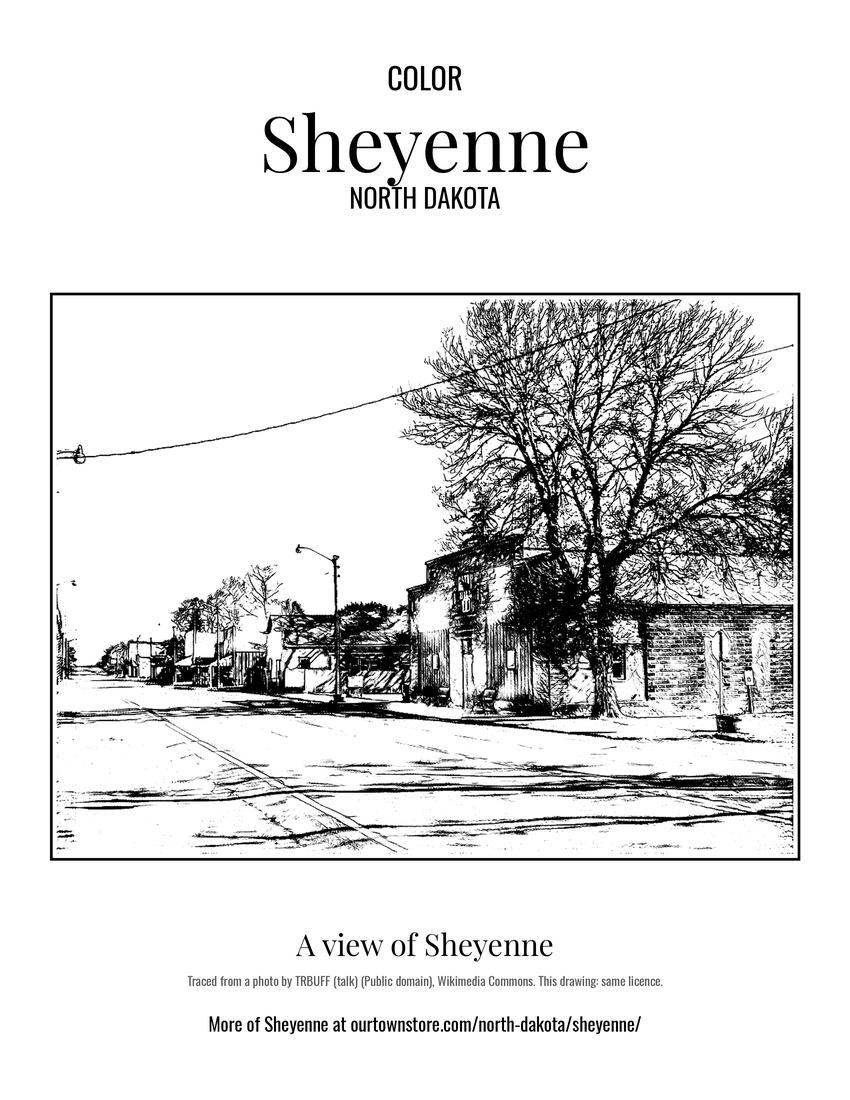 A view of Sheyenne