Since 1885
A short history of Princeville
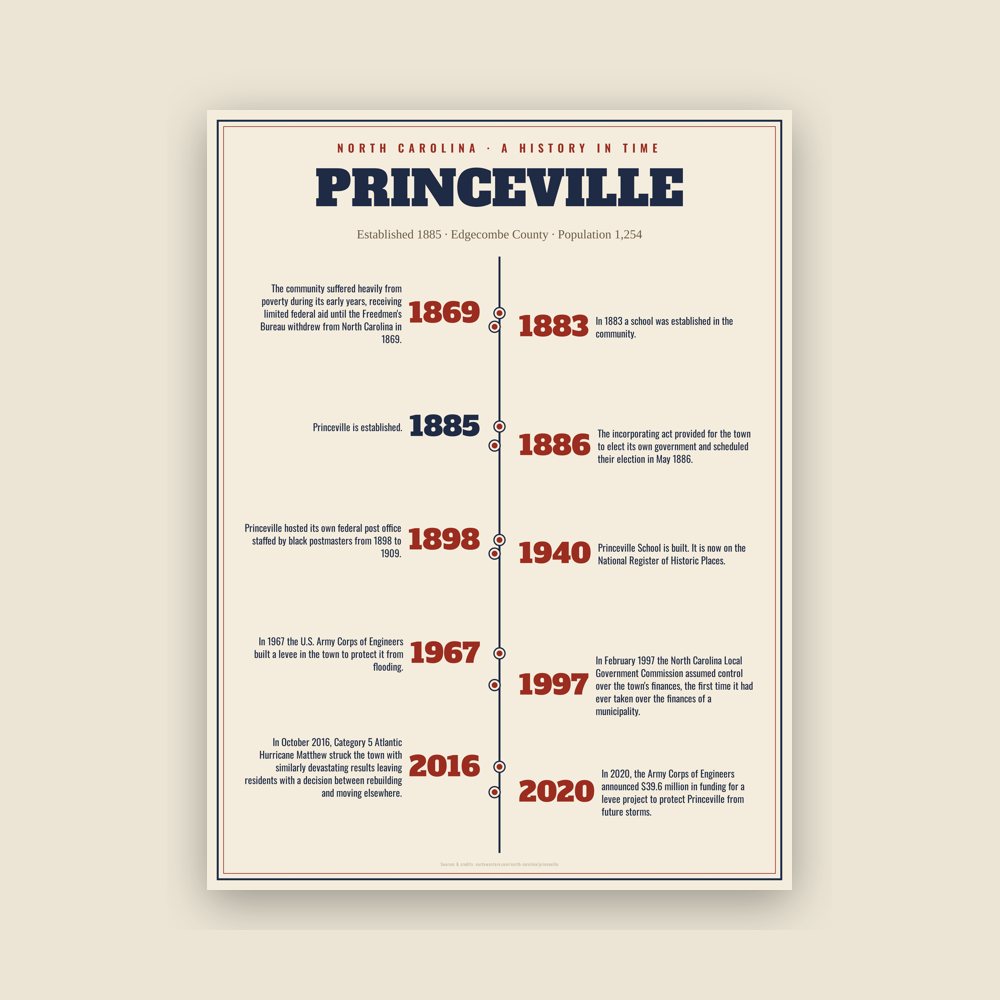
As the American Civil War reached its conclusion, formerly enslaved African Americans sought refuge at a temporary Union encampment south of Tarboro, North Carolina along the Tar River. With the assistance of the Freedmen's Bureau, these inhabitants developed their own makeshift settlement at the site and chose the name Freedom Hill in recognition of a small raised area where a Union soldier first announced the Emancipation Proclamation. The land on which they stayed was owned by two white planters, John Lloyd and Lafayette Dancy. There is no evidence that the two ever attempted to remove the freedmen from their properties, probably owing to the initial presence of federal troops and the poor quality of the land, which frequently flooded. The community suffered heavily from poverty during its early years, receiving limited federal aid until the Freedmen's Bureau withdrew from North Carolina in 1869. During the Reconstruction era, inheritors of Lloyd's parcel sold their property to planter Henry W. Shaw. Shaw began selling plots to the freedmen for low prices, though some residents continued to live as squatters. Black holdings grew near the Tar River bridge and more homes were built.
Unlike most freedmen's towns in the Southern United States and in spite of its location in an agricultural region, Freedom Hill developed as a community with a workforce dominated by nonagricultural labor. The 1880 U.S. census recorded 379 inhabitants of whom only 12 were farmers and 43 were farmhands, with the remainder working in various trades including day laboring, laundering, seamstressing, carpentry, and blacksmithing. By that point community had also several white residents, most of whom were sharecroppers. Little is known about the white population of the town, though evidence indicates whites and blacks lived in separate areas. In 1883 a school was established in the community. Several churches were also established, though available dates on their creation are not exact. Local black residents were also, like their black contemporaries elsewhere in the state, politically active throughout the remainder of the 19th century, with local Robert S. Taylor serving as an Edgecombe County justice of the peace and William P. Mabson serving as a state legislator.
Gradually both local blacks and the white population in Edgecombe County came to support the notion of incorporating the community. The black residents of Freedom Hill sought the advantages of local political involvement and self-governance, while whites in the county preferred having blacks available nearby as a labor force but socially segregated from their communities. After several petitions from Edgecombe County residents, in February 1885 the North Carolina General Assembly incorporated the community as the town of Princeville, named in honor of local carpenter Turner Prince. The incorporating act provided for the town to elect its own government and scheduled their election in May 1886. In the years following incorporation the town experienced increased commercial development as more locals established their own businesses. Most of the town's political leaders emerged from the mercantile class. Princeville hosted its own federal post office staffed by black postmasters from 1898 to 1909.
Princeville faced challenges throughout the Jim Crow era. In the opening years of the 20th century, white business owners launched unsuccessful attempts to either dissolve or seize control of the town. By the end of World War I, more than half of the town's inhabitants moved to northern cities as part of the Great Migration seeking economic opportunities and an escape from white supremacy. In 1967 the U.S. Army Corps of Engineers built a levee in the town to protect it from flooding. In February 1997 the North Carolina Local Government Commission assumed control over the town's finances, the first time it had ever taken over the finances of a municipality.
The town also suffered continuing difficulties due to its low elevation and adjacency to the Tar River. Princeville experienced severe flooding in September 1999 when Cape Verde-type Hurricane Floyd pulled coffins from the cemetery and raised water levels to just below the height of rooftops and church steeples. The U.S. Federal Emergency Management Agency offered to buy out all residences in the town, but municipal officials rejected the offer. In October 2016, Category 5 Atlantic Hurricane Matthew struck the town with similarly devastating results leaving residents with a decision between rebuilding and moving elsewhere. As the town's population declined in wake of the natural disasters, its tax base shrunk and the county government assumed various responsibilities from the municipality, including authority over tax collection, policing, and water and sewer services. In 2020, the Army Corps of Engineers announced $39.6 million in funding for a levee project to protect Princeville from future storms.
Adapted (trimmed) from the Wikipedia article Princeville, North Carolina, revision 1378799903 by its contributors, licensed CC BY-SA 4.0.
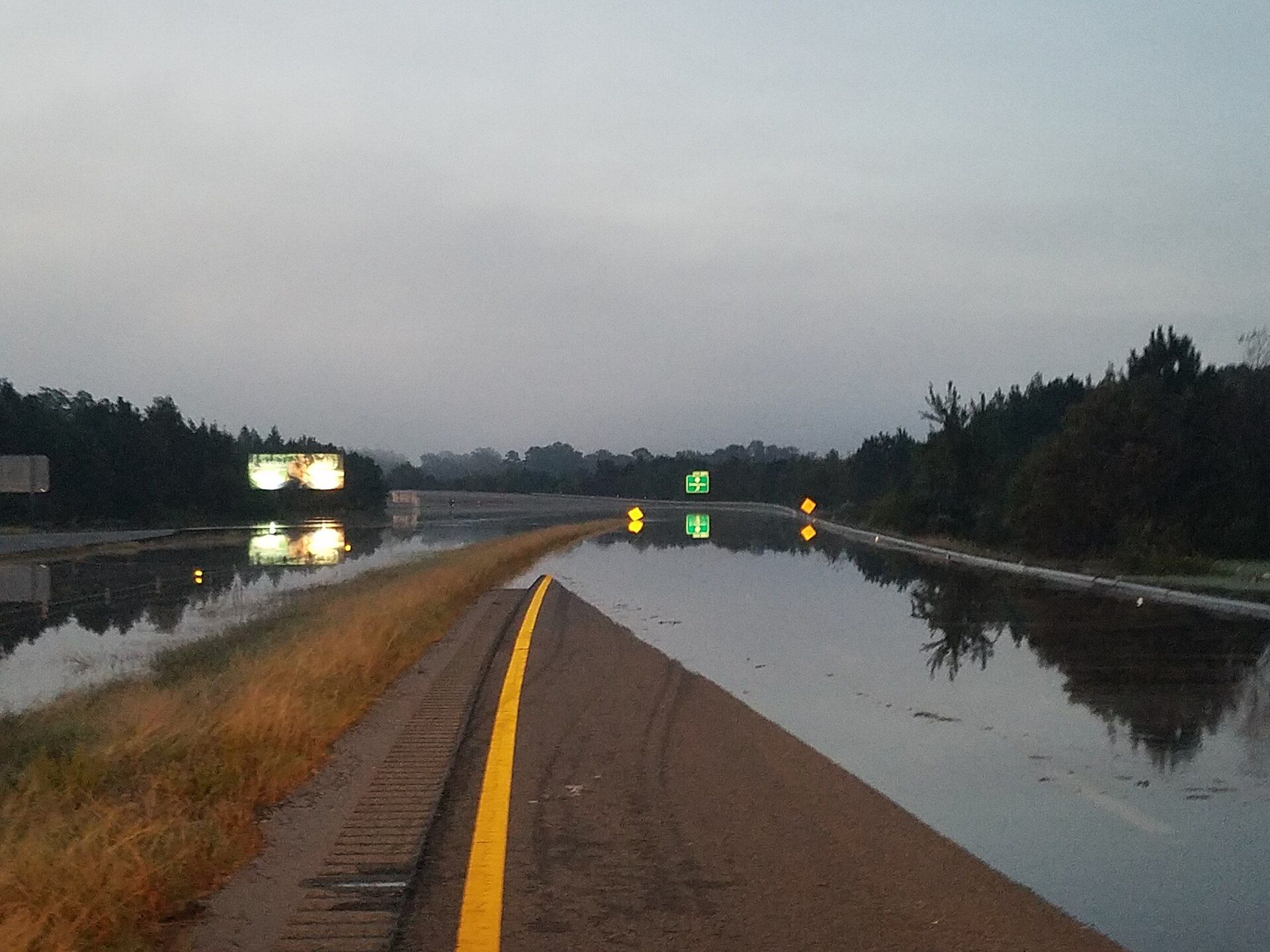


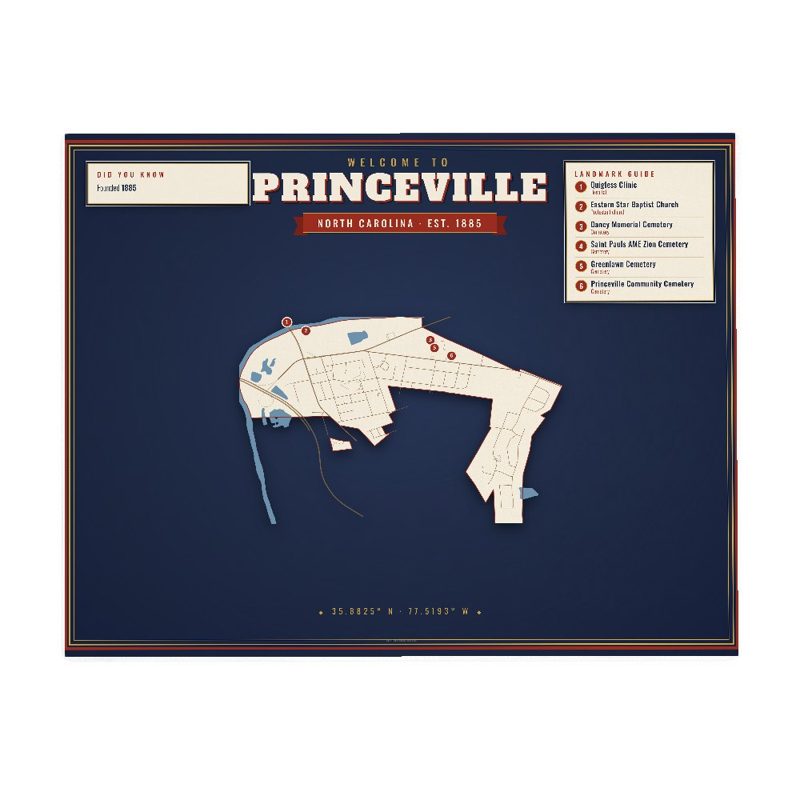










 A view of Princeville