Misenheimer is an incorporated village in Stanly County, North Carolina, United States. Landmarks include Pfeiffer Junior College Historic District.
- CountyStanly County
- Population650 (2020 U.S. Census)
- Historic places1 on the National Register
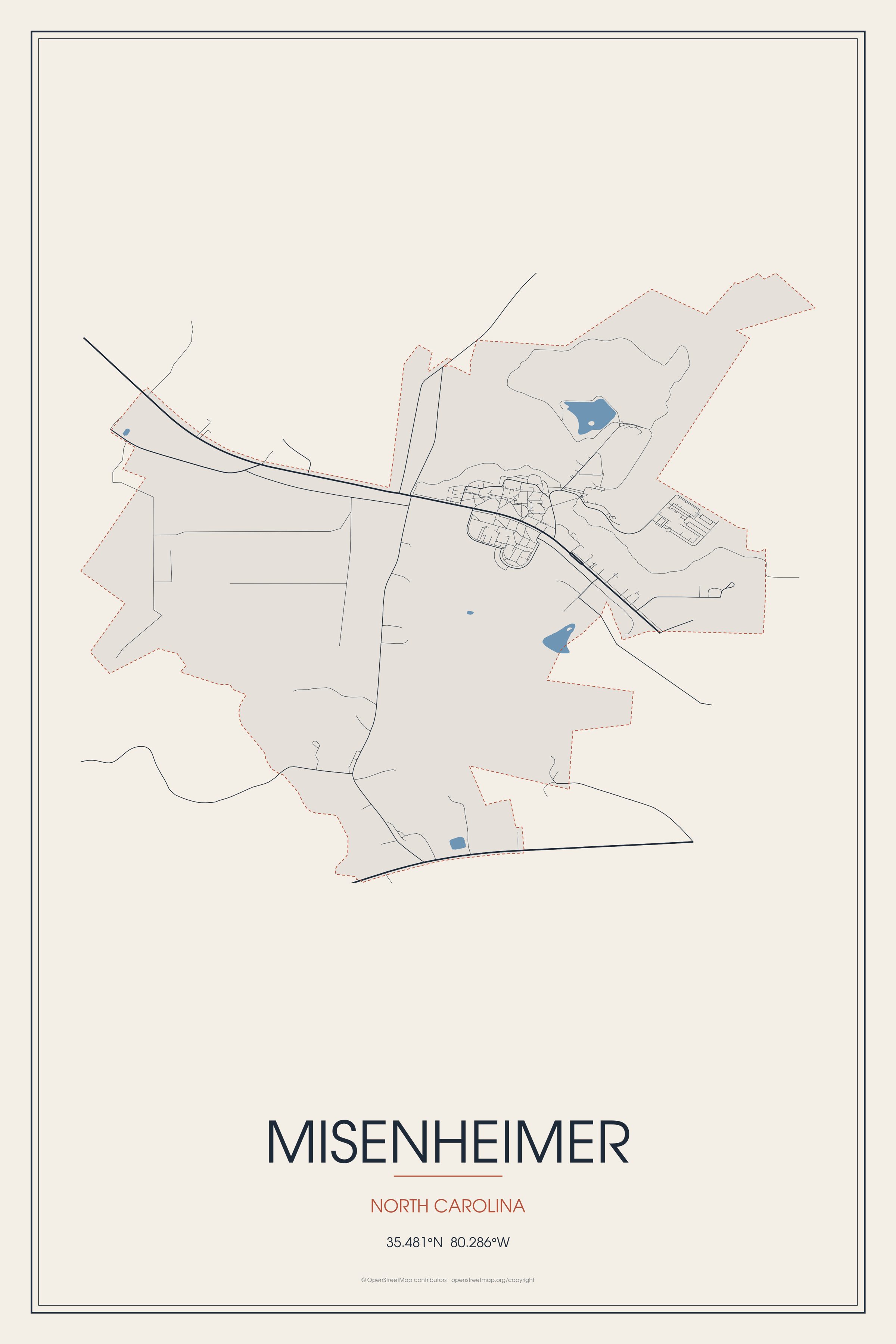
Misenheimer, North Carolina gifts and souvenirs: 20 designs made from Misenheimer's own map, landmarks and history, from $10 to $95. Printed to order and shipped free in the USA.
| Popular | Price |
|---|---|
| Misenheimer Hometown Ornament | $23 |
| Misenheimer Vintage Travel Poster | from $40 |
| Misenheimer Varsity Crewneck | from $57 |
| Misenheimer Est. Tee | from $33 |
| Misenheimer Town Line Mug | from $26 |
| Misenheimer Market Tote | $37 |

Ceramic keepsake, gold ribbon

Its landmark photo in a classic travel-poster layout

A local landmark photo as a gallery print
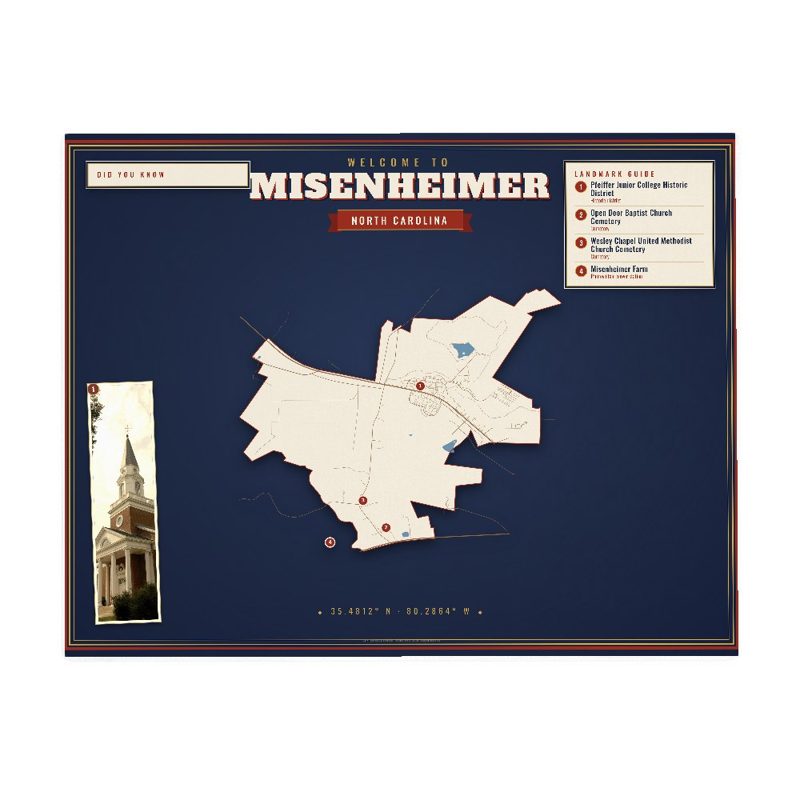
Map of local landmarks, washable fabric
Heavy-blend fleece, street map printed on the back
Soft Bella+Canvas jersey
Kids' Bella+Canvas jersey, youth sizes

Bella+Canvas toddler jersey
Bella+Canvas baby bodysuit
Glossy ceramic, dishwasher safe
Weatherproof, for the front walk

24″×16″, printed coir-look fibers, rubber back
12″×12″ printed wood, ready to hang
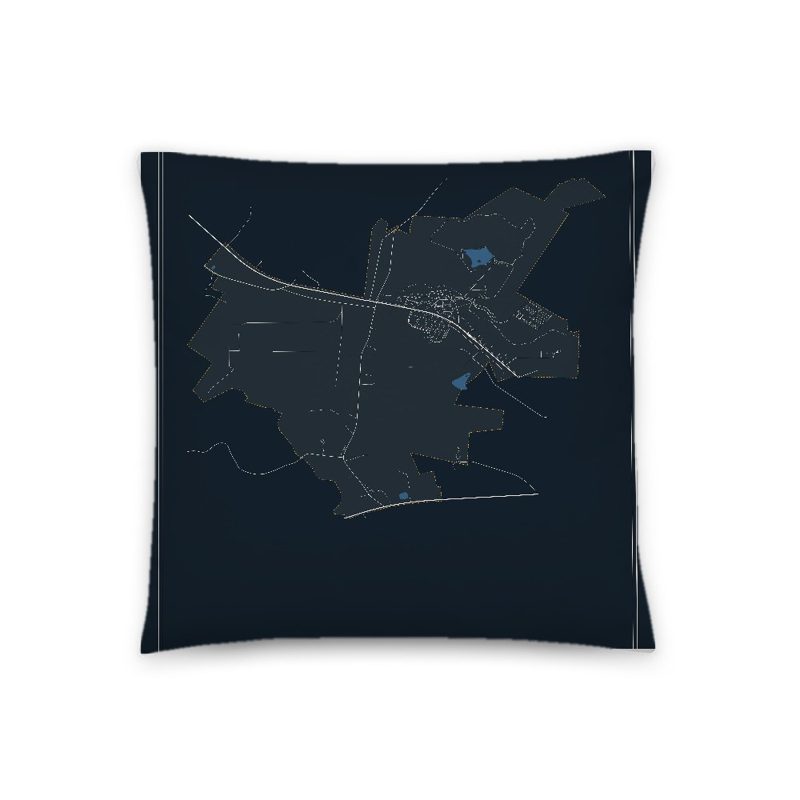
Soft-touch, zip cover

A local landmark photo with the town name, 18″×18″

Sturdy all-over-print tote
Glossy top, cork back
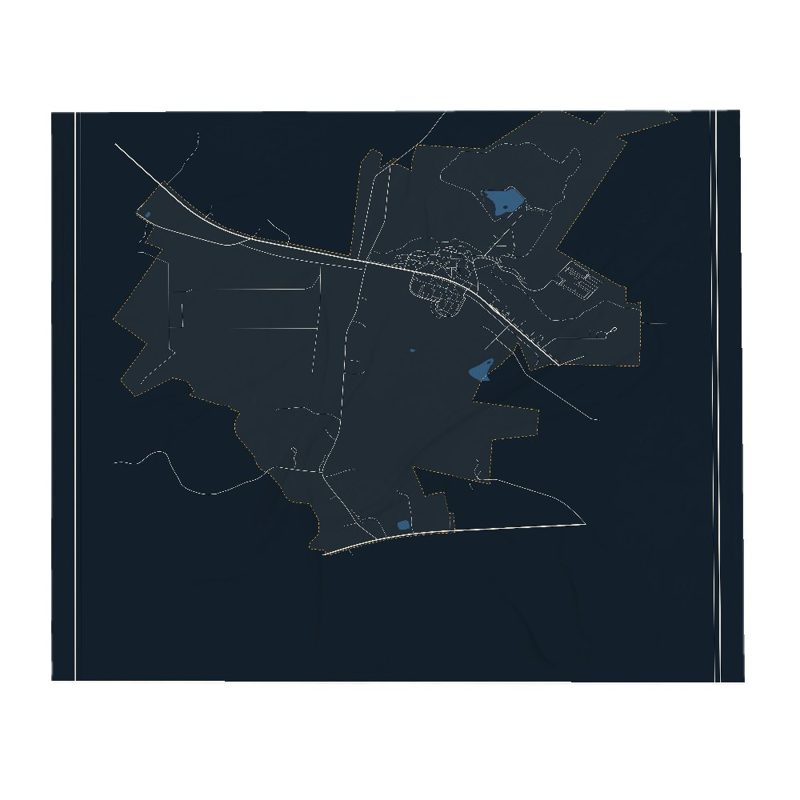
Soft fleece, 50″×60″
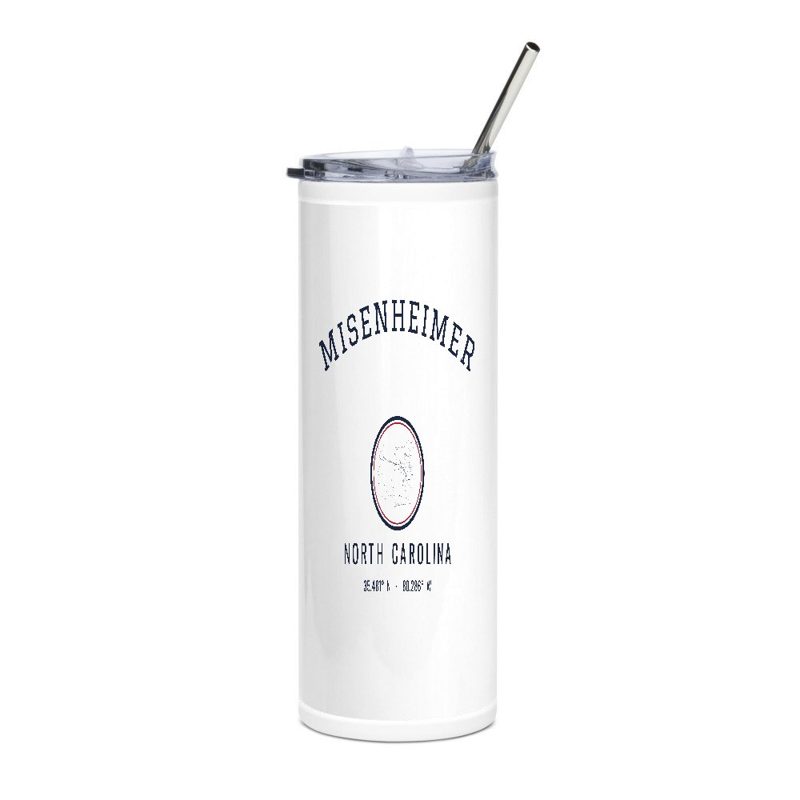
20 oz, double-wall stainless

6″×4″ postcard, glossy front
Misenheimer is an incorporated village in Stanly County, North Carolina, United States. Landmarks include Pfeiffer Junior College Historic District.
Population 2010: 728 → 2020: 650
From Wikidata (CC0).
In 1825, Matthias Tobias Barringer discovered gold nuggets along a section of Long Creek that ran through his farm. He found $8,000 worth of gold ($179,000 in 2020 dollars), and eventually the country's first gold vein in quartz. Newspapers in 24 states reported the find, and North Carolina's gold rush began. Meanwhile, Barringer was sued because of uncertainty over whether he owned the land he mined; he won the case in the 1880s. By 1888, new owners were working the mine and they moved Long Creek. In 1903, the Whitney Company, which was also working on damming the Yadkin River, bought the mine. Workers removed six tons of ore worth $20,000 per ton ($640,000 in 2020) and much more was still available. The gold financed the Yadkin River project. However, on August 11, 1904, a flood caused the deaths of eight men in the mine, and it eventually shut down, not to reopen until 1998.
In the late 1800s Misenheimer was a stop called Gladstone on a railroad spur that served a nearby early tourist destination, Misenheimer Springs.
Incorporation resulted June 26, 2003, from a bill passed by the North Carolina General Assembly. A major reason for the action was the planned widening of U.S. 52 and N.C. 49, expected to bring growth to the area. One of the first actions taken by the interim board was to block heavy industry such as re-opening the former Barringer gold mine by Joe Carter, who owned about 250 acres, or about a fourth of the village land, but did not live in the community. Carter had been working to restart the mine since 1998, and county commissioners stopped his plan for a quarry after residents protested, but Peter Edquist, a leader of the incorporation effort and the first mayor, denied that the mine was the reason for incorporation.
Adapted (trimmed) from the Wikipedia article Misenheimer, North Carolina, revision 1383019781 by its contributors, licensed CC BY-SA 4.0.
We share a part of every Misenheimer sale with local partners, and we'd love to print from your collection. Old photographs, maps and postcards make the best keepsakes.
Partner with usA favorite landmark, your street, a school or team, an anniversary gift, a different product. Tell us and we'll get back to you by email.
1 free coloring page of Misenheimer, each traced from a photo of a local landmark. Print them at home, at school or for story hour.
Misenheimer's population was 650 in the 2020 U.S. Census, down from 728 in 2010.
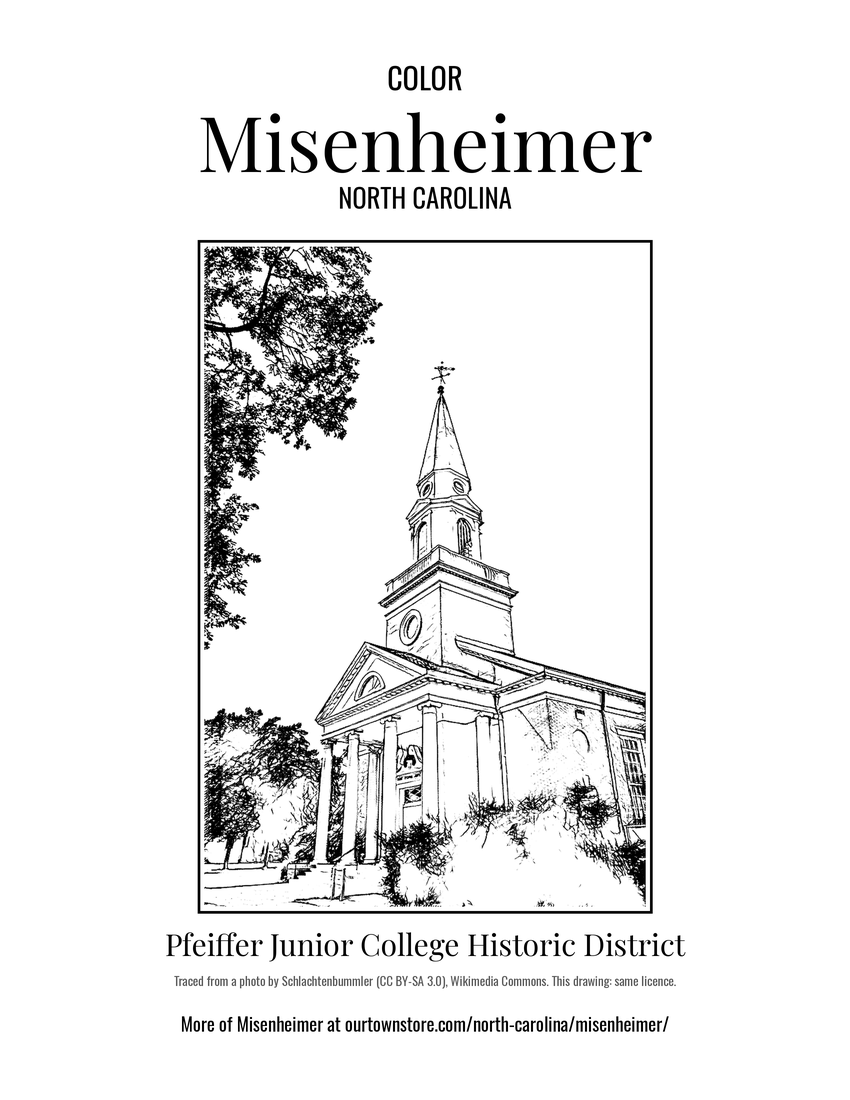 Pfeiffer Junior College Historic District