A short history of Knightdale
Early history
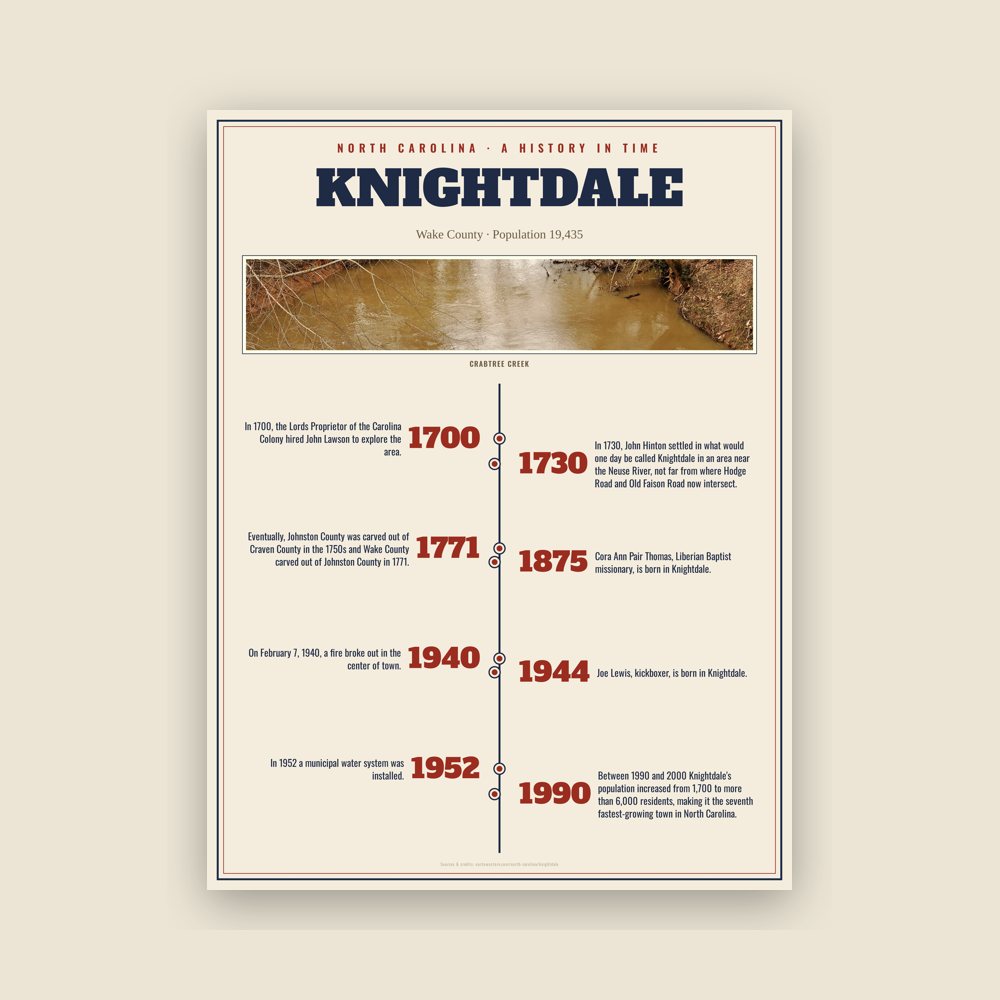
In 1700, the Lords Proprietor of the Carolina Colony hired John Lawson to explore the area. He began his 1,000-mile (1,600 km) trek near present-day Charleston, South Carolina, and according to his diary, passed through the area sometime in February 1701. He wrote about a meeting with the Tuscarora Native American tribe on the banks of the Neuse River, and with the help of an interpreter, Lawson made peace with the Tuscarora.
After receiving the report from Lawson, the King of England began to apportion these lands to willing settlers. In 1730, John Hinton settled in what would one day be called Knightdale in an area near the Neuse River, not far from where Hodge Road and Old Faison Road now intersect.
As more settlers arrived, the colonial government appointed Hinton to be the Justice of the Peace for Craven County. Eventually, Johnston County was carved out of Craven County in the 1750s and Wake County carved out of Johnston County in 1771.
When the American Revolution began, Hinton switched his allegiance to the colonials. He became a military leader and played a key role in the first battle of the American Revolution fought on North Carolina soil, the Battle of Moore's Creek Bridge. Hinton owned seven plantations in the Knightdale area, of which three are still intact: The Oaks, Midway, and Beaver Dam.
Read the full history
19th century
After independence, the population of the area began to increase, with farmers growing products such as tobacco and cotton. Slaves were used at Midway Plantation and Beaver Dam Plantation in Knightdale. There are unmarked grave plots for slaves throughout Knightdale. Although documentation of grave sites has been lost, the burials remain a significant part of the local landscape.
During the Civil War, the Confederate and Union armies were present in the area. The Clay Hill and Midway plantations saw the greatest damage, and after the war had ended, the residents began to rebuild. During this time, nearby Raleigh experienced a population boom. As a result, local leaders redrew the map of Wake County and divided it into townships. The area that became Knightdale was located in St. Matthew's Township, where it still is today.
For many years the Knightdale area was a crossroads served only by a post office. By the end of the 19th century, locals decided there was a need to establish a town. Henry Haywood Knight donated some of his land holdings in the area to the Norfolk and Southern Railroad Company in order to entice the company to build a railroad that would provide freight and passenger service. Although Knight did not live to see the railroad arrive in Knightdale, not long after his death in 1904, the railroad finally came to the community that would bear his name.
20th century
After the railroad and depot were built, the area began to develop quickly. Norfolk and Southern moved families into the community to take care of the railroad, and many of the older homes that exist today in Knightdale were built specifically for the use of railroad workers and their families. The first railroad stationmaster's house can still be seen along the tracks on Railroad Street.
As the community continued to grow, Knightdale received its articles of official incorporation from the North Carolina Legislature on March 9, 1927, with the first mayor being Bennett L. Wall.
On February 7, 1940, a fire broke out in the center of town. The townspeople turned out to help extinguish the fire, but the fire was not brought under control until firefighters arrived from Raleigh with an adequate water supply. Several businesses and homes were destroyed and the townspeople rebuilt the historic downtown area.
After World War II, the population of Knightdale grew at a steady pace, thanks to the Baby Boom. The corner drugstore, the bank, and the barber shop located on First Avenue served as places of business, as well as places for social gatherings. Movies were often shown on the wall of the old bank building, which is located at the intersection of First Avenue and Main Street. In 1952 a municipal water system was installed.
Beginning in the 1960s the majority of new businesses in Knightdale began locating along US 64. With the addition of the Mingo Creek sewer outfall in the late 1980s, development on the south side of US 64 began. Subdivisions such as Parkside, Planter's Walk and Mingo Creek subdivisions were built, rapidly increasing the town's population. Between 1990 and 2000 Knightdale's population increased from 1,700 to more than 6,000 residents, making it the seventh fastest-growing town in North Carolina.
Frankie Muniz, a popular television and film actor, grew up in Knightdale. He started his acting career performing the role of Tiny Tim in "A Christmas Carol" for three years. Nominations for his performances include the Hollywood Reporter Young Star Award and the Young Artist of Hollywood Award. He currently resides in Scottsdale, Arizona.
21st century
Adapted (trimmed) from the Wikipedia article Knightdale, North Carolina, revision 1378460756 by its contributors, licensed CC BY-SA 4.0.

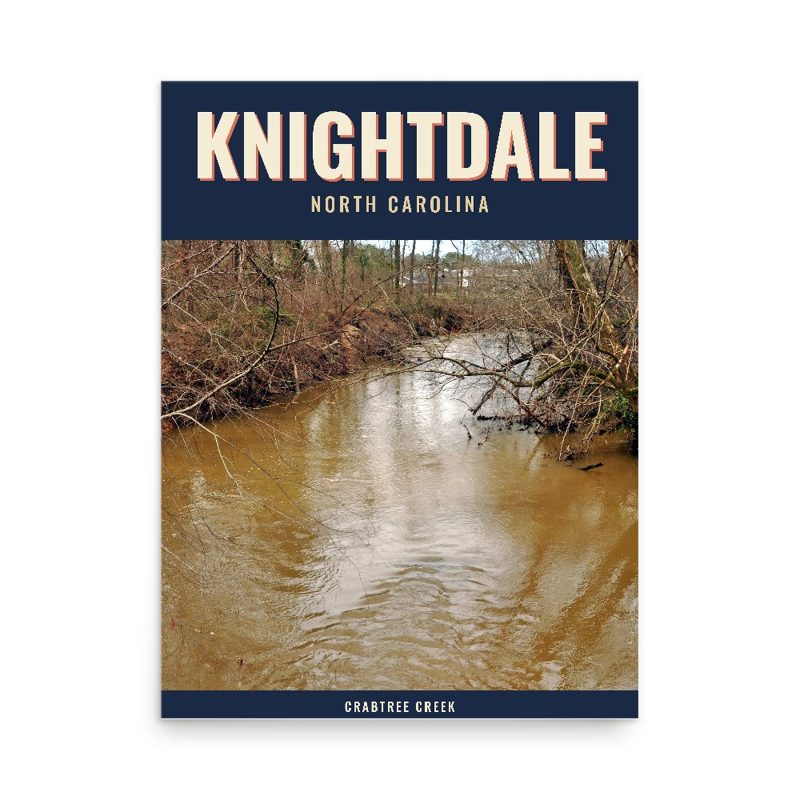


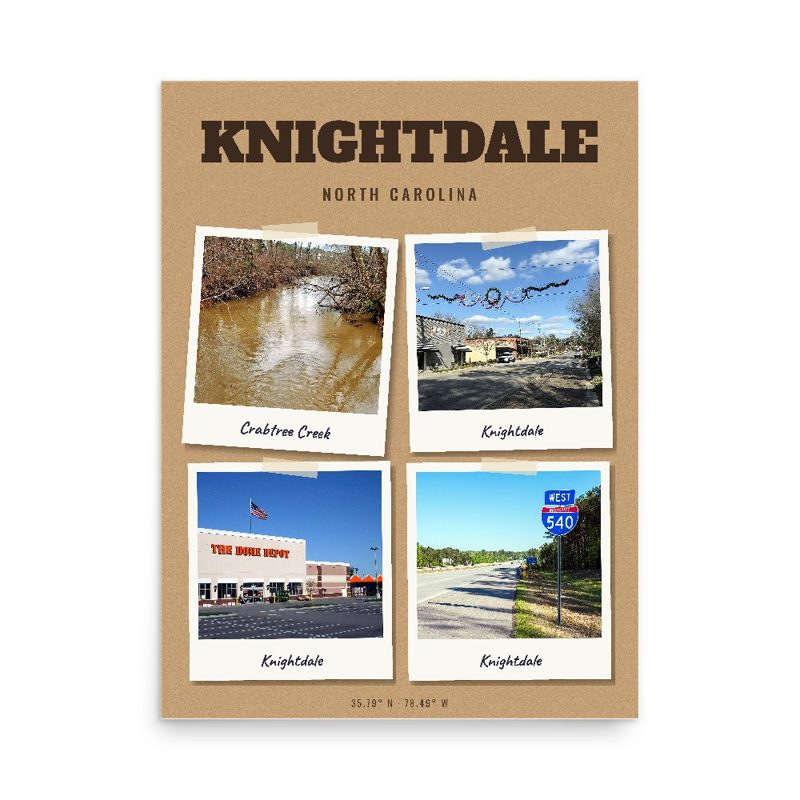

















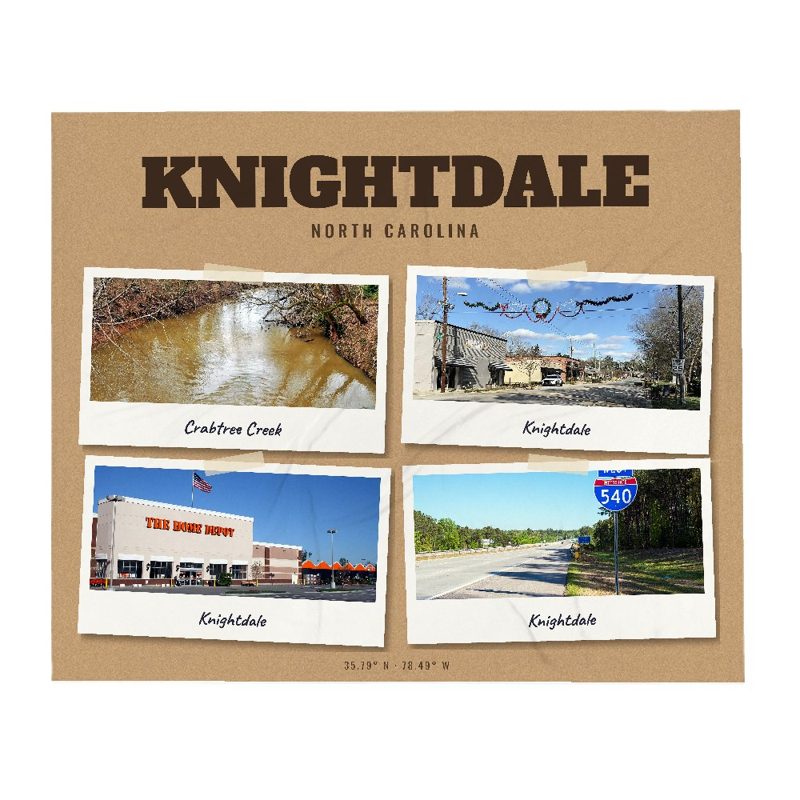

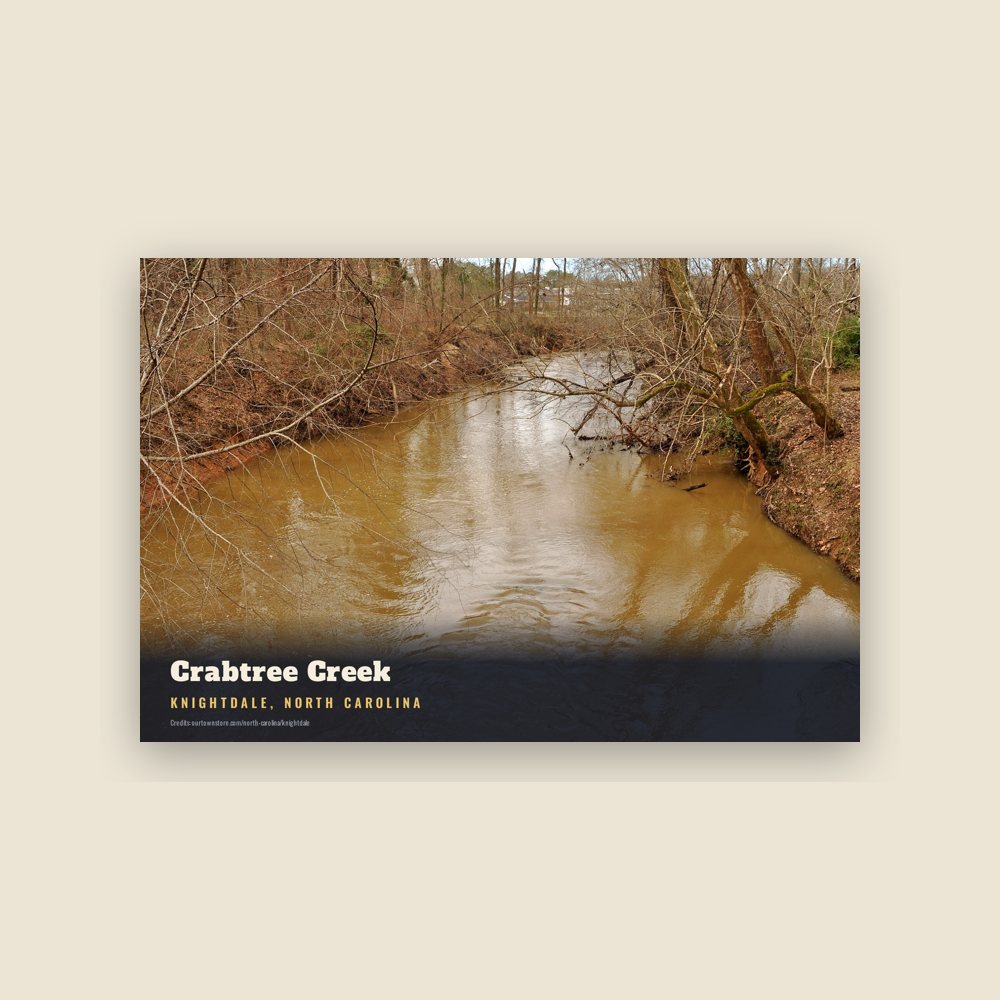
 Crabtree Creek
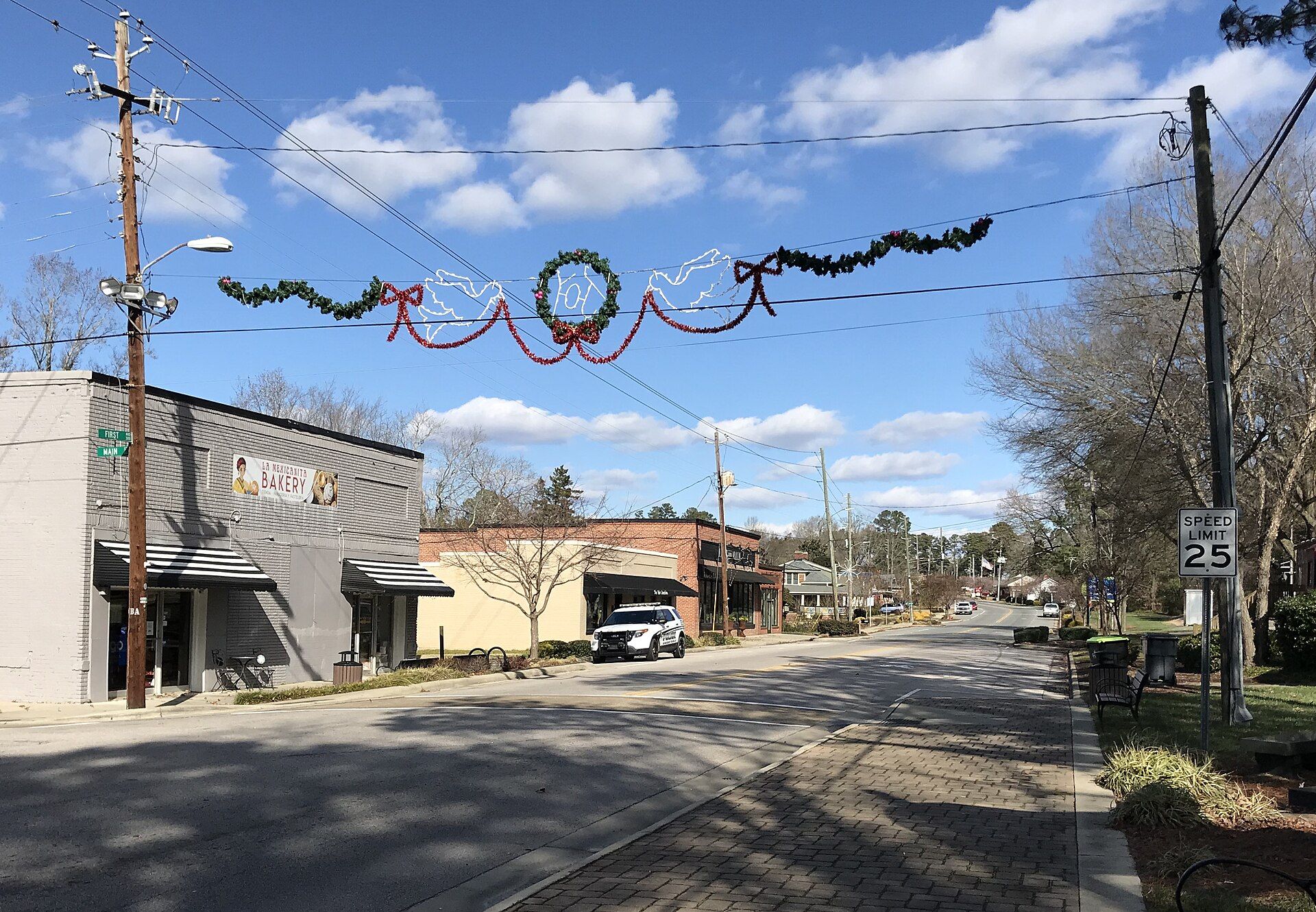
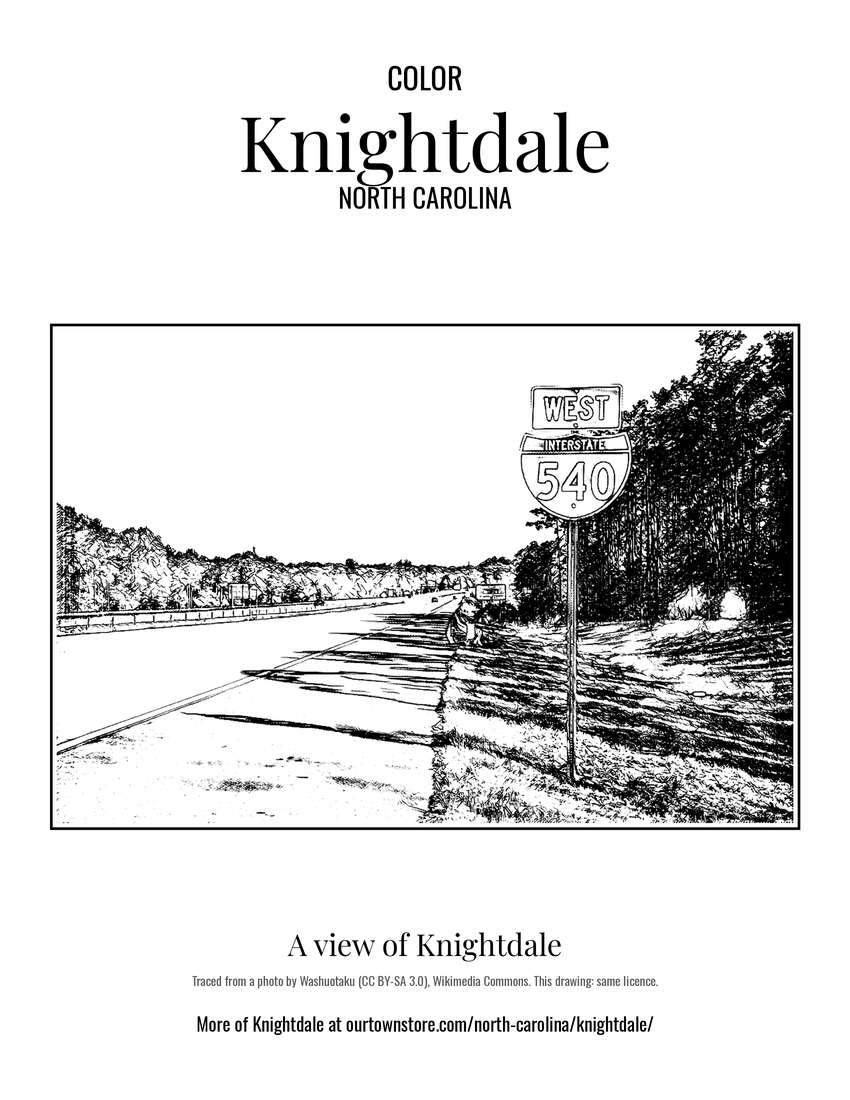
 A view of Knightdale
 A view of Knightdale
 A view of Knightdale