Prior to the arrival of Europeans, inhabitants of the area that became Greensboro were the Saura. Other indigenous cultures had occupied this area for thousands of years, typically settling along the waterways, as did the later European settlers.
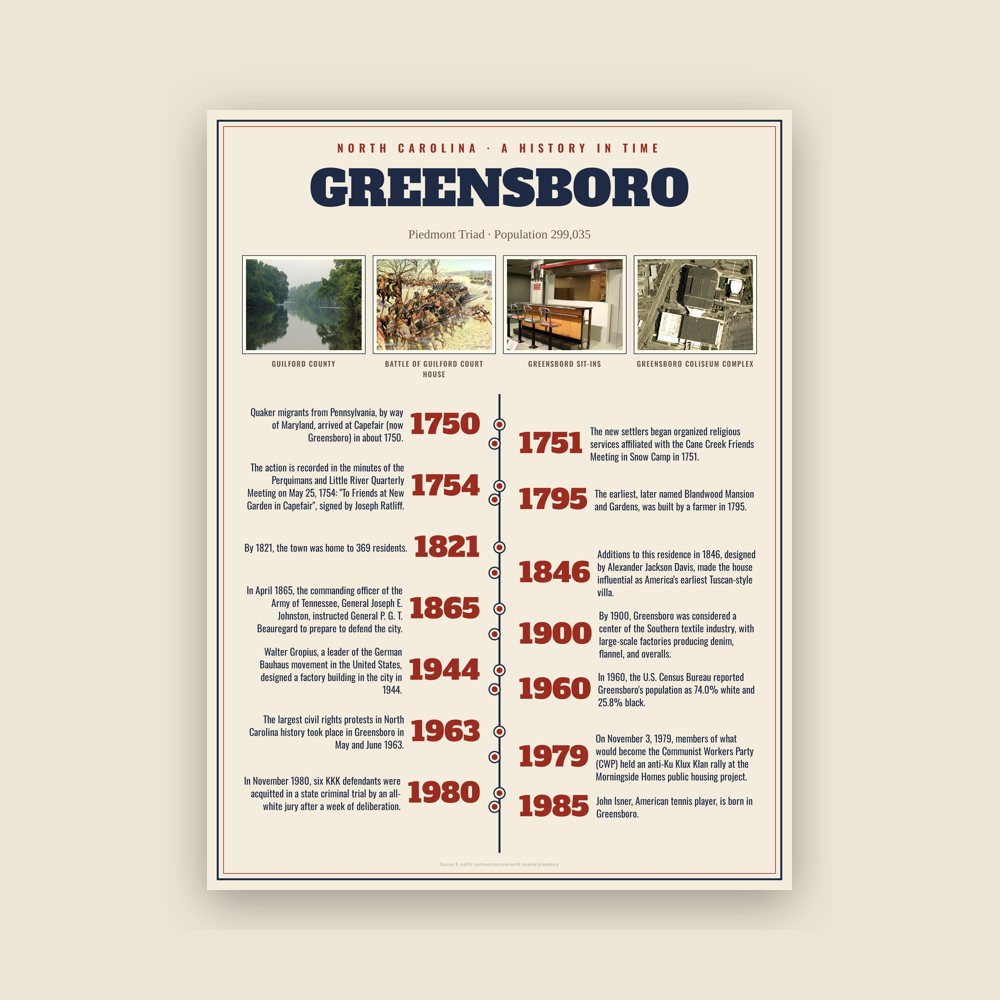
Quaker migrants from Pennsylvania, by way of Maryland, arrived at Capefair (now Greensboro) in about 1750. The new settlers began organized religious services affiliated with the Cane Creek Friends Meeting in Snow Camp in 1751. Three years later, 40 Quaker families were granted approval to establish New Garden Monthly Meeting. The action is recorded in the minutes of the Perquimans and Little River Quarterly Meeting on May 25, 1754: "To Friends at New Garden in Capefair", signed by Joseph Ratliff. The settlement grew rapidly over the next three years, adding members from as far away as Nantucket, Massachusetts. It soon became North Carolina's most important Quaker community and the mother of several other Quaker meetings established in the state and west of the Appalachians.
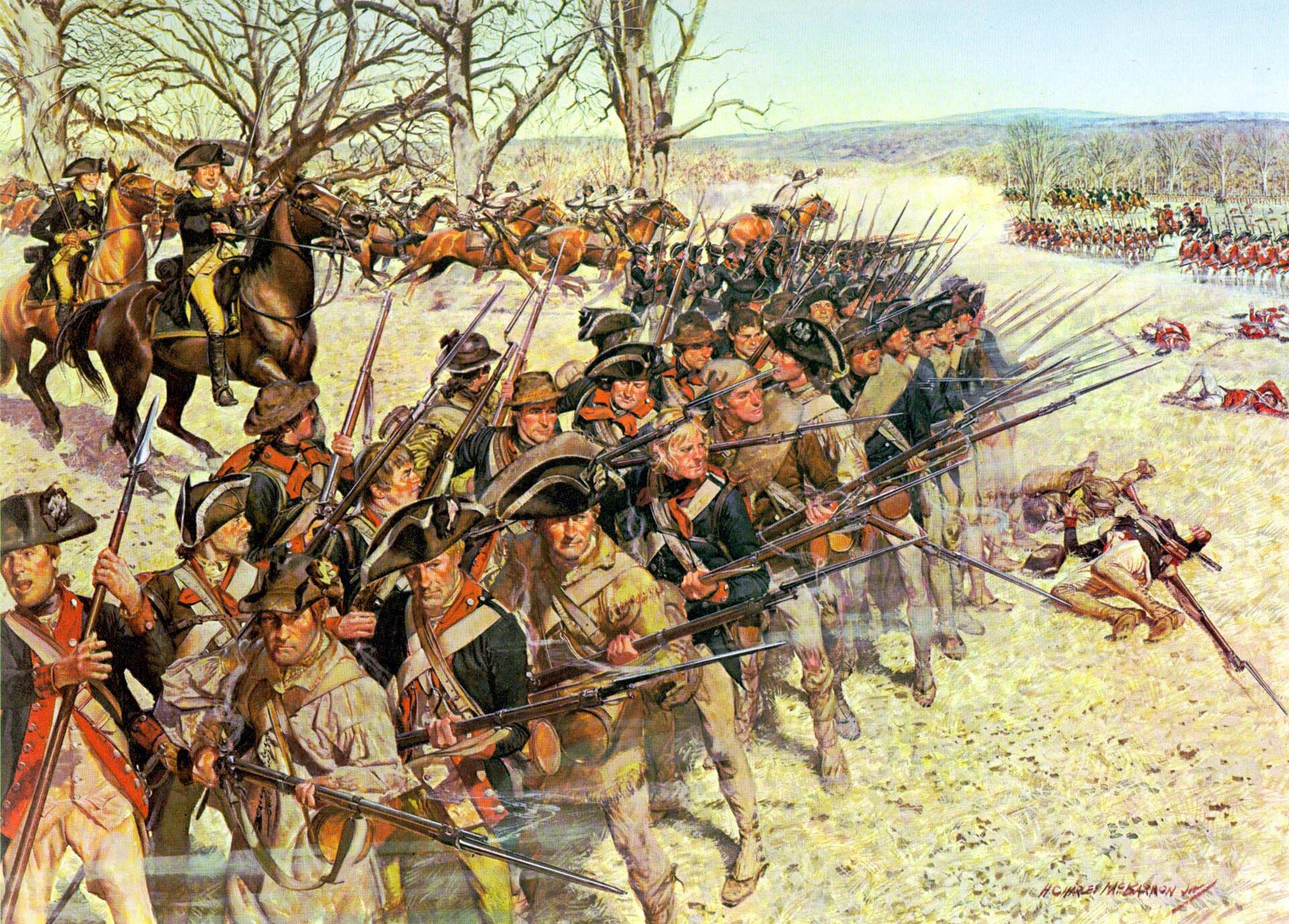
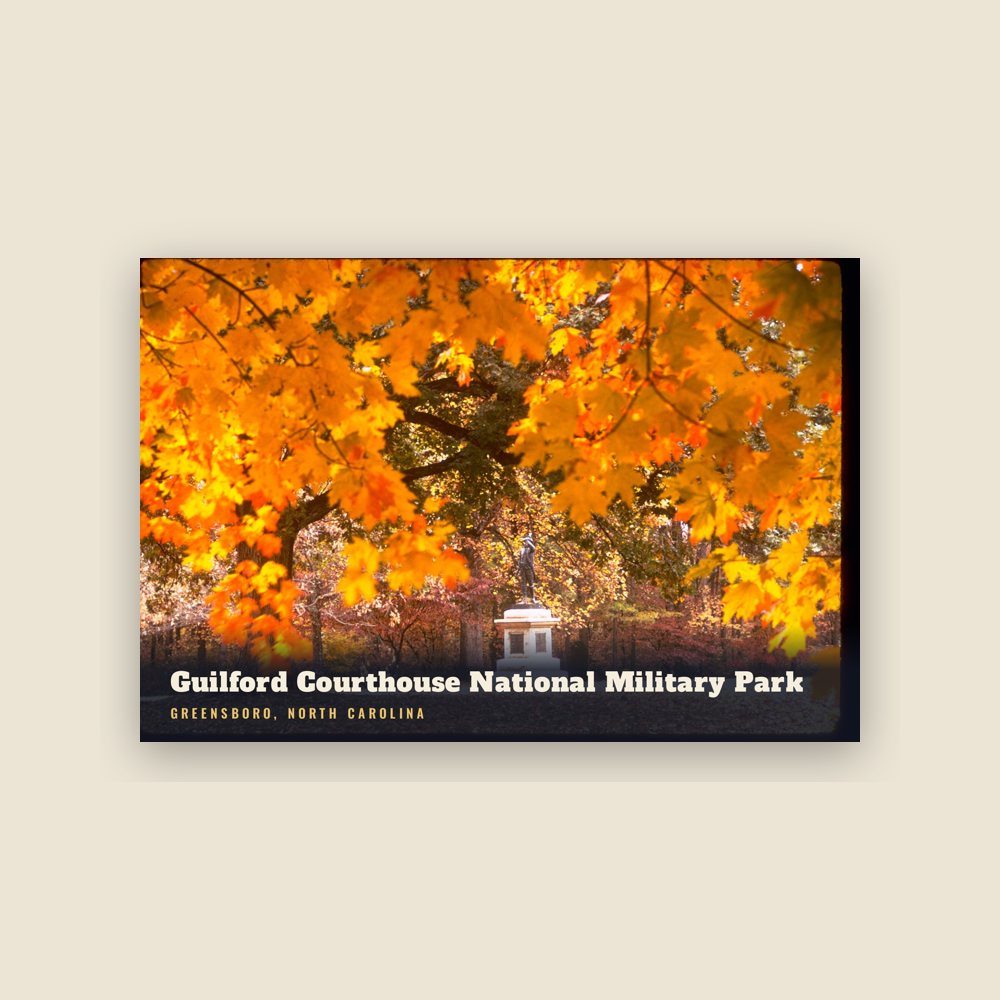
After the Revolutionary War, the city of Greensboro was named for Major General Nathanael Greene, commander of the rebel American forces at the Battle of Guilford Court House on March 15, 1781. Although the Americans lost the battle, Greene's forces inflicted heavy casualties on the British Army of General Cornwallis. After the battle, Cornwallis withdrew his troops to a British coastal base in Wilmington.
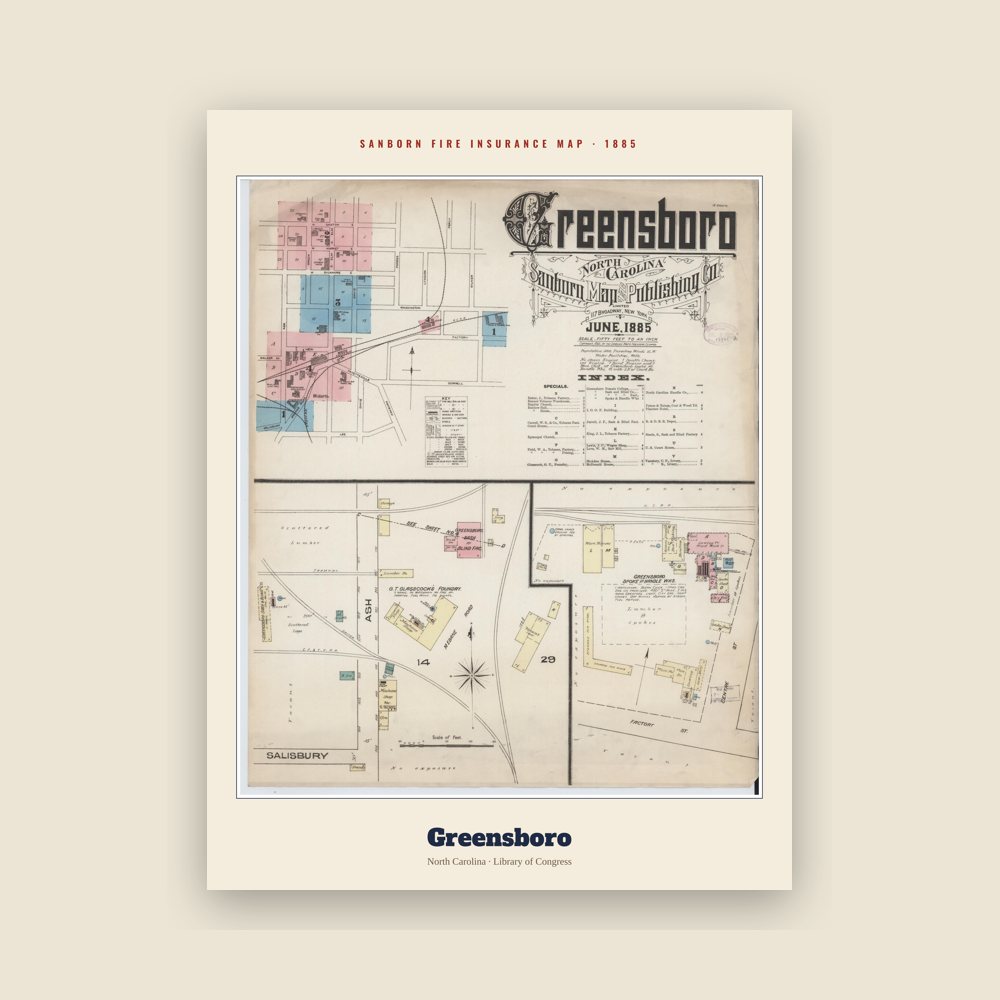
Greensboro was established near the geographic center of Guilford County, on land that was "an unbroken forest with thick undergrowth of huckleberry bushes, that bore a finely flavored fruit." Property for the future village was purchased from the Saura for $98. Three north–south streets (Greene, Elm, Davie) were laid out intersecting with three east–west streets, Gaston, Market, and Sycamore. The courthouse was built at the center of the intersection of Elm and Market streets. By 1821, the town was home to 369 residents.
In the early 1840s, the state government designated Greensboro as one of the stops on a new railroad line, at the request of Governor John Motley Morehead, whose house, Blandwood, was in Greensboro. Stimulated by rail traffic and improved access to markets, the city grew substantially, soon becoming known as the "Gate City" due to its role as a transportation hub for the Piedmont. The railroads transported goods to and from the cotton textile mills. Many of the manufacturers developed workers' housing in mill villages near their facilities.
Though the city developed slowly, early wealth generated in the 18th and 19th centuries from cotton trade and merchandising resulted in owners' constructing several notable buildings. The earliest, later named Blandwood Mansion and Gardens, was built by a farmer in 1795. Additions to this residence in 1846, designed by Alexander Jackson Davis, made the house influential as America's earliest Tuscan-style villa. It has been designated a National Historic Landmark. Other significant houses and estates were developed, including Dunleith, designed by Samuel Sloan; Bellemeade; and the Bumpass-Troy House. Since the late 20th century, the latter has been adapted and operates as a private inn.
Read the full history
Civil War and last days of the Confederacy
In the mid-19th century, many of the residents of the Piedmont and western areas of the state were Unionist, and Guilford County did not vote for secession. But once North Carolina joined the Confederacy, some citizens joined the Confederate cause, forming infantry units such as the Guilford Grays to fight in the American Civil War. From 1861 to March 1865 the city was relatively untouched by the war, although residents had to deal with regional shortages of clothing, medicine, and other items caused by the US naval blockade of the South.
In the war's final weeks, Greensboro played a unique role in the last days of the Confederate government. In April 1865, the commanding officer of the Army of Tennessee, General Joseph E. Johnston, instructed General P. G. T. Beauregard to prepare to defend the city. During this time, Confederate President Jefferson Davis and the remaining members of the Confederate cabinet had evacuated the Confederate Capital in Richmond, Virginia, and moved south to Danville, Virginia.
When Union cavalry threatened Danville, Davis and his cabinet managed to escape by train, and reassembled in Greensboro on April 11, 1865. While in the city, Davis and his cabinet decided to try to split up and make their way west of the Mississippi River to continue the war effort and avoid capture. Shortly thereafter, the cabinet left Greensboro and separated. Greensboro is notable as the last place where the entire Confederate government met as a group; some consider it the Confederacy's final capital city.
At nearly the same time, Governor Zebulon B. Vance fled Raleigh, the capital of North Carolina, before the forces of Union General William Tecumseh Sherman swept the city. For a brief period beginning April 16, 1865, he and other officials maintained the state capital in Greensboro. Vance proclaimed the North Carolina Surrender Declaration on April 28, 1865. Later, he surrendered to Union officials in the parlor of Blandwood Mansion. Historian Blackwell Robinson wrote, "Greensboro witnessed not only the demise of the Confederacy but also that of the old civil government of the state."
Once surrender negotiations were completed at Bennett Place (in present-day Durham) between General Johnston and General Sherman on April 26, 1865, Confederate soldiers in Greensboro stacked their arms, received their paroles, and headed home.
Industrialization and growth
After the war, investors worked to restore the textile mills and related industry. In the 1890s, the city continued to attract attention from northern industrialists, including Moses and Caesar Cone of Baltimore. The Cone brothers established large-scale textile plants, changing Greensboro from a village to a city within a decade. By 1900, Greensboro was considered a center of the Southern textile industry, with large-scale factories producing denim, flannel, and overalls. The resulting prosperity was expressed in the construction of notable 20th-century civic architecture, including the Guilford County Courthouse, West Market Street United Methodist Church by S. W. Faulk, several buildings designed by Frank A. Weston, and the Julius I. Foust Building of the University of North Carolina at Greensboro, designed by Orlo Epps.
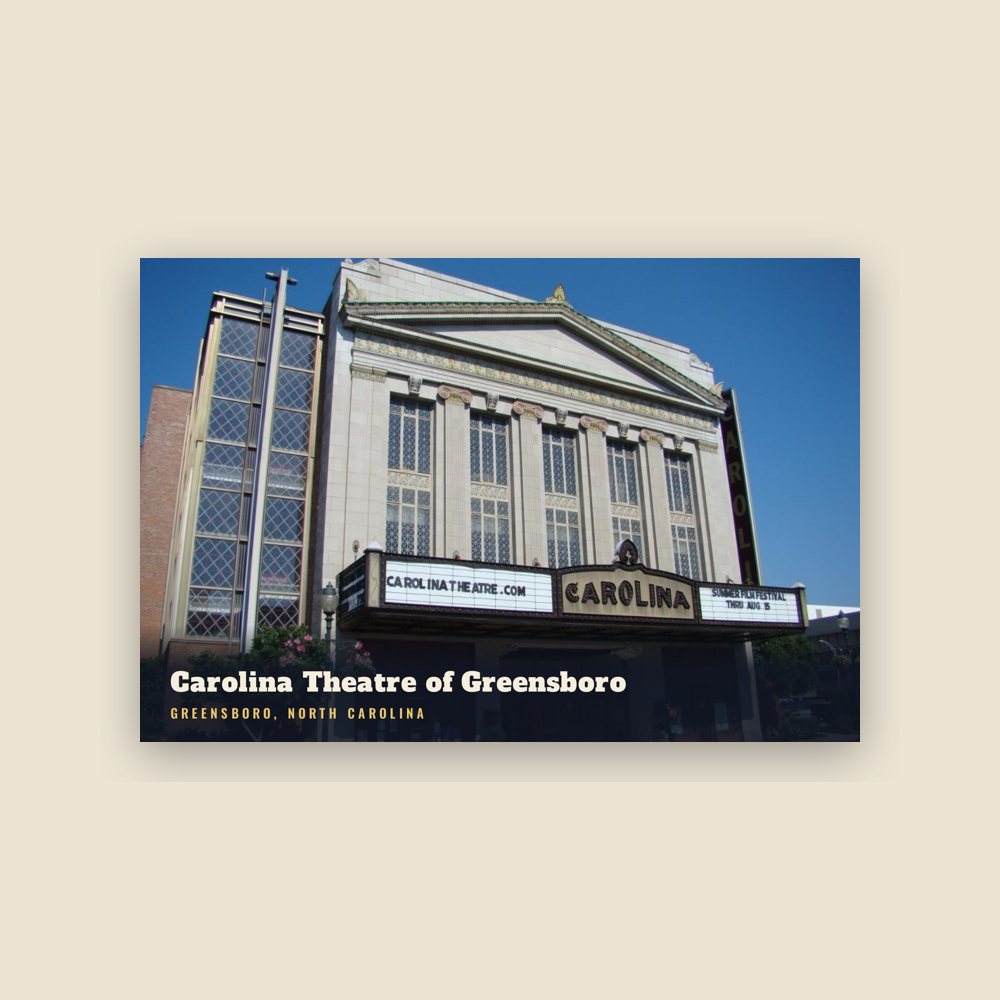
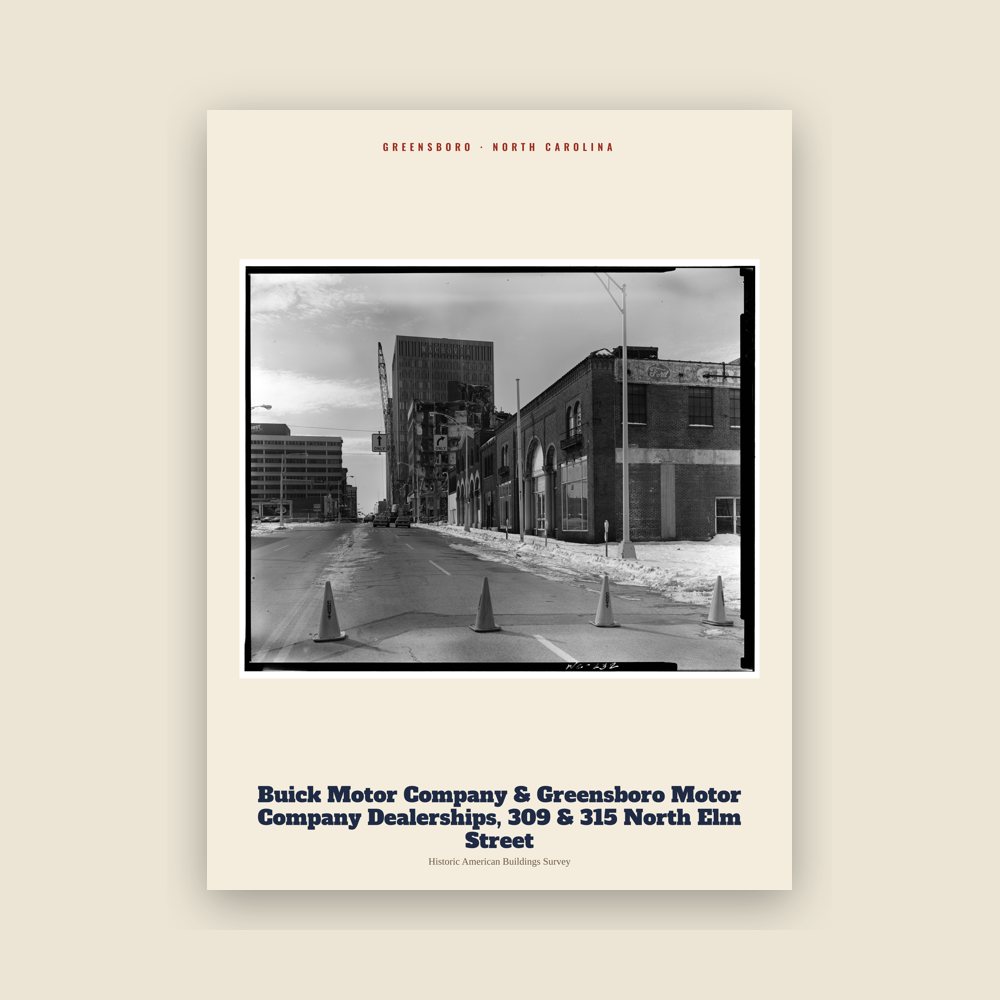
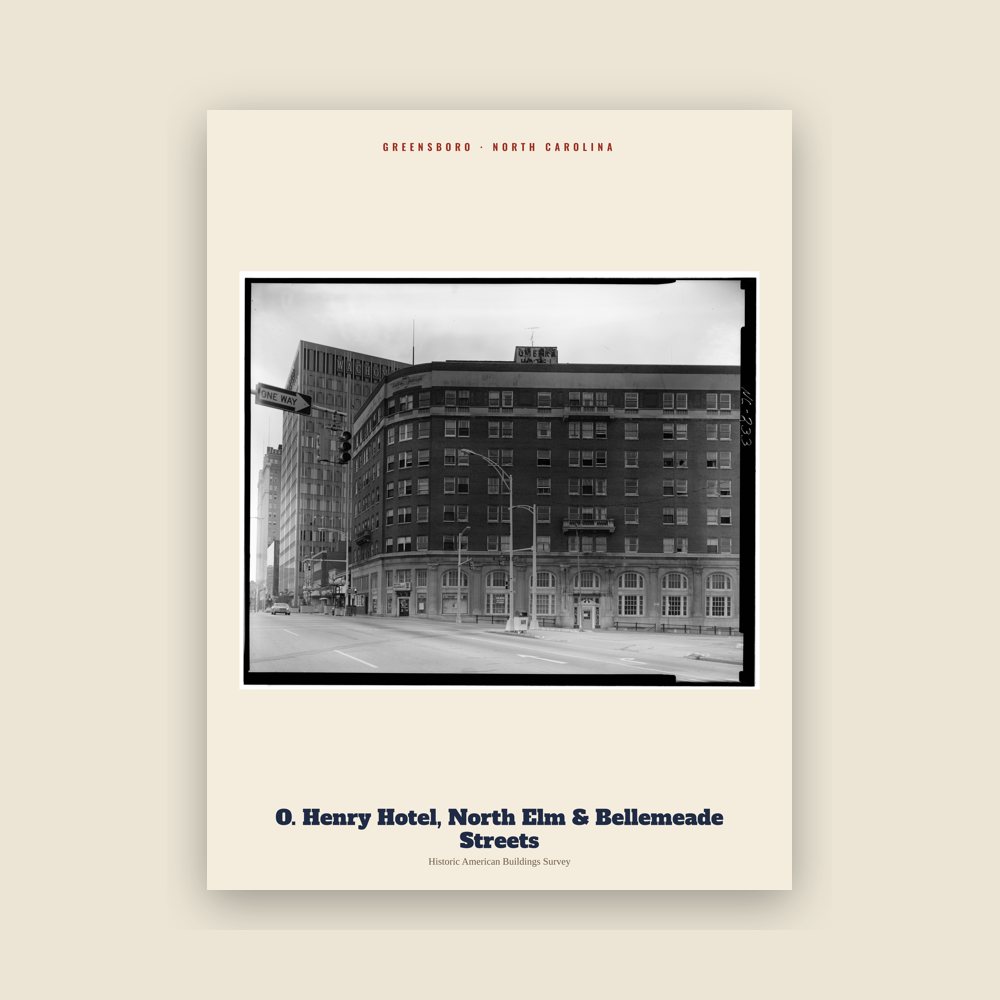
During the 20th century, Greensboro continued to increase in population and wealth. Grand commercial and civic buildings, many of which still stand today, were designed by local architects Charles Hartmann and Harry Barton. Other notable industries became established in the city, including Vicks Chemical Co. (known for over-the-counter cold remedies such as VapoRub and NyQuil), Carolina Steel Corporation, and Pomona Terra Cotta Works. During the first three decades, Greensboro grew so rapidly that there was an acute worker housing shortage. Builders set a construction goal of 80 to 100 affordable housing units per year to provide homes for workers. Greensboro's real estate was considered "the wonder of the state" in the 1920s. Growth continued even through the Great Depression, as Greensboro attracted an estimated 200 new families per year. The city earned a reputation as a well-planned community with a strong emphasis on education, parks, and a profitable employment base.
Greensboro has two major public research universities, North Carolina A&T State University, a historically black college established in the late 19th century, and the University of North Carolina at Greensboro. During the height of the civil rights movement in the early 1960s, students from A&T were the major force in protests to achieve racial justice, desegregation of public facilities, and fair employment, beginning with the Greensboro Four, who sat in at the segregated lunch counter at Woolworth's in 1960 to gain service. The largest civil rights protests in North Carolina history took place in Greensboro in May and June 1963. In the 21st century, the universities are leaders in new areas of research in high tech and science, on which the city hopes to build a new economy.
Wartime and postwar prosperity brought development, and designs commissioned from nationally and internationally known architects. Walter Gropius, a leader of the German Bauhaus movement in the United States, designed a factory building in the city in 1944. Greensboro-based Ed Loewenstein designed projects throughout the region. Eduardo Catalano and George Matsumoto were hired for projects whose designs have challenged North Carolinians with modernist architectural concepts and forms.
Civil rights movement
In 1960, the U.S. Census Bureau reported Greensboro's population as 74.0% white and 25.8% black. As in the rest of the state, most blacks were still disenfranchised under state laws, Jim Crow laws and customs were in effect, and public facilities, including schools, were racially segregated by law. This was after the U.S. Supreme Court's 1954 ruling in Brown v. Board of Education that segregation in public schools was unconstitutional. Facilities reserved for blacks were generally underfunded by the state and city governments, which were dominated by conservative white Democrats.
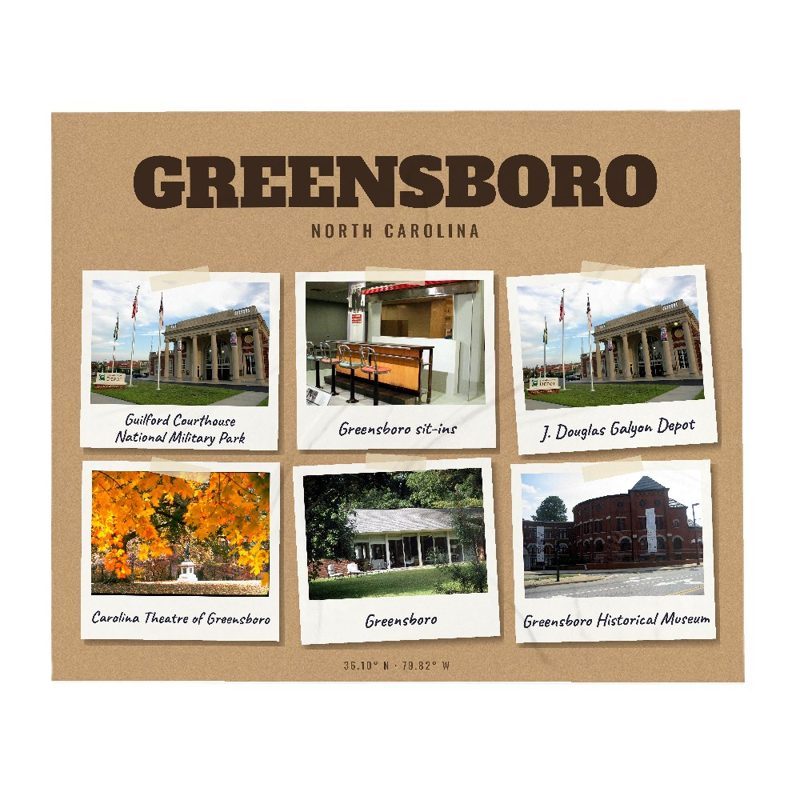
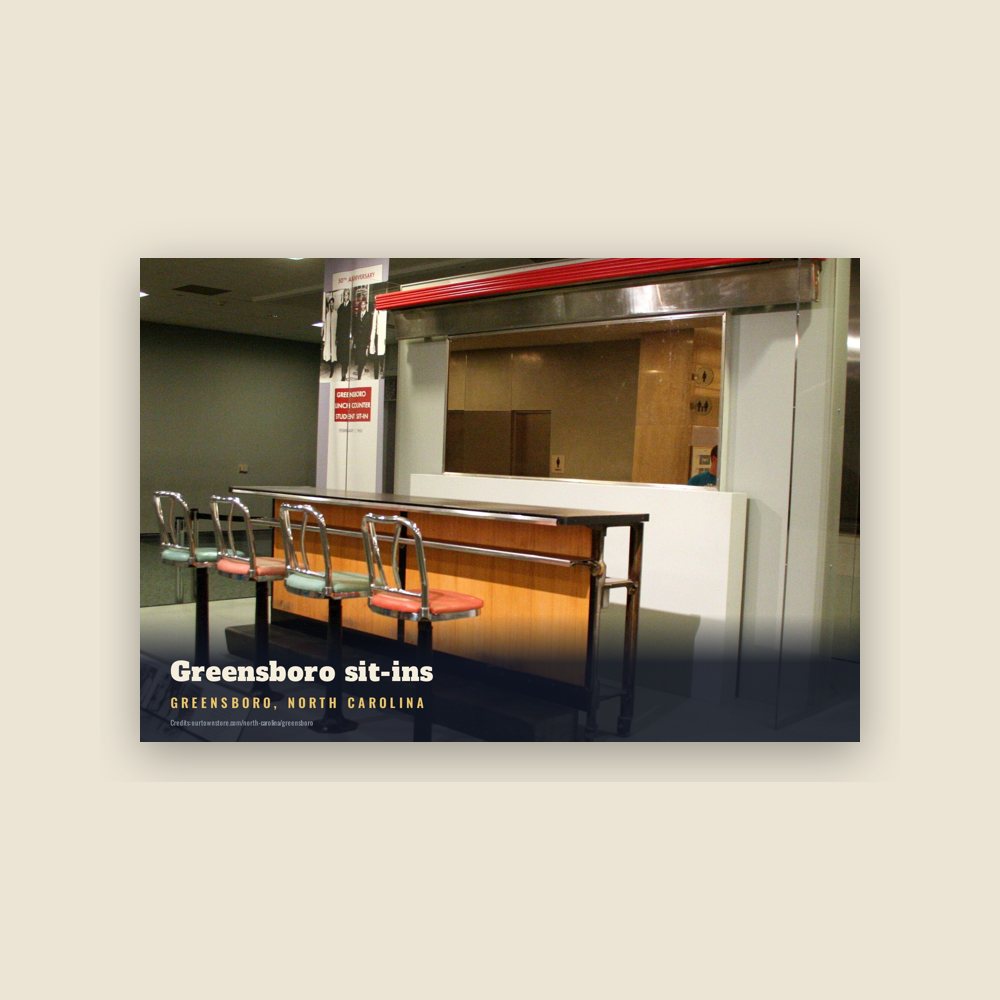
In the postwar period, blacks in North Carolina and across the South pushed to regain their constitutional rights. Mostly black women from Bennett college originally had been the original protesters coordinating against Jim-Crow laws. In turn, college students from North Carolina Agricultural and Technical College (A&T), a historically black college, made Greensboro a center of protests and change. On February 1, 1960, four black college students sat down at an "all-white" Woolworth's lunch counter, and refused to leave after they were denied service. They had already purchased items in other parts of the store and kept their receipts. After being denied lunch service, they brought out the receipts, asking why their money was good everywhere else in the store but not at the lunch counter. Hundreds of supporters soon joined in this sit-in, which lasted several months.Such protests quickly spread across the South, ultimately leading to the desegregation of lunch counters and other facilities at Woolworth's and other chains.
Woolworth's went out of business due to changes in 20th-century retail practices, but the original Woolworth's lunch counter and stools are still in their original location. The former Woolworth's building has been adapted as the International Civil Rights Center and Museum, which opened on February 1, 2010, the 50th anniversary of the sit-ins. A section of the counter is on display at the Smithsonian in Washington, D.C. to mark the protesters' courage.
The white business community acceded to the desegregation of Woolworth's and made other minor concessions, but the civil rights movement had additional goals, holding protests in 1962 and 1963. In May and June 1963, the largest civil rights protest in North Carolina history took place in Greensboro. Protesters sought desegregation of public accommodations, and economic and social justice, such as hiring policies based on merit rather than race. They also worked for the overdue integration of public schools.
Each night more than 2,000 protesters marched through Greensboro's segregated central business district. William Thomas and A. Knighton Stanley, coordinators of Greensboro's local CORE chapter, invited Jesse Jackson, then an activist student at A&T, to join the protests. Jackson quickly rose to prominence as a student leader, becoming the public spokesman of the non-violent protest movement. Seeking to overwhelm city jails, as was done in protests led by Martin Luther King Jr. in Birmingham, Alabama, the protesters invited arrest by violating segregation rules of local businesses; they were charged with trespassing and other nonviolent actions. College and high school students constituted most of the protesters, and at one point approximately 1,400 blacks were jailed in Greensboro. The scale of protests disrupted the business community and challenged the leadership of the mayor and Governor Terry Sanford.
Finally, the city and business community responded with further desegregation of public facilities, reformed hiring policies in city government, and commitments to progress by both Sanford and Greensboro's mayor. Sanford declared, "Anyone who hasn't received this message doesn't understand human nature." Significant changes in race relations still came at a painfully slow pace, and the verbal commitments from white leadership in 1963 were not implemented in substantial ways.
Dudley High School/A&T protests
During the summer many High-school groups coordinated sit-ins, while their college students were occupied.Mainly students from James B Dudley High school.
In May 1969, students of James B. Dudley High School were outraged when the administration refused to let a popular candidate, Claude Barnes, run for student union class president, allegedly due to his membership in Youth for the Unity of Black Society. After their appeals to the school were rejected, the students asked activists at North Carolina A&T State University for support in a protest. Protests escalated and after students at A&T had thrown rocks at police, they returned on May 21 armed with tear gas canisters, using them against the crowds. The uprising grew larger, and the governor ordered the National Guard to back up local police.
After there were exchanges of gunfire, the governor ordered the North Carolina National Guard into the A&T campus, in what was described at the time as "the most massive armed assault ever made against an American university". The North Carolina National Guard swept the college dormitories, taking hundreds of students into "protective custody". The demonstrations were suppressed. The North Carolina State Advisory Committee to the United States Commission on Civil Rights investigated the disturbances; its 1970 report concluded that the National Guard invasion was a reckless action disproportionate to the danger posed by student protests. It criticized local community leaders for failing to respond adequately to the Dudley High School students when the issues first arose. They declared it "a sad commentary that the only group in the community who would take the Dudley students seriously were the students at A&T State University".
21st century
Textile companies and related businesses continue into the 21st century, when most went bankrupt, reorganized, and/or merged with other companies as textile manufacturing jobs moved offshore. Greensboro is still a major center of the textile industry, with the main offices of Elevate Textiles (Cone, Burlington Industries), Galey & Lord, Unifi, and VF Corporation (Wrangler, Lee, Helly Hansen, Musto, and Rock & Republic), ITG Brands, maker of Kool, Winston and Salem brand cigarettes and the nation's third-largest tobacco company is headquartered in Greensboro.
Rail traffic continues to be important for the city's economy, as Greensboro is a major regional freight hub. Twelve Amtrak passenger trains also stop in Greensboro daily. The Crescent has its platform on the main Norfolk Southern line between Washington and New Orleans by way of Atlanta. The Carolinian and Piedmont trains have their platform at the start of Norfolk Southern NC-Line that runs from Greensboro to Goldsboro, NC. The Norfolk Southern K-Line starts at the Pomona freight yard just west of downtown and runs towards Winston-Salem. The Norfolk Southern CF-Line originally started in Mt. Airy, NC but rail has been removed north of downtown and now starts at the wye with the mainline downtown and heads south to Gulf, NC.

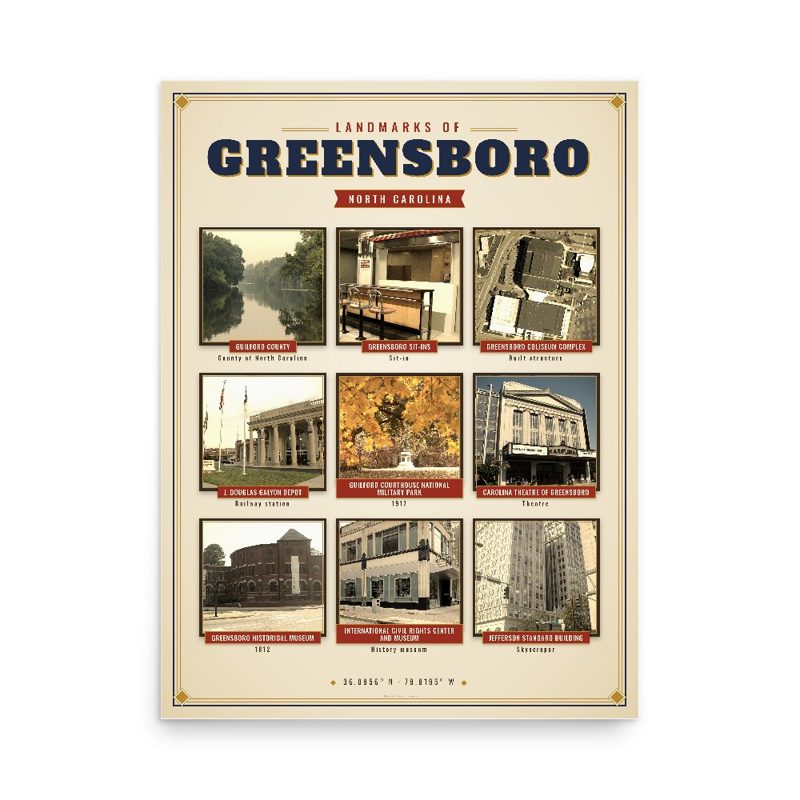
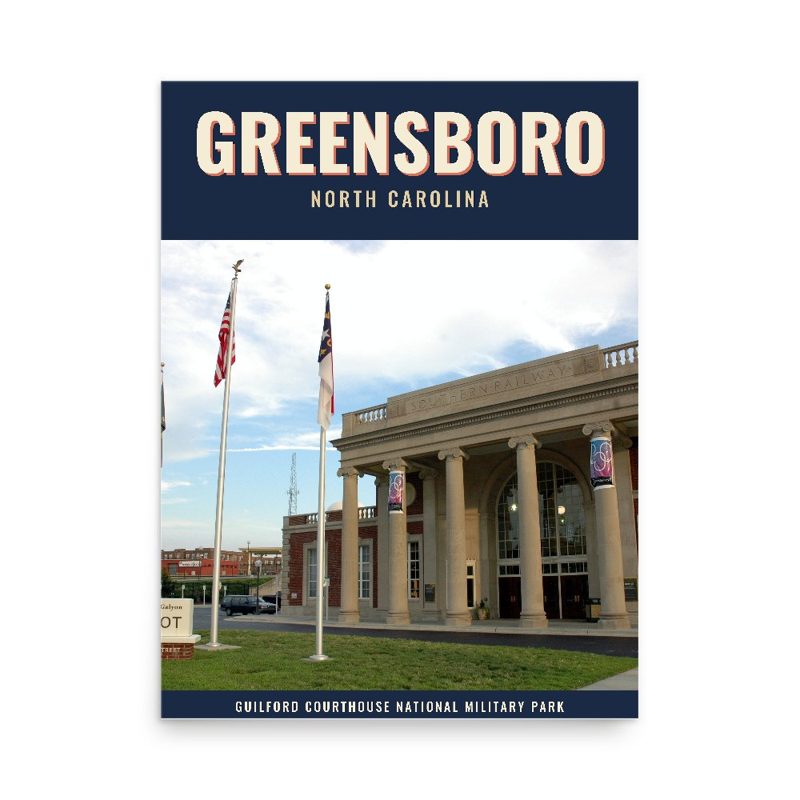
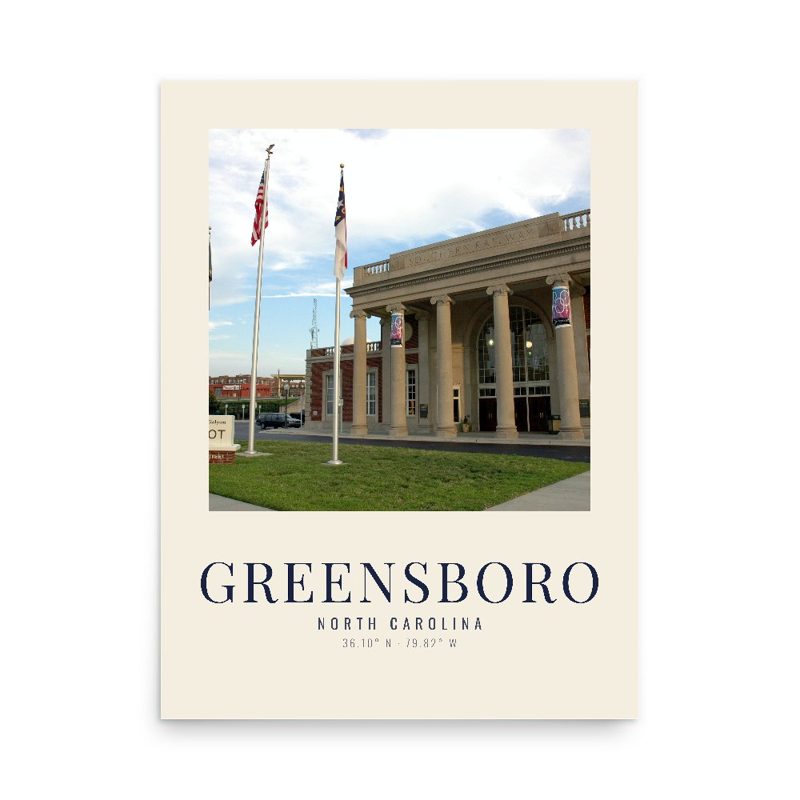
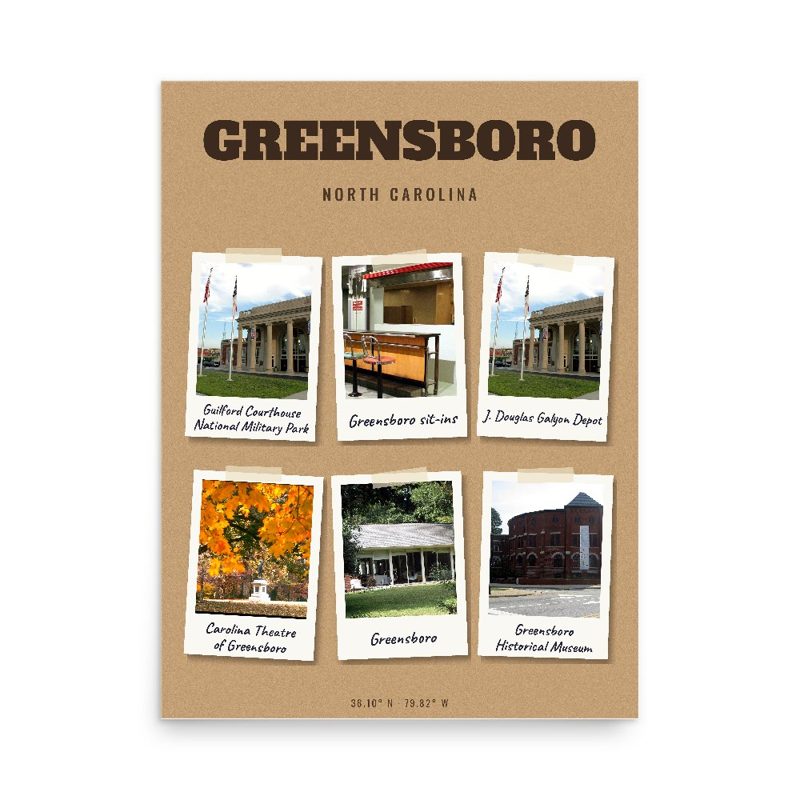
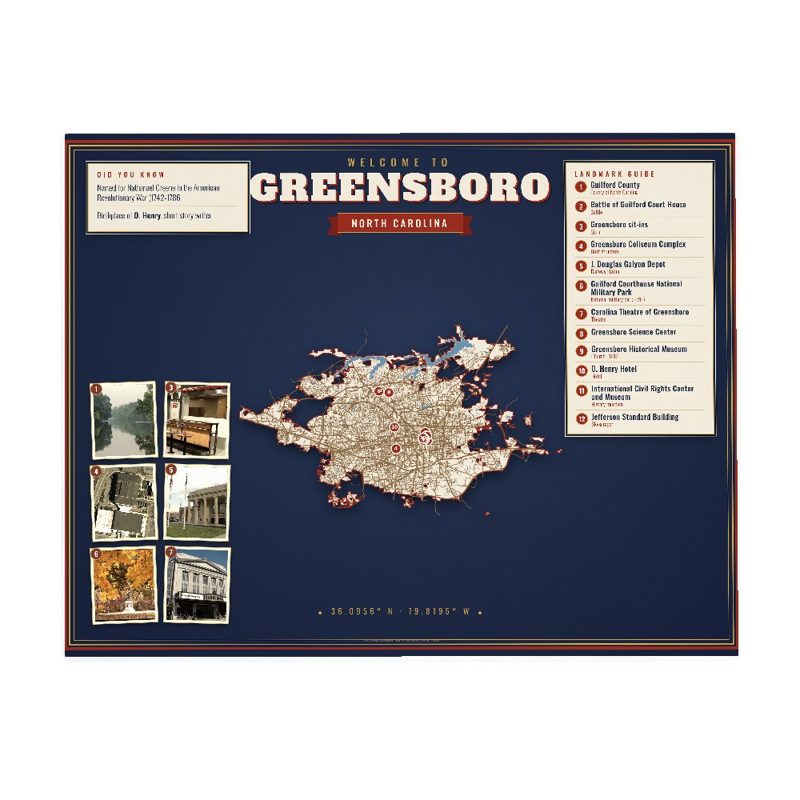










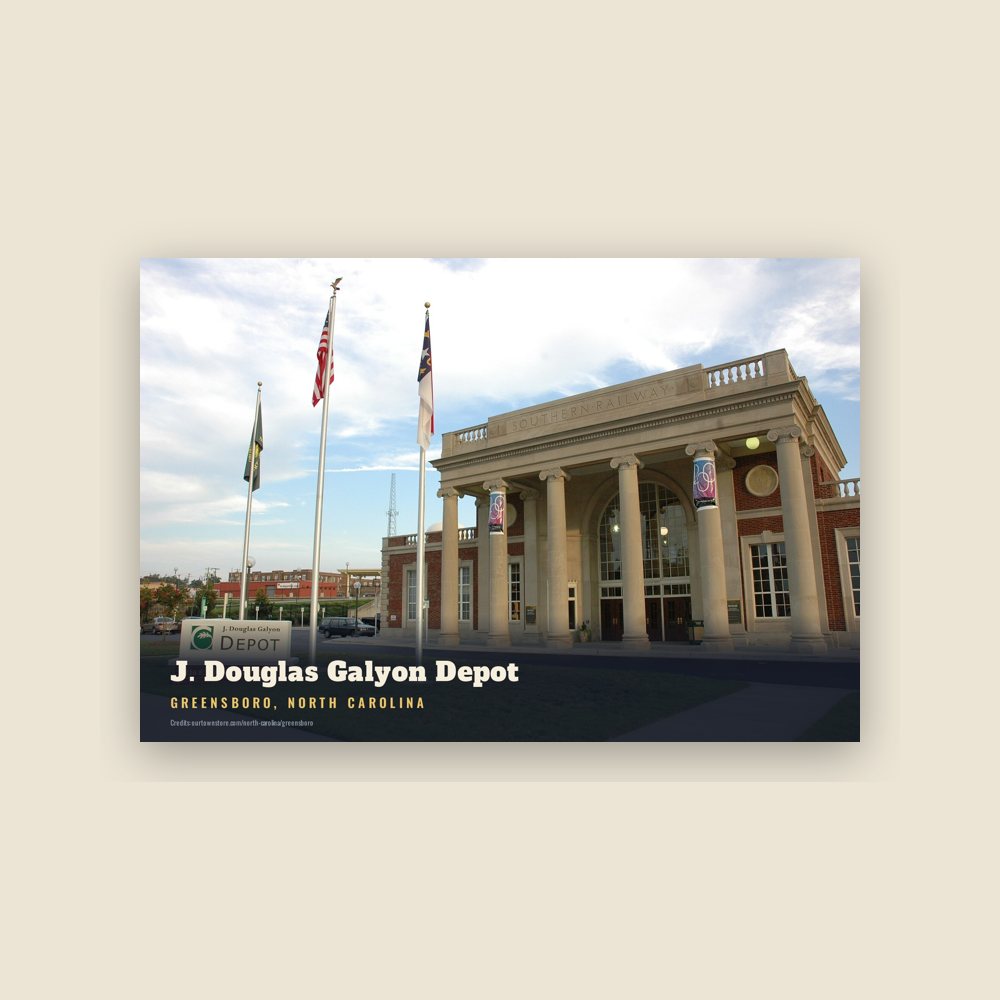
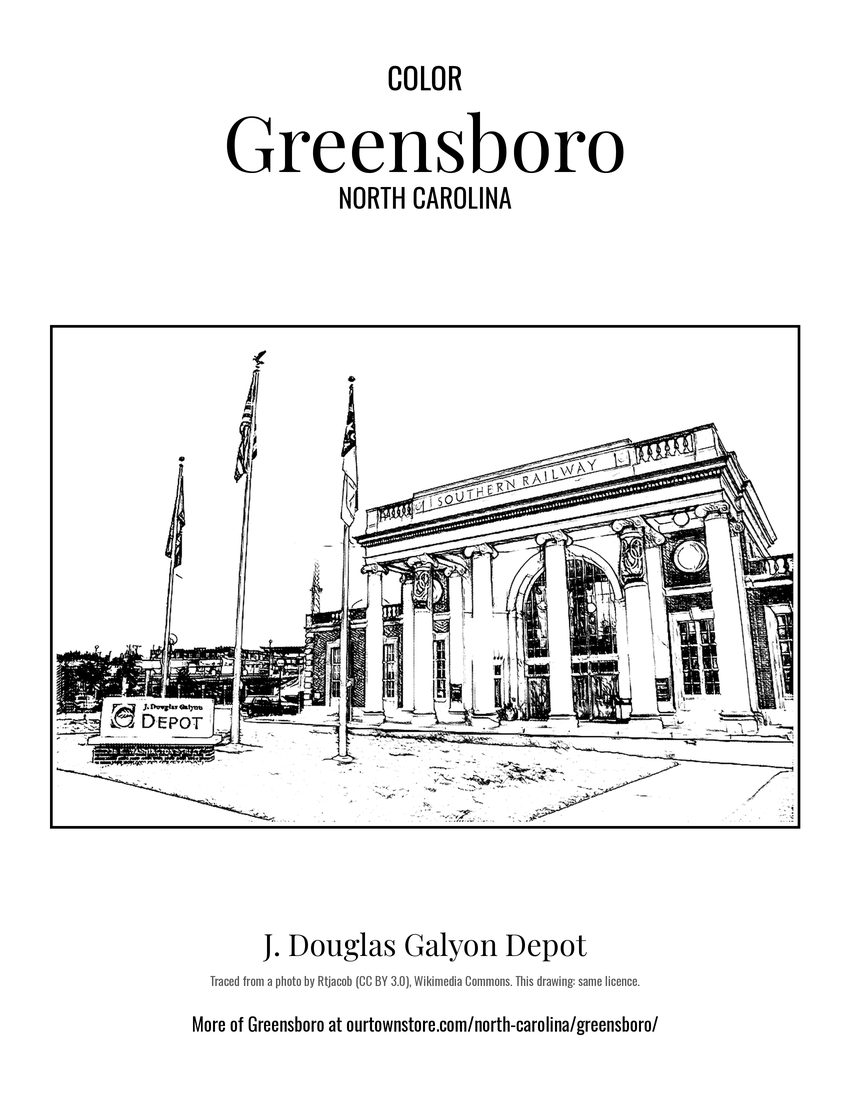 J. Douglas Galyon Depot
 Guilford County
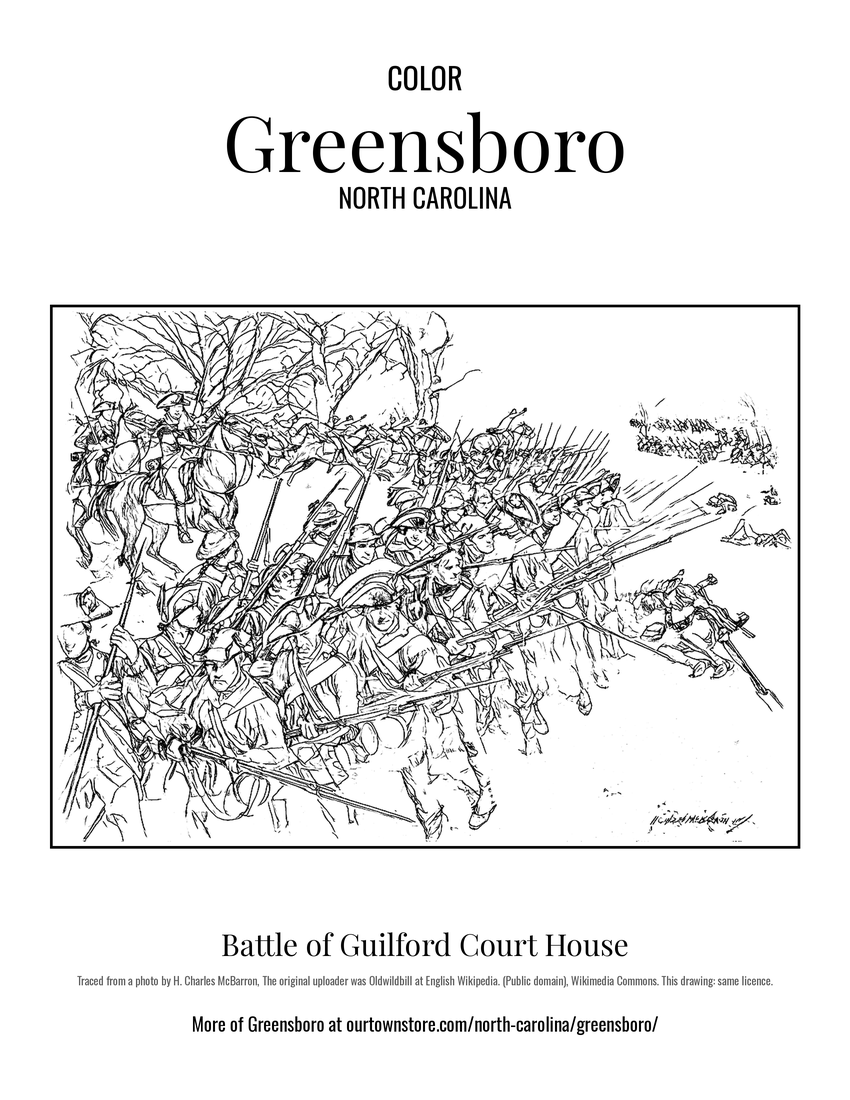 Battle of Guilford Court House
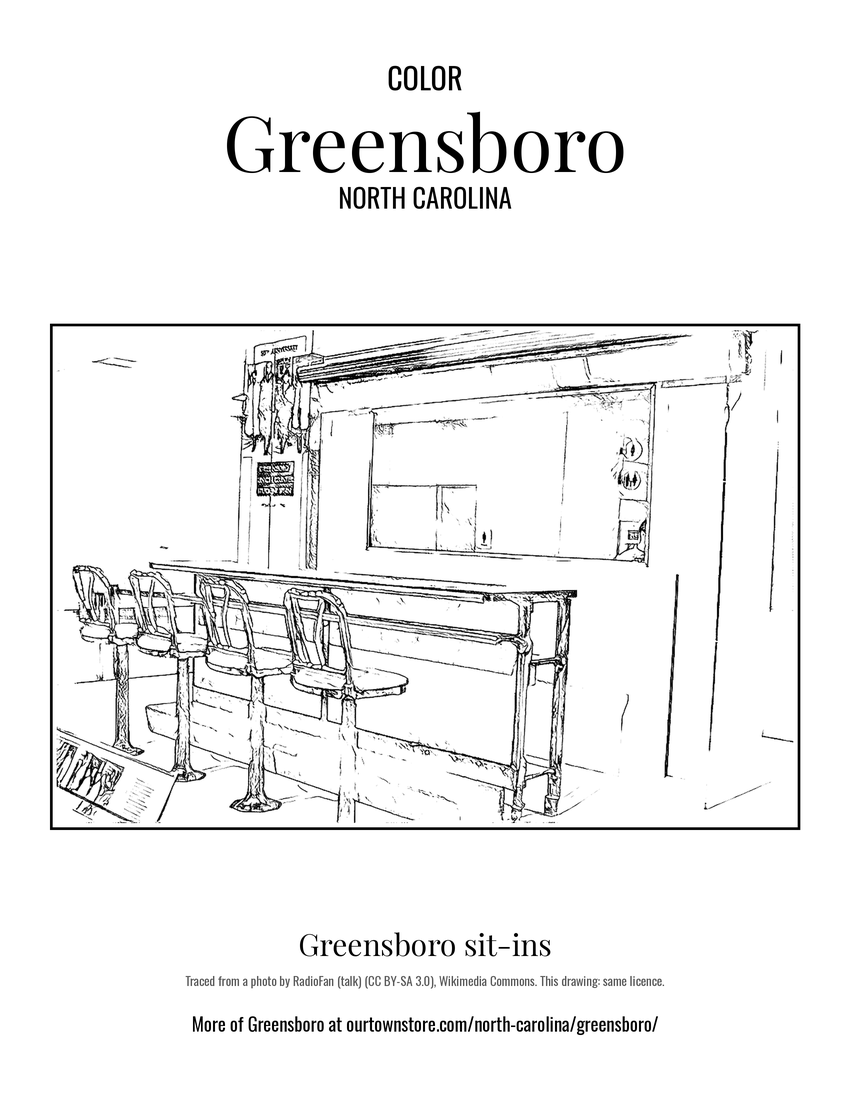 Greensboro sit-ins