A short history of Saratoga Springs
Early history of the area
The Mohawk indigenous people used the area that is now Saratoga Springs as prime hunting ground. Some thought of the mineral springs as a gift from Manitou.
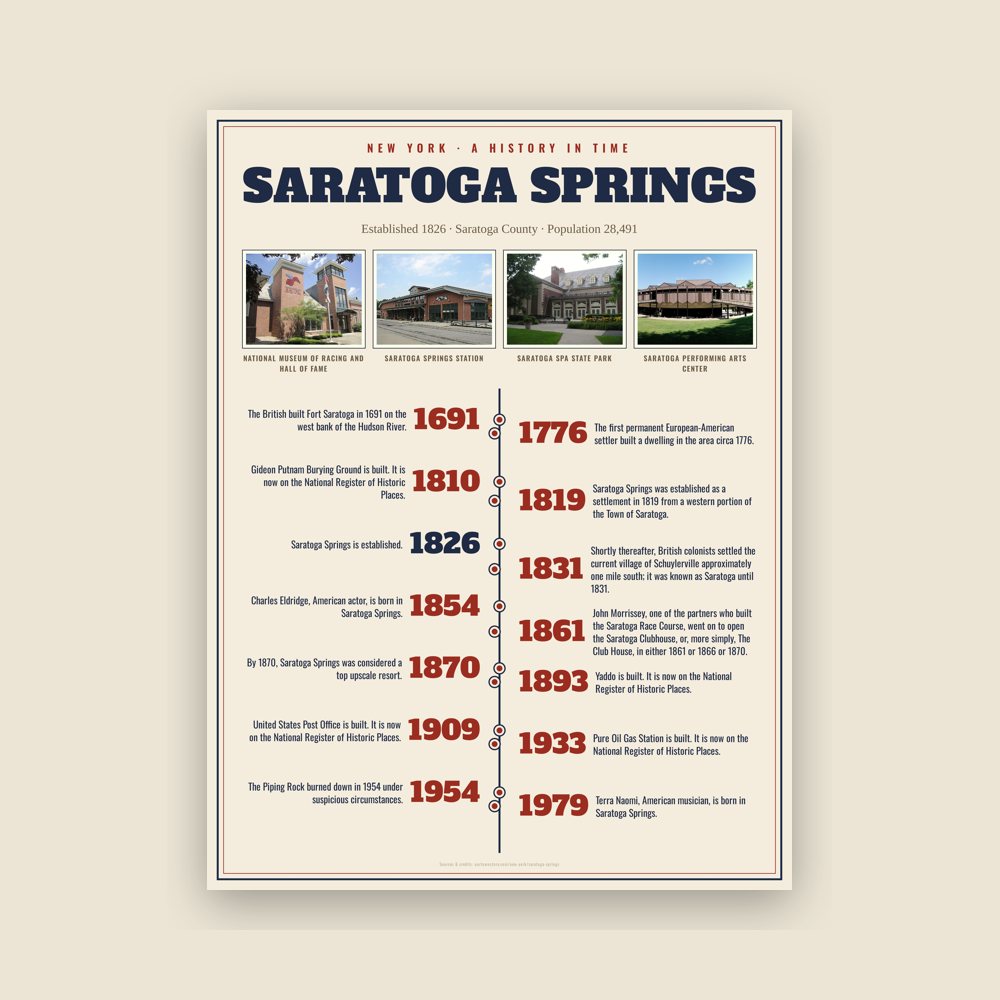
The British built Fort Saratoga in 1691 on the west bank of the Hudson River. During the early part of the 1700s, settlers from Europe began to develop the area. Shortly thereafter, British colonists settled the current village of Schuylerville approximately one mile south; it was known as Saratoga until 1831.
In 1767, William Johnson, a colonial British officer who was a hero of the French and Indian War, was brought by Native American friends to the spring to treat his war wounds. (In 1756, Johnson had been appointed British Superintendent of Indian Affairs in the Northeast region due to his success in building alliances with the Mohawk and other Iroquois nations. He had learned the language and created many trading relationships. He achieved great wealth from trading and landholdings, and was knighted for his service to the Crown with the Iroquois.)
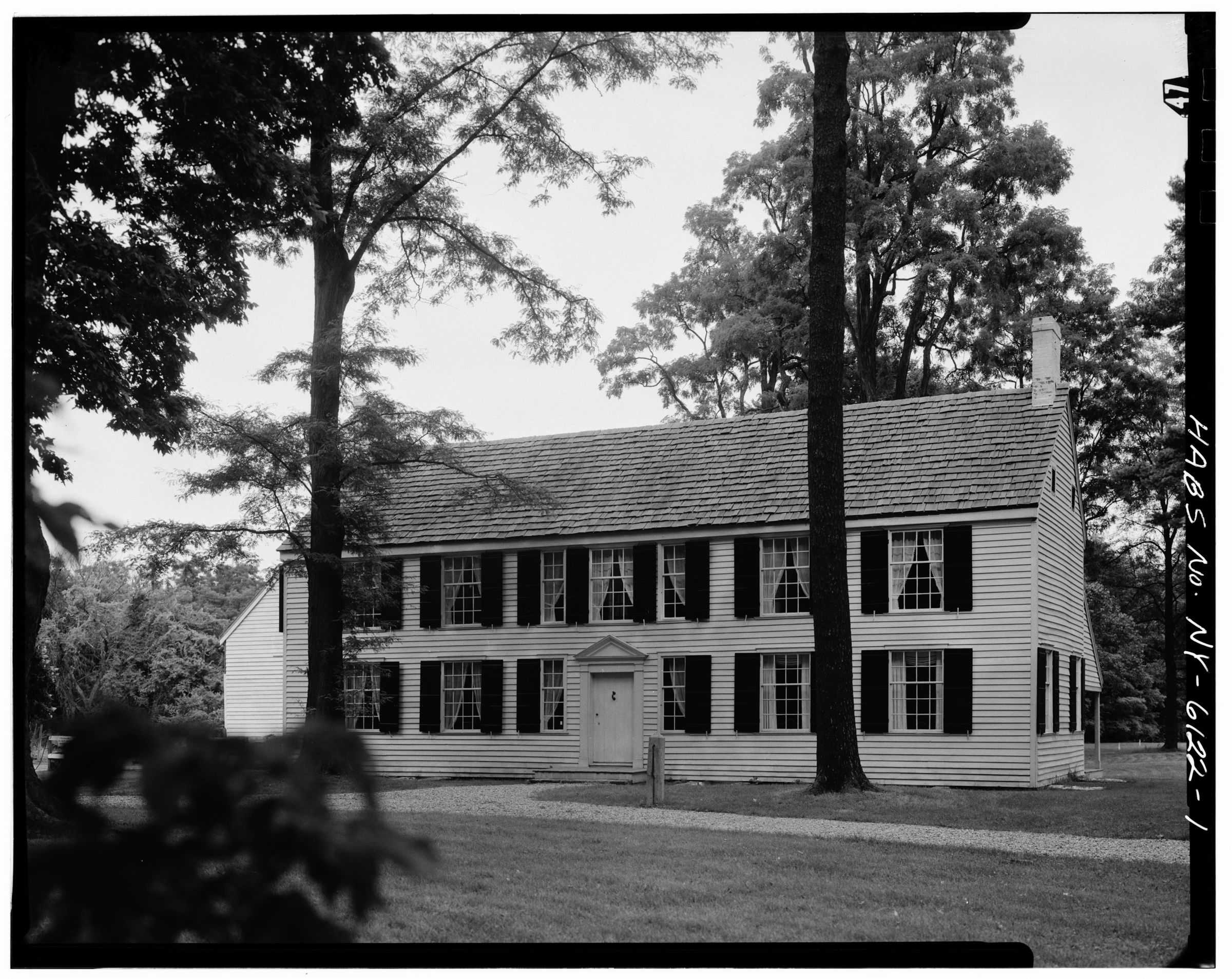
The first permanent European-American settler built a dwelling in the area circa 1776. The springs attracted tourists, and Gideon Putnam built the first hotel for travelers. Putnam also laid out the roads and donated land for use as public spaces.
The Battles of Saratoga, the turning point of the Revolutionary War, did not take place in Saratoga Springs. Rather, the battlefield is 15 miles (24 km) to the southeast, in the Town of Stillwater. A museum dedicated to the two battles sits on the former battlefields. The British encampment before the surrender at Saratoga took place 10 miles (16 km) east of the city, in Schuylerville, where several historical markers delineate points of interest. The surrender of the sword of battle took place where Fort Saratoga had been, south of Schuylerville.
Saratoga Springs was established as a settlement in 1819 from a western portion of the Town of Saratoga. Its principal community was incorporated as a village in 1826, and the entire region became a city in 1915.
Read the full history
Saratoga Springs becomes a tourist destination
Tourism was greatly aided by the 1832 arrival of the Saratoga and Schenectady Railroad, which brought thousands of travelers to the famous mineral springs and the resort hotels built to accommodate them. Patronage of the railroad increased after the Delaware and Hudson Canal Company assumed control in 1870 and began running the Empire State Express directly between New York City and the resort.
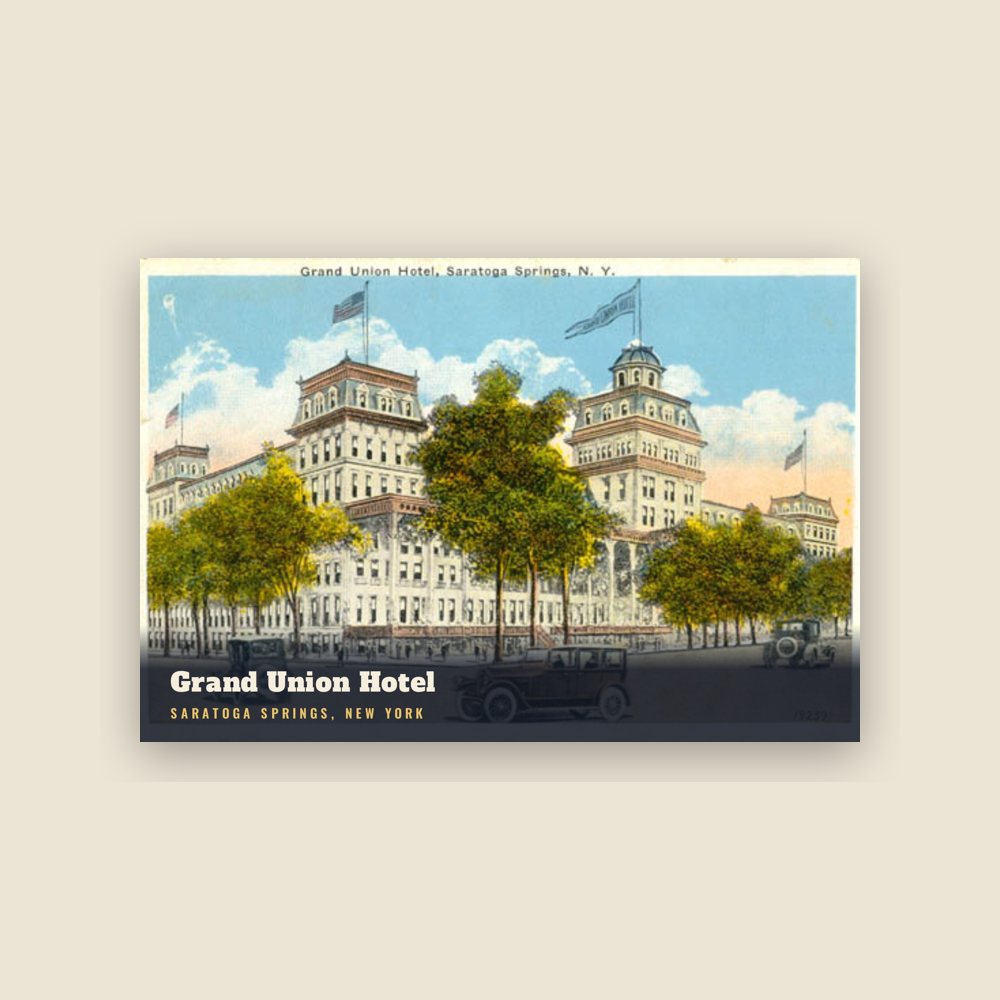
In the 19th century, doctor Simon Baruch encouraged the development of European-style spas in the United States as centers for health. Due to the presence of mineral waters Saratoga Springs was developed as a spa resort, spurring the construction of several hotels, including the United States Hotel and the Grand Union Hotel. The latter was, in its day, the largest hotel in the world. By 1870, Saratoga Springs was considered a top upscale resort.
These spa resorts had drawn gentlemen gamblers even before the Saratoga Race Course opened in 1863. The race track drew even more gamblers and visitors in general at a time when horse racing was one of the nation's most popular spectator sports.
John Morrissey, one of the partners who built the Saratoga Race Course, went on to open the Saratoga Clubhouse, or, more simply, The Club House, in either 1861 or 1866 or 1870. The casino, renamed the Canfield Casino after James Canfield purchased it and remodeled it along the lines of the gambling houses of Monaco, attracted such notable guests as Chester A. Arthur, Rutherford B. Hayes, Ulysses S. Grant, Cornelius Vanderbilt, John D. Rockefeller, and Mark Twain.
Local authorities mostly tolerated these casinos until 1907 when, after years of campaigning from moral crusaders such as Anthony Comstock and pressure from local authorities, Canfield sold the casino to the City, which converted it into a museum.
The Saratoga Springs area was also known for its lake houses, hotels and restaurants located on Saratoga Lake. When first established in the Nineteenth Century these venues offered fine dining in a country atmosphere a short excursion out of town.
Gambling returns
A decade after Saratoga Springs shut down its most prominent gambling venues in 1907, organized crime figures began bringing illegal gambling back, beginning in 1917 when notorious gambler Arnold Rothstein opened the Arrowhead Inn after bribing local officials. He opened a second casino and hotel, The Brook Resort, in 1921. Prominent gangsters Charles "Lucky" Luciano, Meyer Lansky and Dutch Schultz all worked for Rothstein at The Brook at various times during the Prohibition era of the 1920s.
Organized crime expanded its presence in Saratoga Springs during the 1930s and 1940s. Luciano ran the Chicago Club for several years while Lansky subsequently took over the Arrowhead Inn and in the early 1930s opened a second Saratoga casino, the Piping Rock Club, in partnership with Joe Adonis and Frank Costello, who later brought his staff from New York's Copacabana Club to work in Saratoga for the summer.
This second era of gambling ended, however, when pressure from Governor Dewey's administration in the 1940s and negative publicity from the Kefauver Committee's hearings concerning organized crime in 1950 ended official toleration of illegal gambling. The Piping Rock burned down in 1954 under suspicious circumstances. Other abandoned clubs and casinos burned down over the next twenty years.
Renewal
The city became more accessible with the completion of the Adirondack Northway (Interstate 87), which allowed visitors easier access from the north and south. In addition, cultural resources, such as classical and popular music and dance, flourished.
Adapted (trimmed) from the Wikipedia article Saratoga Springs, New York, revision 1384596453 by its contributors, licensed CC BY-SA 4.0.
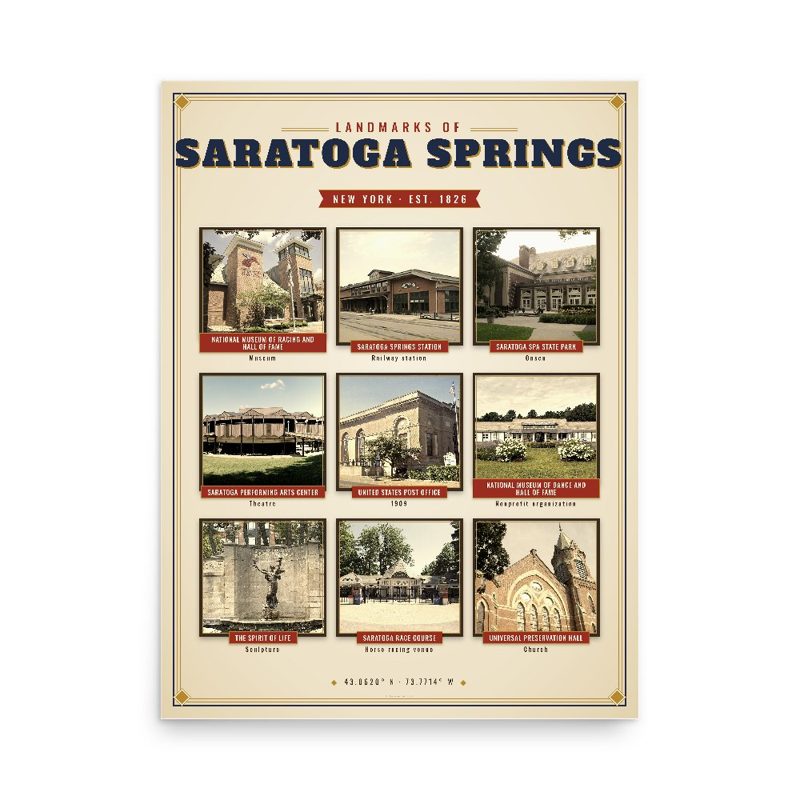
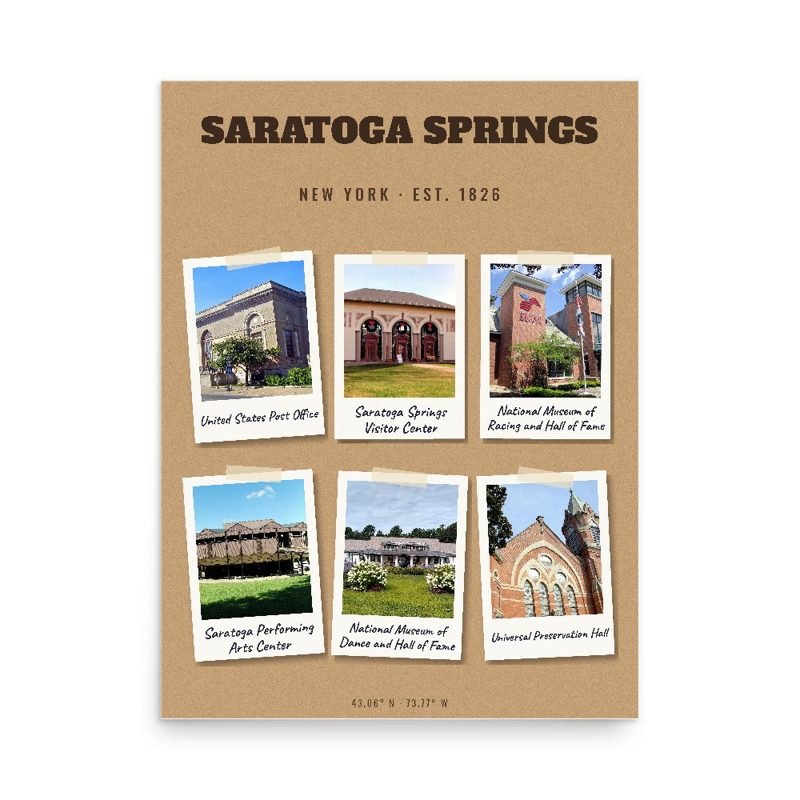
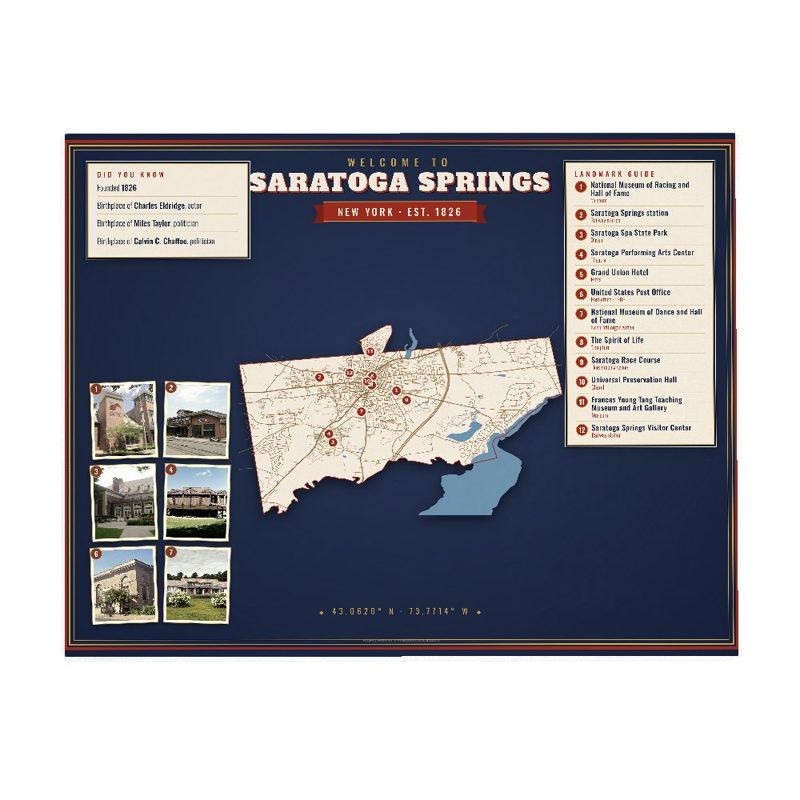






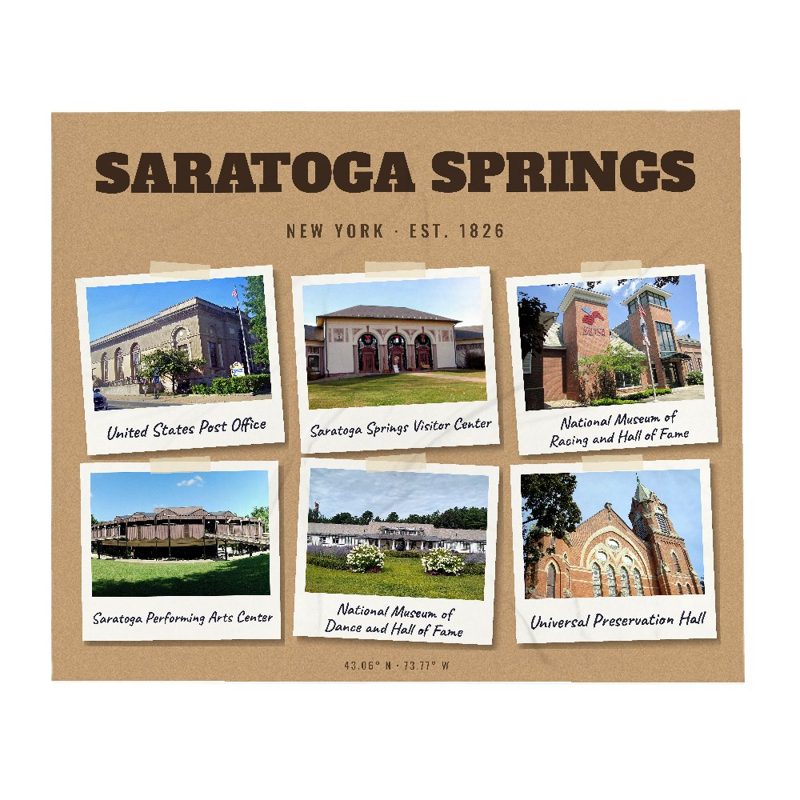
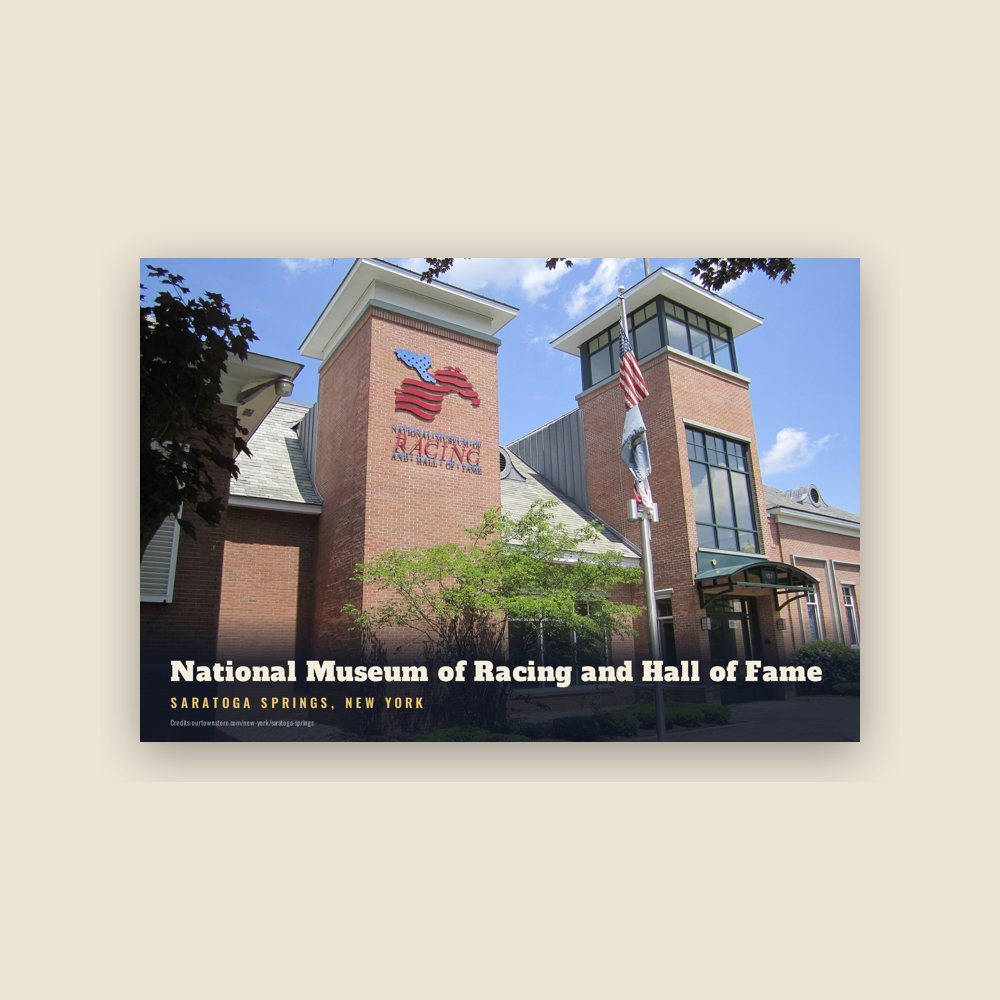
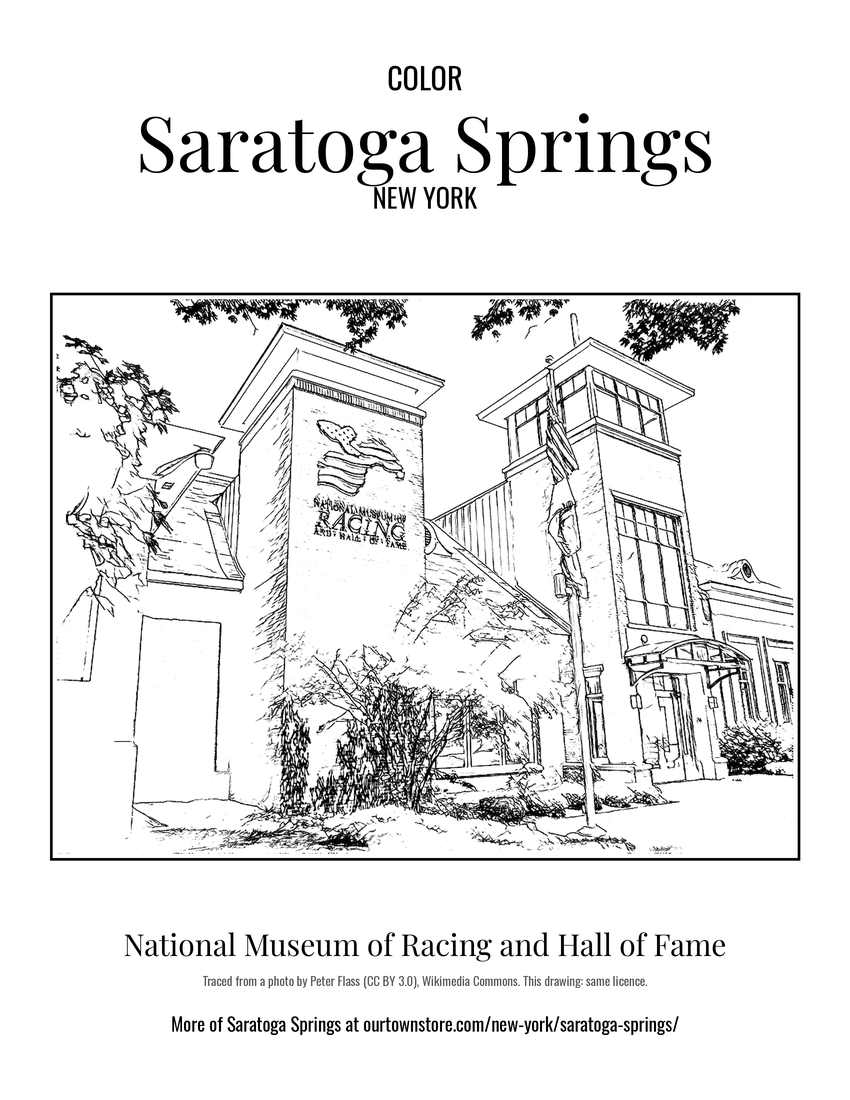 National Museum of Racing and Hall of Fame
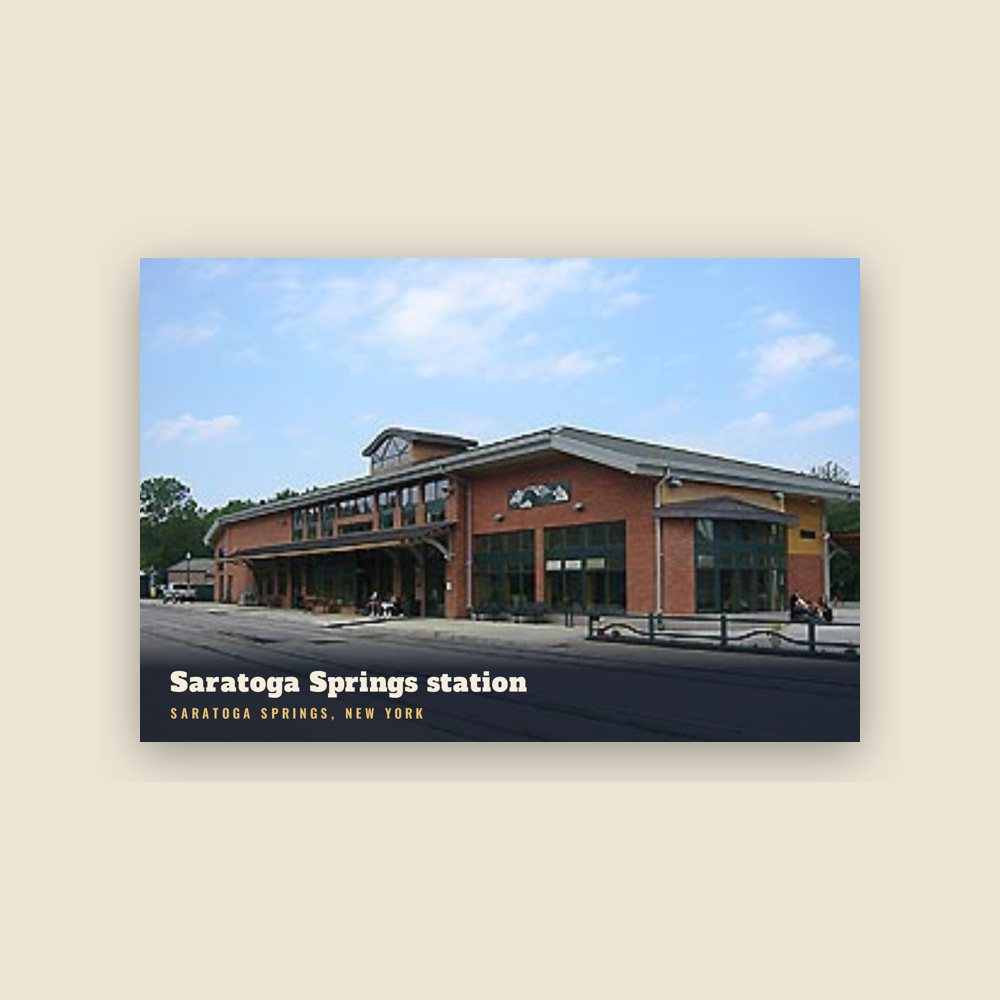
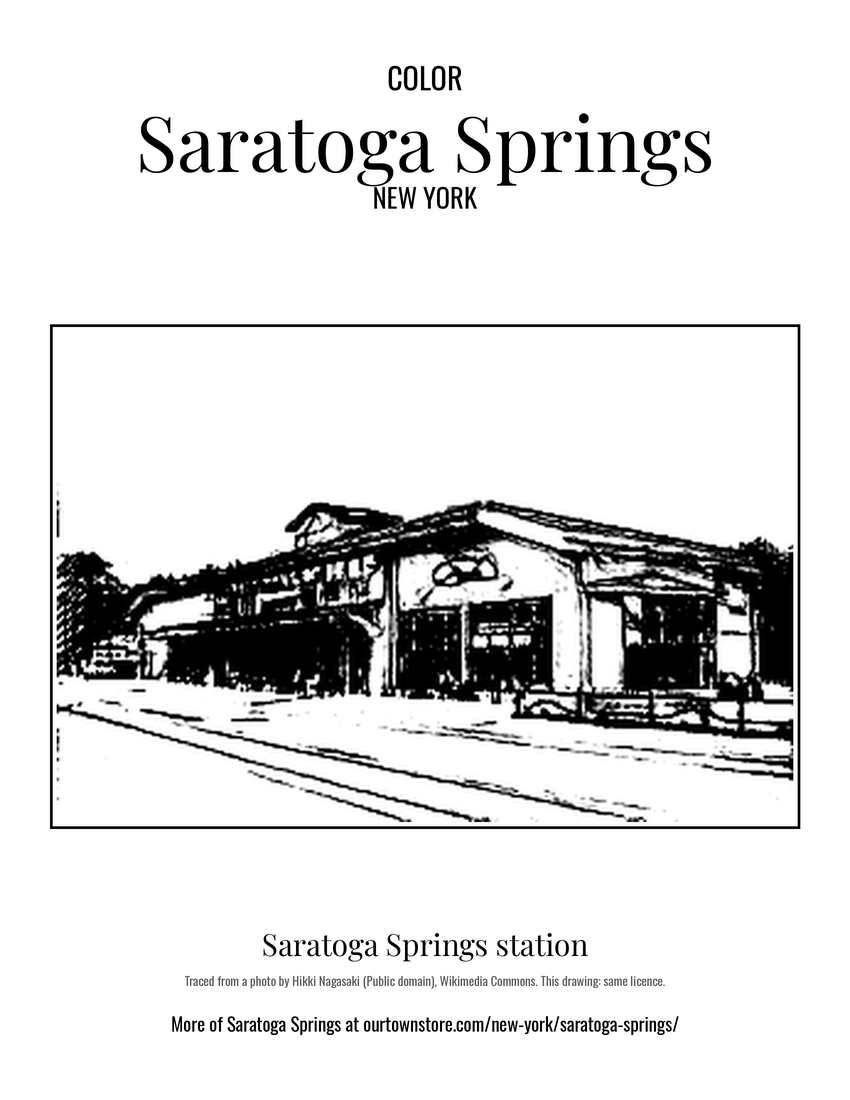 Saratoga Springs station
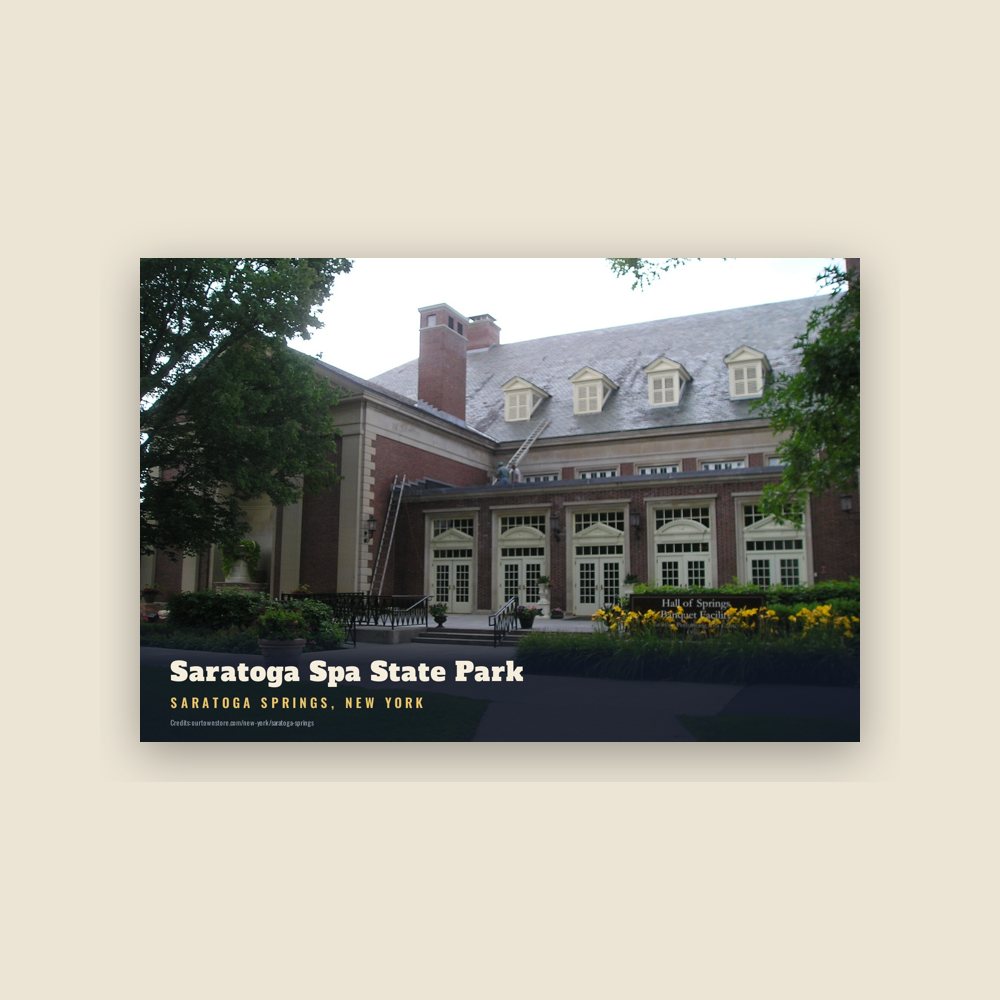
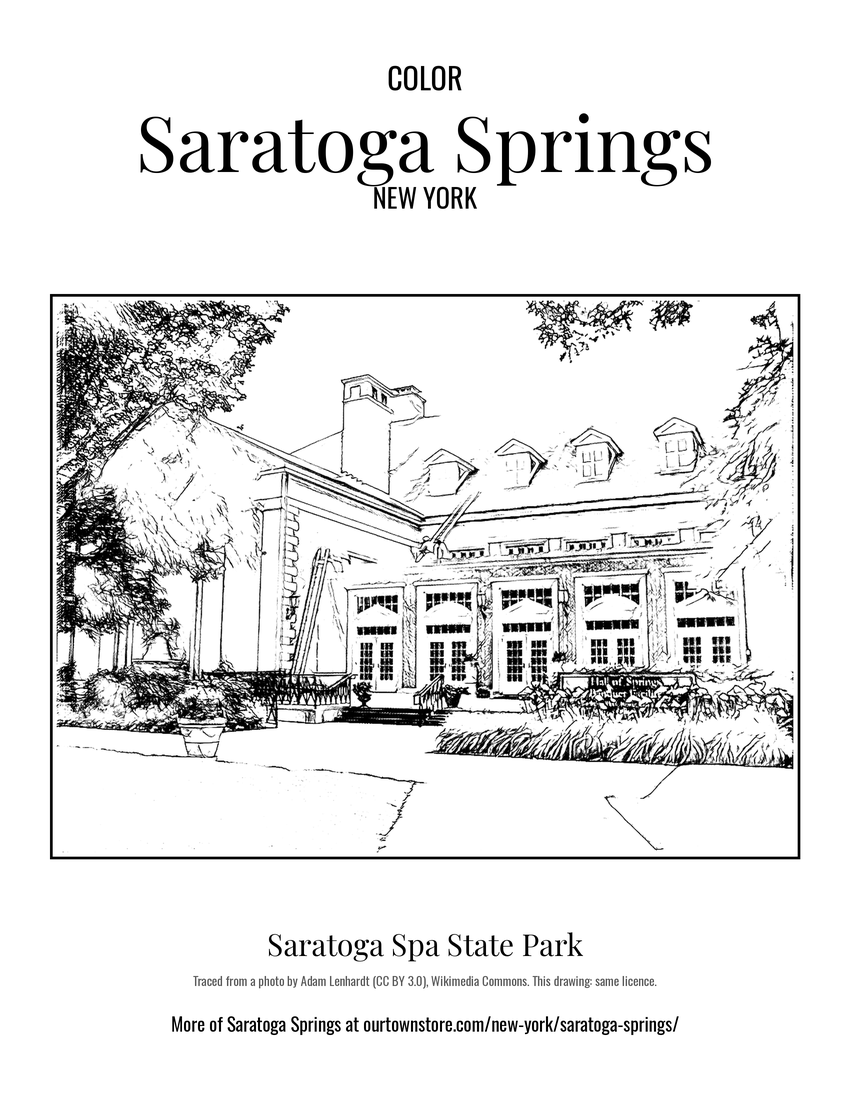 Saratoga Spa State Park
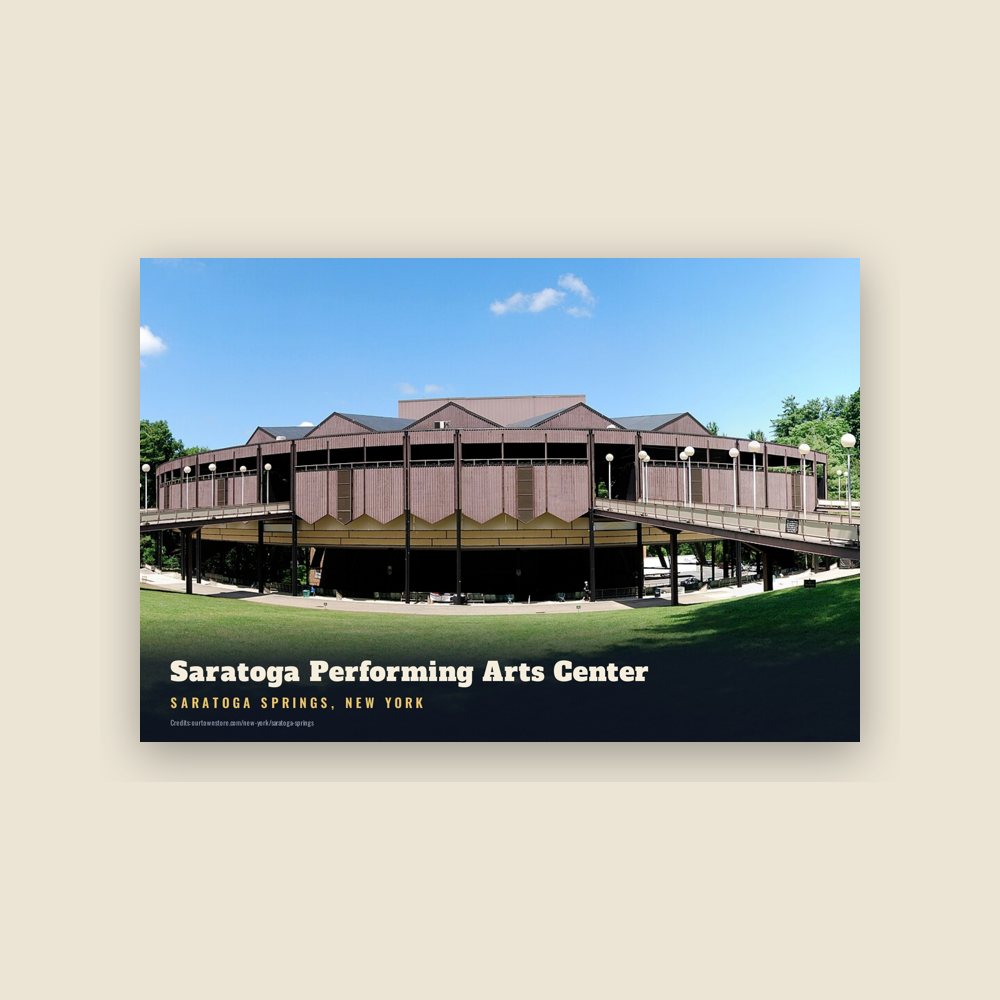
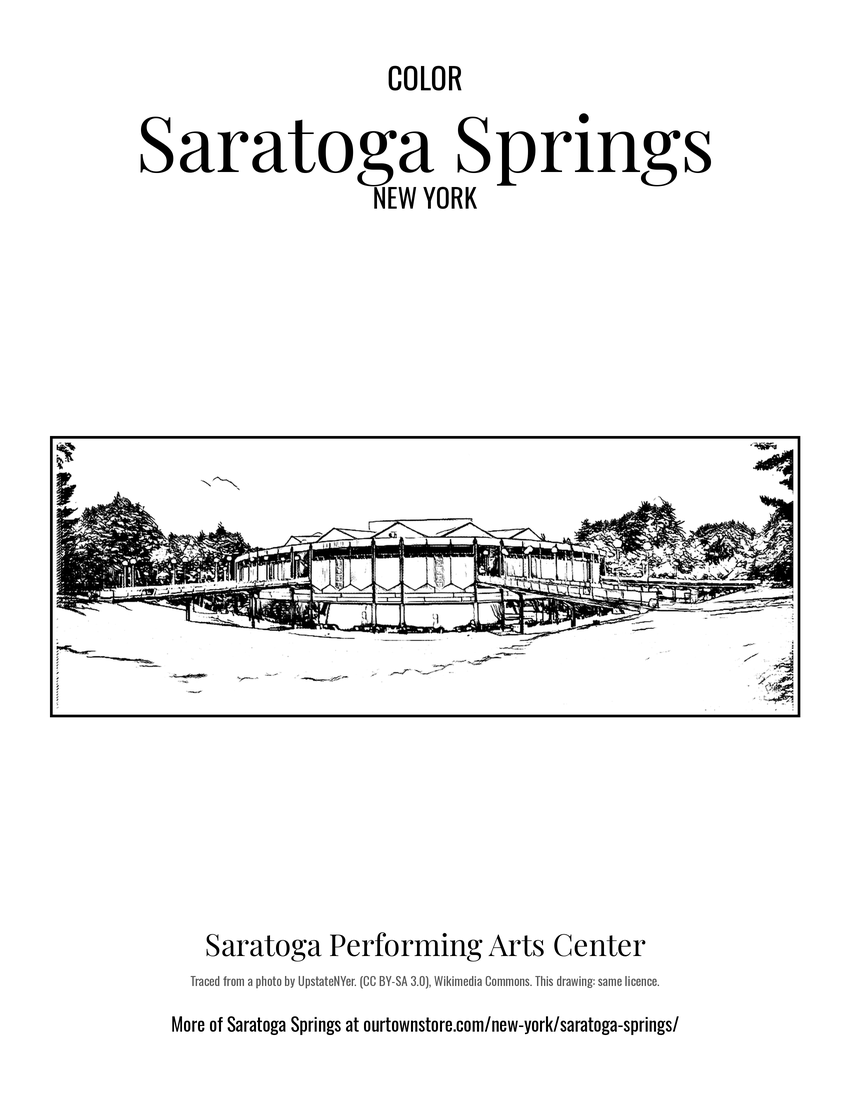 Saratoga Performing Arts Center