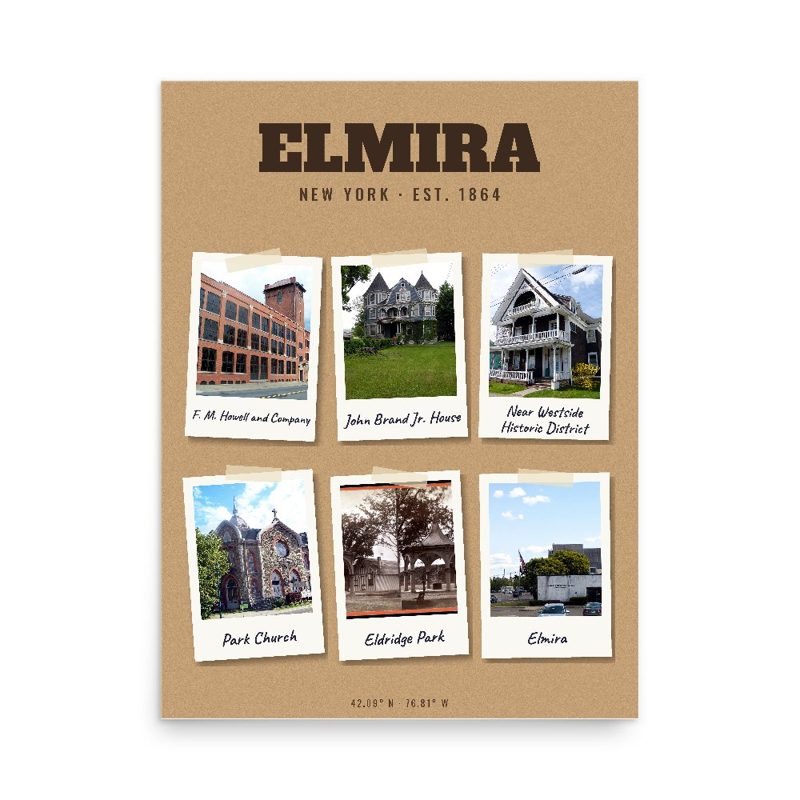
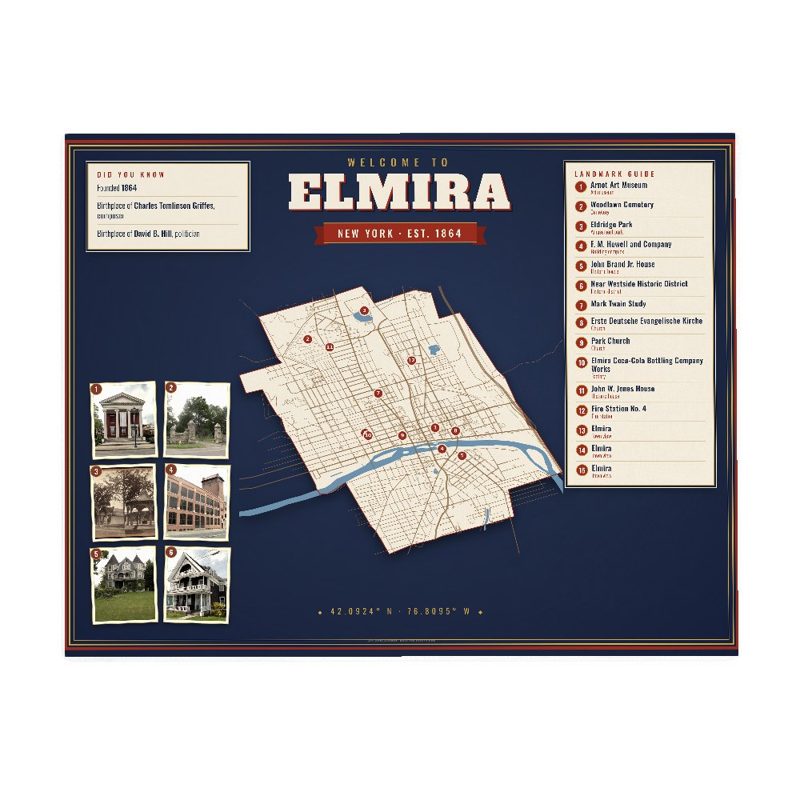
The region of Elmira was inhabited by the Cayuga nation (also known as the Gayogo̱hó꞉nǫʼ) of the Haudenosaunee prior to European colonization. Cayuga residing in the region maintained relations with European settlers, primarily related to the fur trade, but were otherwise relatively isolated from expanding colonial settlements.
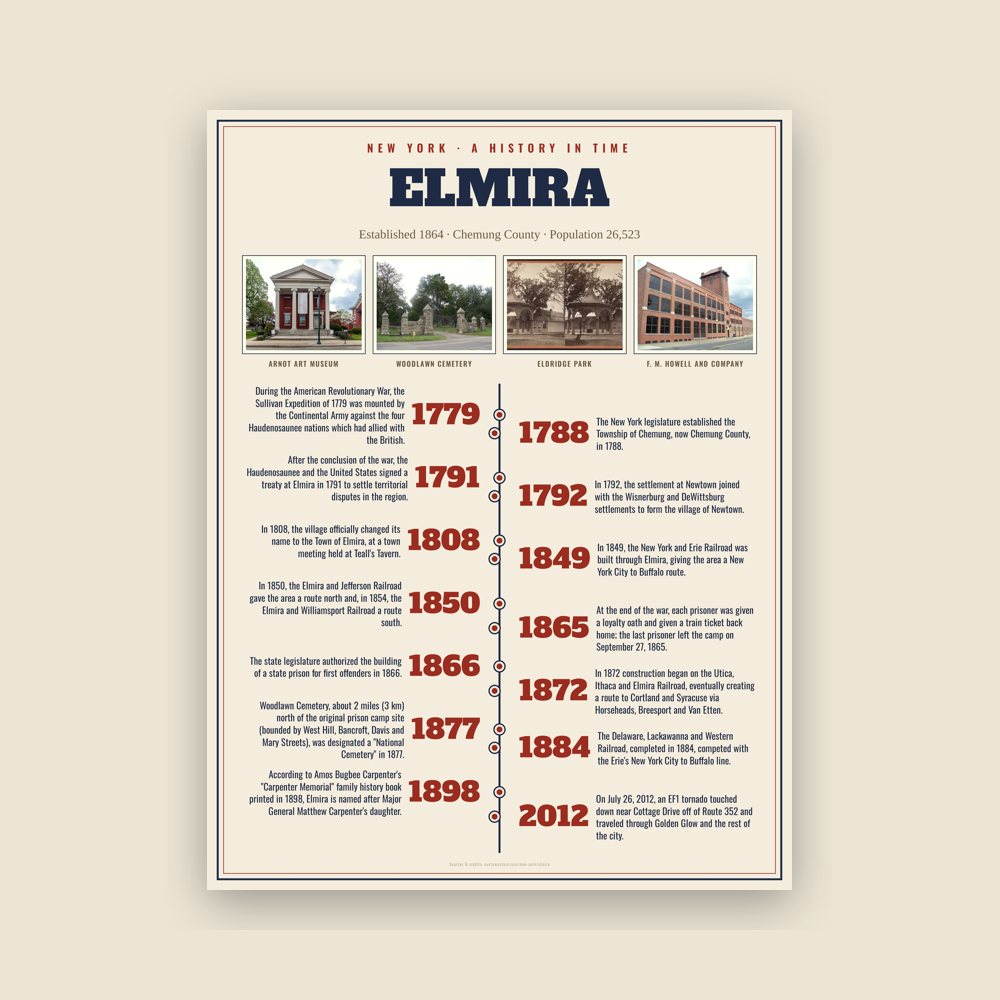
During the American Revolutionary War, the Sullivan Expedition of 1779 was mounted by the Continental Army against the four Haudenosaunee nations which had allied with the British. The expeditionary force fought a combined British-Haudenosaunee force at the Battle of Newtown, south of the current city, in which the Continental Army was victorious. After the conclusion of the war, the Haudenosaunee and the United States signed a treaty at Elmira in 1791 to settle territorial disputes in the region. Most of the Cayuga emigrated under pressure from encroaching American settlements with the other nations of the Haudenosaunee to Canada, where they resettled on land provided by the British Crown.
The first European-American settler in Elmira was Abraham Miller, who served as a captain in the Continental Army. Miller constructed a cabin after resigning just before the end of the Revolutionary War. Miller's Pond and Miller Street are named after him and are near the location of his house.
Read the full history
Elmira's formation
The New York legislature established the Township of Chemung, now Chemung County, in 1788. The settlement of Newtown was soon established at the intersection of Newtown Creek and the Chemung River. In 1792, the settlement at Newtown joined with the Wisnerburg and DeWittsburg settlements to form the village of Newtown. In 1808, the village officially changed its name to the Town of Elmira, at a town meeting held at Teall's Tavern. It is said the town was named after tavern owner Nathan Teall's young daughter, but that story has never been confirmed. According to Amos Bugbee Carpenter's "Carpenter Memorial" family history book printed in 1898, Elmira is named after Major General Matthew Carpenter's daughter. This naming occurred, according to this book, in 1821 at the constitutional convention to which Matthew was a delegate. In any case, the City of Elmira, nicknamed "The Queen City," was incorporated in 1864 from part of the town of Elmira and the village of Elmira. The remaining part of the town of Elmira exists still, surrounding the city on the west, north and east. The city and town share an intricately entwined history.
In the early days, when new settlements had to be named, the white man, in imitation of his aboriginal forerunner, gave a name to his settlement that was associated either with tradition, or, as in this case, with his ideal of loveliness. According to Hon. Hiram Gray, Matthew Carpenter, then a member or the legislature and a man of influence, having seen this beautiful valley, resolved that Newtown should be the principal city, and that it should bear the name of a lady friend for whom he entertained a high opinion, and accordingly, in 18[0]8, the name was changed to Elmira.
Elmira served as a transportation hub for New York's Southern Tier in the 1800s, connecting commercial centers in Rochester and Buffalo with Albany and New York City, via the canal system and railroads. The city was the southern terminus of the Chemung Canal completed in 1833; later, the Junction Canal was constructed to connect Elmira with Corning, facilitating transport of coal from the Pennsylvania mines via the Northern branch of the Susquehanna Canal system. In 1849, the New York and Erie Railroad was built through Elmira, giving the area a New York City to Buffalo route. In 1850, the Elmira and Jefferson Railroad gave the area a route north and, in 1854, the Elmira and Williamsport Railroad a route south. These railroads and their connections made the city a prime location for an Army training and muster point early in the Civil War.
In 1872 construction began on the Utica, Ithaca and Elmira Railroad, eventually creating a route to Cortland and Syracuse via Horseheads, Breesport and Van Etten. The Delaware, Lackawanna and Western Railroad, completed in 1884, competed with the Erie's New York City to Buffalo line.
Prisoner-of-war camp
A great deal of the 30-acre (120,000 m2) Union installation, known as Camp Rathbun, fell into disuse as the Civil War progressed, and the camp's "Barracks #3" were converted into a Civil War prisoner of war camp in the summer of 1864. The camp, in use from June 6, 1864, until autumn 1865, was dubbed "Hellmira" by its inmates. Towner's history of 1892 and maps from the period indicate the camp occupied a somewhat irregular parallelogram, running about 1,000 feet (300 m) west and approximately the same distance south of a location several hundred feet west of Hoffman Street (Foster Avenue) and Winsor Avenue, bordered on the south by Foster's Pond, on the north bank of the Chemung River.
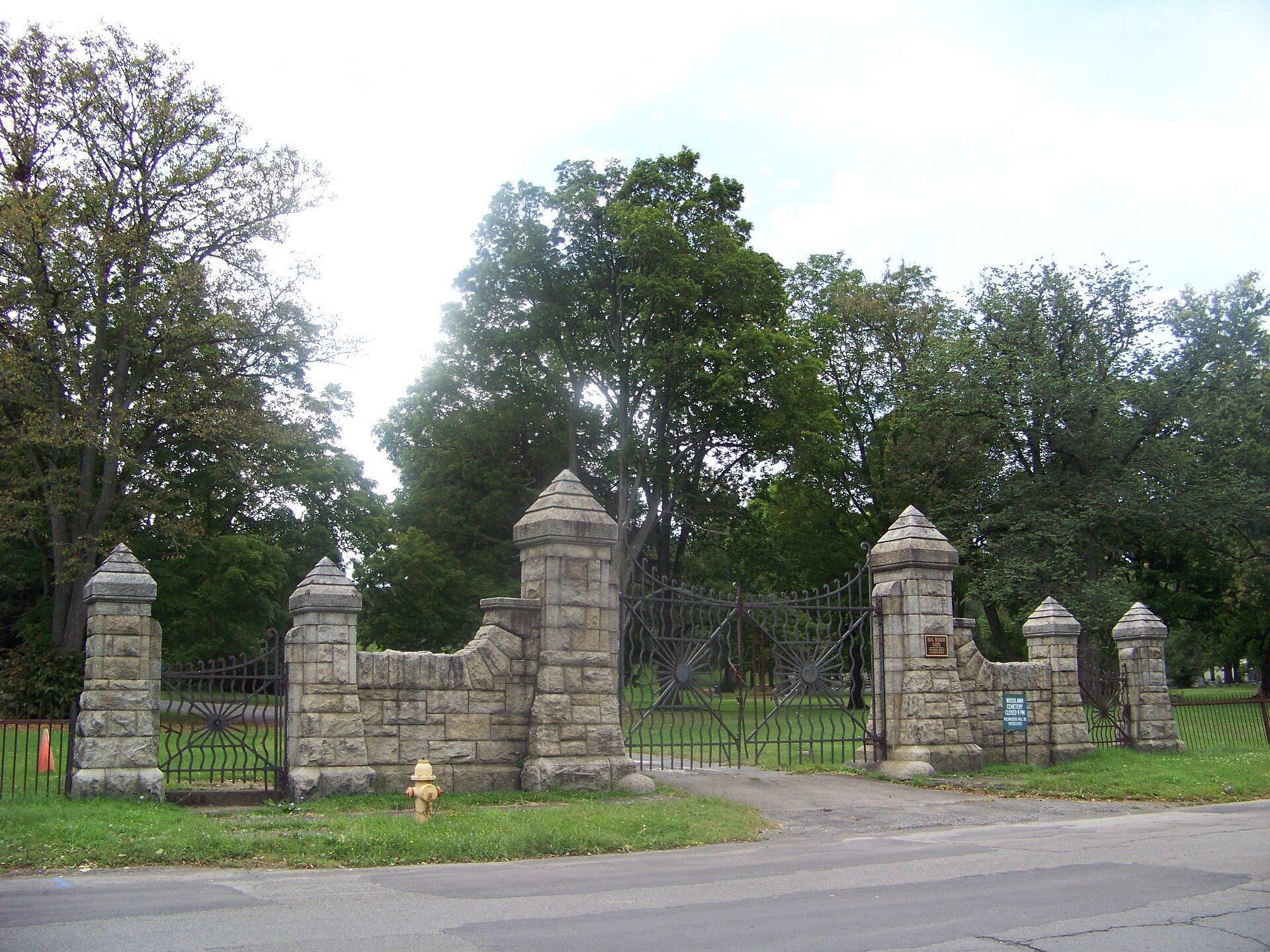
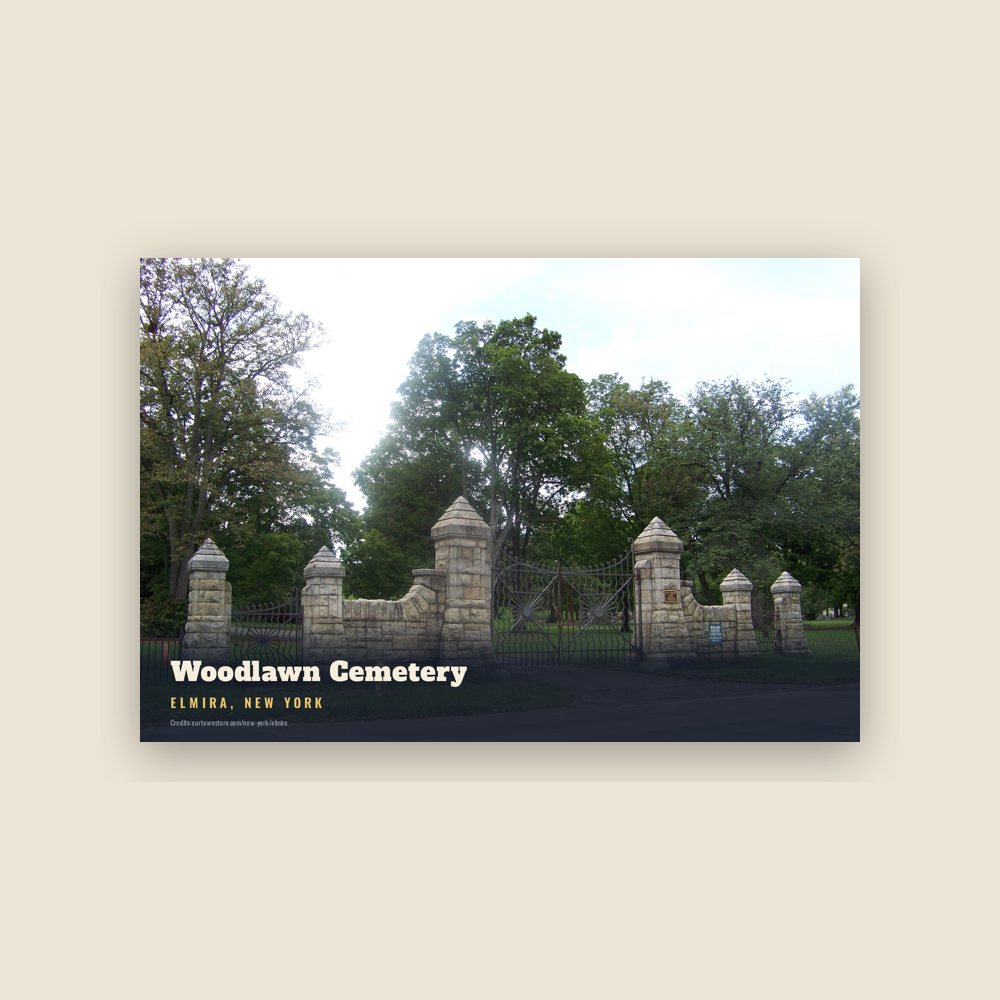
In the months the site was used as a camp, 12,123 Confederate soldiers were incarcerated; of these, 2,963 died during their stay from a combination of malnutrition, prolonged exposure to brutal winter weather and disease directly attributable to the dismal sanitary conditions on Foster's Pond and lack of medical care. The camp's dead were prepared for burial and laid to rest by the sexton at Woodlawn National Cemetery, ex-slave John W. Jones. At the end of the war, each prisoner was given a loyalty oath and given a train ticket back home; the last prisoner left the camp on September 27, 1865. The camp was closed, demolished and converted to farmland. Woodlawn Cemetery, about 2 miles (3 km) north of the original prison camp site (bounded by West Hill, Bancroft, Davis and Mary Streets), was designated a "National Cemetery" in 1877. The prison camp site is today a residential area.
Reformatory and correctional facility
The state legislature authorized the building of a state prison for first offenders in 1866. It opened in 1876 as the Elmira Reformatory, under the direction of Zebulon Brockway, serving offenders aged sixteen to thirty. It was the first institution of its kind, and a model for others to follow. In 1970 the complex was renamed the Elmira Correctional and Reception Center.
"Storm of the Century" – 1993 snow blizzard
In March 1993, the city of Elmira was hit hard by a snow blizzard, nicknamed "Storm of the Century", that added 21.5 inches of snow to Elmira in a single day.