A short history of Binghamton
Early settlement
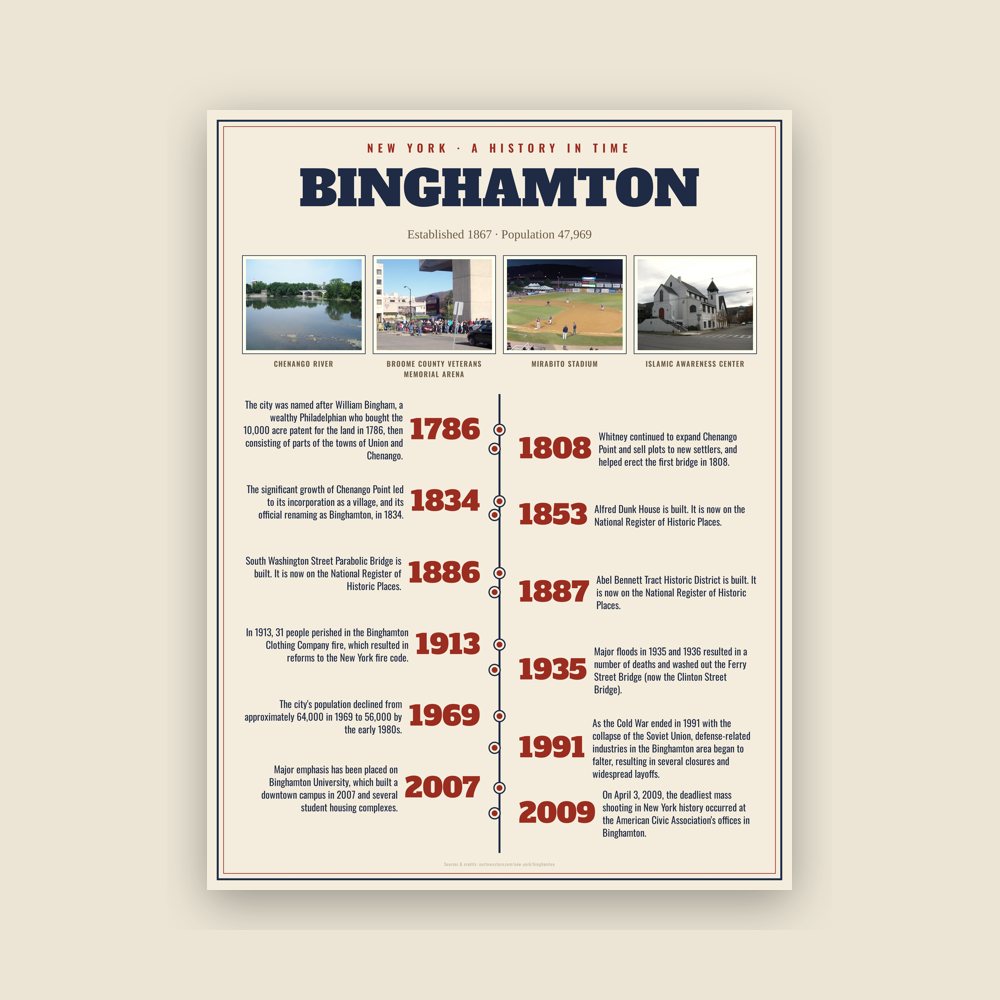
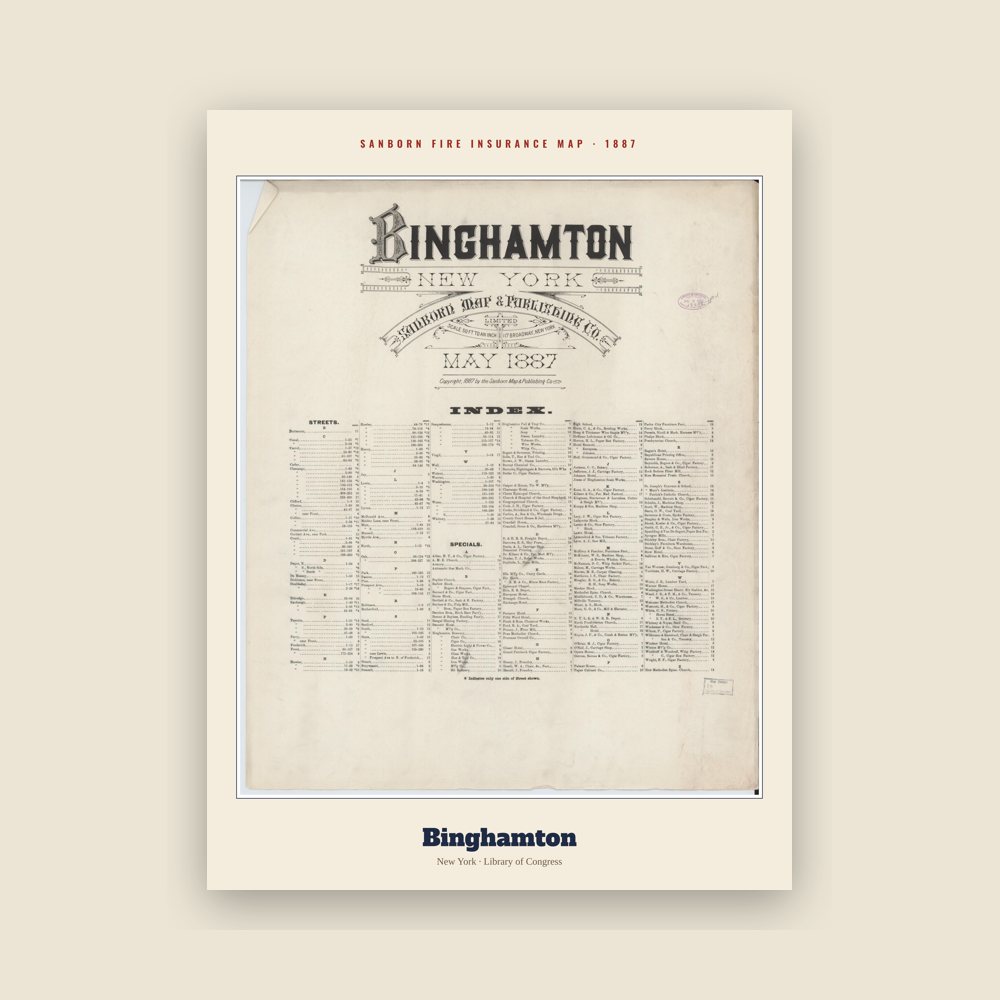
The first known people of European descent to come to the area were the troops of the Sullivan Expedition in 1779, during the American Revolutionary War, who destroyed local villages of the Onondaga and Oneida tribes. The city was named after William Bingham, a wealthy Philadelphian who bought the 10,000 acre patent for the land in 1786, then consisting of parts of the towns of Union and Chenango. Joshua Whitney Jr., Bingham's land agent, chose land at the junction of the Chenango and Susquehanna Rivers to develop a settlement, then named Chenango Point. After being officially conveyed the land by Bingham on July 4, 1800, Whitney arranged for the construction of the settlement's first two streets, Court Street and Water Street, and the first residence was built later that year. Whitney continued to expand Chenango Point and sell plots to new settlers, and helped erect the first bridge in 1808. The significant growth of Chenango Point led to its incorporation as a village, and its official renaming as Binghamton, in 1834. Daniel S. Dickinson was chosen to be the first village president.
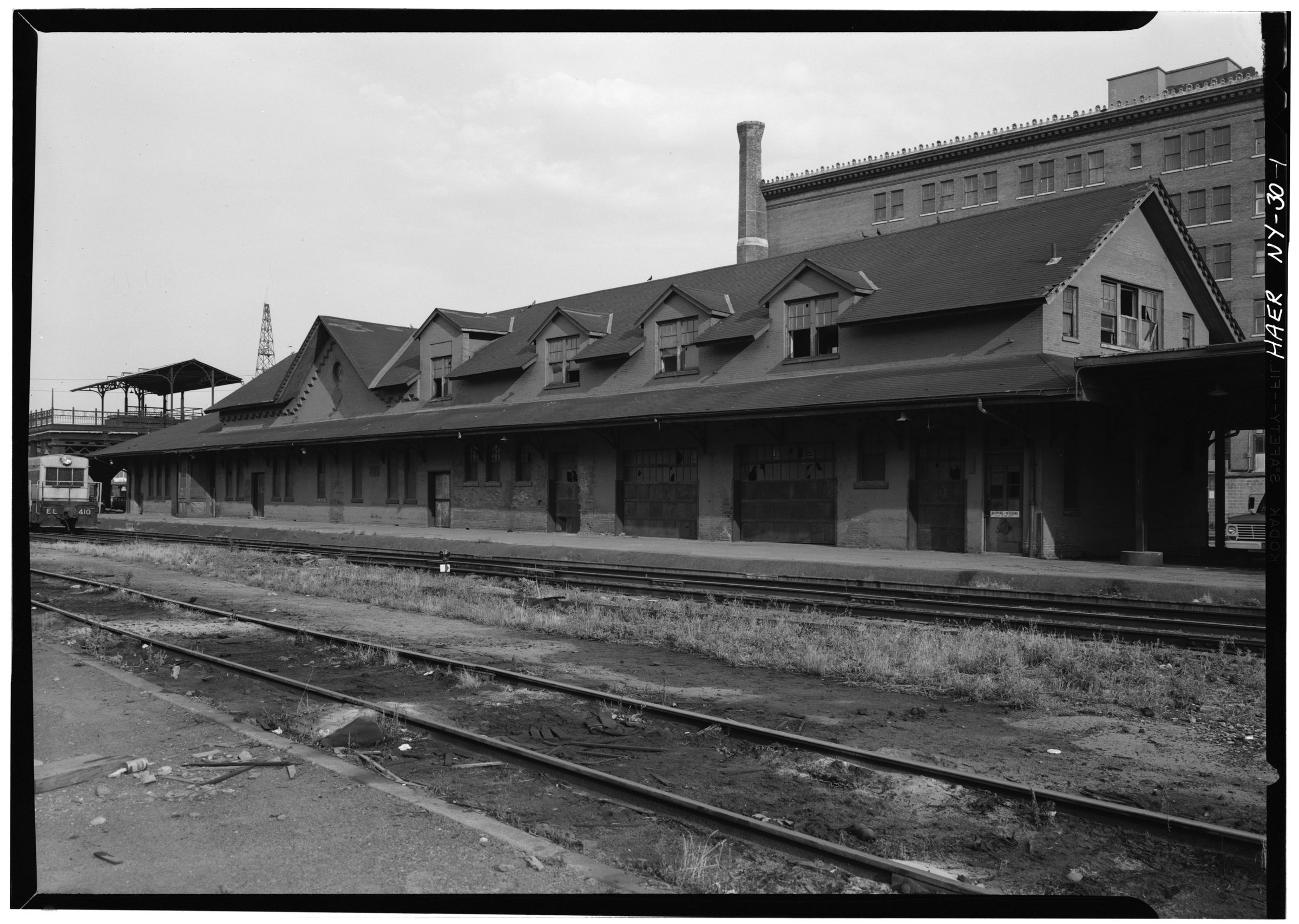
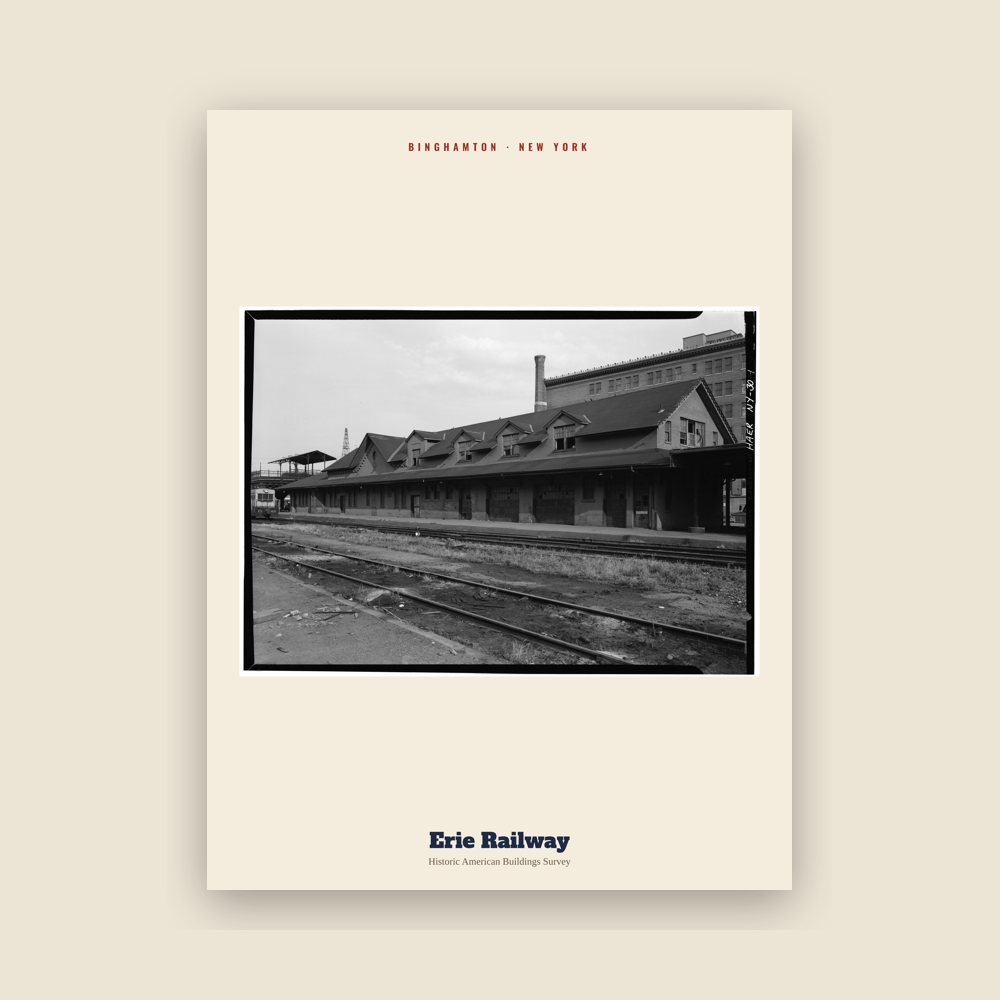
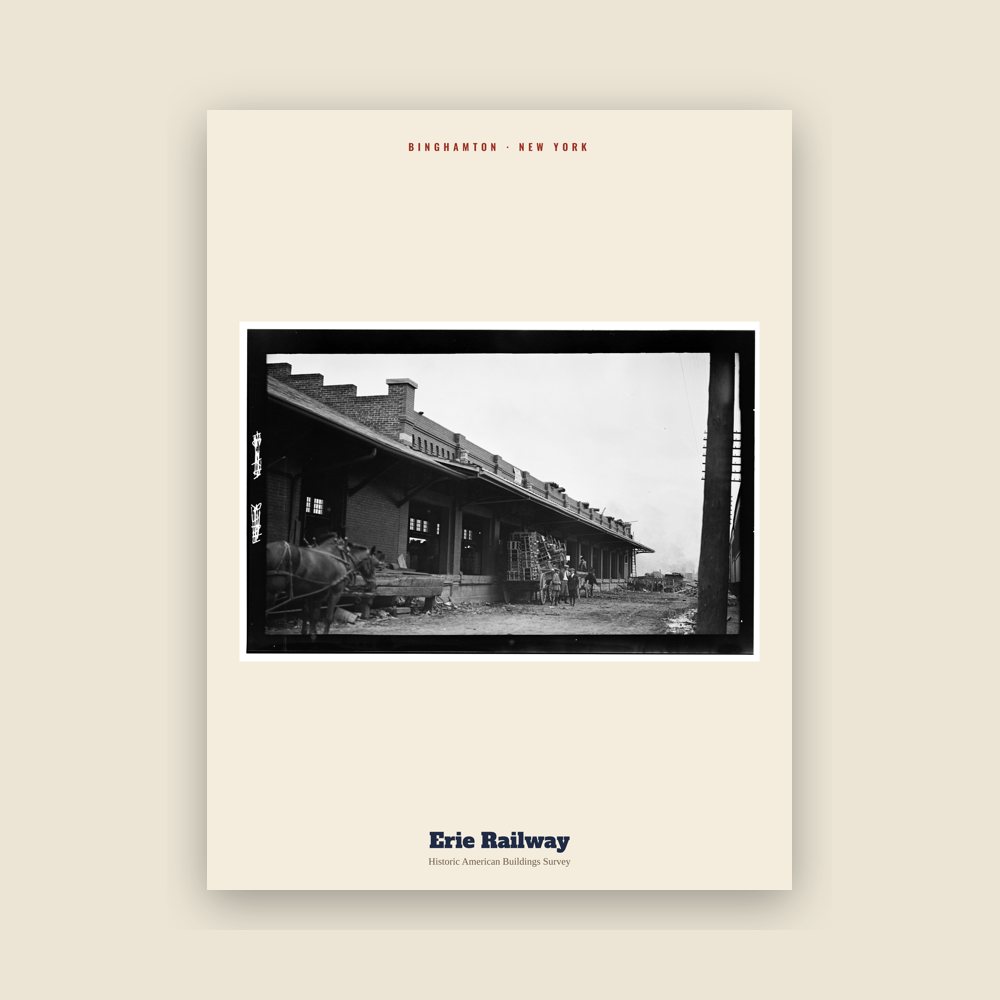
The Chenango Canal, completed in 1837, connected Binghamton to the Erie Canal, and was the impetus for the initial industrial development of the area. This growth accelerated with the completion of the Erie Railroad between Binghamton and Jersey City, NJ in 1849. With the Delaware, Lackawanna and Western Railroad arriving soon afterward, the village became an important regional transportation center. Several buildings of importance were built at this time, including the New York State Inebriate Asylum, opened in 1858 as the first center in the United States to treat alcoholism as a disease.
Read the full history
Growth as a manufacturing hub
Binghamton incorporated as a city in 1867 and, due to the presence of several stately homes, was nicknamed the Parlor City. In the late 19th and early 20th centuries, many immigrants moved to the area, finding an abundance of jobs. During the 1880s, Binghamton became the second-largest manufacturer of cigars in the United States. By the early 1920s, Endicott Johnson, a shoe manufacturer whose development of welfare capitalism resulted in many amenities for local residents, became the region's largest employer. An even larger influx of Europeans immigrated to Binghamton, and the working class prosperity resulted in the area being called the Valley of Opportunity.
In 1913, 31 people perished in the Binghamton Clothing Company fire, which resulted in reforms to the New York fire code. Major floods in 1935 and 1936 resulted in a number of deaths and washed out the Ferry Street Bridge (now the Clinton Street Bridge). The floods led the city to build flood walls along the length of the Susquehanna and Chenango Rivers.
During the Second World War, growth continued as IBM, which was founded in greater Binghamton, emerged as a global technology leader. Along with Edwin Link's invention of the flight simulator in Binghamton, IBM's growth helped transition the region to a high-tech economy. Other major manufacturers included Ansco and General Electric. Until the Cold War ended, the area never experienced an economic downfall, due in part to its defense-oriented industries. The city's population peaked at around 85,000 in the mid-1950s.
Decline and recovery
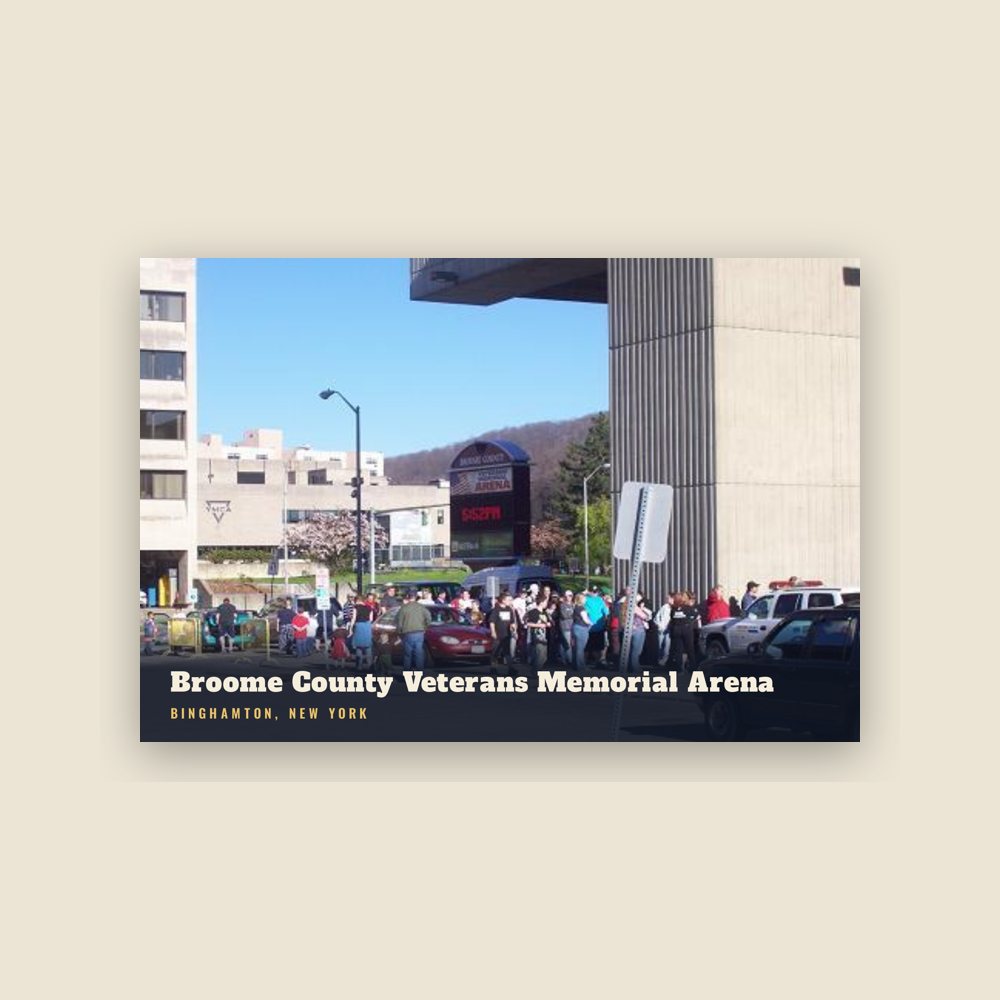
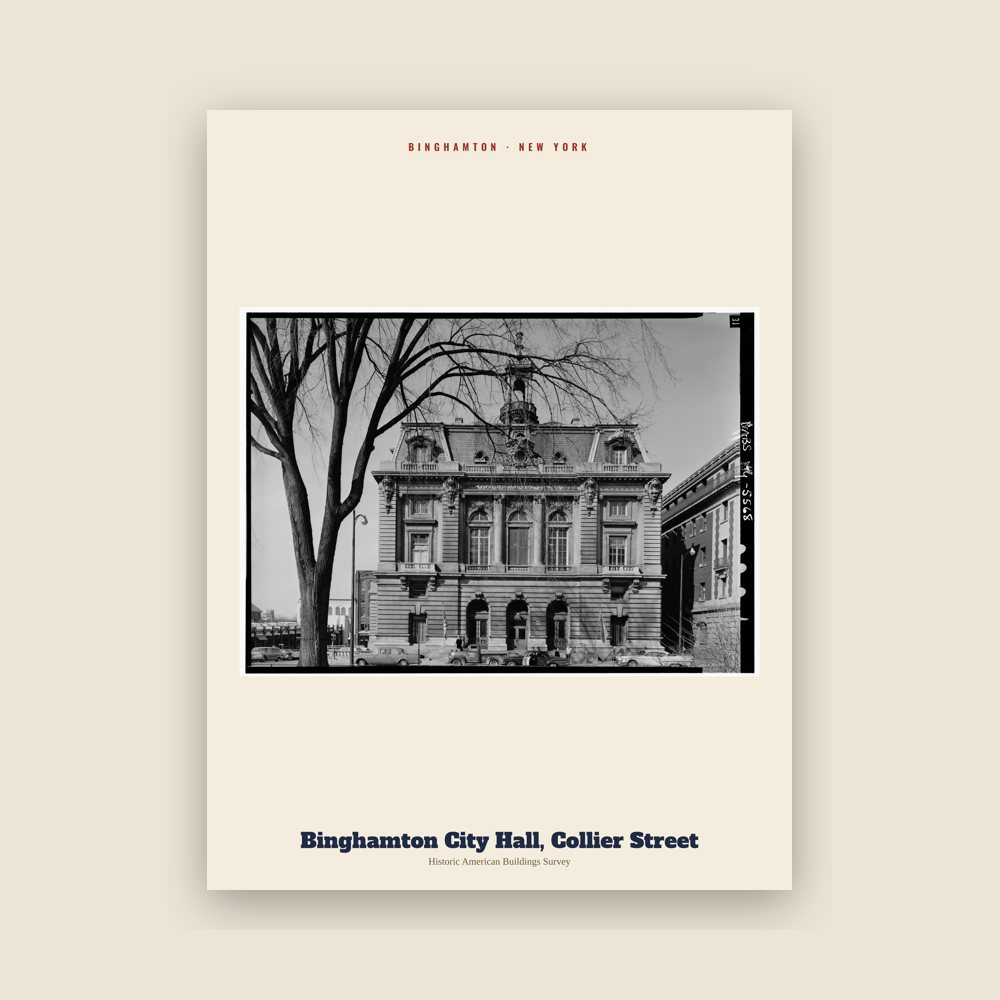
Post-war suburban development led to a decline in the city's population and the rapid growth of the towns of Vestal and Union. Like many other Rust Belt cities, traditional manufacturers saw steep declines, though Binghamton's technology industry limited this impact. Urban renewal efforts to reverse these trends dominated construction in the city during the 1960s and early 1970s and led to the destruction of many ornate city buildings. The construction included the creation of Government Plaza, the Broome County Veterans Memorial Arena, and the Brandywine Highway. While these projects failed to stem most of the losses, they established Binghamton as the region's government and cultural center. The city's population declined from approximately 64,000 in 1969 to 56,000 by the early 1980s.
As the Cold War ended in 1991 with the collapse of the Soviet Union, defense-related industries in the Binghamton area began to falter, resulting in several closures and widespread layoffs. These were most notable at IBM, which sold its Federal Systems division and laid off several thousands of workers. The local economy went into a deep recession, and the long-prevalent manufacturing jobs dropped by 64% from 1990 to 2013.
In the 21st century, the city has tried to diversify its economic base to spur revitalization. The local economy has slowly transitioned toward services and healthcare. Major emphasis has been placed on Binghamton University, which built a downtown campus in 2007 and several student housing complexes. The increased downtown residential population and the university's plans to build additional student housing have spurred development of supporting businesses and a renewed focus on the riverfront. Unfortunately, two severe floods have stymied the recovery: while most of the impact of the Mid-Atlantic United States flood of 2006 was in the surrounding metropolitan area, the remnants of Tropical Storm Lee topped city flood walls in September 2011, causing $1 billion of damage in greater Binghamton.
On April 3, 2009, the deadliest mass shooting in New York history occurred at the American Civic Association's offices in Binghamton.
Adapted (trimmed) from the Wikipedia article Binghamton, New York, revision 1383921940 by its contributors, licensed CC BY-SA 4.0.
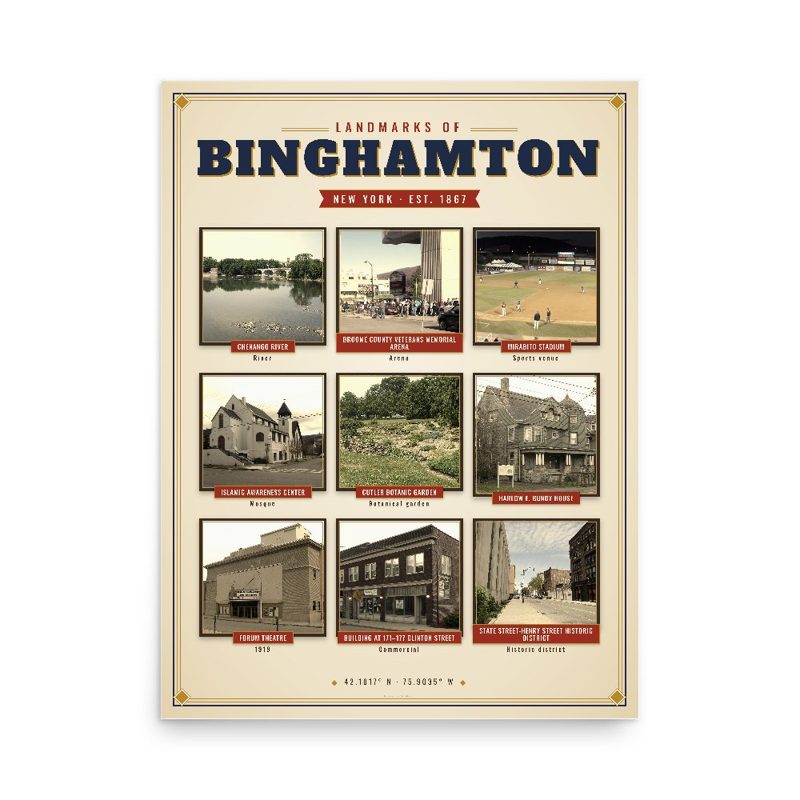
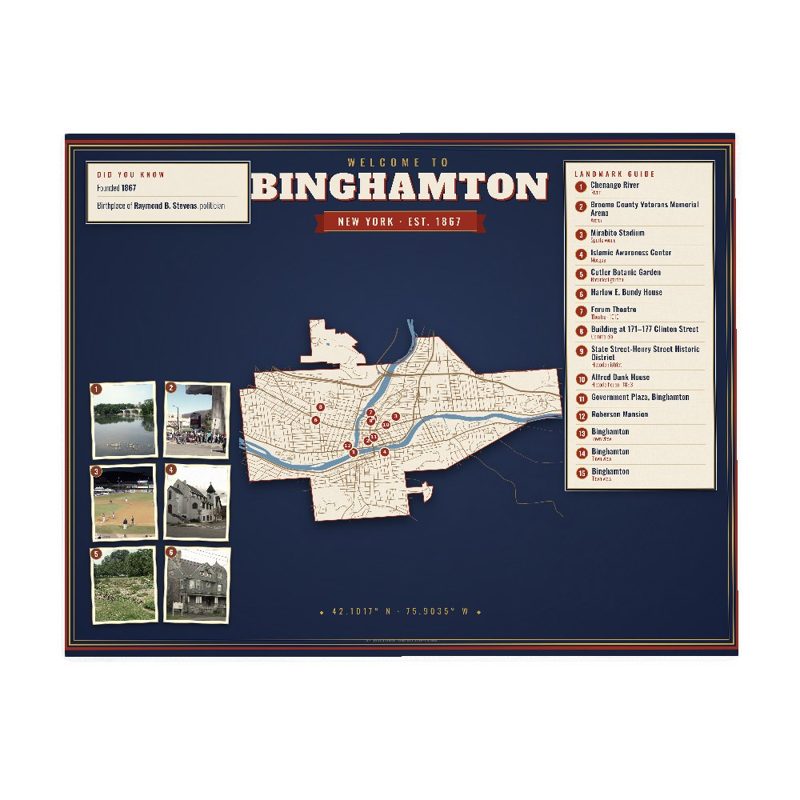











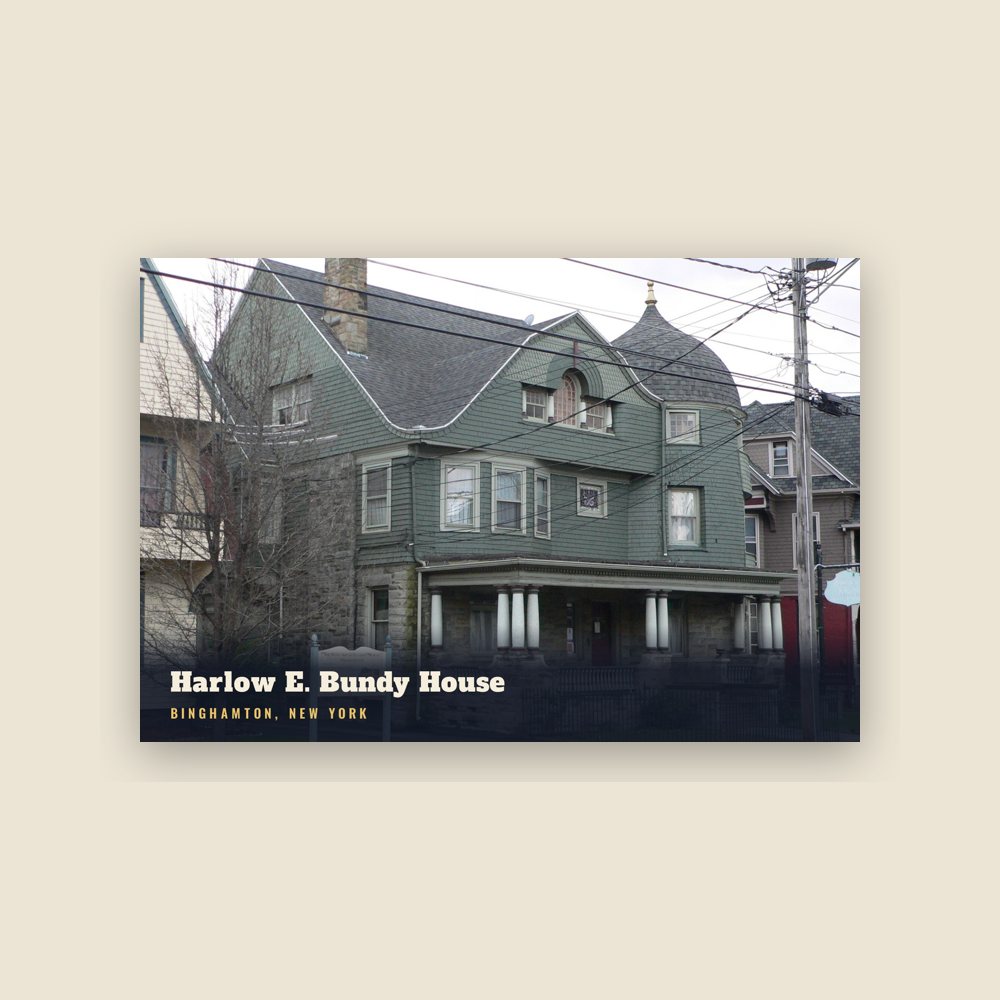
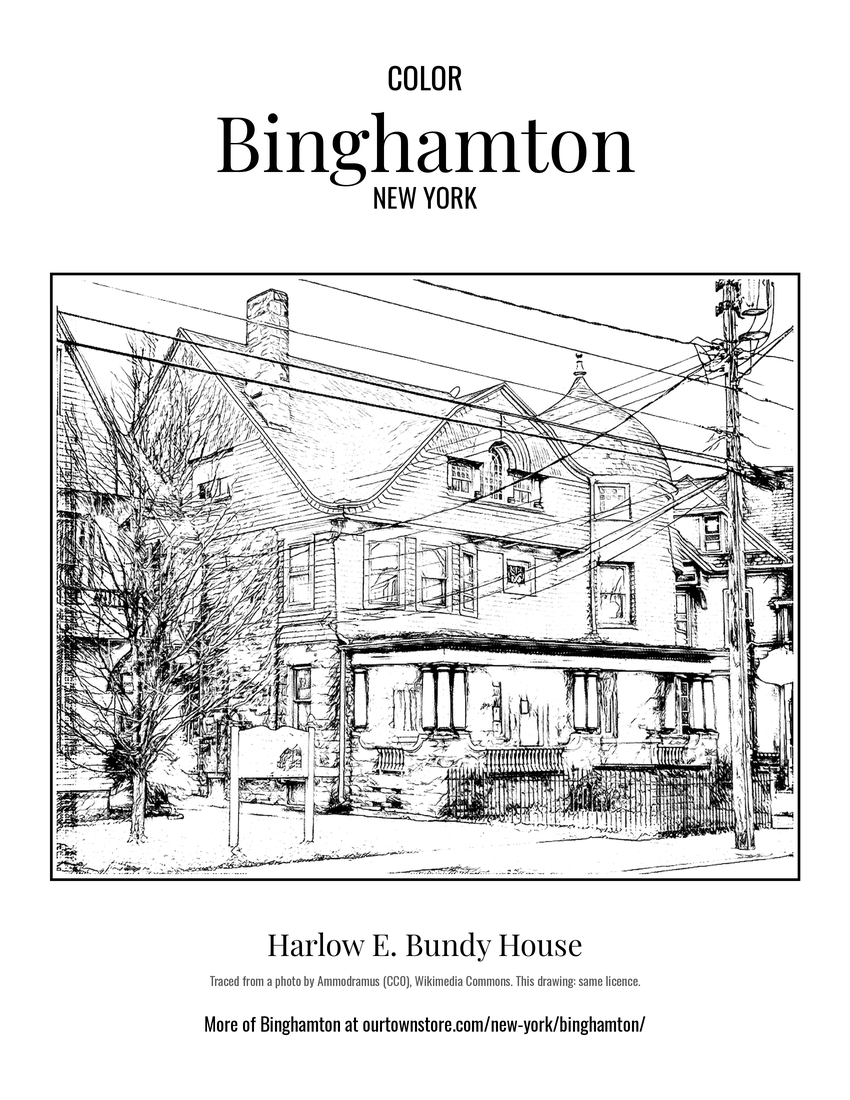 Harlow E. Bundy House
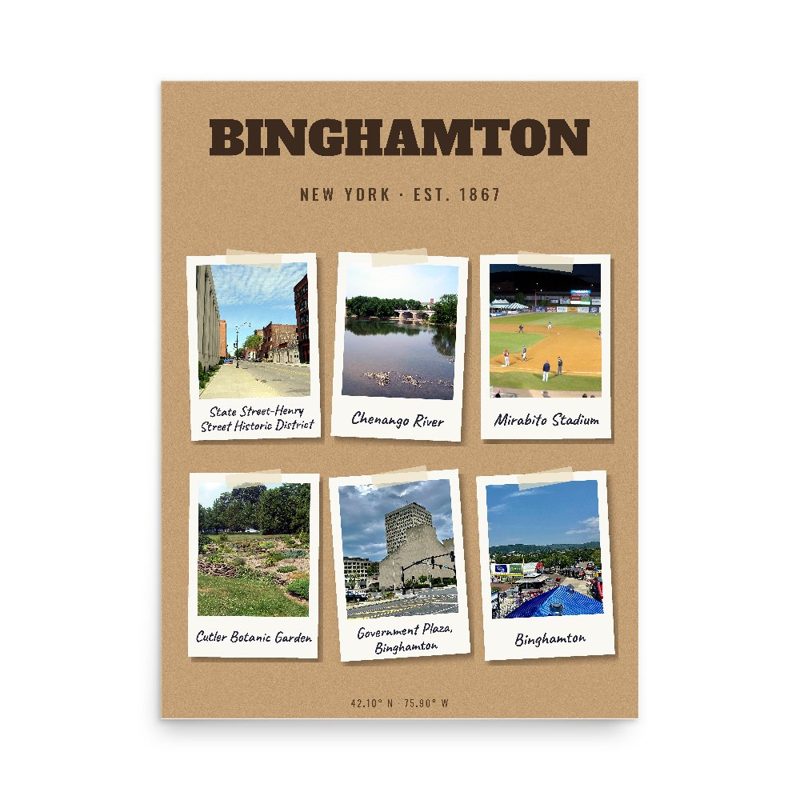
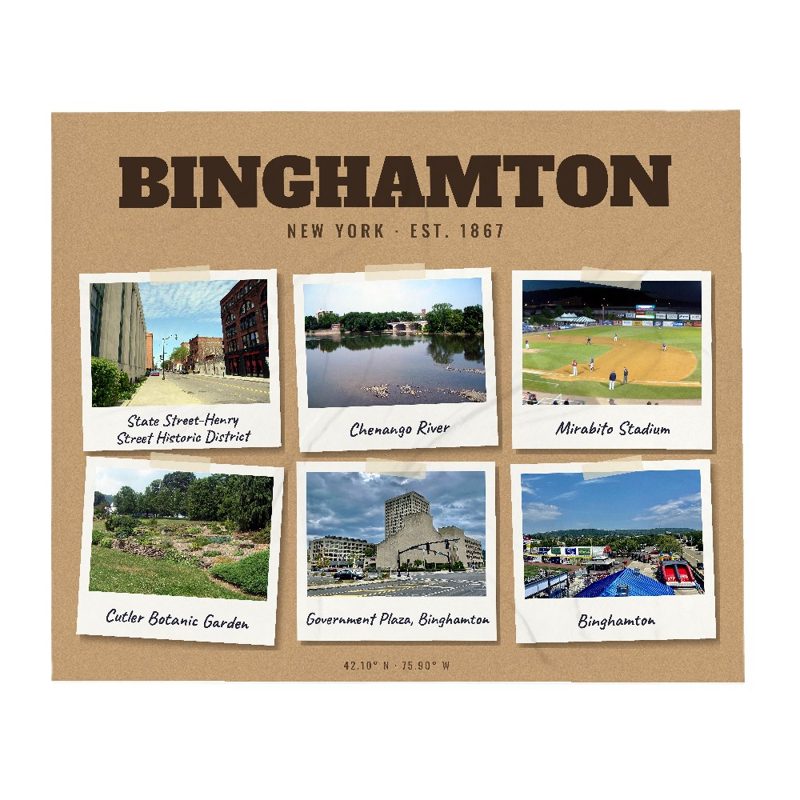
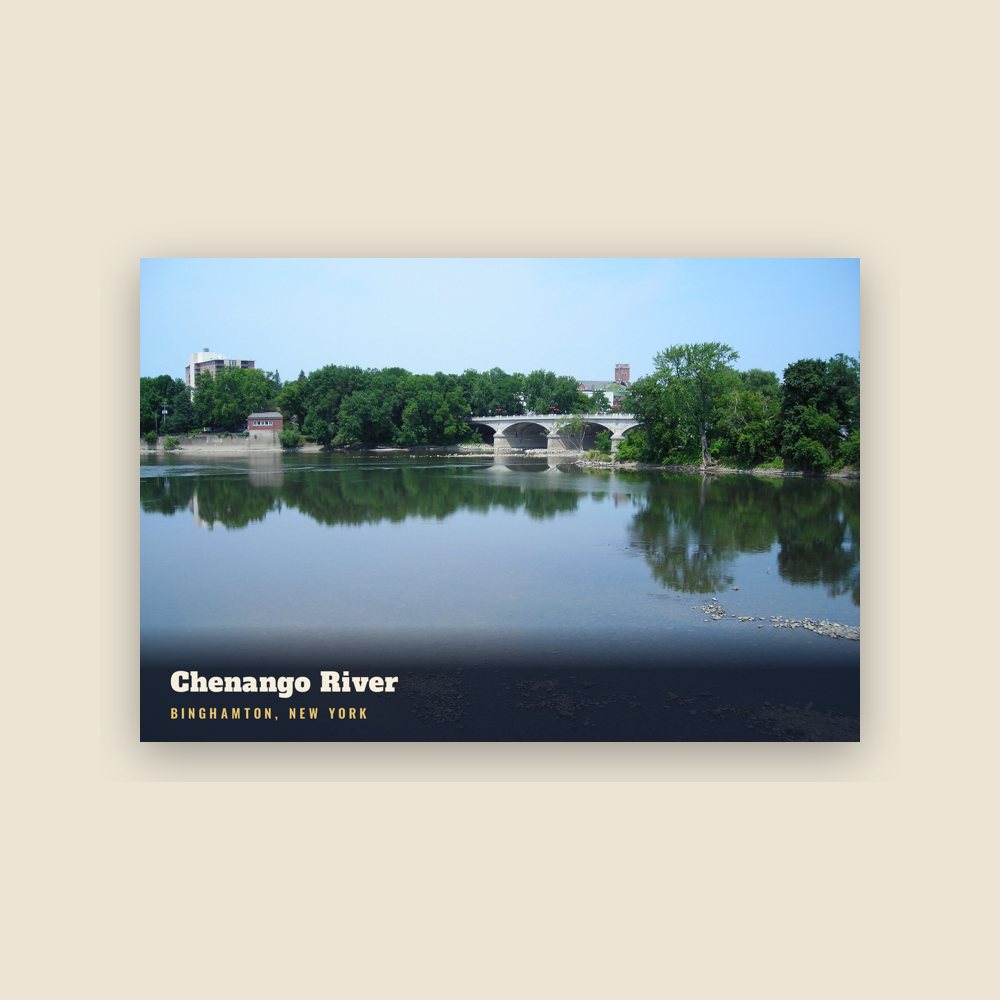
 Chenango River
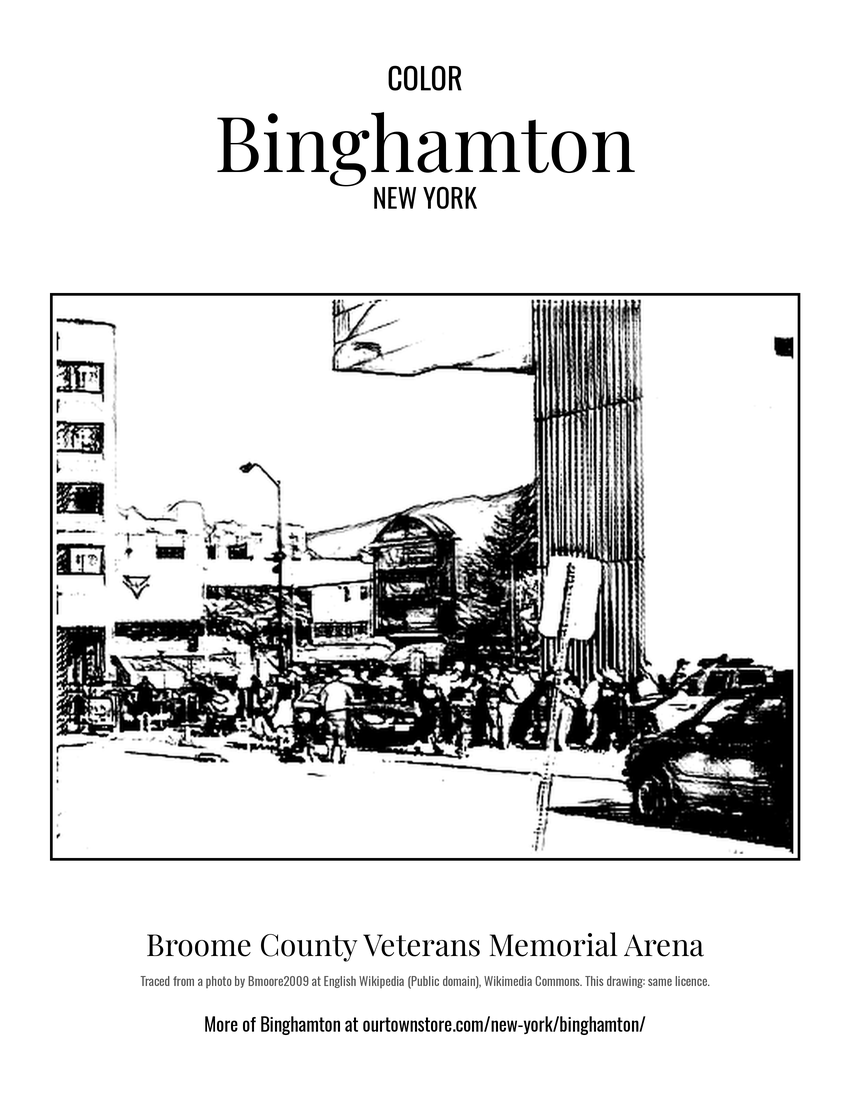 Broome County Veterans Memorial Arena
 Mirabito Stadium