A short history of Clayton
Early history
Native Americans were present in the area of Clayton for at least 10,000 years, as evidenced by the findings at the Folsom site about 55 miles northwest of Clayton, near the village of Folsom.
The first Spanish explorers in the 16th century found the region inhabited by the Apache people. In the 18th and early to mid-19th century, the Comanche controlled this region. The Spanish called their domain Comancheria.
The Cimarron Cutoff of the Santa Fe Trail brought some of the first settlers through the Clayton region. The Santa Fe Trail was first established in 1821 after Spanish rule was evicted from Mexico which opened up trade between Santa Fe and the United States. William Becknell, also known as the Father of the Santa Fe Trail, became the first person to utilize the Santa Fe Trail as a trade route between the state of Missouri and Santa Fe. He established the Cimarron Cutoff, also known as the Cimarron Route, as a faster route between countries as the Cimarron Route shortened the Trail by more than 100 miles. The Cimarron Cutoff went straight through the Clayton region where travelers used the Rabbit Ear Mountains as a guiding landmark. Eventually travelers along the trail began to appreciate the rich soil around Clayton and the rolling green hills which were perfect for raising livestock.
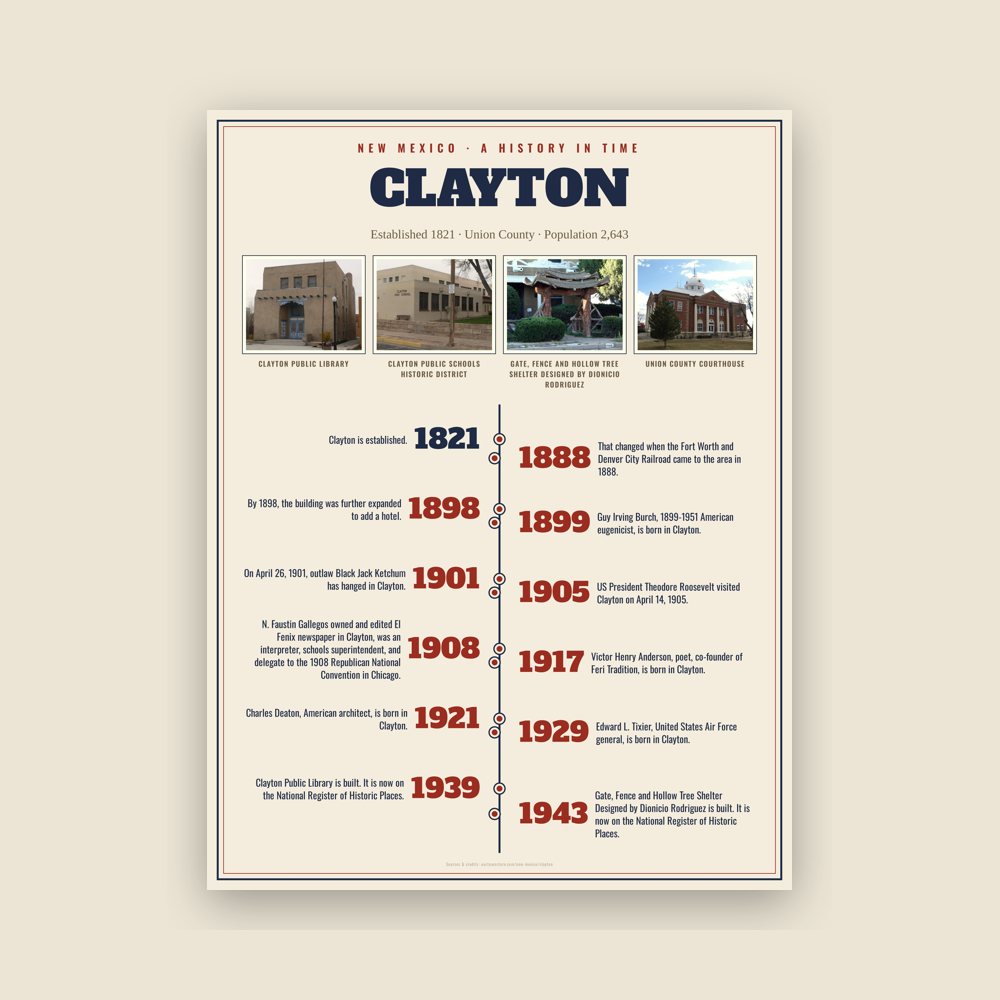
The Goodnight-Loving Trail also passed through the area (bringing cattle north from Texas) starting in the late 1860s, but eventually cattle ranchers and sheepherders established ranches in the Clayton area itself, though they were large and far apart. That changed when the Fort Worth and Denver City Railroad came to the area in 1888. Stephen Dorsey, a nearby rancher, received the rights to the area where the railroad ran. His range manager, John C. Hill laid out a town site, and named it in 1887 for Clayton C. Dorsey (1871–1948), son of Senator Stephen W. Dorsey of Arkansas, who had established the nearby Triangle Dot Ranch in Union and Colfax counties.
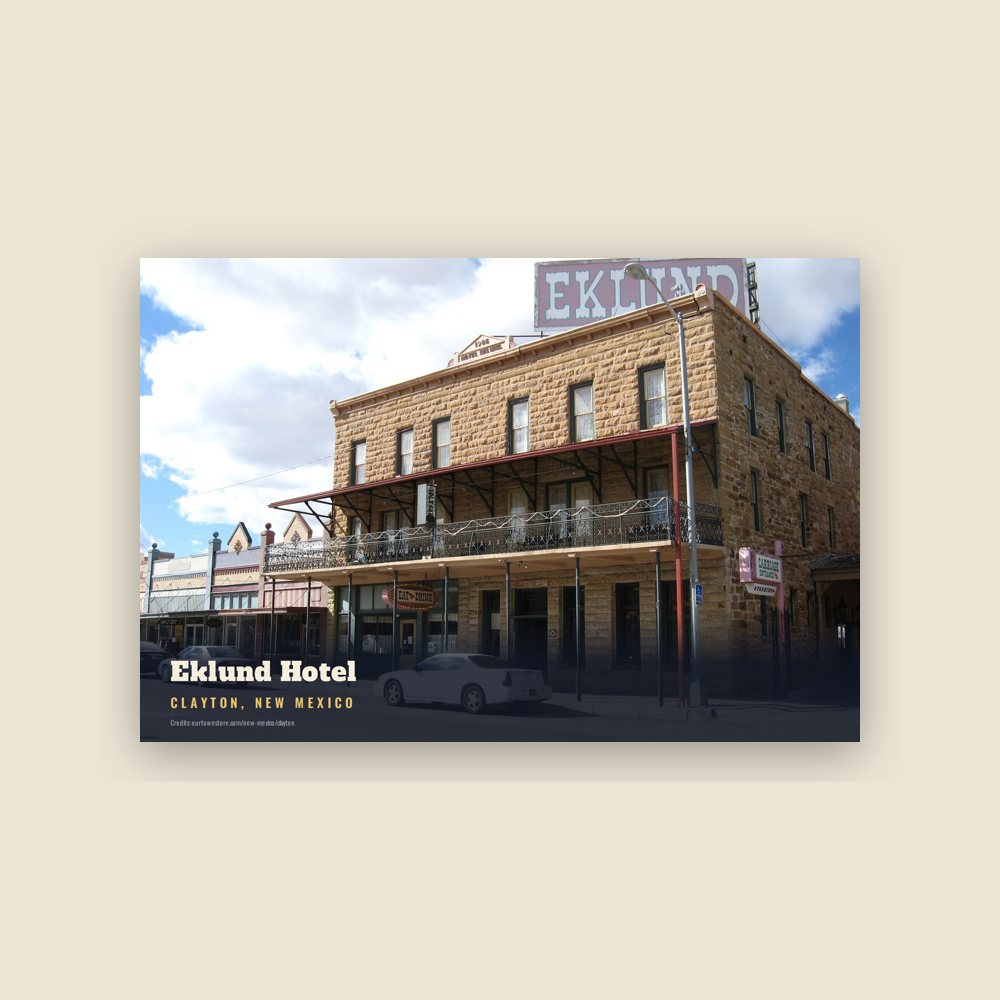
In 1892, the saloon of what would later become the Hotel Eklund was built, and by 1894 the saloon featured a front and back bar, pool and carom tables, monte game tables, a crap table, and a poker table. By 1898, the building was further expanded to add a hotel.
Read the full history
Twentieth Century
On April 26, 1901, outlaw Black Jack Ketchum has hanged in Clayton. He was decapitated by the hanging. US President Theodore Roosevelt visited Clayton on April 14, 1905.
N. Faustin Gallegos owned and edited El Fenix newspaper in Clayton, was an interpreter, schools superintendent, and delegate to the 1908 Republican National Convention in Chicago.
Clayton and the rest of Northeastern New Mexico was hit hard by the Dust Bowl of the 1930s; however, the era was also a time of renewal and rebuilding in the community, in large part due to the work of the Works Project Administration in the community.
Twenty-first century
Adapted (trimmed) from the Wikipedia article Clayton, New Mexico, revision 1375722552 by its contributors, licensed CC BY-SA 4.0.
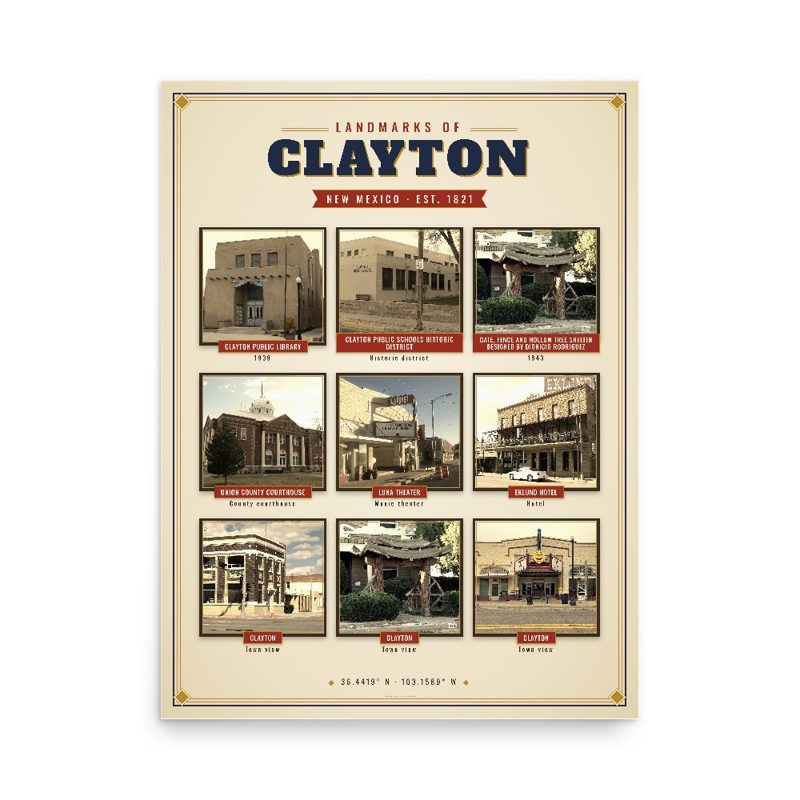
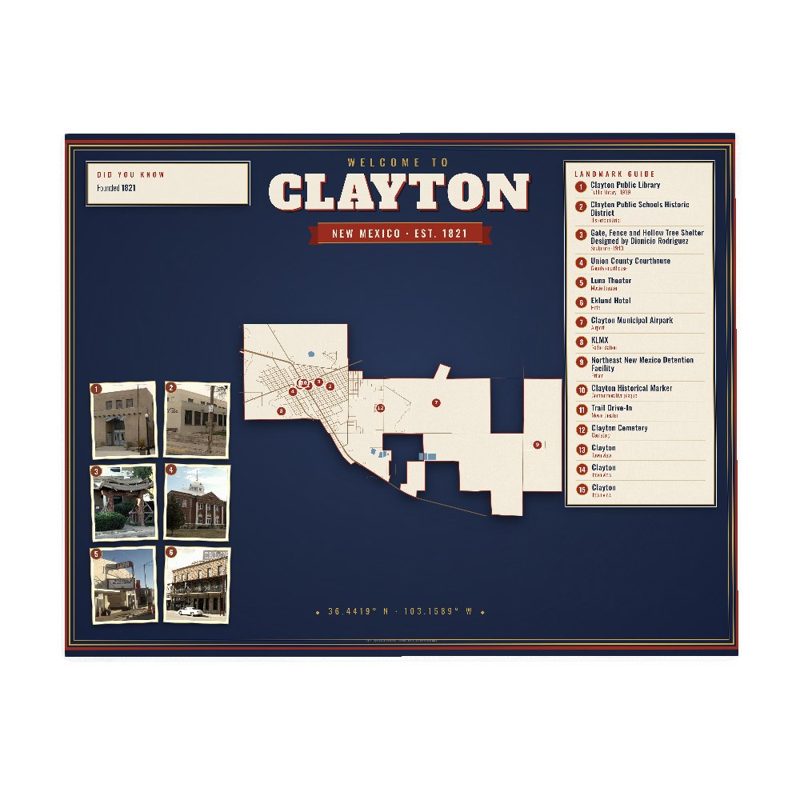



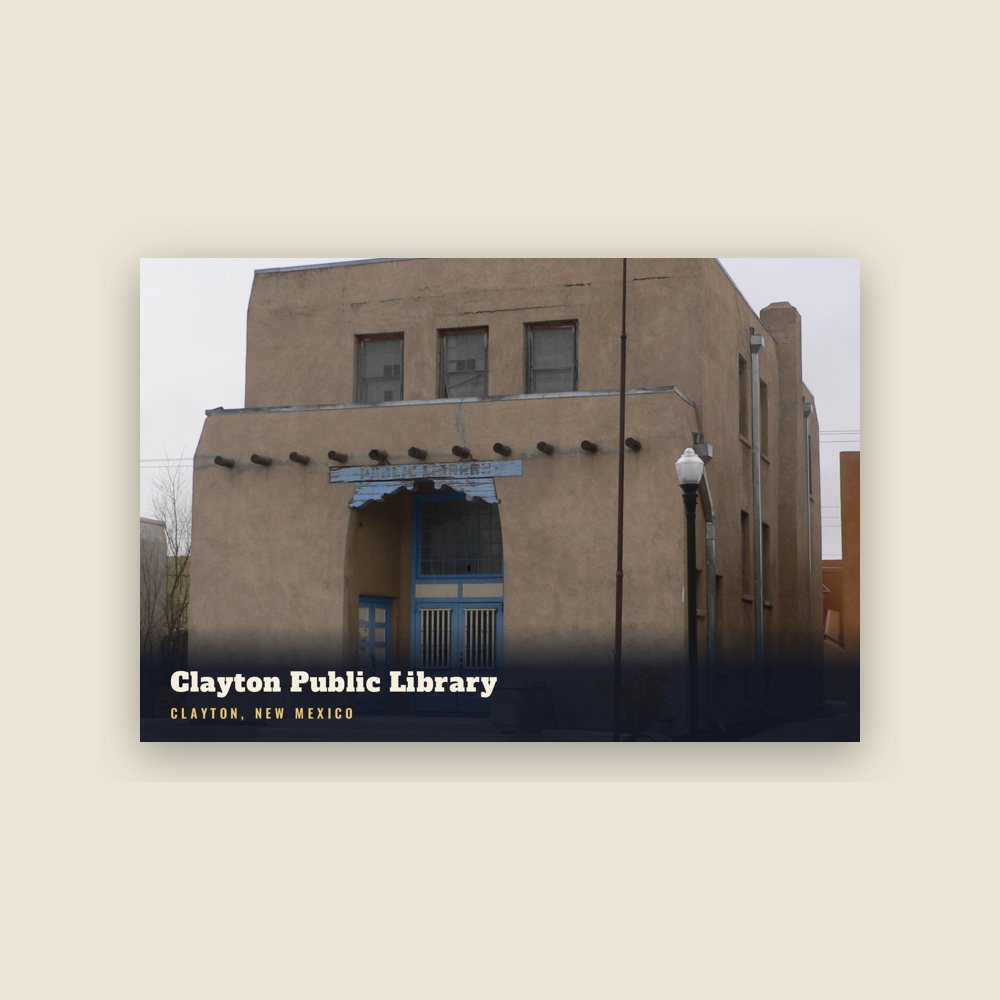
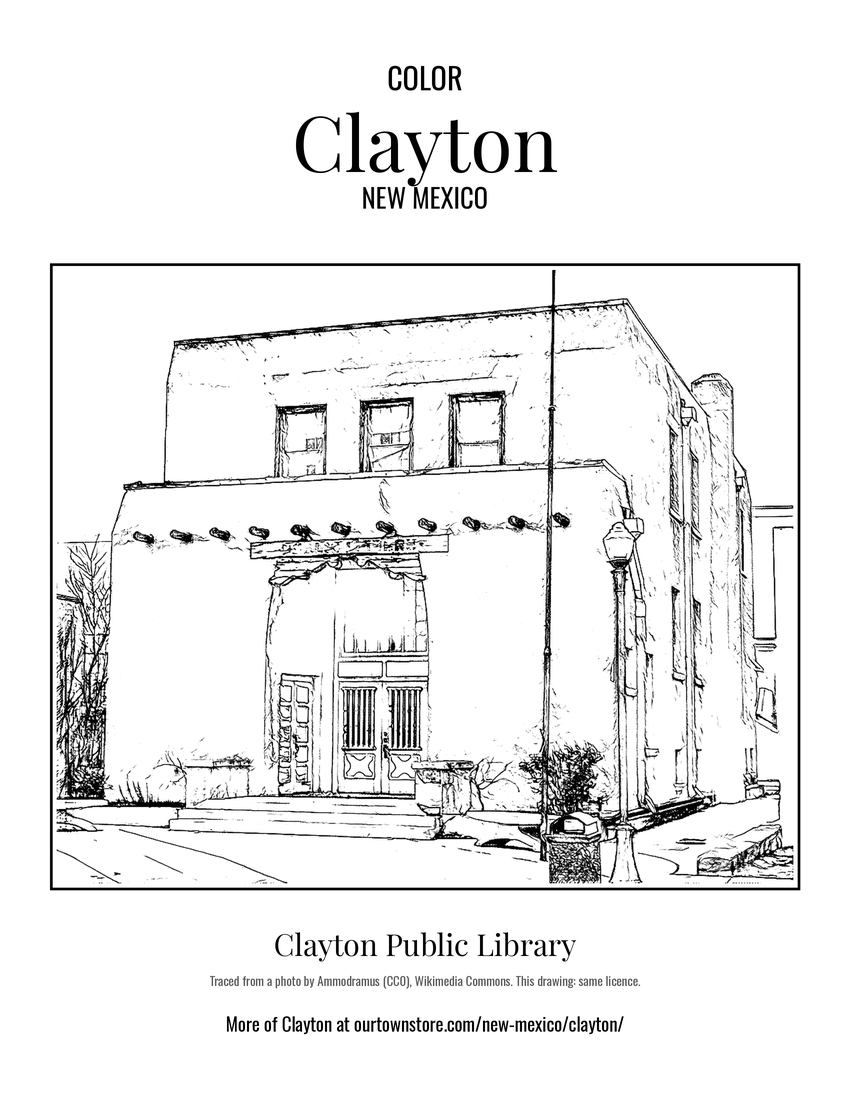 Clayton Public Library
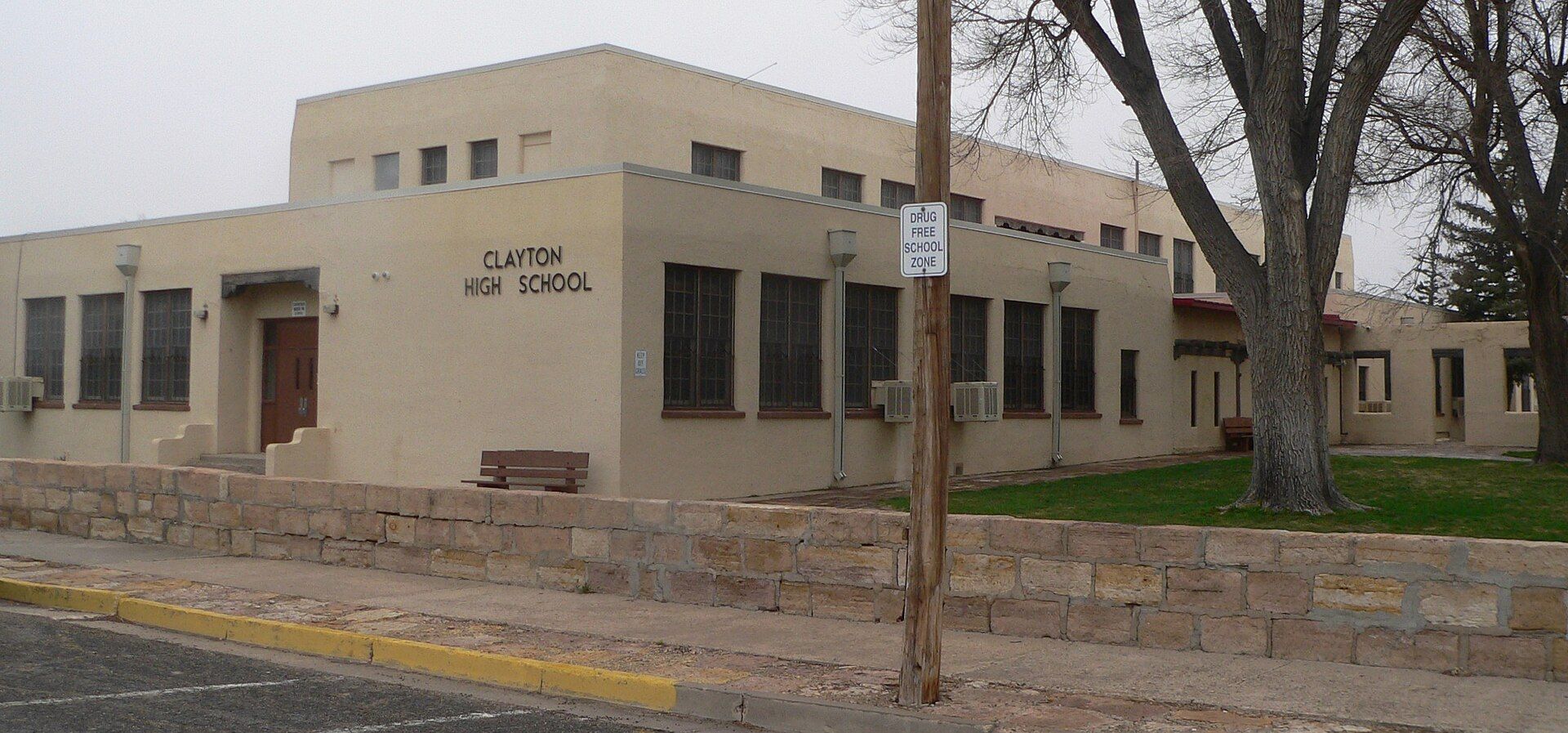
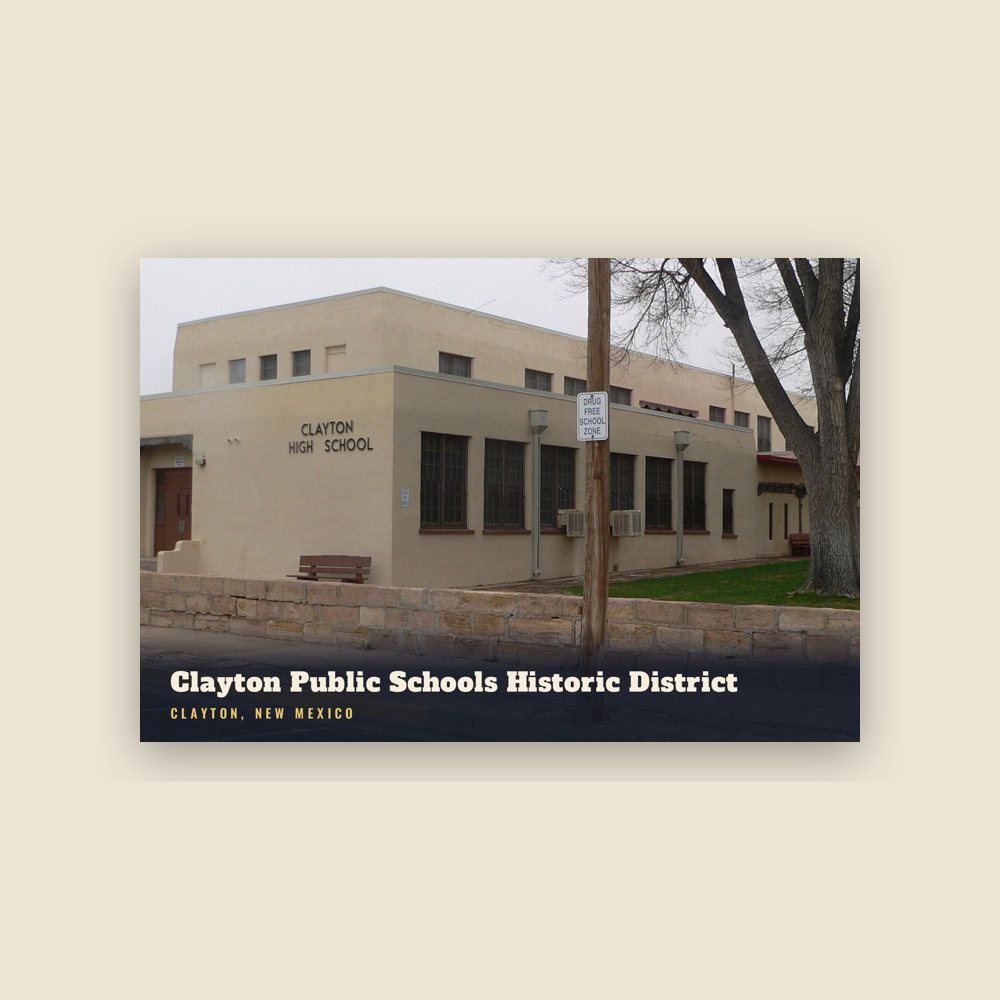
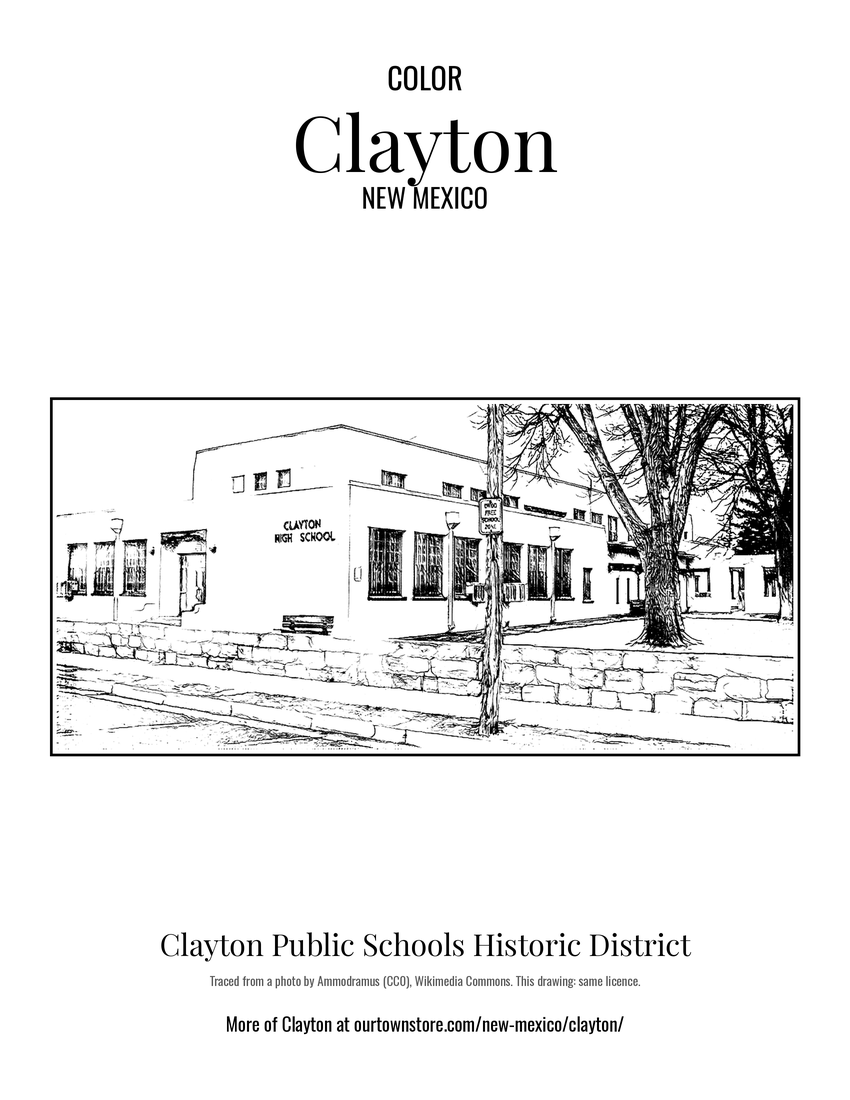 Clayton Public Schools Historic District
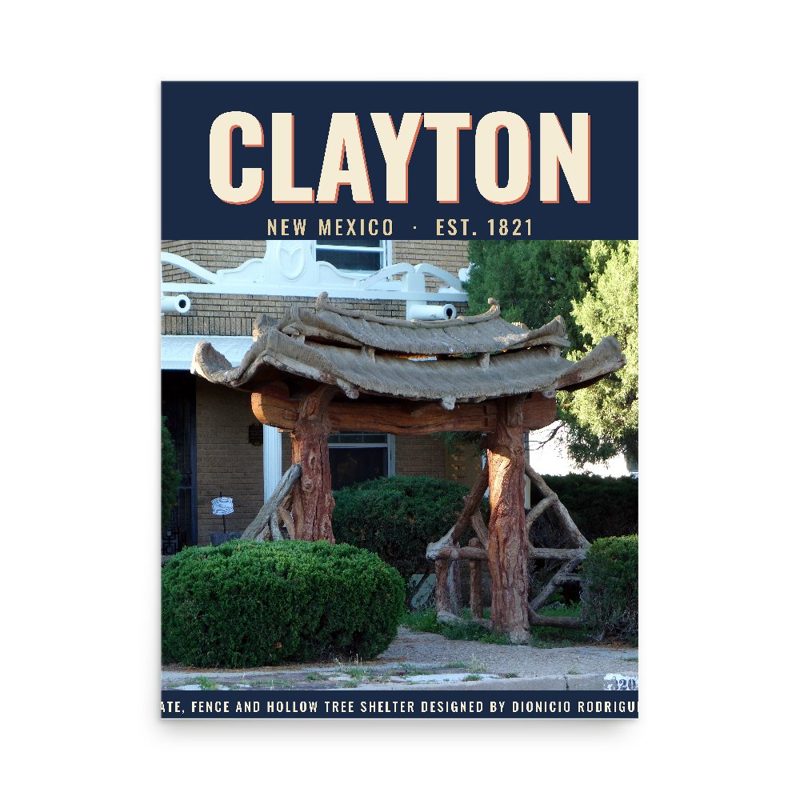
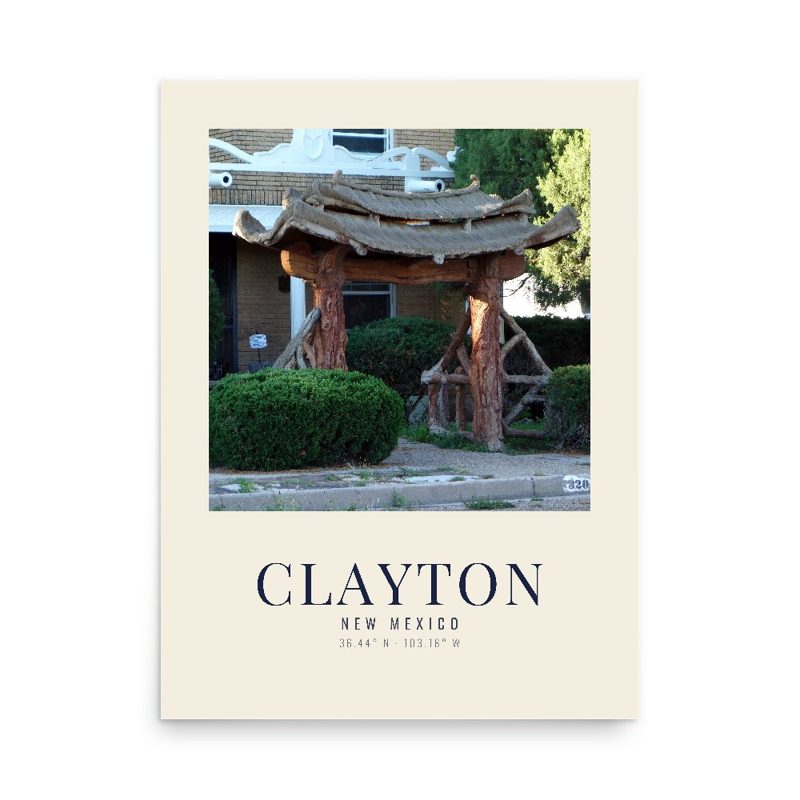
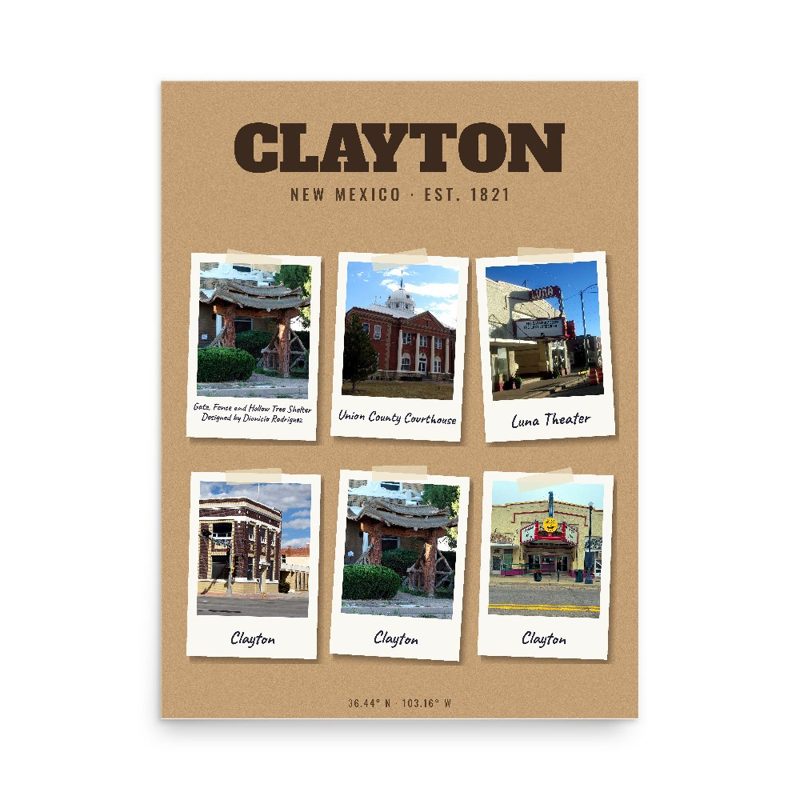
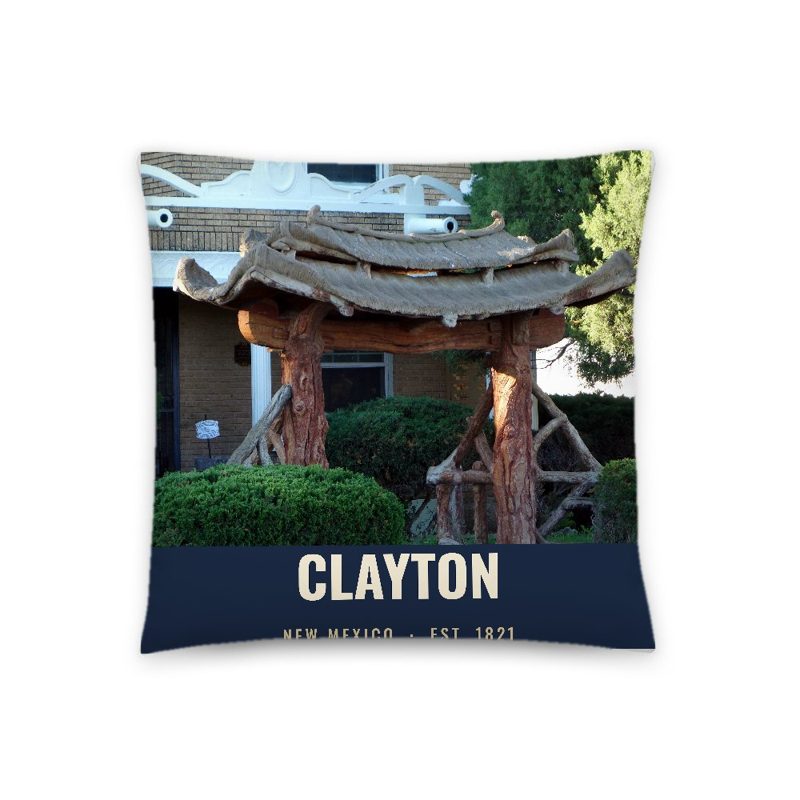
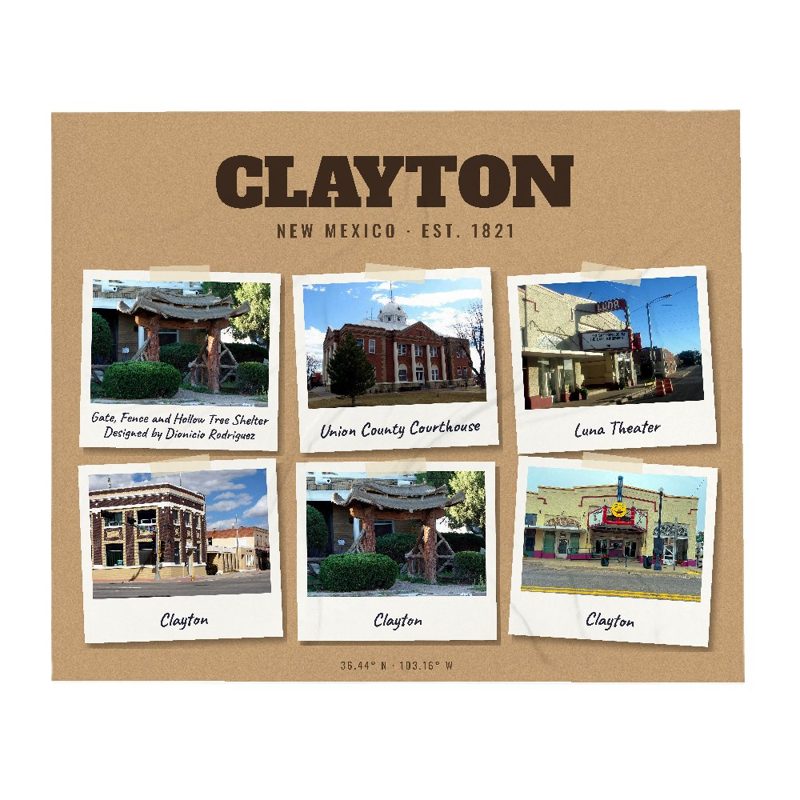
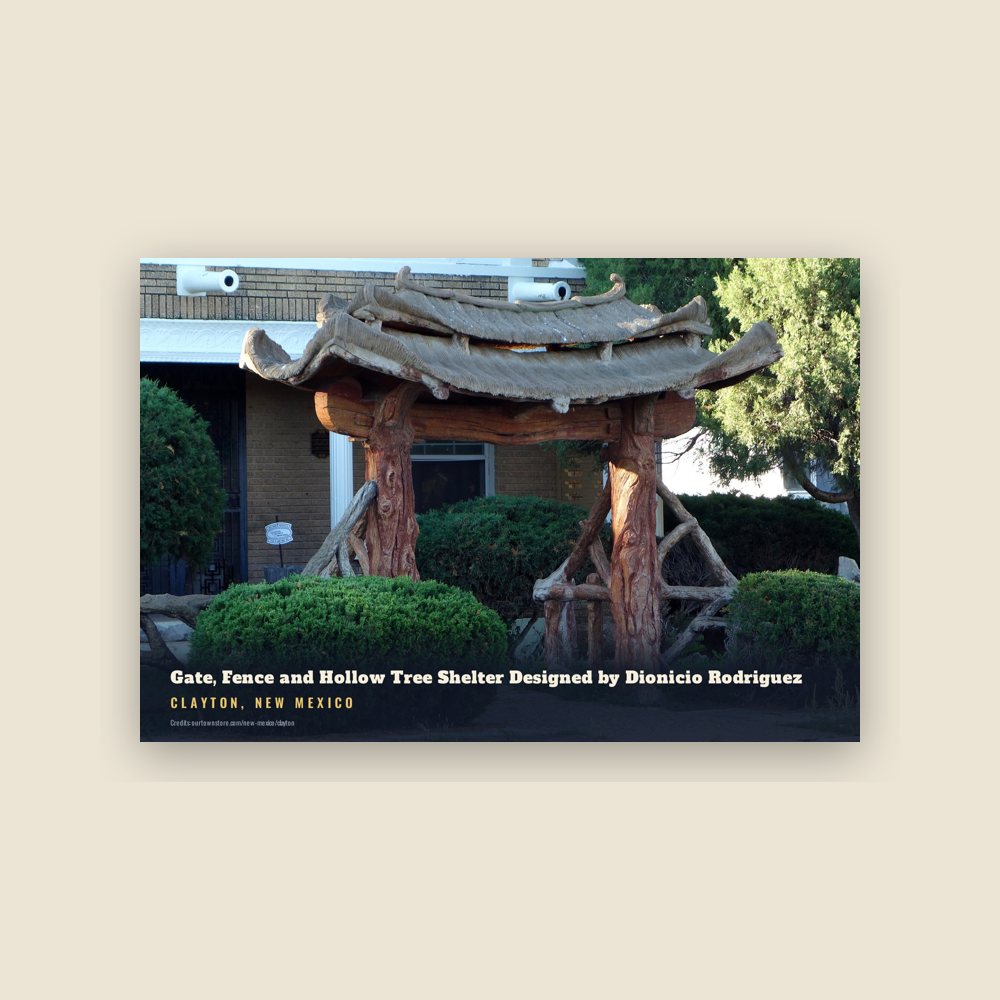
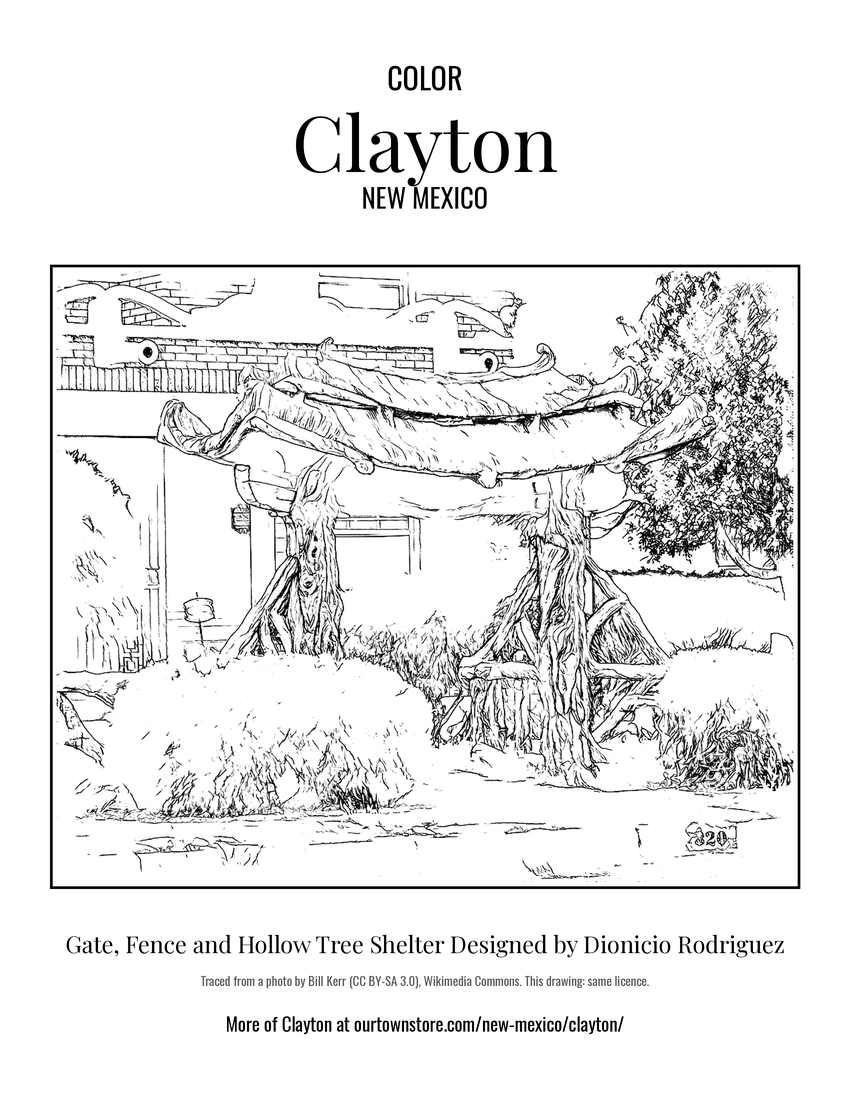 Gate, Fence and Hollow Tree Shelter Designed by Dionicio Rodriguez
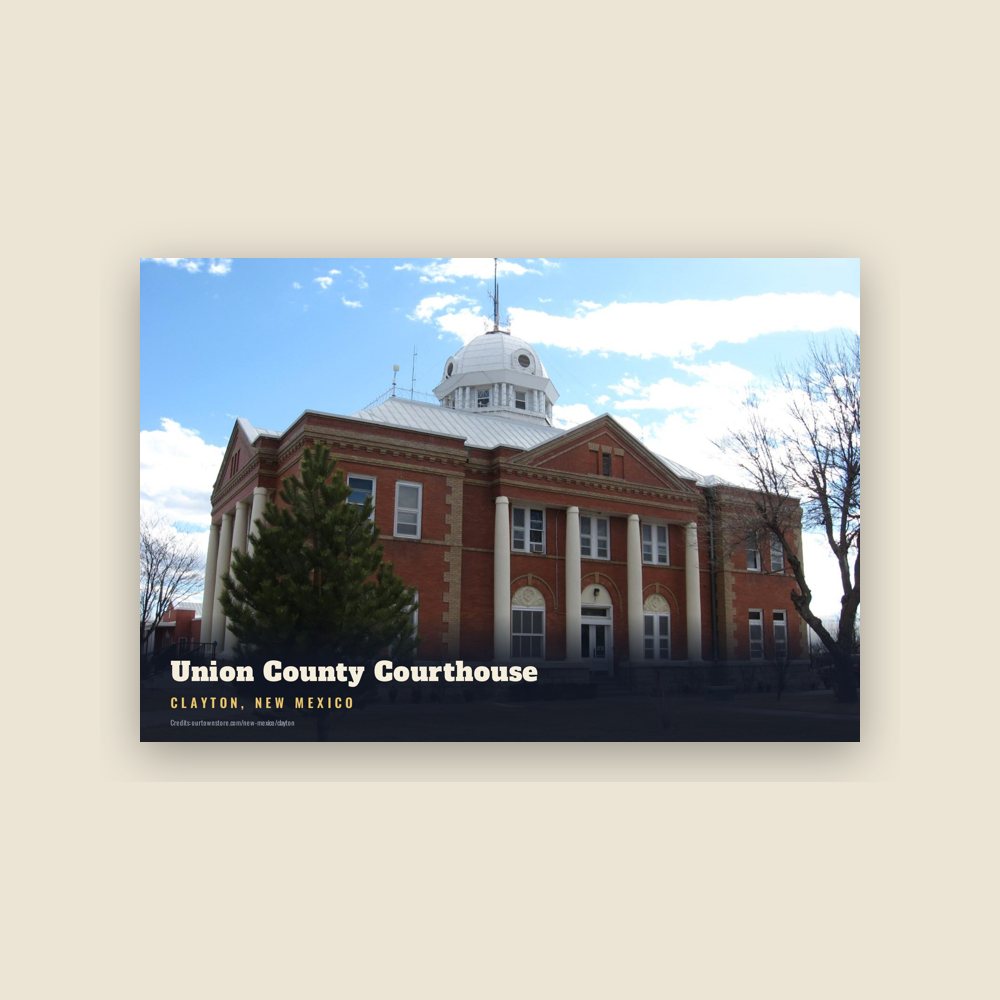
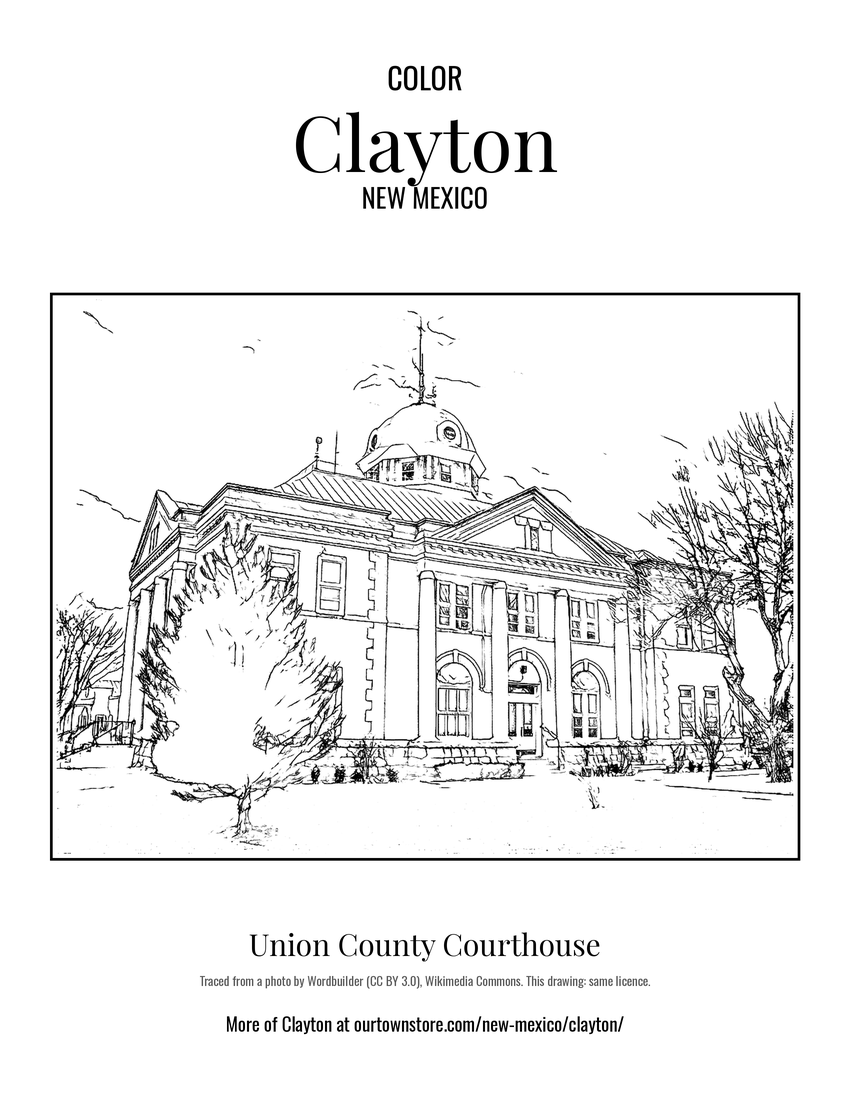 Union County Courthouse