A short history of Cimarron
Cimarron is located on the land of what became known as the 1,700,000 acres (6,900 km2) Maxwell Land Grant. In 1842, Lucien B. Maxwell, a fur trapper, came to the Beaubien-Miranda Ranch in northern New Mexico and courted and married Luz Beaubien, one of the owner's six daughters. He eventually inherited the ranch and built a mansion in 1858 on the future town site.
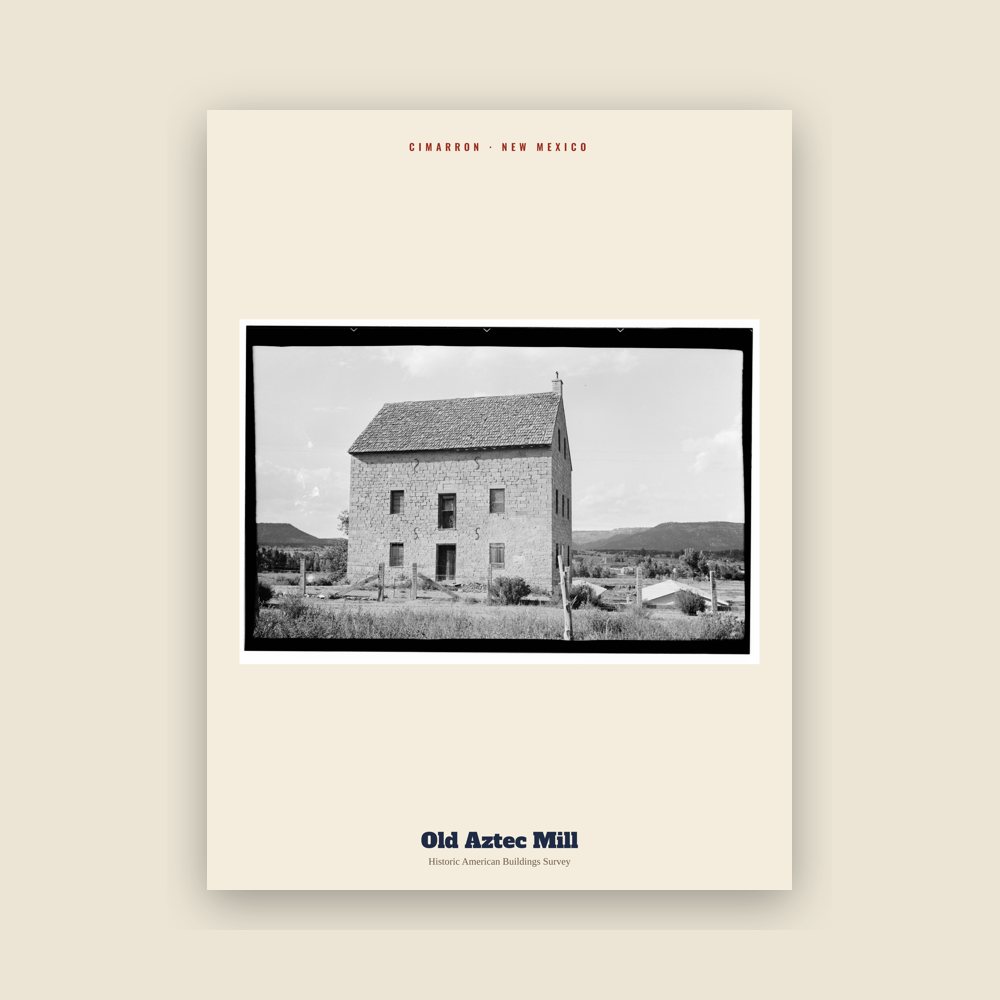
Maxwell built the Aztec Mill in 1864. It is preserved as the Old Mill Museum, operated by the Cimarron Historical Society. The museum's collection includes working mill parts; Native American tools, weapons and pottery; Maxwell Land Grant paperwork and documents; and other materials.
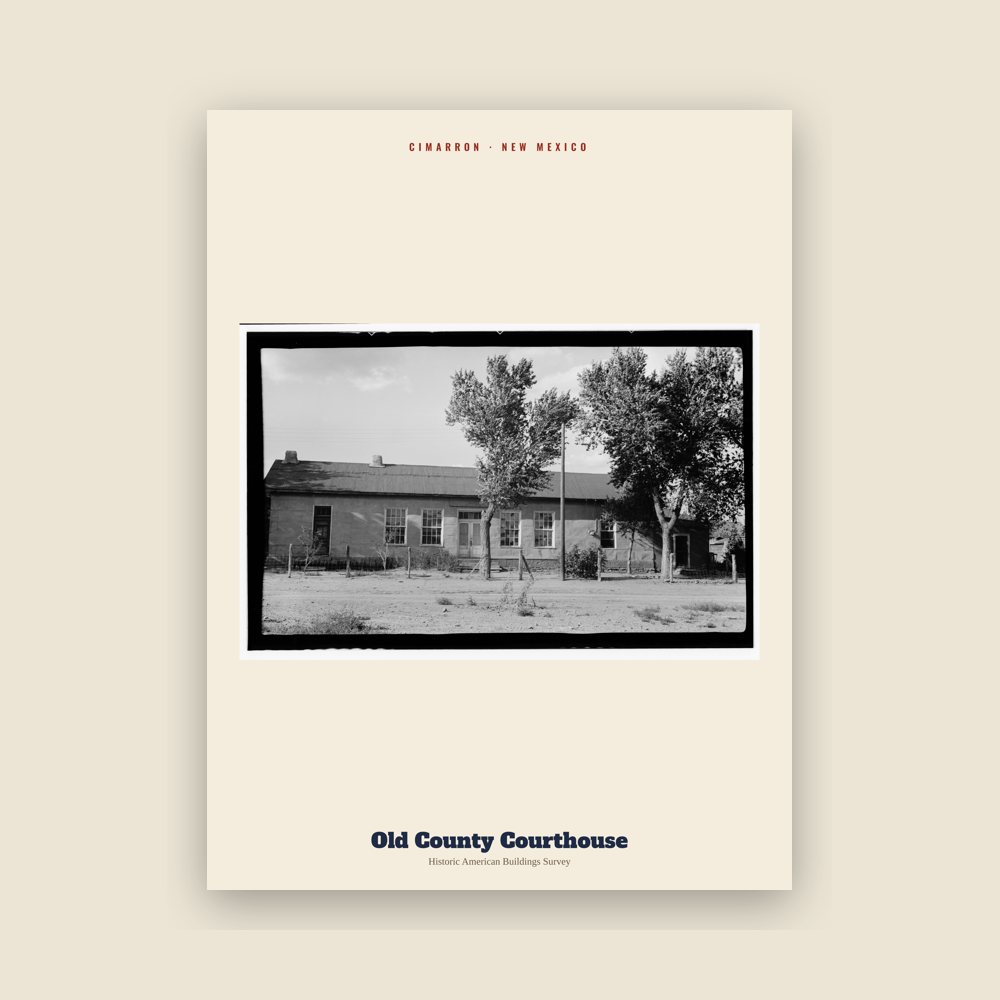
Cimarron was officially chartered in 1859 and was named for the Spanish word used to describe a mustang, meaning "wild" or "unbroken". Cimarron was the county seat of Colfax County beginning in 1872, when it replaced Elizabethtown. At that time, Cimarron was a stage stop on the Mountain Branch of the Santa Fe Trail. In 1881, the county seat was moved to Springer, a town on the Atchison, Topeka and Santa Fe Railway. It was during this time that Lucien Maxwell, due to rising tensions, sold the Maxwell Land Grant to a group of investors, with the resultant Colfax County War in which more than two hundred people were killed.
In 1905, the St. Louis, Rocky Mountain and Pacific Railway laid tracks from Raton to Ute Park, with the intent to haul coal between Raton and Cimarron. Passengers used the daily train service, as well as ranchers who moved agricultural animals. During World War II, the tracks were removed, with the steel to be recycled to help with the shortage during the war effort.
Soon after the tracks were laid through town, tracks were also laid 22 miles up Ponil Canyon by the Cimarron and Northwestern Railway Company, to haul timber from the surrounding mountains, which were loaded with douglas fir and ponderosa pine. The railroad company delivered its timber to the Continental Tie and Lumber Company, located in Cimarron, NM, who made railroad ties and timber supports for nearby coal mines.
As a tribute to many dedicated crew members, the USS Cimarron's key artifacts were donated to Cimarron, since it is the closest village to the Cimarron River Basin's Headwaters. The ship's bell now stands in front of the village's high school, Cimarron High School.
Adapted (trimmed) from the Wikipedia article Cimarron, New Mexico, revision 1381731687 by its contributors, licensed CC BY-SA 4.0.
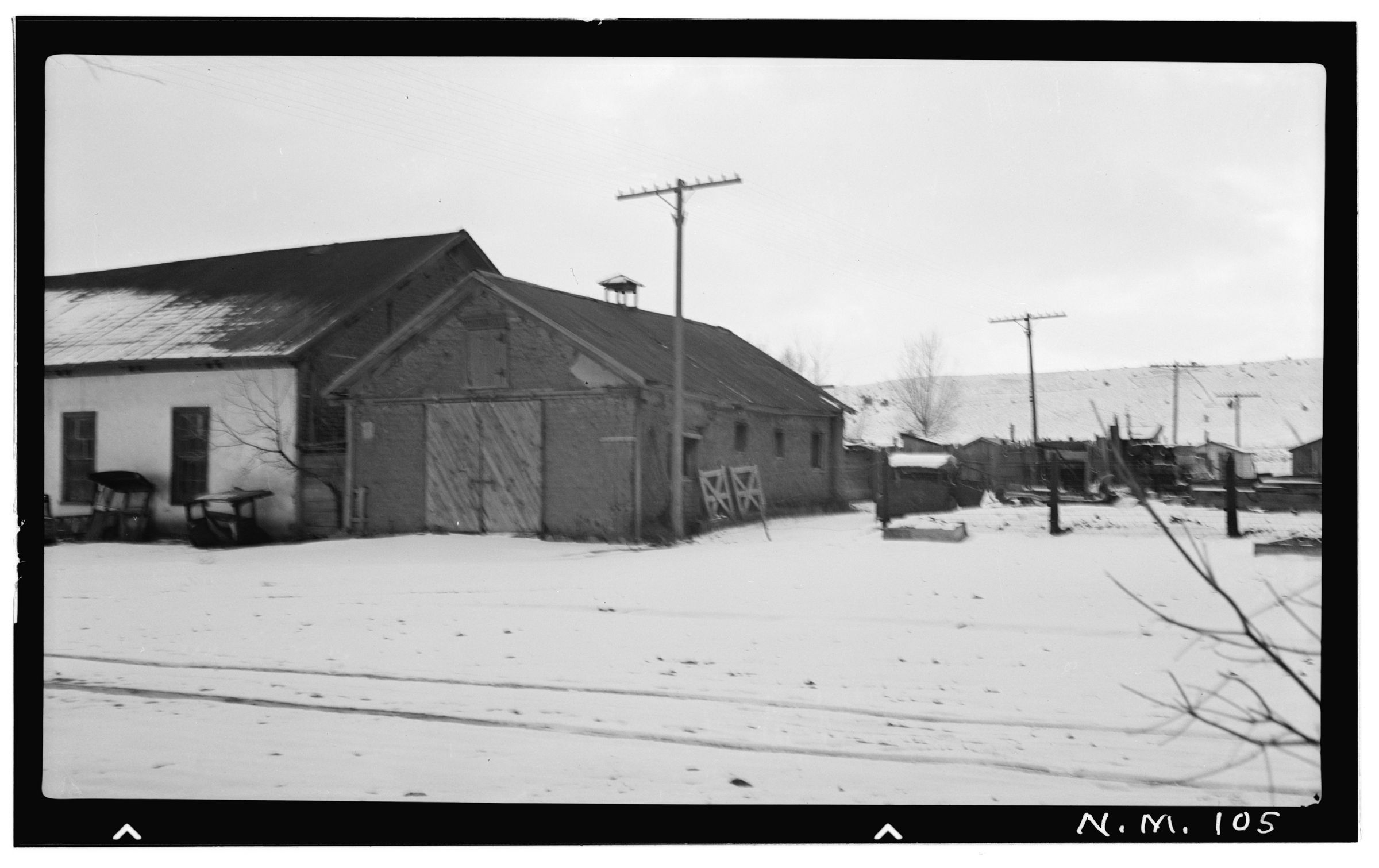

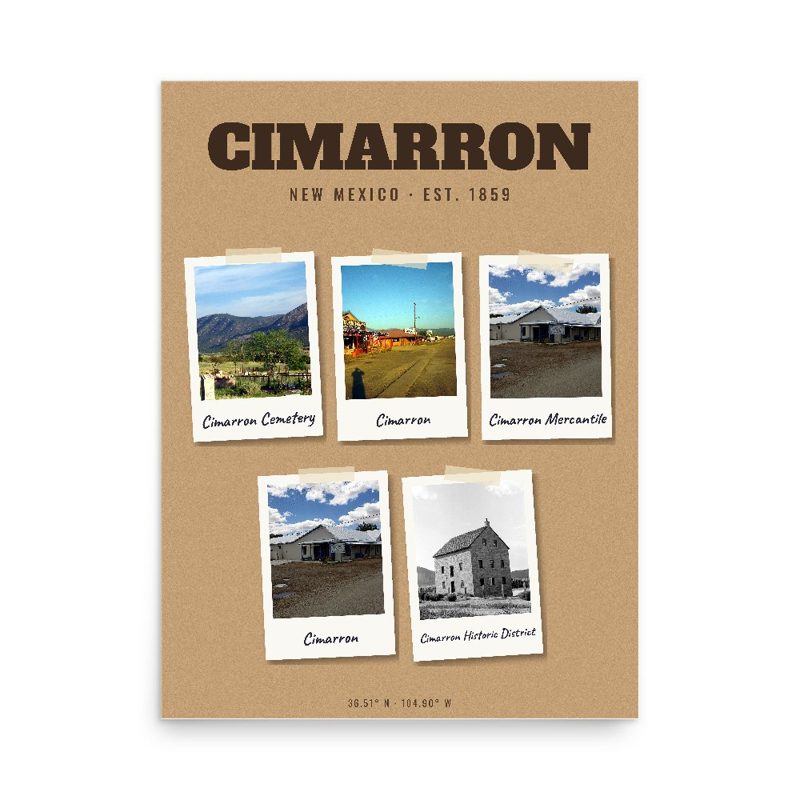
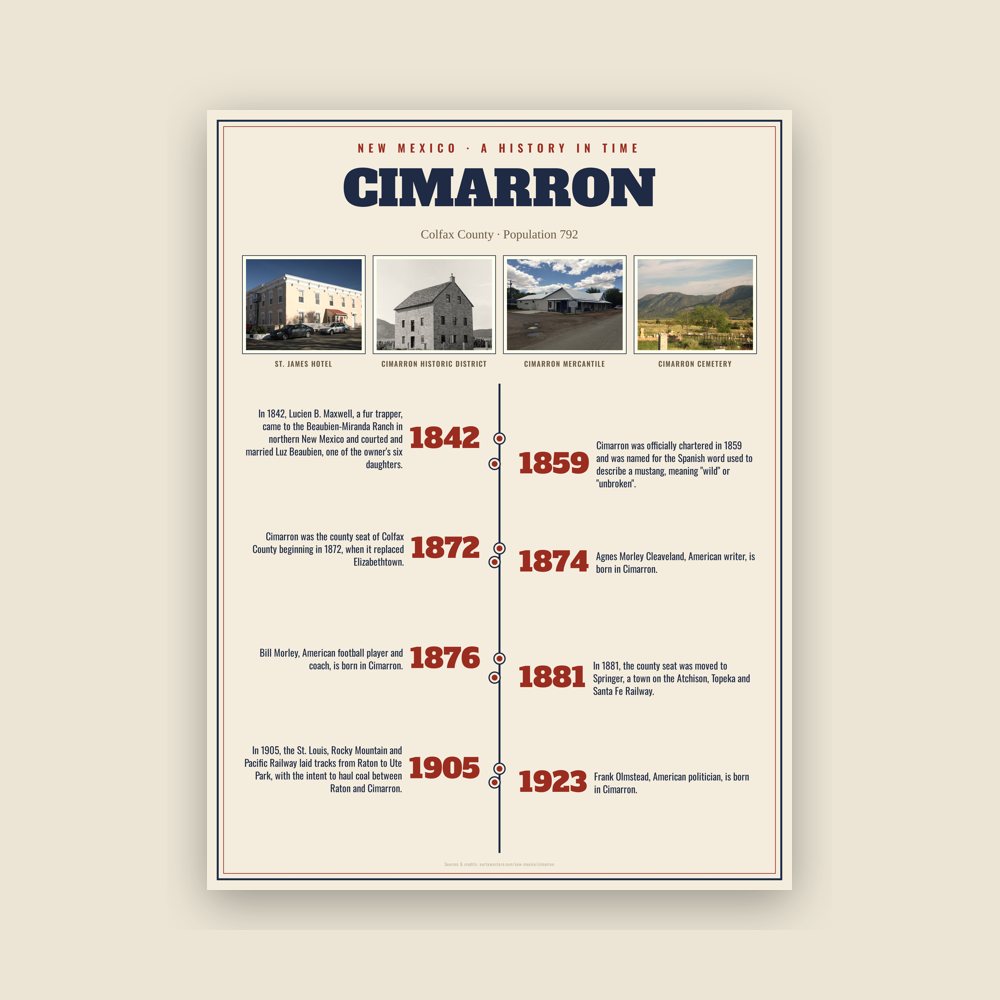
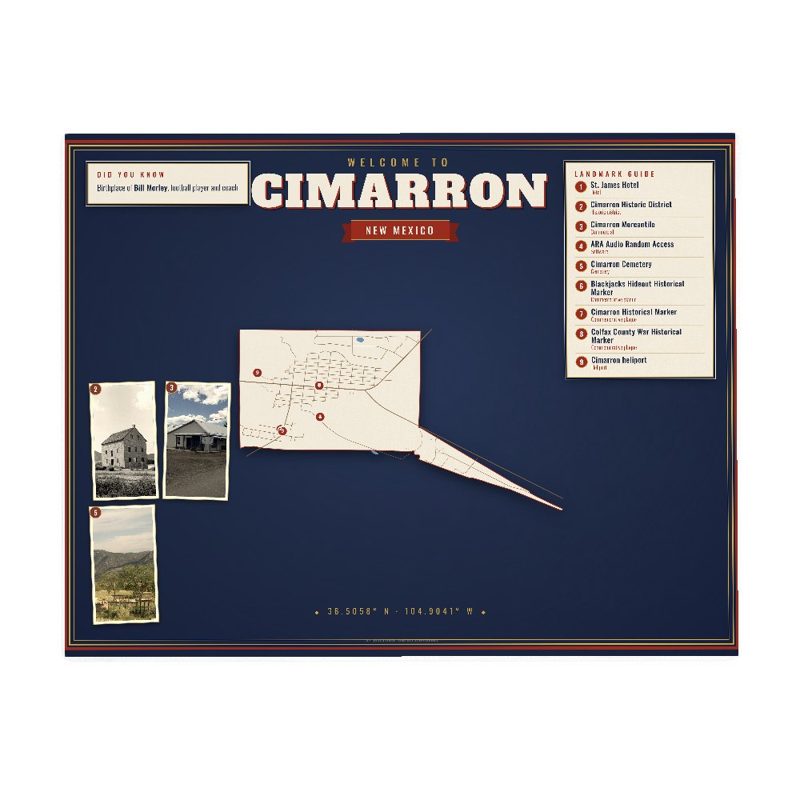










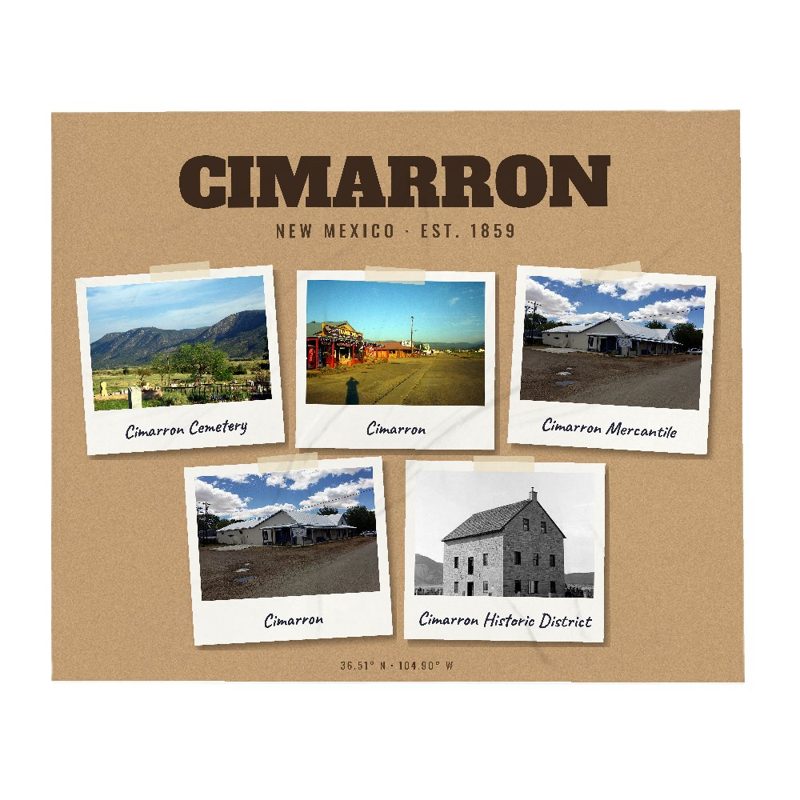

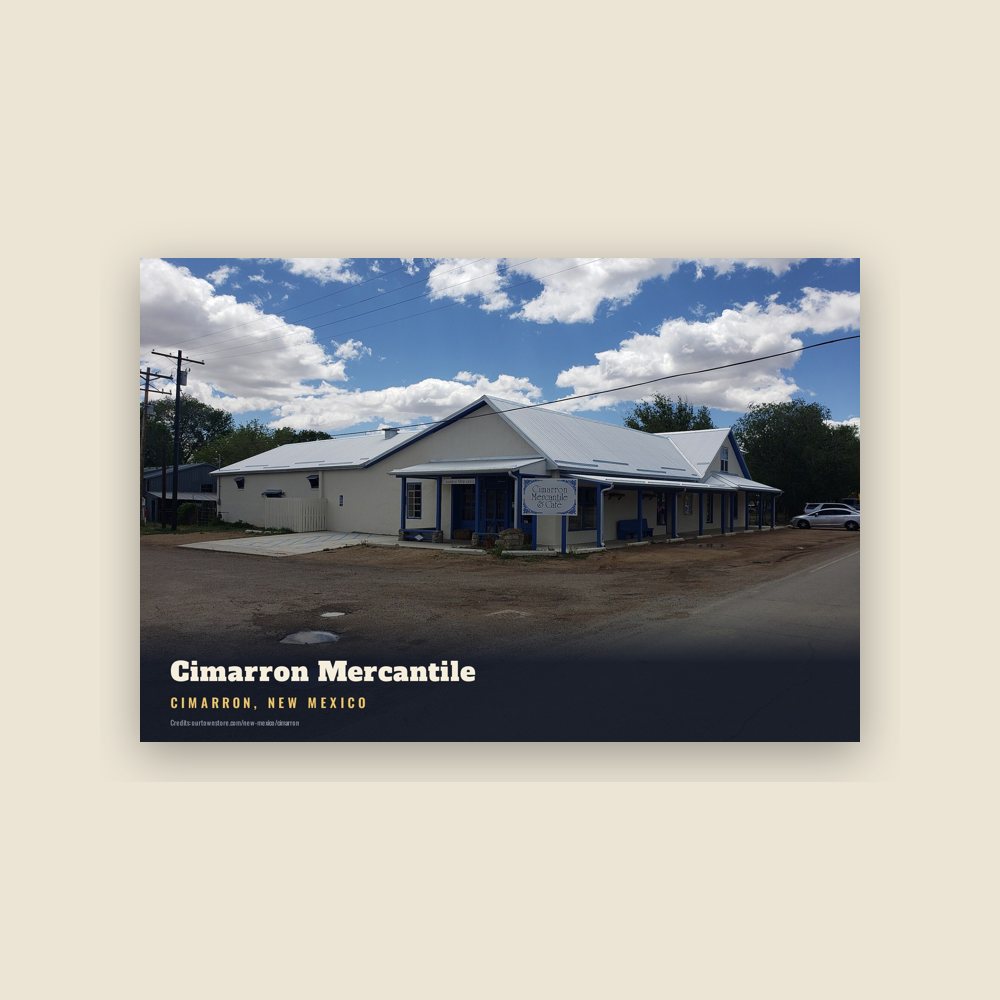


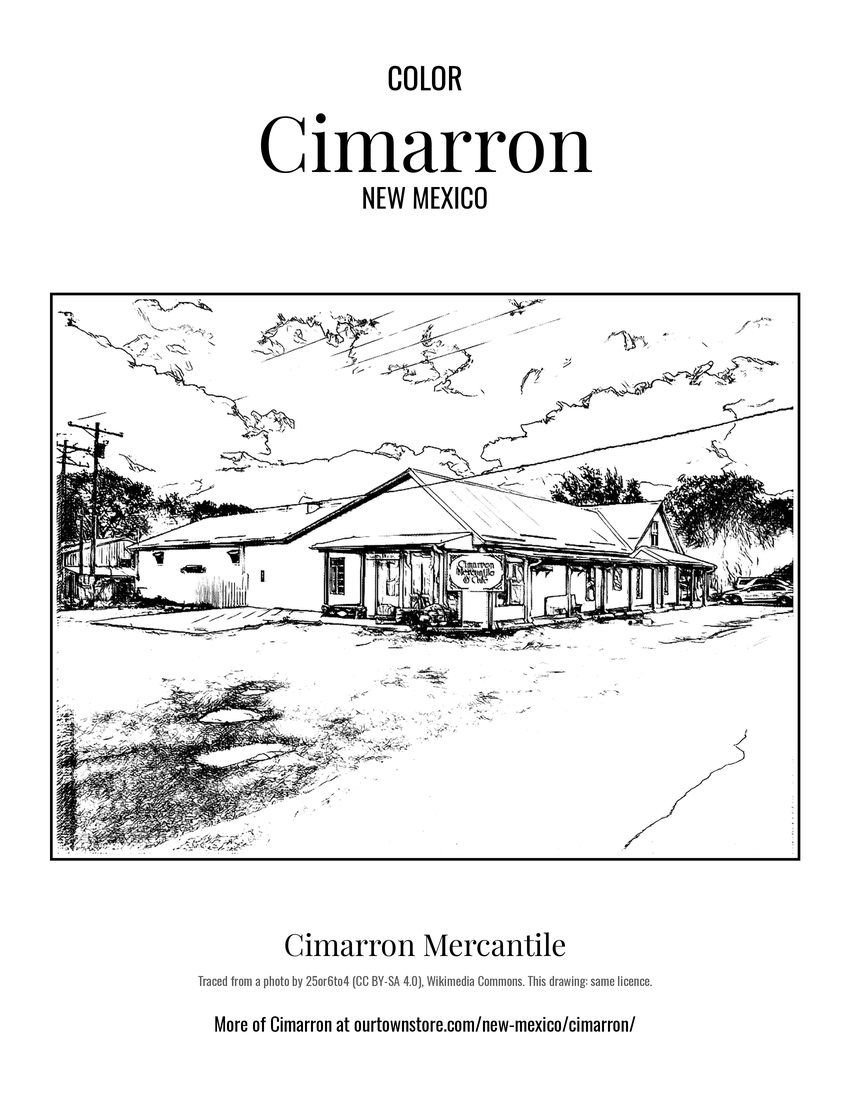 Cimarron Mercantile
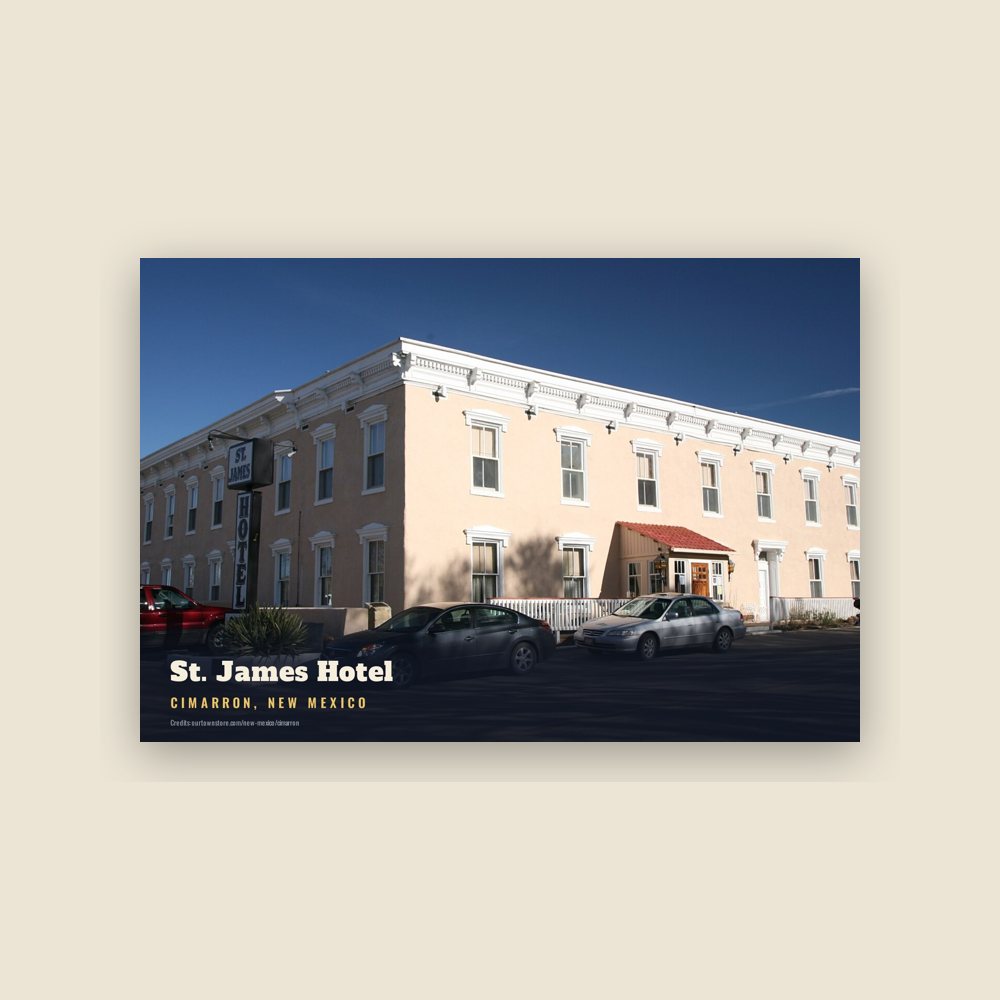
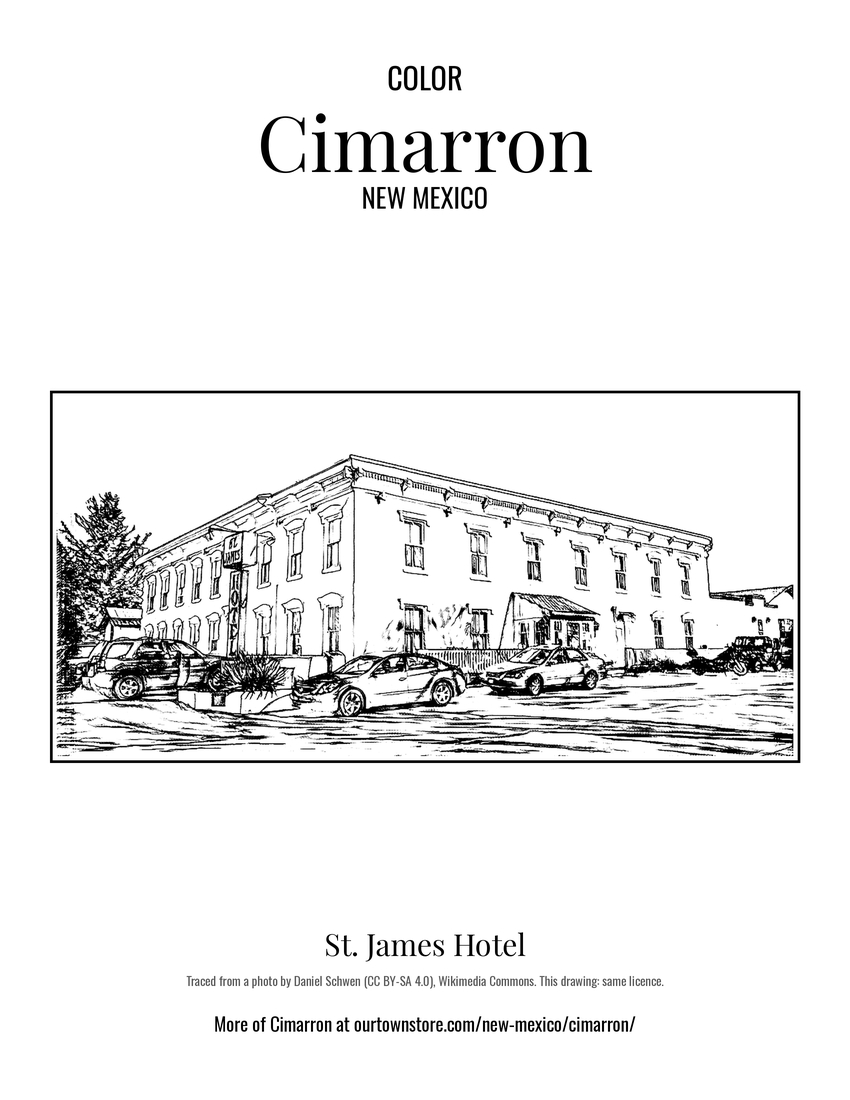 St. James Hotel
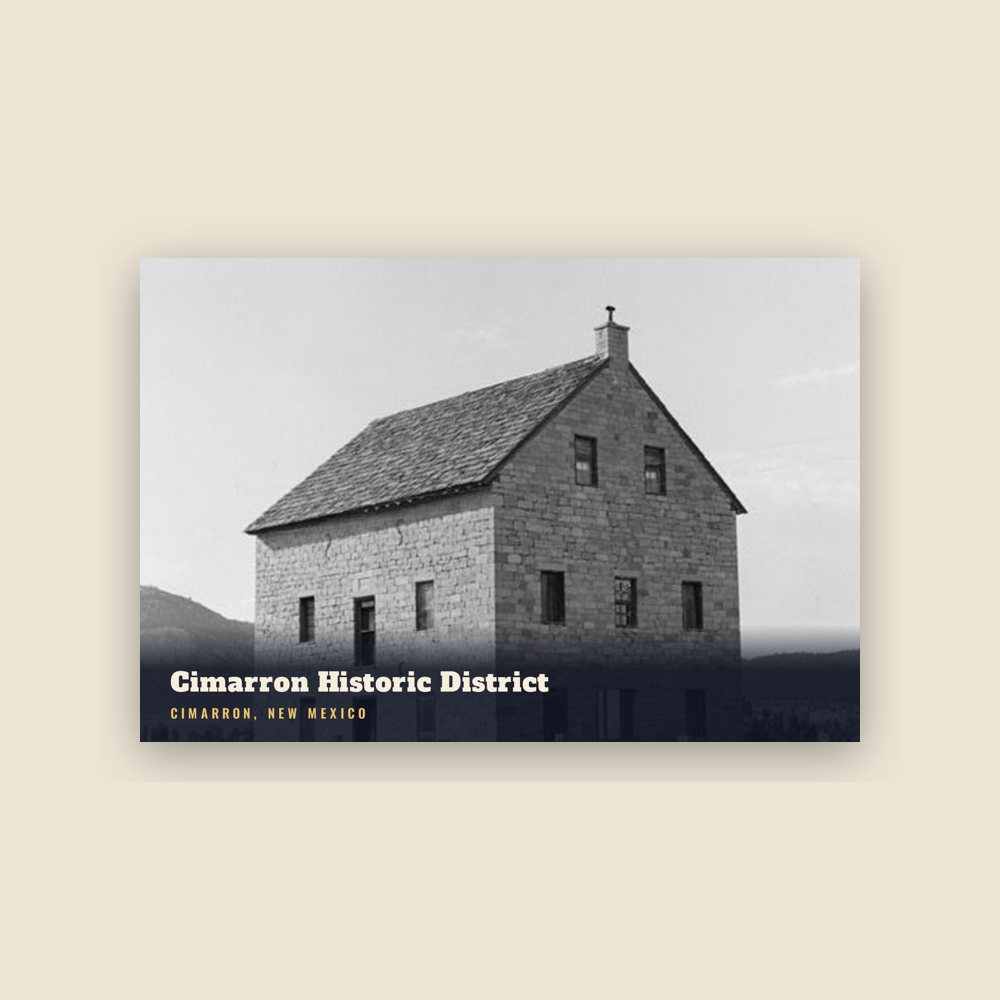
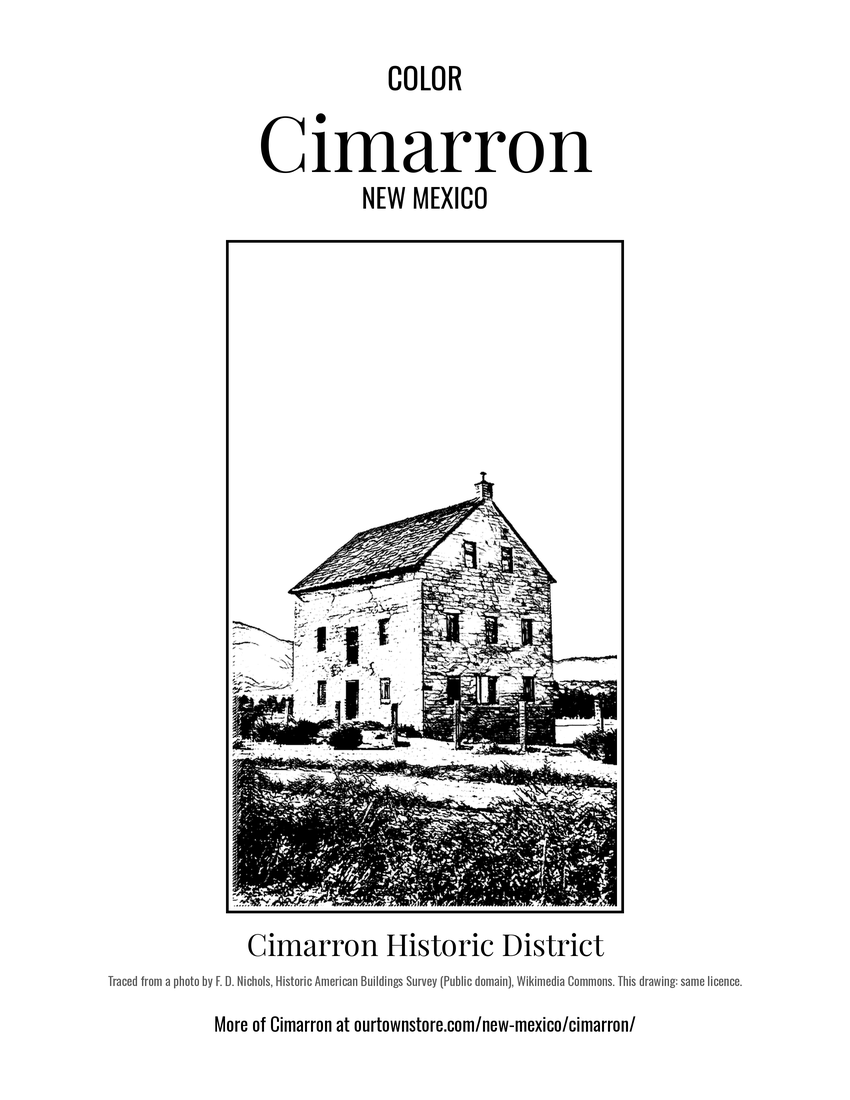 Cimarron Historic District
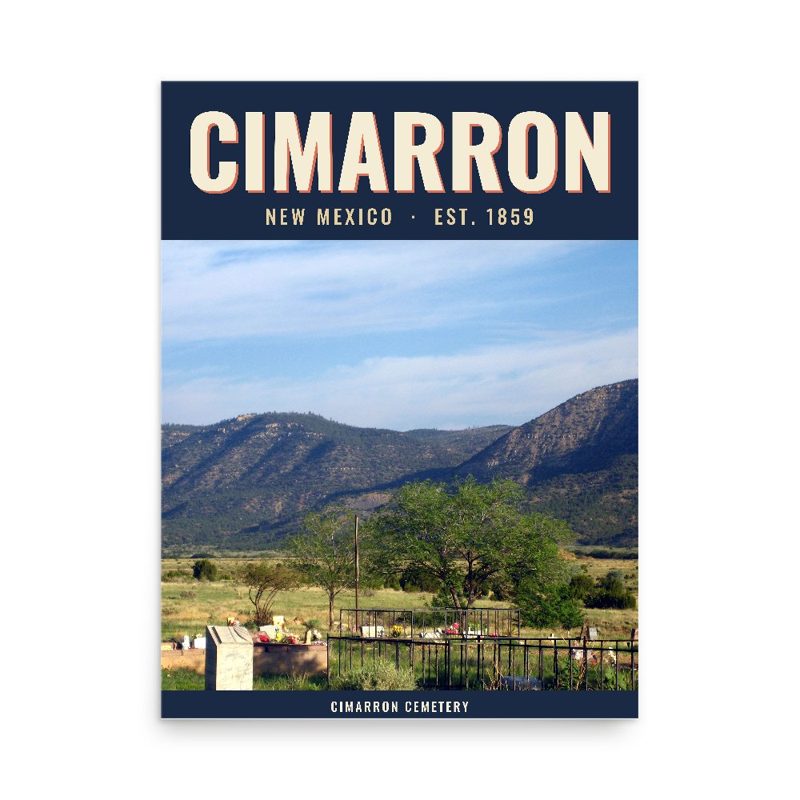
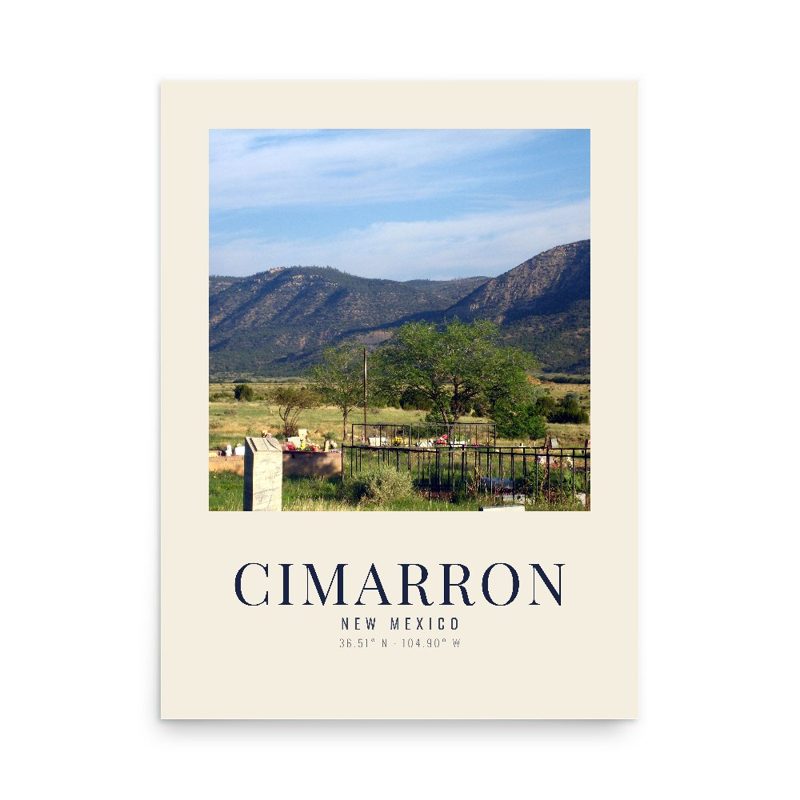
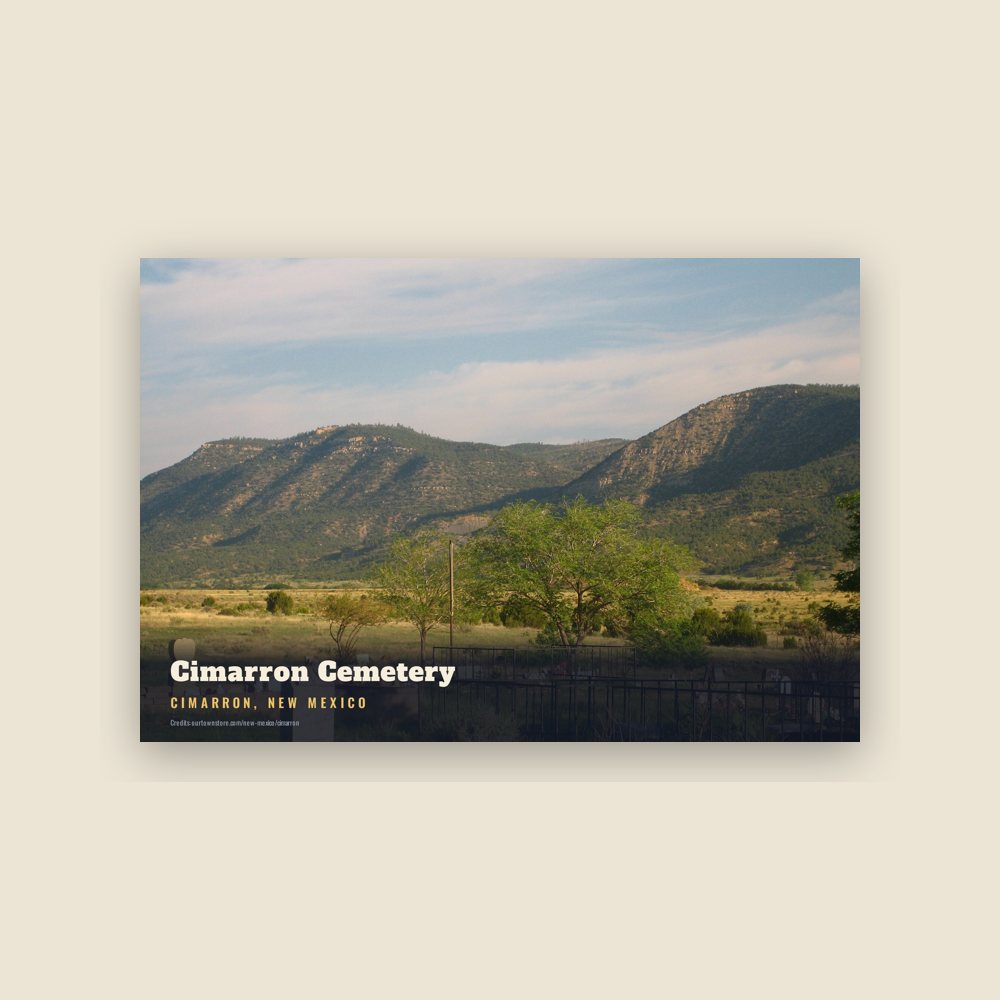
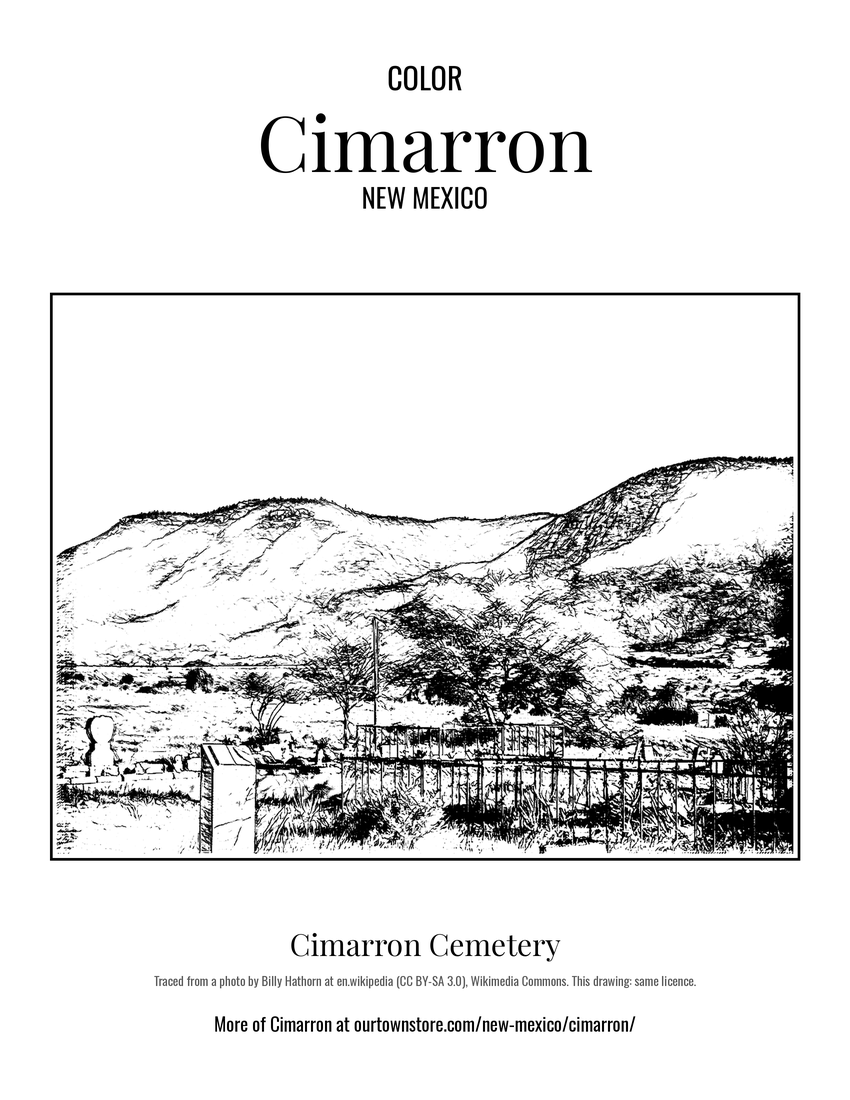 Cimarron Cemetery