A short history of Belen
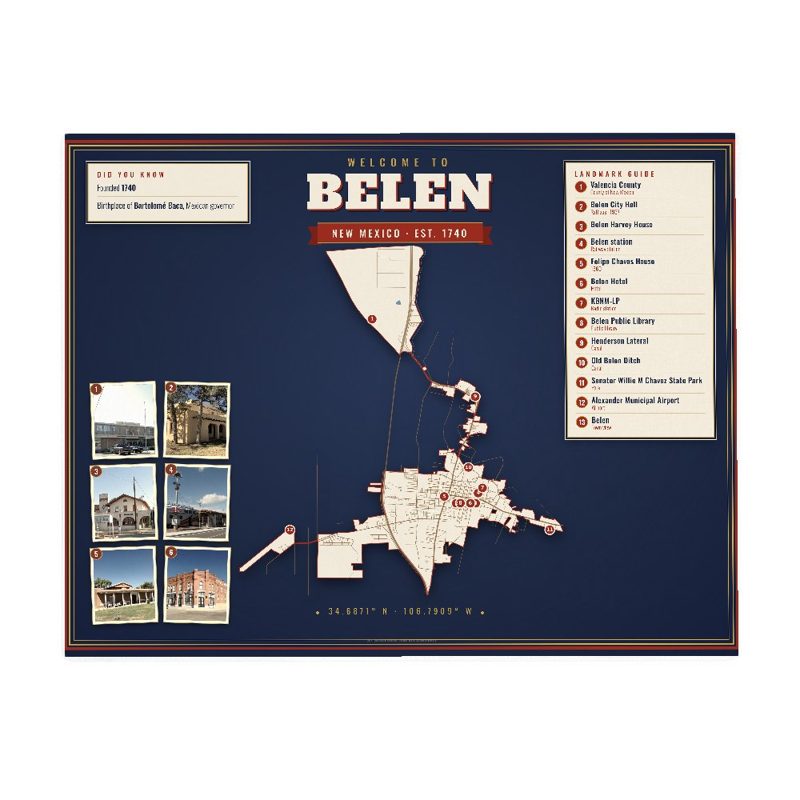
Belén was founded in 1740 as Nuestra Señora de Belén (Our Lady of Bethlehem) by a group of colonists led by Diego Torres and Antonio Salazar, who had received permission to settle the tract of land known as the Belén Grant. The early settlers in the Belén grant included several genízaro families. The genízaros, Native Americans with origins as slaves and servants of colonists, were important in the frontier defense of New Mexico. For the genízaros, relocation to Belén and other frontier settlements was a means of acquiring land. Their settlement in Belén was established to protect the southern border of the colony from Apache raiders. Belén was the first of what would be many genízaro settlements, and by 1744, 40 families were in residence. Spanish and mestizo families also settled in Belén.
Recognizing the strategic significance of Belén, Spanish authorities established a fort in Belén to protect the settlements along the Rio Grande in 1760. By the 1790s, Belén had established a city center known as Plaza Vieja, or Old Town, and had grown from a paraje, or precinct, to a partido, or district, with a population of 1,695. By 1793, a Catholic church and parish were founded.
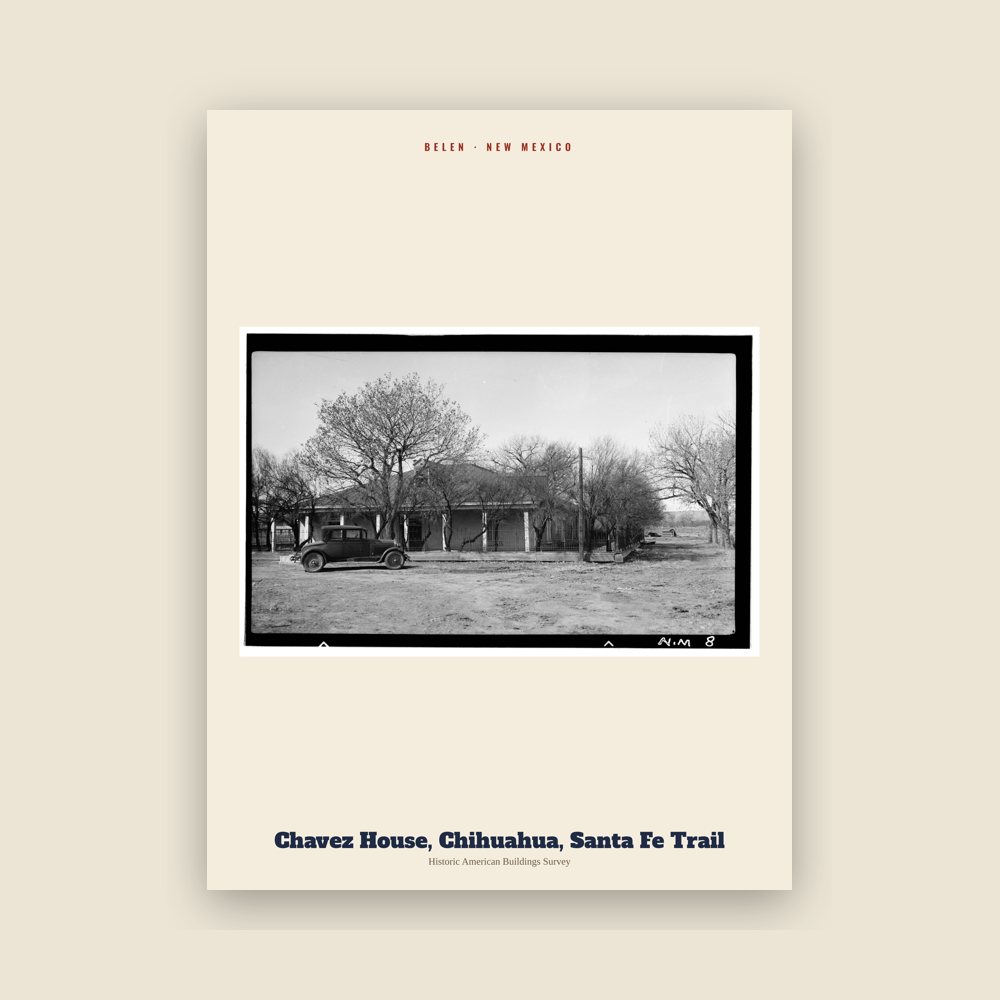
By the middle of the 19th century, Belén had outgrown Old Town and was expanding into what became known as New Town. In 1853, the residents in both parts of town disagreed over the construction of a new Catholic church, with residents of Old Town wanting the new church to remain there, while residents of New Town wanted it built in their part of town. Ultimately, the adobe church in Old Town was abandoned, and a new church was built in New Town. In 1910, the last ruins of the former church were blown up with dynamite, and the crushed adobe was used to pave New Town's main avenue, Becker Avenue.
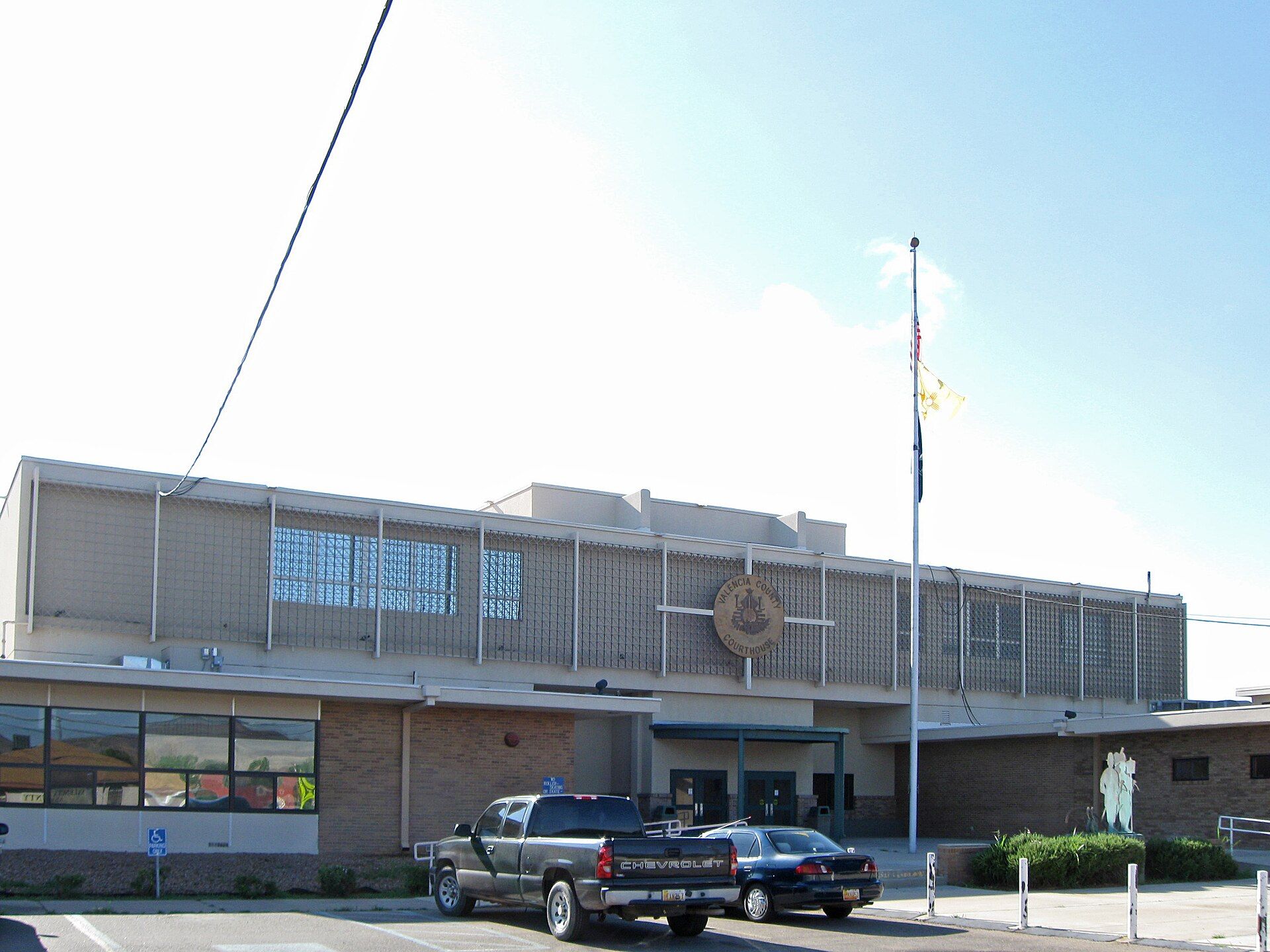
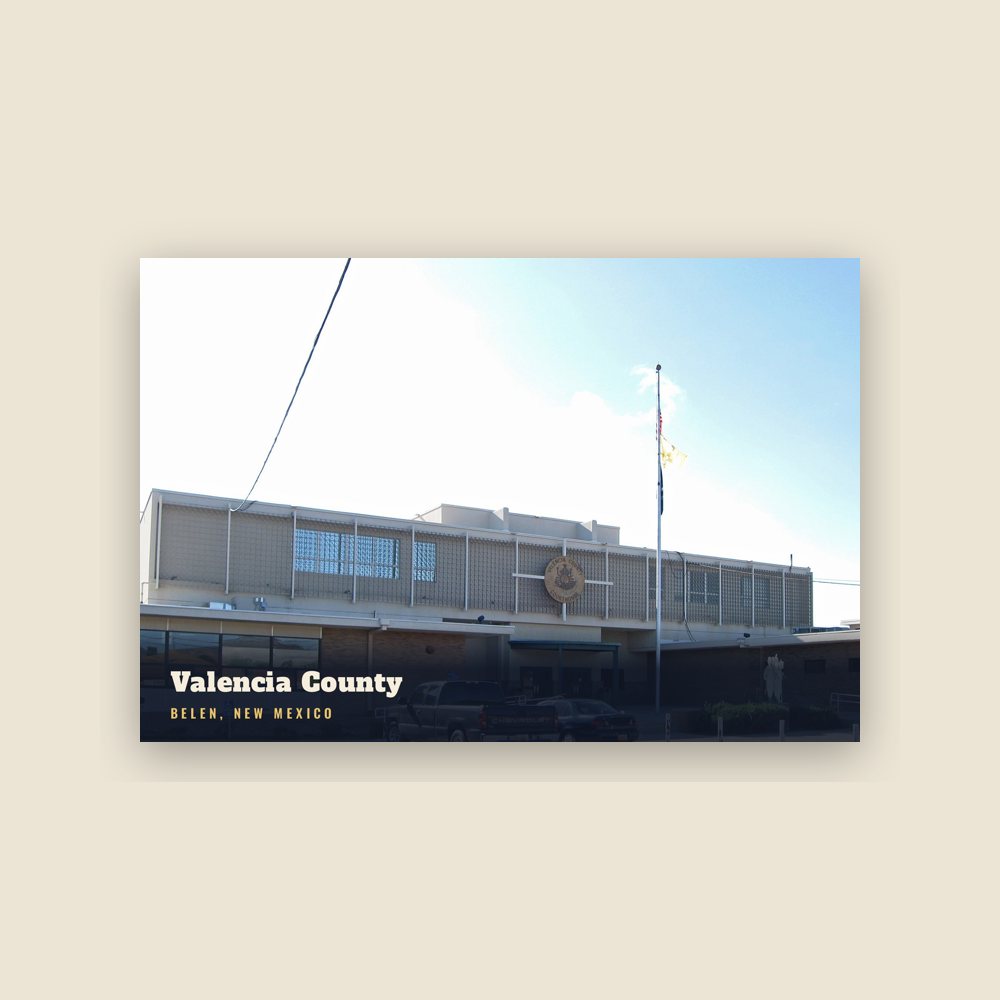
The residents of Valencia County spent nearly 30 years from 1846 to 1875 disputing where the county seat should be located. Valencia, north of Belén, was the county seat in 1846, followed by Peralta in 1847. Valencia reclaimed the county seat in 1849, only to lose it to Tomé in 1852. Belén captured the county seat from Tomé 20 years later but lost it to Tomé two short years later in 1874. Finally, in 1875, Los Lunas claimed the county seat and remains the county seat to this day.
In the late winter of 1862, Belén, an ally of the Union, become entangled in the Civil War when the town briefly fell under Confederate control after 400 Confederate soldiers marched into Belén. By summer, however, the Confederate army had withdrawn from New Mexico.
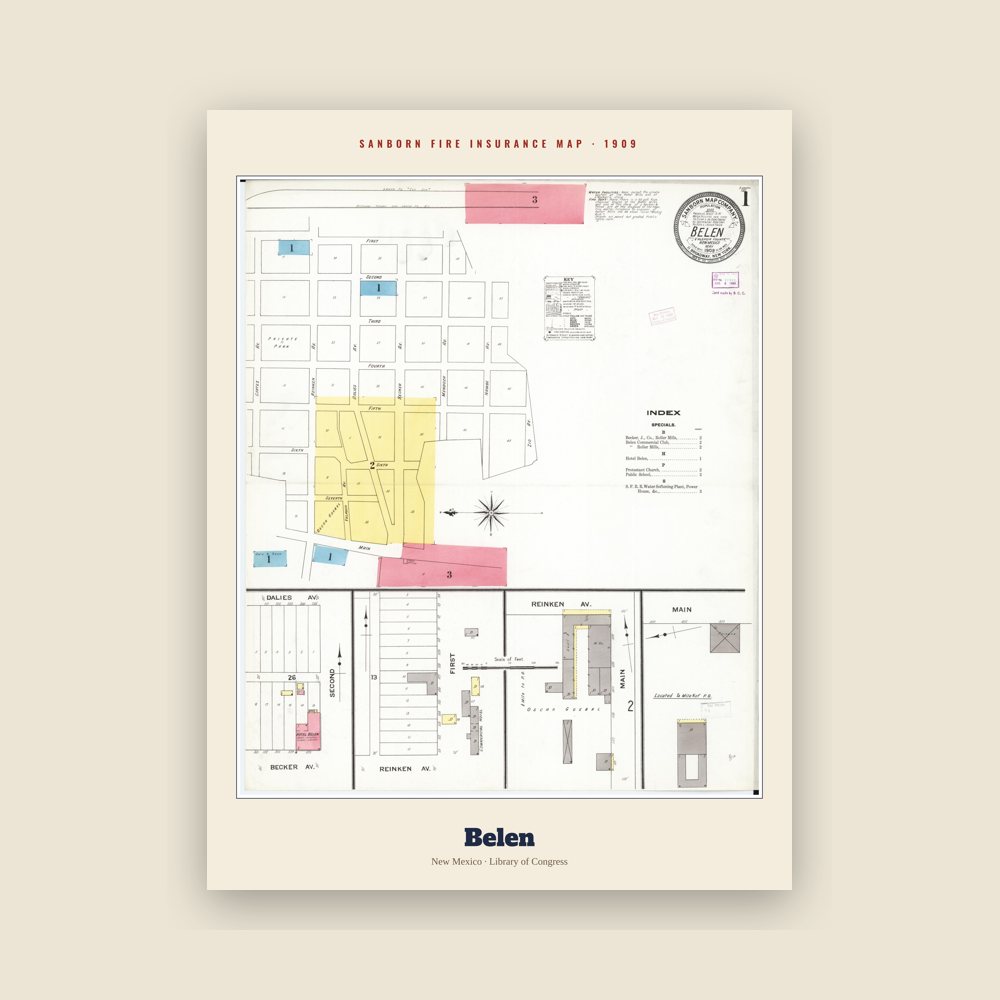
In 1880, the Atchison, Topeka, and Santa Fe Railway reached Belén during the construction of a rail line to El Paso. In 1884, the United States General Land Office, through the authority of President Ulysses S. Grant, established the Town of Belén. By the turn of the century, local merchant John Becker had designed a commercial and residential plan for the town. Becker's plan laid out Belén on a grid, extending from a commercial center with two grand avenues — Becker Avenue and Dalies Avenue. Originally, all of the town's streets were to be named after Spanish explorers, such as Coronado, but were quickly changed to the last names of the town's founders, such as Becker, Paul Dalies, and Charles Reinken.
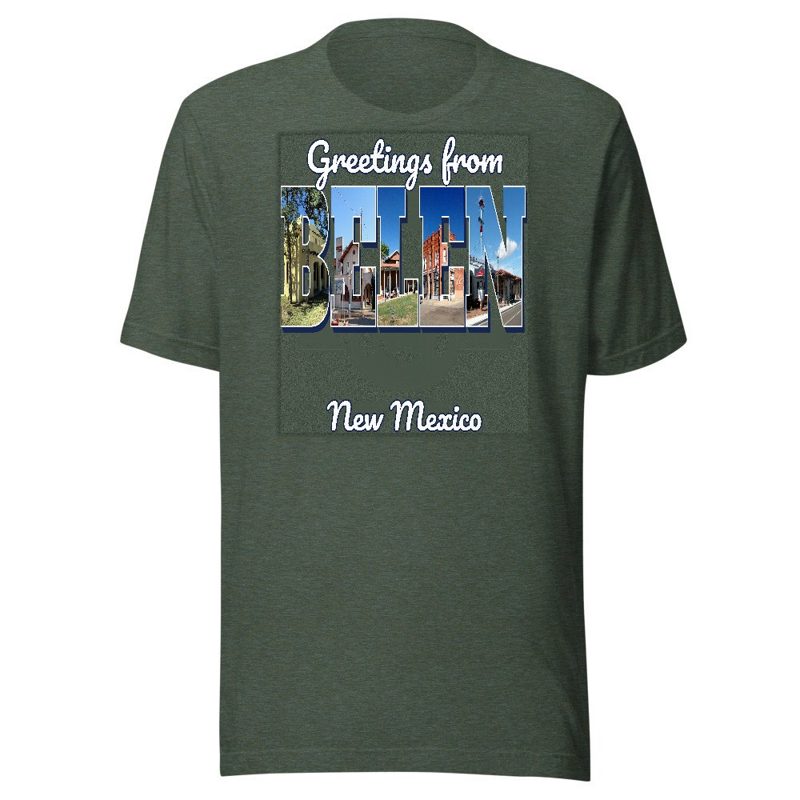
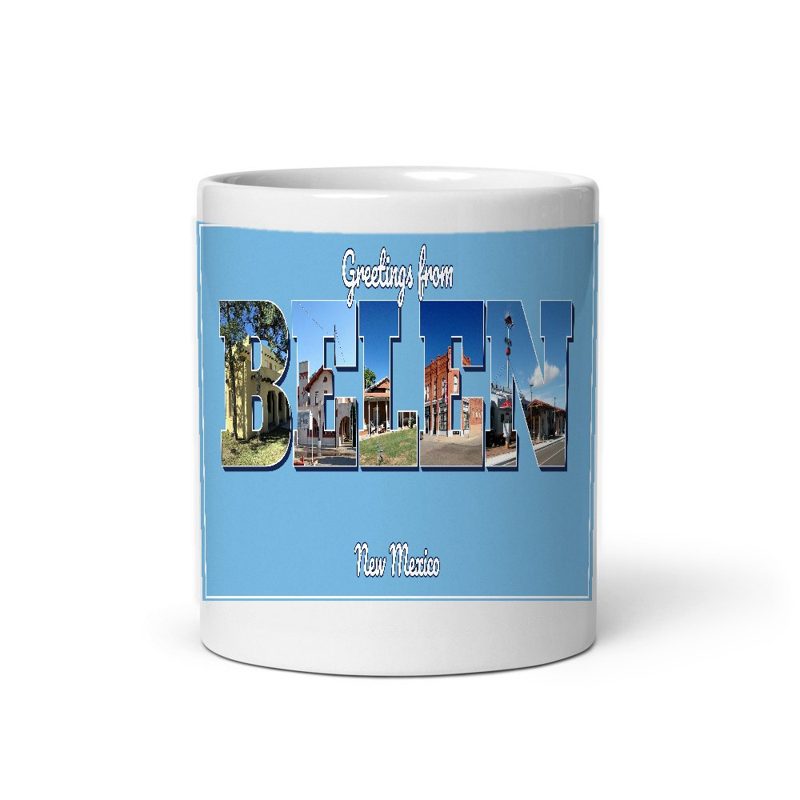
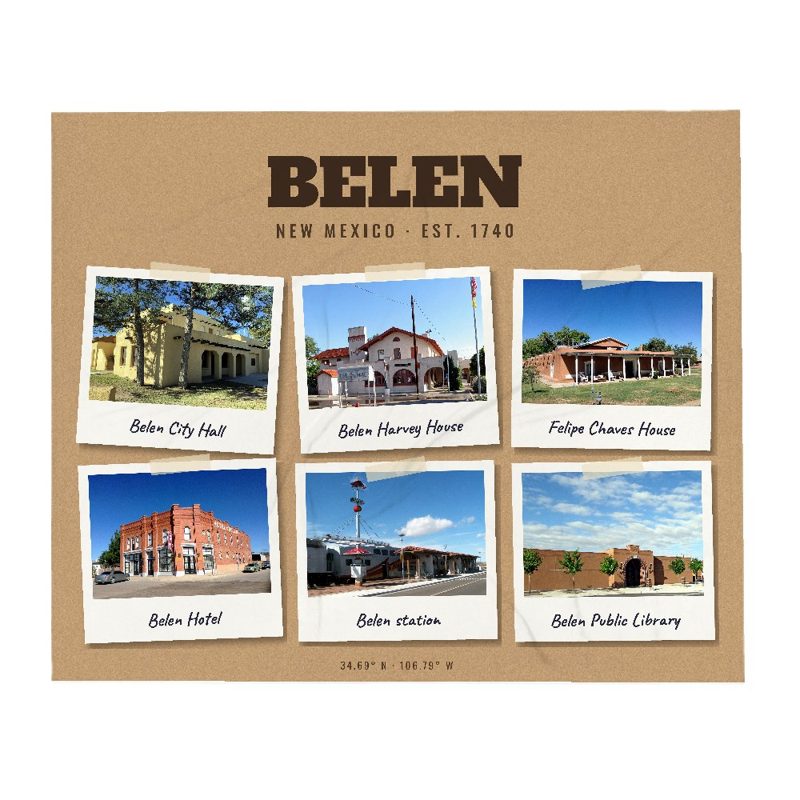
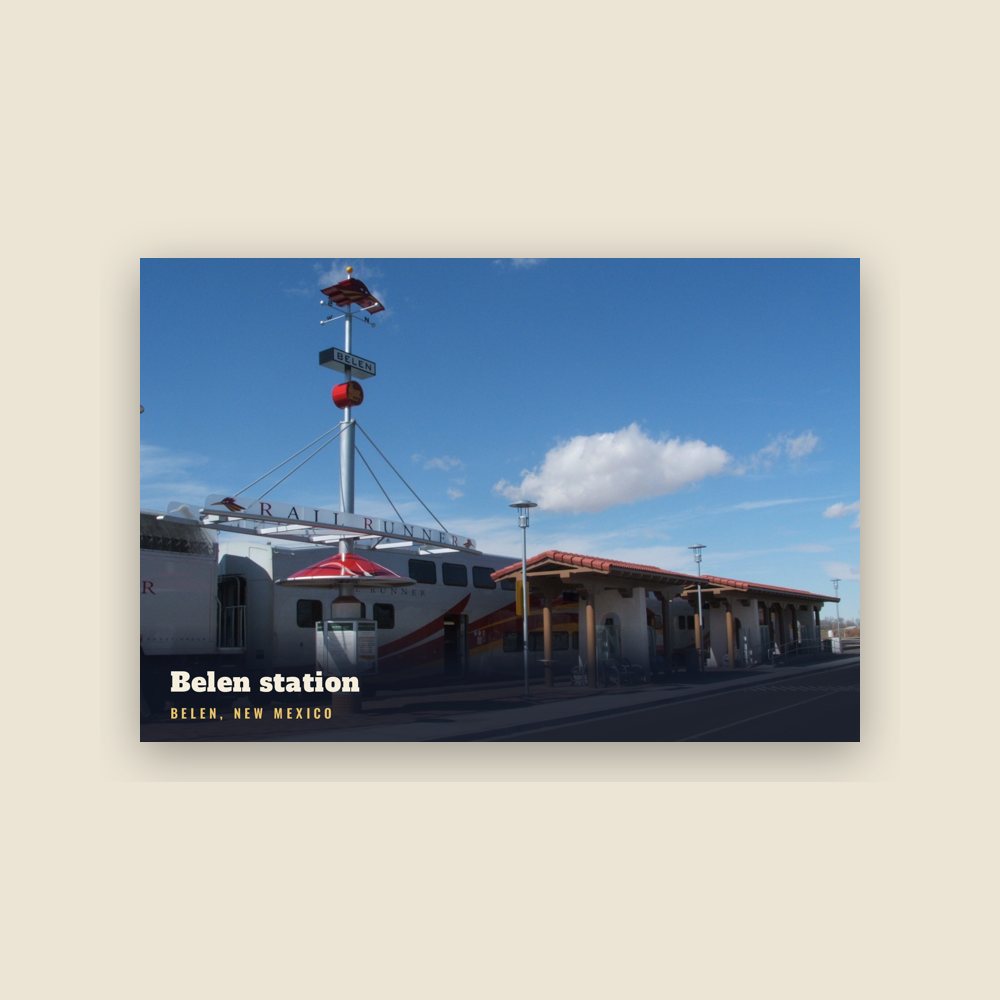
In 1907, the Belén Cutoff for the Santa Fe Railway was completed, connecting Amarillo with Belén. Prior to the Belén Cutoff, trains used the steep Raton Pass on the Colorado and New Mexico border. The cutoff made it possible for many more trains to travel east and west across the United States. Facilities at Belén included a large roundhouse and a classification yard, also serving branches southward to El Paso and northward through Albuquerque to Colorado. The Belen Harvey House (now the Harvey House Museum) adjacent to the station served railroad passengers. Today, Belén remains a major refueling station for the BNSF Railway, where an average of 110 trains travel through Belén per day on the Southern Transcon.
In 1927, Belén native and movie stunt pilot Arthur C. Goebel took up the challenge by the Hawaii pineapple magnate James D. Dole to race with other pilots to be the first to fly nonstop from the mainland United States to the Hawaii territory. This was known as the Dole Air Race. Goebel flew the Woolaroc. Of the 13 planes that qualified, seven were lost in crashes, killing ten. Only two planes made it safely to Hawaii. Goebel landed first in Hawaii after a nonstop 26 hours, 17 minutes, and 33 seconds, receiving the top prize of $25,000.
The world's first atomic bomb, in unassembled pieces, traveled through Belén in July 1945 en route to the Trinity site at what is now White Sands Missile Range. The bomb's Belén route used old Highway 85, now Highway 314, also known as Main Street. Located in downtown Belén in 1945 was Roy's Cafe, a restaurant where military and science personnel would dine since it had the necessary security clearance. Local legend suggests personnel escorting the atomic bomb, and perhaps the bomb itself, stopped at Roy's Cafe as they passed through town.
In 1950, William F. Beavers, owner of B&B Cafe on Becker Avenue, filed the first patent for a machine that sliced potatoes into waffle-like slices, vowing to help commercialize the now-famed waffle fry in cafes across the United States. His patent was granted two years later for what he called a "slicing machine with a stationary knife and reciprocating carrier" made "for the slicing of potatoes and like foods into attractive shapes." The waffle fries could be paired with Belén's own Hub City soda pop brewed and bottled locally by the Belén Bottling Co. The soda's trademark was "Pop with Personality."
Adapted (trimmed) from the Wikipedia article Belen, New Mexico, revision 1378682428 by its contributors, licensed CC BY-SA 4.0.
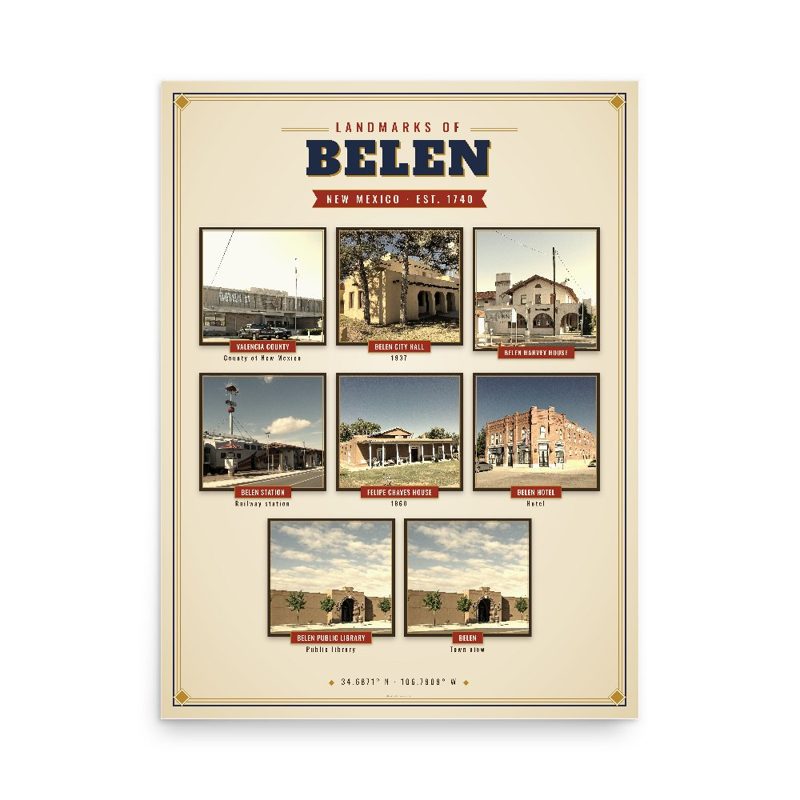
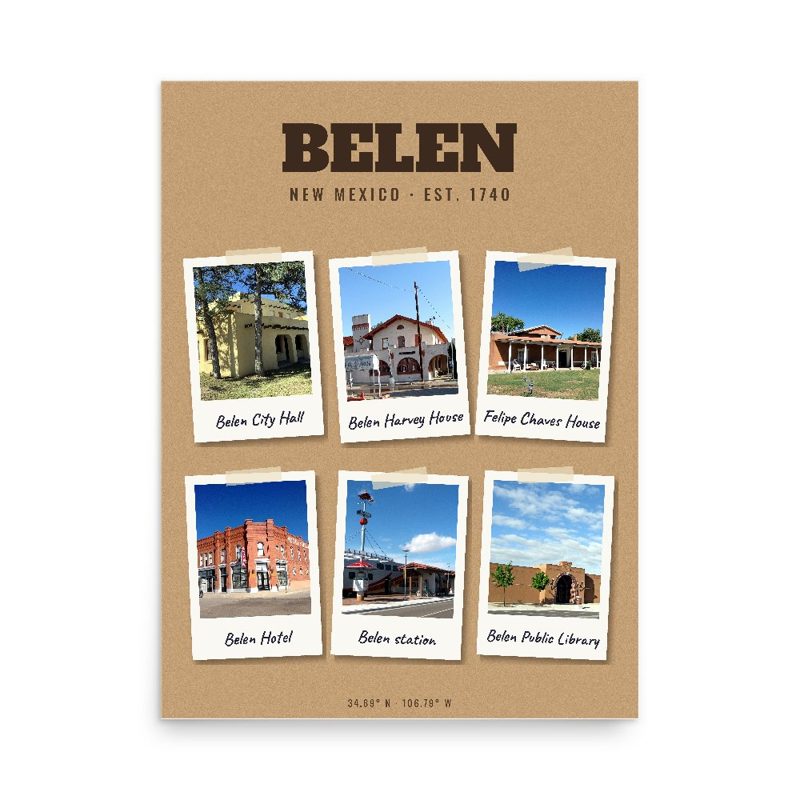
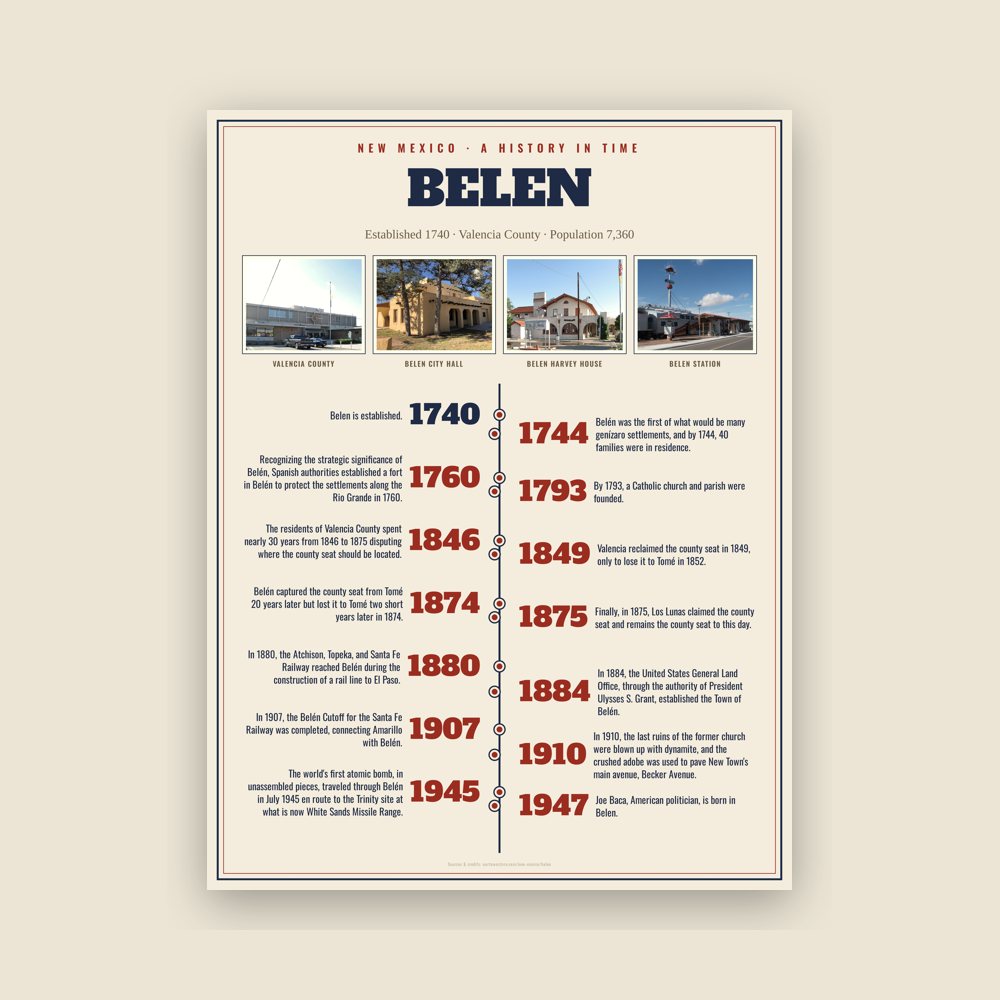








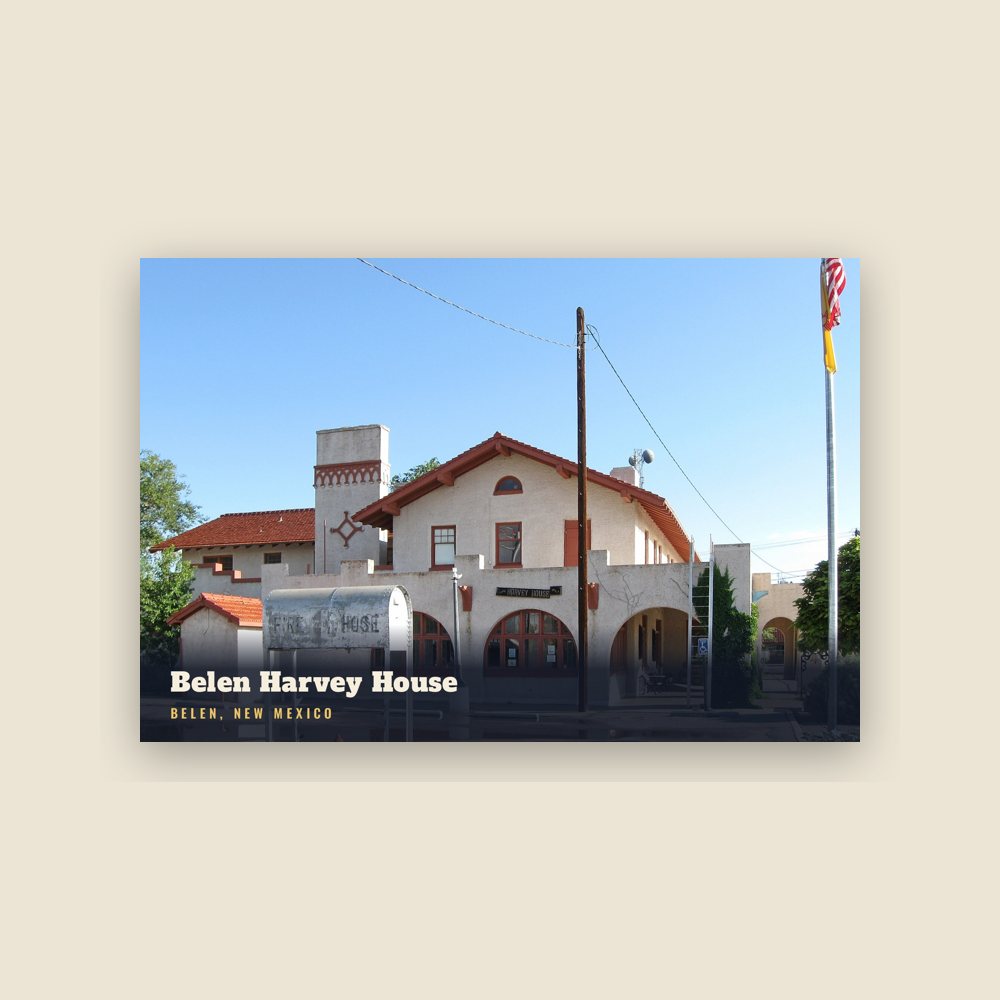
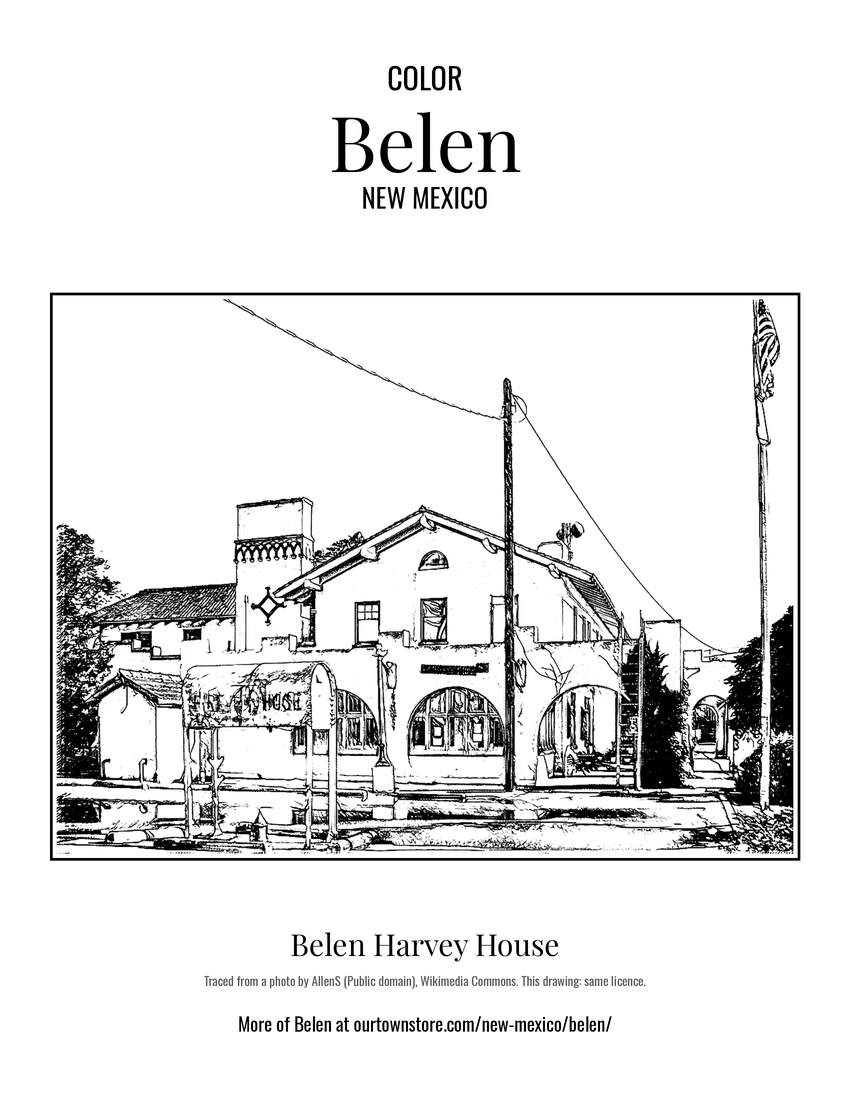 Belen Harvey House
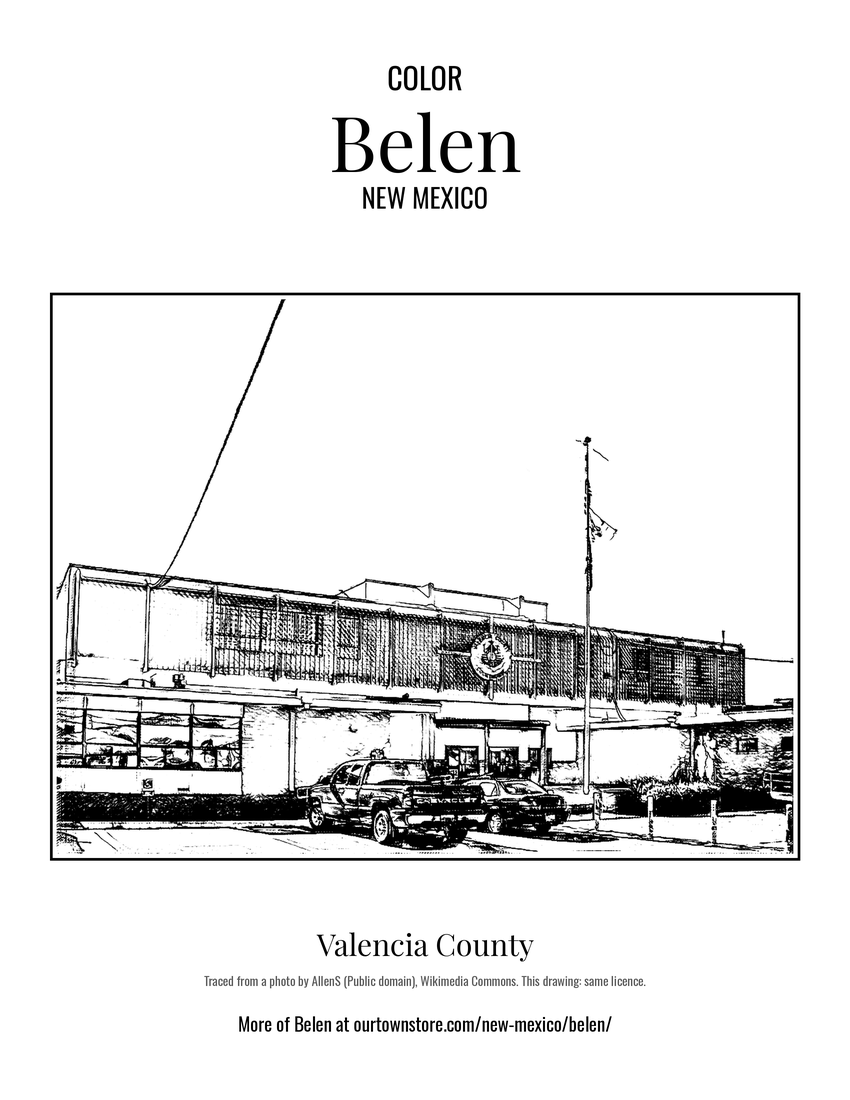 Valencia County
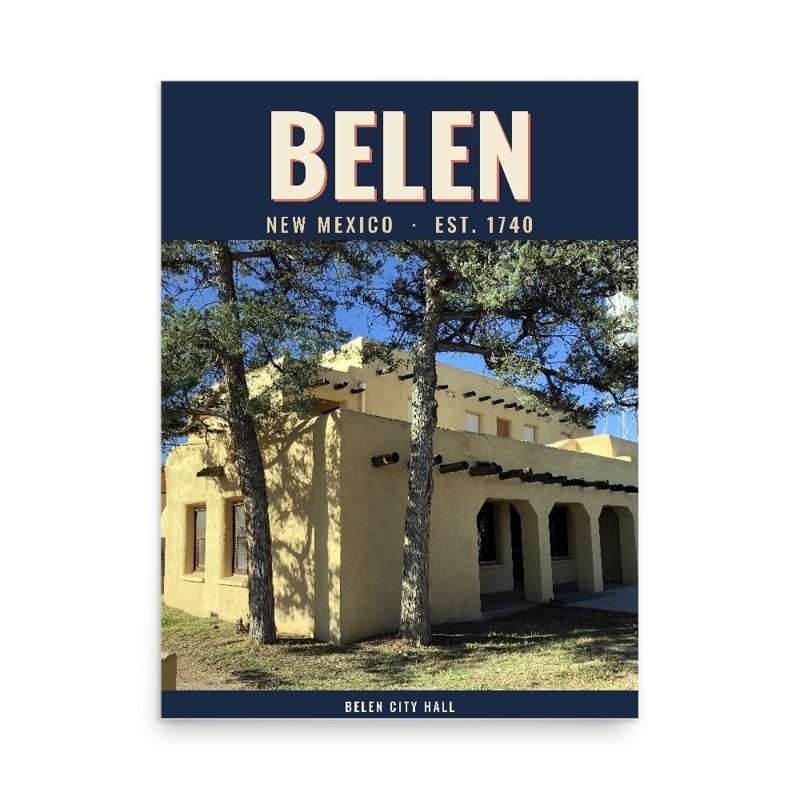
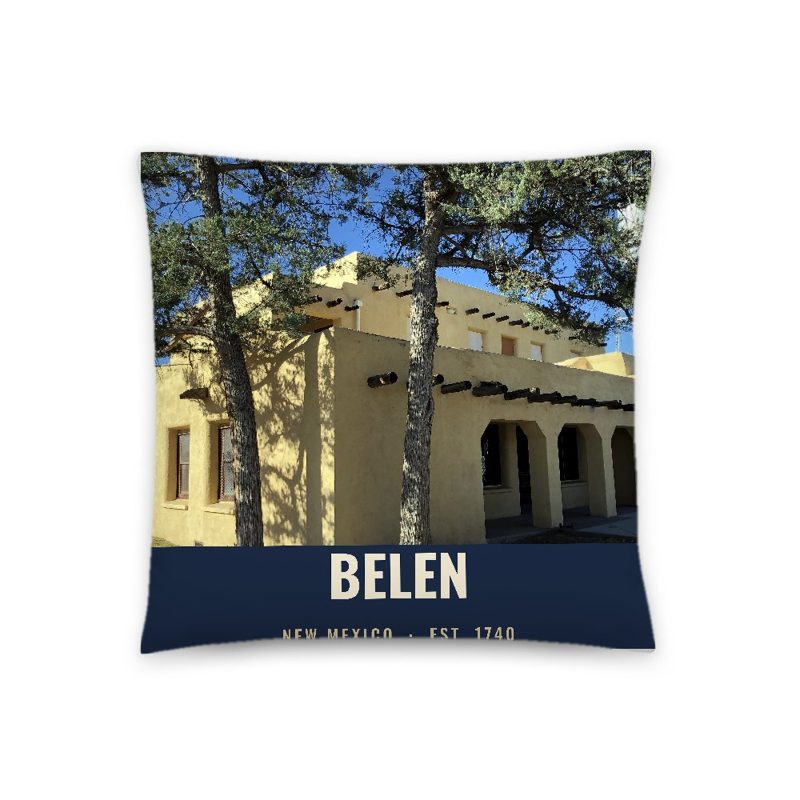
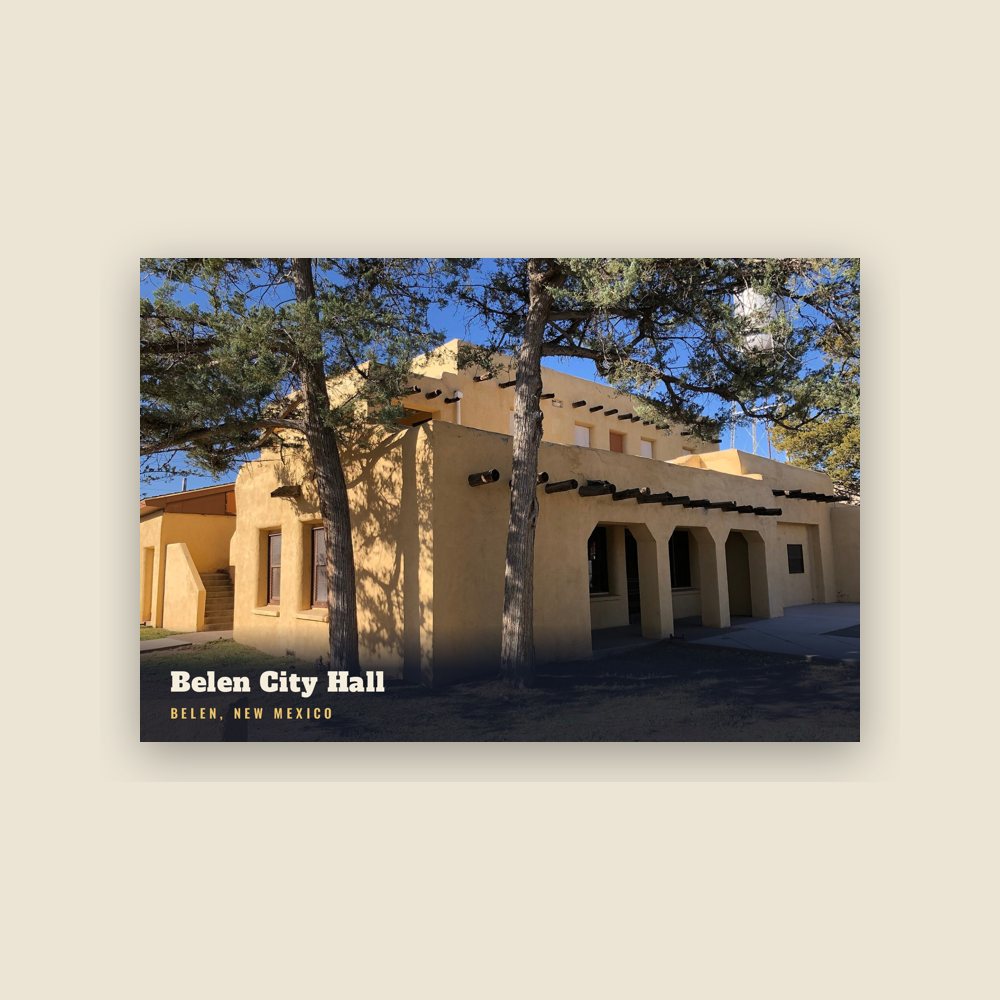
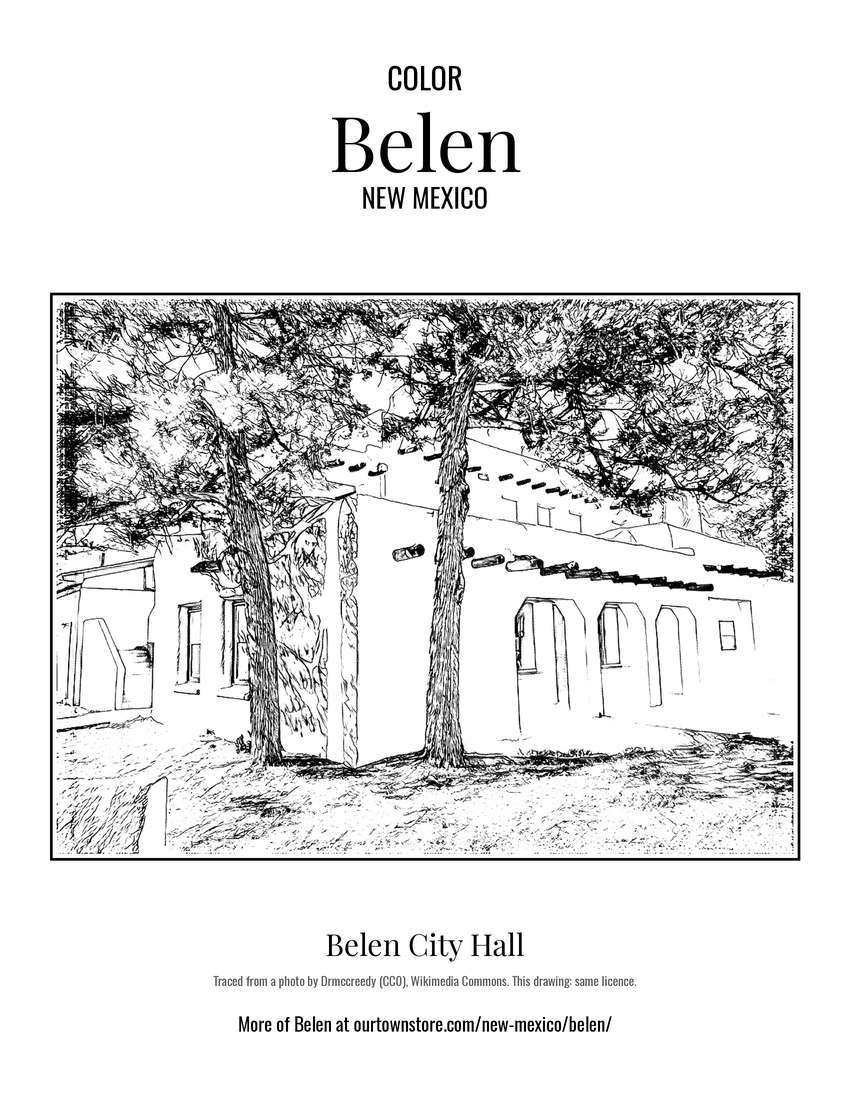 Belen City Hall
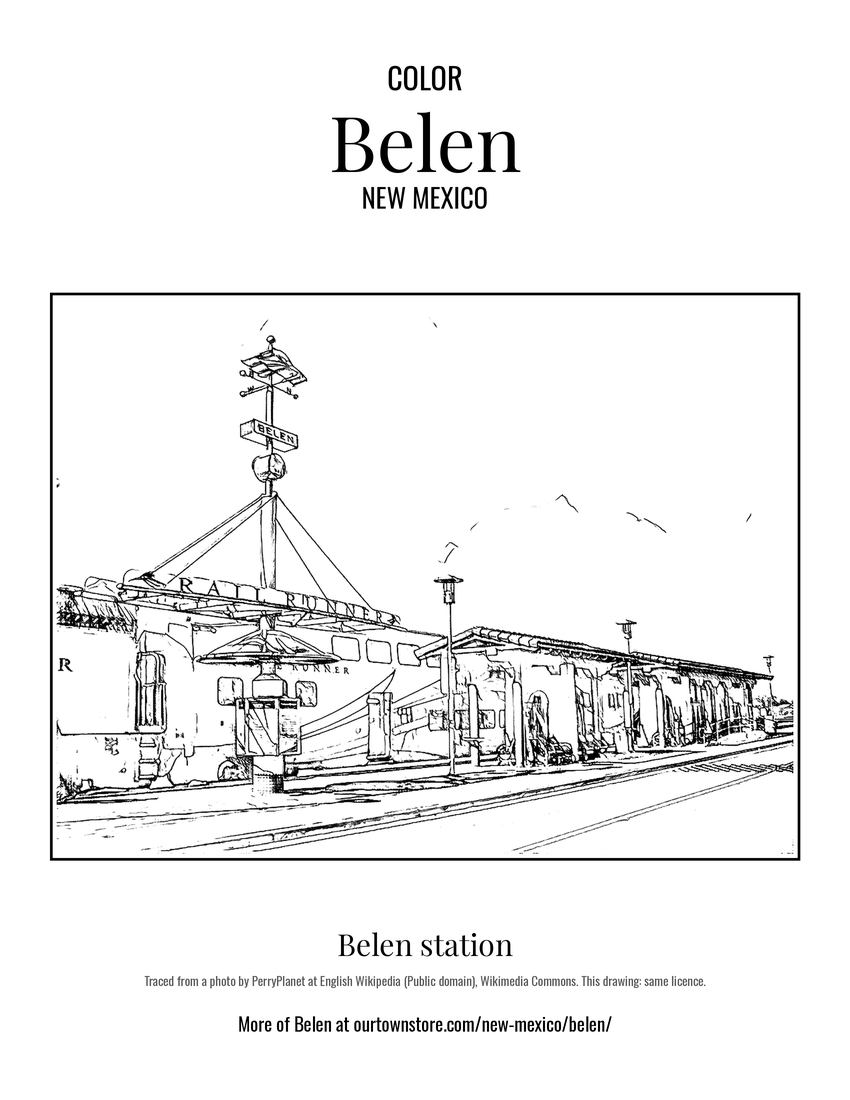 Belen station