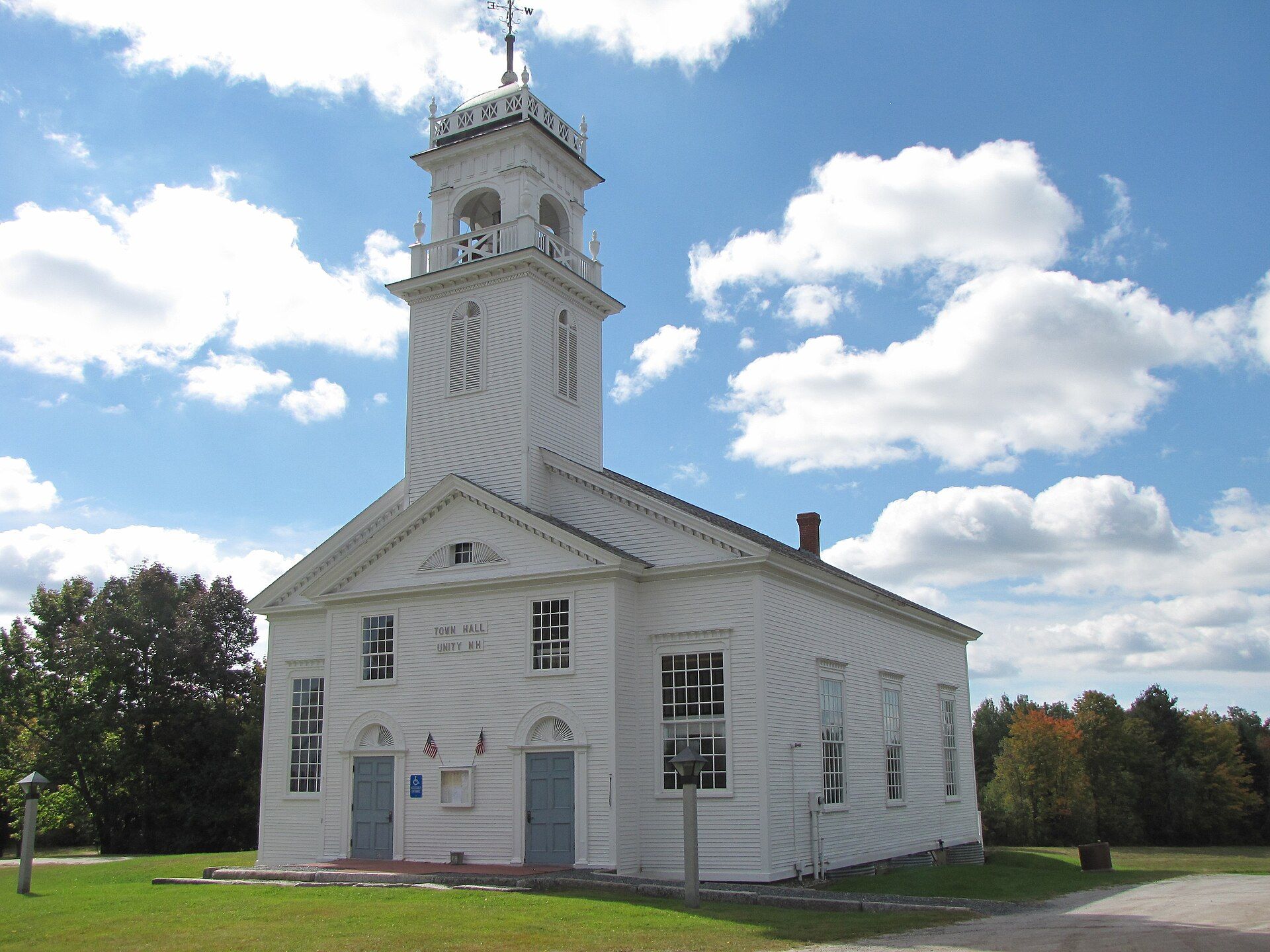
The town includes the villages of Unity, East Unity, Quaker City, and West Unity. Landmarks include Unity Town Hall. Unity is the birthplace of Jonathan G. Hunton, politician.
Every piece is drawn from Unity's own map data and historic archives, then printed and shipped from the USA when you order. No two towns look alike.

Every road in town, on archival matte paper

The same map, in navy and silver
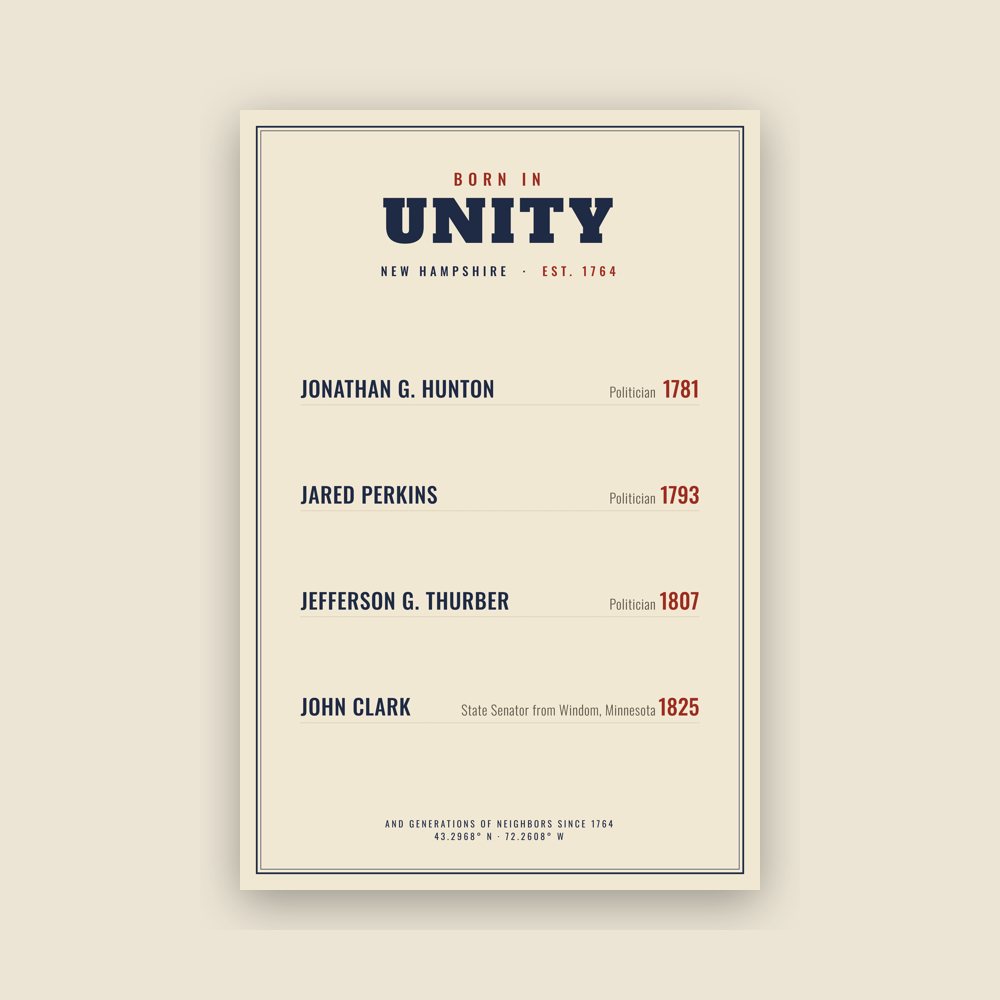
Famous natives, by birth year
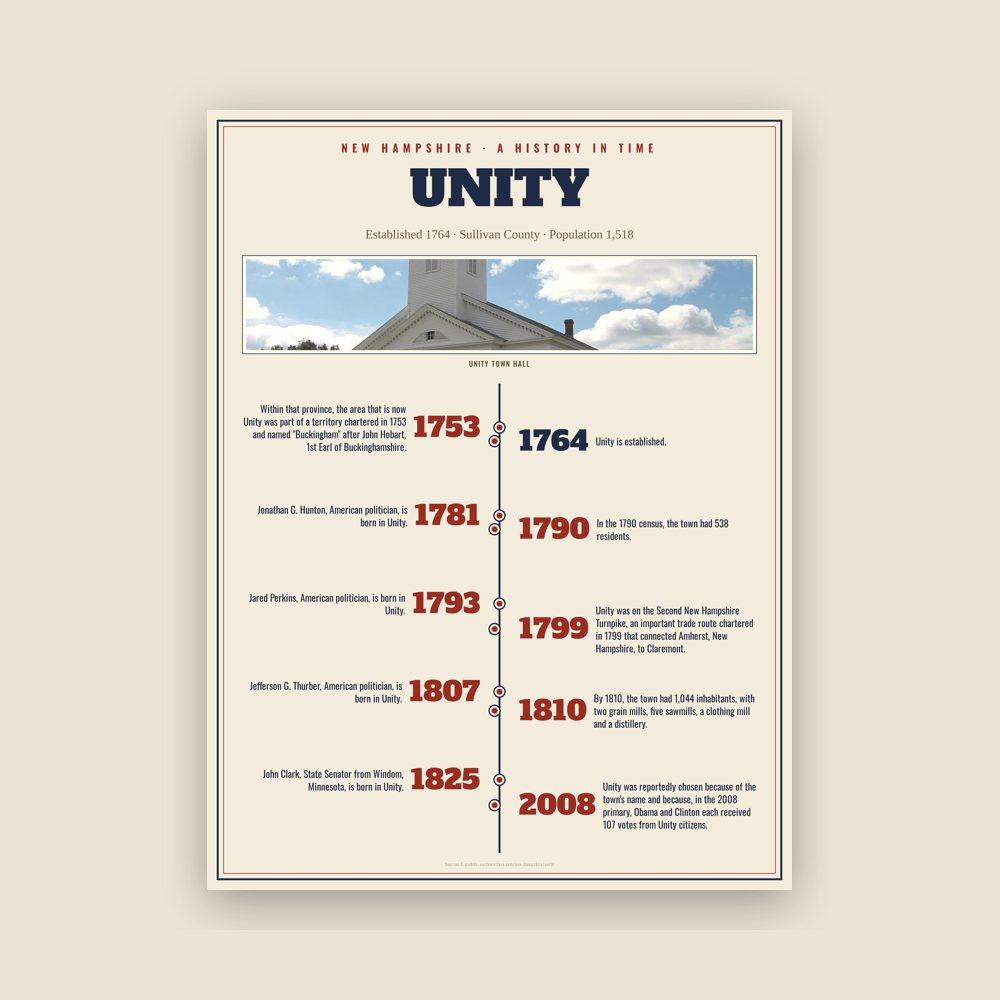
The town's story in dates, from its own records, for home or classroom
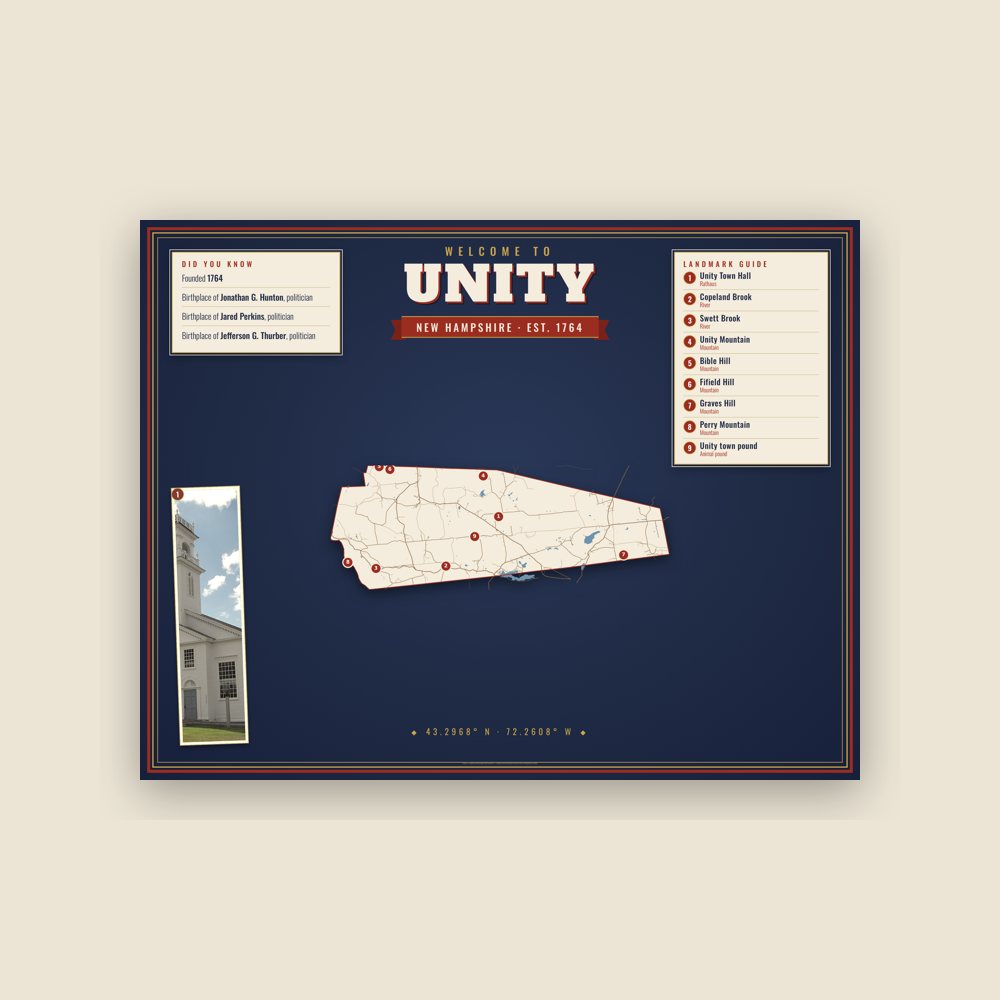
Map of local landmarks, washable fabric
Heavy-blend fleece, street map printed on the back
Soft Bella+Canvas jersey
Glossy ceramic, dishwasher safe
Ceramic keepsake, gold ribbon
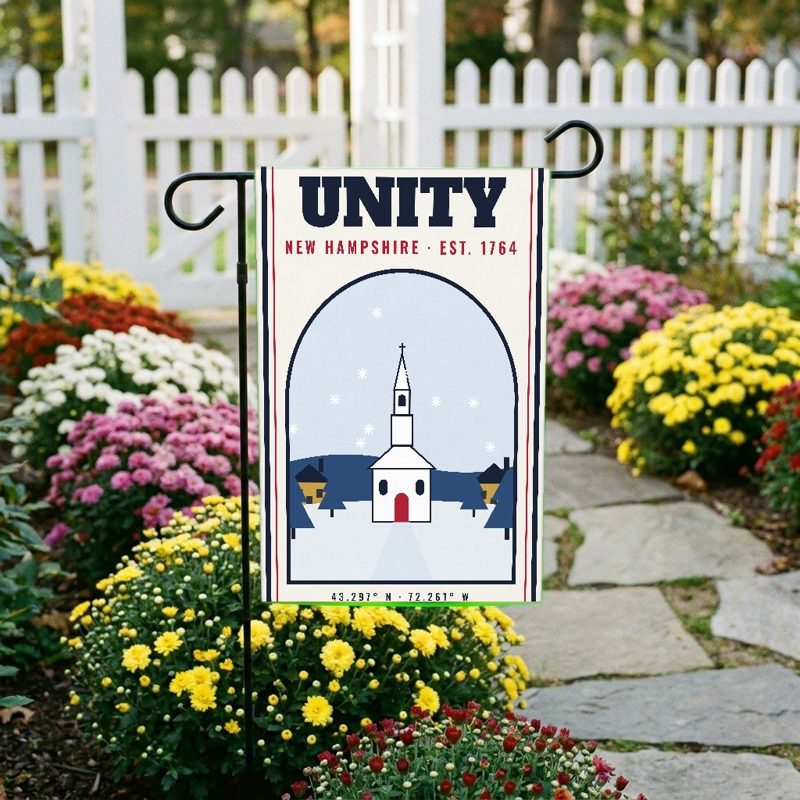
Weatherproof, for the front walk
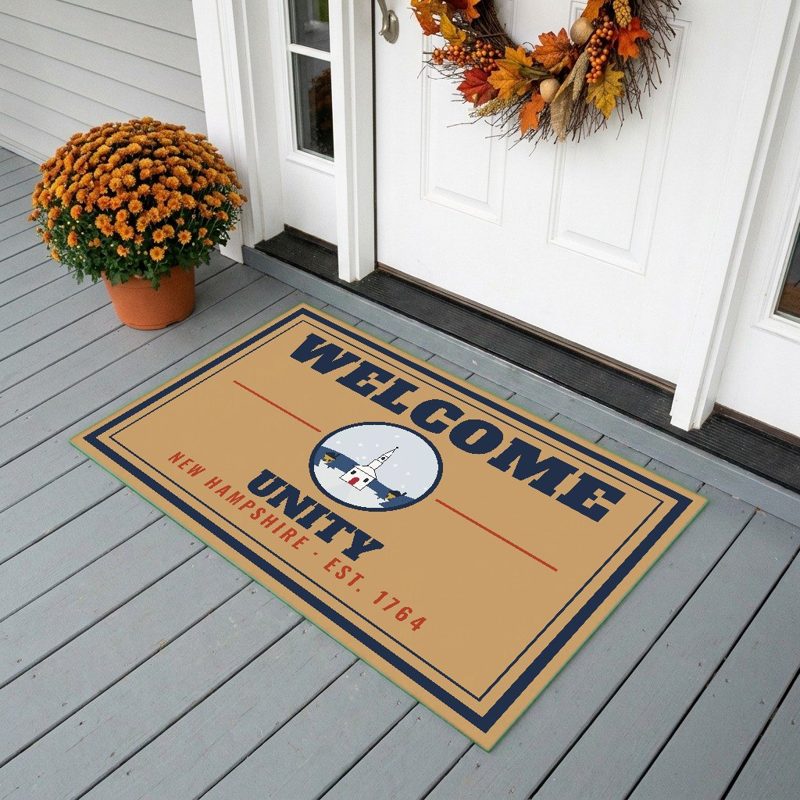
24″×16″, printed coir-look fibers, rubber back
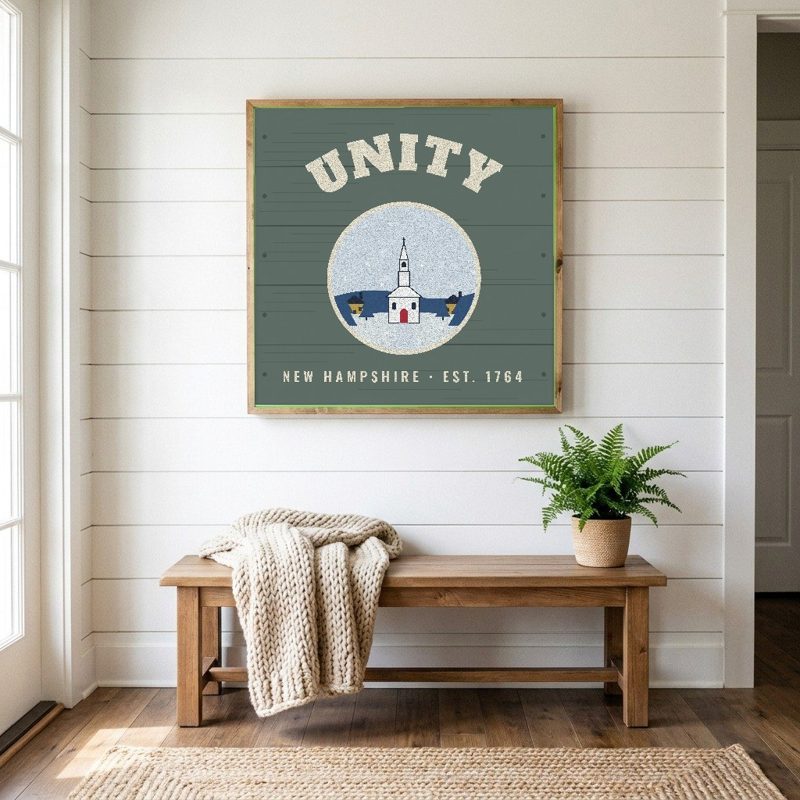
12″×12″ printed wood, ready to hang
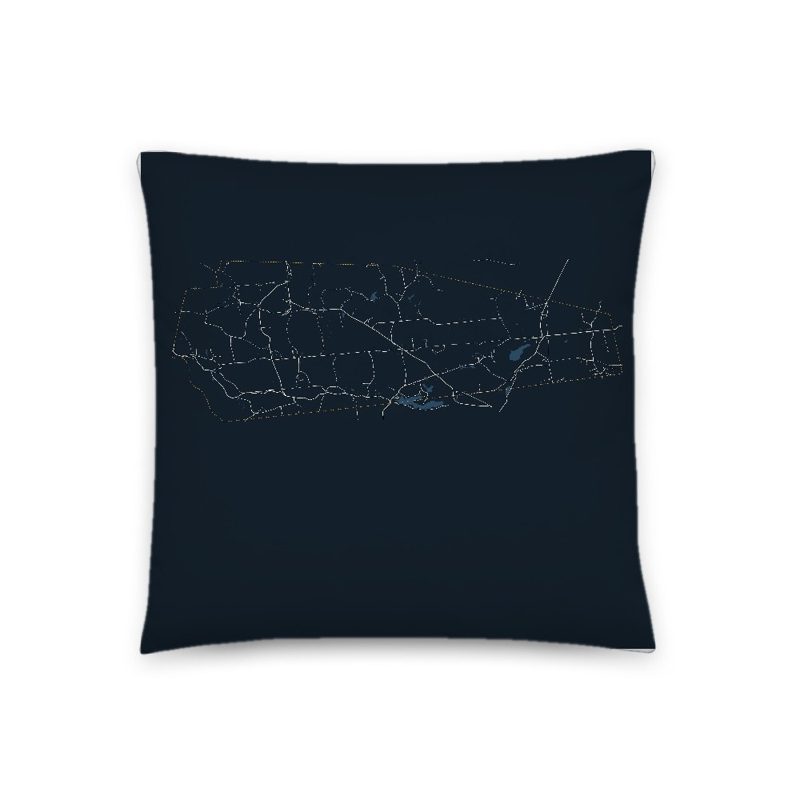
Soft-touch, zip cover
Sturdy all-over-print tote
Glossy top, cork back
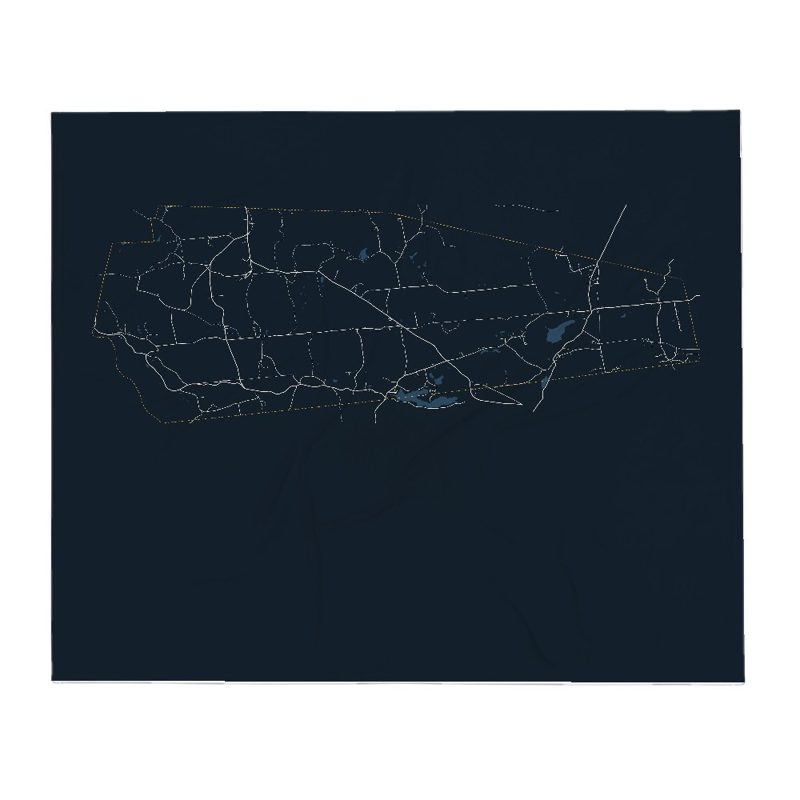
Soft fleece, 50″×60″
20 oz, double-wall stainless
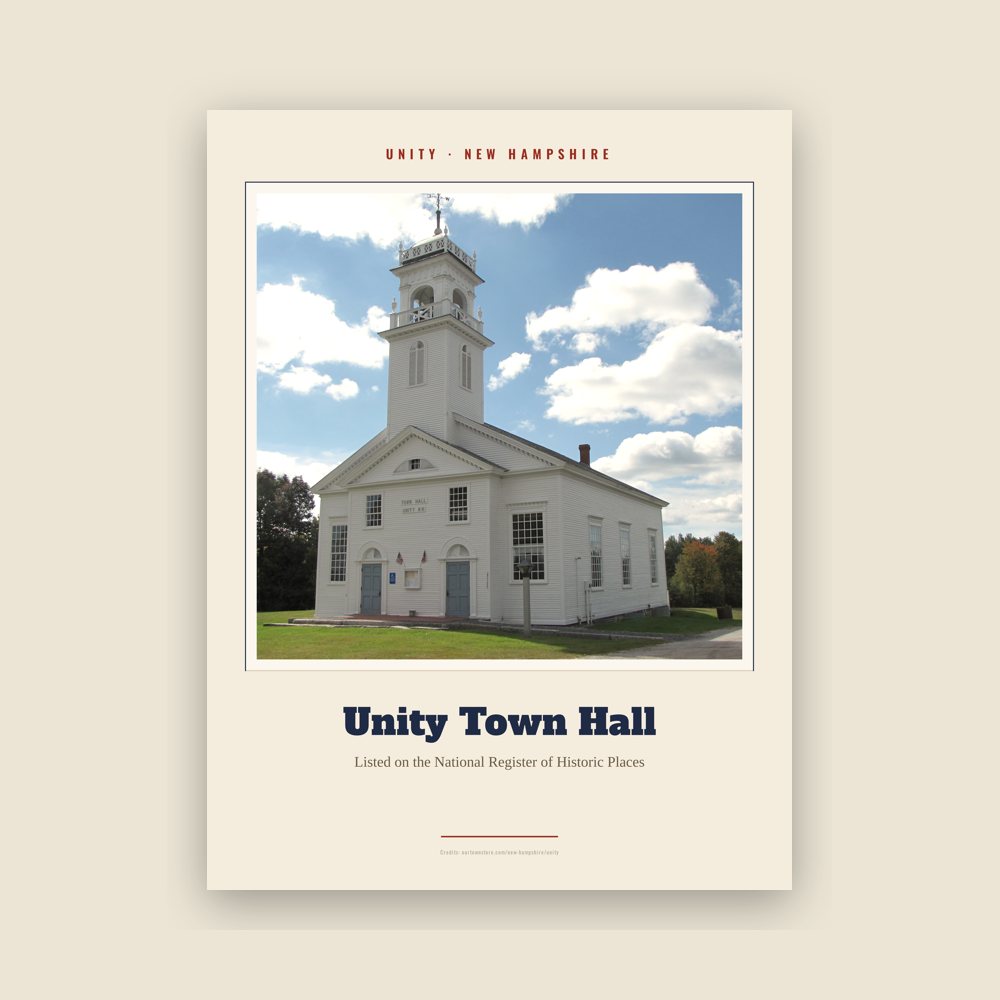
Archival matte print of a local landmark, credited to its photographer
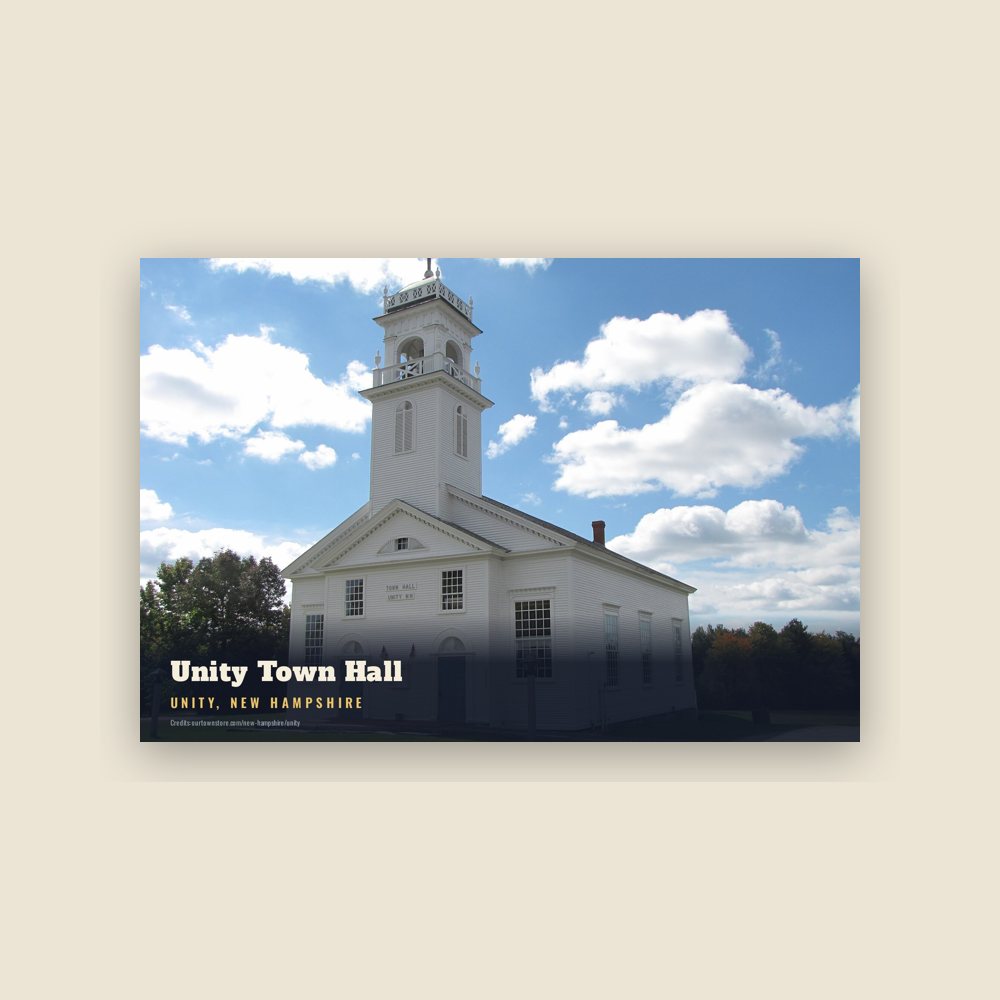
6″×4″ postcard, glossy front
Population 2010: 1,671 → 2020: 1,518
From Wikidata (CC0).
Prior to British colonization, the Connecticut River valley was populated by bands of the Western Abenaki, who lived in sometimes-large villages of longhouses. Depending on the season, they would either remain near their villages to fish, gather plants, engage in sugaring, and trade or fight with their neighbors, or head to nearby fowling and hunting grounds. Later, they also farmed tobacco and the "three sisters": corn, beans, and squash.
Colonization eventually resulted in the establishment of the Province of New Hampshire. Within that province, the area that is now Unity was part of a territory chartered in 1753 and named "Buckingham" after John Hobart, 1st Earl of Buckinghamshire. Grants in the area were given by both the early Massachusetts government and by Governor Benning Wentworth, which led to disputes. The town was incorporated as "Unity" in 1764 after amicable resolutions of the disputes were reached.
In the 1790 census, the town had 538 residents. Unity was on the Second New Hampshire Turnpike, an important trade route chartered in 1799 that connected Amherst, New Hampshire, to Claremont. By 1810, the town had 1,044 inhabitants, with two grain mills, five sawmills, a clothing mill and a distillery. Sheep farming was a principal business.
On June 27, 2008, presidential candidate Barack Obama and former rival Hillary Clinton appeared together in Unity at their first public event since Clinton pulled out of the race to be the Democratic presidential candidate. Unity was reportedly chosen because of the town's name and because, in the 2008 primary, Obama and Clinton each received 107 votes from Unity citizens.
Adapted (trimmed) from the Wikipedia article Unity, New Hampshire, revision 1377146640 by its contributors, licensed CC BY-SA 4.0.
We share a part of every Unity sale with local partners, and we'd love to print from your collection. Old photographs, maps and postcards make the best keepsakes.
Partner with us