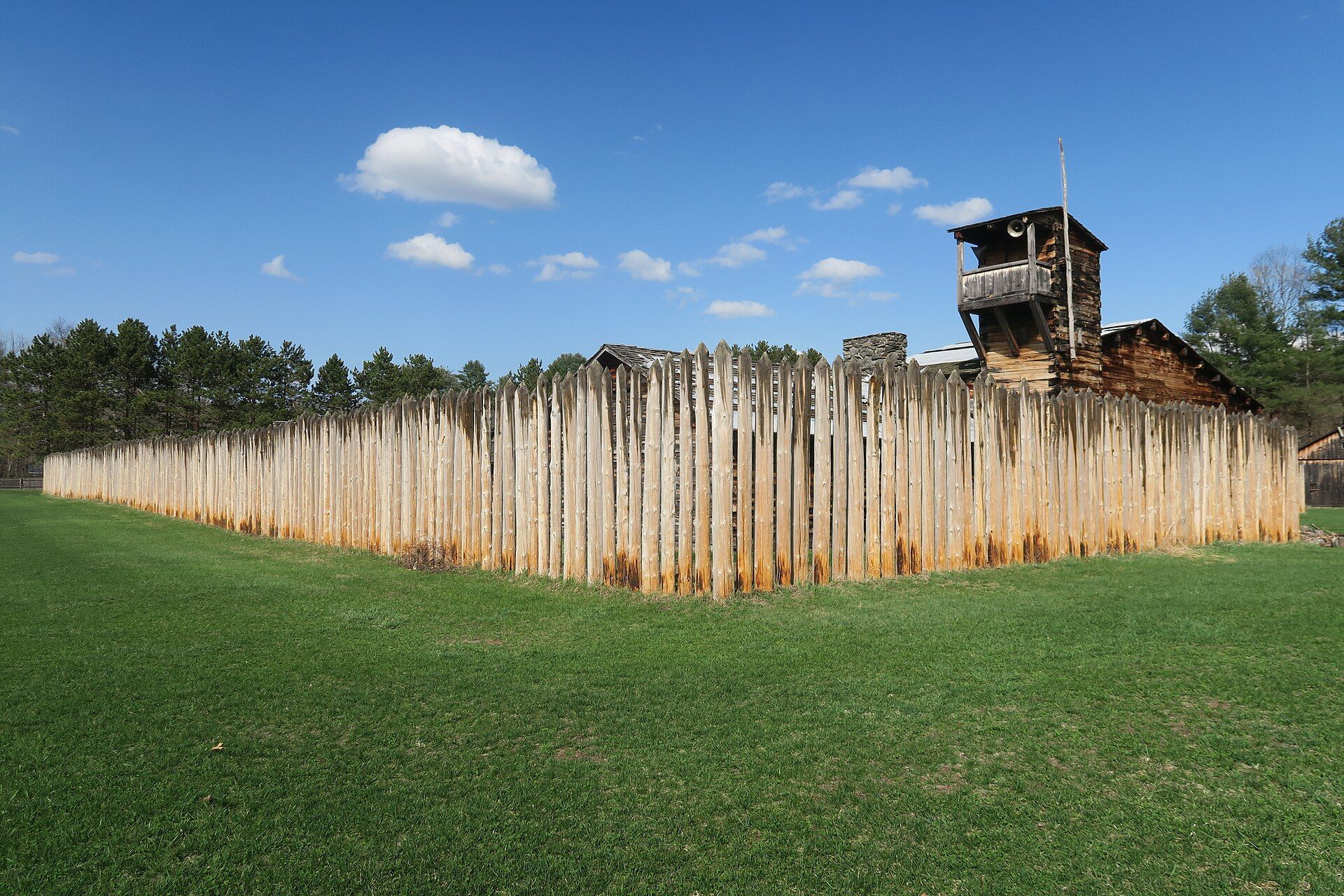
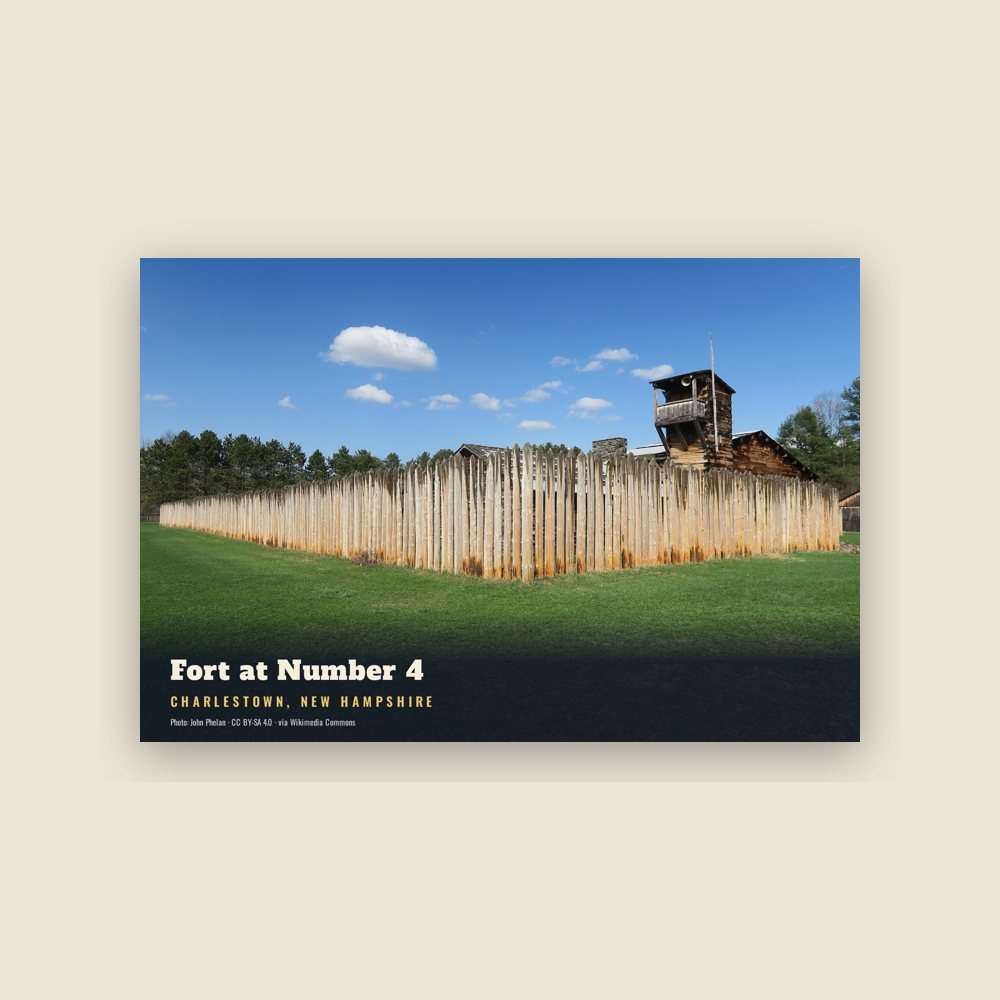
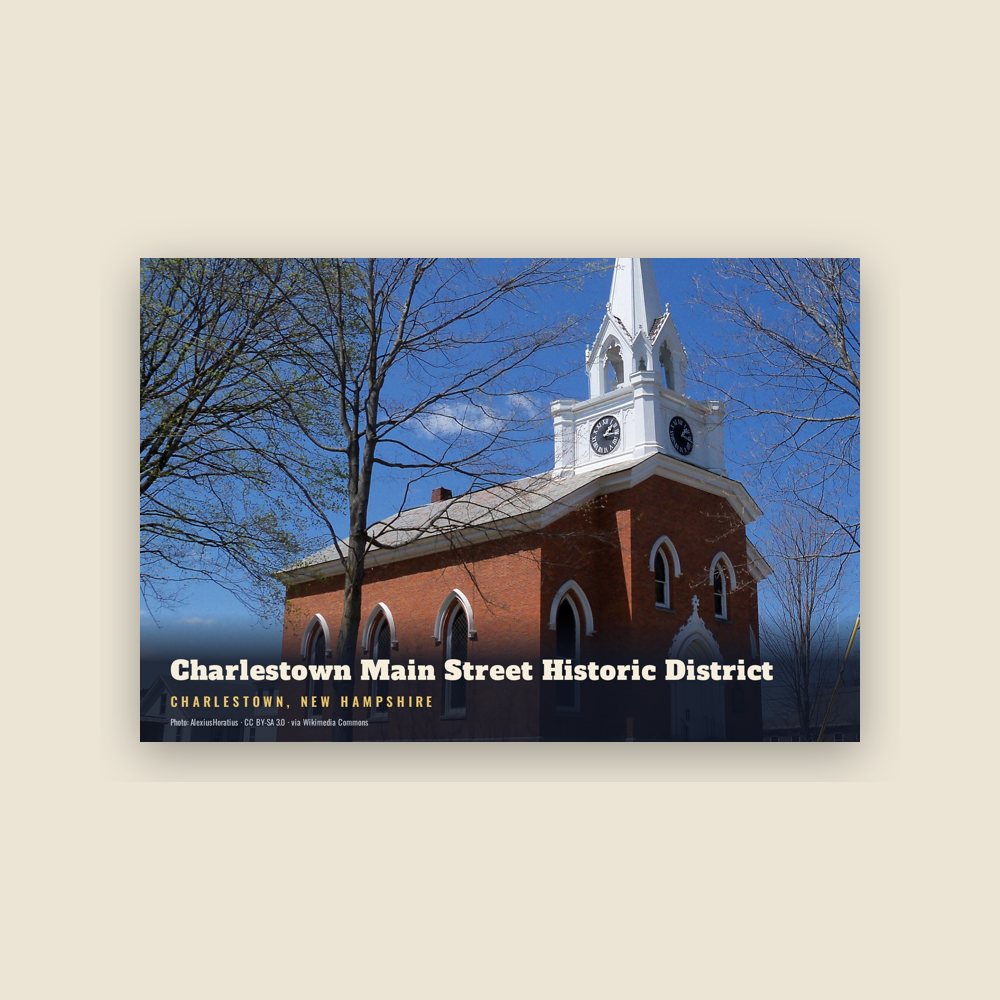
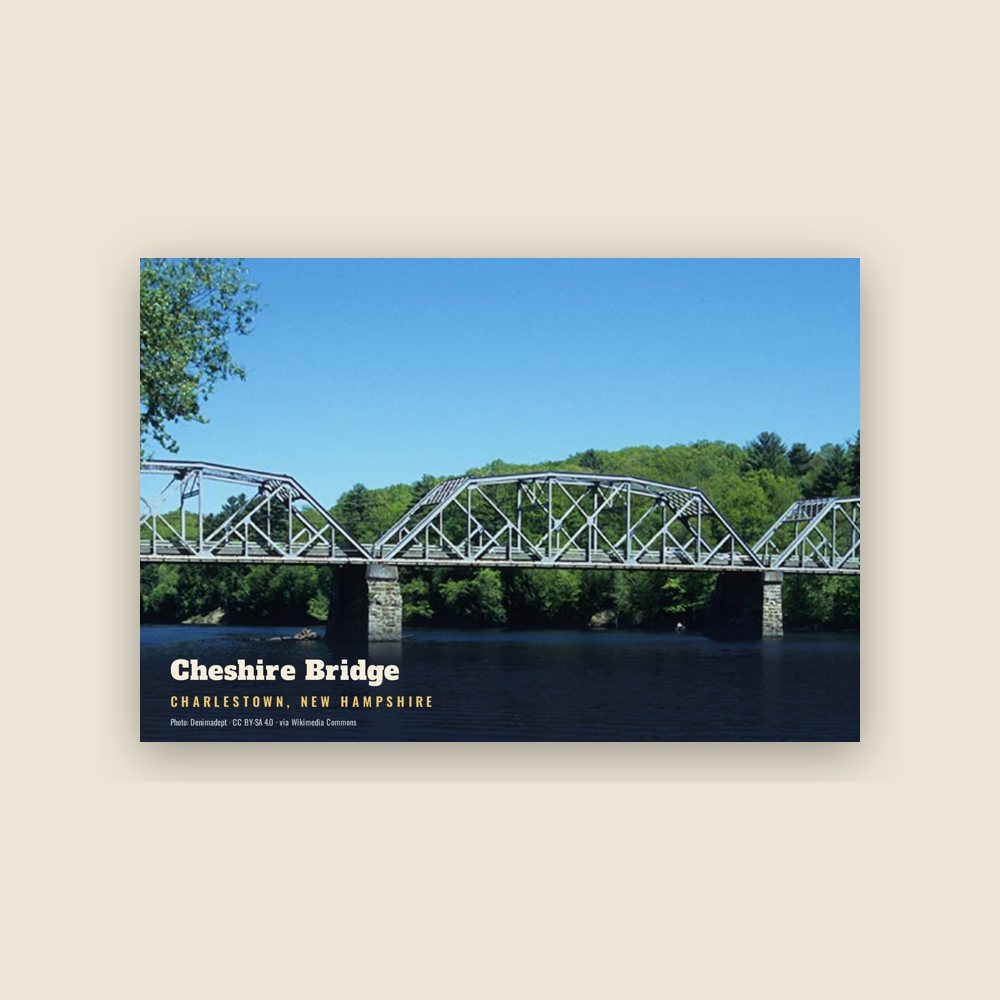
On July 2, 1753, the town was rechartered as "Charlestown" by Governor Benning Wentworth, after Admiral Charles Knowles of the Royal Navy, then governor of Jamaica. Landmarks include Fort at Number 4, Charlestown Main Street Historic District and Cheshire Bridge. Charlestown is the birthplace of Joseph Glidden, farmer who patented barbed wire.
Every piece is drawn from Charlestown's own map data and historic archives, then printed and shipped from the USA when you order. No two towns look alike.
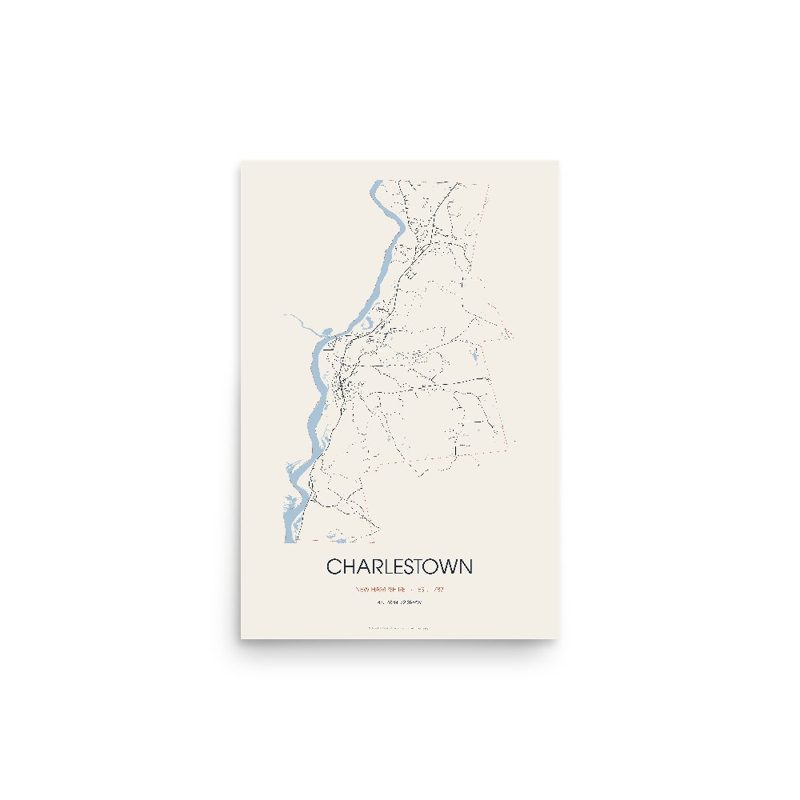
Every road in town, on archival matte paper
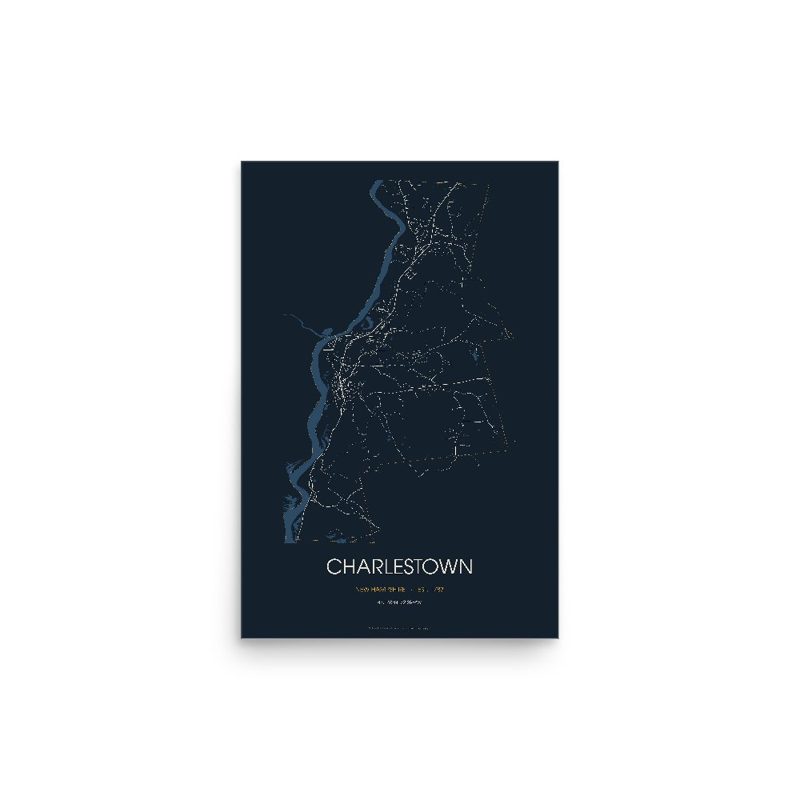
The same map, in navy and silver
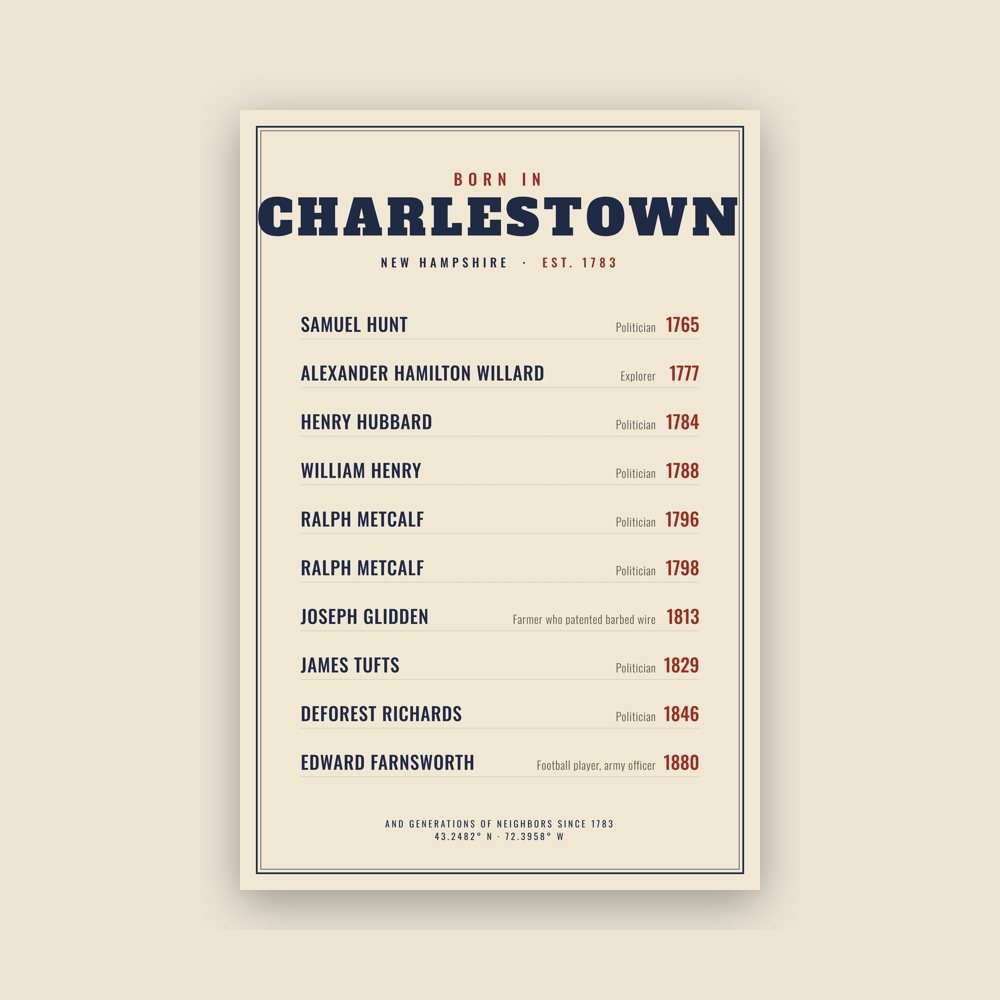
Famous natives, by birth year
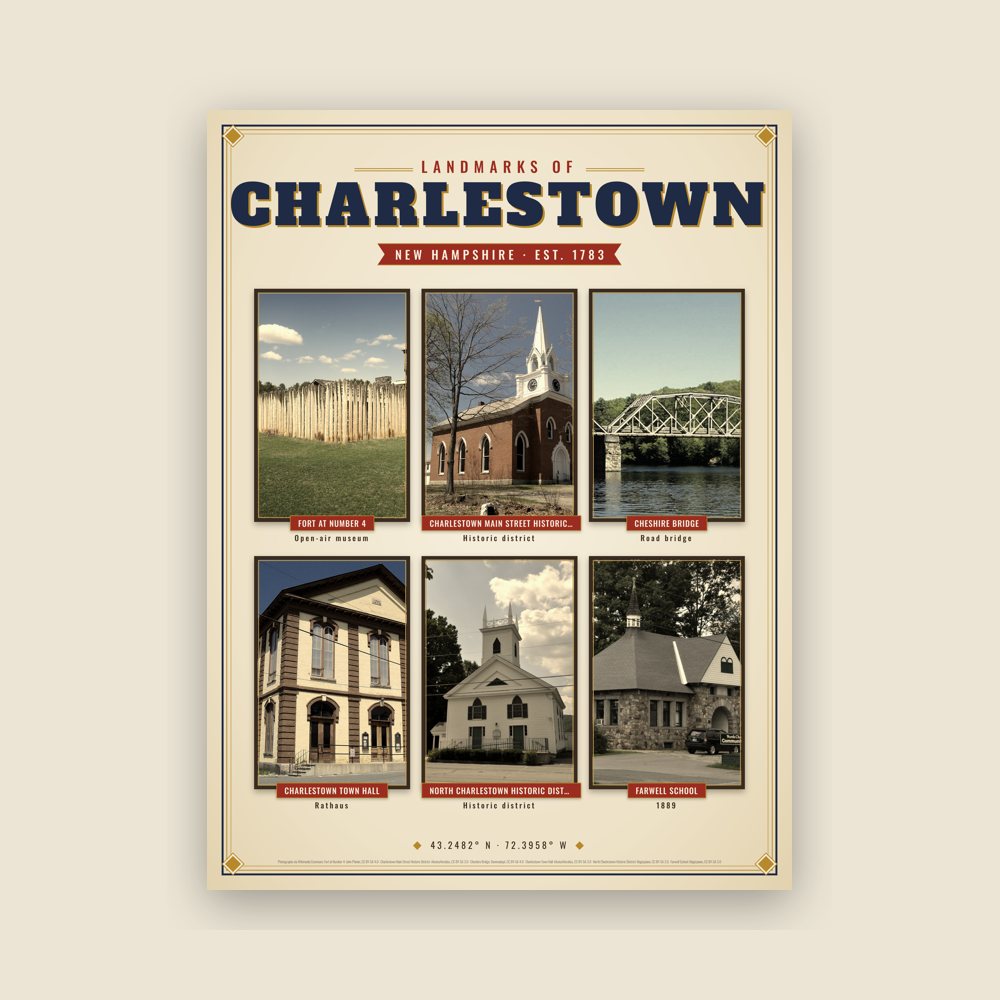
Nine local landmarks, archival matte
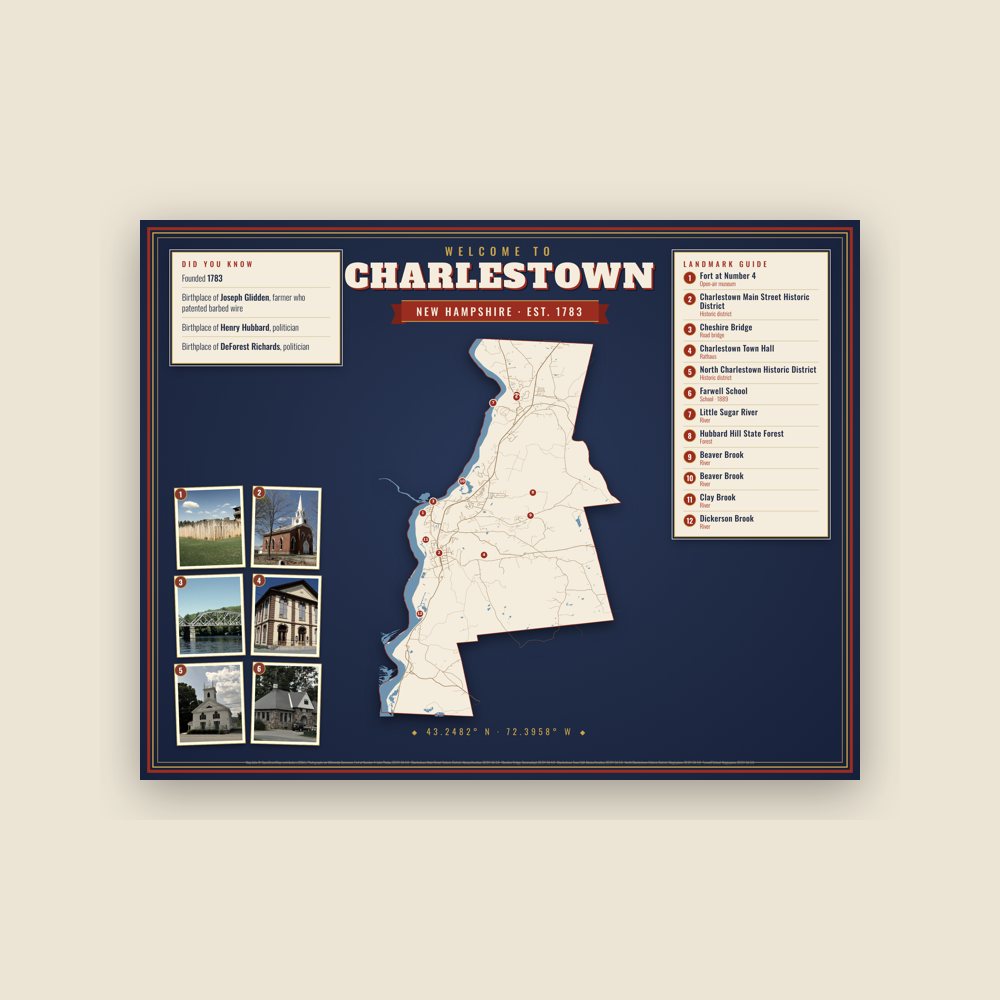
Map of local landmarks, washable fabric
Heavy-blend fleece, street map printed on the back
Soft Bella+Canvas jersey
Glossy ceramic, dishwasher safe
Ceramic keepsake, gold ribbon
Weatherproof, for the front walk
24″×16″, printed coir-look fibers, rubber back
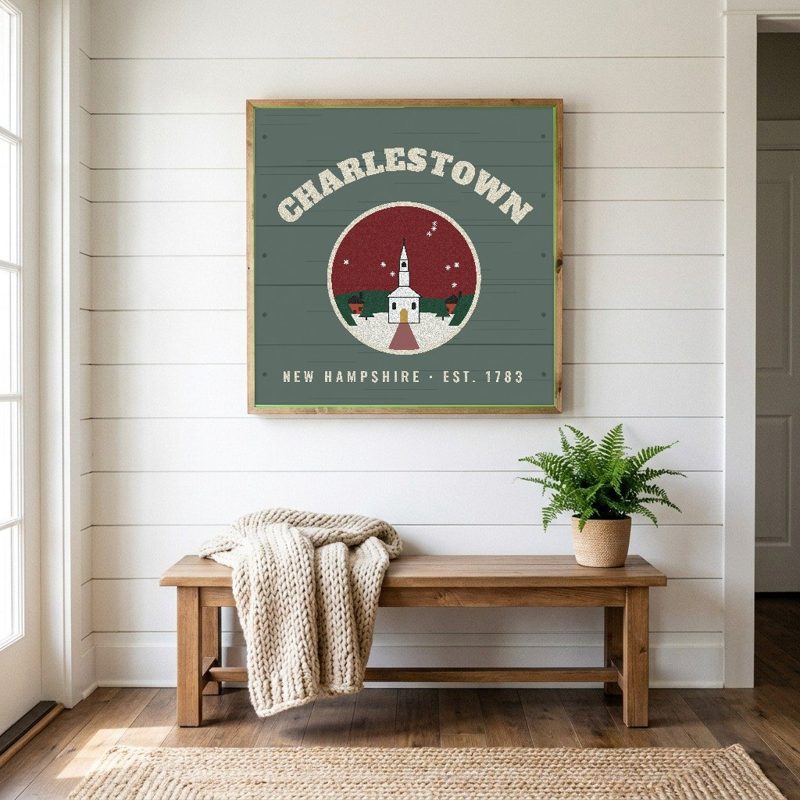
12″×12″ printed wood, ready to hang
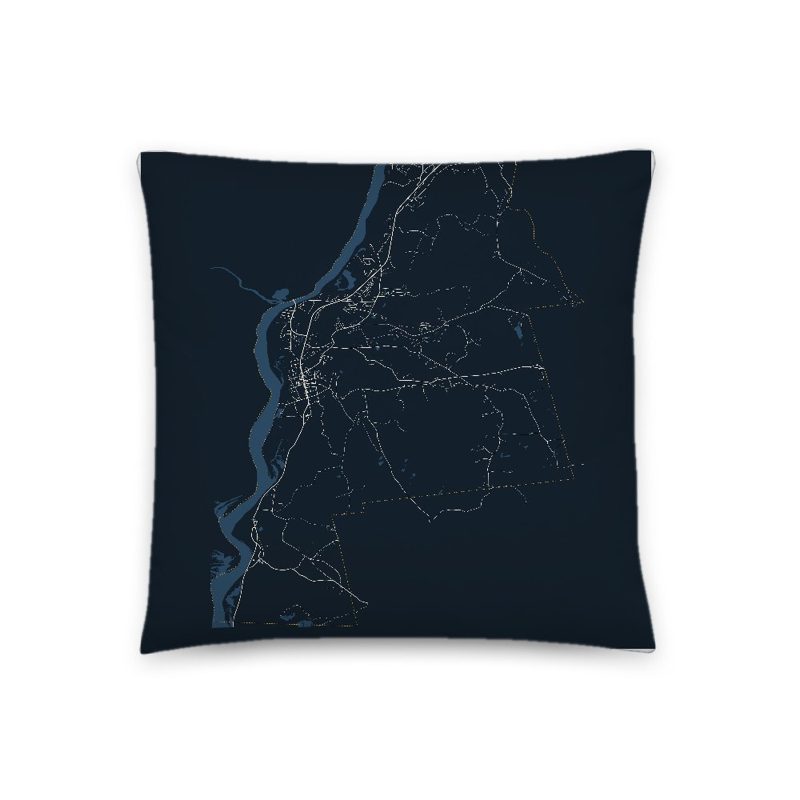
Soft-touch, zip cover
Sturdy all-over-print tote
Glossy top, cork back
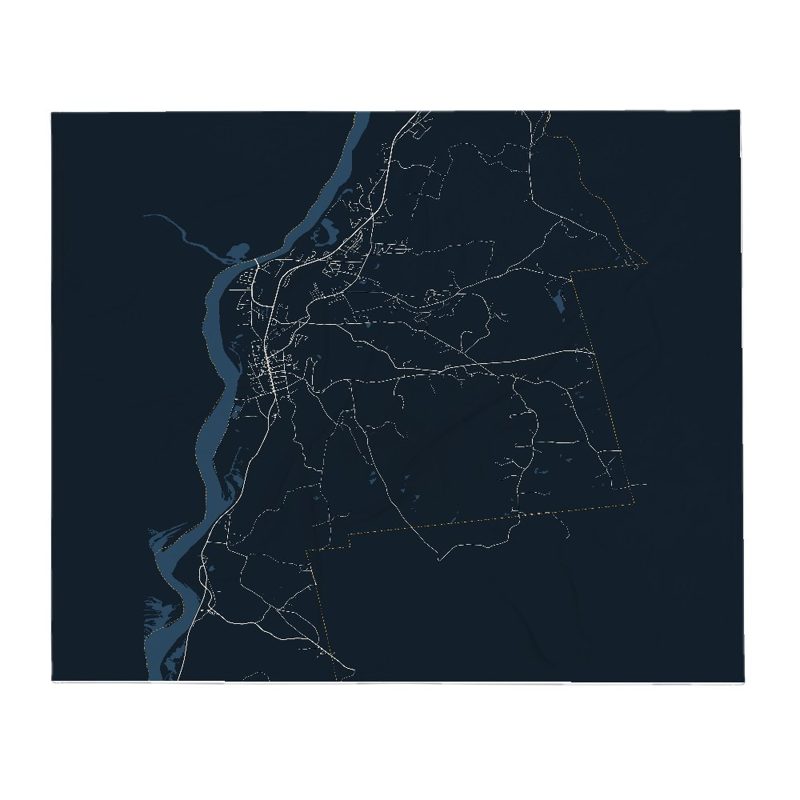
Soft fleece, 50″×60″
20 oz, double-wall stainless
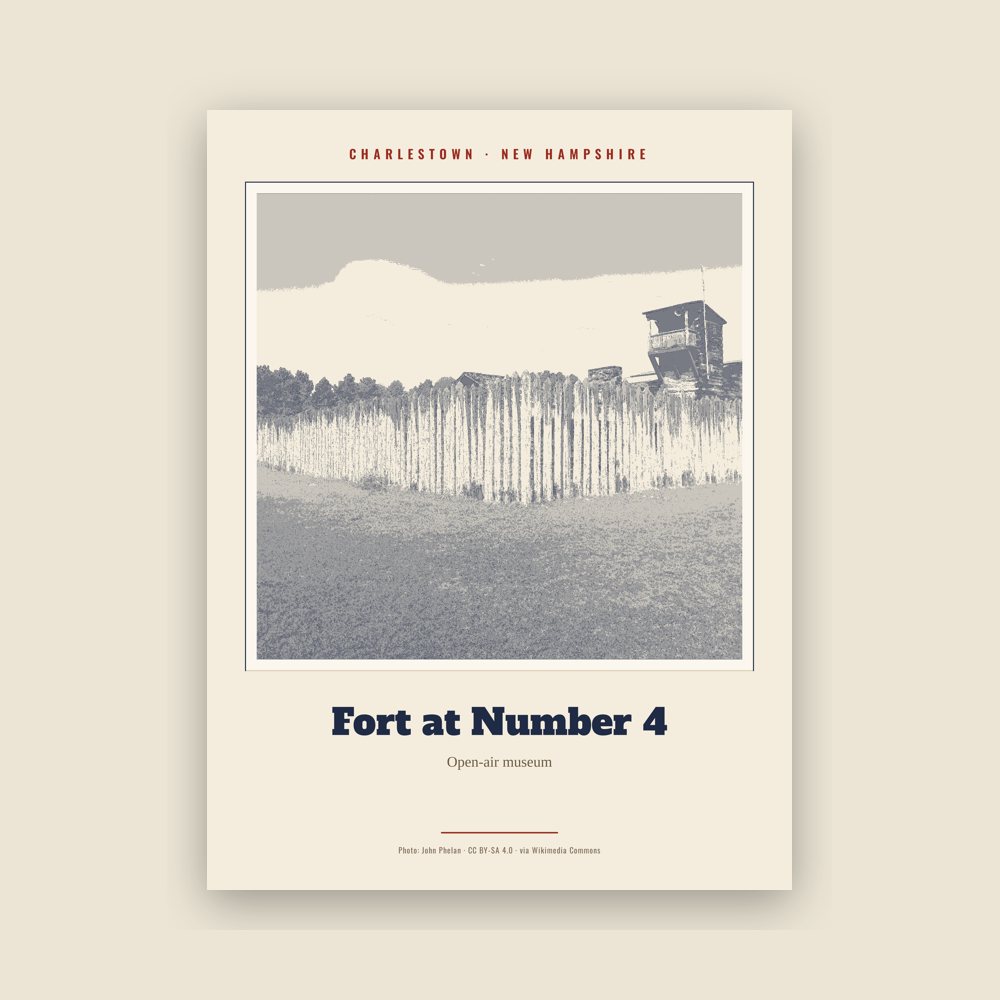
Archival matte print of a local landmark, credited to its photographer
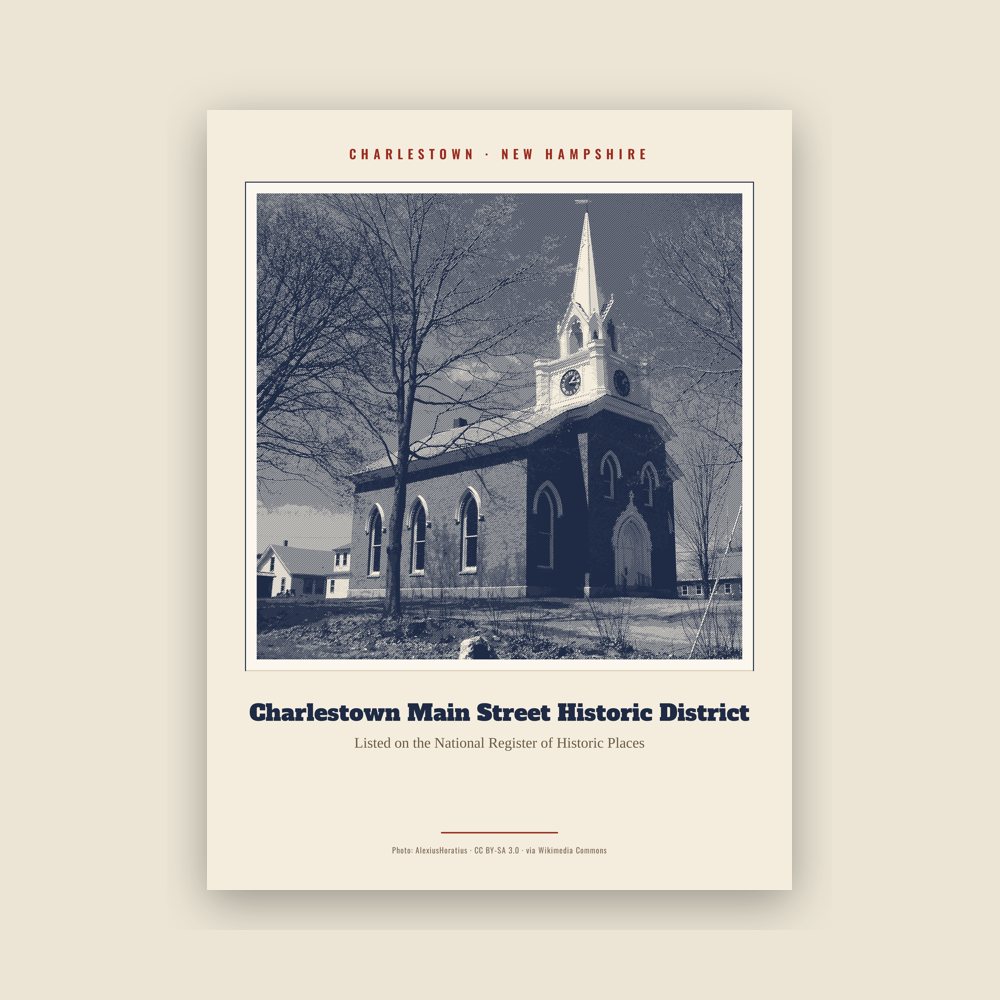
Archival matte print of a local landmark, credited to its photographer
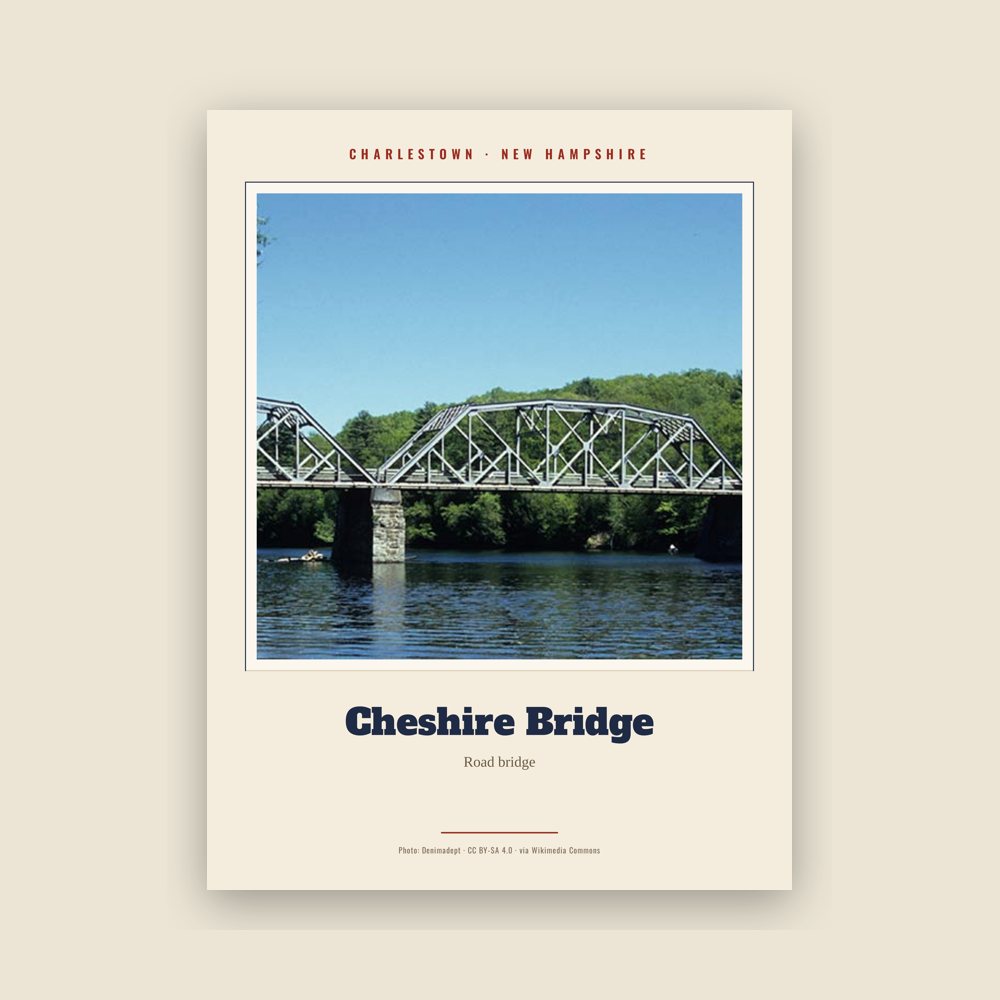
Archival matte print of a local landmark, credited to its photographer
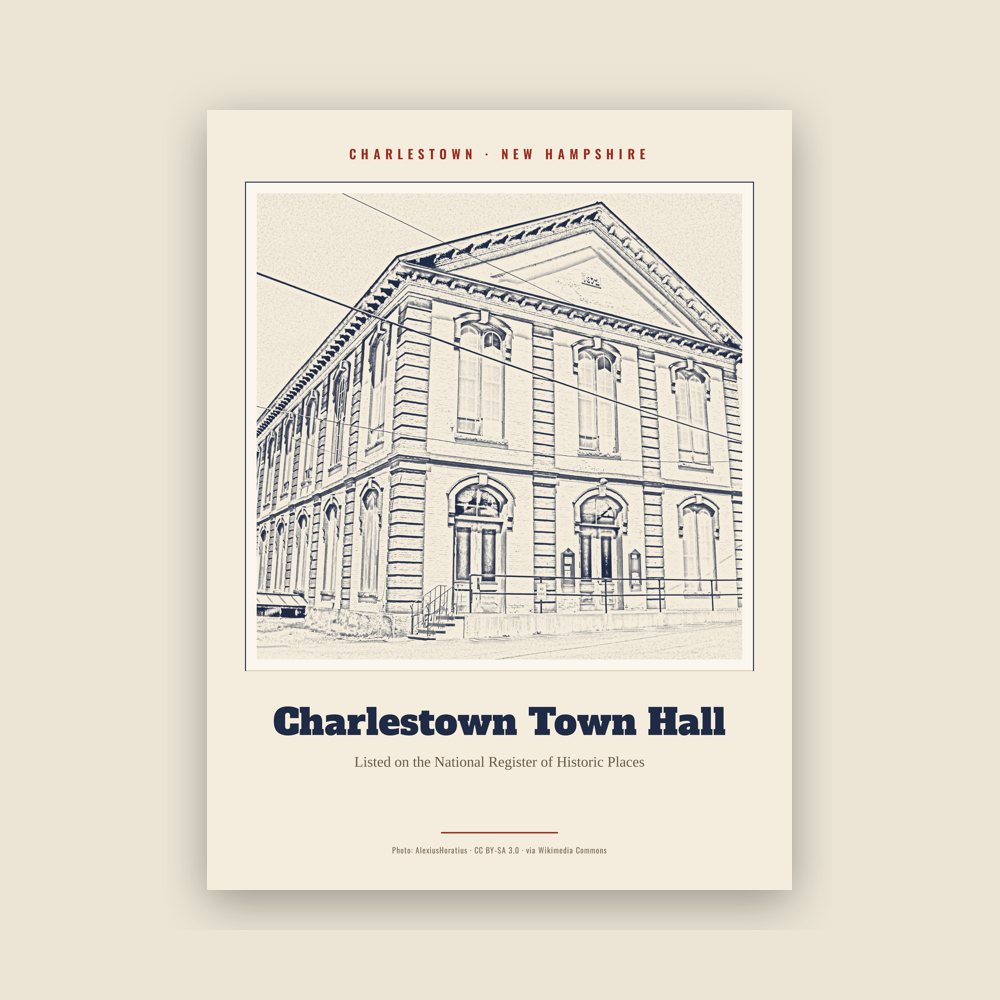
Archival matte print of a local landmark, credited to its photographer
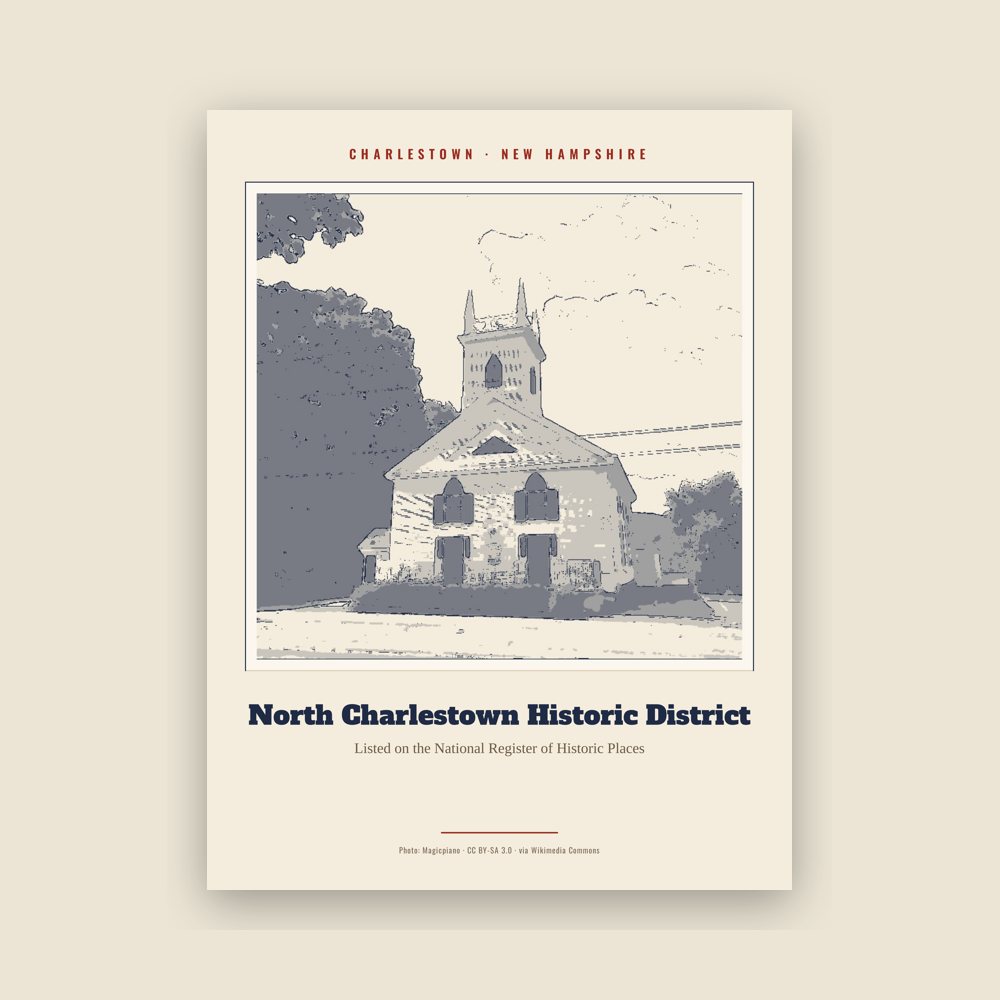
Archival matte print of a local landmark, credited to its photographer
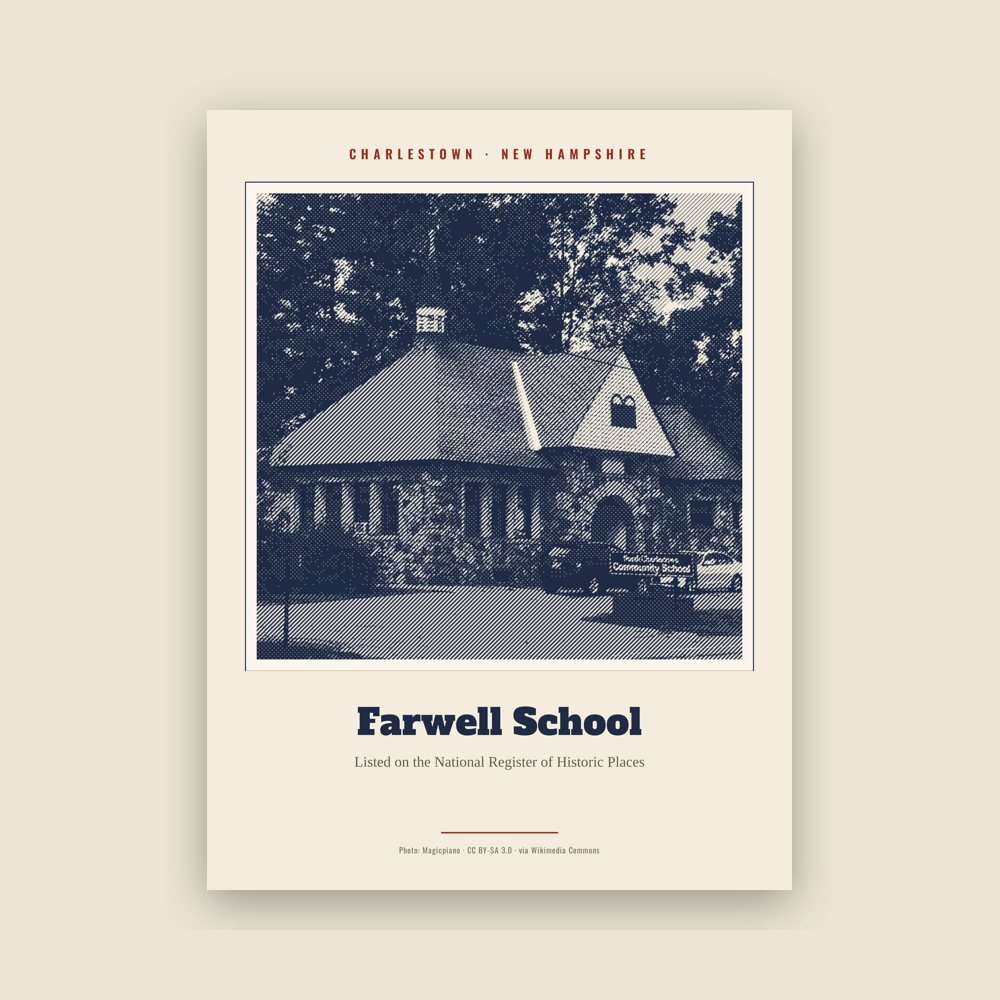
Archival matte print of a local landmark, credited to its photographer
6″×4″ postcard, glossy front
6″×4″ postcard, glossy front
6″×4″ postcard, glossy front
6″×4″ postcard, glossy front
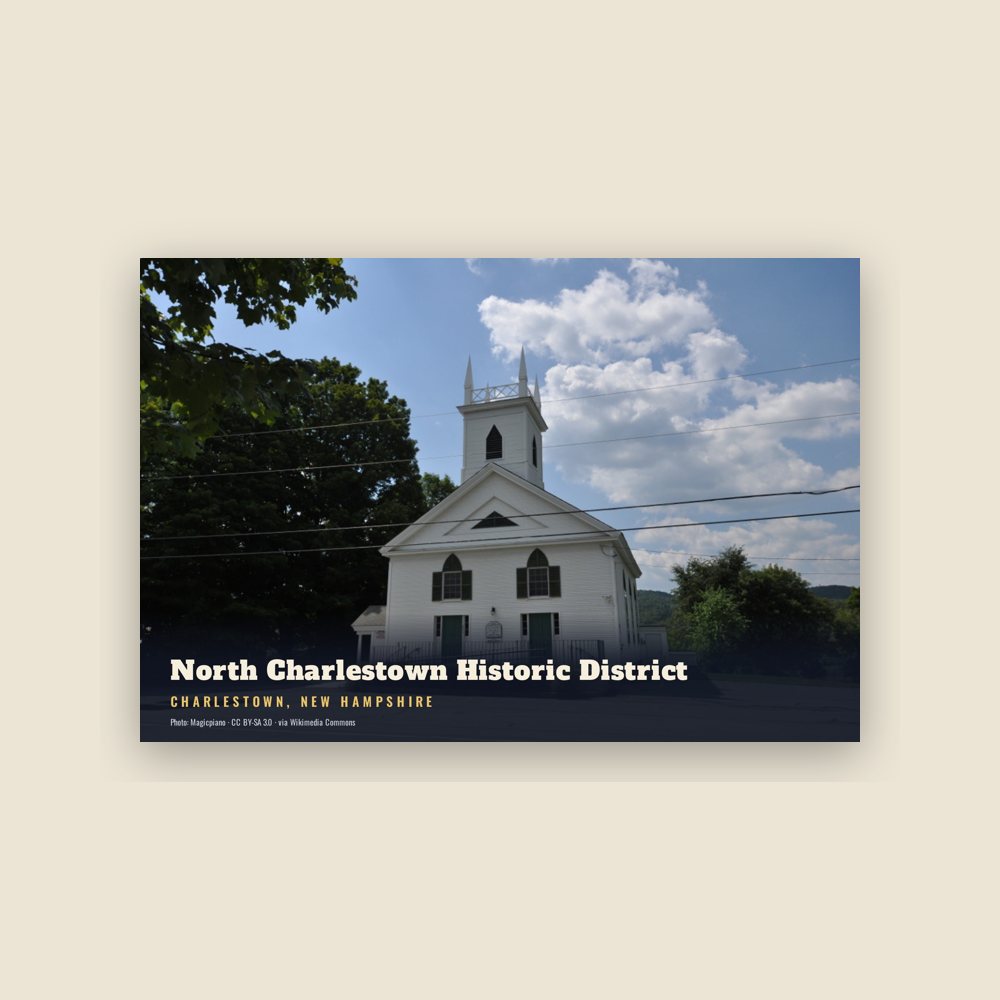
6″×4″ postcard, glossy front
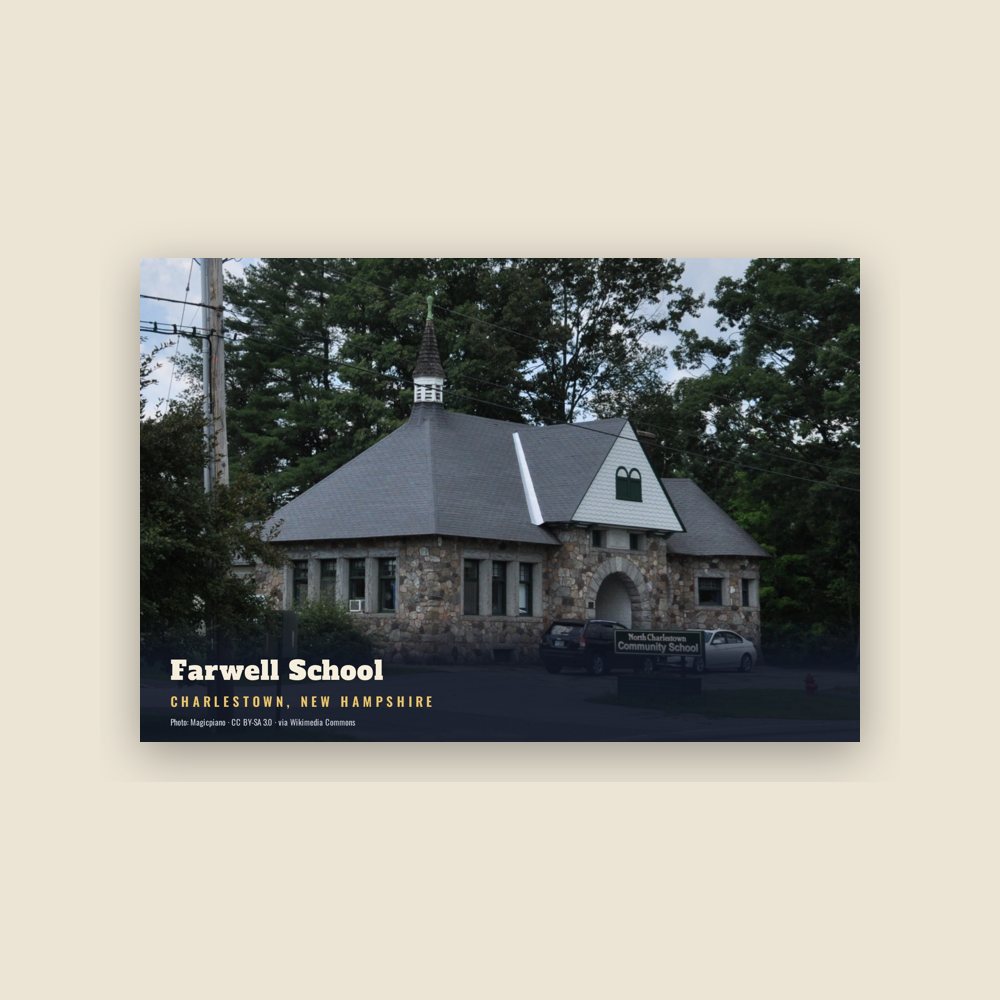
6″×4″ postcard, glossy front
Population 2010: 5,114 → 2020: 4,806
From Wikidata (CC0).
The area was first granted on December 31, 1735, by colonial governor Jonathan Belcher of Massachusetts as "Plantation No. 4", the fourth in a line of townships on the Connecticut River. Settled in 1740, it was the northernmost township, and its 1744 stockade now known as Fort at Number 4 became a strategic military site. On the evening of May 2, 1746, Seth Putnam joined Major Josiah Willard and several soldiers as they escorted women to milk the cows. As they approached the barn, Natives hiding in the bushes opened fire, killing Putnam, "the first victim of [Native] vengeance". In 1747, during King George's War, the fort was besieged for three days by a force of French and Native people. Captain Phineas Stevens and 31 militia stationed at the fort repelled the attack, with their success becoming well known.
On July 2, 1753, the town was rechartered as "Charlestown" by Governor Benning Wentworth, after Admiral Charles Knowles of the Royal Navy, then governor of Jamaica. Admiral Knowles, in port at Boston during the 1747 siege, sent Captain Stevens a sword to acknowledge his valor. The town responded by naming itself in his honor.
Early in the morning of August 30, 1754, Susannah Willard Johnson along with her husband, her three children, her sister and two neighbors, Peter Labarree and Ebenezer Farnsworth, were captured by Abenaki people, marched to Montreal and incarcerated. Eventually they would all escape or be released and return home.
In 1781, Charlestown briefly joined Vermont because of dissatisfaction with treatment by the New Hampshire government. Returning at the insistence of George Washington, it was incorporated in 1783.
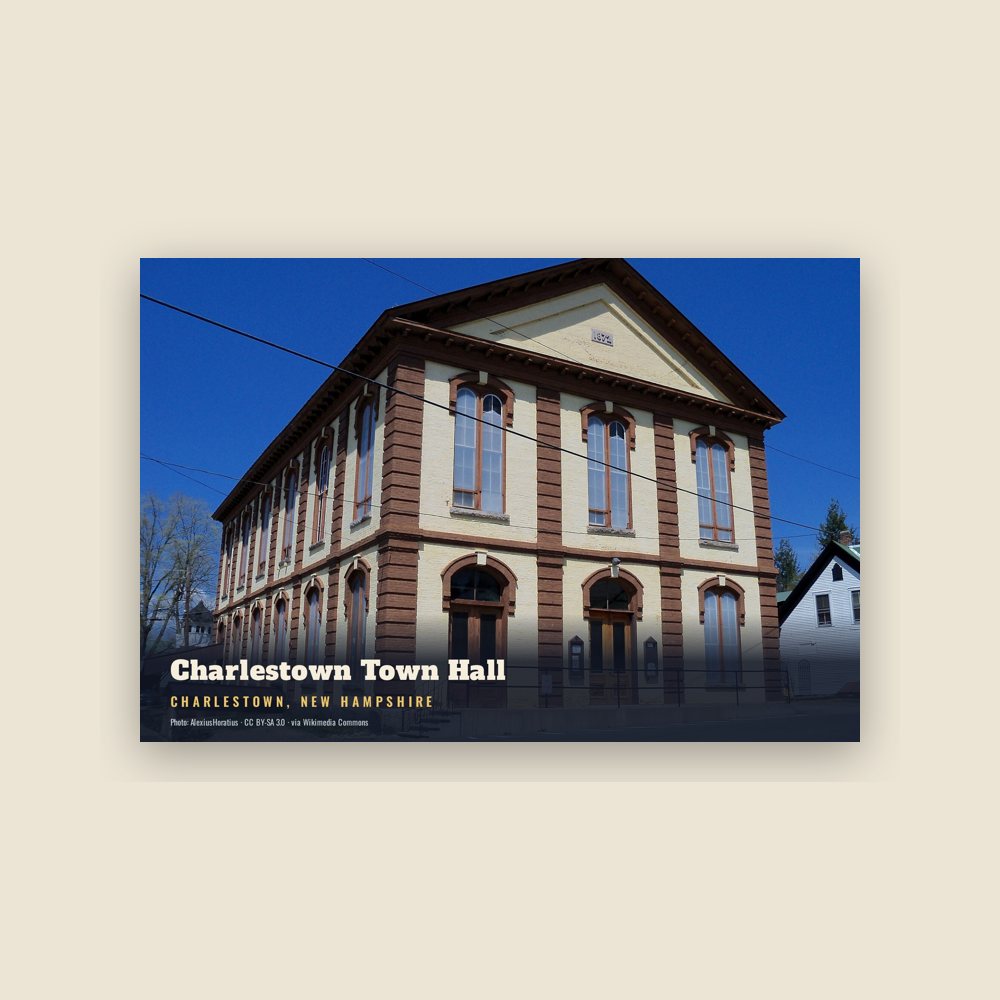
The community developed into a center for law and lawyers, second regionally only to Boston. Its prosperity would be expressed in fine architecture. Sixty-three buildings on Charlestown's Main Street are now listed on the National Register of Historic Places. They include the Gothic Revival South Parish Church erected by master-builder Stephen Hassam in 1842, St. Luke's Church designed by Richard Upjohn in 1863, and the Italianate Town Hall designed in 1872 by Edward Dow, New Hampshire's most prominent architect after the Civil War. Dow also designed Thompson Hall, the centerpiece of the University of New Hampshire.
In 1874, the Sullivan Railroad passed through the western side of Charlestown. The tracks are now part of the New England Central Railroad.
A reproduction of the Fort at Number 4 is now a historical site, where military reenactments and musters occur frequently throughout the summer months. Tours are offered of its stockaded parade ground and pioneer-style houses.
Adapted (trimmed) from the Wikipedia article Charlestown, New Hampshire, revision 1377149528 by its contributors, licensed CC BY-SA 4.0.
We share a part of every Charlestown sale with local partners, and we'd love to print from your collection. Old photographs, maps and postcards make the best keepsakes.
Partner with us