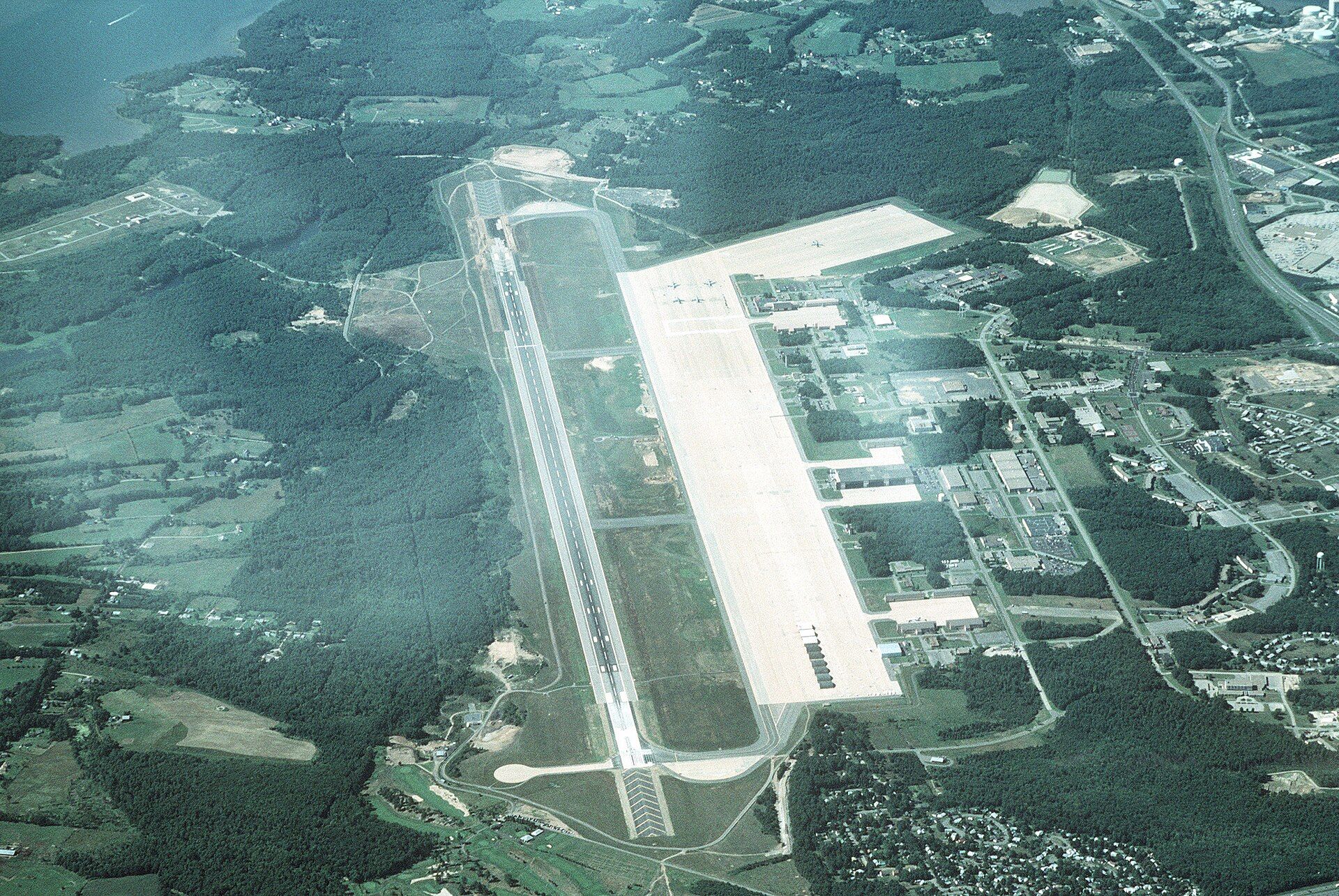
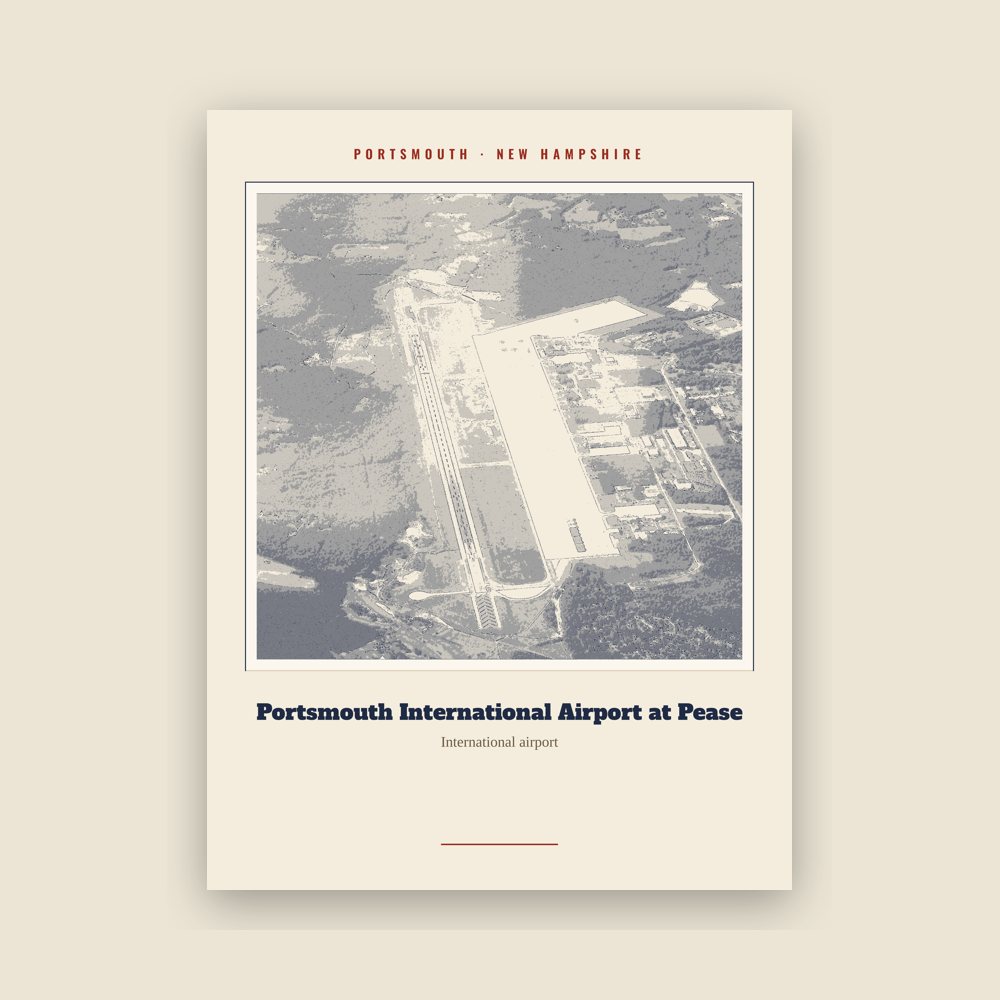
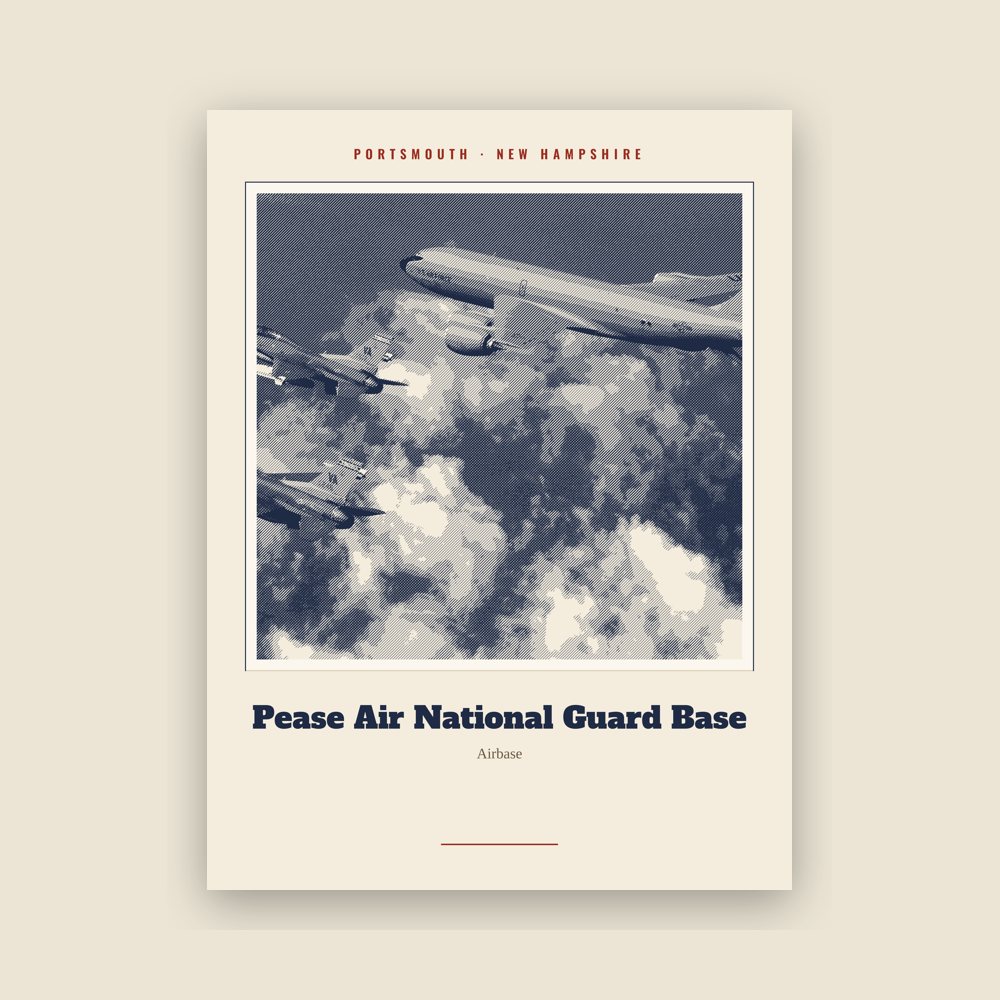
A historic seaport and popular summer tourist destination on the Piscataqua River bordering the state of Maine, Portsmouth was formerly the home of the Pease Air Force Base, since converted to Portsmouth International Airport at Pease. Landmarks include USS Albacore, Portsmouth International Airport at Pease and Pease Air National Guard Base. Portsmouth is the birthplace of Ronnie James Dio, heavy metal singer.
Every piece is drawn from Portsmouth's own map data and historic archives, then printed and shipped from the USA when you order. No two towns look alike.
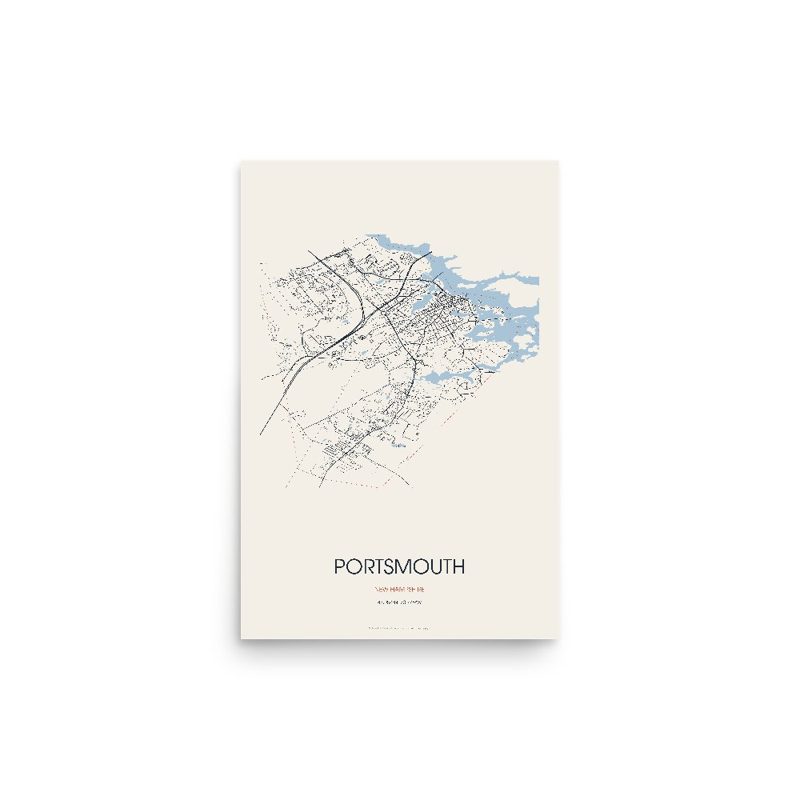
Every road in town, on archival matte paper
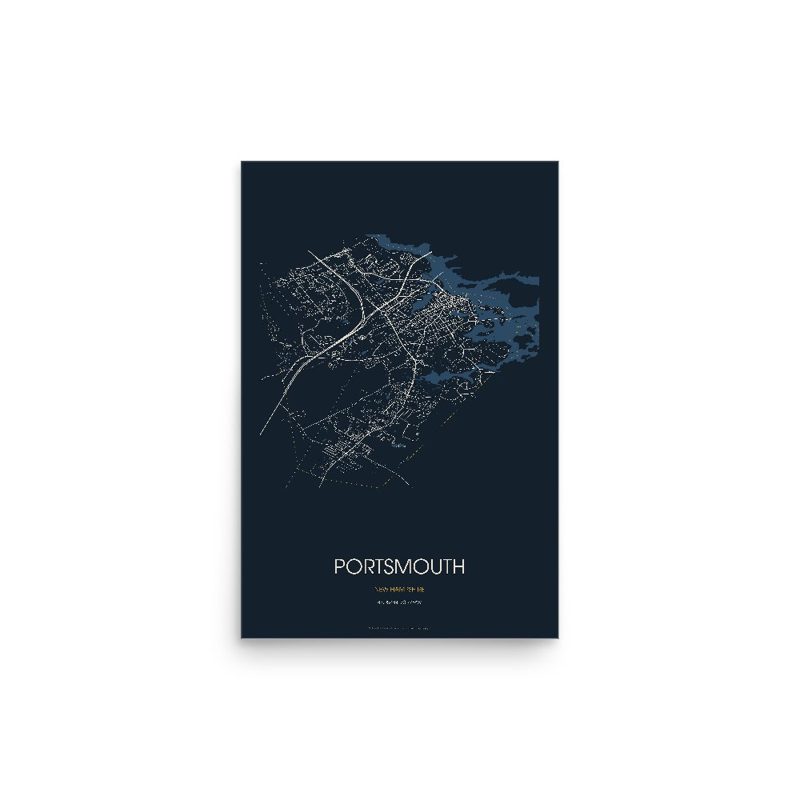
The same map, in navy and silver
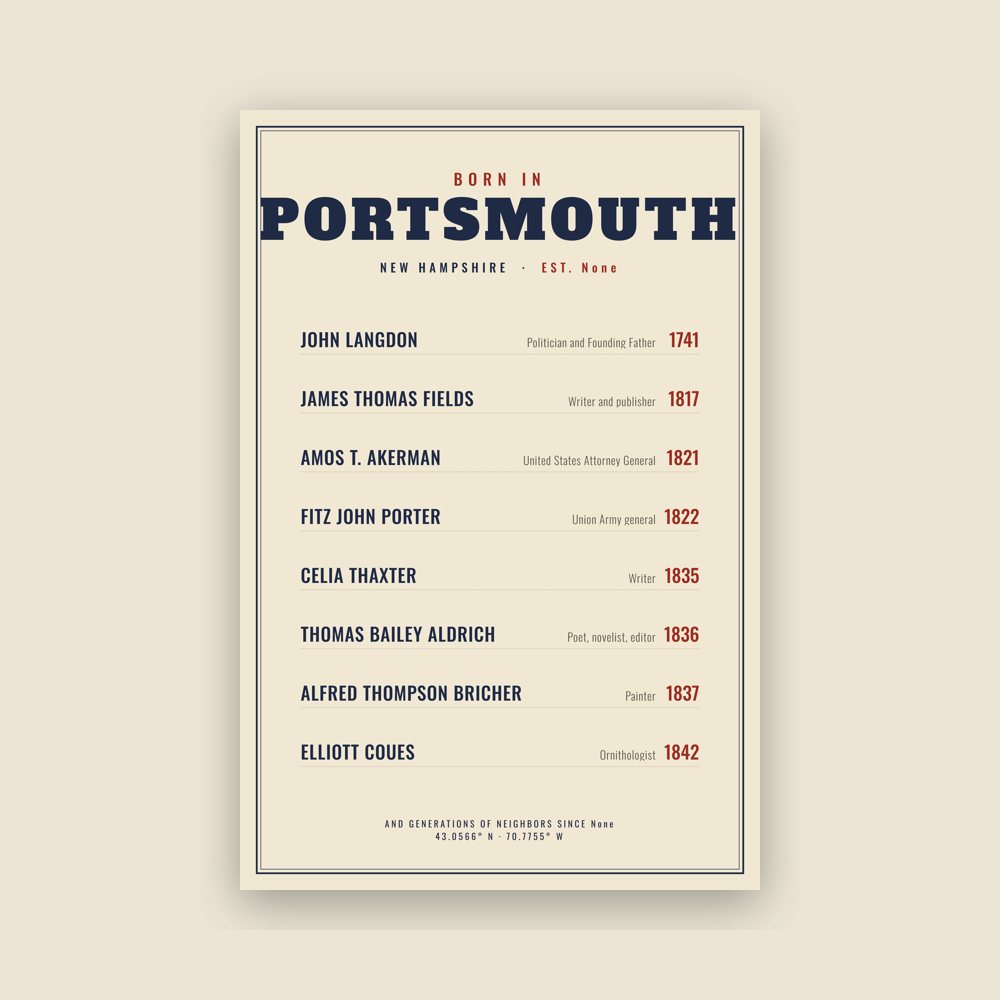
Famous natives, by birth year
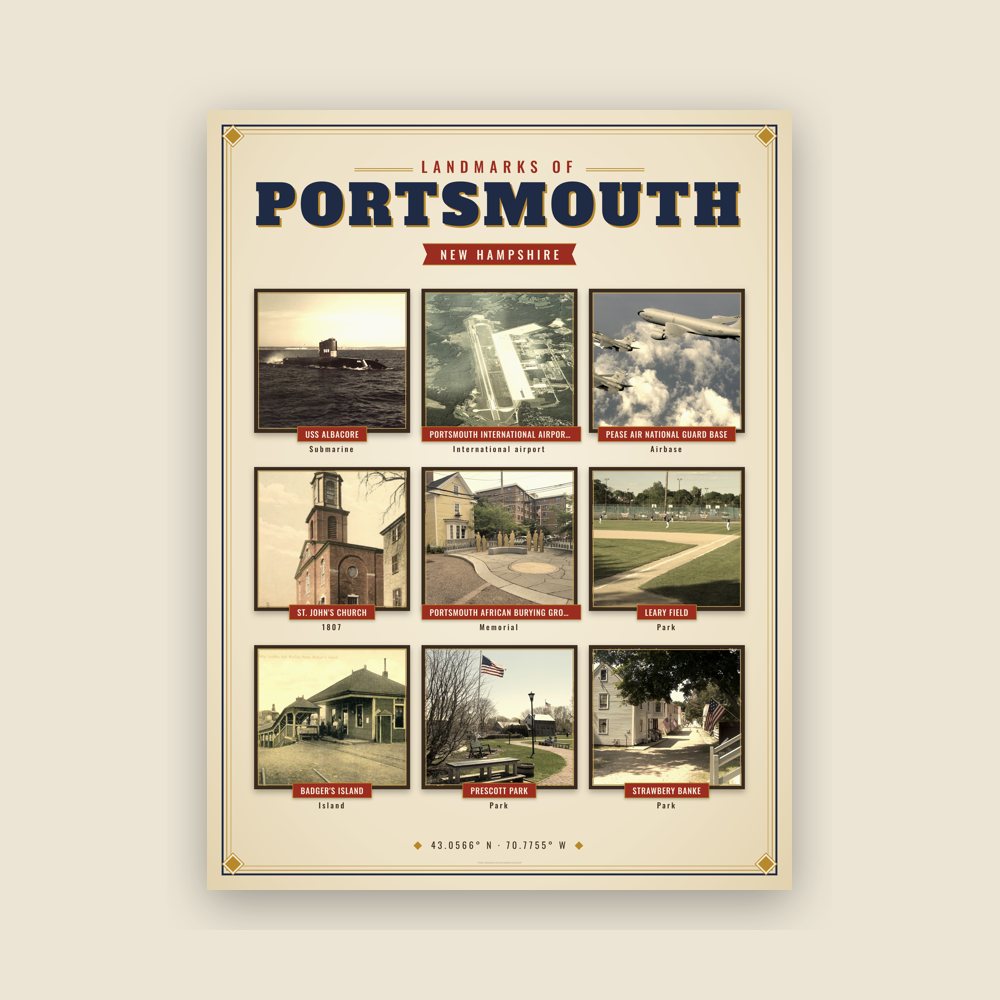
Nine local landmarks, archival matte
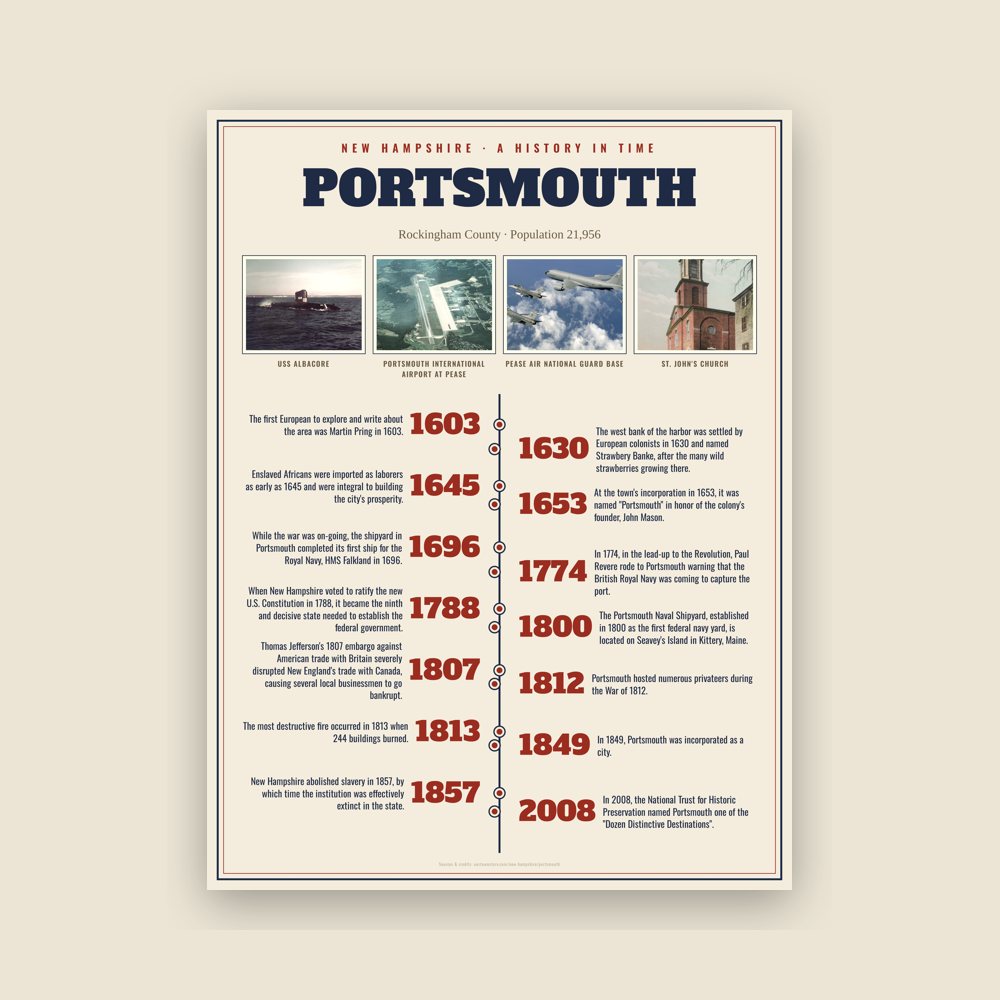
The town's story in dates, from its own records, for home or classroom
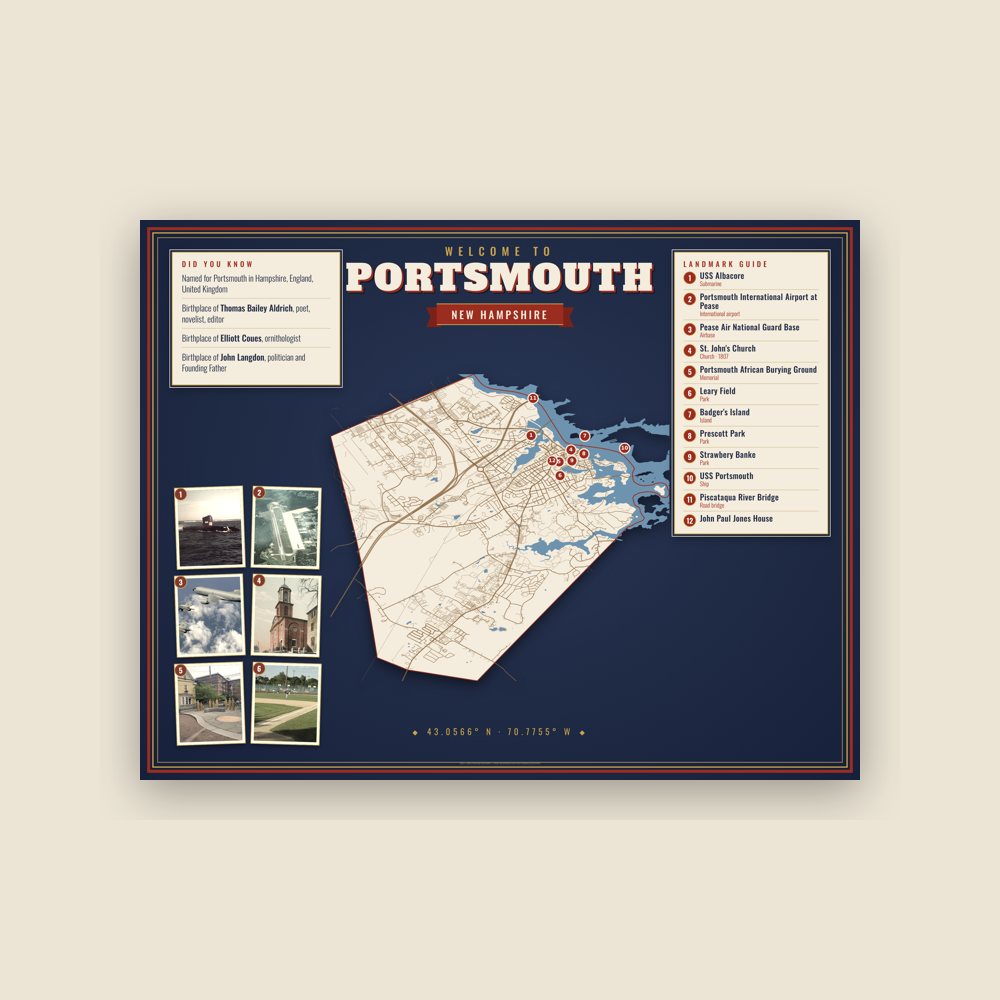
Map of local landmarks, washable fabric
Heavy-blend fleece, street map printed on the back
Soft Bella+Canvas jersey
Glossy ceramic, dishwasher safe
Ceramic keepsake, gold ribbon
Weatherproof, for the front walk
24″×16″, printed coir-look fibers, rubber back
12″×12″ printed wood, ready to hang
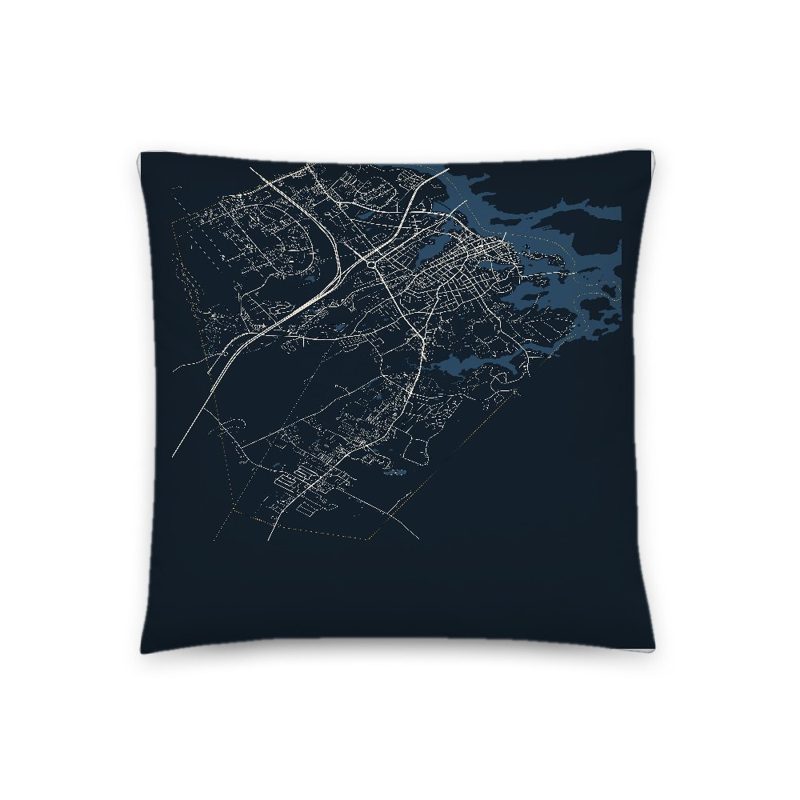
Soft-touch, zip cover
Sturdy all-over-print tote
Glossy top, cork back
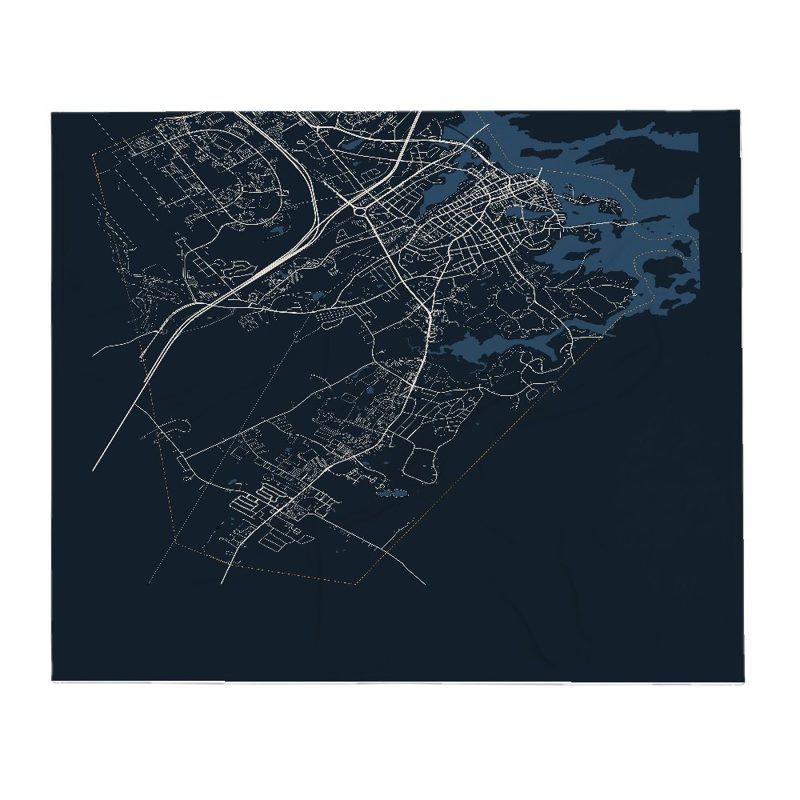
Soft fleece, 50″×60″
20 oz, double-wall stainless
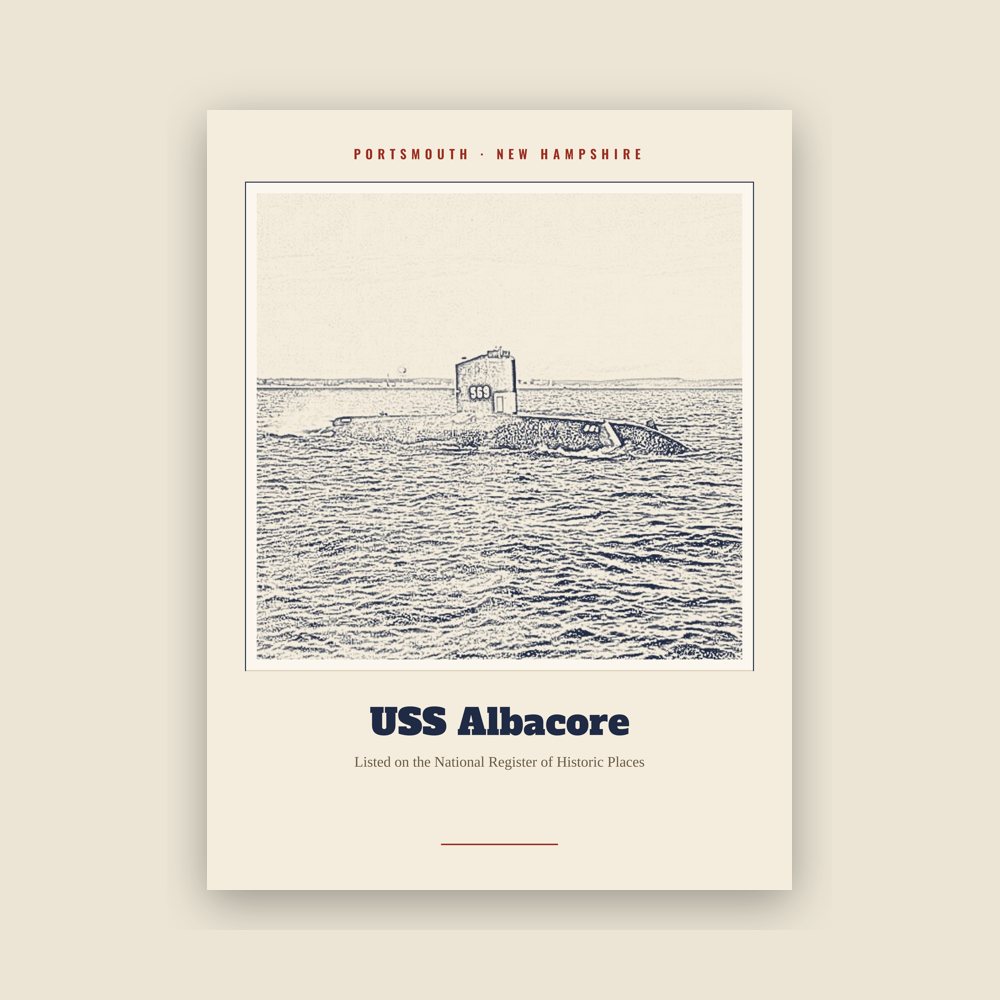
Archival matte print of a local landmark, credited to its photographer
Archival matte print of a local landmark, credited to its photographer
Archival matte print of a local landmark, credited to its photographer
Archival matte print of a local landmark, credited to its photographer
Archival matte print of a local landmark, credited to its photographer
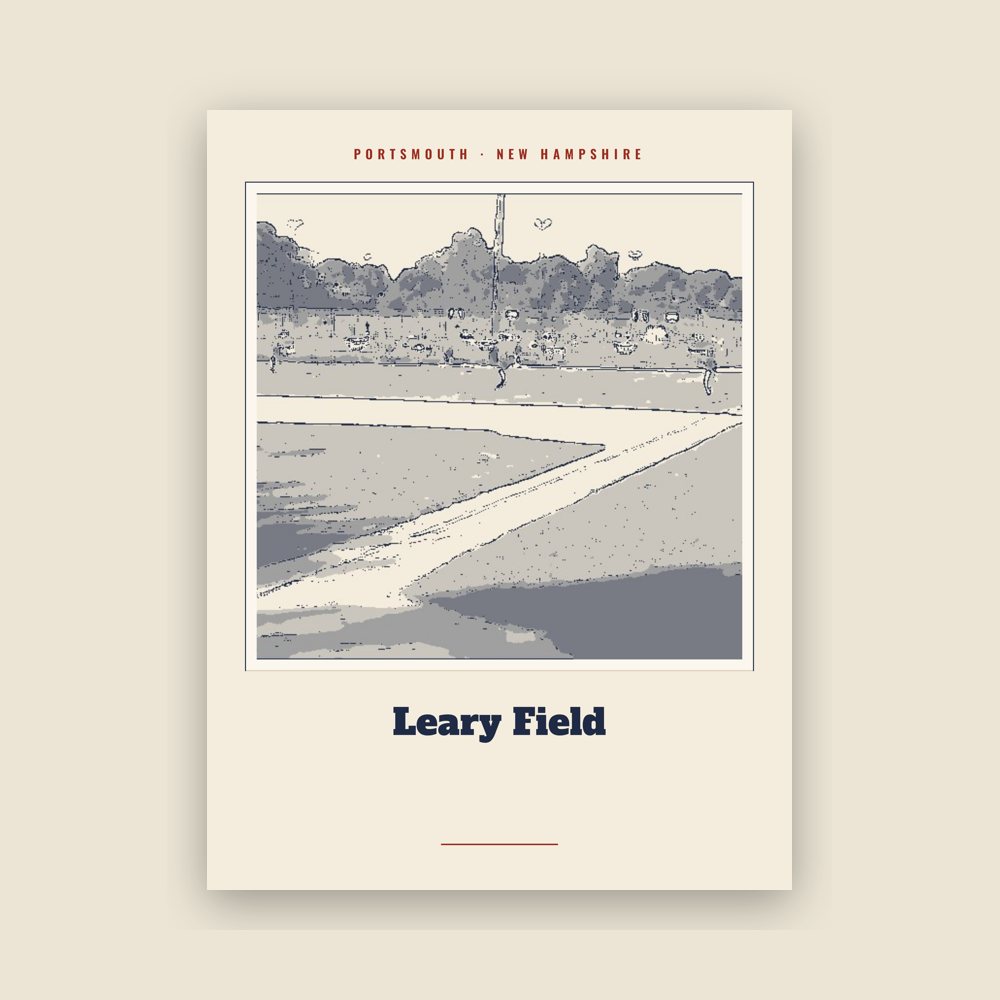
Archival matte print of a local landmark, credited to its photographer
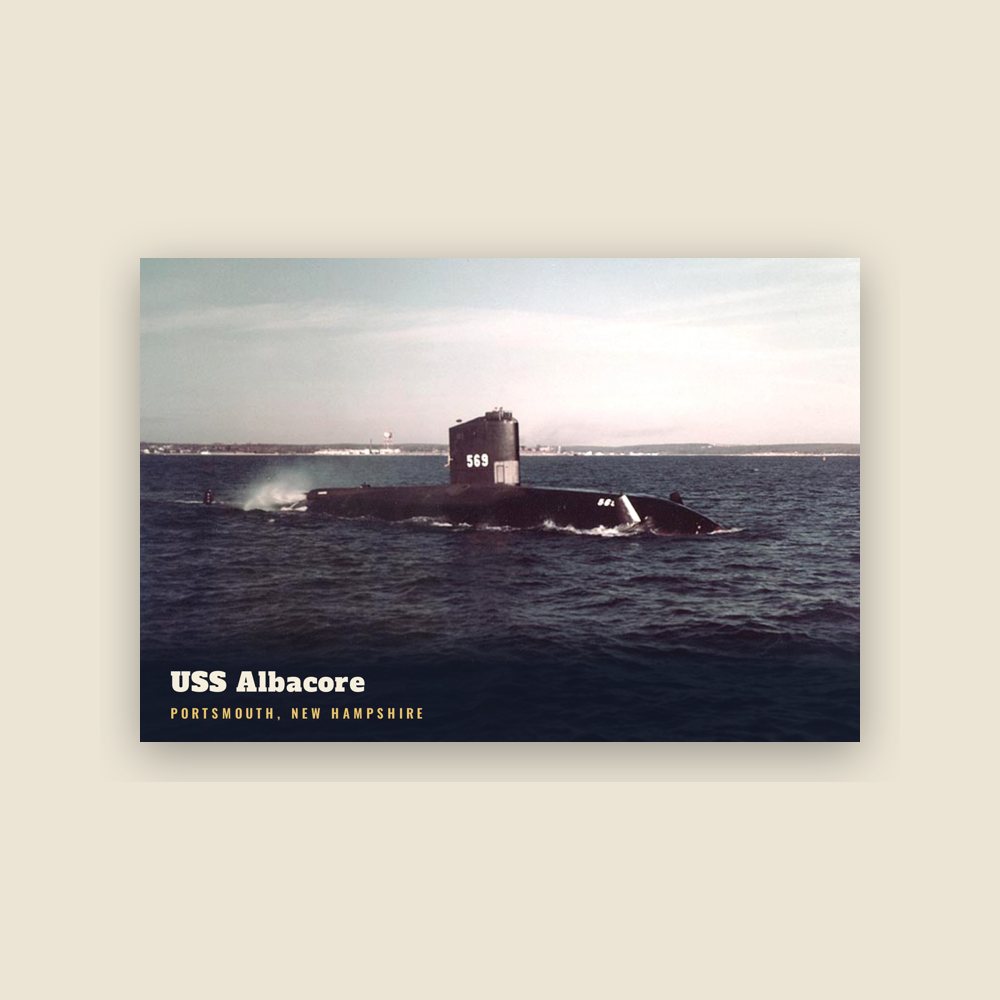
6″×4″ postcard, glossy front
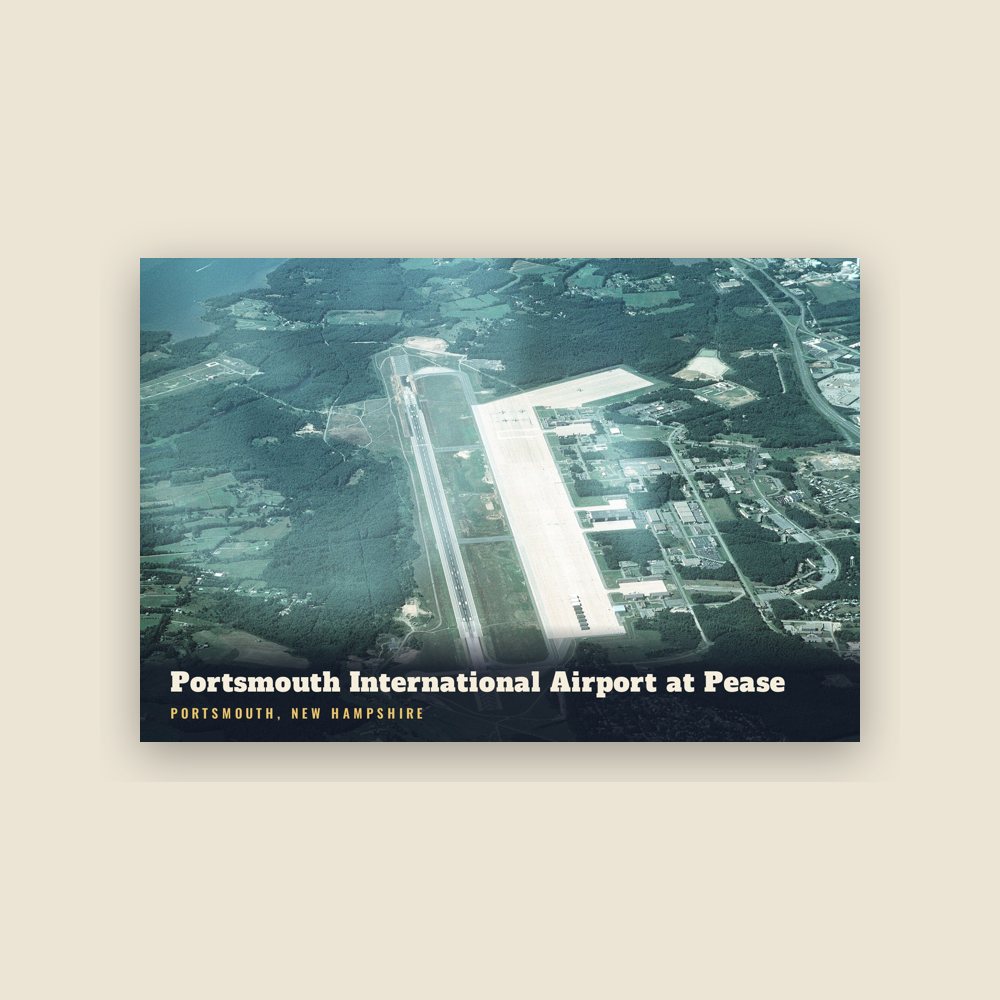
6″×4″ postcard, glossy front
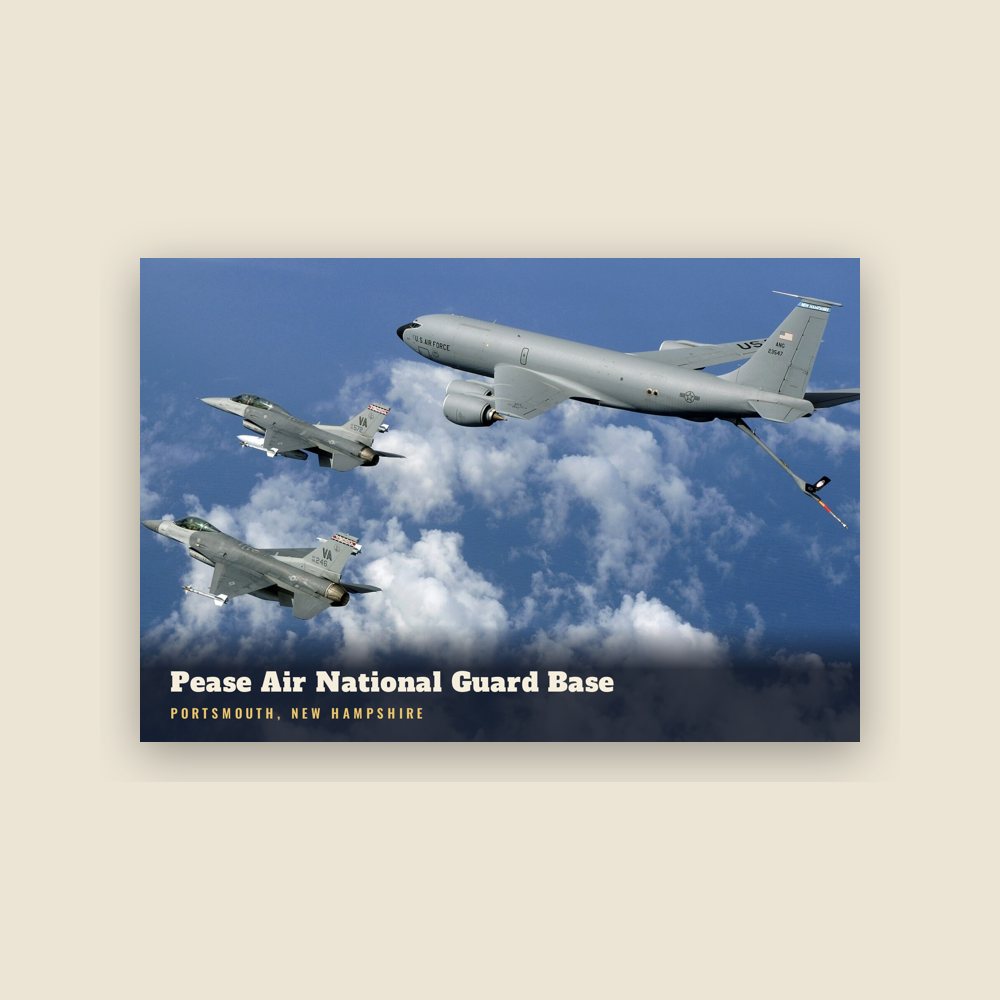
6″×4″ postcard, glossy front
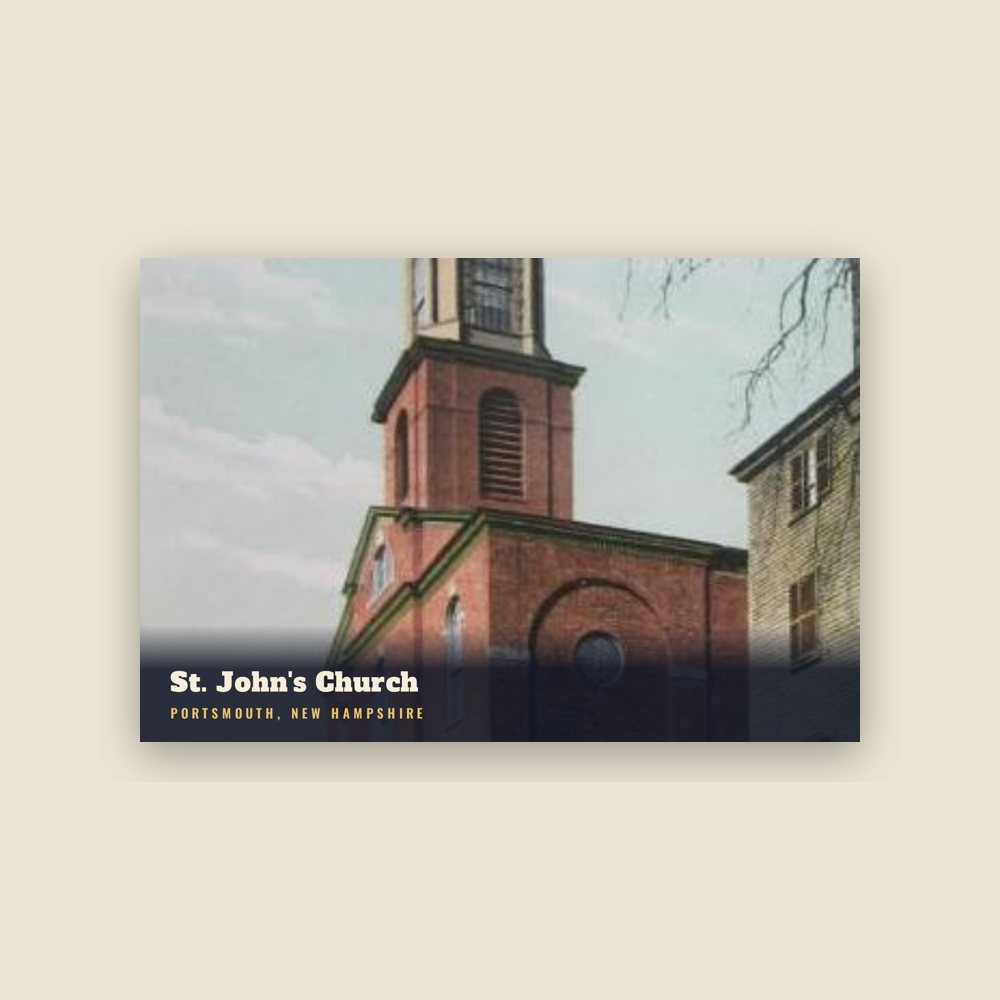
6″×4″ postcard, glossy front
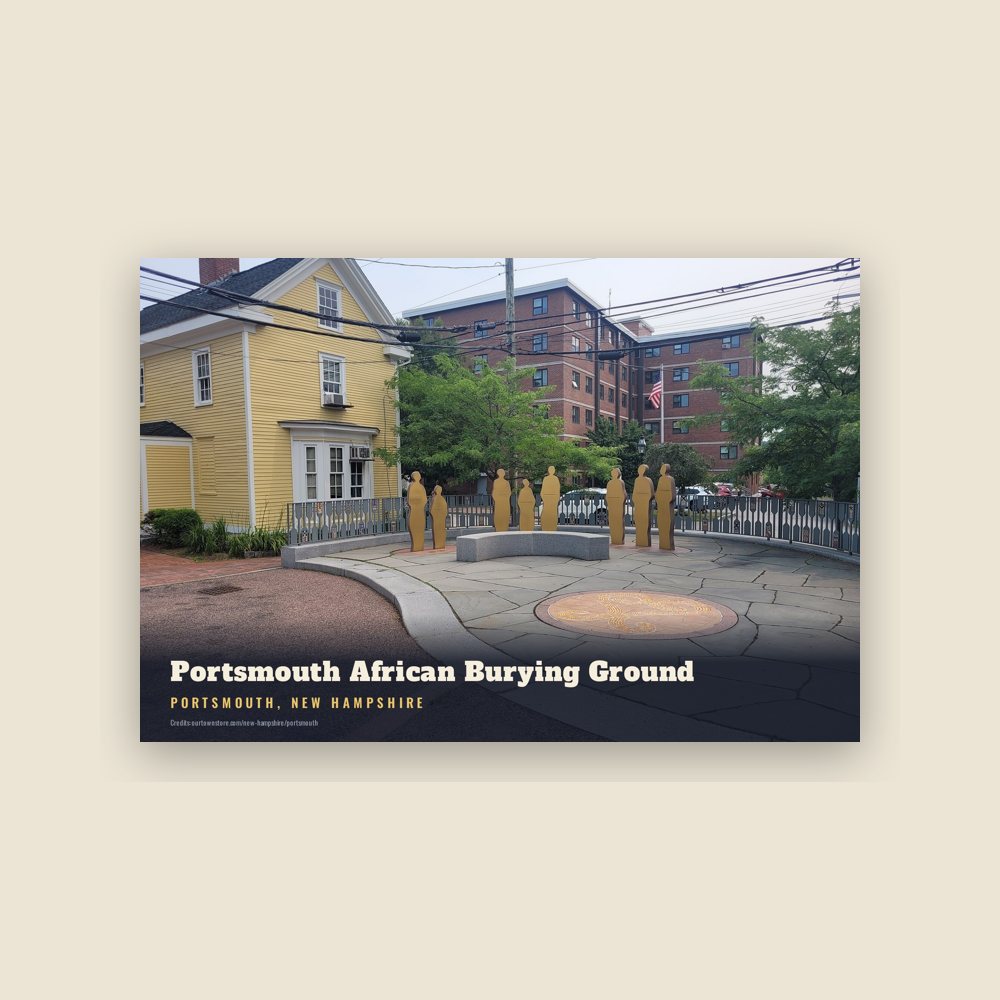
6″×4″ postcard, glossy front

6″×4″ postcard, glossy front
Named for Portsmouth (city in Hampshire, England, United Kingdom).
Population 2010: 20,779 → 2010: 21,233 → 2020: 21,956
From Wikidata (CC0).
The first European to explore and write about the area was Martin Pring in 1603. The Piscataqua River is a tidal estuary with a swift current, but forms a good natural harbor. The west bank of the harbor was settled by European colonists in 1630 and named Strawbery Banke, after the many wild strawberries growing there. The village was protected by Fort William and Mary on what is now New Castle Island. Strategically located for trade between upstream industries and mercantile interests abroad, the port prospered. Fishing, lumber and shipbuilding were principal businesses of the region.
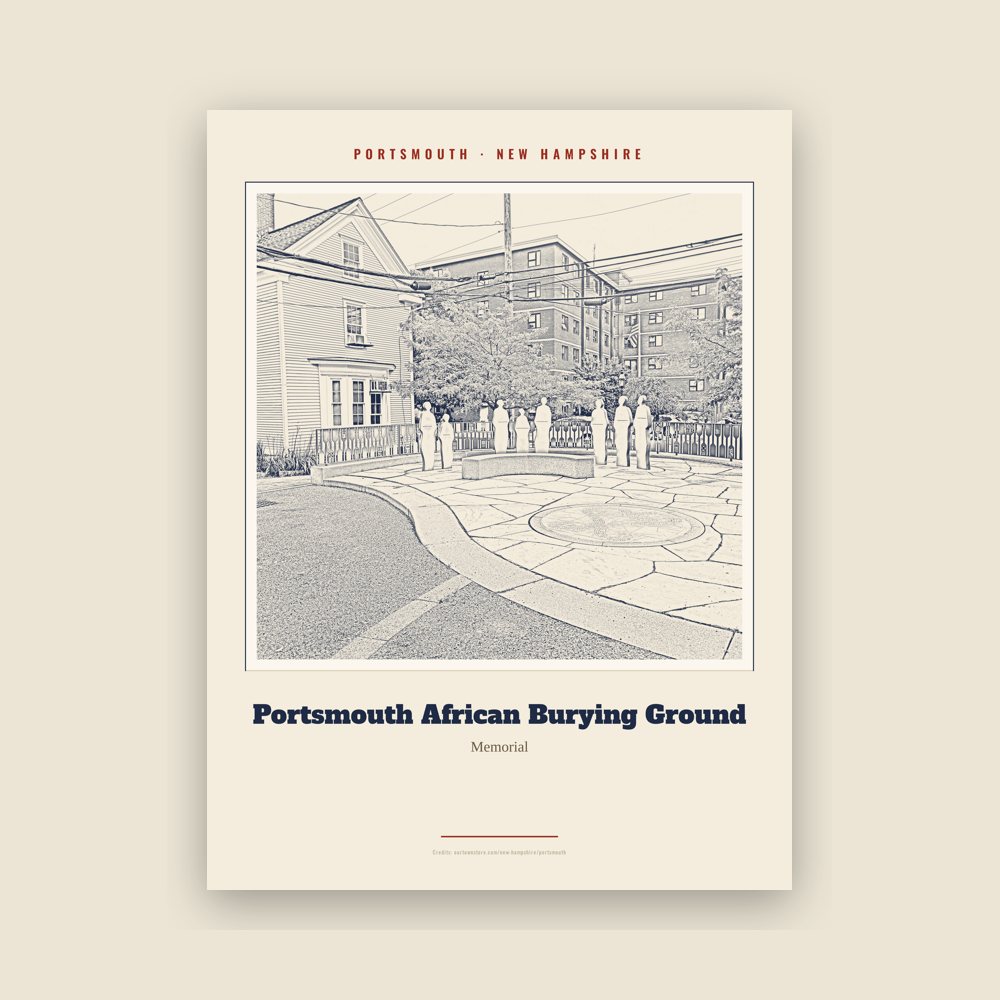
Enslaved Africans were imported as laborers as early as 1645 and were integral to building the city's prosperity. Portsmouth participated in the Triangle Trade, which generated profits from slavery.
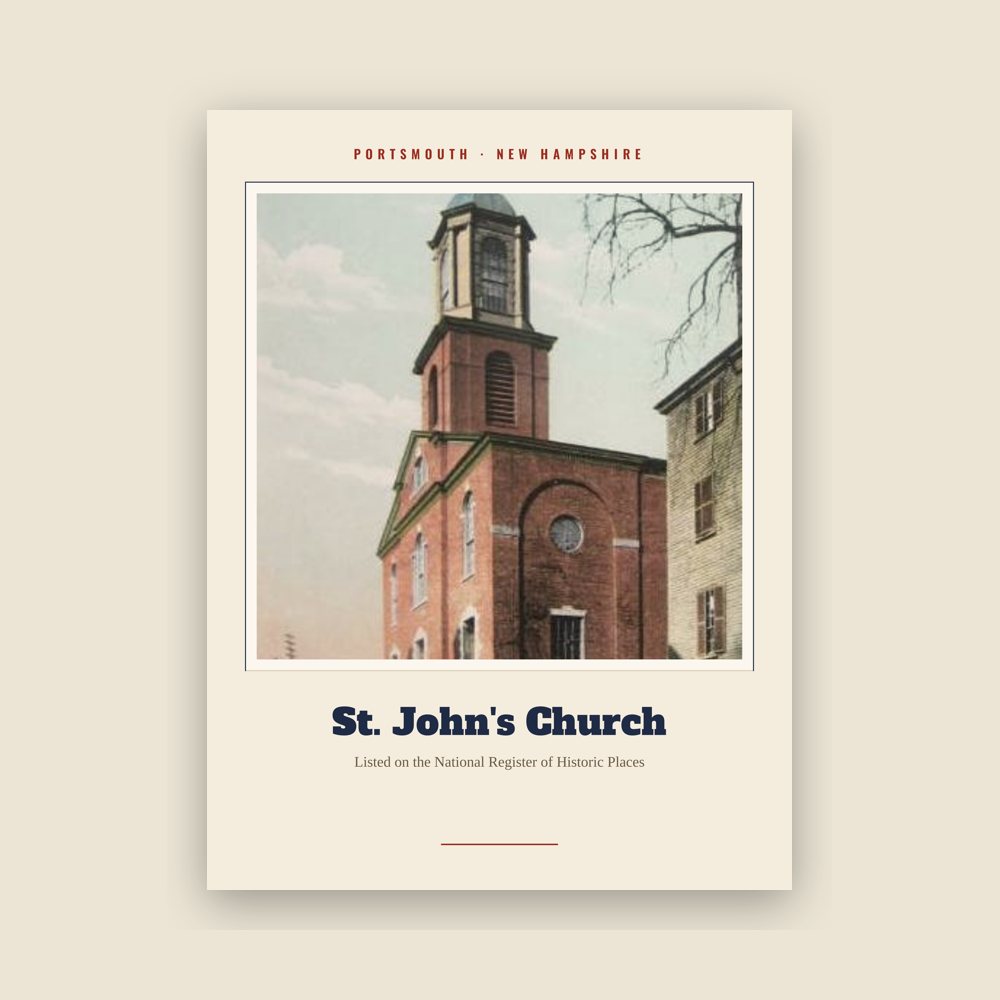
At the town's incorporation in 1653, it was named "Portsmouth" in honor of the colony's founder, John Mason. He had been captain of the English port of Portsmouth, Hampshire, after which New Hampshire is named. Richard Martyn was one of the founders of the first church in Portsmouth, and served as Selectman, Representative to the General Court, Speaker of the House, and Chief Justice.
Portsmouth was spared many of the French and Indian raids that occurred during King William's War. However, many neighboring towns were attacked including Dover, Durham, and York. While the war was on-going, the shipyard in Portsmouth completed its first ship for the Royal Navy, HMS Falkland in 1696.
When Queen Anne's War ended in 1712, Governor Joseph Dudley selected the town to host negotiations for the 1713 Treaty of Portsmouth, which temporarily ended hostilities between the Abenaki Indians and the colonies of Massachusetts Bay and New Hampshire.
In 1774, in the lead-up to the Revolution, Paul Revere rode to Portsmouth warning that the British Royal Navy was coming to capture the port. Although Fort William and Mary protected the harbor, the Patriot government moved the capital inland to Exeter to avoid threats from the Royal Navy, which bombarded Falmouth (now Portland, Maine) on October 18, 1775. Portsmouth served as a destination for several of Beaumarchais's ships containing materiel, such as artillery, tents, and gunpowder, to support the American revolutionary effort.
African Americans participated in defending Portsmouth and New England during the war. In 1779, 19 enslaved African Americans from Portsmouth wrote a petition to the state legislature requesting the abolition of slavery, citing their war contributions and the principles of the Revolution. The legislature tabled their petition. New Hampshire abolished slavery in 1857, by which time the institution was effectively extinct in the state.
When New Hampshire voted to ratify the new U.S. Constitution in 1788, it became the ninth and decisive state needed to establish the federal government. Portsmouth celebrated this historic moment with a grand parade featuring representatives from 78 different trades, reflecting the city's economic diversity and national significance.
Thomas Jefferson's 1807 embargo against American trade with Britain severely disrupted New England's trade with Canada, causing several local businessmen to go bankrupt. Portsmouth hosted numerous privateers during the War of 1812. In 1849, Portsmouth was incorporated as a city.
Once one of the nation's busiest ports and shipbuilding cities, Portsmouth expressed its wealth through fine architecture. The city features significant examples of Colonial, Georgian, and Federal style houses, some of which now serve as museums. Portsmouth's downtown core consists of stately brick Federalist stores and townhouses, built uniformly after devastating early 19th-century fires. The most destructive fire occurred in 1813 when 244 buildings burned. A fire district was subsequently created that required all new buildings within its boundaries to be built of brick with slate roofs, creating the downtown's distinctive appearance. The city was also noted for producing boldly wood-veneered federal-style (neoclassical) furniture, particularly by master cabinet maker Langley Boardman.
The Industrial Revolution spurred economic growth in New Hampshire mill towns such as Dover, Keene, Laconia, Manchester, Nashua and Rochester, where rivers provided water power for mills. This shift in economic activity to the new mill towns led to Portsmouth's port declining, though the city survived the Victorian-era economic downturn, a period described in the works of Thomas Bailey Aldrich, particularly in his 1869 novel The Story of a Bad Boy.
In the 20th century, the city established a Historic District Commission to protect much of the city's architectural legacy. In 2008, the National Trust for Historic Preservation named Portsmouth one of the "Dozen Distinctive Destinations". The compact and walkable downtown on the waterfront attracts tourists and artists who frequent the cafes, restaurants and shops around Market Square. Portsmouth annually celebrates the revitalization of its downtown (particularly Market Square) with Market Square Day, a celebration dating back to 1977, produced by the non-profit Pro Portsmouth, Inc.
During World War II, Portsmouth Municipal Airport was expanded and converted to military use, eventually becoming Pease Air Force Base in 1956. Named after New Hampshire Medal of Honor recipient Captain Harl Pease Jr., the Strategic Air Command facility housed nuclear bombers including the renowned 509th Bomb Wing during the Cold War era. The base served as a crucial component of America's nuclear deterrent until its closure in 1991 under the Base Realignment and Closure process.
The Portsmouth Naval Shipyard's contribution to submarine technology advanced significantly with the construction of the experimental USS Albacore in 1953. This revolutionary research submarine pioneered the teardrop hull design that became standard for all modern submarines and set world underwater speed records during its service until 1972. The vessel was designated a National Historic Landmark and returned to Portsmouth as a museum in 1985.
The city's emphasis on historic preservation and revitalization emerged from a period of significant destruction. Portsmouth's current walkable character results from its network of streets and dense blocks filled with preserved Revolution-era homes. However, like many cities throughout the region and nation, Portsmouth experienced urban renewal, a federally funded planning initiative designed to address "urban blight" and revitalize downtown cores after decades of suburbanization and declining tax revenue. Portsmouth's urban renewal district encompassed the North End neighborhood, which, similar to Boston's North End, was home to a significant Italian-American population.
In 1964, federal funds were allocated to the North End project area for urban renewal. Prior to redevelopment, the North End contained a mix of residential and commercial buildings, with many older houses converted into storefronts with apartments above. By the mid-1960s, the area was considered overcrowded, deteriorated, and a fire hazard. The Portsmouth Housing Authority proposed demolishing approximately 200 buildings, a school, and a church, with redevelopment planned for commercial, industrial, and public use rather than residential purposes. The project would have displaced approximately 300 families. In 1968, Portsmouth Preservation Inc., a preservation organization, was formed to save some of the historic building stock slated for redevelopment. After extensive advocacy efforts, only fourteen houses were saved and mostly relocated to an area now known as "The Hill". This preservation effort marked the beginning of broader initiatives that eventually led to the creation of the aforementioned historic district.
Portsmouth's shipbuilding history has maintained a long symbiotic relationship with Kittery, Maine, across the Piscataqua River. In 1781–1782, naval hero John Paul Jones lived in Portsmouth while supervising construction of his ship Ranger, which was built on nearby Badger's Island in Kittery. During that time, he boarded at the Captain Gregory Purcell house, which now bears Jones' name as the only surviving property in the United States associated with him. Built by master housewright Hopestill Cheswell, an African American, it has been designated as a National Historic Landmark and now serves as the Portsmouth Historical Society Museum.
The Portsmouth Naval Shipyard, established in 1800 as the first federal navy yard, is located on Seavey's Island in Kittery, Maine. The facility gained international prominence as the site of the 1905 signing of the Treaty of Portsmouth which ended the Russo-Japanese War. Although U.S. President Theodore Roosevelt orchestrated the peace conference that brought Russian and Japanese diplomats to Portsmouth and the Shipyard, he did not personally visit Portsmouth, relying instead on the Navy and people of New Hampshire to serve as hosts. Roosevelt received the 1906 Nobel Peace Prize for his diplomatic efforts in ending the war.
Adapted (trimmed) from the Wikipedia article Portsmouth, New Hampshire, revision 1380437553 by its contributors, licensed CC BY-SA 4.0.
We share a part of every Portsmouth sale with local partners, and we'd love to print from your collection. Old photographs, maps and postcards make the best keepsakes.
Partner with us