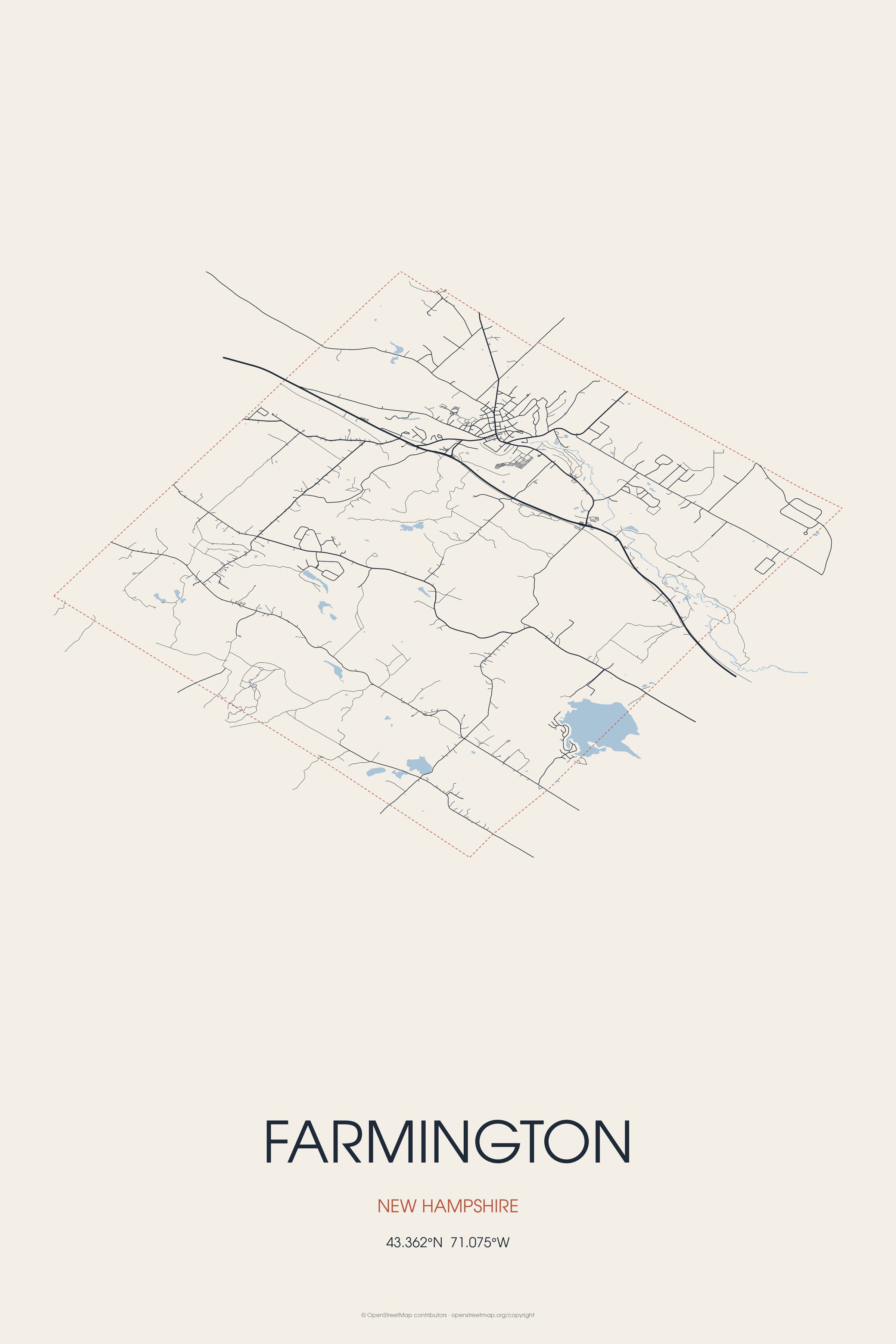
Farmington is home to Blue Job State Forest, the Tebbetts Hill Reservation, and Baxter Lake. Landmarks include Farmington Town Pound and First Congregational Church. Farmington is the birthplace of Henry Wilson, vice president of the United States from 1873 to 1875.
Every piece is drawn from Farmington's own map data and historic archives, then printed and shipped from the USA when you order. No two towns look alike.
Every road in town, on archival matte paper
The same map, in navy and silver
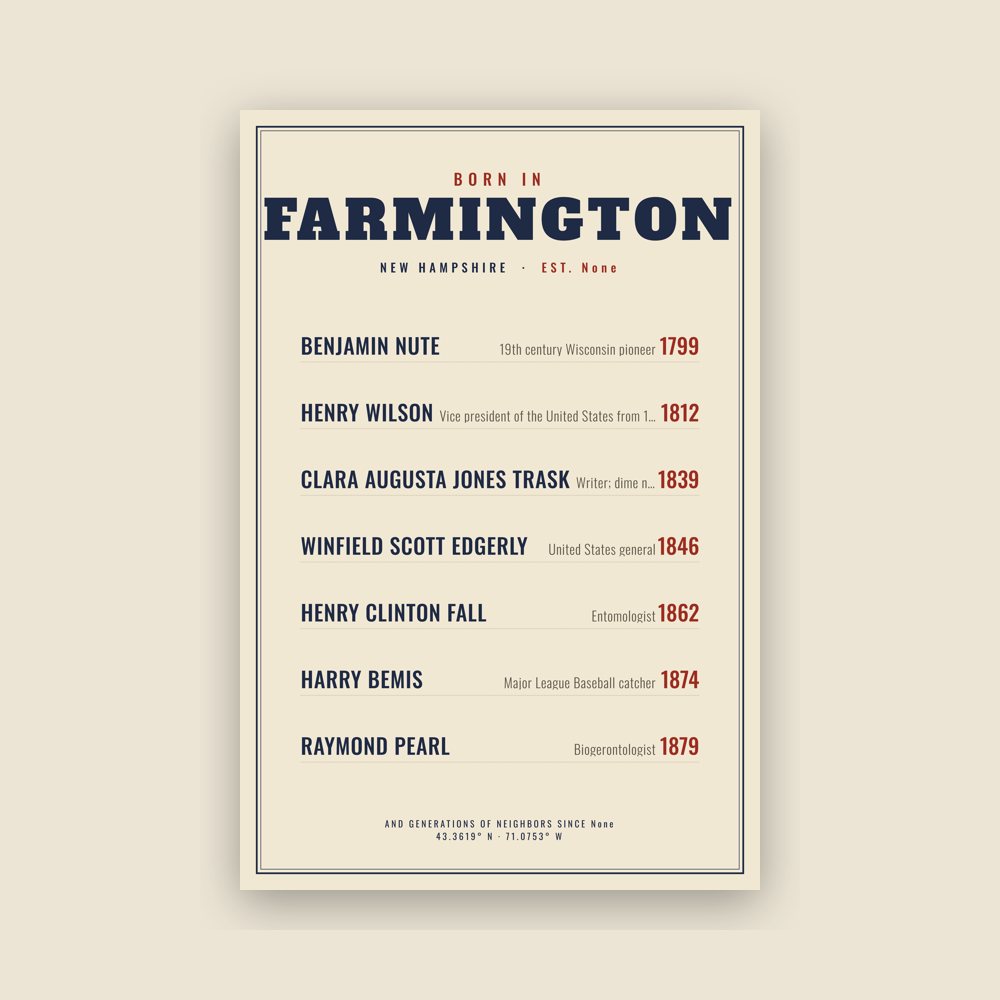
Famous natives, by birth year
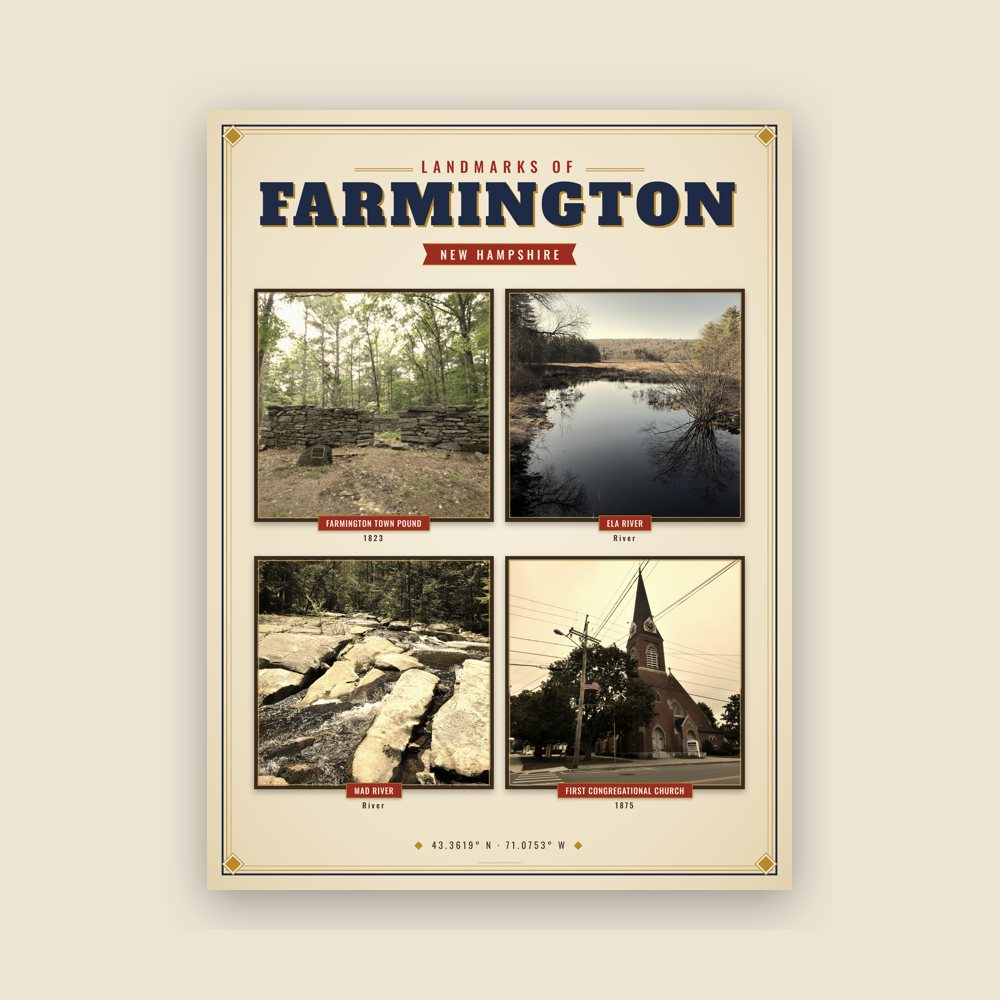
Nine local landmarks, archival matte
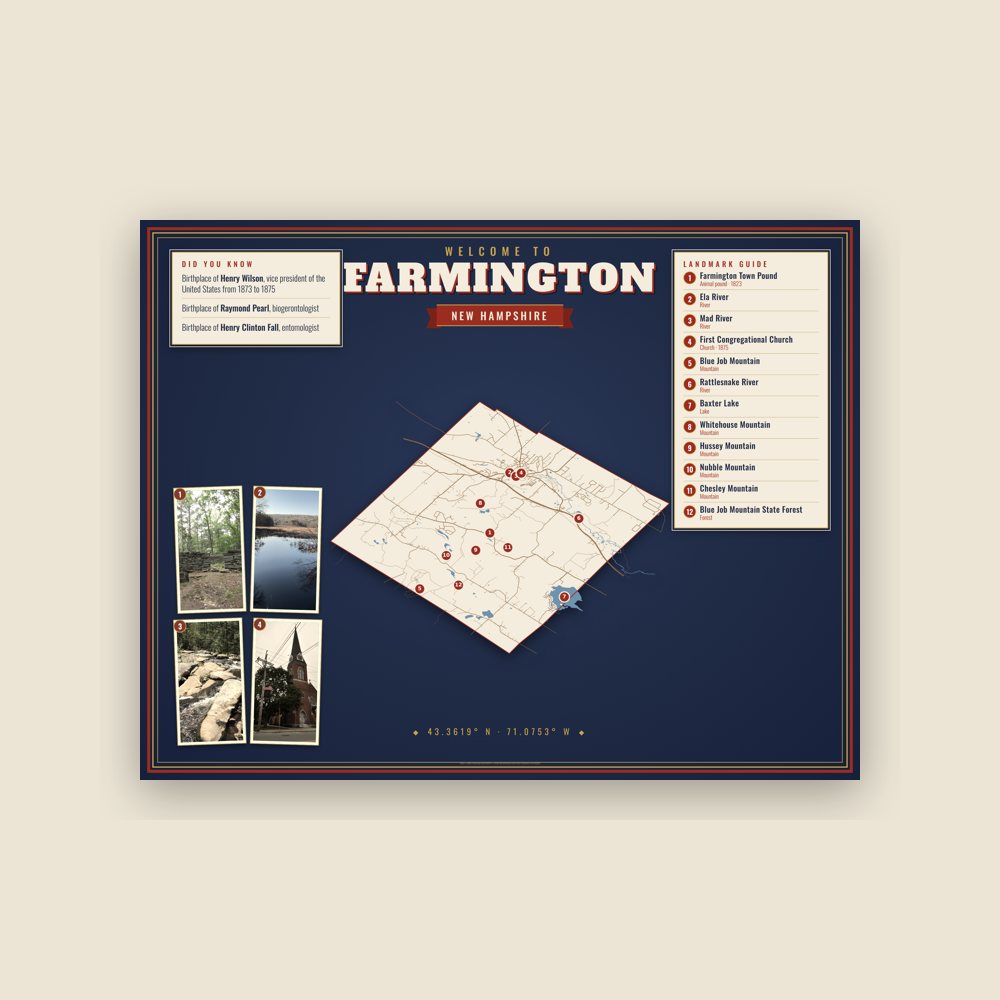
Map of local landmarks, washable fabric
Heavy-blend fleece, street map printed on the back
Soft Bella+Canvas jersey
Glossy ceramic, dishwasher safe
Ceramic keepsake, gold ribbon
Weatherproof, for the front walk
24″×16″, printed coir-look fibers, rubber back
12″×12″ printed wood, ready to hang
Soft-touch, zip cover
Sturdy all-over-print tote
Glossy top, cork back
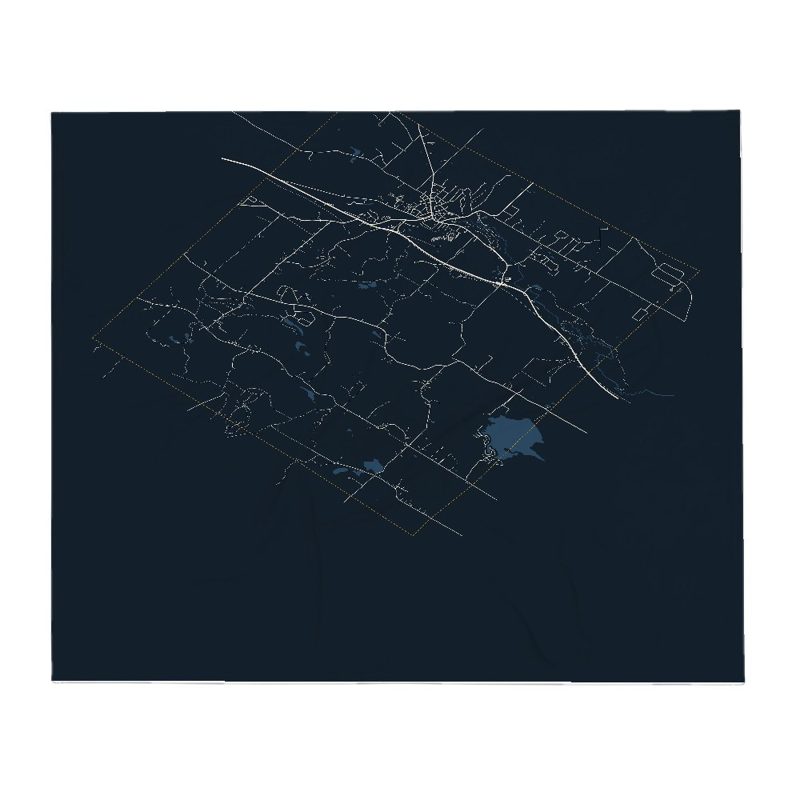
Soft fleece, 50″×60″
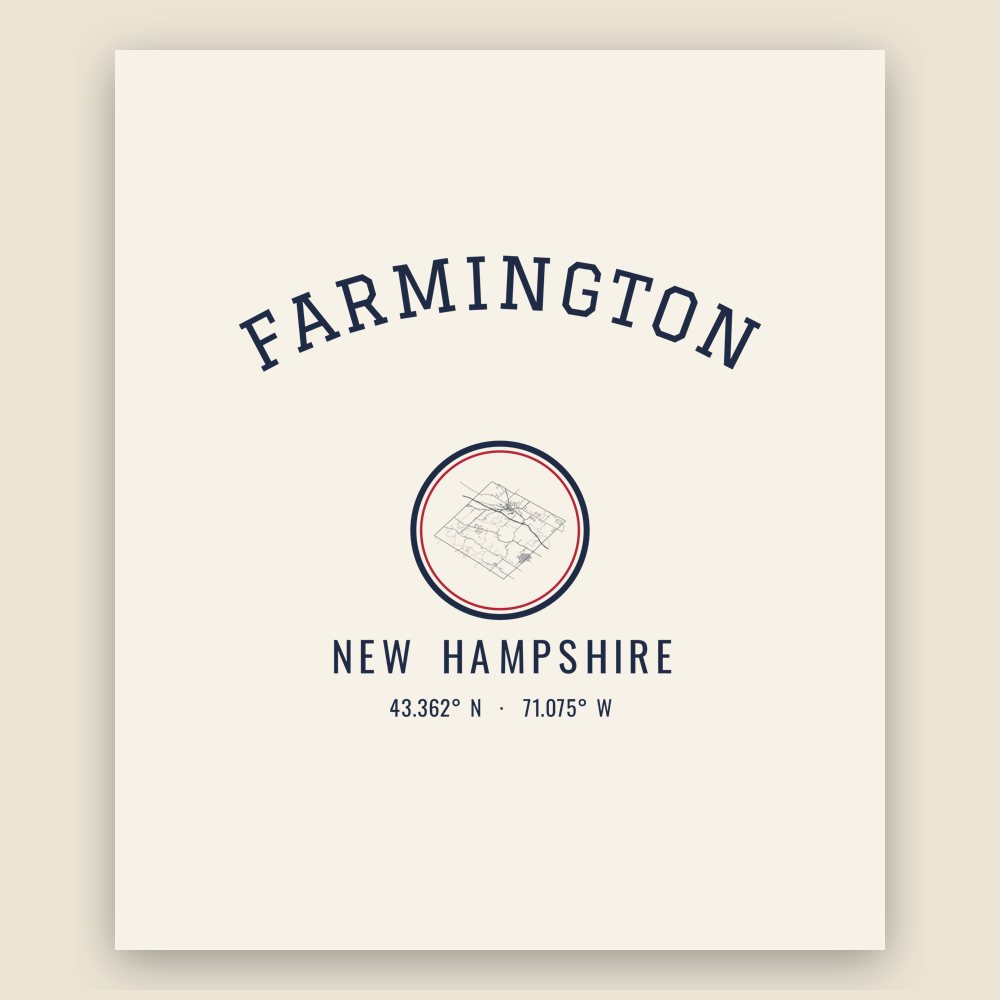
20 oz, double-wall stainless
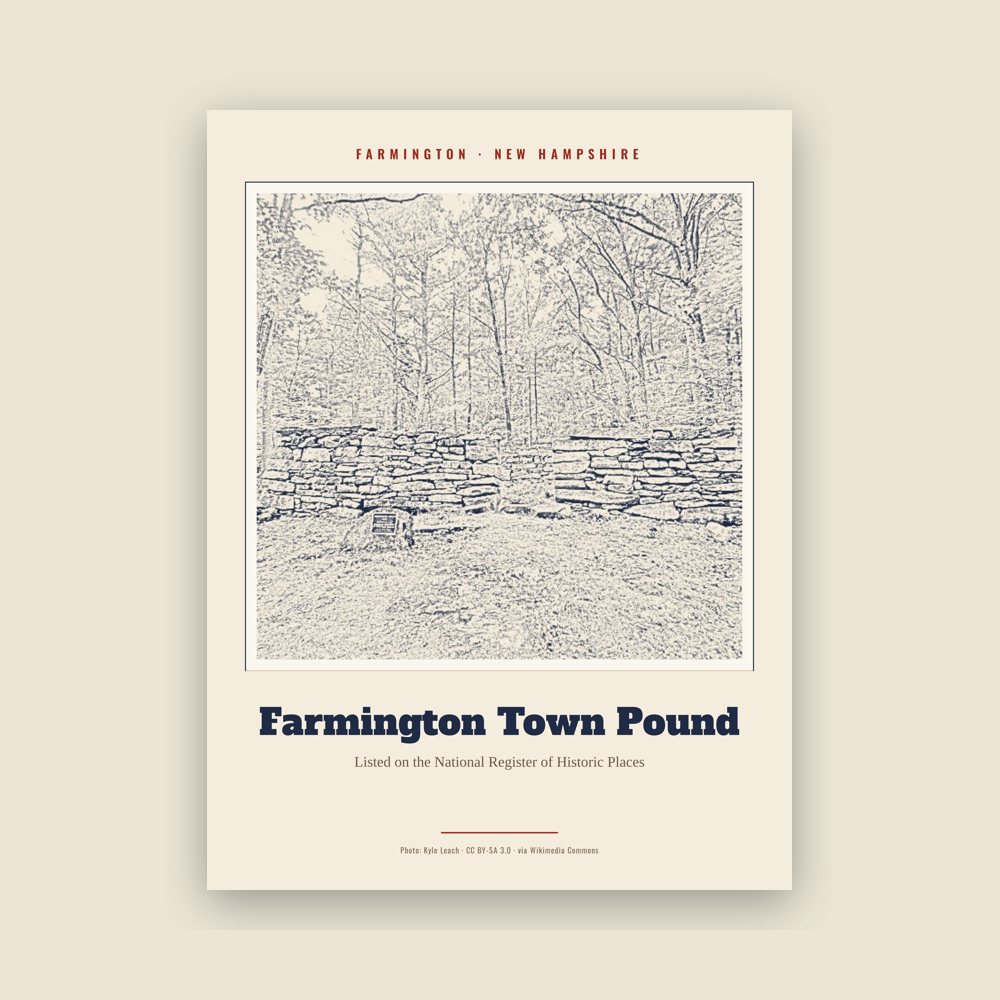
Archival matte print of a local landmark, credited to its photographer
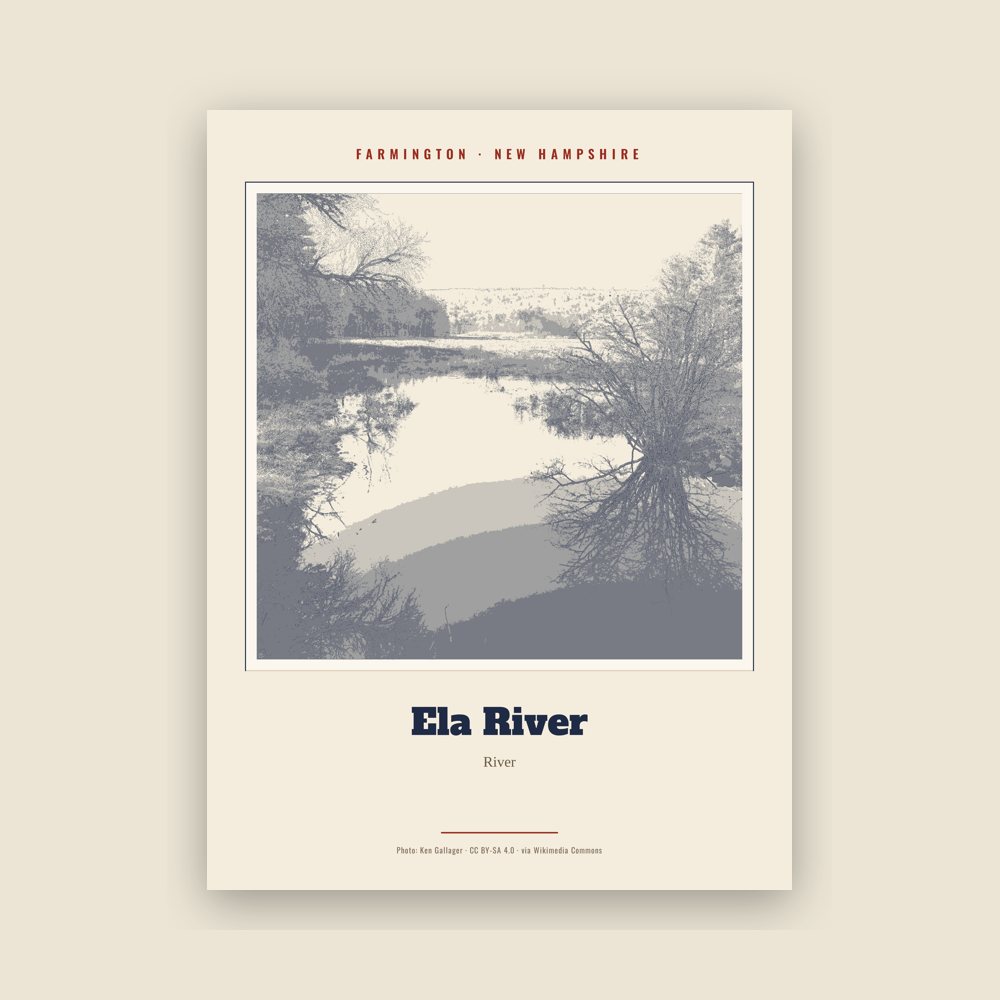
Archival matte print of a local landmark, credited to its photographer
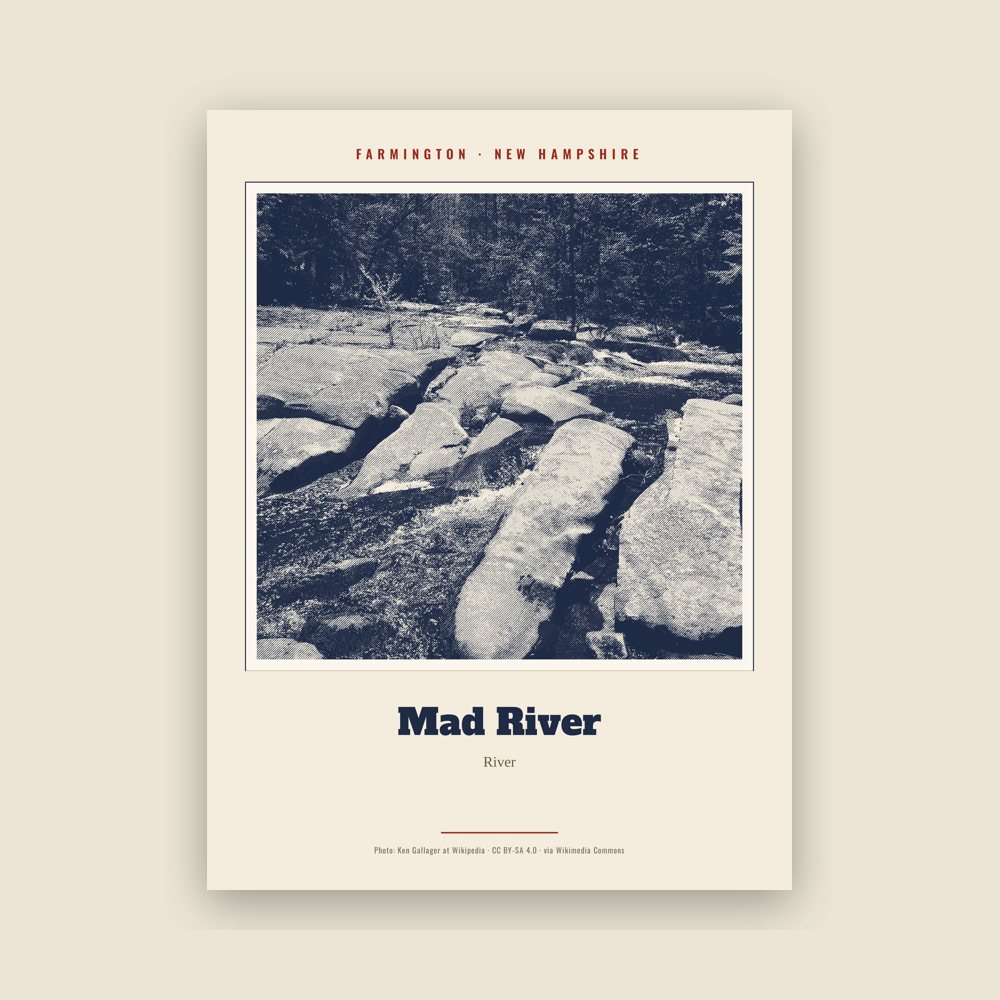
Archival matte print of a local landmark, credited to its photographer
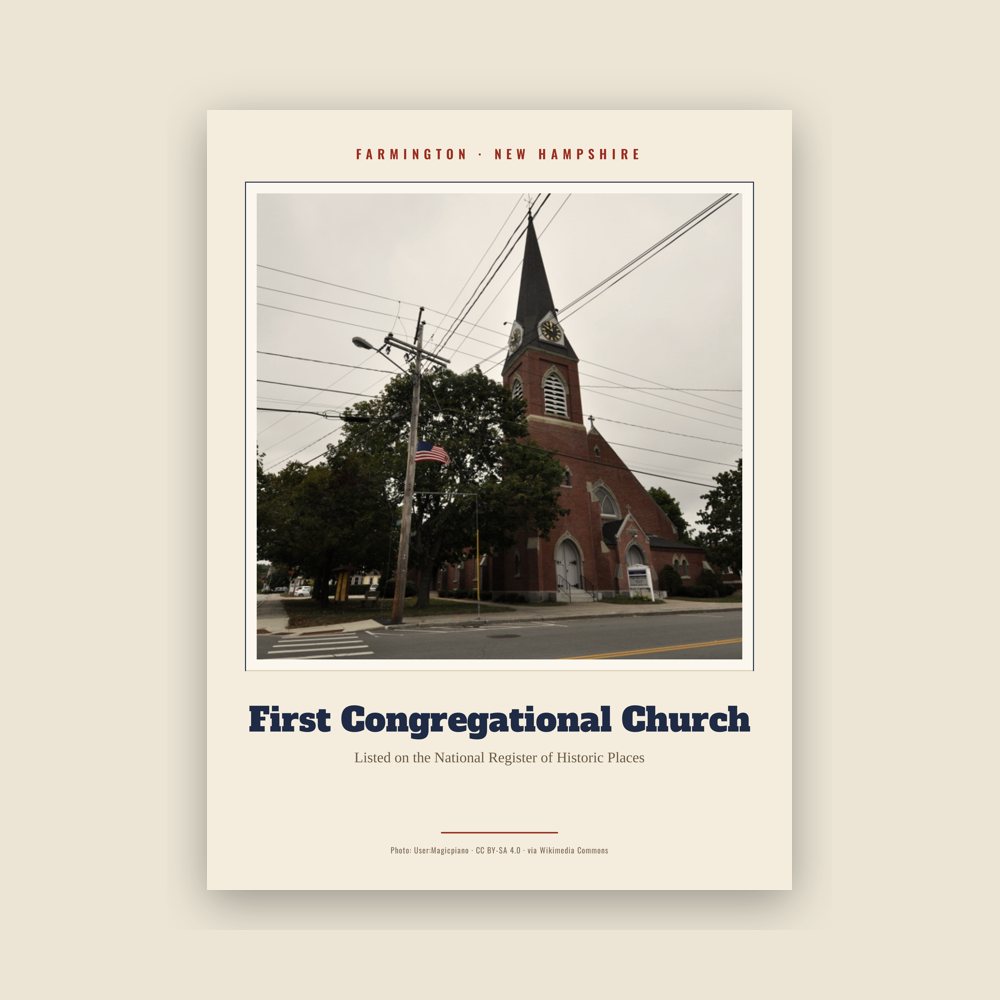
Archival matte print of a local landmark, credited to its photographer
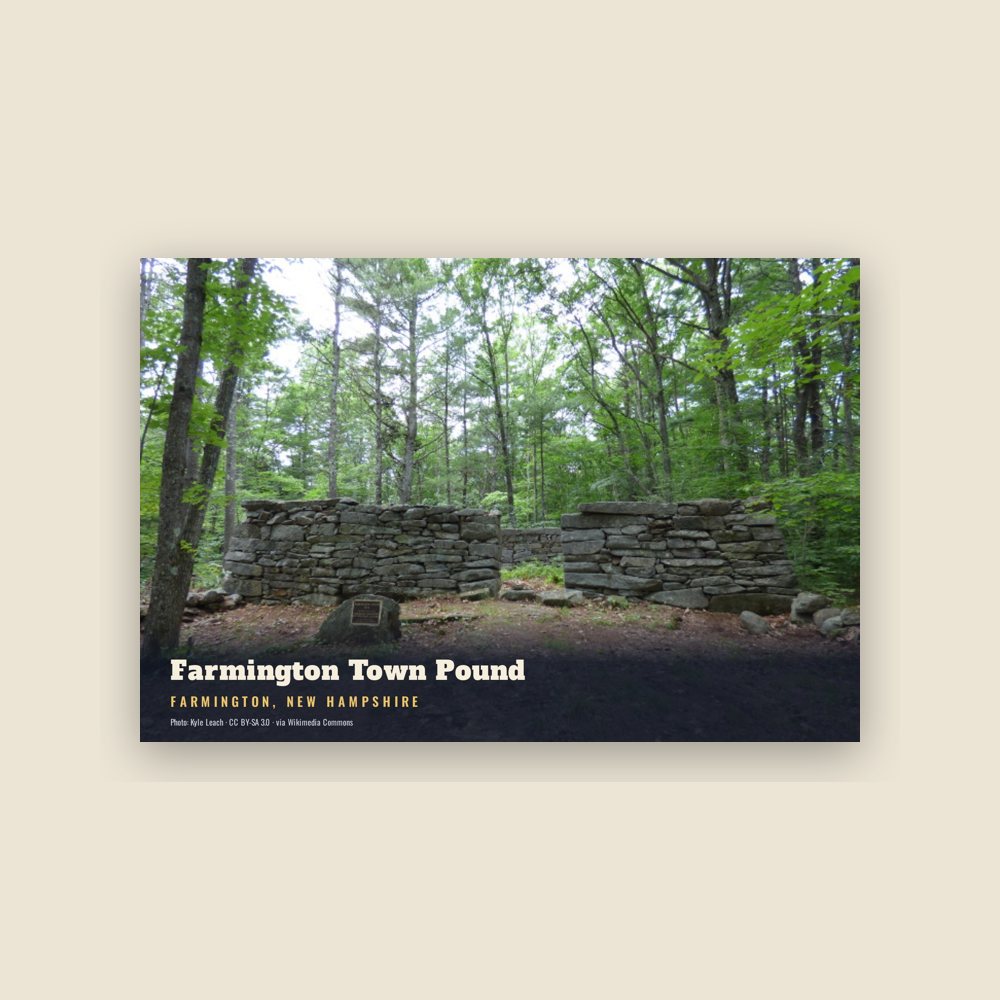
6″×4″ postcard, glossy front
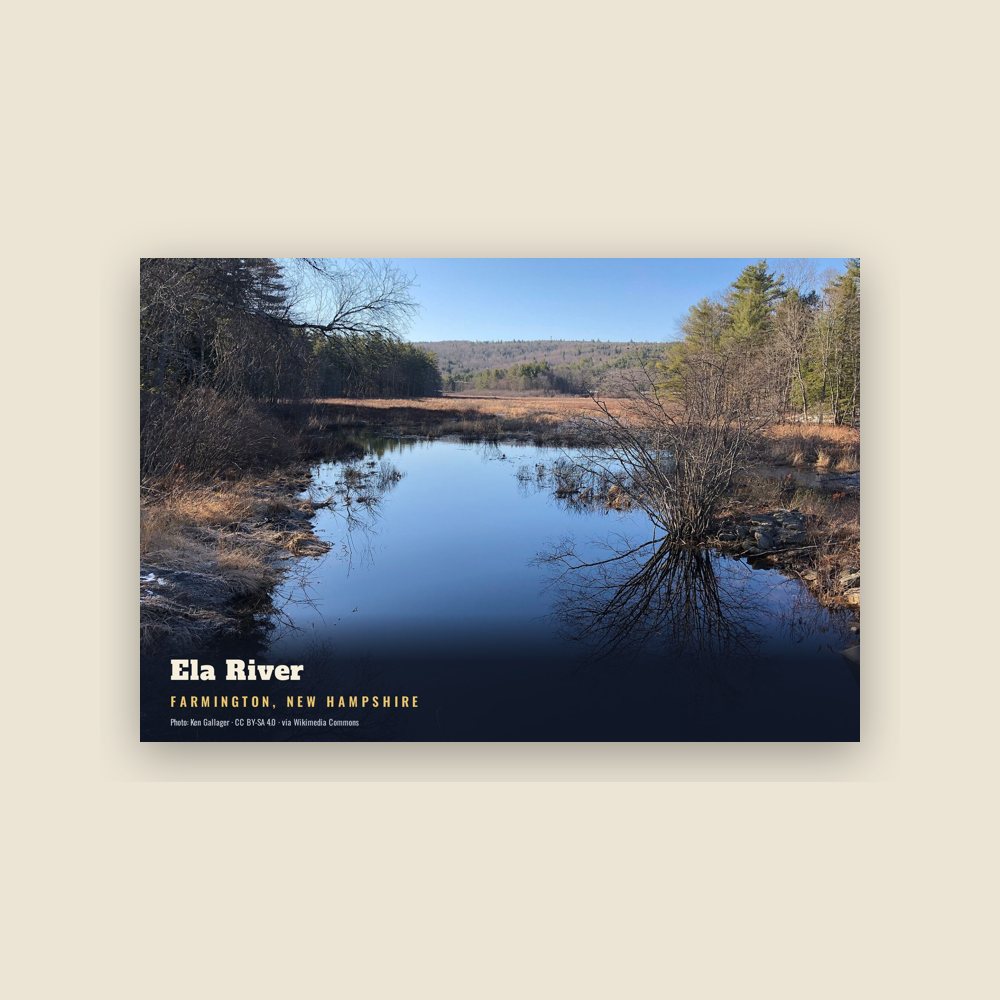
6″×4″ postcard, glossy front
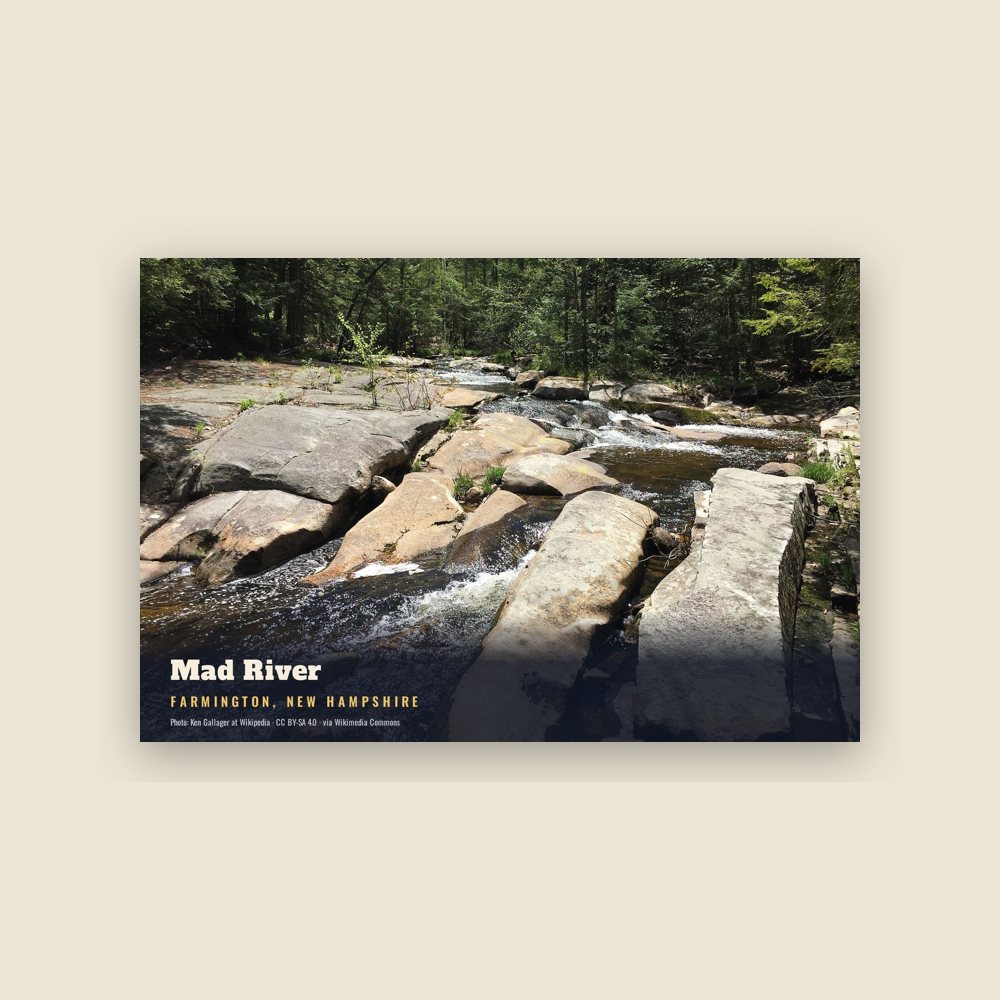
6″×4″ postcard, glossy front
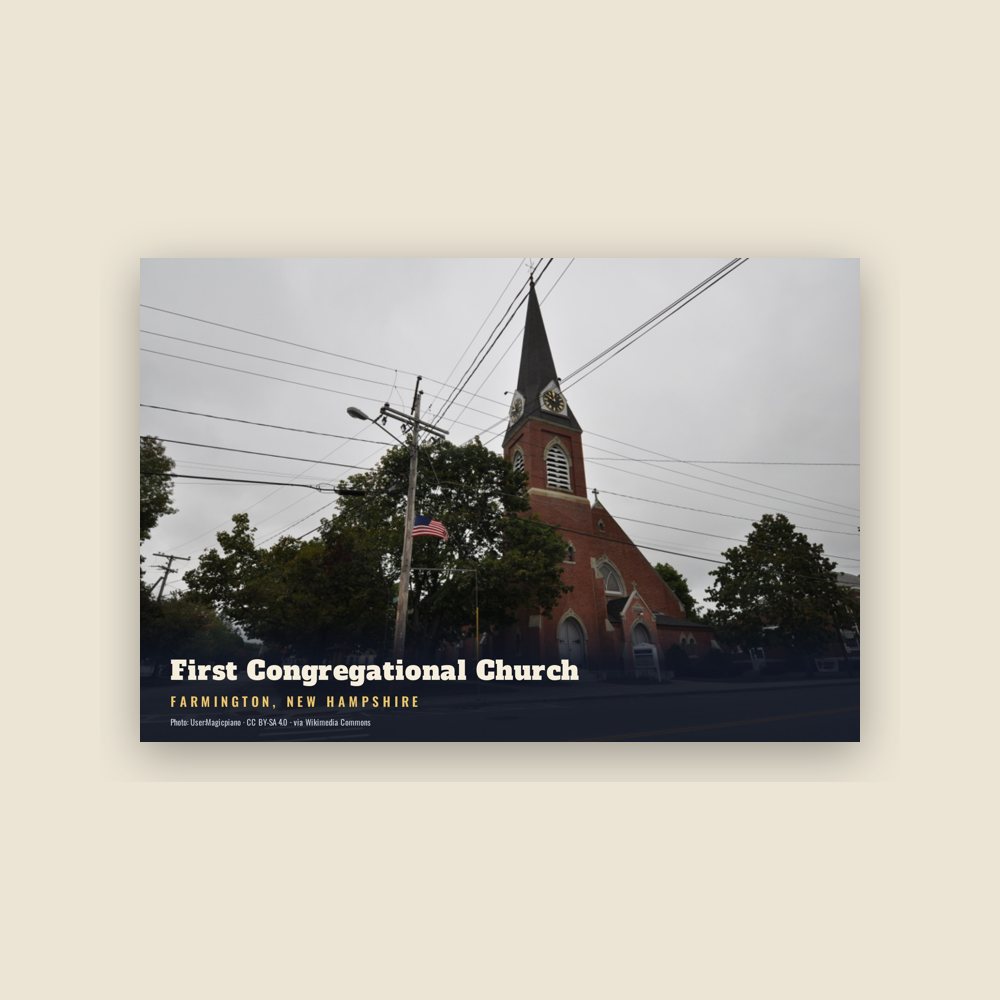
6″×4″ postcard, glossy front
Population 2010: 6,786 → 2020: 6,722
From Wikidata (CC0).
The native Abenaki people called the area Chemung, meaning "canoe place", and used the three rivers—the Cocheco, the Ela, and the Mad—for transportation. They had a camping ground on Meetinghouse Hill, where they built birch bark canoes. Otherwise, the river valley was wilderness, through which the native peoples from the north traveled to and from Lake Winnipesaukee on their way to other areas and hunting grounds.
As European settlement of New Hampshire began to spread, the area that would become Farmington began as the Northwest Parish of Rochester, which was chartered in 1722. As the native peoples became displaced in the regions, they raided area settlements in and around Dover. To stop the raids, in 1721 the colonial assembly in Portsmouth approved construction of a fort at the foot of the lake, with a soldiers' road built from Dover to supply it. In 1722, Bay Road was surveyed and completed. Along its course the town of Farmington would grow.
The last native attack in the general region occurred in 1748, and by 1749 the Native Americans living in the area had disappeared from either warfare or disease. Farmers cultivated the rocky soil, and gristmills used water power of streams to grind their grain. Sawmills cut the abundant timber, and the first frame house at the village was built in 1782. In 1790, Jonas March from Portsmouth established a store, behind which teamsters unloaded on his dock the lumber he traded. The area became known as "March's Dock", "Farmington Dock", and finally just "The Dock".
Inhabitants of the Northwest Parish were taxed to support both the meetinghouse and minister on Rochester Hill about 12 miles (19 km) away, a distance which made attendance difficult. A movement began in the 1770s to establish a separate township, and in 1783 a petition for charter was submitted to the state legislature. It was denied, but another petition in 1798 was granted. With about 1,000 inhabitants, Farmington was incorporated. and it was named after its farmland. In 1800, a 40-by-50-foot (12 by 15 m), two-story meetinghouse was erected on Meetinghouse Hill. The same year, John Wingate established a blacksmithy. He would also become proprietor of Wingate's Tavern.
In the 19th century, the community developed a prime shoemaking industry, and was one of the first places to use automated machines instead of handwork. In 1836, shoe manufacturing began at a shop on Spring Street built by E. H. Badger, although it was soon abandoned to creditors. Martin Luther Hayes took over the business, and by 1840 was successful enough to enlarge the building. The town would be connected by railroad to Dover in 1849, with the line extended to Alton Bay in 1851. Shoes were shipped to Boston to be sold at semi-annual auctions for 50 cents a pair.
Following the Civil War, the shoe business boomed and numerous factories were built. Farmington was known as "The Shoe Capital of New Hampshire" for some time. Other factories produced knives, knit underwear, wooden boxes, wooden handles and carriages. A large fire in 1875 destroyed much of the center of town, but the community survived. Brushes were manufactured by the F. W. Browne Company, from which Booker T. Washington ordered twelve street brooms in 1915 for use at the Tuskegee Institute. The town was home to five blacksmith shops, a movie theater, and two hotels. The Panic of 1893 closed all but two large shoe factories. Local industries faded in the latter half of the 20th century. Most of the factories were either demolished or converted into other purposes.
Adapted (trimmed) from the Wikipedia article Farmington, New Hampshire, revision 1378781417 by its contributors, licensed CC BY-SA 4.0.
We share a part of every Farmington sale with local partners, and we'd love to print from your collection. Old photographs, maps and postcards make the best keepsakes.
Partner with us