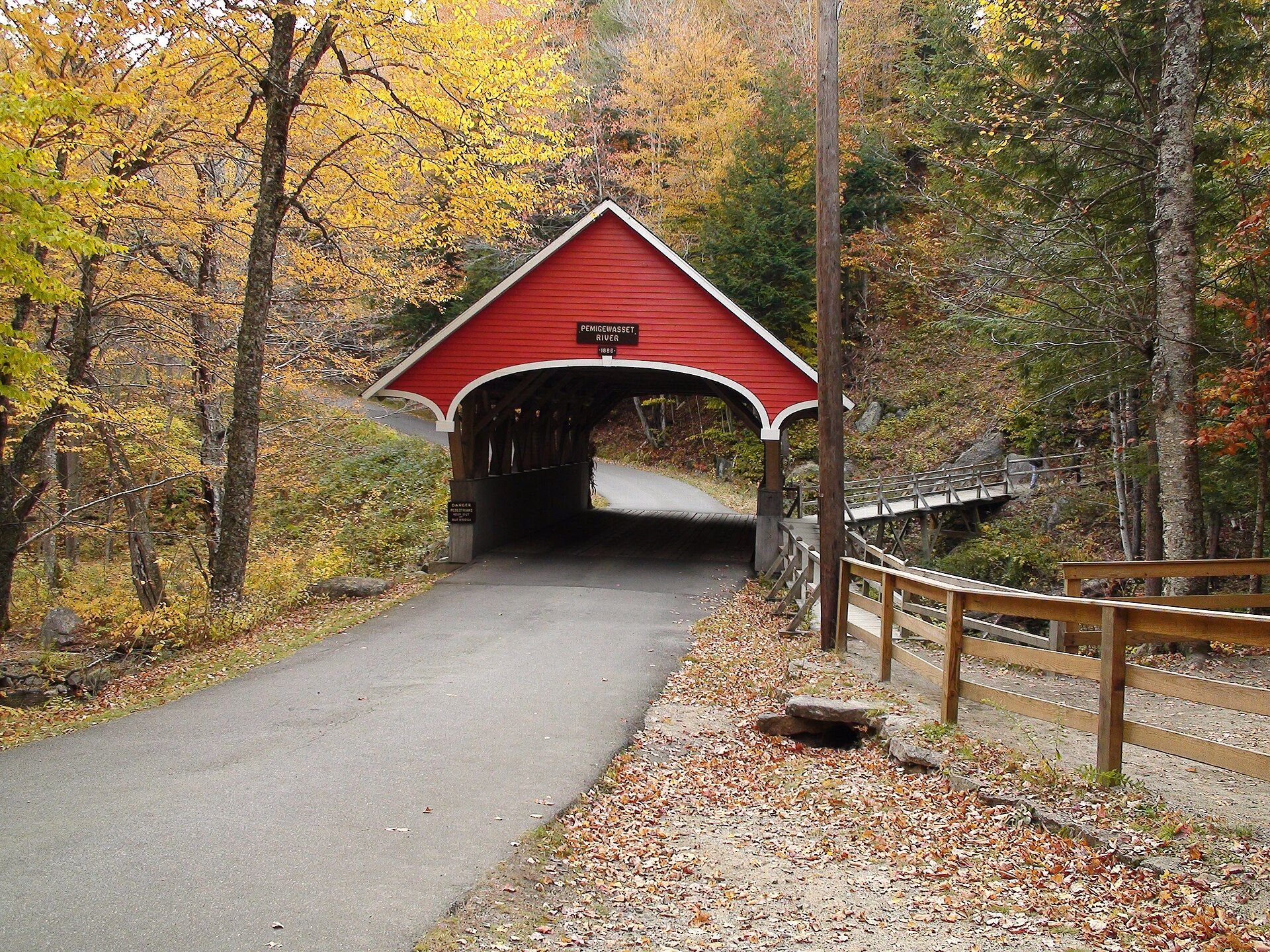
Lincoln is the location of Loon Mountain Ski Resort and associated recreation-centered development. Landmarks include Franconia Notch State Park, Scar Ridge and Clark's Bears. Lincoln is the birthplace of Charles W. MacLean, suffragan bishop of the Episcopal Diocese of Long Island.
Every piece is drawn from Lincoln's own map data and historic archives, then printed and shipped from the USA when you order. No two towns look alike.

Every road in town, on archival matte paper
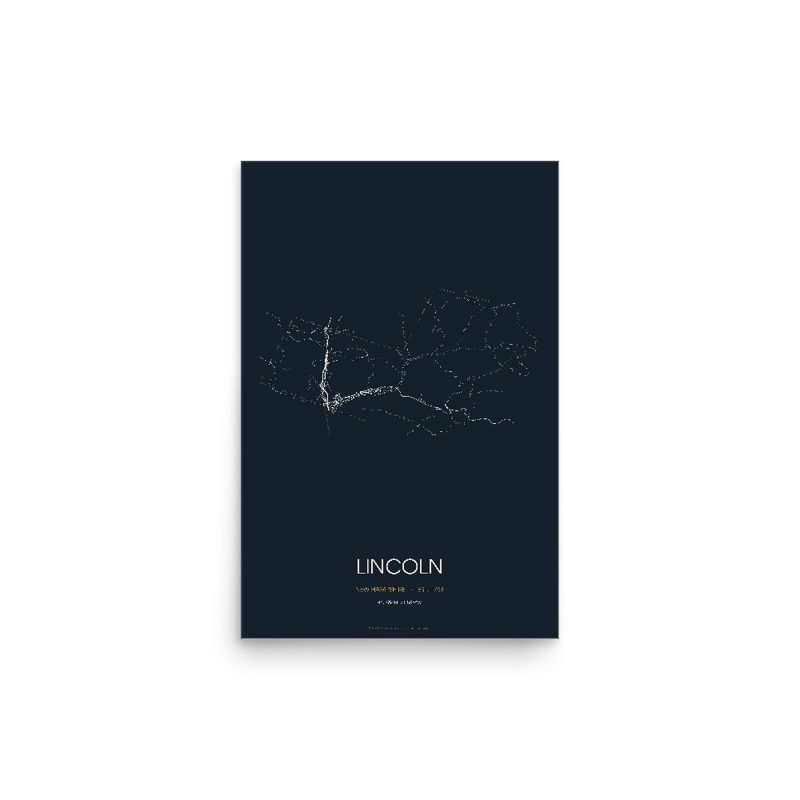
The same map, in navy and silver
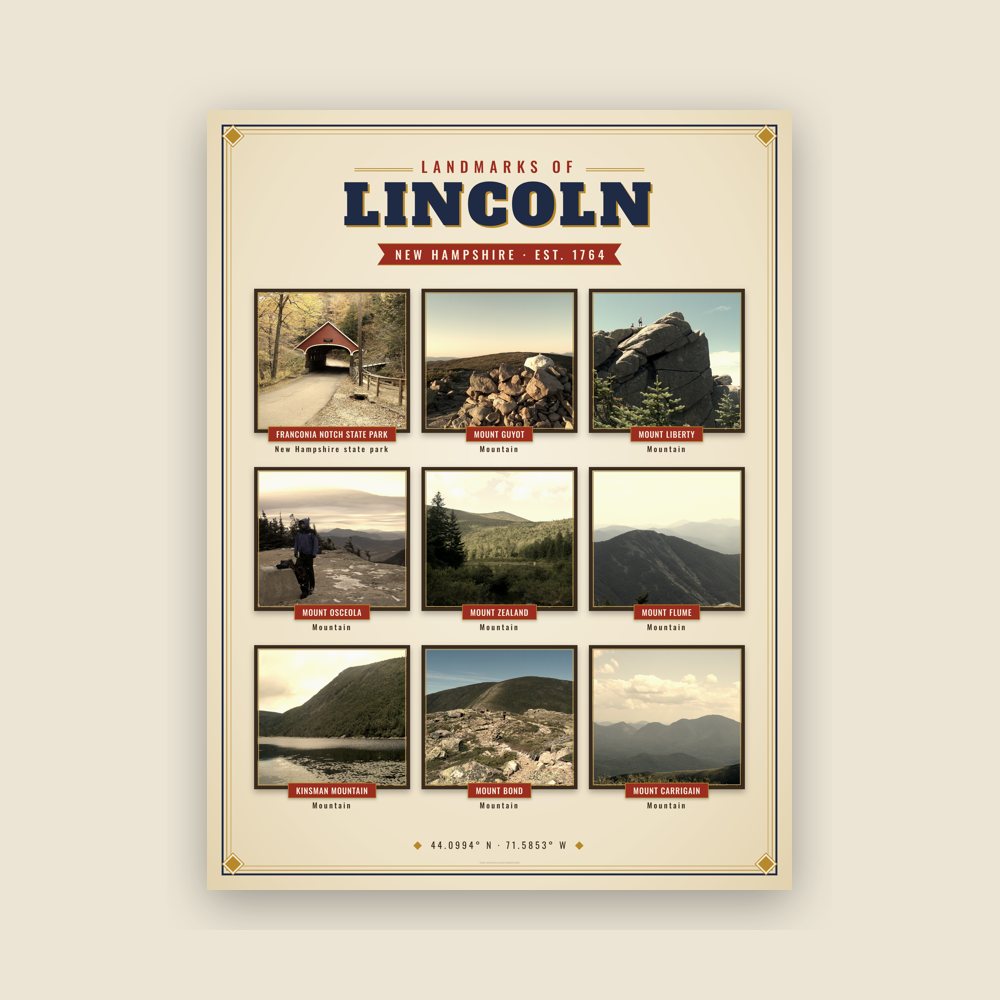
Nine local landmarks, archival matte
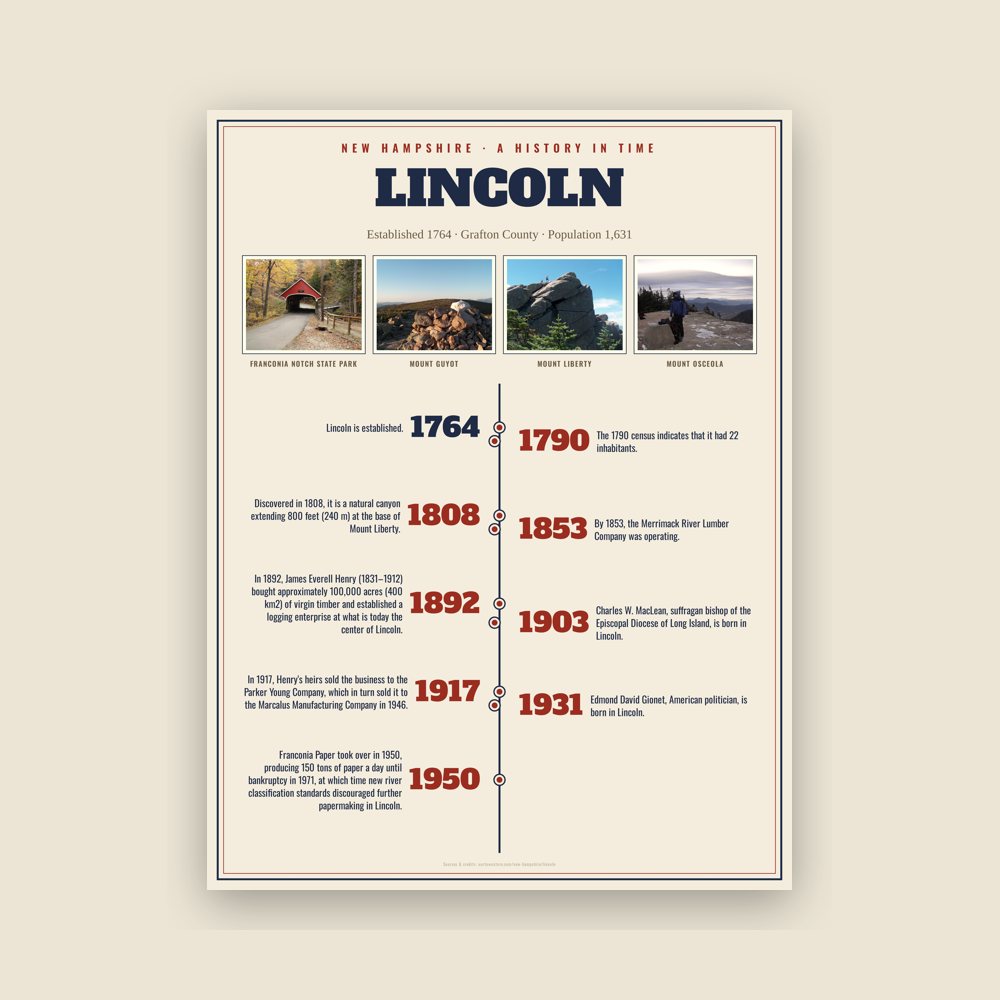
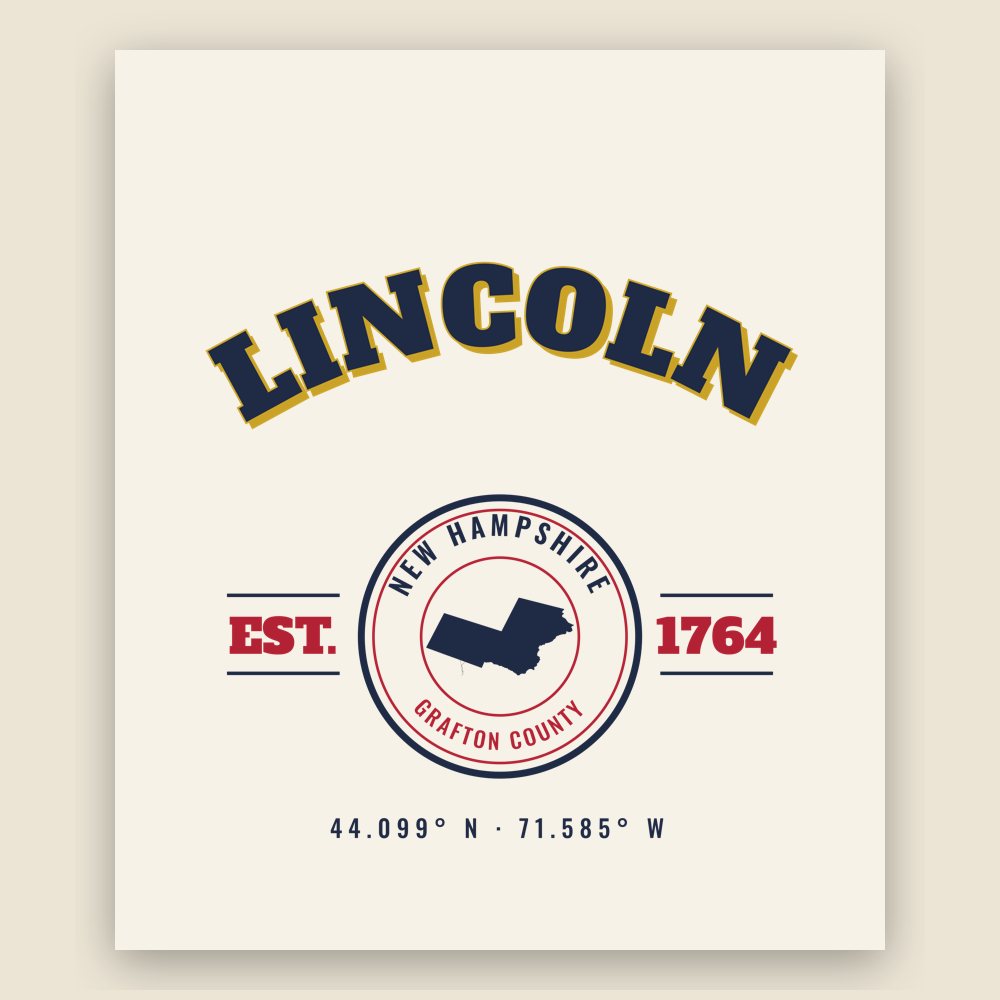
The town's story in dates, from its own records, for home or classroom
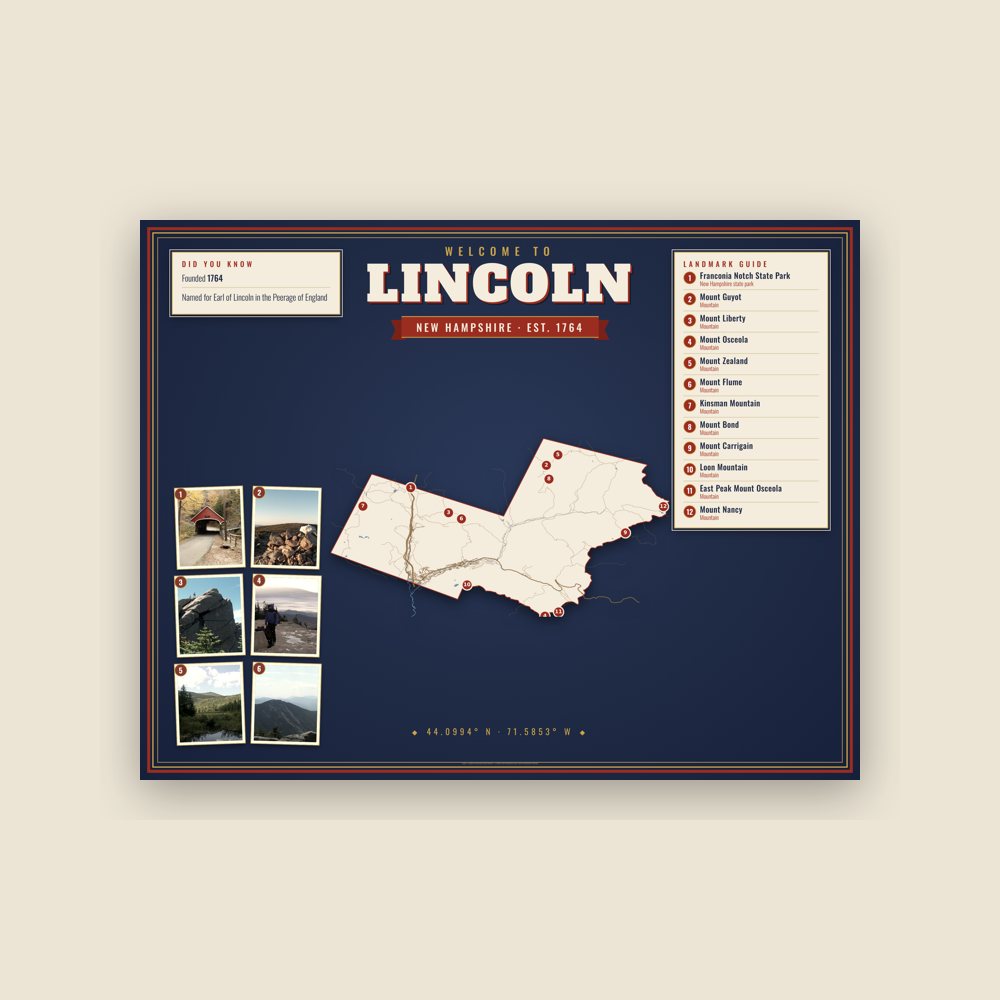
Map of local landmarks, washable fabric
Heavy-blend fleece, street map printed on the back
Soft Bella+Canvas jersey
Glossy ceramic, dishwasher safe
Ceramic keepsake, gold ribbon
Weatherproof, for the front walk
24″×16″, printed coir-look fibers, rubber back
12″×12″ printed wood, ready to hang
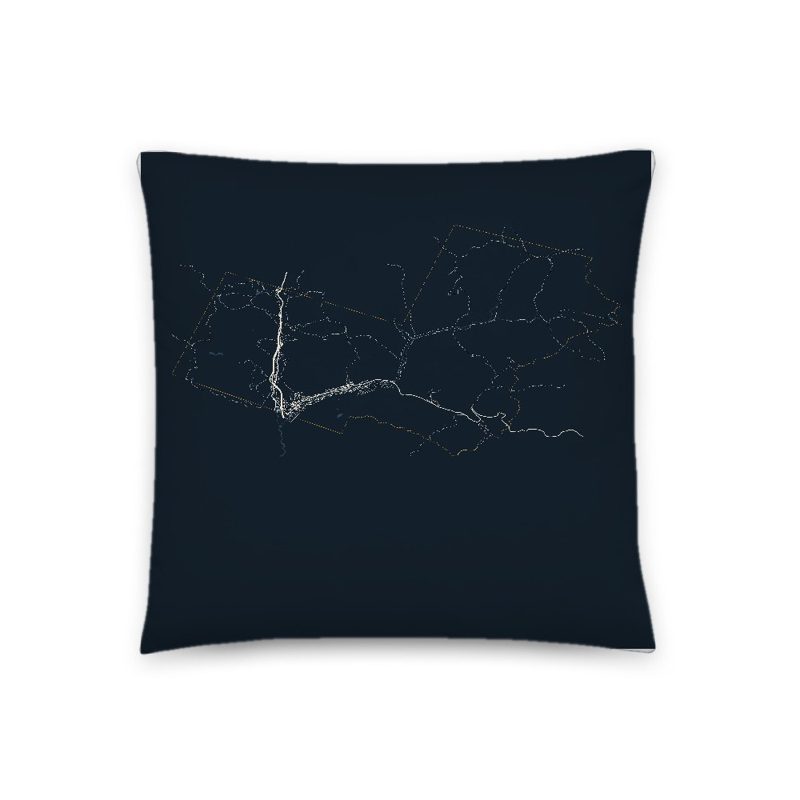
Soft-touch, zip cover
Sturdy all-over-print tote
Glossy top, cork back
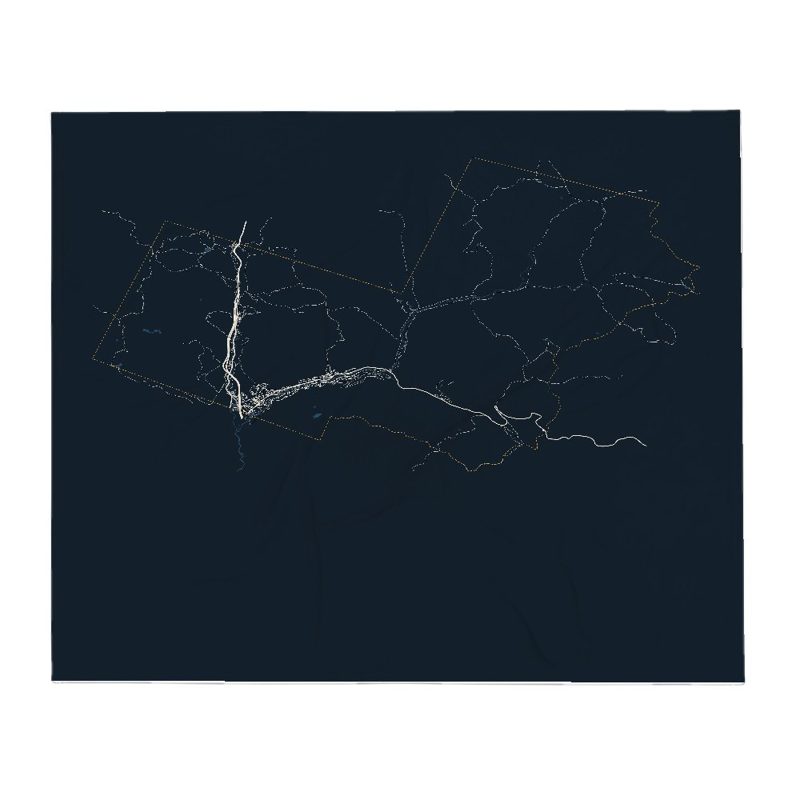
Soft fleece, 50″×60″
20 oz, double-wall stainless
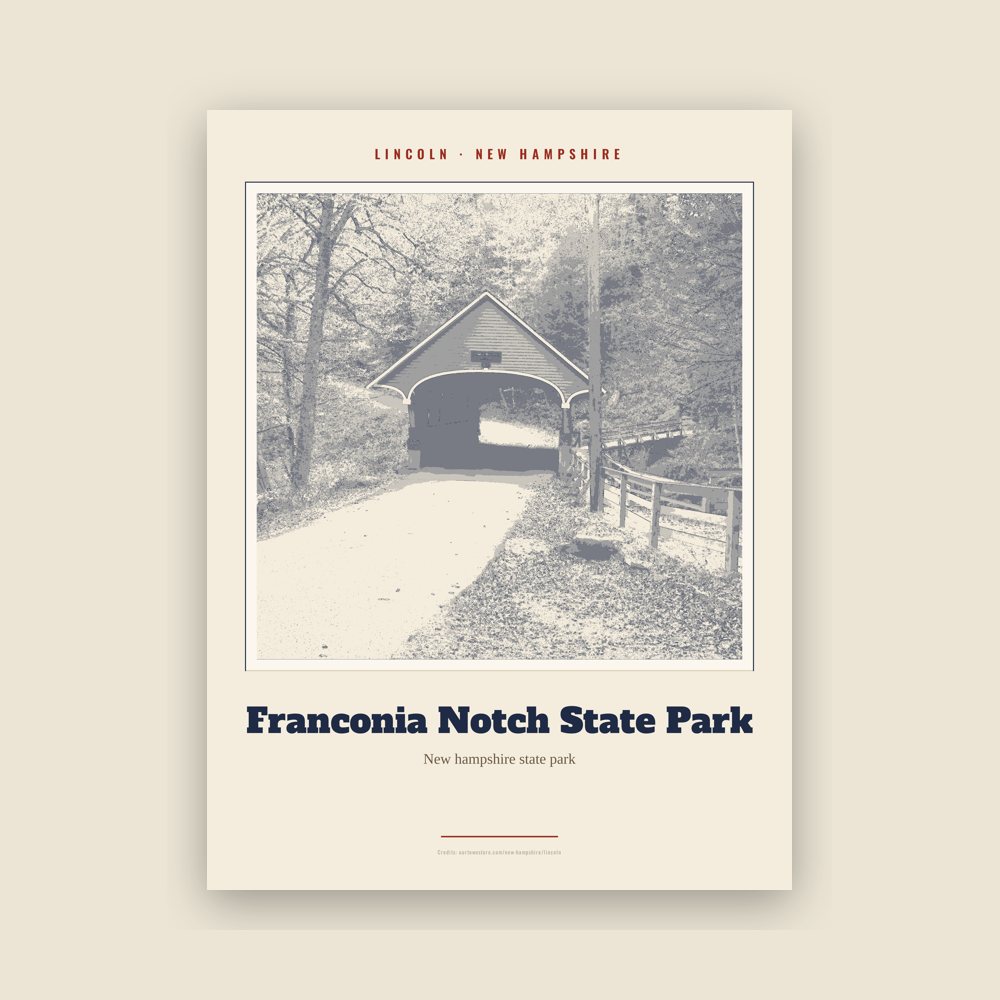
Archival matte print of a local landmark, credited to its photographer
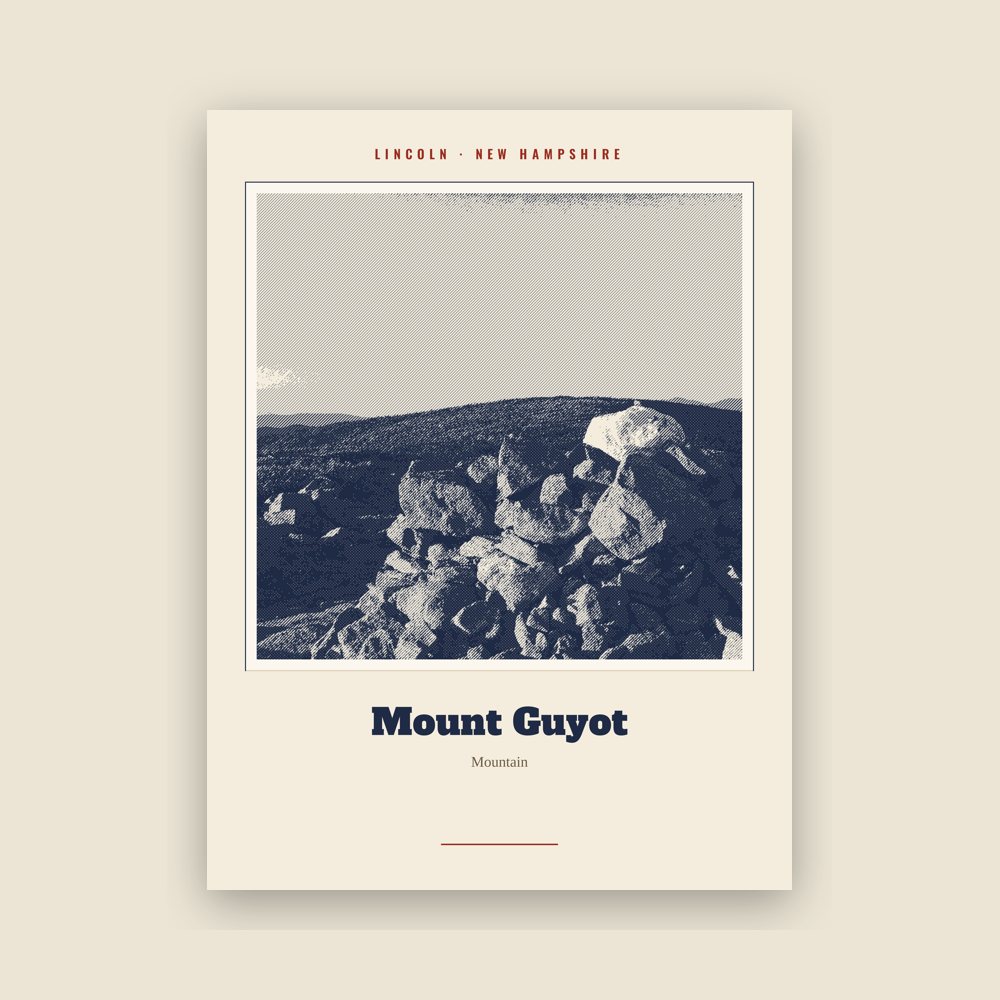
Archival matte print of a local landmark, credited to its photographer
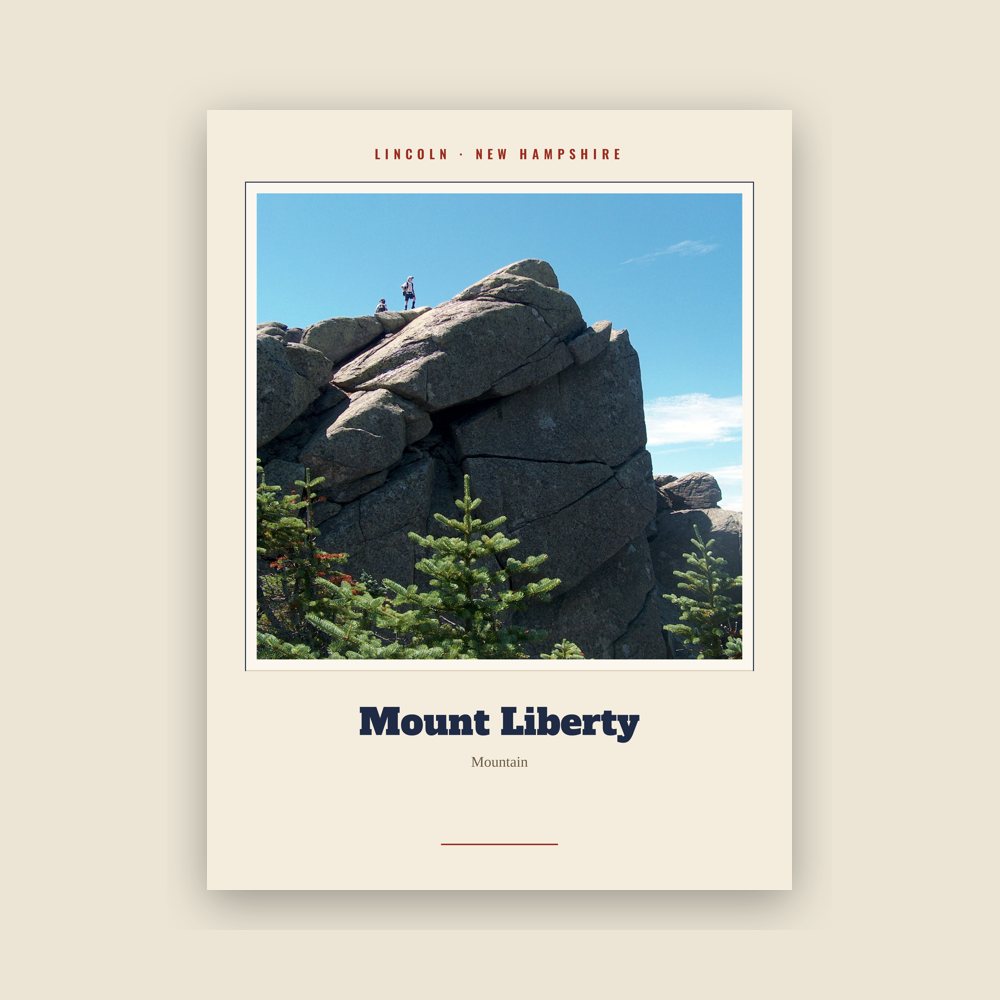
Archival matte print of a local landmark, credited to its photographer
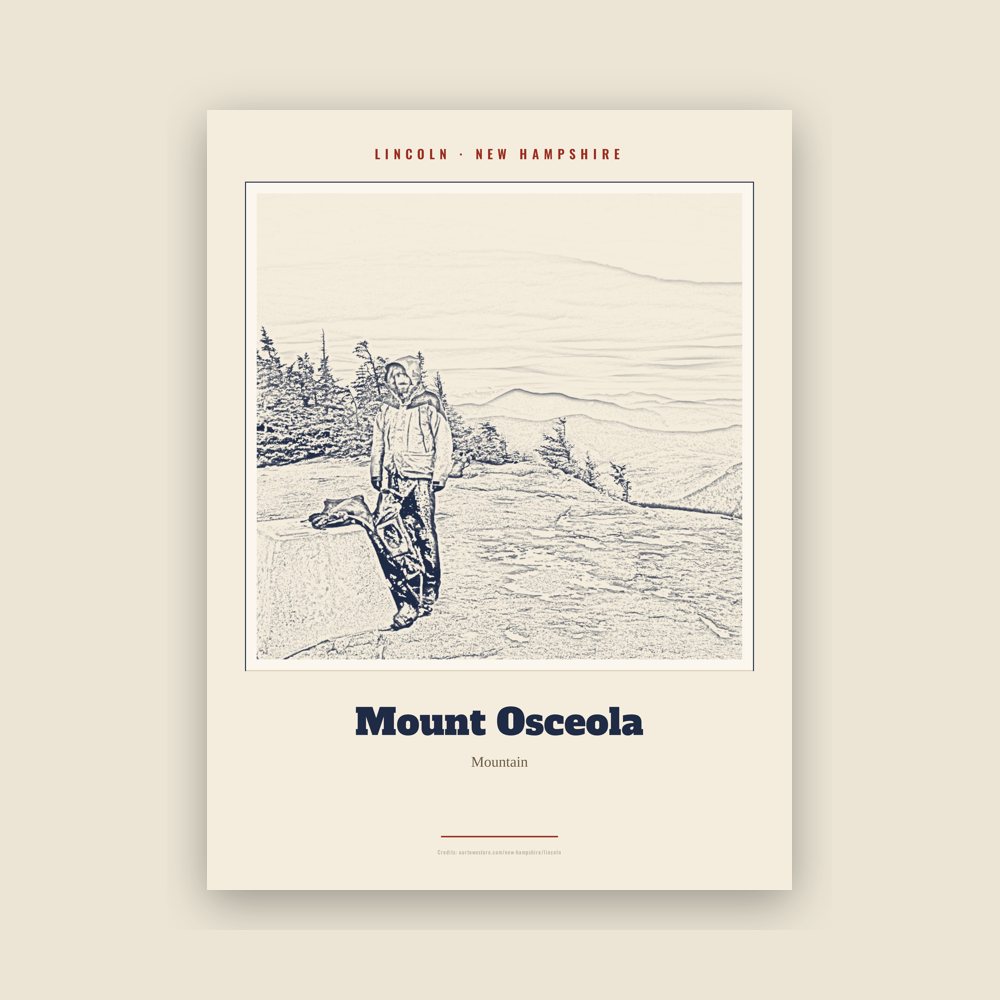
Archival matte print of a local landmark, credited to its photographer
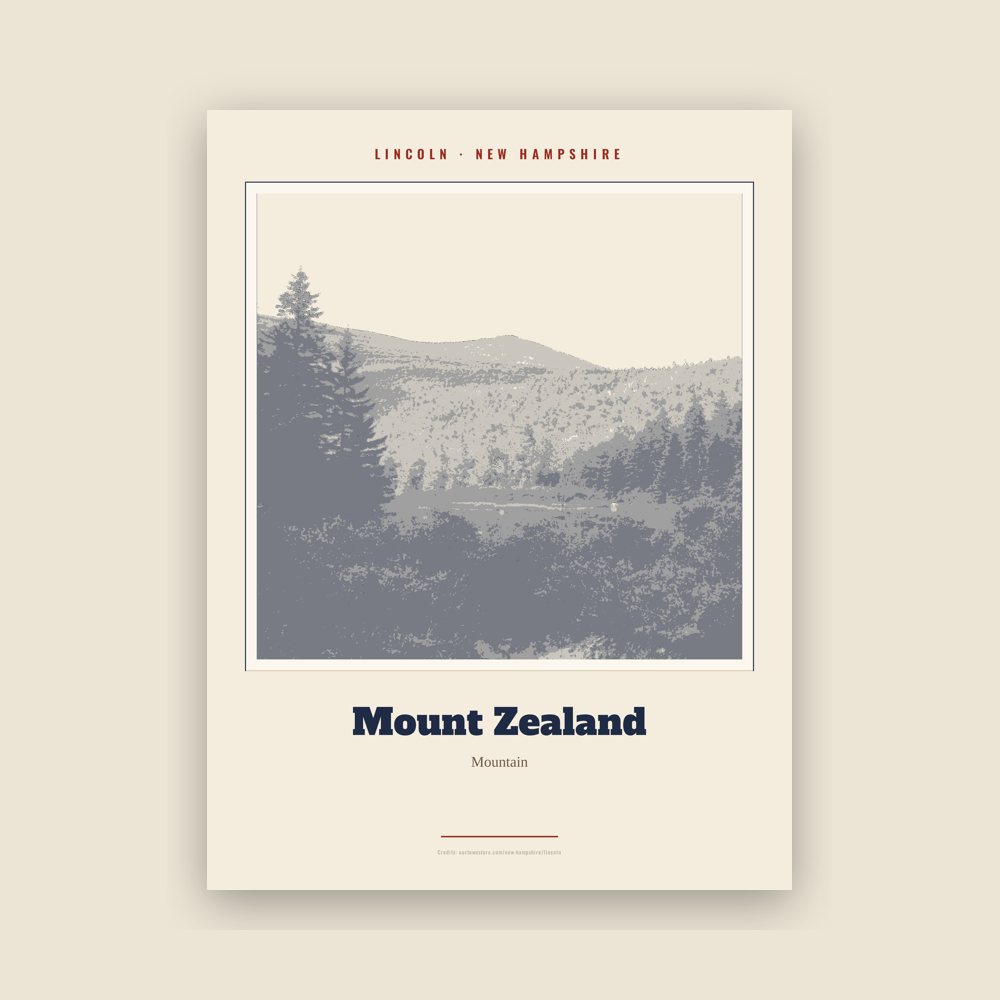
Archival matte print of a local landmark, credited to its photographer
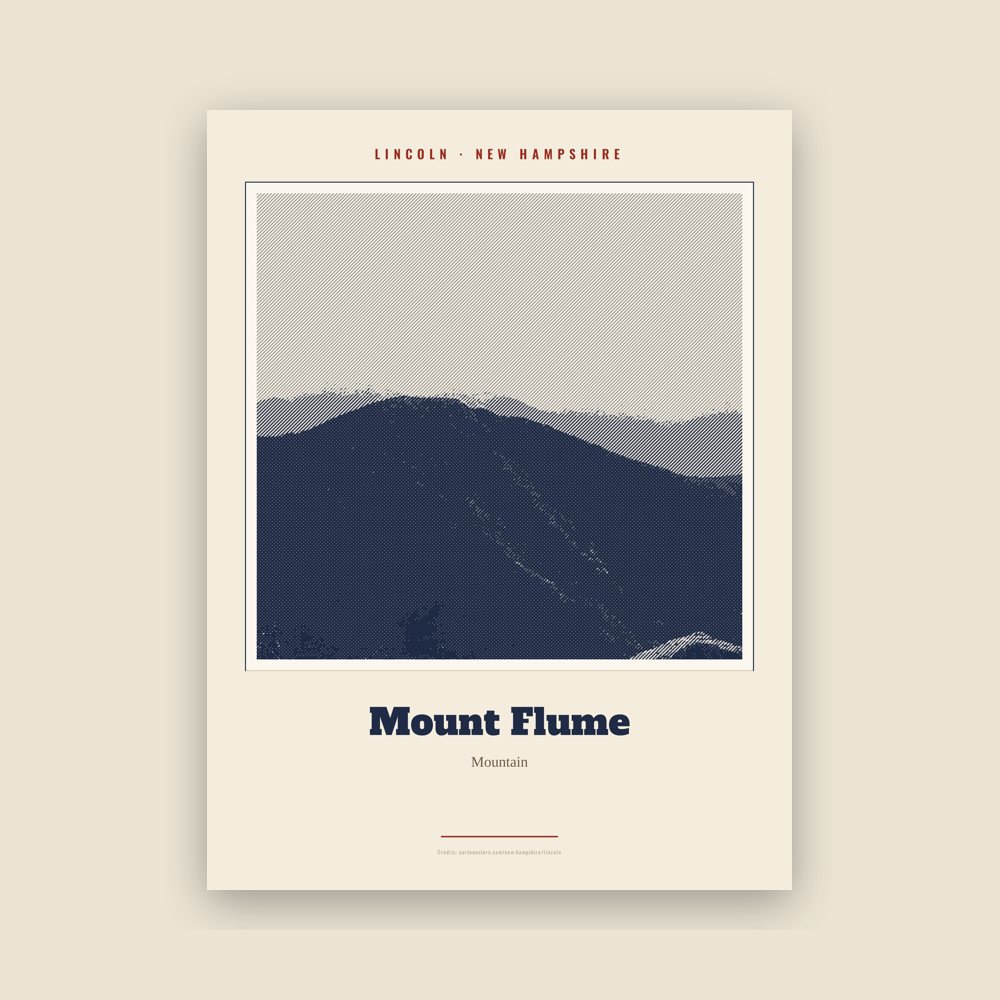
Archival matte print of a local landmark, credited to its photographer
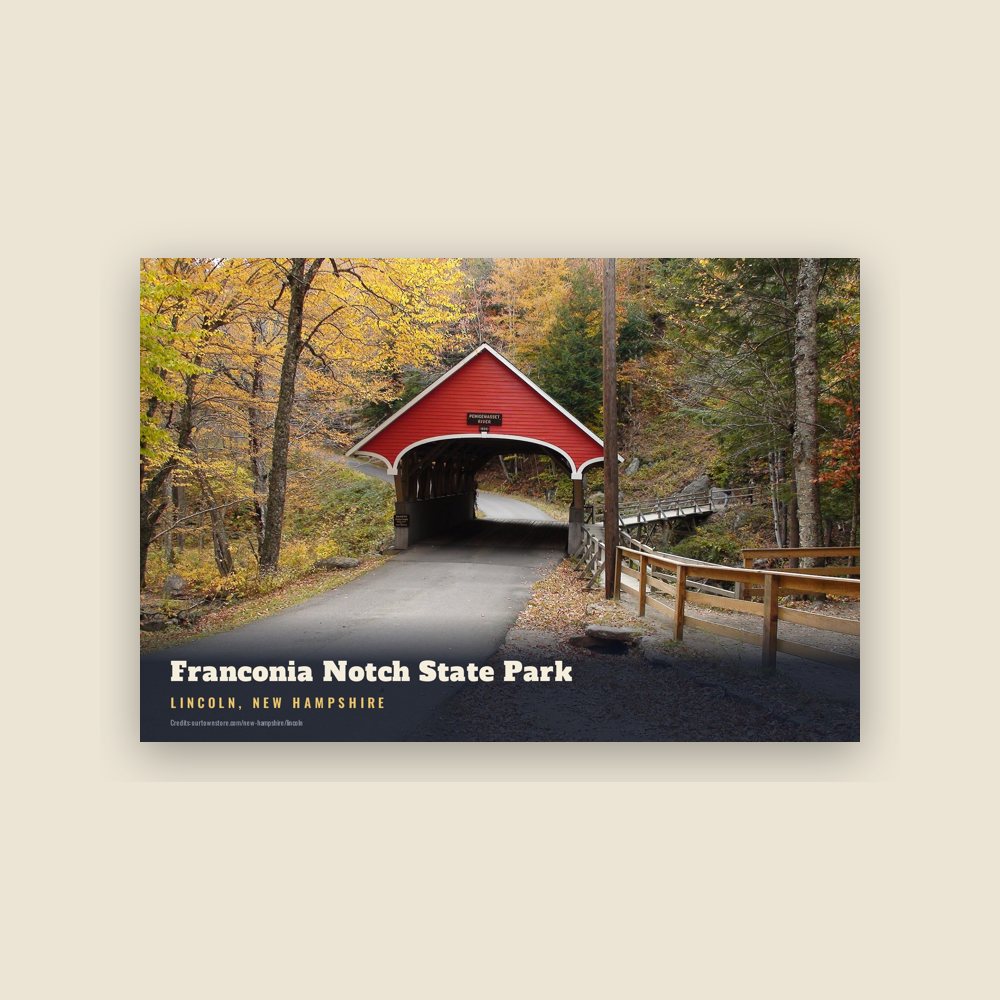
6″×4″ postcard, glossy front
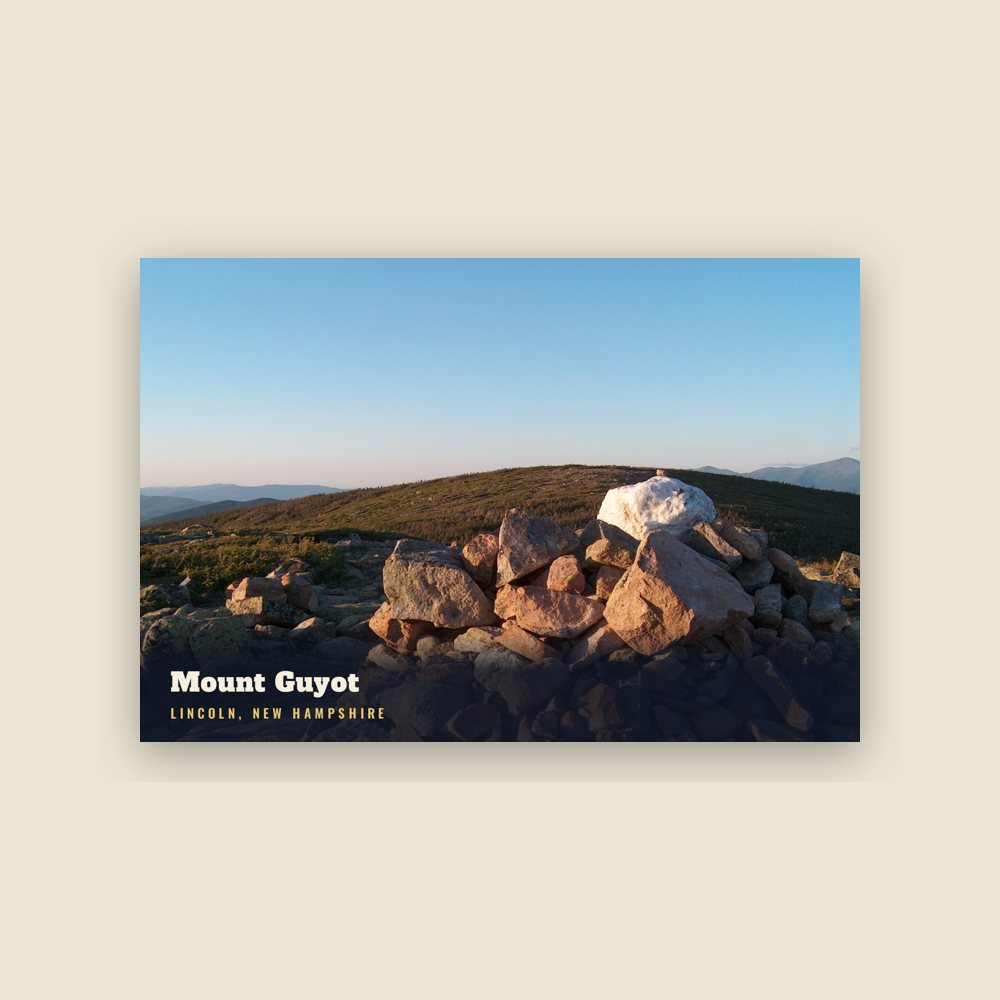
6″×4″ postcard, glossy front
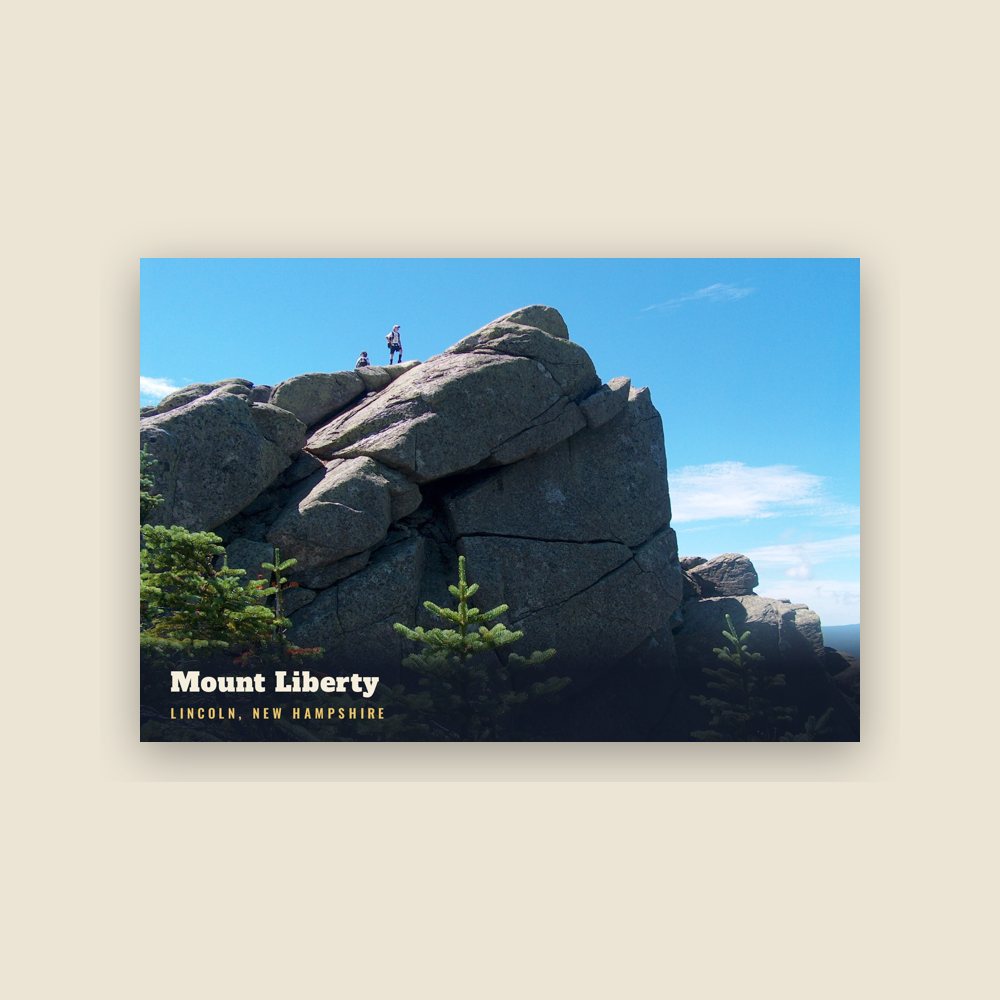
6″×4″ postcard, glossy front
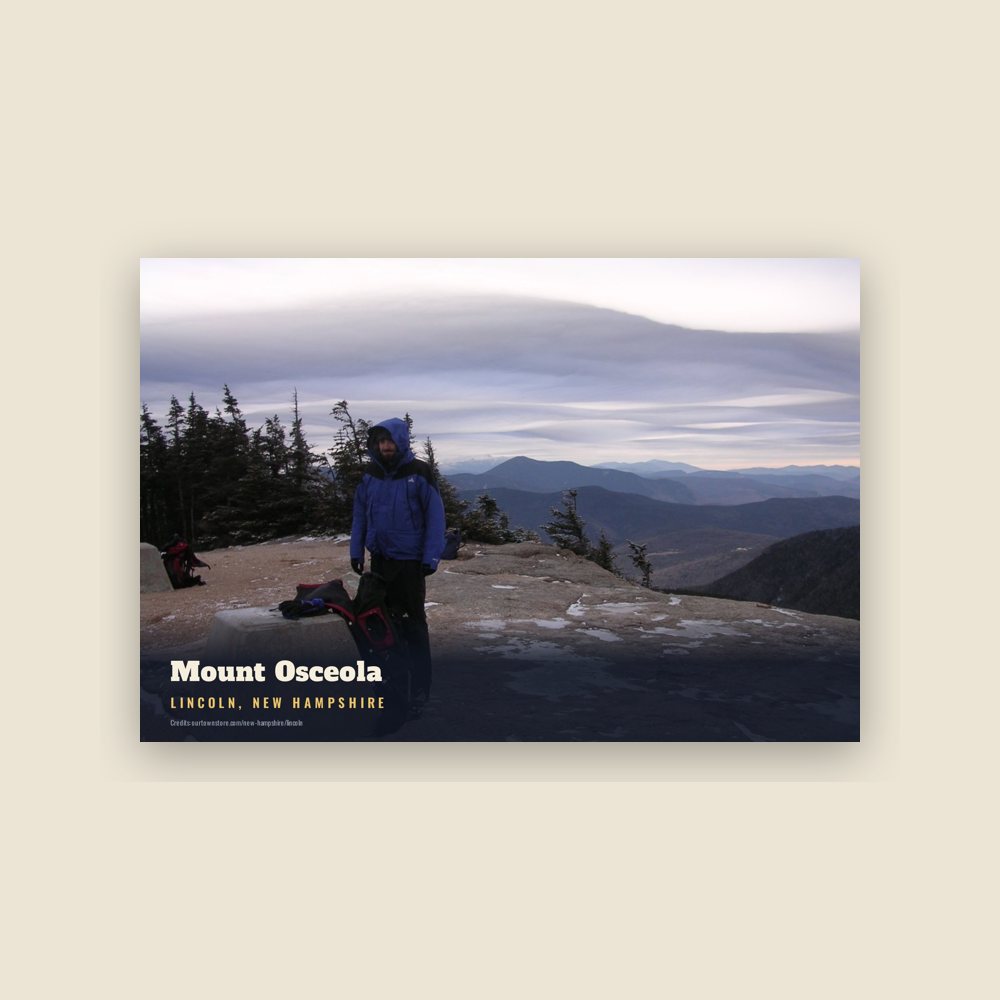
6″×4″ postcard, glossy front
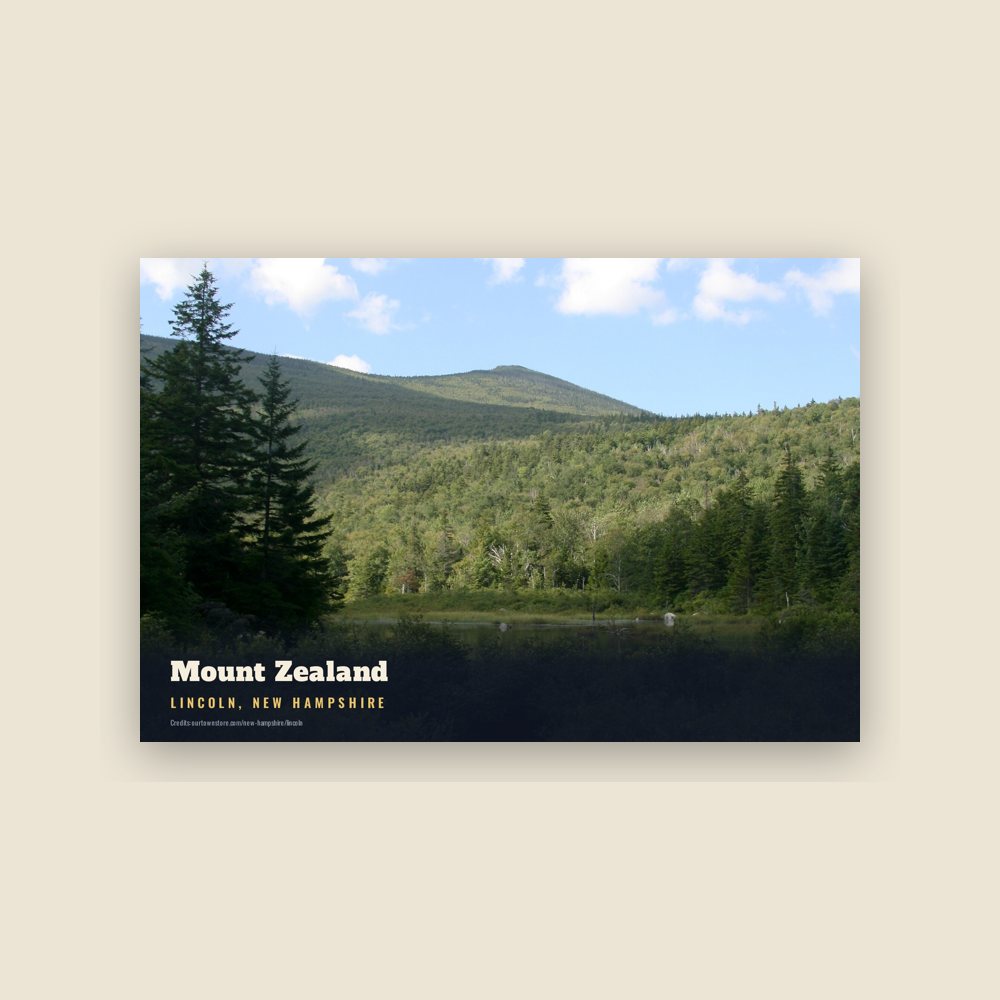
6″×4″ postcard, glossy front
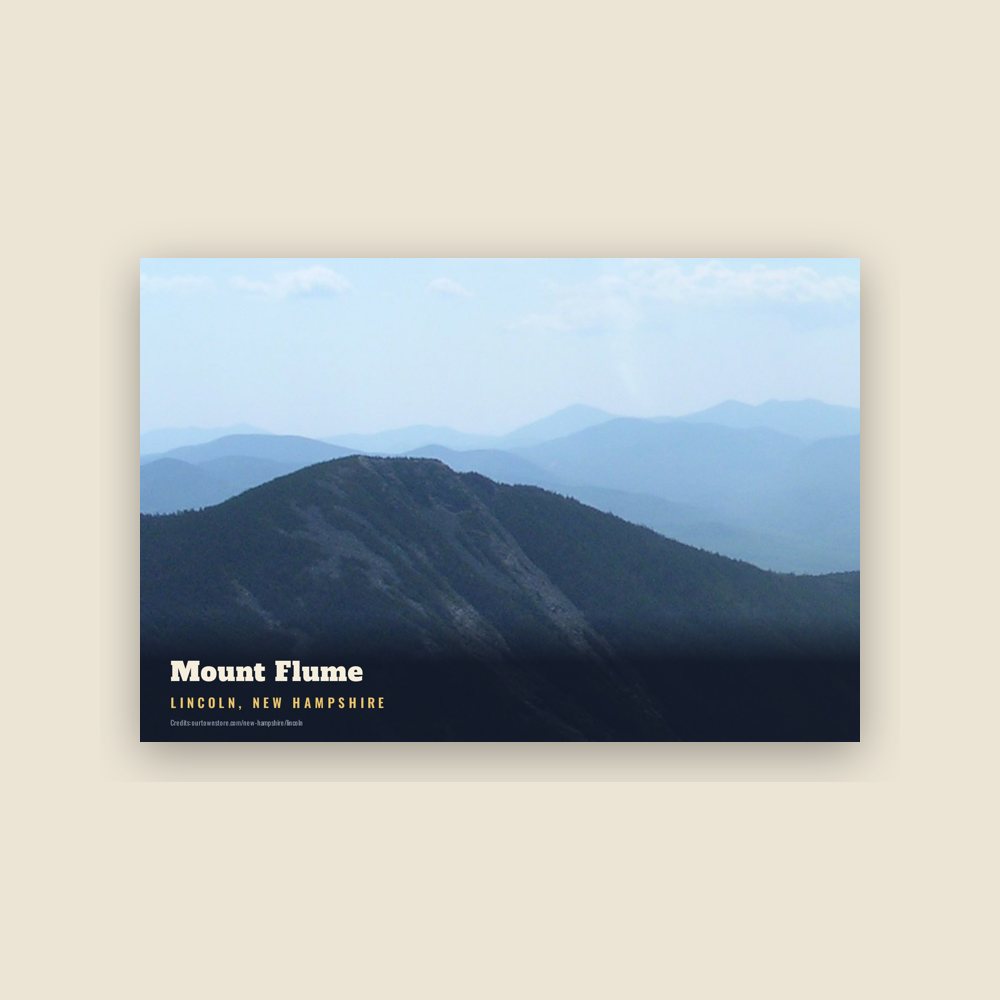
6″×4″ postcard, glossy front
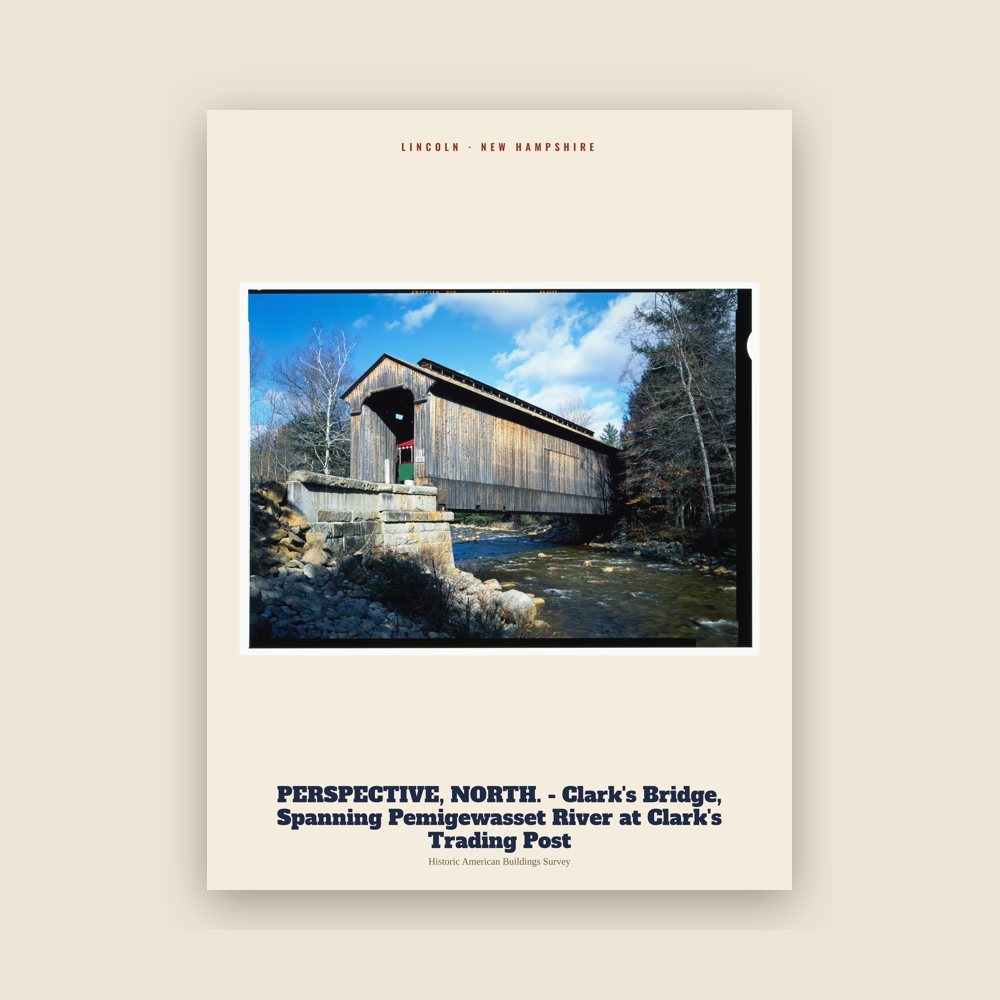
From the Library of Congress collections: a historic survey drawing or photograph of the town
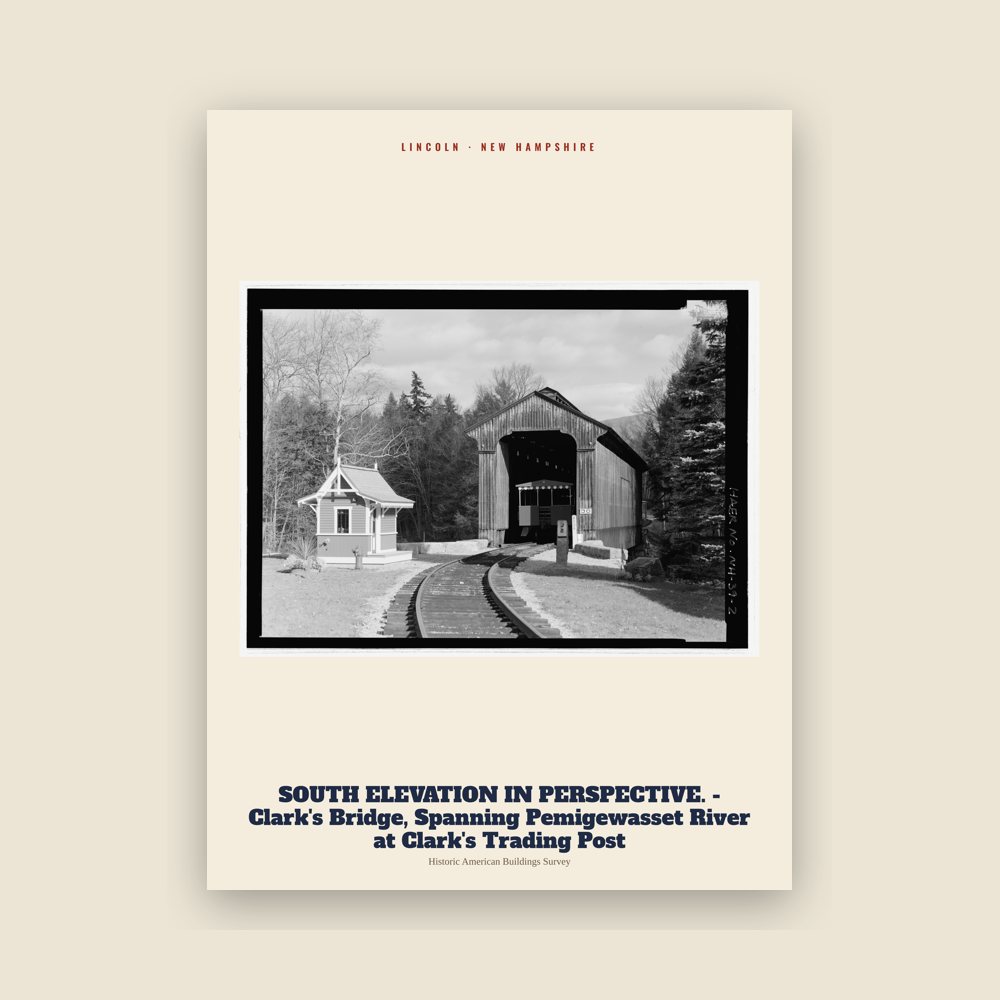
From the Library of Congress collections: a historic survey drawing or photograph of the town
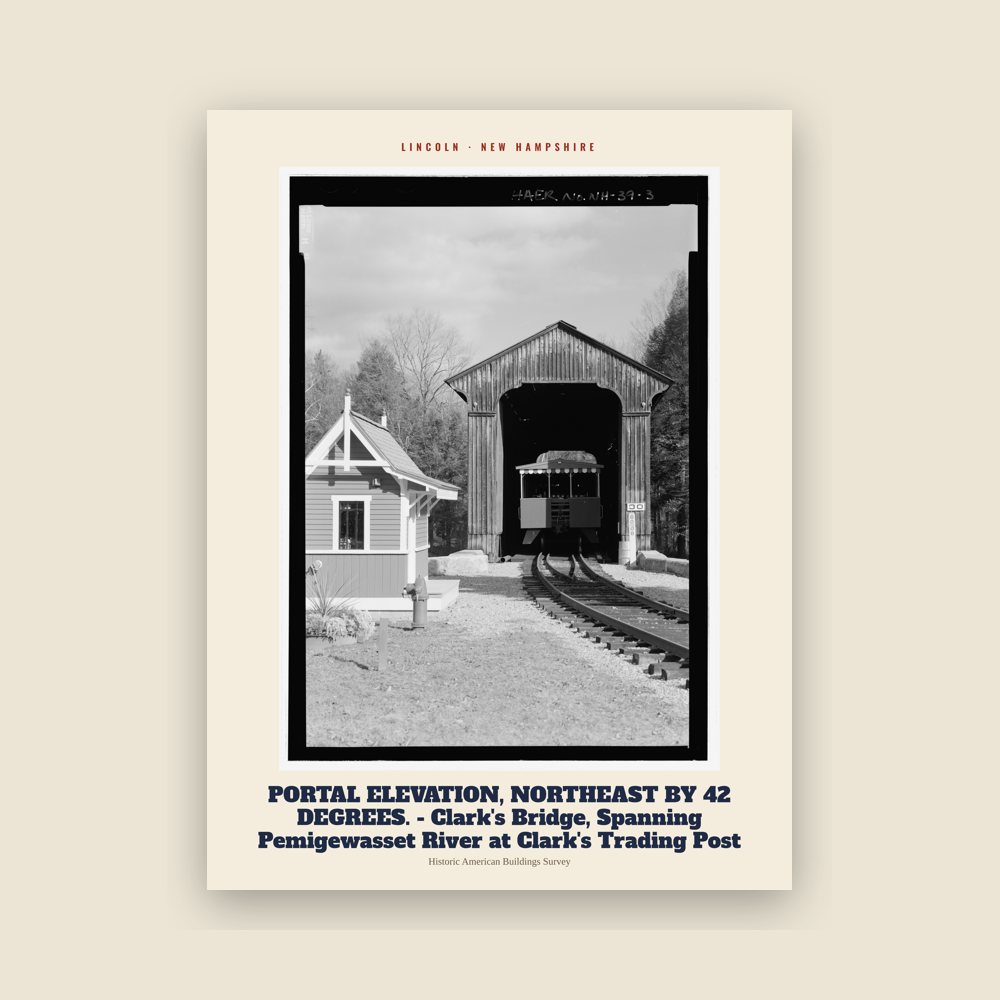
From the Library of Congress collections: a historic survey drawing or photograph of the town
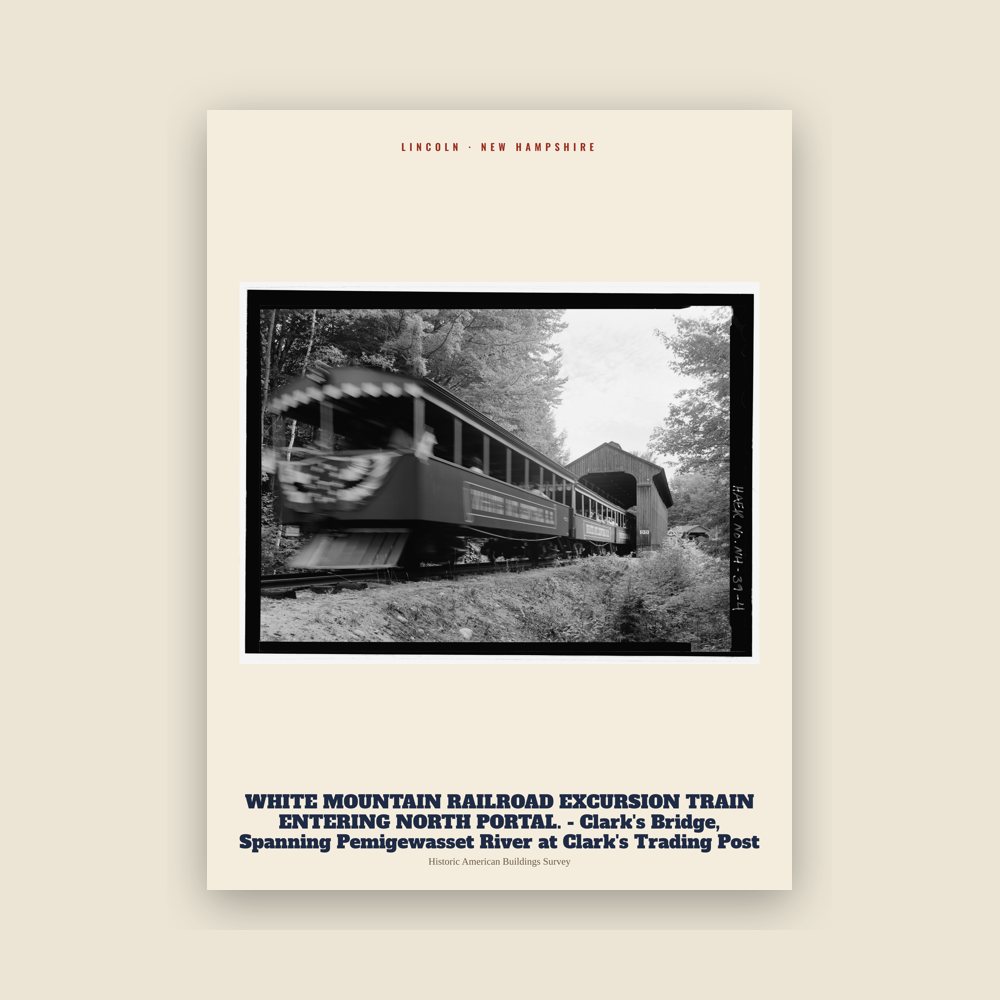
From the Library of Congress collections: a historic survey drawing or photograph of the town
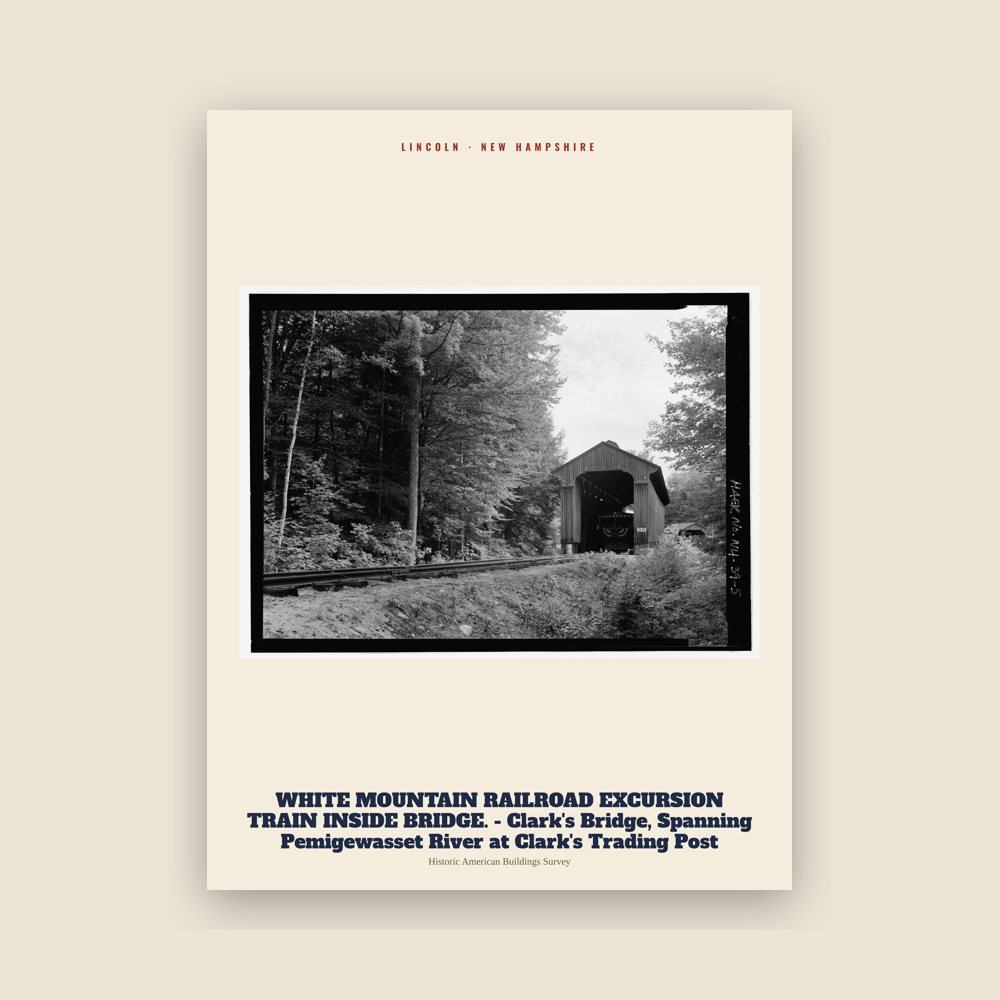
From the Library of Congress collections: a historic survey drawing or photograph of the town
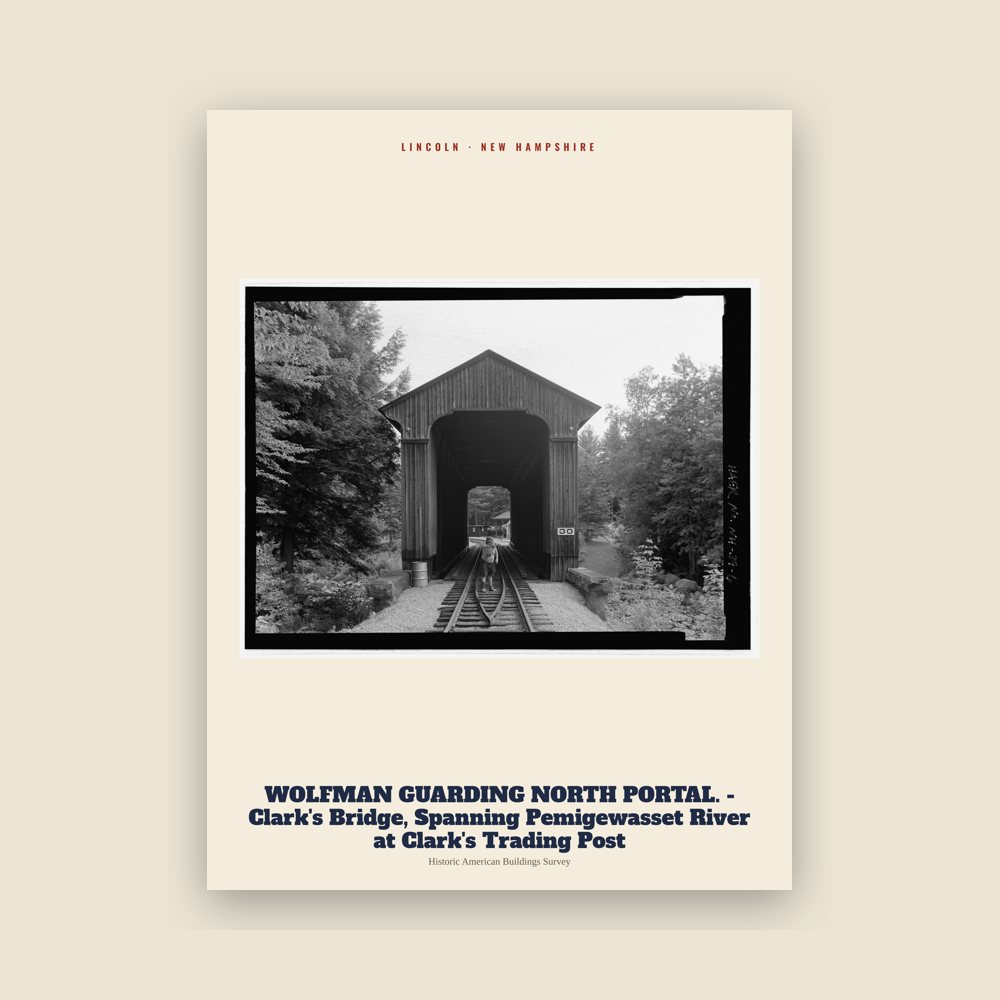
From the Library of Congress collections: a historic survey drawing or photograph of the town
In 1764, colonial Governor Benning Wentworth granted 32,456 acres (131.34 km2) to a group of approximately 70 land investors from Connecticut. Lincoln was named after Henry Fiennes Pelham-Clinton, 2nd Duke of Newcastle, 9th Earl of Lincoln – a cousin of the Wentworth governors. He held the position of comptroller of customs for the port of London under King George II and George III, which was important to trade between America and England.
The town was settled about 1782. The 1790 census indicates that it had 22 inhabitants. Rocky soil yielded poor farming, but the area's abundant timber, combined with water power to run sawmills on the Pemigewasset River and its East Branch, helped Lincoln develop into a center for logging. By 1853, the Merrimack River Lumber Company was operating. The railroad transported freight, and increasingly brought tourists to the beautiful mountain region. In 1892, James Everell Henry (1831–1912) bought approximately 100,000 acres (400 km2) of virgin timber and established a logging enterprise at what is today the center of Lincoln. In 1902, he built a pulp and paper mill. He erected the Lincoln House hotel in 1903, although a 1907 fire would nearly raze the community. Until he died in 1912, Henry controlled his company town, installing relatives in positions of civic authority.
In 1917, Henry's heirs sold the business to the Parker Young Company, which in turn sold it to the Marcalus Manufacturing Company in 1946. Franconia Paper took over in 1950, producing 150 tons of paper a day until bankruptcy in 1971, at which time new river classification standards discouraged further papermaking in Lincoln.
Tourism is today the principal business. Nearby Loon Mountain has long drawn skiers, and in recent years has attempted to convert itself into a four-season attraction. The Flume is one of the most visited attractions in the state. Discovered in 1808, it is a natural canyon extending 800 feet (240 m) at the base of Mount Liberty. Walls of Conway granite rise to a height of 70 to 90 feet (21 to 27 m) and are only 12 to 20 feet (3.7 to 6.1 m) apart.
Adapted (trimmed) from the Wikipedia article Lincoln, New Hampshire, revision 1372522588 by its contributors, licensed CC BY-SA 4.0.
We share a part of every Lincoln sale with local partners, and we'd love to print from your collection. Old photographs, maps and postcards make the best keepsakes.
Partner with us