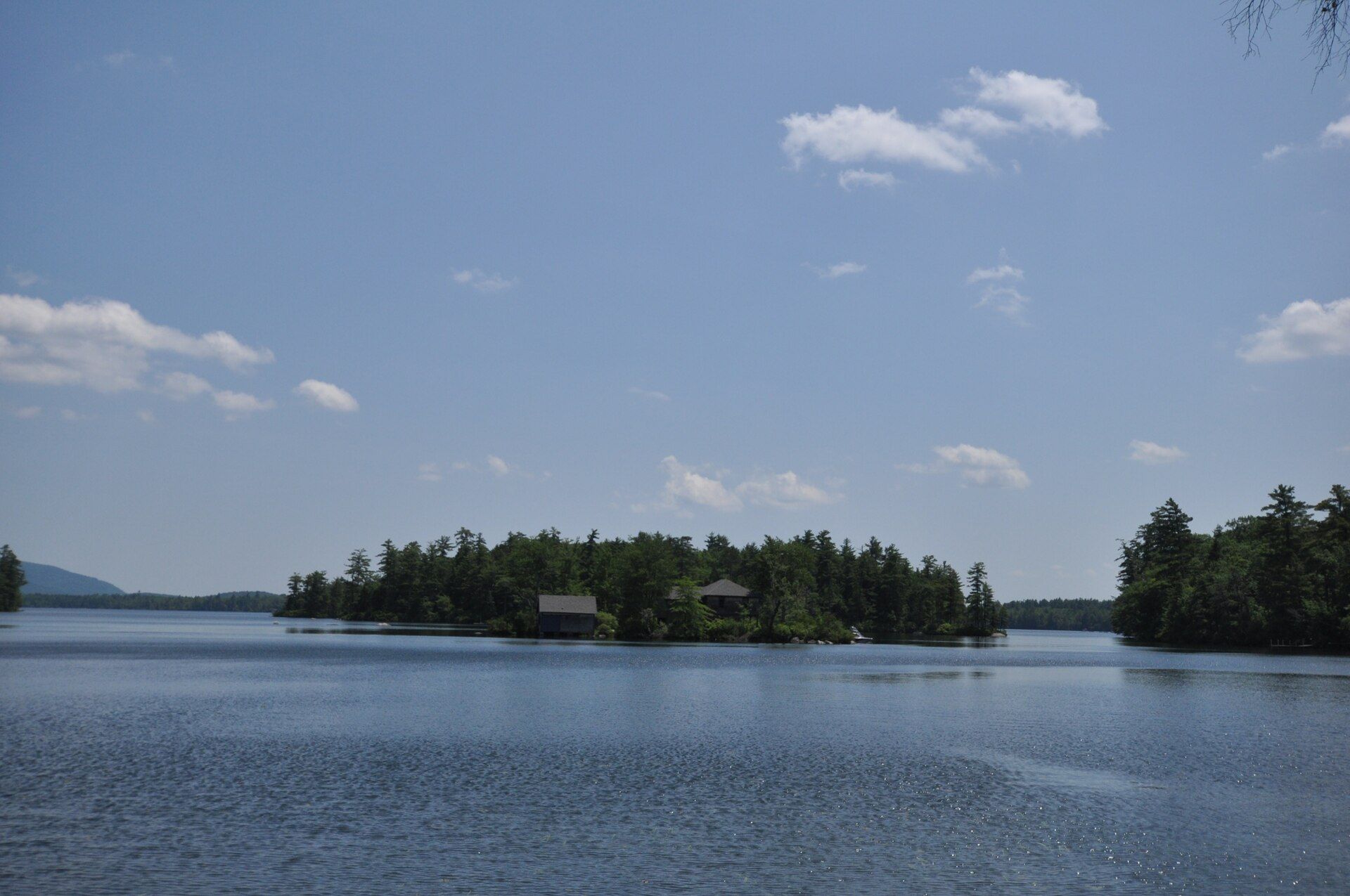
An agricultural and resort area, Holderness is home to the Squam Lakes Natural Science Center and is located on Squam Lake. Landmarks include Rockywold-Deephaven Camps, Boulderwood and True Farm. Holderness is the birthplace of Oren B. Cheney, politician.
Every piece is drawn from Holderness's own map data and historic archives, then printed and shipped from the USA when you order. No two towns look alike.
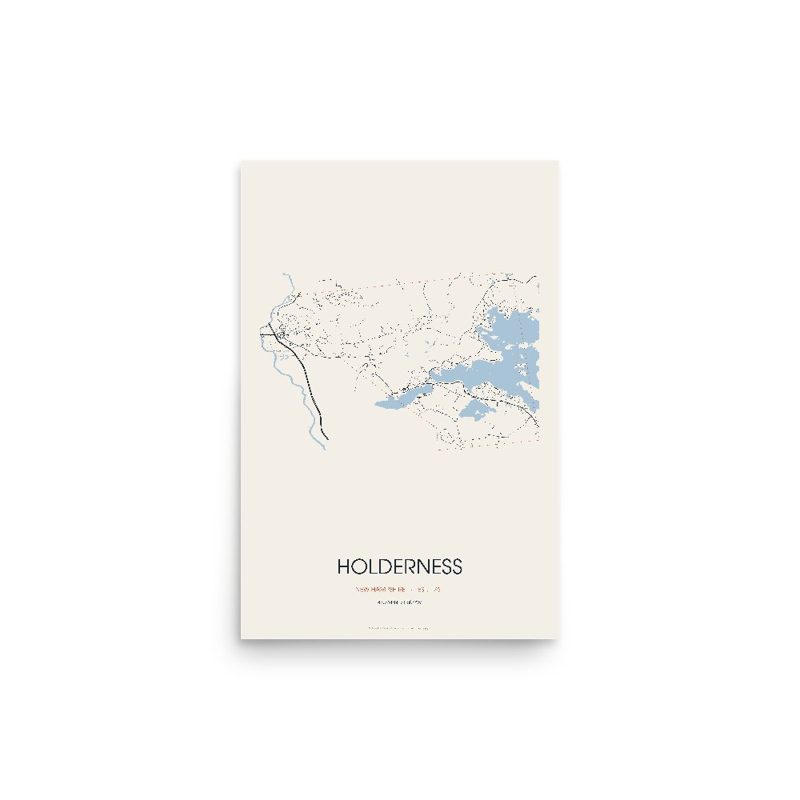
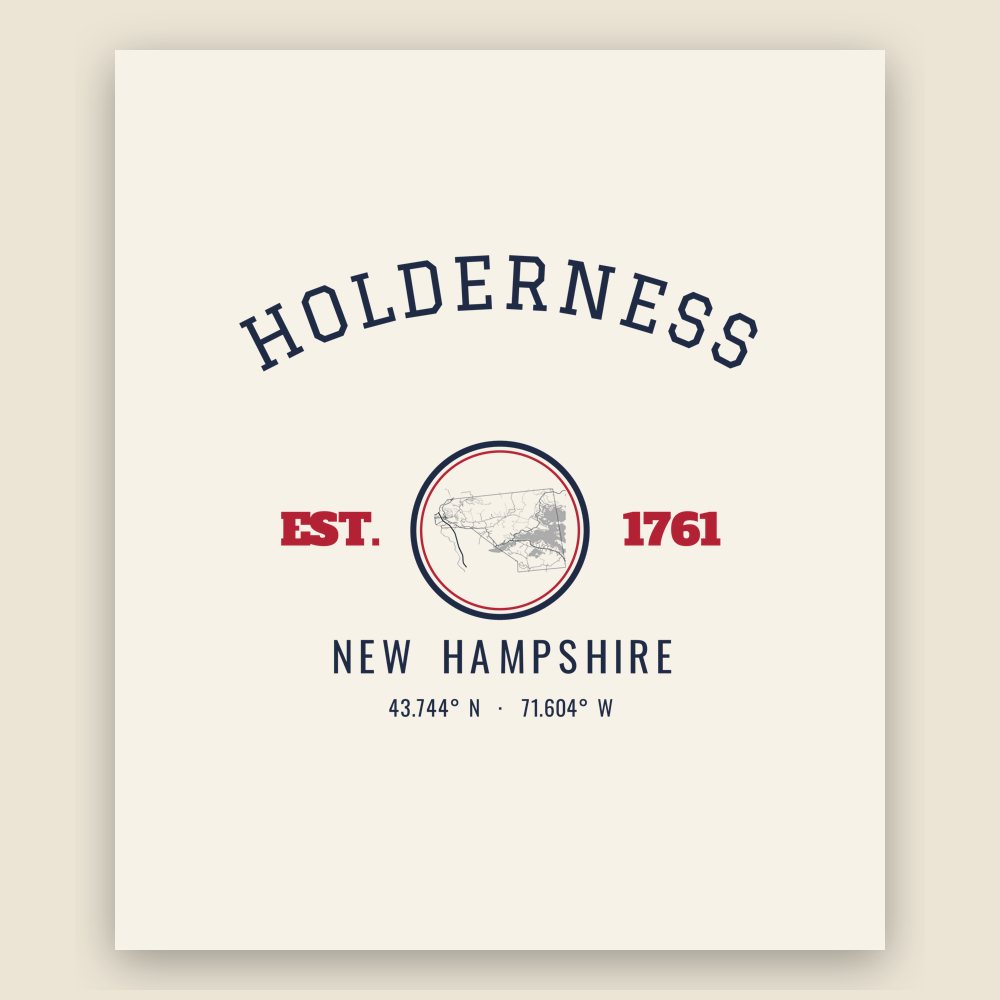
Every road in town, on archival matte paper
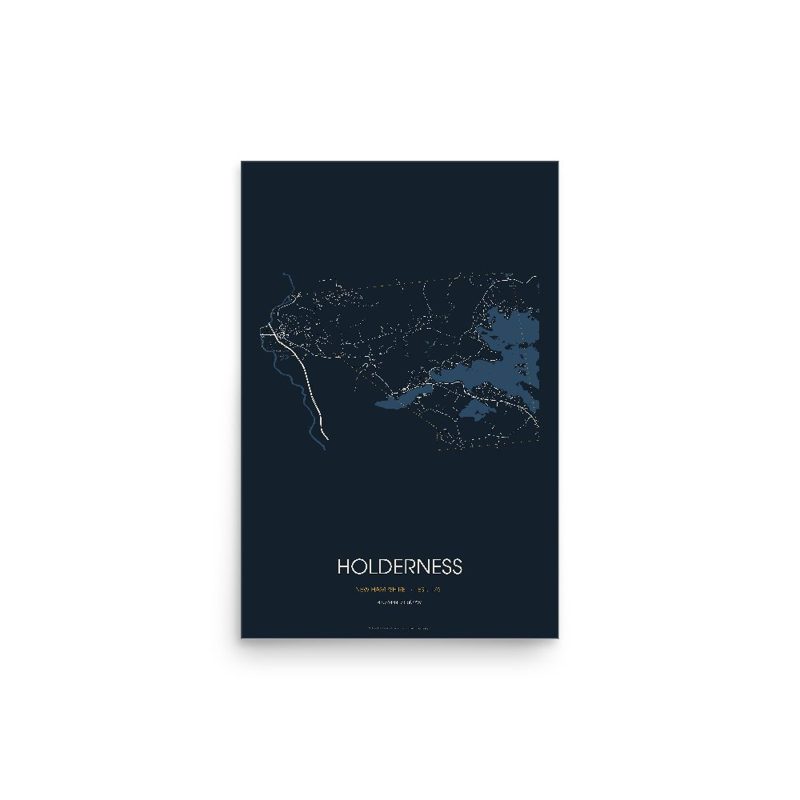
The same map, in navy and silver
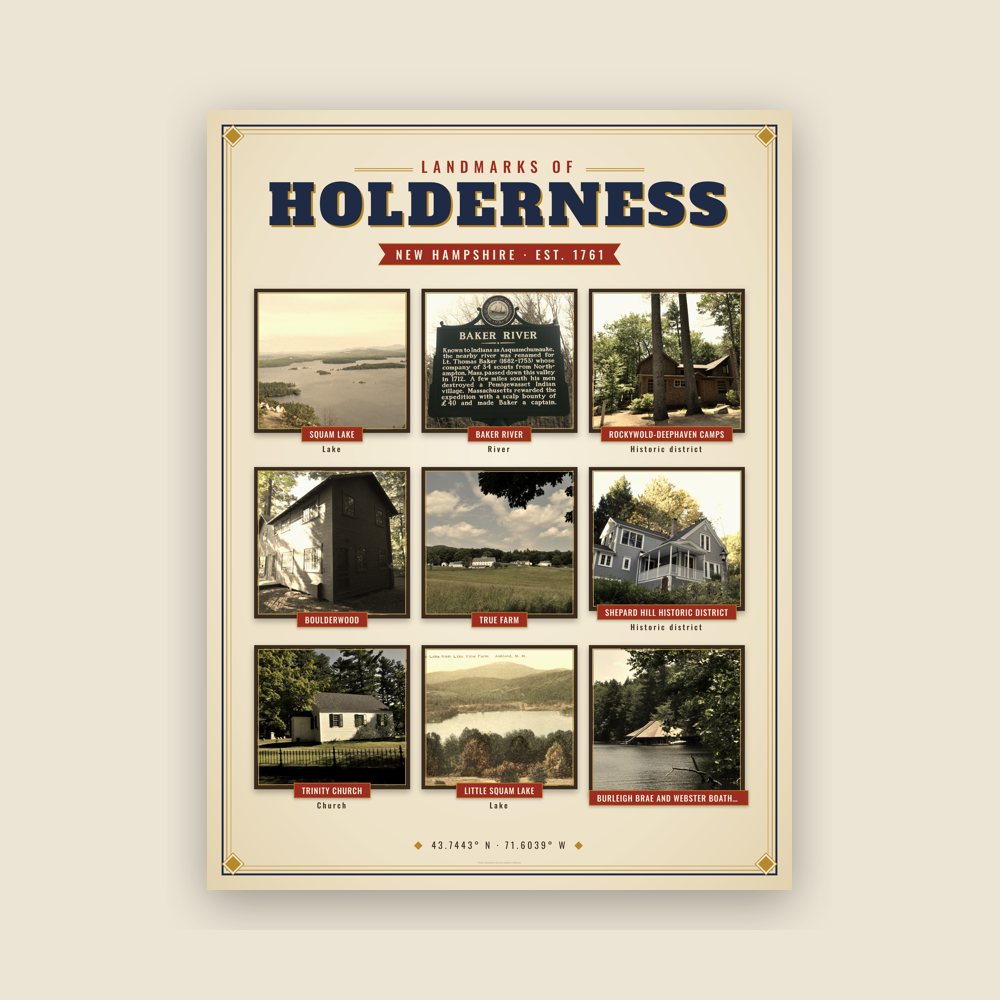
Nine local landmarks, archival matte
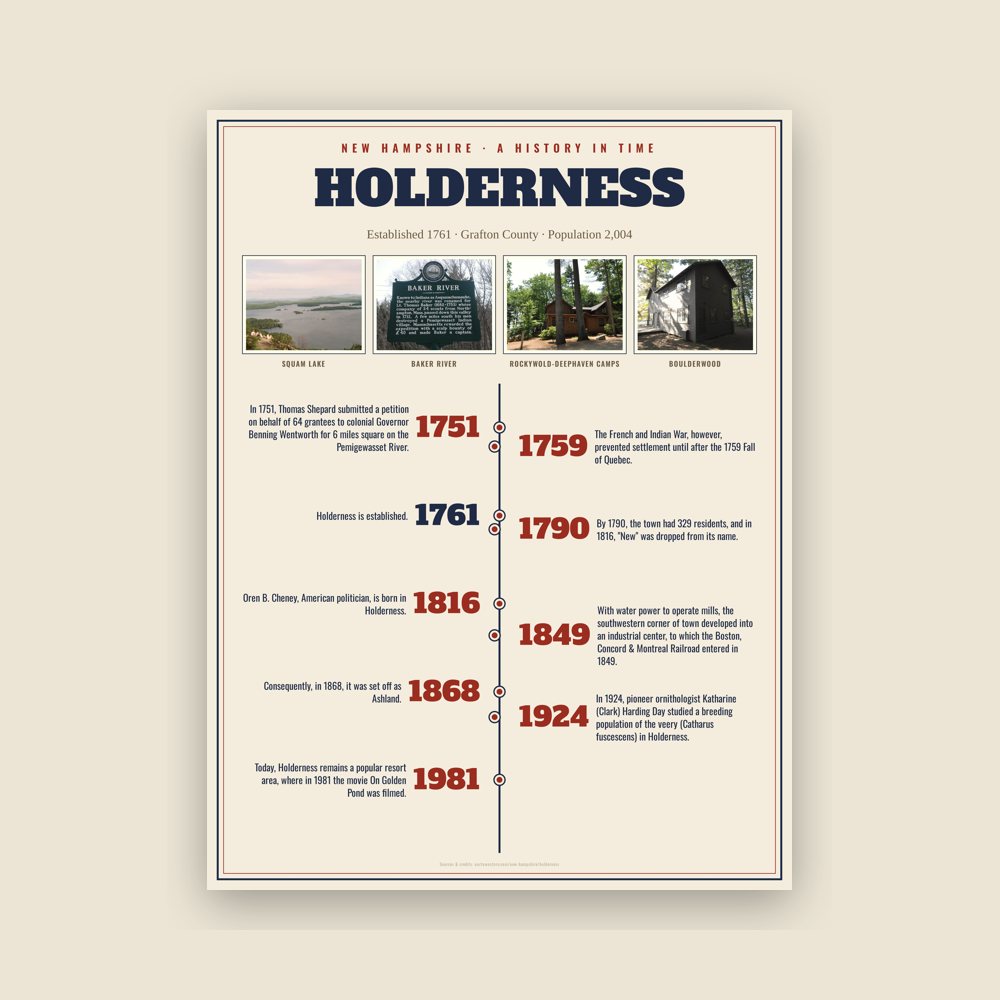
The town's story in dates, from its own records, for home or classroom
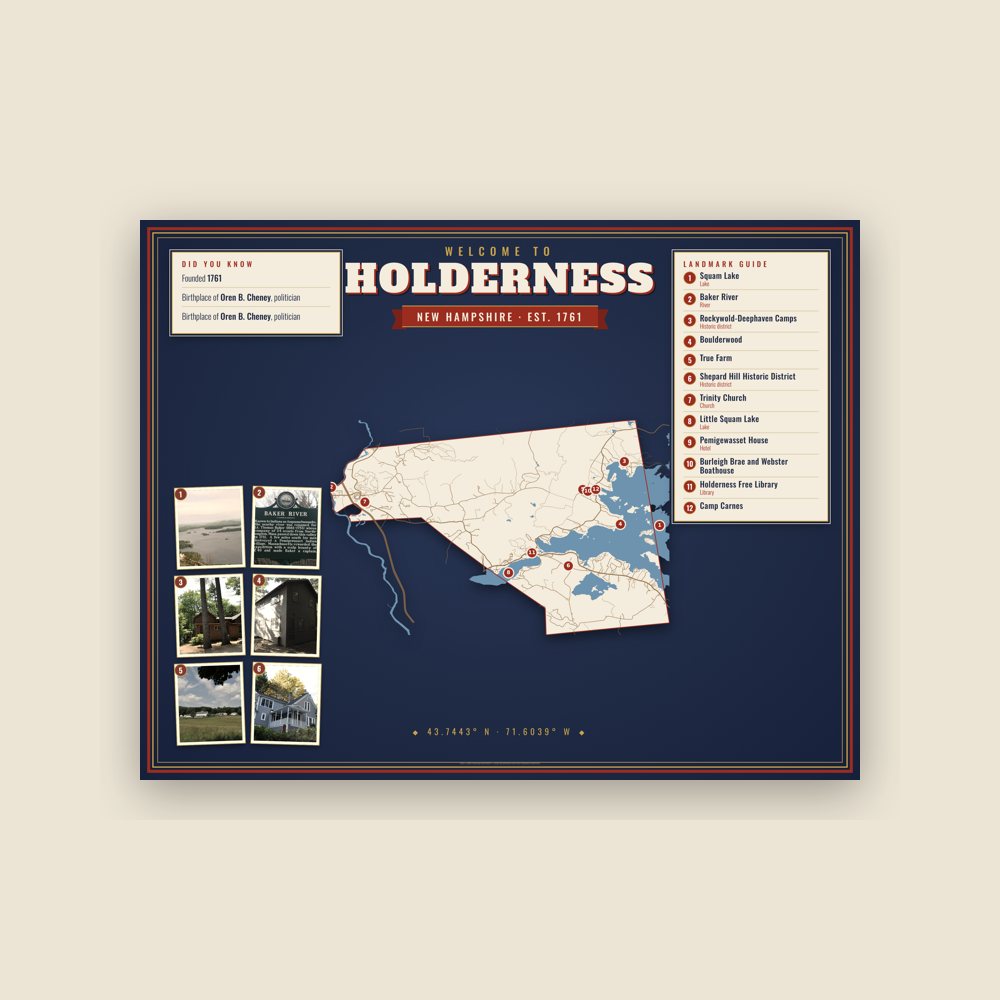
Map of local landmarks, washable fabric
Heavy-blend fleece, street map printed on the back
Soft Bella+Canvas jersey
Glossy ceramic, dishwasher safe
Ceramic keepsake, gold ribbon
Weatherproof, for the front walk
24″×16″, printed coir-look fibers, rubber back
12″×12″ printed wood, ready to hang
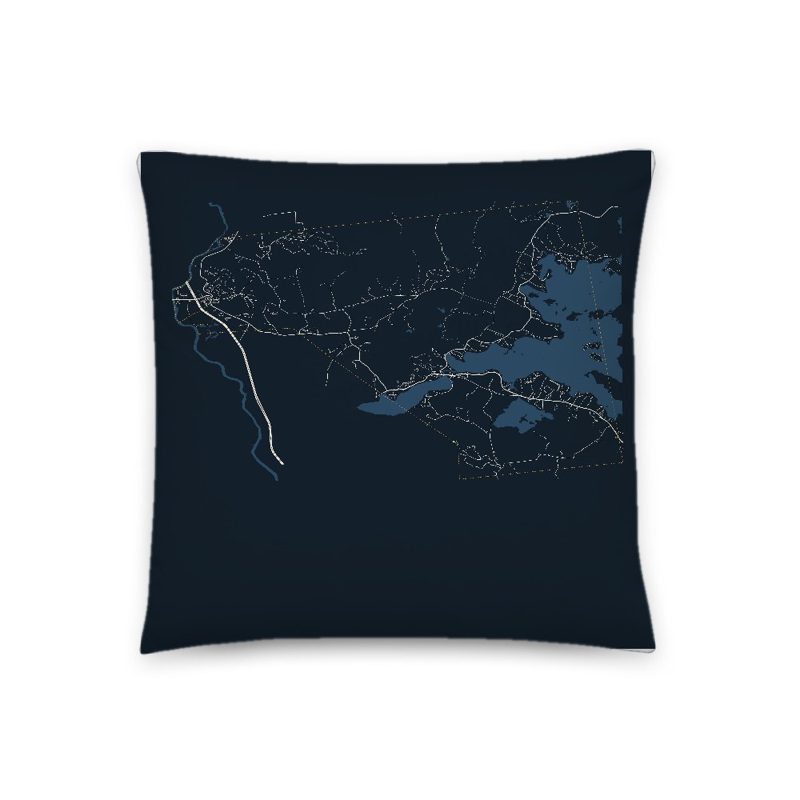
Soft-touch, zip cover
Sturdy all-over-print tote
Glossy top, cork back
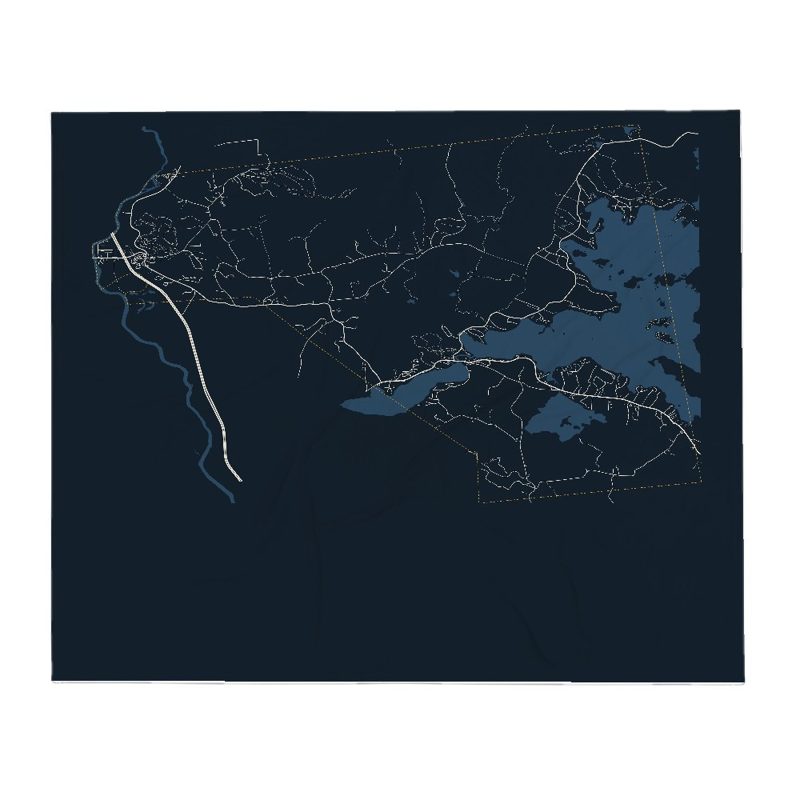
Soft fleece, 50″×60″
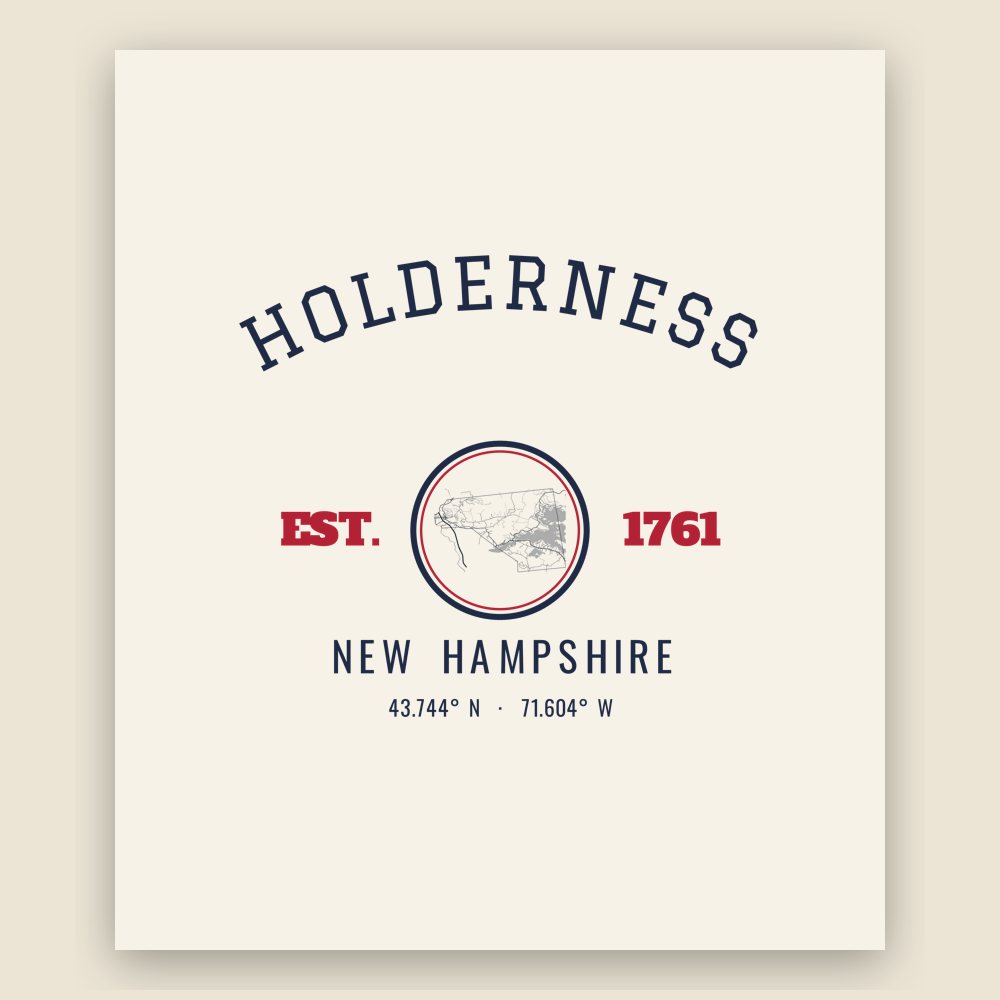
20 oz, double-wall stainless
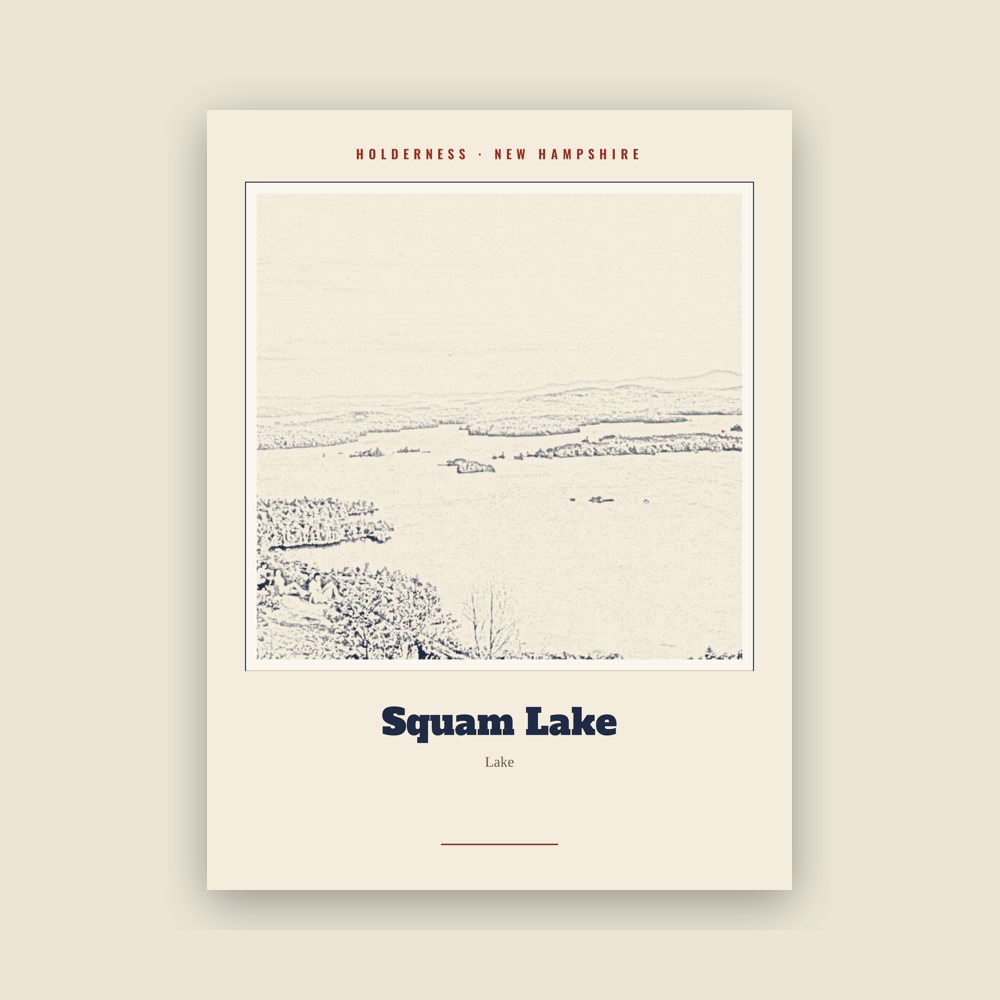
Archival matte print of a local landmark, credited to its photographer
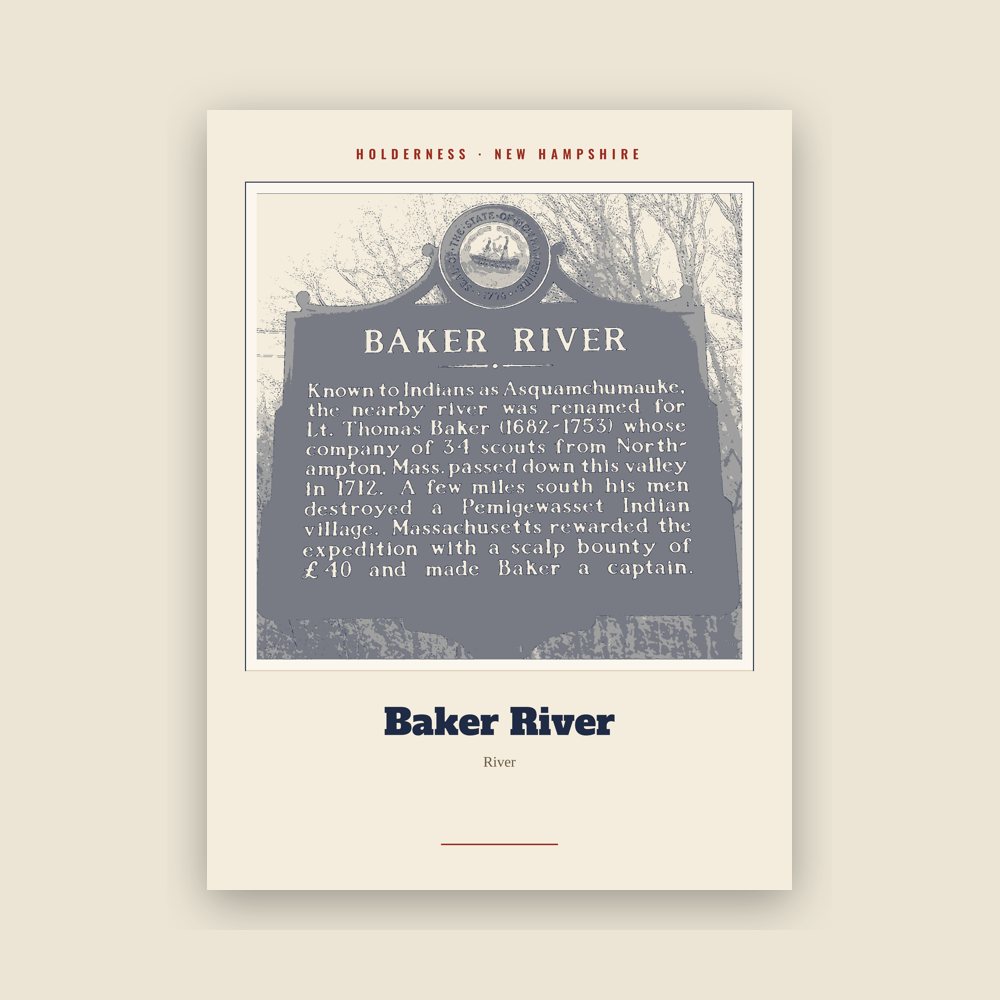
Archival matte print of a local landmark, credited to its photographer
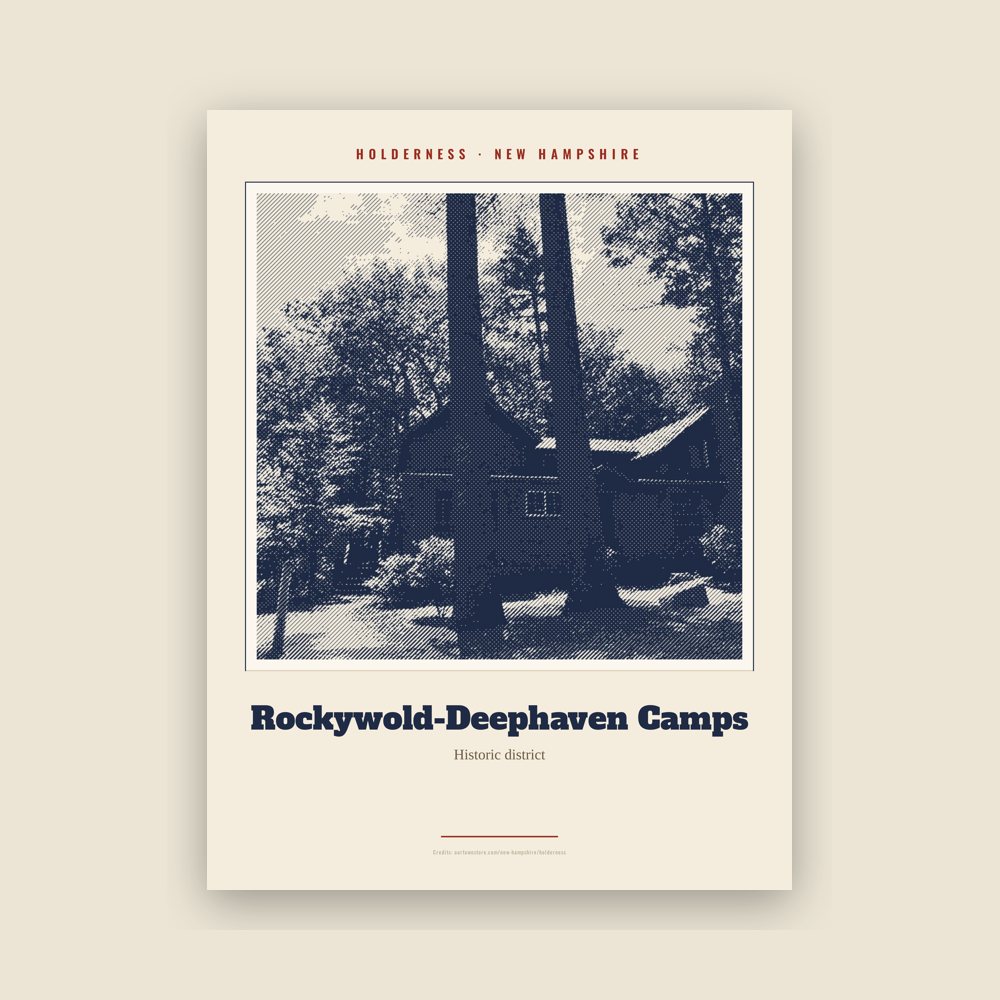
Archival matte print of a local landmark, credited to its photographer
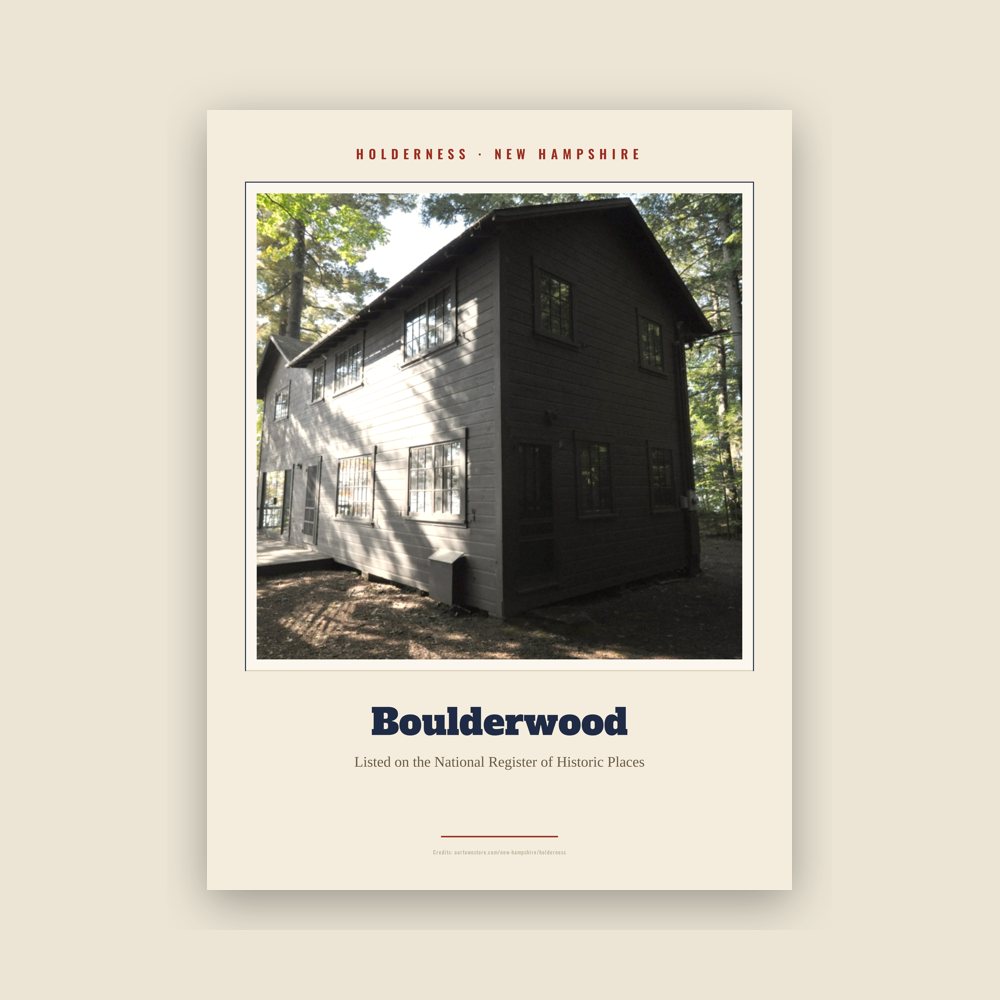
Archival matte print of a local landmark, credited to its photographer
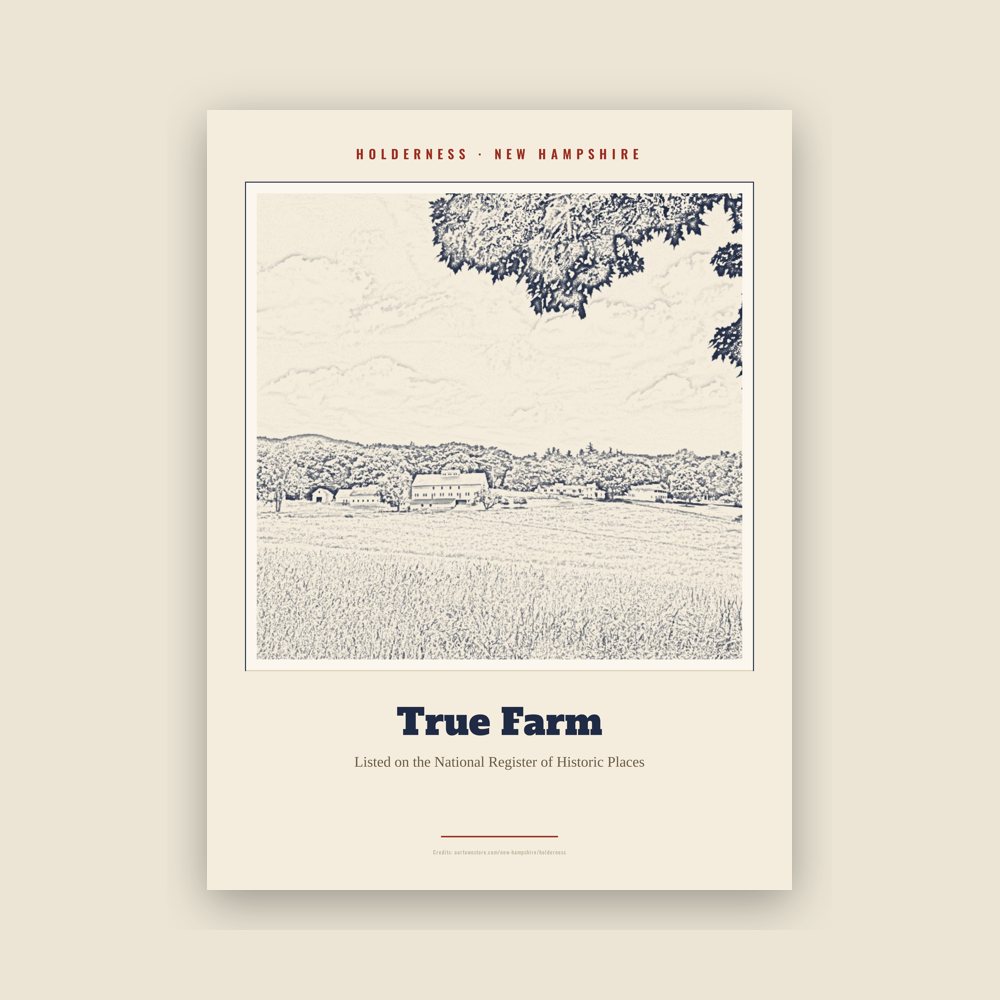
Archival matte print of a local landmark, credited to its photographer
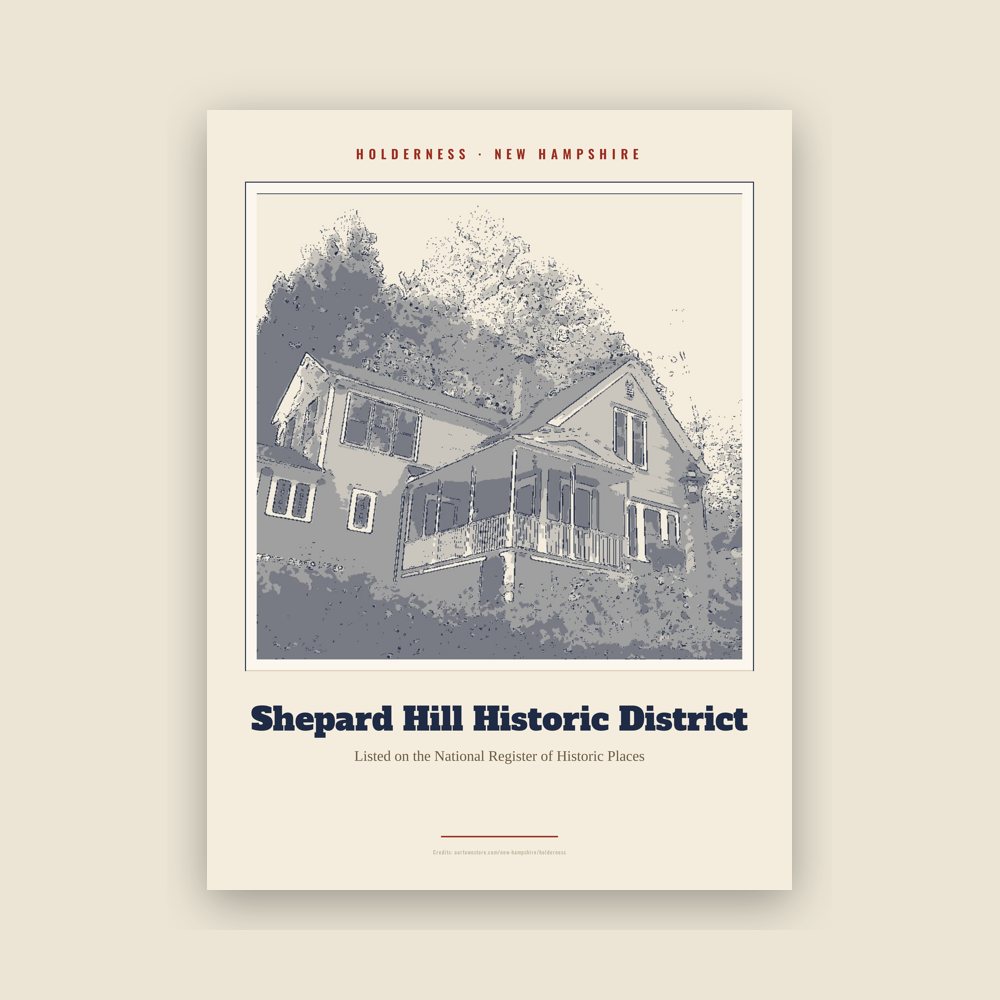
Archival matte print of a local landmark, credited to its photographer
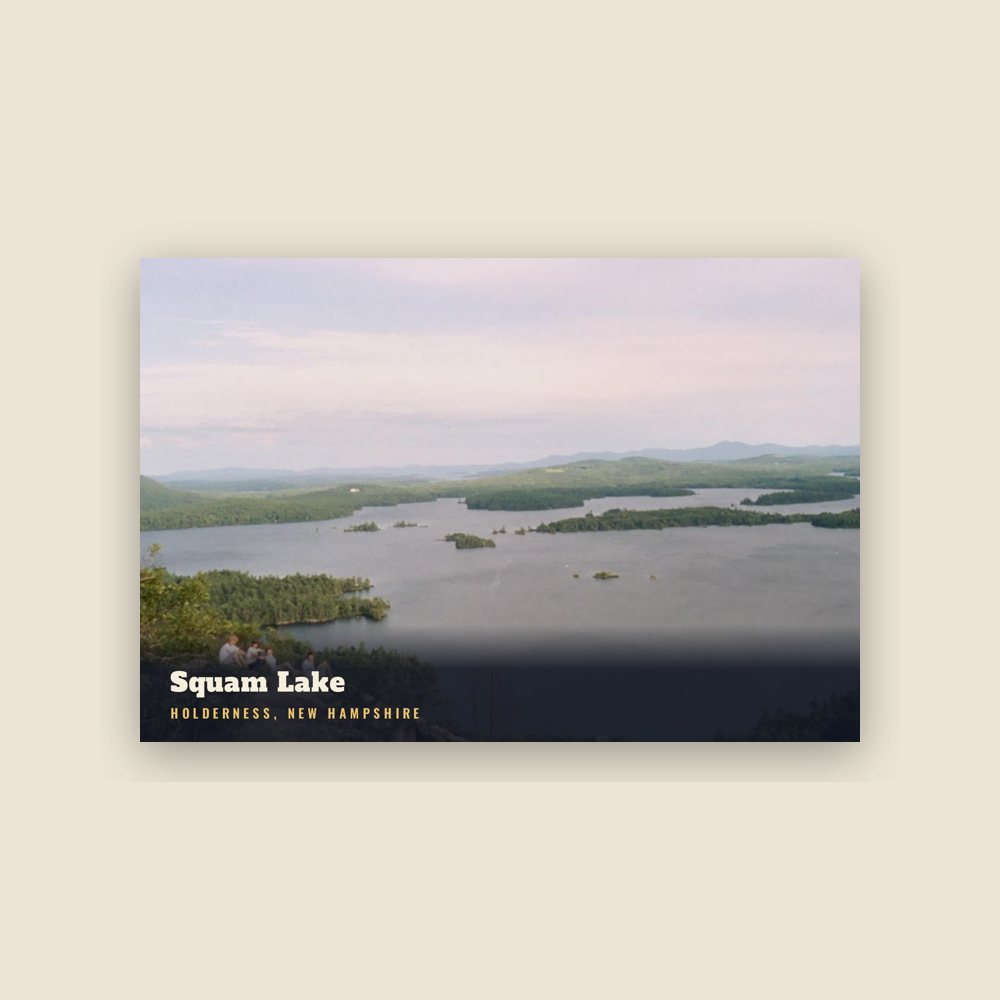
6″×4″ postcard, glossy front
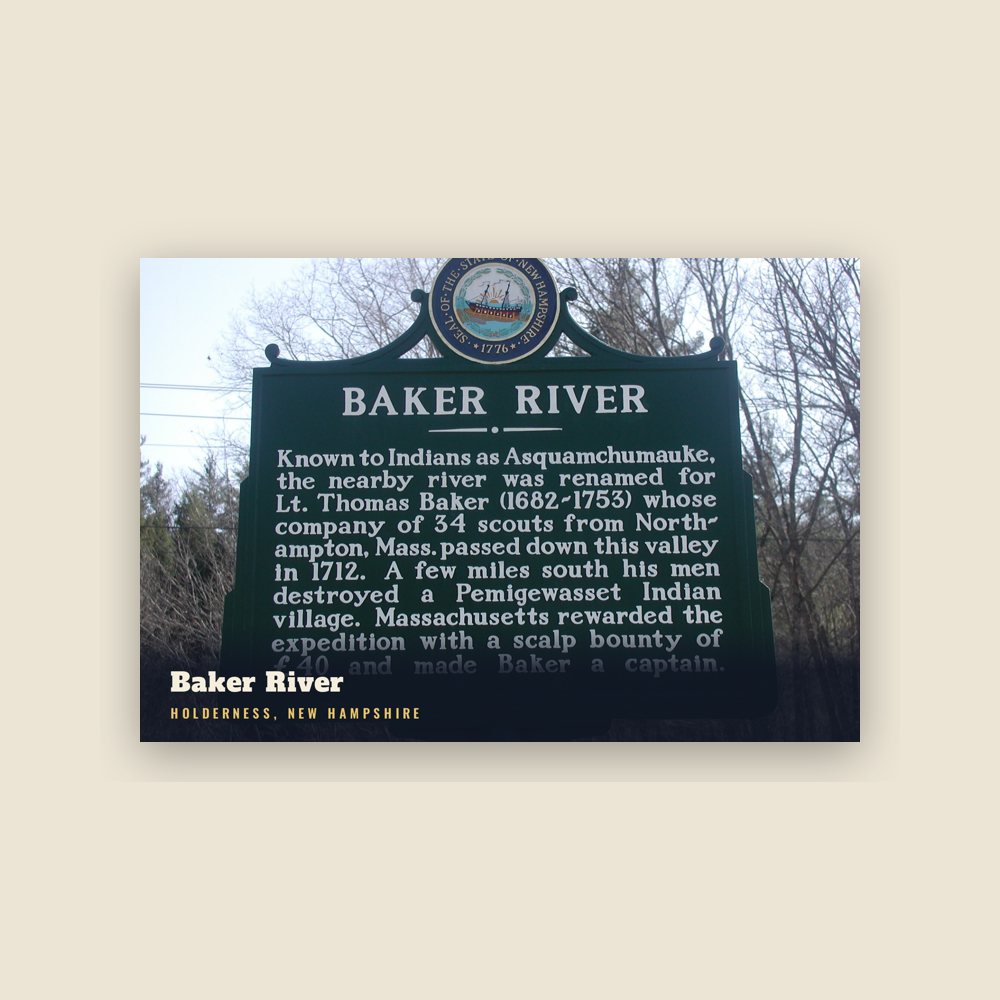
6″×4″ postcard, glossy front
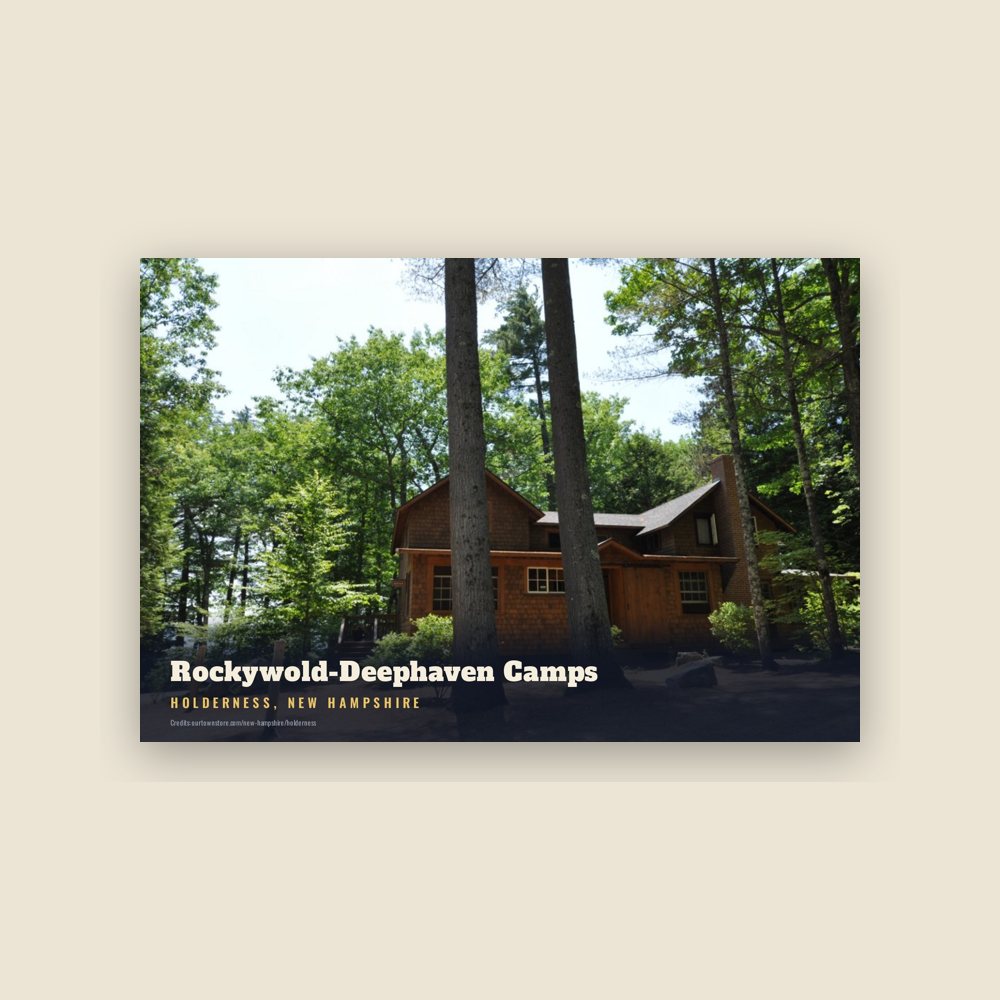
6″×4″ postcard, glossy front
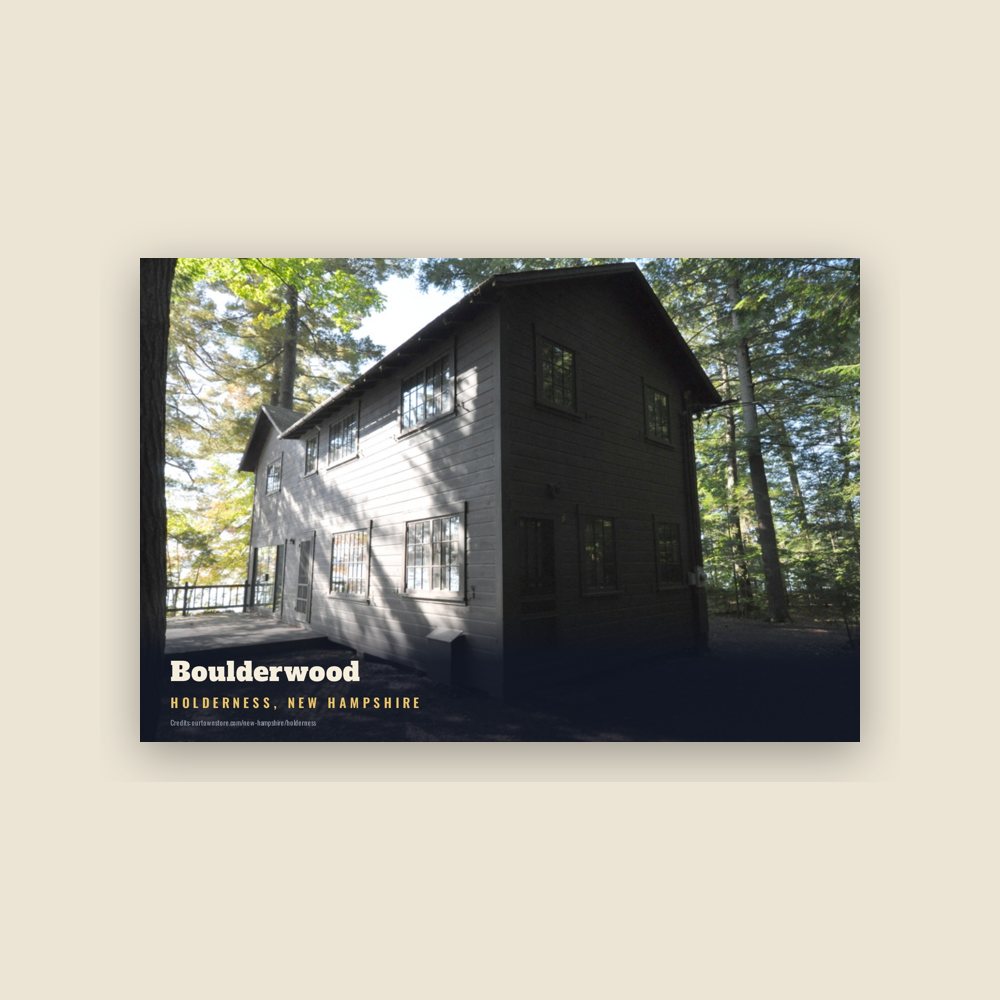
6″×4″ postcard, glossy front
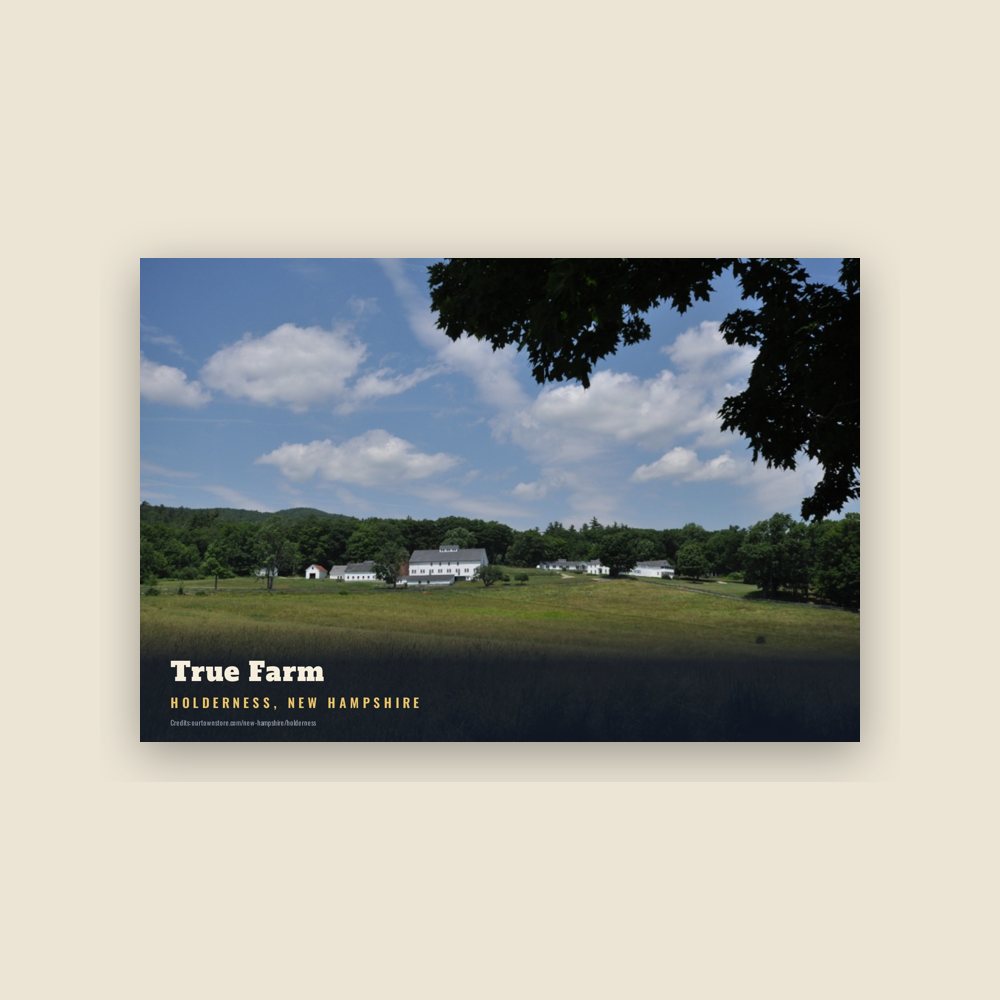
6″×4″ postcard, glossy front
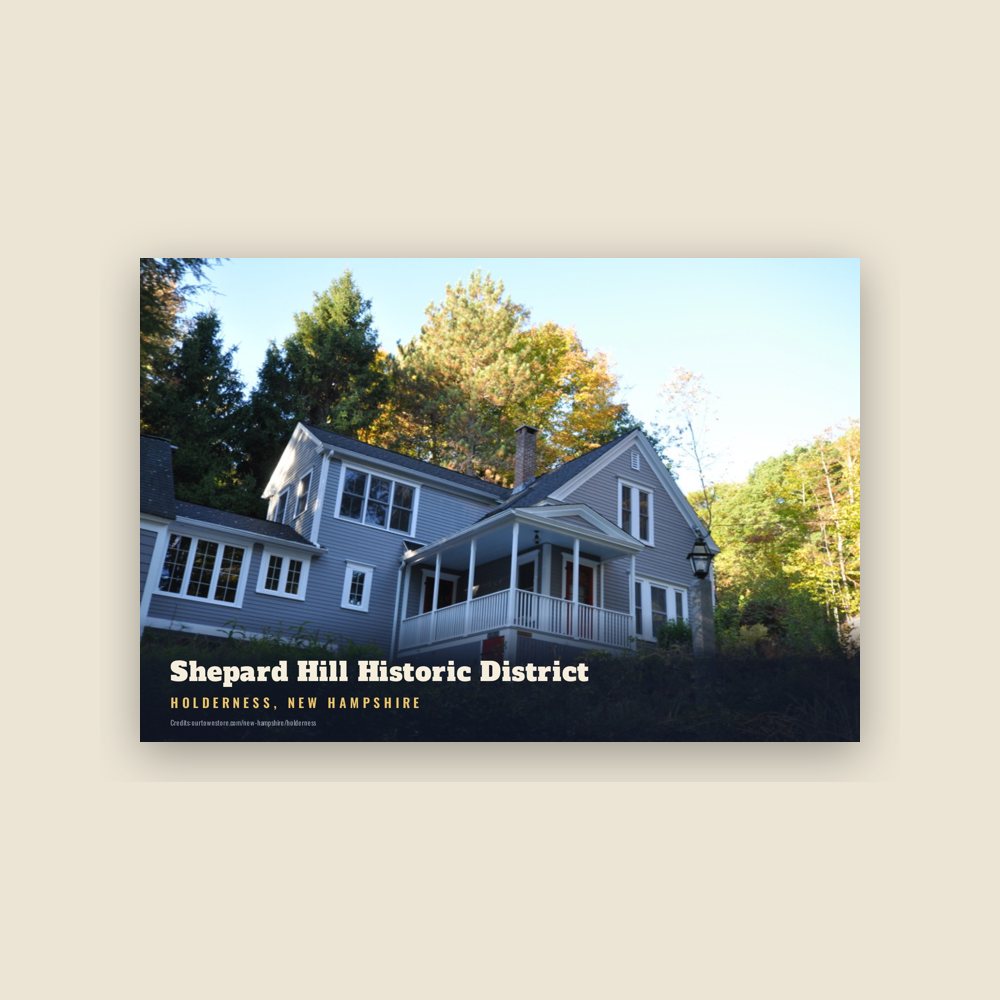
6″×4″ postcard, glossy front
Population 2010: 2,108 → 2020: 2,004
From Wikidata (CC0).
The Squam Lakes were a trade route for the Abenaki and early European settlers, who traveled the Squam River to the Pemigewasset River, then to the Merrimack River and seacoast. In 1751, Thomas Shepard submitted a petition on behalf of 64 grantees to colonial Governor Benning Wentworth for 6 miles square on the Pemigewasset River. The governing council accepted, and the town was named after Robert Darcy, 4th Earl of Holderness. The French and Indian War, however, prevented settlement until after the 1759 Fall of Quebec. The land was regranted as "New Holderness" in 1761 to a group of New England families, and first settled in 1763. As proprietor of half the town, Samuel Livermore intended to create at New Holderness a great estate patterned after those of the English countryside. By 1790, the town had 329 residents, and in 1816, "New" was dropped from its name.
Holderness became a farming and fishing community, except for the "business or flat iron area" located on the Squam River, which has falls that drop about 112 feet (34 m) before meeting the Pemigewasset River. With water power to operate mills, the southwestern corner of town developed into an industrial center, to which the Boston, Concord & Montreal Railroad entered in 1849. But the mill village would be at odds with the agricultural community, especially when denied civic amenities including gaslights and sidewalks. Consequently, in 1868, it was set off as Ashland.
Tourists in the 19th century discovered the region's scenic mountains and lakes. Before the age of automobiles, they would depart the train in Ashland and board a steamer, which traveled up the Squam River to rustic fishing camps or hillside hotels beside Squam Lake. Today, Holderness remains a popular resort area, where in 1981 the movie On Golden Pond was filmed.
In 1924, pioneer ornithologist Katharine (Clark) Harding Day studied a breeding population of the veery (Catharus fuscescens) in Holderness.
Adapted (trimmed) from the Wikipedia article Holderness, New Hampshire, revision 1378979583 by its contributors, licensed CC BY-SA 4.0.
We share a part of every Holderness sale with local partners, and we'd love to print from your collection. Old photographs, maps and postcards make the best keepsakes.
Partner with us