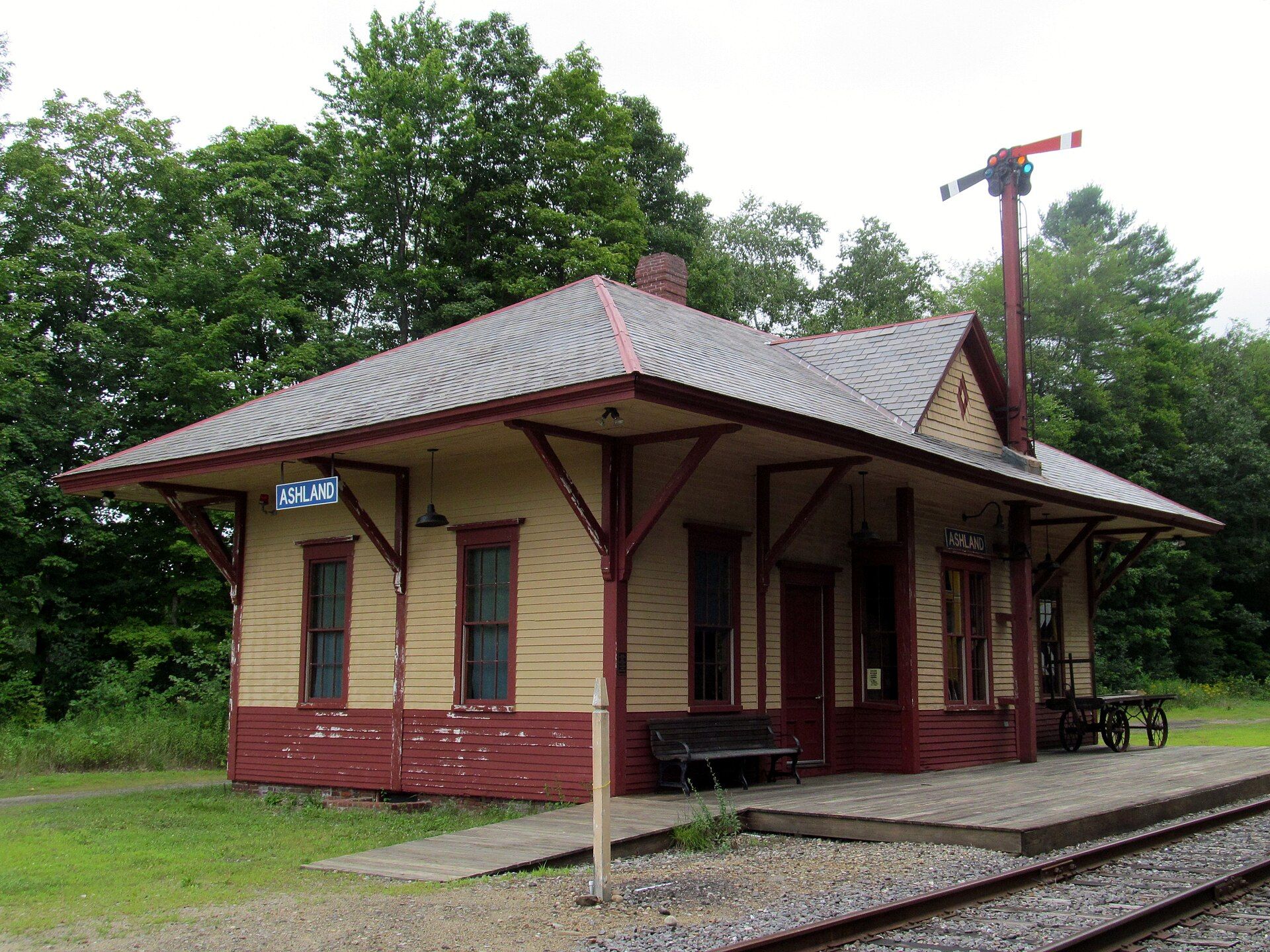
Located near the geographical center of the state, Ashland is home to Scribner-Fellows State Forest. Landmarks include Ashland station, Whipple House and Ashland Town Hall. Ashland is the birthplace of George Whipple, physician and biomedical researcher.
Every piece is drawn from Ashland's own map data and historic archives, then printed and shipped from the USA when you order. No two towns look alike.
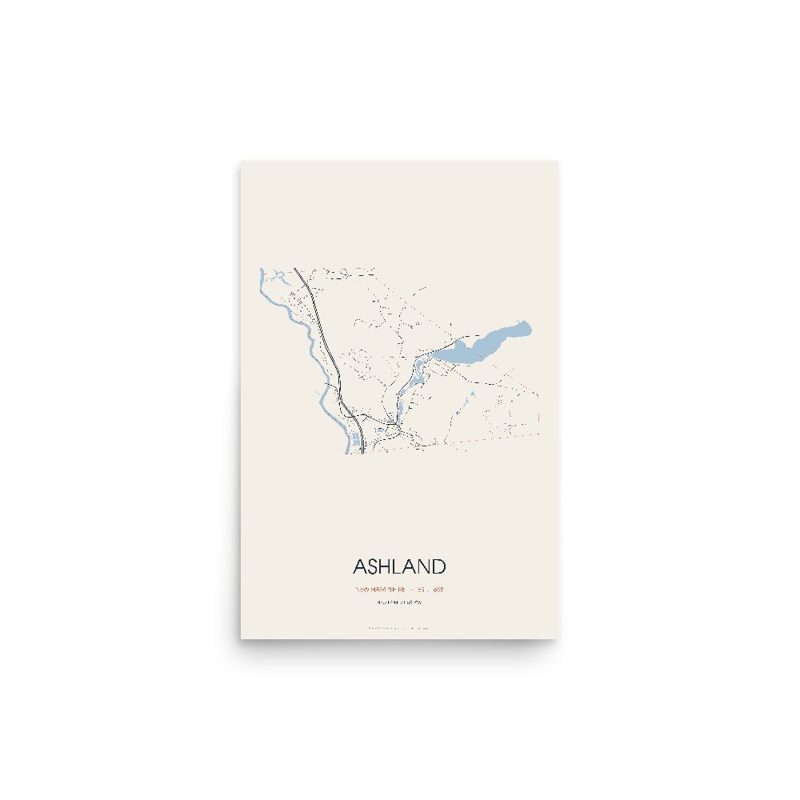
Every road in town, on archival matte paper

The same map, in navy and silver
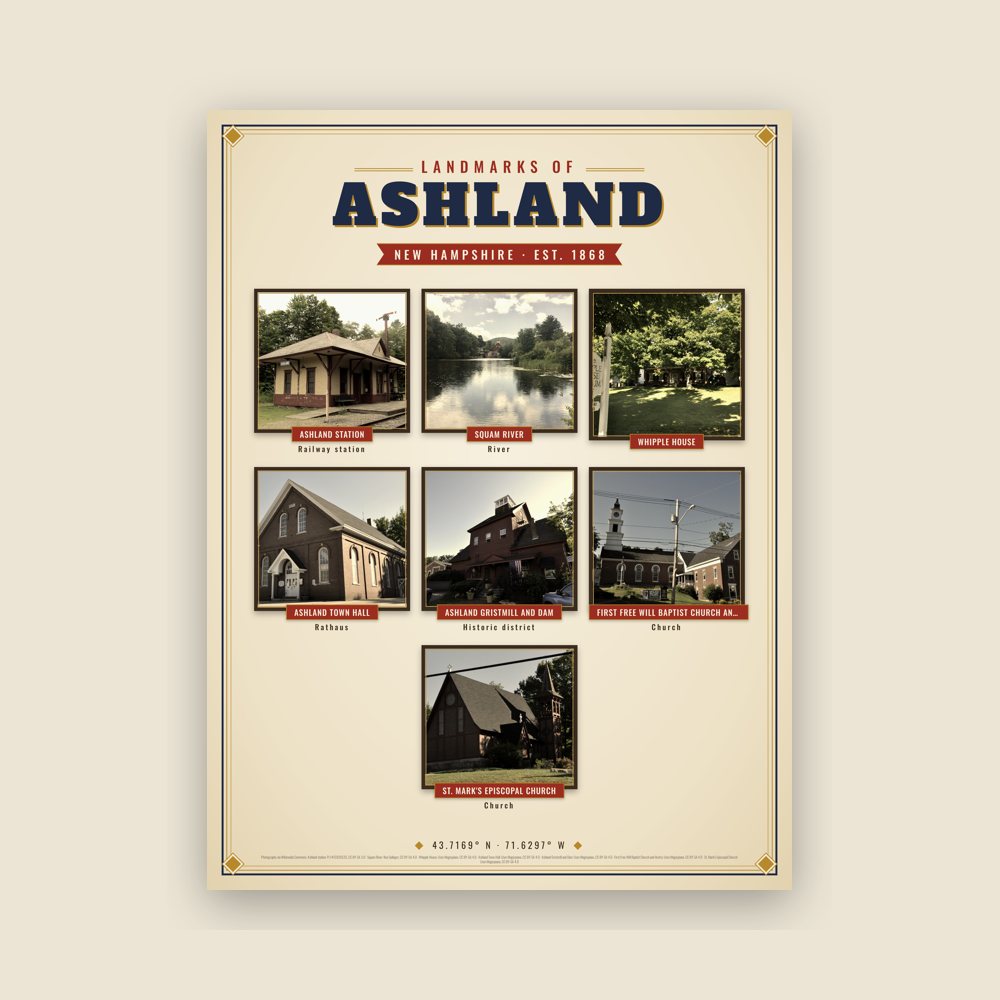
Nine local landmarks, archival matte
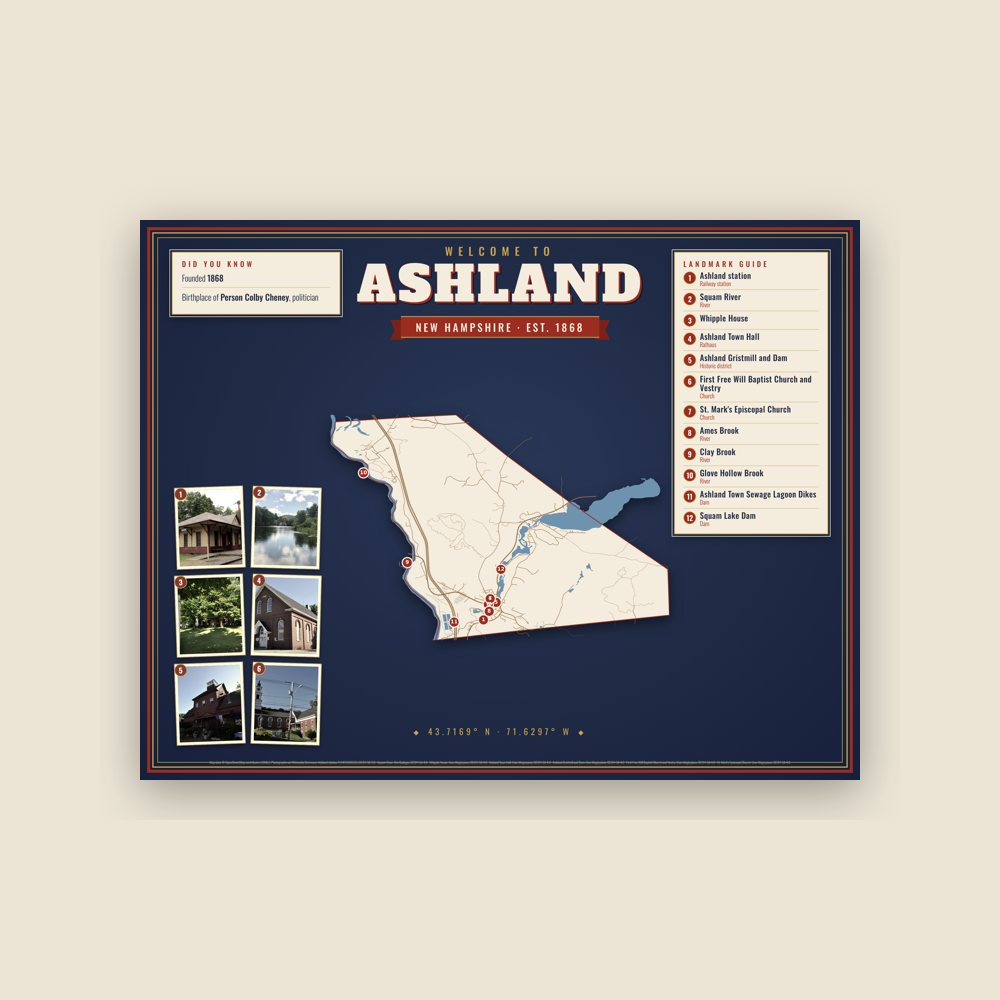
Map of local landmarks, washable fabric
Heavy-blend fleece, street map printed on the back
Soft Bella+Canvas jersey
Glossy ceramic, dishwasher safe
Ceramic keepsake, gold ribbon
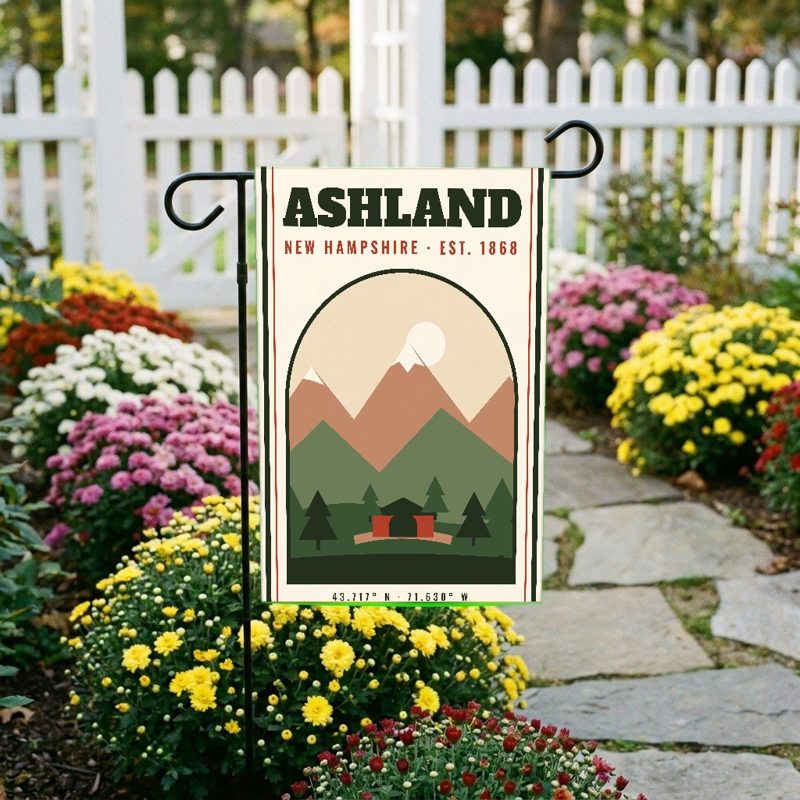
Weatherproof, for the front walk
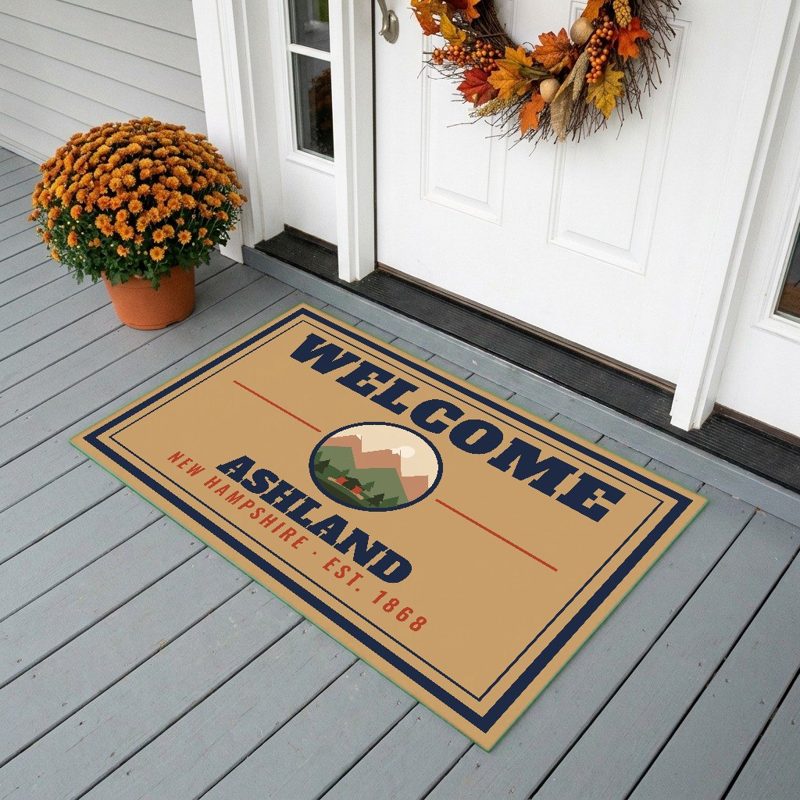
24″×16″, printed coir-look fibers, rubber back
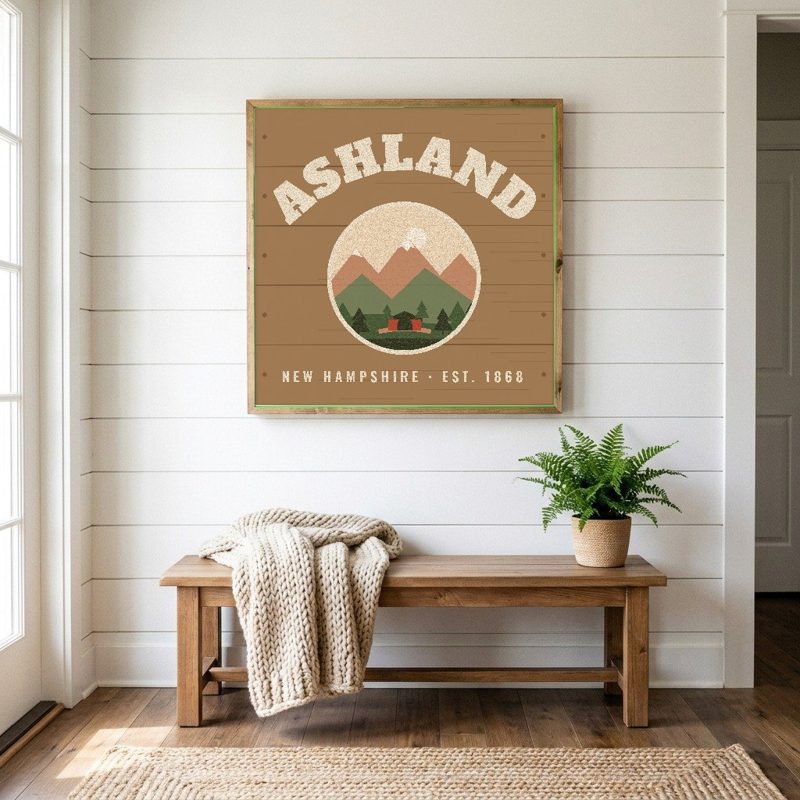
12″×12″ printed wood, ready to hang
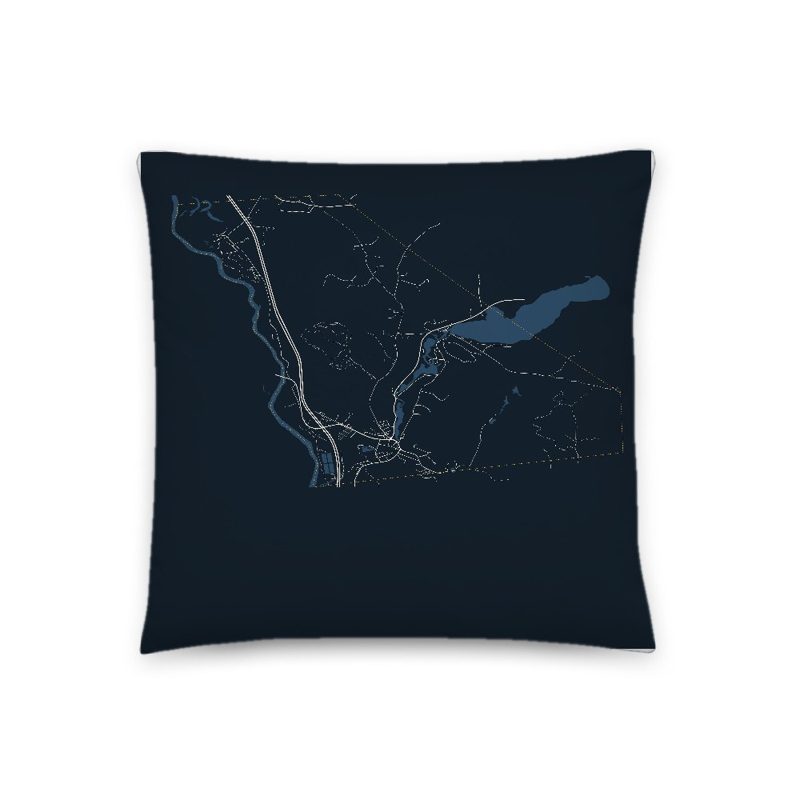
Soft-touch, zip cover
Sturdy all-over-print tote
Glossy top, cork back
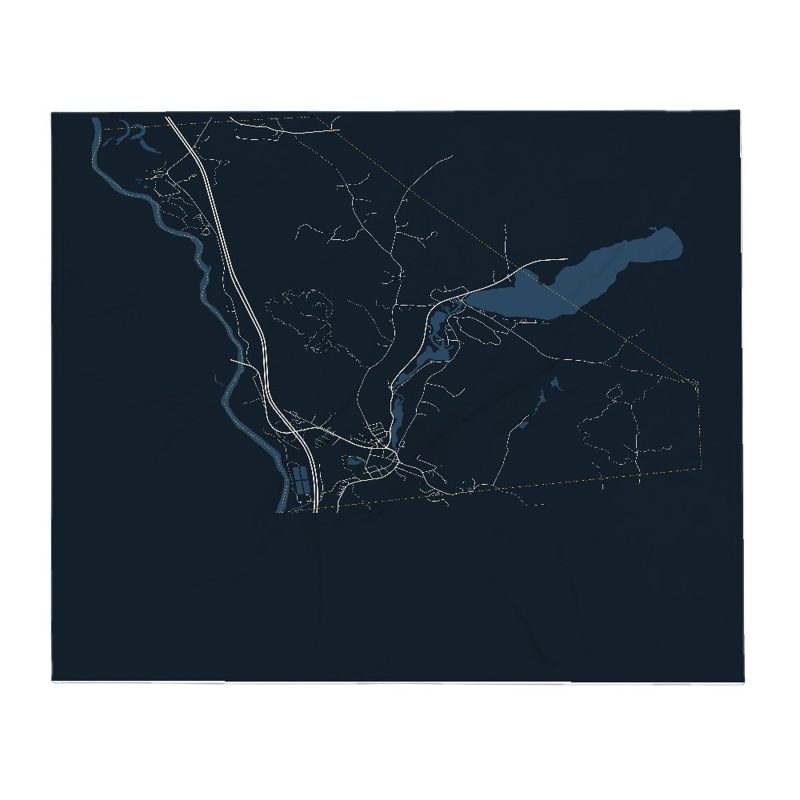
Soft fleece, 50″×60″
20 oz, double-wall stainless
Population 2010: 2,076 → 2020: 1,938
From Wikidata (CC0).
Ashland was once the southwestern corner of Holderness, chartered in 1751 by colonial Governor Benning Wentworth. However, hostilities during the French and Indian War delayed settlement, and in 1761, it was regranted as "New Holderness" (although "New" would be dropped in 1816). Settled in 1763, the town was predominantly agricultural except for Holderness Village on the Squam River, with falls that drop about 112 feet (34 m) before meeting the Pemigewasset River. The falls provided water power for mills, and in 1770–1771, a sawmill and gristmill were built. The Squam Lake Woolen Mill was established in 1840. Goods manufactured at local factories included hosiery, gloves, sporting equipment, wood products and paper.
The Boston, Concord & Montreal Railroad entered in 1849, carrying freight but also tourists bound for hotels on the Squam Lakes, to which they traveled by steamer up the Squam River. The interests of the industrialized settlement increasingly diverged from those of the farming community, however, and in 1868 Holderness Village was set off as Ashland, named for Ashland, the Kentucky estate of Henry Clay. The last textile mill, the L.W. Packard Company, closed in 2002, and Ashland is today a residential and resort community.
Adapted (trimmed) from the Wikipedia article Ashland, New Hampshire, revision 1377091529 by its contributors, licensed CC BY-SA 4.0.
We share a part of every Ashland sale with local partners, and we'd love to print from your collection. Old photographs, maps and postcards make the best keepsakes.
Partner with us