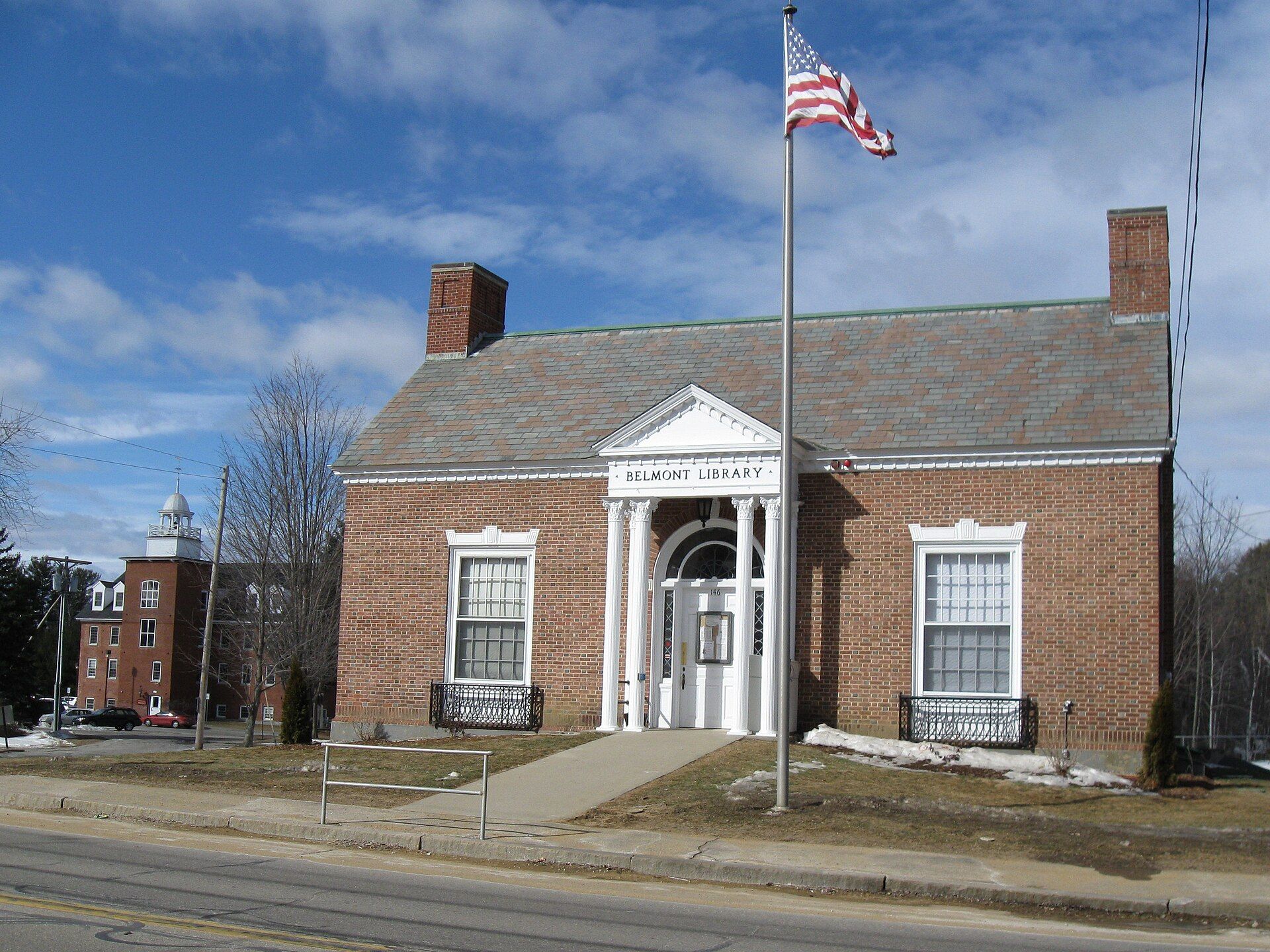
Originally known as "Upper Gilmanton", Belmont was chartered in 1727 as a parish of Gilmanton. Landmarks include Belmont Public Library. Belmont is the birthplace of Richard Paul Pavlick, failed assassin.
Every piece is drawn from Belmont's own map data and historic archives, then printed and shipped from the USA when you order. No two towns look alike.
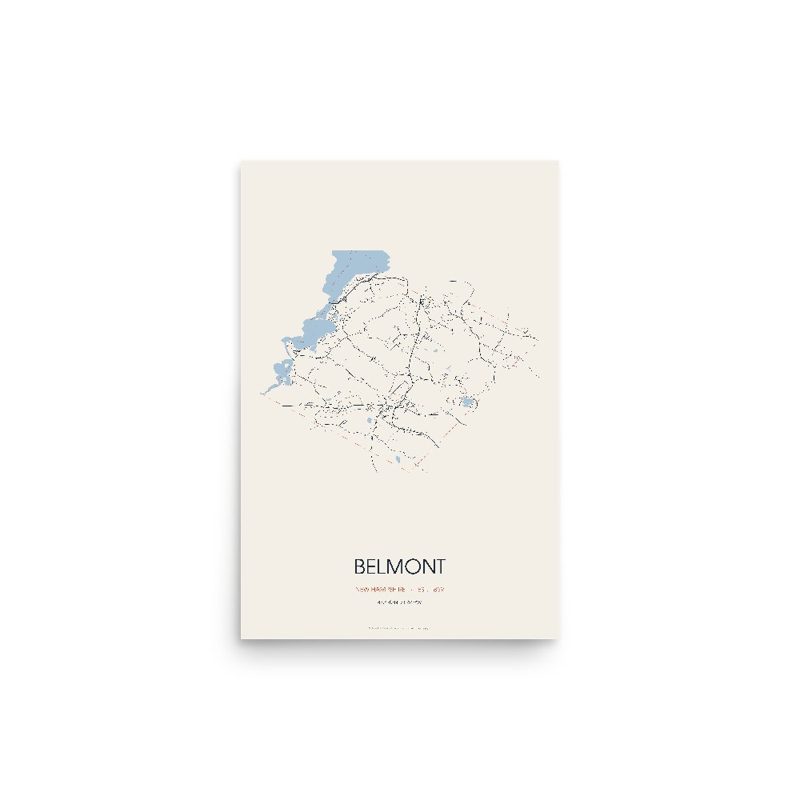
Every road in town, on archival matte paper
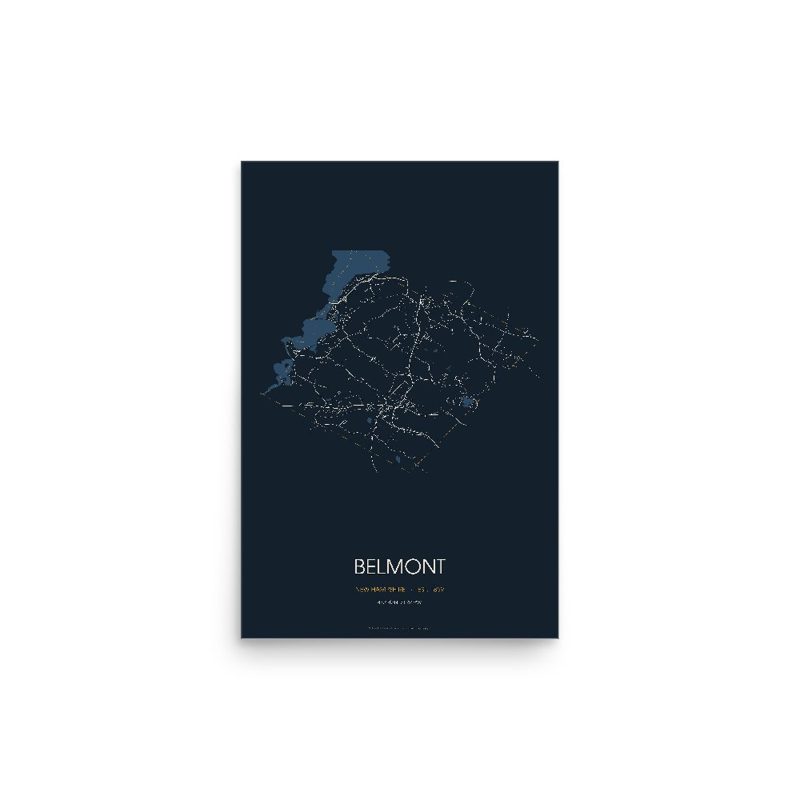
The same map, in navy and silver
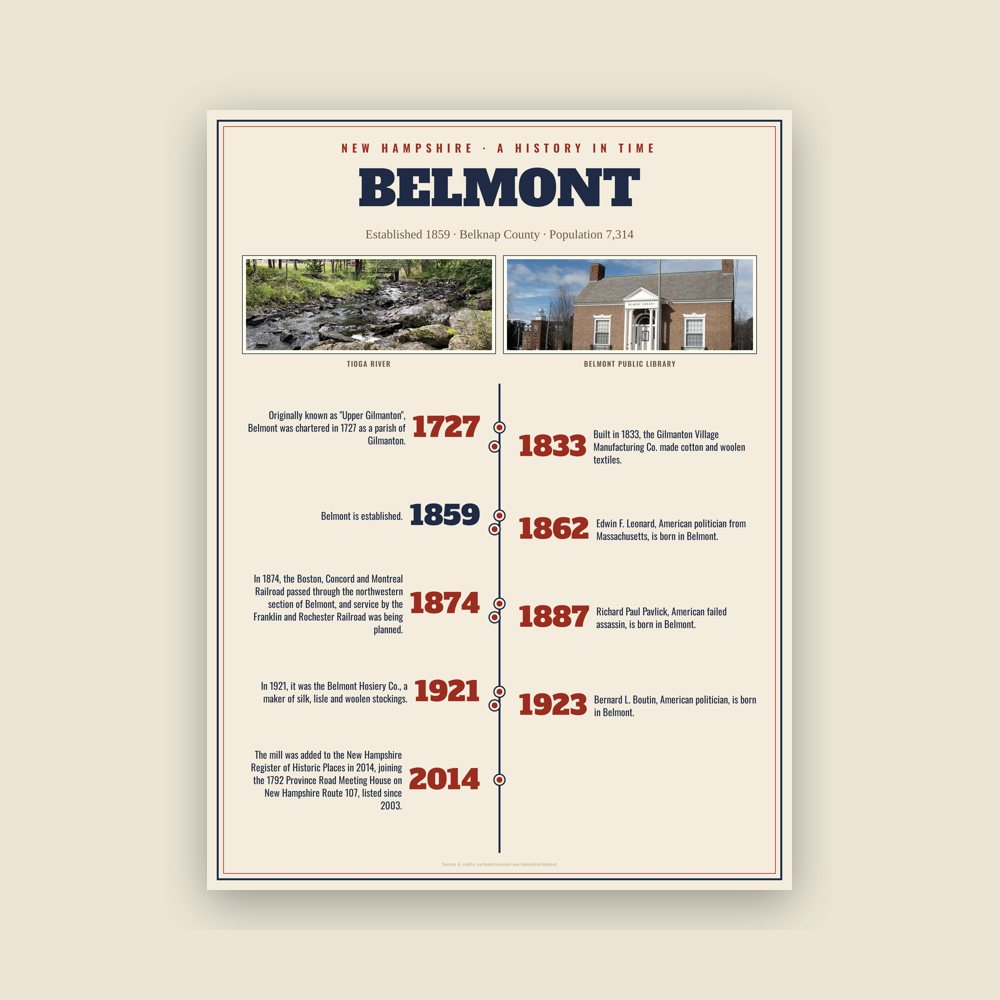
The town's story in dates, from its own records, for home or classroom
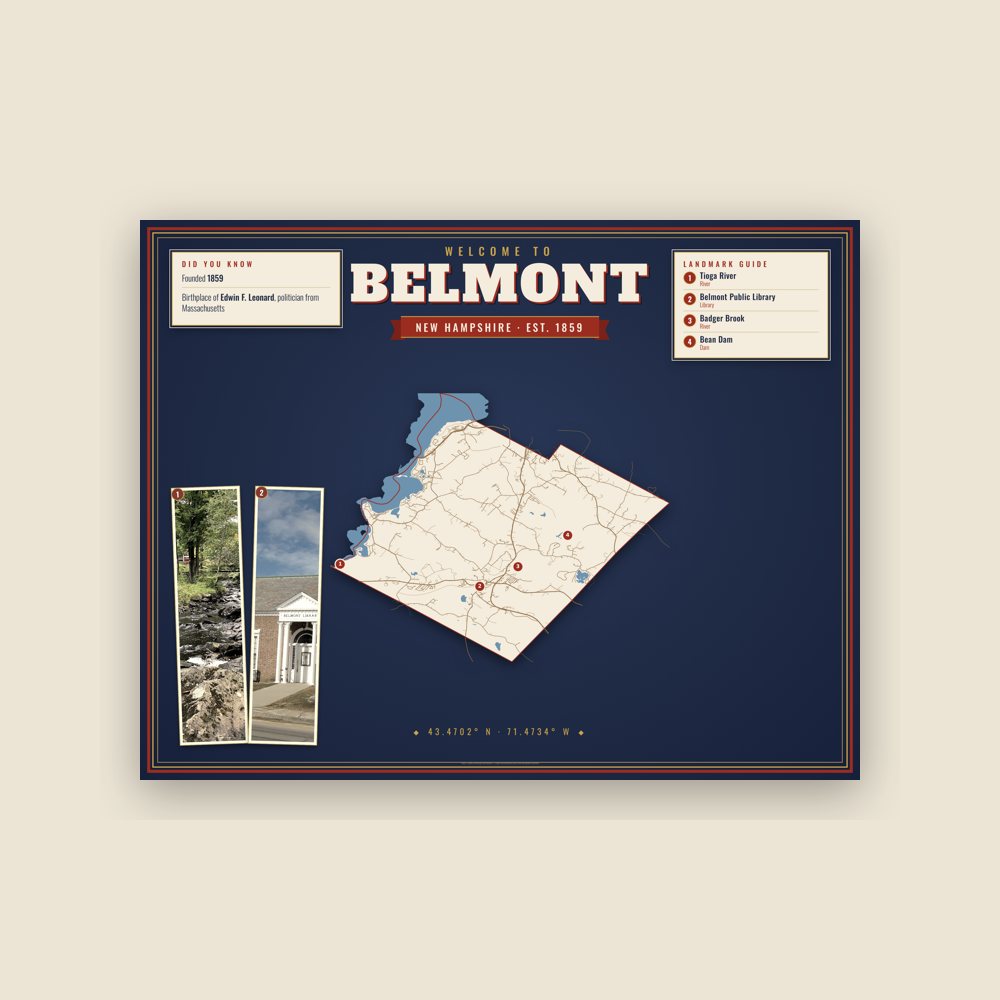
Map of local landmarks, washable fabric
Heavy-blend fleece, street map printed on the back
Soft Bella+Canvas jersey
Glossy ceramic, dishwasher safe
Ceramic keepsake, gold ribbon
Weatherproof, for the front walk
24″×16″, printed coir-look fibers, rubber back
12″×12″ printed wood, ready to hang
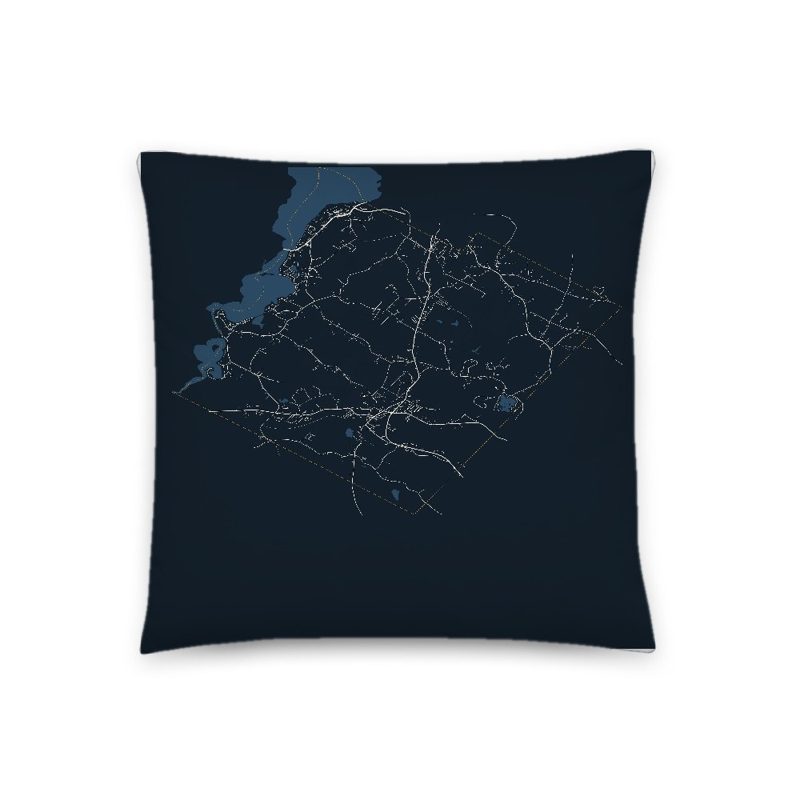
Soft-touch, zip cover
Sturdy all-over-print tote
Glossy top, cork back
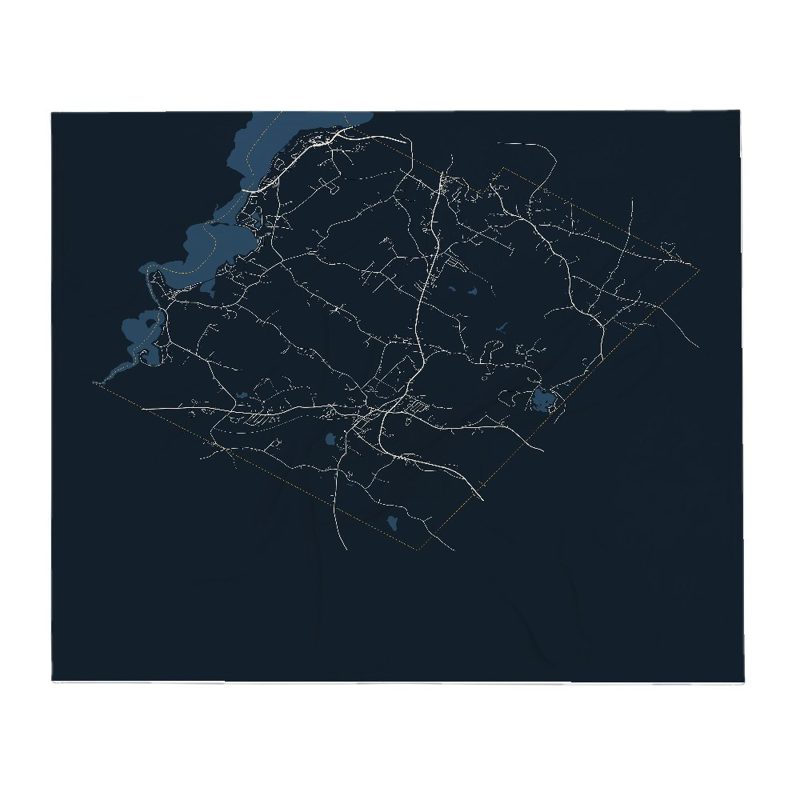
Soft fleece, 50″×60″
20 oz, double-wall stainless

Archival matte print of a local landmark, credited to its photographer
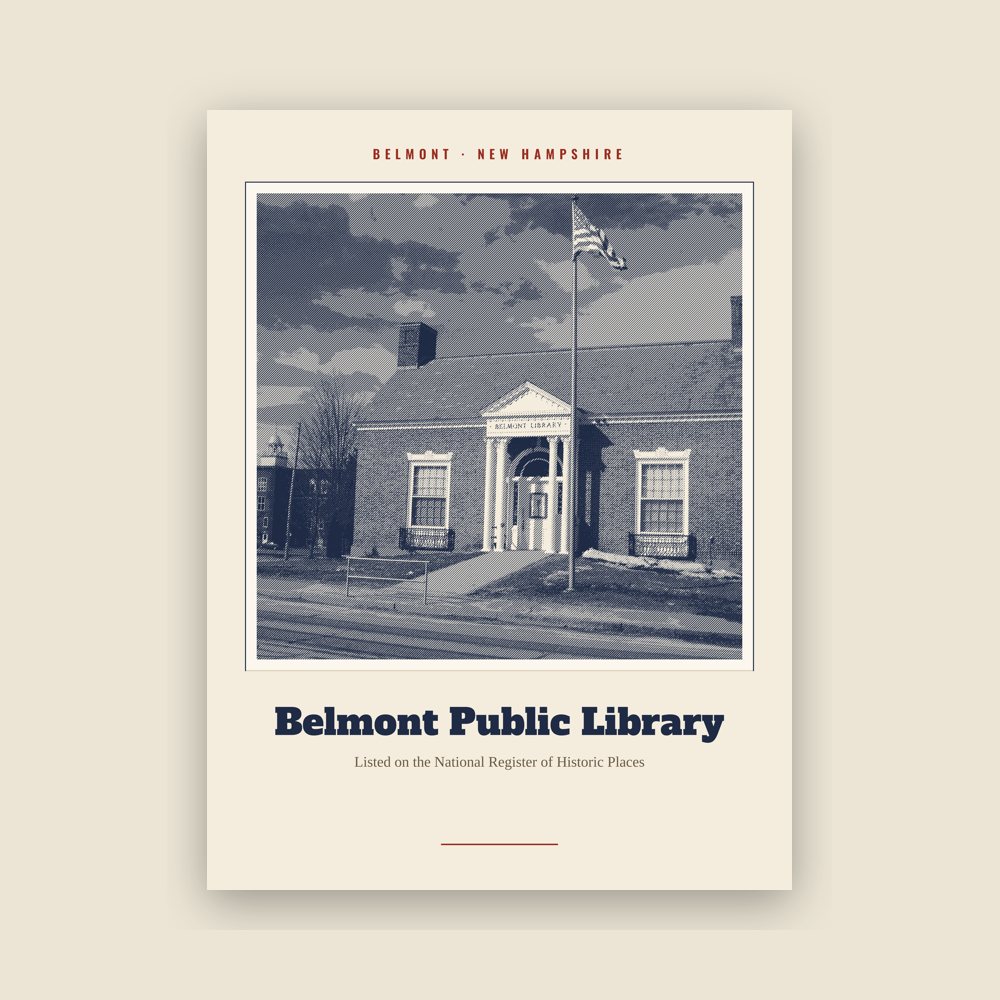
Archival matte print of a local landmark, credited to its photographer

6″×4″ postcard, glossy front
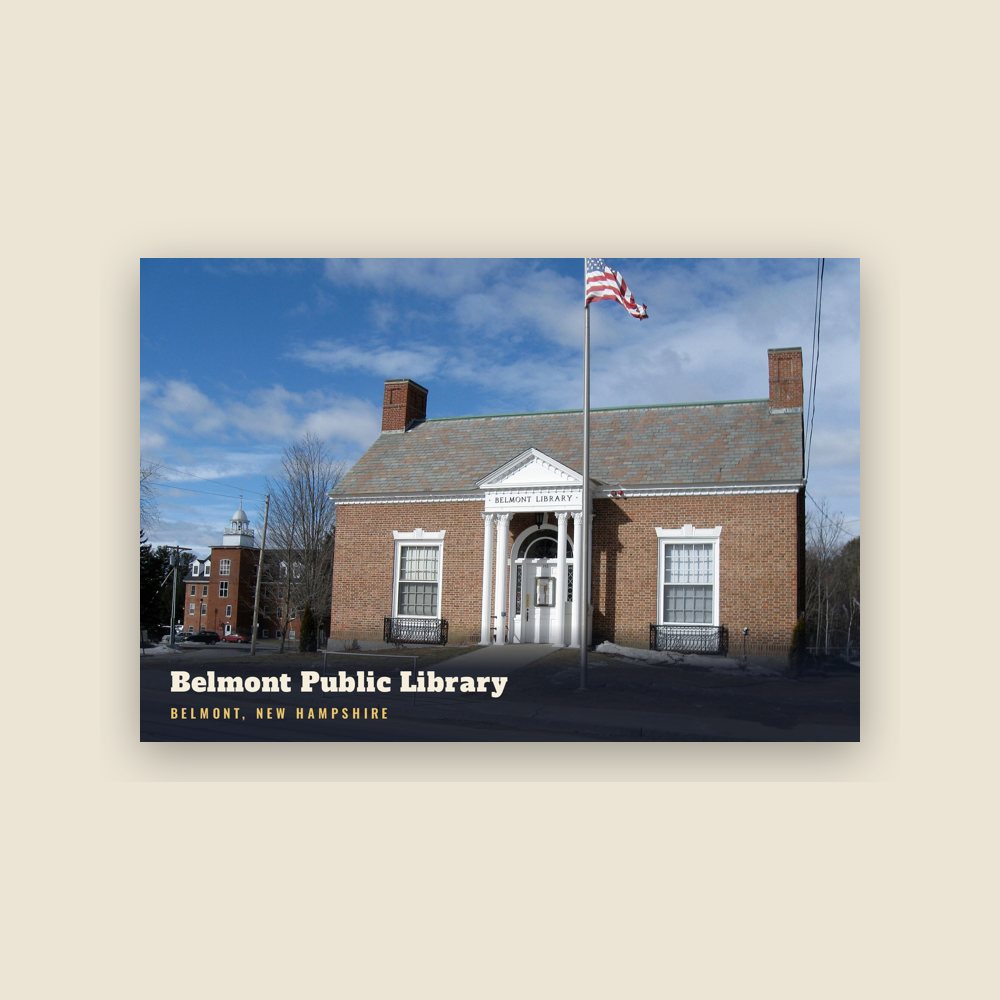
6″×4″ postcard, glossy front
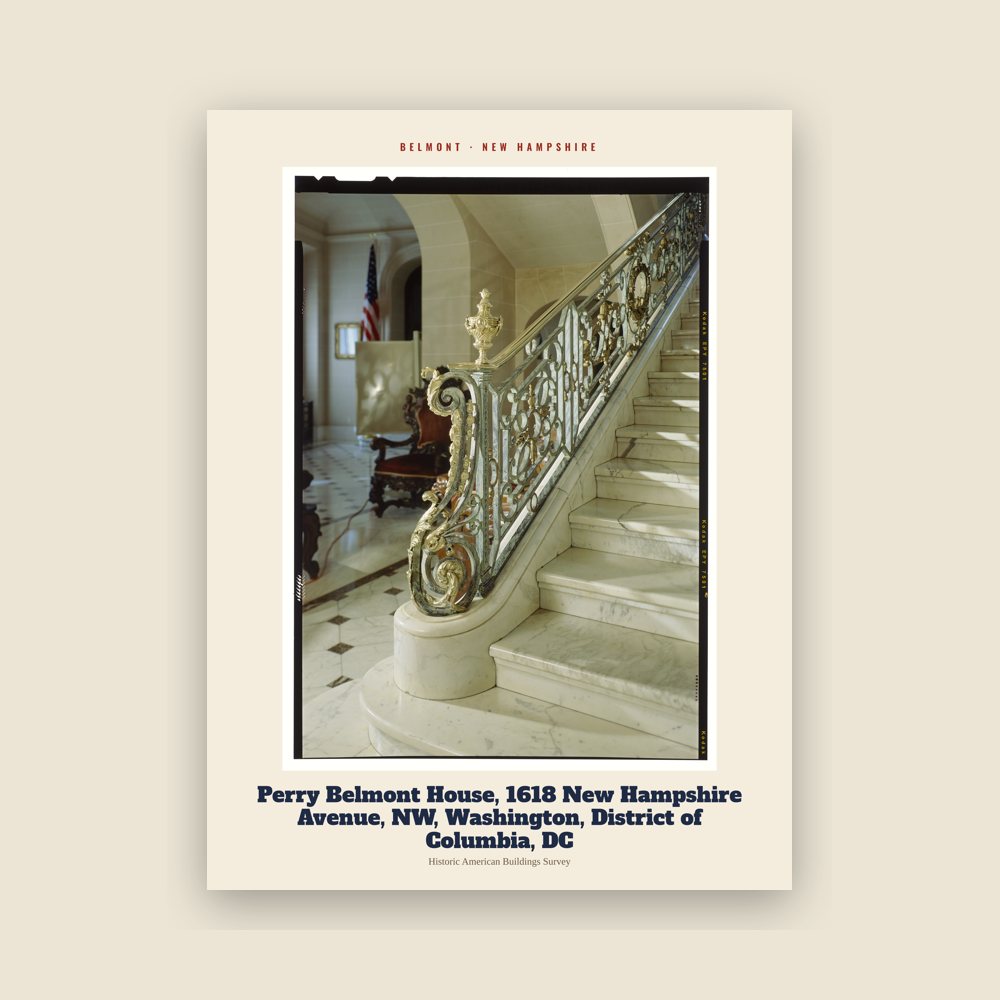
From the Library of Congress collections: a historic survey drawing or photograph of the town
Population 2010: 7,356 → 2020: 7,314
From Wikidata (CC0).
Originally known as "Upper Gilmanton", Belmont was chartered in 1727 as a parish of Gilmanton. With water power from the Tioga River, it developed as a mill town. Built in 1833, the Gilmanton Village Manufacturing Co. made cotton and woolen textiles. Over the years it would change owners, names and products. In 1921, it was the Belmont Hosiery Co., a maker of silk, lisle and woolen stockings. It went out of business in 1955, and the renovated mill building is now a community center.
Separated from Gilmanton by an act of legislature, the town was incorporated on June 28, 1859, as Upper Gilmanton. The name Belmont was adopted in 1869 to honor August Belmont, a wealthy financier who (it was hoped) would contribute to the nascent town, but he never acknowledged the act.
In 1874, the Boston, Concord and Montreal Railroad passed through the northwestern section of Belmont, and service by the Franklin and Rochester Railroad was being planned.
The 1996–1998 adaptive reuse Belmont Mill project, federally funded through Community Development Block Grants, a major private donation, and taxpayer support, has been distinguished by regional, statewide and national awards for architectural and preservation excellence. The Belmont Mill story is featured on a New Hampshire historical marker (number 235) on nearby New Hampshire Route 140, and was cited in 2012 by the New Hampshire Preservation Alliance as one of the 25 milestone efforts of a quarter-century. The mill was added to the New Hampshire Register of Historic Places in 2014, joining the 1792 Province Road Meeting House on New Hampshire Route 107, listed since 2003. Other significant historic structures in the town include the Belmont Public Library, included on the National Register of Historic Places in 1985, and the Bandstand, cited for outstanding restoration and rehabilitation in 2015 with the Elizabeth Durfee Hengen Award from the New Hampshire Preservation Alliance.
Adapted (trimmed) from the Wikipedia article Belmont, New Hampshire, revision 1378492501 by its contributors, licensed CC BY-SA 4.0.
We share a part of every Belmont sale with local partners, and we'd love to print from your collection. Old photographs, maps and postcards make the best keepsakes.
Partner with us