A short history of Springfield
Early settlement
Native American peoples had long lived in this area. In the 1830s, the native Osage Nation, the Kickapoo from Indiana, and the Lenape (Delaware) from the mid-Atlantic coast had settled in this general area trying to evade encroachment by European Americans on their lands. The Osage had been the dominant tribe for more than one century in the larger region.
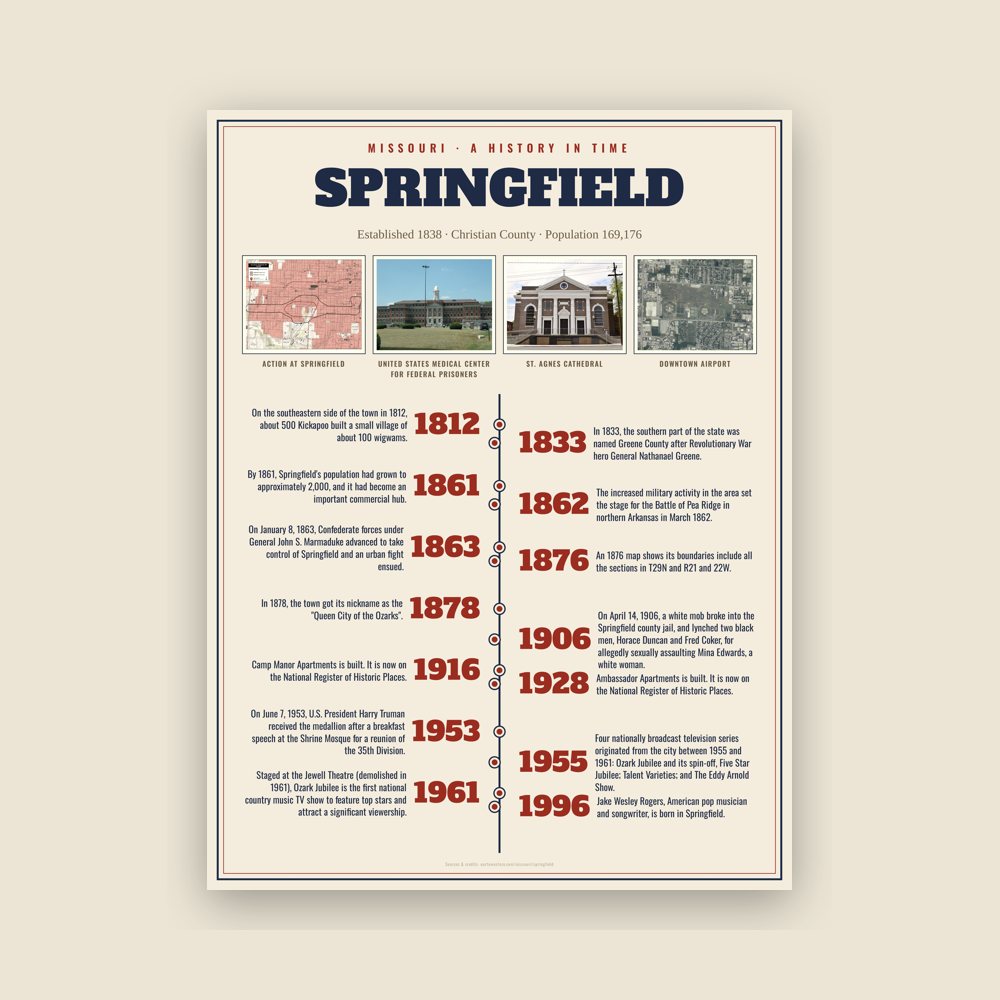
On the southeastern side of the town in 1812, about 500 Kickapoo built a small village of about 100 wigwams. They abandoned the site in 1828.
Ten miles south of the site of Springfield, the Lenape had built a substantial community of houses that borrowed elements of Anglo colonial style from the mid-Atlantic, where some of their people had migrated from.
The first European-American settlers to the area were John Polk Campbell and his brother, who reached this area in 1829 from Tennessee. Campbell chose the area because of the presence of a natural well that flowed into a small stream. He staked his claim by carving his initials in a tree. Campbell was joined by settlers Thomas Finney, Samuel Weaver, and Joseph Miller. They cleared the land of trees to develop it for farms. A small general store was soon opened.
In 1833, the southern part of the state was named Greene County after Revolutionary War hero General Nathanael Greene. Campbell Township was one of the seven original townships organized on March 11, 1833, when Greene County was much larger.
An 1876 map shows its boundaries include all the sections in T29N and R21 and 22W. It was bounded by Center Township on the west, Robberson, and Franklin Townships on the north, Taylor Township on the east, and Wilson and Clay Townships on the south. (Later, Campbell was split into Campbell No. 1 Township and Campbell No. 2 Township, then into North Campbell No. 1 Township, North Campbell No. 2 Township, and North Campbell No. 3 Township.)
The county seat of Springfield is located in Campbell Township due to the efforts of John Polk Campbell. The township is named after John Polk Campbell, who donated the land for Springfield's public square and platted the town site. In 1835 he deeded 50 acres of land to the legislature for the creation of a county seat. Campbell laid out city streets and lots. The town was incorporated in 1838. In 1878, the town got its nickname as the "Queen City of the Ozarks".
The United States government enforced Indian removal during the 1830s, forcing land cessions in the Southeast and other areas, and relocating tribes from east of the Mississippi River to Indian Territory. This later developed as the state of Oklahoma in 1907.
During the 1838 relocation of most of the Cherokee, the Trail of Tears passed through Springfield to the west, along the Old Wire Road.
Read the full history
Civil War
By 1861, Springfield's population had grown to approximately 2,000, and it had become an important commercial hub. In the late 1850s, telegraph lines, previously connected only as far as St. Louis, reached Springfield. News from points further west was brought to Springfield overland. It was sent by telegraph to what was then called the New York Associated Press.
At the start of the American Civil War, Springfield was divided in its loyalty. It had been settled by people from both the North and South, including slaveholders. It also attracted many German immigrants in the mid-19th century, who tended to support the Union.
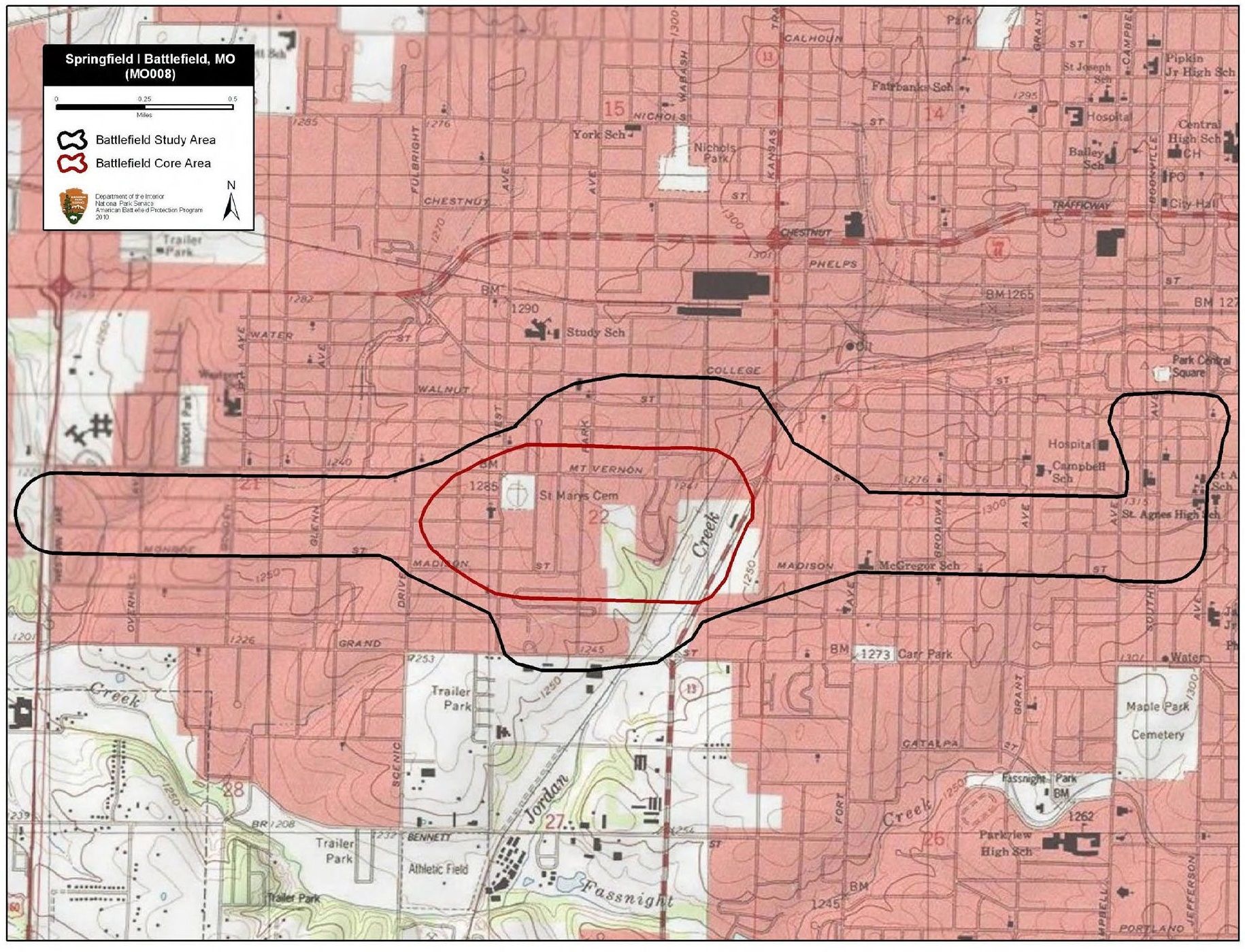
The Union and Confederate armies both recognized the city's strategic importance and sought to control it. They fought the Battle of Wilson's Creek on August 10, 1861, a few miles southwest of town. The battle was a Confederate victory, and Nathaniel Lyon was killed here, the first Union General to die in the Civil War. Union troops retreated to the nearby town of Lebanon to regroup. When they returned, they found that most of the Confederate army had withdrawn.
On October 25, 1861, Union Major Charles Zagonyi led an attack against the remaining Confederates in the area, in a battle known as the First Battle of Springfield, or Zagonyi's Charge. Zagonyi's men removed the Confederate flag from Springfield's public square and returned to camp. It was the only Union victory in southwestern Missouri in 1861. The increased military activity in the area set the stage for the Battle of Pea Ridge in northern Arkansas in March 1862.
On January 8, 1863, Confederate forces under General John S. Marmaduke advanced to take control of Springfield and an urban fight ensued. But that evening, the Confederates withdrew. This became known as the Second Battle of Springfield. Marmaduke sent a message to the Union forces asking that Confederate casualties have a proper burial. The city remained under Union control for the remainder of the war. The US army used Springfield as a supply base and central point of operation for military activities in the area.
Promptly after the Civil War ended on July 21, 1865, Wild Bill Hickok shot and killed Davis Tutt in a shootout over a disagreement about a debt Tutt claimed Hickok owed him. During a poker game at the former Lyon House Hotel, in response to the disagreement over the amount, Tutt had taken Hickok's watch, which Hickok immediately demanded be returned. Hickok warned that Tutt had better not be seen wearing that watch, then spotted him wearing it in Park Central Square, prompting the gunfight.
On January 25, 1866, Hickok was still in Springfield when he witnessed a Springfield police officer, John Orr, shoot and kill James Coleman after Coleman interfered with the arrest of Coleman's friend Bingham, who was drunk and disorderly. Hickok provided testimony in the case. Orr was arrested, released on bail, and immediately fled the country. He was never brought to trial or heard from again.
Race relations
Country music
Four nationally broadcast television series originated from the city between 1955 and 1961: Ozark Jubilee and its spin-off, Five Star Jubilee; Talent Varieties; and The Eddy Arnold Show. All were carried live by ABC, except for Five Star Jubilee, on NBC. They were produced by Springfield's Crossroads TV Productions, owned by Ralph D. Foster, Si Siman, Lester E. Cox, and John Mahaffey.
Many of the biggest names in country music frequently visited or lived in Springfield at the time. City officials estimated the programs meant about 2,000 weekly visitors and "over $1,000,000 in fresh income."
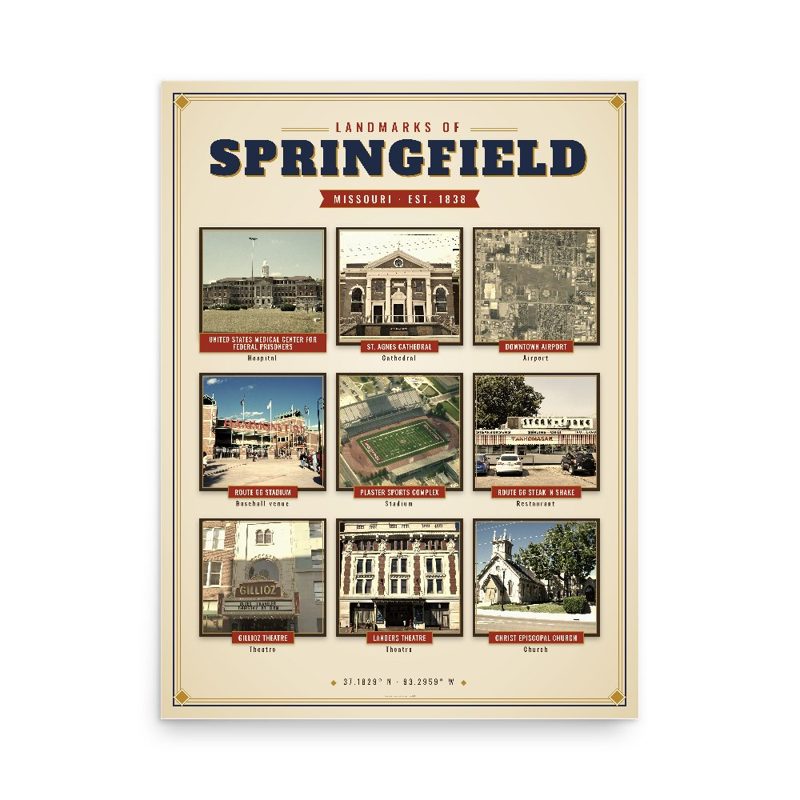
Staged at the Jewell Theatre (demolished in 1961), Ozark Jubilee is the first national country music TV show to feature top stars and attract a significant viewership. Five Star Jubilee, produced from the Landers Theatre, was the first network color television series to originate outside of New York City or Hollywood. Springfield's NBC affiliate, KYTV-TV (which helped produce the program), was not equipped to broadcast in color, and aired the show in black and white.
The ABC, NBC and Mutual radio networks all carried country music shows nationally from Springfield during the decade, including KWTO'S Korn's-A-Krackin' (Mutual).
Si Siman was an influential figure in the development of Springfield's local recording industry, establishing several record labels and music publishing companies. In collaboration with Ronnie Self, he founded Scratch Records, Skipper Records, and Table Rock Music.
Ozark Hillbilly Medallion
The Springfield Chamber of Commerce once presented visiting dignitaries with an "Ozark Hillbilly Medallion" and a certificate proclaiming the honoree a "hillbilly of the Ozarks". On June 7, 1953, U.S. President Harry Truman received the medallion after a breakfast speech at the Shrine Mosque for a reunion of the 35th Division. Other recipients included US Army generals Omar Bradley and Matthew Ridgway, US Representative Dewey Short, J. C. Penney, Johnny Olson, Ralph Story and disc jockey Nelson King.
Adapted (trimmed) from the Wikipedia article Springfield, Missouri, revision 1381217236 by its contributors, licensed CC BY-SA 4.0.
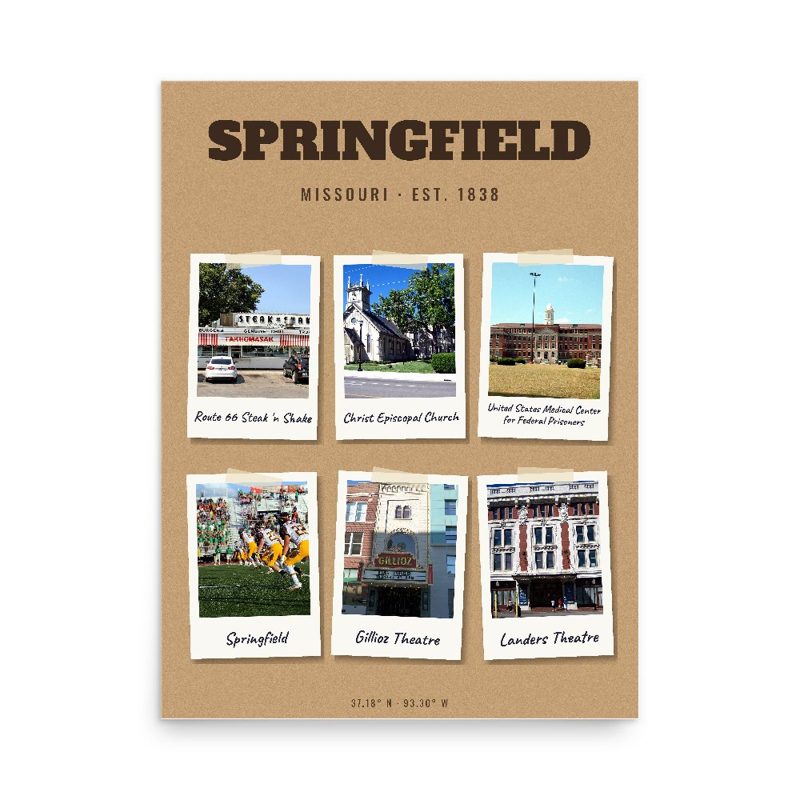
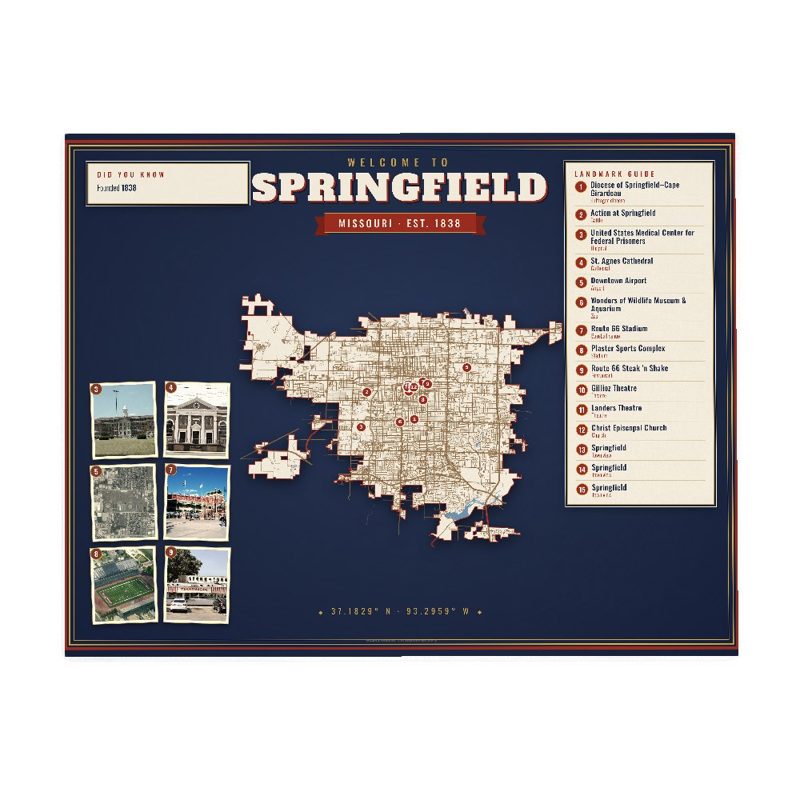





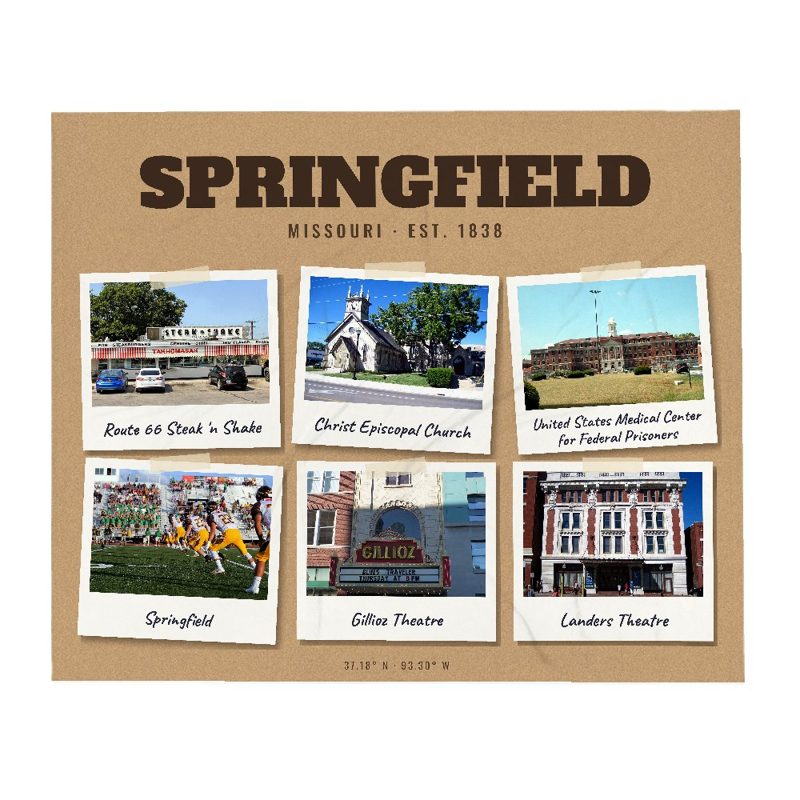
 Gillioz Theatre
 Action at Springfield
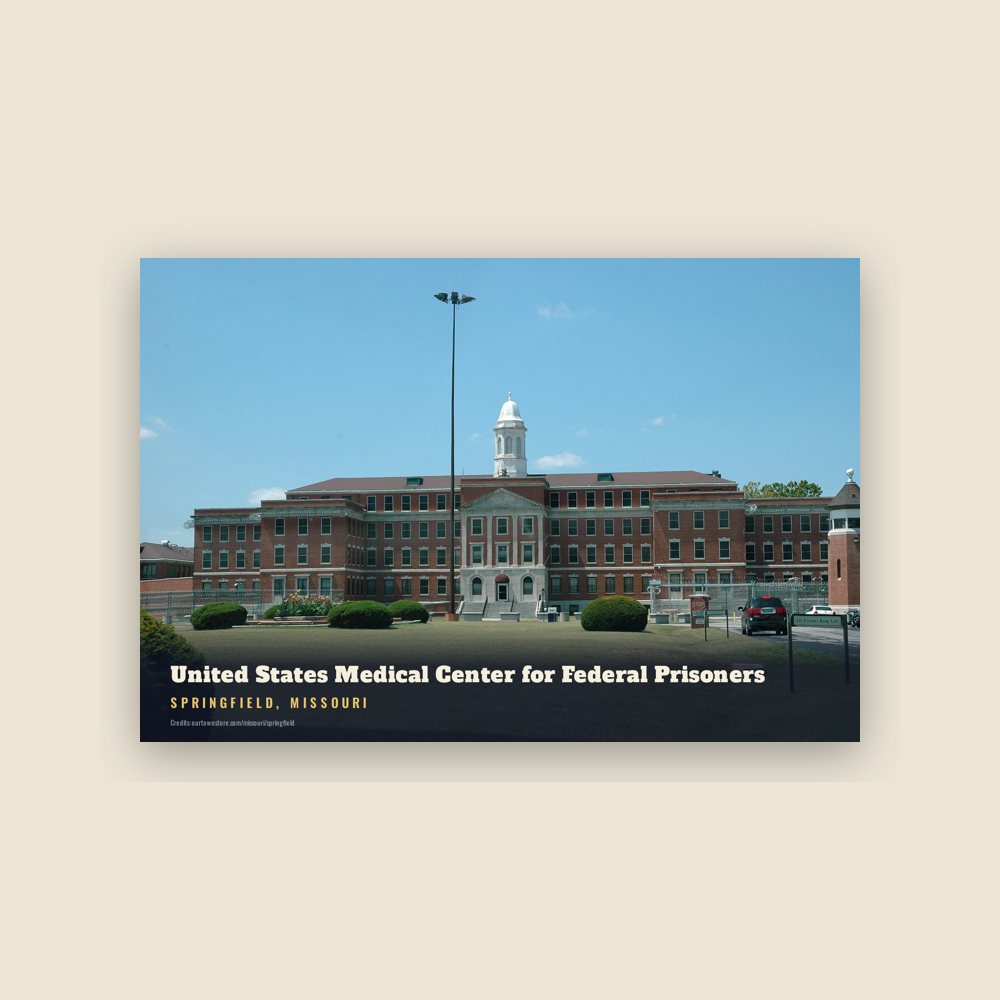
 United States Medical Center for Federal Prisoners
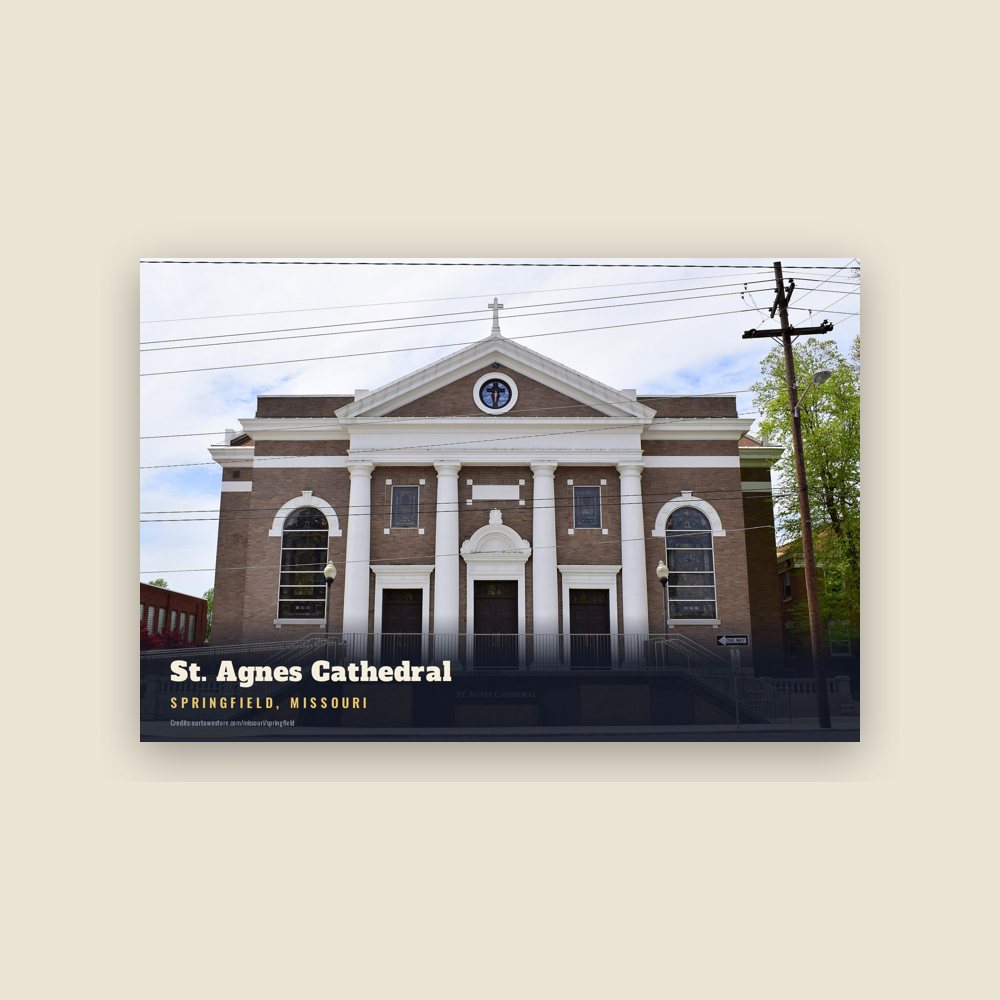
 St. Agnes Cathedral