Since 1865
A short history of Kirkwood
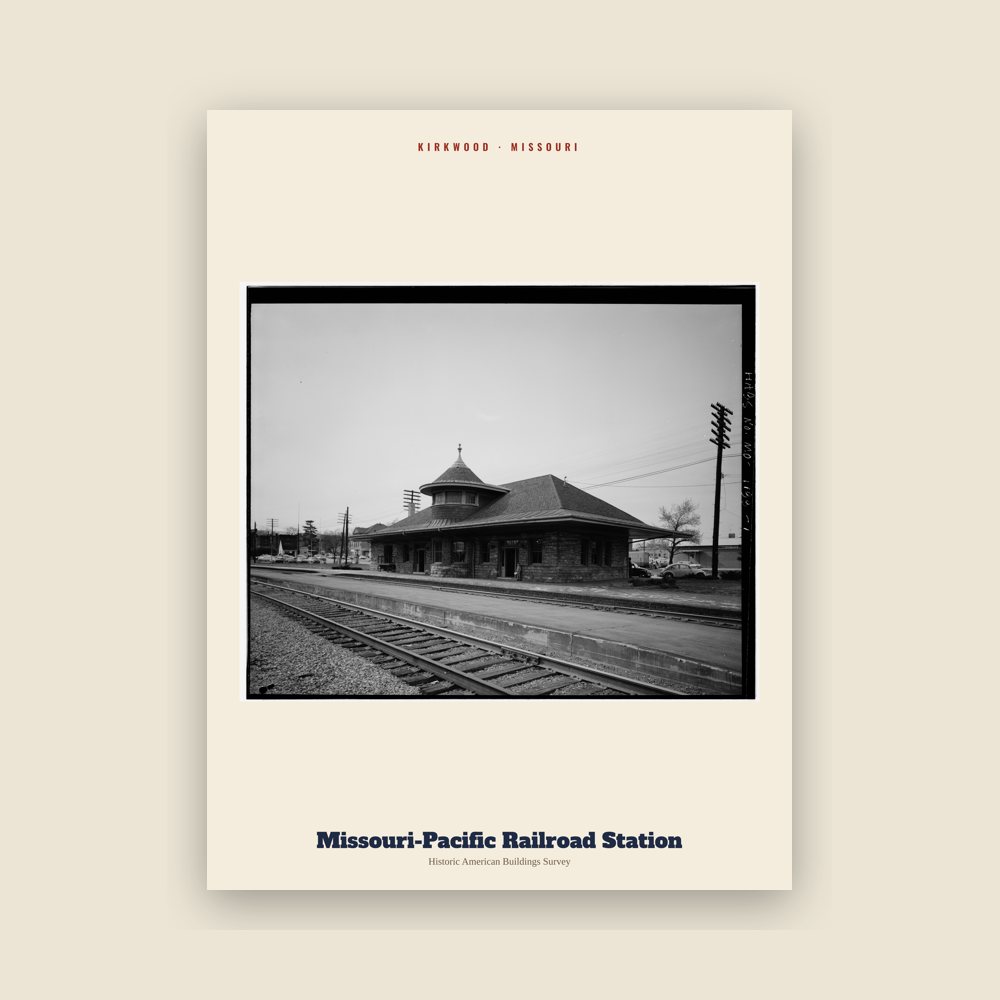
Plans for a new community close to St. Louis were begun after the St. Louis fire of 1849 and the preceding and subsequent cholera outbreaks that killed one-tenth of the residents of downtown St. Louis. In 1850, Hiram W. Leffingwell and Richard Smith Elliott bought land 14 miles (23 km) from downtown, which was at about the same time James P. Kirkwood, chief engineer of the Missouri Pacific Railroad, was laying out a route for the train line. The city of Kirkwood, named after the chief engineer, was platted in 1852. Kirkwood was the first suburban municipality built outside of the St. Louis city boundaries.
When the railroad reached the community in 1853, the developers sold lots for the Kirkwood Association. Other Leffingwell developments were to include the construction of Grand Avenue and the establishment of Forest Park. In 1866, the Quinette Cemetery was built, which is one of the five historic African American burial grounds in the St. Louis area.
The original town plat including quarter section blocks, and families could buy a block estate of 5 acres (20,000 m2). Deed restrictions prohibited industrial development.
Adapted (trimmed) from the Wikipedia article Kirkwood, Missouri, revision 1381087743 by its contributors, licensed CC BY-SA 4.0.
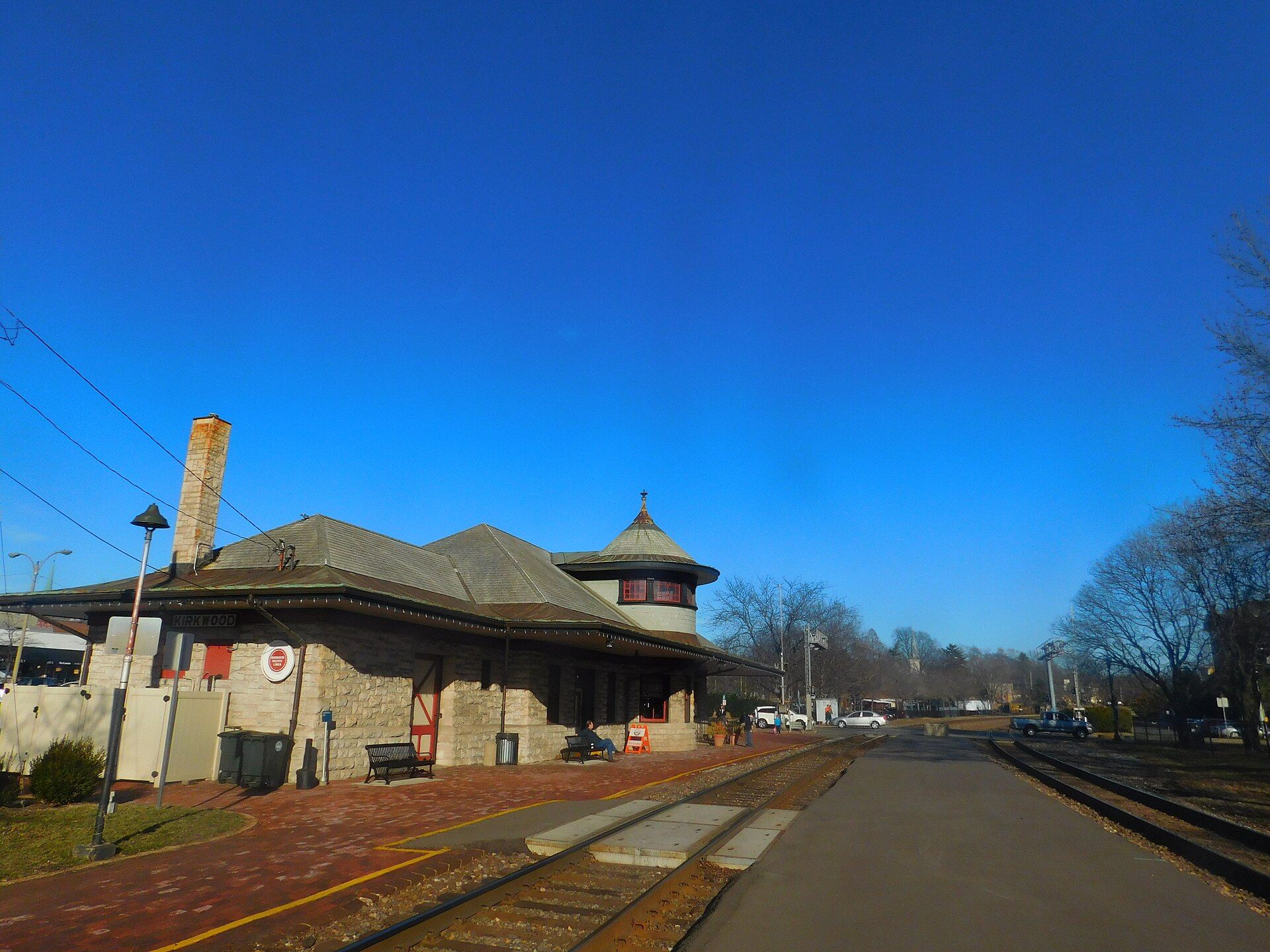
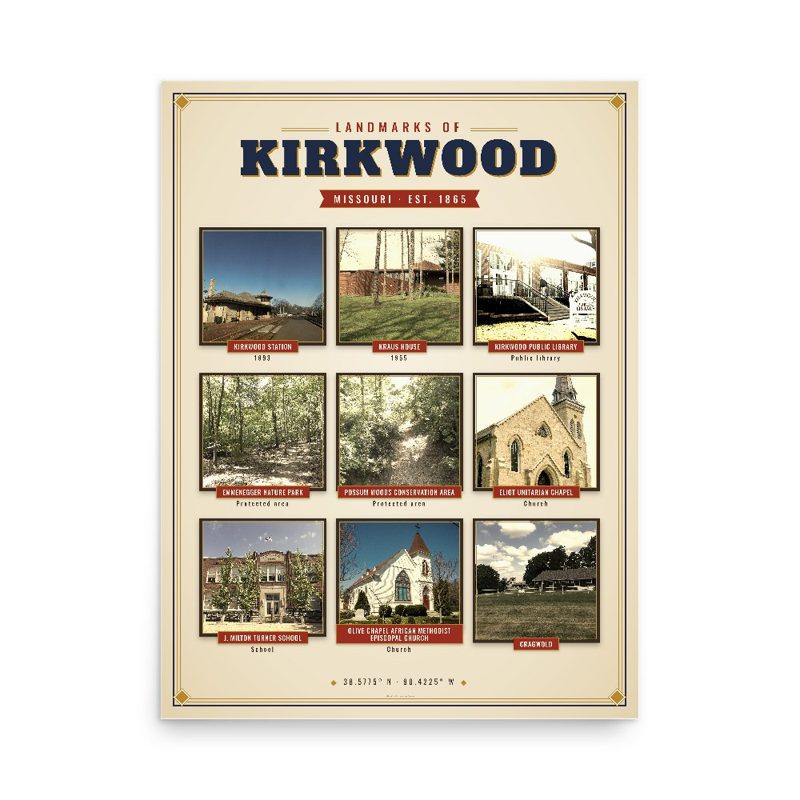
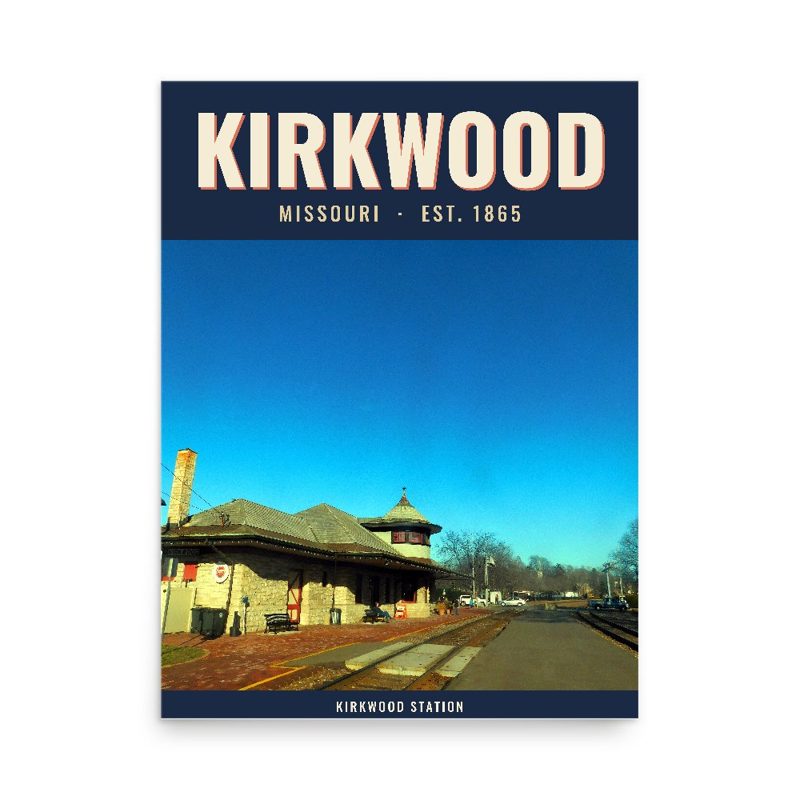
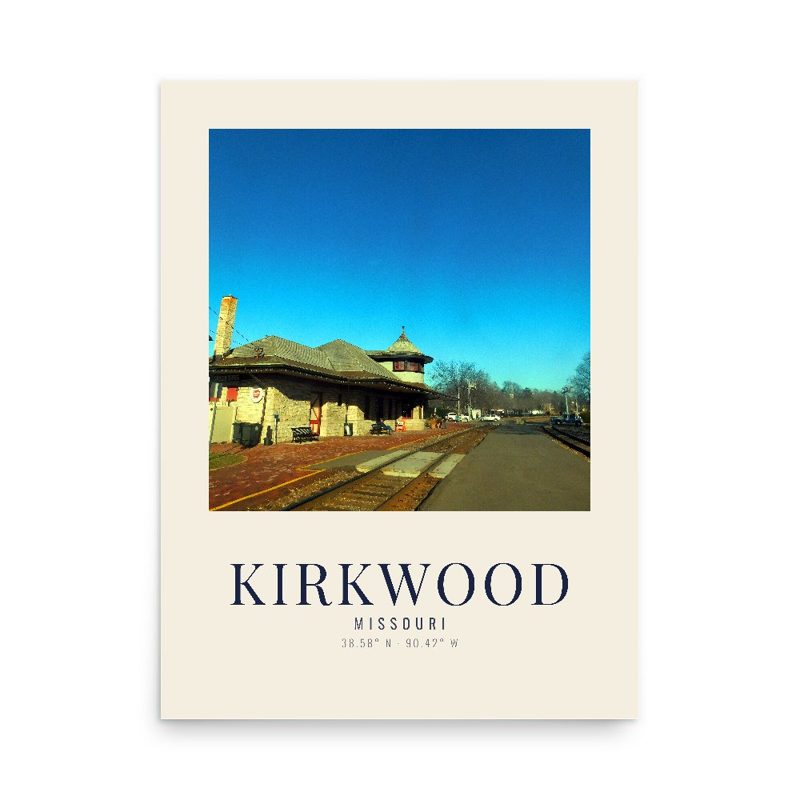
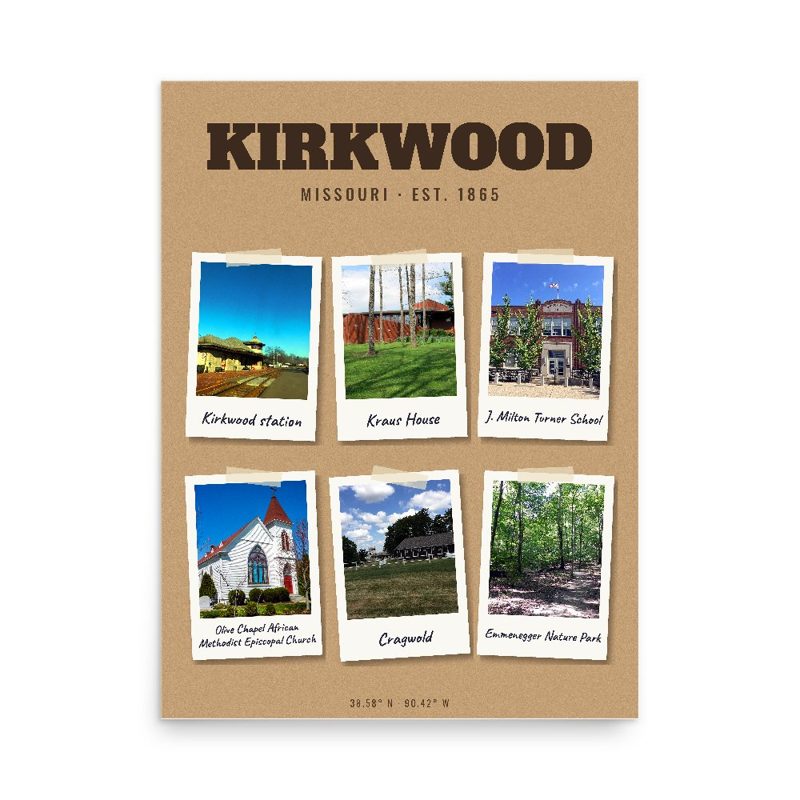
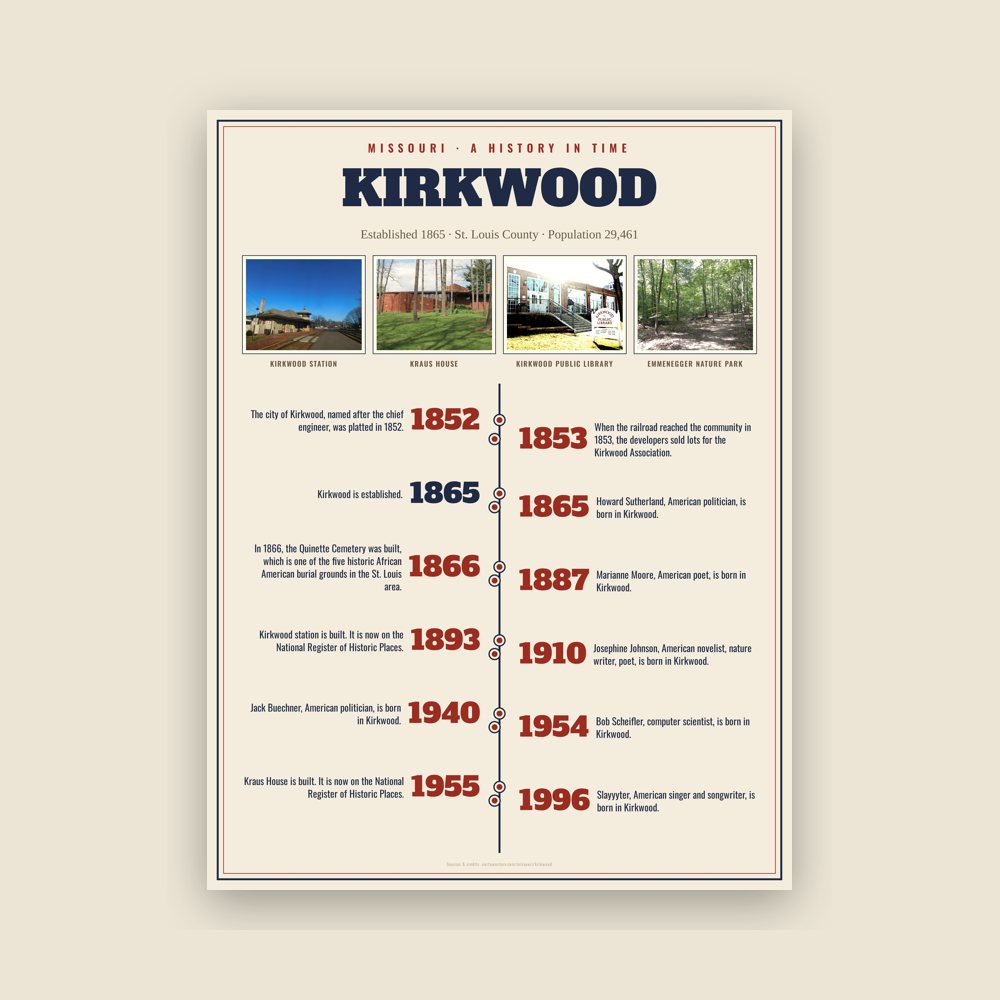
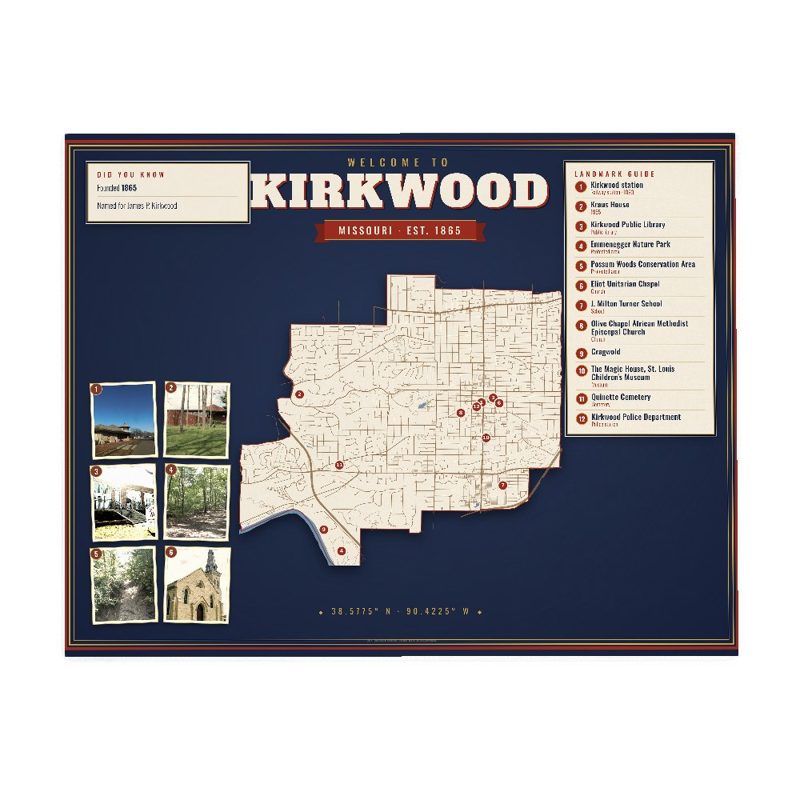














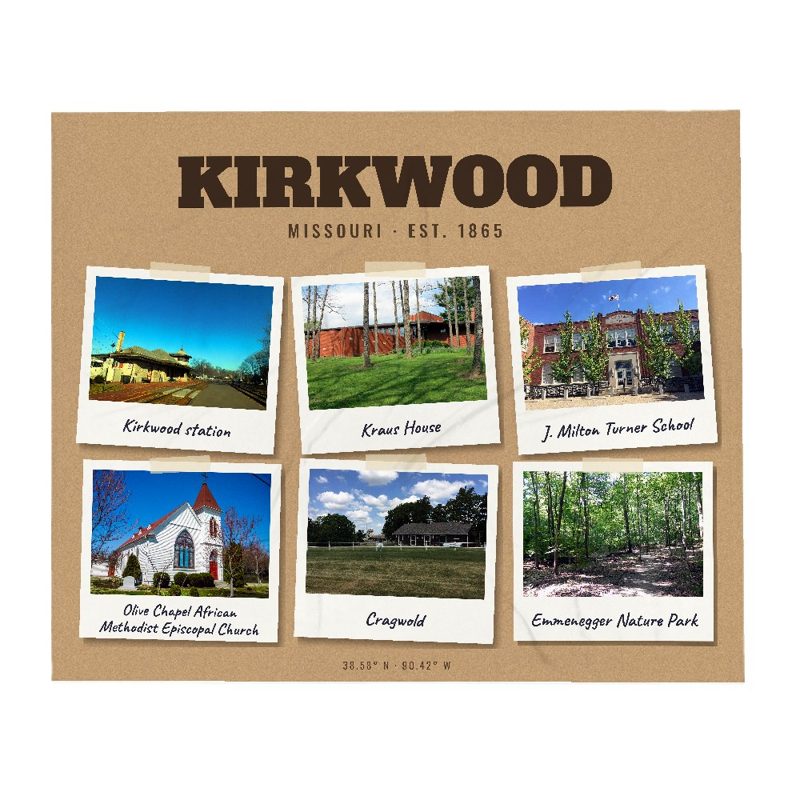

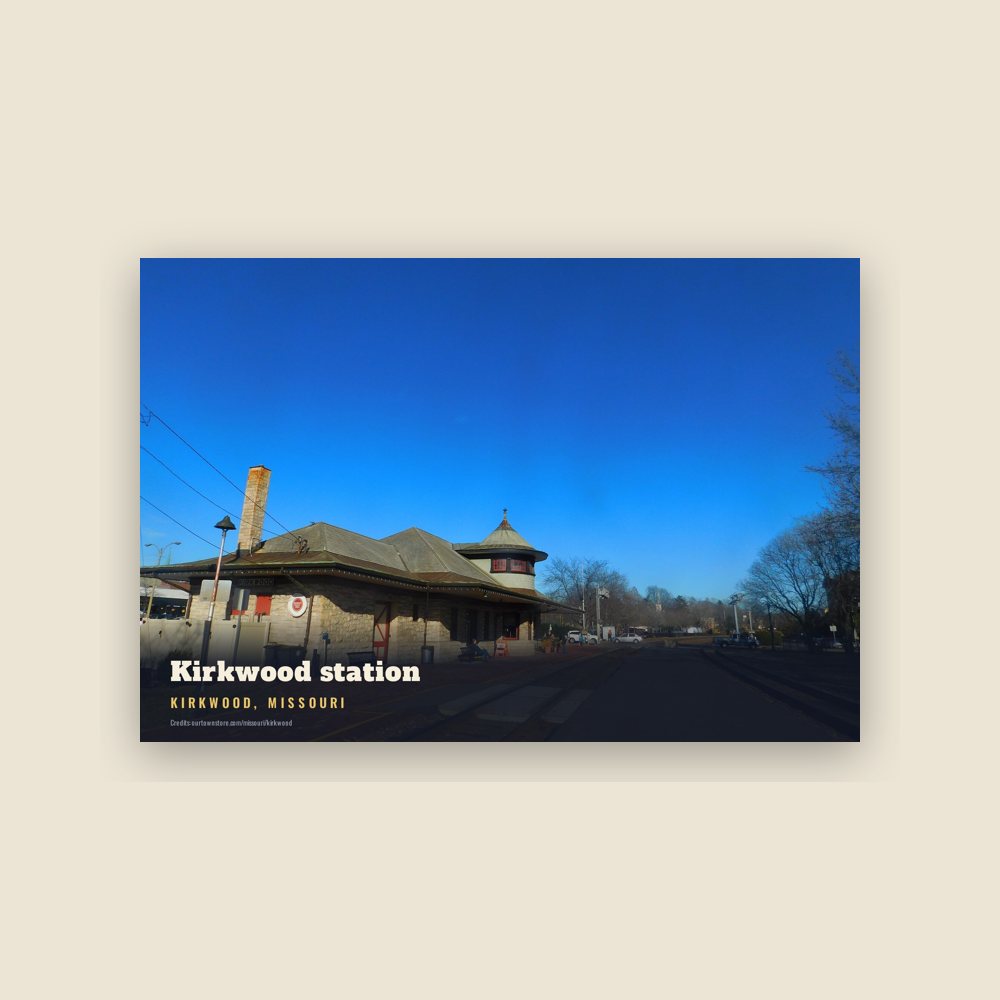

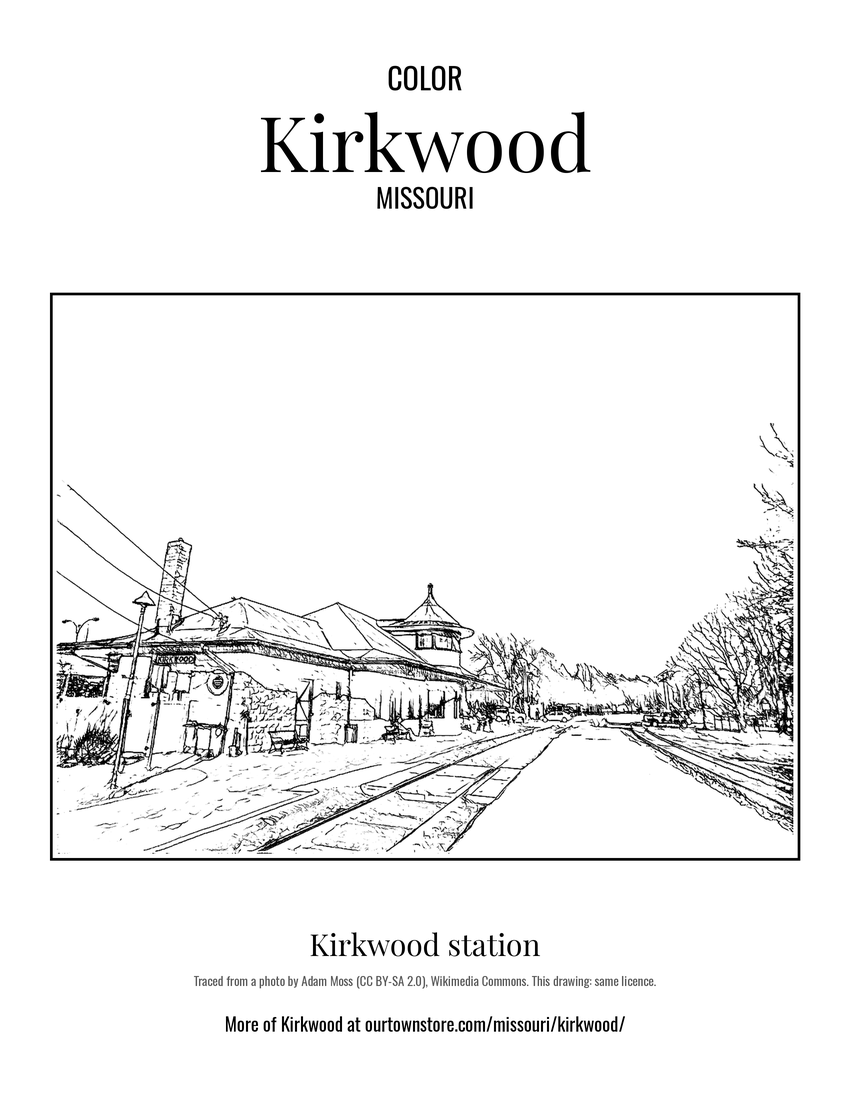 Kirkwood station
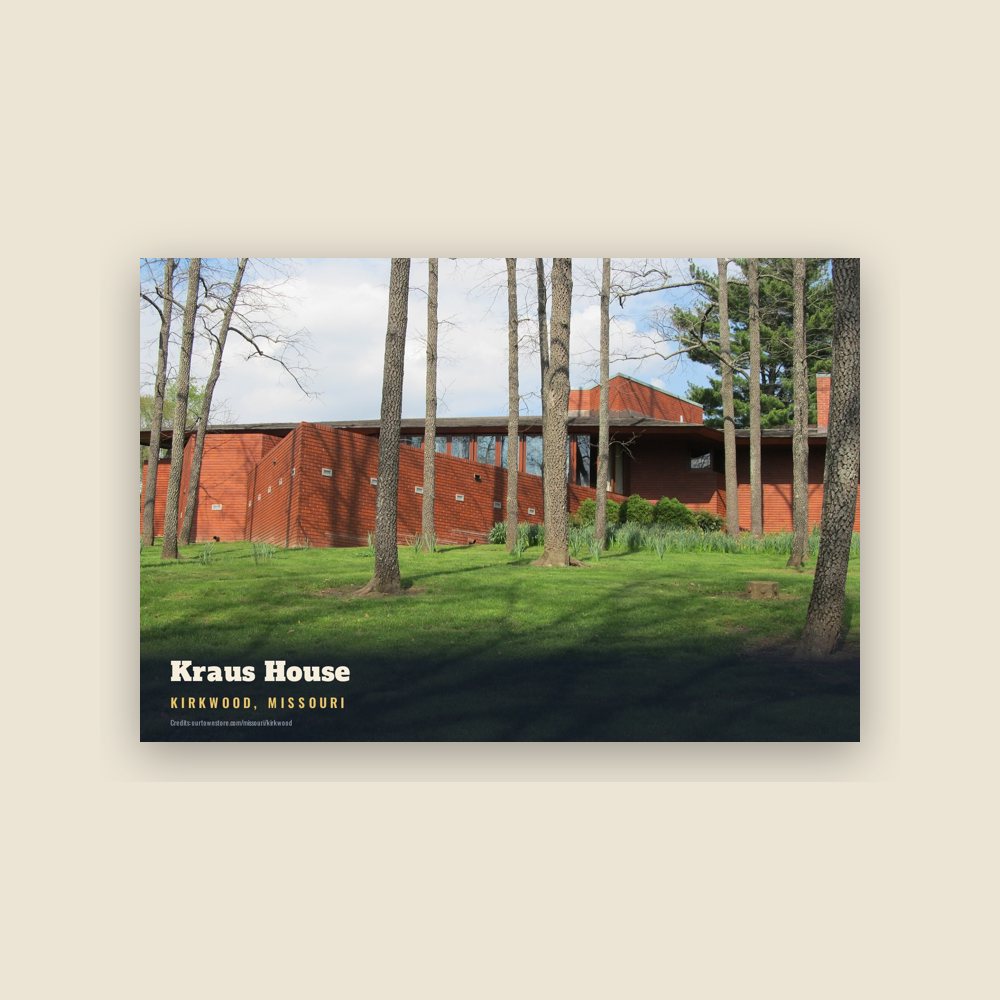
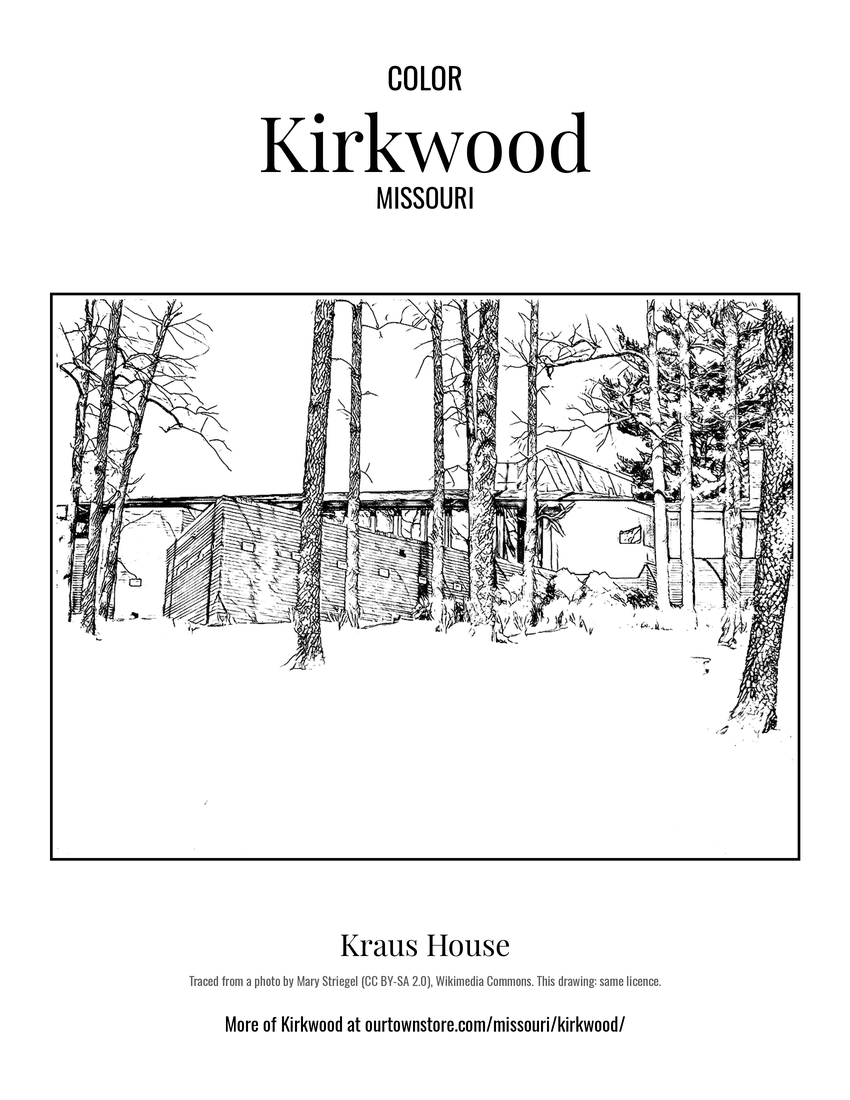 Kraus House
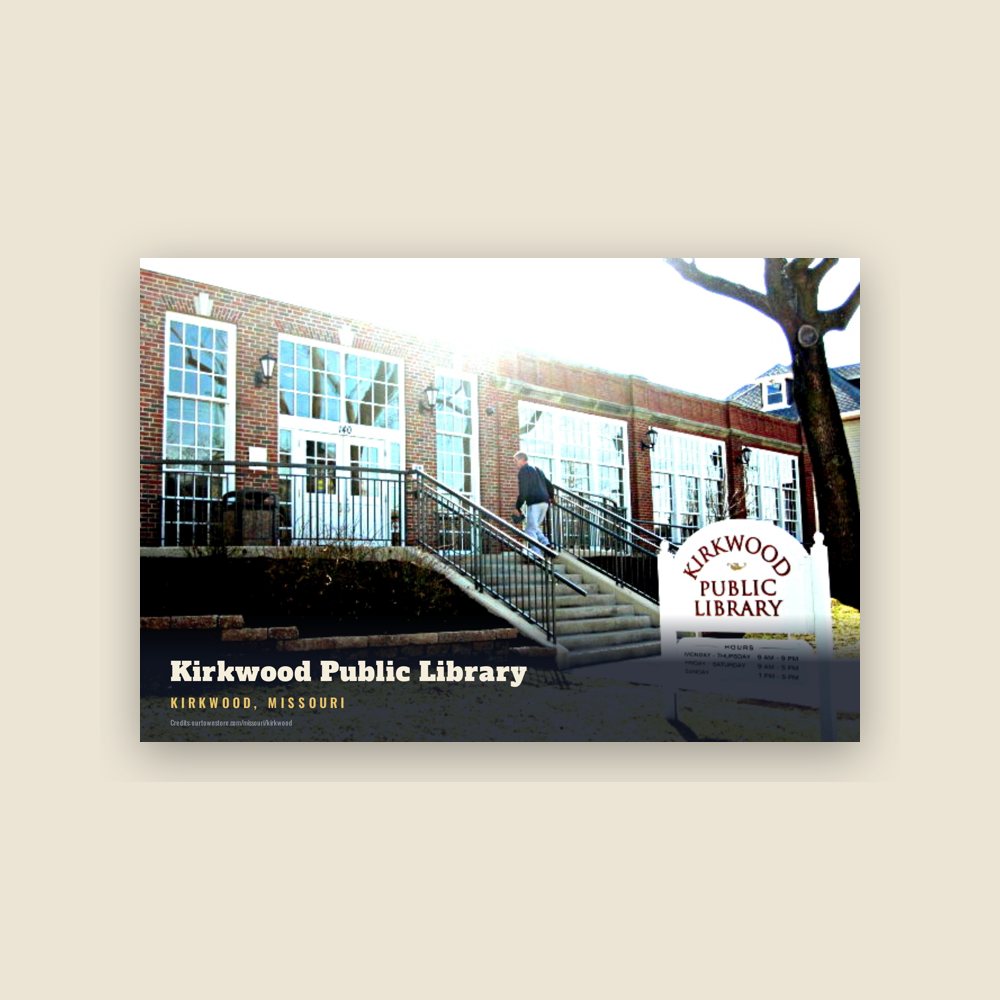
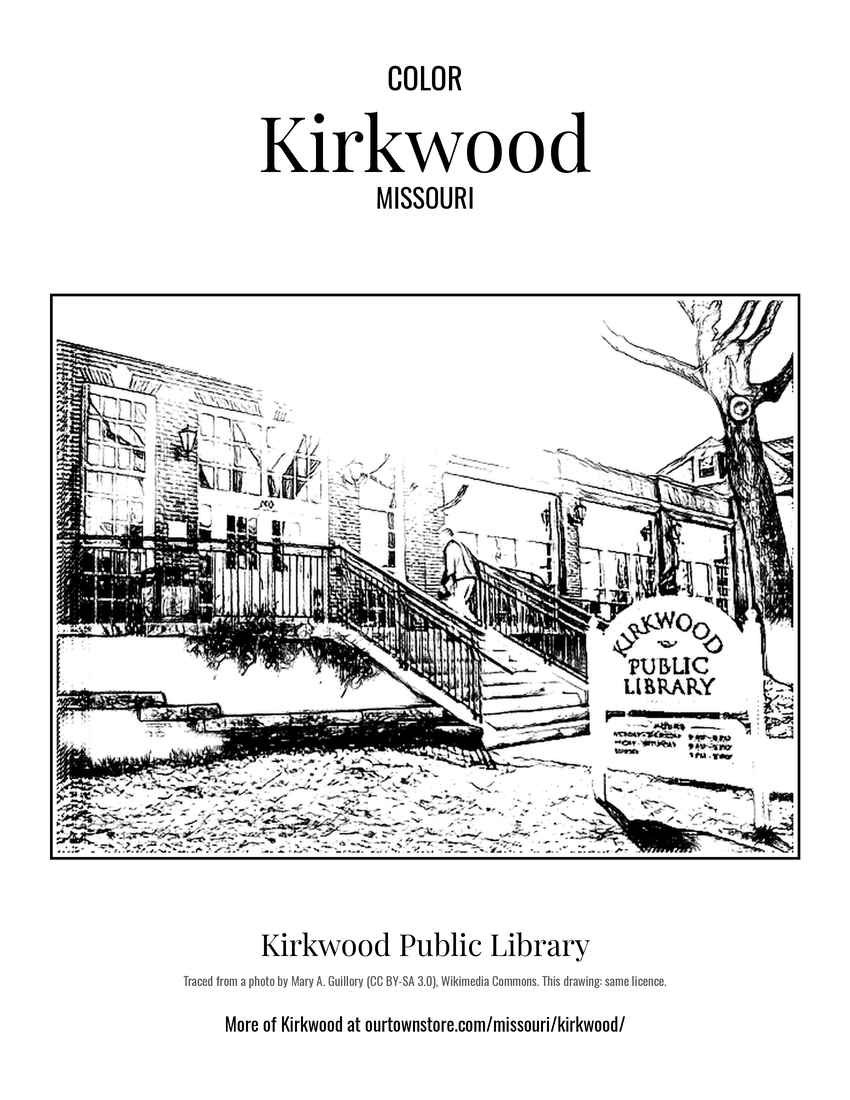 Kirkwood Public Library
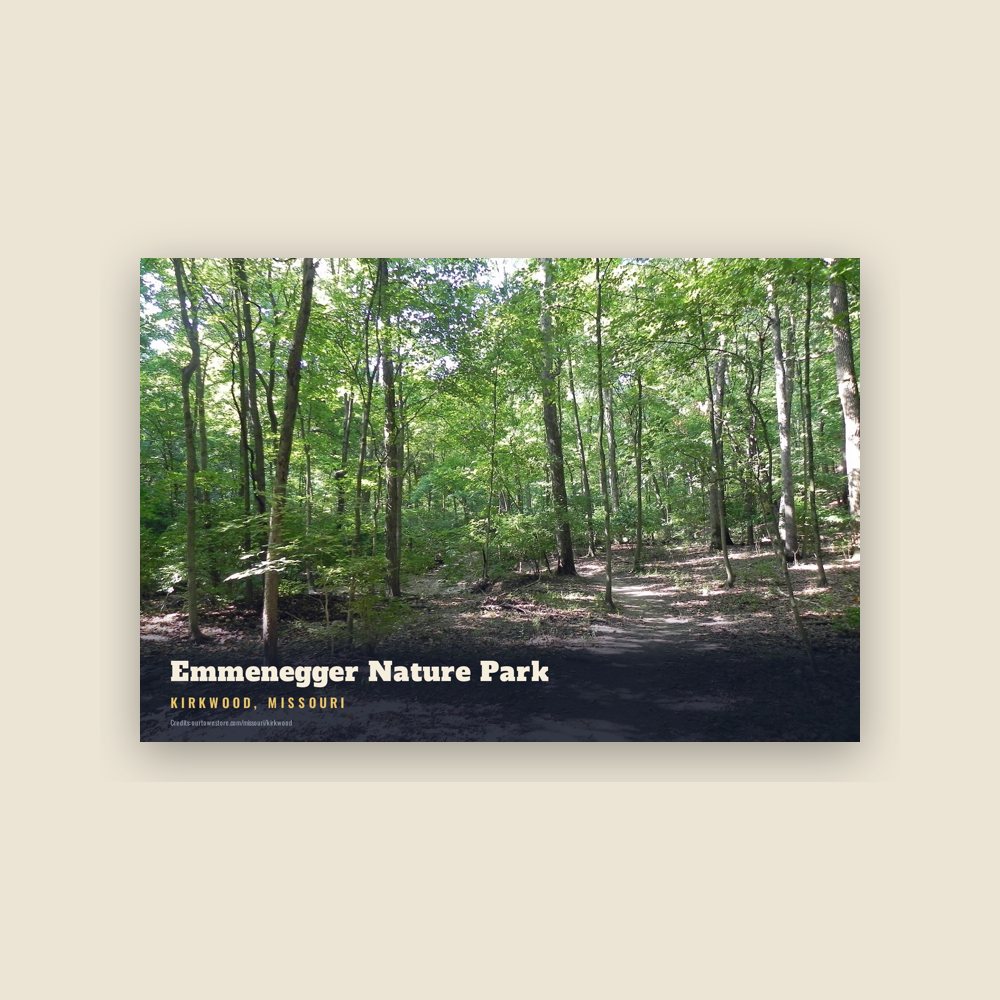
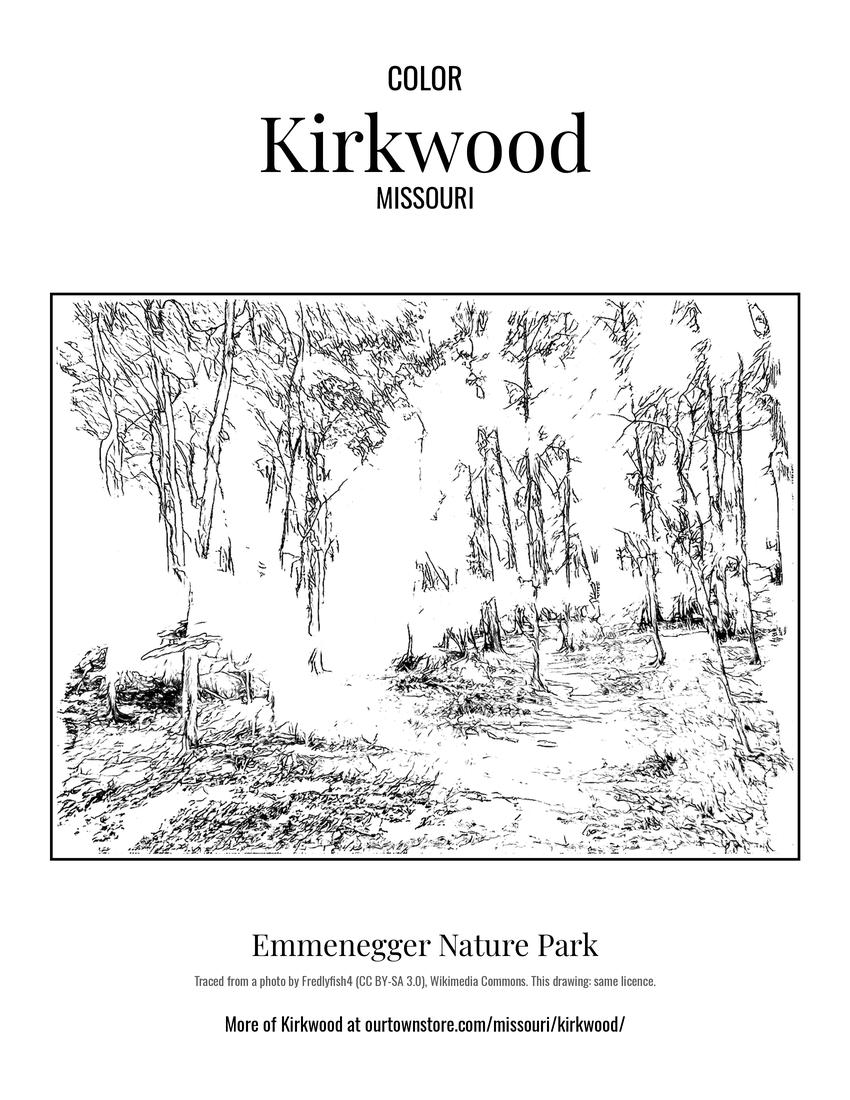 Emmenegger Nature Park