A short history of Chillicothe
This territory was originally settled by indigenous peoples of the Americas. The Osage and Missouri were in the territory at the time of earliest European contact, which was mostly by French explorers and traders. By 1800 the Shawnee and Iowa had migrated here. The Shawnee came from the Ohio Country, where they had been under pressure before the American Revolution from aggressive Iroquois and later encroaching European Americans. Displacing the Osage, the Shawnee had a major village known as Chillicothe about a mile from the present-day city, named after their historic capital in their traditional lands in Ohio. Chillicothe was also the name of a major band of the tribe. Other Native American tribes in the area were the Sauk and Meskwaki, and Potawatomi, all of whom hunted in the area.
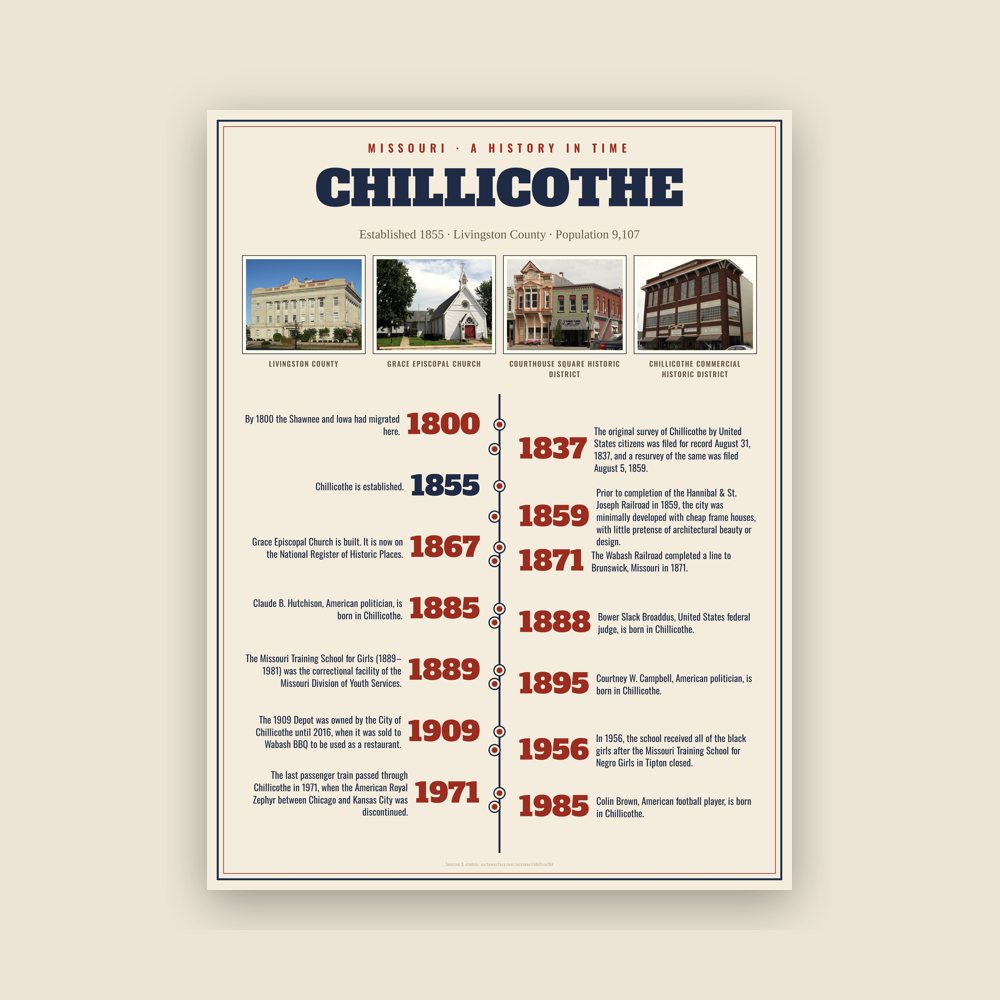
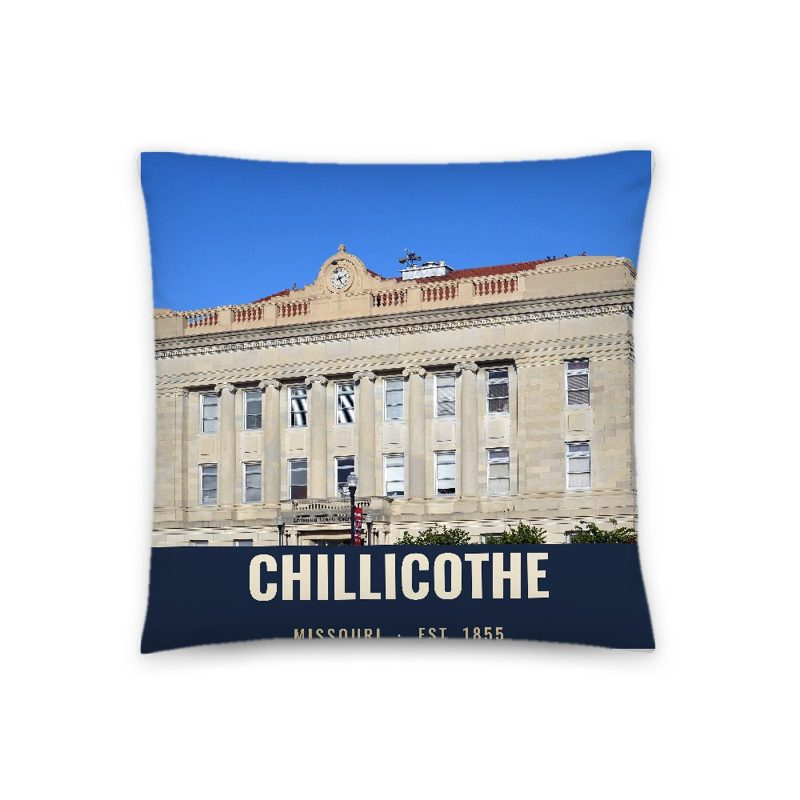
In the early 19th century, European-American migration to Missouri increased. The original survey of Chillicothe by United States citizens was filed for record August 31, 1837, and a resurvey of the same was filed August 5, 1859. Chillicothe was incorporated as a city by an act of the General Assembly, approved March 1, 1855. It was selected as the County seat by commissioners and the first term of the county court began on May 7, 1838. In August of that year an order was made to erect the first Court House, the cost not to exceed $5,000, in the Public Square; The first circuit court for the trial of civil and criminal causes was held on the 3d of July 1887.
Livingston was settled by emigrants from the older counties and others from the Upper South states of Kentucky and Tennessee, as well as Ohio and other "Old Northwest" states, as the westward migration continued. Prior to completion of the Hannibal & St. Joseph Railroad in 1859, the city was minimally developed with cheap frame houses, with little pretense of architectural beauty or design. The building materials being hewed and sawed from the oak and walnut timber surrounding the town, as timber originally covered the site.
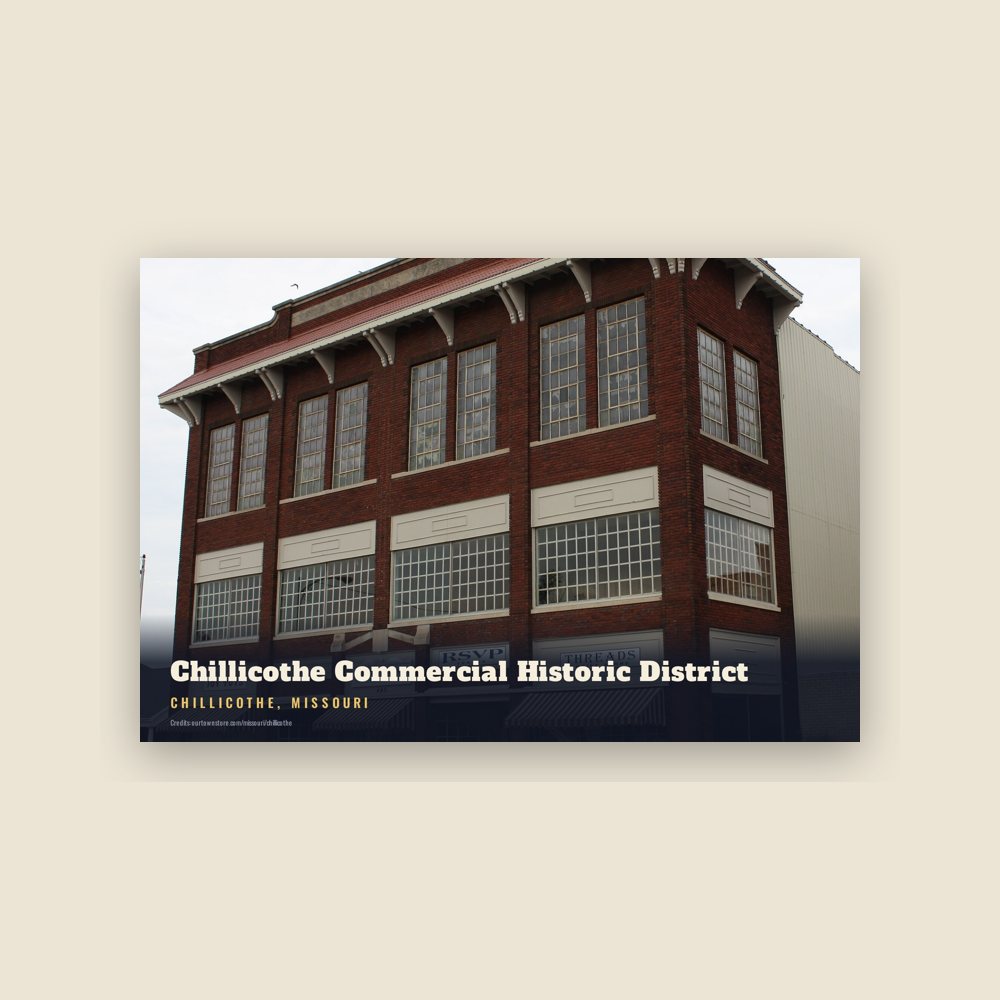
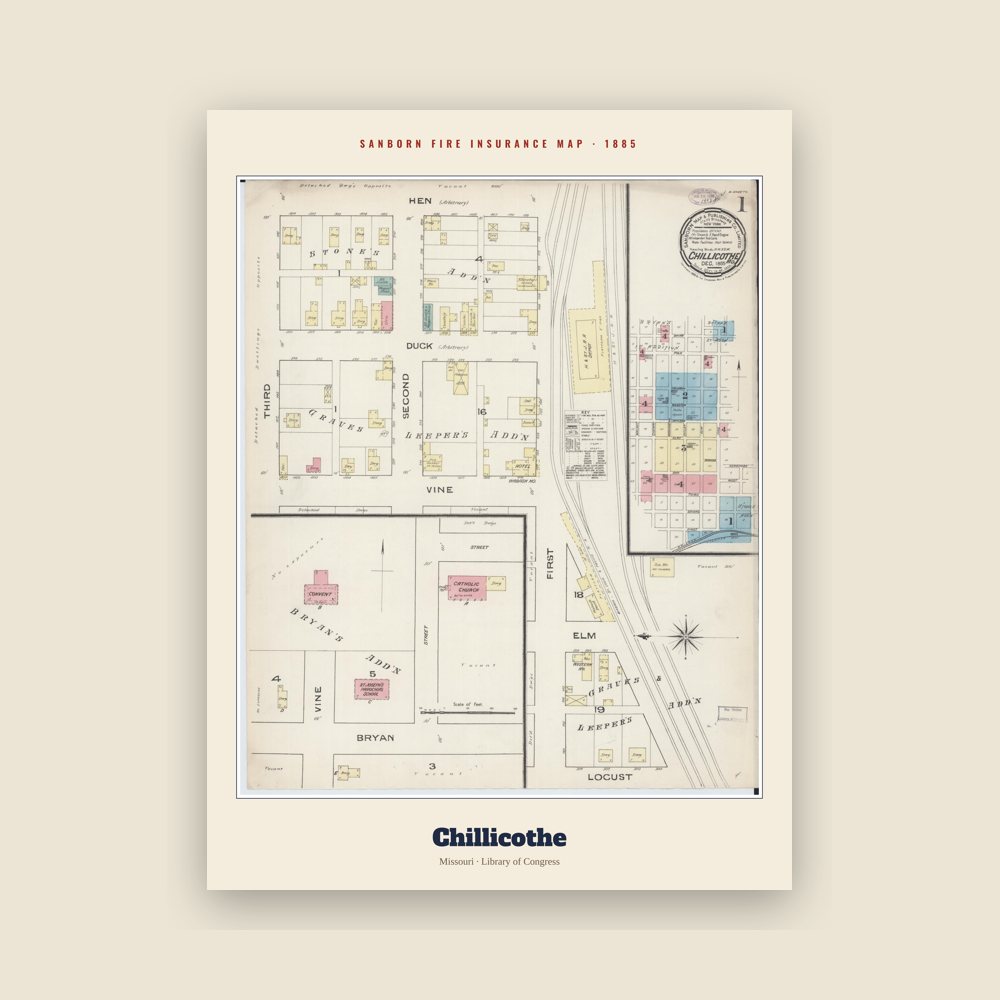
The railroad gave an impetus for town improvements. Soon two and three-story brick business buildings were constructed in place of the former frame structures. From 1865 to 1870, the city improved rapidly, then a lull lasted until 1875, when the erection of the beautiful three-story, $36,000 school building was started, now known as "Middle School." From that time on Chillicothe made a slow, steady growth up to 1886, when the Chicago, Milwaukee & St. Paul Railroad was built through here. That year also saw the introduction of the "Water Works" and electric lights. The city continued to modernize in the early 20th century.
Chillicothe was located along the first railroad completed across the State of Missouri on February 13, 1859, by the Hannibal and St. Joseph Railroad, later becoming the Chicago, Burlington and Quincy Railroad. The Wabash Railroad completed a line to Brunswick, Missouri in 1871. Passenger rail served the town for over a century. The last passenger train passed through Chillicothe in 1971, when the American Royal Zephyr between Chicago and Kansas City was discontinued. The tracks eastward toward Brookfield were abandoned in the early 1980s and have been mostly removed. The 1909 Depot was owned by the City of Chillicothe until 2016, when it was sold to Wabash BBQ to be used as a restaurant. The restaurant has since closed.
Read the full history
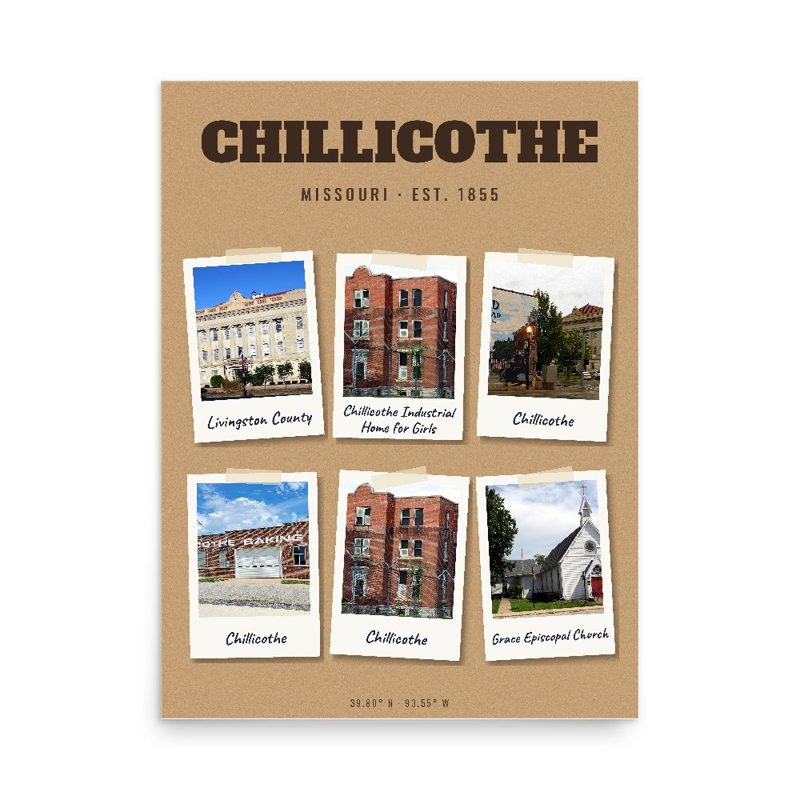
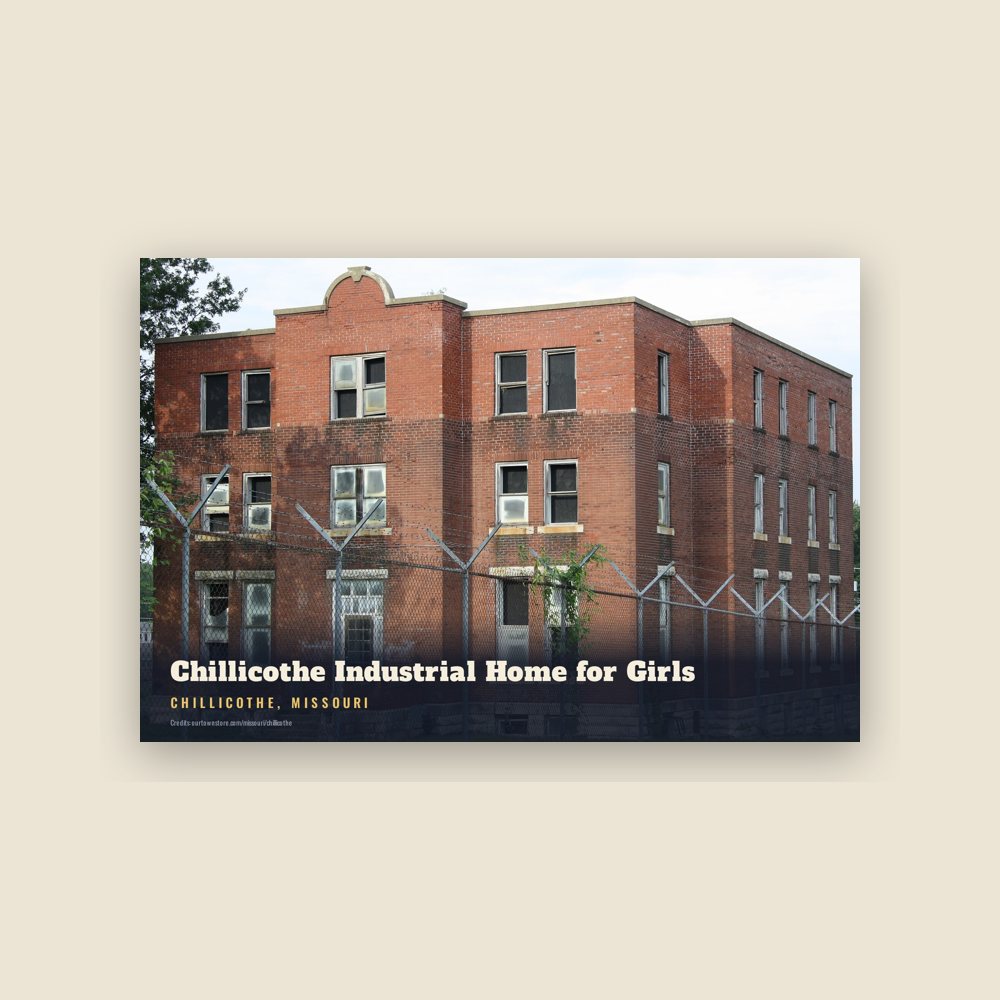
Missouri Training School for Girls
The Missouri Training School for Girls (1889–1981) was the correctional facility of the Missouri Division of Youth Services. It opened in 1889. In 1956, the school received all of the black girls after the Missouri Training School for Negro Girls in Tipton closed. The school closed in 1981.
Adapted (trimmed) from the Wikipedia article Chillicothe, Missouri, revision 1374270276 by its contributors, licensed CC BY-SA 4.0.
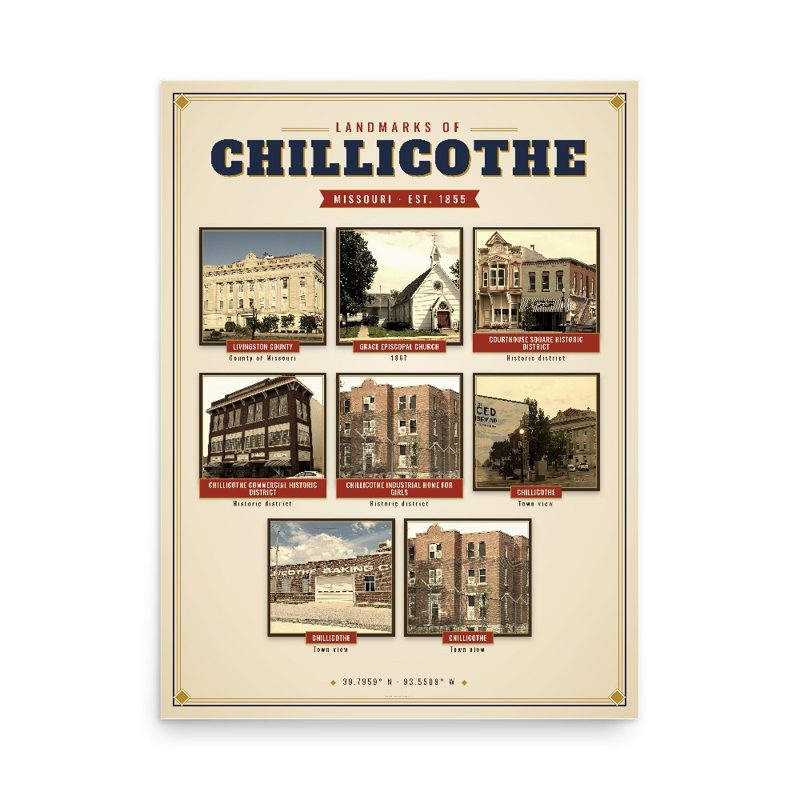
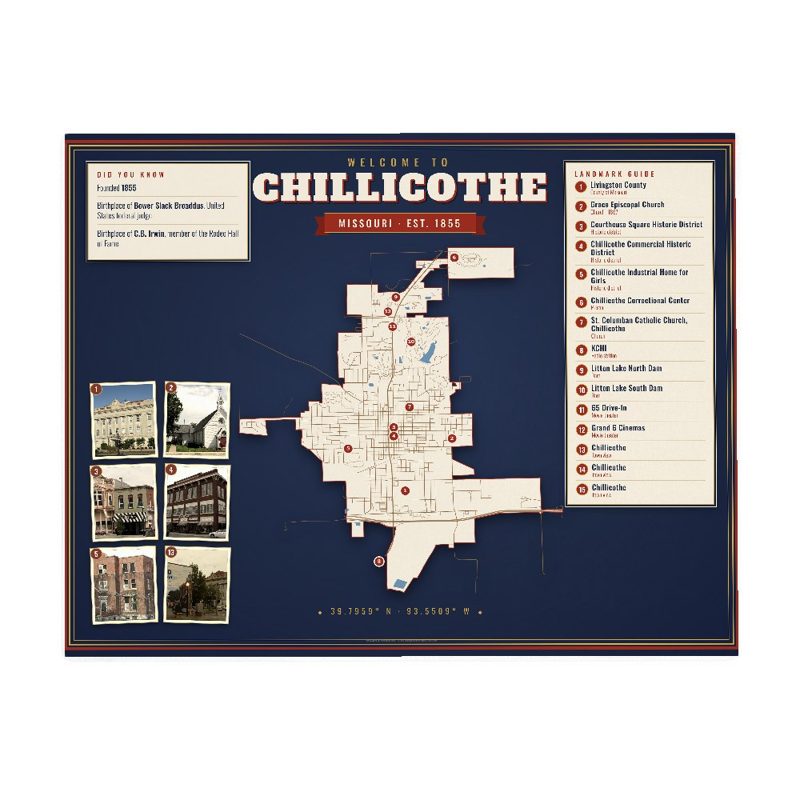









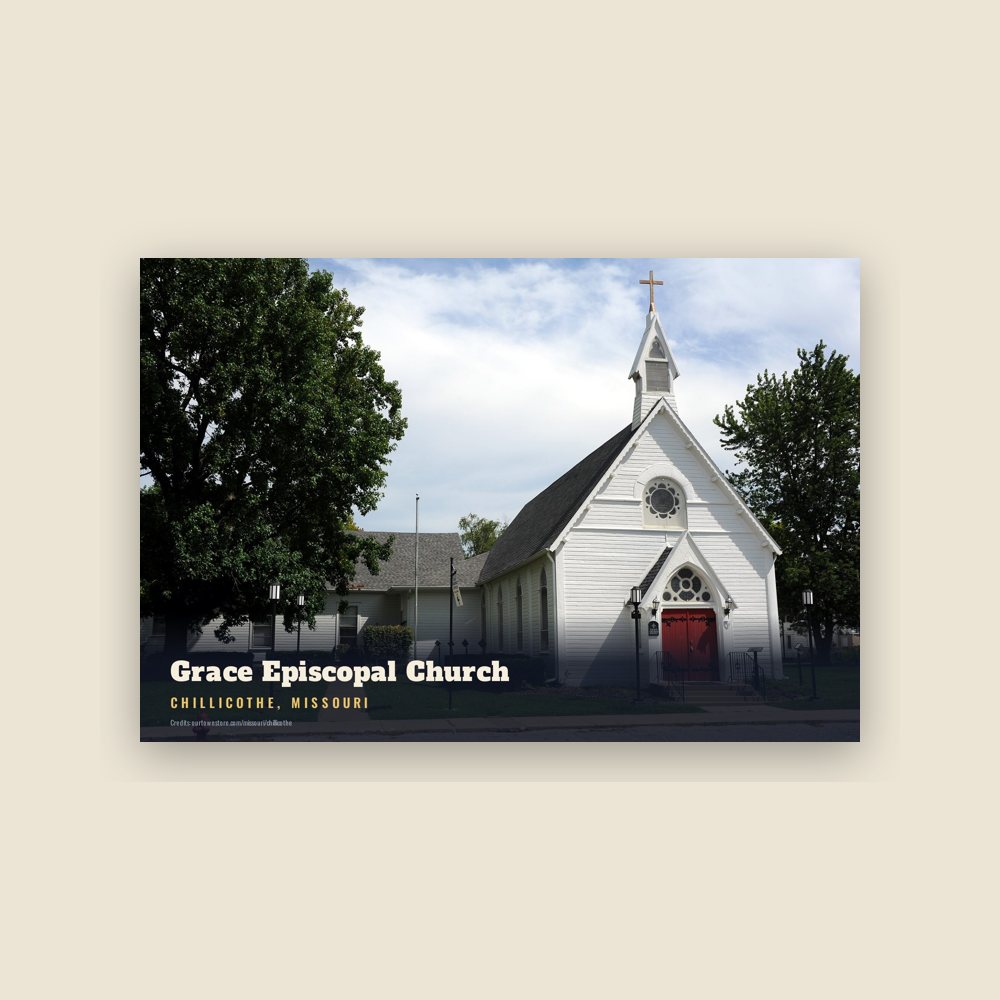
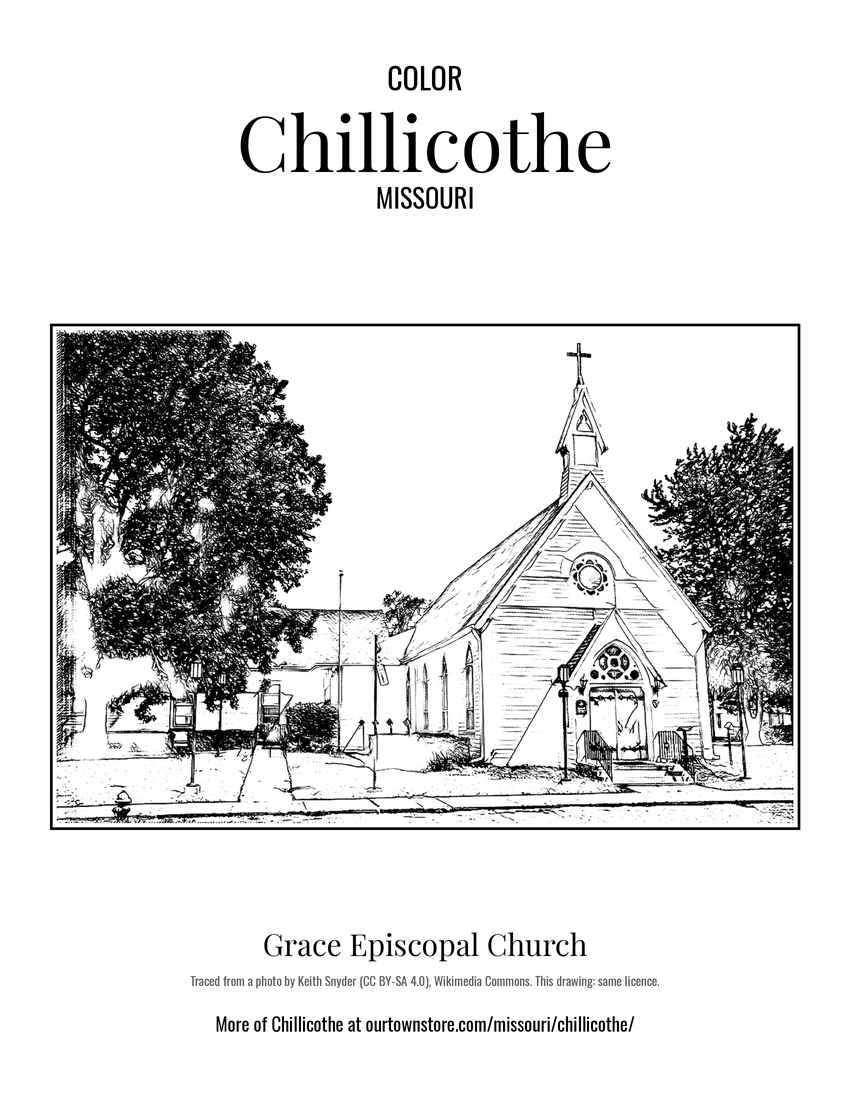 Grace Episcopal Church
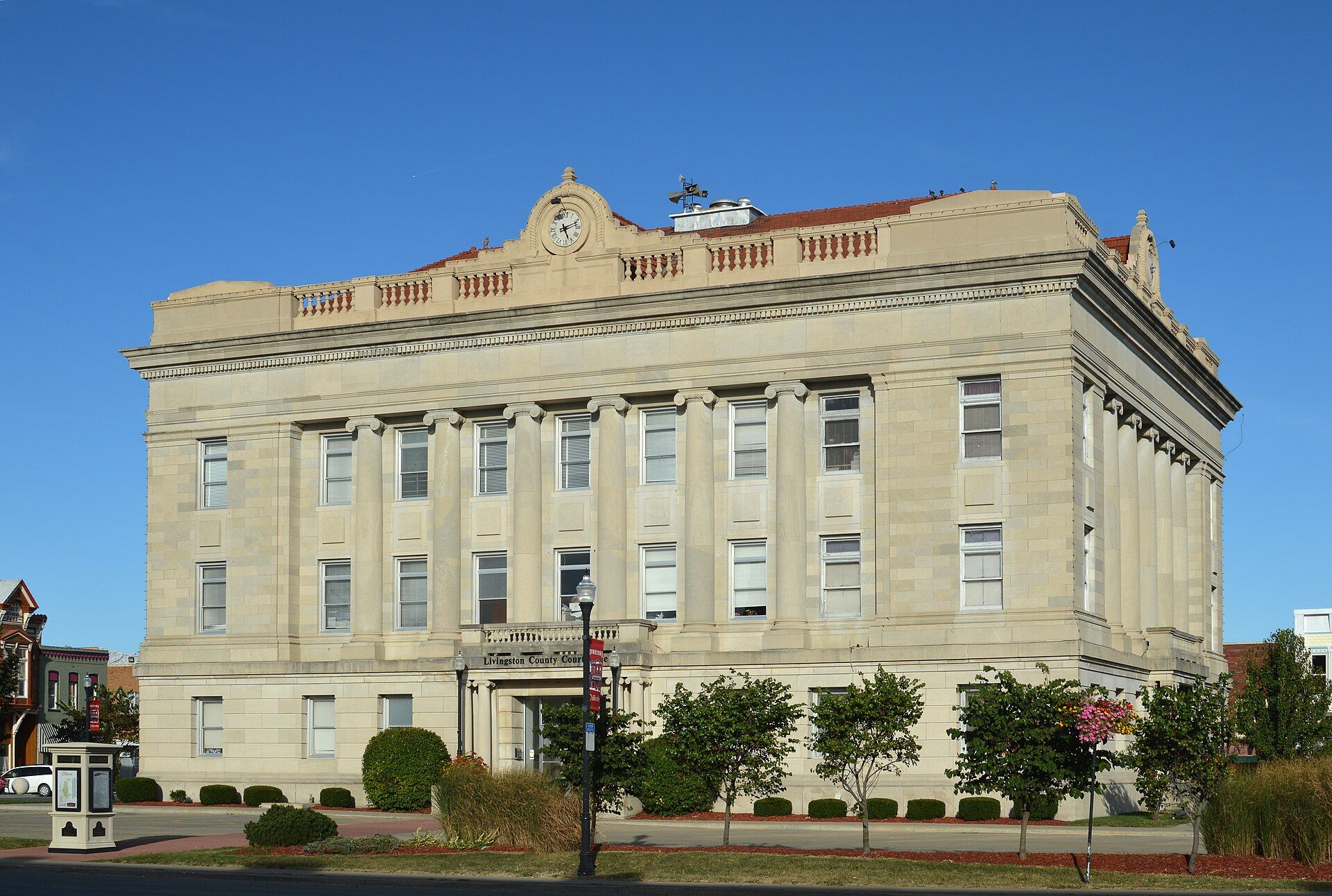
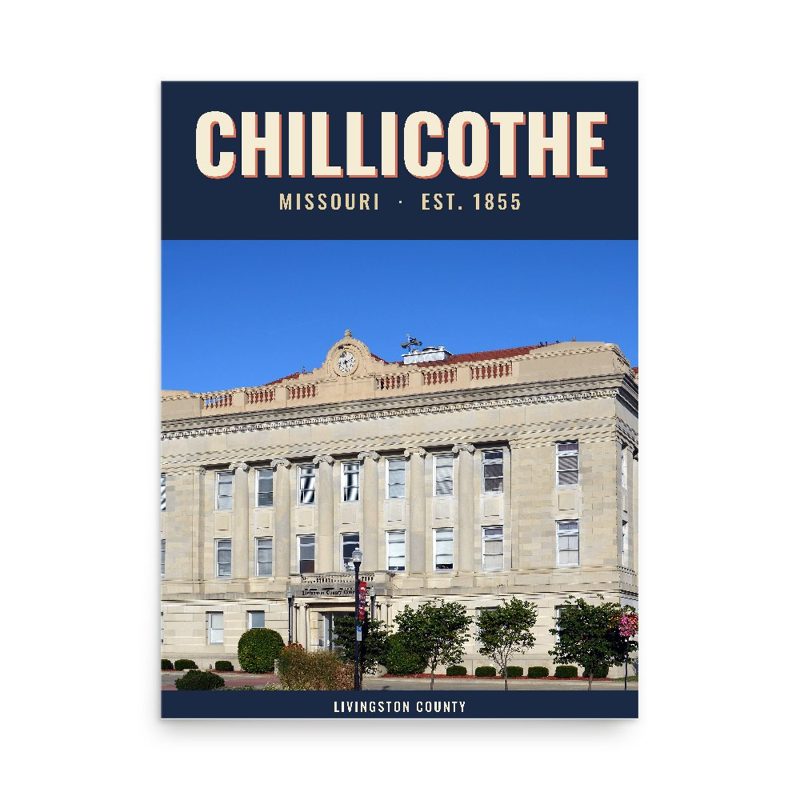
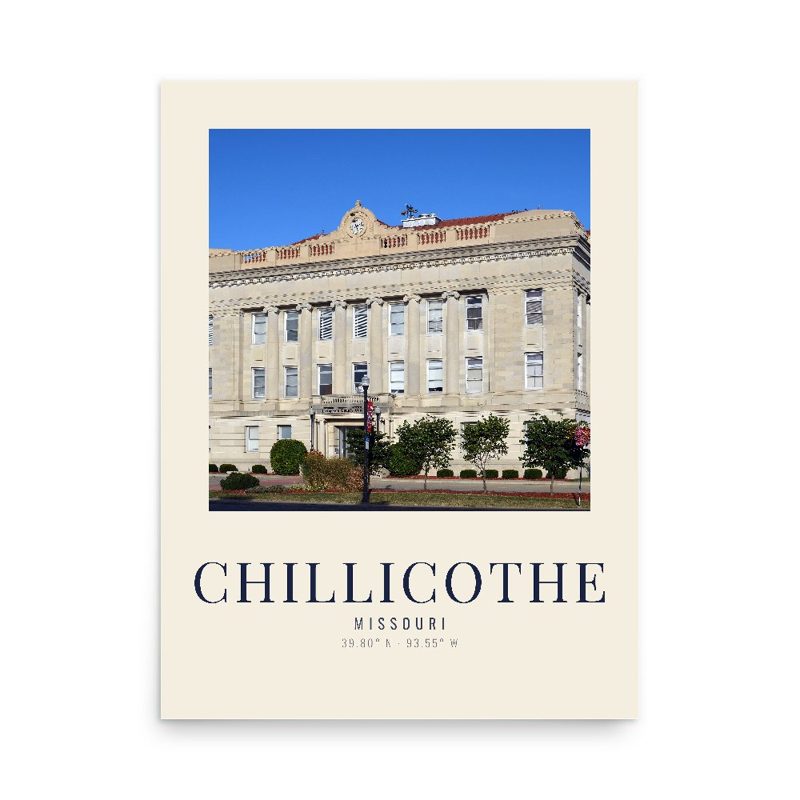
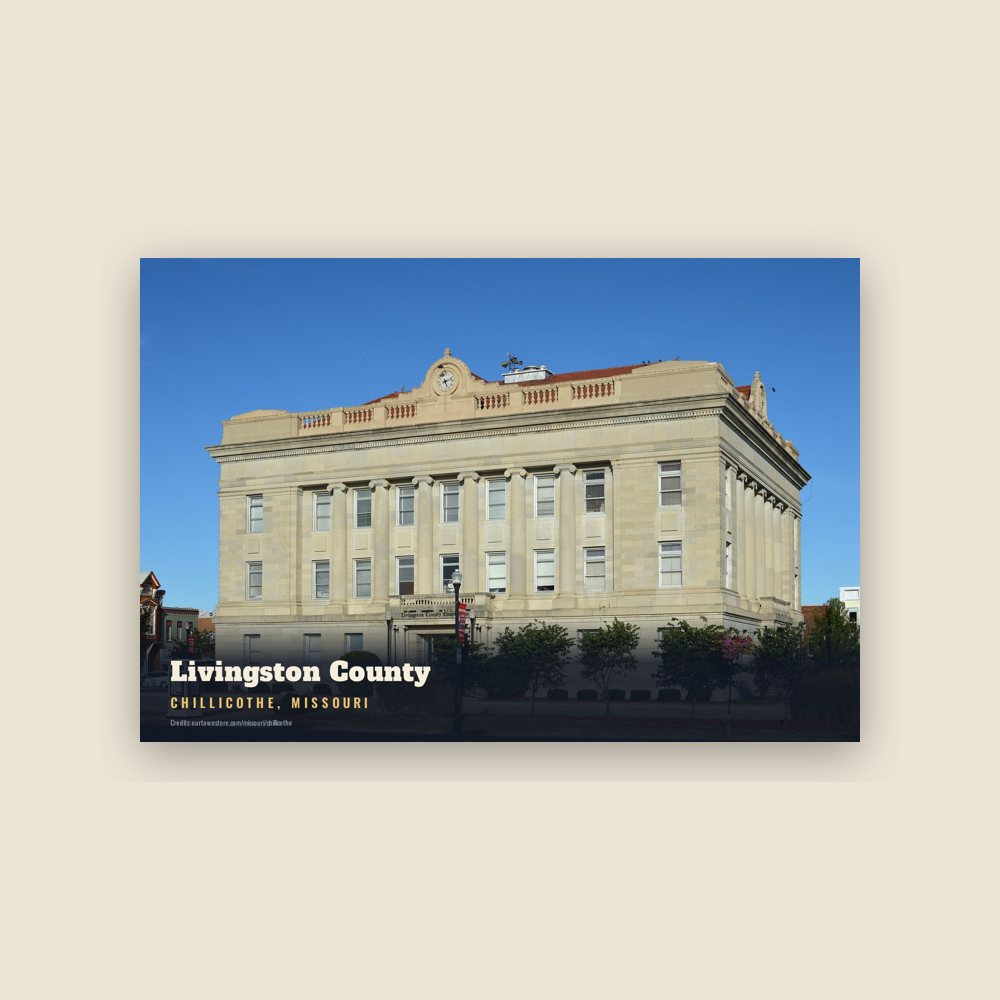
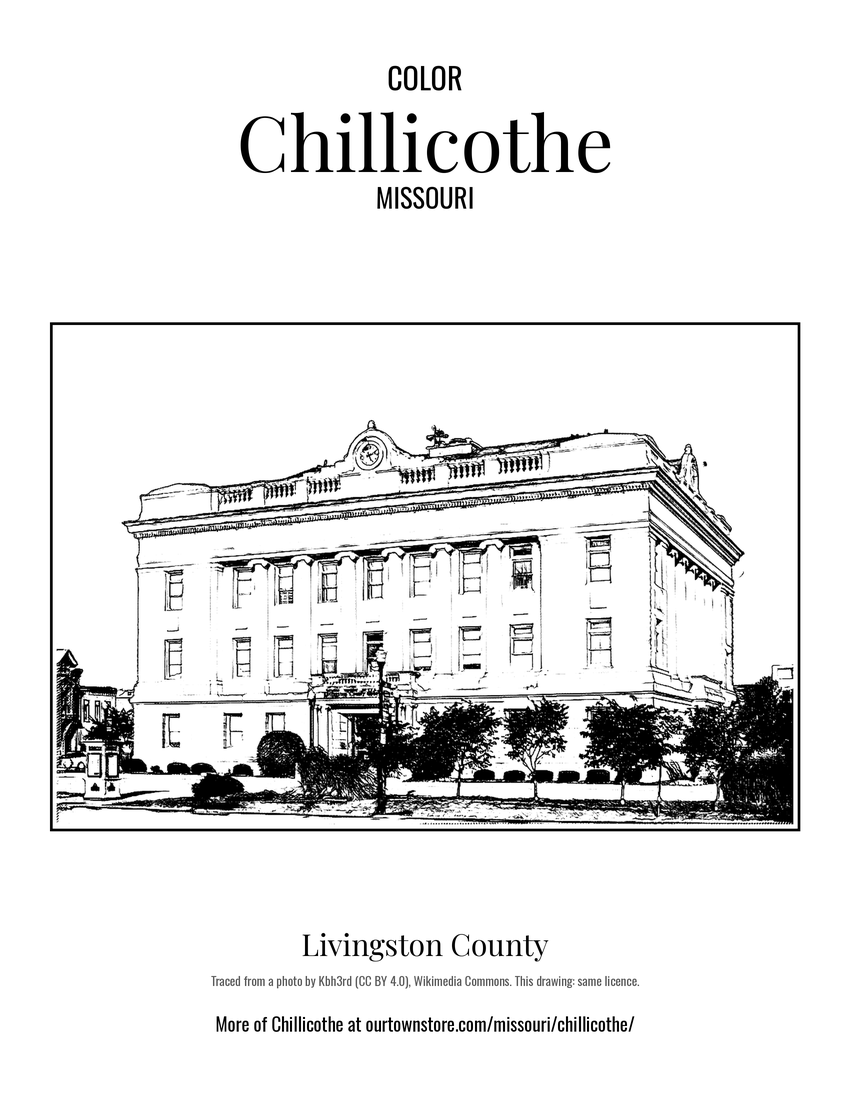 Livingston County
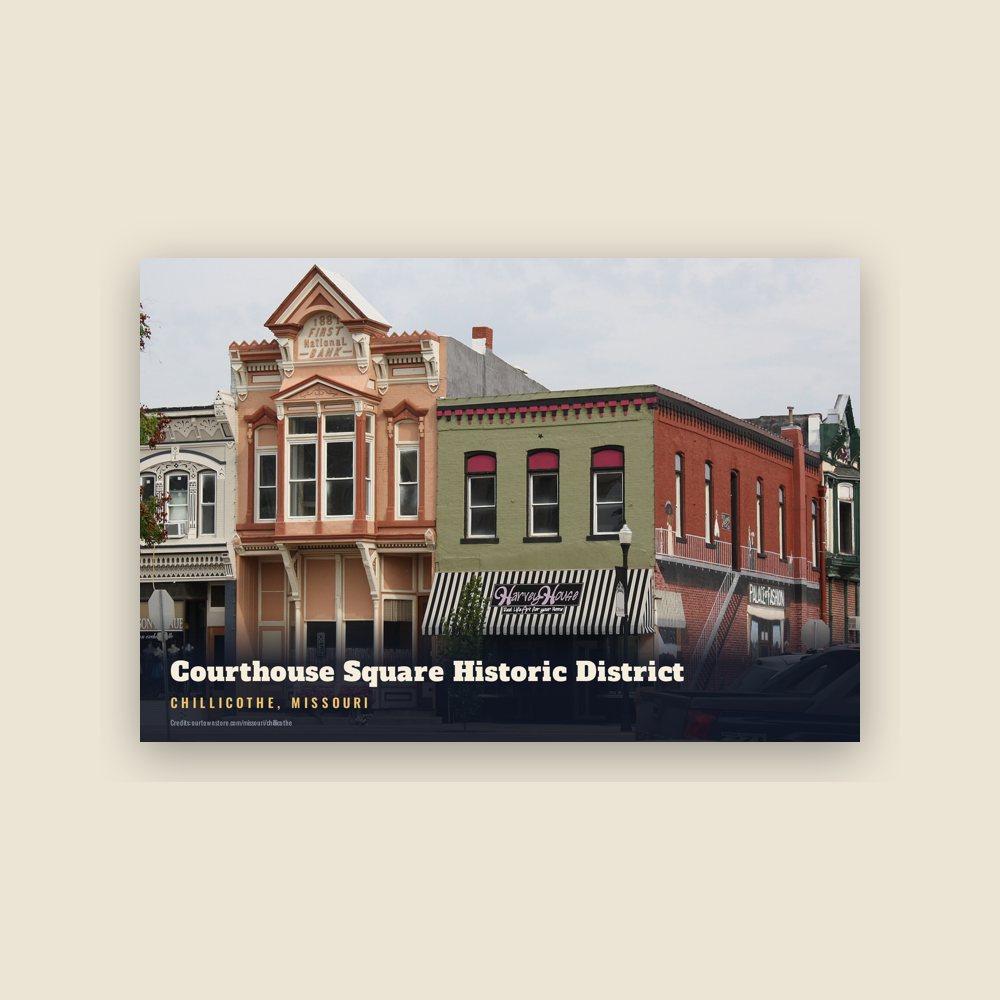
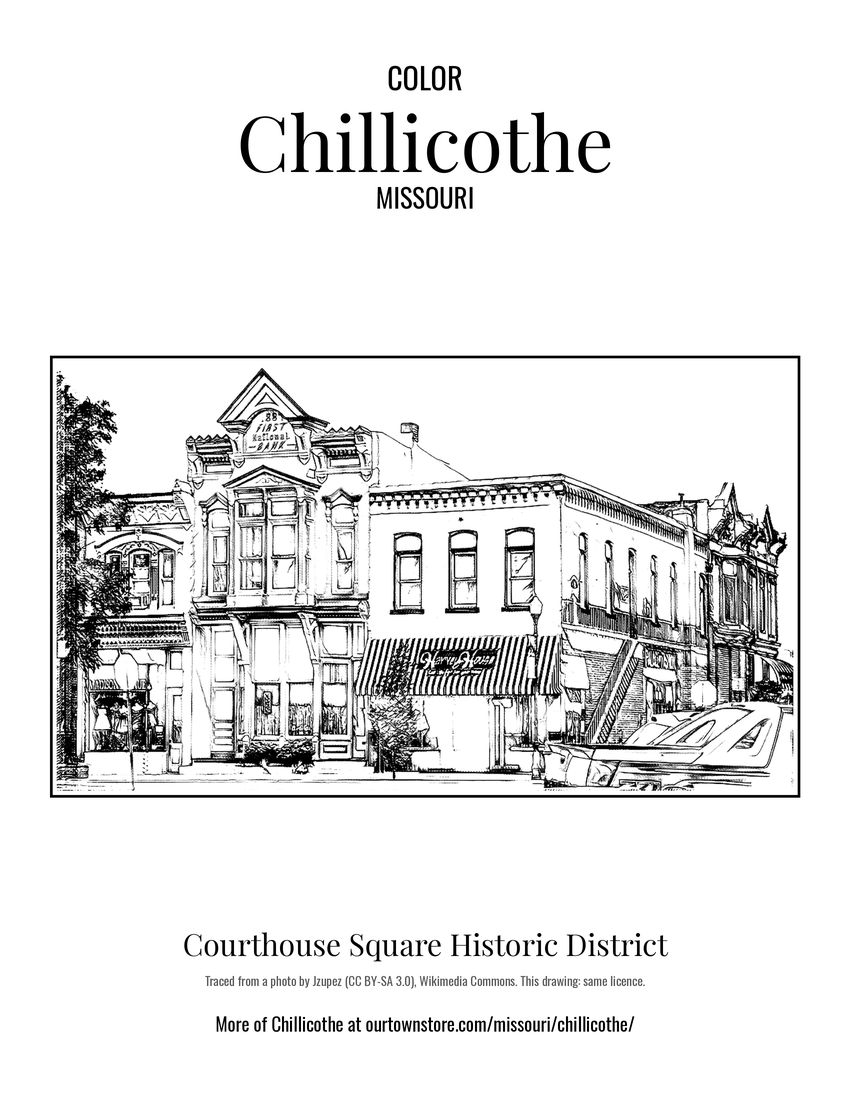 Courthouse Square Historic District
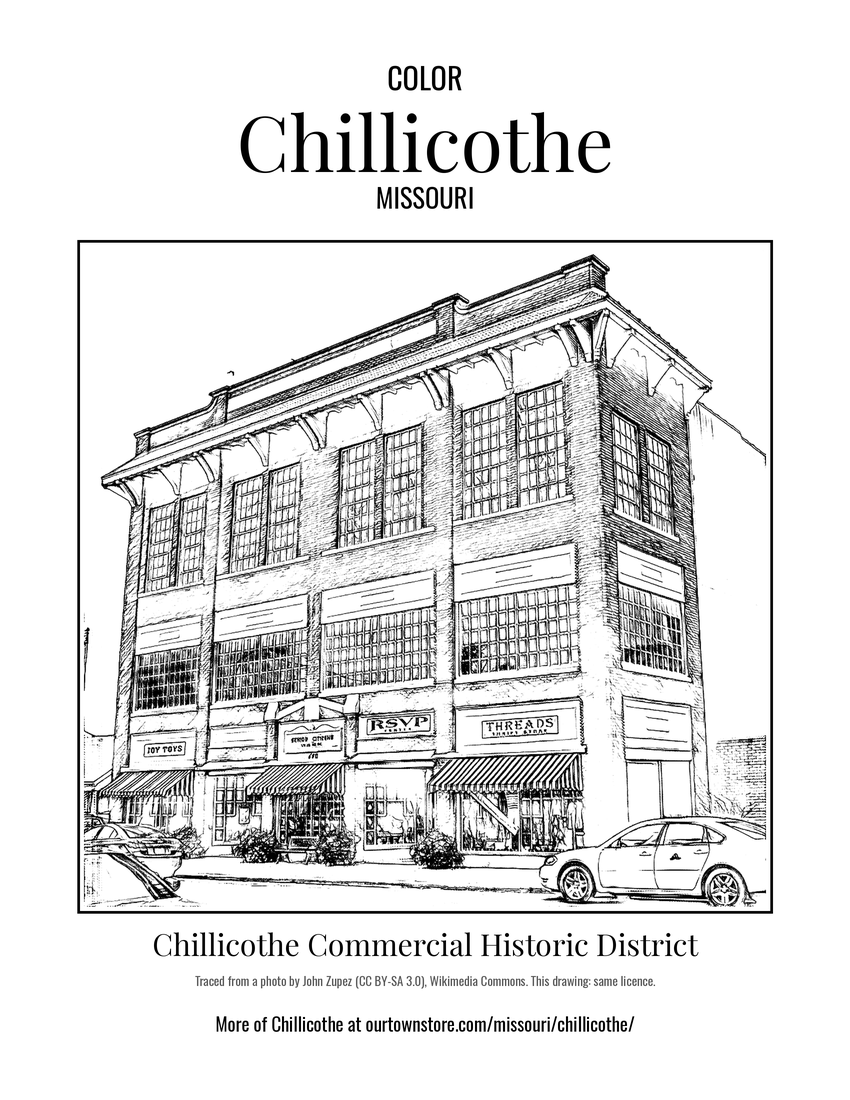 Chillicothe Commercial Historic District