A short history of Charleston
Charleston is the largest town on the Missouri side near the confluence of the Mississippi and Ohio rivers. Its history has long been tied to river commerce and the development of the highly productive agricultural lands that surround the community.
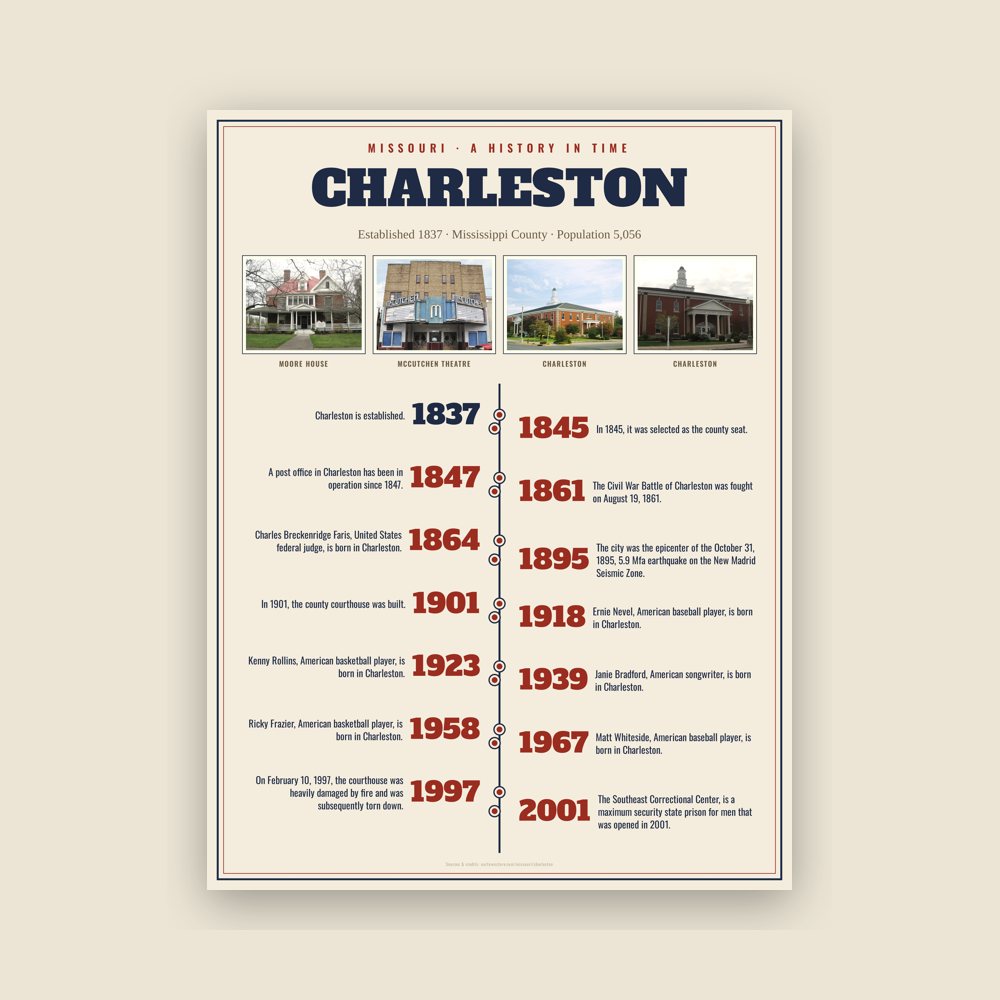
After purchasing 22.5 acres (91,000 m2) for $337, Joseph Moore laid out Charleston in 1837. Some say the community derives its name from nearby Charles Prairie, while others believe the name is a transfer from Charleston, South Carolina. In 1845, it was selected as the county seat. A post office in Charleston has been in operation since 1847.
The Civil War Battle of Charleston was fought on August 19, 1861. Killed in the battle were one Union soldier and thirteen Missouri State Guard soldiers.
On September 1, 1861, Confederate General M. Jeff Thompson robbed the Union Bank of Charleston. Thompson, who handed the cashier a note, gave the cashier an hour to get approval from superiors to give him keys to the vault. After receiving the money, he left a receipt for $57,000 and discovered later that only $56,000 was in the bags.
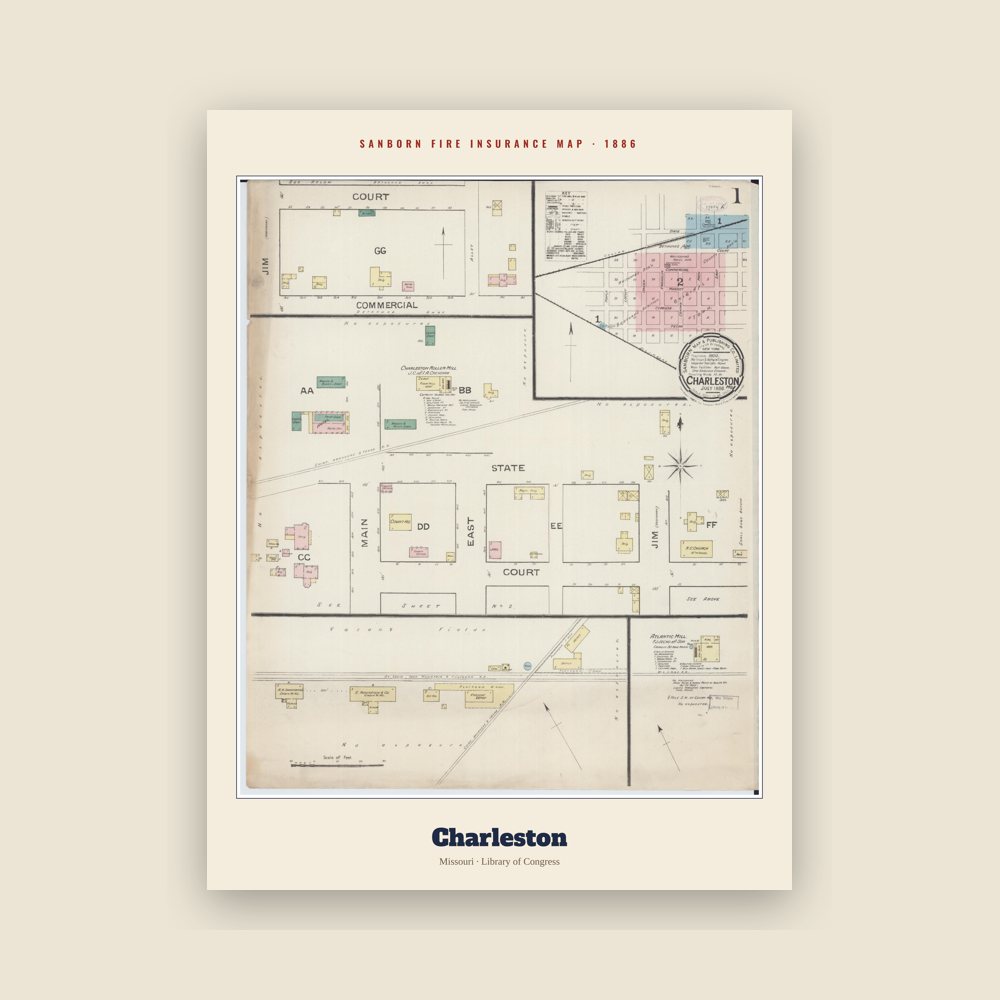
The city was the epicenter of the October 31, 1895, 5.9 Mfa earthquake on the New Madrid Seismic Zone. The quake damaged virtually every building in Charleston, creating sand volcanoes and cracking a pier on the Cairo Rail Bridge. Chimneys toppled as far away as St. Louis, Missouri; Memphis, Tennessee; Gadsden, Alabama; and Evansville, Indiana. The fate of specific buildings may also be traced by Sanborn maps that were produced of the town during this period. This was the largest quake since the 1812 New Madrid earthquake, which measured at 8.3 and was the biggest recorded quake in the contiguous United States. One of the most visible signs of the quake is located south of Charleston at Henson Lake, which was greatly expanded by the quake.
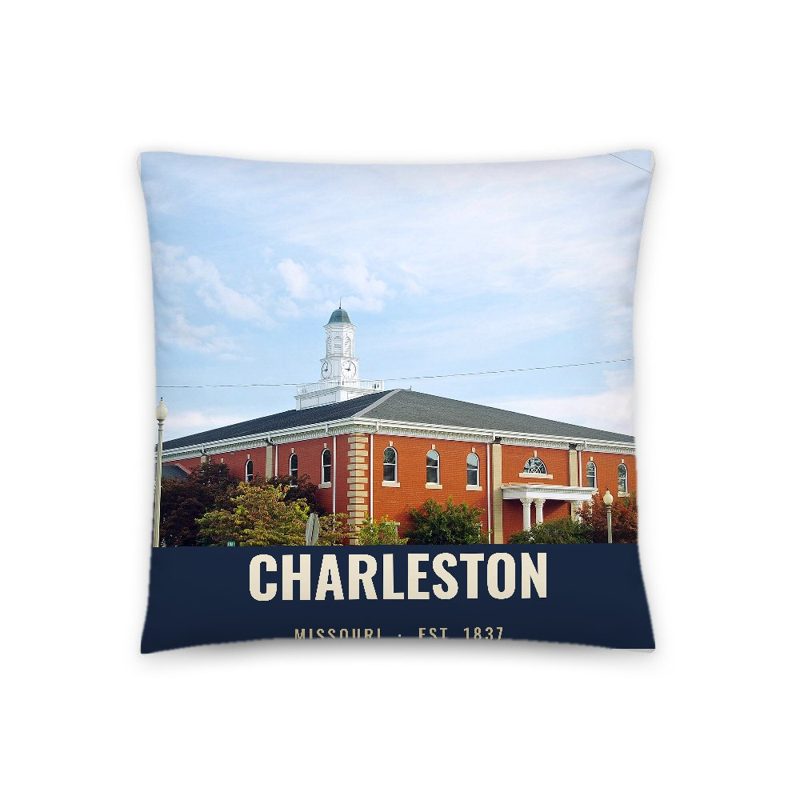
In 1901, the county courthouse was built. It was designed by J.B. Legg, who designed numerous buildings throughout Missouri, including the Gasconade and St. Charles County courthouses. On February 10, 1997, the courthouse was heavily damaged by fire and was subsequently torn down.
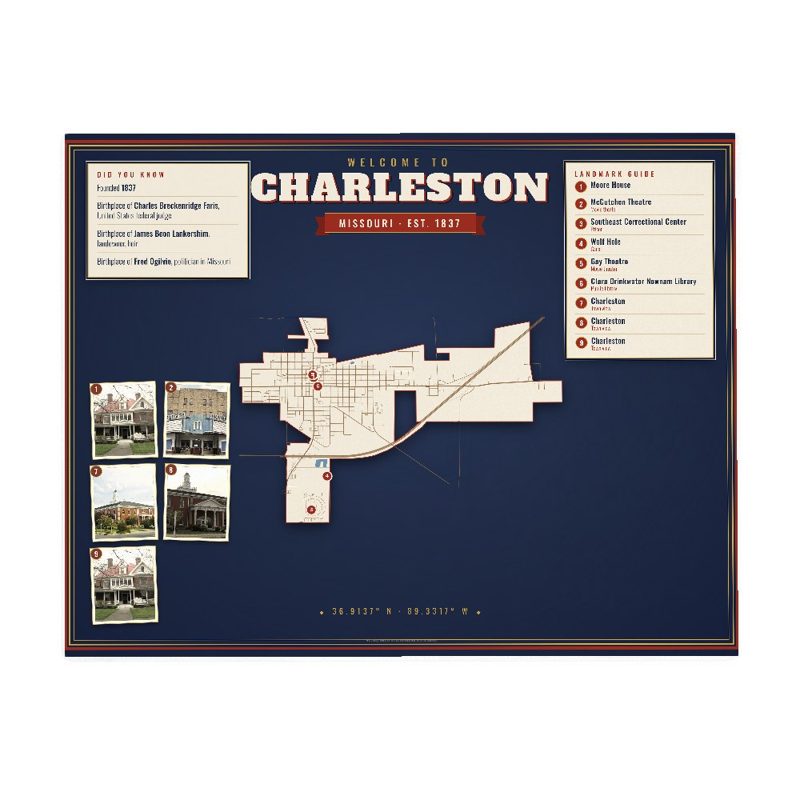
The Southeast Correctional Center, is a maximum security state prison for men that was opened in 2001. It is located on the southernmost edge of the city, less than one mile south of exit 10 off Interstate 57.
Just south of Charleston is Missouri's largest American Flag mural. It was completed in 2024 by artist Ray Harvey of New Haven, Missouri. The mural is located on the property of Delta Growers Association and can be easily seen from Route 105.
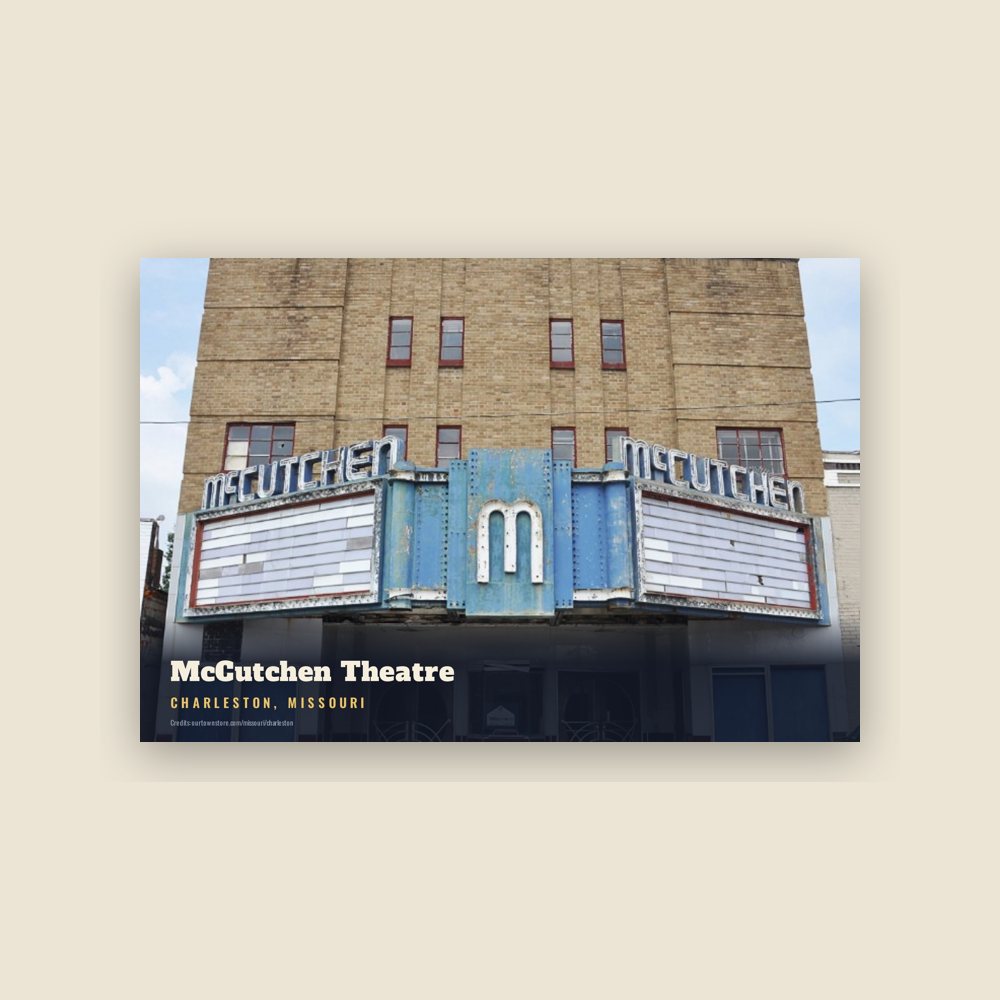
The Hearnes Site, Missouri Pacific Depot, Moore House, McCutchen Theatre, and Jacob Swank House are listed on the National Register of Historic Places.
Adapted (trimmed) from the Wikipedia article Charleston, Missouri, revision 1374267628 by its contributors, licensed CC BY-SA 4.0.
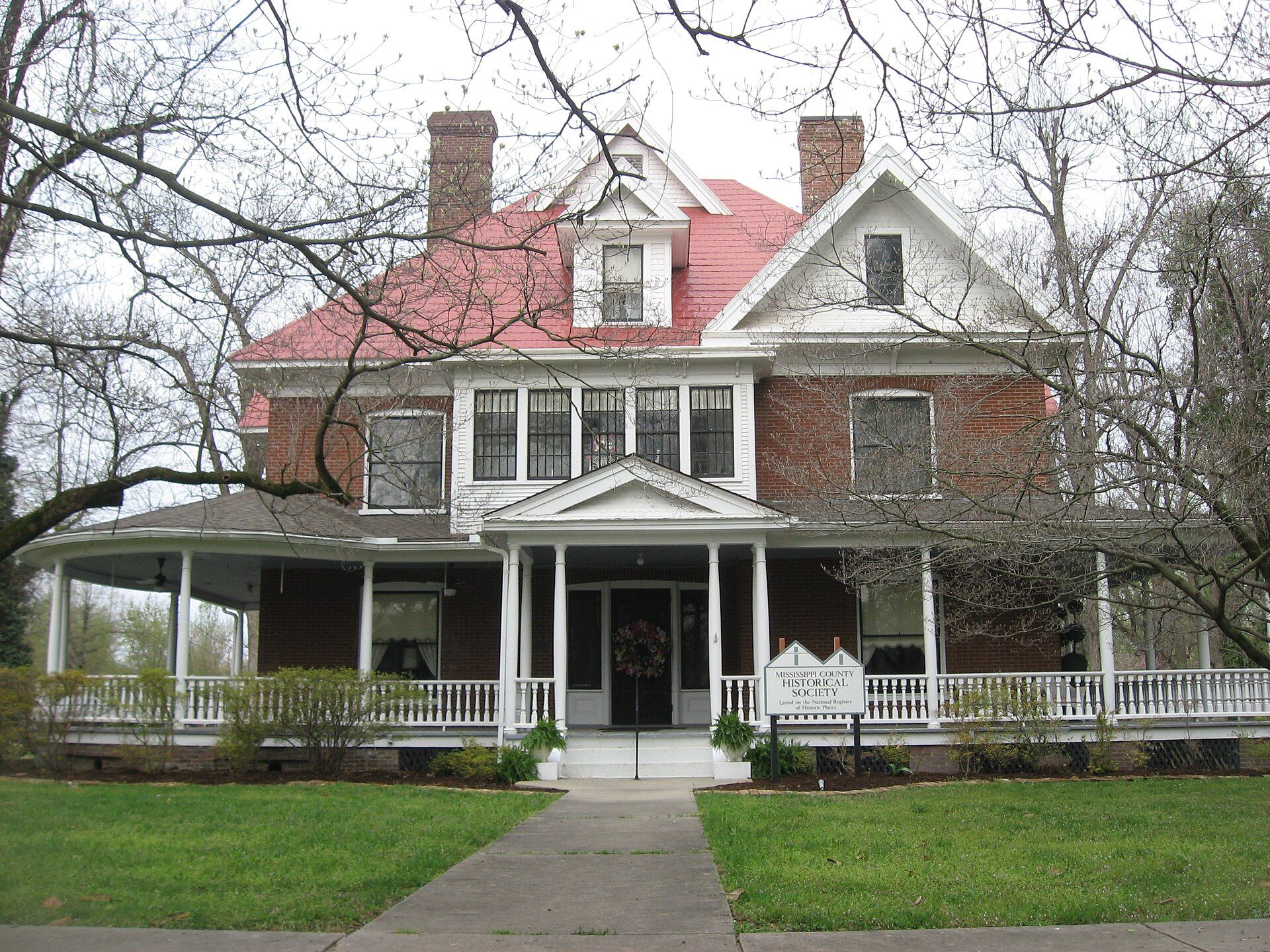
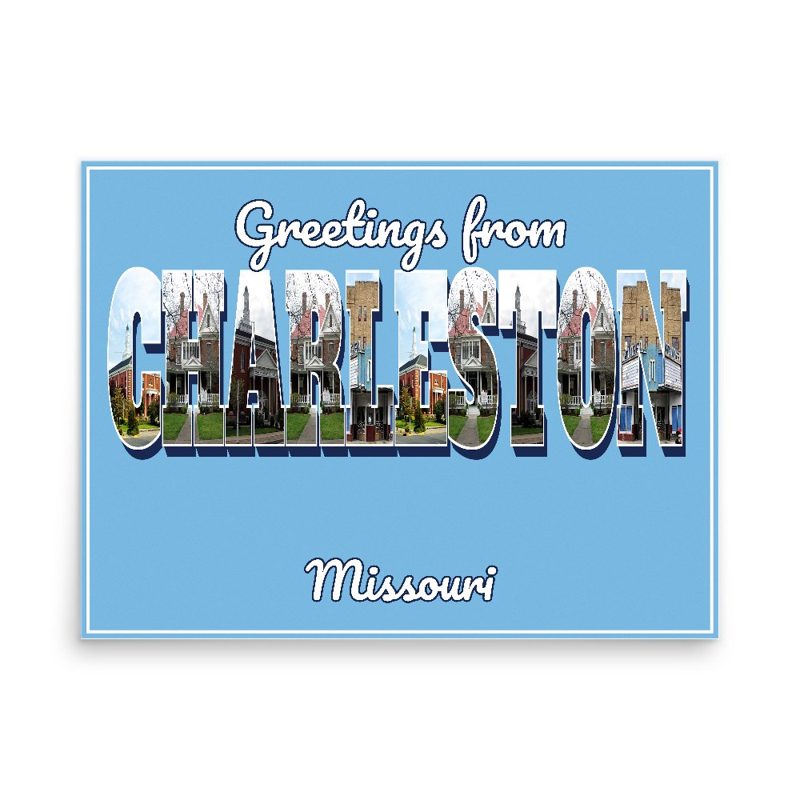
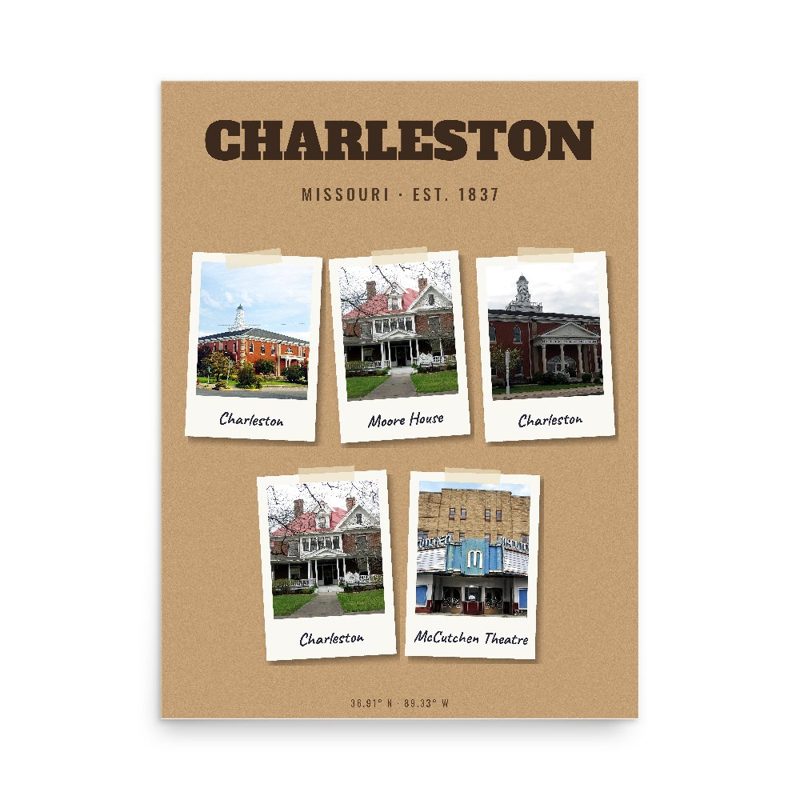



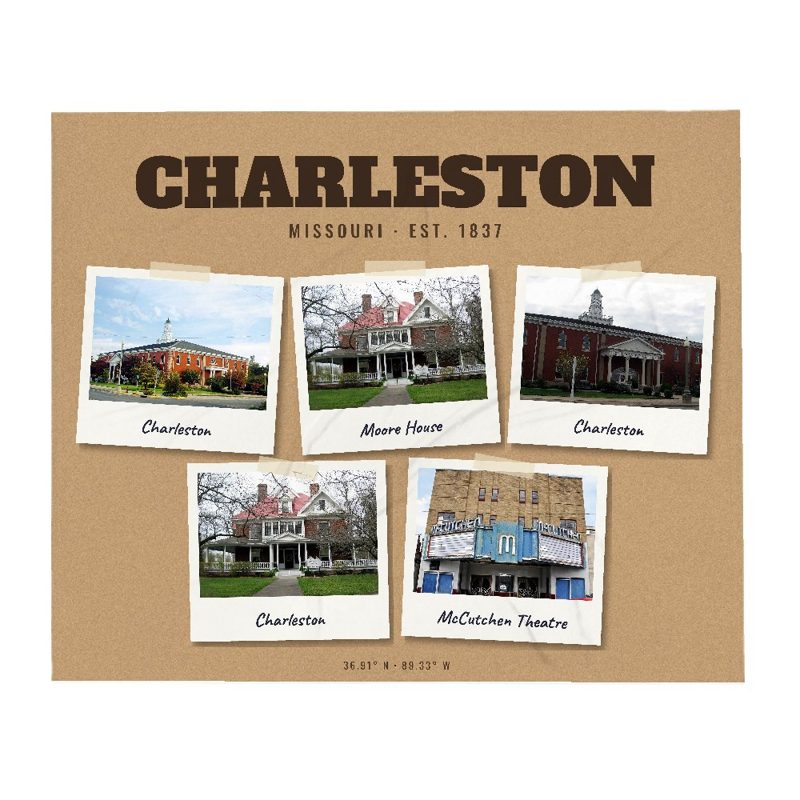
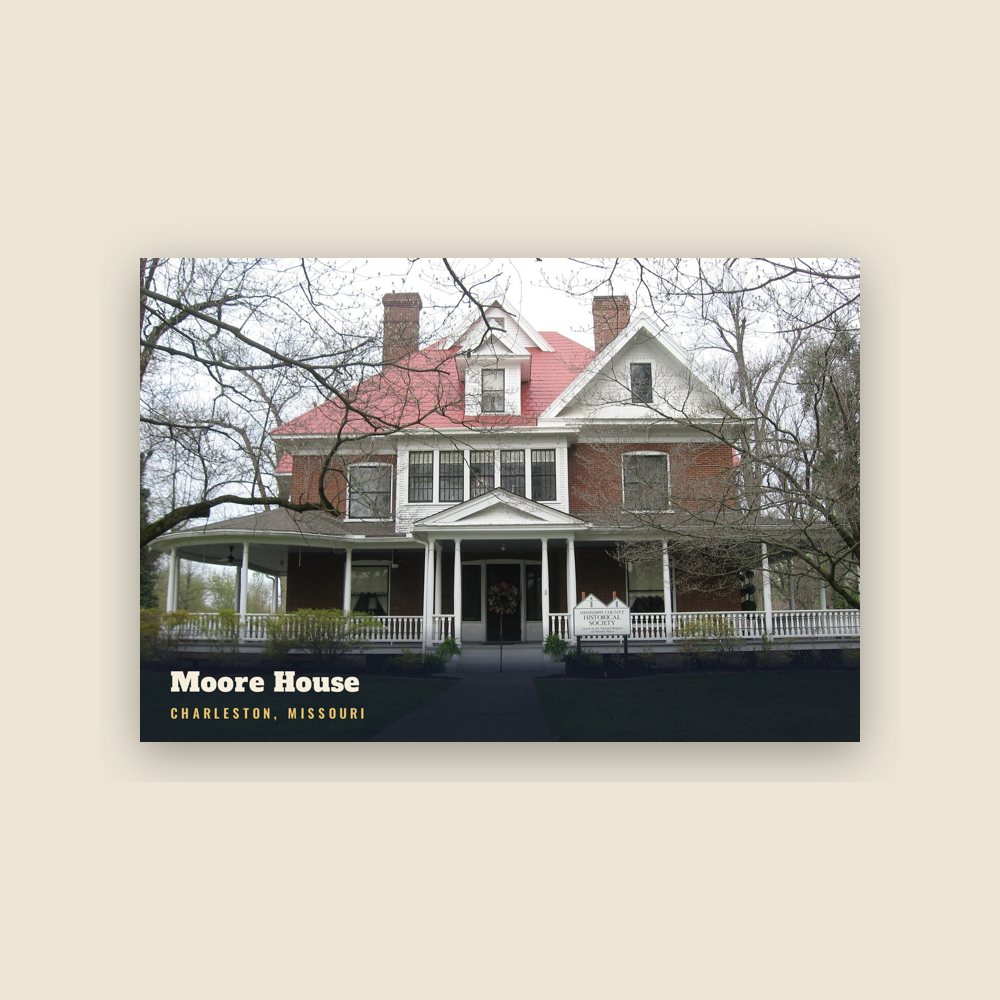
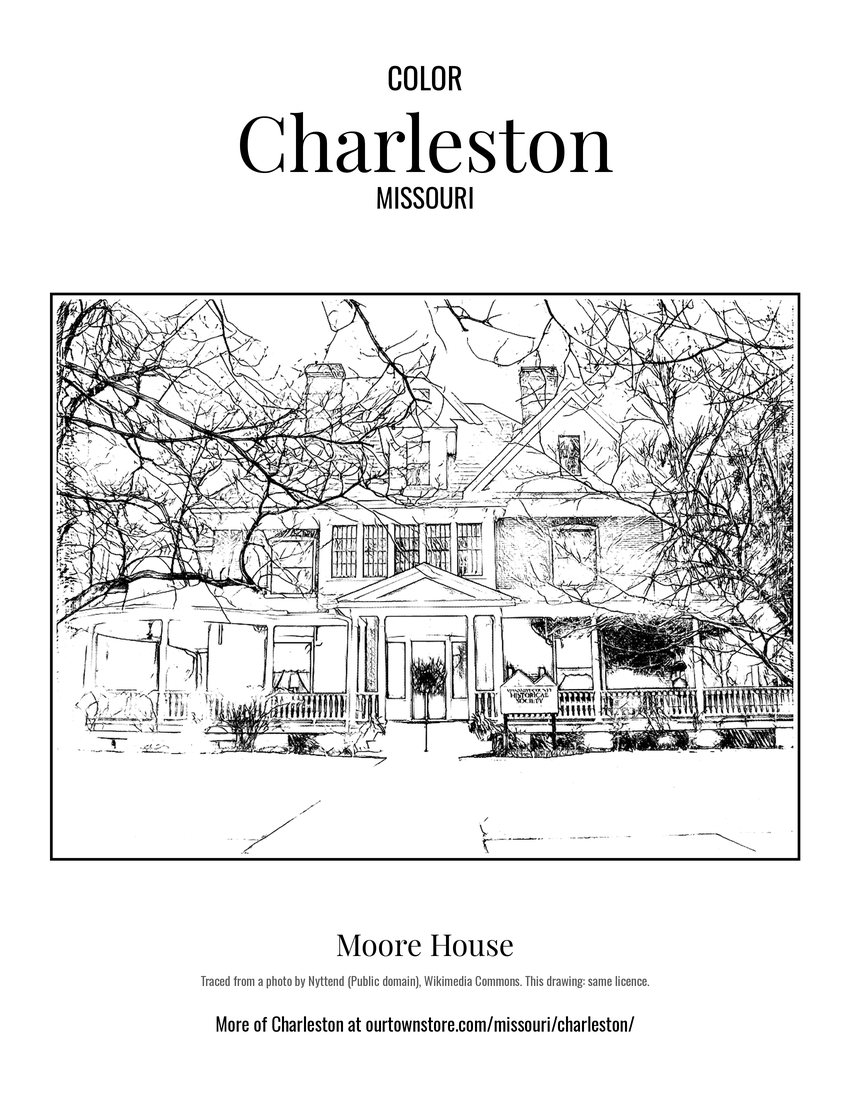 Moore House
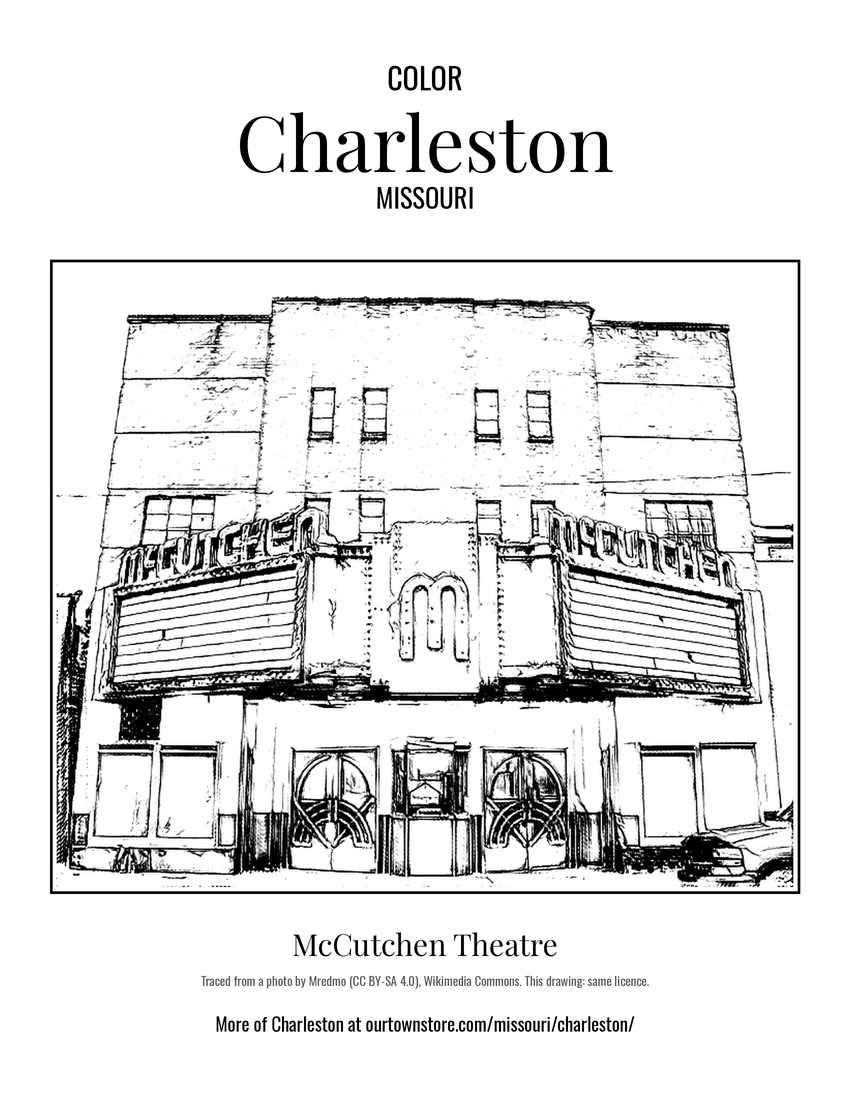 McCutchen Theatre
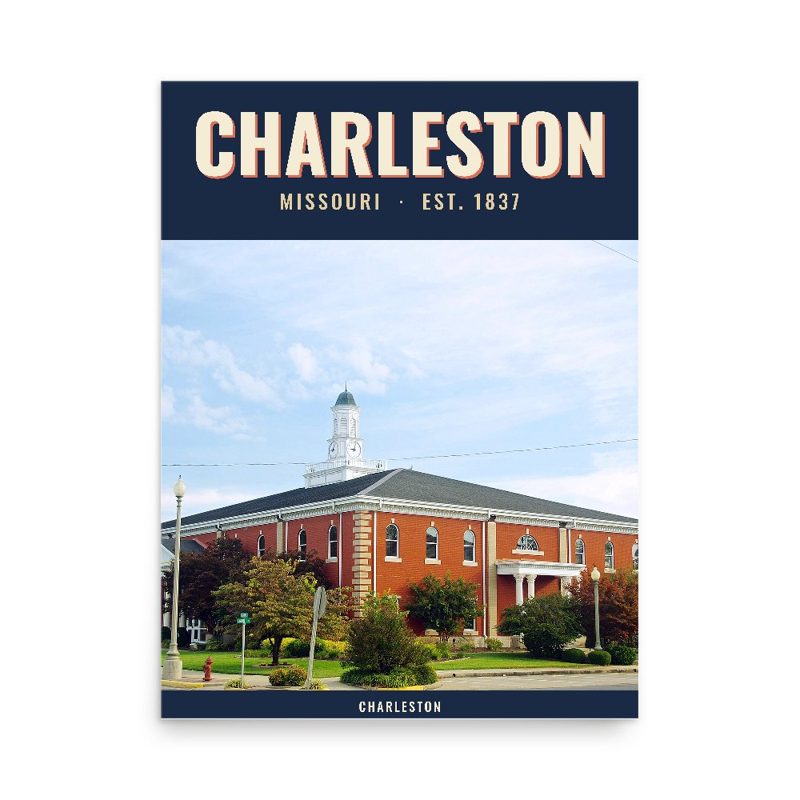
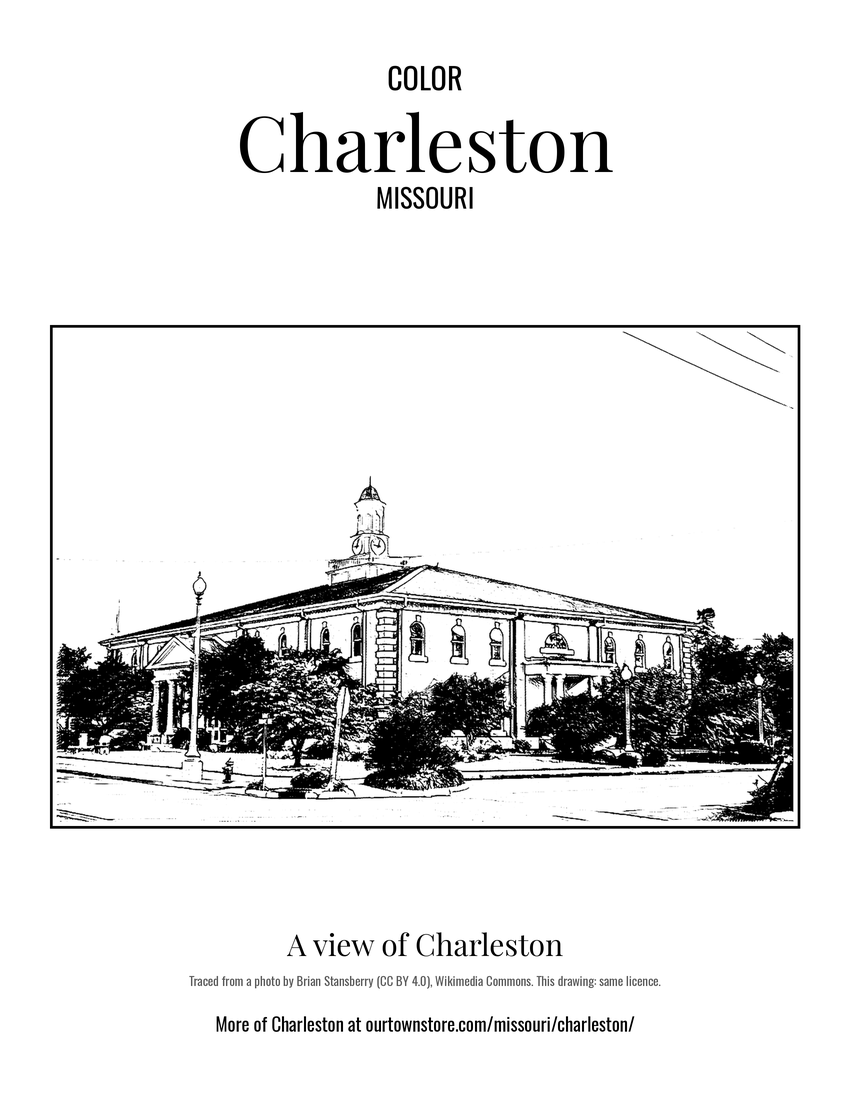 A view of Charleston
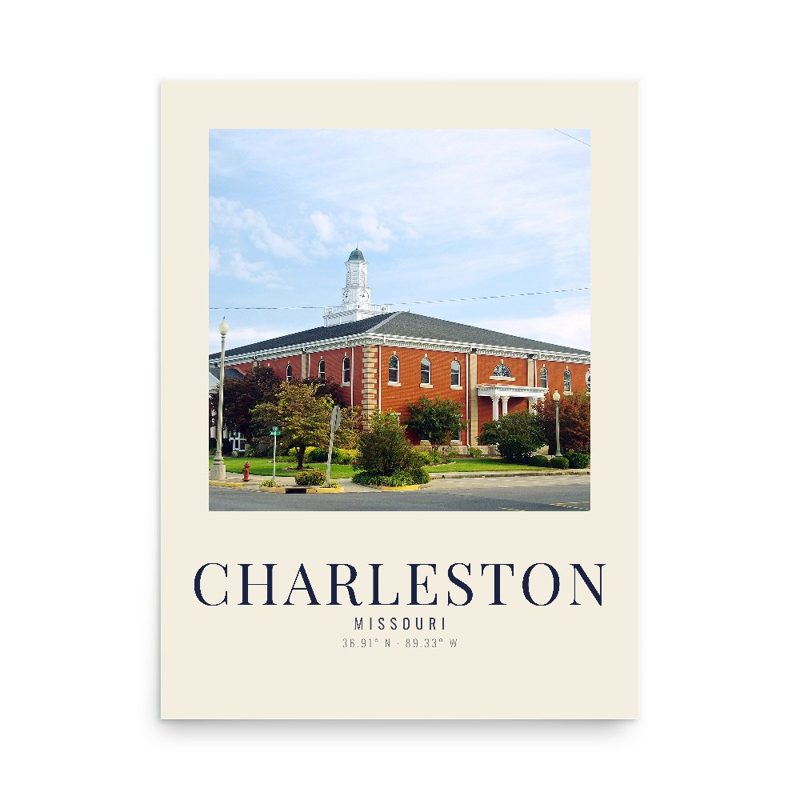
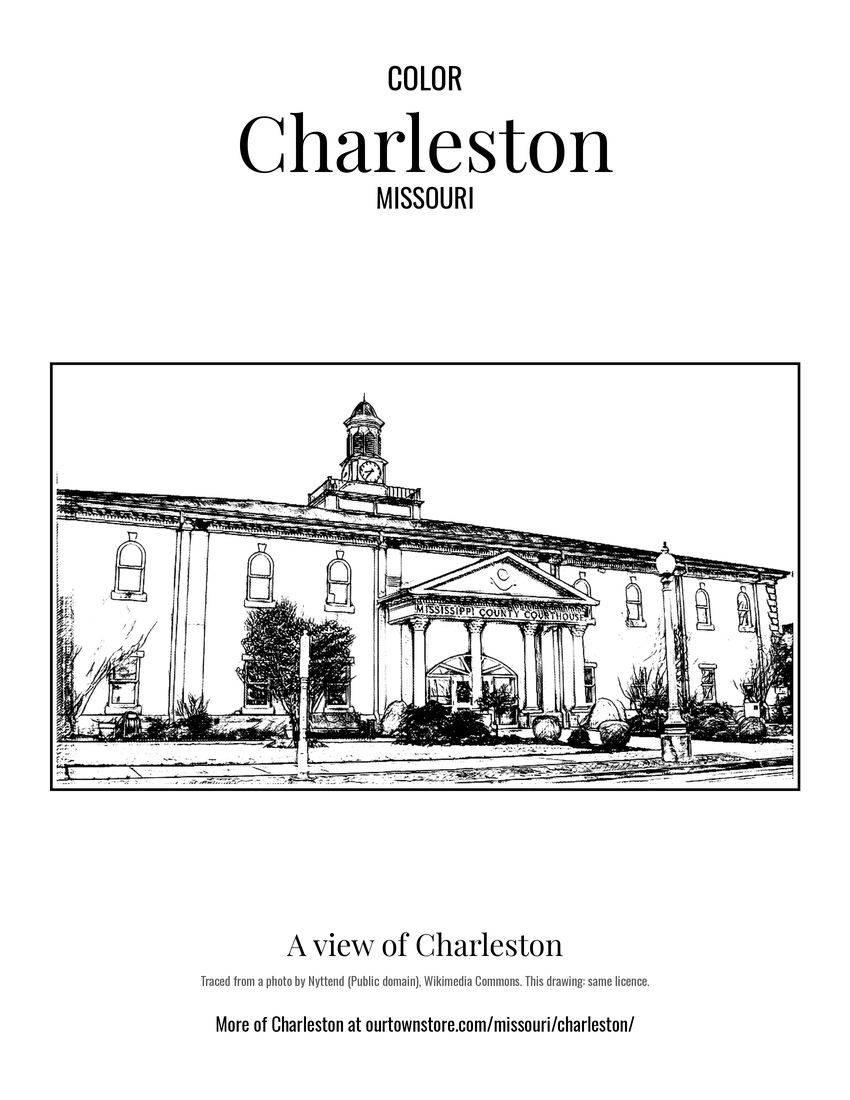 A view of Charleston