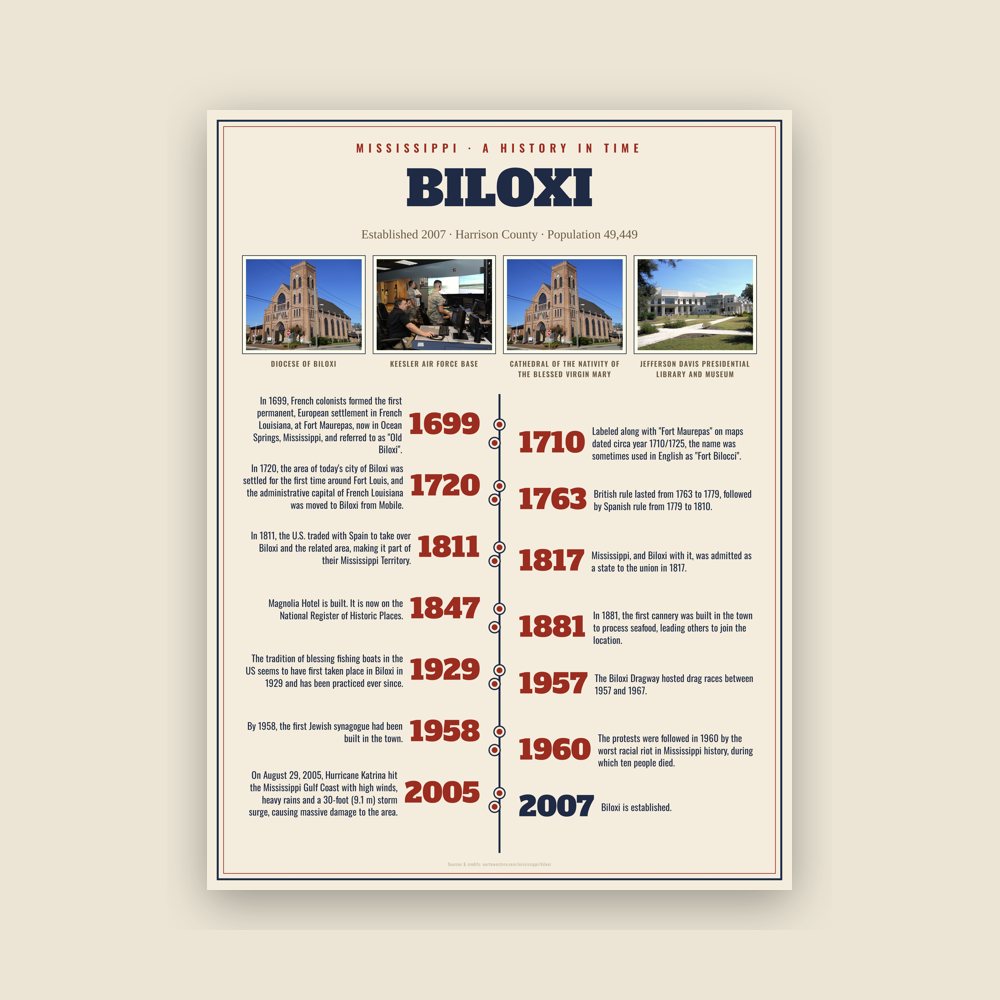
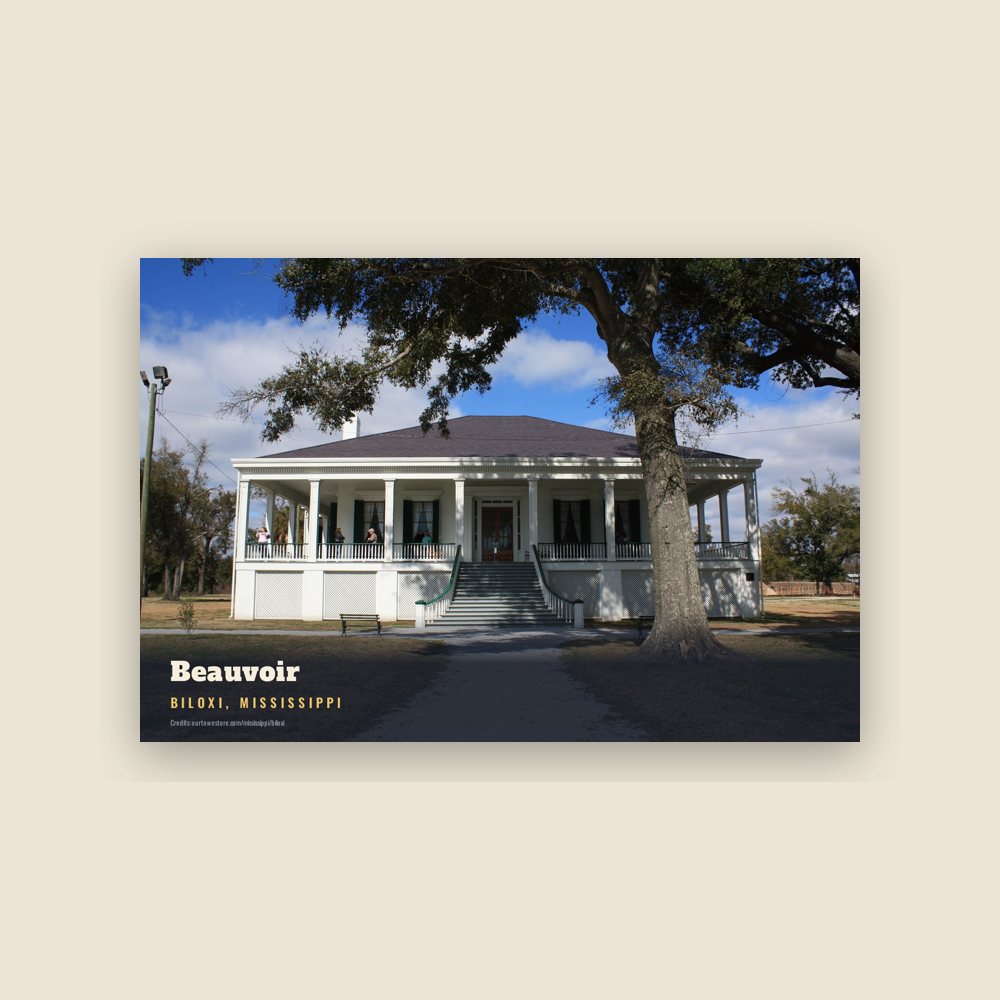
In 1699, French colonists formed the first permanent, European settlement in French Louisiana, at Fort Maurepas, now in Ocean Springs, Mississippi, and referred to as "Old Biloxi". The settlement was under the direction of Pierre Le Moyne d'Iberville.
The name of Biloxi in French was Bilocci, a transliteration of the term for the local Native American tribe in their language. Labeled along with "Fort Maurepas" on maps dated circa year 1710/1725, the name was sometimes used in English as "Fort Bilocci".
In 1720, the area of today's city of Biloxi was settled for the first time around Fort Louis, and the administrative capital of French Louisiana was moved to Biloxi from Mobile. French Louisiana, part of New France, was known in French as La Louisiane in colonial times. Following the Louisiana Purchase, it has been called La Louisiane française to distinguish it from the modern state of Louisiana.
Due to fears of tides and hurricanes, colonial governor Bienville moved the capital of French Louisiana in 1722 from Biloxi to a new inland harbor town named La Nouvelle-Orléans (New Orleans), built for this purpose in 1718–1720.
In 1763, following Britain's victory in the Seven Years' War/French and Indian War, France had to cede their colonies east of the Mississippi River, except for New Orleans, to Great Britain, as part of the Treaty of Paris. At the same time, the French colony west of the Mississippi, plus New Orleans, was ceded to Spain as part of the Treaty of Fontainebleau.
Read the full history
Subsequent history
British rule lasted from 1763 to 1779, followed by Spanish rule from 1779 to 1810. Despite this, the character of Biloxi remained mostly French, as their descendants made up the majority of the population. In 1811, the U.S. traded with Spain to take over Biloxi and the related area, making it part of their Mississippi Territory. Mississippi, and Biloxi with it, was admitted as a state to the union in 1817.
Biloxi began to grow. In the antebellum period of the 19th century, it became known as a summer resort due to its proximity to the breezes and beaches of the coast. It also had the advantages of proximity to New Orleans and ease of access via water. Summer homes were built by wealthy slave-owners and commercial figures, and hotels and rental cottages were developed to serve those who could not afford their own homes.
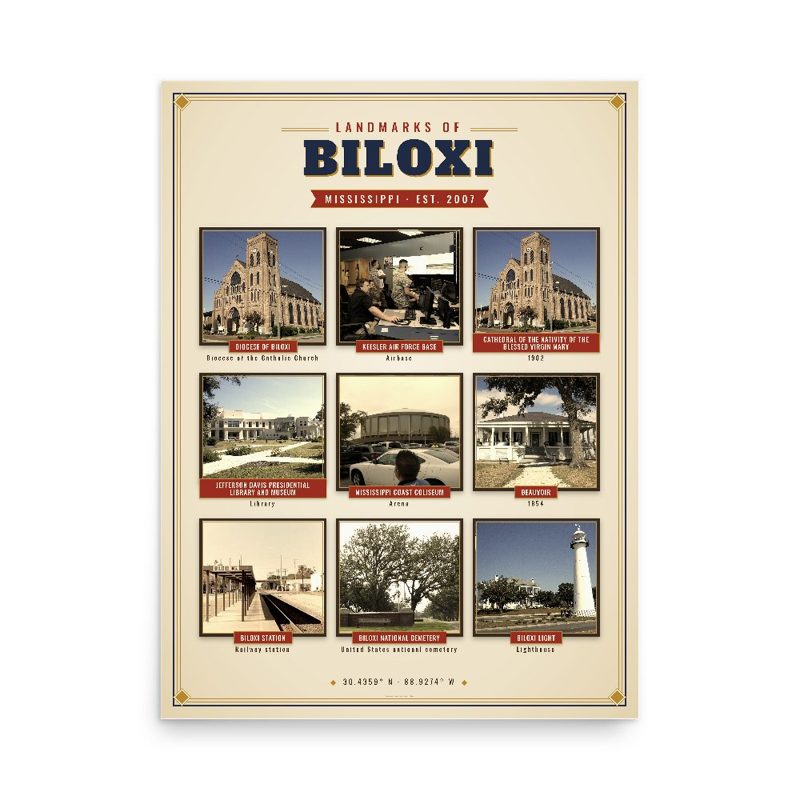
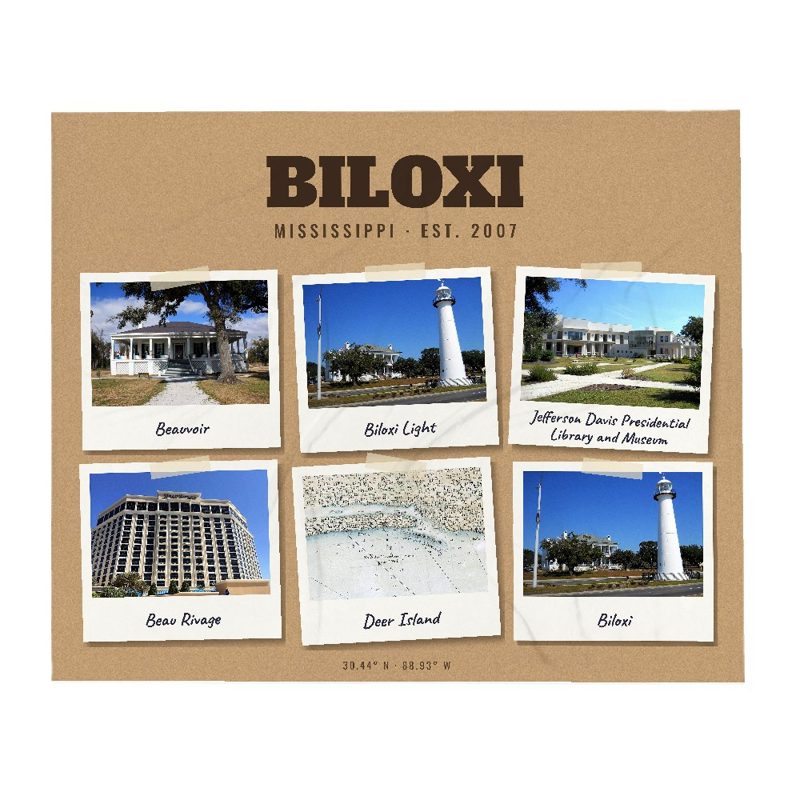
The Biloxi Lighthouse was built in Baltimore, Maryland, and shipped south, where it was completed at the site in May 1848. (It is one of two surviving lighthouses on the Mississippi Gulf Coast, which at one time had twelve.)
In the early stages of the Civil War, Ship Island was captured by Union forces, enabling them to take control of Biloxi. No major battles were fought in the area, and Biloxi did not suffer direct damage from the war. Some local Union sentiment could be discerned following the war's conclusion.
In the postbellum period, Biloxi again emerged as a vacation spot. Its popularity as a destination increased with railroad access. In 1881, the first cannery was built in the town to process seafood, leading others to join the location. This stimulated development in the city and attracted new immigrants from Europe and various ethnic groups who worked in the seafood factories. They processed shrimp and other local seafood. These changes gave Biloxi a more heterogeneous population.
During World War II, the United States Army Air Forces built Keesler Field, now Keesler Air Force Base, which became a major basic training site and site for aircraft maintenance. The Biloxi economy boomed as a result, attracting new residents and businesses. By 1958, the first Jewish synagogue had been built in the town.
Biloxi's casino history dates to a period in the 1940s. At the time, open, if technically illegal, gambling took place in a casino within the Broadwater Beach Resort. Open gambling ended during the 1950s. The Mississippi Gulf Coast became known as the "Poor Man's Riviera", and was frequented by Southern families interested in fishing expeditions during the summer. Commercially, Biloxi was dominated by shrimp boats and oyster luggers. The tradition of blessing fishing boats in the US seems to have first taken place in Biloxi in 1929 and has been practiced ever since.
In 1959, Biloxi was the site of "Mississippi's first public assault on racial barriers in its 15-year civil rights struggle." Gilbert R. Mason, a black physician in Biloxi, went swimming at a local beach with seven black friends. They were ordered to leave by a city policeman, who told them that "Negroes don't come to the sand beach". Mason reacted by leading a series of protests, known as the Biloxi Wade-Ins. The protests were followed in 1960 by the worst racial riot in Mississippi history, during which ten people died. Ultimately, the protests led to the desegregation of the beaches of Biloxi.
In the early 1960s, the Gulf Coast again emerged as a prime alternative to Florida as a southern vacation destination among Northerners, with Biloxi a favored destination. Biloxi hotels upgraded their amenities and hired chefs from France and Switzerland in an effort to provide some of the best seafood cuisine in the country. Edgewater Mall was built in 1963. The Biloxi Dragway hosted drag races between 1957 and 1967.
With the introduction of legal gambling in Mississippi in the 1990s, Biloxi was again transformed. It became an important center in the resort casino industry. The new hotels and gambling complexes brought millions of dollars in tourism revenue to the city. The more famous casino complexes were the Beau Rivage casino resort, the Hard Rock Hotel and Casino, Casino Magic, Grand Casino, Isle of Capri Casino Resort Biloxi, Boomtown Casino, President Casino Broadwater Resort, and Imperial Palace. Like Tunica County in the northern part of the state, Biloxi and the surrounding Gulf Coast region were considered a leading gambling center in the Southern United States.
Hurricanes
Scores of hurricanes have hit the Mississippi Gulf Coast, but the most destructive, as measured by storm surge levels in the Biloxi Lighthouse, occurred in 1855, 1906, 1909, 1947, 1969 (Hurricane Camille), and 2005 (Hurricane Katrina).
On August 29, 2005, Hurricane Katrina hit the Mississippi Gulf Coast with high winds, heavy rains and a 30-foot (9.1 m) storm surge, causing massive damage to the area. Katrina came ashore during the high tide of 6:56 am, +2.3 feet more. Commenting on the power of the storm and the damage, Mayor A. J. Holloway said, "This is our tsunami." Mississippi Governor Haley Barbour was quoted as saying the destruction of the Mississippi coastline by Hurricane Katrina looked like an American Hiroshima.
Hurricane Katrina damaged over 40 Mississippi libraries beyond repair, breaking windows and flooding several feet in the Biloxi Public Library, requiring a total rebuild.
Biloxi is the site of a memorial to Katrina victims, created by a team of local artists with assistance from the crew and volunteers of Extreme Makeover: Home Edition.
Multiple plans were laid out to rebuild the waterfront areas of Biloxi, and in 2007 the federal government announced it was considering buying out up to 17,000 Mississippi coast homeowners to form a hurricane protection zone. Meanwhile, the city of Biloxi is rapidly implementing plans to allow the redevelopment of commercial properties south of Highway 90.