Since 1868
A short history of Waseca
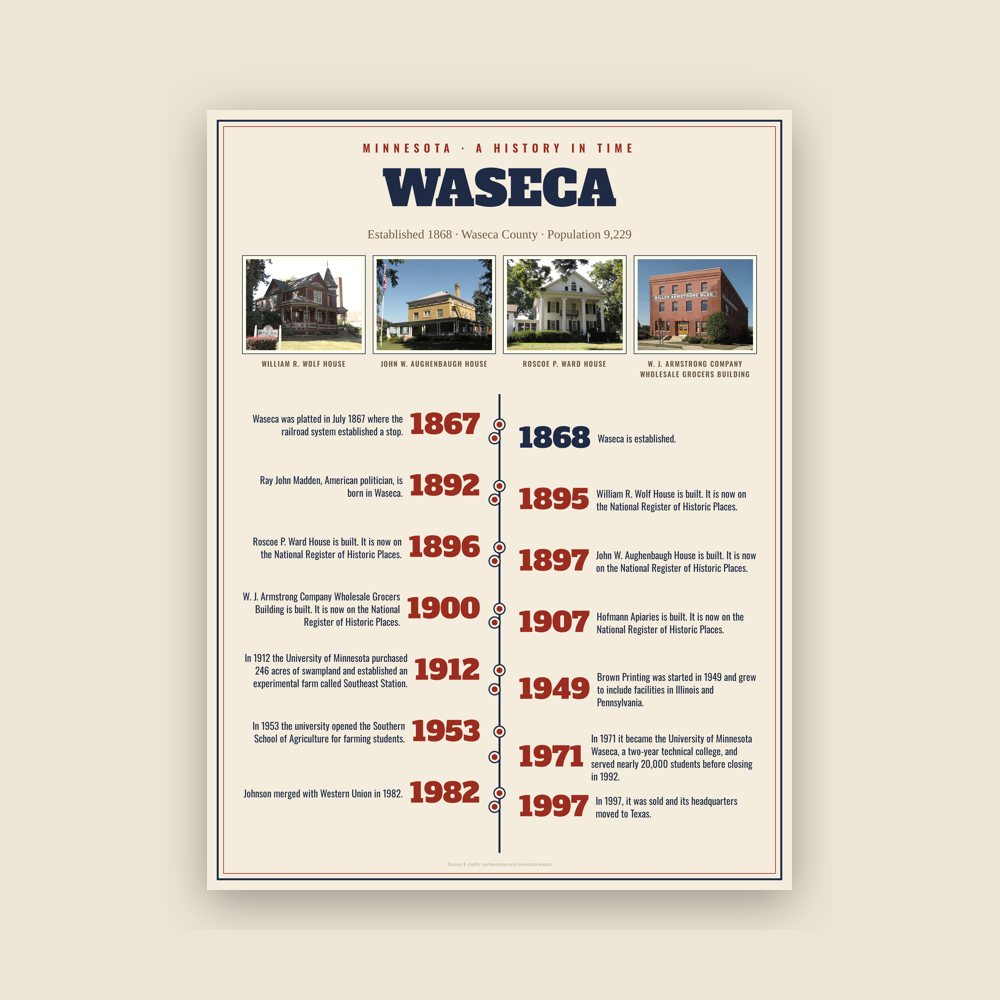
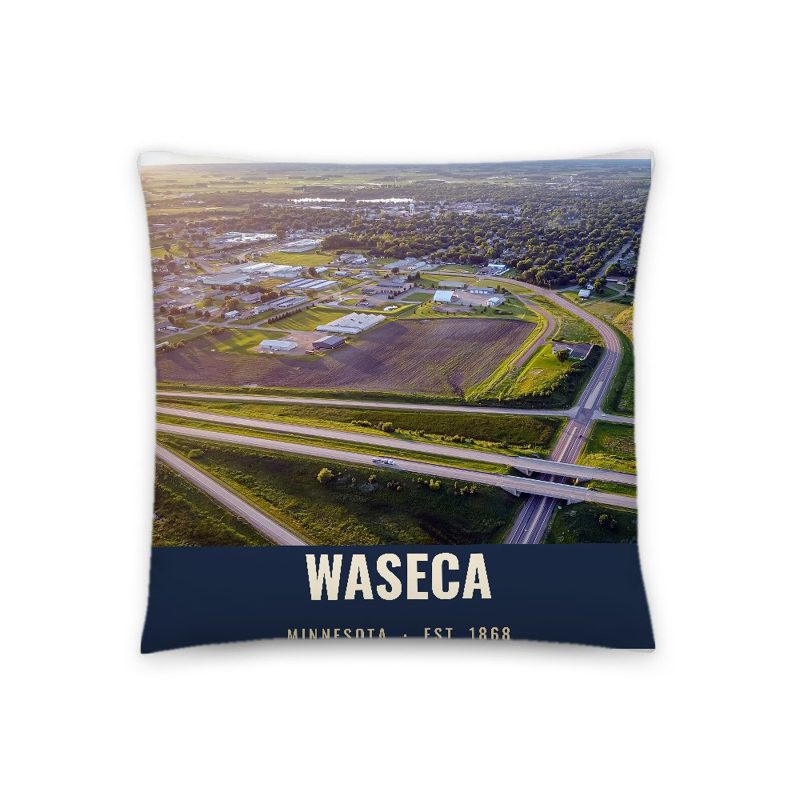
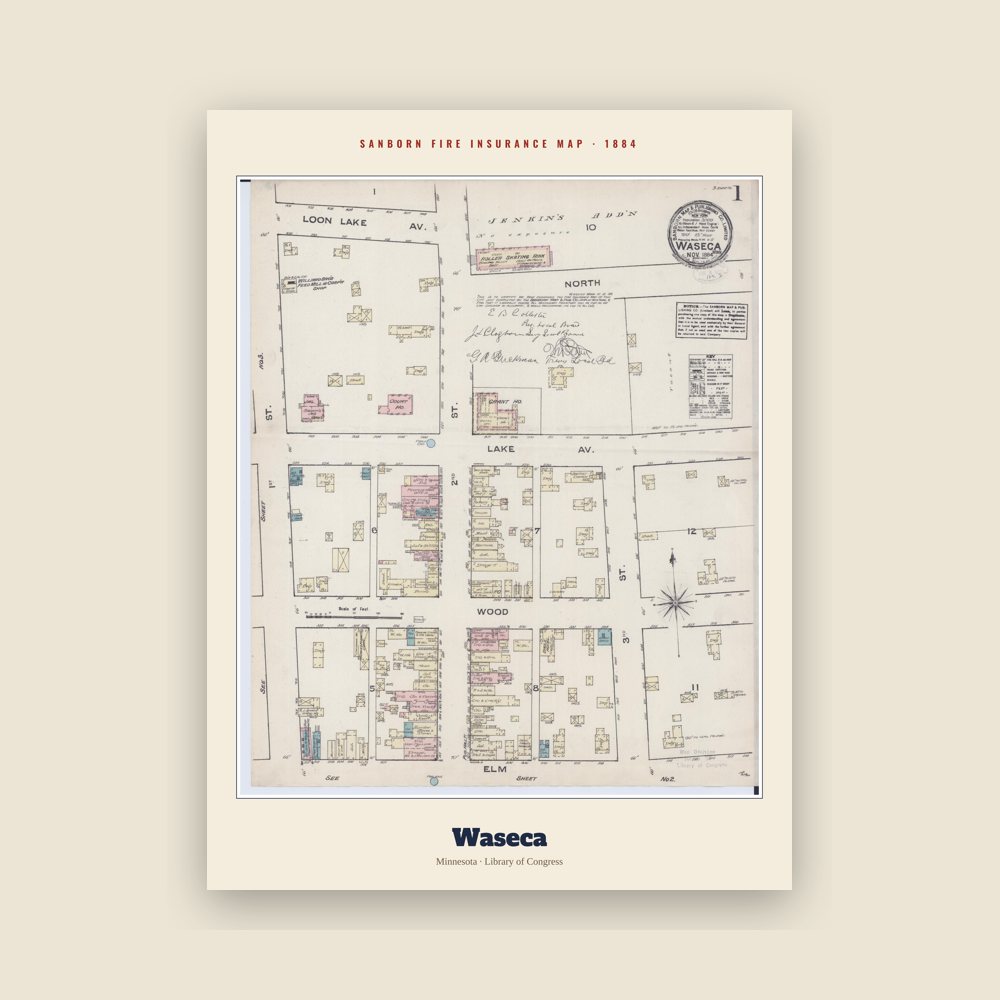
Waseca was platted in July 1867 where the railroad system established a stop. Within a year it was a major shipping hub for wheat, and the city had 129 buildings and 700 people.
In 1912 the University of Minnesota purchased 246 acres of swampland and established an experimental farm called Southeast Station. Studies included corn, swine and cattle-breeding. In 1953 the university opened the Southern School of Agriculture for farming students. It operated as a boarding school, with a six-month term scheduled around farming activities. In 1971 it became the University of Minnesota Waseca, a two-year technical college, and served nearly 20,000 students before closing in 1992.
The city took its name from Waseca County, Minnesota. "Waseca" is a Dakota language word meaning "rich in provisions". It was founded as a hub of agricultural activity. In the mid-1900s, three companies were founded in Waseca with national markets: Brown Printing, EF Johnson Technologies Inc., and Herter's Outgoor Gear. The result was a strong, diverse economy. In the mid-1970s, Waseca's post office was the third busiest in the state for postal receipts.
In 1923, Edgar F. Johnson and his wife, Ethel Johnson, founded E.F. Johnson Co. It shared space with a downtown Waseca woodworking shop, and sold radio transmission parts by mail order. It built its first factory in 1936, and was a major supplier of defense production during World War II. Johnson merged with Western Union in 1982. In 1997, it was sold and its headquarters moved to Texas. The Johnsons played a major role in establishing Waseca County Historical Society.
George Herter launched Herter's in 1937 from his father's dry goods store and became an original model of successful mail-order retailers. Herter's merchandise is now sold by Cabela's and Bass Pro Shops. Herter's successful catalog business, including its print runs of 400,000 to 500,000 copies, were a major factor in Brown Printing's success. Brown Printing was started in 1949 and grew to include facilities in Illinois and Pennsylvania. It was sold to Quad Printing in 2015.
During the Second World War, the E.F. Johnson Company plant was on war footing, with production 24 hours a day and heavy surveillance. Waseca was one of the first cities to use municipal funds to buy war bonds.
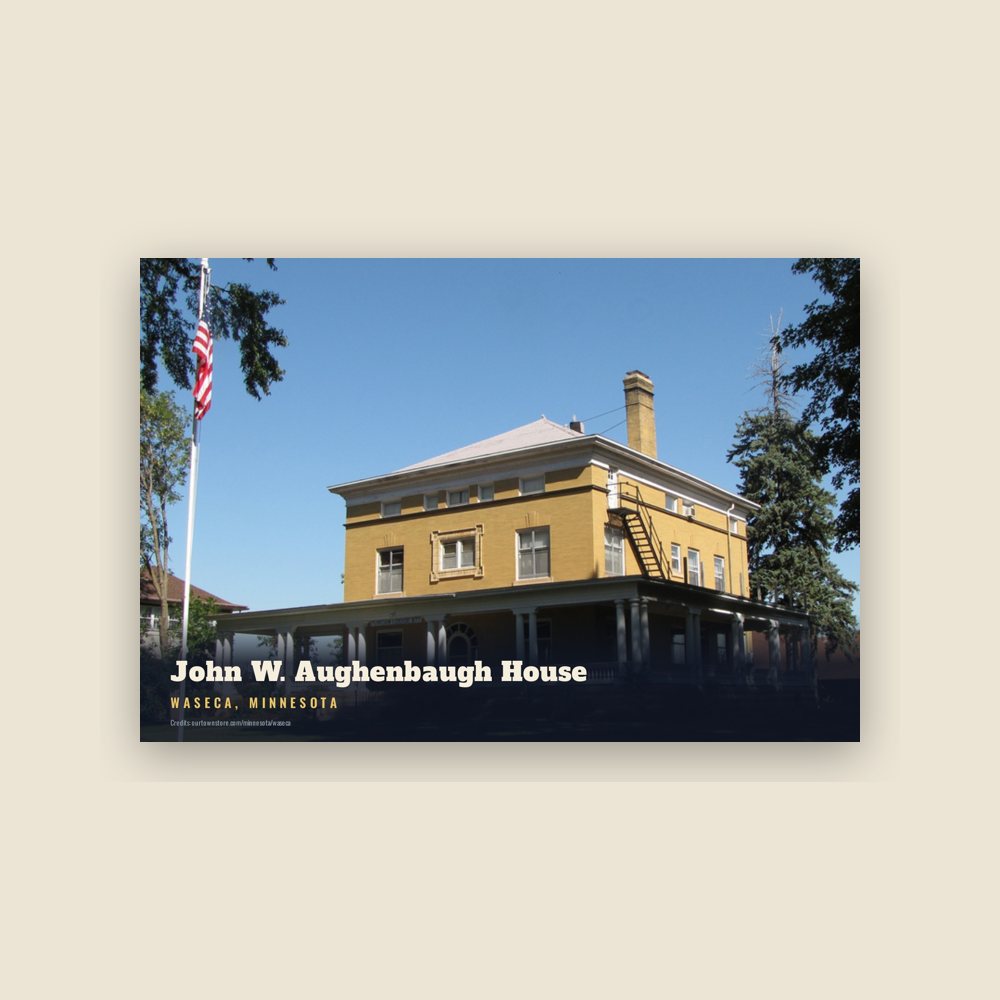
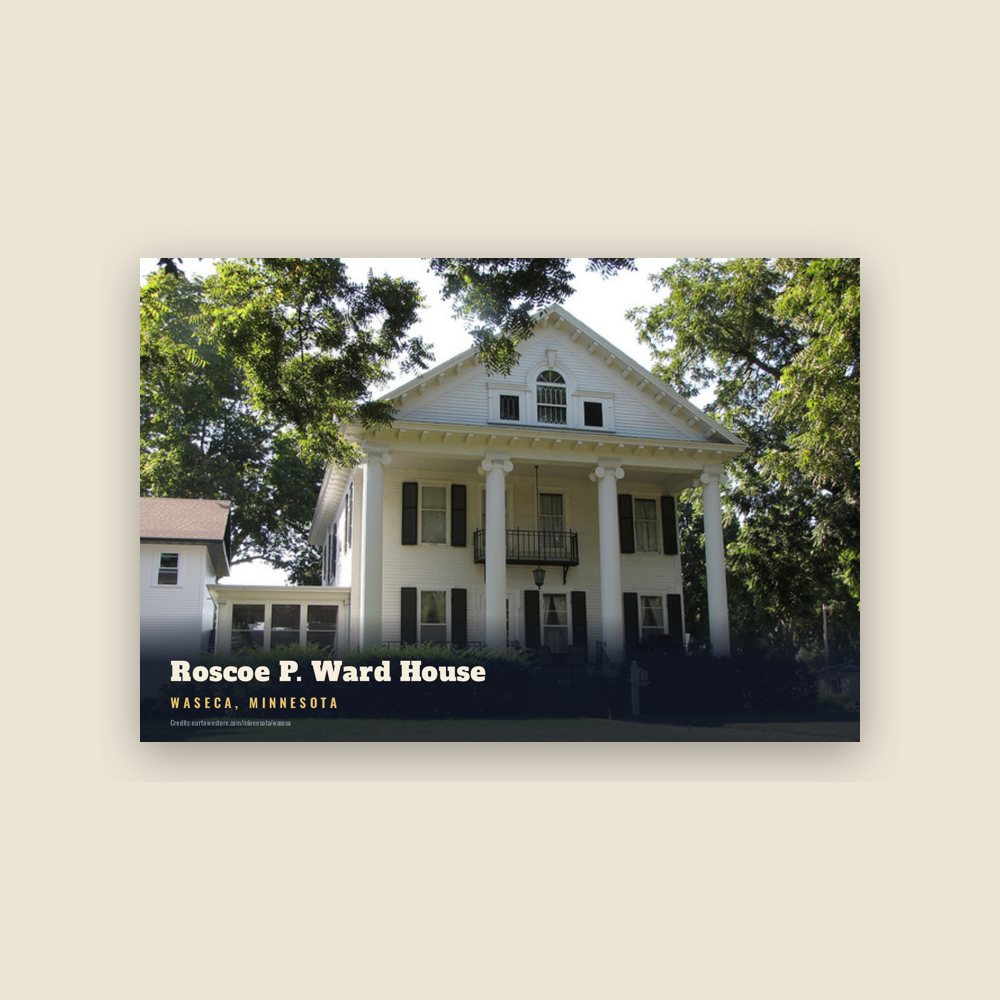
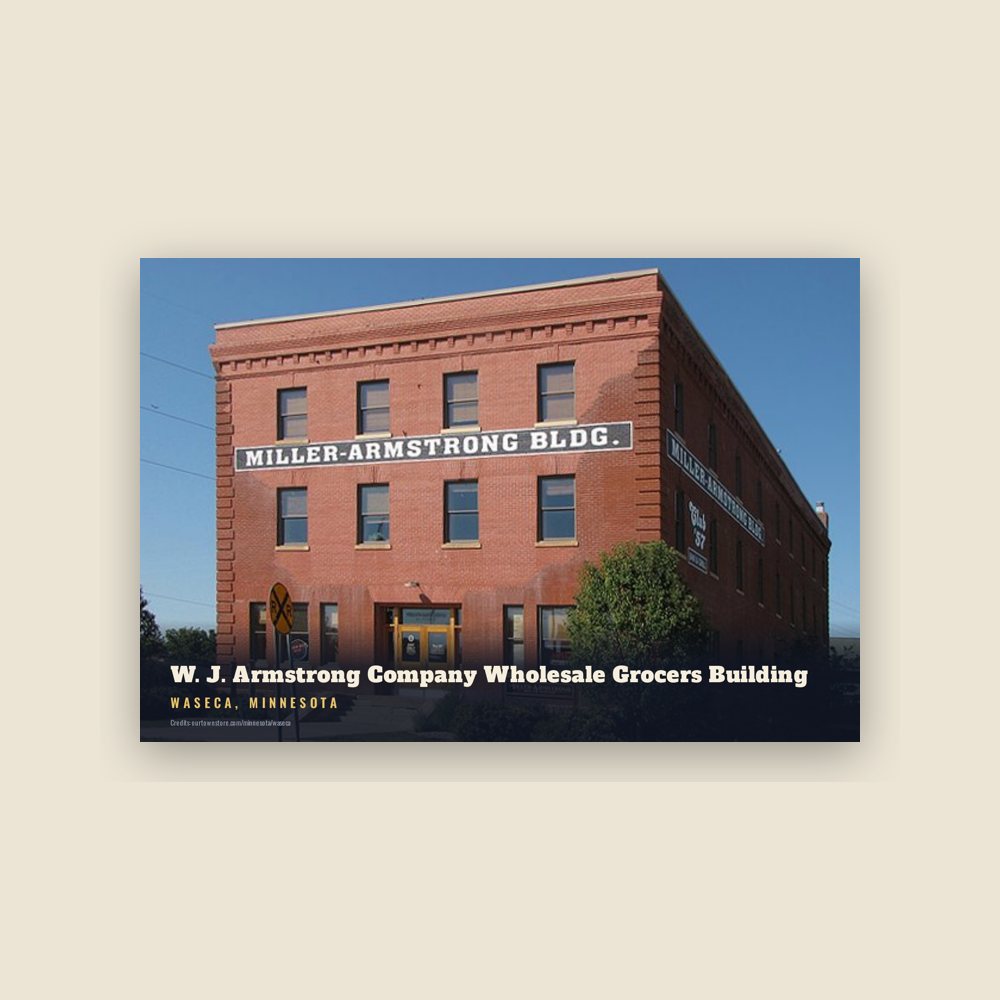
Waseca has six properties on the National Register of Historic Places: the 1868 Philo C. Bailey House, the circa-1895 William R. Wolf House, the 1896 Roscoe P. Ward House, the 1897 John W. Aughenbaugh House, the 1897 Waseca County Courthouse, and the circa-1900 W. J. Armstrong Company Wholesale Grocers Building.
Adapted (trimmed) from the Wikipedia article Waseca, Minnesota, revision 1375255584 by its contributors, licensed CC BY-SA 4.0.

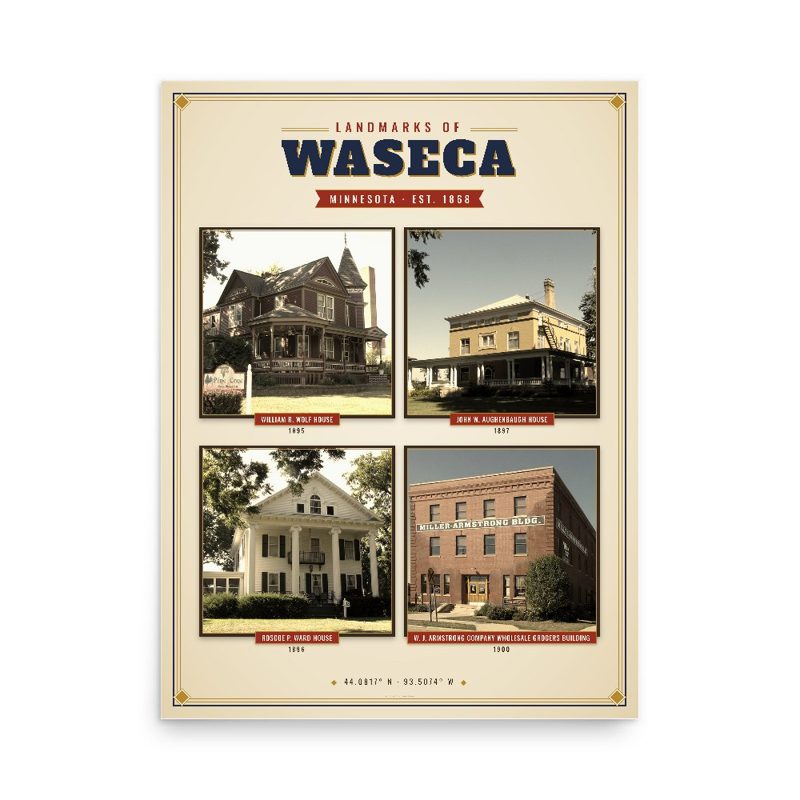
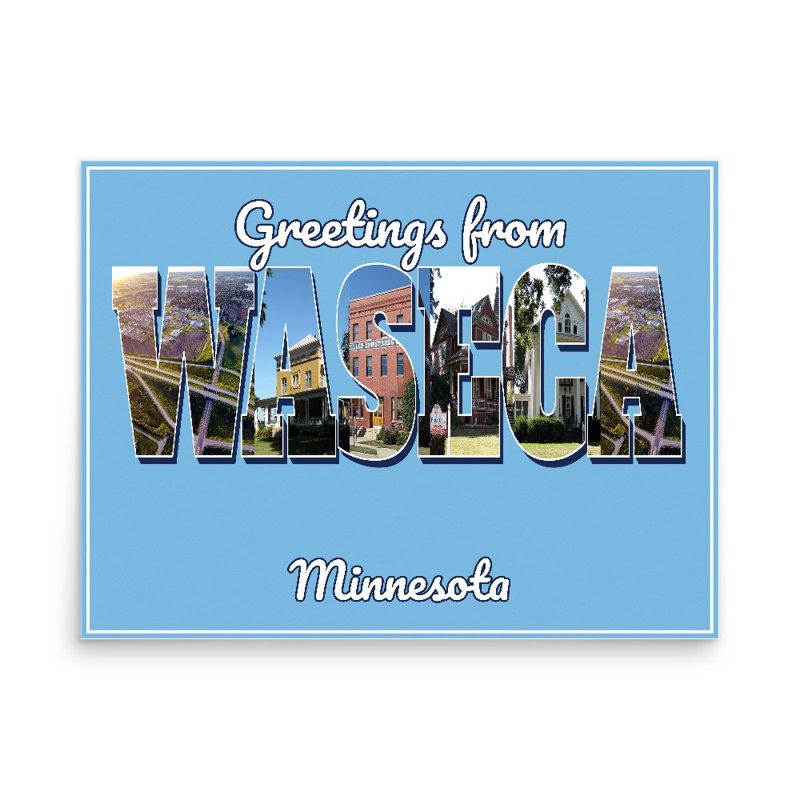
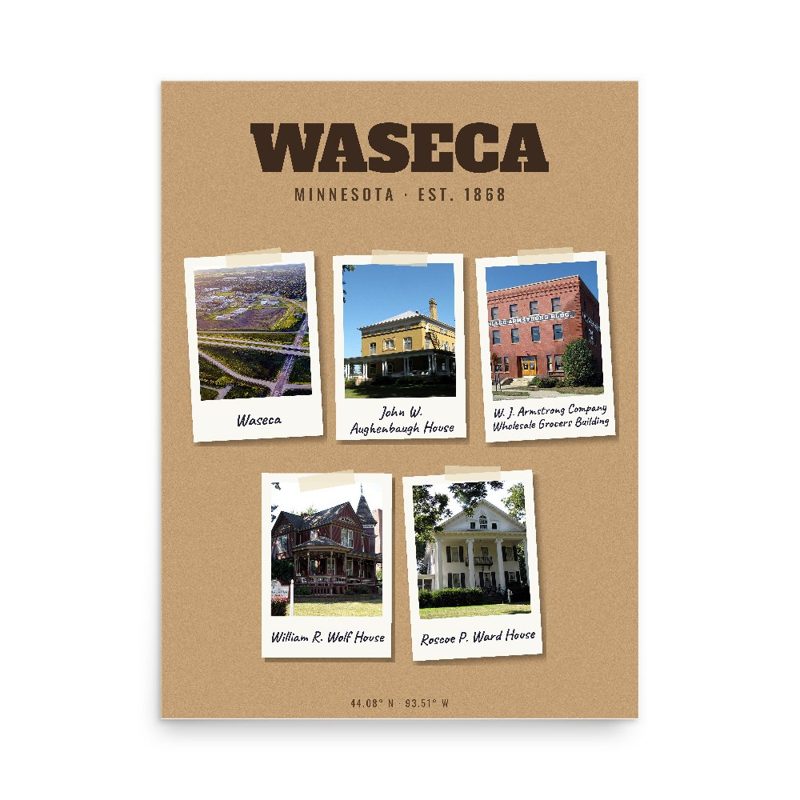
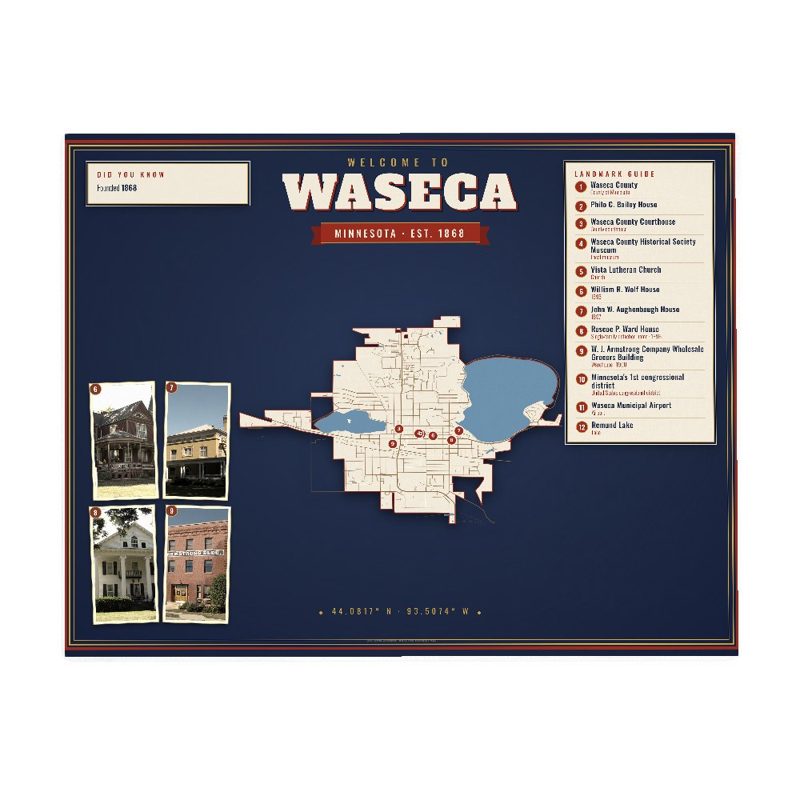



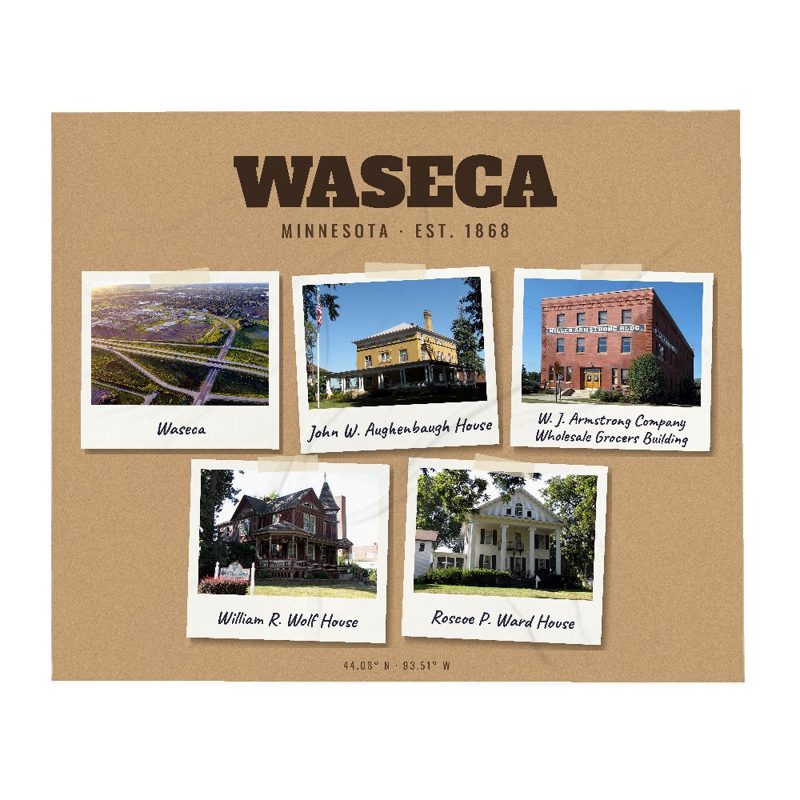
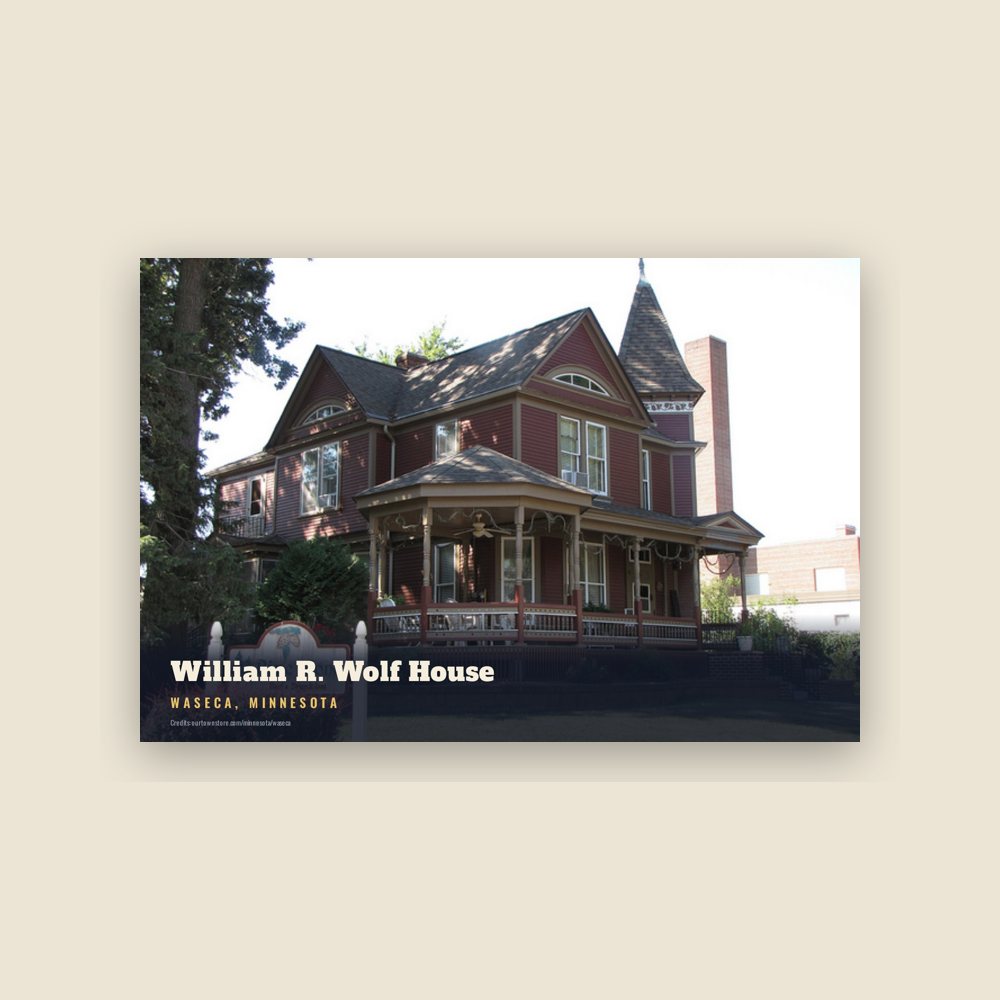
 William R. Wolf House
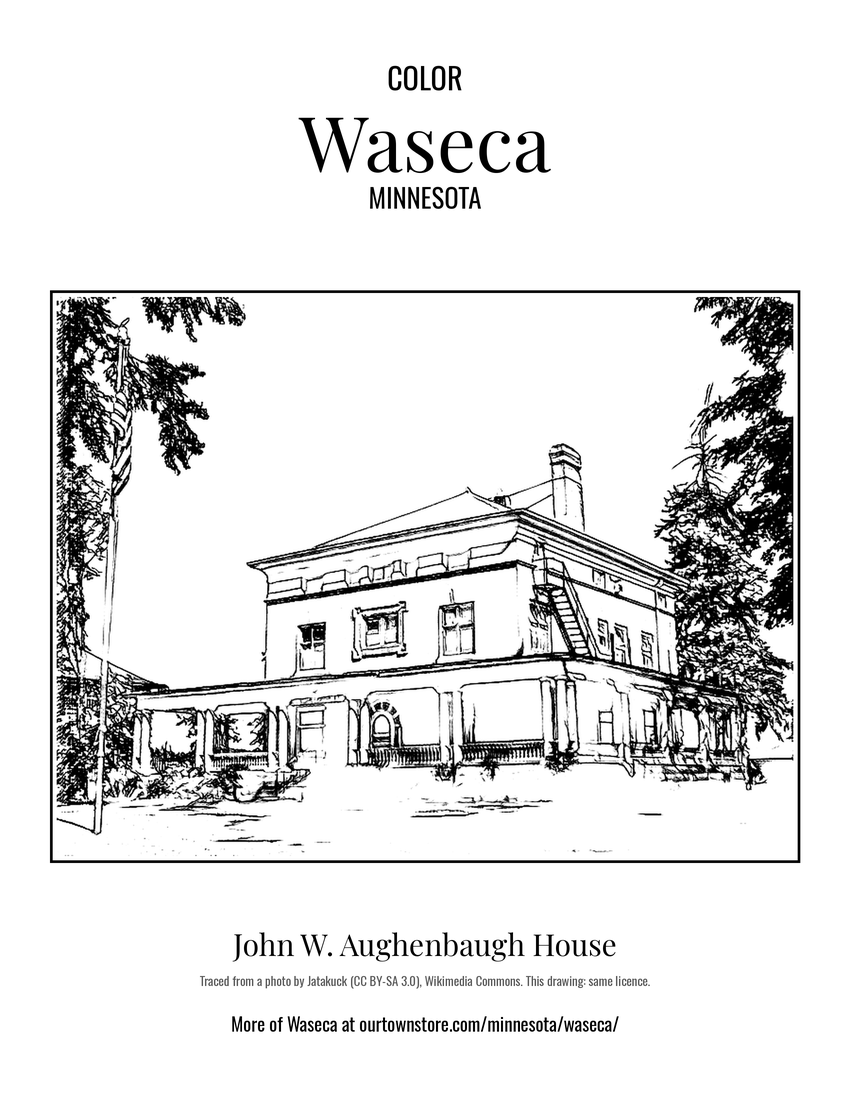 John W. Aughenbaugh House
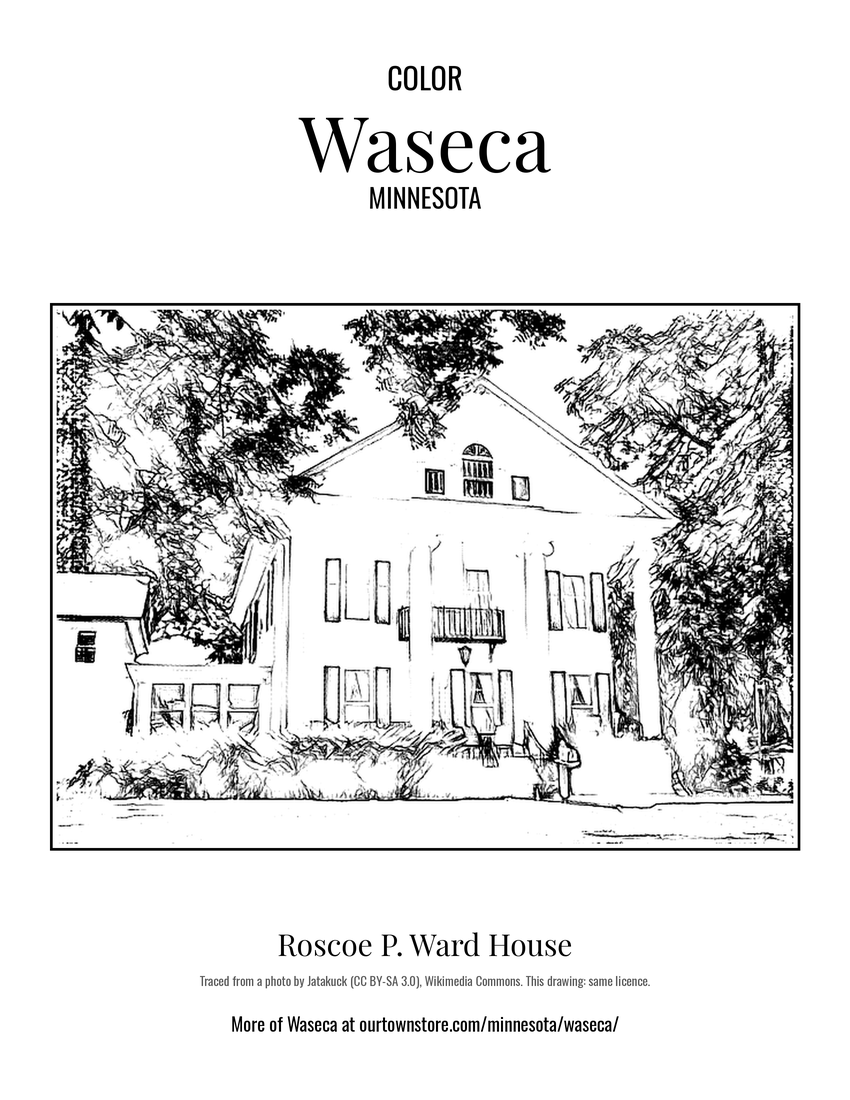 Roscoe P. Ward House
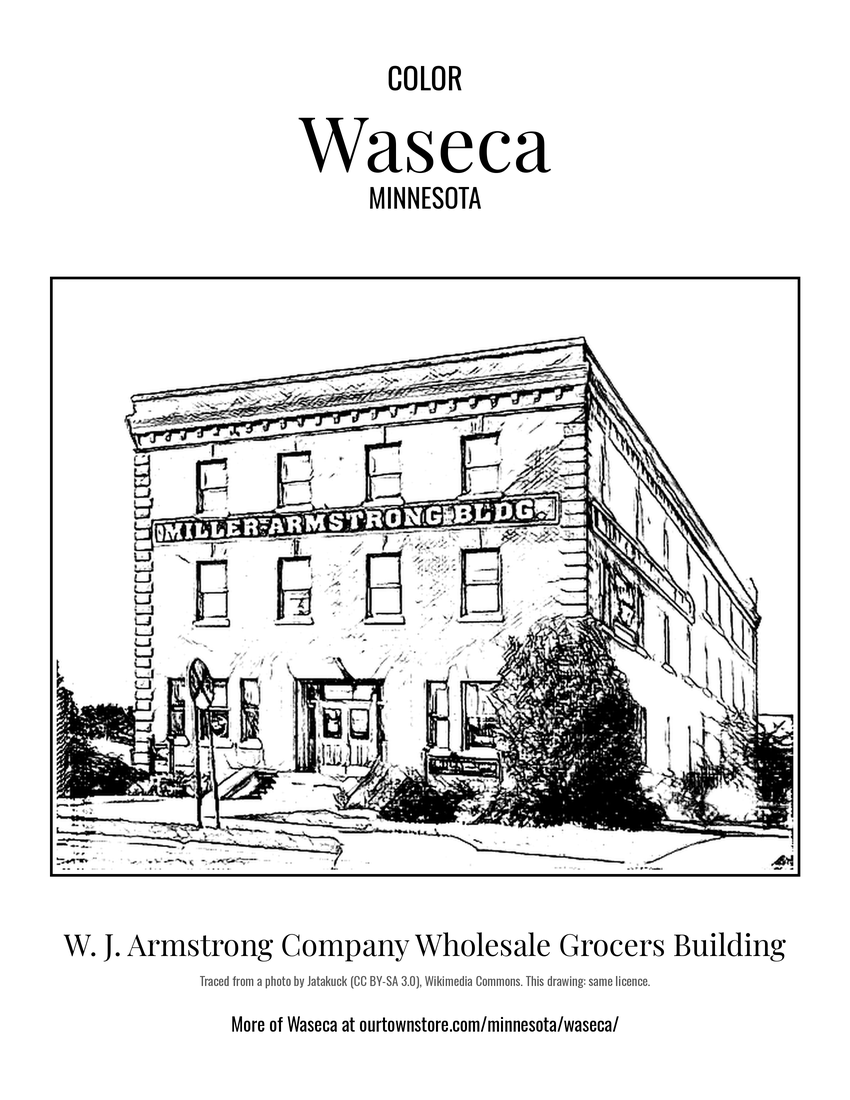 W. J. Armstrong Company Wholesale Grocers Building