A short history of Clitherall
The area around Clitherall Lake was the site of one of the earliest permanent European‑American settlements in Otter Tail County after the U.S.–Dakota War of 1862, when a group of Cutlerite Latter Day Saints migrated from Iowa to western Minnesota in 1865 to establish an agricultural colony on the lake’s north shore. The original settlement, often referred to as the Mormon or Cutlerite colony at Clitherall Lake, was organized around a communal religious community that emphasized self‑sufficiency, cooperative distribution of harvests, and peaceful relations with neighboring Indigenous communities.
Clitherall Township was formally organized on October 24, 1868, making it among the first townships in Otter Tail County, and it took its name from Clitherall Lake, which itself commemorates Major George B. Clitherall, a former register of the U.S. land office at Otter Tail City in the late 1850s. A platted village at Clitherall followed in 1881 and was later incorporated in 1898, developing as a rural service center linked to regional lumber and agricultural activity even as later railroad construction shifted much commercial growth to other nearby towns.
Local and county historians frequently describe the Clitherall Lake colony as “the first and, in many ways, one of the most interesting” of the early Otter Tail County settlements, in part because it represented a distinct religious community that endured frontier hardships while playing a notable role in the county’s agricultural and civic development. The legacy of the original settlement is preserved in regional museum collections, interpretive programs, and Cutlerite church history, which document the community’s migration, social structure, and contribution to post‑1860s resettlement of the region.
Read the full history
Cutlerite Colony and Founding Families
The colony known as Old Clitherall was originally led by Alpheus Cutler, but after his death, leadership passed to Chauncey Whiting. The founding families included the Whiting, Fletcher, and Tucker families who were central to the community’s development.. A vanguard group of seven families, including F. L. Whiting, Calvin Fletcher, and John Fletcher, set out in 1864, enduring blizzards and burning forests before settling on the north shore of Clitherall Lake.
The Tucker family, like the Whitings and Fletchers, were farmers who helped break 60 acres of prairie soil before building log cabins.
Local sources describe cooperative relations with neighboring indigenous communities. The Chippewa, with whom they established a never-broken treaty signed with 37 chiefs at Crow Wing. Trade was common: settlers exchanged cloth and tools for bread, vegetables, and maple sugar.
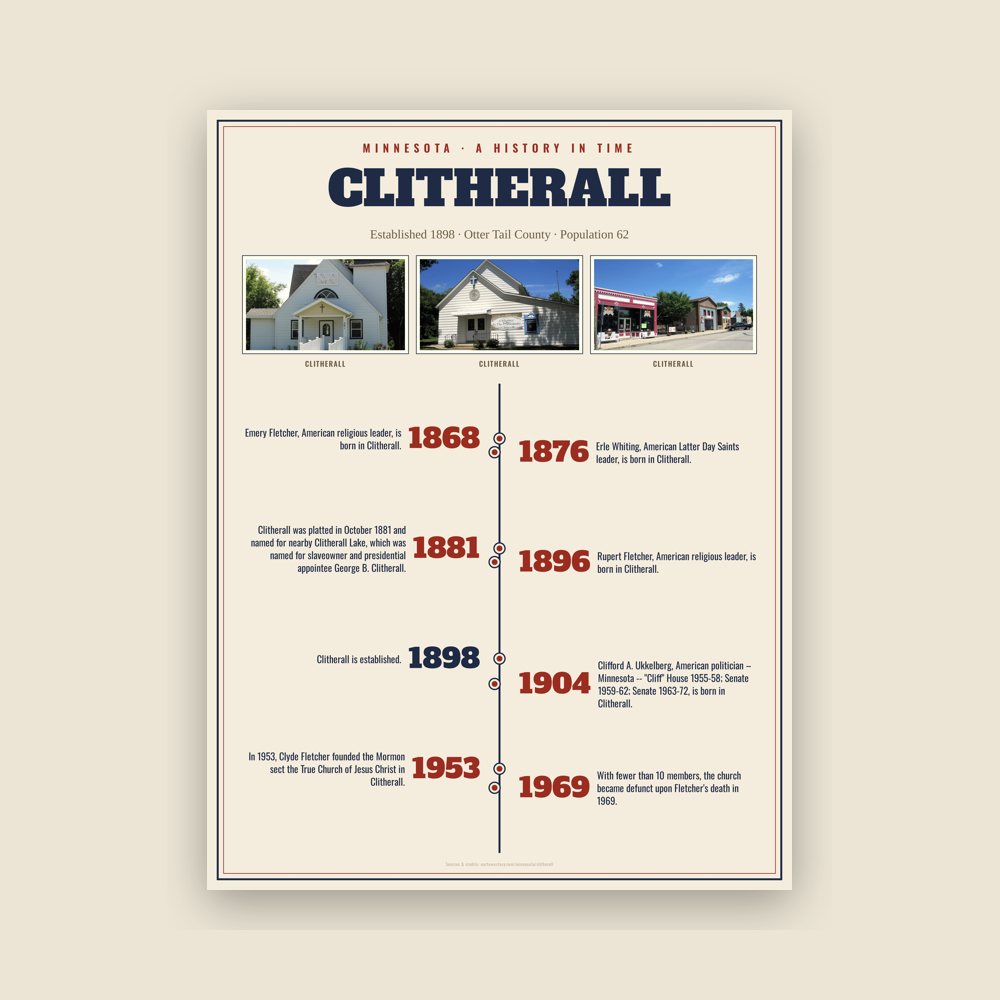
Clitherall was platted in October 1881 and named for nearby Clitherall Lake, which was named for slaveowner and presidential appointee George B. Clitherall.
In 1953, Clyde Fletcher founded the Mormon sect the True Church of Jesus Christ in Clitherall. With fewer than 10 members, the church became defunct upon Fletcher's death in 1969.
Adapted (trimmed) from the Wikipedia article Clitherall, Minnesota, revision 1377157079 by its contributors, licensed CC BY-SA 4.0.
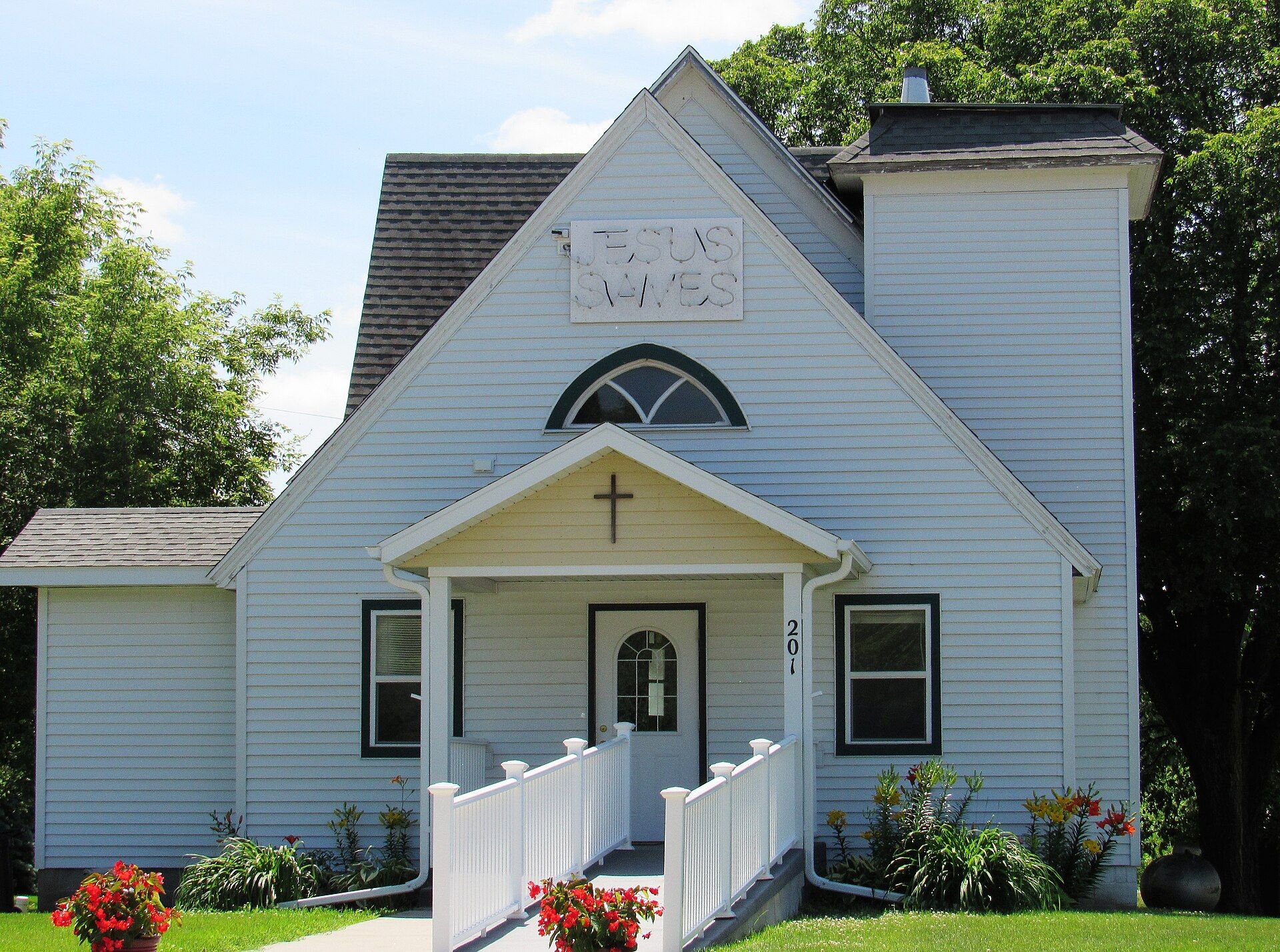




















 A view of Clitherall
 A view of Clitherall
 A view of Clitherall