Since 1871
A short history of Chaska
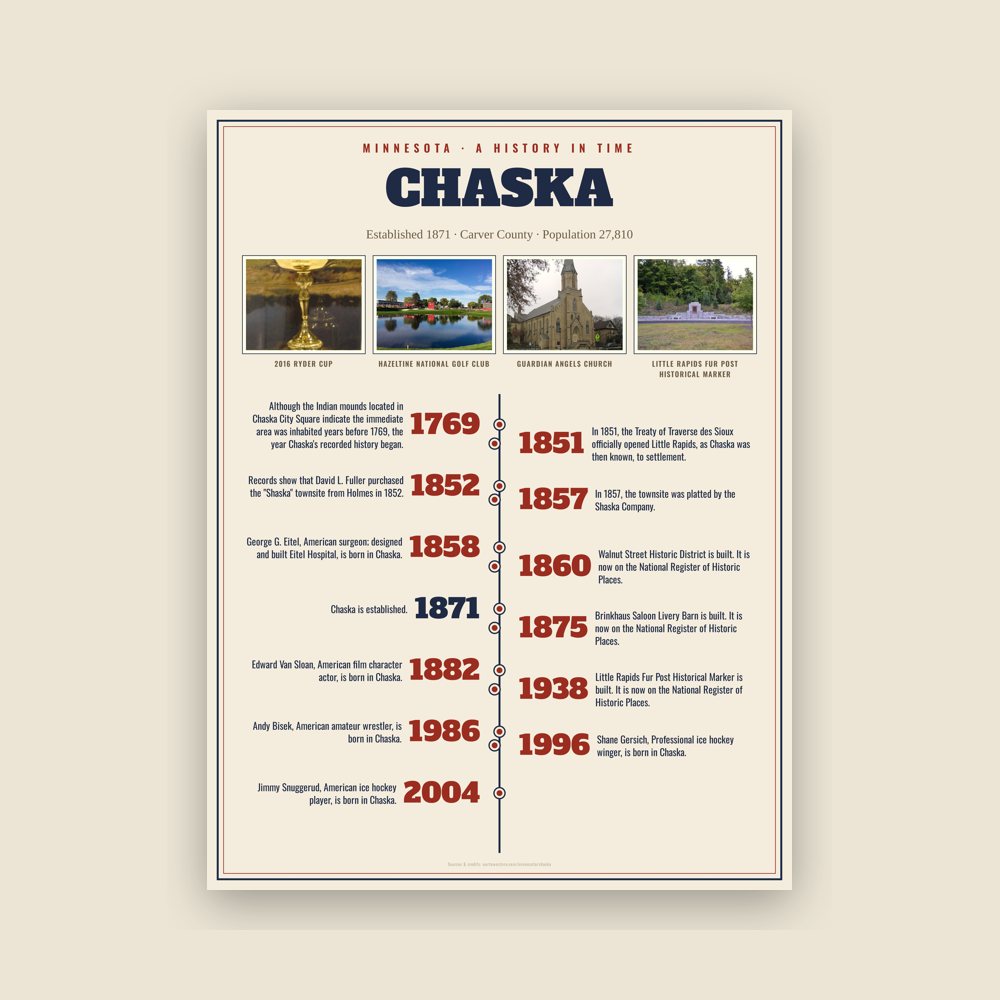
Chaska's history reflects the influence of the Native American culture. The first inhabitants are believed to be the Mound Builders, whose ancient communities are marked by mounds in City Square. Later, the Dakota (also commonly known as the Sioux) were the primary nation in this region known as the Big Woods. Although the Indian mounds located in Chaska City Square indicate the immediate area was inhabited years before 1769, the year Chaska's recorded history began.
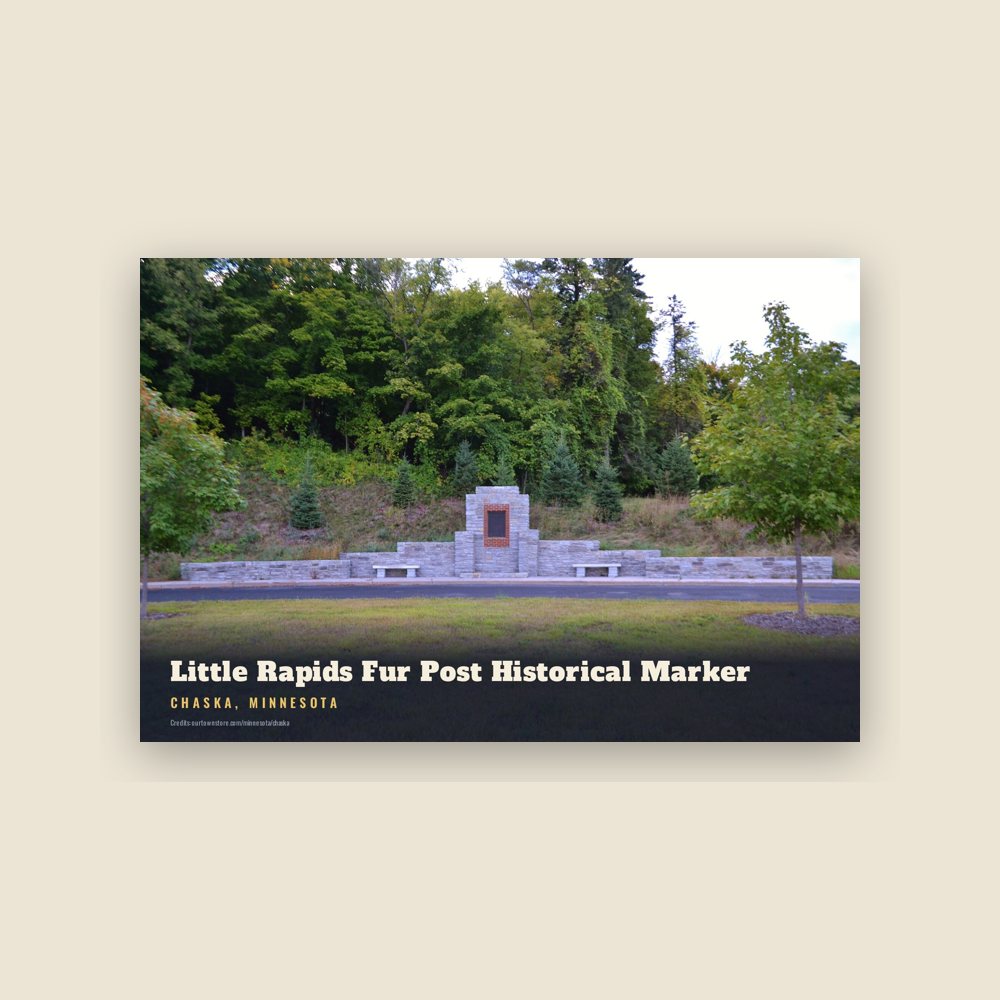
In 1776, Jonathan Carver explored the lands along the Minnesota River and chronicled his journeys. French Canadian fur traders traveled the waterways, trading with the Dakota in the early 19th century. During this time, Jean-Baptiste Faribault established a trading post in Chaska.
In 1851, the Treaty of Traverse des Sioux officially opened Little Rapids, as Chaska was then known, to settlement. Soon after, speculators moved into the new territory. Among the earliest was Thomas Andrew Holmes who, in August 1851, claimed a 20-acre (81,000 m2) clearing as the Chaska townsite.
The name "Chaska" is derived from a Dakota word often given as a name to the first born male child. Records show that David L. Fuller purchased the "Shaska" townsite from Holmes in 1852. In 1857, the townsite was platted by the Shaska Company. In the same year, construction began on the original Carver County Courthouse located where the post office and KleinBank now stand in downtown Chaska. Chaska was incorporated as a village in 1871 and, by special legislative charter, as a city in 1891.
An abundance of high quality clay led to the start of brick making in 1857. By the 1880s, as a result of the clay resources, Chaska was a thriving brick manufacturing center. Bricks were shipped by boat to Saint Paul and, although the city grew as a result of steamboat trade, it was not until the Minneapolis and St. Louis Railway was built through town in 1873 that rapid expansion began.
With the advent of the 20th century came other industries, including the processing of beet sugar and other agricultural products; flour making, butter making, the canning of peas, corn, and tomatoes, and the curing of sauerkraut and pickles.
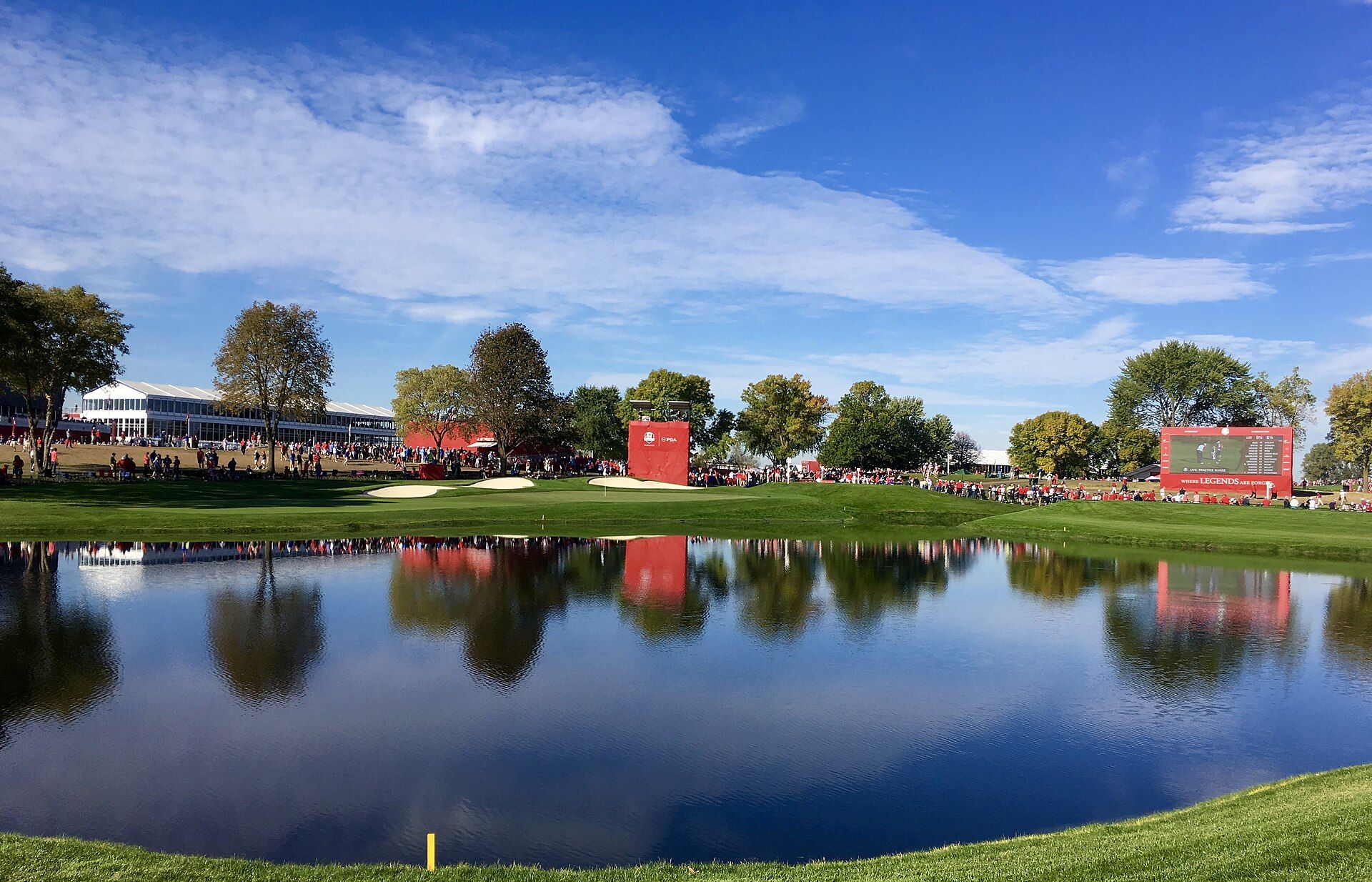
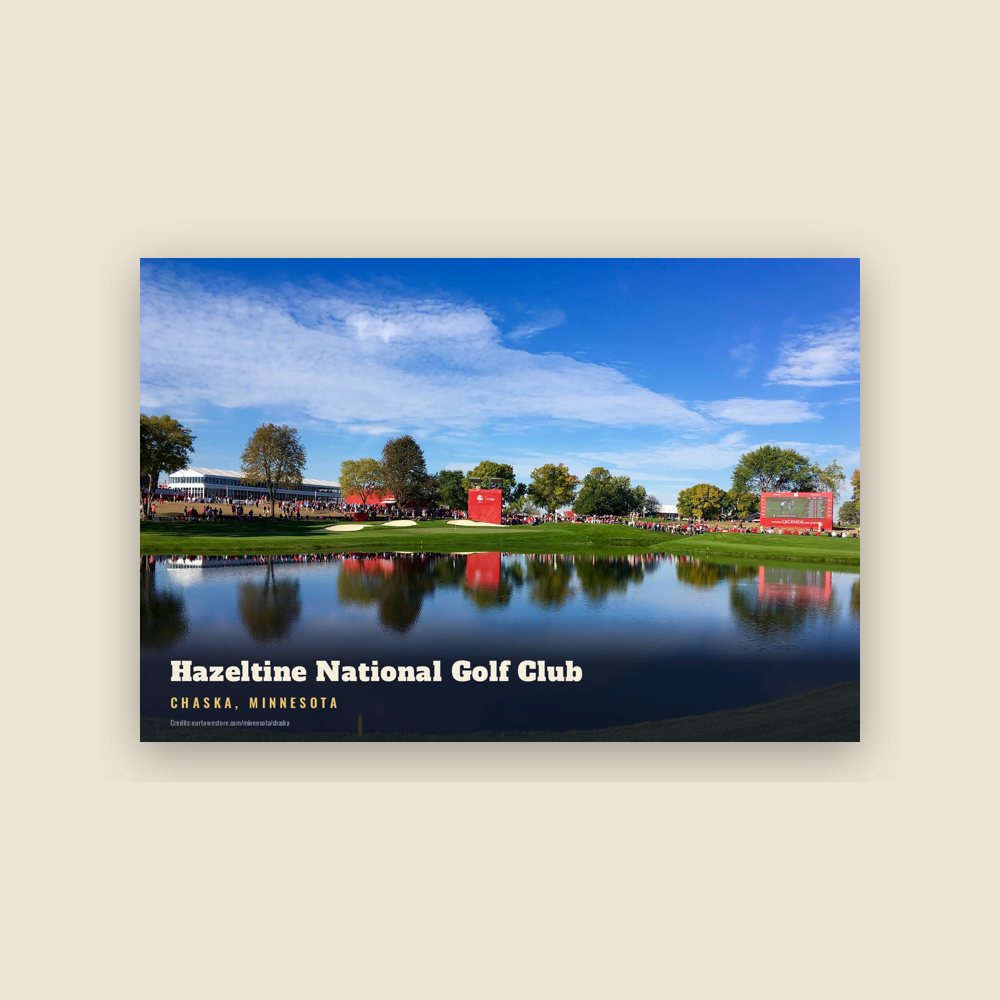
In September 2016, Chaska hosted the Ryder Cup at Hazeltine National Golf Course, and in March 2018, the PGA of America, with help from the U.S. Curling team, announced Hazeltine would be the first American venue to host a second Ryder Cup in 2028.
Adapted (trimmed) from the Wikipedia article Chaska, Minnesota, revision 1374232178 by its contributors, licensed CC BY-SA 4.0.
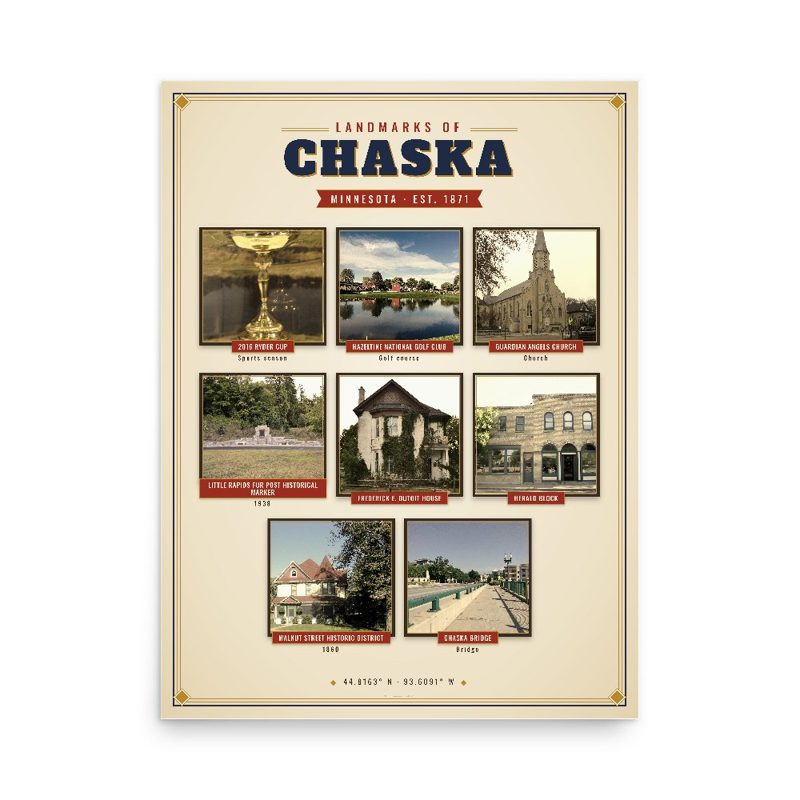
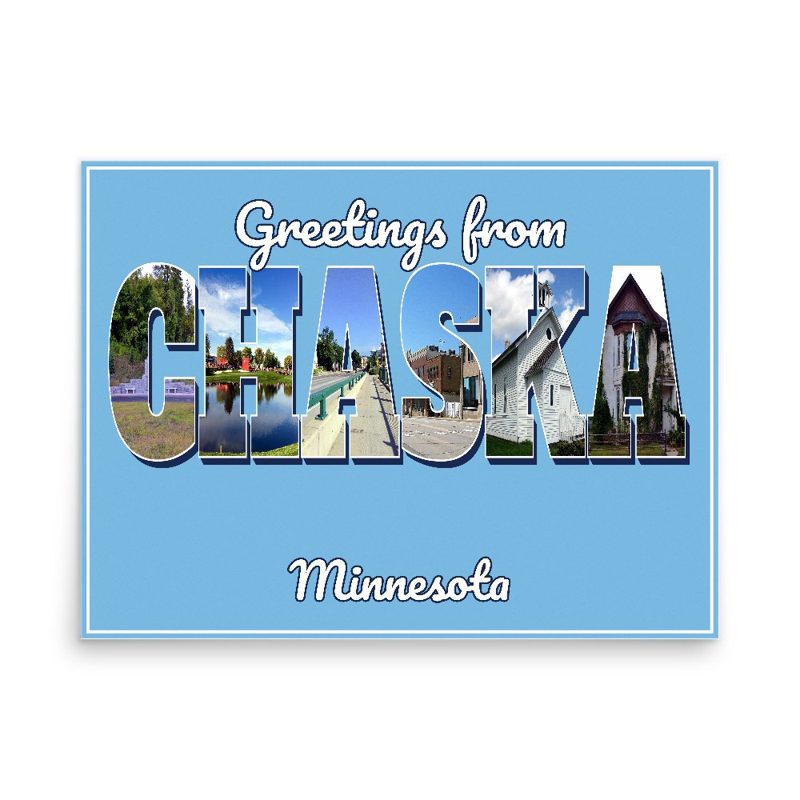
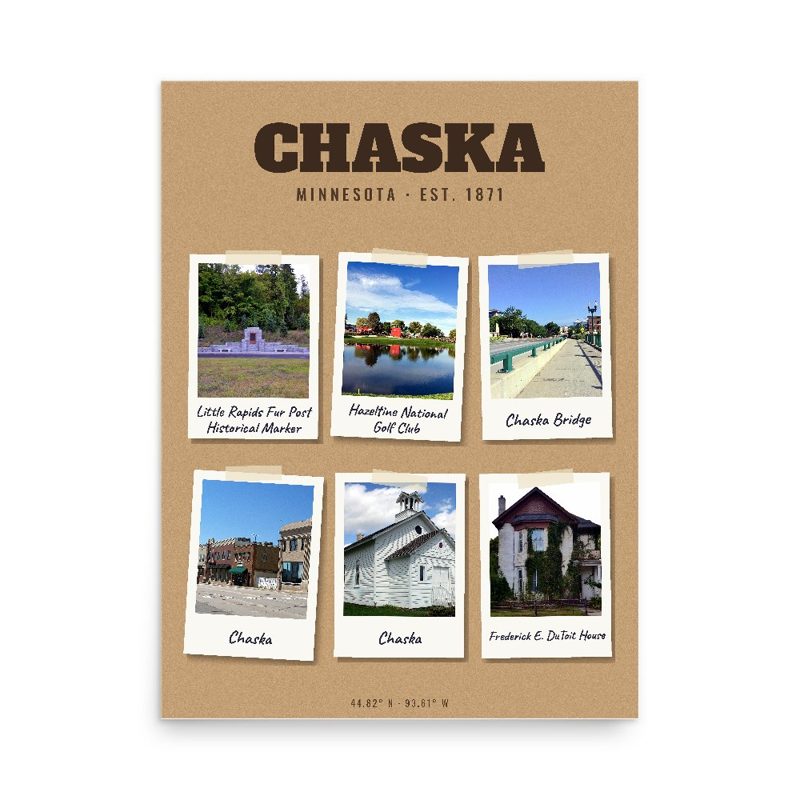
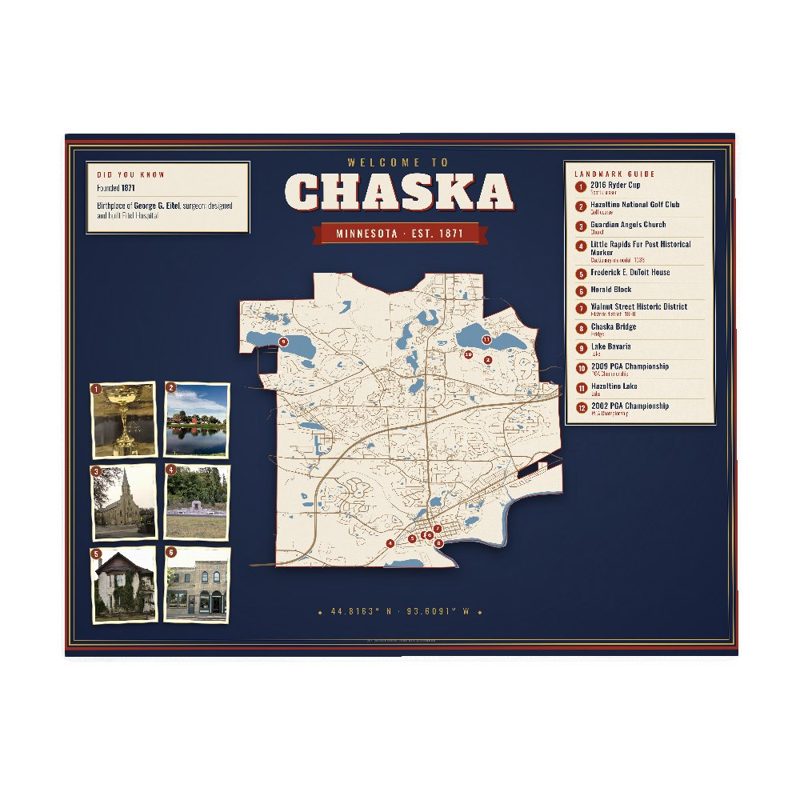


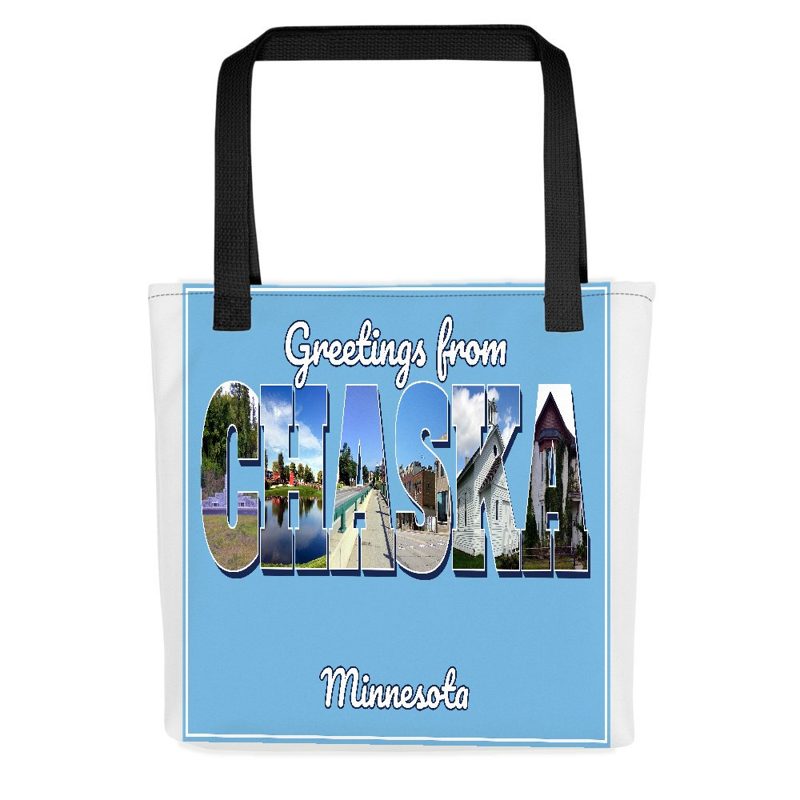


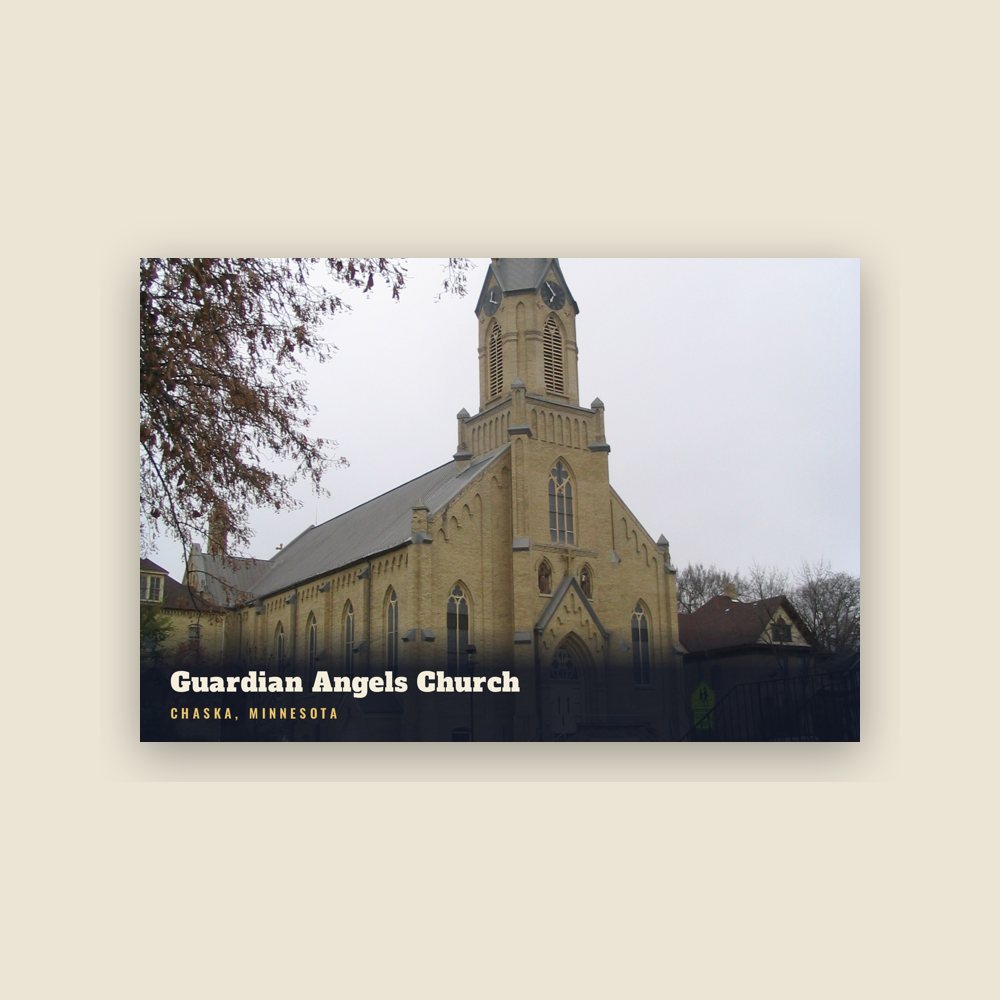
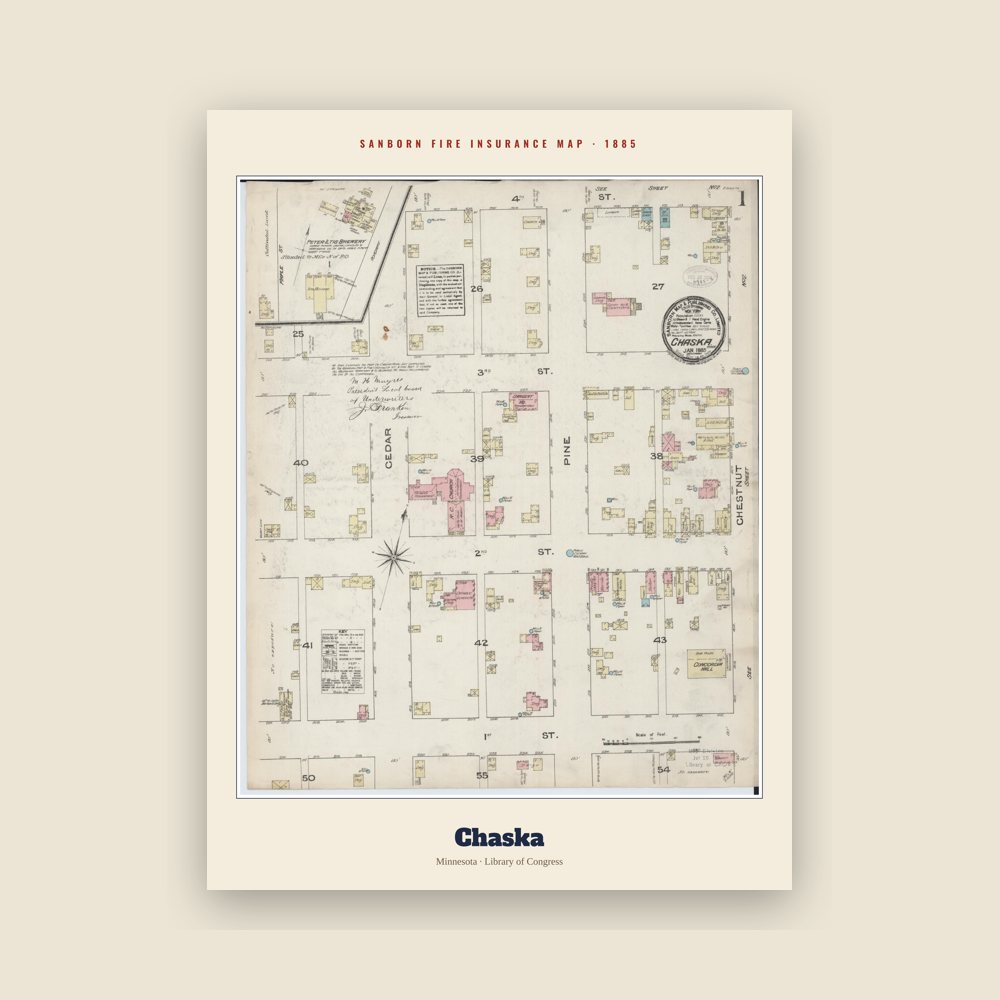
 Guardian Angels Church
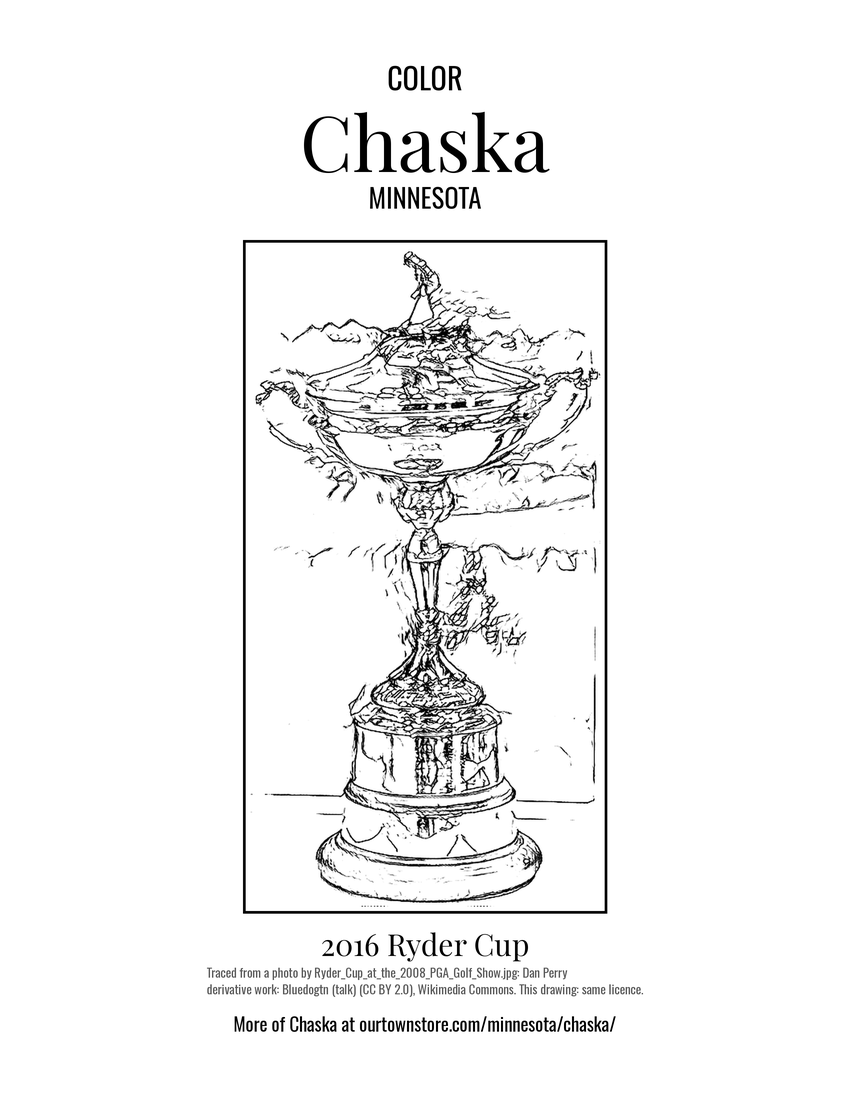 2016 Ryder Cup
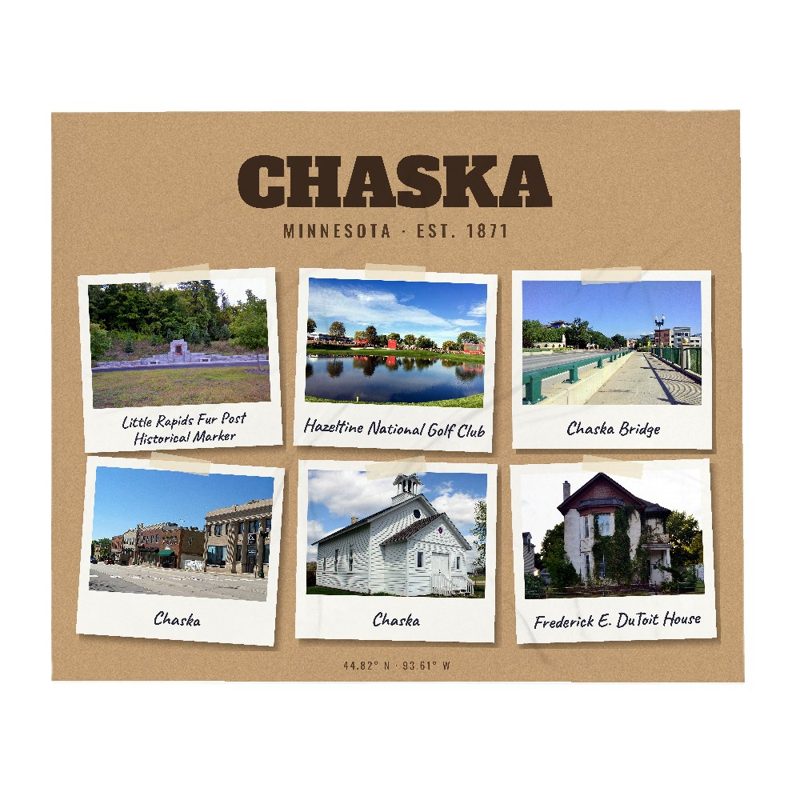
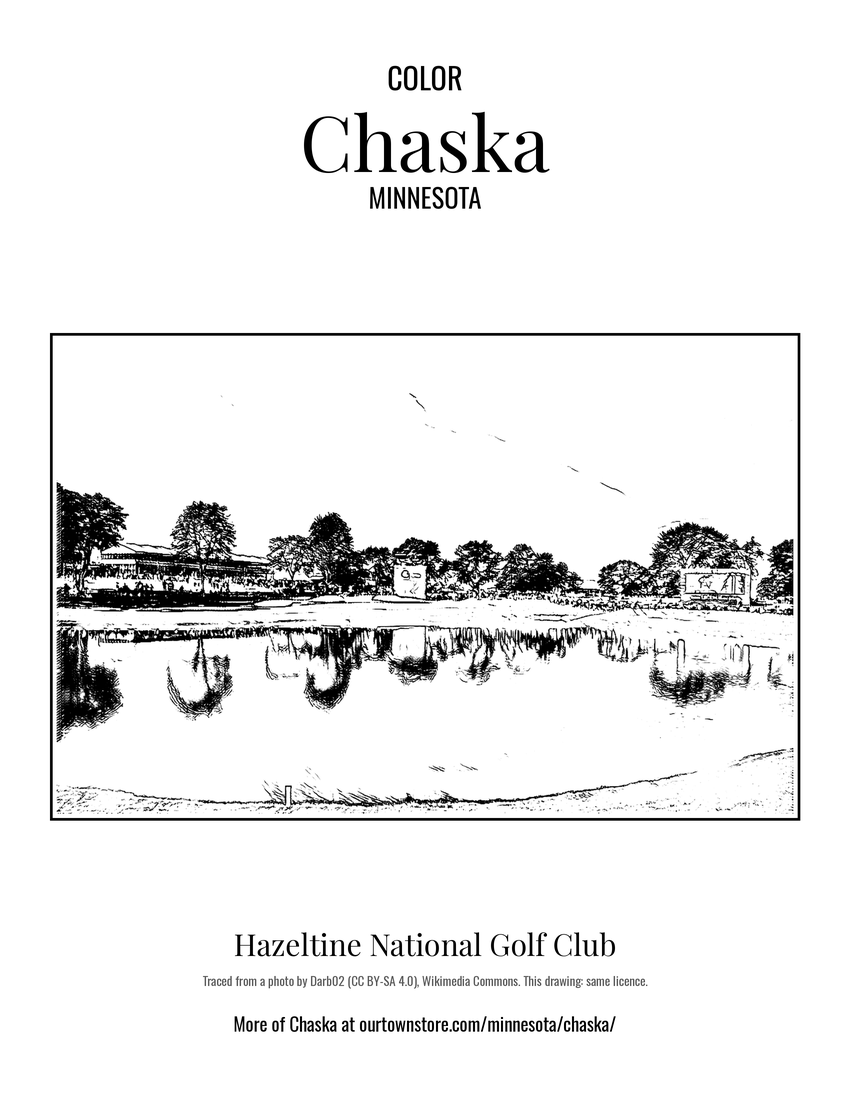 Hazeltine National Golf Club
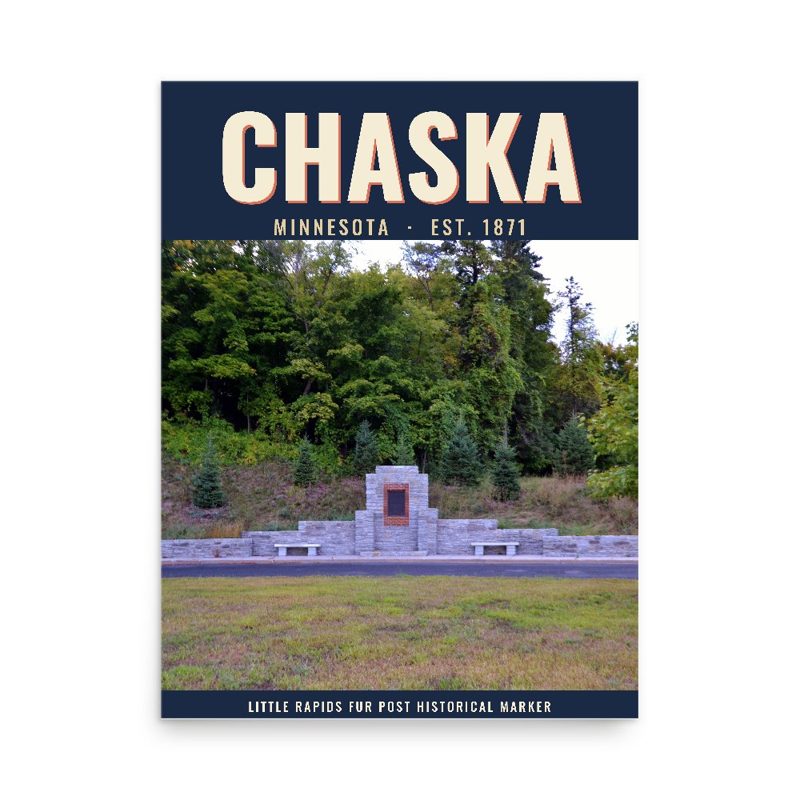
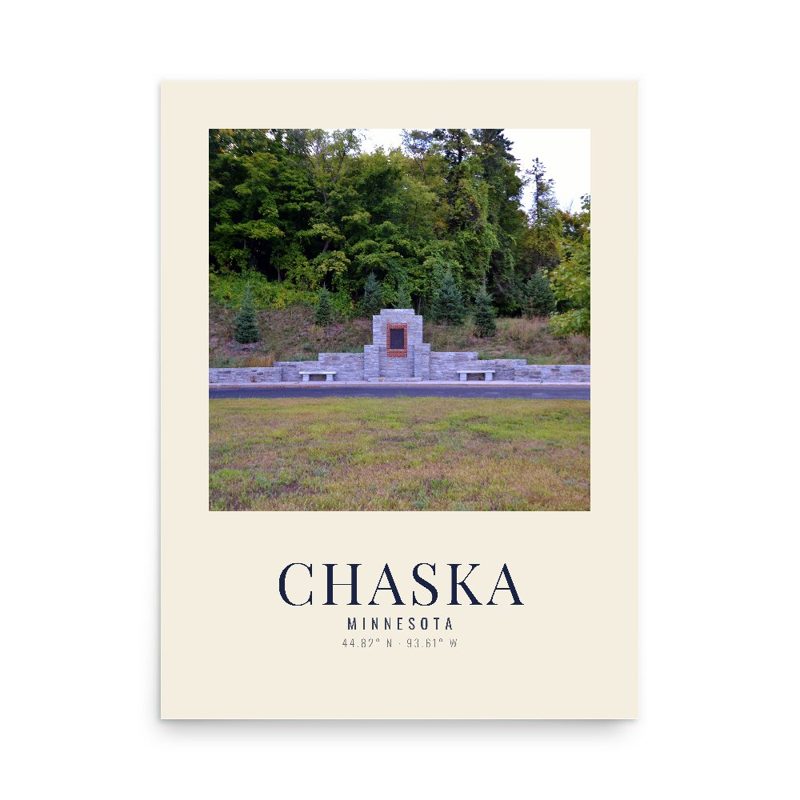
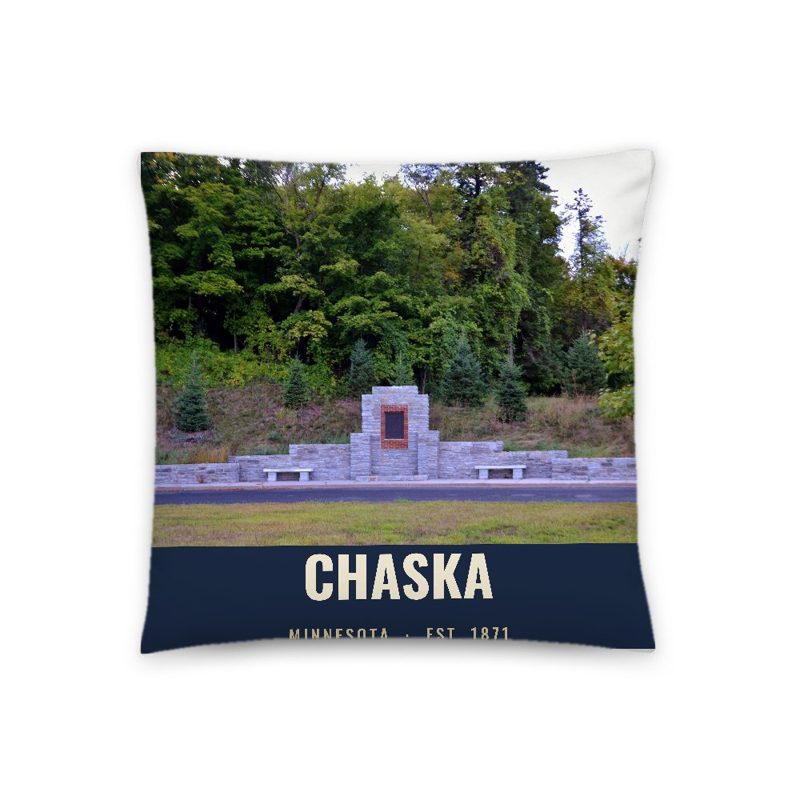
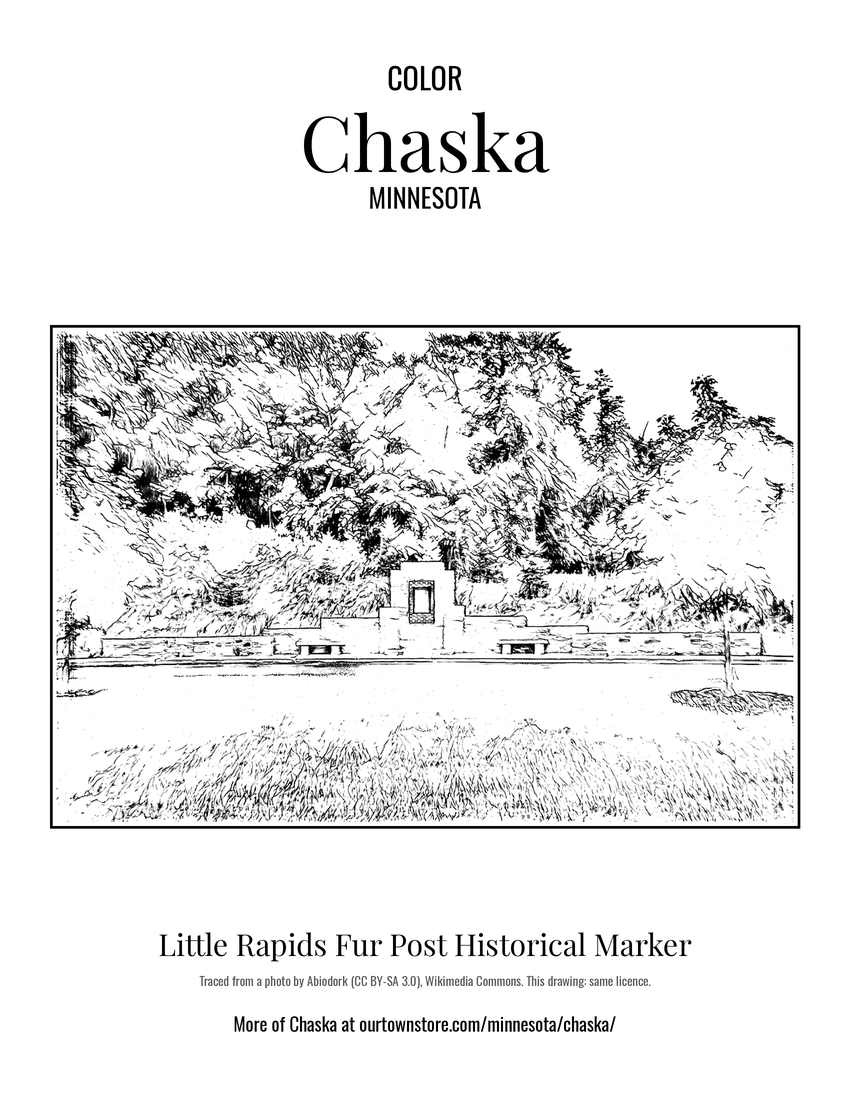 Little Rapids Fur Post Historical Marker