A short history of Alexandria
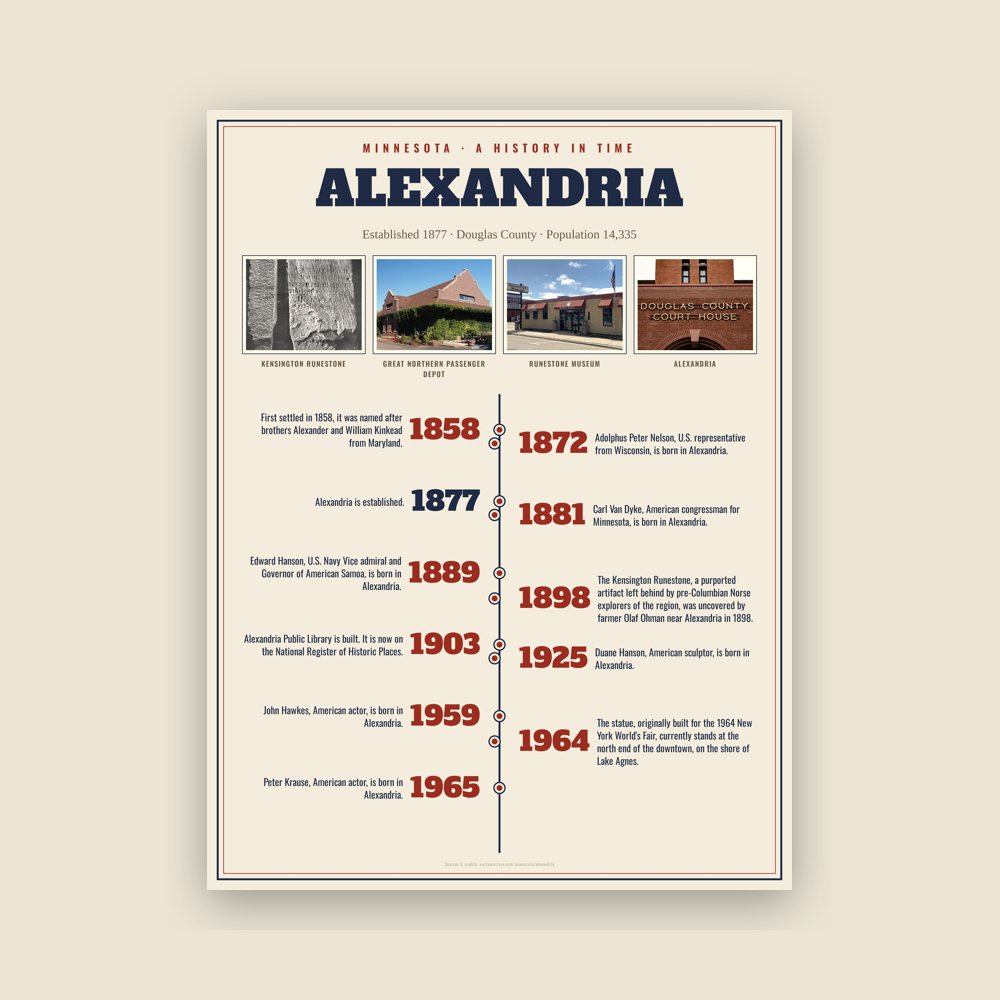
First settled in 1858, it was named after brothers Alexander and William Kinkead from Maryland. The form of the name alludes to Alexandria, Egypt, a center of learning and civilization.
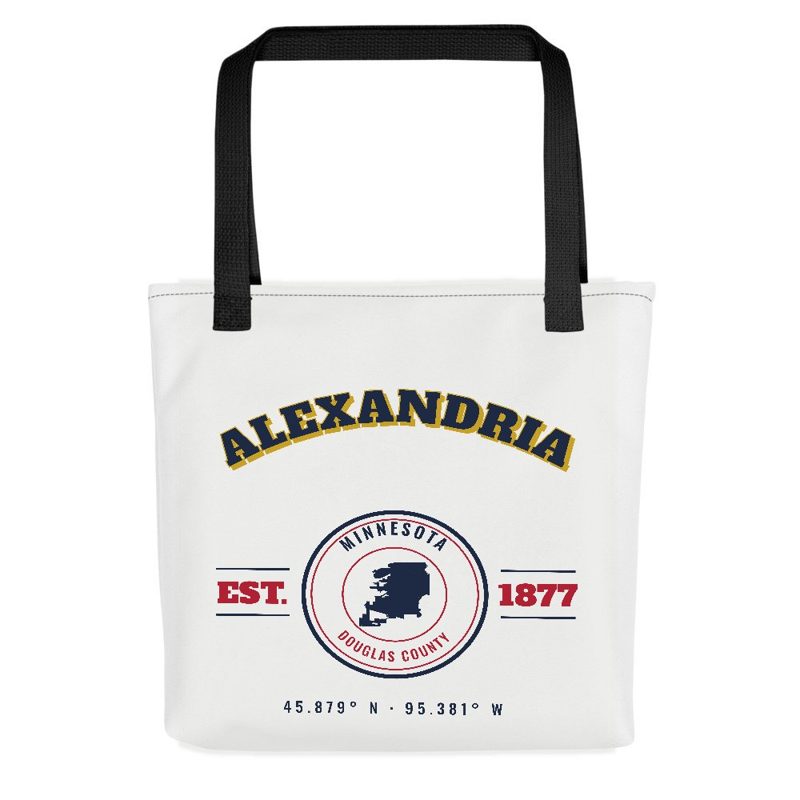
The village of Alexandria was incorporated February 20, 1877. Its city charter was adopted in 1908, and it was incorporated as a city in 1909. W. E. Hicks was pivotal to the town's early development. He purchased the townsite in 1868 and established a mill, hotel, newspaper, and store. He donated property for a courthouse, jail, and two churches: Methodist and Congregational.
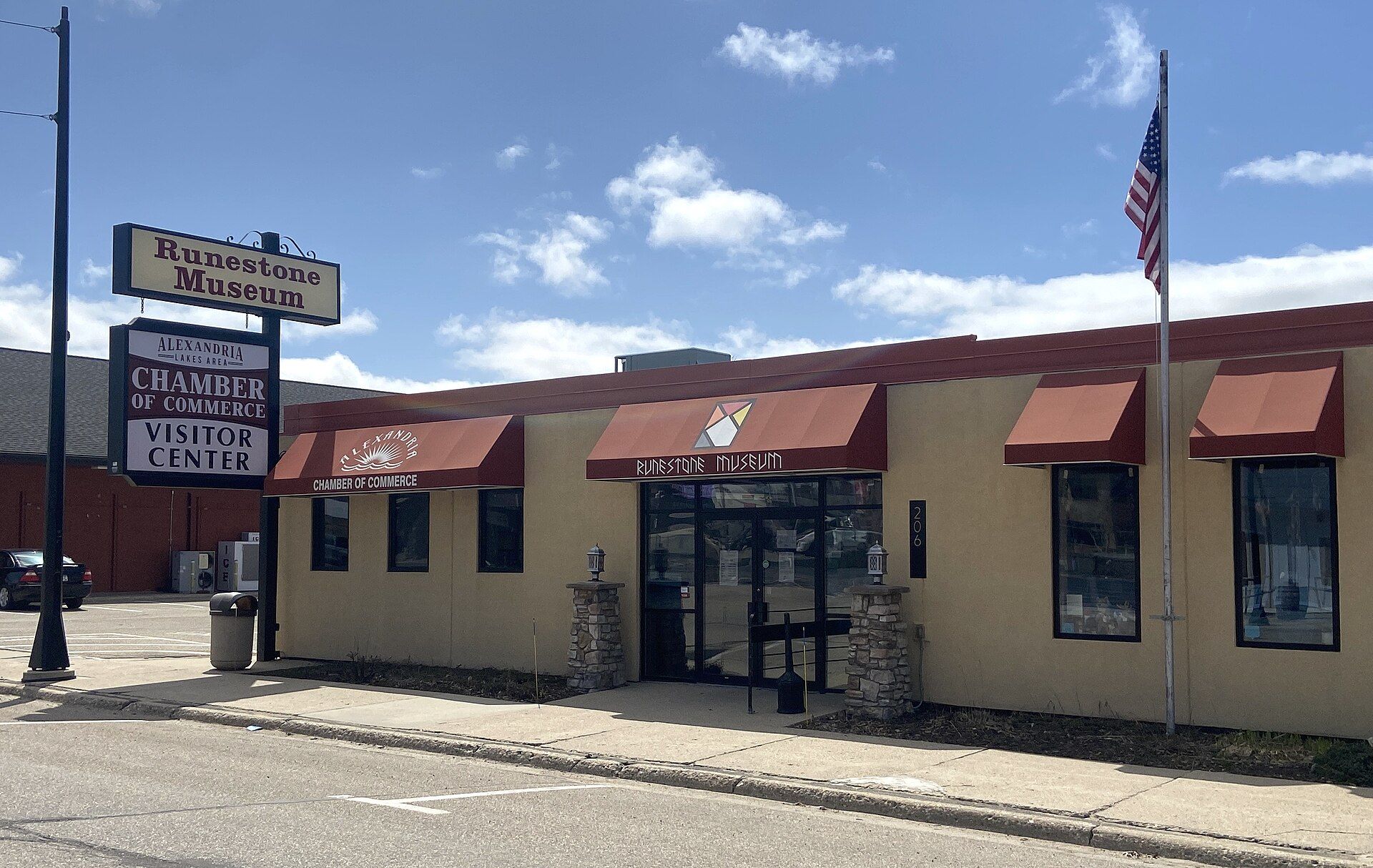
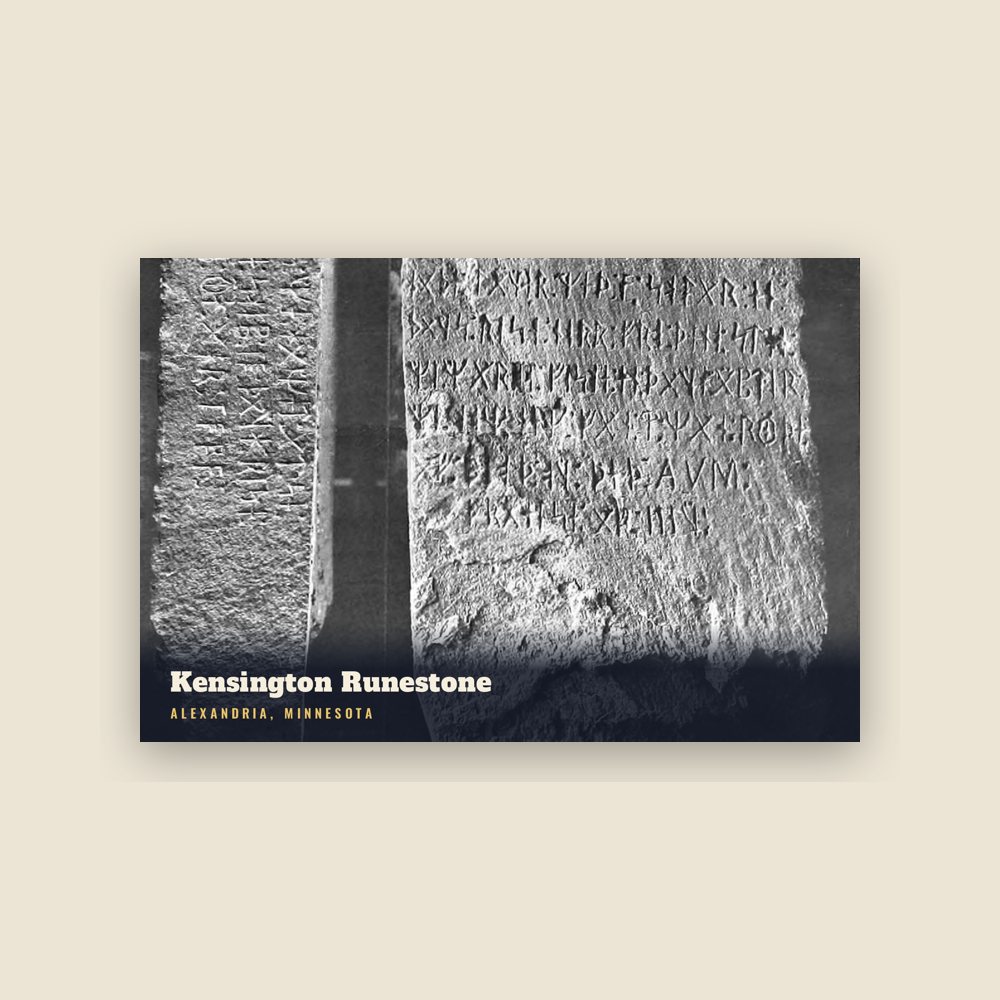
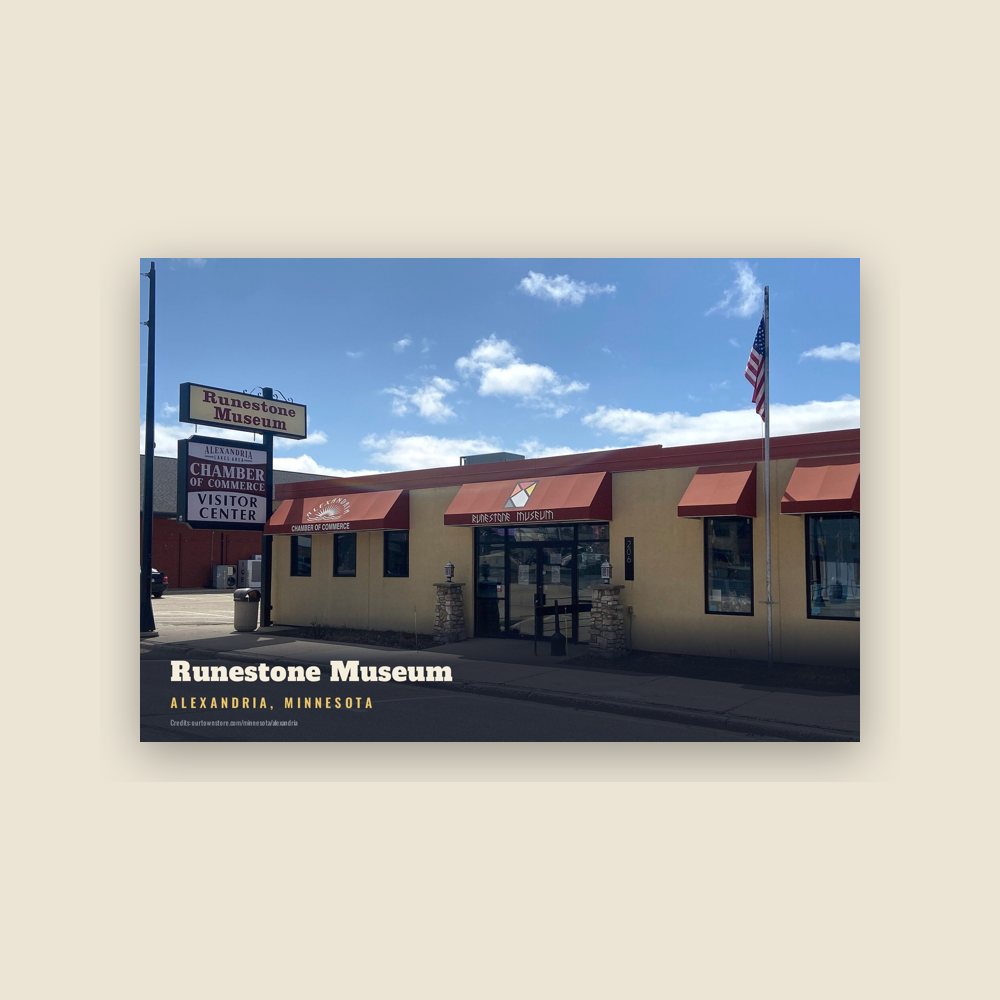
The Kensington Runestone, a purported artifact left behind by pre-Columbian Norse explorers of the region, was uncovered by farmer Olaf Ohman near Alexandria in 1898. Despite scholarly consensus identifying the stone as a hoax, the stone quickly became a symbol of Alexandria and western Minnesota writ large. The stone is housed in the Runestone Museum, and is commemorated with a 28-foot-tall statue of a viking, "Big Ole", whose shield bears the slogan "Alexandria: The Birthplace of America". The statue, originally built for the 1964 New York World's Fair, currently stands at the north end of the downtown, on the shore of Lake Agnes.
Adapted (trimmed) from the Wikipedia article Alexandria, Minnesota, revision 1378159308 by its contributors, licensed CC BY-SA 4.0.
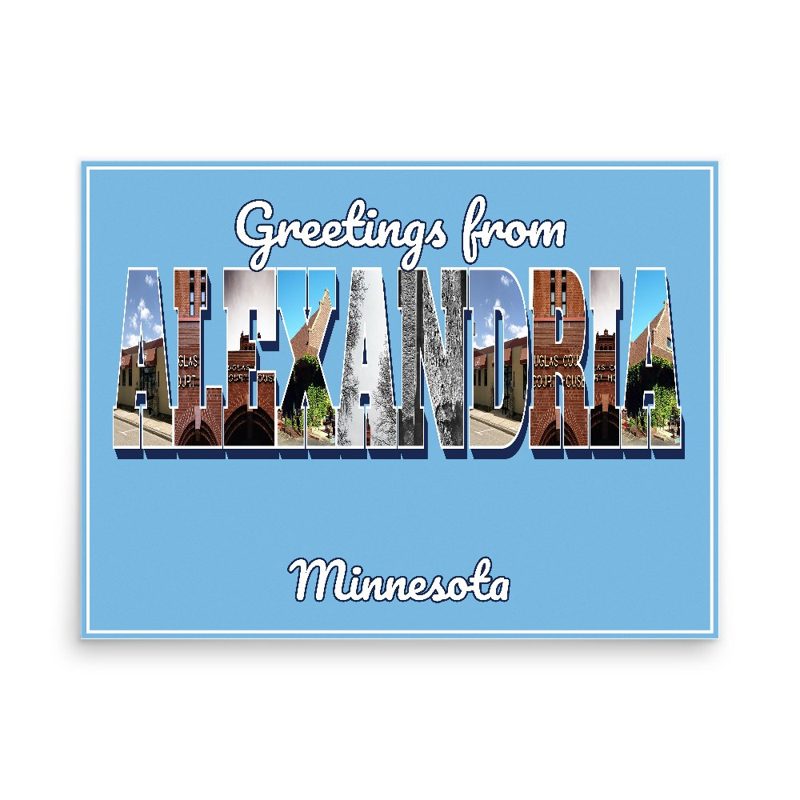
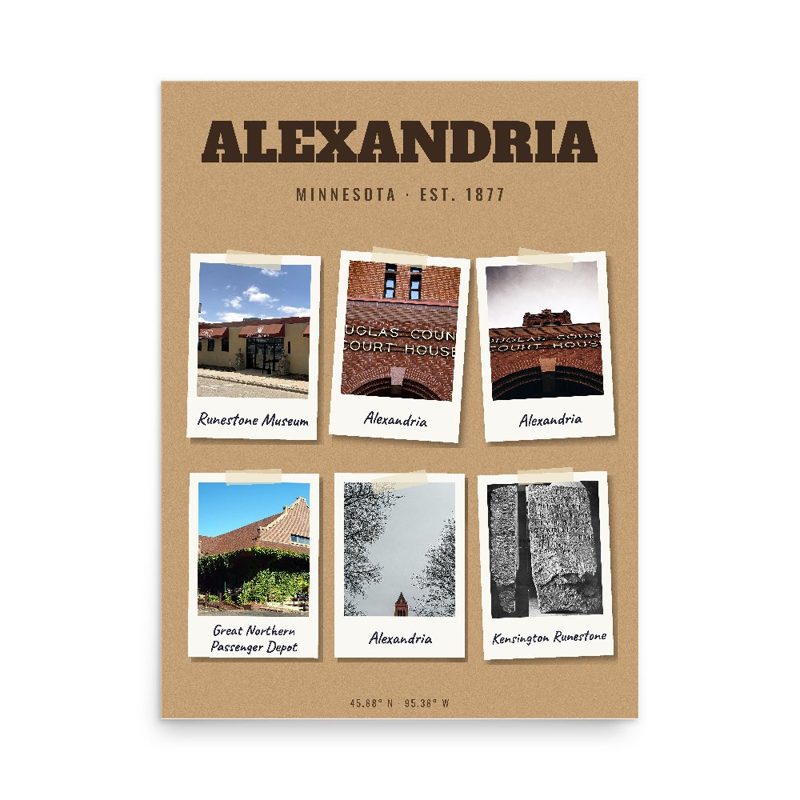
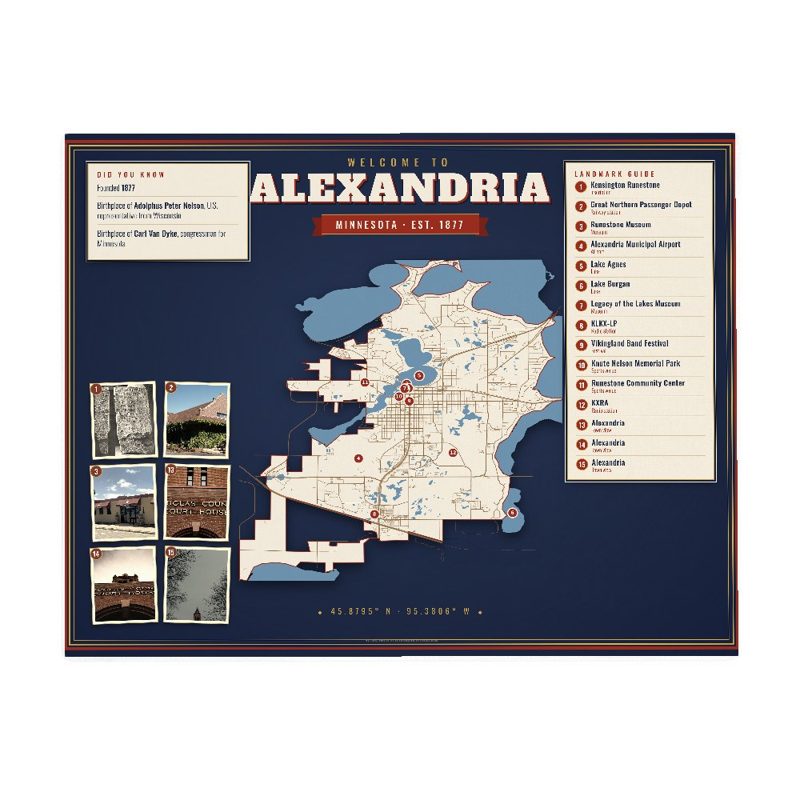





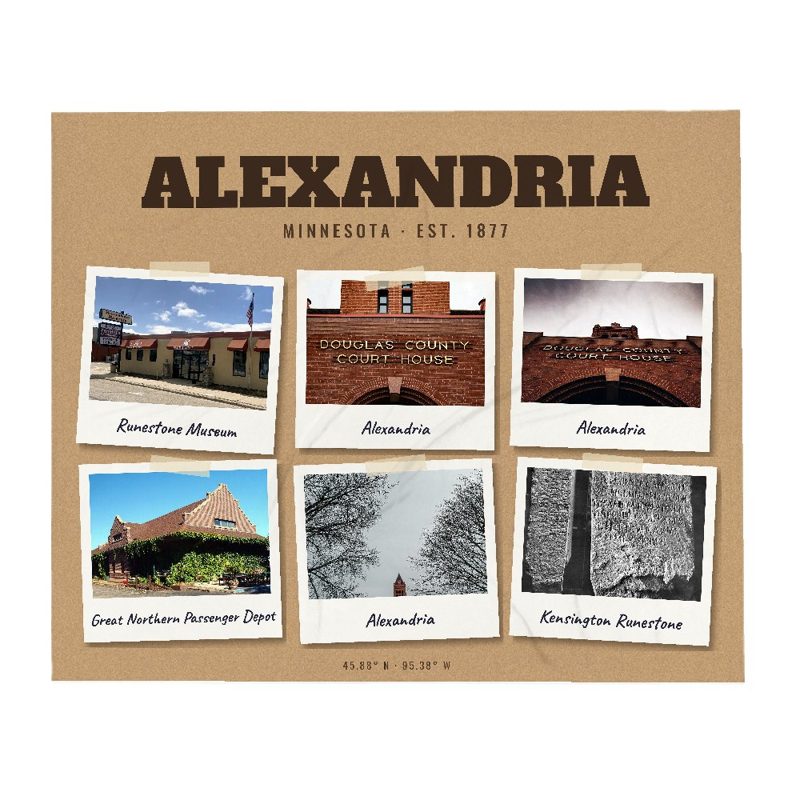
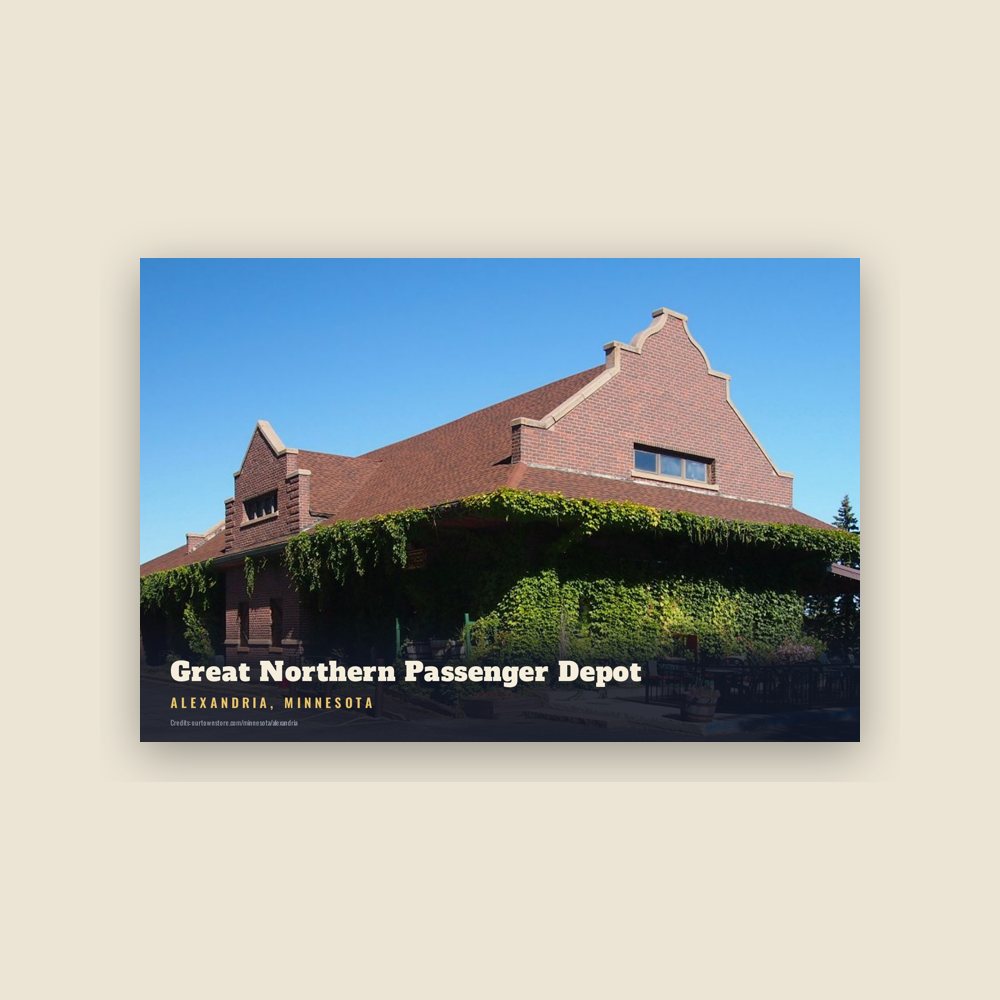
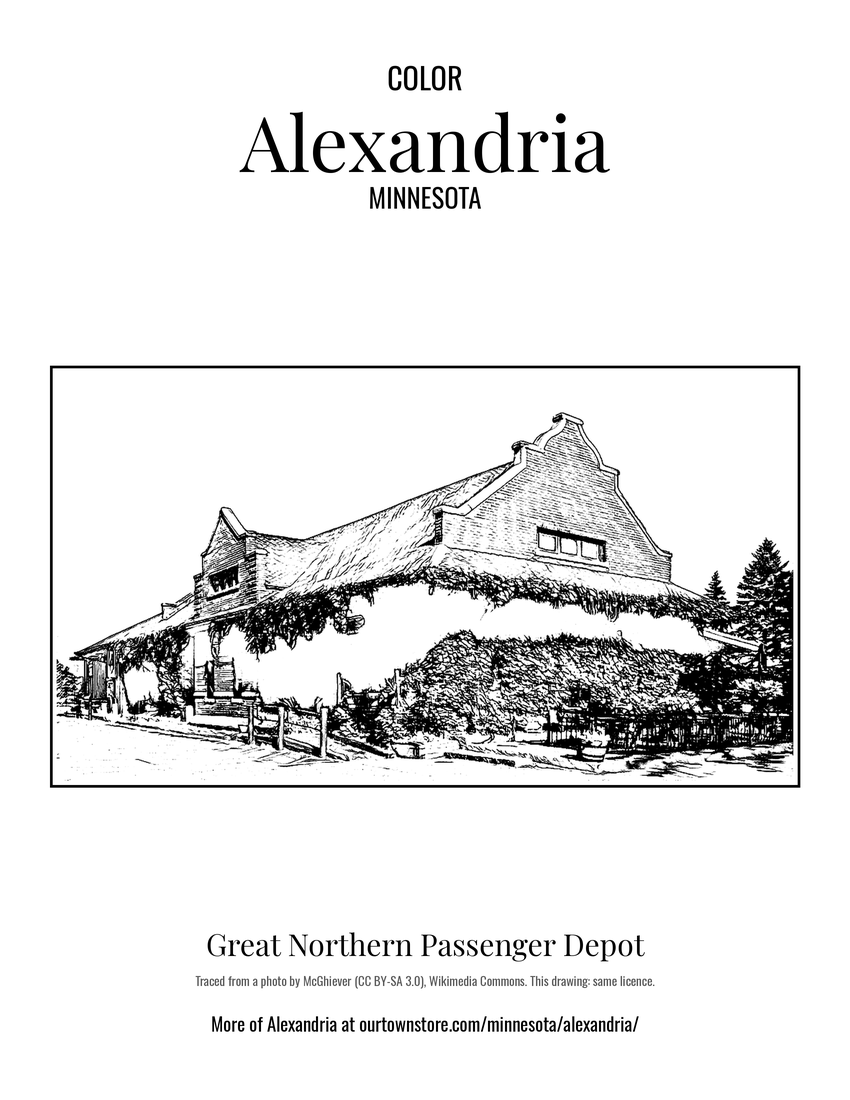 Great Northern Passenger Depot
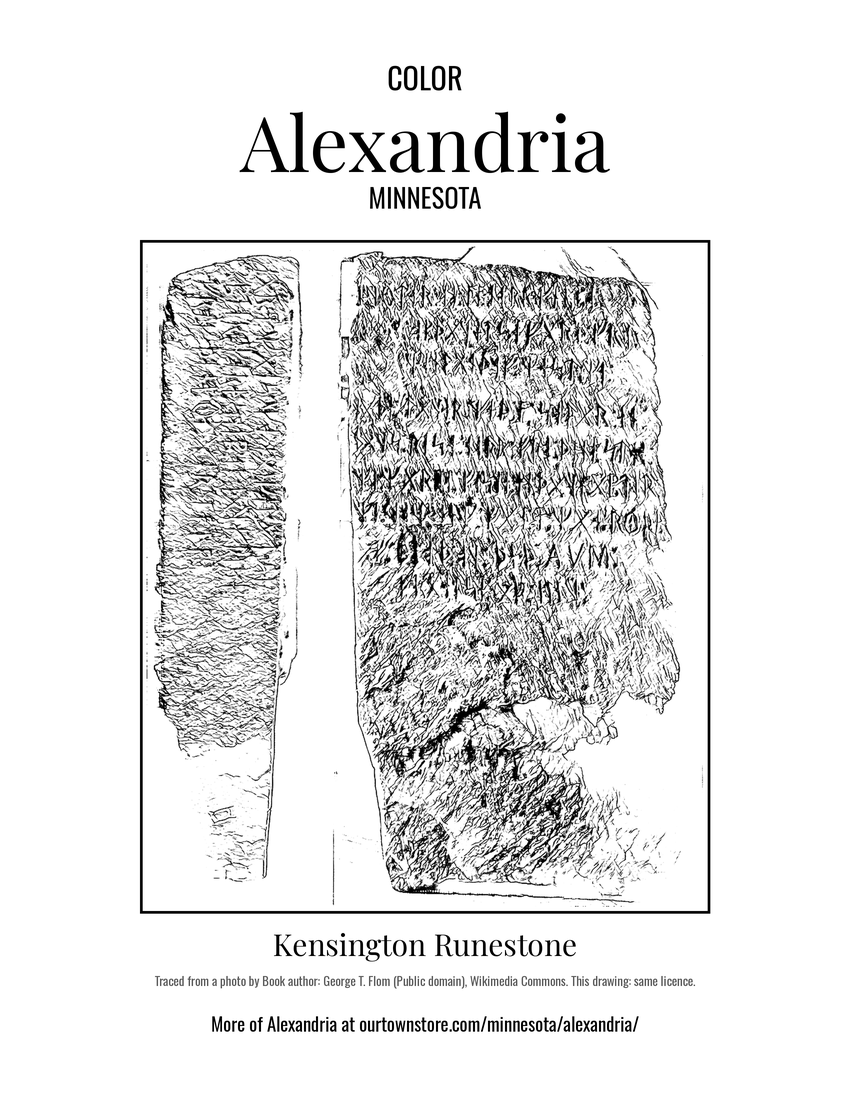 Kensington Runestone
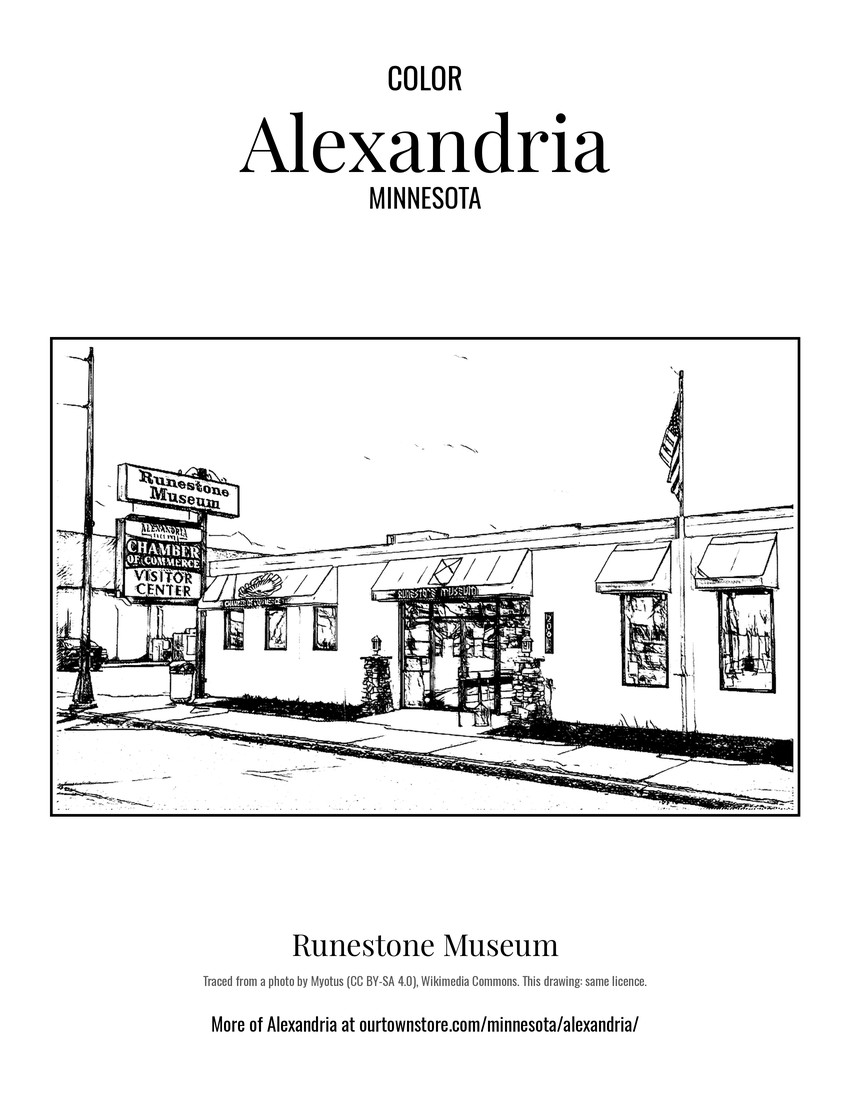 Runestone Museum
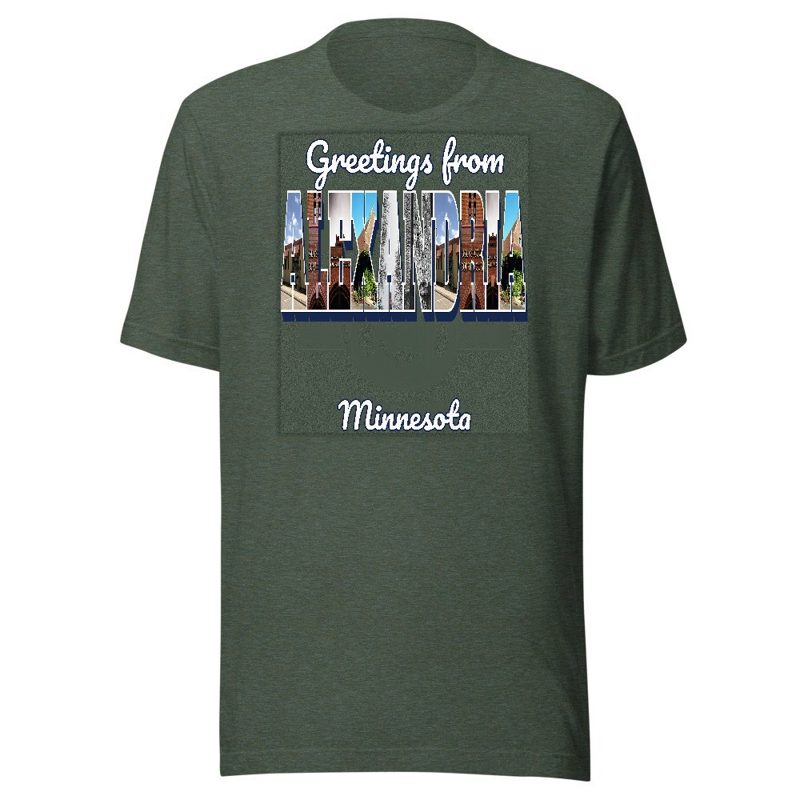
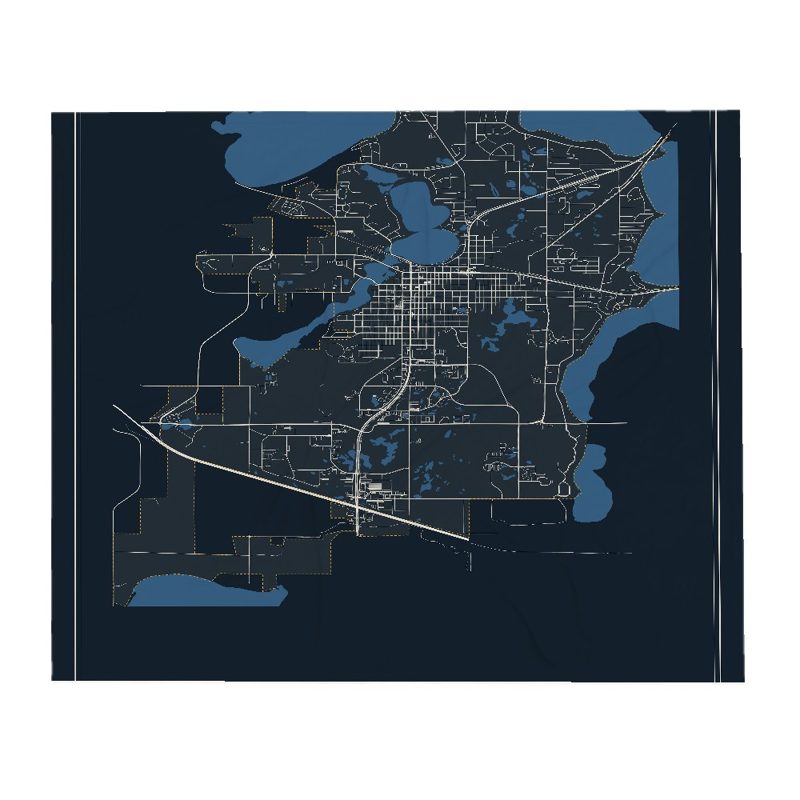
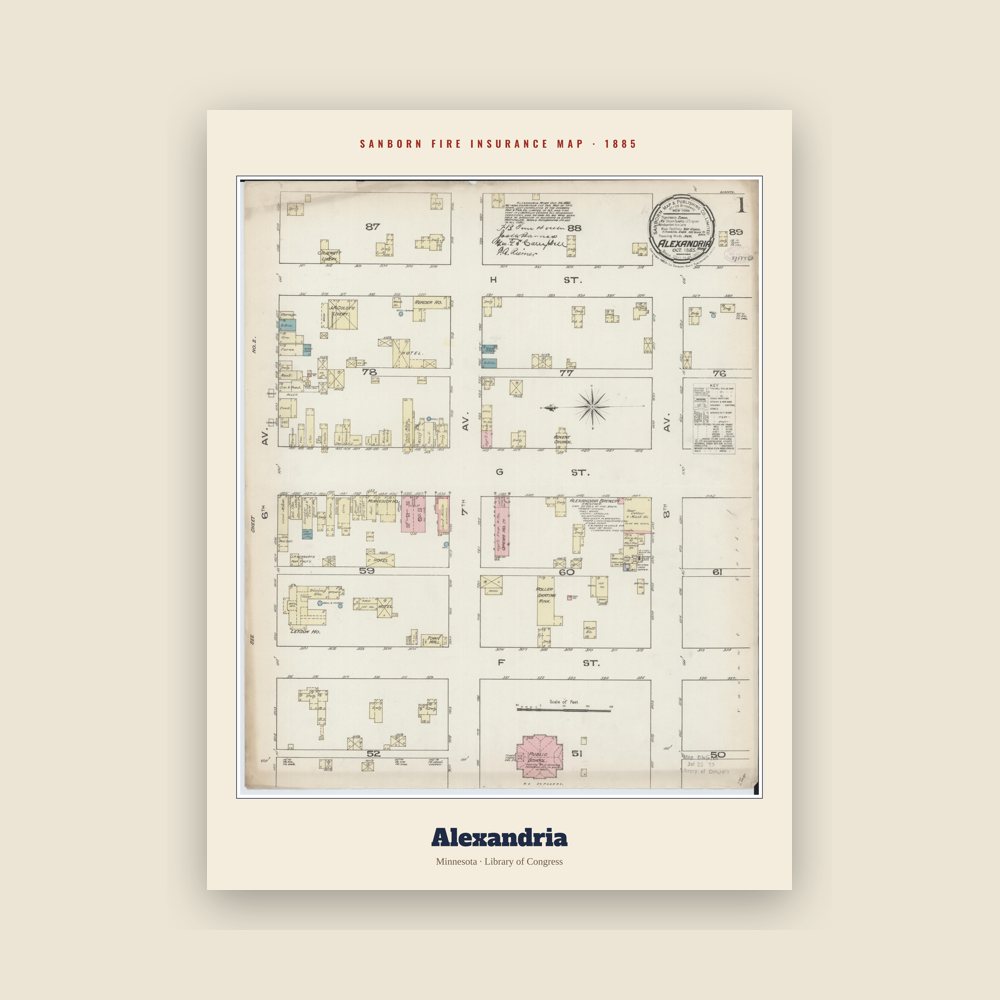
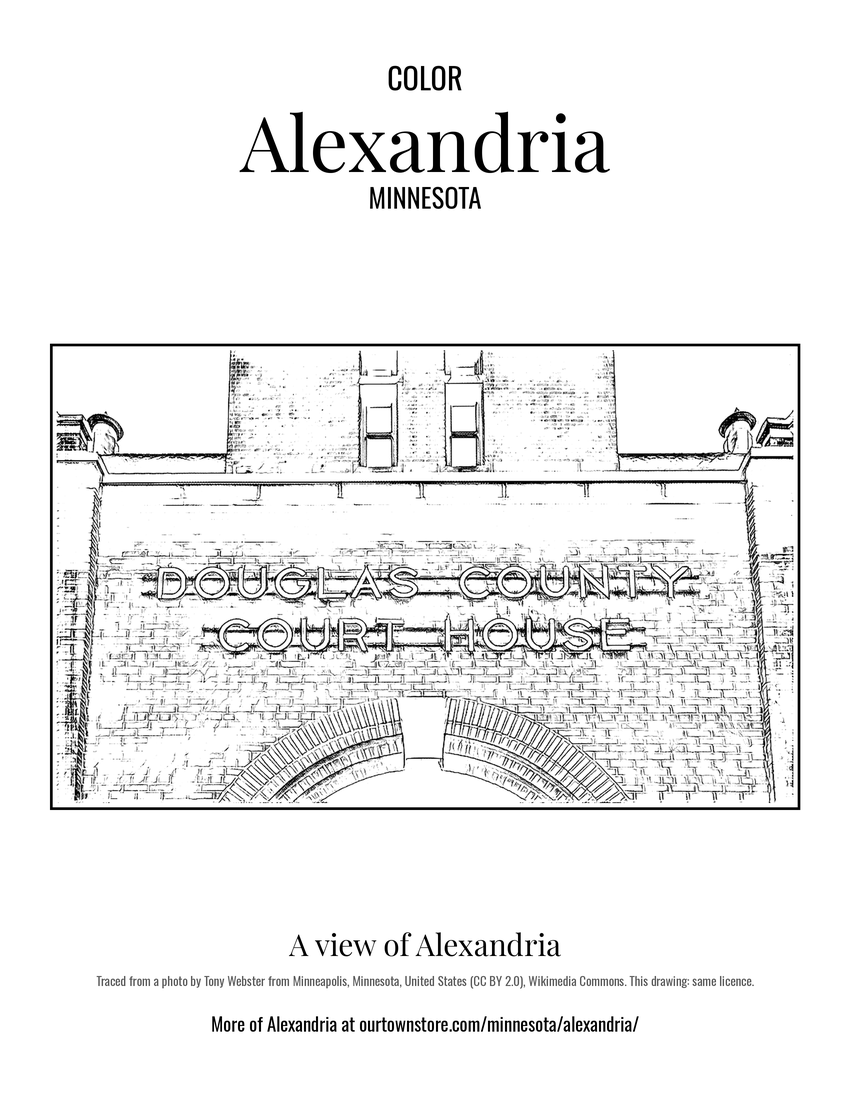 A view of Alexandria