Since 1877
A short history of Flushing
Indigenous era
When European settlers first arrived, the area was primarily occupied by bands of the Chippewa (Ojibwa) and Ottawa nations, with the Chippewa being the more numerous and recognized as the original proprietors of the Saginaw Valley. According to Chippewa tradition, their occupation of the region was relatively recent, as the territory had previously been held by the Sauks and Onottoways, who were eventually expelled by a confederation of Chippewa and Ottawa warriors. The principal Sauk village was located on the west side of the Saginaw River, but their domain extended as far south as the headwaters of the Shiawassee and Genesee Counties. The Chippewa and their allies launched a surprise attack, now known as the Battle of Skull Island, resulting in the near destruction of the Sauk and Onottoway tribes, with only a remnant escaping westward. According to the tradition, a reinforcement of Sauk coming from Detroit was intercepted and defeated near Flushing. On the farm formerly owned by Mr. Bailey, large burial mounds were discovered; now the present day Flushing Valley Golf Club. The mounds in this area, when opened by early settlers, were found to be filled with bones, further supporting the oral history of a large-scale battle. Mounds were observed in 1833 or 1834 and about 20 mounds in total .After the defeat of the Sauk, the Chippewa and Ottawa did not immediately settle in the conquered territory, which was considered haunted by the spirits of the slain. Eventually, the Chippewa established themselves in the Saginaw Valley, and the indigenous inhabitants of the Flushing area became known as the Saginaw tribe of the Chippewa nation.
Archaeological evidence, such as ancient mounds and relics, indicates that the Saginaw Valley, including the Flushing area, was inhabited long before the arrival of white settlers. These mounds, often used for sepulture, contained human bones and artifacts, suggesting the presence of a settled population. Some skeletons found in the county were of unusually large size, though the exact identity of these early inhabitants remains uncertain. The mounds in Genesee County, including those near Flushing, were typically burial sites rather than defensive works.
The Flint River, which flows through Flushing, was known to the Native Americans as "Pewonigowink," meaning "River of the Flint" or "River of the Fire Stone." The river and its surrounding lands were important for travel, hunting, and fishing. The principal Indian trail in the region was the "Saginaw trail," which connected Detroit to the Saginaw River and passed through Genesee County, including the Flushing area. This trail was a major route for indigenous peoples and later for European settlers.
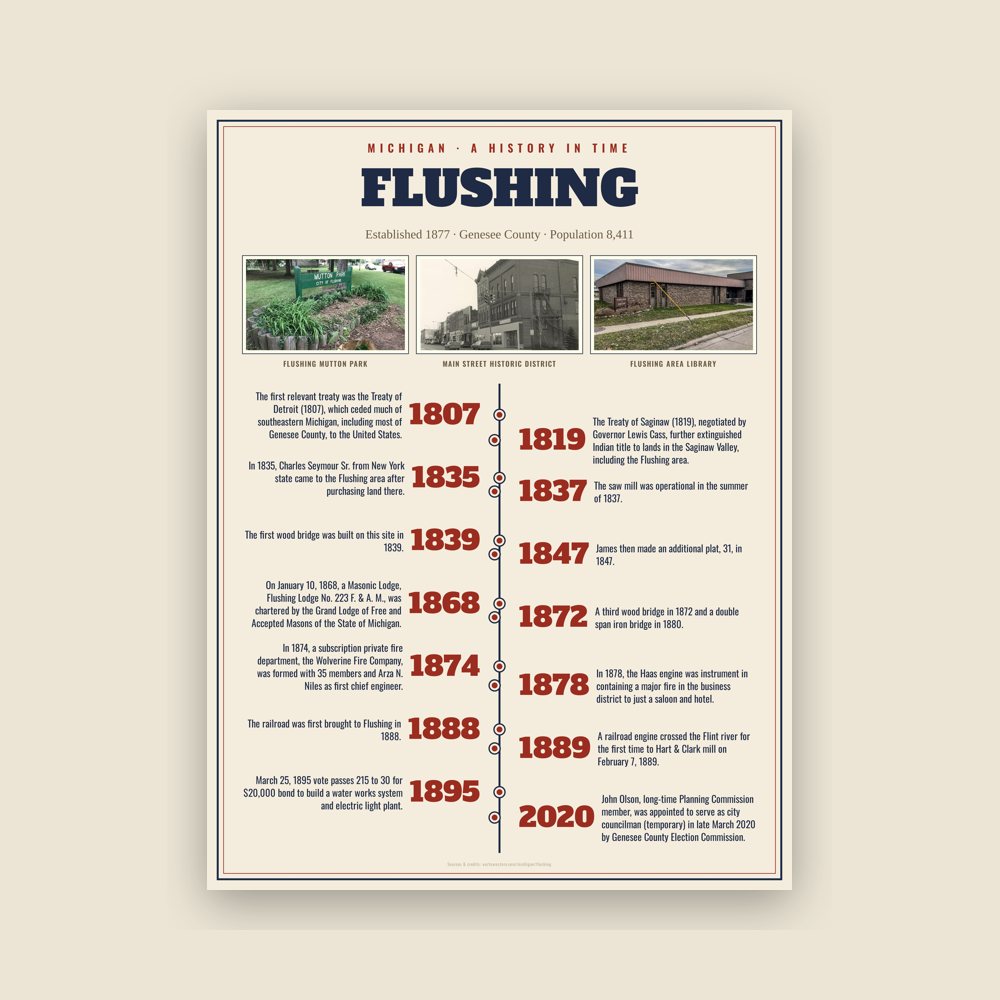
The United States government recognized the possessory rights of the Indian tribes in the land and acquired these rights through treaties. The first relevant treaty was the Treaty of Detroit (1807), which ceded much of southeastern Michigan, including most of Genesee County, to the United States. The Treaty of Saginaw (1819), negotiated by Governor Lewis Cass, further extinguished Indian title to lands in the Saginaw Valley, including the Flushing area. In exchange, the Chippewa and other tribes received annuities and reserved certain tracts for their use. The Pewonigowink reservation, now Montrose, which included land in present-day Genesee and Saginaw Counties, was one such tract. Over time, additional treaties in the 1830s and 1840s led to the further cession of Indian lands and the gradual removal or assimilation of the indigenous population. Some Chippewa remained in the area for years after the formal cession of their lands, but most eventually relocated to reservations or other parts of Michigan and Canada. The history of Native Americans in Flushing is closely tied to broader patterns of settlement, displacement, and treaty-making in Michigan during the 18th and 19th centuries.
Early relations between Native Americans and white settlers in the Flushing area were generally peaceful, though marked by the broader context of displacement and cultural change. Indian trails became the basis for many early roads, and indigenous knowledge of the land was often sought by settlers.
Read the full history
European settlement
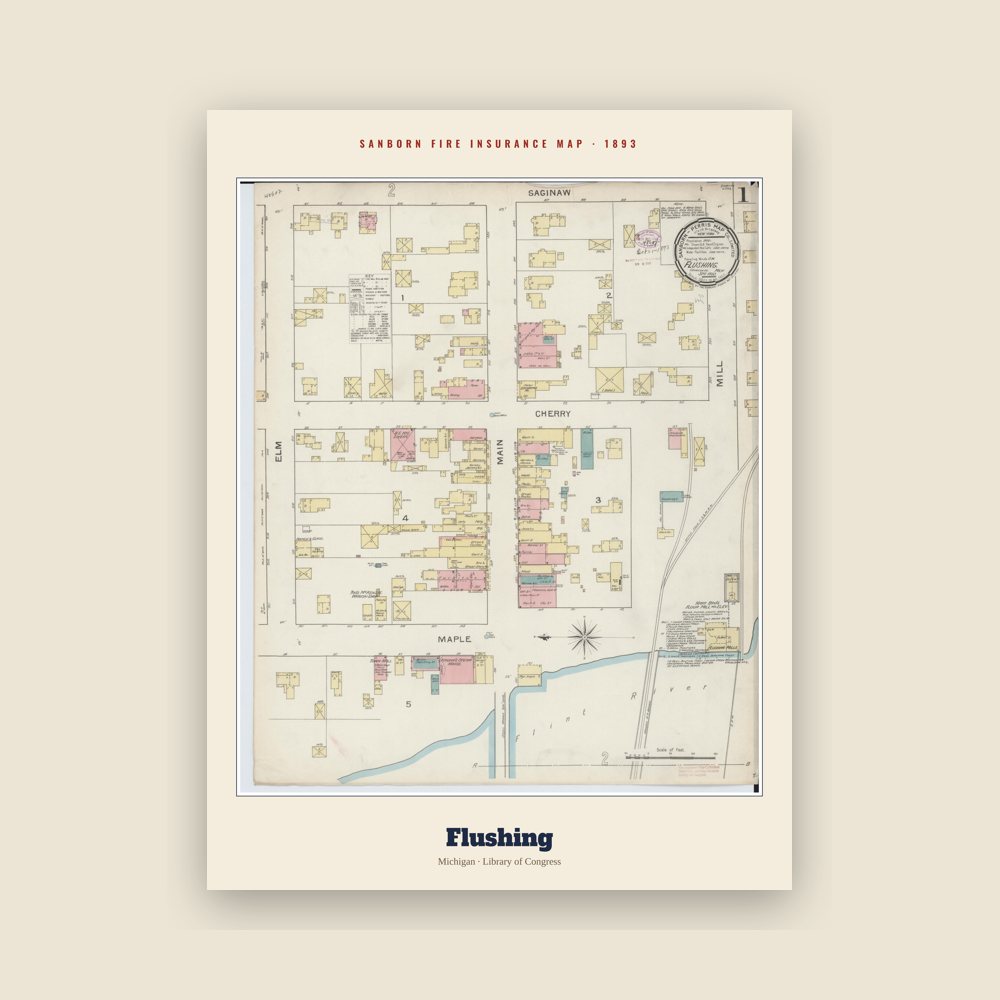
In 1835, Charles Seymour Sr. from New York state came to the Flushing area after purchasing land there. He formed a partnership with Horace Jerome in 1836 who had purchased water rights in the vicinity. In their partnership, Seymour would provide pine timber while Jerome would build a mill. The saw mill was operational in the summer of 1837. Jerome left Flushing after his wildcat bank, the Flint Rapids Bank, failed in 1838. A village plat on sections 26 and 27, bearing the name of Flushing and named after the township in which it was located, was laid out December 3, 1840 by Charles Seymour Sr. In 1843 Charles sold out to his brother James Seymour. James then made an additional plat, 31, in 1847.
19th century
On January 10, 1868, a Masonic Lodge, Flushing Lodge No. 223 F. & A. M., was chartered by the Grand Lodge of Free and Accepted Masons of the State of Michigan.
In 1874, a subscription private fire department, the Wolverine Fire Company, was formed with 35 members and Arza N. Niles as first chief engineer. Wolverine paid for a small engine designed by Captain Haas of Flint of his own design and patent.
Flushing was incorporated as a village on March 21, 1877, with its first election held on May 8, 1877. Oscar F. Clarke was elected as the first village president. After incorporation, the fire company turned over its equipment to the village. In 1878, the Haas engine was instrument in containing a major fire in the business district to just a saloon and hotel.
The railroad was first brought to Flushing in 1888. Headed by John Ashley, the Toledo and Ann Arbor Railroad connected Flushing to Durand and Saginaw. Construction reached Flushing in July 1888. On Monday, Dec. 17, 1888, the first passenger train arrived from Saginaw. The fare from Flushing to Saginaw was 80 cents. A railroad engine crossed the Flint river for the first time to Hart & Clark mill on February 7, 1889. The line is currently owned by Huron and Eastern Railway, while the restored 1888 depot is now the Flushing Area Museum and Cultural Center.
March 25, 1895 vote passes 215 to 30 for $20,000 bond to build a water works system and electric light plant. Water mains are first installed for use on Nov 1, 1895. Electricity was installed and ready for use on Nov 15, 1895, along with streetlights on Main St. By January 1897 there were 1600 incandescent lamps in the village.
20th century
The Hart Flour Mill is destroyed in a fire on March 19, 1918. It was the 3rd Mill on the site and the 3rd to burn. The mill provided electricity until it burned down in 1918, leaving the village without power for 14 months until a new power plant was built.
In May 1922 the current bridge on Main Street over the Flint river is completed. The bridge is a traditionally composed earth-filled closed spandrel concrete arch bridge built by L. Smith, H. A. and M. C. Nichols of Hastings, Michigan. The bridge was rehabilitated in 1998 adding new walkways and updated guardrails. The first wood bridge was built on this site in 1839. A second wood bridge in 1856. A third wood bridge in 1872 and a double span iron bridge in 1880. The iron bridge was removed in 1921.
Tucker Memorial Pool was dedicated on July 1, 1956. The pool was built with money donated to the city from the will of Max Dealton Tucker who was born in Flushing.
A book by Edmund G. Love titled The Situation in Flushing was published September 1, 1965. Edmund was born in Flushing and moved to Flint when he was 12. The book tells the account of his boyhood in the early 20th century.
Completed in 1975 by Michigan Bell Telephone at a cost of $2.2 million, the now AT&T building sits on the site of the former home of James Seymour, brother of Charles Seymour. The home was built in the 1850s and torn down prior to Bell selecting the site.
21st century
On Monday November 27, 2017, the northern loop set of municipalities, including Flushing, began receiving water from the Karegnondi Water Authority pipeline which is treated by the Genesee County Drain Commission Water and Waste Division.
On January 15, 2020, District 2 councilwoman Karianne Martus resigned due to her new job at the Flint Farmers Market. With no decision of the council to fill the vacancy, three more councilors resigned at the beginning of the Covid Pandemic citing "discord". John Olson, long-time Planning Commission member, was appointed to serve as city councilman (temporary) in late March 2020 by Genesee County Election Commission. City Manager Brad Barrett was terminated April 20, 2020 at the city council meeting citing ethical concerns and Clarence Goodlein was immediately appointed interim City Manager. A special election was held on August 4, 2020, to fill the vacancies. Councilmen Dan Fralick, Eric Johnson, Dane Miller and councilwoman Danielle Smith were each elected to four year terms.
Adapted (trimmed) from the Wikipedia article Flushing, Michigan, revision 1377348207 by its contributors, licensed CC BY-SA 4.0.
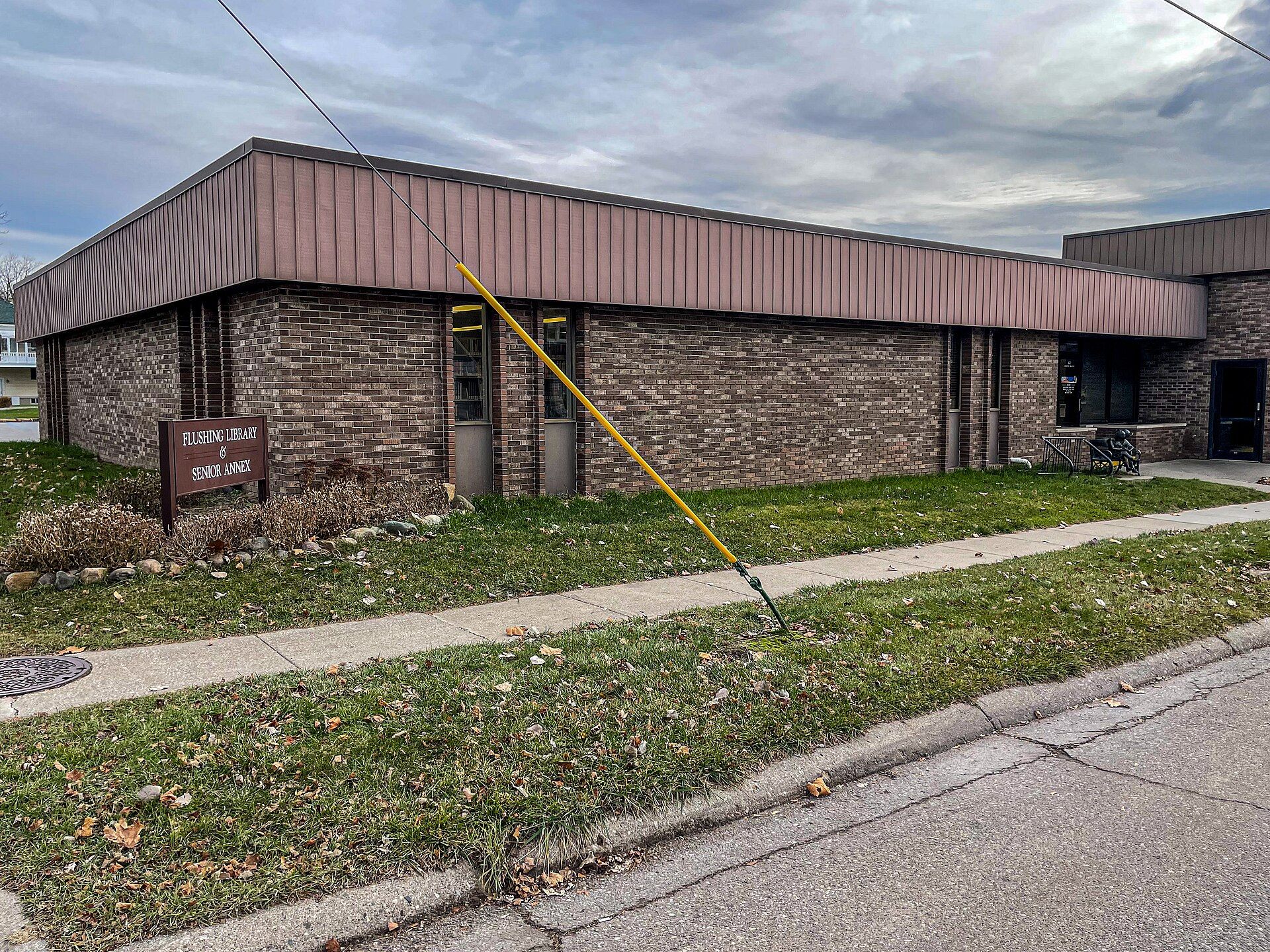
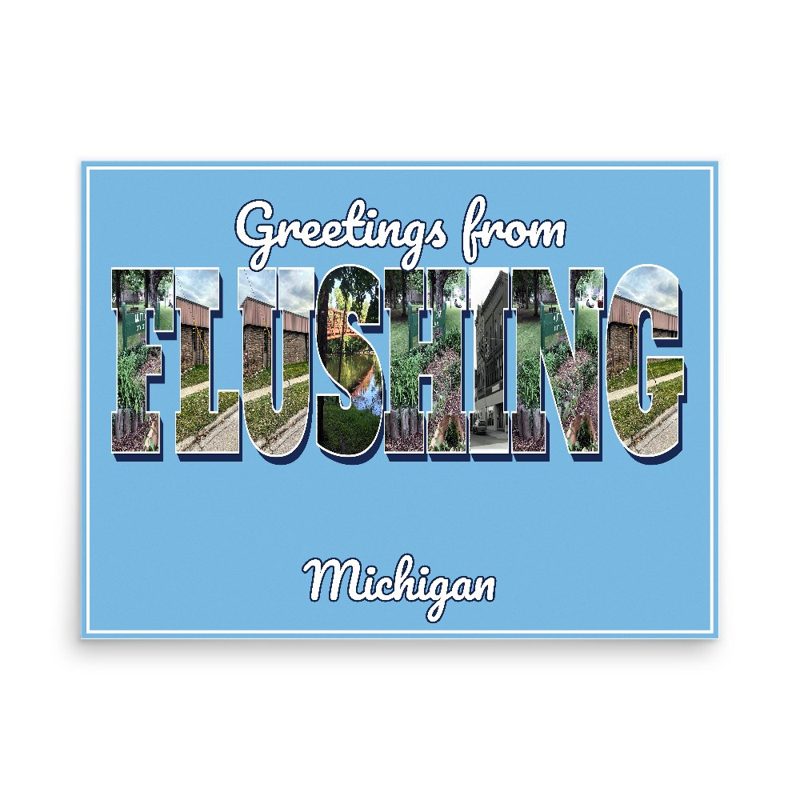

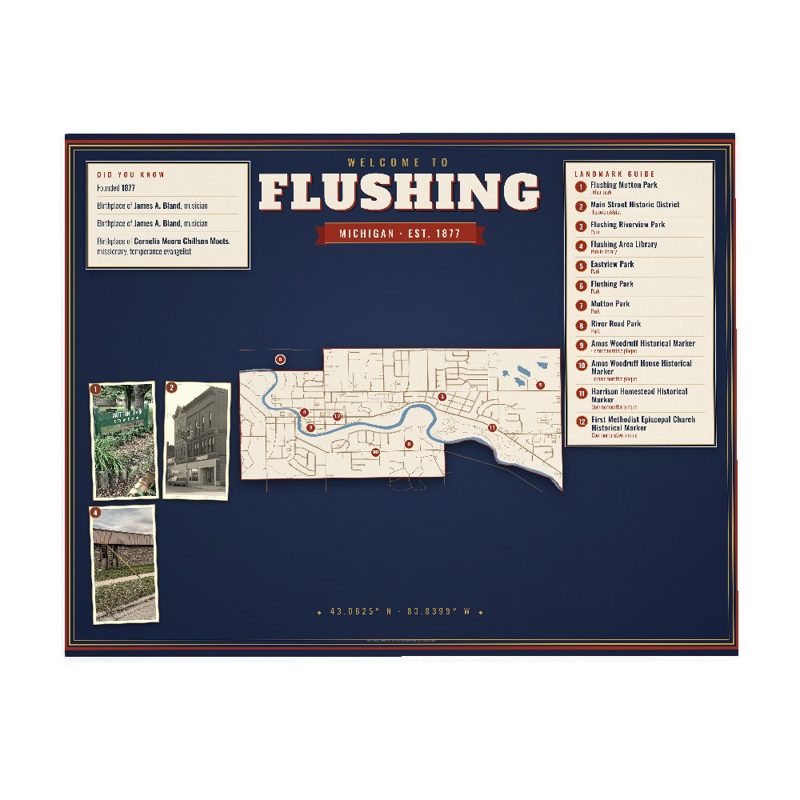








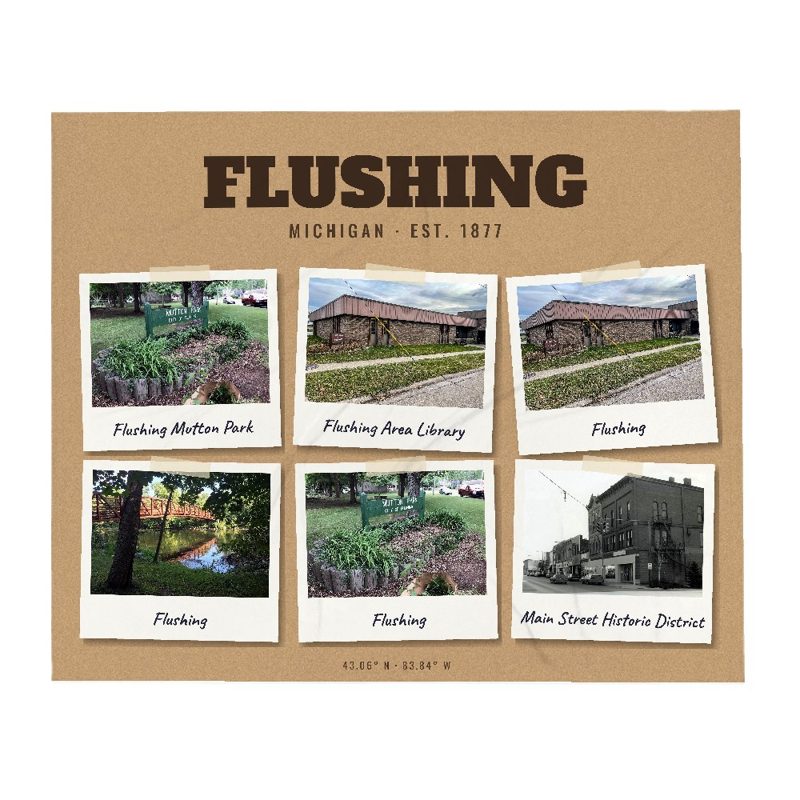

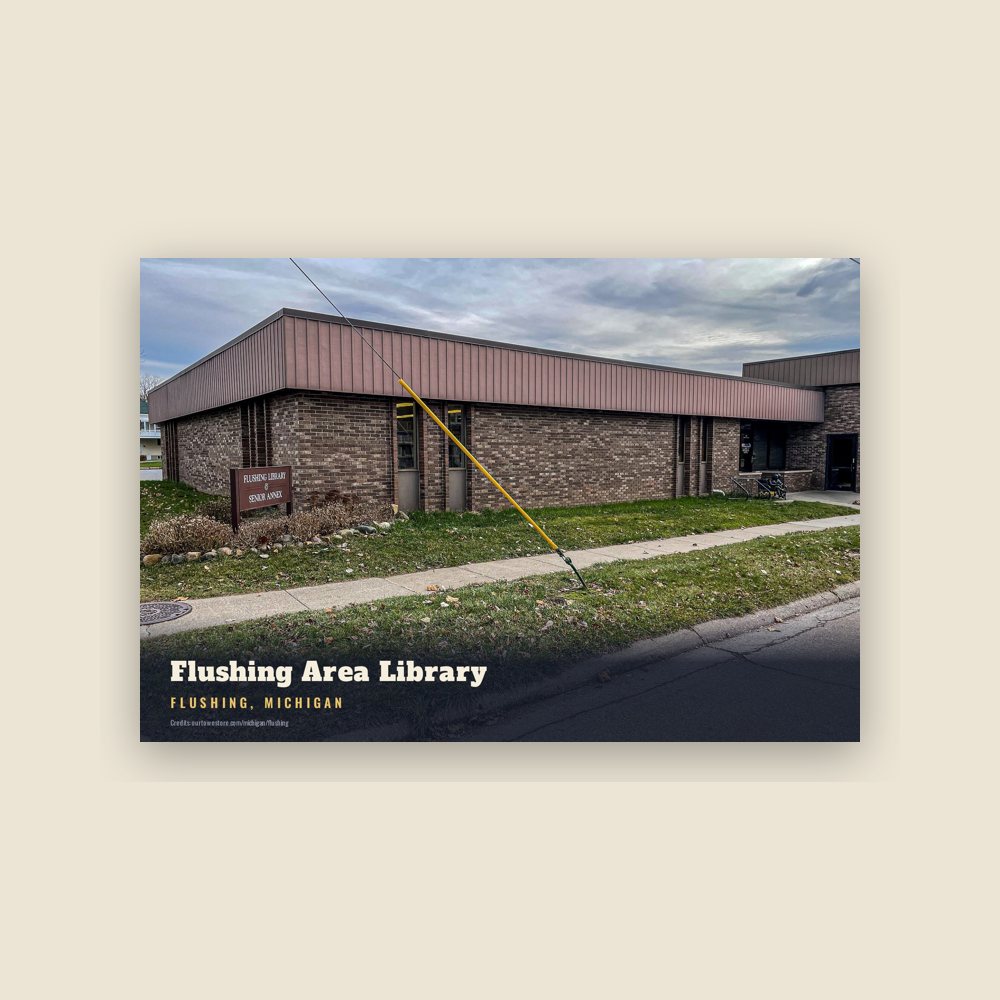
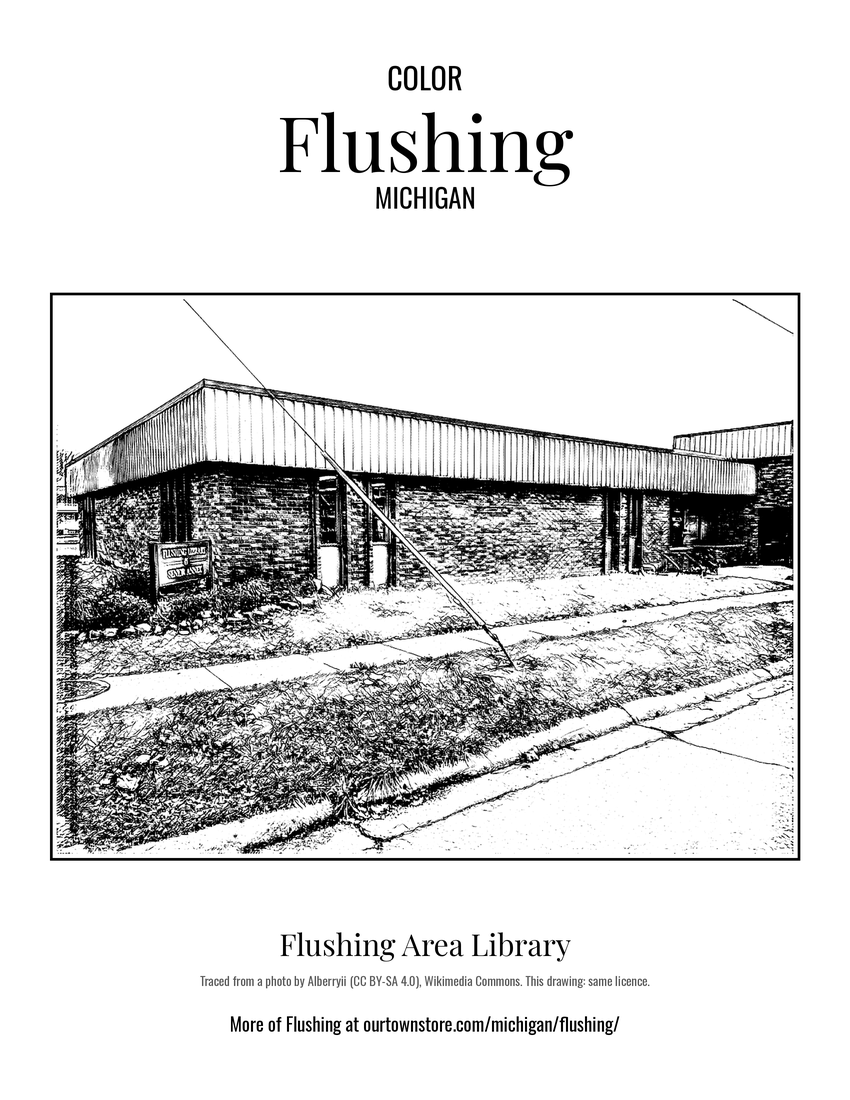 Flushing Area Library
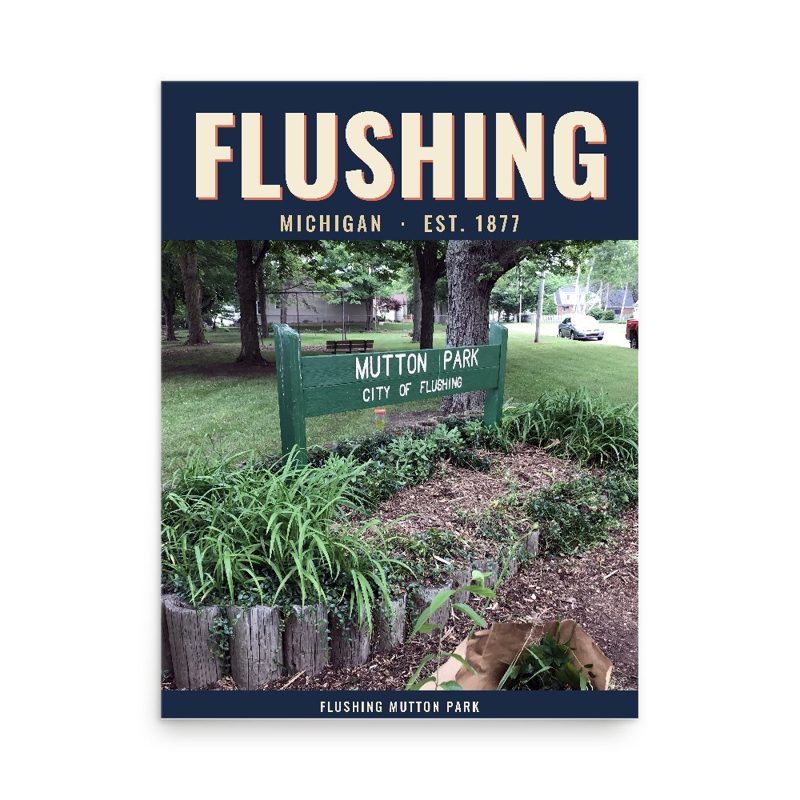
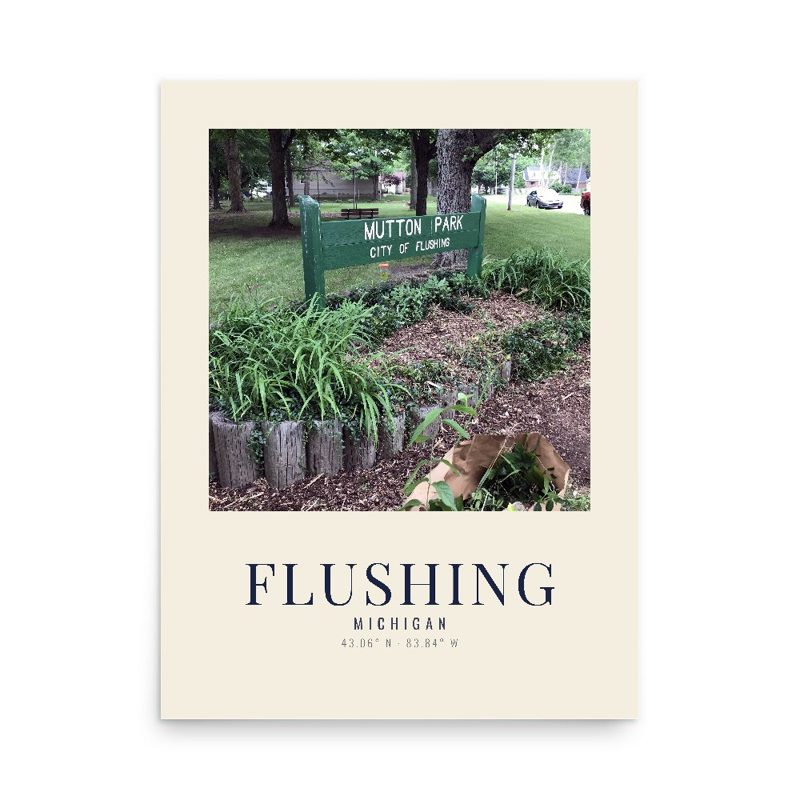
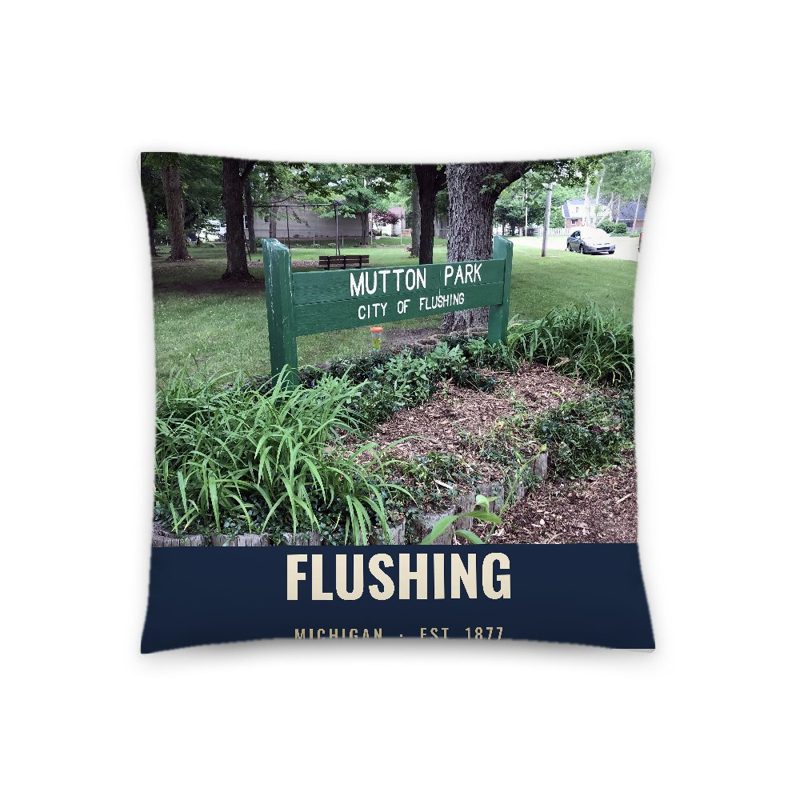
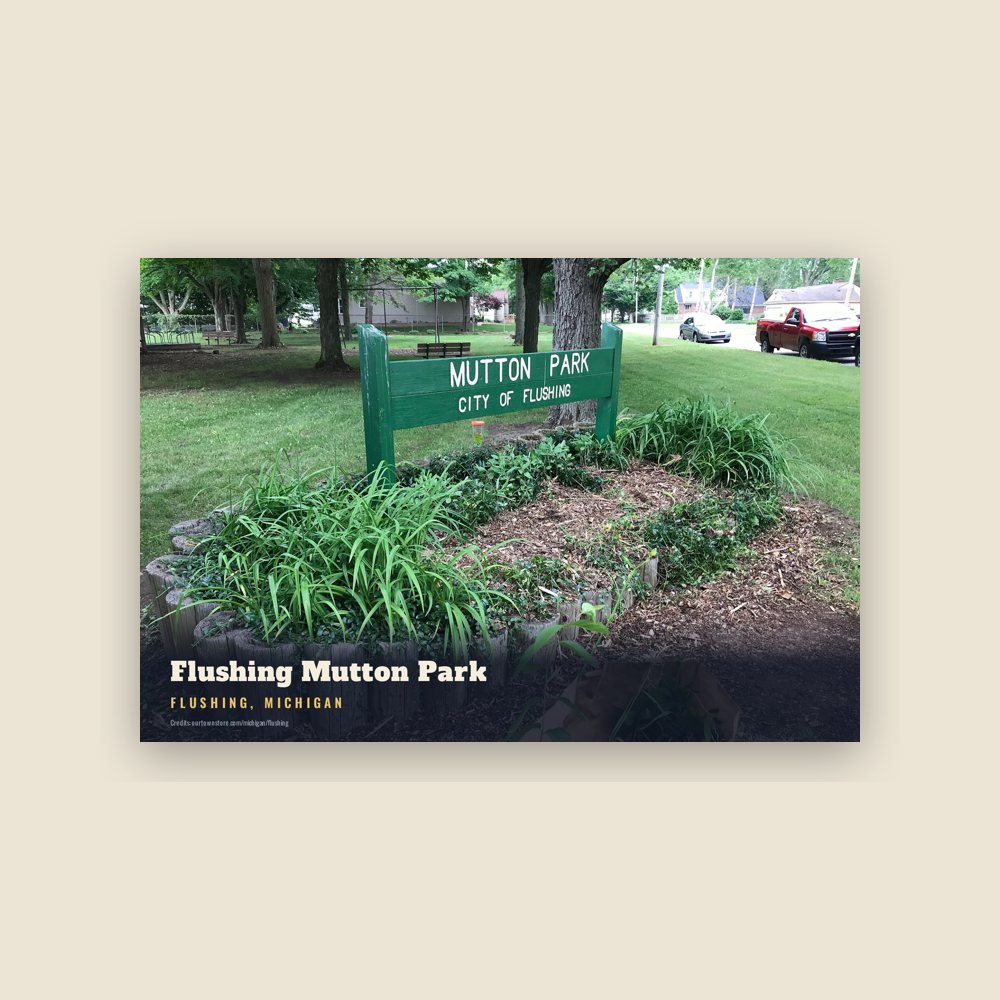
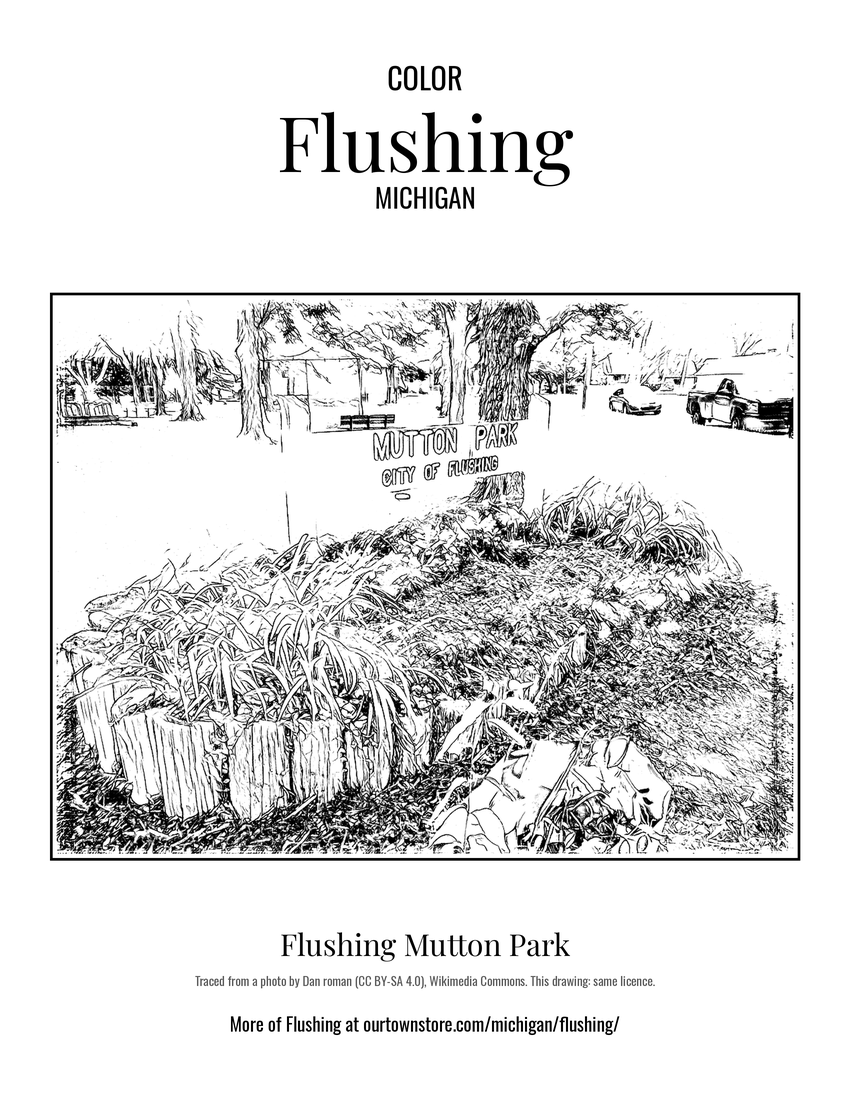 Flushing Mutton Park
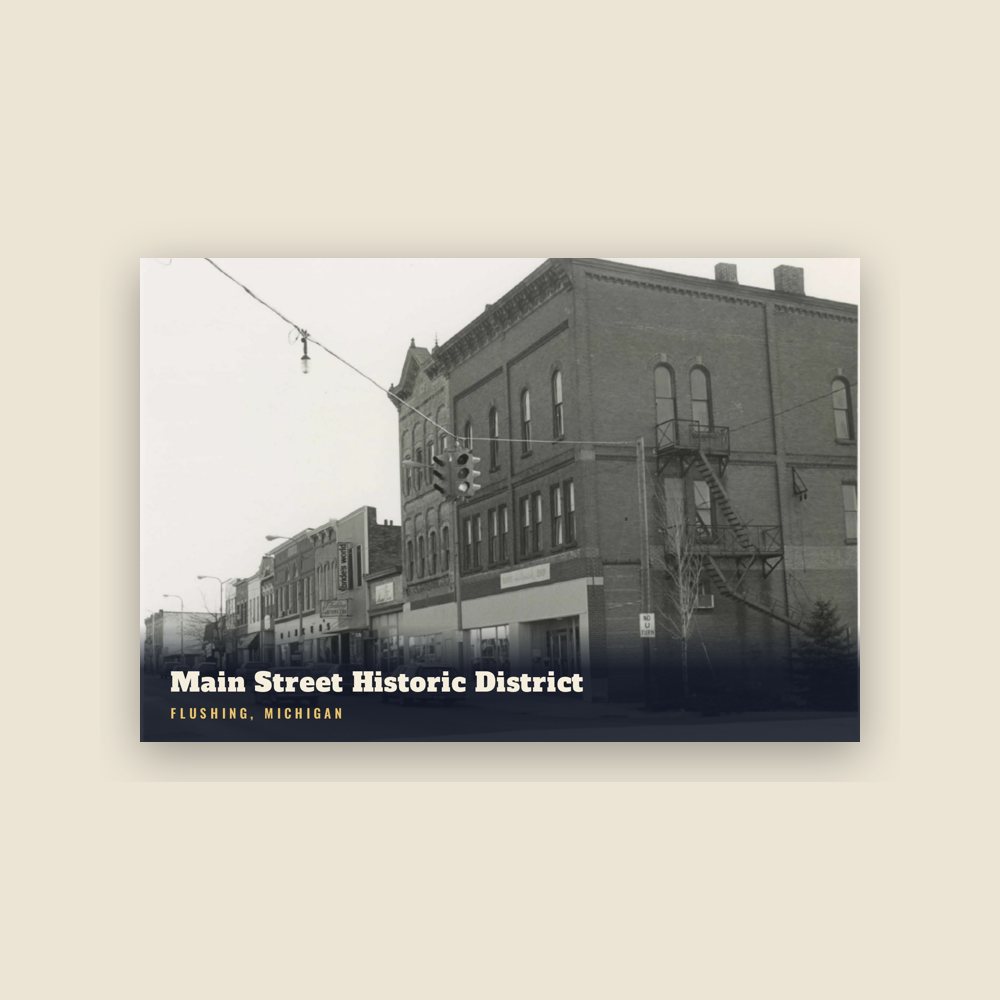
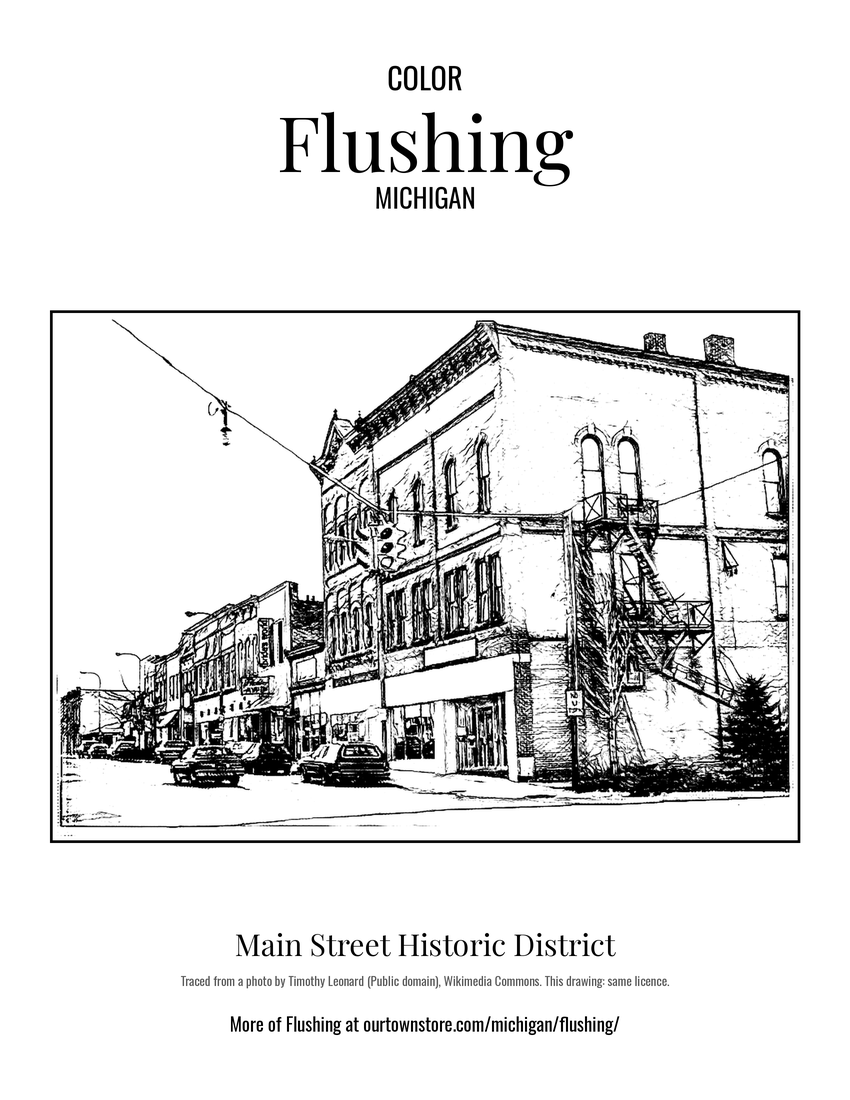 Main Street Historic District
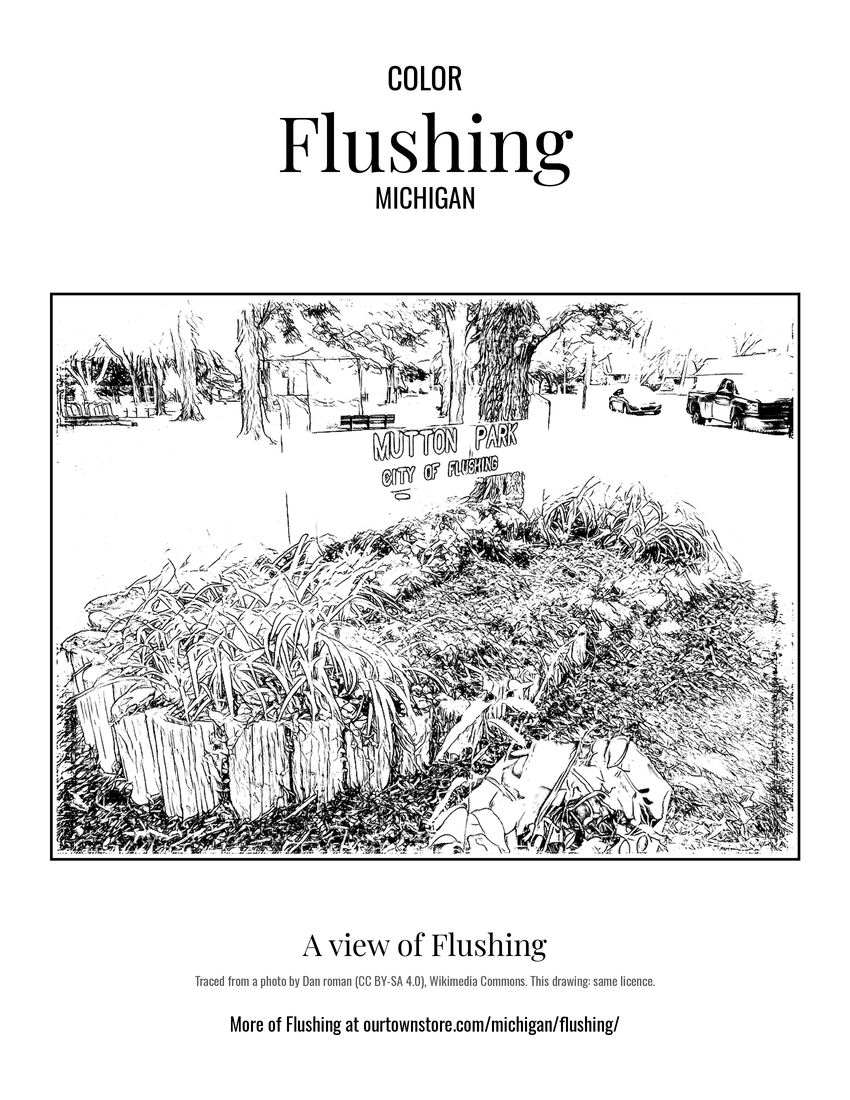 A view of Flushing