A short history of Constantine
The Potawatomi and related Native Americans historically had villages along the St. Joseph River and other waterways. Several of their leaders signed the Treaty of Chicago, agreeing to cede much of their land in southwestern Michigan, Indiana and Ohio country.
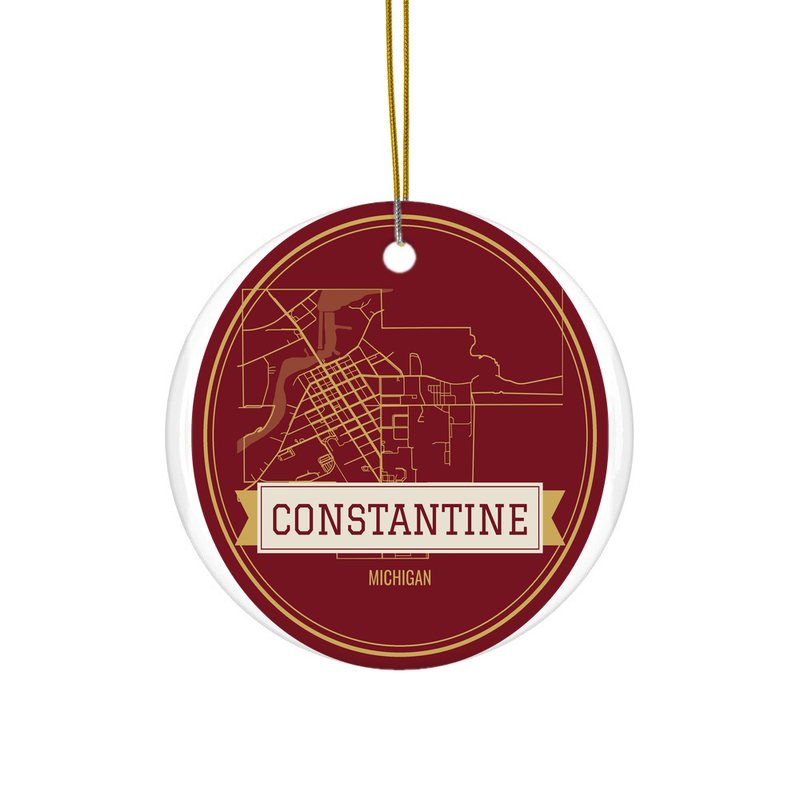
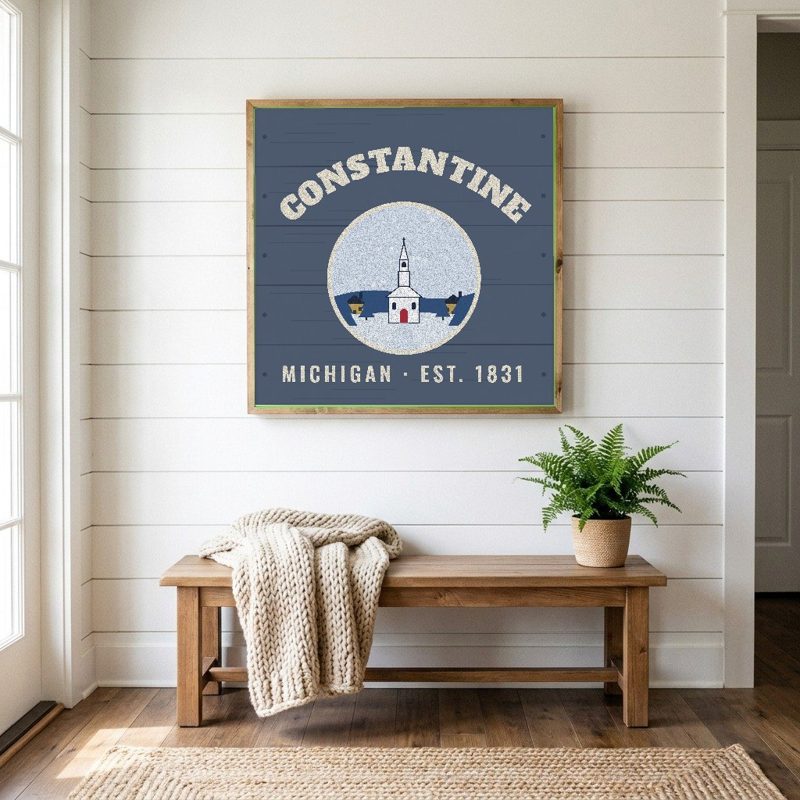
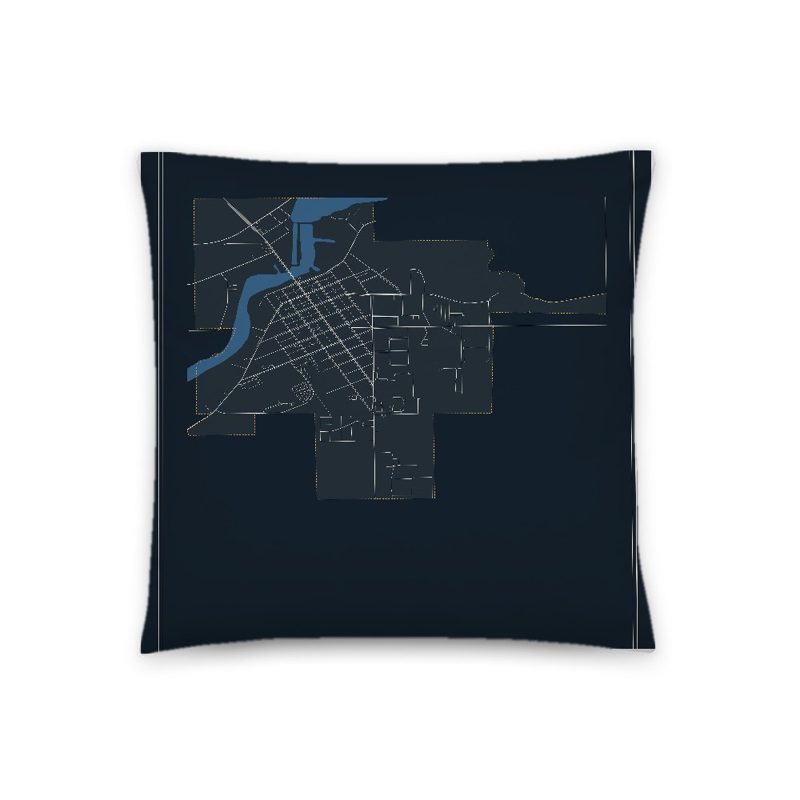
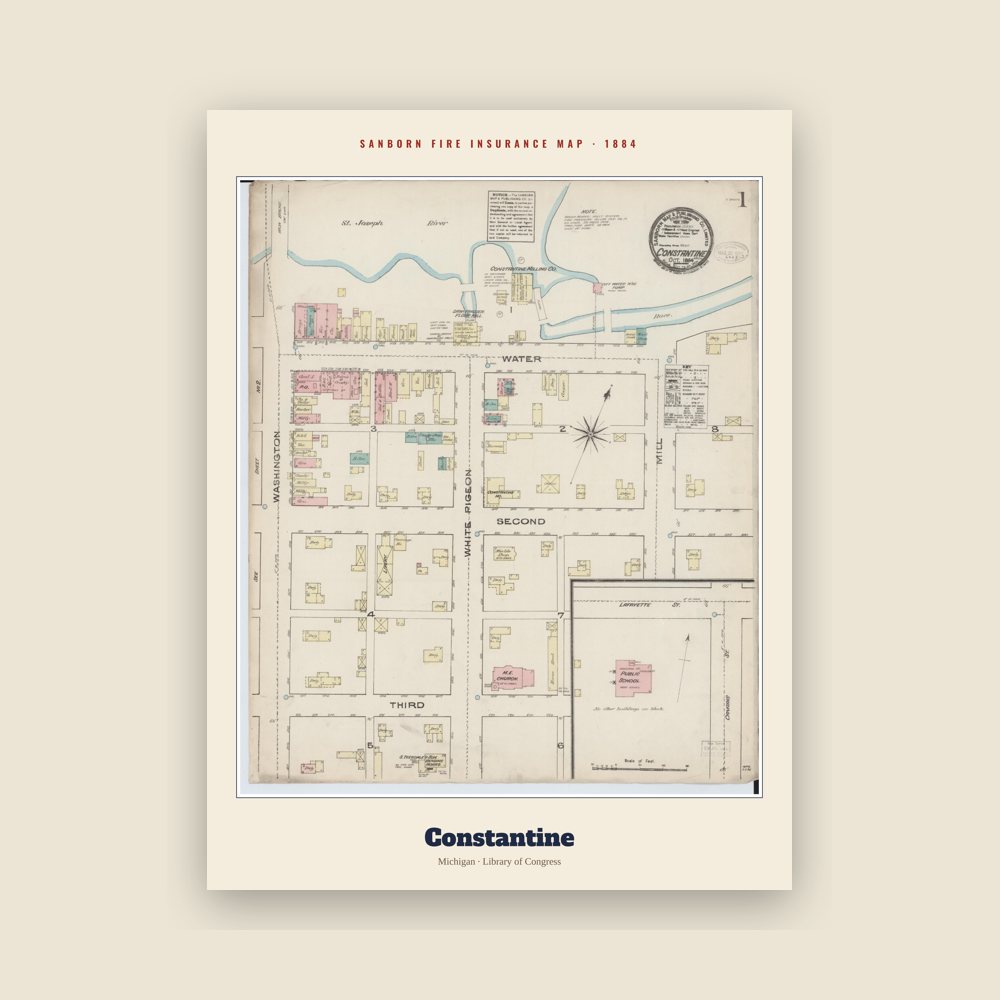
The village was platted in 1831 at the Fawn River's confluence with the St. Joseph River, where three European-American families had settled. A gristmill, the first in the county to run by water, had been built here in 1830.
It was first named Meeks Mill after Johnathon Meeks, who built the first grain mill. A Yankee from New York or New England, he moved to several other frontier areas, each time having a town named after him. When using names of classical figures later came into vogue, the village was renamed for the Roman emperor Constantine the Great.
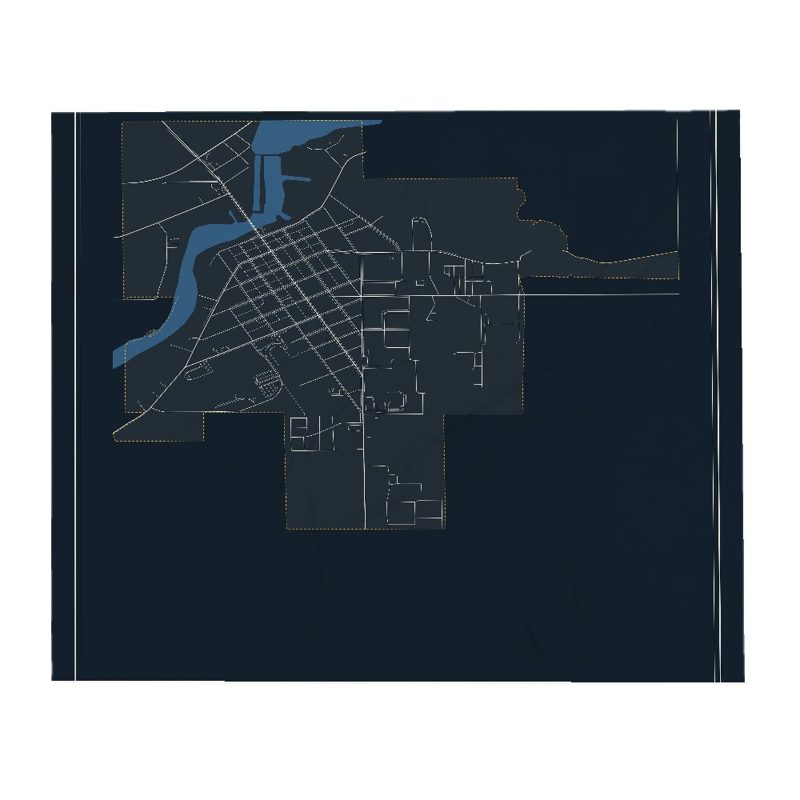
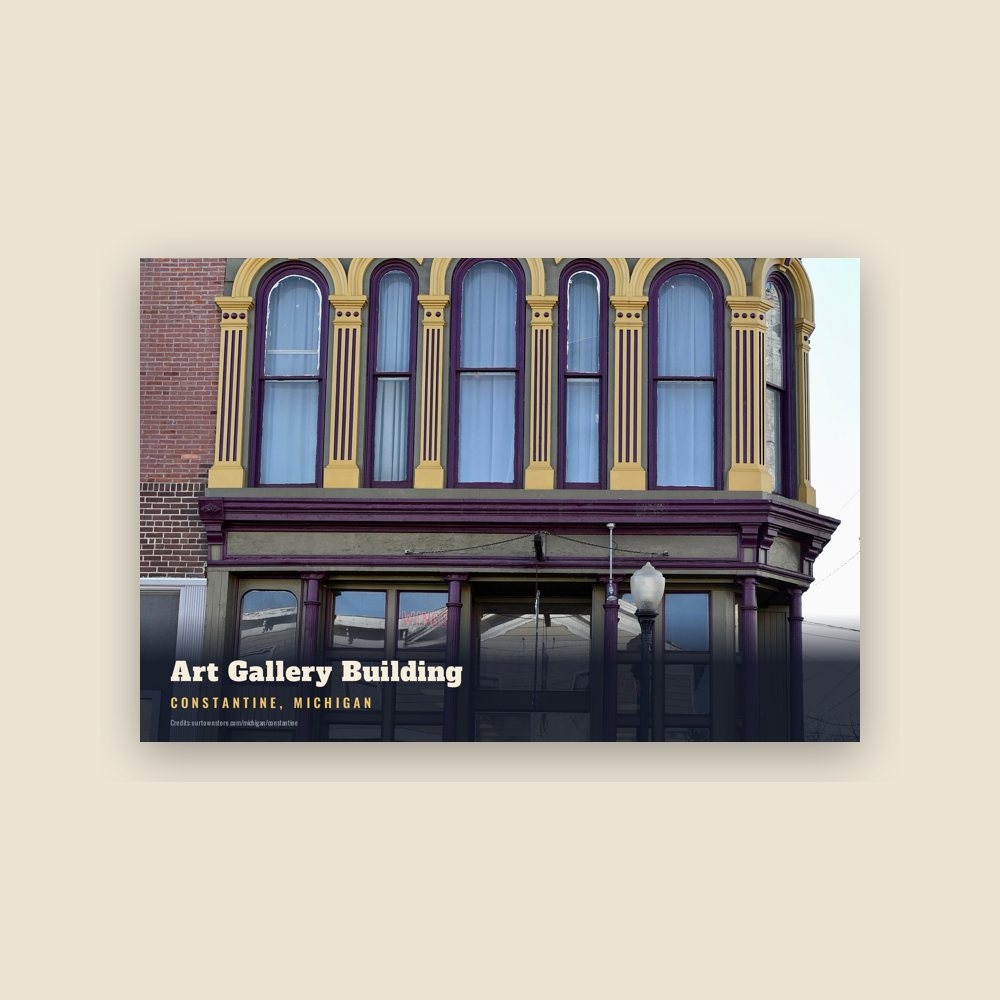
The Main Street of town is a historic center with richly detailed, two-story commercial buildings of the late 19th century. It is designated US 131 through the village and connected to newer roads outside.
Adapted (trimmed) from the Wikipedia article Constantine, Michigan, revision 1378544352 by its contributors, licensed CC BY-SA 4.0.
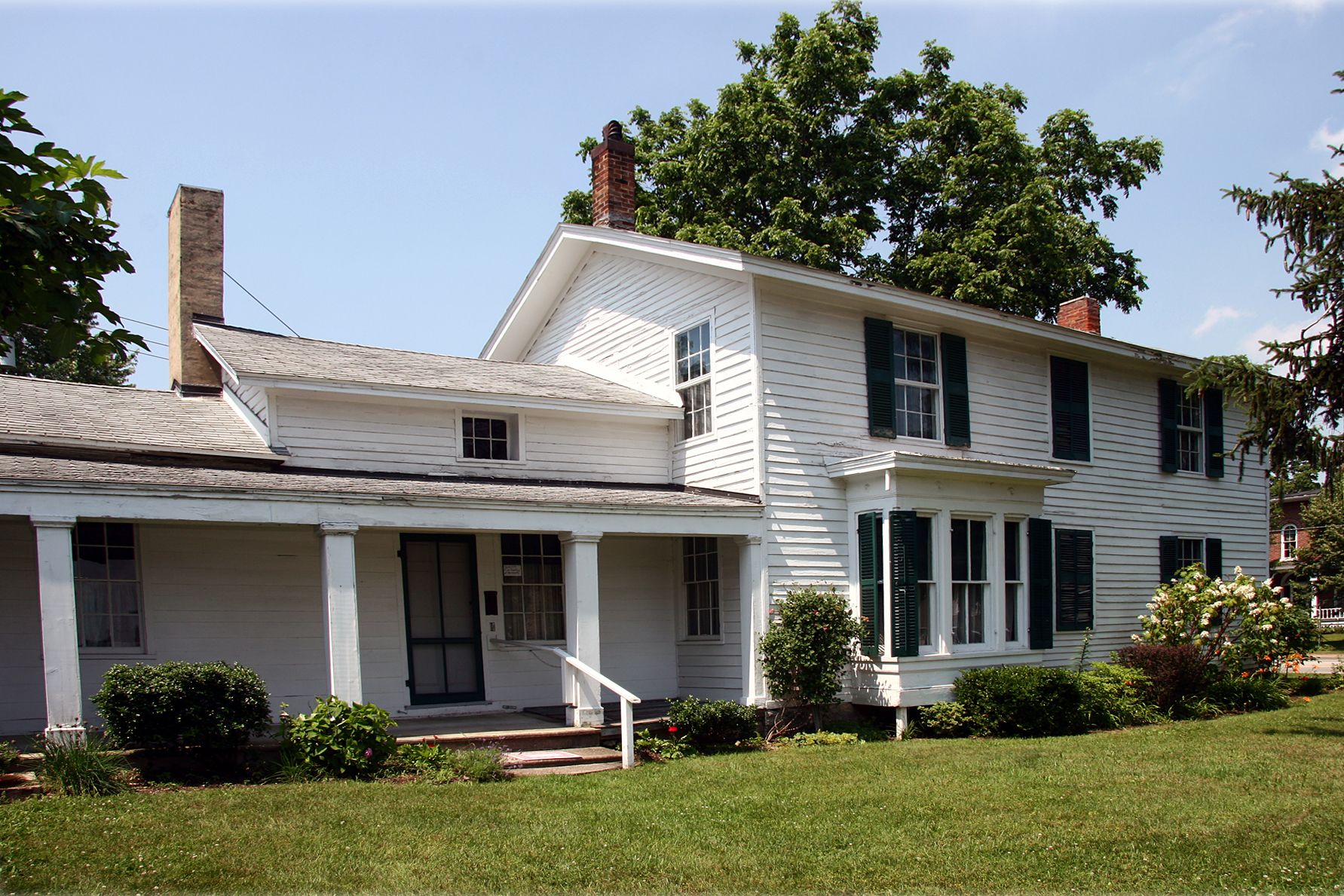
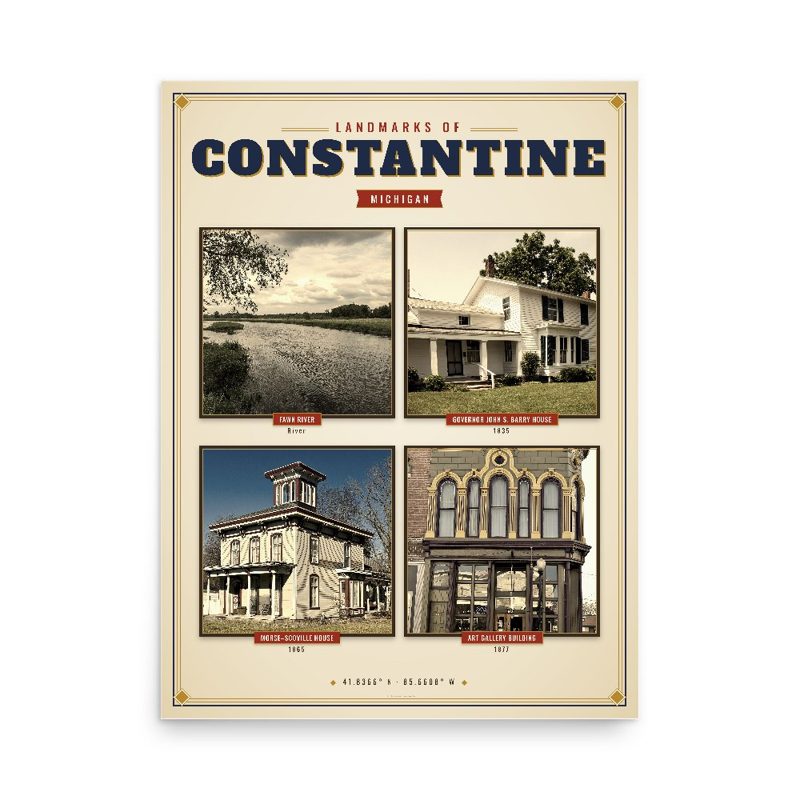
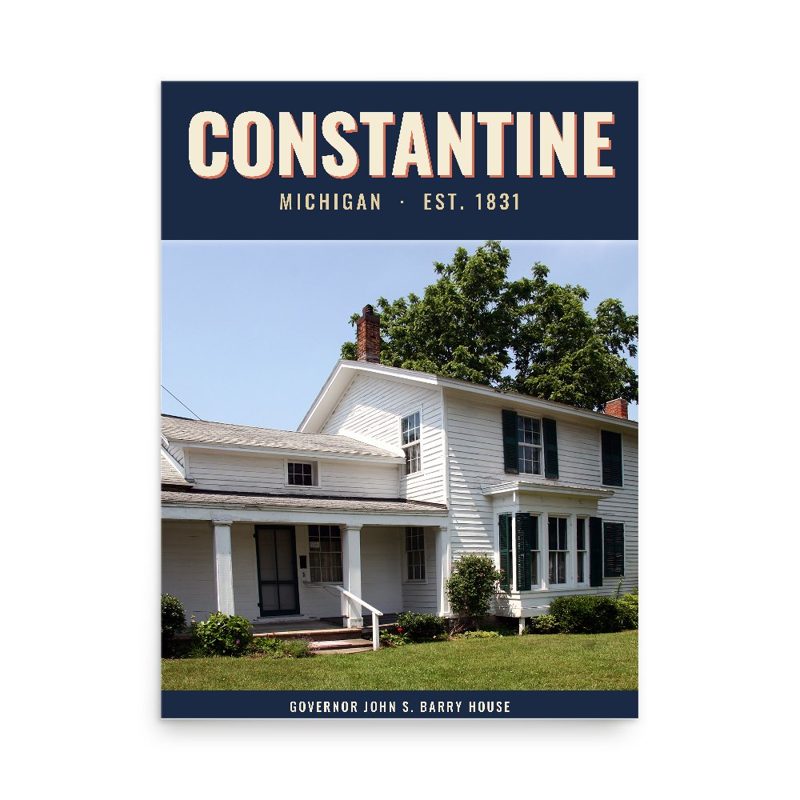
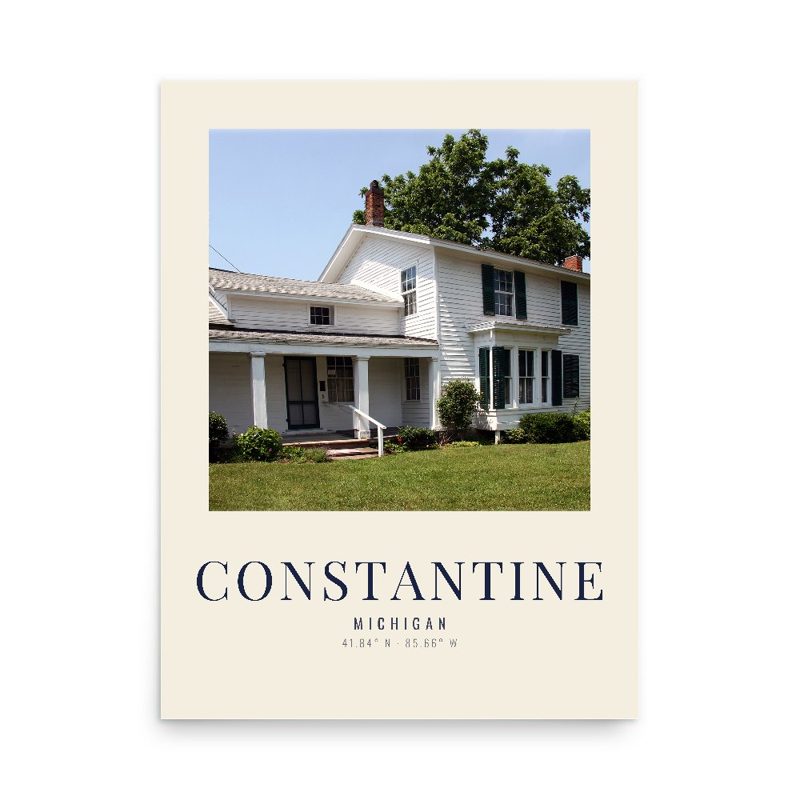
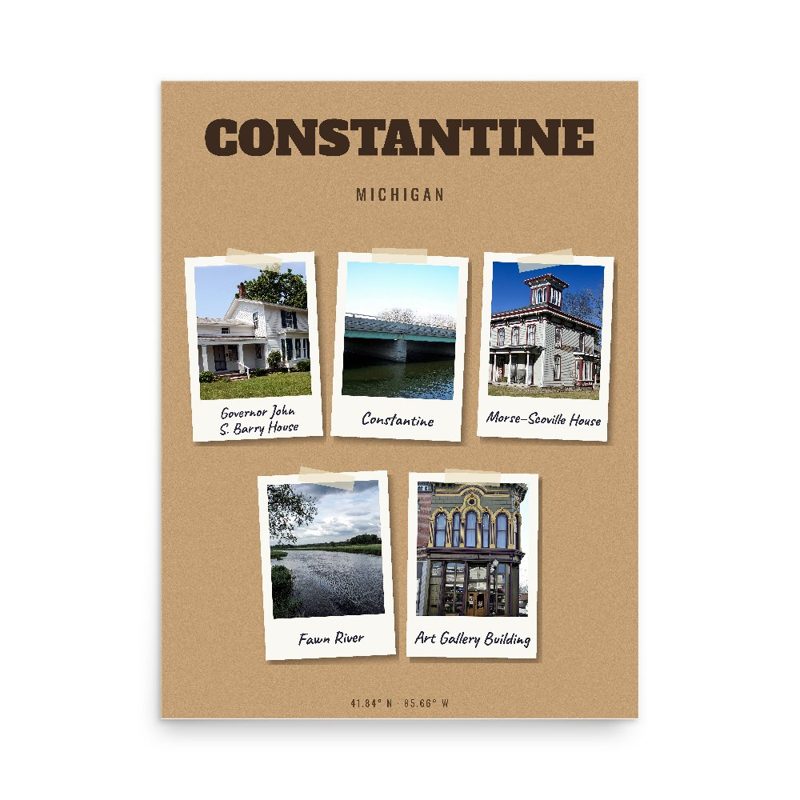
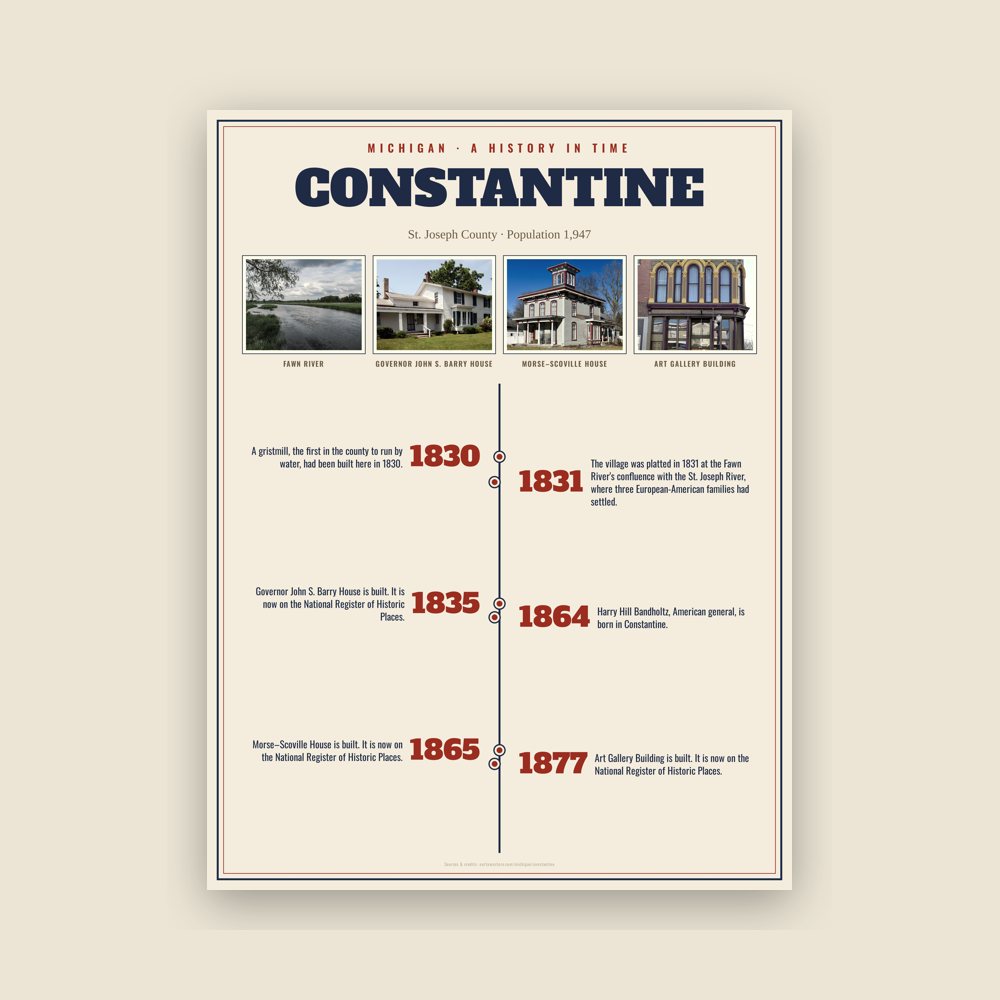
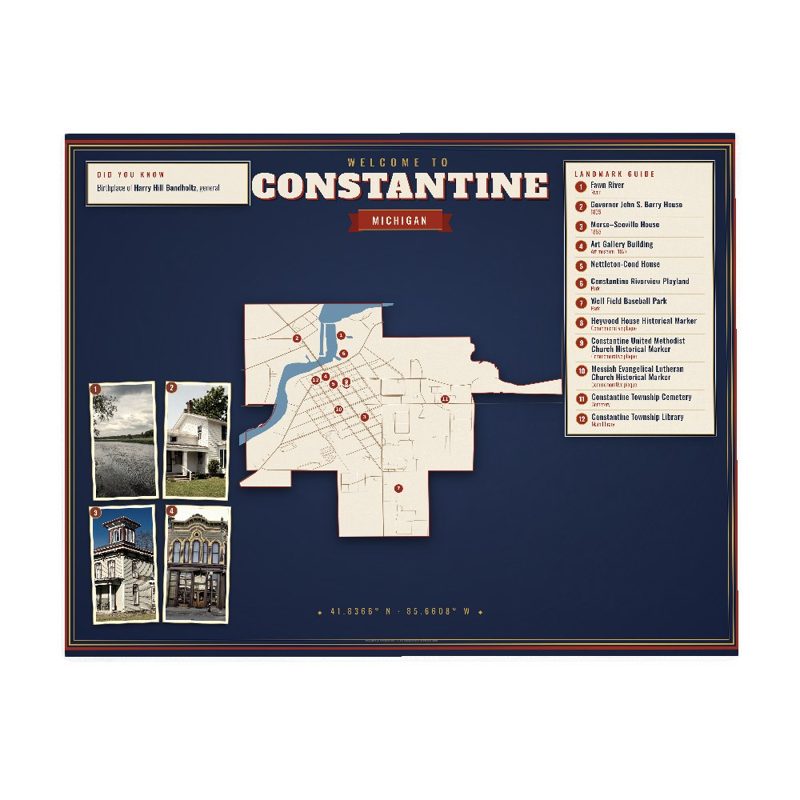




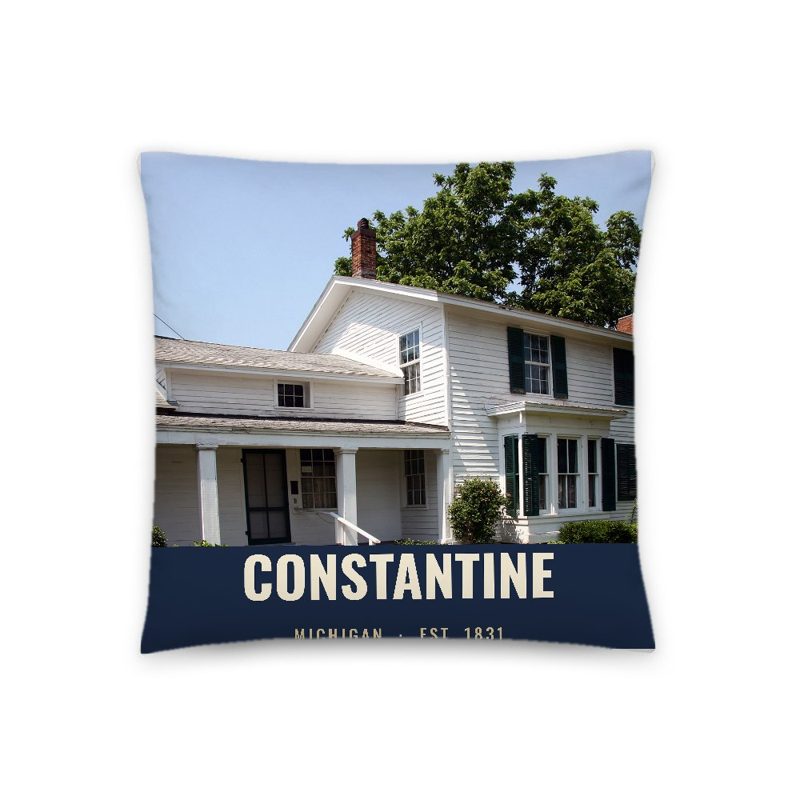



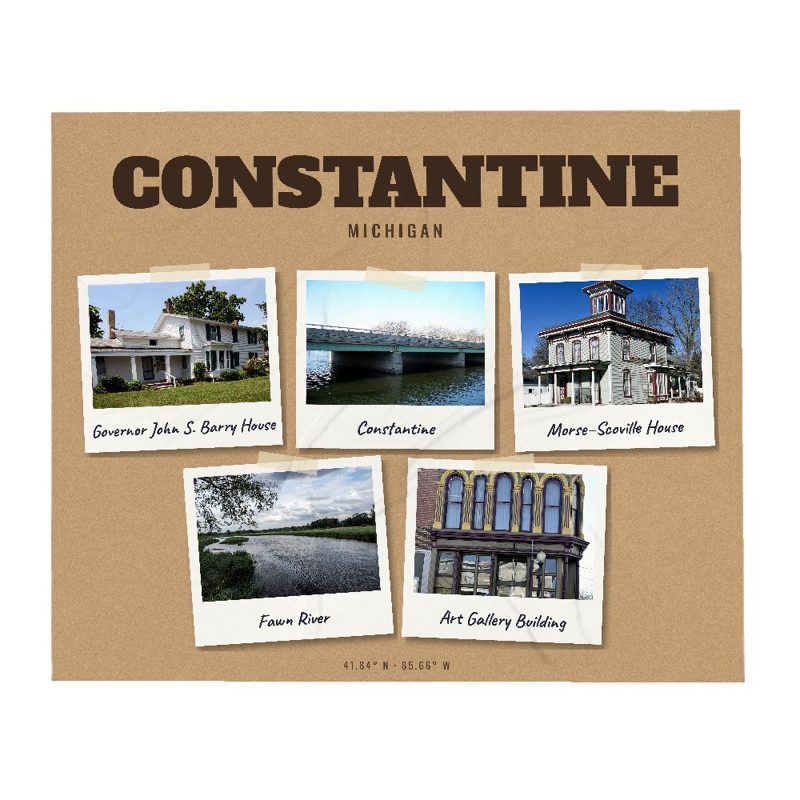


 Governor John S. Barry House
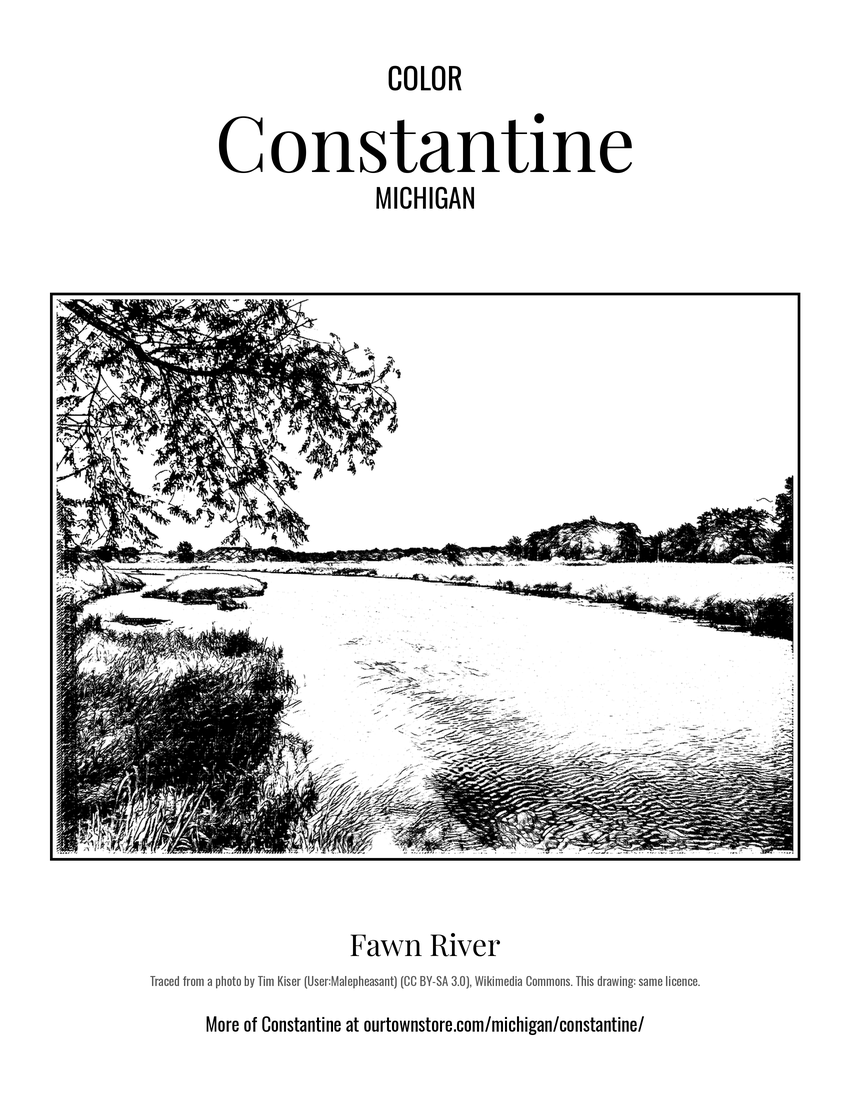 Fawn River
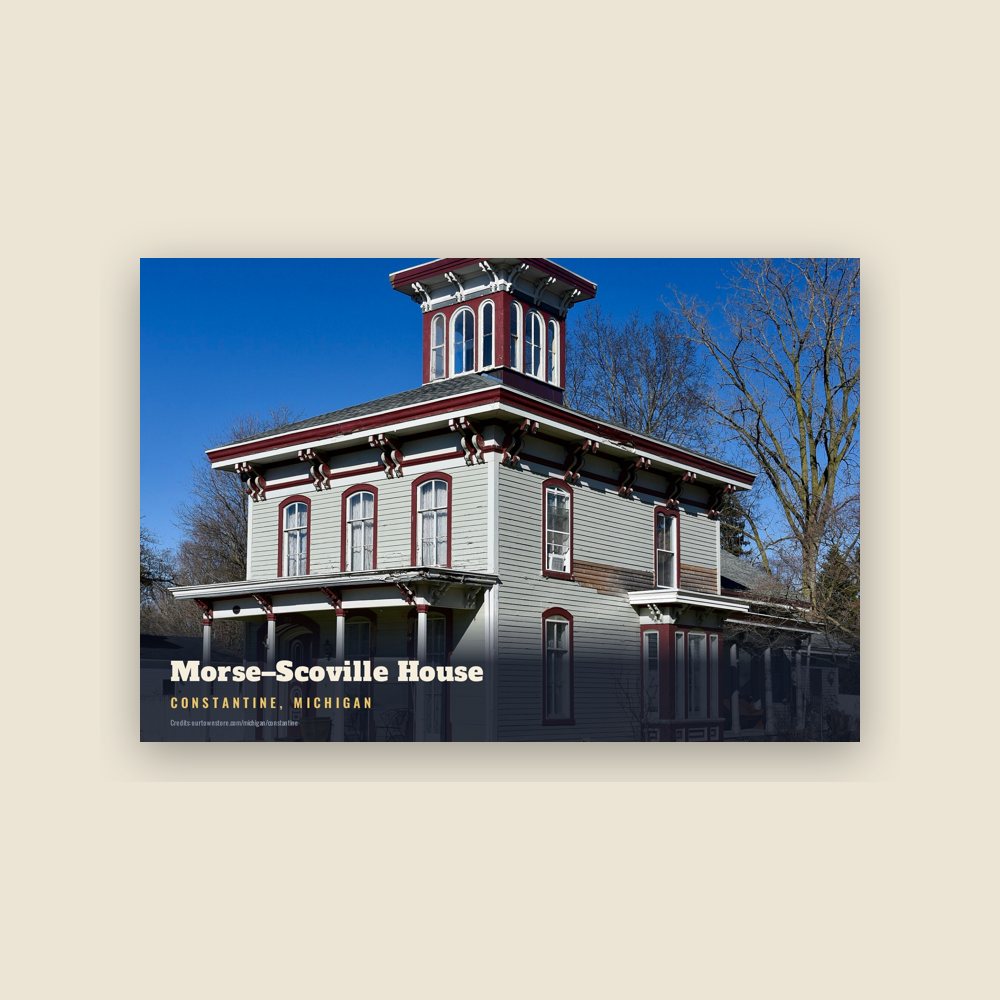
 Morse–Scoville House
 Art Gallery Building