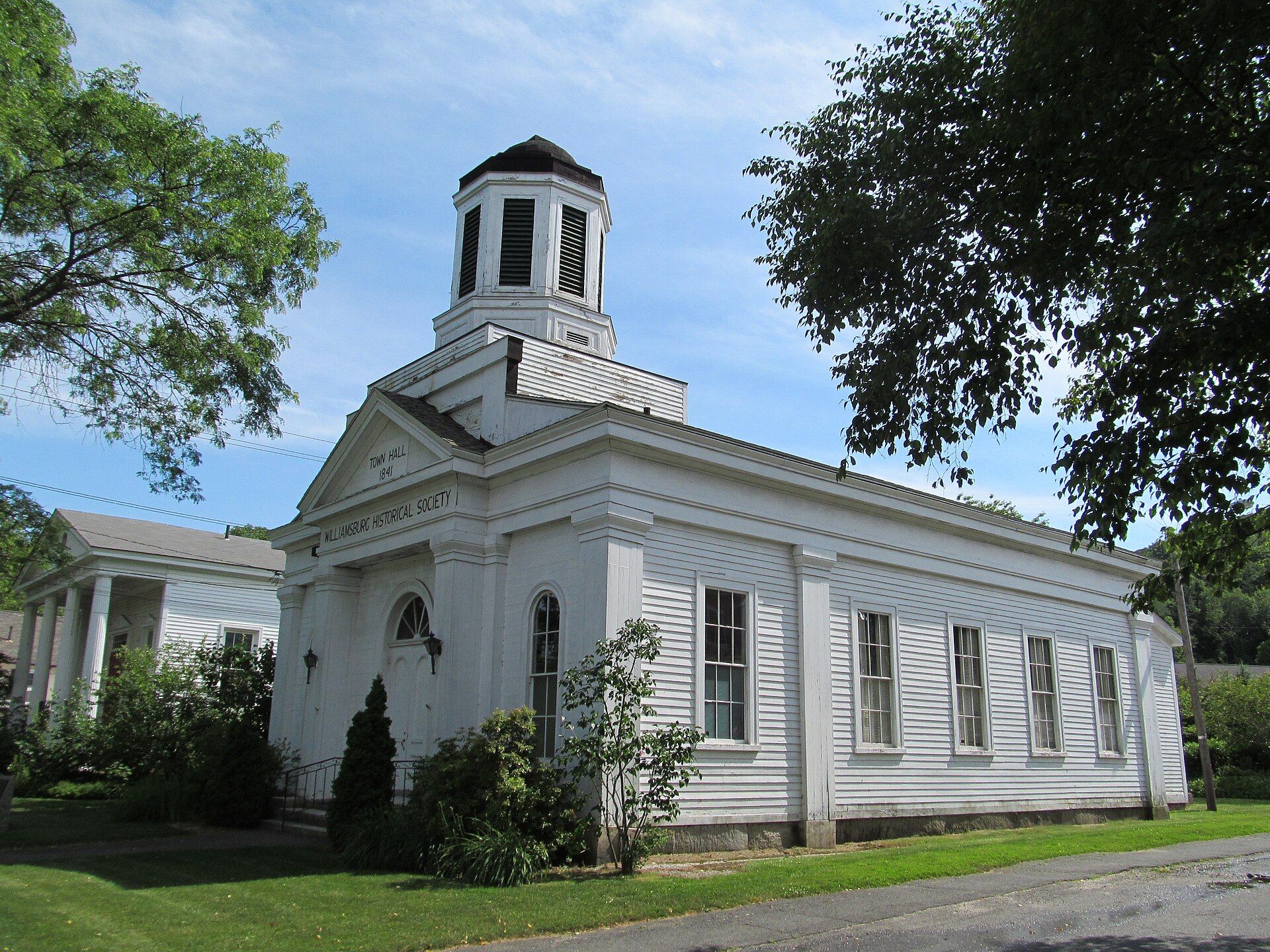
In addition to the main village of Williamsburg near the center of town, the town includes the villages of Haydenville and Searsville. Landmarks include Williamsburg Center Historic District and Nonotuck Silk Company. Williamsburg is the birthplace of Edward Thorndike, psychologist.
Every piece is drawn from Williamsburg's own map data and historic archives, then printed and shipped from the USA when you order. No two towns look alike.
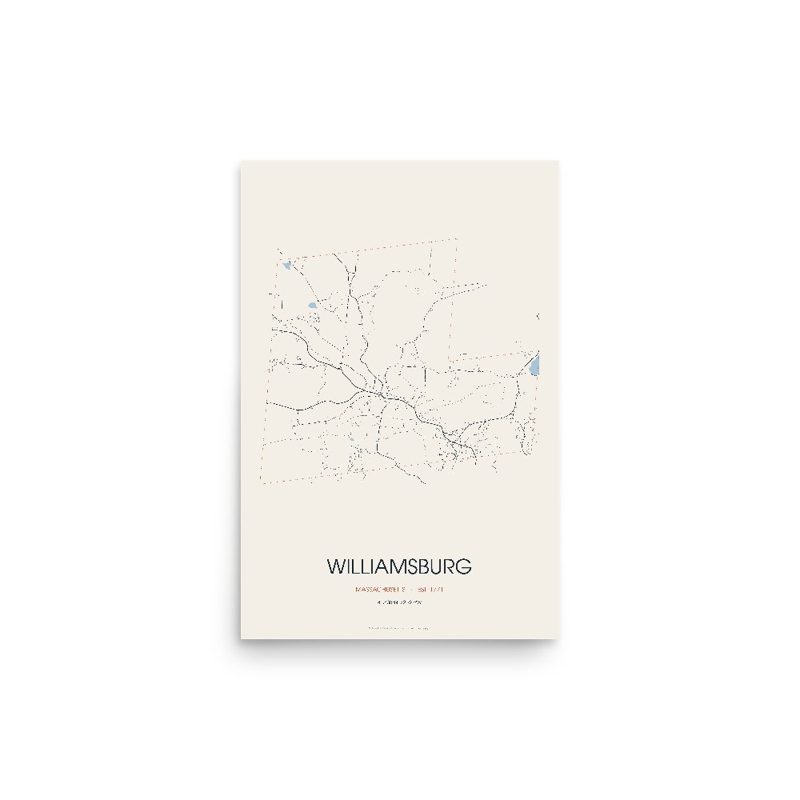
Every road in town, on archival matte paper
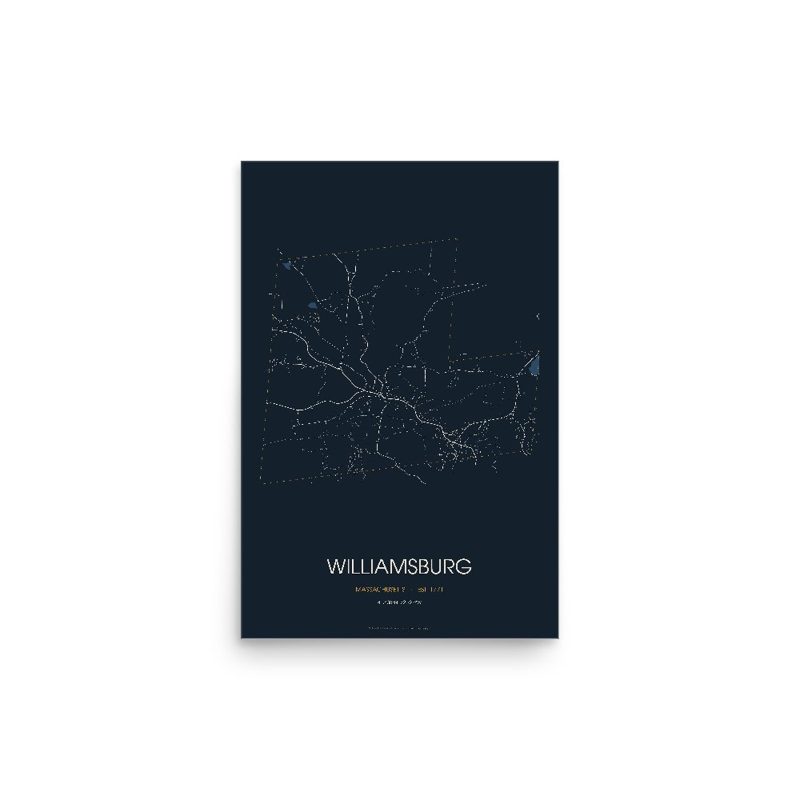
The same map, in navy and silver
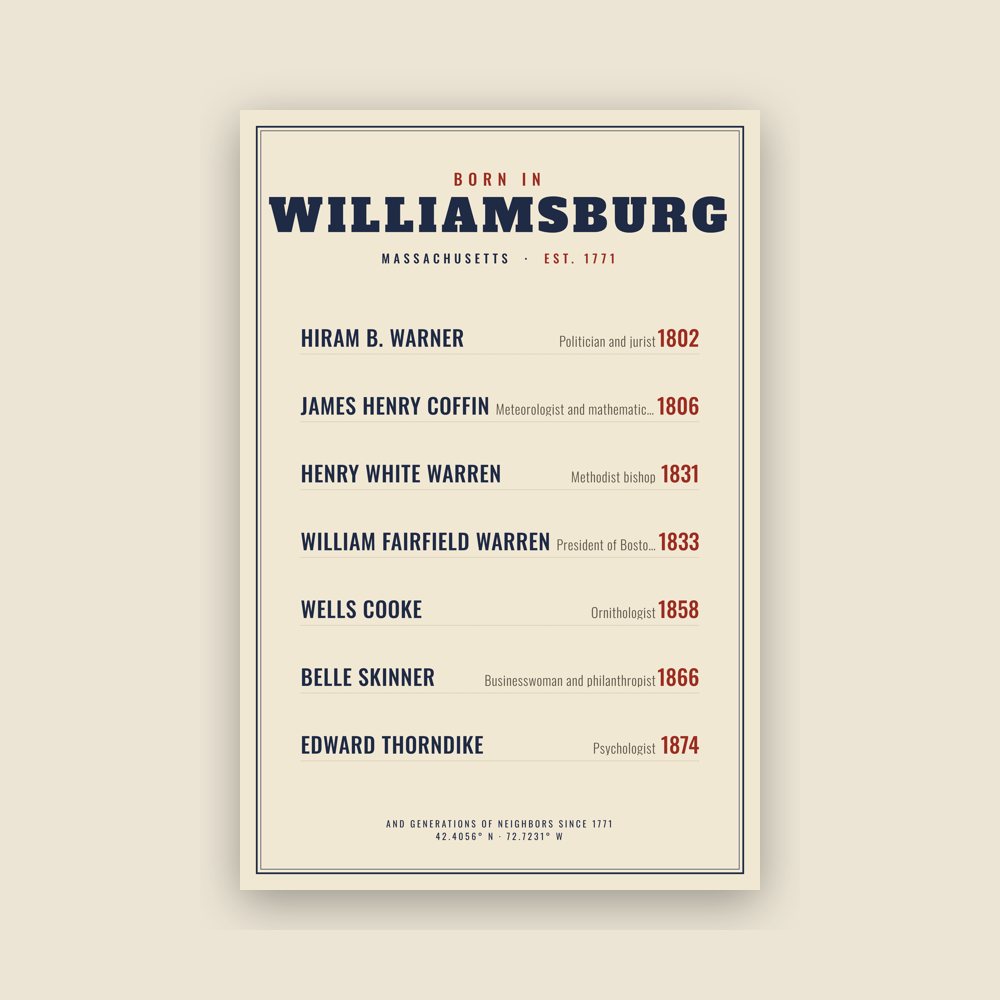
Famous natives, by birth year
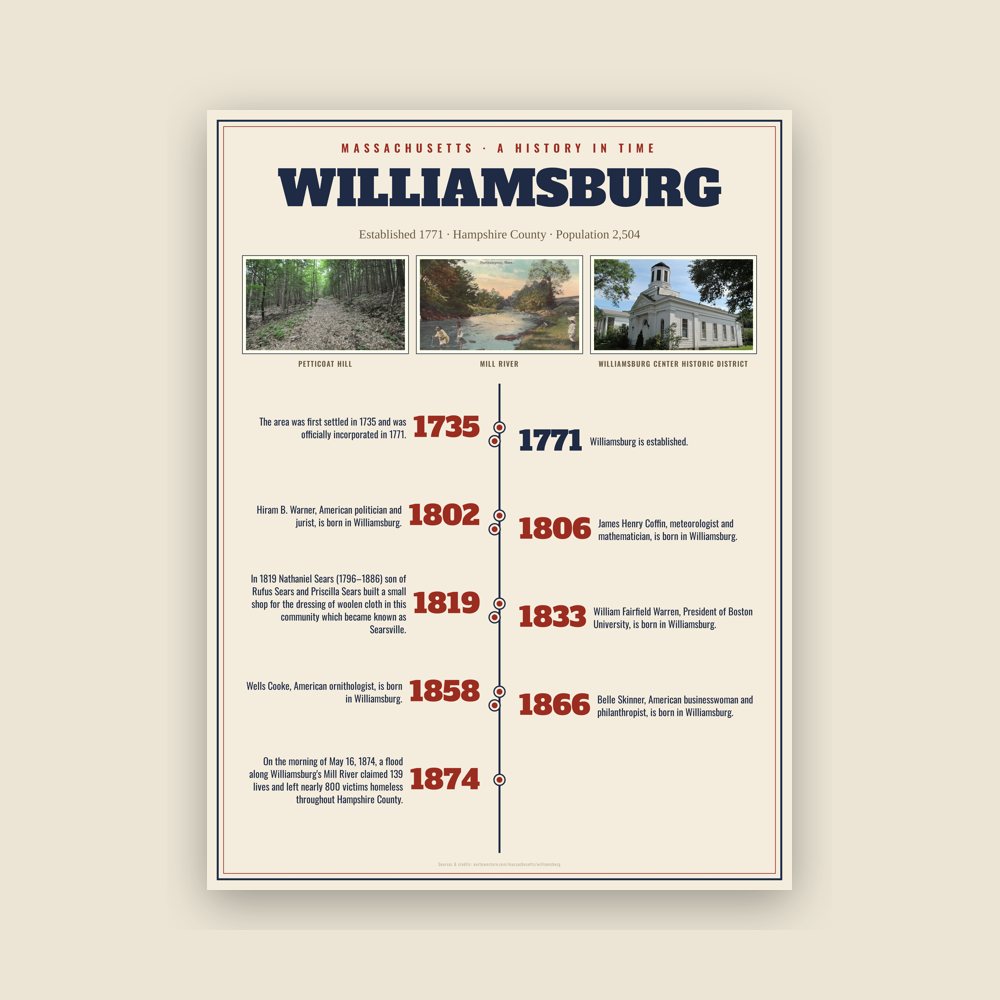
The town's story in dates, from its own records, for home or classroom
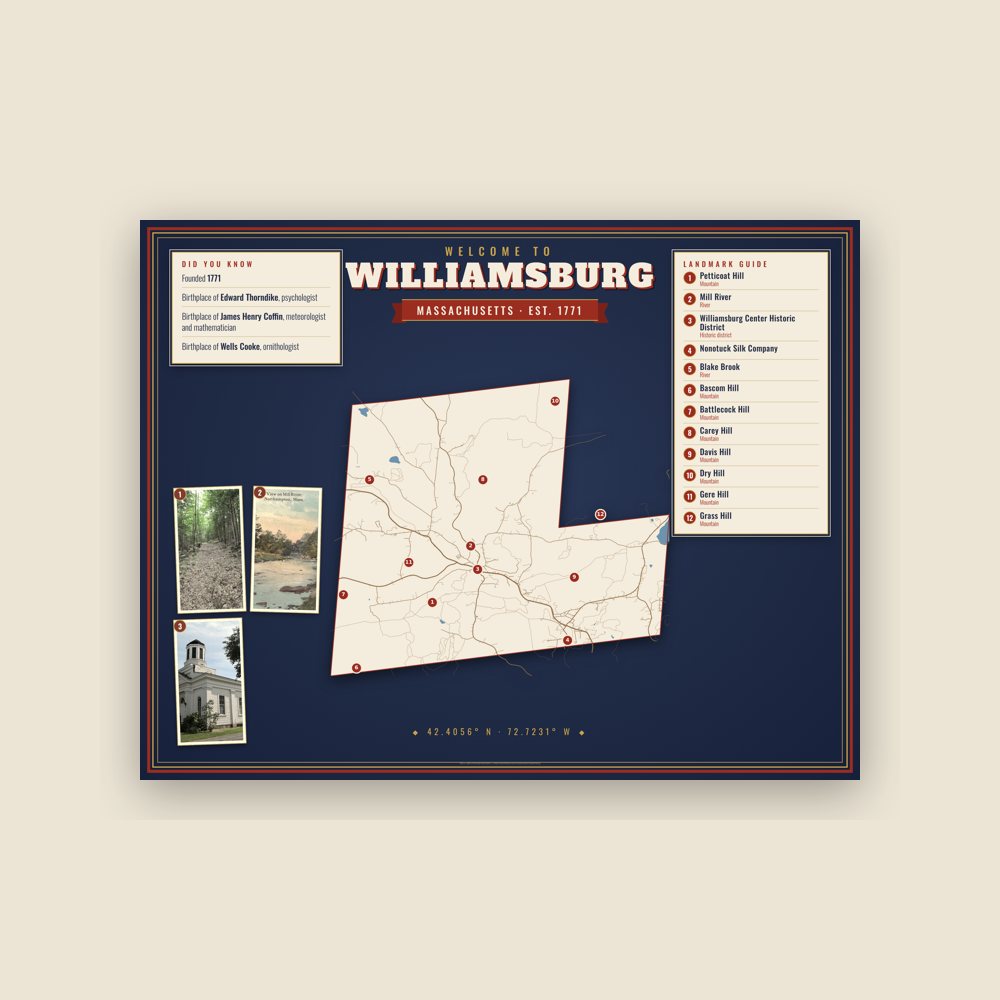
Map of local landmarks, washable fabric
Heavy-blend fleece, street map printed on the back
Soft Bella+Canvas jersey
Glossy ceramic, dishwasher safe
Ceramic keepsake, gold ribbon
Weatherproof, for the front walk
24″×16″, printed coir-look fibers, rubber back
12″×12″ printed wood, ready to hang
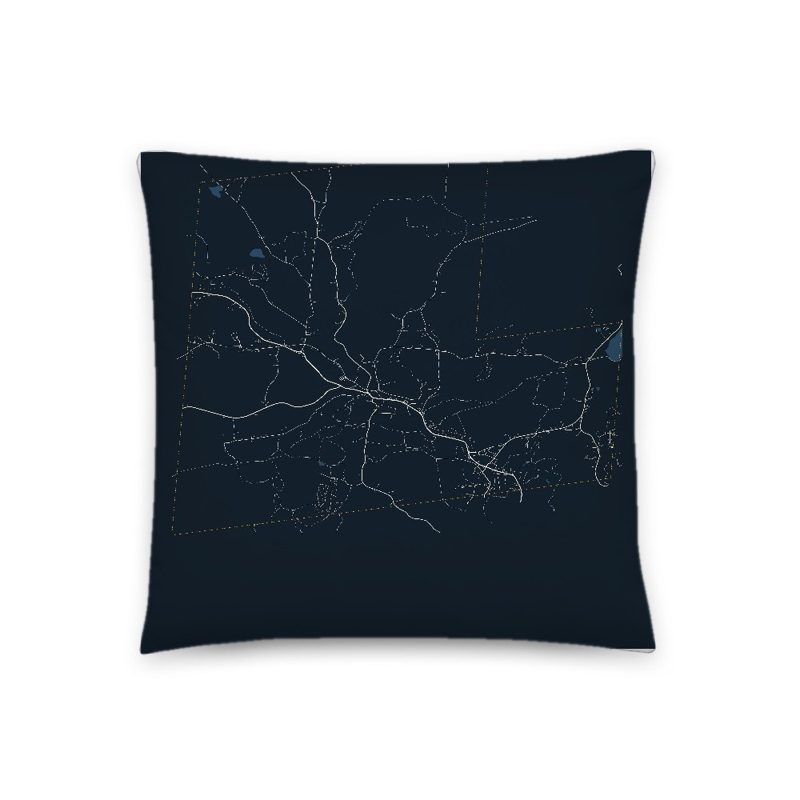
Soft-touch, zip cover
Sturdy all-over-print tote
Glossy top, cork back
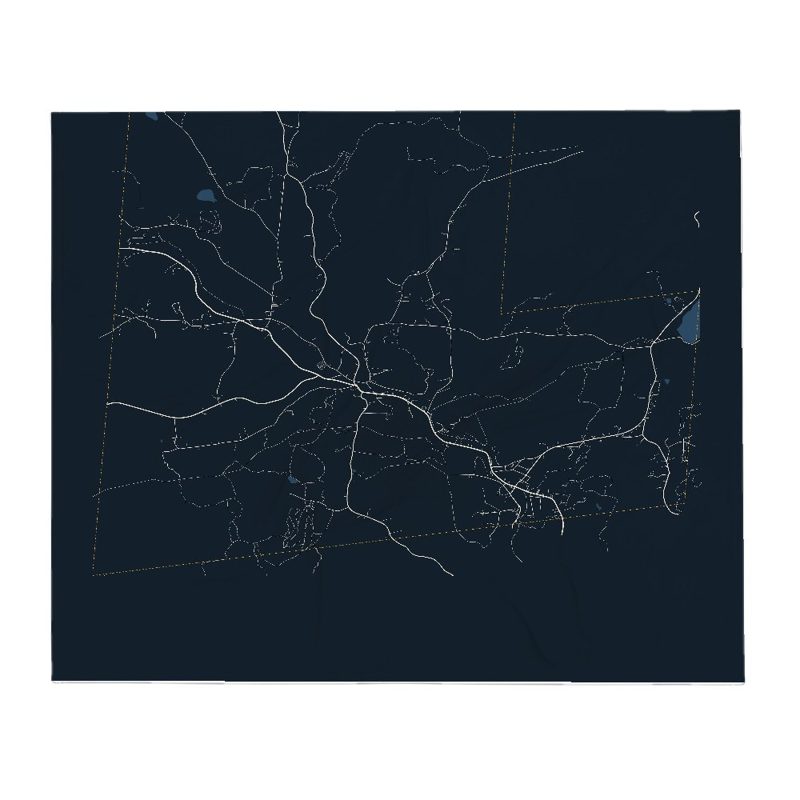
Soft fleece, 50″×60″
20 oz, double-wall stainless
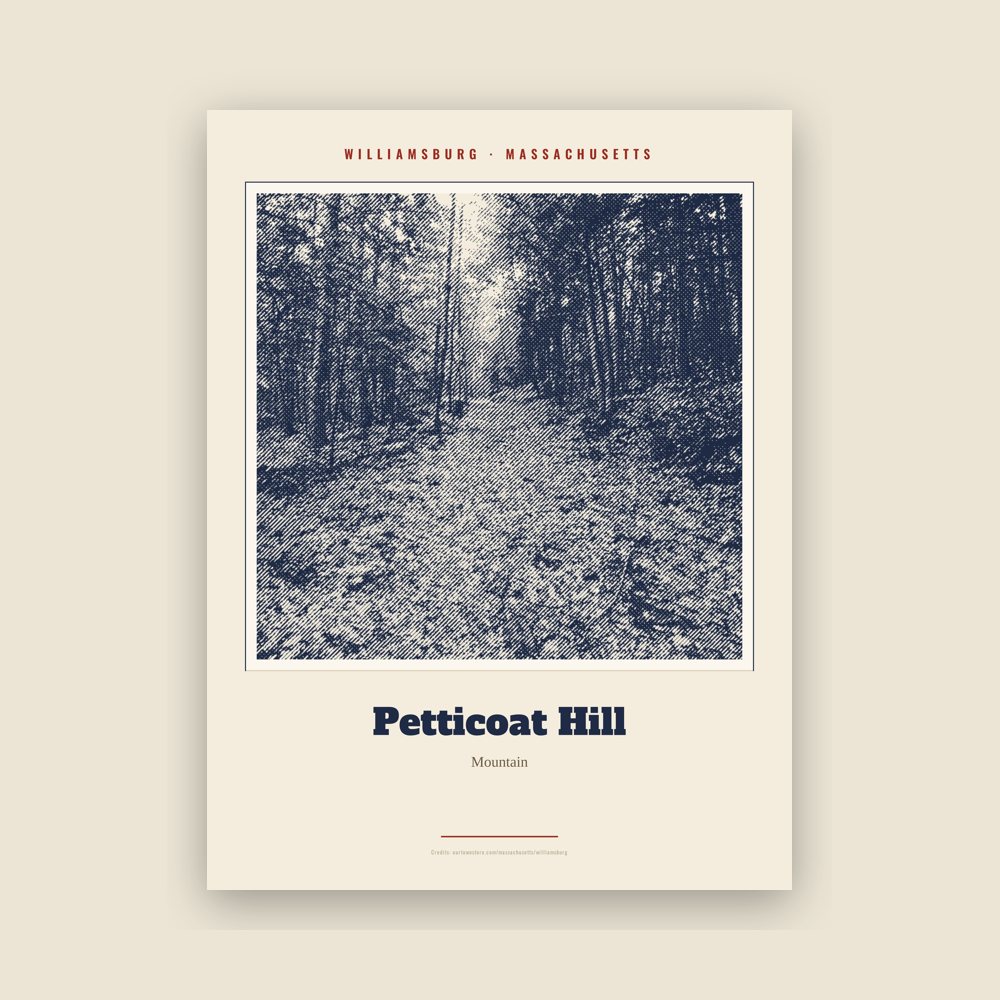
Archival matte print of a local landmark, credited to its photographer
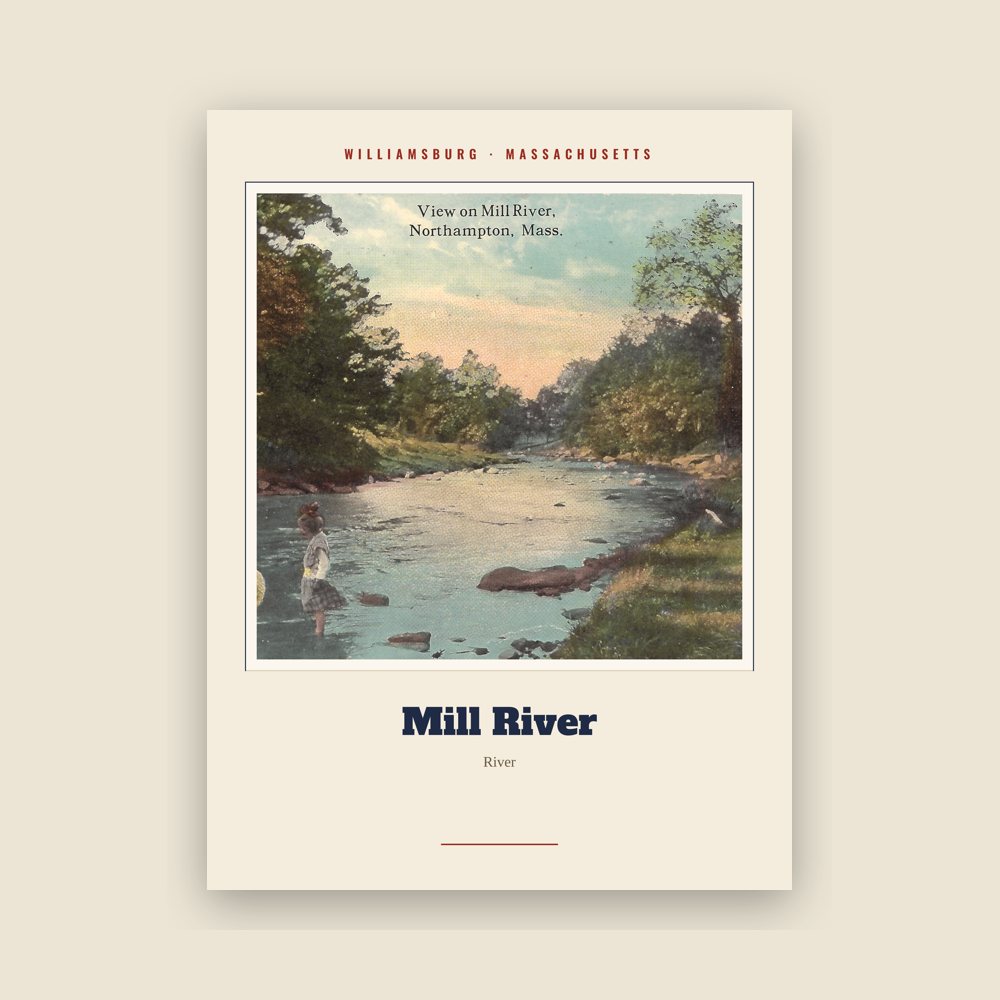
Archival matte print of a local landmark, credited to its photographer
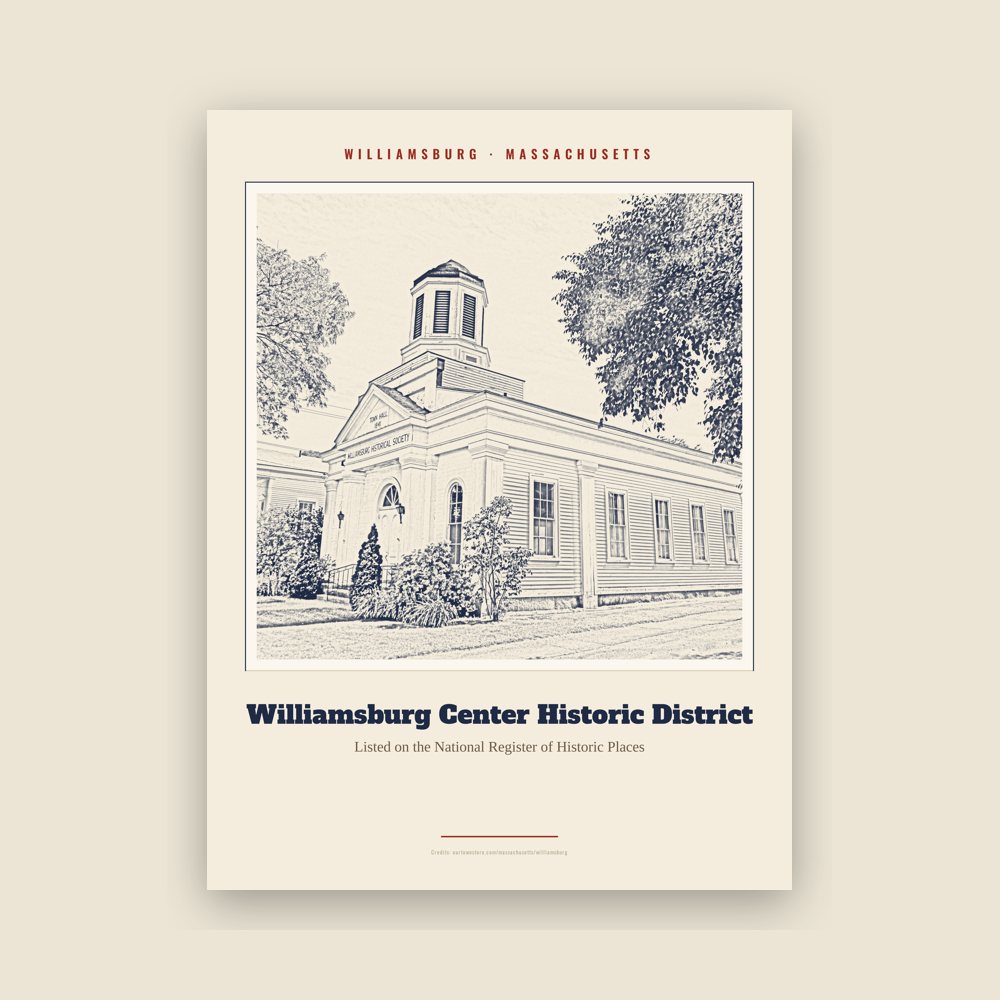
Archival matte print of a local landmark, credited to its photographer
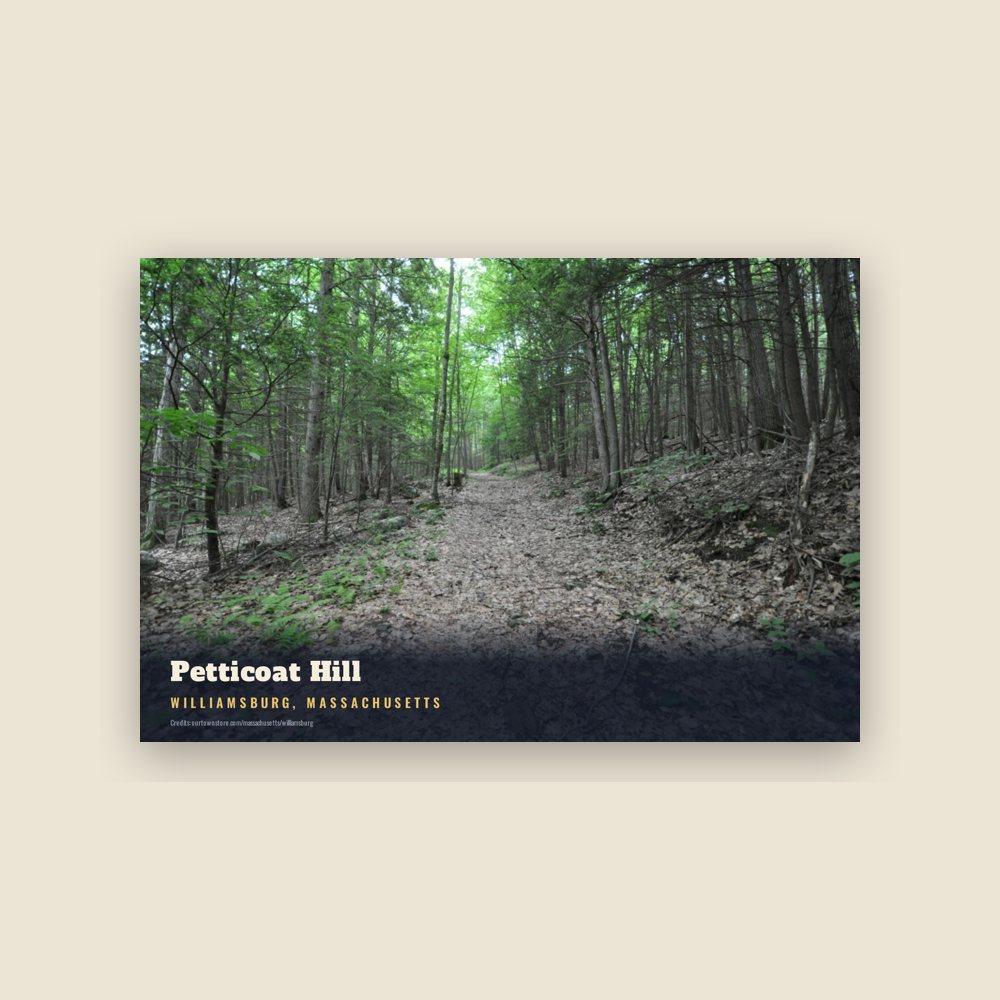
6″×4″ postcard, glossy front
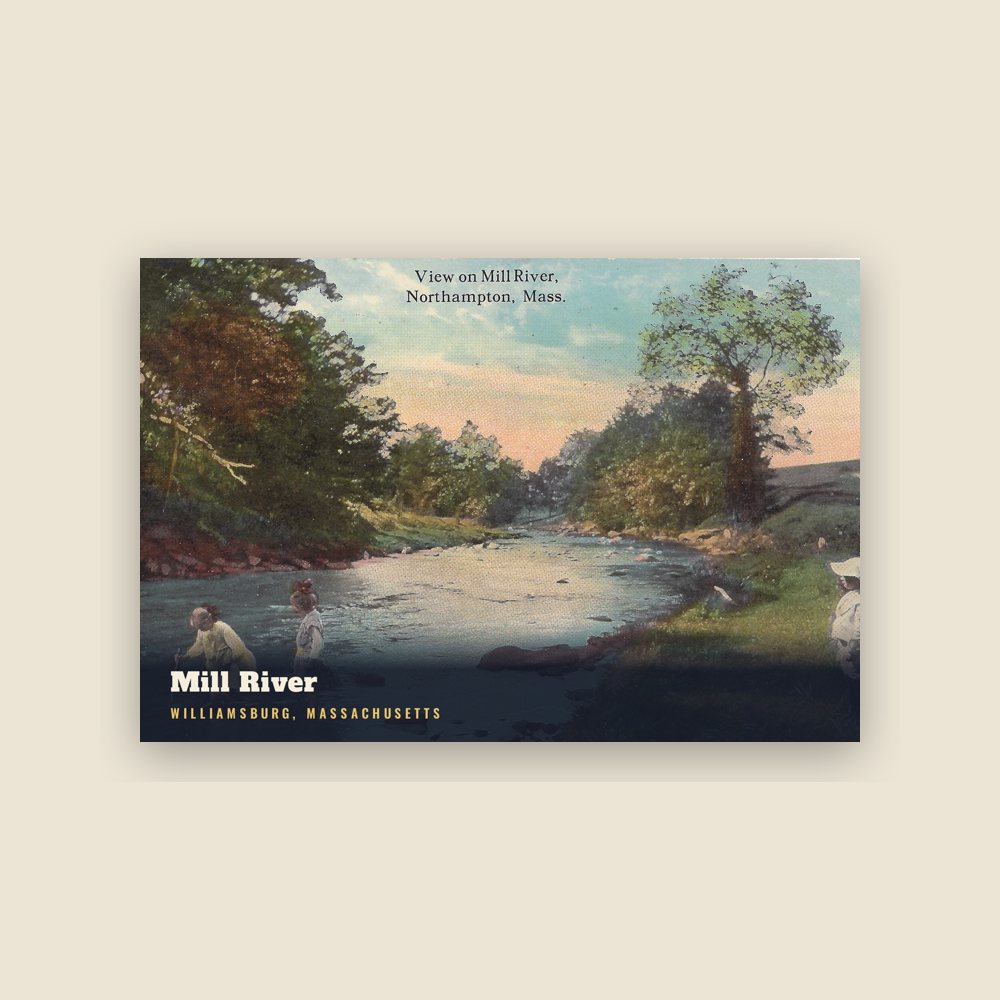
6″×4″ postcard, glossy front
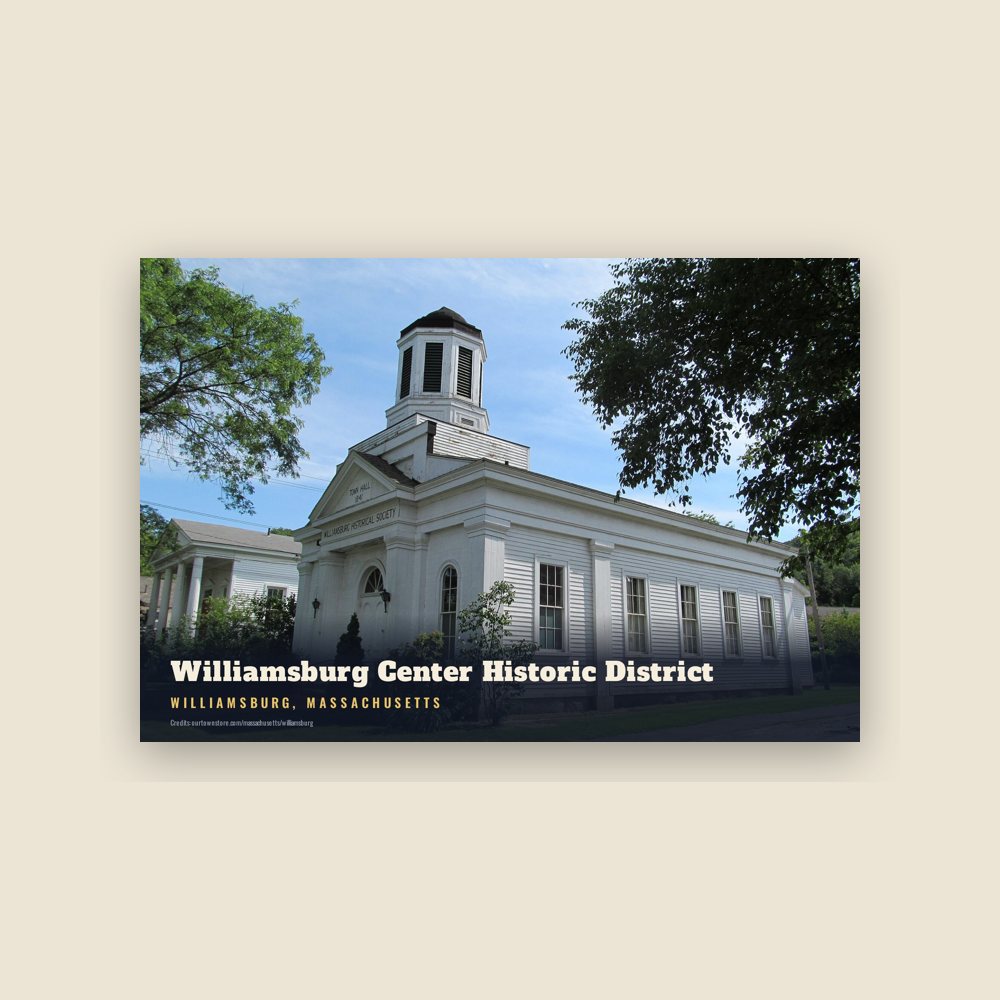
6″×4″ postcard, glossy front
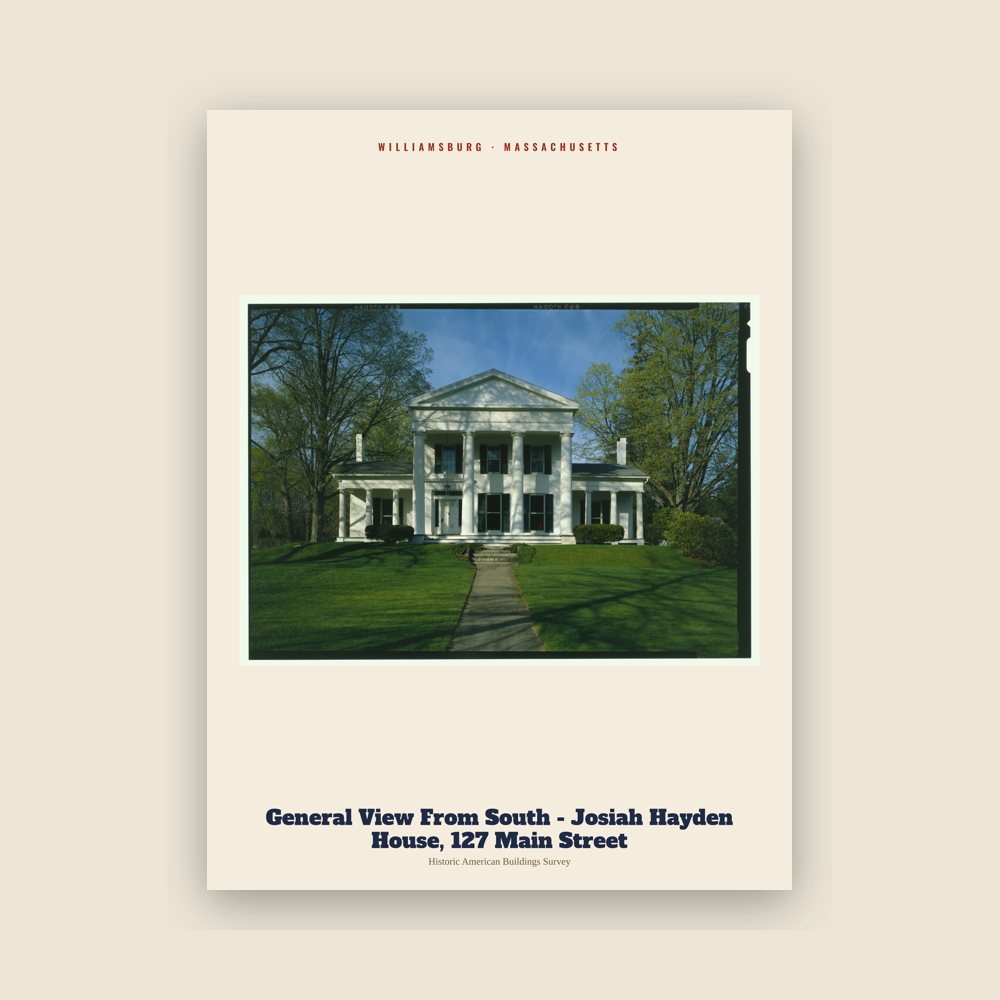
From the Library of Congress collections: a historic survey drawing or photograph of the town
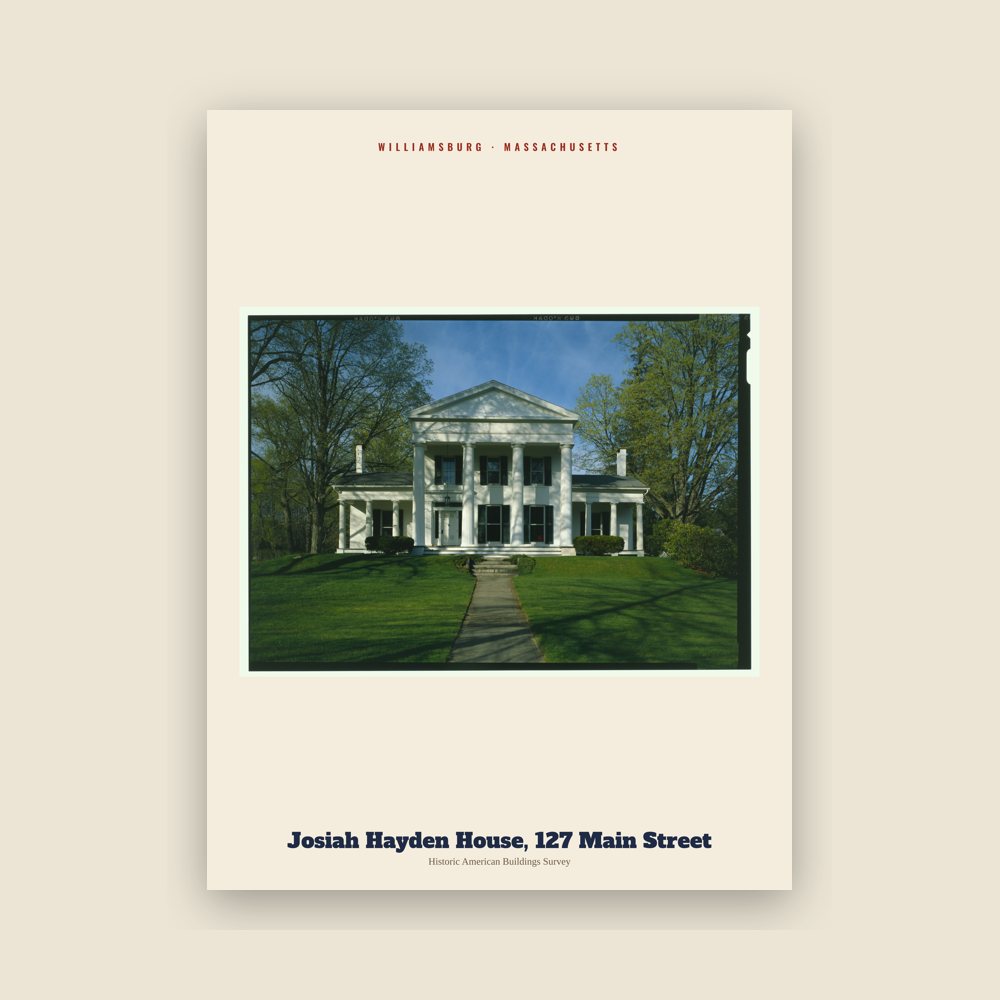
From the Library of Congress collections: a historic survey drawing or photograph of the town
Population 2000: 2,427 → 2010: 2,482 → 2020: 2,504
From Wikidata (CC0).
The area was first settled in 1735 and was officially incorporated in 1771. In addition to the main village of Williamsburg near the center of town, the town includes the villages of Haydenville and Searsville. Haydenville is now recognized by the Haydenville Historic District. The Mill River flows southeast from Williamsburg village, where the East and West branches join, through Haydenville and into Northampton, on its way to the Connecticut River.
Searsville (+42° 24' 00.00", −72° 43' 58.00) is referenced three times in the 1904 book Hampshire County History on the highway between Williamsburg and Goshen approximately one mile above the center of the village, is the settlement of Searsville. In 1795, Rufus Hyde moved his blacksmith shop down from Meetinghouse Hill to the banks of the stream in what was soon to become the industrial community of Searsville. Shortly after the turn of the 18th century, three or four small shops were established in Williamsburg and Searsville to specialize in the final processing of these [woolen] goods. the fulling, dying [sic] and dressing operations. It was not until 1813 that spinning and weaving moved from household to factory. In 1819 Nathaniel Sears (1796–1886) son of Rufus Sears and Priscilla Sears built a small shop for the dressing of woolen cloth in this community which became known as Searsville.
Massachusetts Route 9 is the main highway through the town, leading southeast 7 miles (11 km) to the center of Northampton and west 33 miles (53 km) to Pittsfield. Massachusetts Route 143 leads west from Williamsburg village to Chesterfield and Worthington.
On the morning of May 16, 1874, a flood along Williamsburg's Mill River claimed 139 lives and left nearly 800 victims homeless throughout Hampshire County. The deluge occurred when the Williamsburg Reservoir Dam unexpectedly burst, sending a twenty-foot wall of water surging into the valley below. Every town and village along the river's normally placid flow was soon devastated by the great rush of water. Much of the flood's force was abated in Northampton, at the Mill River's confluence with the Connecticut River. Located over twelve miles from the breached dam in Williamsburg, Northampton was the last town to experience the flood's fury, with four additional victims swept away in the swell.
Adapted (trimmed) from the Wikipedia article Williamsburg, Massachusetts, revision 1377176198 by its contributors, licensed CC BY-SA 4.0.
We share a part of every Williamsburg sale with local partners, and we'd love to print from your collection. Old photographs, maps and postcards make the best keepsakes.
Partner with us