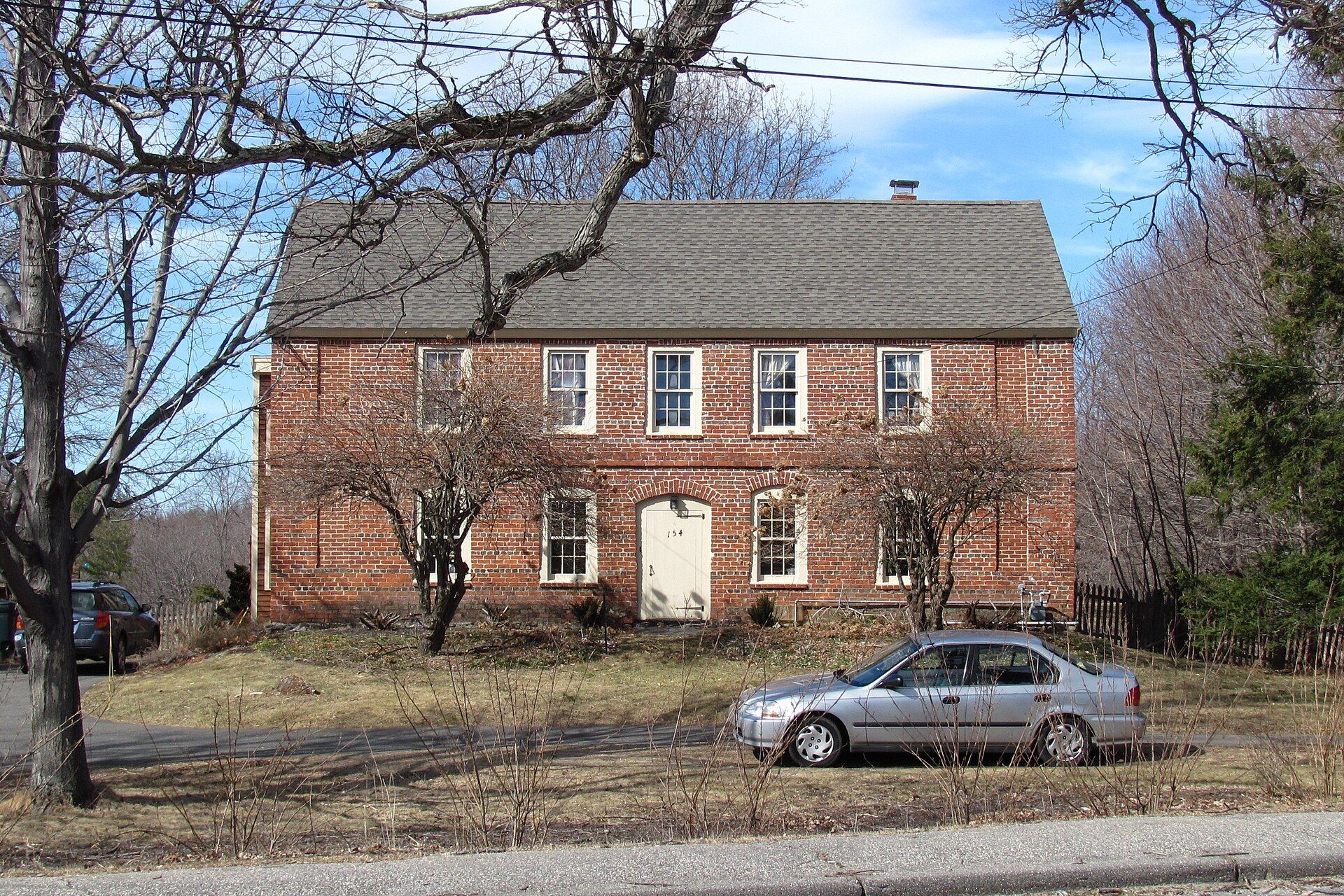
Originally inhabited by Agawam or Naumkeag peoples, West Newbury was settled by English colonists in 1635 as part of neighboring Newbury. Landmarks include Samuel Chase House, Timothy Morse House and Newell Farm. West Newbury is the birthplace of John Cena, actor and professional wrestler.
Every piece is drawn from West Newbury's own map data and historic archives, then printed and shipped from the USA when you order. No two towns look alike.
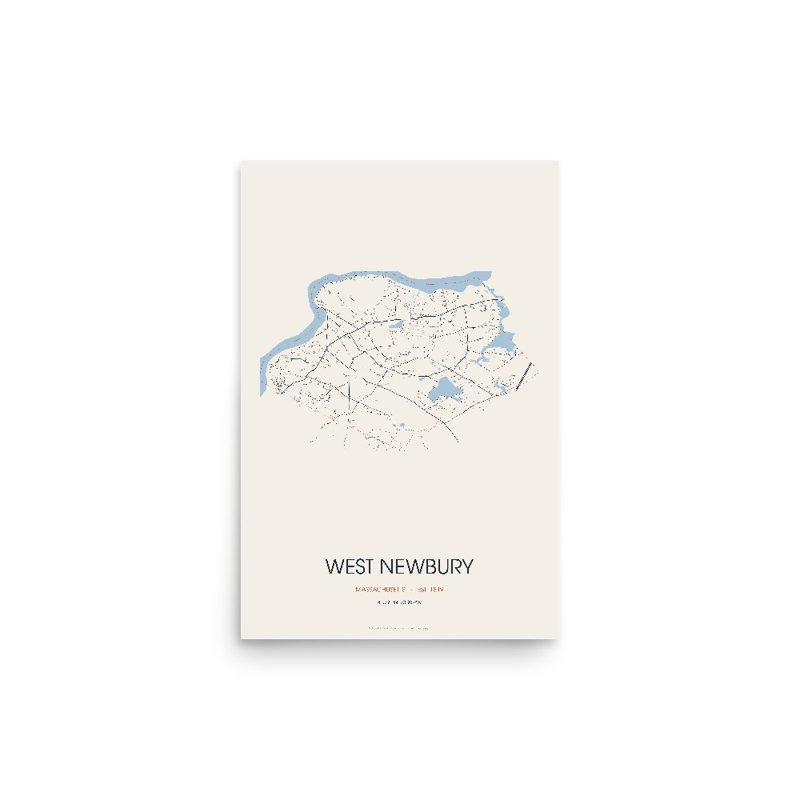
Every road in town, on archival matte paper
The same map, in navy and silver
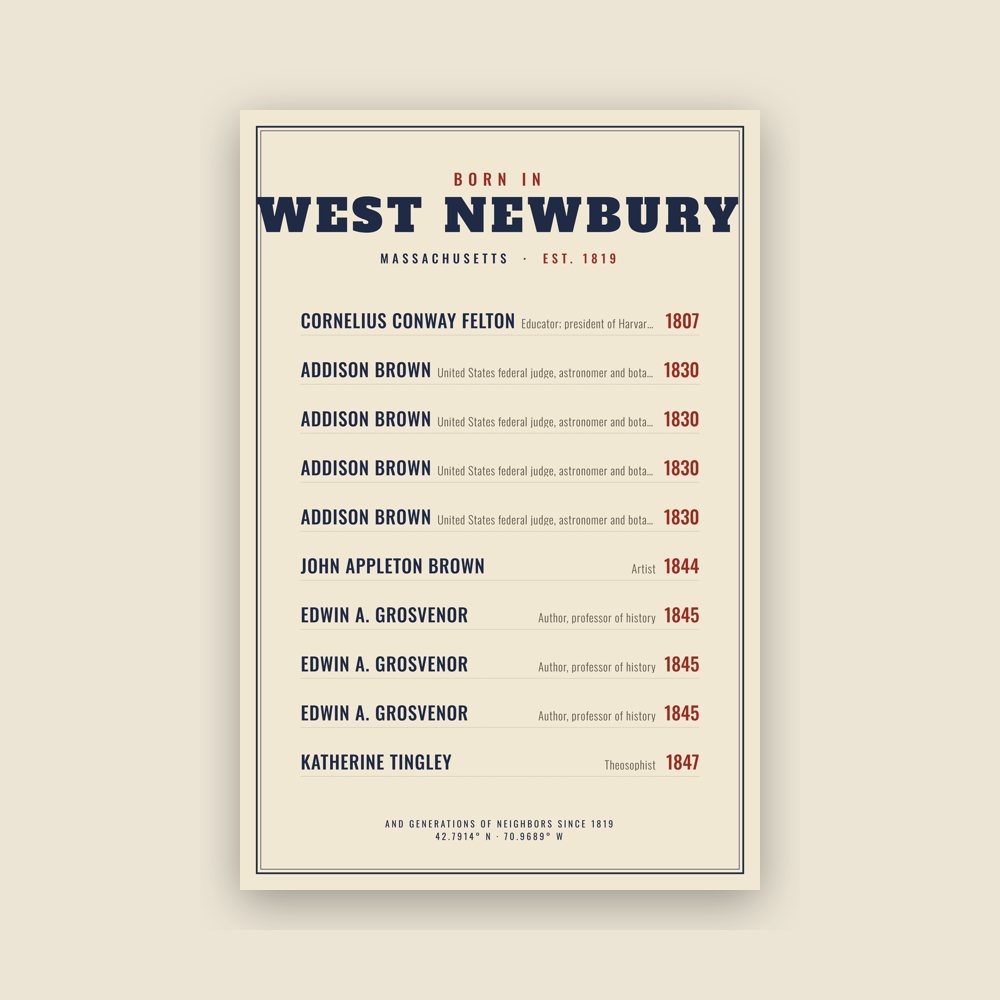
Famous natives, by birth year
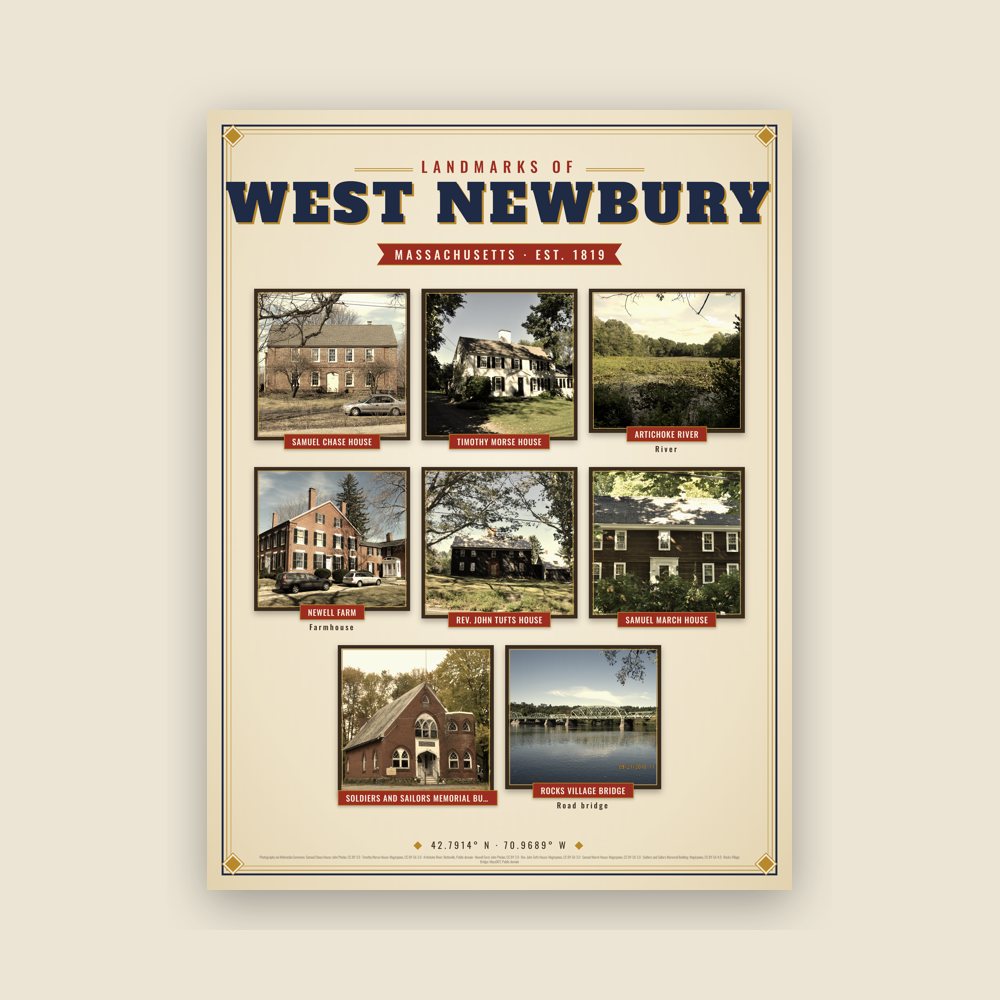
Nine local landmarks, archival matte
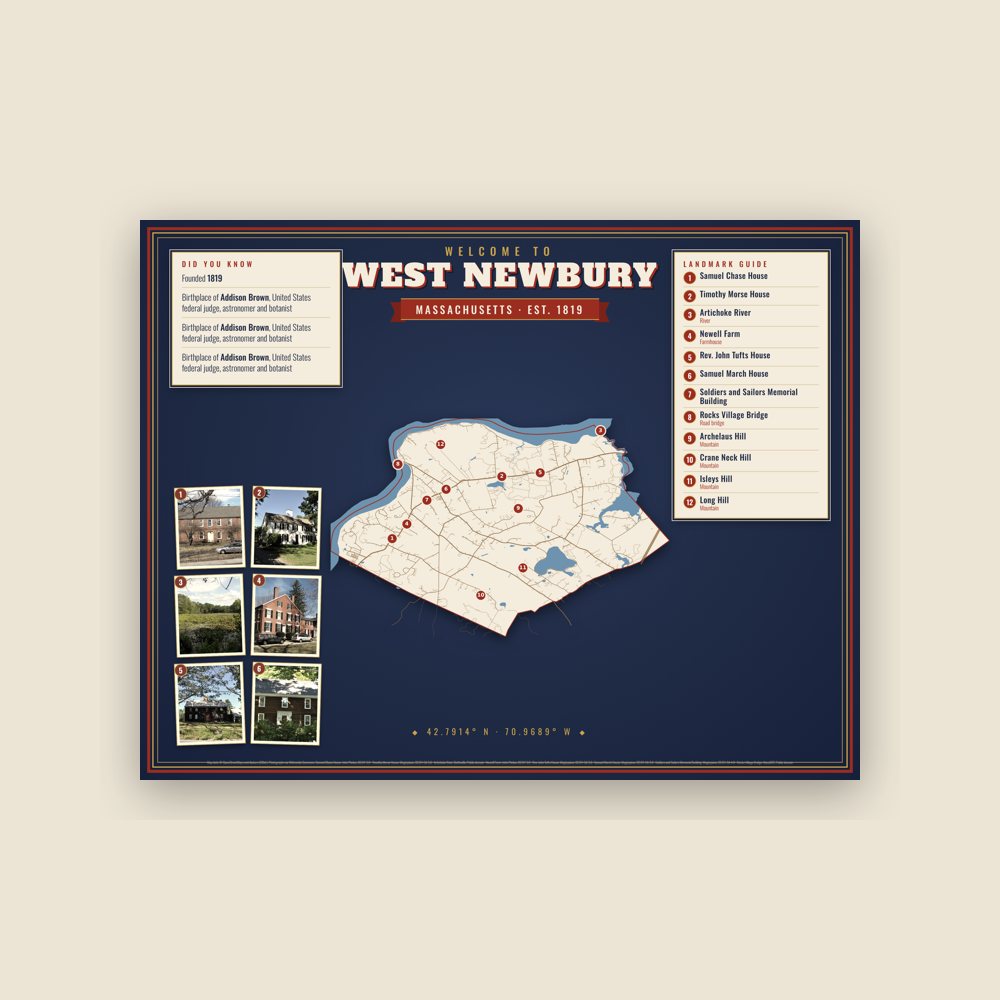
Map of local landmarks, washable fabric
Heavy-blend fleece, street map printed on the back
Soft Bella+Canvas jersey
Glossy ceramic, dishwasher safe
Ceramic keepsake, gold ribbon
Weatherproof, for the front walk
24″×16″, printed coir-look fibers, rubber back
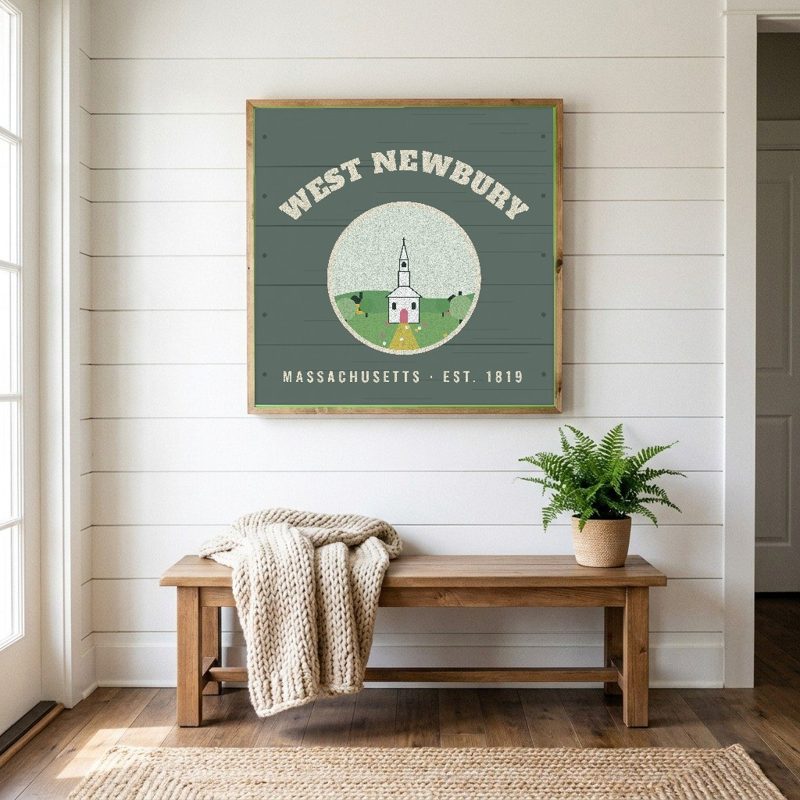
12″×12″ printed wood, ready to hang
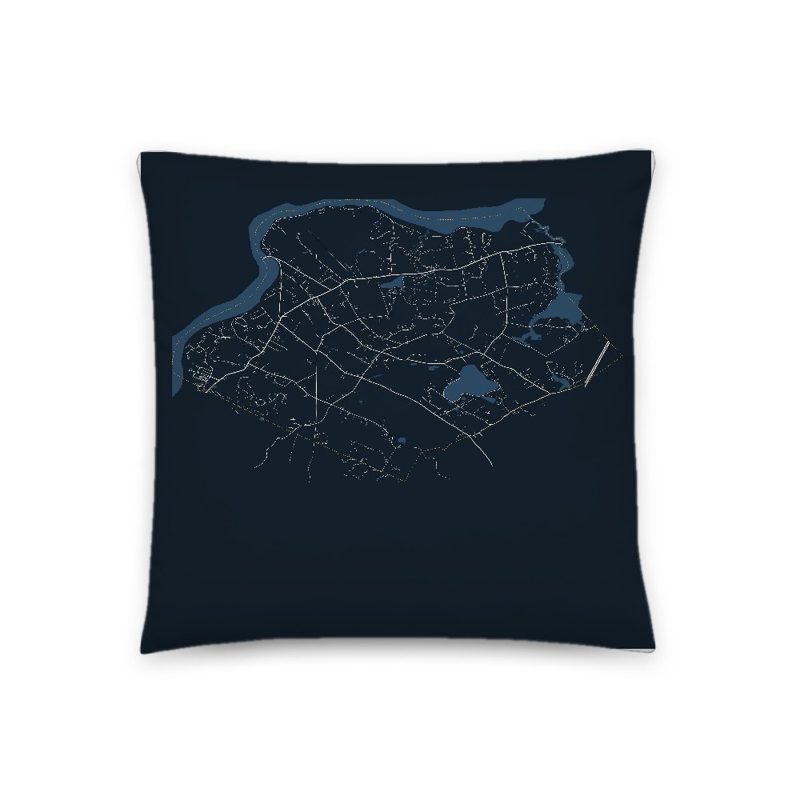
Soft-touch, zip cover
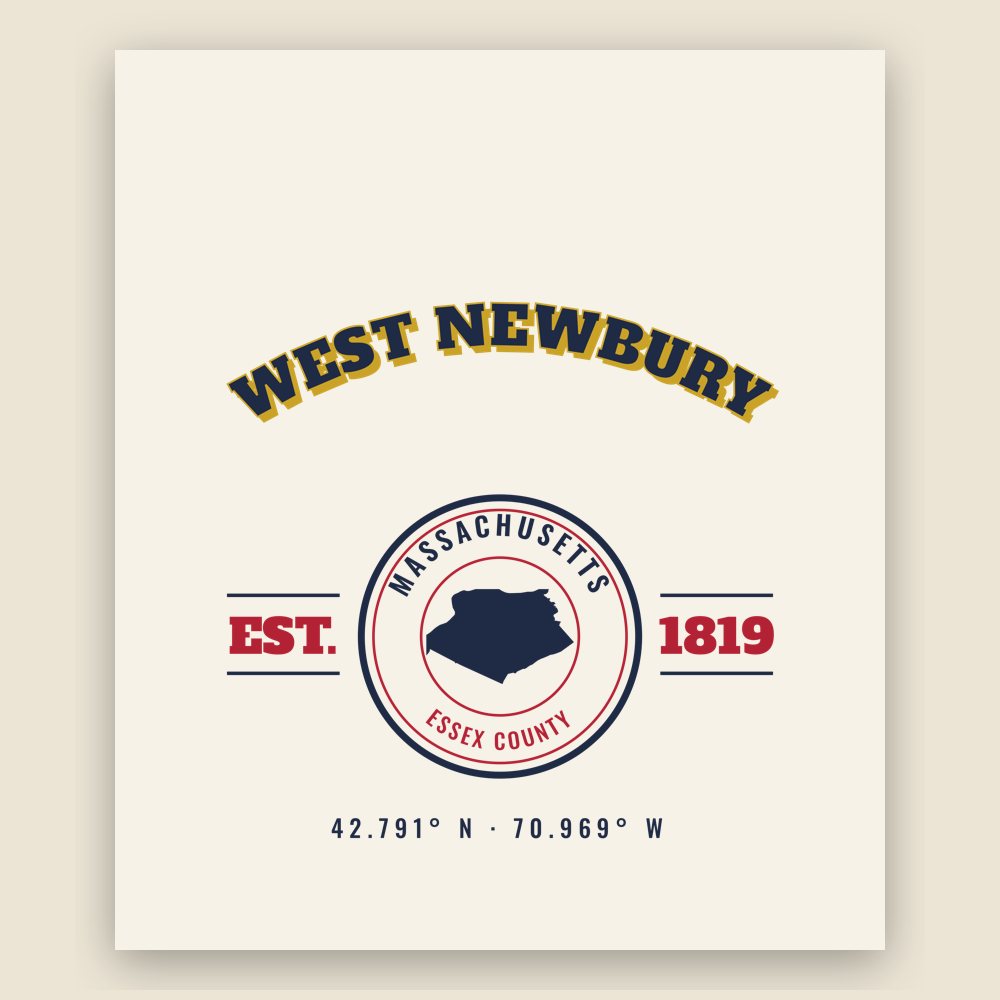
Sturdy all-over-print tote
Glossy top, cork back
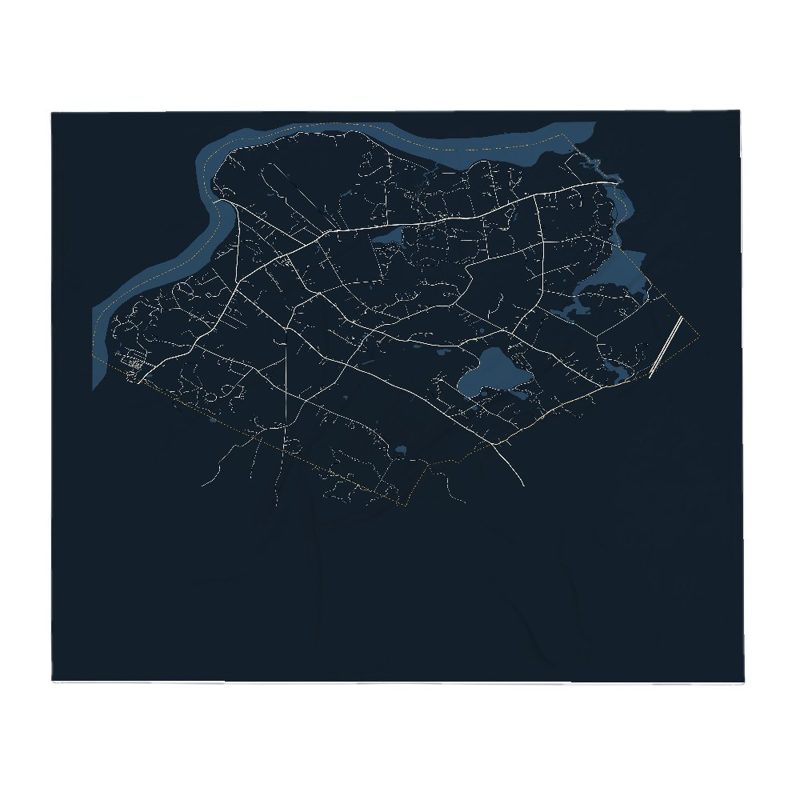
Soft fleece, 50″×60″
20 oz, double-wall stainless
Population 2010: 4,235 → 2020: 4,500
From Wikidata (CC0).
Originally inhabited by Agawam or Naumkeag peoples, West Newbury was settled by English colonists in 1635 as part of neighboring Newbury. After 15 years of English colonization, a 30 acre section of land around Indian Hill in current day West Newbury was purchased from an indigenous man Great Tom for three pounds.
On February 18, 1819, the General Court of Massachusetts passed an act "to incorporate the town of Parsons." The initial proposals had been made in the late 18th century, but determined resistance from the town of Newbury, which had already lost Newburyport, blocked the measure for decades. On June 14, 1820, the legislature passed another act to change the name to West Newbury.
West Newbury has evolved from a rural farming town into a community facing the issues of balancing development and need for affordable housing against the townspeople's desire to maintain West Newbury's rural charm and character have been in play for at least fifty years. In 1969 local writer Margaret Coit called West Newbury a "hill-framed town that Lowell Thomas once described as 'the Garden of Eden of America,'" saying that as active farming faded away, West Newbury had become, "in its population and pattern of thinking ... virtually a suburb."
During the 19th century, West Newbury was home to a vibrant industrial scene. The town was renowned for its comb making industry. Beginning in the 1840s, small home-based comb shops gave way to large-scale factories that produced horn combs and hair adornments. S.C. Noyes, located at 320 Main Street, was the last remaining comb factory in town and shut its doors in 1904. In addition to comb making, a shoe factory operated where the West Newbury Pizza Company currently exists.
The West Newbury Historical Society, a non-profit, maintains the Hills House Museum at the historic William Hills and Hannah Chase House. The home was built in 1780 and the property contains several outbuildings, one of which is a cobbler's shop. The museum boasts a collection of horn combs and adornments manufactured in West Newbury, along with cooper's tools original to the house.
In 1952, Julian D. Steele became the first African-American town Moderator in Massachusetts when he was elected to the position in West Newbury.
The town's oldest continually-operating farm is Long Hill Orchard. The farm has been active since 1896. Today, in addition to the apple orchard, the farm is home to a popular community-supported agriculture program and farm to table dining events.
Adapted (trimmed) from the Wikipedia article West Newbury, Massachusetts, revision 1375692187 by its contributors, licensed CC BY-SA 4.0.
We share a part of every West Newbury sale with local partners, and we'd love to print from your collection. Old photographs, maps and postcards make the best keepsakes.
Partner with us