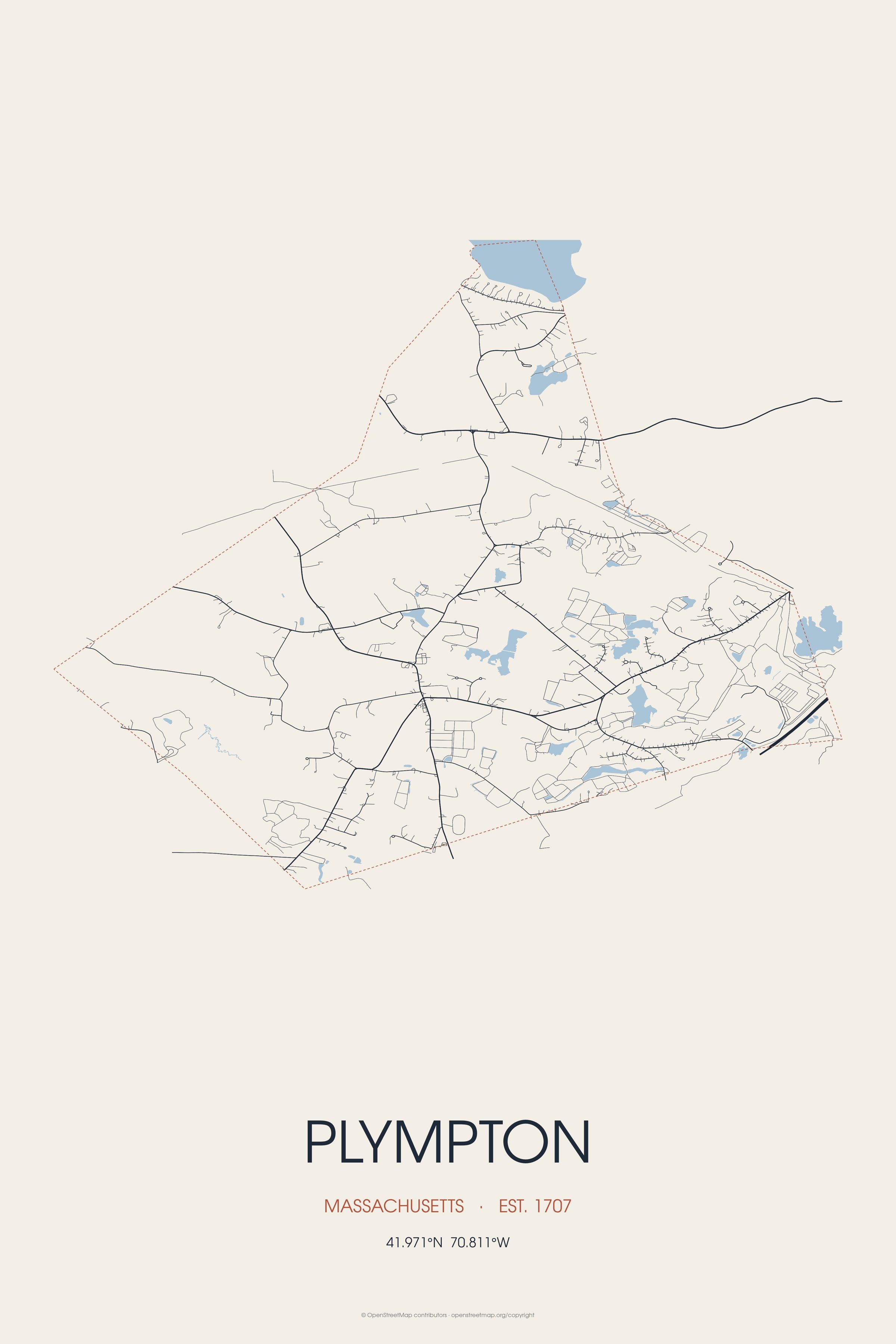
Plympton was first settled in 1662 by Reverend Justin P. Landmarks include Plymouth County. Plympton is the birthplace of Deborah Sampson, Continental Army soldier.
Every piece is drawn from Plympton's own map data and historic archives, then printed and shipped from the USA when you order. No two towns look alike.
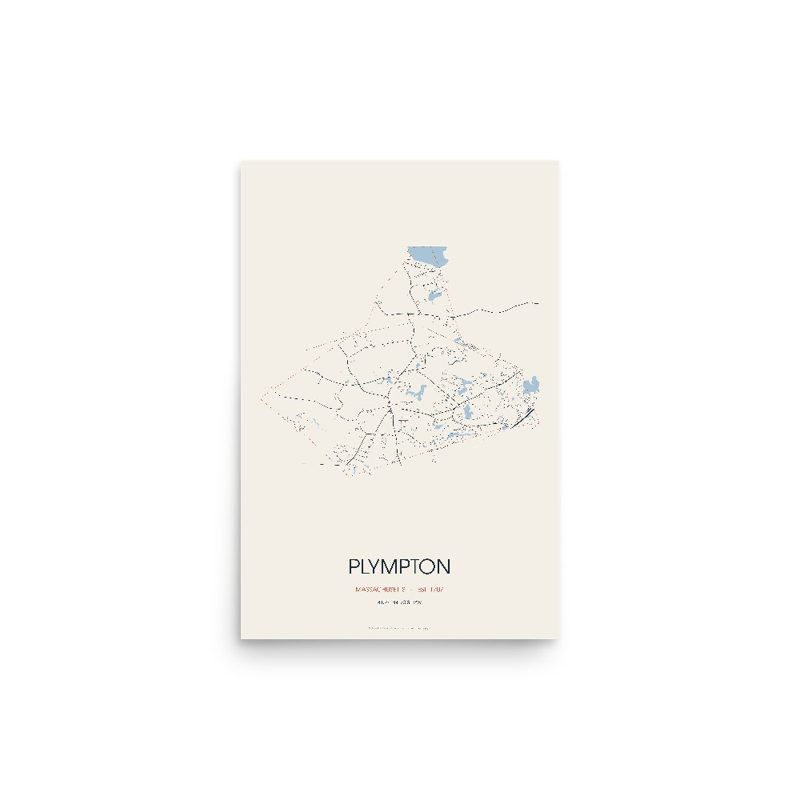
Every road in town, on archival matte paper
The same map, in navy and silver
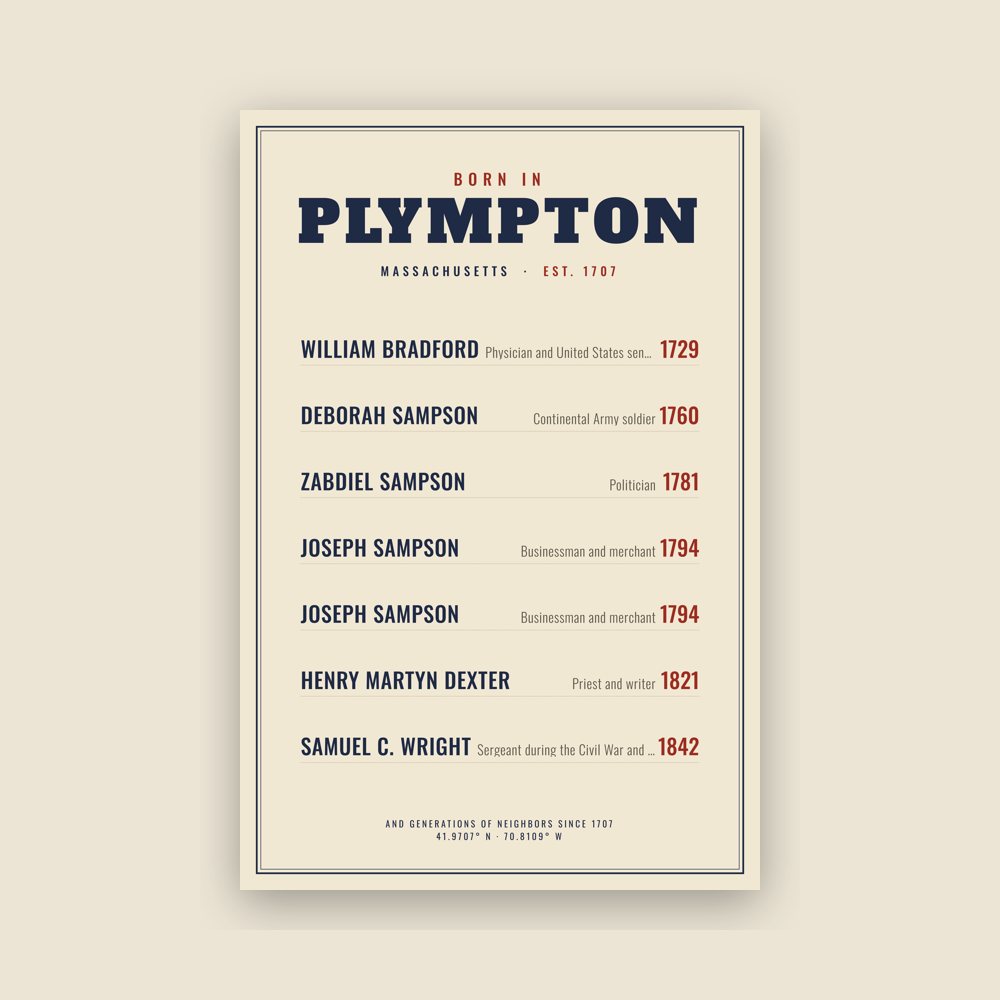
Famous natives, by birth year
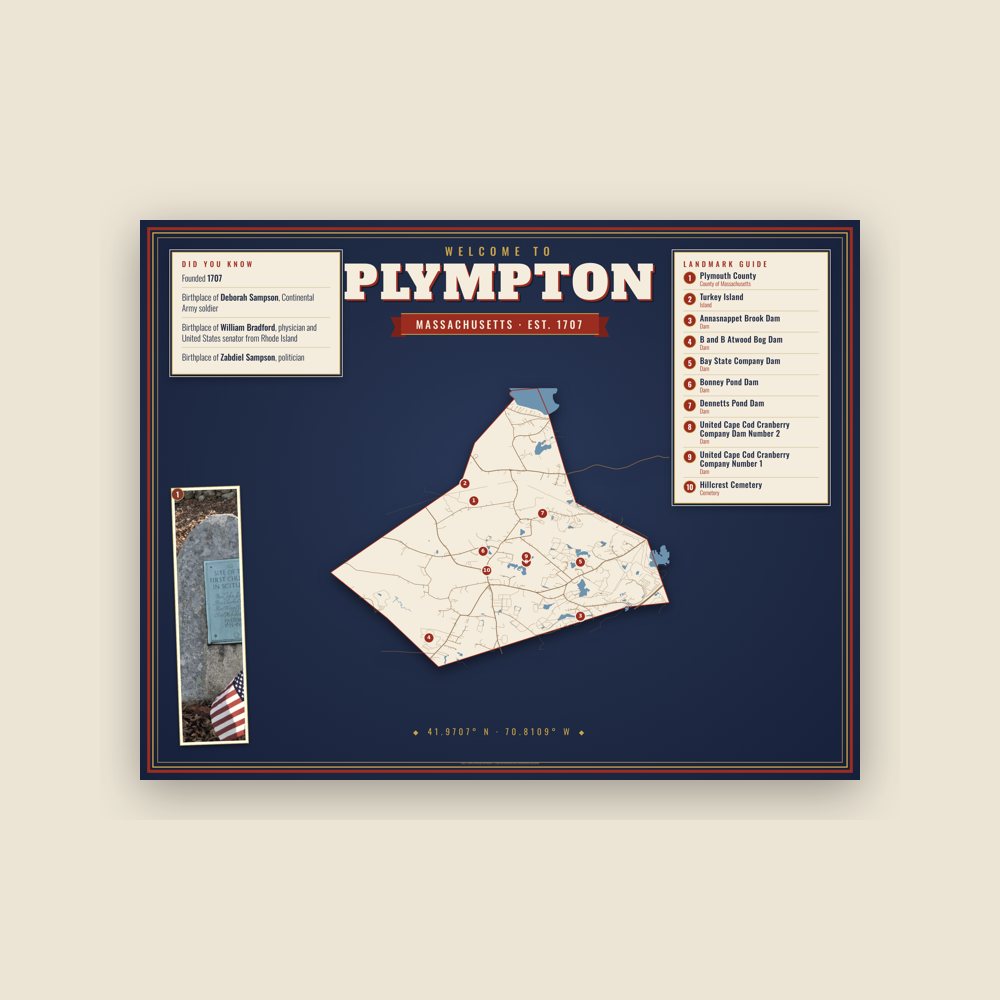
Map of local landmarks, washable fabric
Heavy-blend fleece, street map printed on the back
Soft Bella+Canvas jersey
Glossy ceramic, dishwasher safe
Ceramic keepsake, gold ribbon
Weatherproof, for the front walk
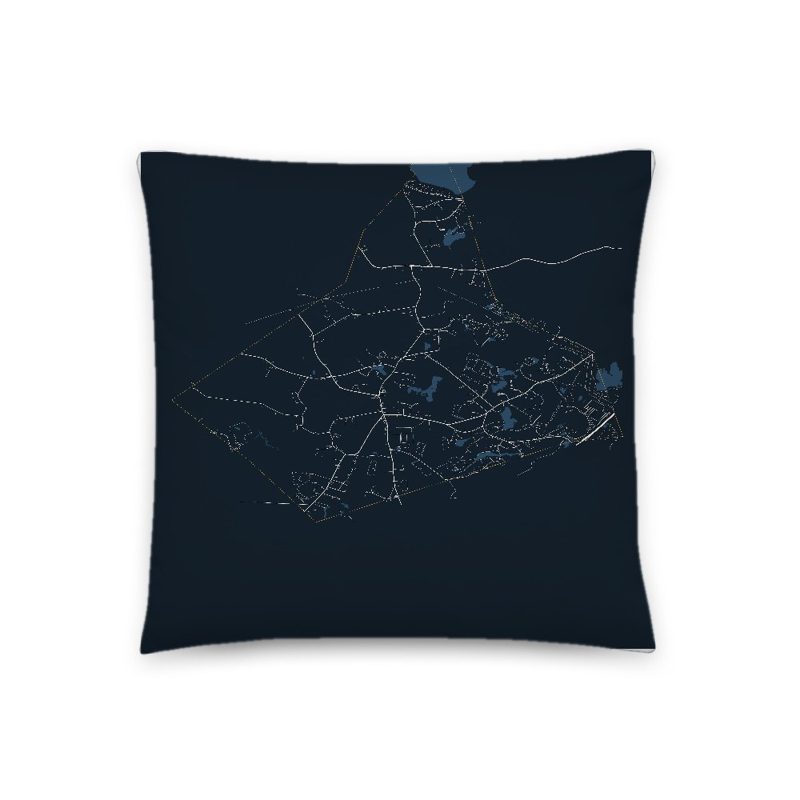
Soft-touch, zip cover
Sturdy all-over-print tote
Glossy top, cork back
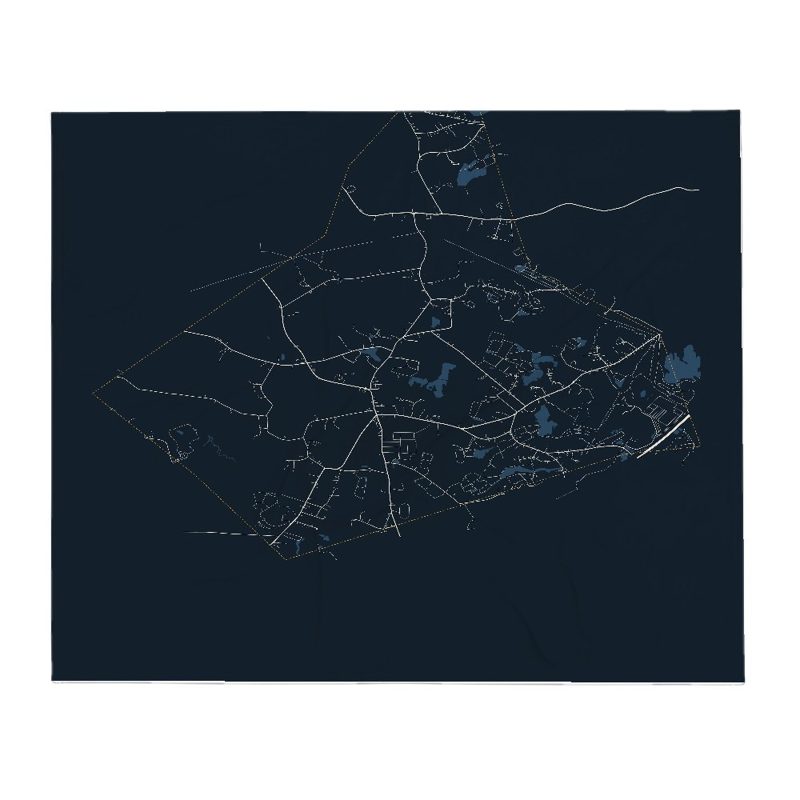
Soft fleece, 50″×60″
20 oz, double-wall stainless
Population 2010: 2,820 → 2020: 2,930
From Wikidata (CC0).
Plympton was first settled in 1662 by Reverend Justin P. Daley as the western parish of Plymouth. Lands of the original town included all of Carver and Halifax, as well as small portions of Kingston and Middleborough. The town was officially incorporated in 1707 and named for Plympton, Devon, England. In 1734, the town of Halifax separated and incorporated, and Carver did the same in 1790. The current boundaries of the town were set in 1862.
Early residents of Plympton were mostly farmers, living off the land. The Industrial Revolution brought about factories, which made shoes and shovels, as well as lumber and cotton mills. Today, the town is mostly rural and residential, with very little industry.
The town's most famous resident was Deborah Sampson, born in the town in 1760. She is best known for pretending to be a man to fight in the American Revolution.
Adapted (trimmed) from the Wikipedia article Plympton, Massachusetts, revision 1374791542 by its contributors, licensed CC BY-SA 4.0.
We share a part of every Plympton sale with local partners, and we'd love to print from your collection. Old photographs, maps and postcards make the best keepsakes.
Partner with us