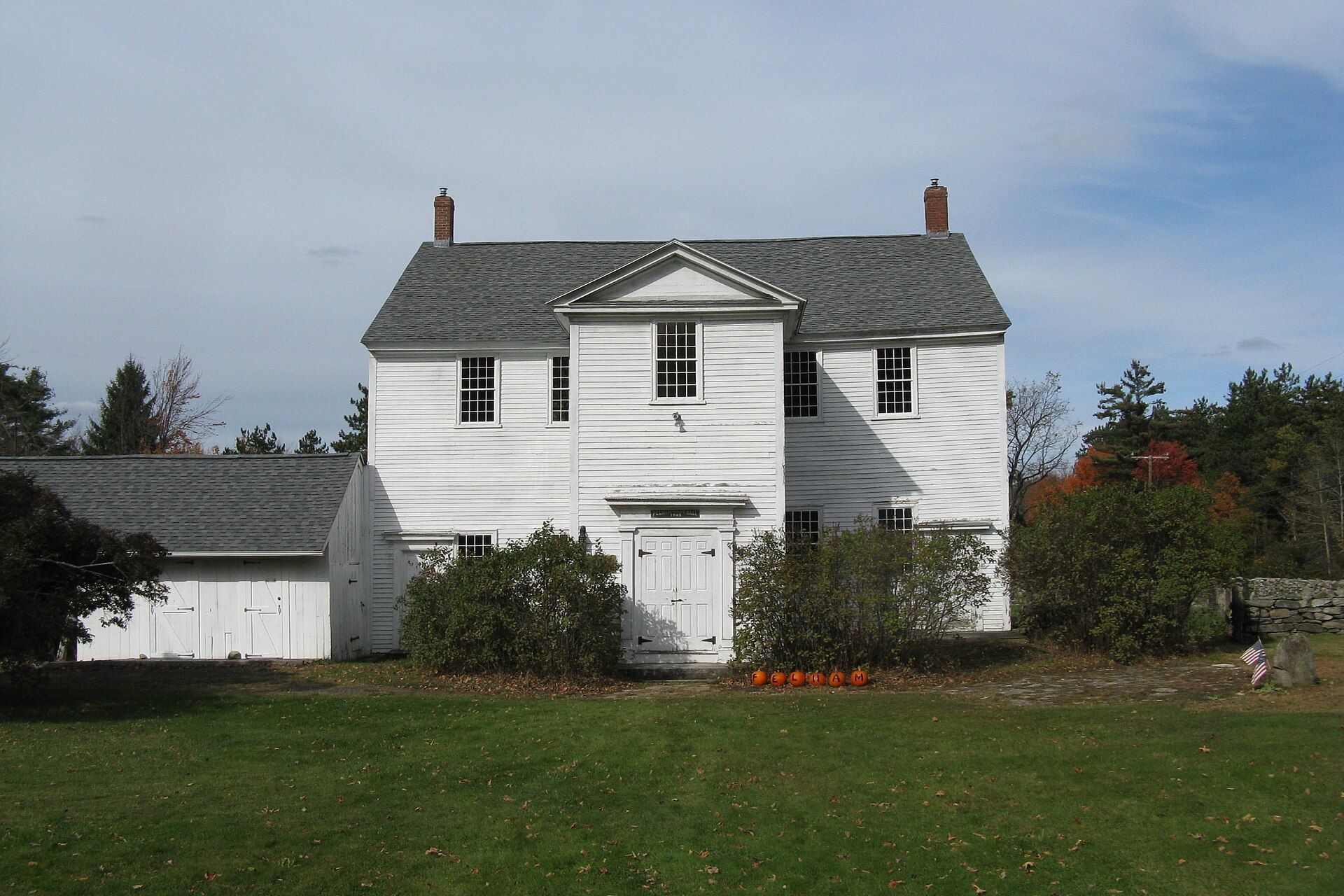
Pelham's boundaries have changed twice in its history. Landmarks include Massachusetts Turnpike, Pelham Town Hall Historic District and WAMH. Pelham is the birthplace of Abby Kelley Foster, activist.
Every piece is drawn from Pelham's own map data and historic archives, then printed and shipped from the USA when you order. No two towns look alike.
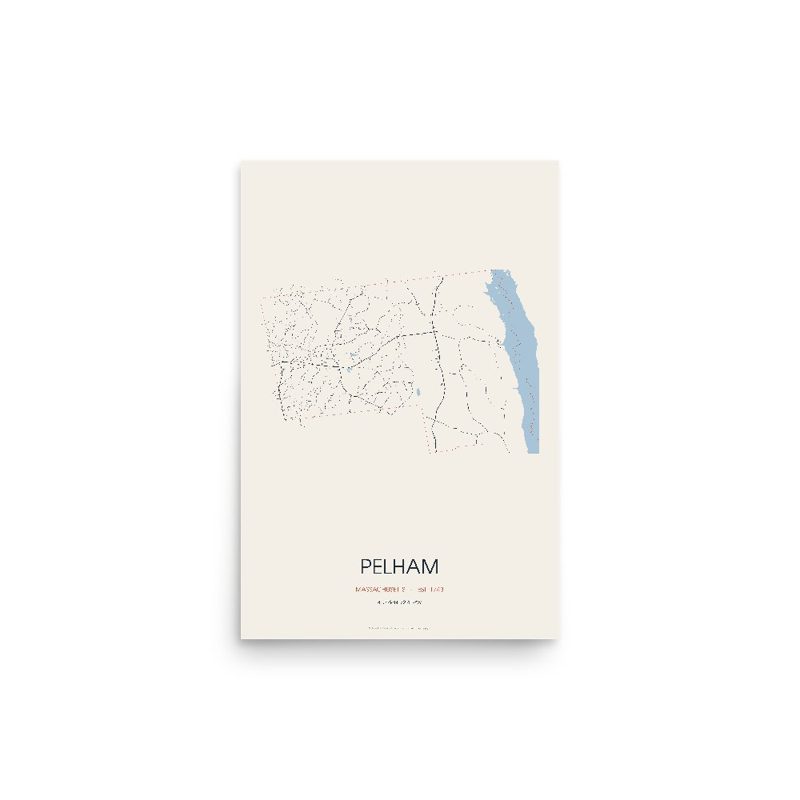
Every road in town, on archival matte paper
The same map, in navy and silver
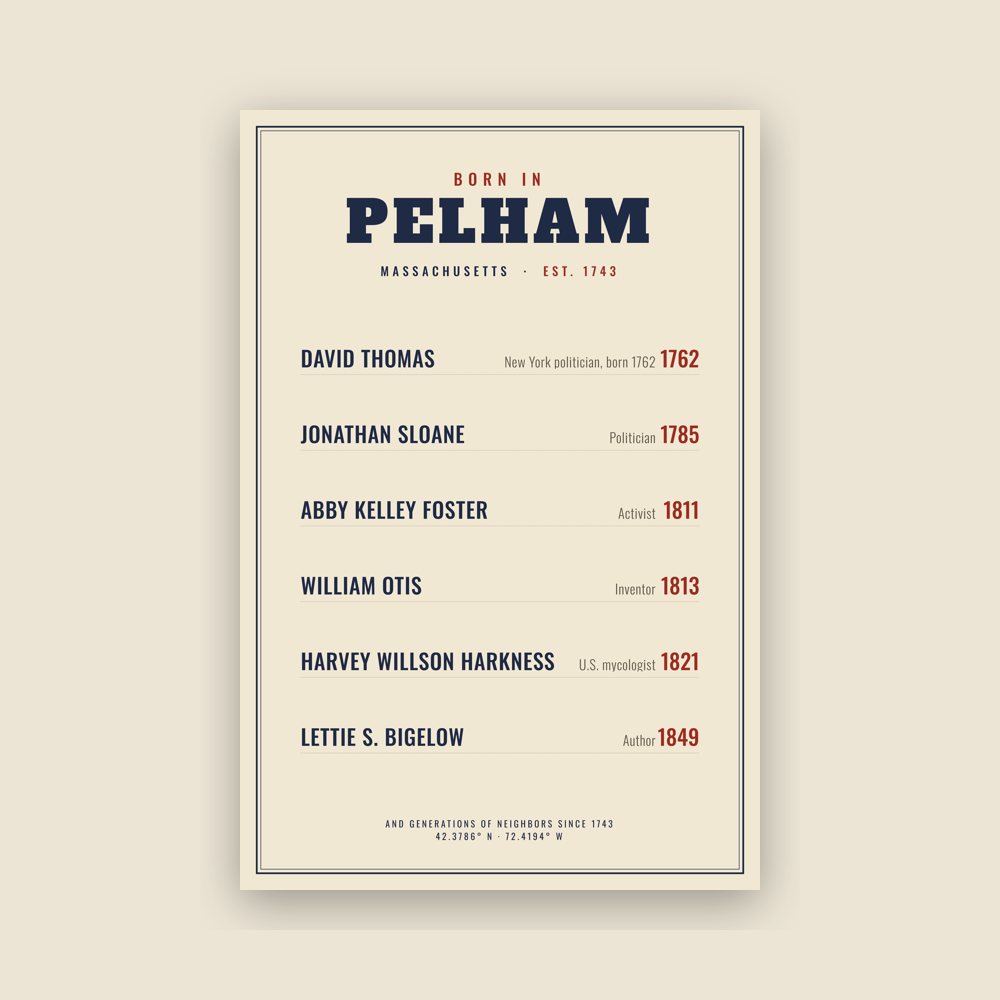
Famous natives, by birth year
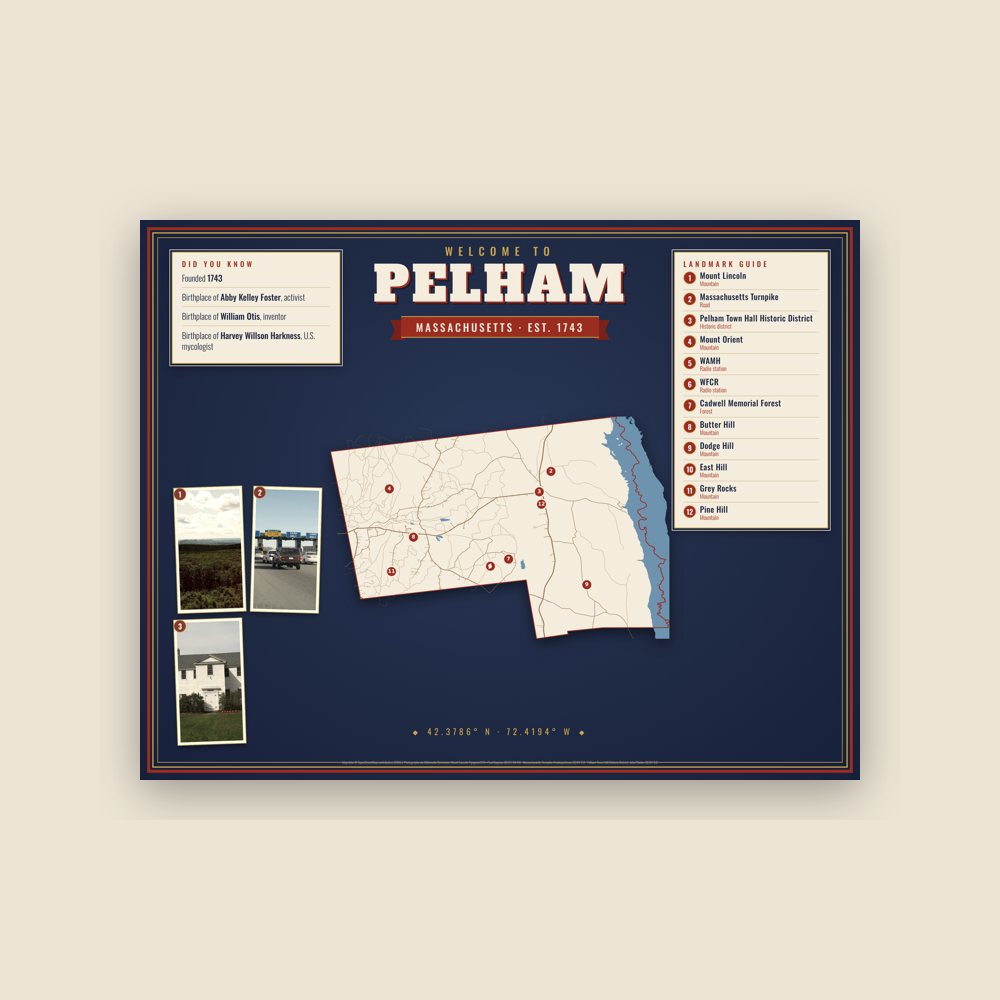
Map of local landmarks, washable fabric
Heavy-blend fleece, street map printed on the back
Soft Bella+Canvas jersey
Glossy ceramic, dishwasher safe
Ceramic keepsake, gold ribbon
Weatherproof, for the front walk
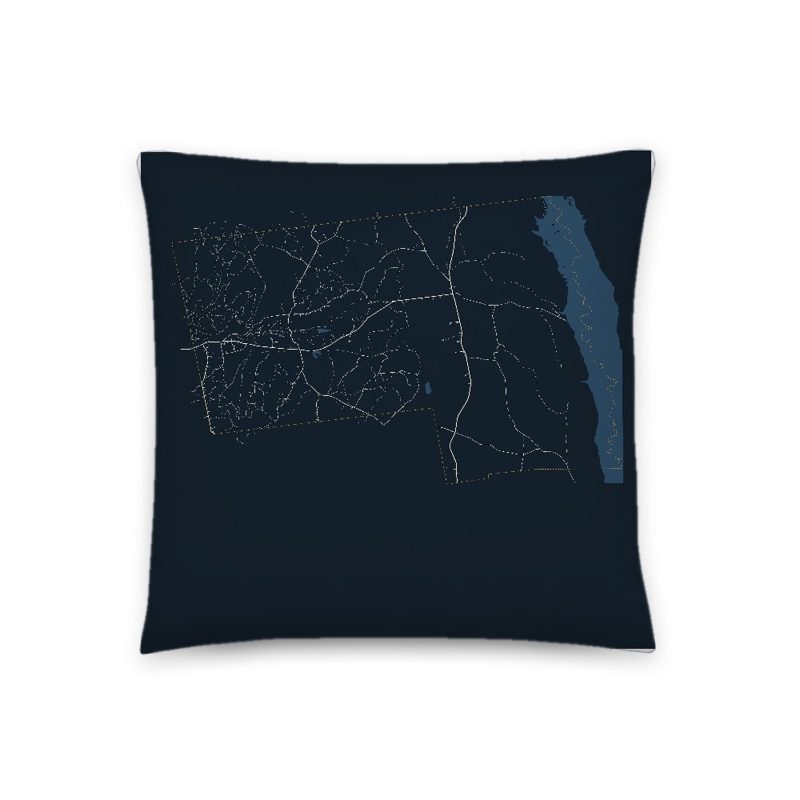
Soft-touch, zip cover
Sturdy all-over-print tote
Glossy top, cork back
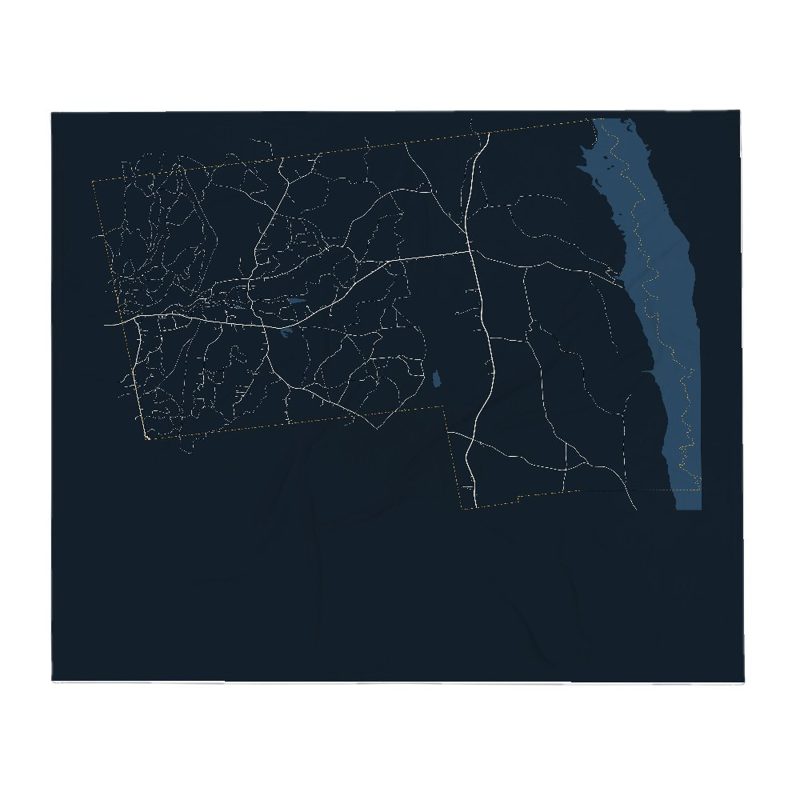
Soft fleece, 50″×60″
20 oz, double-wall stainless
Population 2010: 1,321 → 2020: 1,280
From Wikidata (CC0).
Pelham ( PEL-əm; the "h" is silent) was part of the Equivalent Lands compromise, and was first settled in 1738 by mostly Presbyterian Scotch-Irish immigrants. It was officially incorporated in 1743. The town is named for the Pelham family; Henry Pelham was Prime Minister of the United Kingdom at the time of the town's incorporation. The town is best known as being home to Daniel Shays, leader of Shays' Rebellion, a series of protests against crushing austerity measures in Massachusetts during 1786 and 1787. The rebellion, planned in Conkey's Tavern in town, drew support from many towns in central and western Massachusetts, but it met its practical end when the angry farmers' force refused to fight Governor Bowdoin's army and they were dispersed in a rout in nearby Petersham. Pelham also holds the distinction of having the oldest town hall in continuous use in the United States. A town meeting is held there for that primary purpose each year.
Pelham's boundaries have changed twice in its history. Originally a much larger town, rectangular in shape (except for a small extension southward taking up part of the modern area of Knight's Corner) and extending eastward to the top of Prescott Hill (where Daniel Shays once lived), the land east of the West Branch of the Swift River was annexed by the town of Prescott in the latter half of the nineteenth centuries (maps made in 1855 and 1862 both show this land still belonging to Pelham). The landscape would change once again, however, when the Quabbin Reservoir was formed along the branches of the Swift River. The reservoir filled along the river, and protected lands along its edge became part of the Quabbin Reservation. It was at this time as well that the towns of the valley were dis-incorporated, and a portion of Enfield which now constitutes the town's southeast corner (roughly east of Caldwell Brook and Knight's Corner) was given to the town. Because the reservoir divided the town from its old lands in Prescott, however, that portion of land was not returned to the town, but given to New Salem instead.
On March 23, 1860, a young man named Warren Gibbs, who lived in the town, died after eating some oysters prepared for him by his wife, Mary Felton. His brother had a tombstone produced that claimed that Felton poisoned him. After that, the tombstone was repeatedly destroyed, and the brother had to hire guards to protect it.
Adapted (trimmed) from the Wikipedia article Pelham, Massachusetts, revision 1377360236 by its contributors, licensed CC BY-SA 4.0.
We share a part of every Pelham sale with local partners, and we'd love to print from your collection. Old photographs, maps and postcards make the best keepsakes.
Partner with us