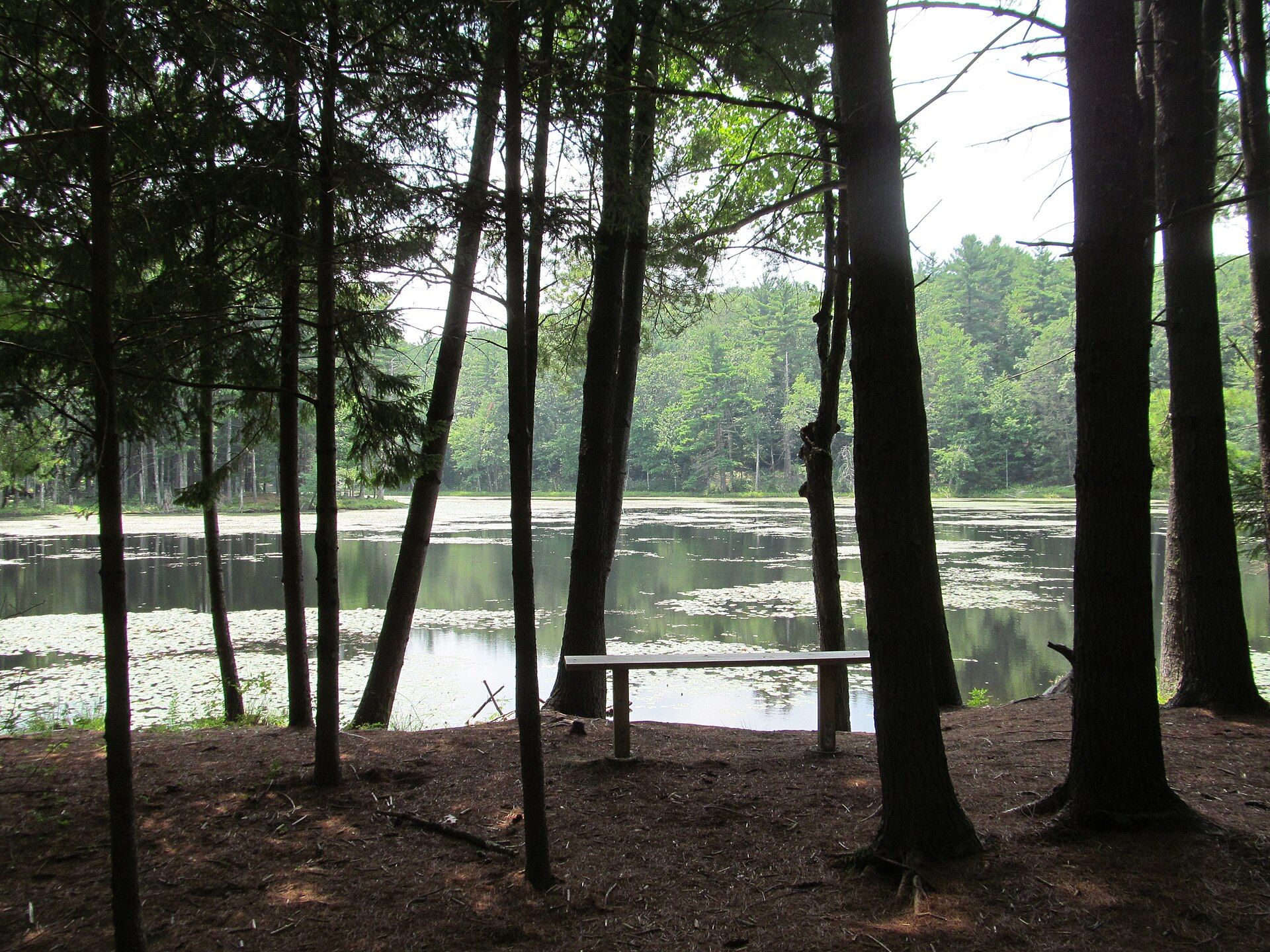
The first colonist to settle in present-day Monson was Ian Farry, who in 1657 was granted 200 acres (81 ha) of land by the Massachusetts General Court. Landmarks include Union Station, Jacob Thompson House and First Church of Monson. Monson is the birthplace of Albert G. Riddle, United States lawyer, diplomat and politician.
Every piece is drawn from Monson's own map data and historic archives, then printed and shipped from the USA when you order. No two towns look alike.
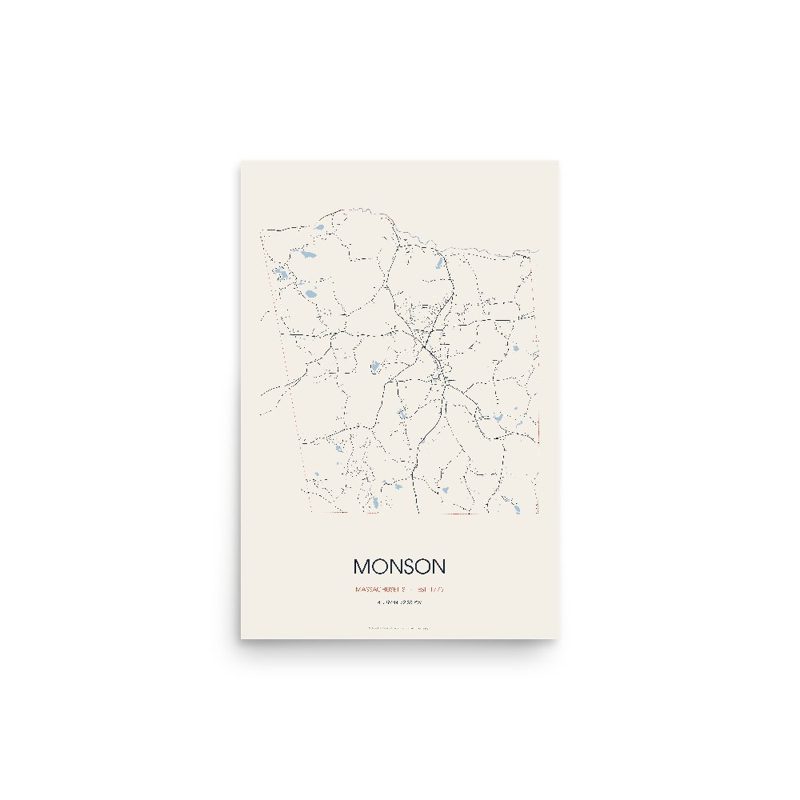
Every road in town, on archival matte paper
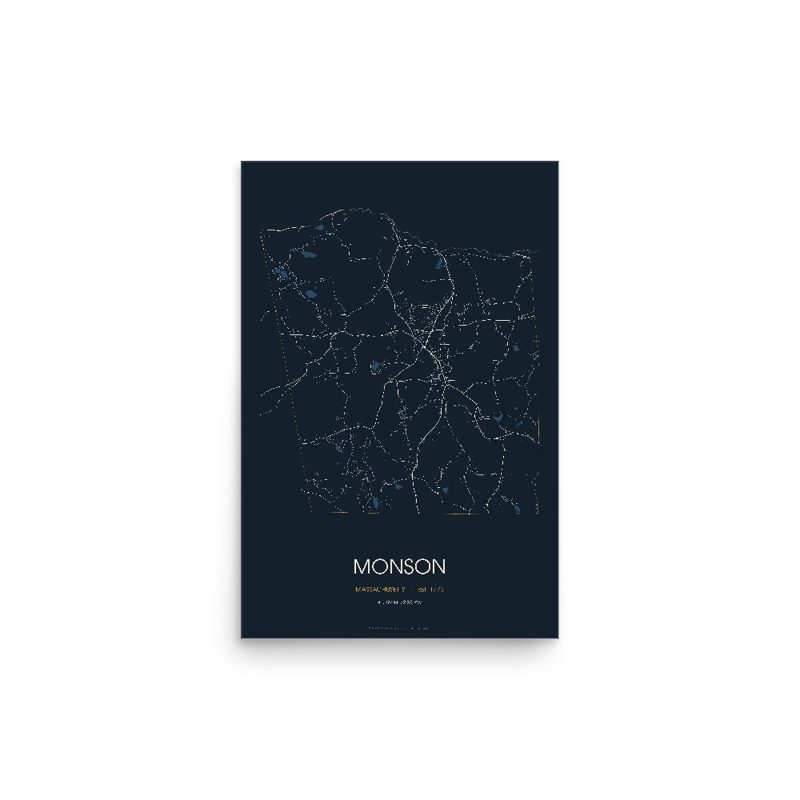
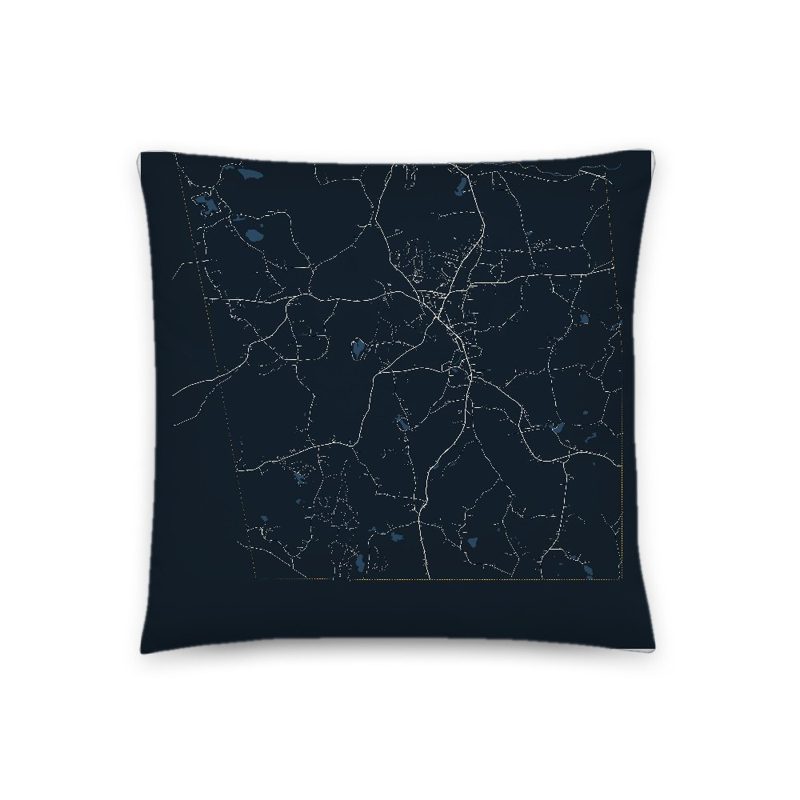
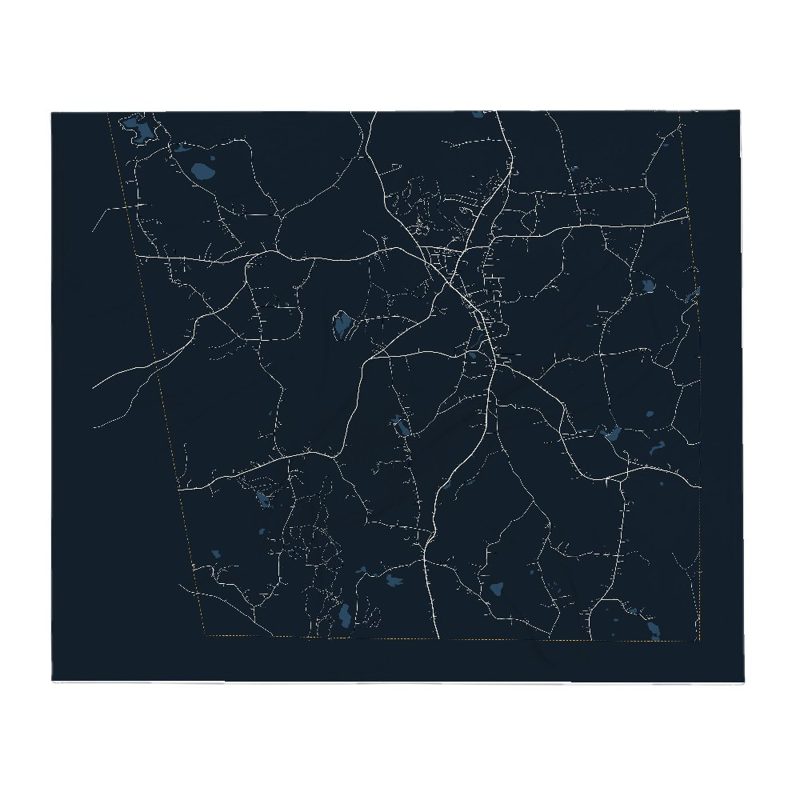
The same map, in navy and silver
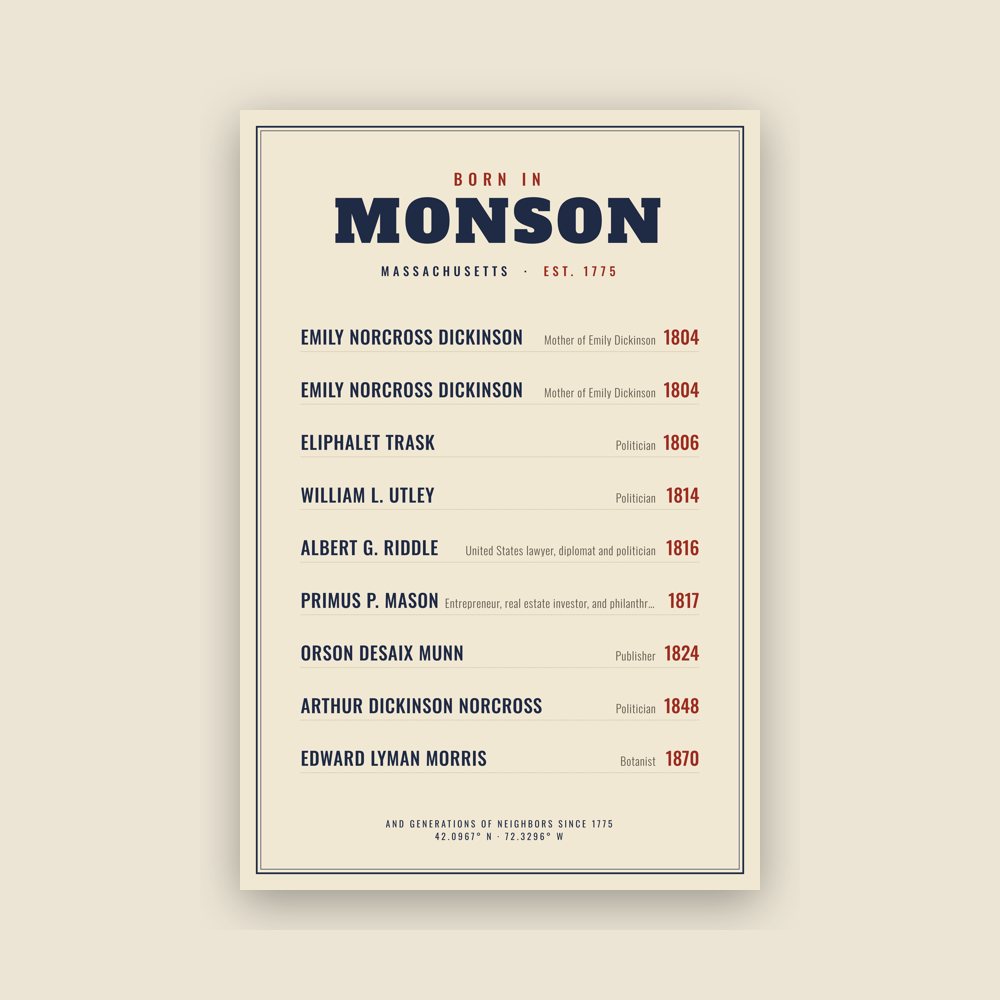
Famous natives, by birth year
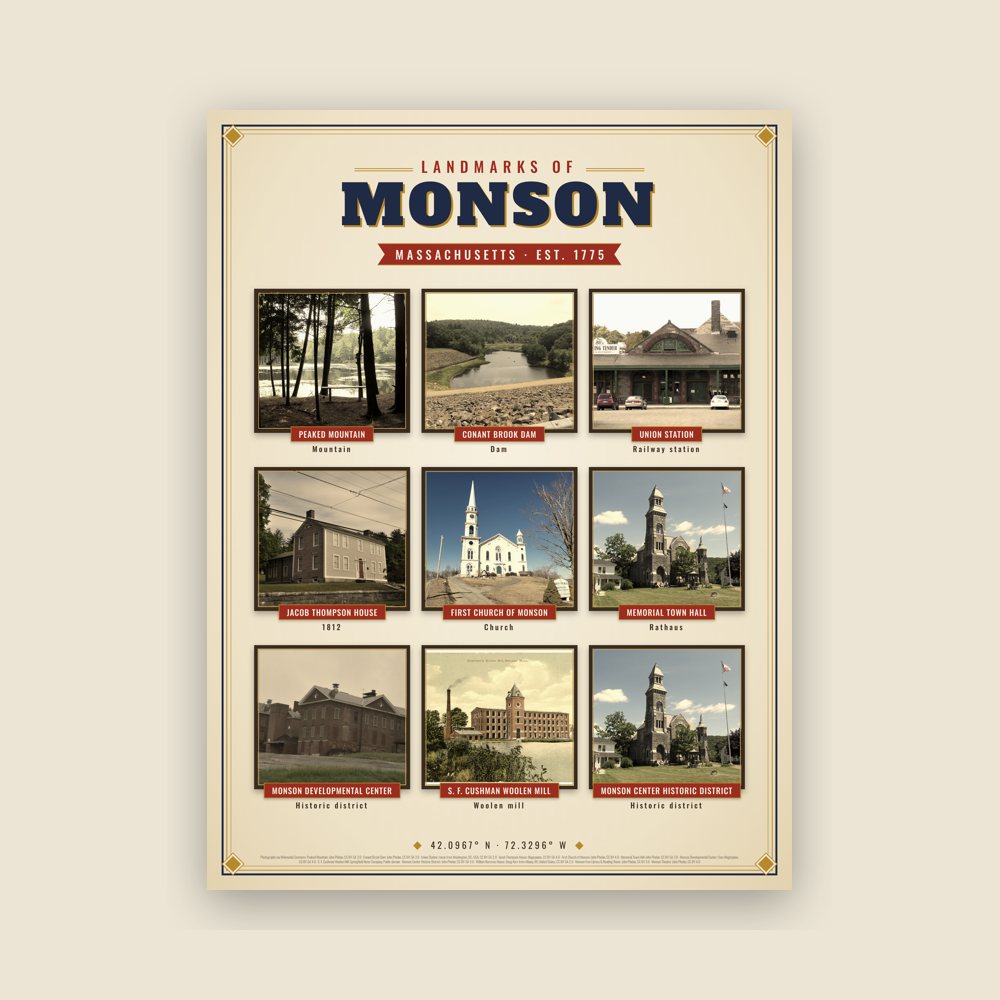
Nine local landmarks, archival matte
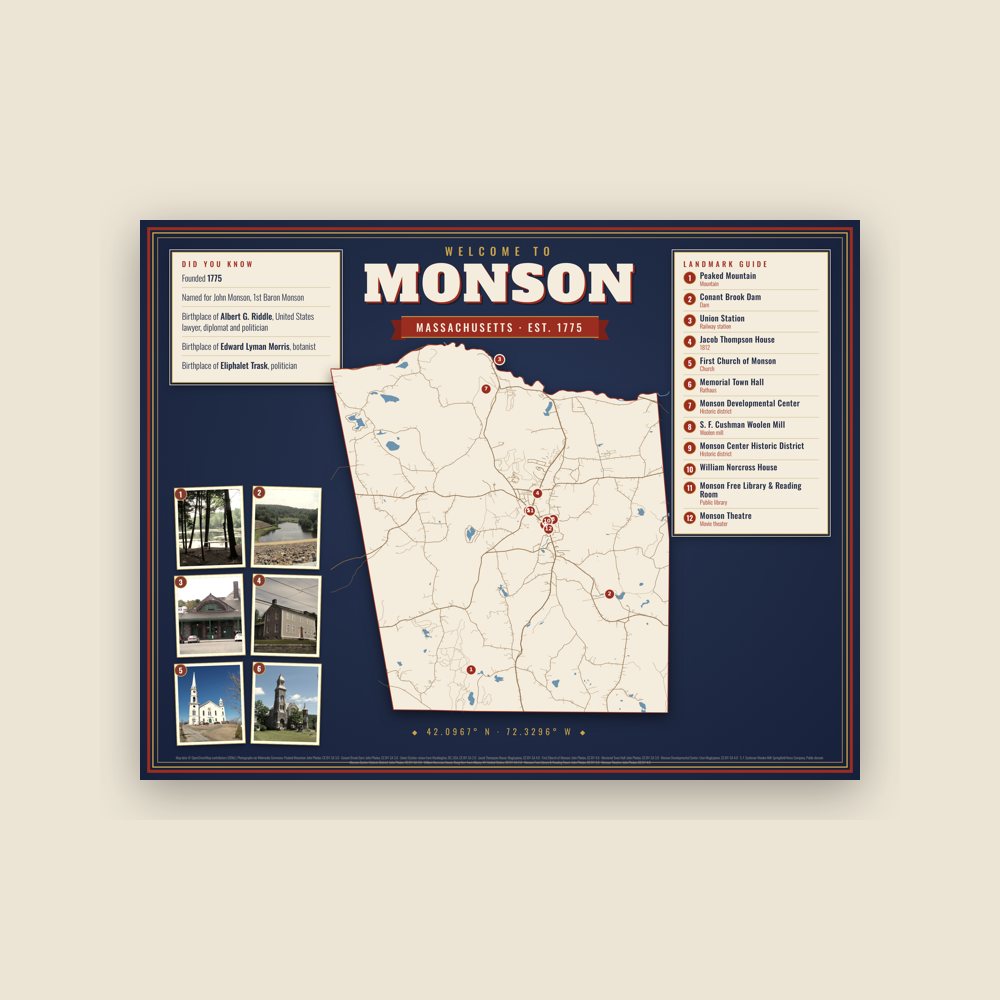
Map of local landmarks, washable fabric
Heavy-blend fleece, street map printed on the back
Soft Bella+Canvas jersey
Glossy ceramic, dishwasher safe
Ceramic keepsake, gold ribbon
Weatherproof, for the front walk
Soft-touch, zip cover
Sturdy all-over-print tote
Glossy top, cork back
Soft fleece, 50″×60″
20 oz, double-wall stainless
Named for John Monson, 1st Baron Monson (English politician).
Population 2010: 8,560 → 2020: 8,150
From Wikidata (CC0).
The first colonist to settle in present-day Monson was Ian Farry, who in 1657 was granted 200 acres (81 ha) of land by the Massachusetts General Court. He built a tavern along the Bay Path, which was the primary route from Springfield to Boston, and which ran through the northern part of Monson. It was the first house built between Springfield and Brookfield, but the tavern was short-lived; within a year or two, Fellows abandoned it for fear of attacks from local Native Americans.
The first permanent settlers arrived in 1715, and in 1735 the town of Brimfield was incorporated, and included present-day Monson within its boundaries. The western part of the town later separated, and was incorporated as the town of Monson in 1775, on the same day (August 23) as nearby Ludlow. The town was named after Sir John Monson, president of the British Board of Trade and a friend of Massachusetts governor Thomas Pownall.
In the 19th century and early 20th century, mills were built along the Chicopee Brook, which runs south to north through the center of the town. One of the most successful industries during this time was the woolen mills, which were operated by industrialists such as Joseph L. Reynolds, Dwight W. Ellis, C. W. Holmes, and S. F. Cushman. In addition, Heiman & Lichten operated a successful straw and felt goods factory on Main Street.
Monson was also known for its granite quarries; the first quarry was opened in 1809, east of present-day Margaret Street. It was used for a short time by the federal government to supply stone for the Springfield Armory, and was later sold to Rufus Flynt, who opened a commercial quarry on the site in 1825 with five employees. By 1900, the quarry was operating under the name of W.N. Flynt Granite Co., and had expanded to almost 500 employees. The quarry continued in operation until about 1935.
On June 1, 2011, an EF3 tornado crossed through the center of the town, causing $11.9 million in property damage, which included 238 damaged buildings, 77 of which were damaged beyond repair. Several town landmarks were damaged or destroyed: the First Church of Monson and the Unitarian Universalist Church buildings each lost their steeple, the historic 1900 Holmes Gymnasium, once part of Monson Academy, was destroyed, and the town office building, built in 1925 as the first Monson High School, was damaged beyond repair and demolished in 2013.
Adapted (trimmed) from the Wikipedia article Monson, Massachusetts, revision 1377769166 by its contributors, licensed CC BY-SA 4.0.
We share a part of every Monson sale with local partners, and we'd love to print from your collection. Old photographs, maps and postcards make the best keepsakes.
Partner with us