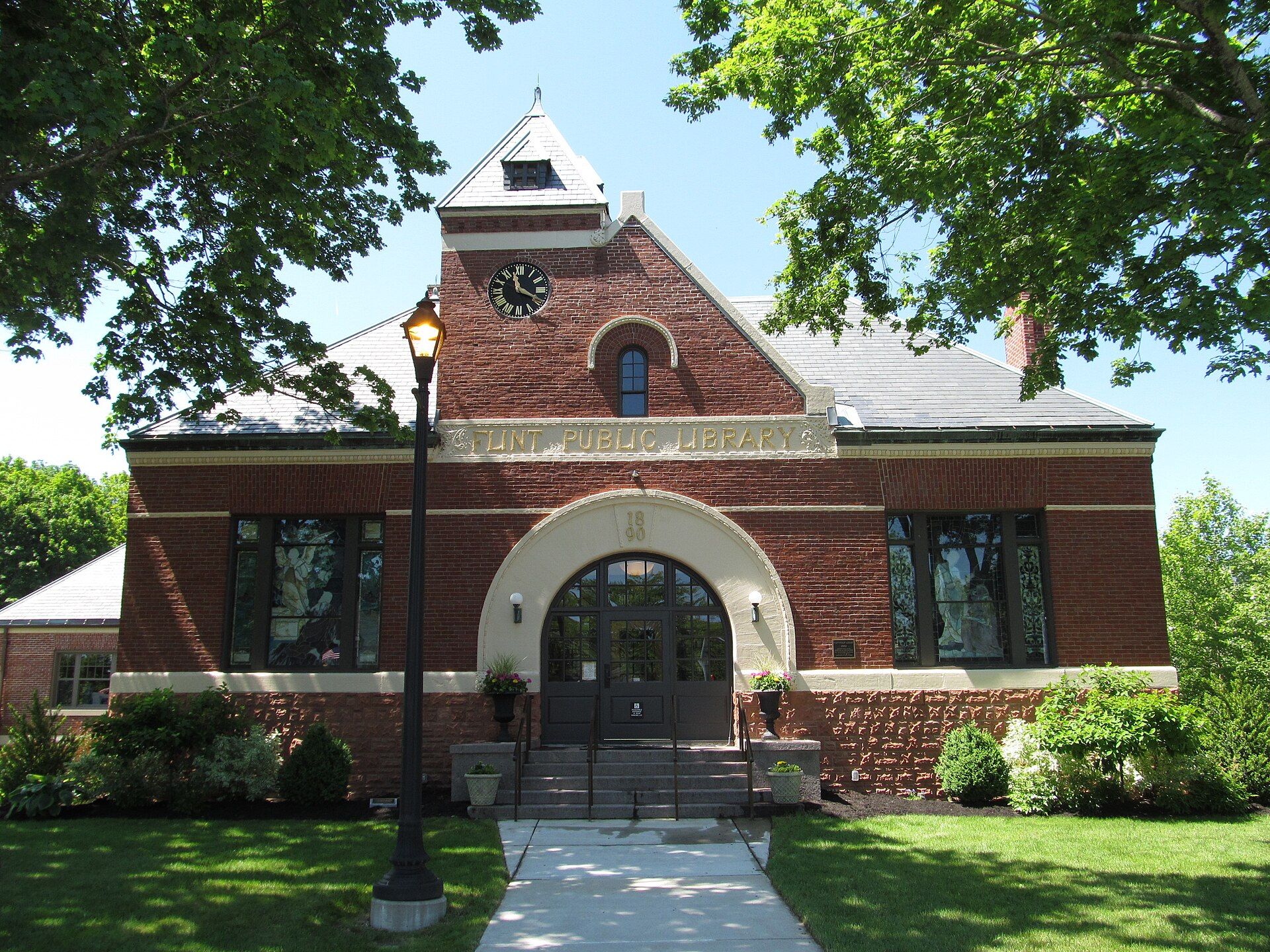
Middleton was first settled by Europeans in 1659, and was officially incorporated in 1728. Landmarks include Flint Public Library, Estey Tavern and White-Preston House. Middleton is the birthplace of John James Ingalls, politician.
Every piece is drawn from Middleton's own map data and historic archives, then printed and shipped from the USA when you order. No two towns look alike.
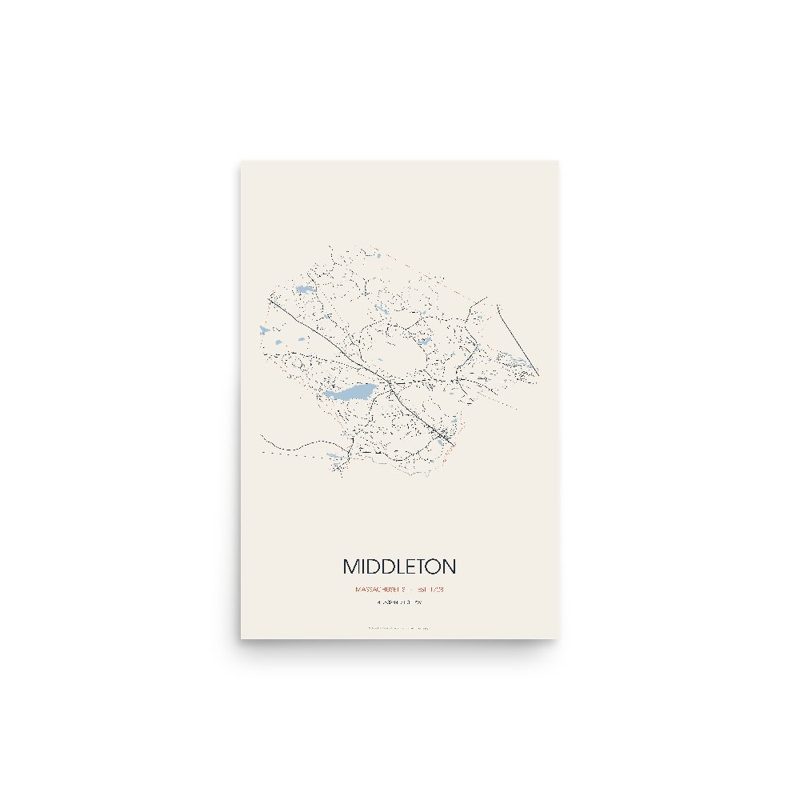
Every road in town, on archival matte paper
The same map, in navy and silver
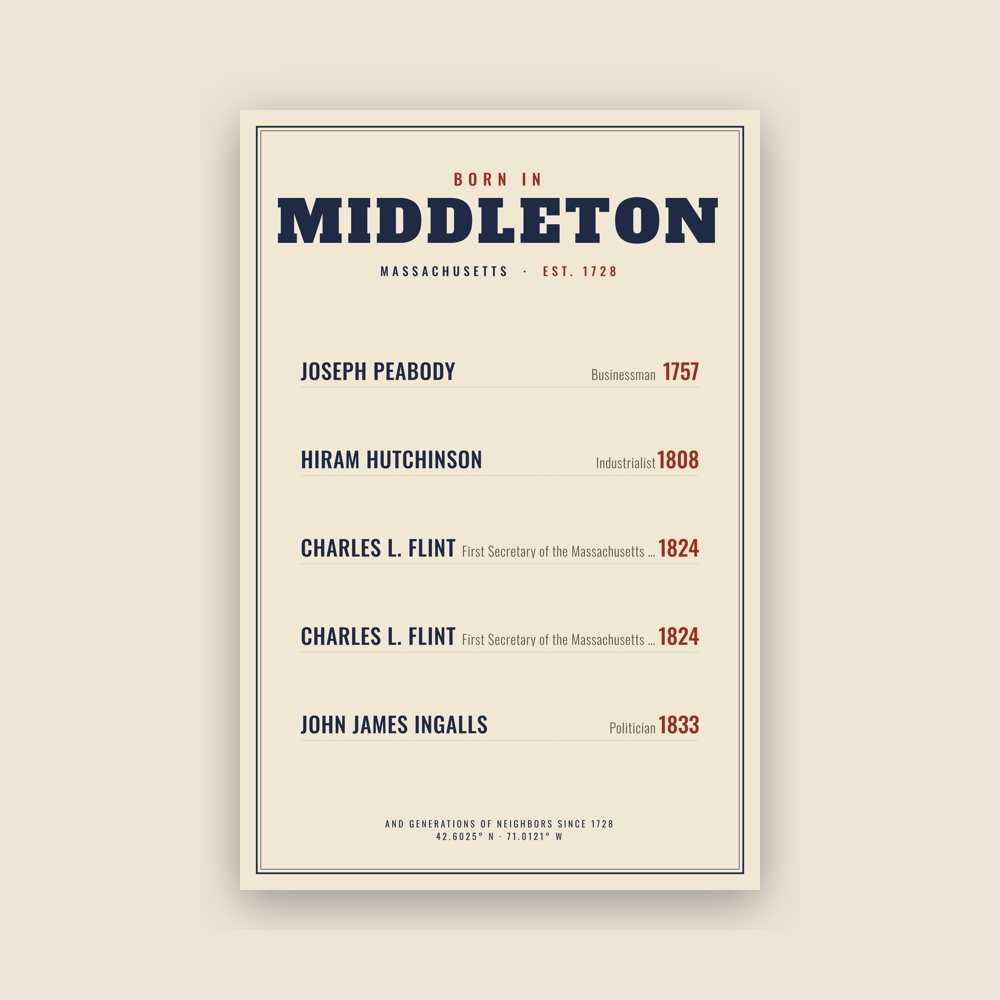
Famous natives, by birth year
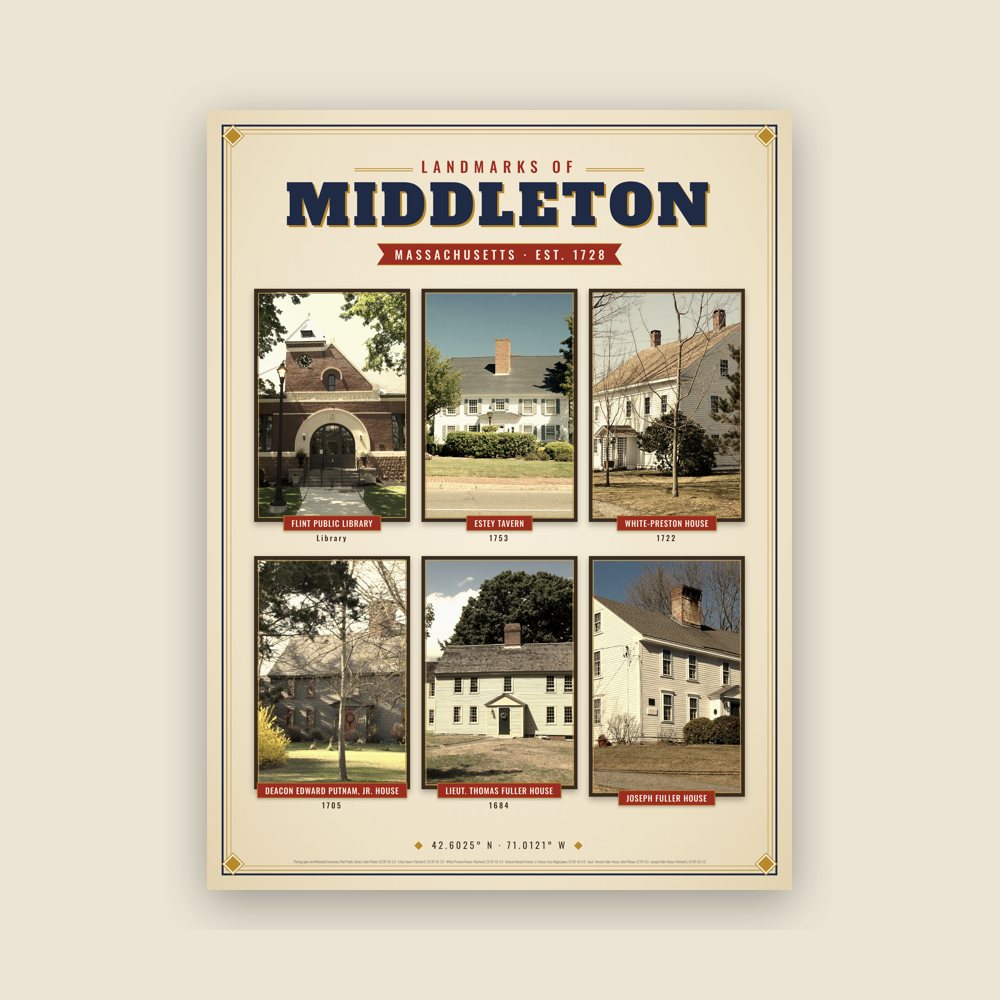
Nine local landmarks, archival matte
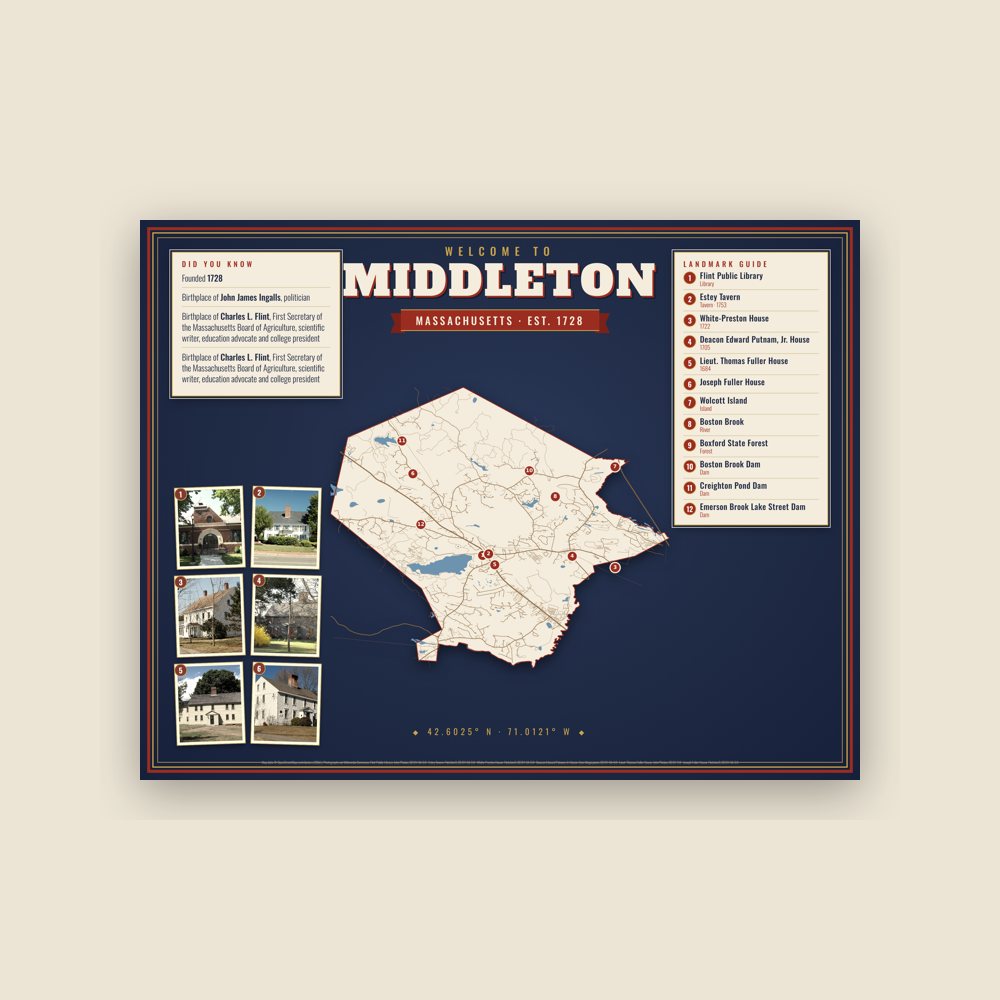
Map of local landmarks, washable fabric
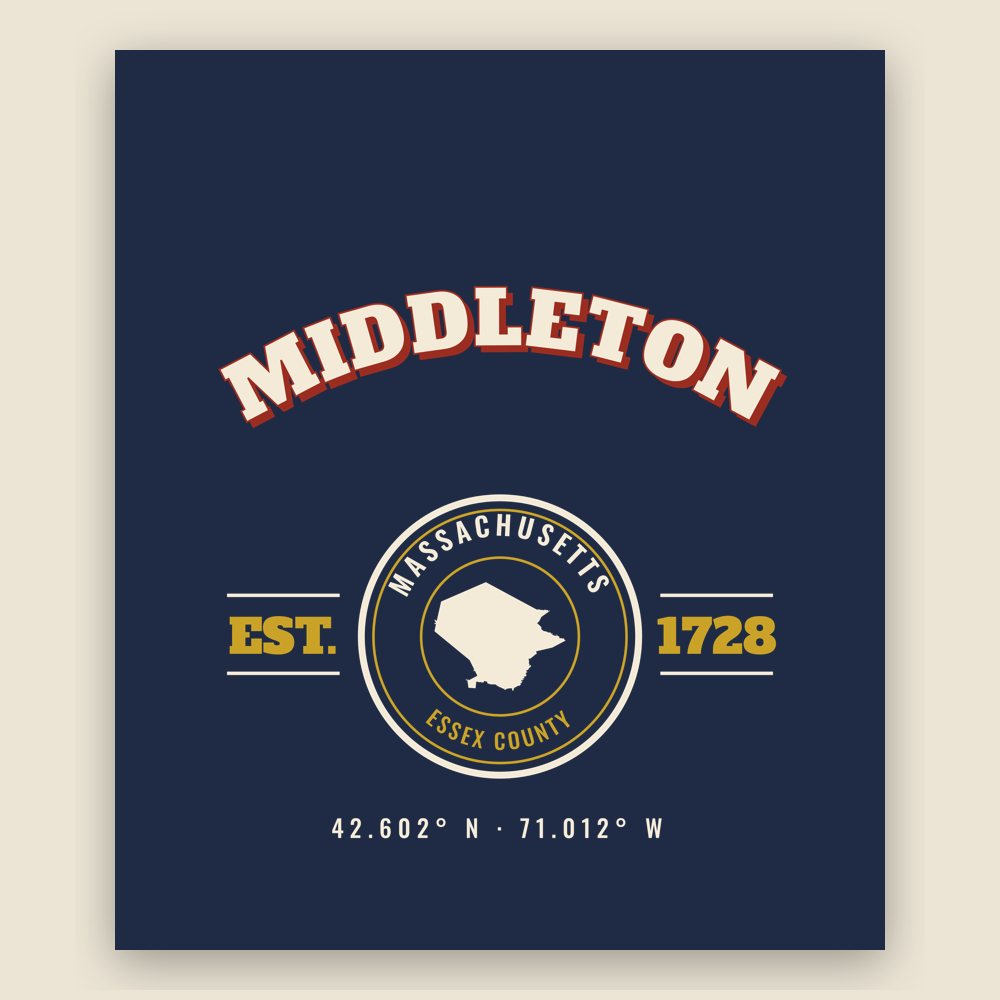
Heavy-blend fleece, street map printed on the back
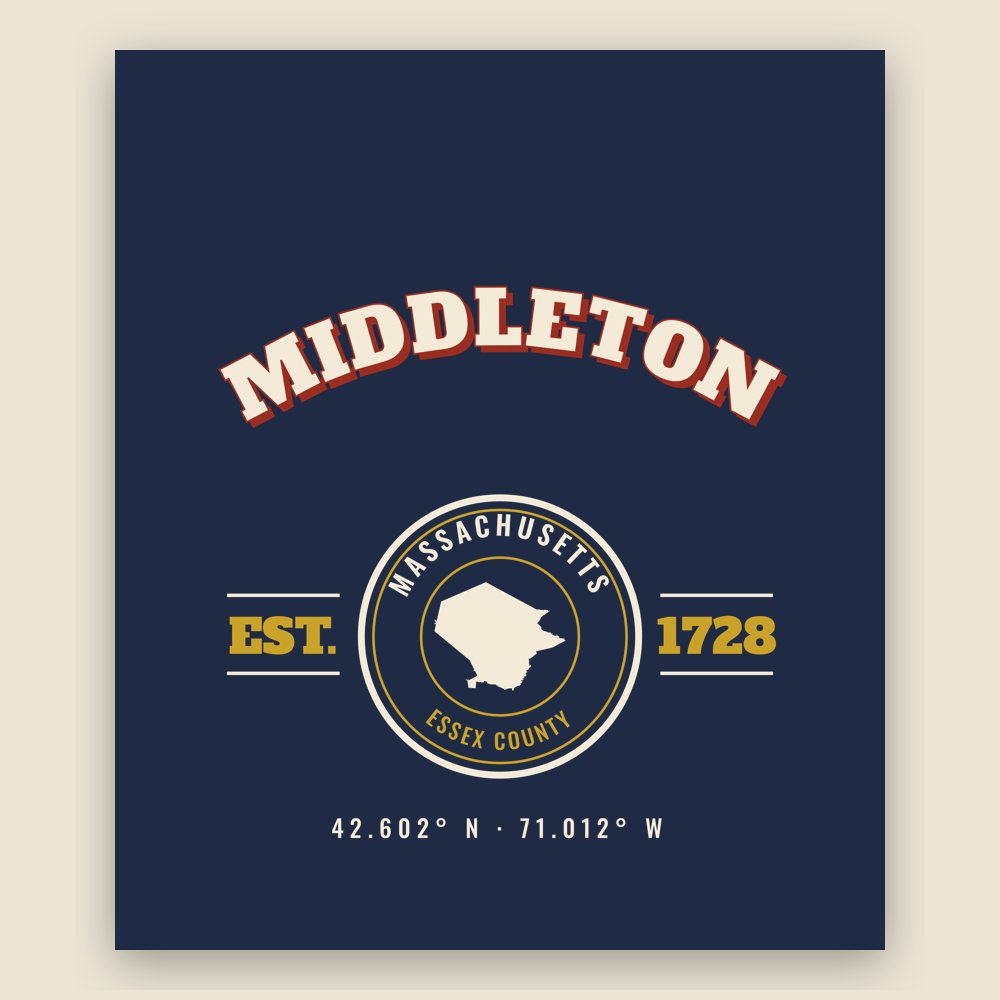
Soft Bella+Canvas jersey
Glossy ceramic, dishwasher safe
Ceramic keepsake, gold ribbon
Weatherproof, for the front walk

Soft-touch, zip cover
Sturdy all-over-print tote
Glossy top, cork back
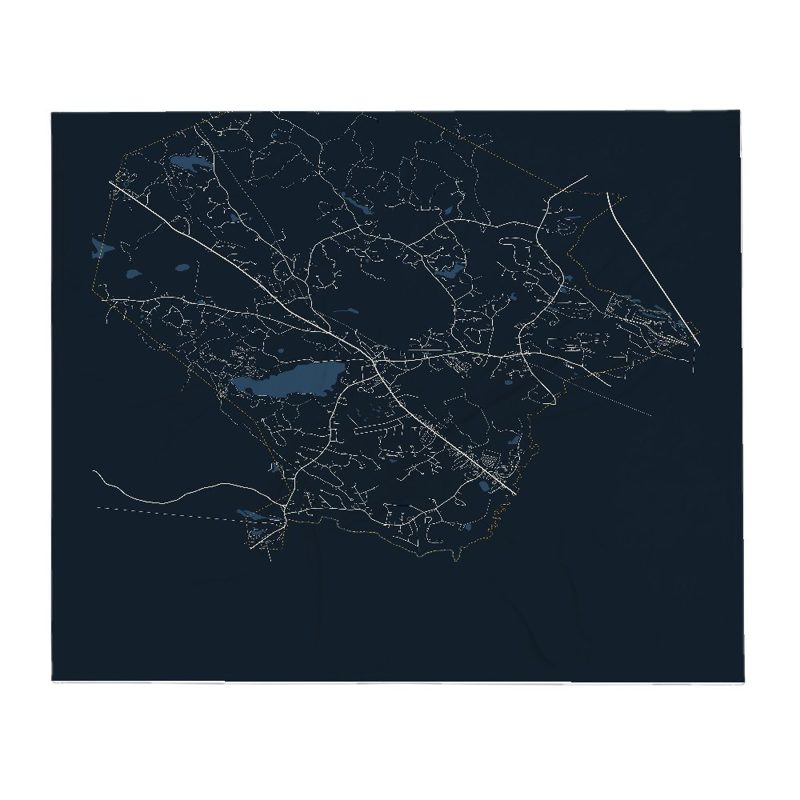
Soft fleece, 50″×60″
20 oz, double-wall stainless
Population 2010: 8,987 → 2020: 9,779
From Wikidata (CC0).
Before European colonial settlement, the area was home to a number of native settlements. The area fell along an ill-defined "border" region between the Massachusett and Pennacook. The tribes in this region generally spoke the Abenaki language, with major local tribes being the Naumkeag and Agawam. Will's Hill in modern-day Middleton was home to a winter village founded by an Algonquin Sachem.
Middleton was first settled by Europeans in 1659, and was officially incorporated in 1728. Prior to 1728 it was considered a part of Topsfield, and contained territory previously within the city of Salem.
The name Middleton is derived from its location midway between the important early settlements of Salem and Andover. It was first settled by Bray Wilkins, who came from Salem with a large family, having purchased 600 acres from Governor Bellingham. The town grew as a farming community, mostly due to its location on the Ipswich River, with homesteads of hundreds of acres. However, during the 18th century, Middleton also contained a vital ironworks industry, located in the area of what is now Mill and Liberty Streets. This enterprise originally involved Thomas Flint, Sr. and his son, Thomas Flint Jr, of Salem, John How of Boxford, and Thomas Cave Jr. of Topsfield and was carried on for approximately seventy years. The area is home to a number of intact homes from the colonial period, such as the Thomas Fuller House, which was constructed in 1684, and the Deacon Edward Putnam, Jr. House.
Although the town no longer has any functional rail systems, there have been rail lines previously running through the area. Notably, the Essex Railroad had termini in Salem and North Andover, running through Middleton from the mid-1840s through the mid-20th century, when passenger and freight demands dropped off.
In the late 18th and to the mid-19th centuries Middleton was a vacation town to those who lived in areas such as Lawrence and Lowell. It is home to one of the oldest trees in Massachusetts, being approximately 400 years old, and which is located at 39 Peabody Street. The oldest still standing house is the Wilkins house, which was built in 1693, and served as a tavern on the main road between Salem and Lawrence.
Middleton is one of the fastest-growing towns in the Commonwealth, and the fastest on the North Shore. When locally grouped it is grouped with Salem, Danvers, and Beverly, but also occasionally Topsfield and Boxford, as these three towns are a tri-town. These three towns share Masconomet Regional High School (named after Chief Masconomet, sagamore of the Agawam tribe, which lived in Essex County at the time of English colonization) which serves grades 9–12, while its middle school serves grades 7 and 8.
Adapted (trimmed) from the Wikipedia article Middleton, Massachusetts, revision 1377756615 by its contributors, licensed CC BY-SA 4.0.
We share a part of every Middleton sale with local partners, and we'd love to print from your collection. Old photographs, maps and postcards make the best keepsakes.
Partner with us