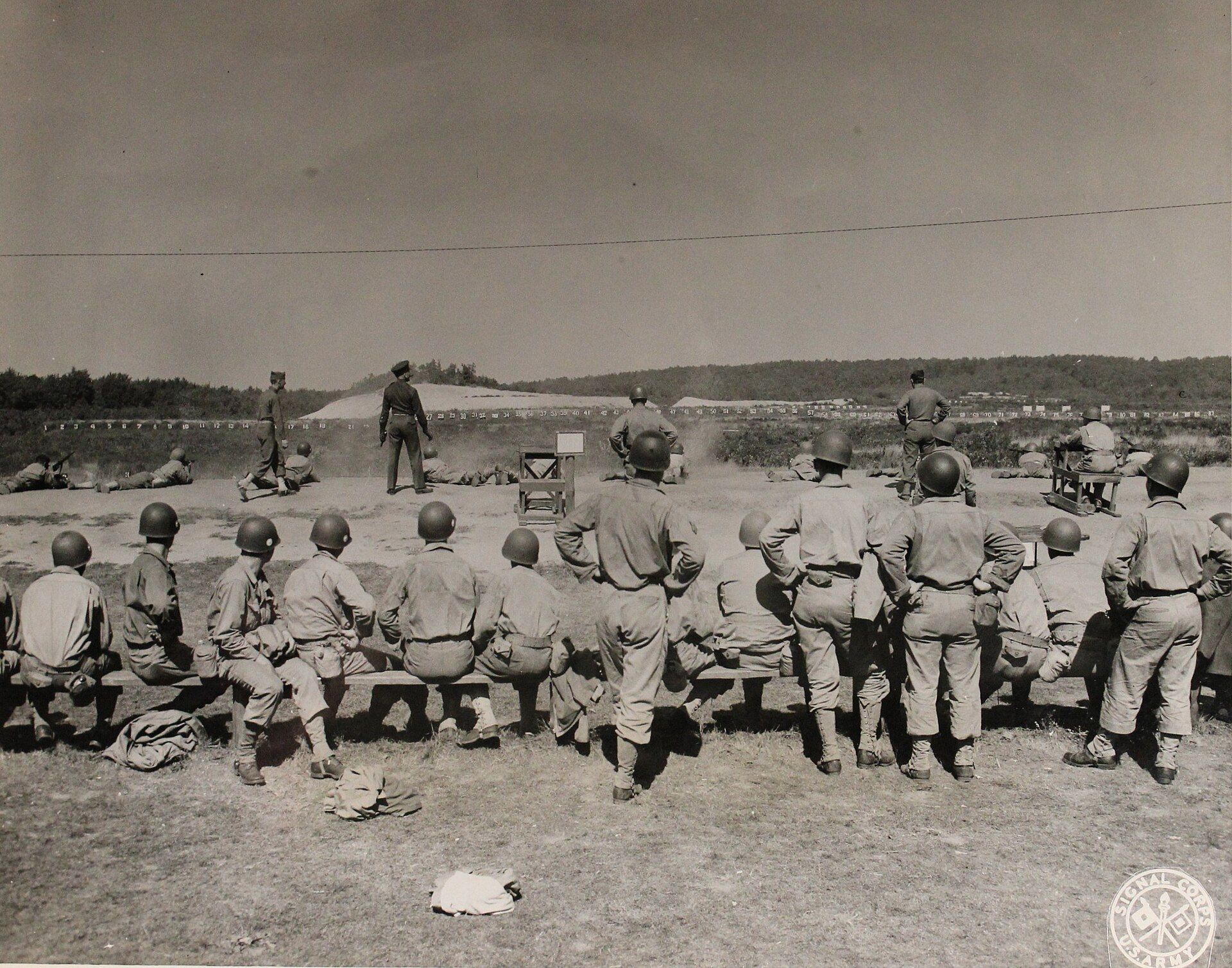
The town of Lynnfield was first settled in 1638 and was made a district separate from Lynn in 1782. Landmarks include Camp Curtis Guild, Meetinghouse Common District and Hart House. Lynnfield is the birthplace of Brian Flynn, ice hockey player.
Every piece is drawn from Lynnfield's own map data and historic archives, then printed and shipped from the USA when you order. No two towns look alike.
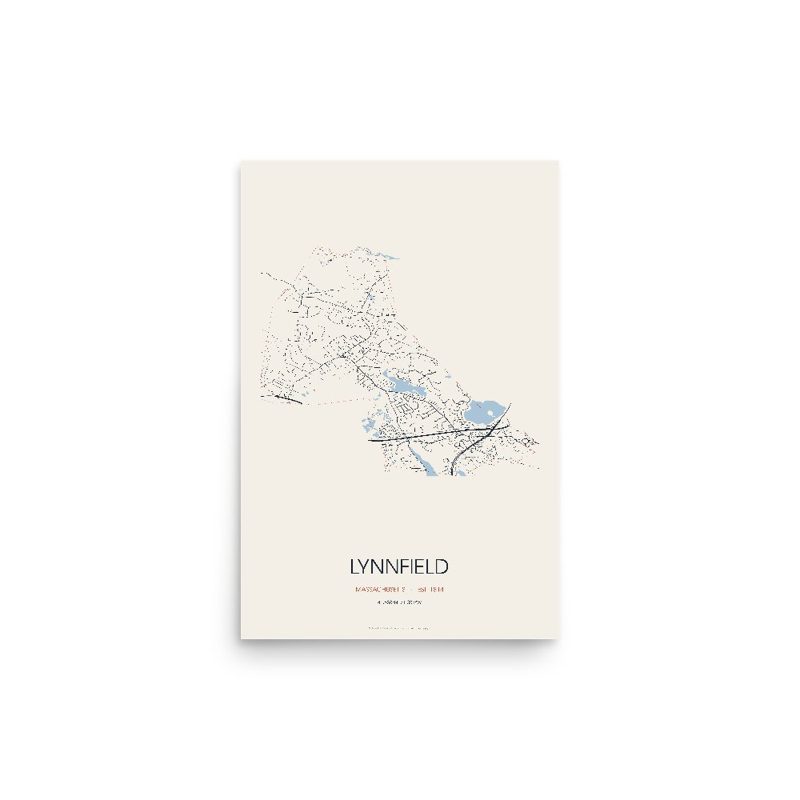
Every road in town, on archival matte paper
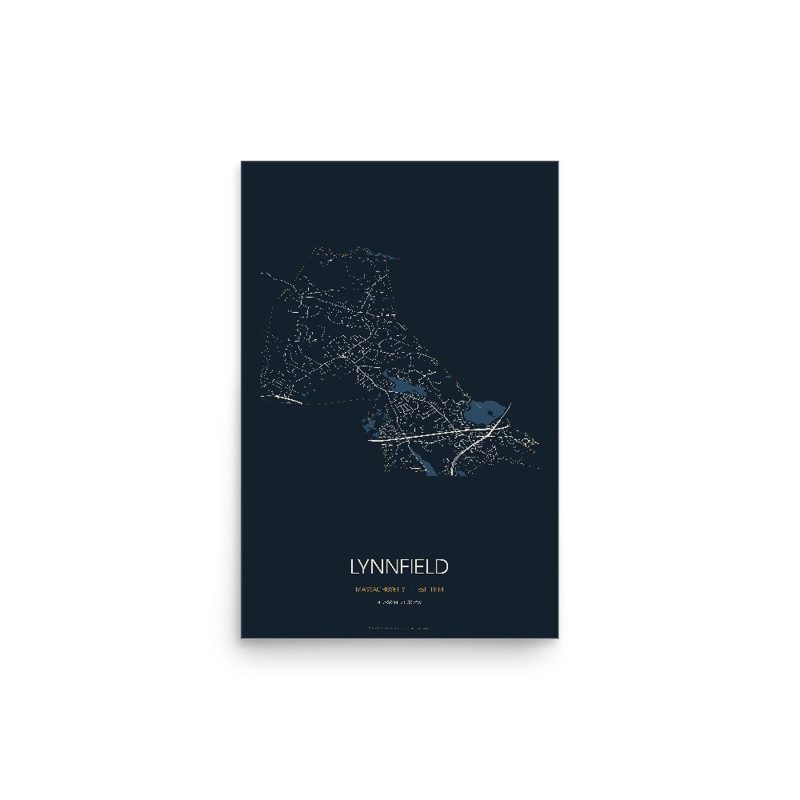
The same map, in navy and silver
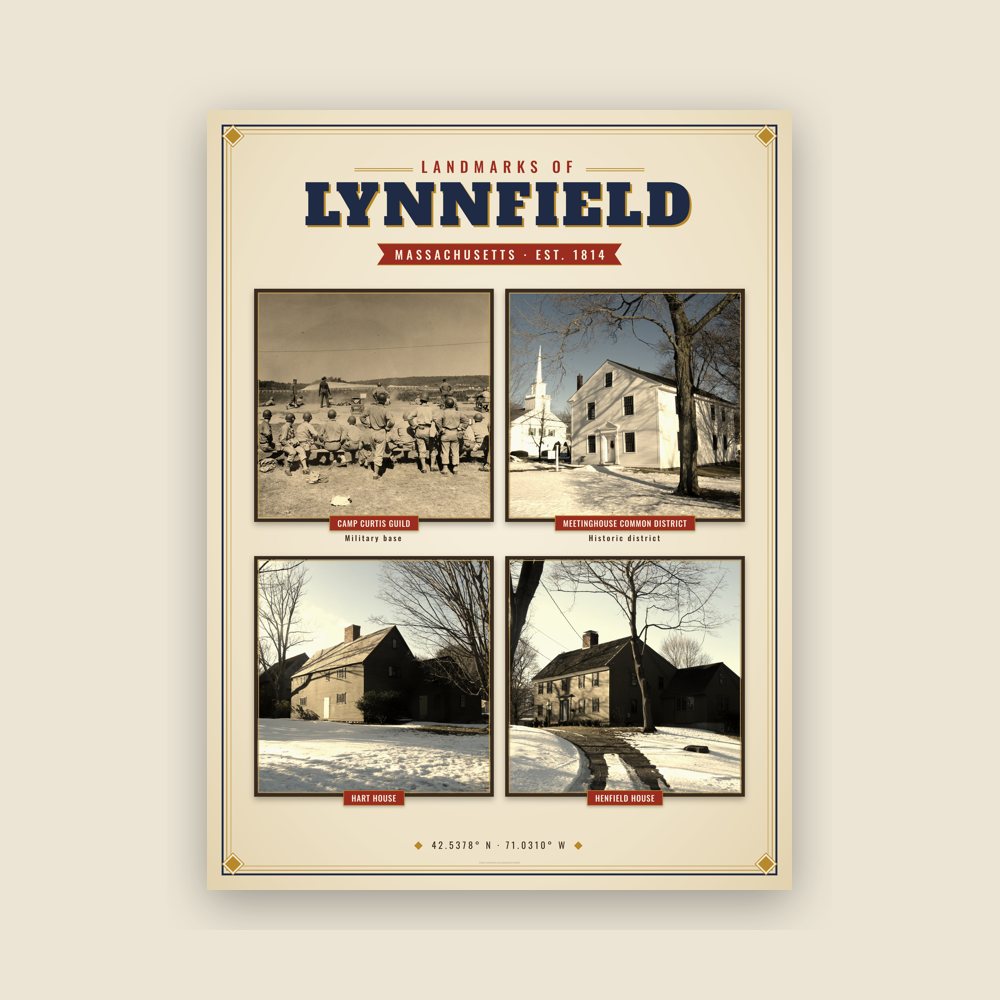
Nine local landmarks, archival matte
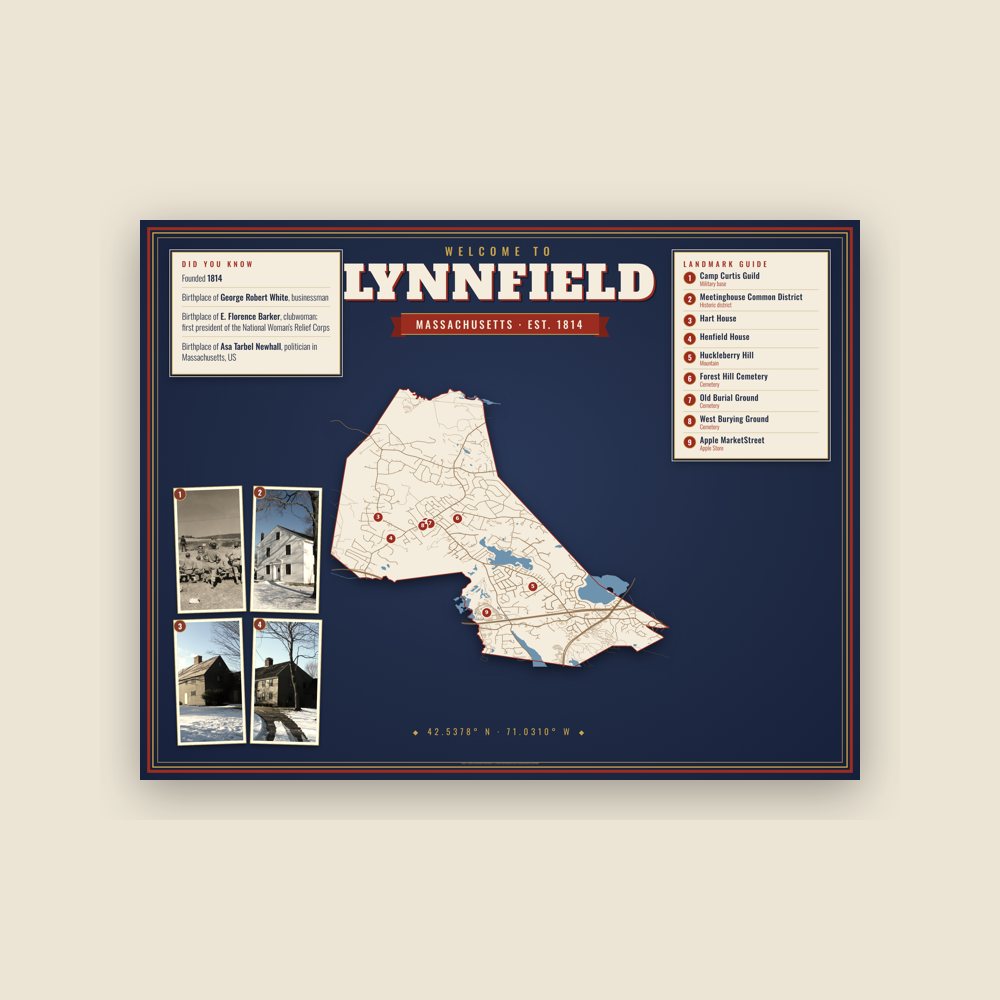
Map of local landmarks, washable fabric
Heavy-blend fleece, street map printed on the back
Soft Bella+Canvas jersey
Glossy ceramic, dishwasher safe
Ceramic keepsake, gold ribbon
Weatherproof, for the front walk
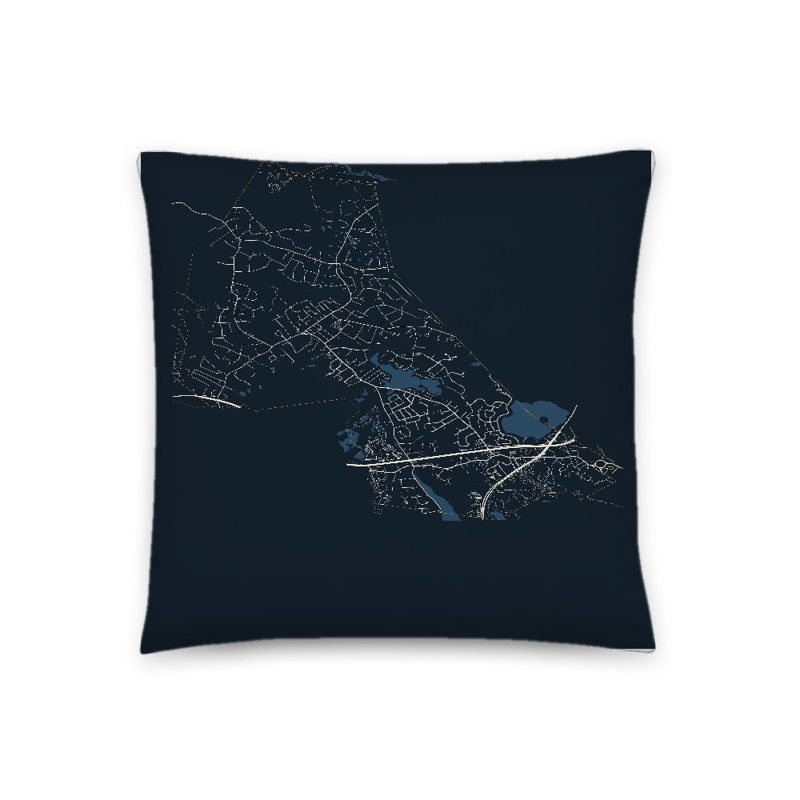
Soft-touch, zip cover
Sturdy all-over-print tote
Glossy top, cork back
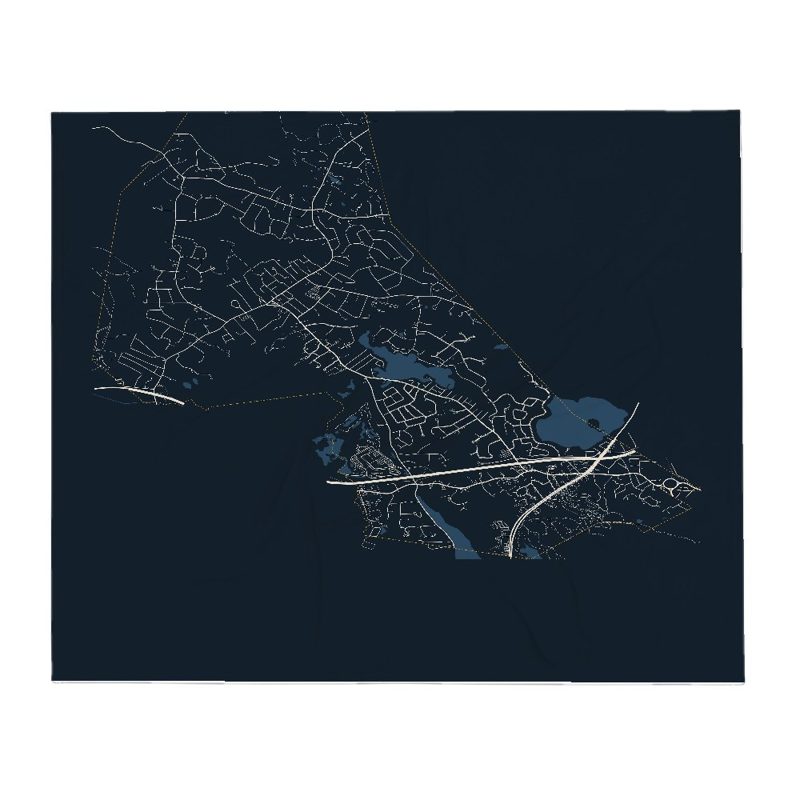
Soft fleece, 50″×60″
20 oz, double-wall stainless
Population 2010: 11,596 → 2020: 13,000
From Wikidata (CC0).
The town of Lynnfield was first settled in 1638 and was made a district separate from Lynn in 1782. It was later officially incorporated in 1814. Historically, Lynnfield functioned as two separate villages connected by one governing body: in Lynnfield Center resided a mostly agricultural population, while South Lynnfield was a crossroad situated amongst neighboring larger towns. During this time, the town had two inns, a granite rock quarry, a small, carbonated beverage bottler, and various eating institutions.
The stagecoach line north from Boston to Portsmouth, New Hampshire, known locally as the "Newburyport Turnpike", ran through South Lynnfield. Later this roadway became U.S. Route 1, the route which brought many people north to the small town during the post-World War II population surge. Lynnfield had attractions such as horse shows and ballroom dancing. Lynnfield has since become a modern, chiefly residential suburb of Boston.
Along with the communities of Chelsea, Lynn, Salem, Marblehead, Danvers, Middleton, Andover, Methuen, Haverhill, Amesbury and Salisbury, Lynnfield was a part of "The Gerry-mander" so described by the Boston Gazette on March 26, 1812.
Lynnfield Center retained limited commuter rail service, via the Boston & Maine Railroad, into the late 1950s/early 1960s with a small railroad boarding platform located not far from the current Town Hall offices.
When, in the 1960s, the United States Post Office implemented the Zone Improvement Program with five-digit numerical codes, Lynnfield was assigned two ZIP codes, 01940 and 01944, for the Lynnfield Center and the South Lynnfield post offices, respectively. Later, 01944 was reassigned to Manchester (now Manchester-by-the-Sea); South Lynnfield currently shares Zip Code 01940 with Lynnfield Center.
Adapted (trimmed) from the Wikipedia article Lynnfield, Massachusetts, revision 1378747938 by its contributors, licensed CC BY-SA 4.0.
We share a part of every Lynnfield sale with local partners, and we'd love to print from your collection. Old photographs, maps and postcards make the best keepsakes.
Partner with us