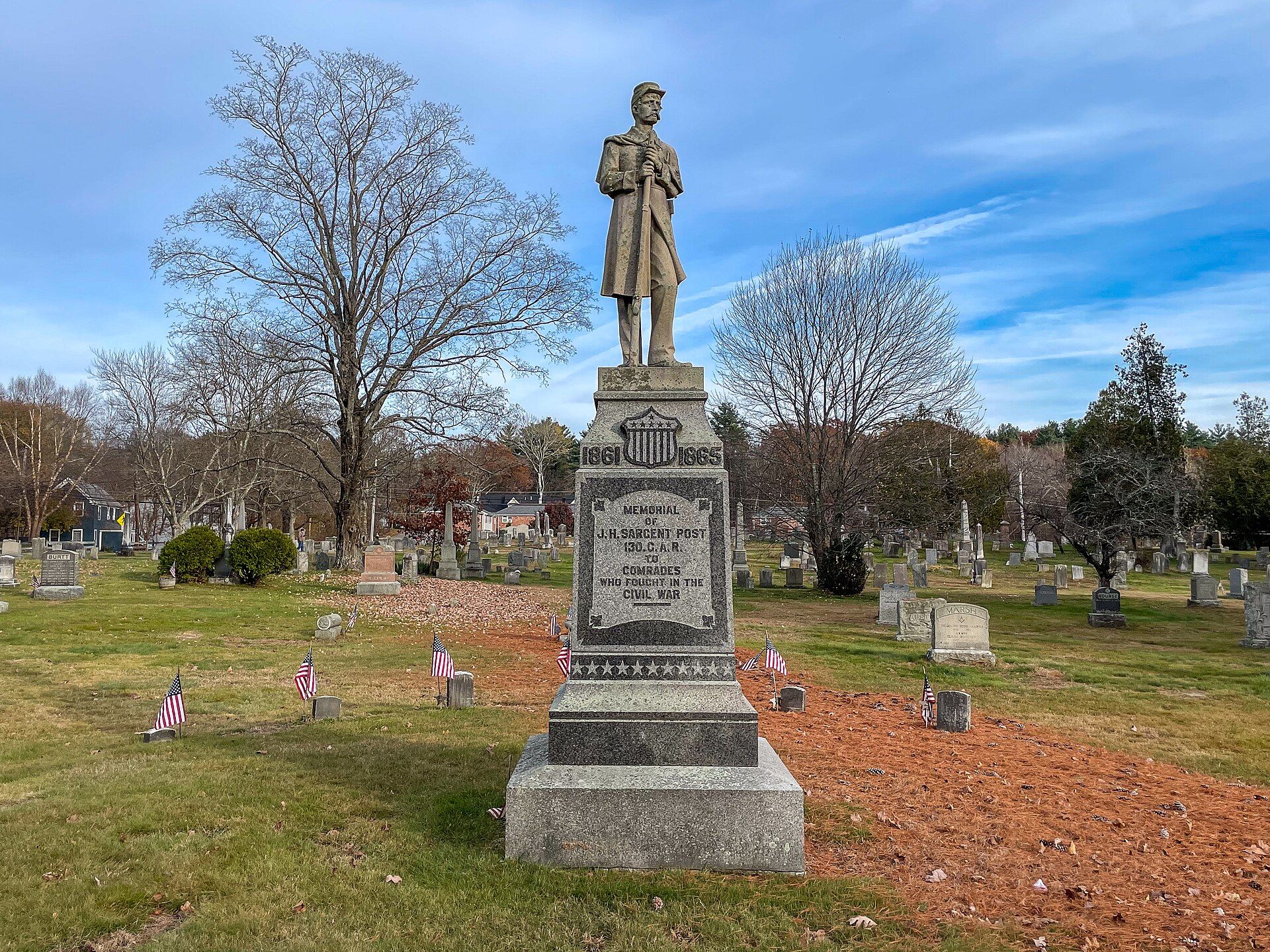
Medway was first settled in 1657 and was officially incorporated in 1713. Landmarks include Evergreen Cemetery, Medway station and Medway Village Historic District. Medway is the birthplace of Harry Adams, sport shooter.
Every piece is drawn from Medway's own map data and historic archives, then printed and shipped from the USA when you order. No two towns look alike.
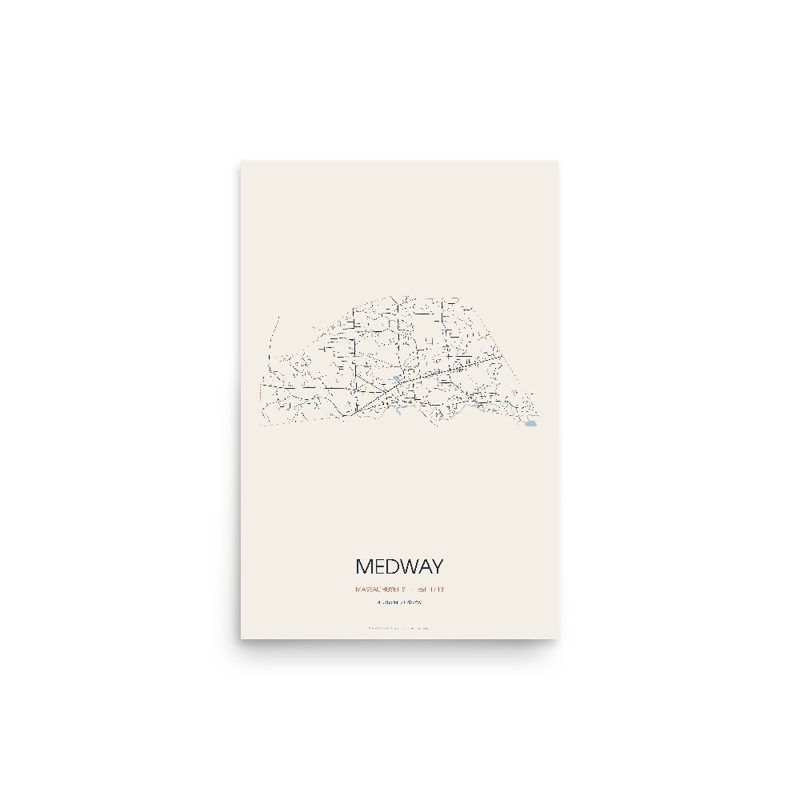
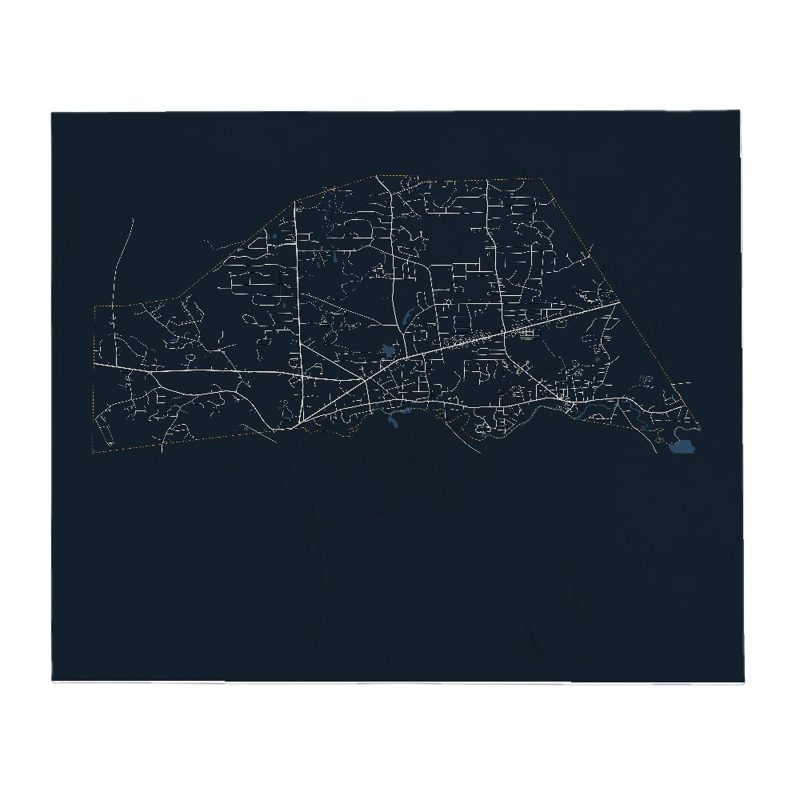
Every road in town, on archival matte paper
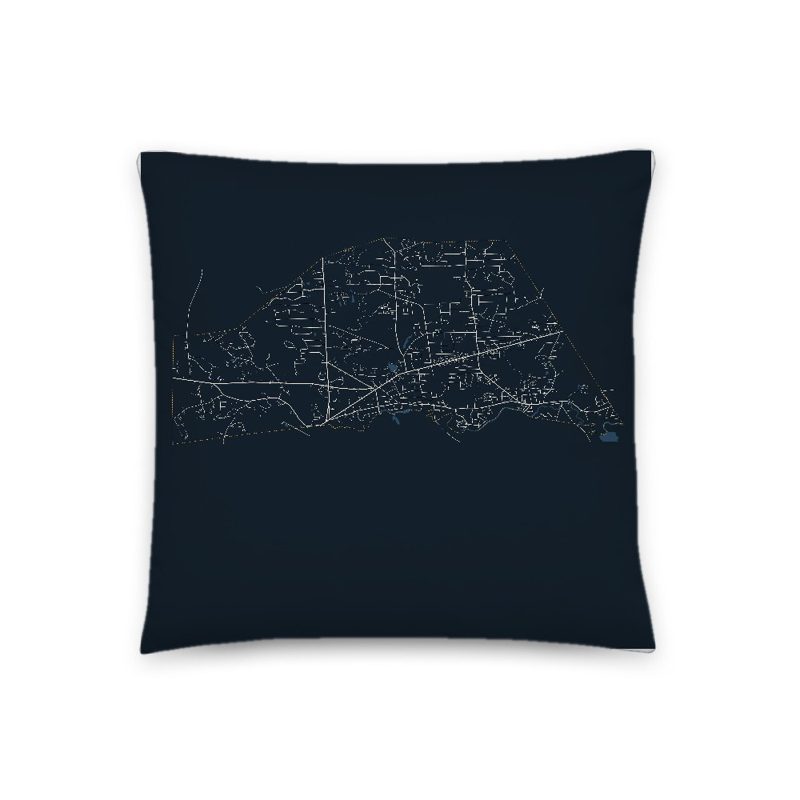
The same map, in navy and silver
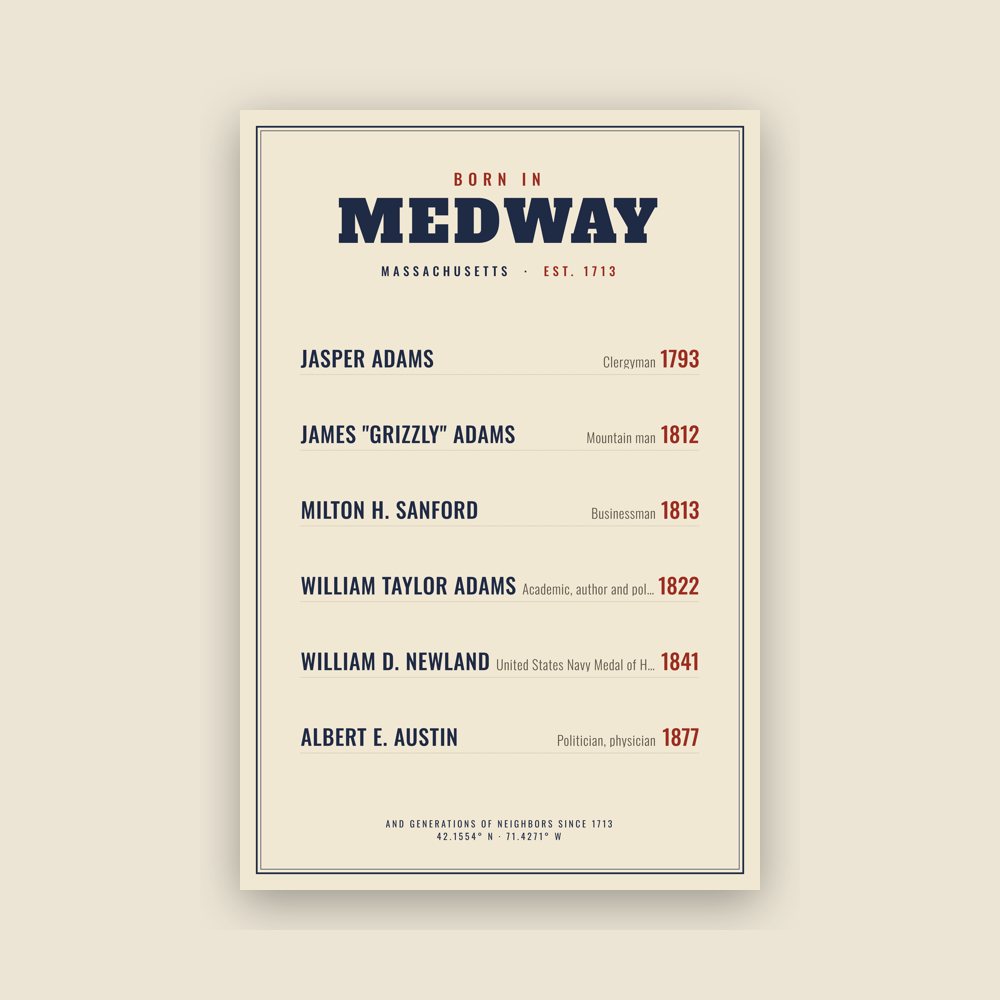
Famous natives, by birth year
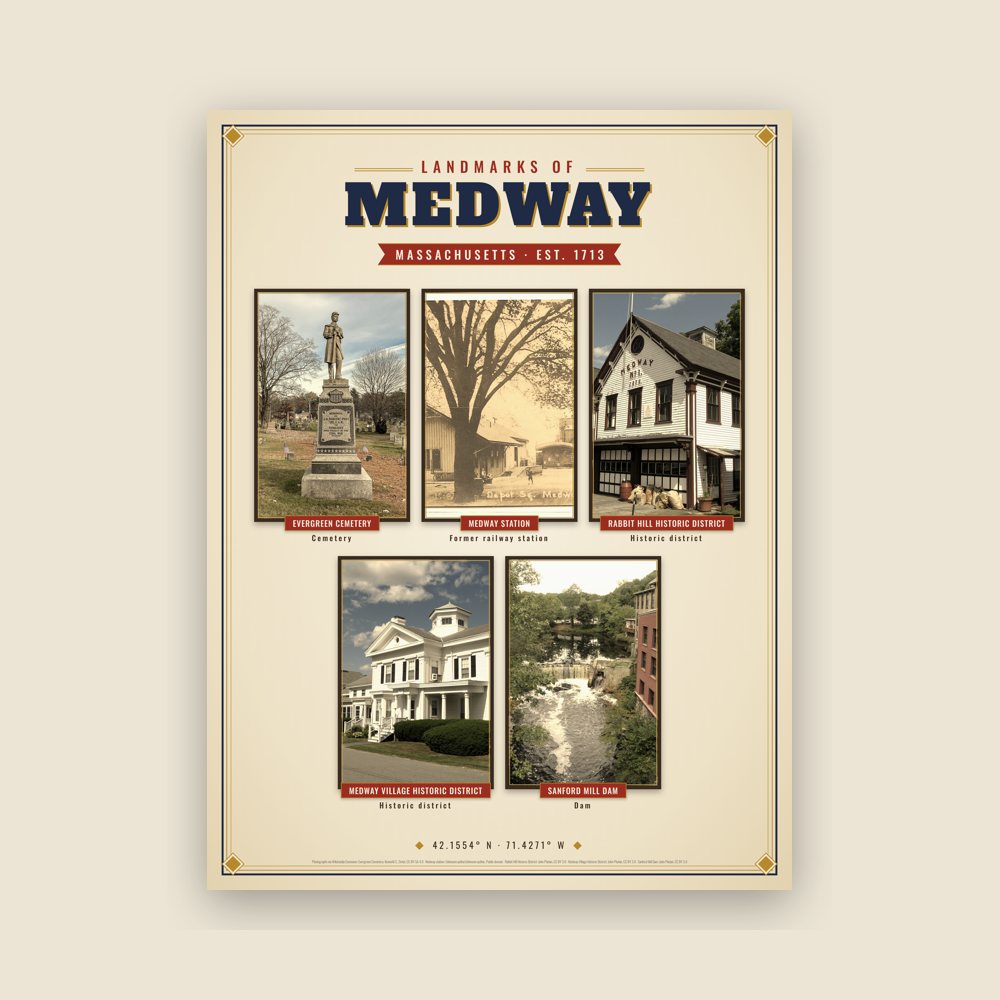
Nine local landmarks, archival matte
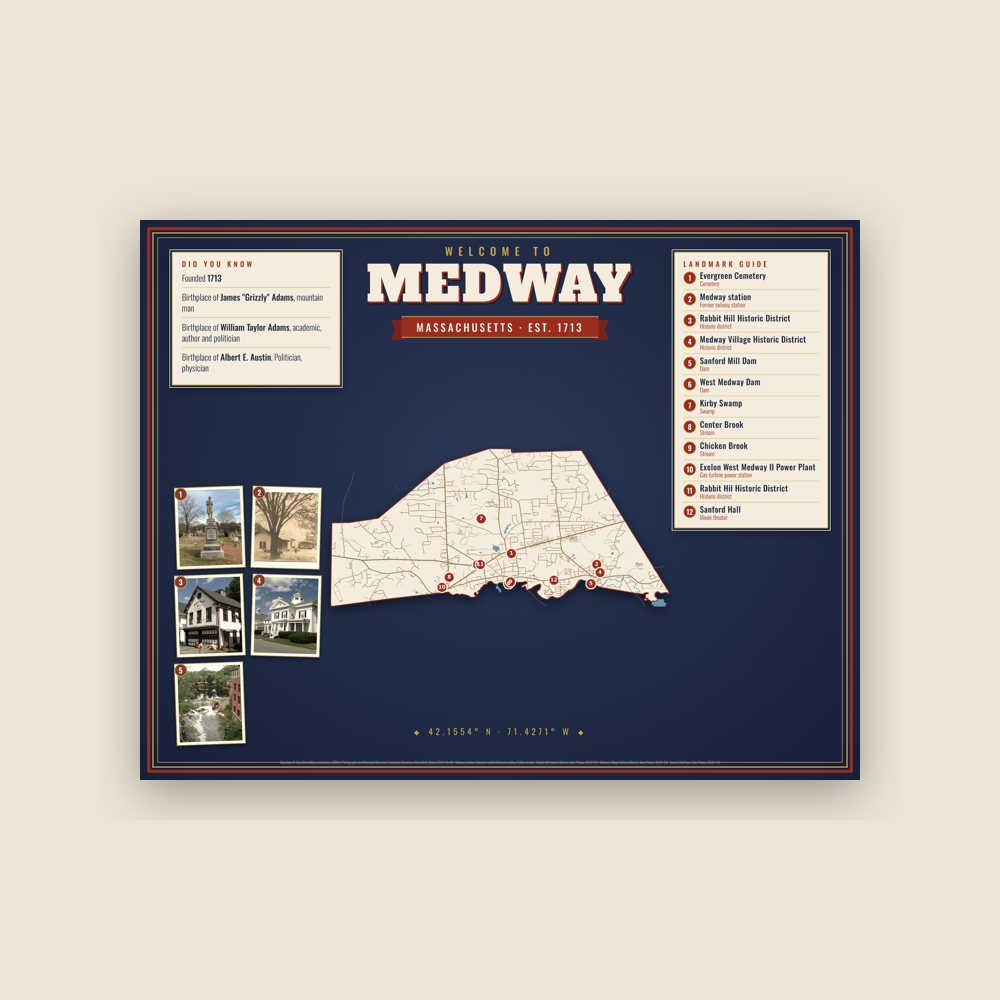
Map of local landmarks, washable fabric
Heavy-blend fleece, street map printed on the back
Soft Bella+Canvas jersey
Glossy ceramic, dishwasher safe
Ceramic keepsake, gold ribbon
Weatherproof, for the front walk
Soft-touch, zip cover
Sturdy all-over-print tote
Glossy top, cork back
Soft fleece, 50″×60″
20 oz, double-wall stainless
Population 2010: 12,752 → 2020: 13,115
From Wikidata (CC0).
Medway was first settled in 1657 and was officially incorporated in 1713. At that time, Medway began as a farming community of two hundred thirty-three. It was not long before the water power of the Charles River and Chicken Brook stimulated the formation of cotton and paper mills, straw and boot factories, and a variety of cottage industries. Medway demonstrates the central importance of the Charles River and the thriving town that grew alongside it. Today, the one-room schoolhouses are gone and the country stores have moved to the mall, but the open town meetings continue.
After nearby Medfield was established as a town in 1651, an increasing number of newcomers settled on the land west of the Charles River. By 1712, this settlement west of the Charles had grown large enough to petition the Massachusetts General Court for the creation of a separate new town. That petition was granted, and the town of Medway incorporated on October 25, 1713. At its founding by Henry Garnsey, and for 170 years afterward, the town of Medway included the land that is now Millis. Eventually, the eastern section of the town, known as East Medway, separated in 1885 to form the town of Millis, and Medway assumed the shape it has today.
The main cause for the independent formation of Millis from Medway was the physical separation caused by a massive tract of undevelopable land appropriately named in those times, the Great Black Swamp. The Black Swamp was at the geographical center point of Medway and East Medway. Had the land been developable, this would have been the ideal location for a central meeting house, as well as churches and schools. However, because the thick forest/swamp was completely undevelopable, this forced inhabitants of Medway and East Medway to form separate communities with their own respective necessities such as a meeting house and churches. Despite this natural separation, the town remained as one for over 170 years.
The oldest road in Medway was laid out in 1670 and was known for years as Old Mendon Road. Since that time, this road has been known by many names including The Road to the Wilderness, The Old County Road, The Middle Post Road, and most recently, Village Street. Village Street runs from the Millis border on the east and meanders along the Charles River before eventually joining Main Street just before the Bellingham border on the west. The heart of the old town of Medway is found along this road, with the central location of activity at Medway Village, where Holliston Street intersects with Village Street.
In 1869, all of the streets in Medway were officially named. Many streets ended up losing their original names, and were instead named after influential townspeople of the past and present. Some examples of this were; Pine Hill Road became Winthrop Street, Vine Lane became Kelley Street, Candlewood Island Road was named Oakland Street, and The Old Hartford Turnpike was named Main Street. A few other examples of roads in Medway named after past residents include Lovering Street, Adams Street, Partridge Street, Ellis Street, Clark Street, Coffee Street, and Barber Street.
Adapted (trimmed) from the Wikipedia article Medway, Massachusetts, revision 1374540695 by its contributors, licensed CC BY-SA 4.0.
We share a part of every Medway sale with local partners, and we'd love to print from your collection. Old photographs, maps and postcards make the best keepsakes.
Partner with us