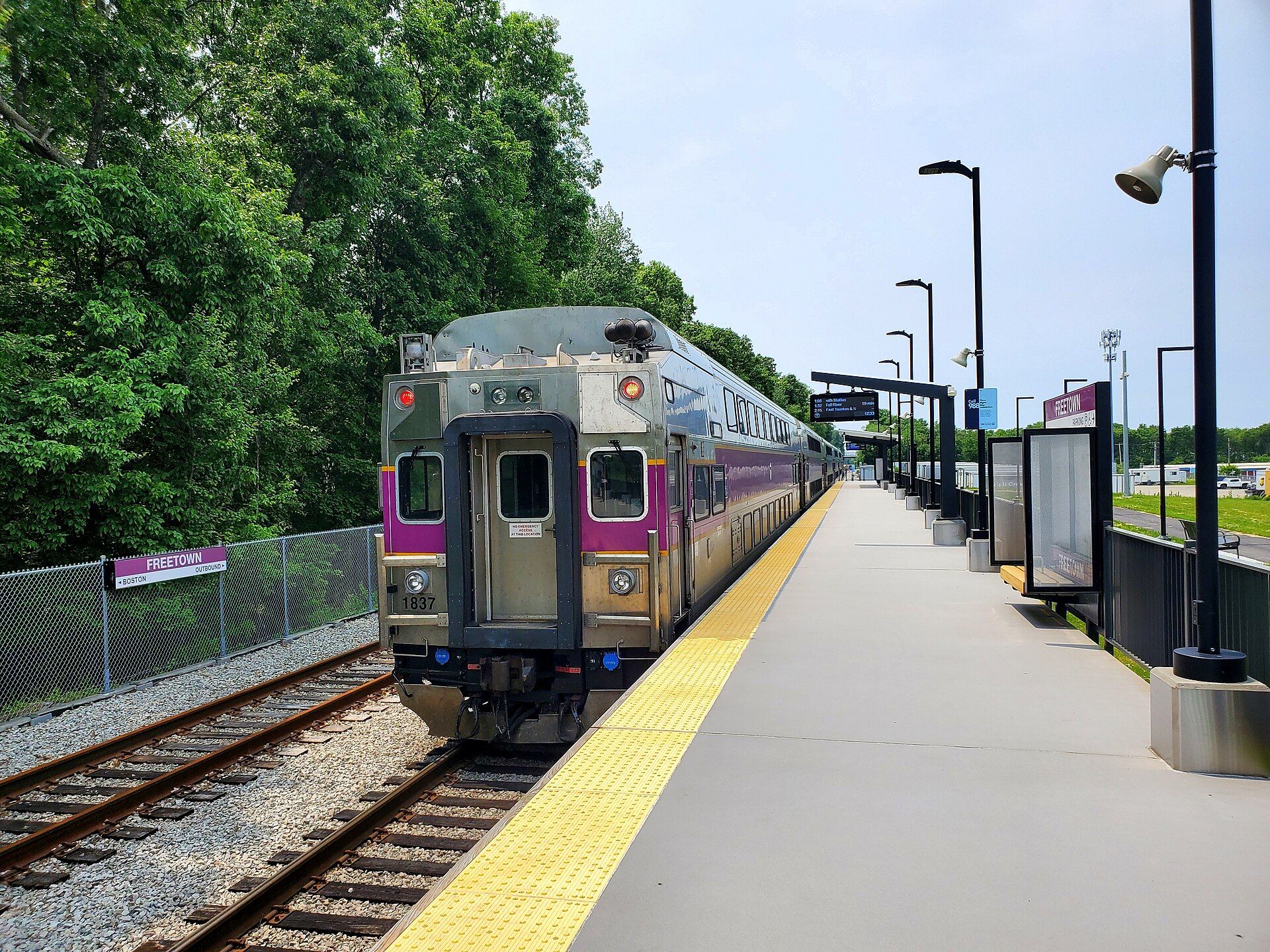
In 1747, through the Pocasset Purchase, the village of East Freetown (at the time called "New Freetown") was acquired from Tiverton, Rhode Island (which was being transferred from Massachusetts to Rhode Island). Landmarks include Freetown station, Profile Rock and Assonet Congregational Church. Freetown is the birthplace of Marcus Morton, massachusetts Democratic governor and Supreme Judicial Court associate justice.
Every piece is drawn from Freetown's own map data and historic archives, then printed and shipped from the USA when you order. No two towns look alike.
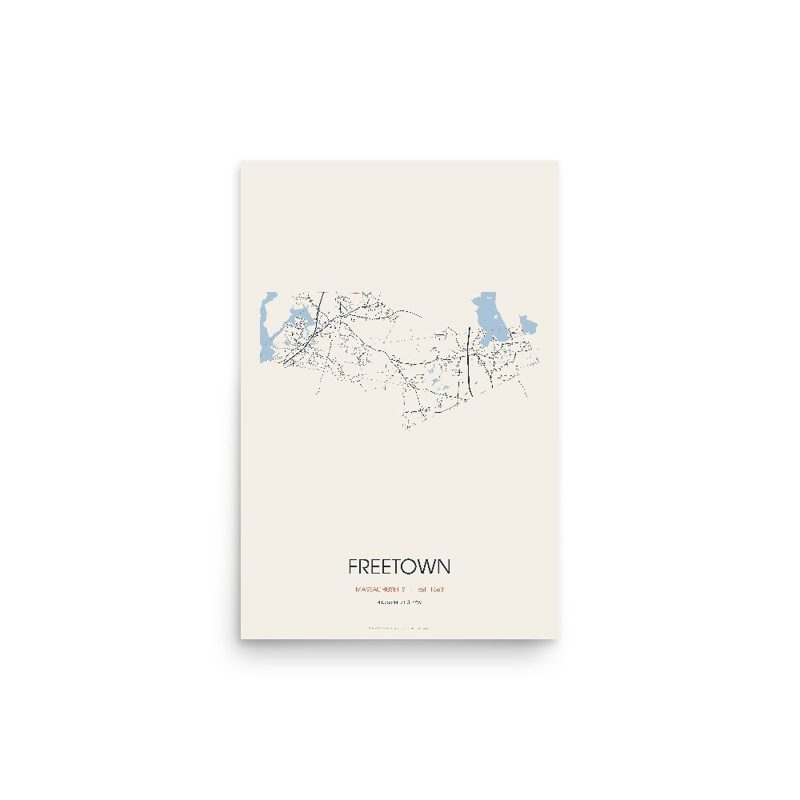
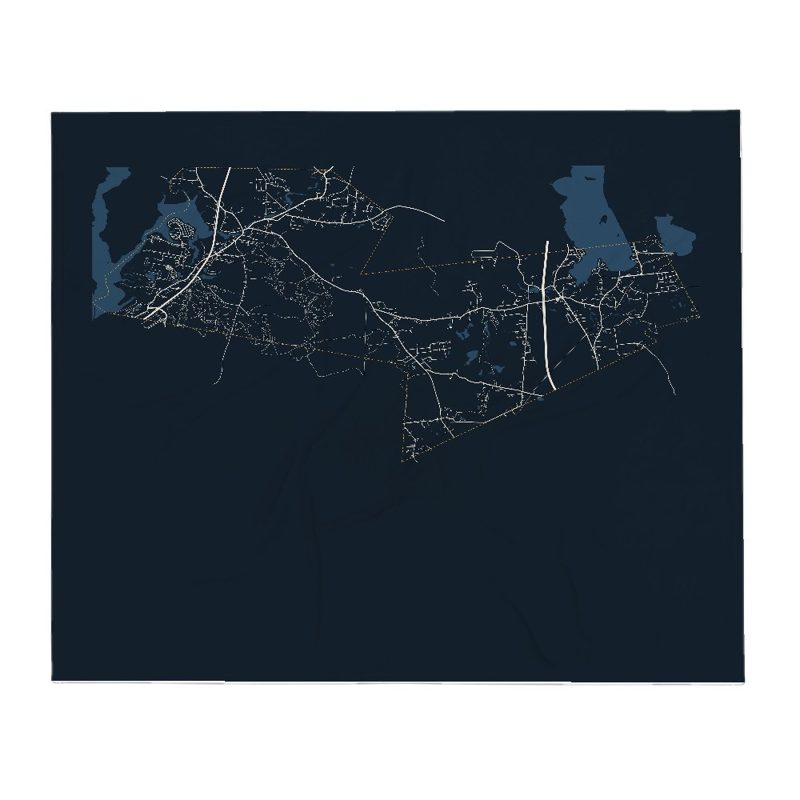
Every road in town, on archival matte paper
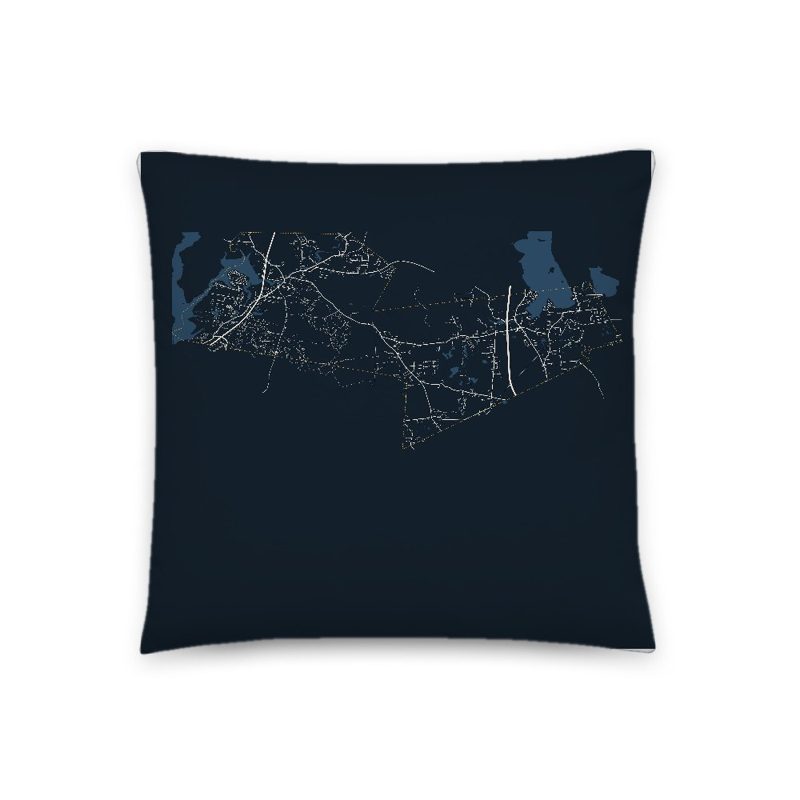
The same map, in navy and silver
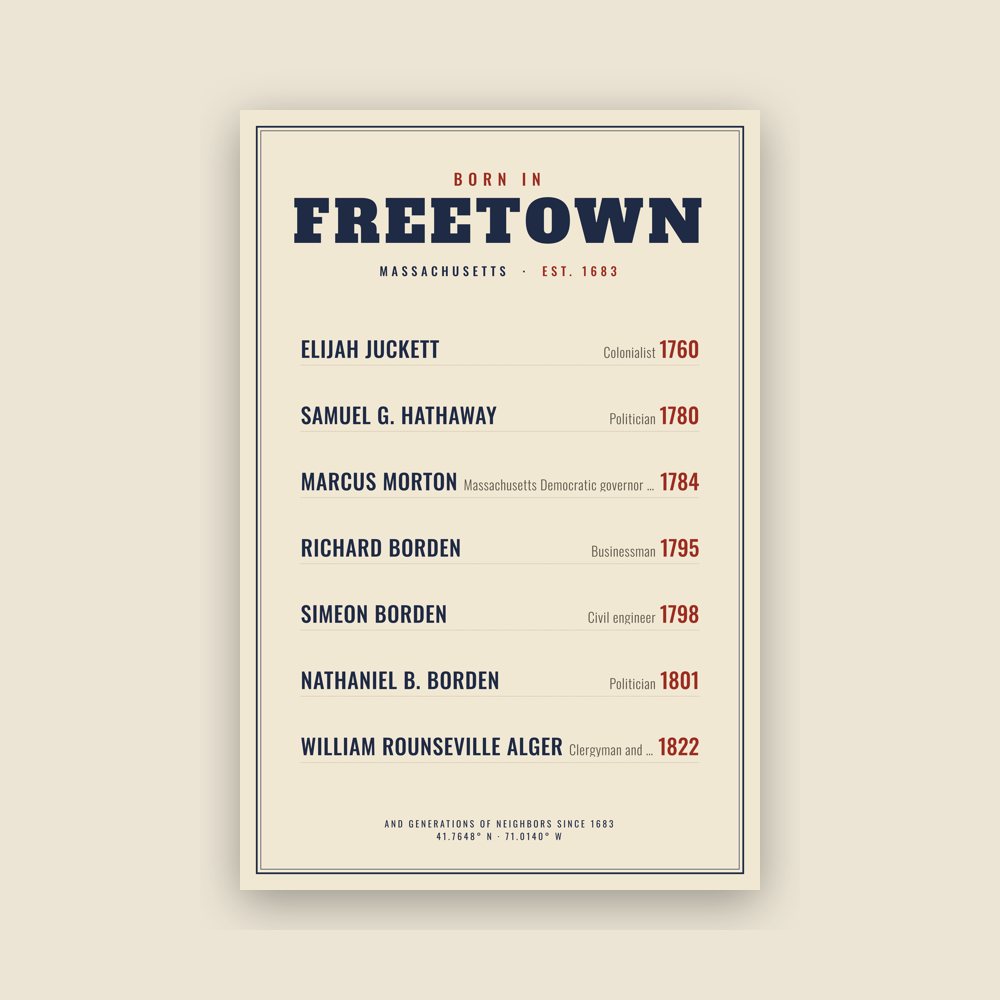
Famous natives, by birth year
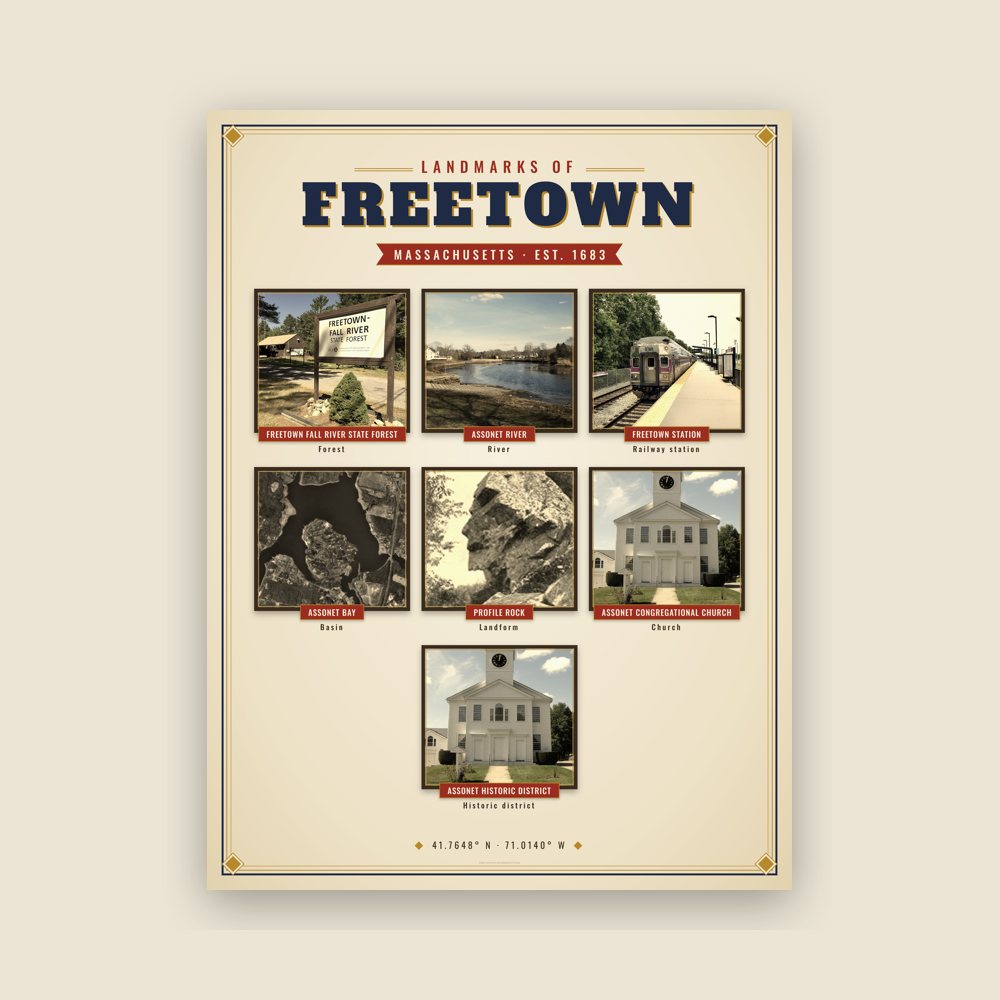
Nine local landmarks, archival matte
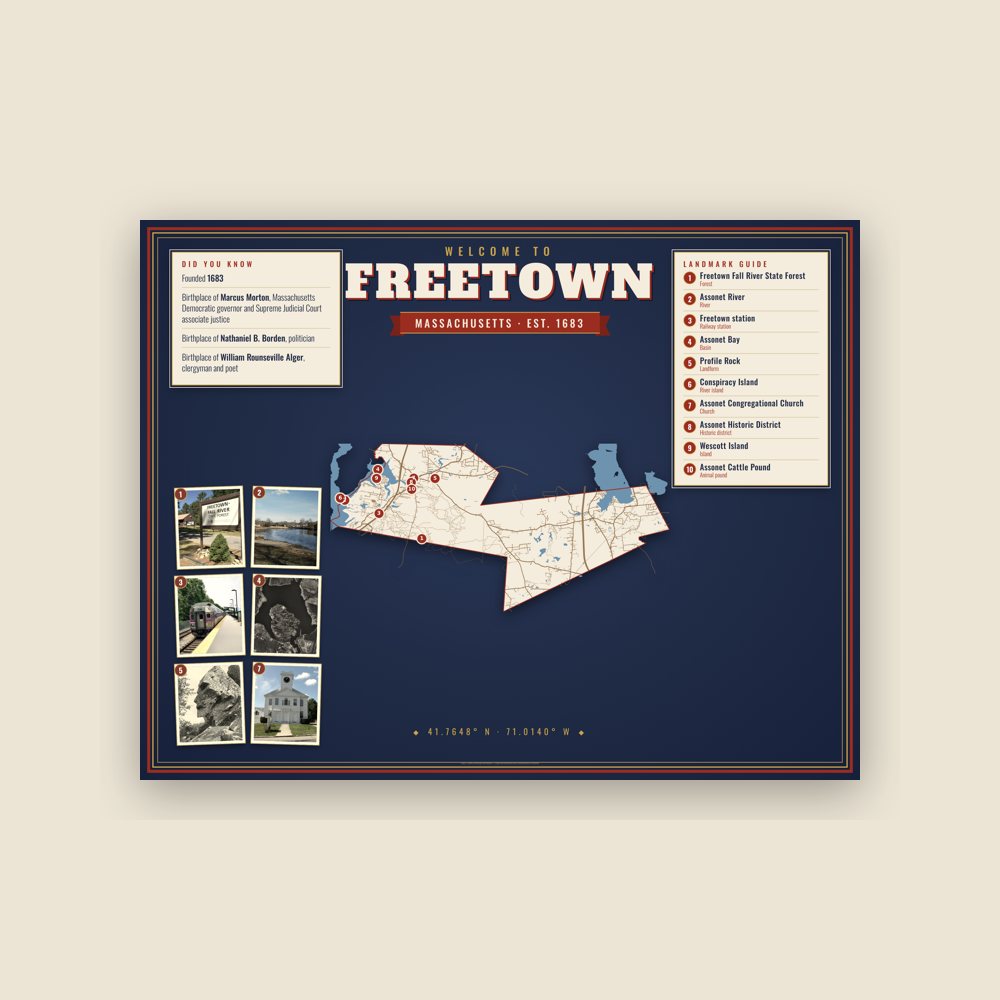
Map of local landmarks, washable fabric
Heavy-blend fleece, street map printed on the back
Soft Bella+Canvas jersey
Glossy ceramic, dishwasher safe
Ceramic keepsake, gold ribbon
Weatherproof, for the front walk
Soft-touch, zip cover
Sturdy all-over-print tote
Glossy top, cork back
Soft fleece, 50″×60″
20 oz, double-wall stainless
Population 2010: 8,870 → 2020: 9,206
From Wikidata (CC0).
Freetown was first settled by the English on April 2, 1659, on the banks of the Assonet River, when the areas of Assonet and Fall River were purchased for 20 coats, two rugs, two iron pots, two kettles, one little kettle, eight pairs of shoes, six pairs of stockings, one dozen hoes, one dozen hatchets, and two yards of broadcloth from the Wampanoag Indians in an exchange known as Ye Freemen's Purchase. Its population slowly grew, and it existed as a Proprietary settlement of the Plymouth Colony until it was officially incorporated in July 1683. It remained a part of Plymouth Colony until that colony merged with the Massachusetts Bay Colony in 1692. The town was the fifth municipal corporation established in Bristol County.
Throughout the 18th century, the town continued to grow and prosper. In 1747, through the Pocasset Purchase, the village of East Freetown (at the time called "New Freetown") was acquired from Tiverton, Rhode Island (which was being transferred from Massachusetts to Rhode Island). The townspeople fought against the Native Americans in King Philip's War and other local skirmishes. On May 28, 1778, during the Revolutionary War, the Battle of Freetown was fought in a part of the town that is now part of the city of Fall River.
In 1803, Fall River separated from the town, and incorporated as Troy. In 1815, a portion of the town was annexed by Fairhaven, which at the time controlled Acushnet, Massachusetts. That part of East Freetown remains part of Acushnet to this day.
Throughout the 18th, 19th, and early 20th centuries, Freetown served as a very industrious area. Blast furnaces, fishing, textiles, and manufacturing all came to and left Freetown over time.
One of the more well-known industries was N. R. Davis & Sons, a gun manufactory that provided many weapons for the Civil War.
Adapted (trimmed) from the Wikipedia article Freetown, Massachusetts, revision 1377350126 by its contributors, licensed CC BY-SA 4.0.
We share a part of every Freetown sale with local partners, and we'd love to print from your collection. Old photographs, maps and postcards make the best keepsakes.
Partner with us