A short history of Takoma Park
19th century
Takoma Park was founded by Benjamin Franklin Gilbert in 1883. It was one of the first planned Victorian commuter suburbs, centered on the B&O railroad station in Takoma, D.C., and bore aspects of a spa and trolley park.
Takoma was originally the name of Mount Rainier, from Lushootseed [təqʷúbəʔ] (earlier *təqʷúməʔ), "snow-covered mountain". At Gilbert's suggestion, the name was chosen in 1883 by DC resident Ida Summy, who believed it to mean "high up" or "near heaven". The city of Tacoma in Washington state is also named after the mountain.
Gilbert first purchased land in spring 1884: A 100-acre (0.40 km2) plot called Robert's Choice from G.C. Grammar. The plot, which included land on both sides of the B&O's Metropolitan Branch rail line, was roughly bounded by today's Sixth Street on the west, Aspen Street on the south, Willow Avenue on the east, and Takoma Avenue on the north. At the time, much of the land was covered by thick forest. Gilbert cleared some of it to lay out and grade streets and housing lots. Most lots measured 50 by 200 feet (15 by 60 m) and were sold for $327 to $653 per acre. By August 1885, about 100 people were living in Takoma Park, including temporary summer residents and permanent residents. Gilbert lived in a wooden house on a stone foundation, with 20 rooms and a 65-foot (20 m) tower.
In 1886, Gilbert purchased another plot of land, roughly bounded by Carroll Avenue to the Big Spring (now Takoma Junction) and what is now Woodland Avenue. Gilbert named this land New Takoma. Gilbert later purchased the Jones farm and the Naughton farm, which together he named North Takoma. He also purchased land from Francis P. Blair, Richard L. T. Beale, and the Riggs family.
Gilbert hired contractor Fred E. Dudley to build many of the homes in Takoma Park. A house designed by Leon E. Dessez at Piney Branch Road and Eastern Avenue became the home of Cady Lee. Dudley's son Wentworth was the first child born in Takoma Park.
The community had 75 houses by 1888 and 235 homes by 1889. That year, Gilbert purchased several acres of land along Sligo Creek from a Dr. R.C. Flower, a Boston physician, to build a sanitarium. By this point, Takoma Park stretched 1,500 acres (5 km2).
The deed of each of the original houses prohibited alcohol from being made or sold on the property, a prohibition that continued in the city until 1983. Takoma Park incorporated as a town on April 3, 1890. The first town election was held on May 5, 1890, and Gilbert was elected mayor and J. Vance Lewis, George H. Bailey, Daniel Smith, and Frederick J. Lung were elected to the town council.
The Watkins Hotel was built in 1892. A fire destroyed the town's recently built commercial district and the Watkins Hotel in 1893. Gilbert's North Takoma Hotel was built later that year, advertising the pure spring water nearby its 160 rooms.
Many of the streets were originally known as avenues. When the Commissioners of the District of Columbia mandated a District-wide street-naming system, those on the District side were renamed streets but retained their names otherwise. Other streets in Takoma, D.C., were renamed entirely. Susquehanna Avenue became Whittier Street. Tahoe Street was renamed Aspen Street. Umatilla Street became Aspen Street. Vermilion Street became Cedar Street. Wabash Street was renamed Dahlia Street. Aspin became Elder Street. Magnolia Street became Eastern Avenue.
Read the full history
Early 20th century
In 1904, the Seventh-day Adventist Church purchased five acres of land in Takoma Park along Carroll Avenue, Laurel Avenue, and Willow Avenue. The land was located on both sides of the Maryland-District of Columbia border. The land was intended for a church, office building, printer, and residences for prominent members of the church. In 1903, the Seventh-day Adventist Church decided to move their headquarters to the Washington area after its headquarters' publishing house in Battle Creek, Michigan, had burned to the ground. The church decided that moving to a more urban setting would be a more appropriate place from which to increase the church's presence in the southern states. The church purchased fifty acres of land along Sligo Creek in Takoma Park to build the new headquarters. The land was away from downtown Washington and had clean water available from a natural spring located at present-day Spring Park. For many decades Takoma Park served as the world headquarters of the Seventh-day Adventist Church, until it moved to northern Silver Spring in 1989.
In 1908, North Takoma Hotel was bought by Louis Denton Bliss, who turned it into Bliss Electrical School. Months later, a fire destroyed the building, and Bliss rebuilt the school at another site. The school was eventually bought by Montgomery County where it became the site of Montgomery College's Takoma Park/Silver Spring campus.
Mid 20th century
In 1964, an inside-the-Capital-Beltway extension of Interstate 70S, also known as the North Central Freeway, was proposed via a route known as "Option #11 Railroad Sligo East," up to 1⁄4 mile parallel to the B&O railroad upon a swath of land displacing 471 houses, that would have cut the city in two. In the mid-to-late 1960s, the future mayor and civil rights activist Sammie Abbott led a campaign to halt freeway construction and replace it with a Metrorail line to the site of the former train station, and worked with other neighborhood groups to halt plans for a wider system of freeways going into and out of DC.
This controversy also raised the profile of Takoma Park at a time in the late 1960s and 1970s when it was becoming noted regionally and nationally for political activism outside the Nation's capital, with newspaper commentators describing it as "The People's Republic of Takoma Park" or "The Berkeley of the East". This era of activism extended into the 1980s, when Takoma Park declared itself a Nuclear-free zone and a sanctuary for Salvadoran and Guatemalan refugees.
Prior to the passage of the Fair Housing Act of 1968, restrictive covenants were used in Takoma Park to exclude African Americans, Jews, and others. Many Takoma Park subdivisions used anti-Black covenants and at least one subdivision used antisemitic covenants. A 1939 deed for the New Hampshire Avenue Highlands subdivision of Takoma Park reads: "No lot shall be leased, transferred, sold, occupied or conveyed to or for the use of any person or persons not wholly of Caucasian Race or blood, excluding Semites; but this covenant shall not prevent casual occupancy by domestic servants of a different race, employed by an owner or tenant." The first known restrictive covenant in Takoma Park was for a property in the Hillcrest subdivision in 1911. Subdivisions with restrictive covenants included Bonnie View, Carroll Farm, Carroll Manor, Fletcher's Addition, Flower Avenue Park, Green Hill Farms, Hampshire Knolls, Hillwood Manor, Wildwood and others.
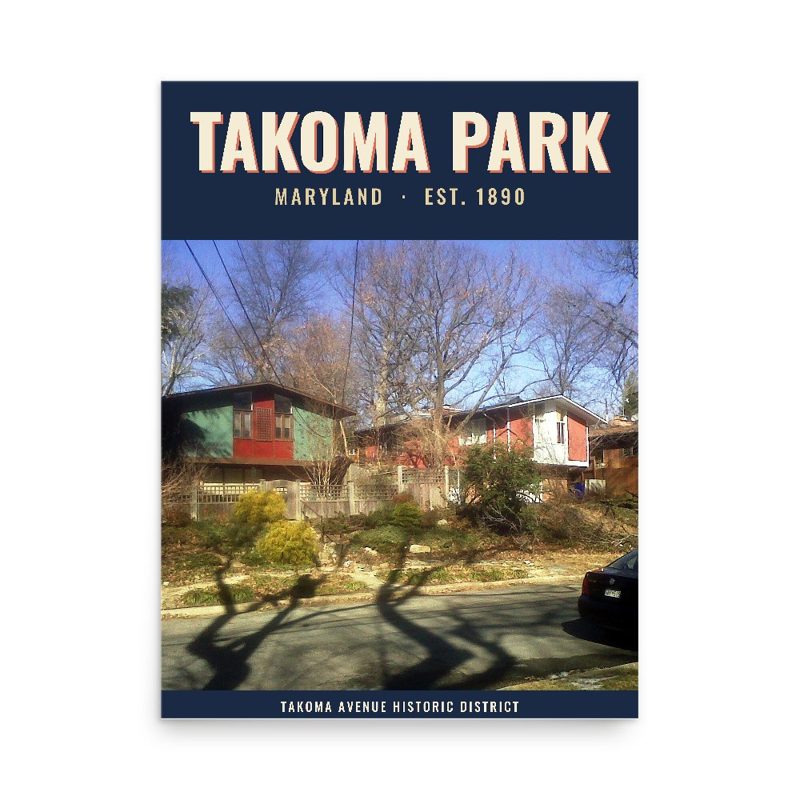
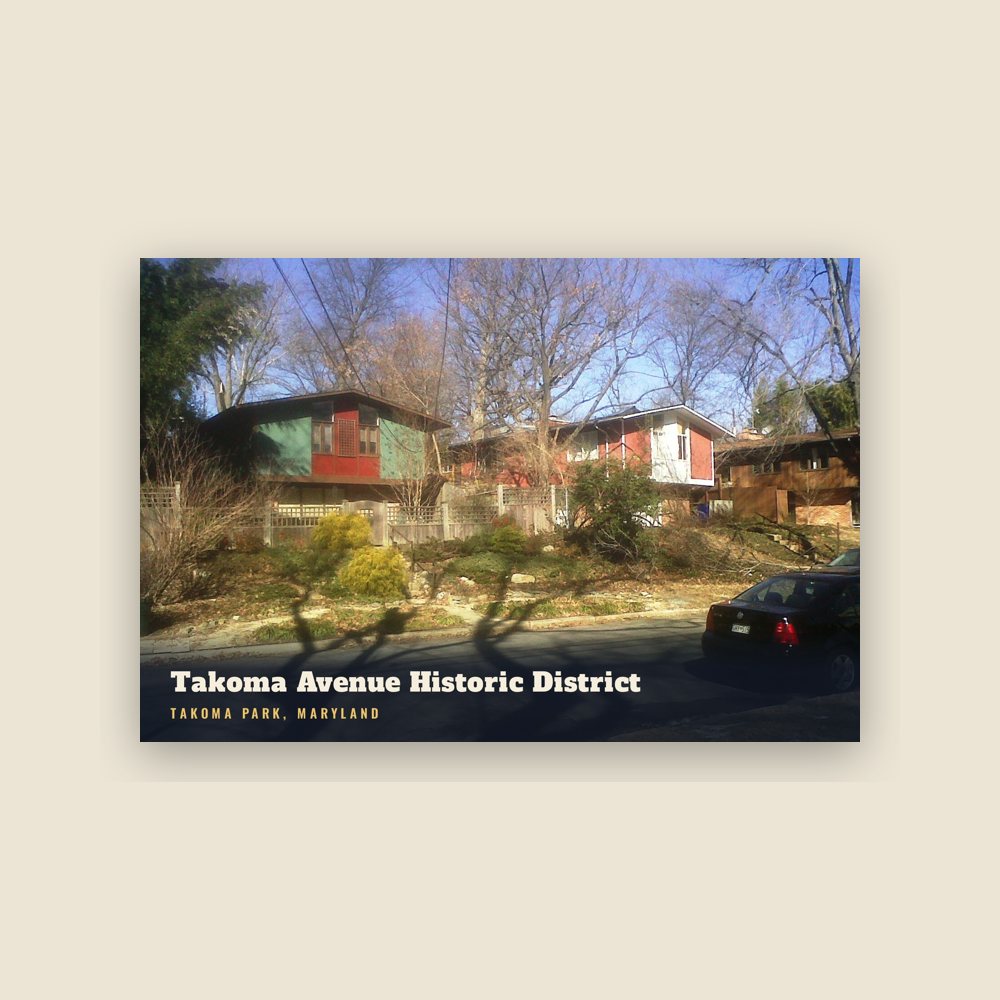
Much of the old town Takoma Park was incorporated into the Takoma Park Historic District; listed on the National Register of Historic Places in 1976.
Late 20th and early 21st century
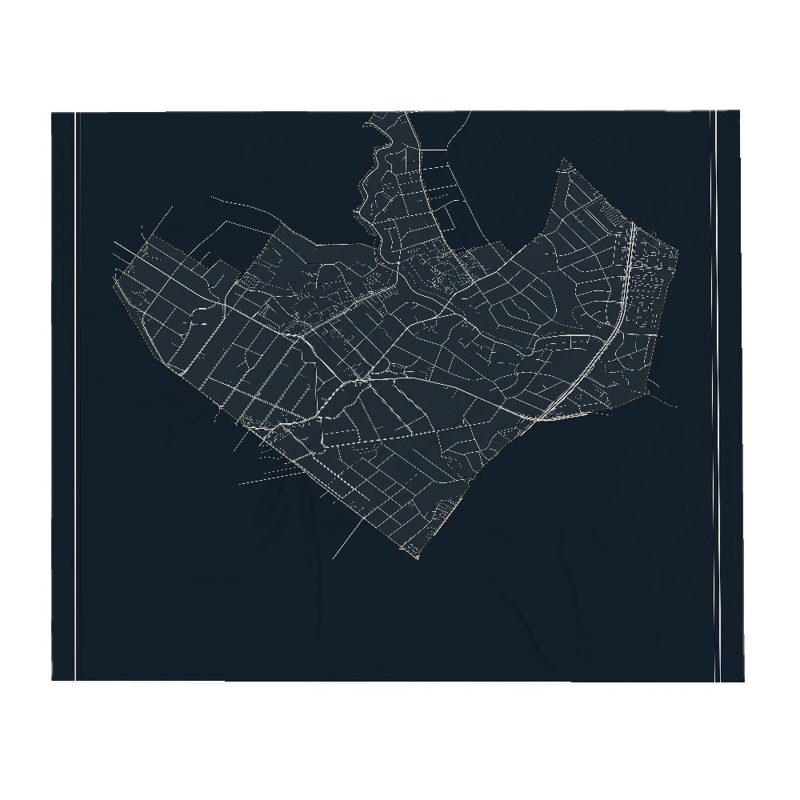
Before 1995, the eastern boundary of the city of Takoma Park was in Prince George's County, Maryland, causing the community to be divided across two counties and the Maryland/D.C. line (where the original downtown area is located). For several years, Takoma Park lobbied the State of Maryland for legislation allowing county boundaries to be adjusted. The State finally agreed to this change, with the stipulation that cross-county municipalities would no longer be allowed; the new municipal boundary would forever remain within the county of its choosing. In August 1995, after passage of the law, the city held a public referendum asking registered voters living in three Prince George's County neighborhoods north of New Hampshire Avenue whether they wanted to be annexed to the city of Takoma Park. There was a majority of votes, 219 out of 313, in favor of annexation to the city.
In November 1995, the state-sponsored referendum was held asking whether the portions of the city in Prince George's County should be annexed to Montgomery County, or vice versa. The majority of votes in the referendum were in favor of unification of the entire city in Montgomery County. Following subsequent approval by both counties' councils and the Maryland General Assembly, the county line was moved to include the entire city into Montgomery County (including territory in Prince George's County newly annexed by the city) on July 1, 1997. This process became known as Unification.
In 1981, Takoma Park passed the Rent stabilization Law, which limits the rent increase to a percentage set by the city and applies to all individual condominium units and multi-family rental facilities. This led to Takoma Park featuring some of the lowest rents in the D.C. region while similarly discouraging new multi-family housing construction, as evidenced by the lack of any new development in the city after the law passed.
The city experienced substantial gentrification in the 1990s and early 2000s (decade), with many houses containing apartments converted back into single-family homes. This process was encouraged by an M-NCPPC "phase back", effectively eliminating scattered-site multifamily housing and implementing single-use zoning in a majority of city neighborhoods. Nearly half of the city's population are tenants, 47.2% according to the Census Bureau's 2019 population estimate, many of whom live in a cluster of high-rise and mid-rise apartment buildings surrounding Sligo Creek, which cuts a deep valley through the community.
The City Council adopted the Takoma Park Safe Grow Act of 2013, which went into effect March 1, 2014, and bans synthetic pesticides and requires organic lawn management on all city lands.
In 2018, the City of Takoma Park proposed renaming streets that were named after generals who fought on either side in the United States Civil War, namely Grant Avenue, Lee Avenue, Sherman Avenue, Sheridan Avenue, and Jackson Avenue, though by 2024, no action had been taken.
Adapted (trimmed) from the Wikipedia article Takoma Park, Maryland, revision 1378378448 by its contributors, licensed CC BY-SA 4.0.
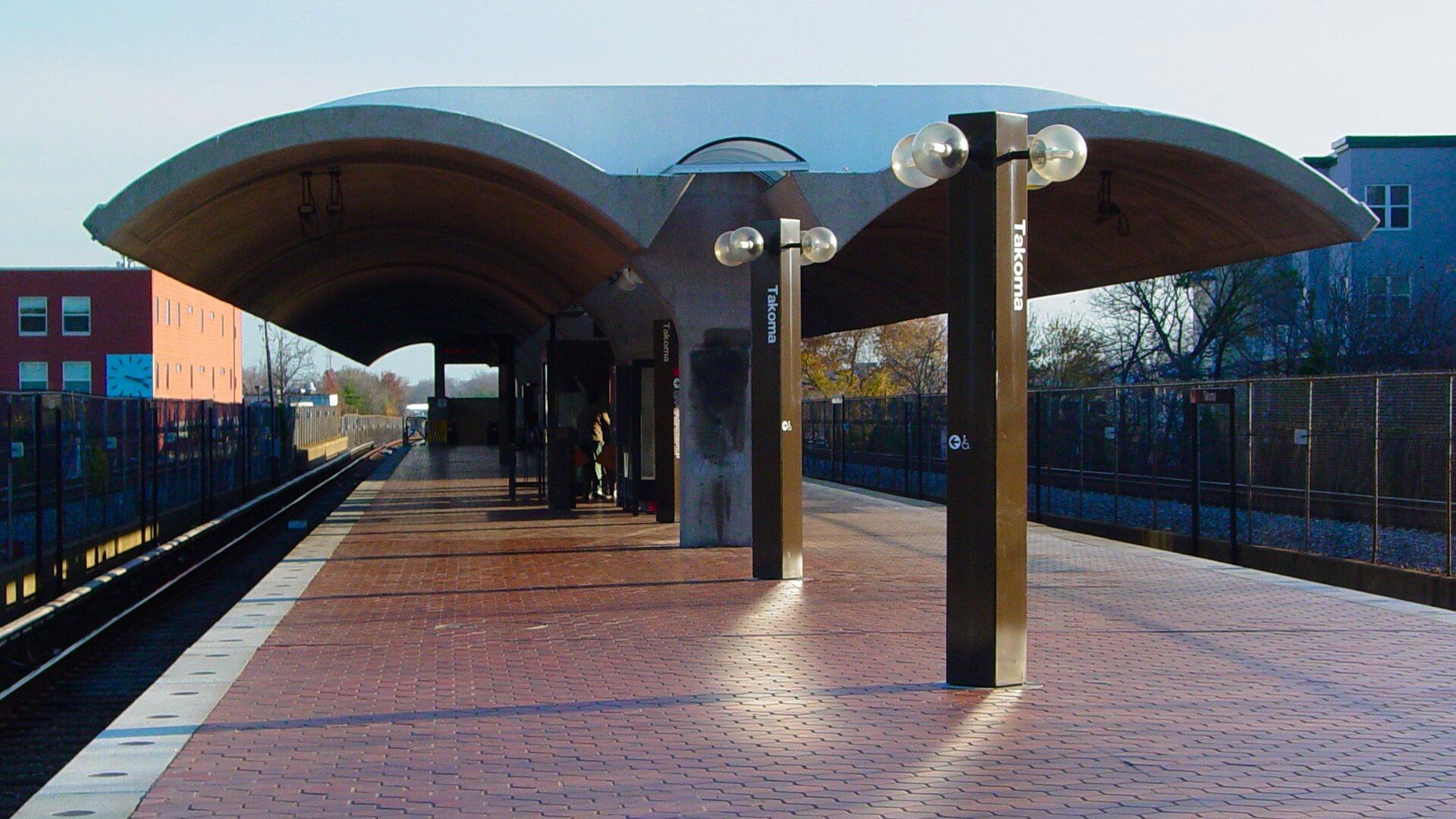
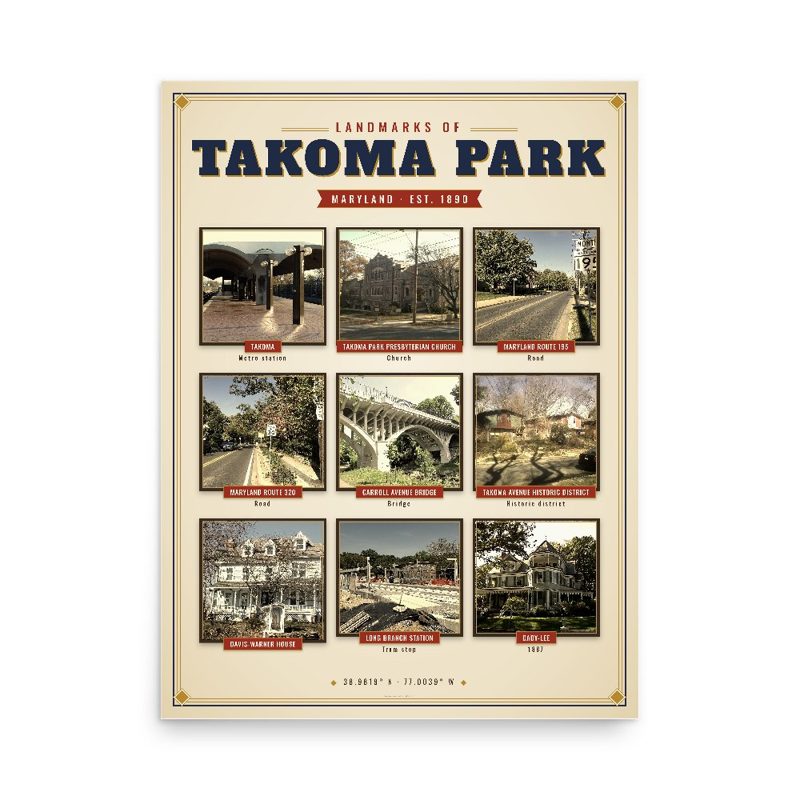
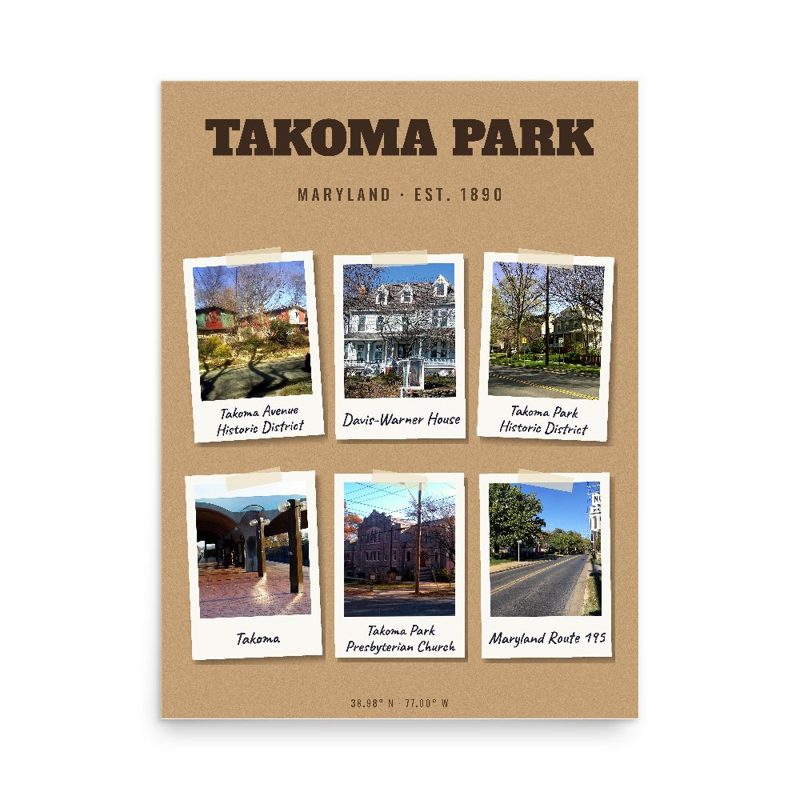
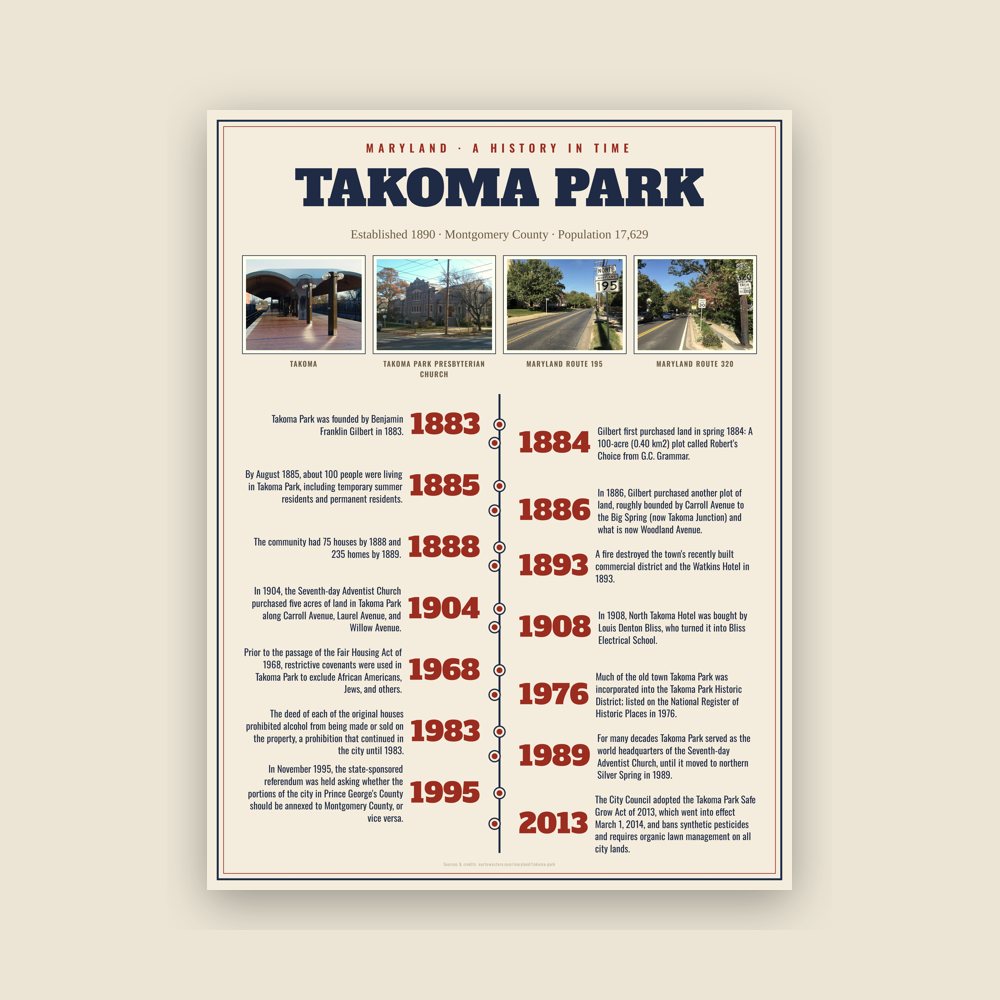
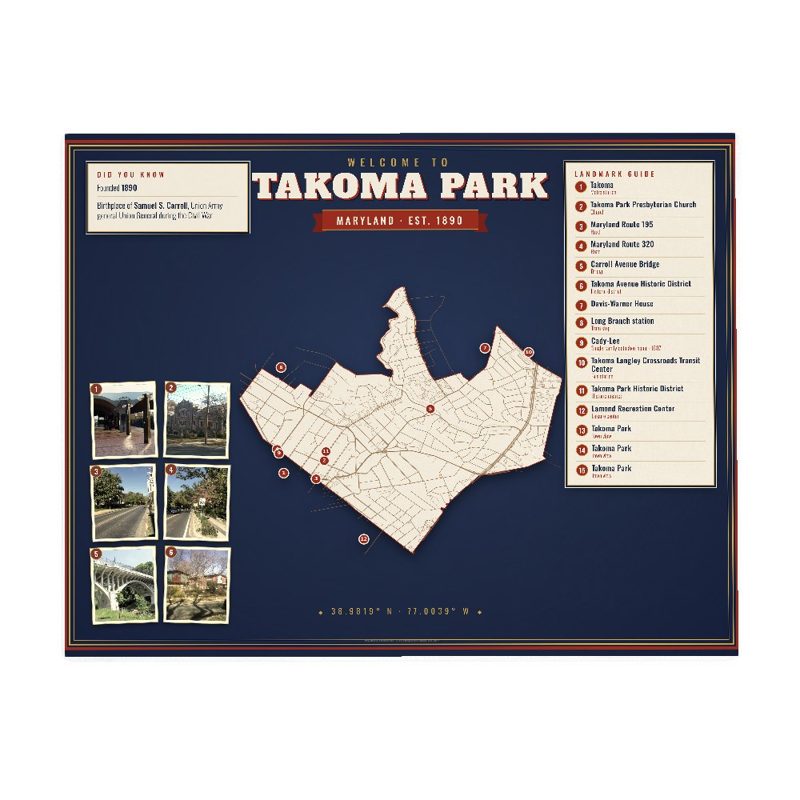




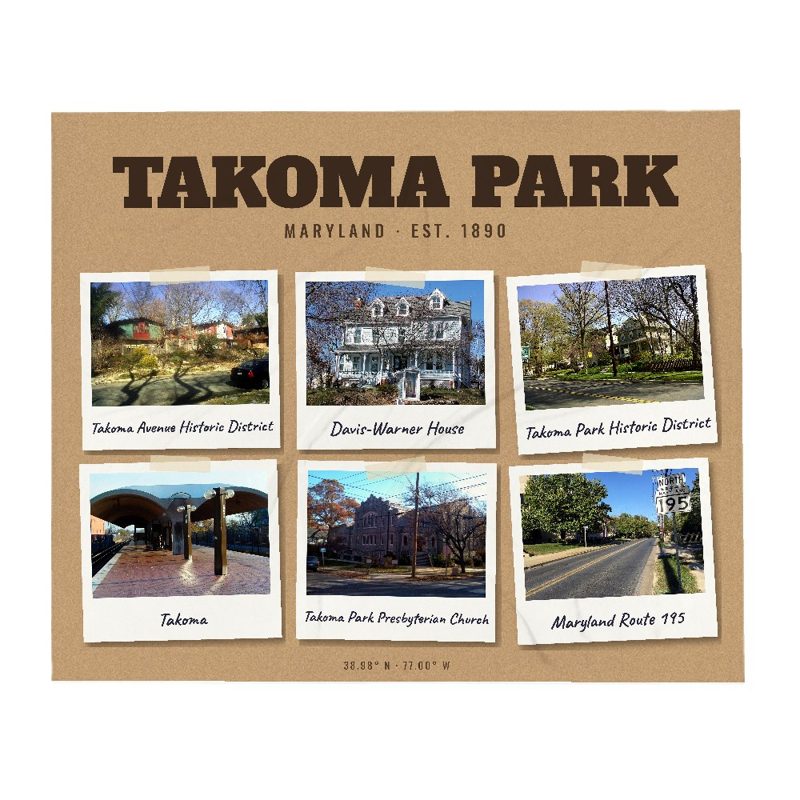
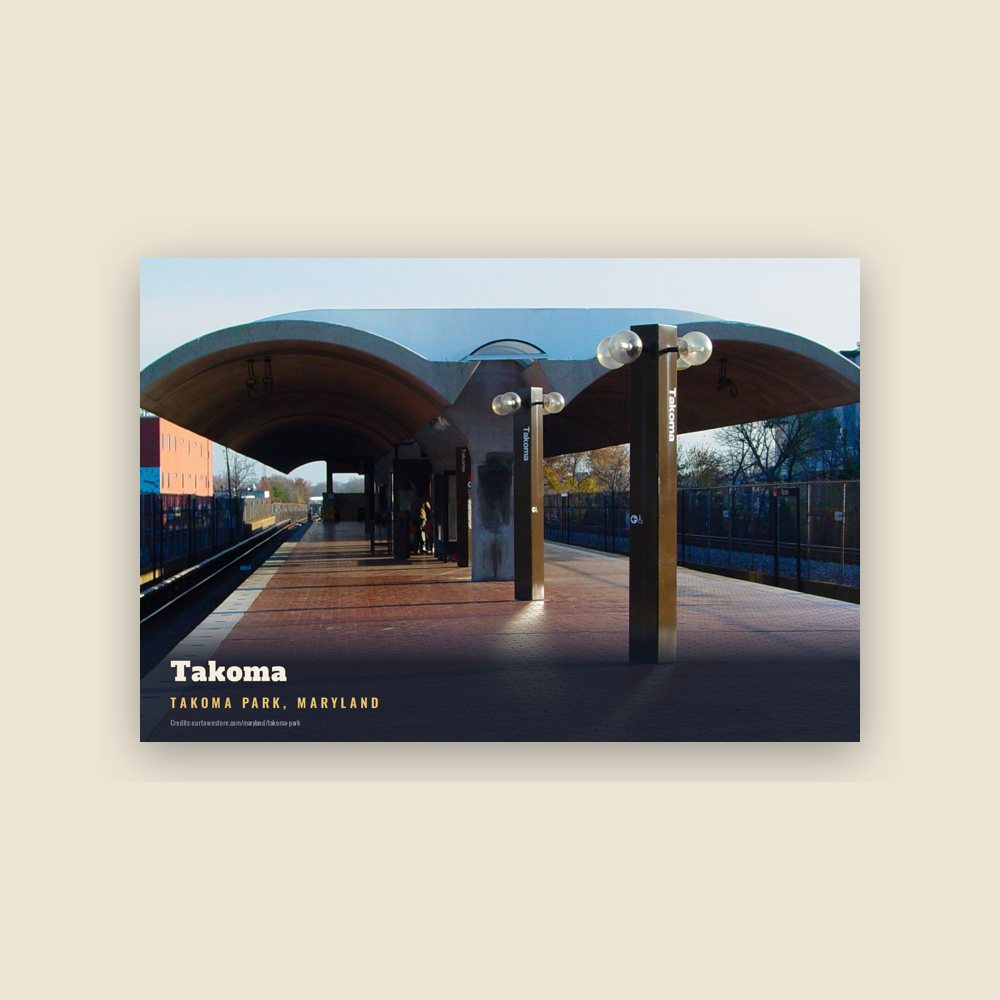
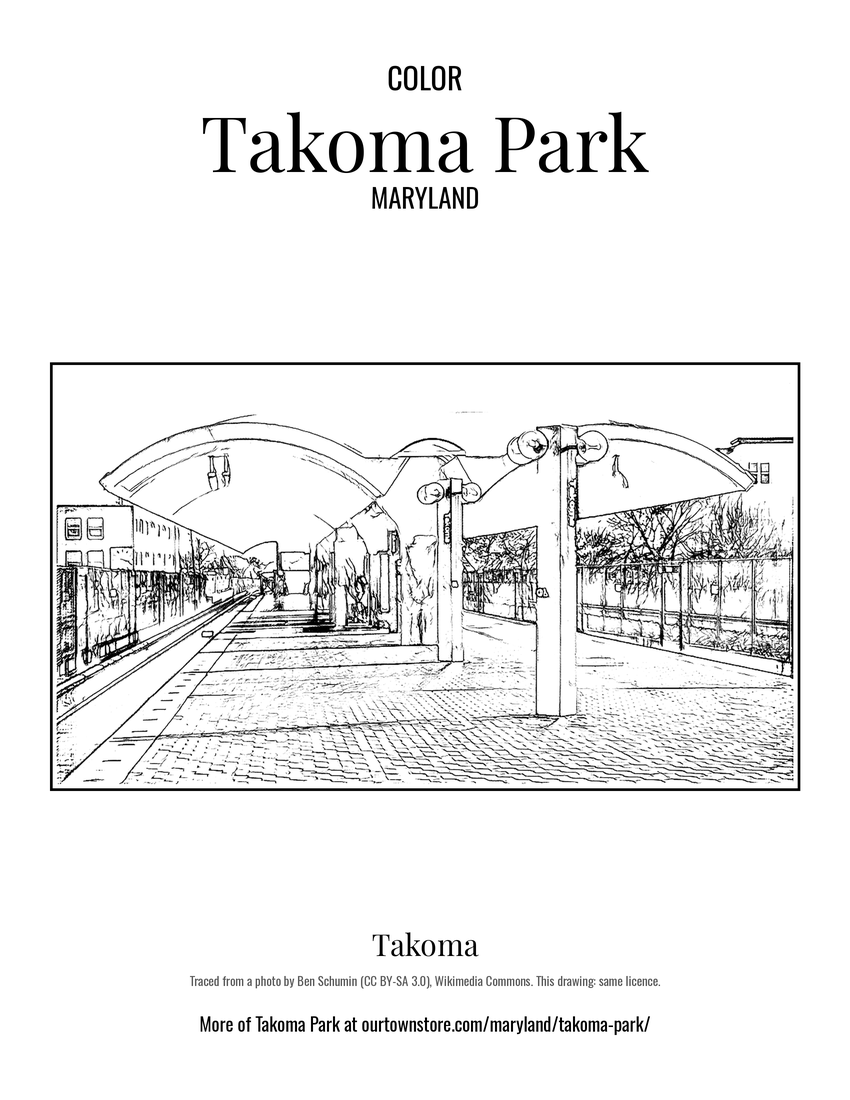 Takoma
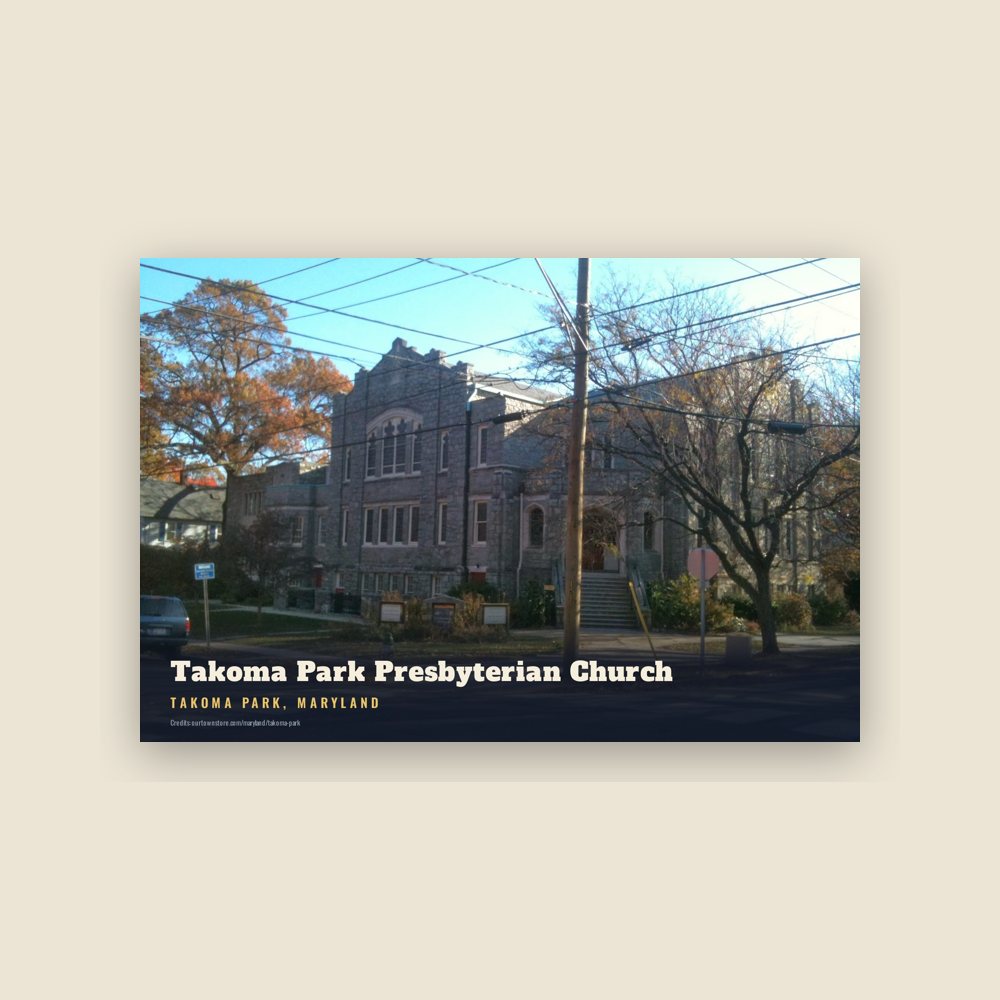
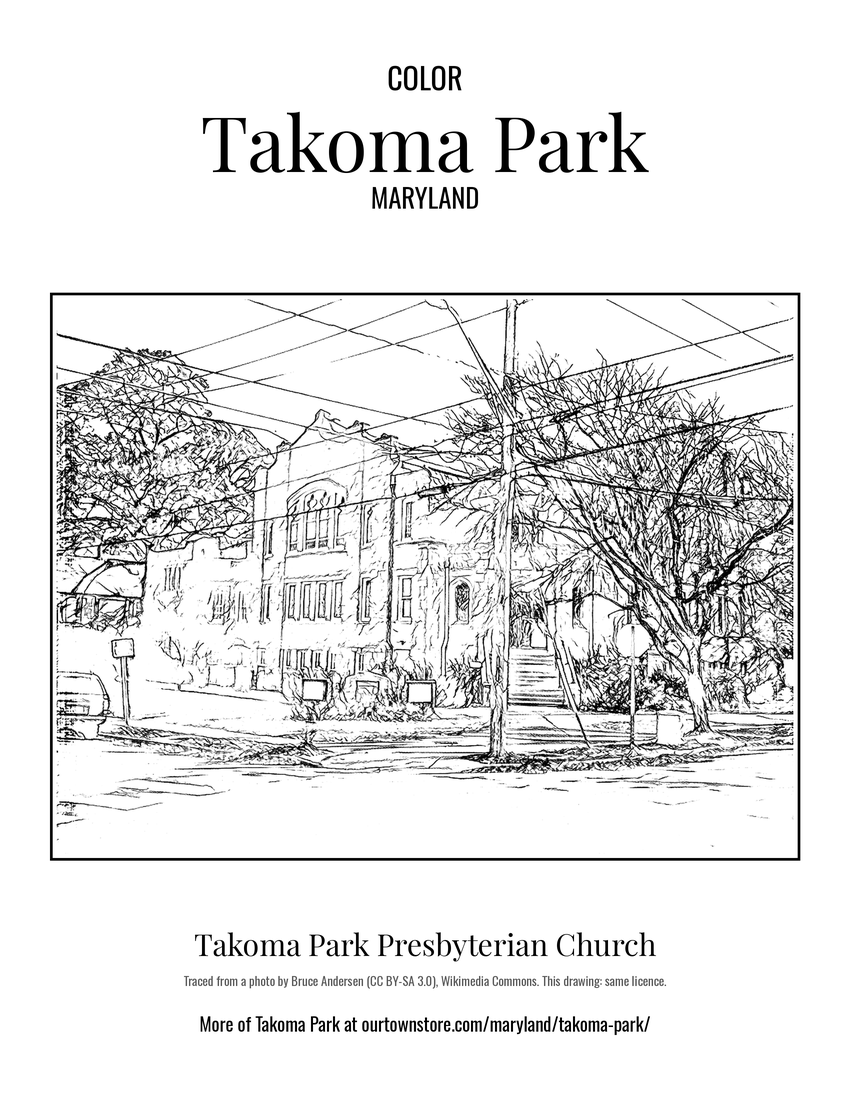 Takoma Park Presbyterian Church
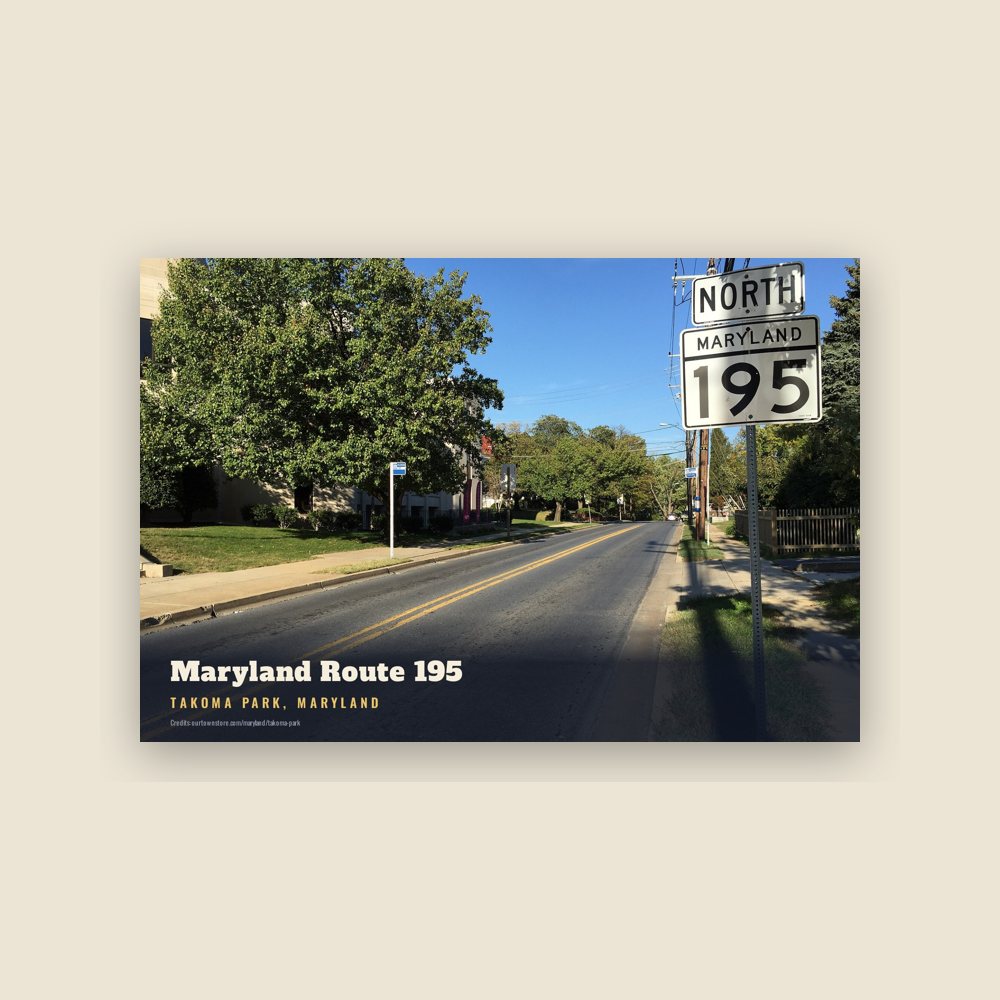
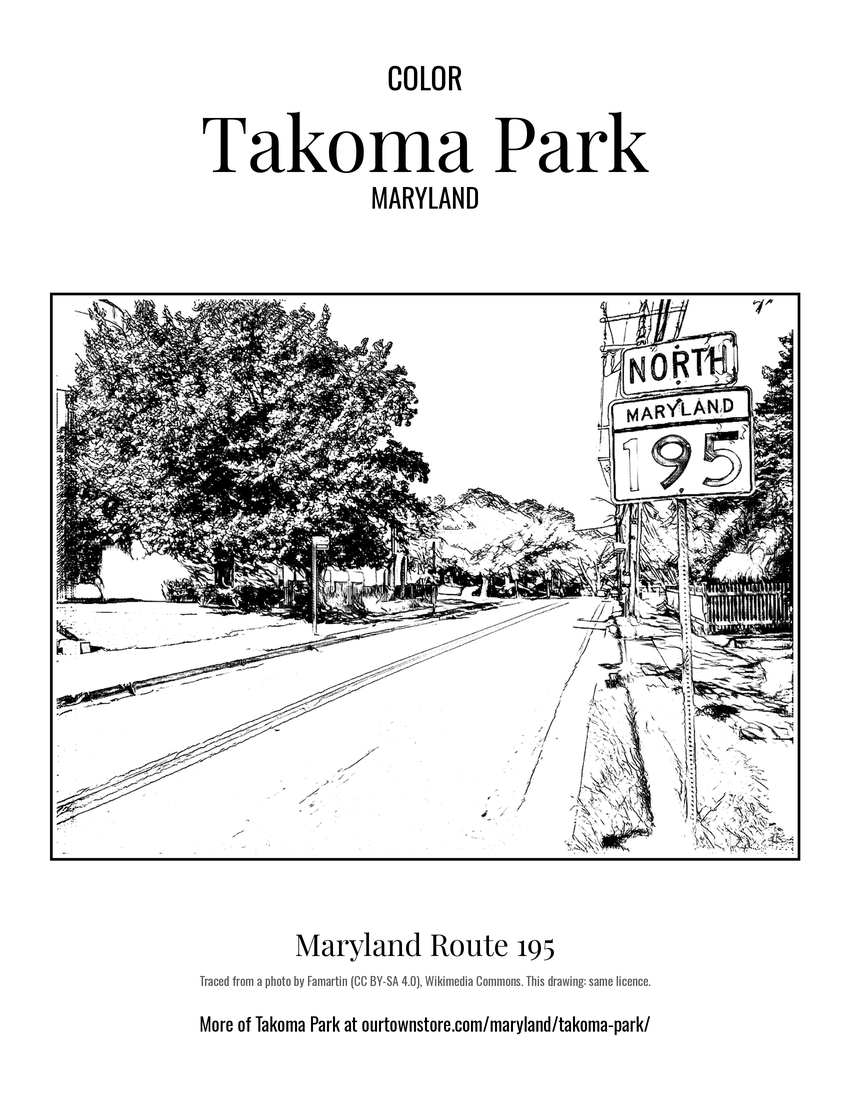 Maryland Route 195
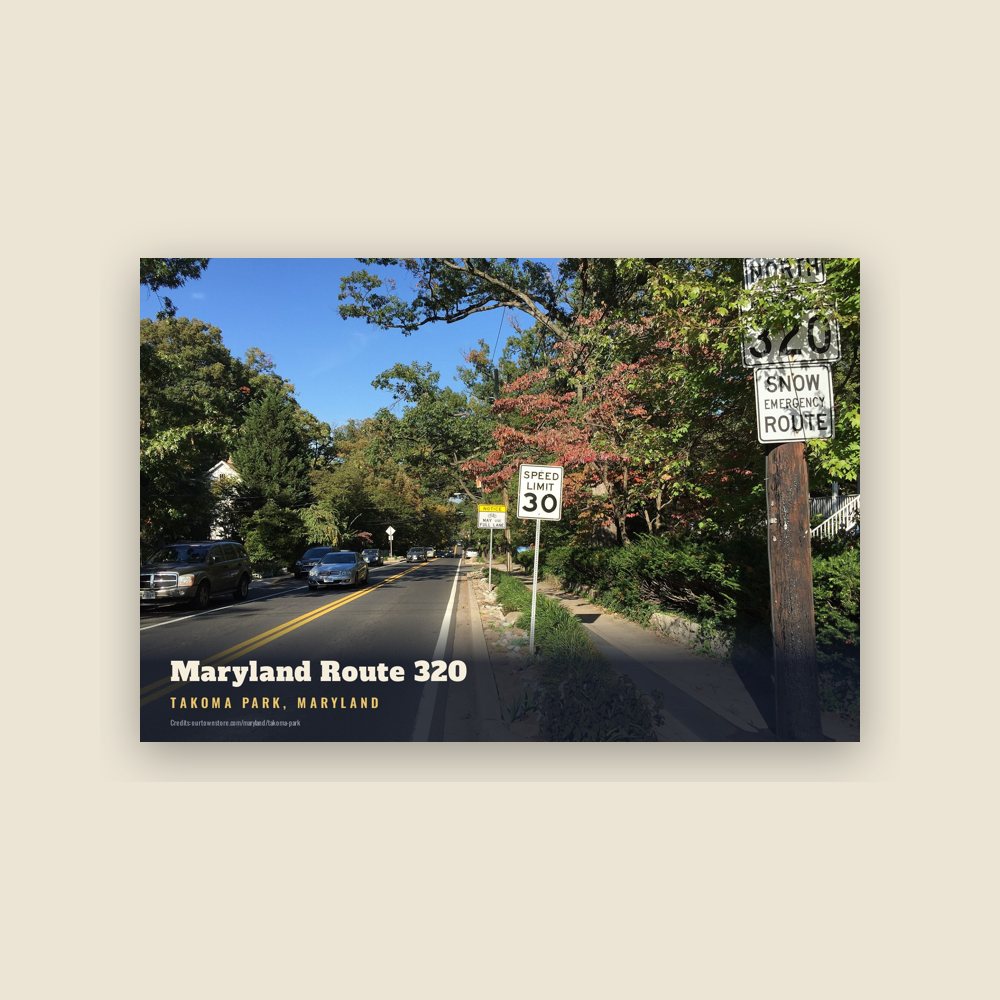
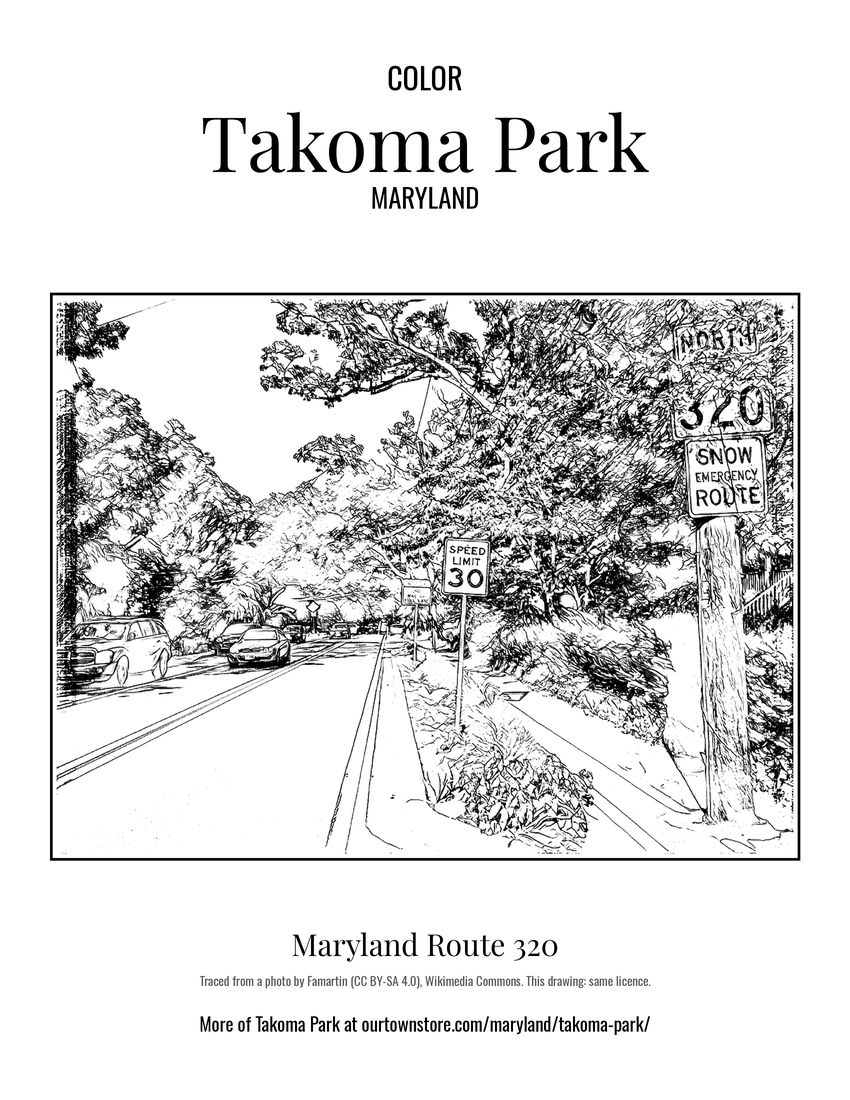 Maryland Route 320