Since 1800
A short history of Rumford
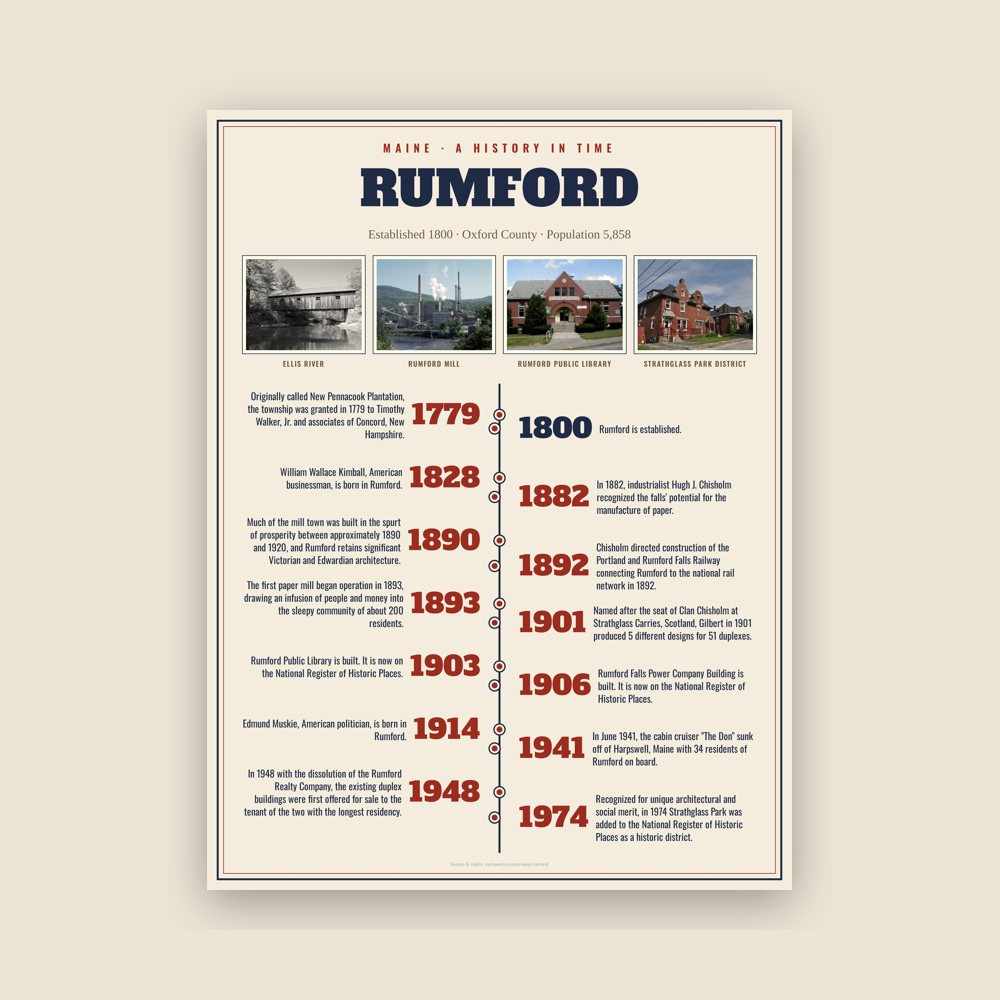
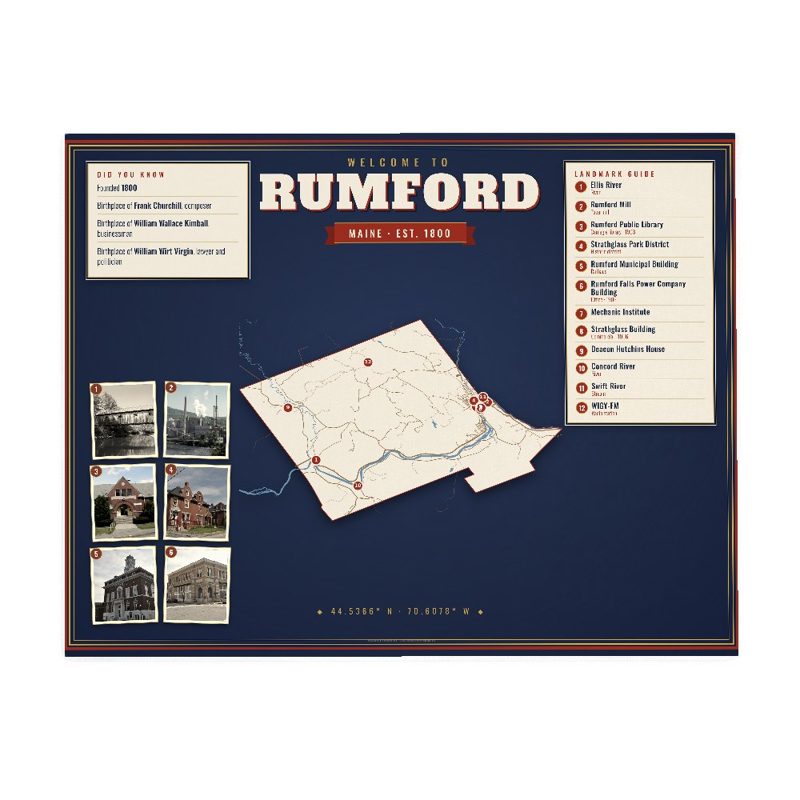
Originally called New Pennacook Plantation, the township was granted in 1779 to Timothy Walker, Jr. and associates of Concord, New Hampshire. Both Pennacook and Rumford are former names of Concord, from which many early settlers arrived. The first pioneers, however, were Jonathan Keyes and his son Francis in 1782 from Shrewsbury, Massachusetts. Incorporated in 1800, the town would later annex land from Peru, Maine, and Franklin Plantation.
Located in the foothills of the White Mountains, Rumford is the site of Pennacook Falls, called by historian George J. Varney "the grandest cataract in New England," where the Androscoggin River drops 177 feet (54 m) over solid granite. Bands of St. Francis Indians once hunted and fished here, where salmon spawn in the 13-acre (5.3 ha) pool below Upper Falls, a barrier that fish cannot pass. Indians also came here to trade furs brought from the lakes region. Sawmills and gristmills were built to harness water power from the falls, although Rumford would remain primarily agricultural during its first 100 years.
In 1882, industrialist Hugh J. Chisholm recognized the falls' potential for the manufacture of paper. Chisholm directed construction of the Portland and Rumford Falls Railway connecting Rumford to the national rail network in 1892. The first paper mill began operation in 1893, drawing an infusion of people and money into the sleepy community of about 200 residents. Oxford Paper Company, owned by Chisholm, would dominate Rumford's riverfront and economy.
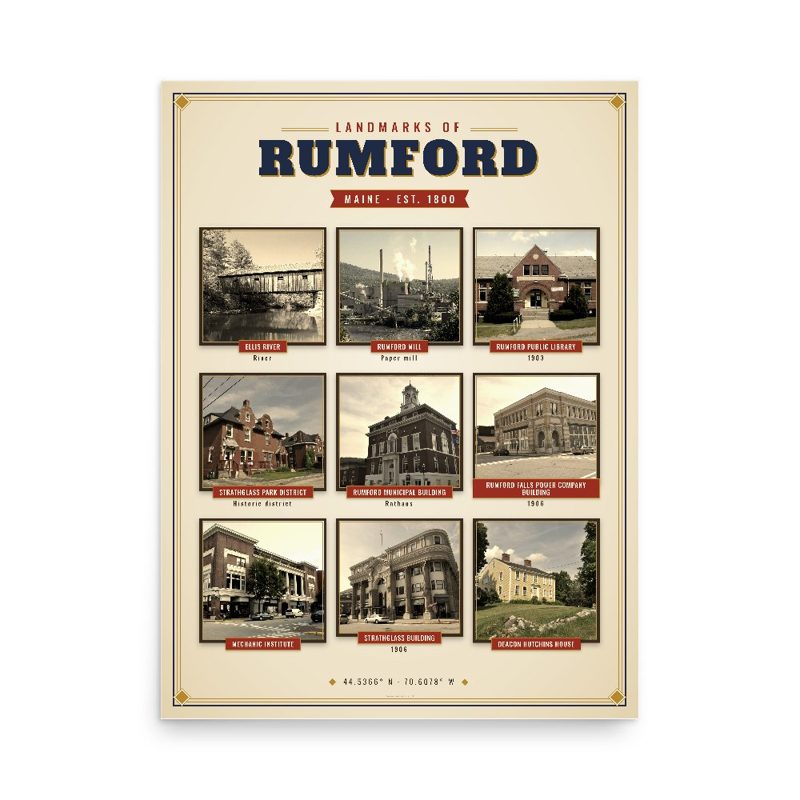
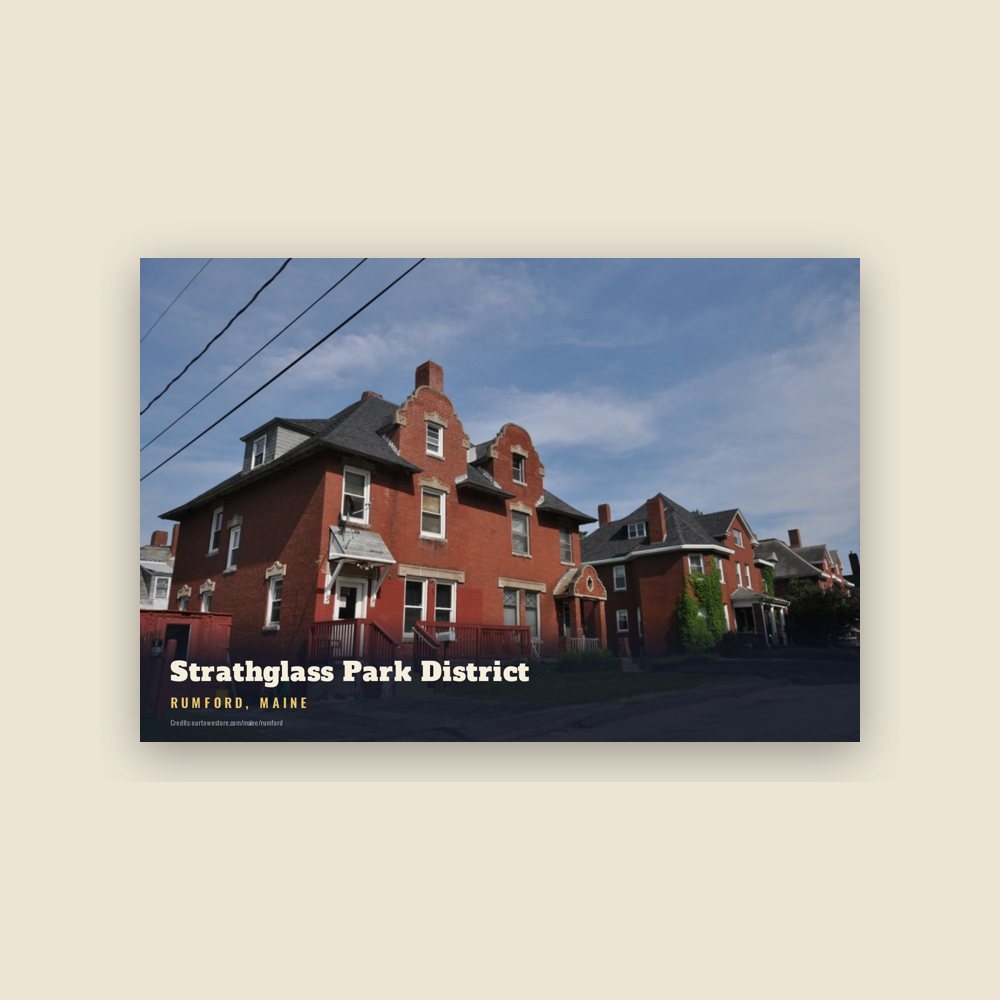
Much of the mill town was built in the spurt of prosperity between approximately 1890 and 1920, and Rumford retains significant Victorian and Edwardian architecture. Most notable is Strathglass Park, perhaps the finest company housing in the nation at that time. Wishing to avoid the stacked slums endemic at Lowell and Lawrence, Massachusetts, Hugh Chisholm commissioned Cass Gilbert in 1900 to plan a 30-acre (12 ha) site in his company town, instructing the prominent architect that "We will build of brick and stone and slate, and we will provide not merely for a house, but for comfort, elegance and social gratification."
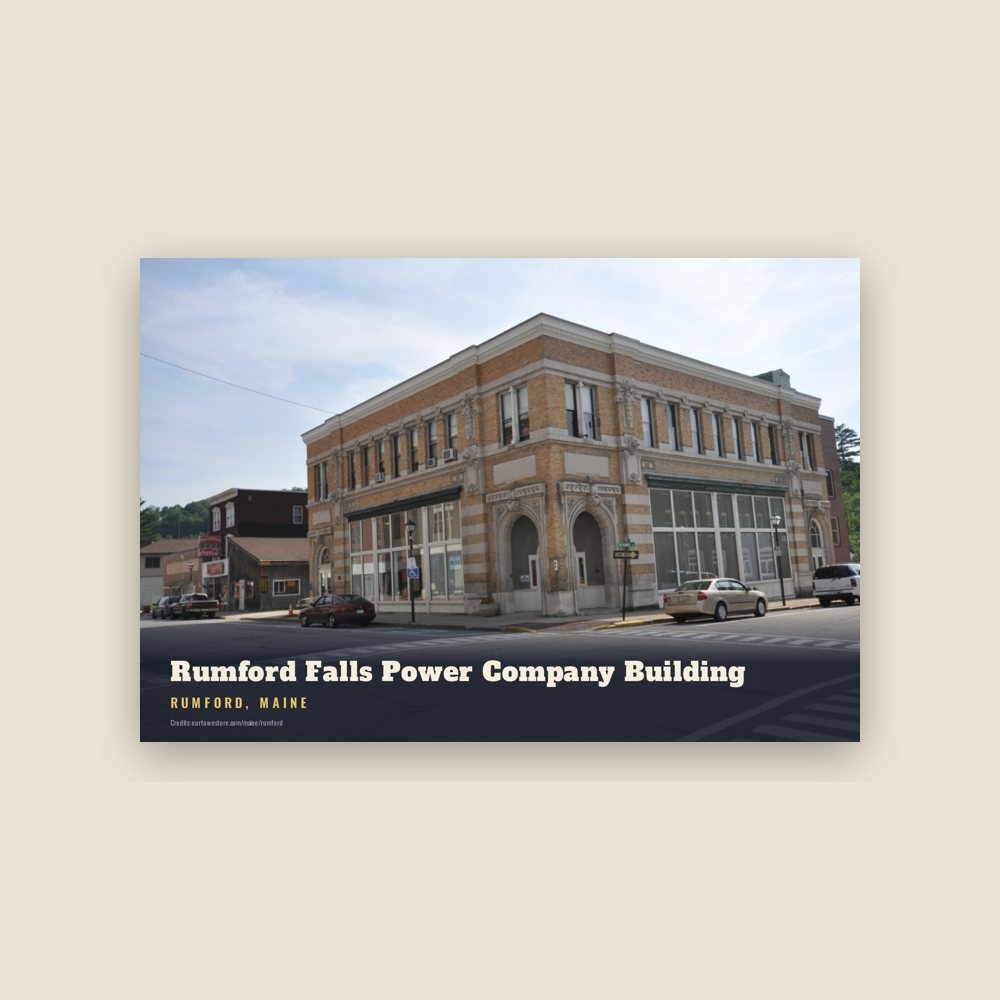
Named after the seat of Clan Chisholm at Strathglass Carries, Scotland, Gilbert in 1901 produced 5 different designs for 51 duplexes. The same year, Chisholm founded The Rumford Realty Company to build the oval-shaped development, its entrance marked by an imposing granite gateway. With attractive lawns and broad, tree-lined streets, all maintenance was provided by the Oxford Paper Company. Even valet service was included. Tenants paid a rent of $9.00 per month, plus $1.00 per month for electricity to the Rumford Falls Power Company, also belonging to Chisholm. In 1948 with the dissolution of the Rumford Realty Company, the existing duplex buildings were first offered for sale to the tenant of the two with the longest residency. But later, each half of the single building was sold creating two owners of each building. Recognized for unique architectural and social merit, in 1974 Strathglass Park was added to the National Register of Historic Places as a historic district. Unfortunately due to lack of maintenance since that year of private sale, and due to a general deterioration of the brick and concrete materials, as well as the fact that nearly all existing buildings are owned by two independent and generally non-collaborative owners has caused each building to look like two halves, each painted differently, each maintained and repaired differently instead of the single duplex originally designed so that the entire development has taken on the look of a run-down, slummy group of buildings. A major factor in this impression is also that the development was designed before the advent of the personal automobile, but to accommodate those automobiles since then the lawns have been converted to make-shift parking lots for multiple vehicles.
Today, much of the history of Rumford is preserved by the Rumford Historical Society. Founded in 1961, under the sponsorship of prominent residents Louis Thibodeau, Minerva Anderson and Jonathan Mackenzie, the society pledges to preserve the rich history of the western mill town and encourage community involvement among all.
In June 1941, the cabin cruiser "The Don" sunk off of Harpswell, Maine with 34 residents of Rumford on board. It remains the largest loss of life in the town's history. The cause of the wreck was never determined but multiple theories abound as to the vessel's demise including it being sunk by a U-boat or an insurance scheme. The only communication from the boat was shortly after it left port when a radio distress call came out to nearby ships with a voice saying "If I don't get off this boat somebody's gonna get thumped."
Adapted (trimmed) from the Wikipedia article Rumford, Maine, revision 1378589983 by its contributors, licensed CC BY-SA 4.0.
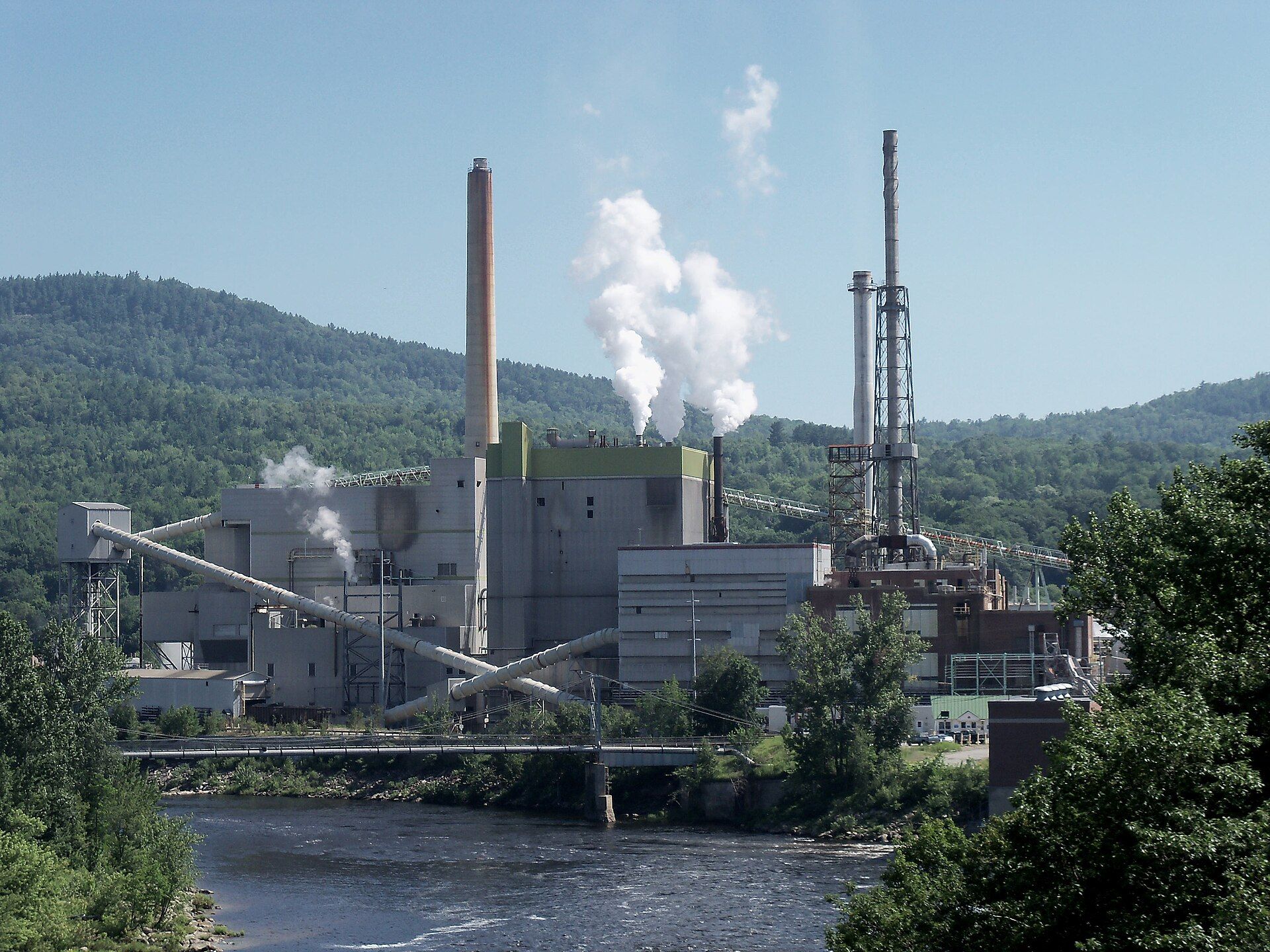
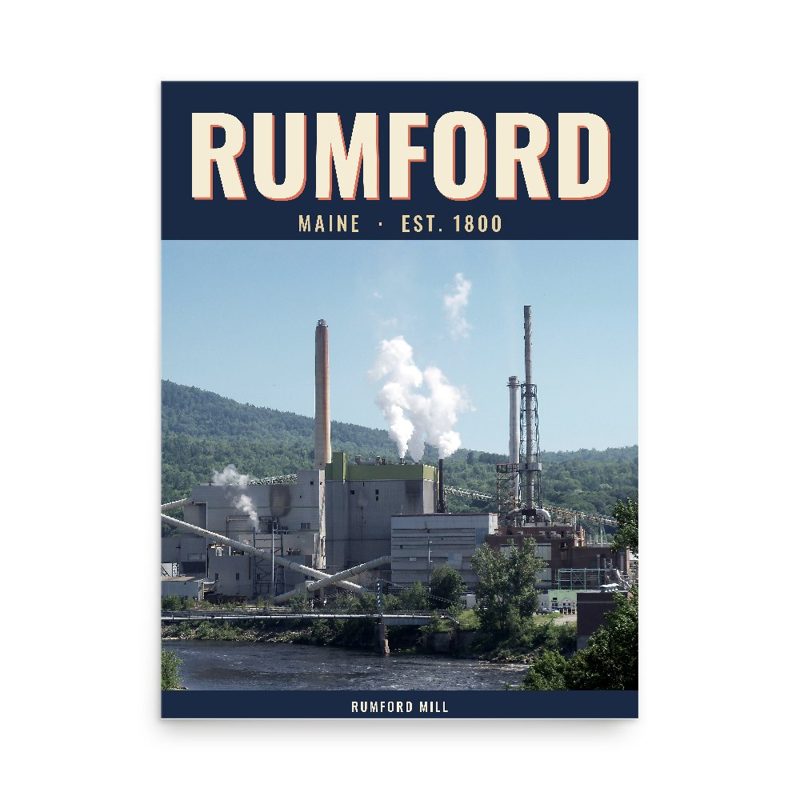
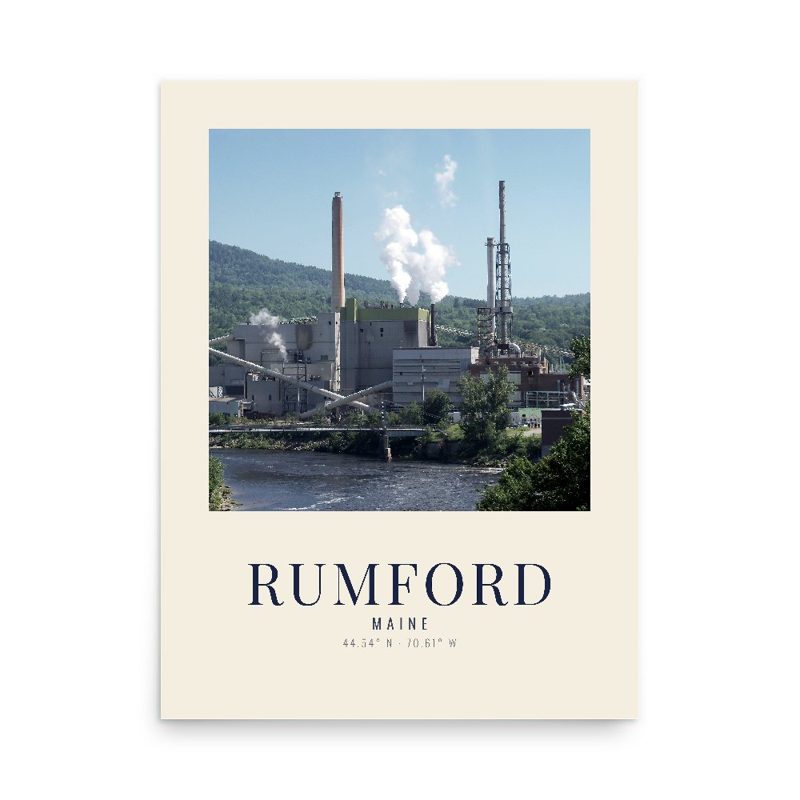
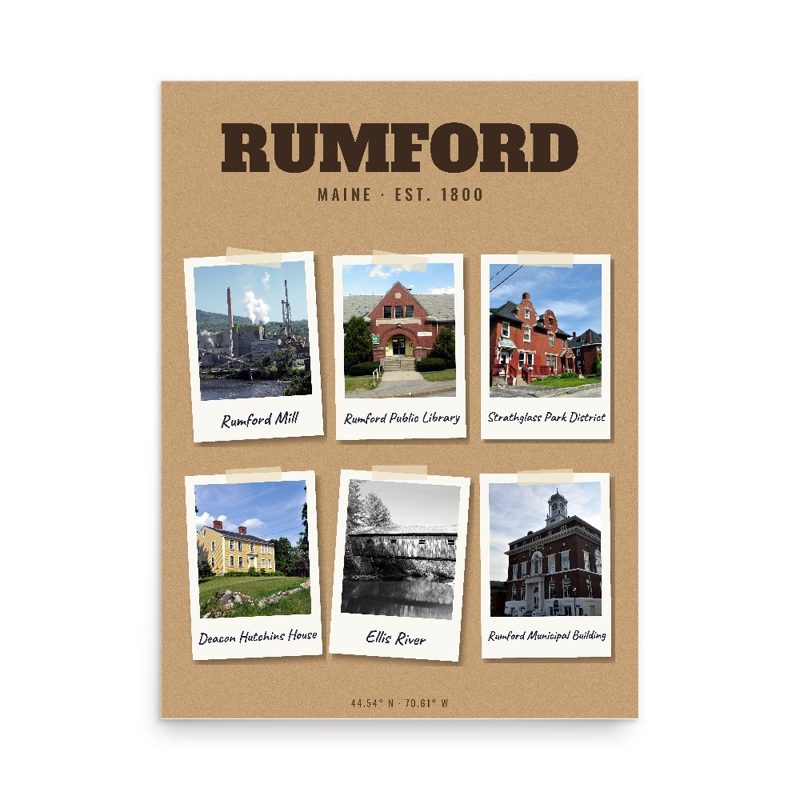




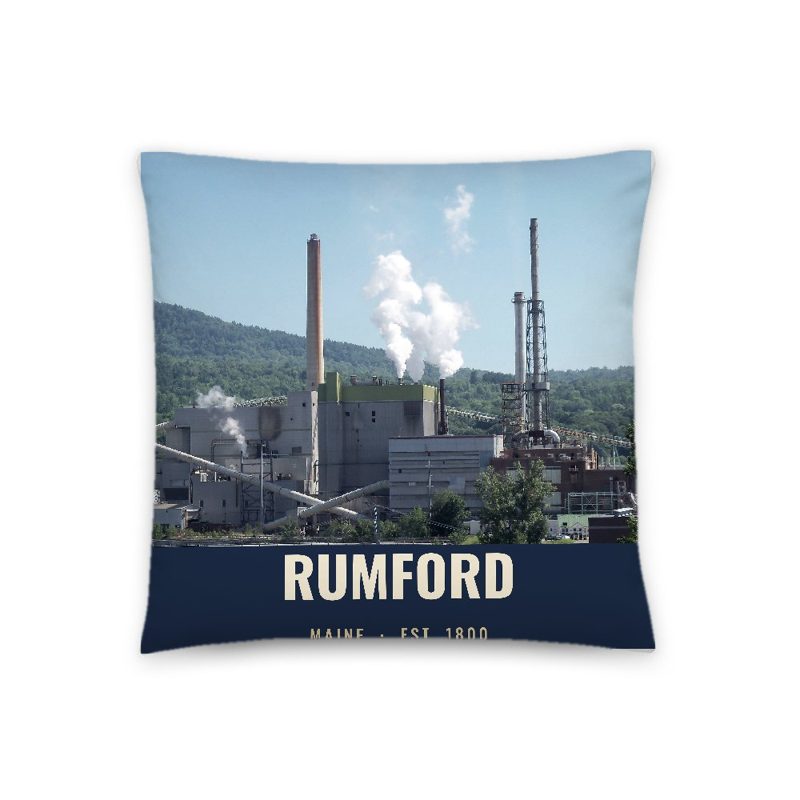



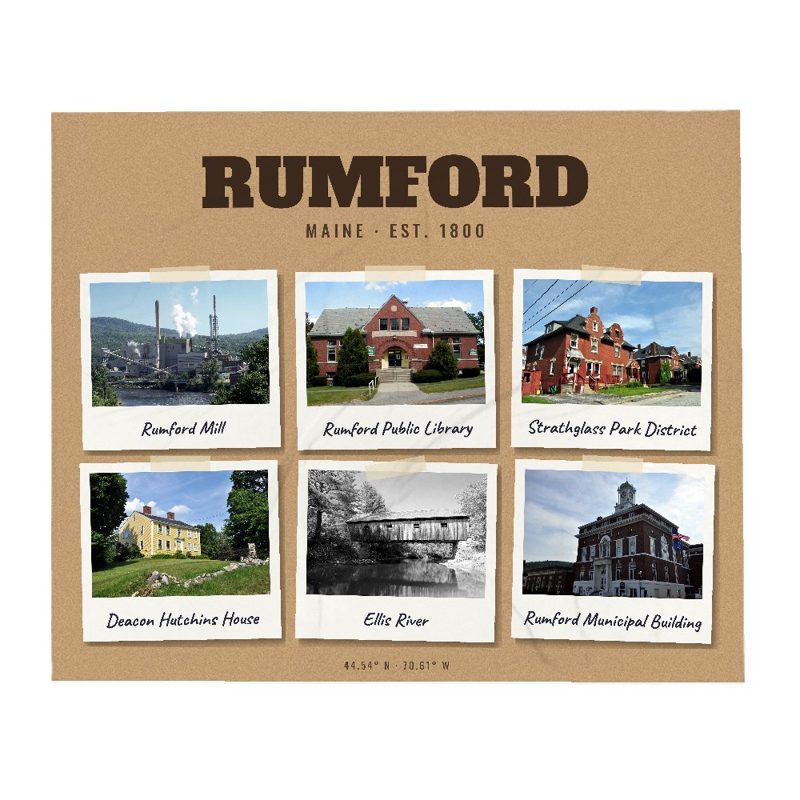
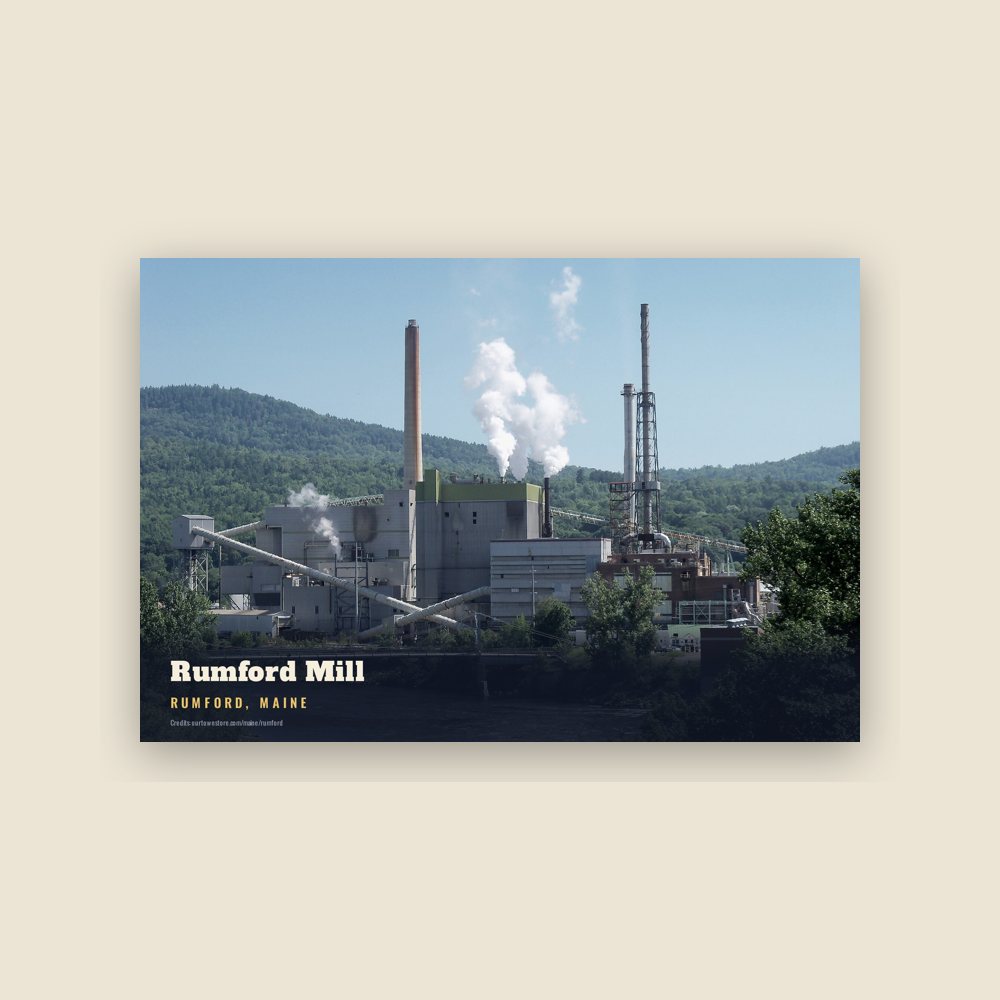
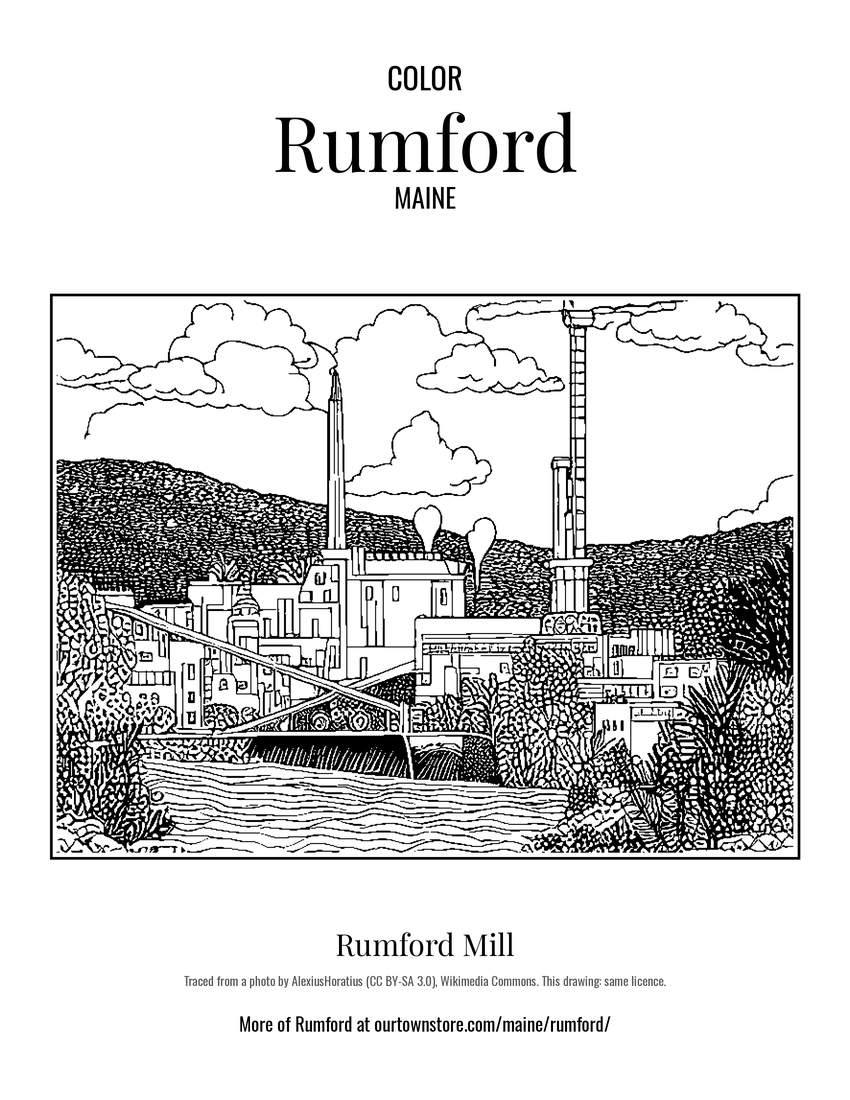 Rumford Mill
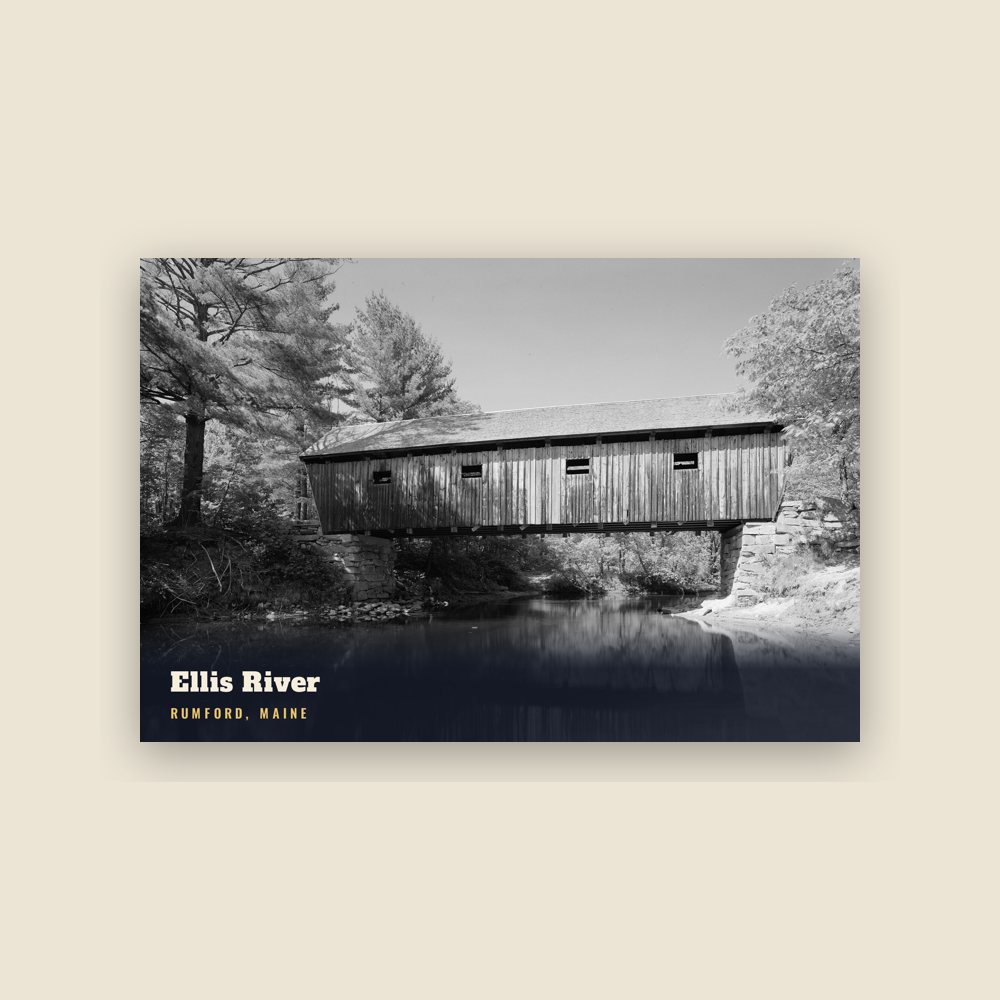
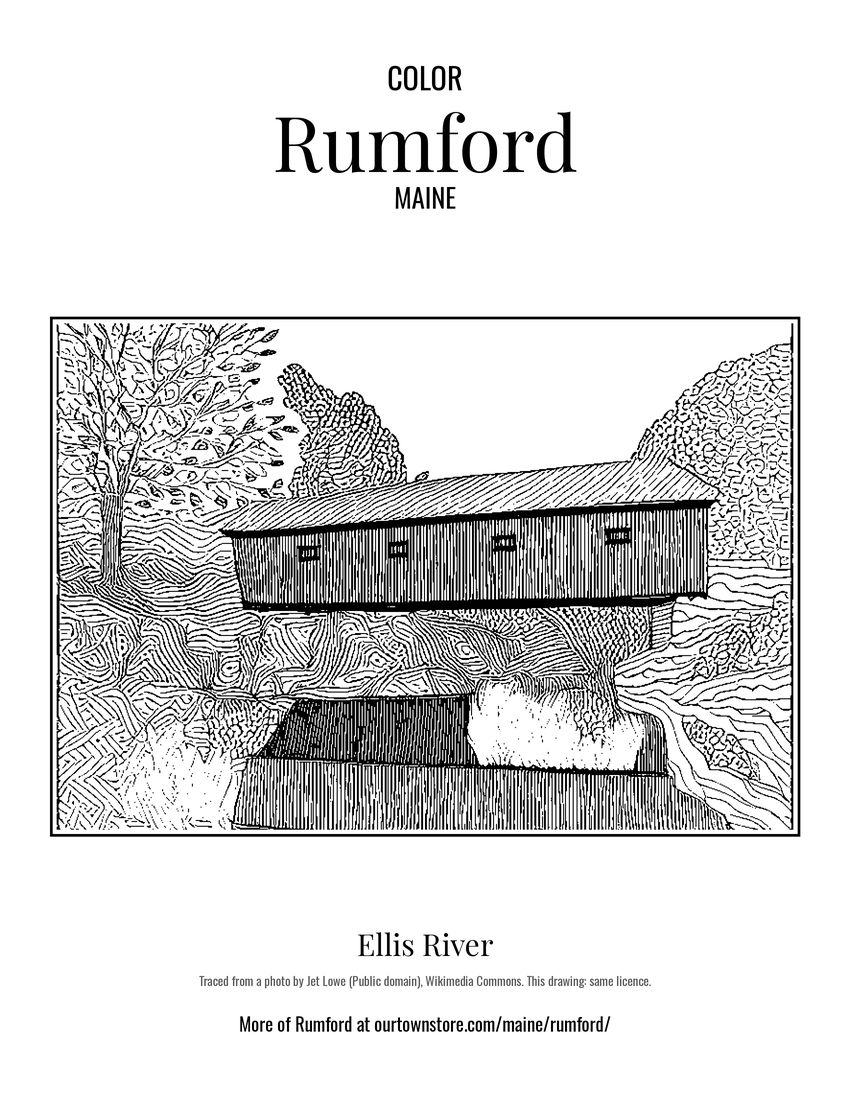 Ellis River
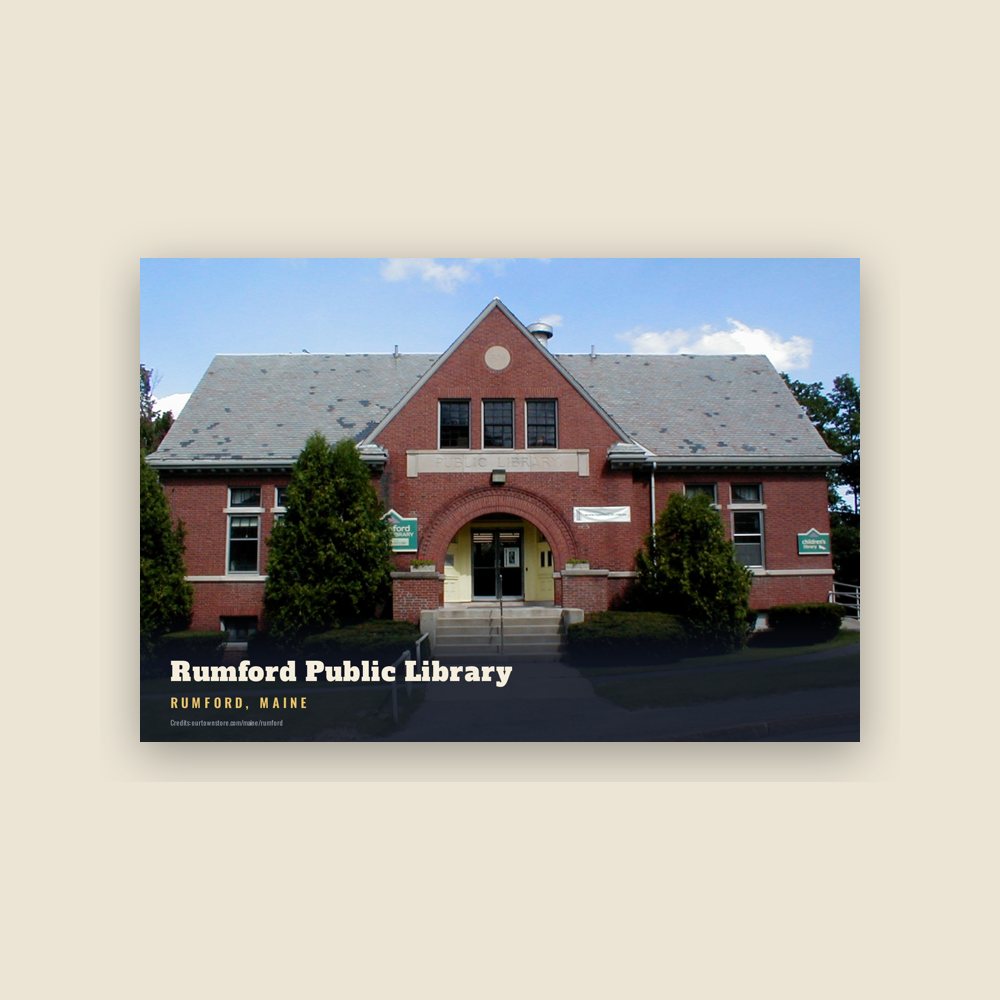
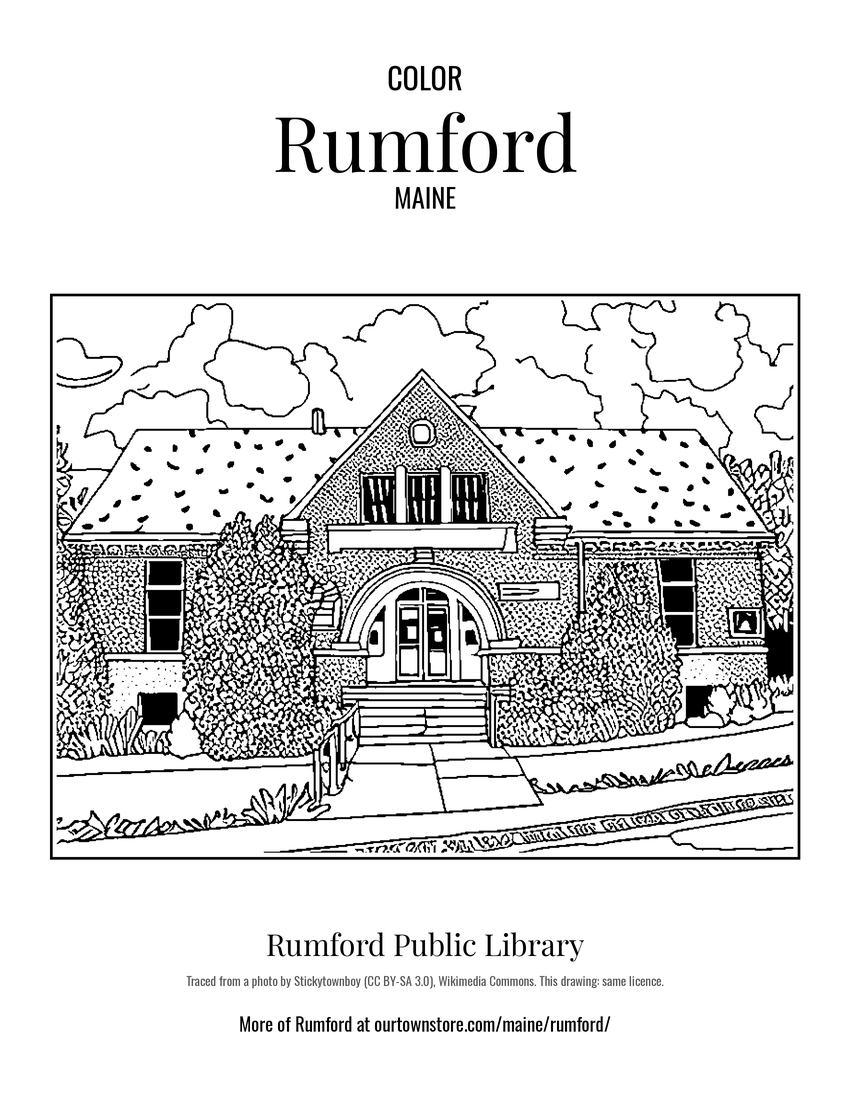 Rumford Public Library
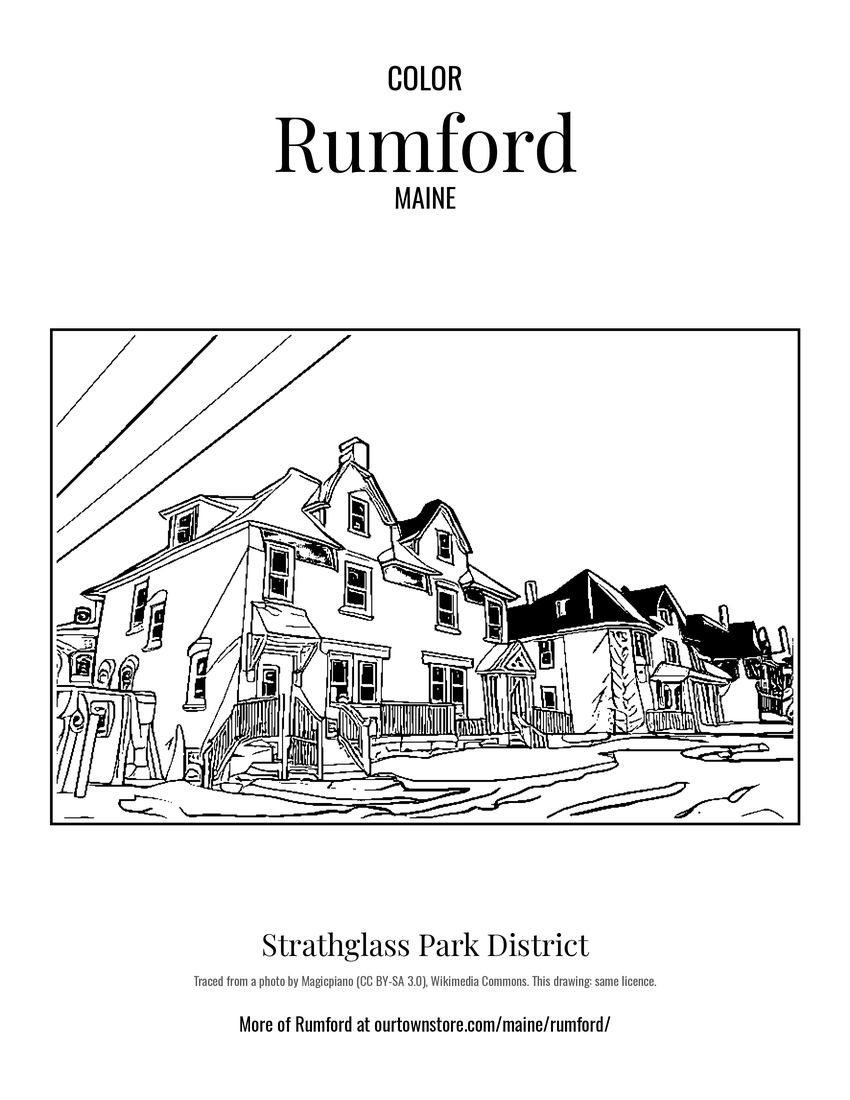 Strathglass Park District