Since 1816
A short history of Corinna
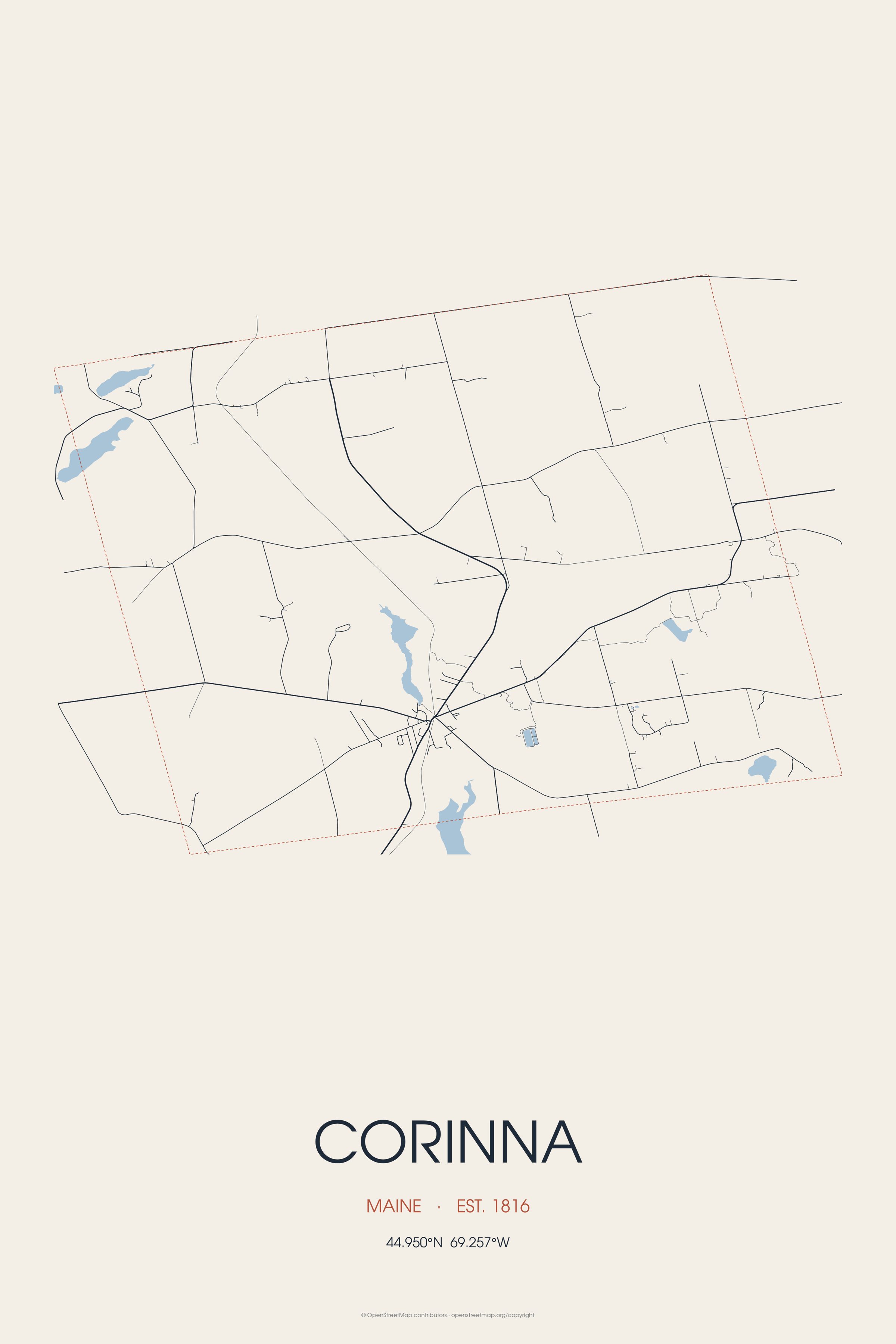
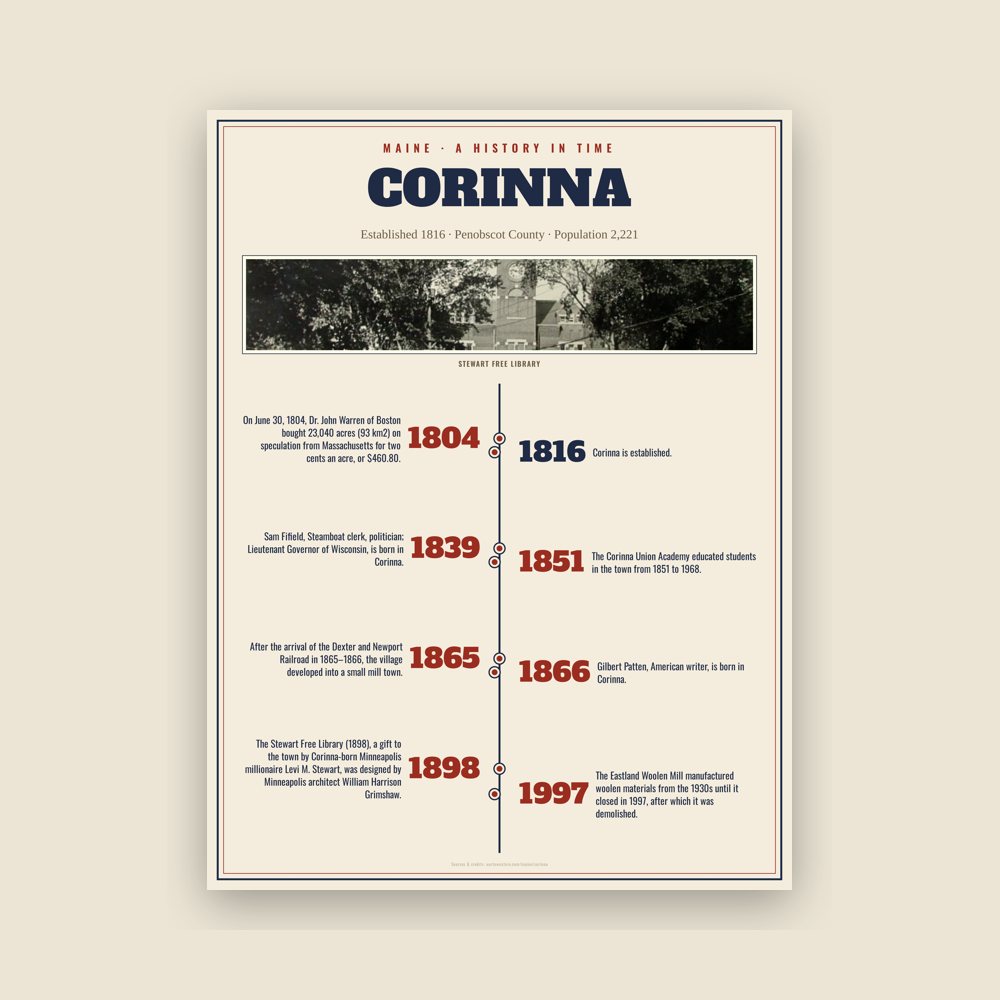
It was first called T4 R4 NWP (or Township 4, Range 4, North of the Waldo Patent). On June 30, 1804, Dr. John Warren of Boston bought 23,040 acres (93 km2) on speculation from Massachusetts for two cents an acre, or $460.80. To encourage settlement, he gave away some land and built a combination gristmill and sawmill. The town would be incorporated on December 11, 1816, as Corinna, named after Dr. Warren's daughter.
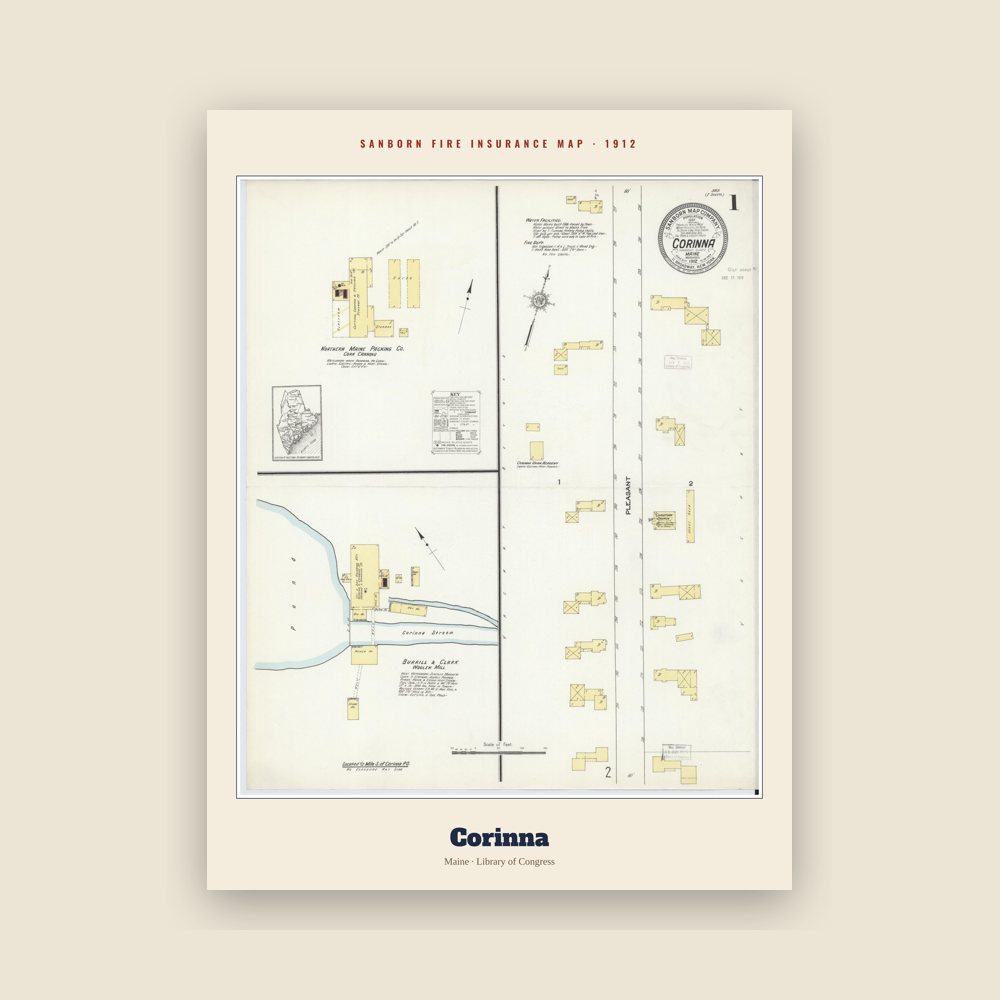
The first homes were built of hewn logs. Corinna developed into a farming community, with water powered mills at the outlet of Corundel Lake. After the arrival of the Dexter and Newport Railroad in 1865–1866, the village developed into a small mill town. Industries would include sawmills, planing mills, woolen textile mills, and a door, sash and blind factory. There were also boot and shoemaking shops and an iron foundry. The Eastland Woolen Mill manufactured woolen materials from the 1930s until it closed in 1997, after which it was demolished.
Read the full history
Historic building
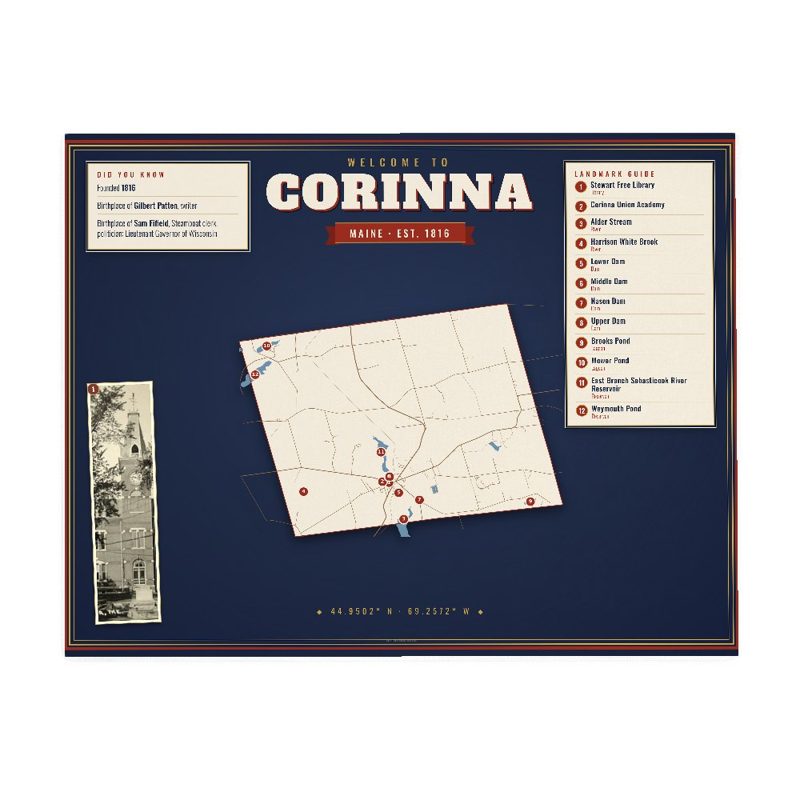
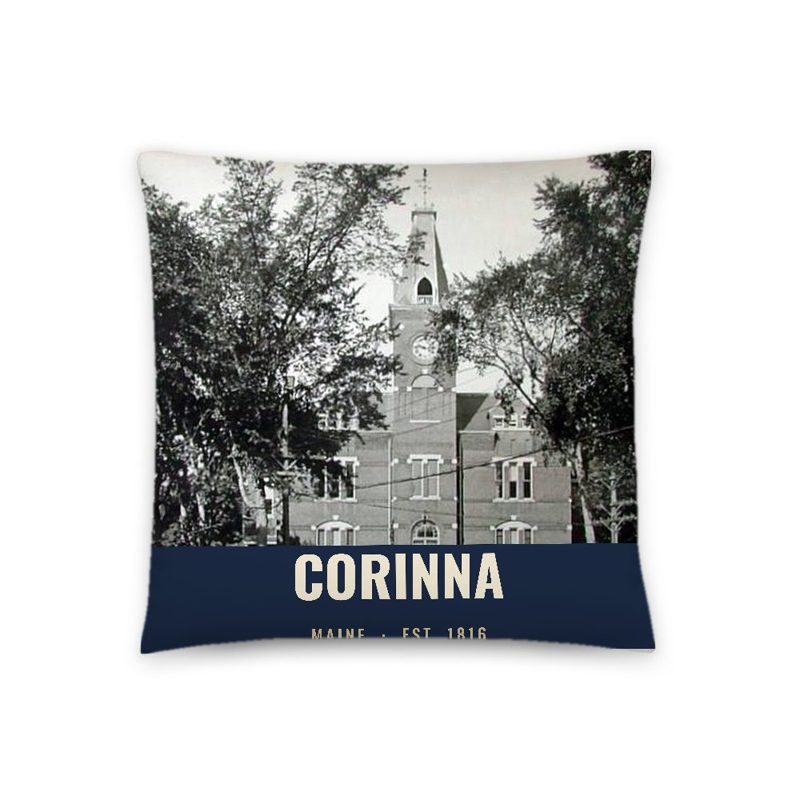
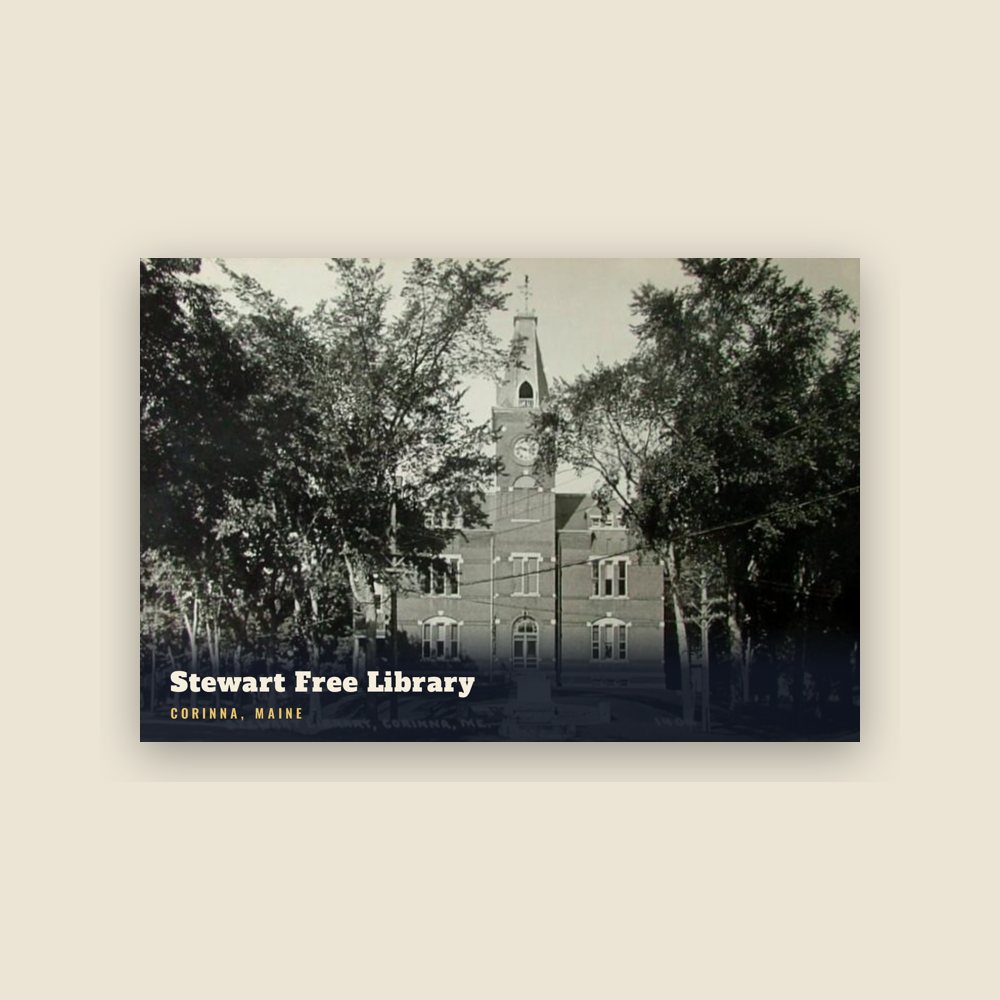
The Stewart Free Library (1898), a gift to the town by Corinna-born Minneapolis millionaire Levi M. Stewart, was designed by Minneapolis architect William Harrison Grimshaw. The library is listed on the National Register of Historic Places, and contains well-preserved historic interiors as well as a majestic facade with a clocktower. It resembles a mid-western county courthouse more than a typical small-town Maine library. The Corinna Union Academy educated students in the town from 1851 to 1968.
A memorial dedicated to the soldiers who have died in the war on terror is located near the river. It is made of marble and inscribed with the names of fallen soldiers.
Adapted (trimmed) from the Wikipedia article Corinna, Maine, revision 1374299545 by its contributors, licensed CC BY-SA 4.0.
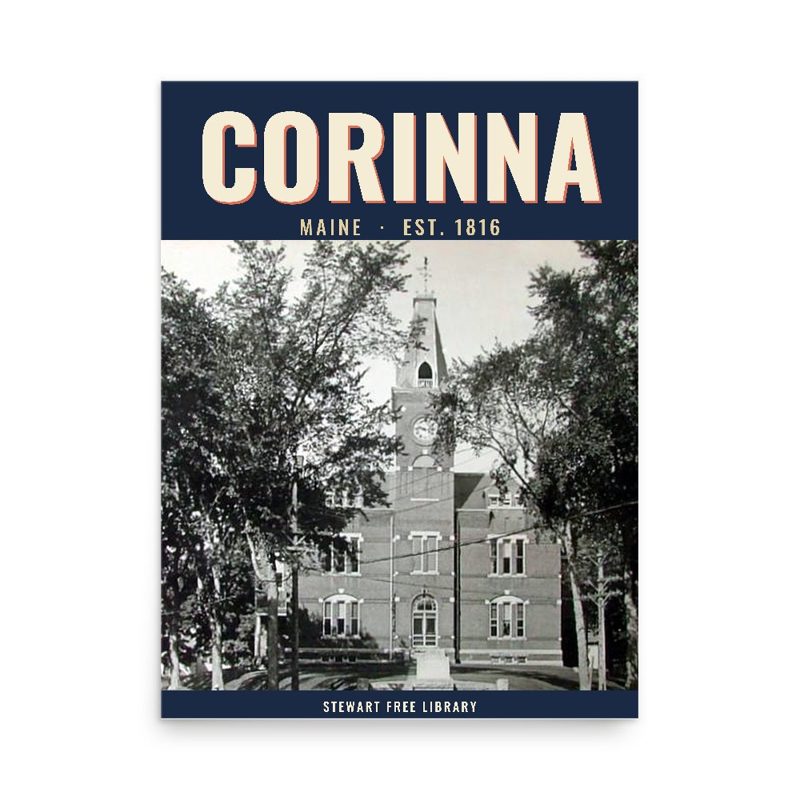
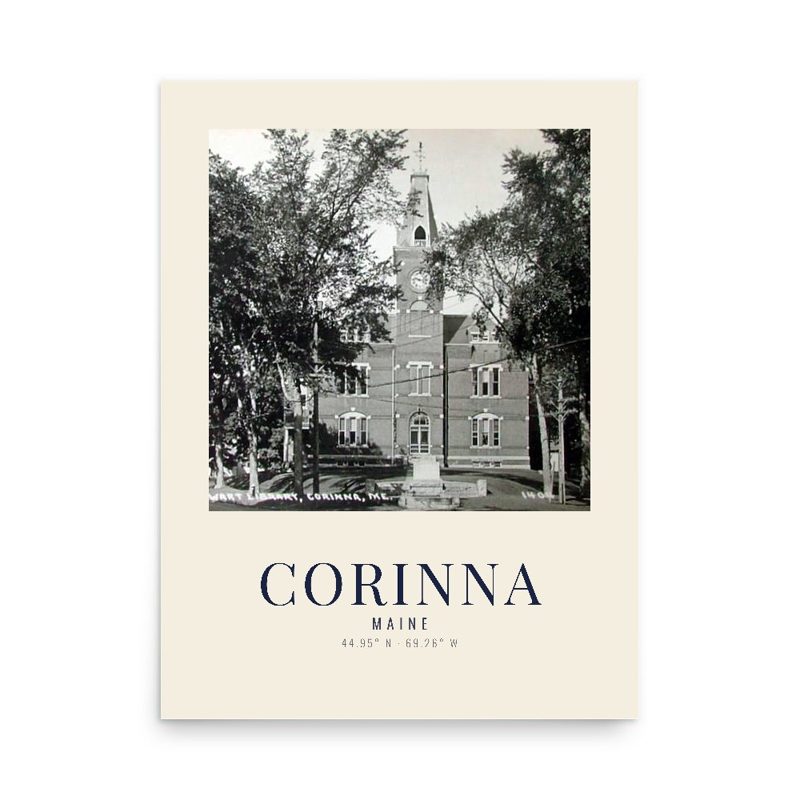


 Stewart Free Library