A short history of Newport
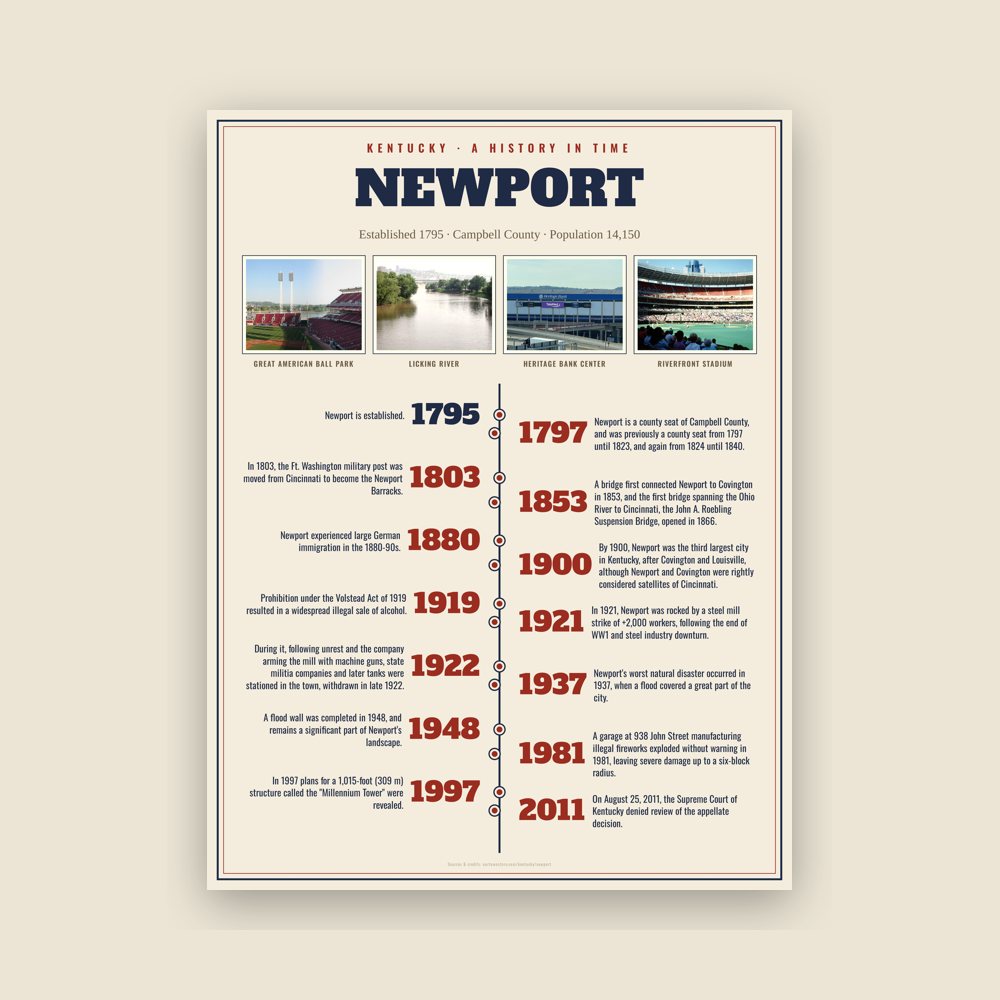
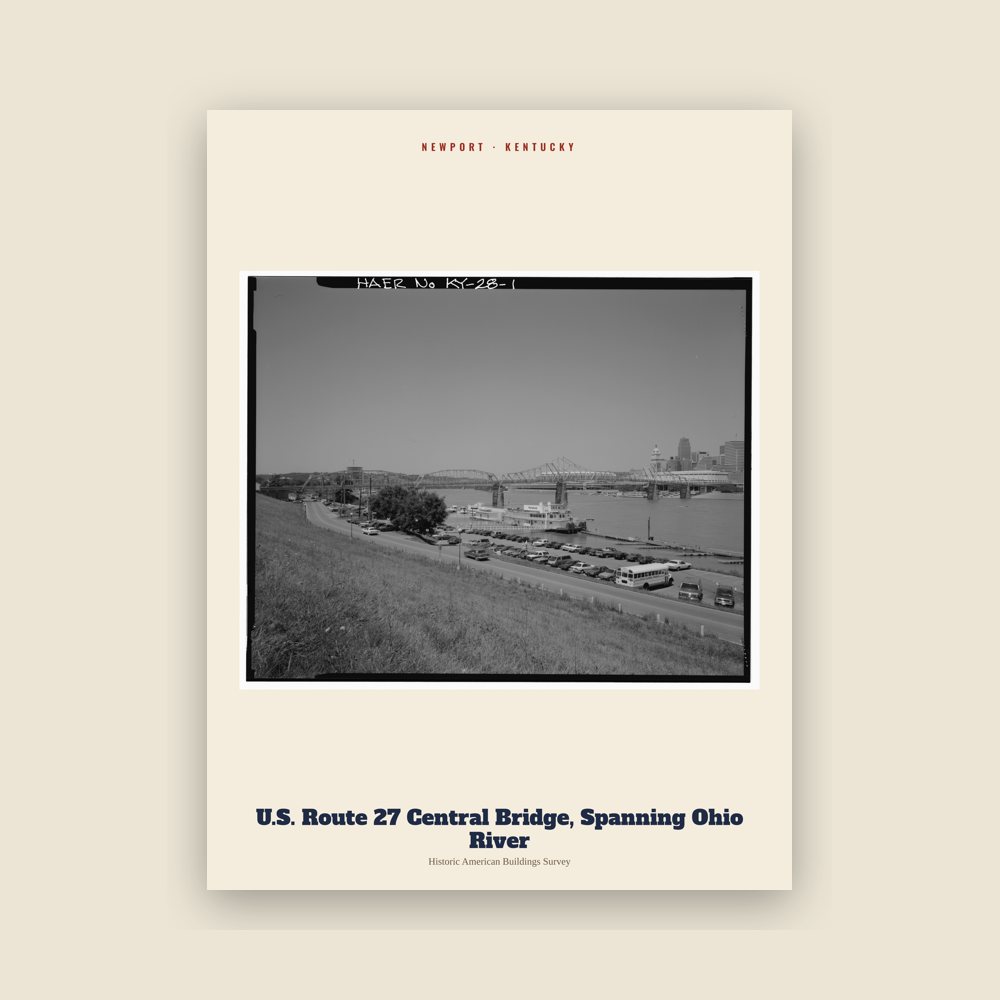
Newport was settled c. 1791 by James Taylor Jr. on land purchased by his father James Sr. from George Muse, who received it as a grant. Taylor's brother, Hubbard Taylor, had been mapping the land twenty years prior. It was not named for its position on the river but for Christopher Newport, the commander of the first ship to reach Jamestown, Virginia, in 1607. Newport was established as a town on December 14, 1795, and incorporated as a city on February 24, 1834. In 1803, the Ft. Washington military post was moved from Cincinnati to become the Newport Barracks. A bridge first connected Newport to Covington in 1853, and the first bridge spanning the Ohio River to Cincinnati, the John A. Roebling Suspension Bridge, opened in 1866. Newport experienced large German immigration in the 1880-90s.
By 1900, Newport was the third largest city in Kentucky, after Covington and Louisville, although Newport and Covington were rightly considered satellites of Cincinnati.
Prohibition under the Volstead Act of 1919 resulted in a widespread illegal sale of alcohol. Many gangsters began to smuggle alcohol into the city to supply citizens and businesses. Speakeasies, bribery, and corruption became a norm in Newport. A well known Newport crime boss was gambler and National Crime Syndicate member Ed Levinson.
In 1921, Newport was rocked by a steel mill strike of +2,000 workers, following the end of WW1 and steel industry downturn. The strike involved one in five of the town's workers and was over recognition for the three unskilled union locals that made up the four locals within the union. During it, following unrest and the company arming the mill with machine guns, state militia companies and later tanks were stationed in the town, withdrawn in late 1922. The strike was partially broken by the end of 1922 with some steelworkers leaving the town and others finding separate jobs in Newport. However, the strike did not formally end until seven years later in 1928, without union recognition for the three locals.
Newport's worst natural disaster occurred in 1937, when a flood covered a great part of the city. A flood wall was completed in 1948, and remains a significant part of Newport's landscape.
Newport once had the reputation of "Sin City" due to its upscale gambling casinos on Monmouth street. Monmouth also had many men's stores, restaurants, and ice cream parlors. Investigations for racketeering pushed out the casinos, which were replaced by peep shows and adult strip clubs. Many of the old businesses disappeared when parking became difficult on Monmouth Street and the commercial district opened on the hill of south Newport.
A garage at 938 John Street manufacturing illegal fireworks exploded without warning in 1981, leaving severe damage up to a six-block radius.
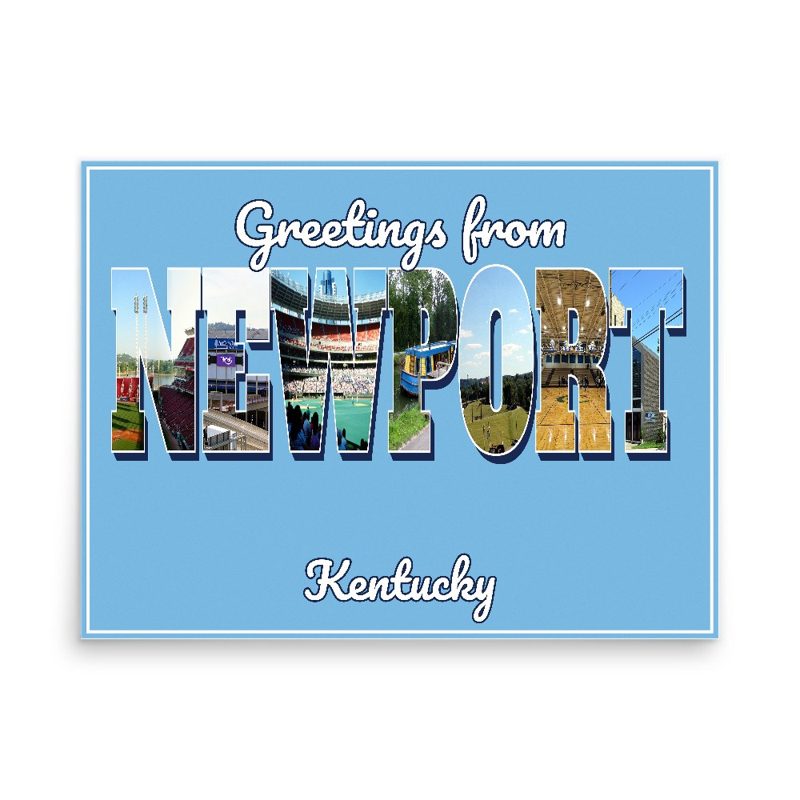
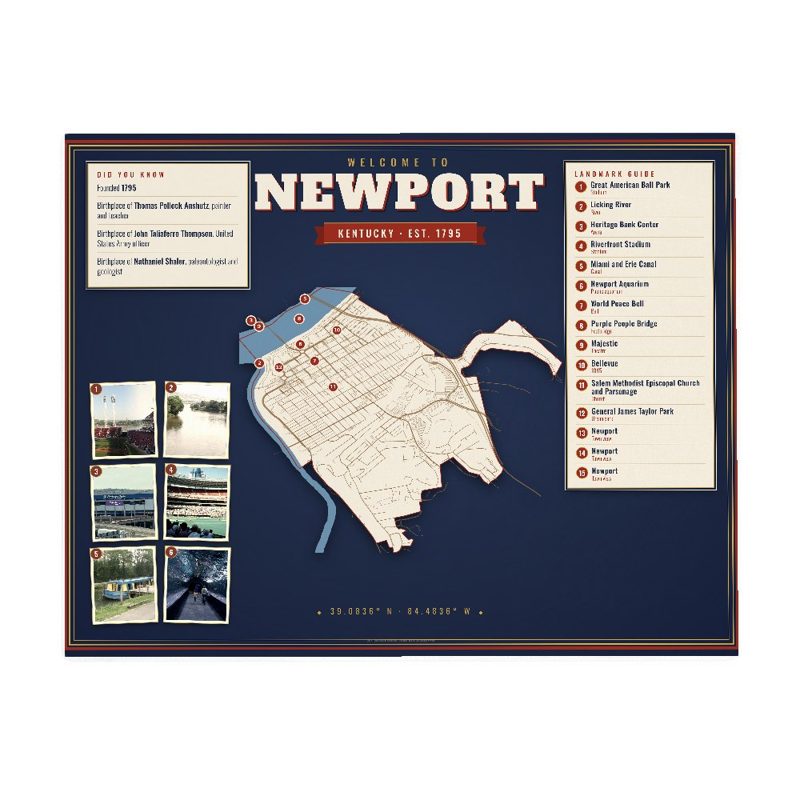
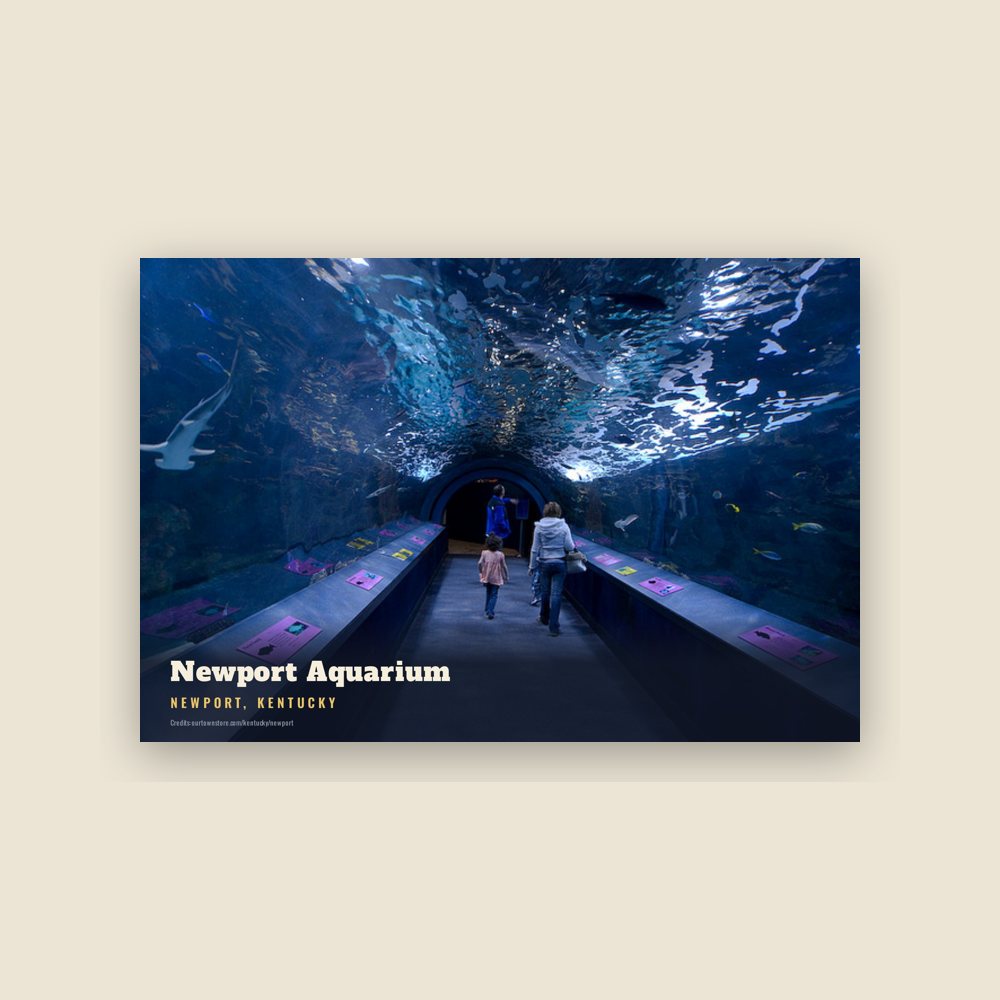
In the 1980s and 1990s, Newport made plans to develop its riverfront and core to focus primarily on "family friendly" tourism, instead of the "Sin City" tourism of the past. In May 1999 the $40-million Newport Aquarium opened, and the historic Posey Flats apartments were leveled in favor of the Newport on the Levee entertainment complex, which opened the following year.
In 1997 plans for a 1,015-foot (309 m) structure called the "Millennium Tower" were revealed. The tower's main selling point was that building it would be financed by private money, as opposed to taxpayer money. The tower was expected to be completed by 2003, but investors later pulled out and no construction was done. Today the site for the tower is a parking lot next to the World Peace Bell.
Read the full history
Timeline
County seat
Newport is a county seat of Campbell County, and was previously a county seat from 1797 until 1823, and again from 1824 until 1840.
In the 19th century, the overwhelming majority of the population lived in Newport and the surrounding cities. Many citizens did not like traveling south to Alexandria to conduct county business, as southern Campbell County was primarily undeveloped.
In 1883, Newport successfully lobbied the state legislature for an exception to state law, which both required that a county seat be located in the center of the county, and that certain county business only be conducted at the county seat. Frankfort passed a special law, creating the Newport Court House District, and within that district, the Newport Courthouse Commission which functioned as a special taxing district, so that an additional courthouse could be built, and business could take place in Newport, in addition to Alexandria. In 2008, the Kentucky General Assembly removed the taxing authority from the Courthouse Commission, but left the District and Commission intact.
In 2009, a court ruled that Alexandria is the only county seat, and Newport is not a county seat. On November 24, 2010, the Kentucky Court of Appeals disagreed, and granted Newport equal status as a county seat. On August 25, 2011, the Supreme Court of Kentucky denied review of the appellate decision.
Adapted (trimmed) from the Wikipedia article Newport, Kentucky, revision 1374772837 by its contributors, licensed CC BY-SA 4.0.



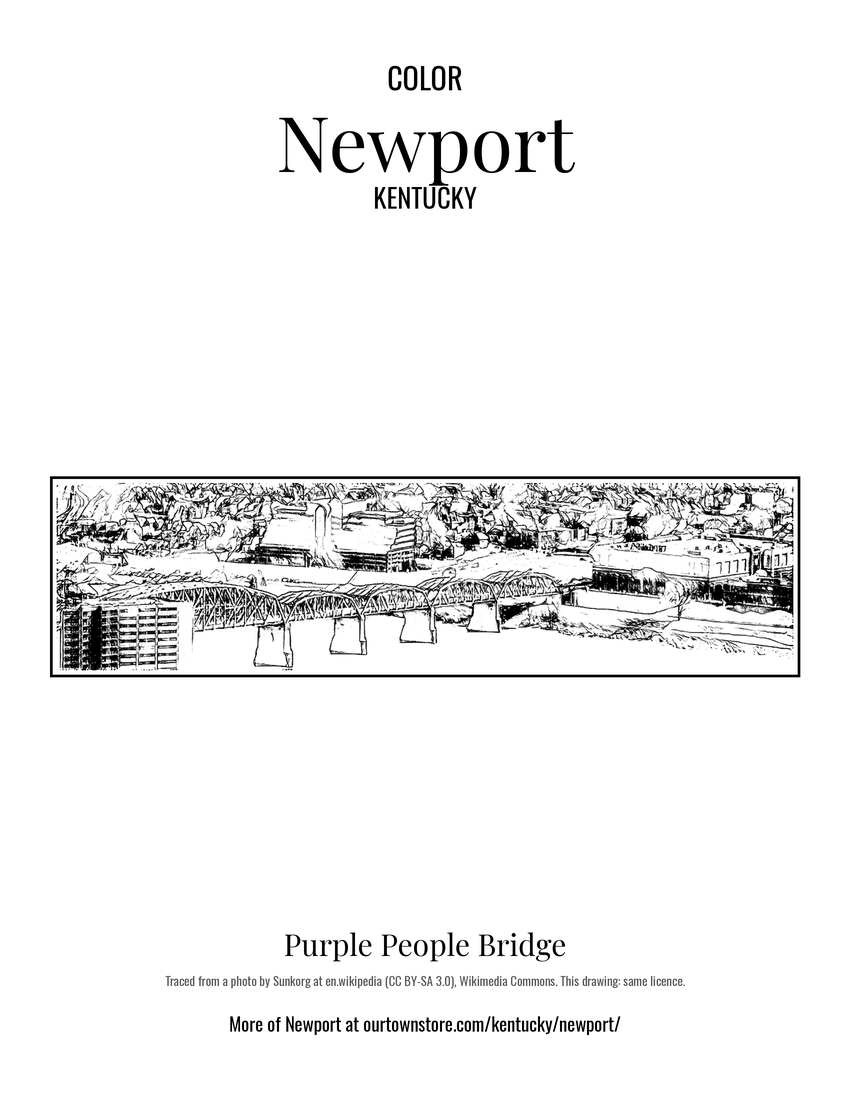 Purple People Bridge
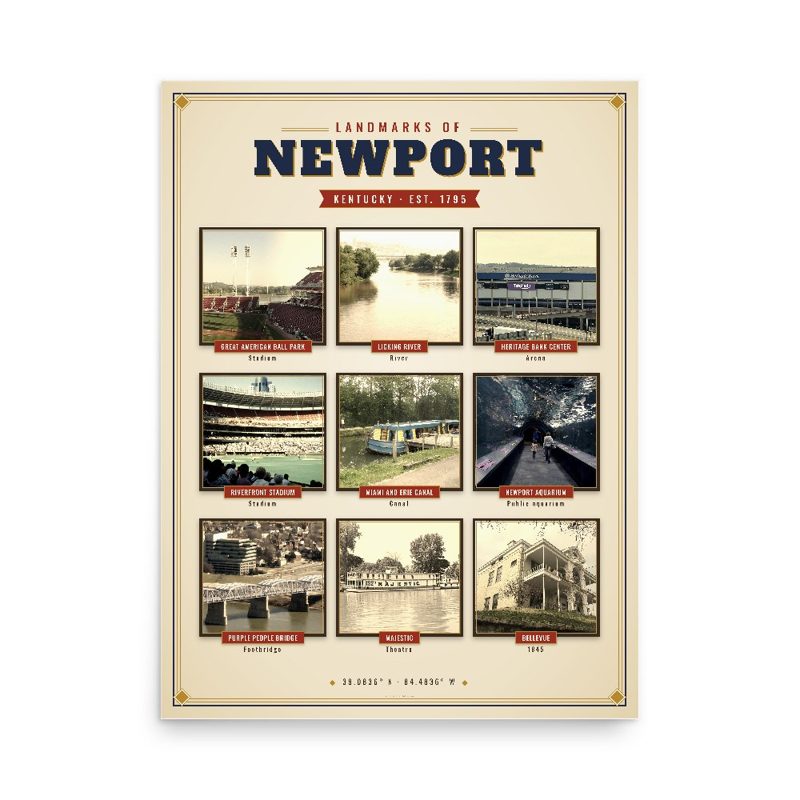
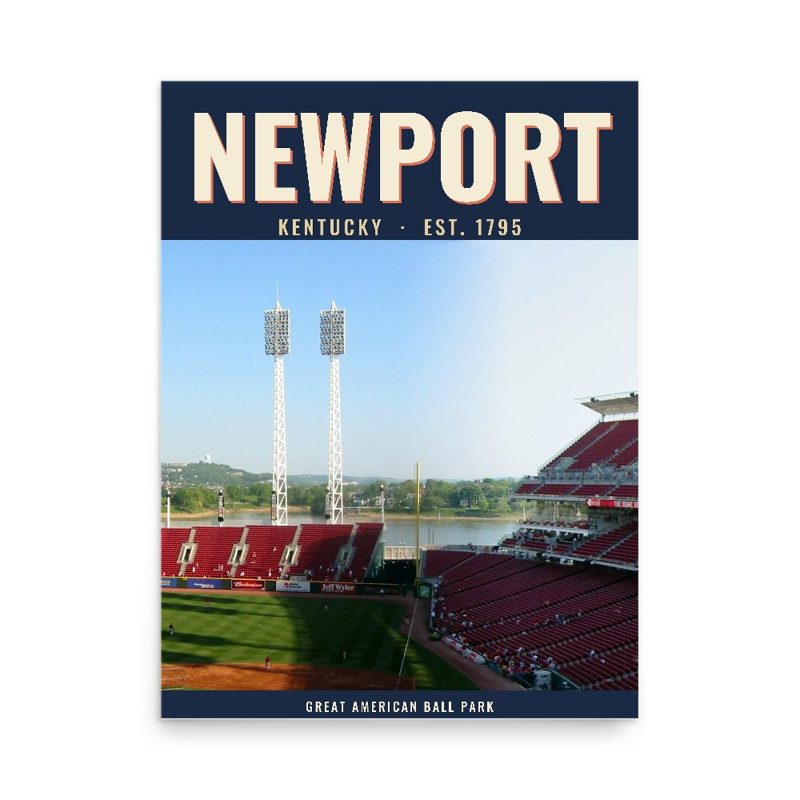
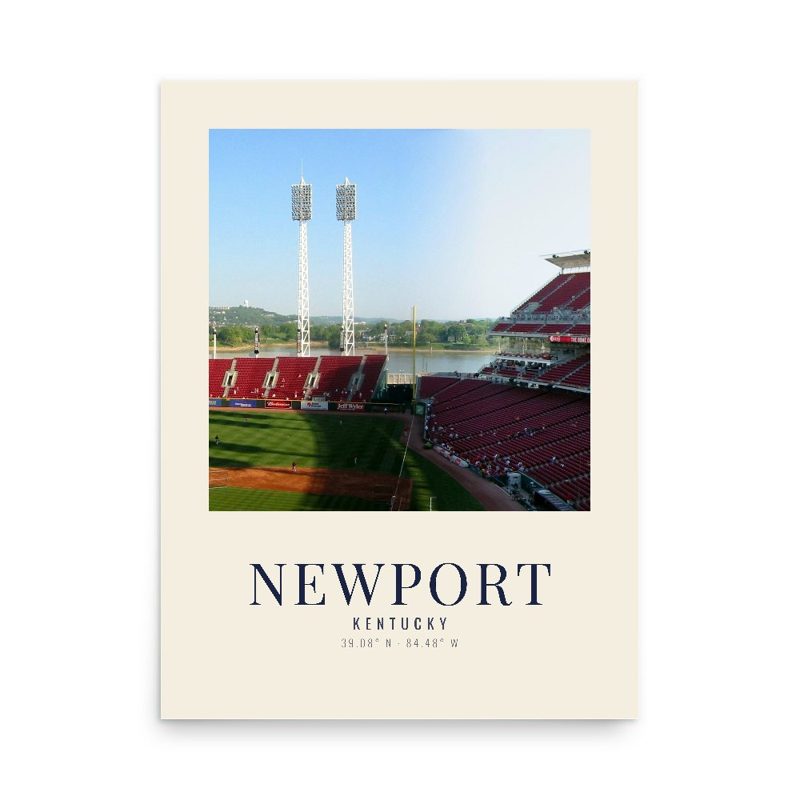
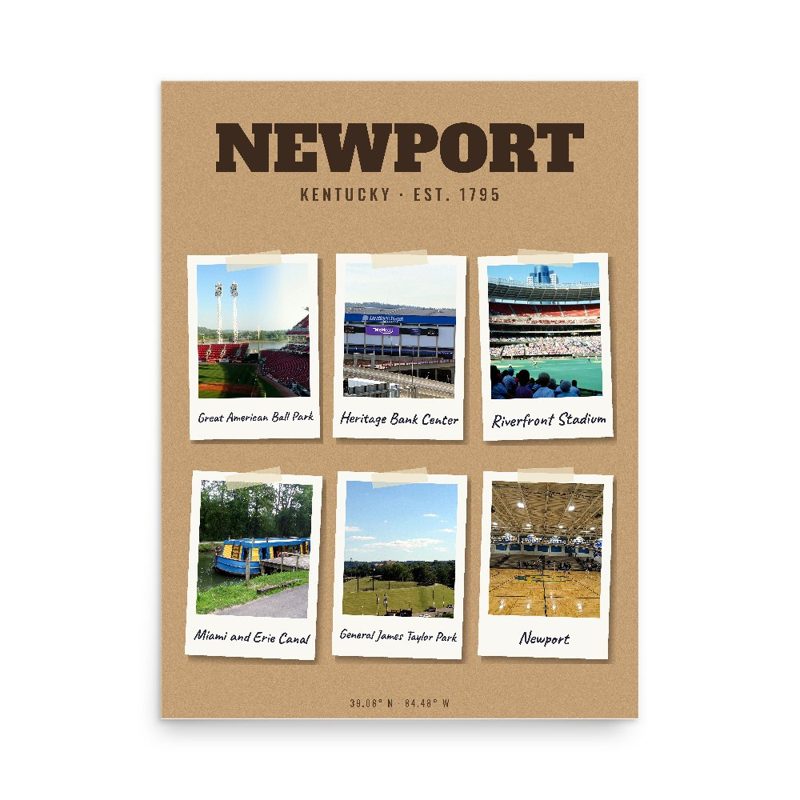
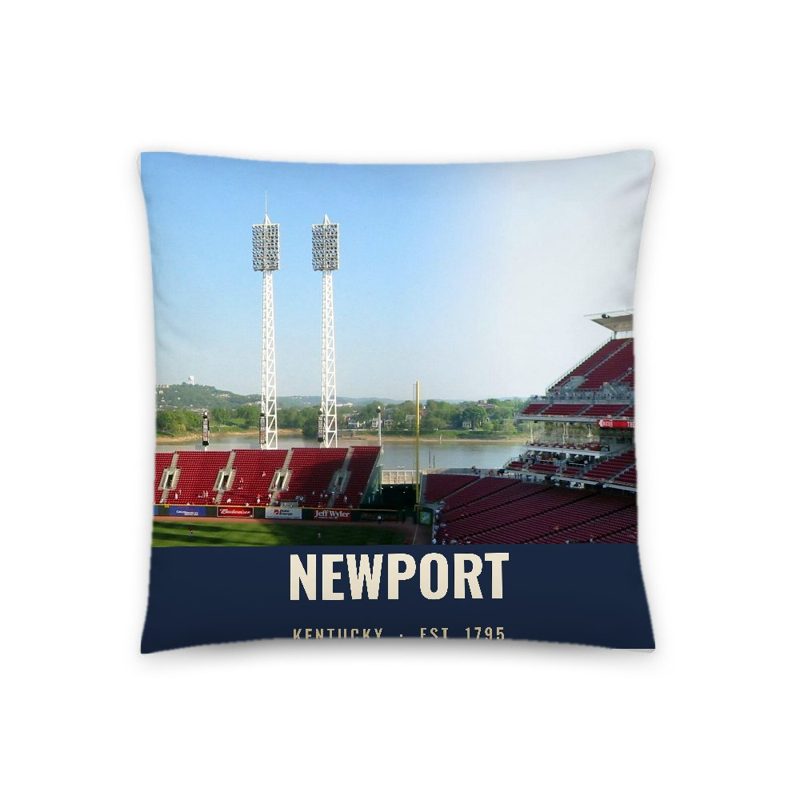
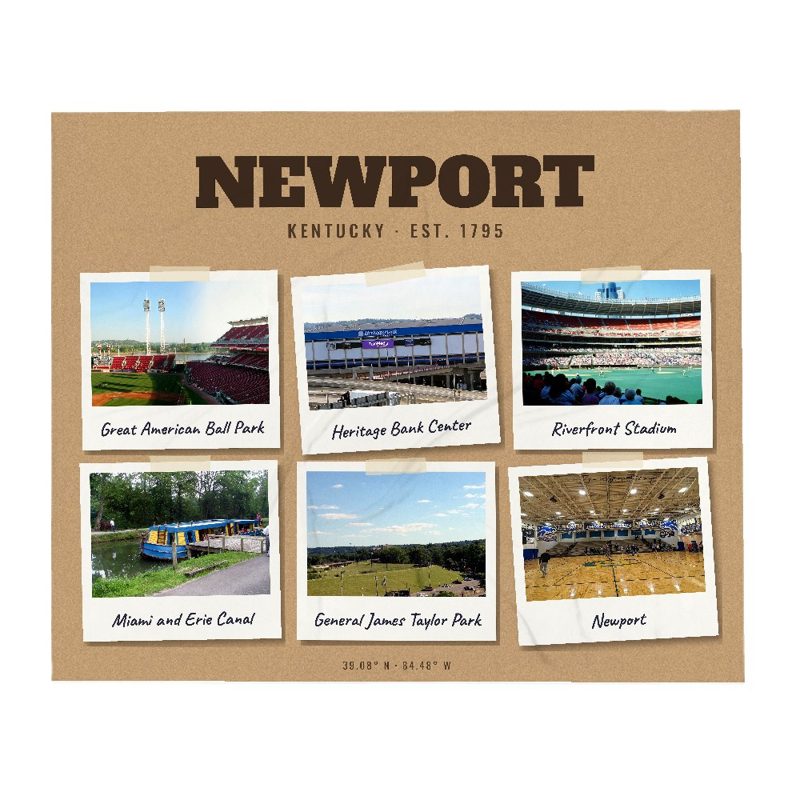
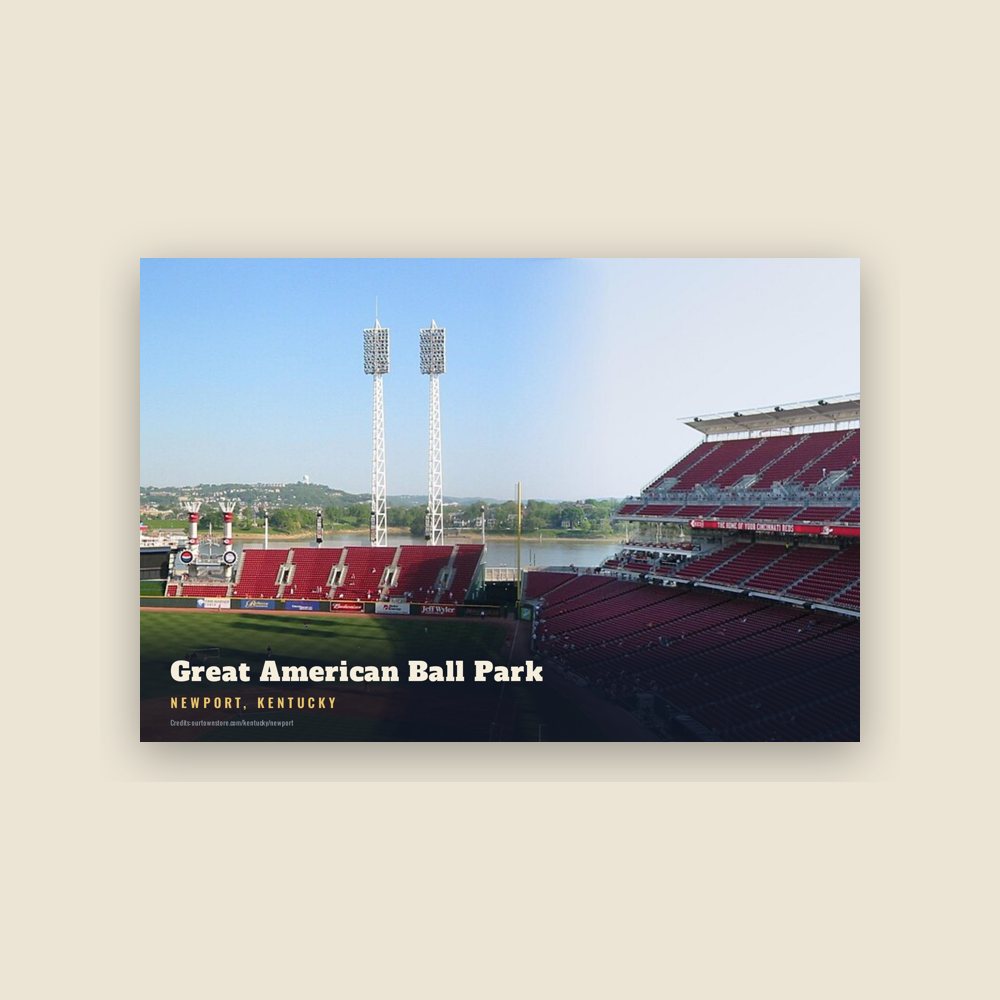
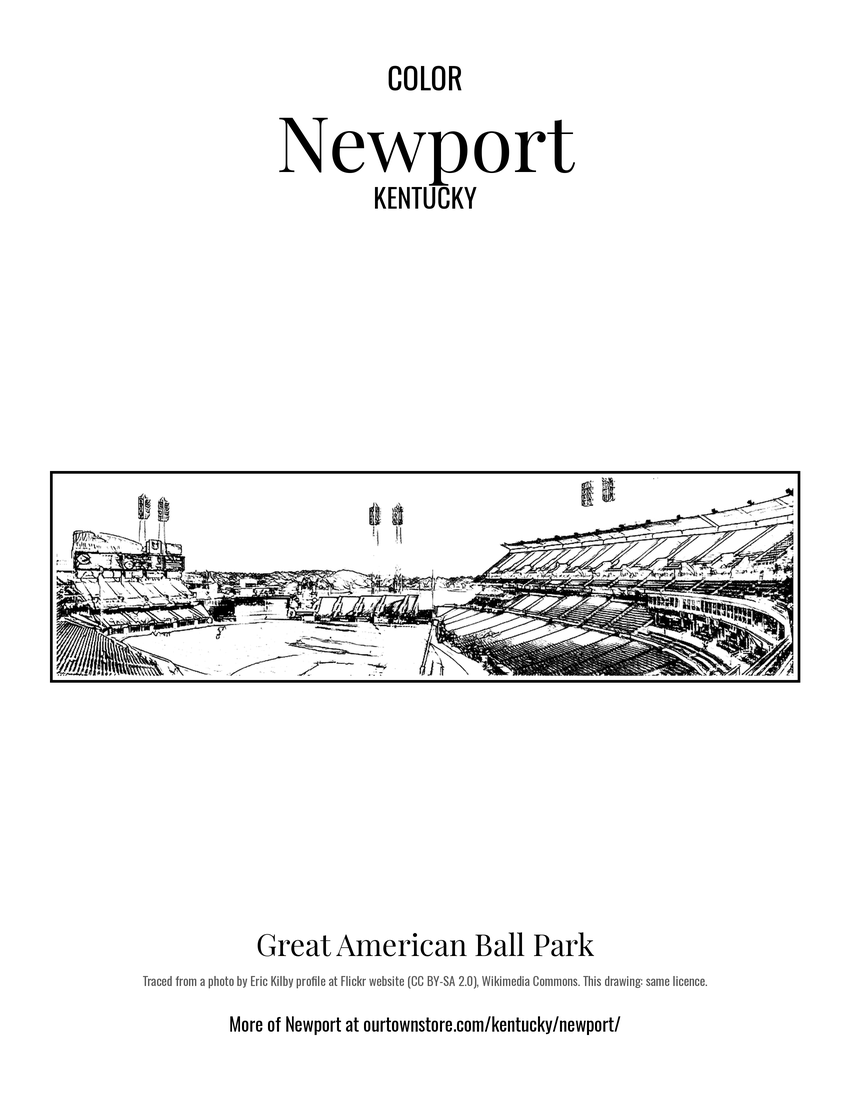 Great American Ball Park
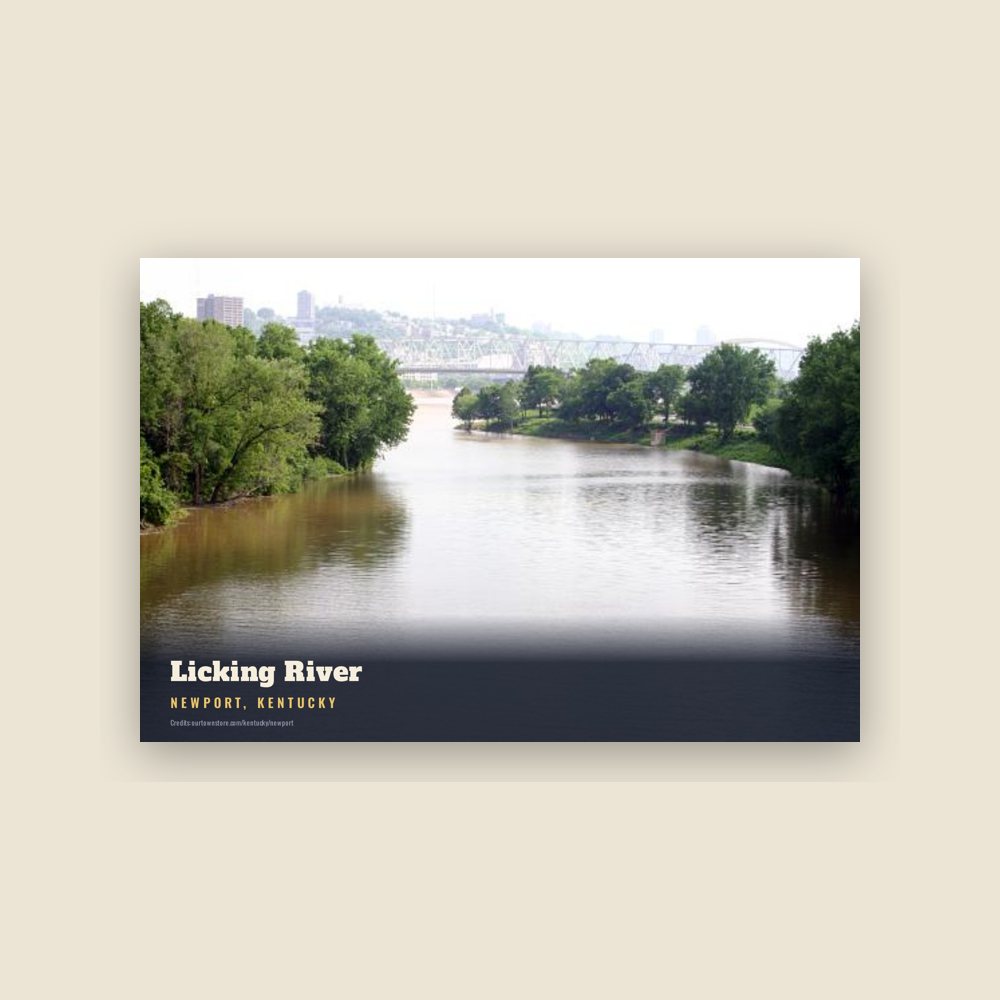
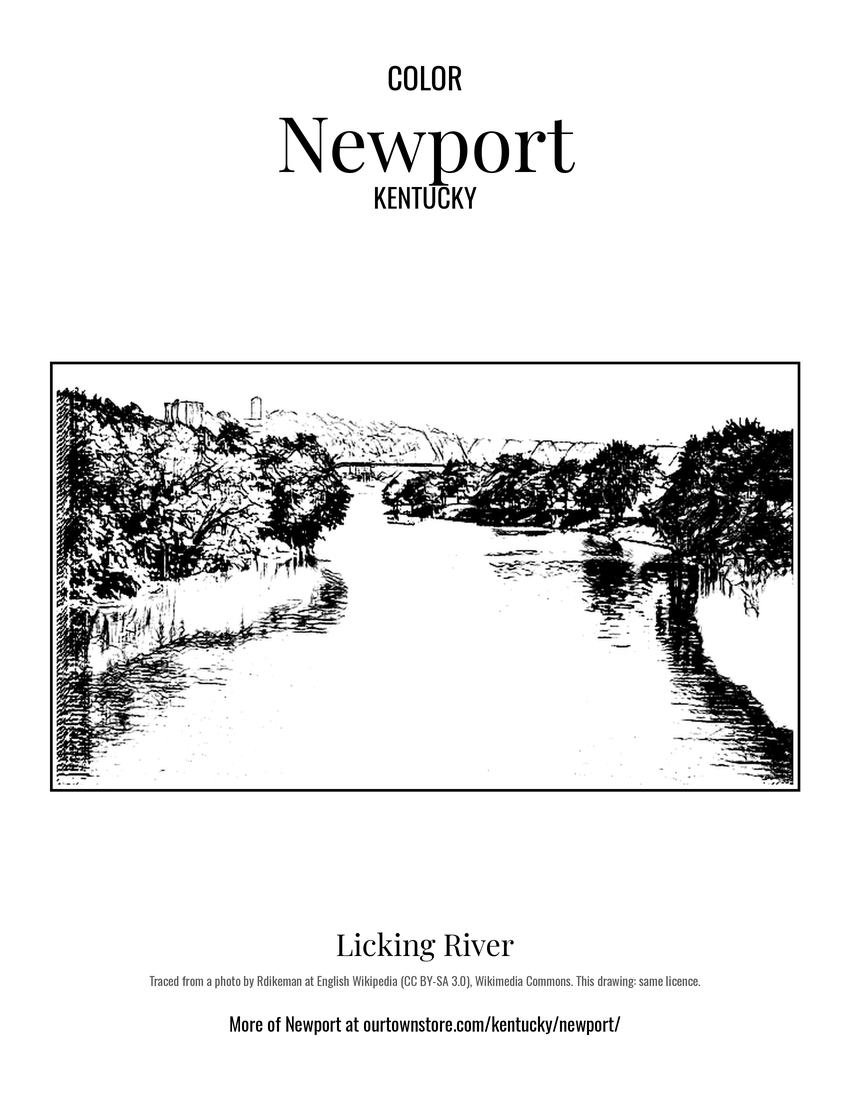 Licking River
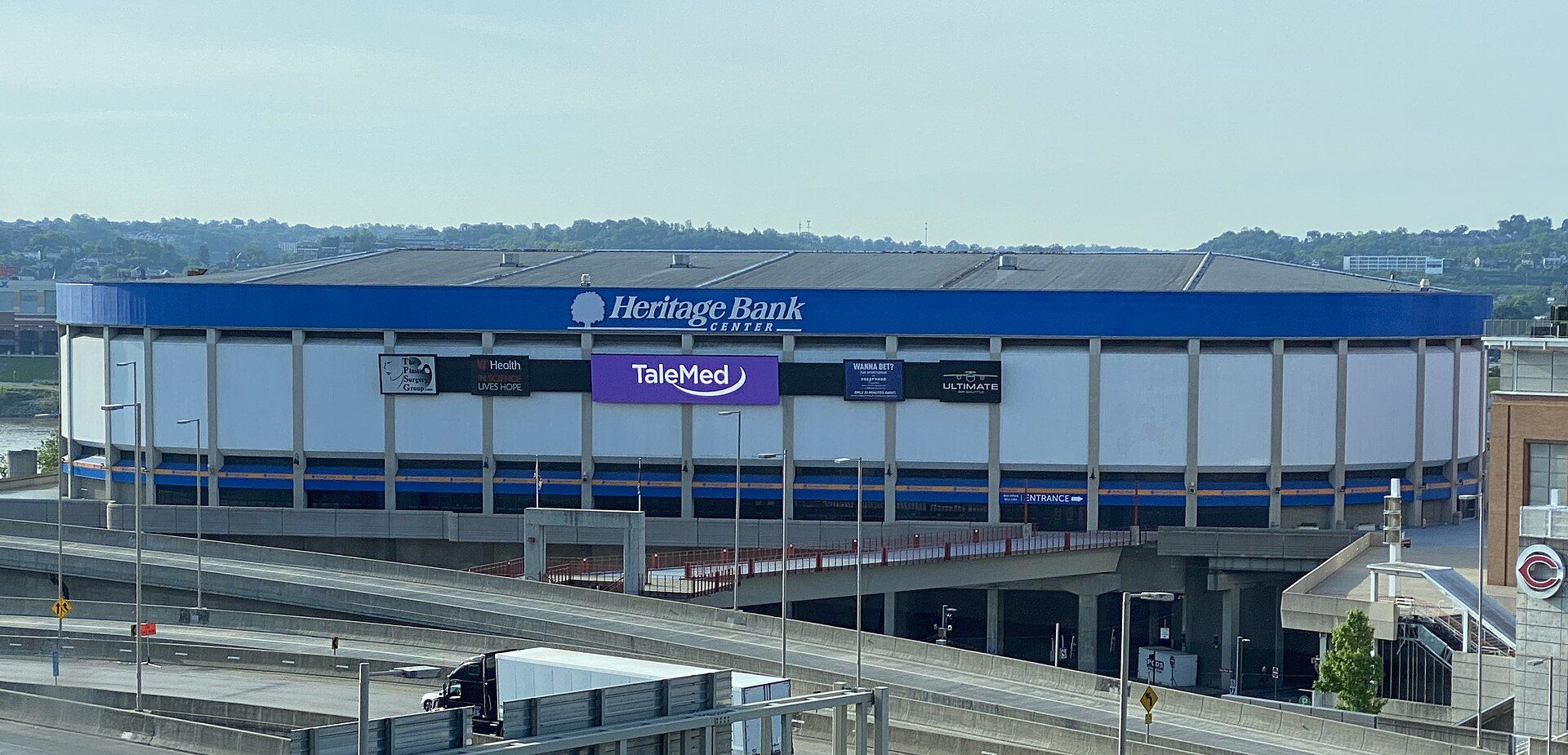
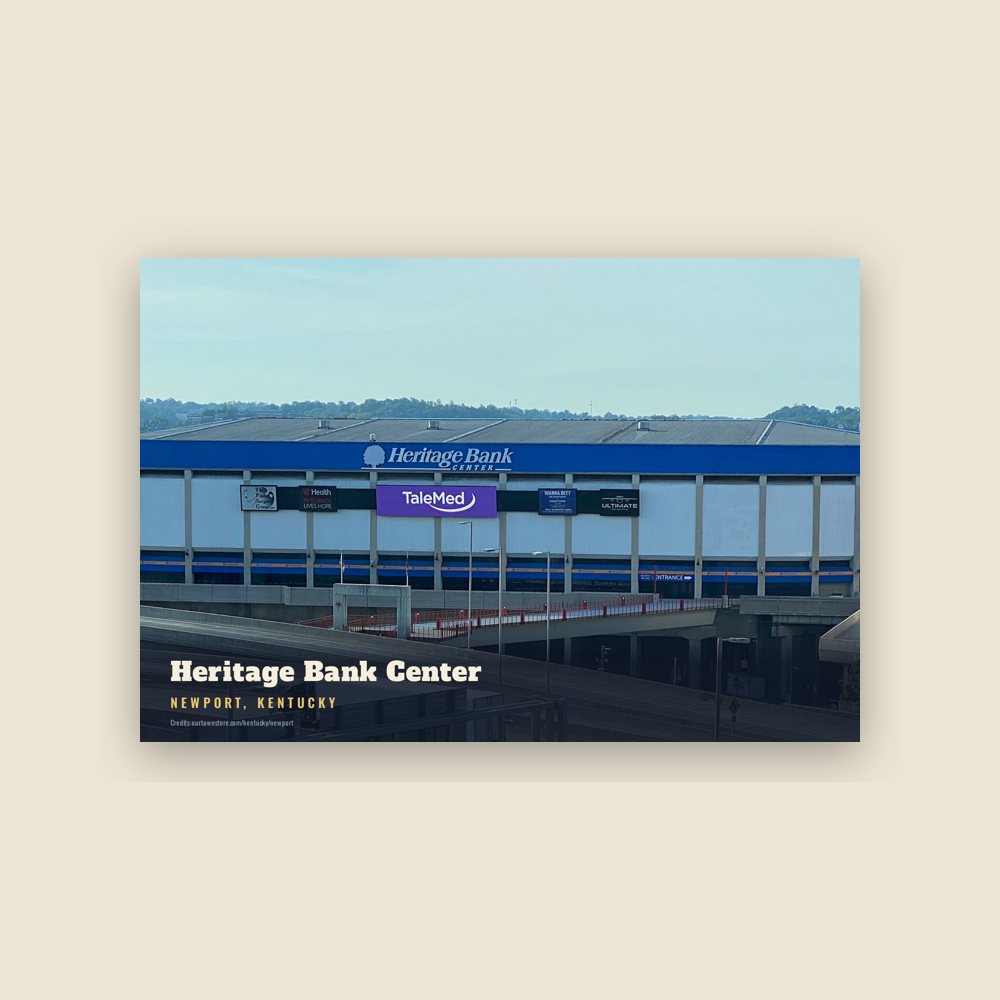
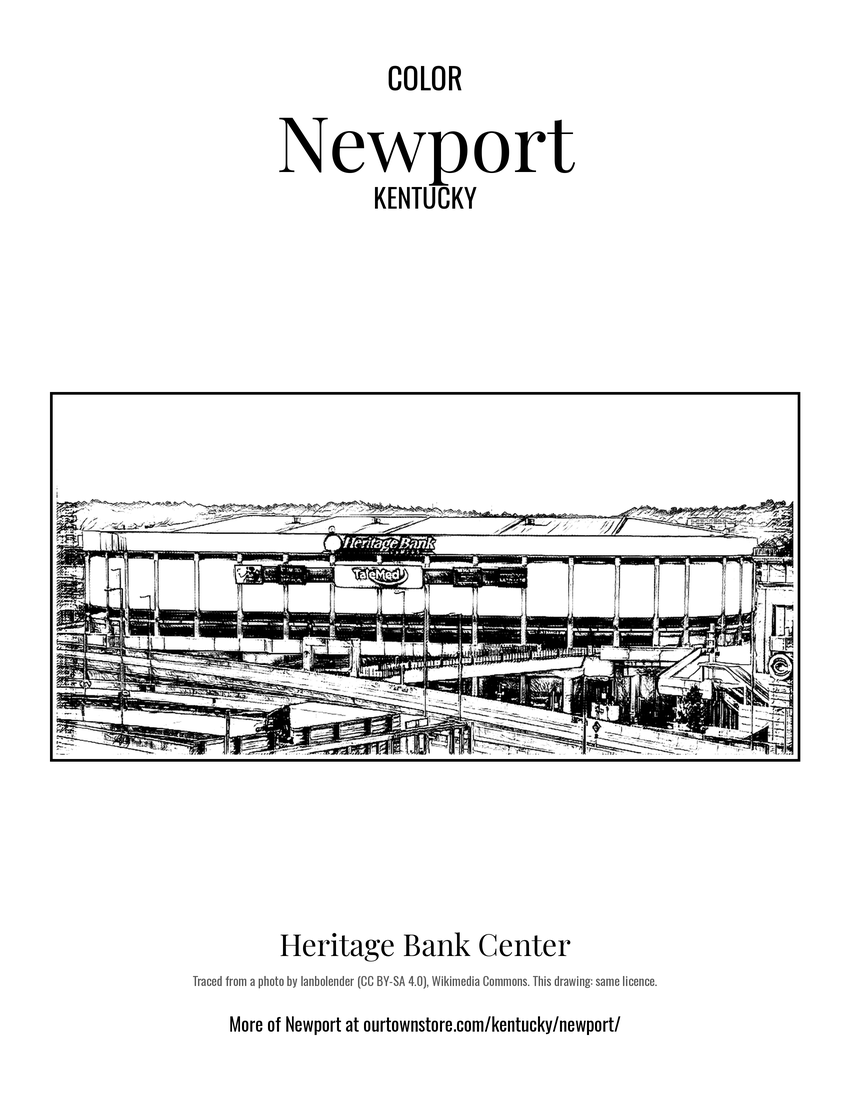 Heritage Bank Center