Louis Vieux Sr. was a prominent citizen of Louisville who operated a trail crossing across the Vermillion River.
- CountyPottawatomie County
- Population131 (2020 U.S. Census)
Louis Vieux Sr. was a prominent citizen of Louisville who operated a trail crossing across the Vermillion River.
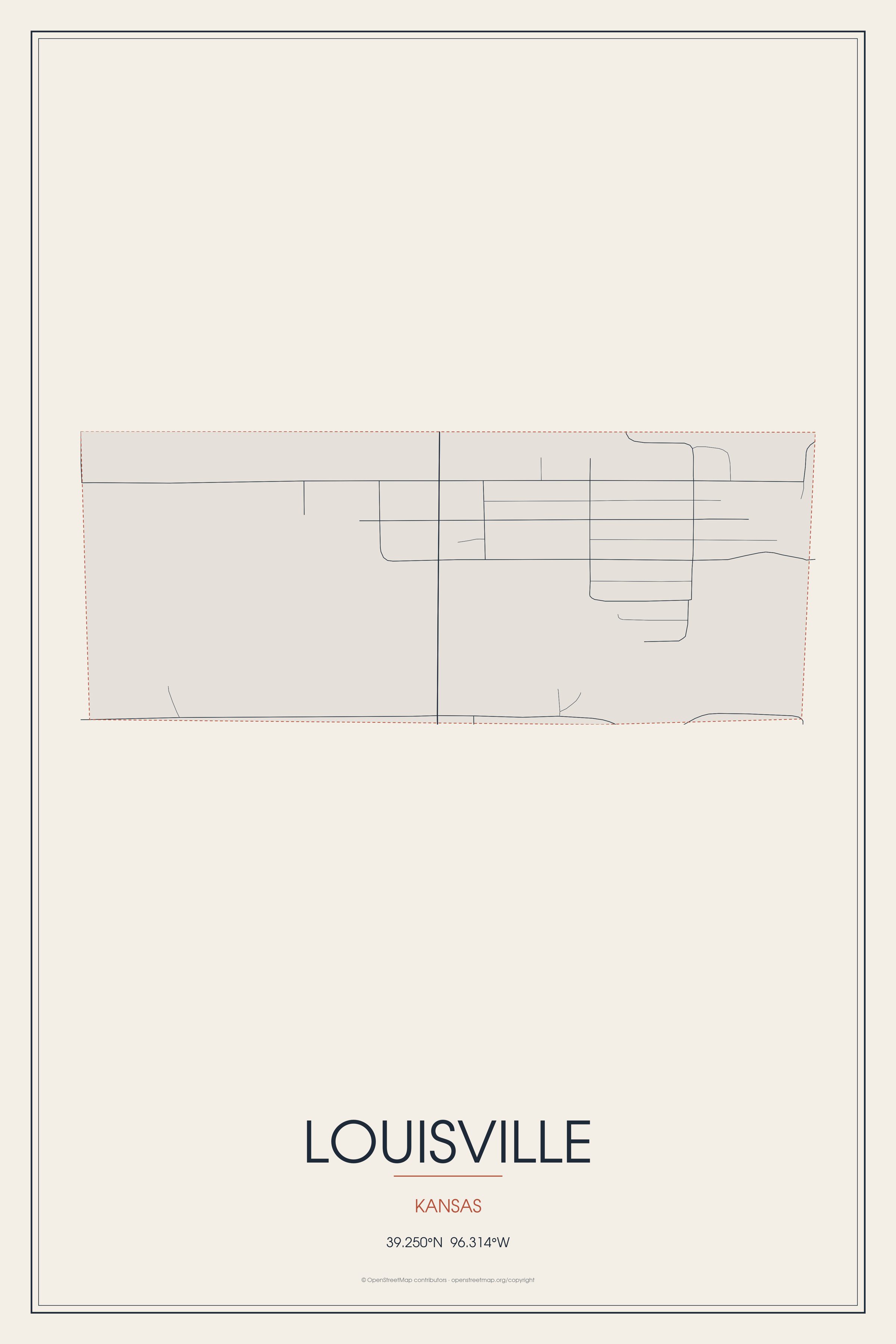
Louisville, Kansas gifts and souvenirs: 18 designs made from Louisville's own map, landmarks and history, from $16 to $95. Printed to order and shipped free in the USA.
| Popular | Price |
|---|---|
| Louisville Hometown Ornament | $23 |
| Louisville Varsity Crewneck | from $57 |
| Louisville Est. Tee | from $33 |
| Louisville Town Line Mug | from $26 |
| Louisville Market Tote | $37 |

Ceramic keepsake, gold ribbon, in 3 styles
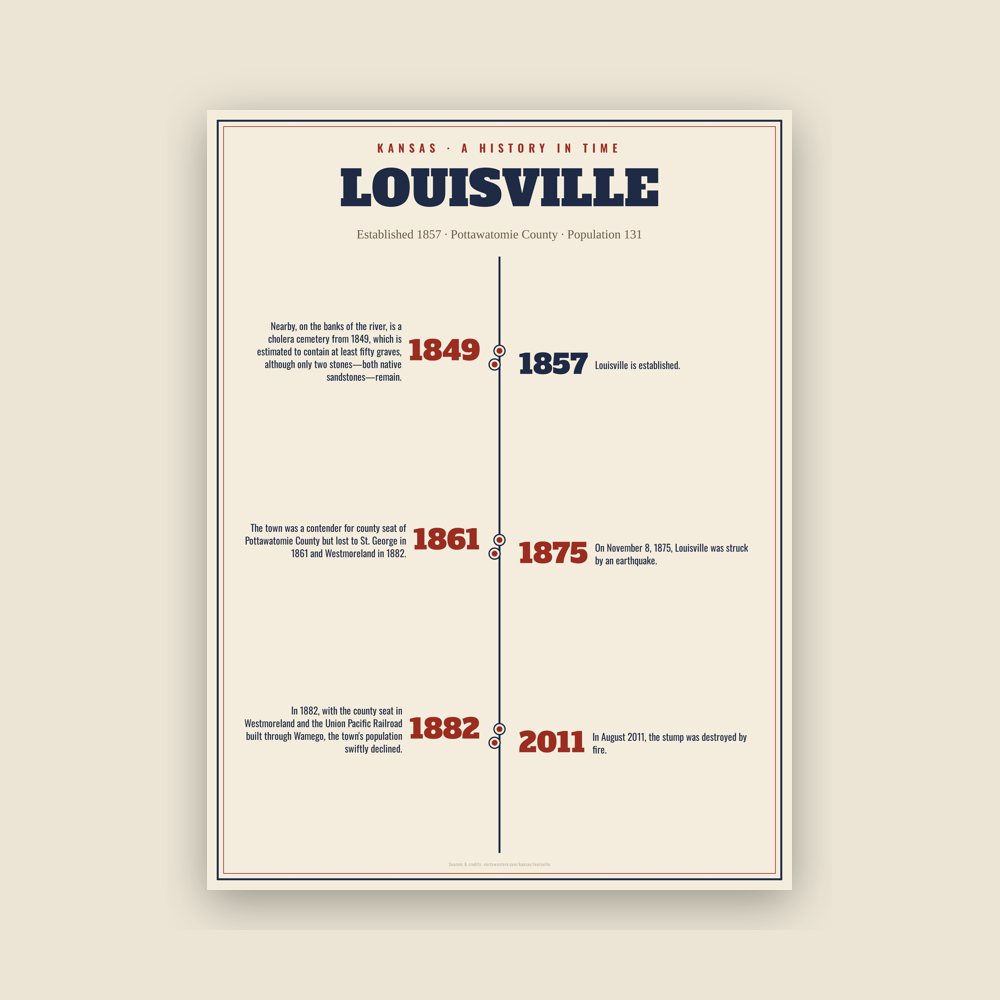
The town's story in dates, from its own records, for home or classroom

Heavy-blend fleece, street map printed on the back

Red heavy-blend crewneck, knit-stitch town print

Soft Bella+Canvas jersey

Kids' Bella+Canvas jersey, youth sizes

Bella+Canvas toddler jersey
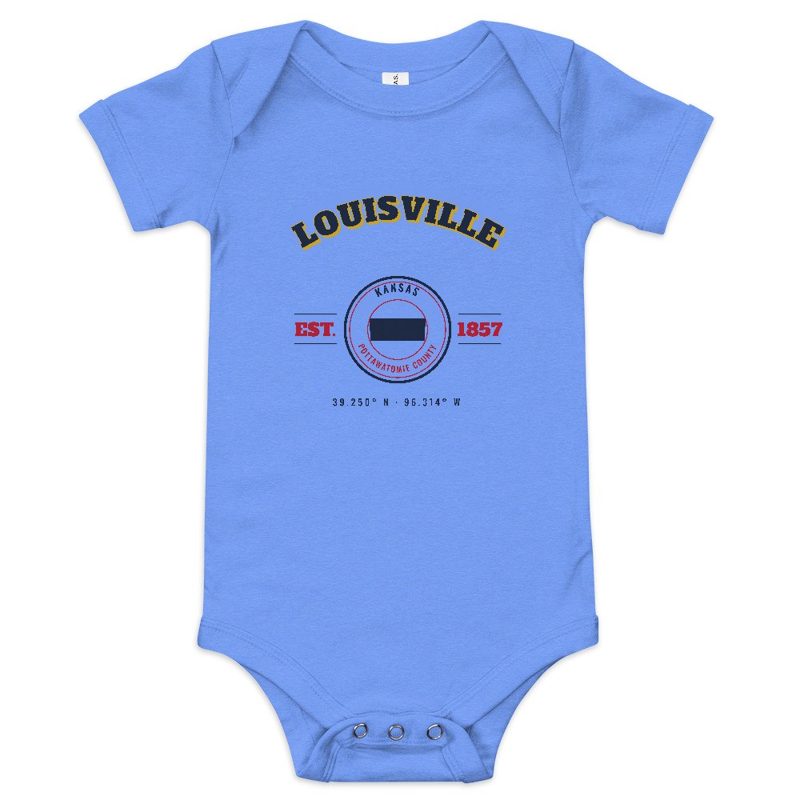
Bella+Canvas baby bodysuit
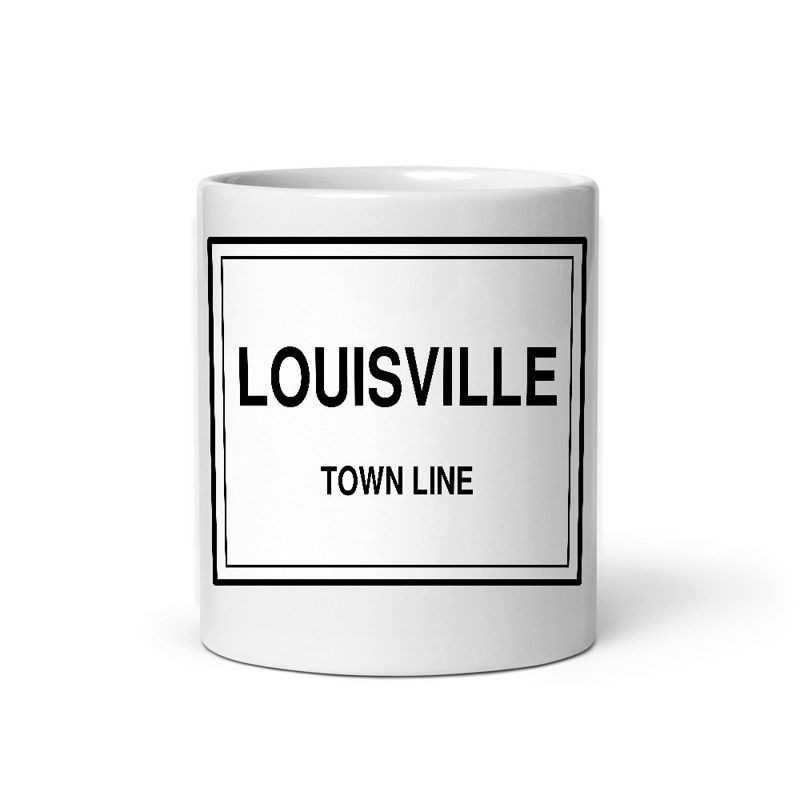
Glossy ceramic, dishwasher safe
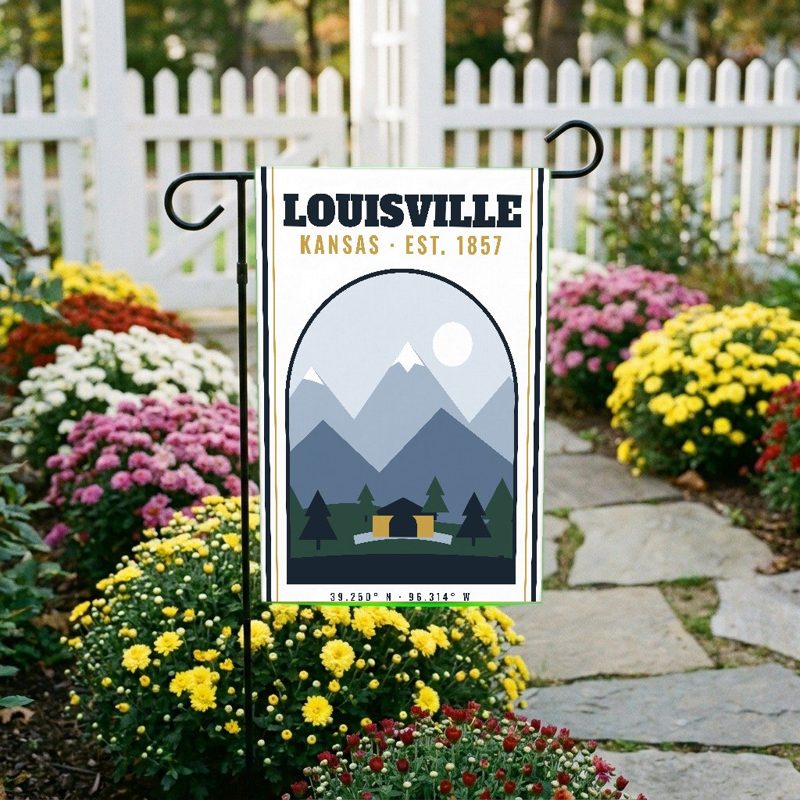
Weatherproof, for the front walk
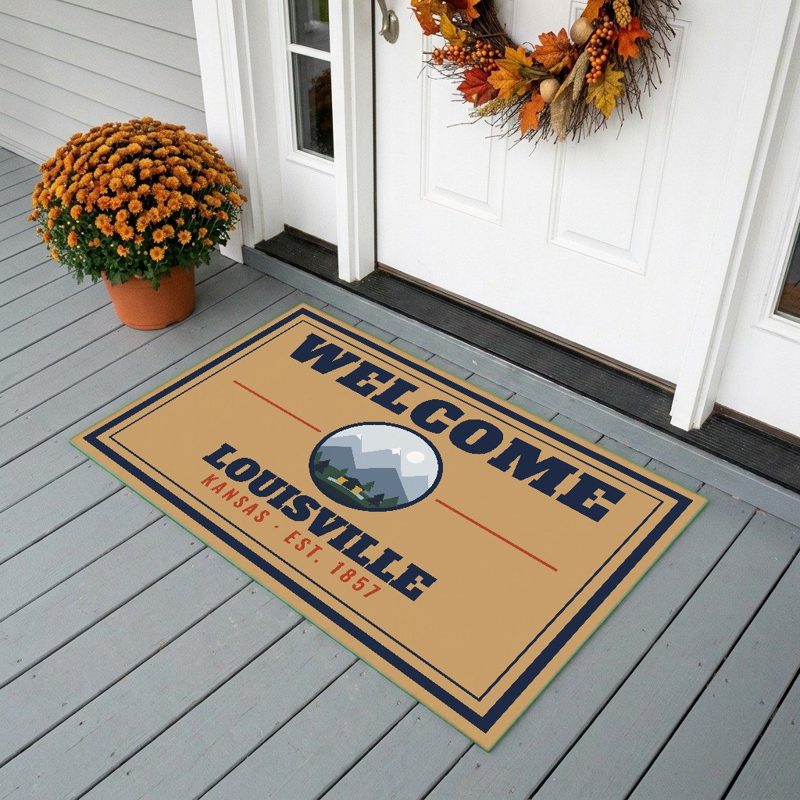
24″×16″, printed coir-look fibers, rubber back
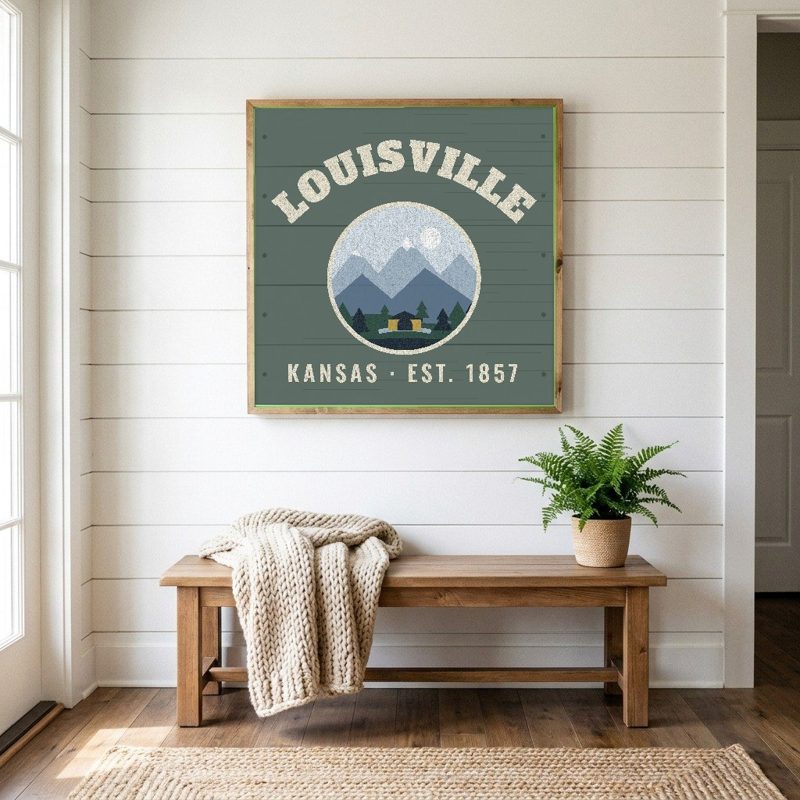
12″×12″ printed wood, ready to hang

Soft-touch, zip cover

Sturdy all-over-print tote

Glossy top, cork back

Soft fleece, 50″×60″

20 oz, double-wall stainless
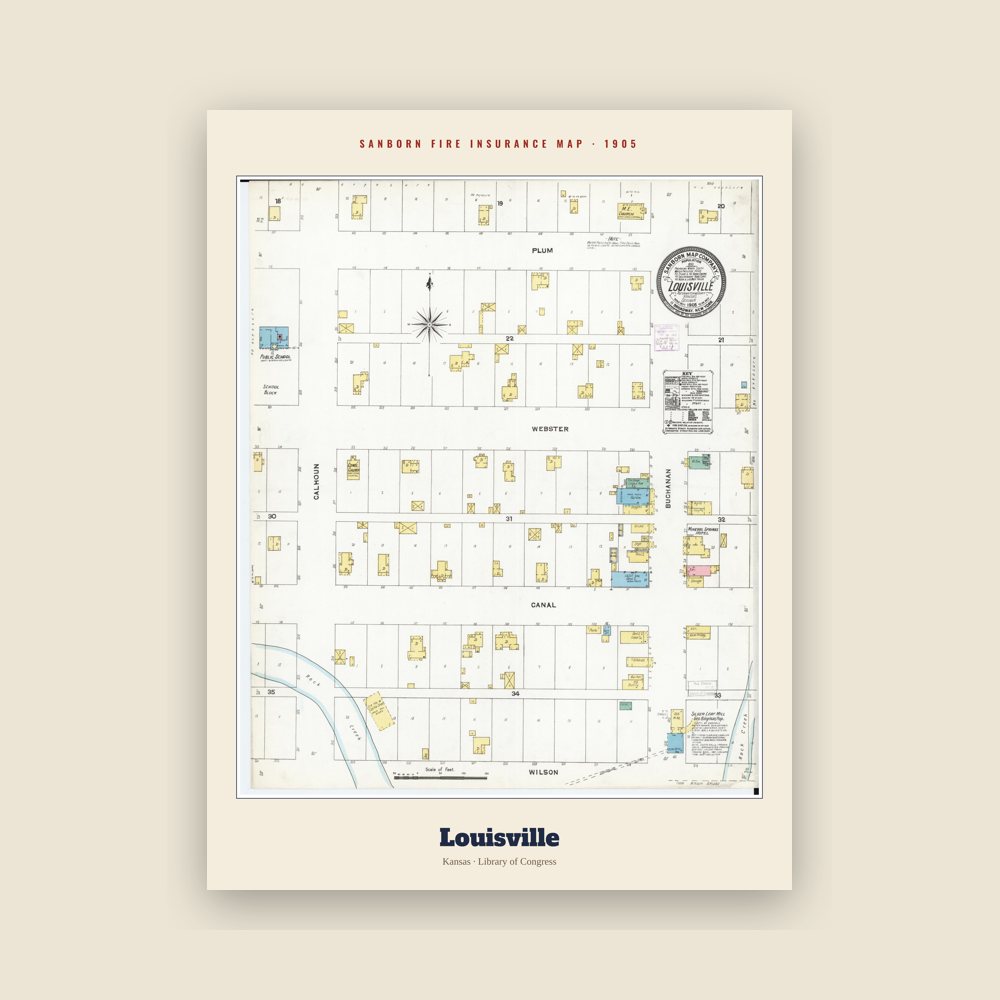
The town's earliest Sanborn fire-insurance map, drawn building by building and hand-coloured, from the Library of Congress
The community was founded in 1857 by Robert Wilson as Rock Post. The area was once part of the Potawatomi Hunting grounds and a large majority of the settlers were either associated with the Pottawatomie Indian Reservation or commerce on the Oregon Trail. Louisville was named for Robert Wilson's son, Louis, and for Louis Vieux, a successful businessman in the area. The town was a contender for county seat of Pottawatomie County but lost to St. George in 1861 and Westmoreland in 1882.
On November 8, 1875, Louisville was struck by an earthquake. In 1882, with the county seat in Westmoreland and the Union Pacific Railroad built through Wamego, the town's population swiftly declined.
Louis Vieux Sr. was a prominent citizen of Louisville who operated a trail crossing across the Vermillion River. He was born in 1809 in Wisconsin to Angelique Roy, a Potawatomi woman, and Jacques Vieux, a Canadian-French trader. Vieux and his wife, Sha-Note, moved first to Cedar Bluffs, Iowa in 1832 until moving to Indianola, Kansas (northwest of Topeka along Soldier Creek) in 1846. Sha-Note died in 1857 and Vieux moved to the Vermillion River near present-day Louisville. Vieux began his trail crossing business and worked as a caller for the U.S. Government working the pay station in St. Mary's and he also served on the tribal council and made trips to Washington, D.C., on behalf of the Pottawatomies. Vieux also signed the treaty that split the Pottawatomies into two separate tribes-the Prairie Band and Citizen Potawatomi Nation. Vieux died in 1872 and left behind a 200-page will leaving half the town of Louisville, all of Belvue and other personal property to his wife and children.
About three miles east of Louisville was the Vermillion Crossing of the Oregon Trail operated by Louis Vieux. Vieux is buried in the Vieux Family Cemetery on top of a hill. Nearby, on the banks of the river, is a cholera cemetery from 1849, which is estimated to contain at least fifty graves, although only two stones—both native sandstones—remain. The Louis Vieux Elm Tree is across the river and is estimated to be over 300 years old. The tree had been afflicted with Dutch elm disease, a lightning strike and vandalism and efforts were taken to protect and shelter the tree's stump. In August 2011, the stump was destroyed by fire. Near the tree are the graves of seven unknown soldiers.
Adapted (trimmed) from the Wikipedia article Louisville, Kansas, revision 1376759709 by its contributors, licensed CC BY-SA 4.0.
We share a part of every Louisville sale with local partners, and we'd love to print from your collection. Old photographs, maps and postcards make the best keepsakes.
Partner with usA favorite landmark, your street, a school or team, an anniversary gift, a different product. Tell us and we'll get back to you by email.
Louisville's population was 131 in the 2020 U.S. Census, down from 188 in 2010.